
Click the photo to view the full-size version
| Name | CIC Riverside Drive Bridge |
| Built By | Cedar Rapids & Iowa City Railway |
| Currently Owned By | Cedar Rapids & Iowa City Railway |
| Superstructure Contractor | Unknown |
| Substructure Contractor | Unknown |
| Length | 77 Feet Total, 35 Foot Main Span |
| Width | 1 Track |
| Height Above Ground | 14 Feet 5 Inches |
| Superstructure Design | Steel Stringer |
| Substructure Design | Concrete |
| Date Built | 1930 |
| Traffic Count | 2 Trains/Day (Estimated) |
| Current Status | In Use |
| Significance | Local Significance |
| Documentation Date | 9/10/2017 |
In the late 19th Century, electric interurban railways became popular throughout the United States, particularly in suburban and rural areas. In rural areas, the interurban represented a reliable form of transportation, independent of the steam railroads. In 1903, the Dows & Smith Electrified Interurban Railway (D&SEIR) began an electrified interurban line between Cedar Rapids, Iowa and Iowa City, Iowa. The company was reorganized as the Cedar Rapids, Iowa City and Southwestern at some point in 1903. By early 1904, the company was reorganized as the Cedar Rapids & Iowa City Railway (CIC), which completed the 27-mile electrified line that year. The CIC was owned by the Iowa Railway & Light Company, a common practice at the time. While the railroad was popular with passangers, it also quickly expanded freight business by interchanging with various steam railroads at both Cedar Rapids and Iowa City. The railroad was also well placed, serving student traffic attending the University of Iowa in Iowa City.
In 1914, the railroad began seeking an expansion to Davenport, Iowa; where it could connect with other interurban lines and freight railroads. A short 17-mile line was constructed that year, reaching Lisbon, Iowa from Cedar Rapids, Iowa. Due to a low volume of business, the line was abandoned in 1928. While other railroads were struggling to maintain passenger service by the 1930s, the CIC maintained a solid passenger base into the 1950s. Passenger operations were discontinued in 1953, and the railroad was converted to diesel power to streamline freight operations. By the early 1980s, the CIC was a successful short line railroad, and purchased abandoned branches of both the Chicago, Rock Island & Pacific Railroad (Rock Island) and Chicago, Milwaukee, St. Paul & Pacific Railroad (Milwaukee Road). Today, CIC continues to see strong revenue and operates the entire Cedar Rapids to Iowa City line to serve freight traffic.
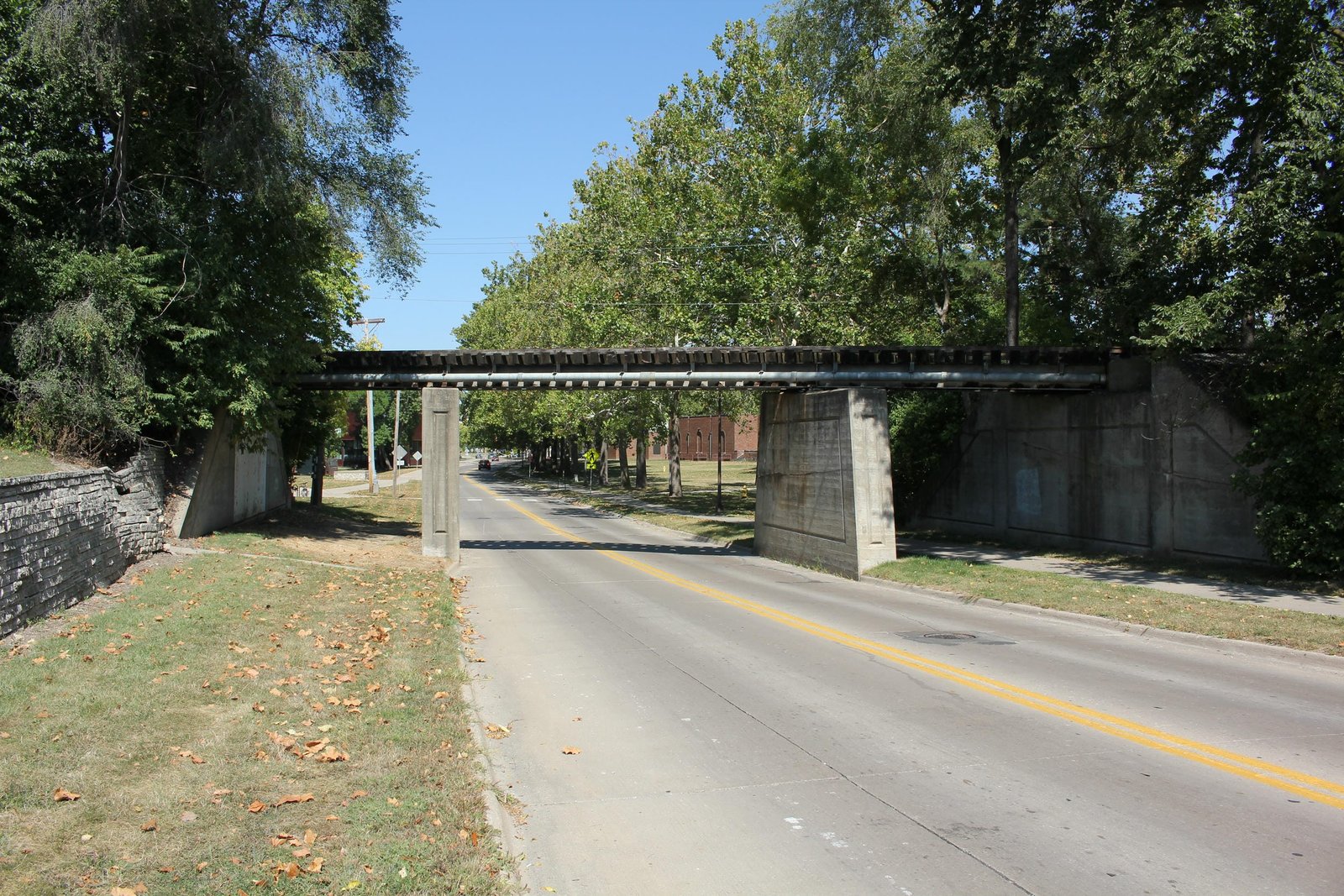
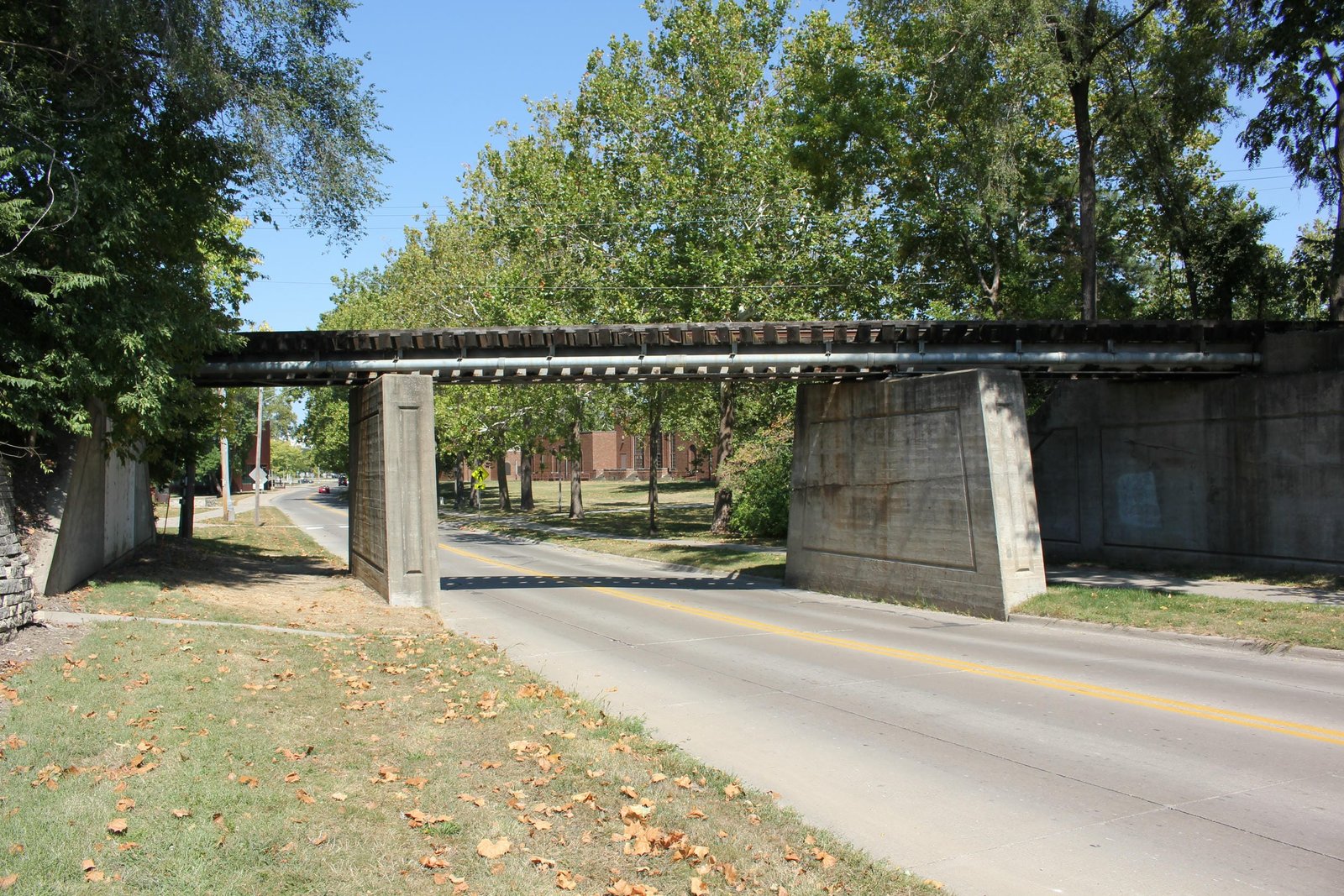
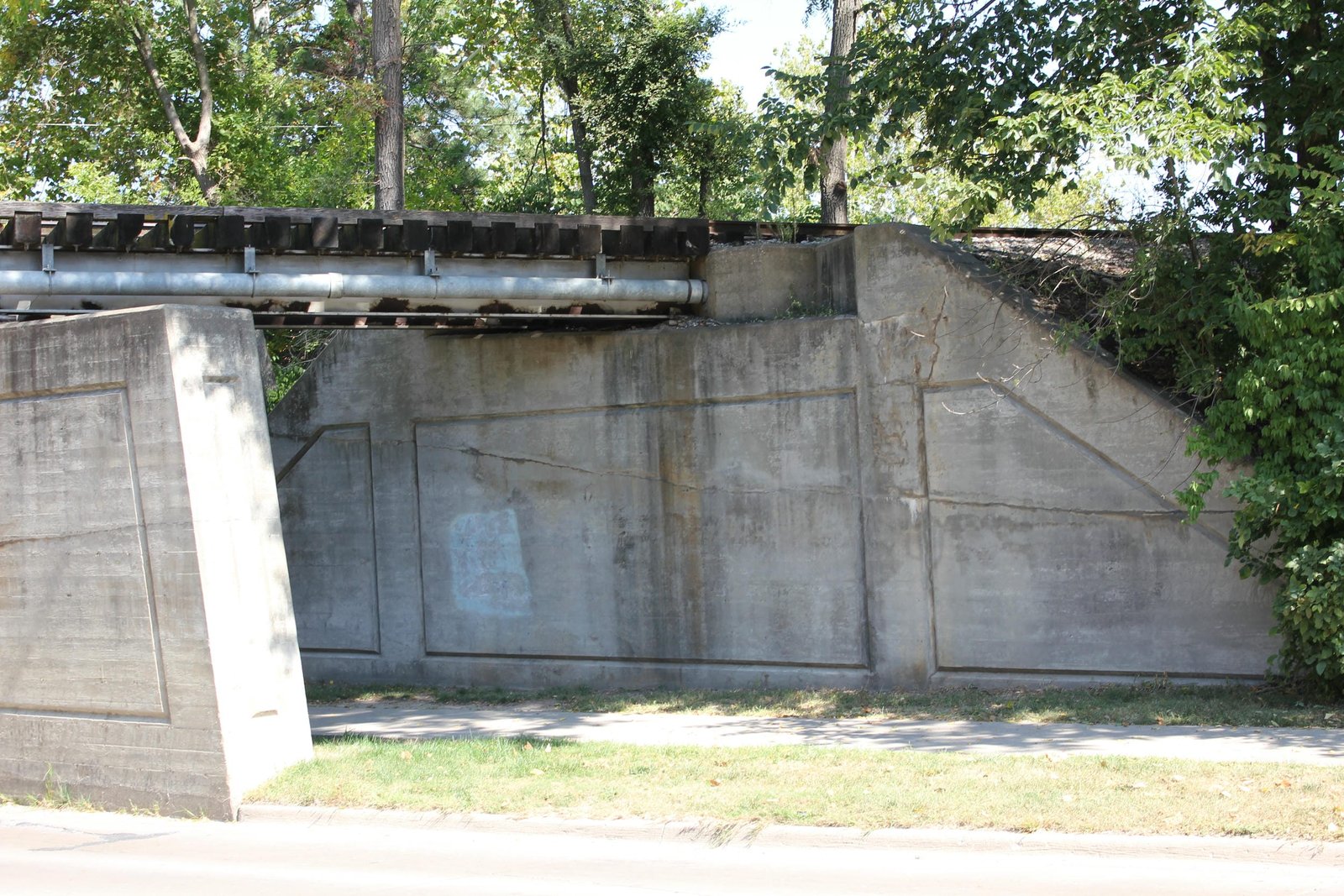
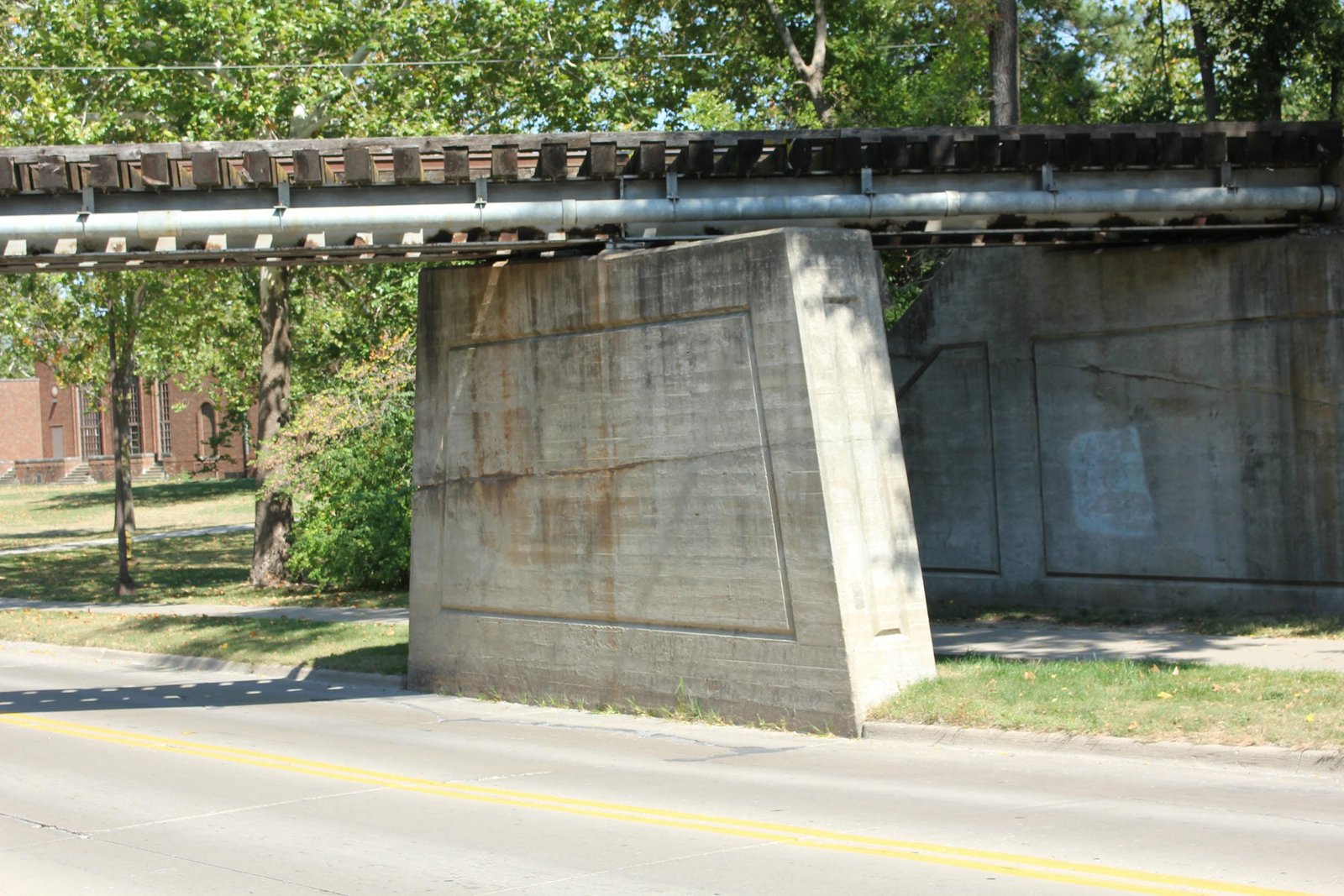
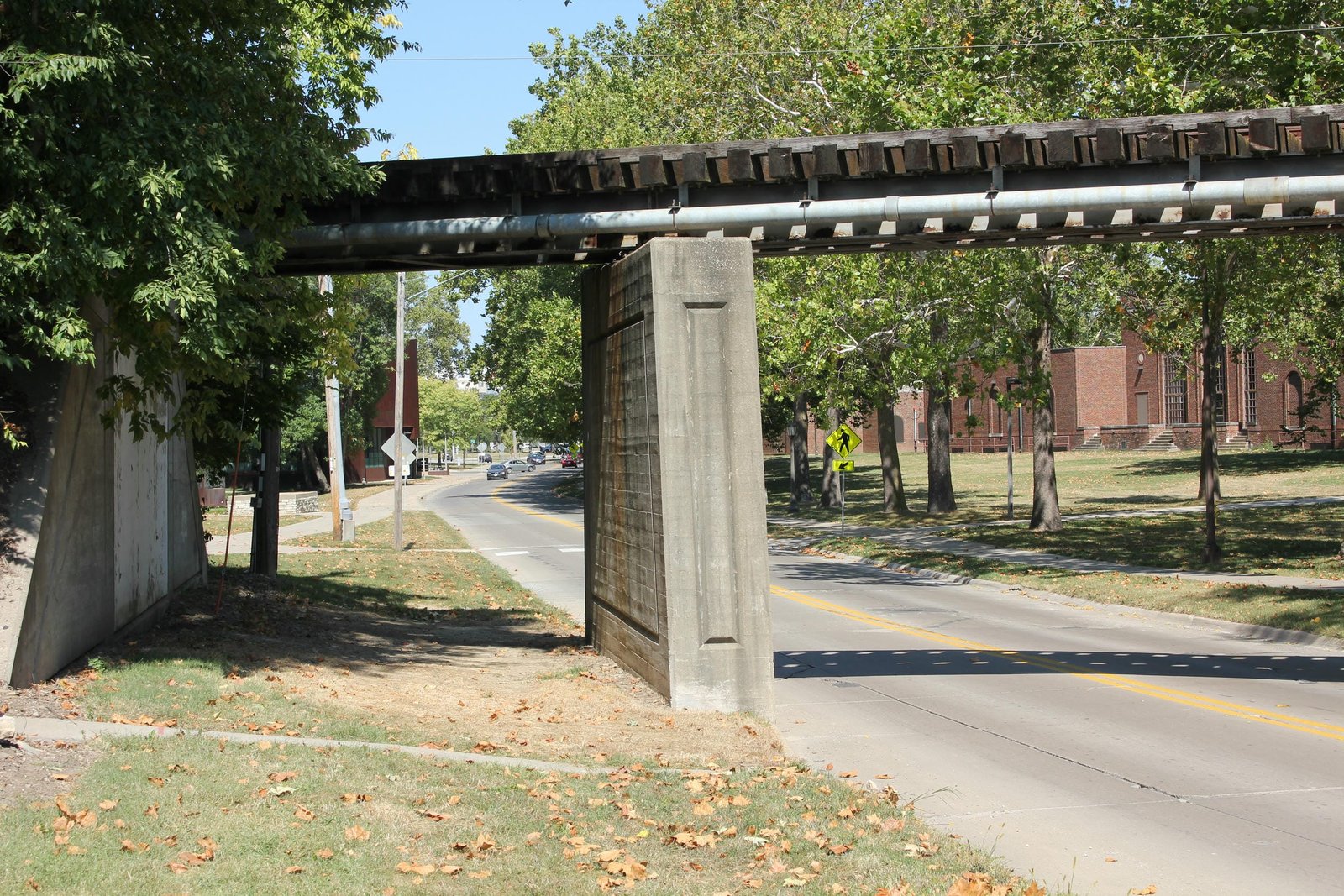
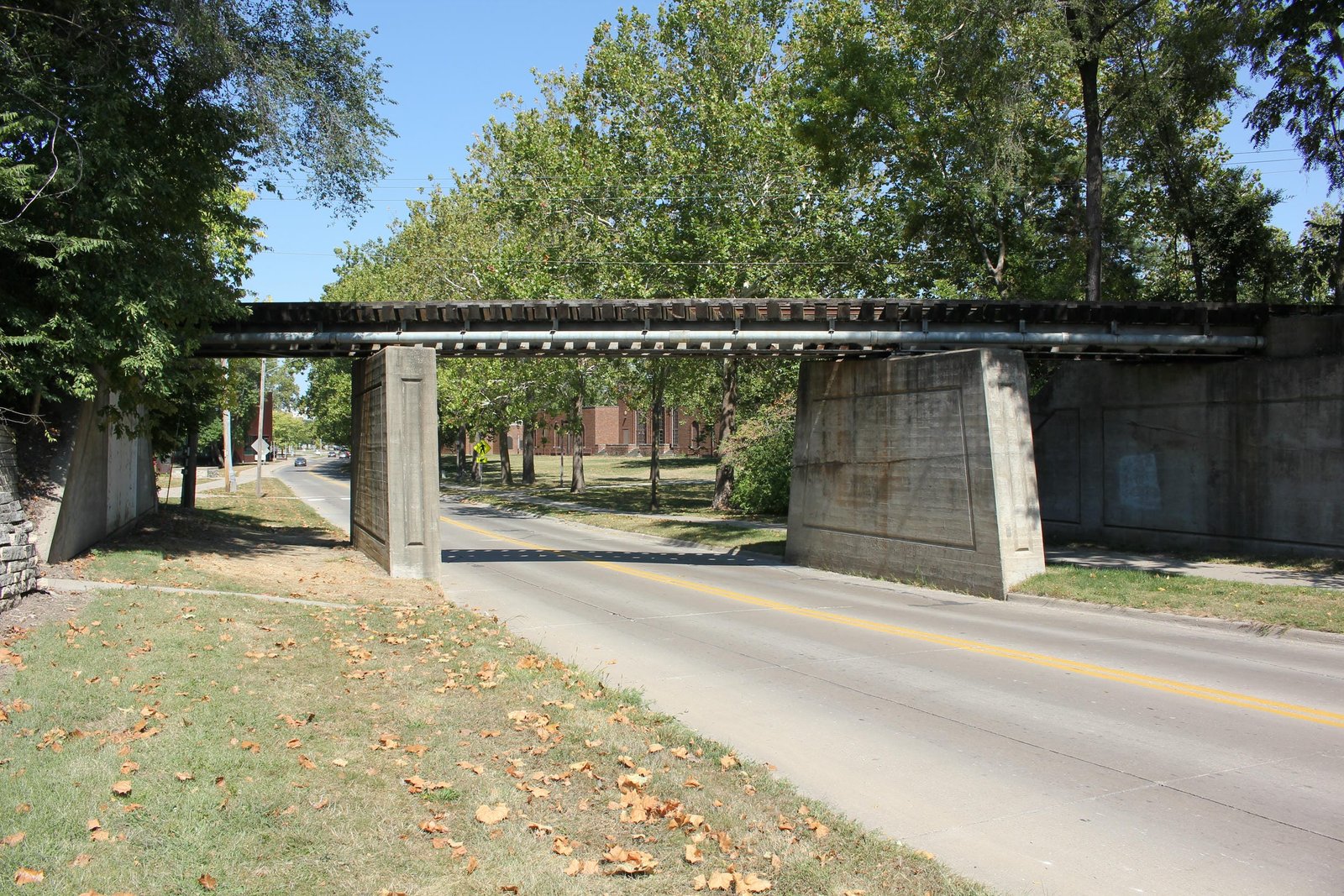
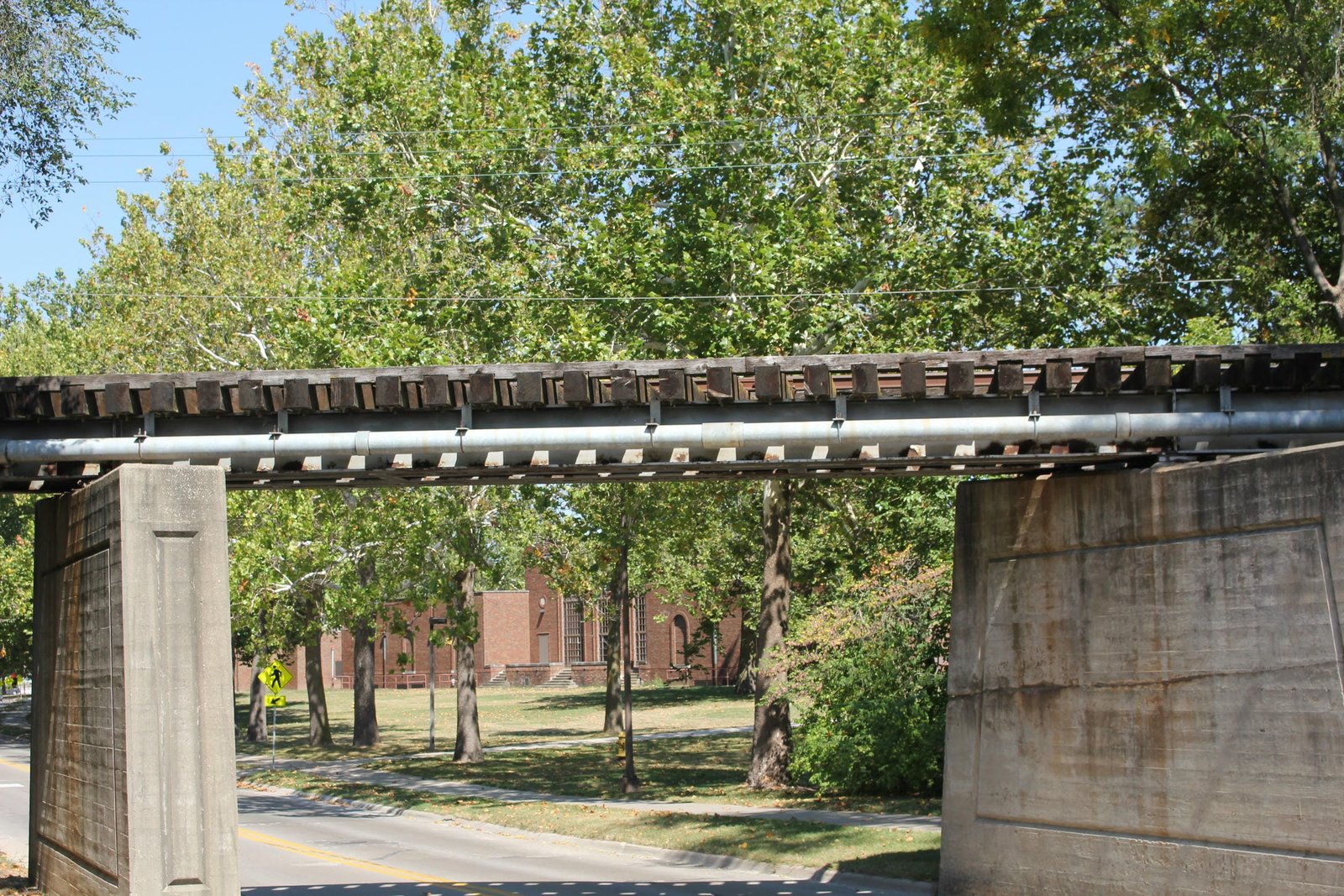
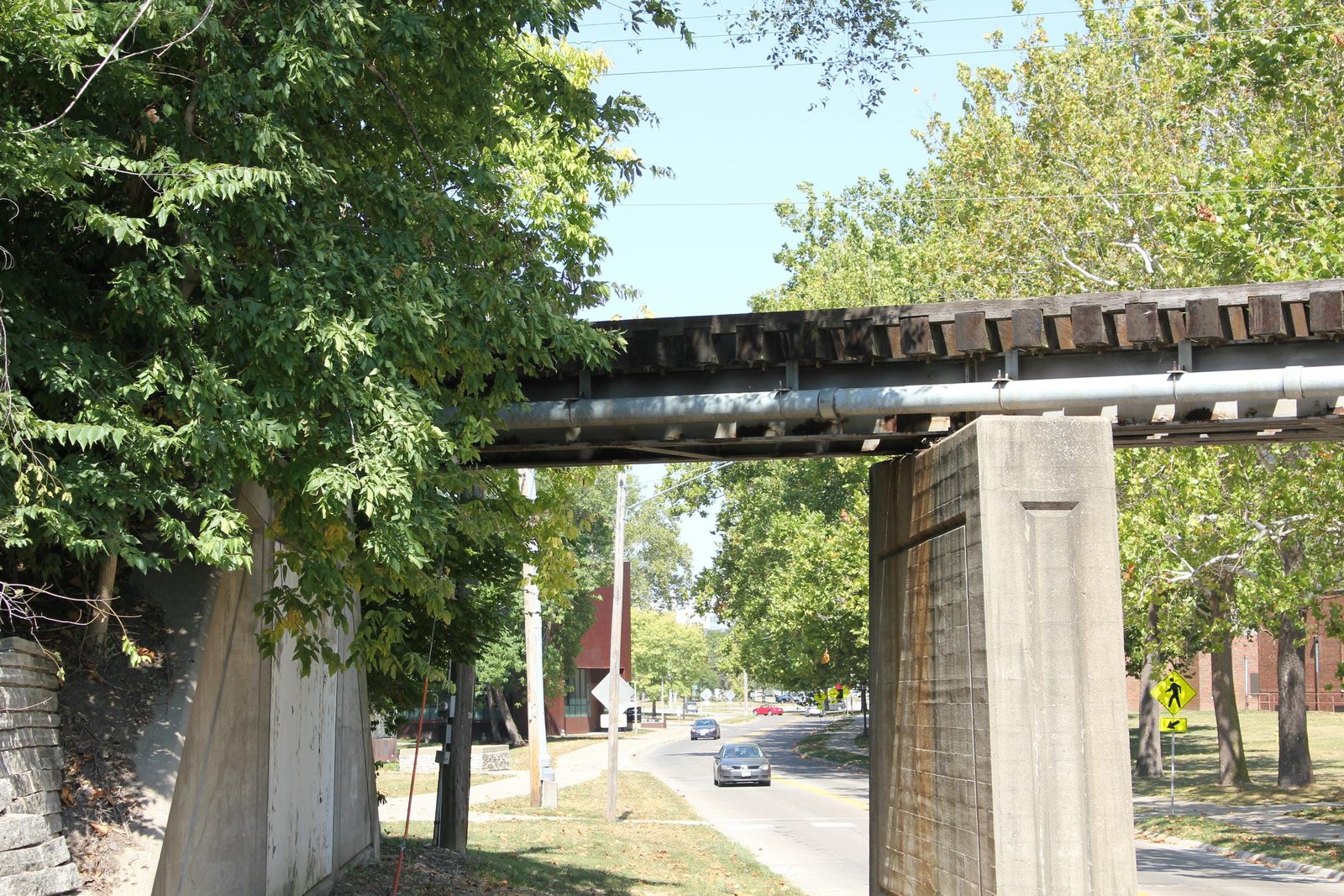
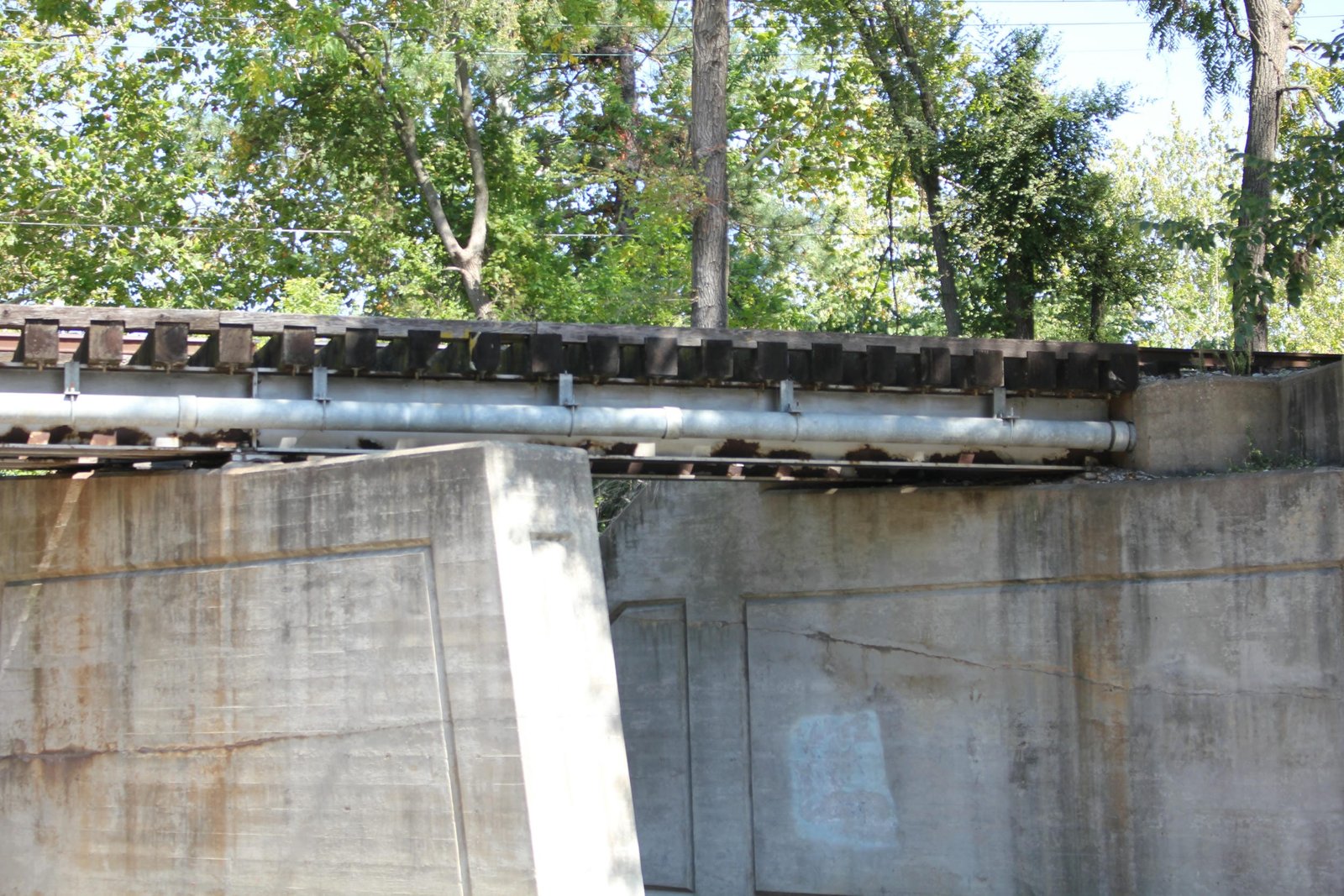
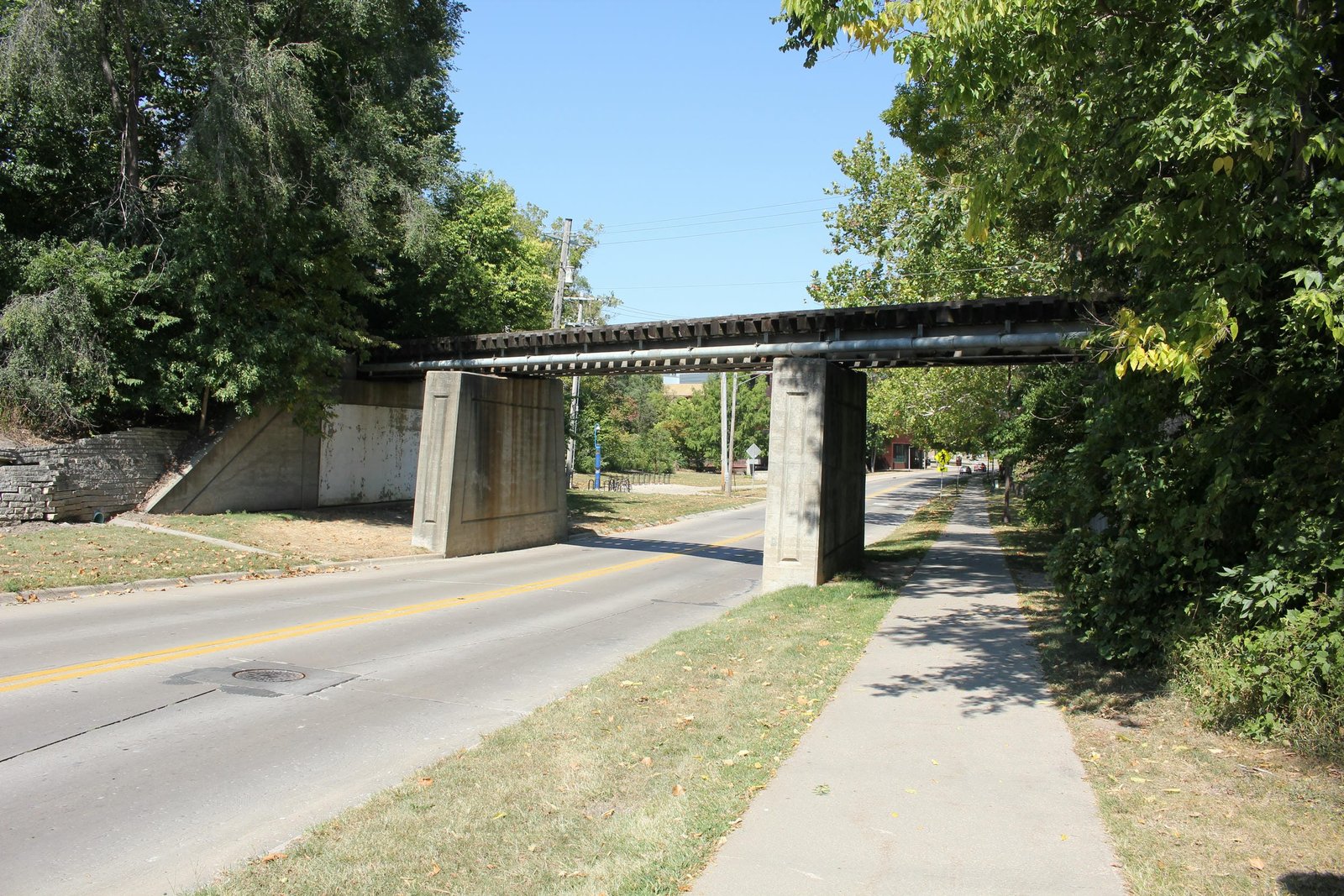
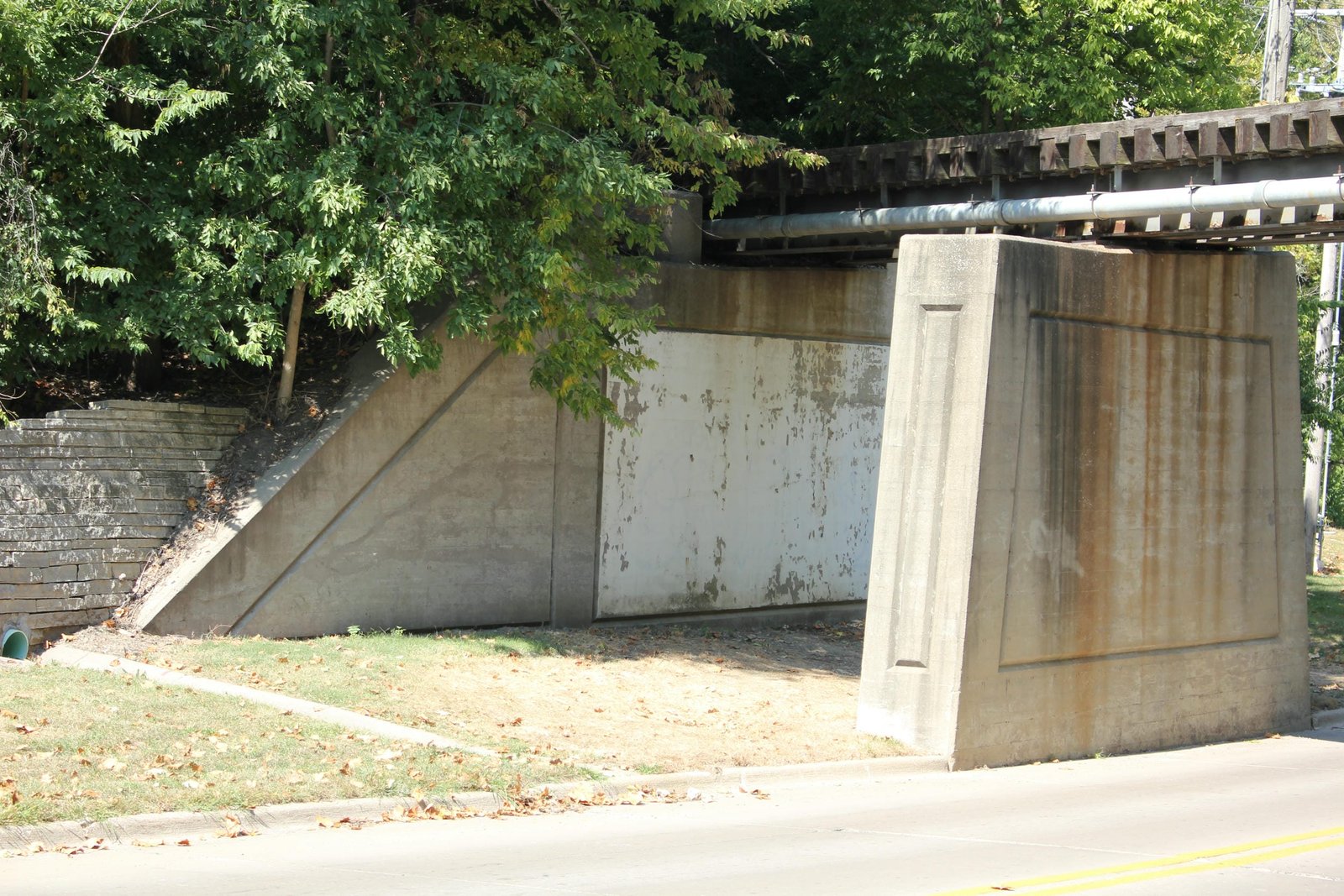
Located in Iowa City, this attractive steel stringer bridge carries the Cedar Rapids & Iowa City Railway mainline over Riverside Drive (formerly Templin Road). When the CIC was first constructed, the railroad crossed the Iowa River using a steel girder bridge, with lengthy timber pile trestle approaches crossing Iowa Avenue and Templin Road. In the 1920s, Iowa City and the CIC worked together to improve underpasses near the University of Iowa campus. In 1929, it was decided to reconstruct the Templin Road underpass and fill the north approach. Work was completed in early 1930, giving the structure its present appearance. Currently, the bridge consists of one 35-foot and two 21-foot steel stringer spans, set onto concrete substructures. In addition, the bridge runs at a heavy skew. The superstructure follows a standard design, with four shallow beams arranged into two sets of two. The piers use a standard rectangular shape with decorative stamps, while the abutments have sloped wing walls and decorative stamps. An unknown contractor fabricated the superstructure, and an additional unknown contractor constructed the substructure. Steel stringer spans were popular for railroad use, as they were durable and easy to construct. Since the initial construction, the bridge has seen no significant alterations, and remains in regular use. Overall, the bridge appears to be in fair to good condition, with only minor deterioration noted. The author has ranked this bridge as being locally significant, due to the common design and unclear history.
Citations
| Build date | Iowa City Press-Citizen; February 19, 1930 |
| Railroad History Citation | ICC Valuation Information, Compiled by Richard S. Steele |