
Click the photo to view the full-size version
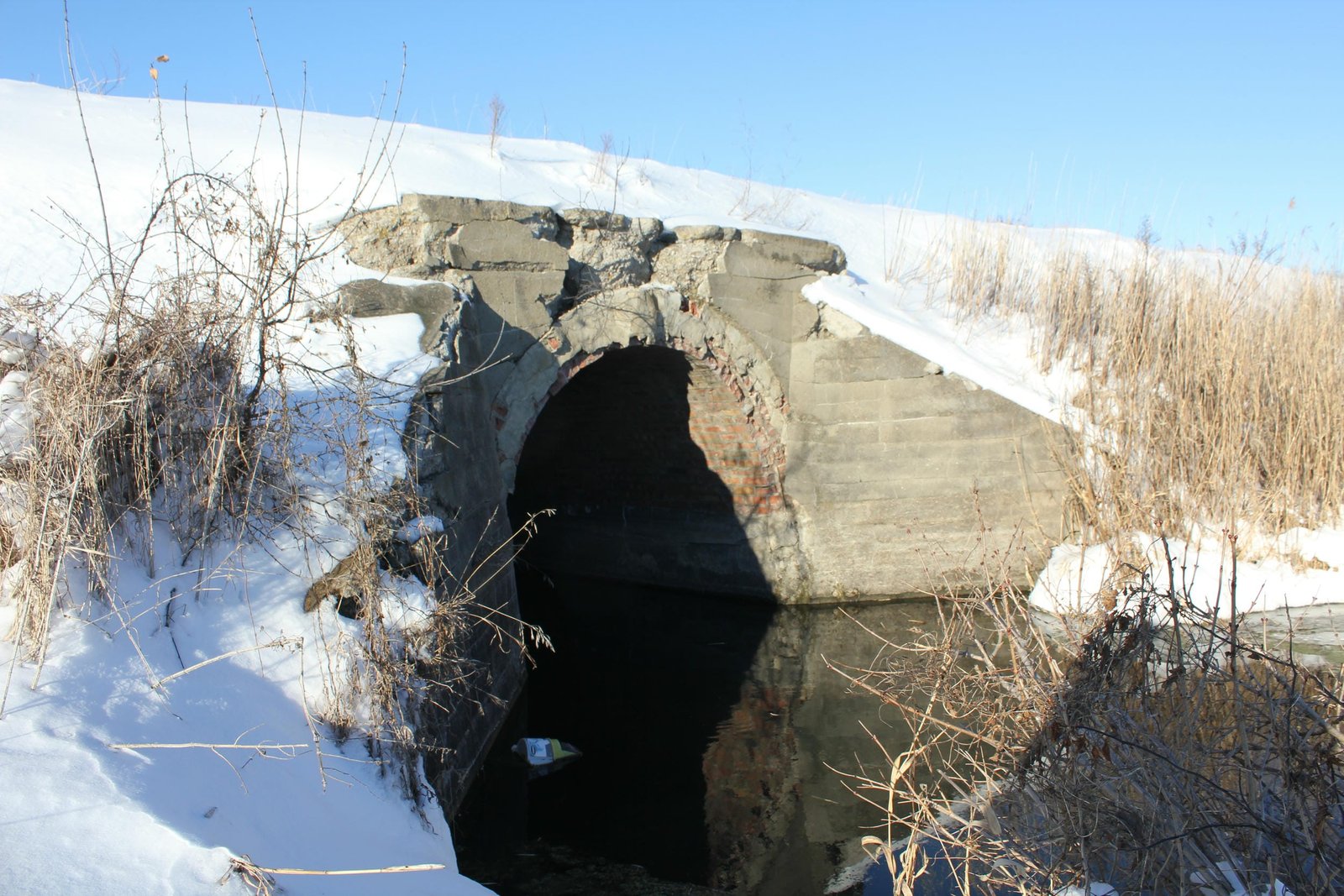
| Name | Ed Winkel Memorial Trail Culvert Chicago, Rock Island & Pacific Railway Culvert #255.12 |
| Built By | Burlington, Cedar Rapids & Northern Railway |
| Currently Owned By | Osceola County |
| Builder | Burlington, Cedar Rapids & Northern Railway Company Forces |
| Length | 8 Feet Total |
| Width | 1 Track (39 Feet) |
| Height Above Ground | 10 Feet (Estimated) |
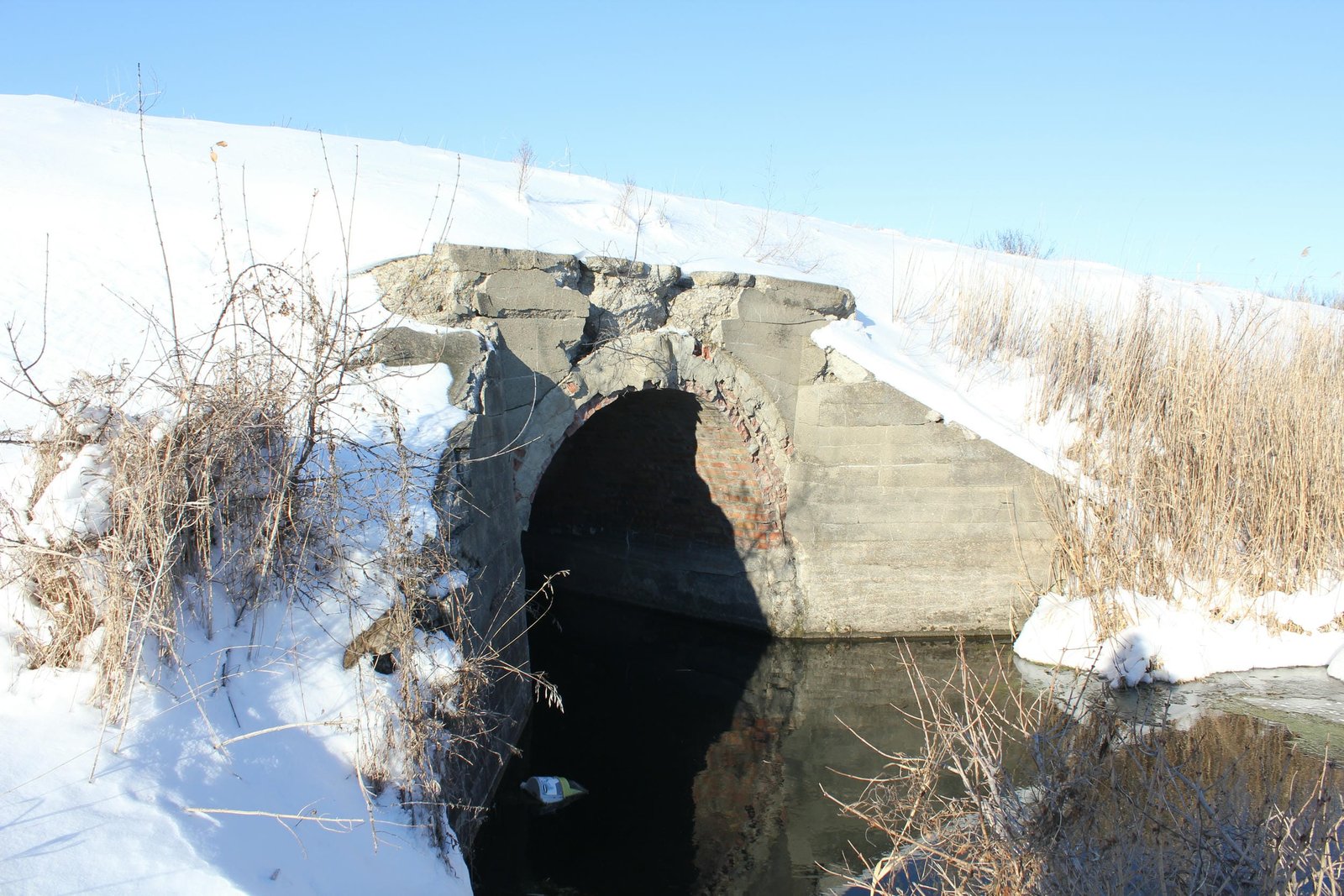
| Superstructure Design | Brick Lined Concrete Arch Culvert |
| Substructure Design | Concrete |
| Date Built | c. 1900 |
| Traffic Count | 0 Trains/Day (Bridge is Open to Pedestrian Traffic) |
| Current Status | Open to Pedestrian Traffic |
| Chicago, Rock Island & Pacific Railroad Bridge Number | 255.12 |
| Significance | Local Significance |
| Documentation Date | 1/1/2016 |
In 1873, the Burlington, Cedar Rapids & Minnesota Railway (BCR&M) constructed 24 miles of new railroad, extending from an existing line at Vinton, Iowa to Traer, Iowa. In 1877, the Burlington, Cedar Rapids & Northern Railway constructed an additional 24 miles of new railroad, extending from Traer to Holland. In 1878, the BCR&M was acquired by the BCR&N. In 1880, the Cedar Rapids, Iowa Falls & Northwestern Railway (CRIF&NW) constructed an additional 79 miles of new railroad, extending from Holland to Clarion, Iowa. The following year, an additional 59 miles of railroad were constructed, reaching Emmetsburg, Iowa. In 1882, an additional 70 miles of new railroad were constructed, extending from Emmetsburg, through Estherville and Lake Park, Iowa, to Worthington, Minnesota. In 1884, the line was completed from Lake Park, through Pipestone, Minnesota, to Watertown, South Dakota. The CRIF&NW was leased by the BCR&N in 1884. Throughout the 1880s, the BCR&N became a major railroad in Iowa, connecting towns in the eastern and northern portions of the state. This line served as a secondary mainline for the BCR&N, providing access to agricultural areas in northwest Iowa, southwest Minnesota and east central South Dakota. In 1900, the CRIF&NW constructed an additional 36 miles of new railroad, extending from Worthington to Hardwick, Minnesota, on the existing line. The CRIF&NW was outright purchased by the BCR&N in May 1902. The BCR&N was in turn purchased by the Chicago, Rock Island & Pacific Railway (Rock Island) in June 1903. The Rock Island operated a large railroad network through the central United States, serving diverse industries.
Between Vinton and Estherville, the Rock Island operated this line as a secondary line. The Rock Island operated the lines towards Watertown as branch lines. The Rock Island struggled financially throughout much of its history, experiencing repeated bankruptcies and chronic instability. After World War II, the Rock Island struggled to survive, proposing mergers and deferring maintenance on their routes. The railroad reorganized as the Chicago, Rock Island & Pacific Railroad in 1948. A section between Luverne, Minnesota and Kanaranzi, Minnesota was abandoned in 1962. In 1969, the Rock Island abandoned segments between Lismore, Minnesota and Watertown; between Ellsworth, Minnesota and Karanzi and between Luverne and Hardwick. By the mid-1970s, the railroad was in serious decline. The railroad secured loans to eliminate slow orders, acquired new equipment, and attempted to restore profitability. A short section from Little Rock, Iowa to Ellsworth was abandoned in 1977. In 1978, the railroad came close to profit, but creditors were lobbying for a complete shutdown of the Rock Island. During the fall of 1979, a strike crippled the railroad, and by January of 1980, the entire system was ordered to be shut down and liquidated. Many of the lines and equipment were scrapped. Profitable sections of railroad were prepared for sale. In 1980, several sections of this line were abandoned, including the Traer to Dows section; the Clarion, Iowa to Goldfield, Iowa section; the Lake Park to Lismore section section and the Sibley, Iowa to Little Rock section.
Three separate lines of this line were sold to other railroads. Between Vinton and Dysart, the line was acquired by the Iowa Northern Railway (IANR) for use as a branch line. Between Dows and Clarion, the Chicago & North Western Railway (C&NW) acquired the line as an industrial lead. Between Goldfield and Sibley, the line was also sold to the C&NW for use as a secondary line to serve agricultural industries. A short segment between Allendorf, Iowa and Sibley, Iowa was abandoned by the C&NW in 1981. It is believed that the Superior, Iowa to Allendorf segment was sold to the Iowa Northwestern Railroad (IANW) around the same time. In 1994, IANR abandoned the Vinton to Traer segment of this line. In 1995, the C&NW was acquired by Union Pacific Railroad (UP). IANW abandoned the line between Ocheyedan, Iowa and Allendorf in 2004, followed by the segment between Superior, Iowa and Ocheyedan in 2008. Today, UP operates the Estherville Subdivision between Goldfield and Superior, as well as the Dows Industrial Lead between Dows and Clarion. Three sections of the line have been reused as trails, including the segment between Vinton and Dysart as the Old Creamery Trail, the segment between Reinbeck and Holland as the Pioneer Trail and the segment between Allendorf and Sibley as the Ed Winkel Memorial Trail. An additional trail is currently being developed between Superior and Allendorf, and will be known as the Iowa Great Lakes Trail.
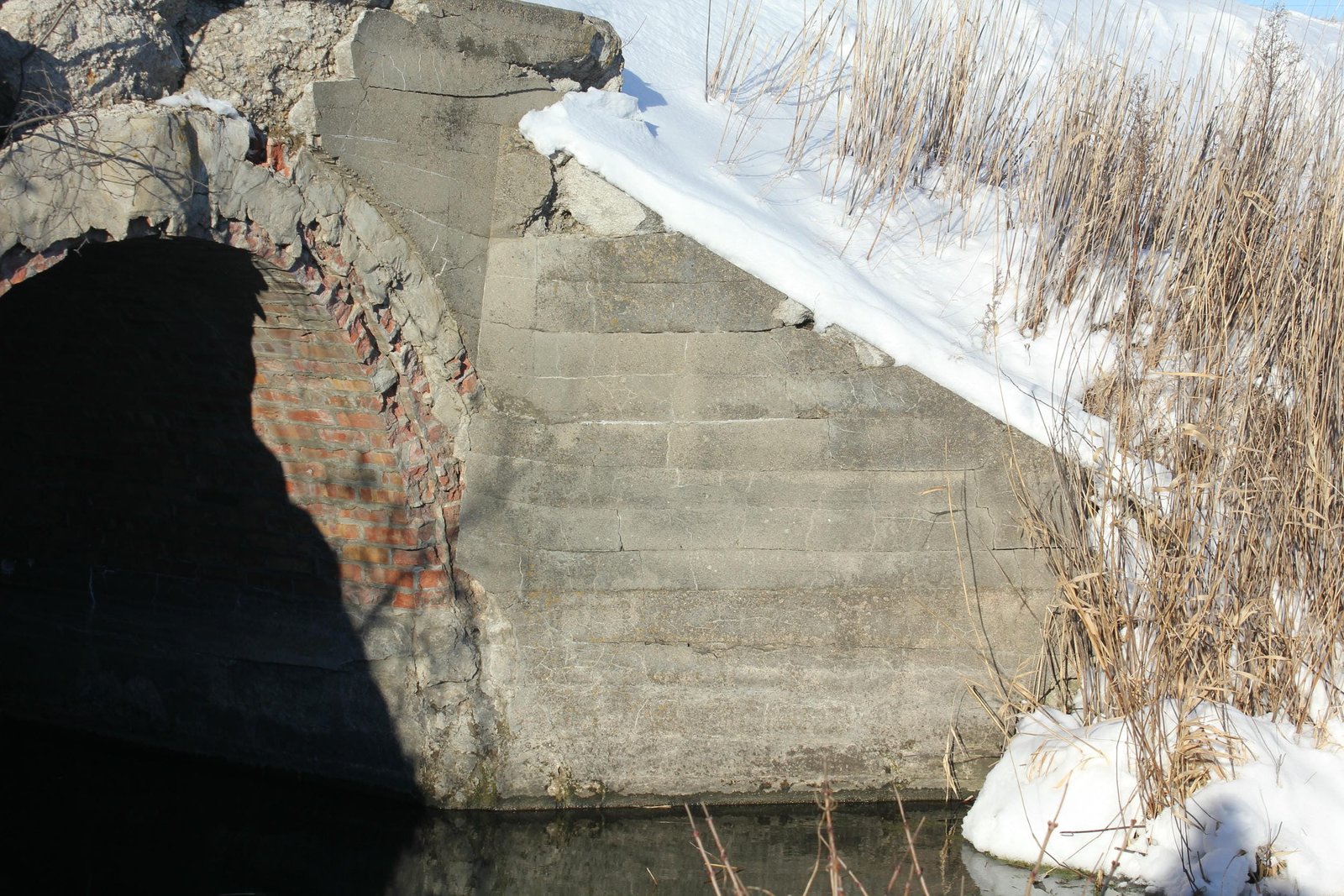
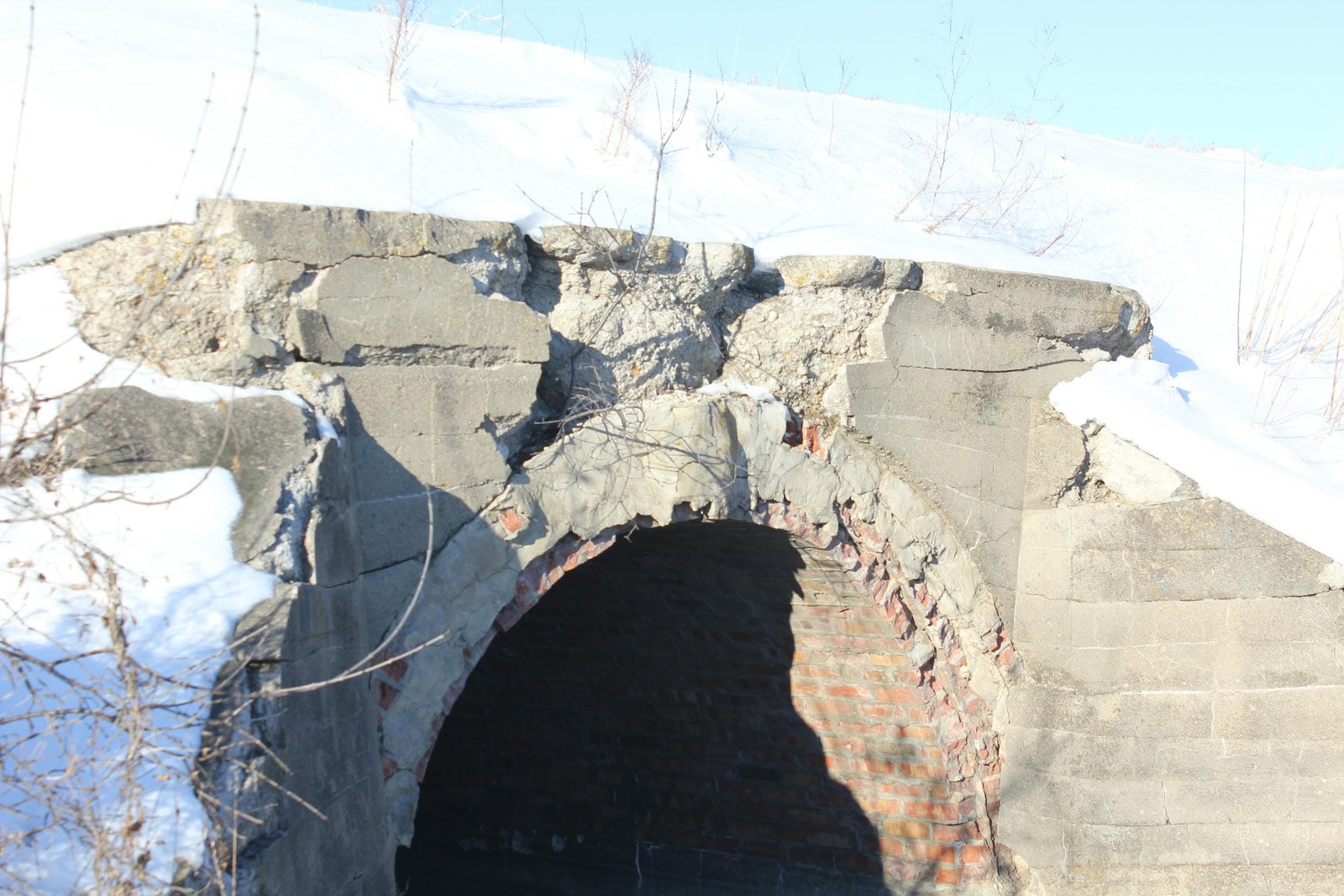
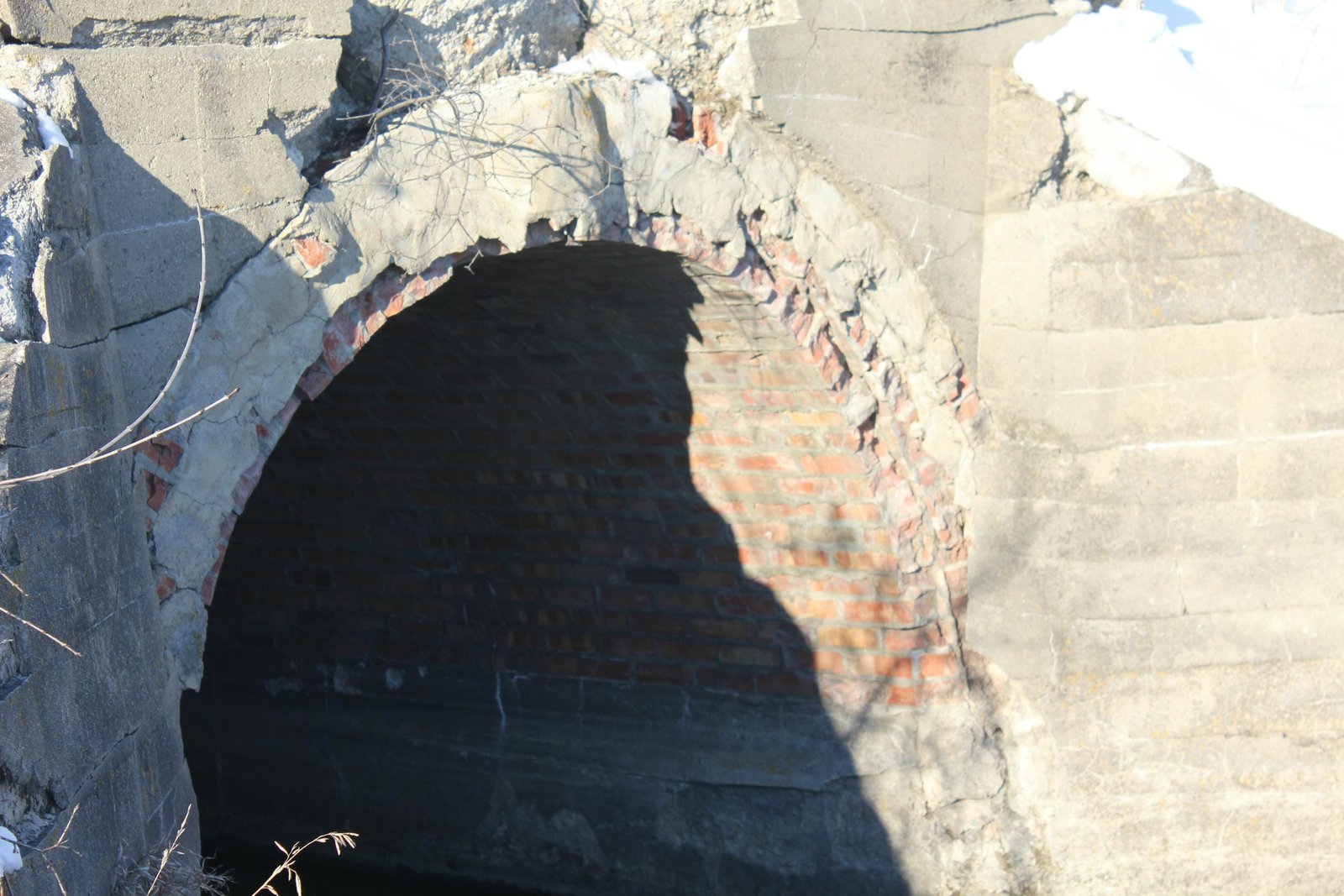
Located east of Sibley, this concrete culvert carries a former Chicago, Rock Island & Pacific Railway line over an unnamed creek. The first bridge at this location was likely a timber pile trestle, constructed when the line was built. In the late 1890s and early 1900s, the BCR&N and Rock Island invested significant capital into this line, replacing timber bridges with steel, stone and concrete structures. The present structure was constructed in approximately 1900. Currently, the structure consists of a 8-foot by 8-foot brick lined concrete arch culvert, set onto concrete substructures and constructed at a width of 39 feet. The culvert follows a standard design for the era, with a brick arch and concrete headwalls. The wing walls are sloped and extend from the culvert at an angle. It is believed that labor employed by the BCR&N constructed the culvert. The BCR&N switched from using stone to concrete in the late 1890s, and it was customary for this company to construct their own concrete structures. Brick lined arches were used extensively by the BCR&N, as it is believed that the bricks provided a cheaper and stronger arch ring. Arch culverts were popular with railroads, as they were durable and easy to construct. The culvert now carries the Ed Winkel Memorial Trail. Overall, the culvert appears to be in fair to poor condition, with several sections of deteriorated concrete. The author has ranked this culvert as being locally significant, due to the common design.
Citations
| Railroad History Citation | ICC Valuation Information, Compiled by Richard S. Steele |