
Click the photo to view the full-size version
| Name | UP Boyer River Bridge #1 Chicago & North Western Railway Bridge #876 |
| Built By | Chicago & North Western Railway |
| Currently Owned By | Union Pacific Railroad |
| Superstructure Contractor | American Bridge Company of New York |
| Substructure Contractor | Condon-Cunningham Company of Omaha, Nebraska |
| Length | 270 Feet Total, 175 Foot Main Span |
| Width | 2 Tracks |
| Height Above Ground | 15 Feet (Estimated) |
| Superstructure Design | Warren Through Truss and Steel Stringer |
| Substructure Design | Concrete Pile |
| Date Built | 1948 |
| Traffic Count | 50 Trains/Day (Estimated) |
| Current Status | In Use |
| Chicago & North Western Railway Bridge Number | 876 |
| Union Pacific Railroad Bridge Number | 289.89 |
| Significance | Moderate Significance |
| Documentation Date | 10/16/2015 |
In 1867, the Cedar Rapids & Missouri River Railroad (CR&MR) continued constructing a mainline westward from Boone, Iowa. In the late 1850s and early 1860s, the CR&MR had participated in constructing a line from Clinton, Iowa to Boone. The CR&MR was leased by the Chicago & North Western Railway (C&NW), which was seeking a route connecting Chicago to the Missouri River. In 1867, an impressive 150 miles were constructed between Boone, Iowa and Council Bluffs, Iowa, completing a connection between Chicago and the Missouri River. The line also allowed for a short spur from Missouri Valley, Iowa to the Missouri River opposite of Blair, Nebraska. This spur would eventually be extended across the Missouri River and into Nebraska. Between 1869 and 1872, Union Pacific Railroad (UP) constructed a bridge across the Missouri River between Council Bluffs and Omaha, Nebraska; and the C&NW obtained trackage rights over the bridge to reach Omaha. During the second half of the 19th Century, the C&NW had constructed and acquired a large amount of trackage throughout the Midwest. In 1884, the CR&MR was formally purchased by the C&NW; and this line quickly became a core asset of the C&NW system.
By the late 19th Century, traffic over this line had increased to the point significant upgrades were required. In 1893, a 5-mile section of railroad was relocated west of Jefferson, Iowa to improve grades and eliminate curves. One of the most significant barriers to efficient operation over this line was the Des Moines River Valley between Boone and Ogden, Iowa. The original route crossed the Des Moines River at Moingona, which was approached by winding and steep approaches on each bank. In 1899, C&NW subsidiary Boone County Railway (BCR) began construction on a more direct route between Boone and Ogden, Iowa; including a massive viaduct across the Des Moines River. The BCR was consolidated into the C&NW in 1900, and the new cutoff was completed in May 1901. The new alignment shortened the route by 3 miles, cut grades in half and only required two small curves. The original mainline through Moingona was maintained as an emergency backup and to serve industries in the area. Between 1901 and 1902, a second track was also constructed between Ogden and Council Bluffs, including a 5-mile realignment near Arcadia, Iowa. The double tracking of this line provided the C&NW with a well constructed double track mainline between Chicago and Council Bluffs.
By the 20th Century, the C&NW was operating an extensive railroad network, which radiated north and west from Chicago. The original mainline into Moingona was abandoned in 1930. This line served as the backbone of the C&NW, connecting transcontinental freight and passengers at Omaha to Chicago. Known as the Overland Route, this line became one of the most significant railroad routes in the United States. This route saw continuous upgrades during the 20th Century, including significant bridge, rail, tie and signal upgrades. In 1995, the C&NW was purchased by UP, which provided UP with a mainline into the railroad hub of Chicago. Into the 21st Century, the line has seen continuous upgrades, and remains one of the most significant railroad lines in the United States. Today, UP operates this line as the Boone Subdivision between Boone and Missouri Valley; and the Omaha Subdivision between Missouri Valley and Council Bluffs.
View an article describing the construction of this bridge
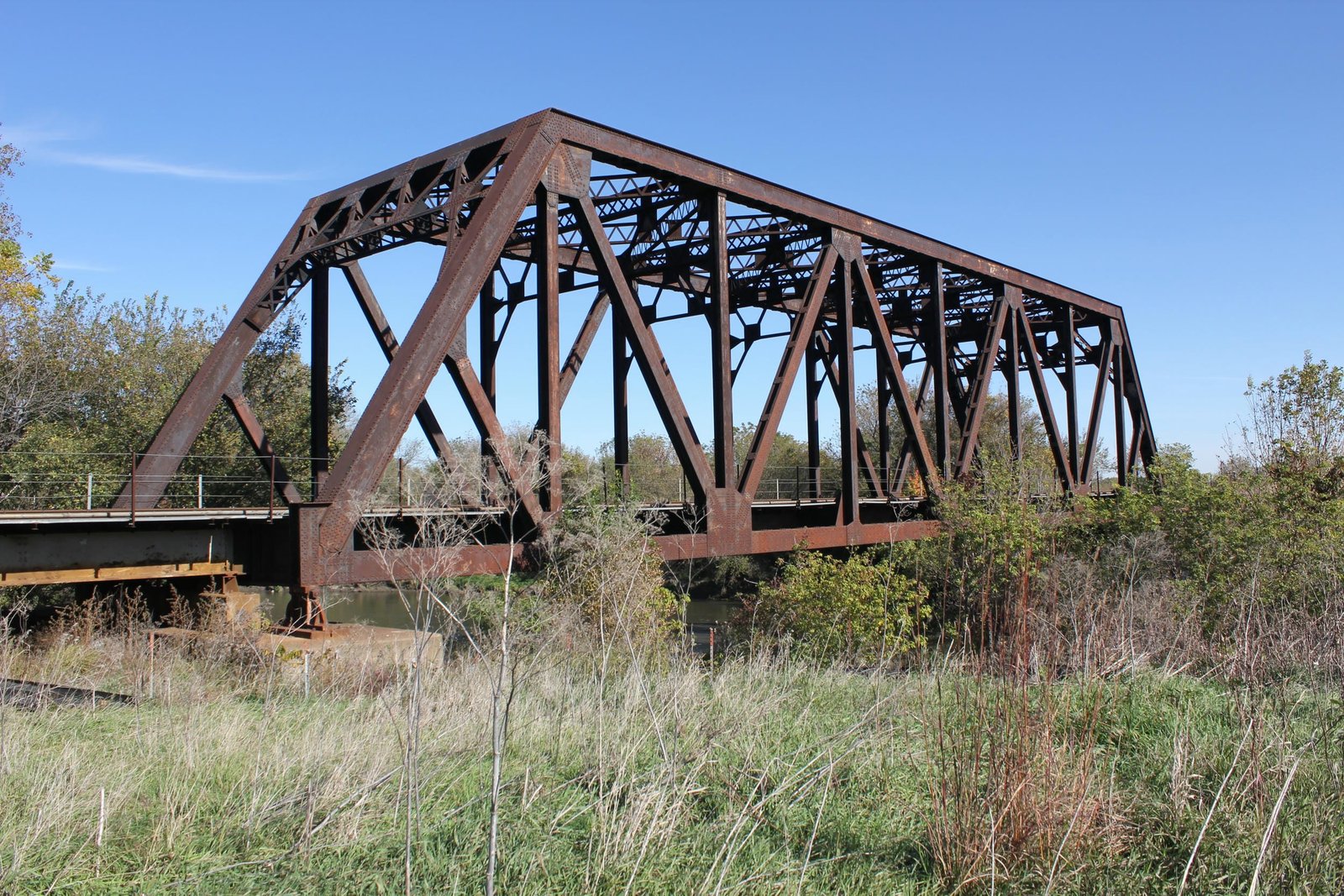
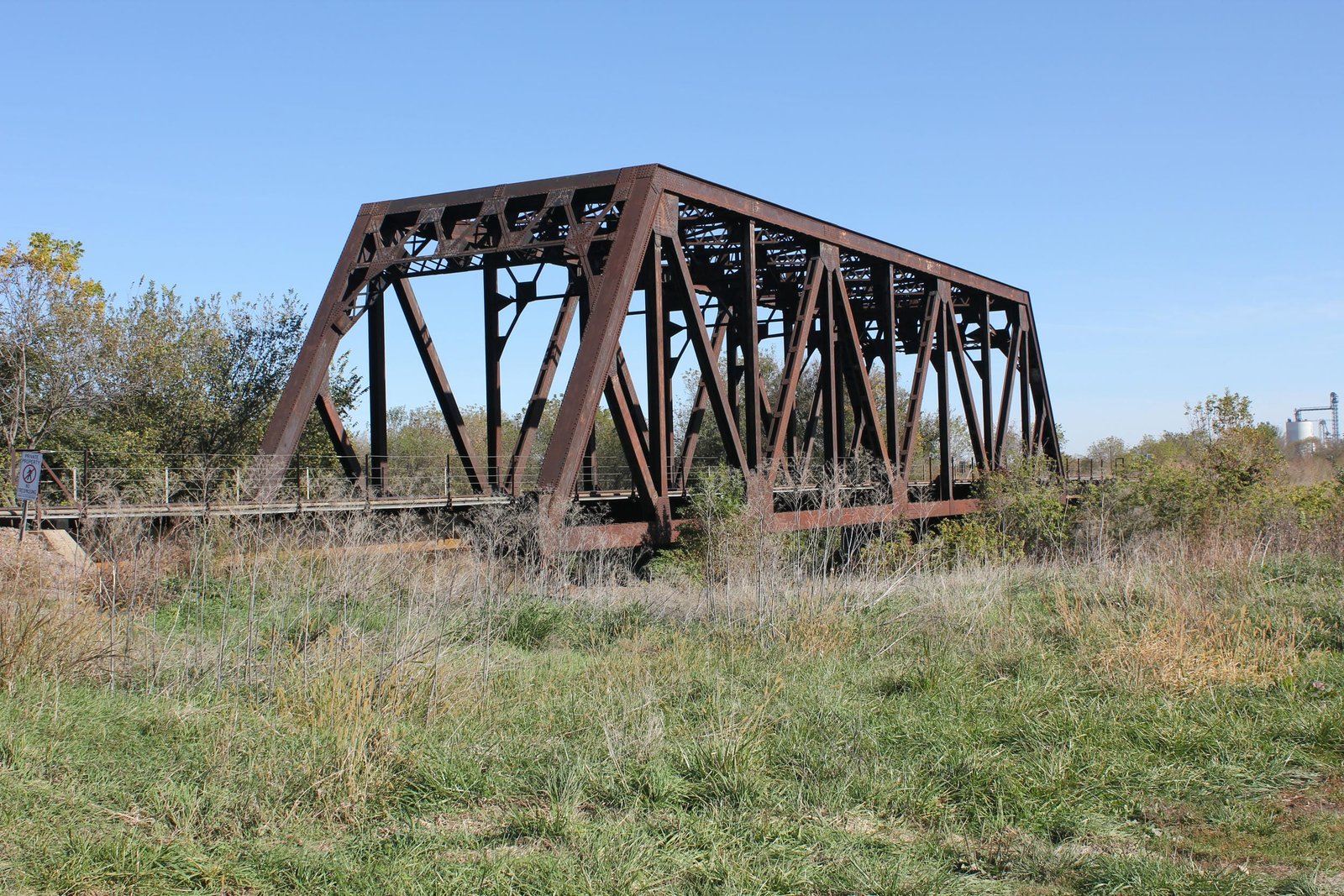
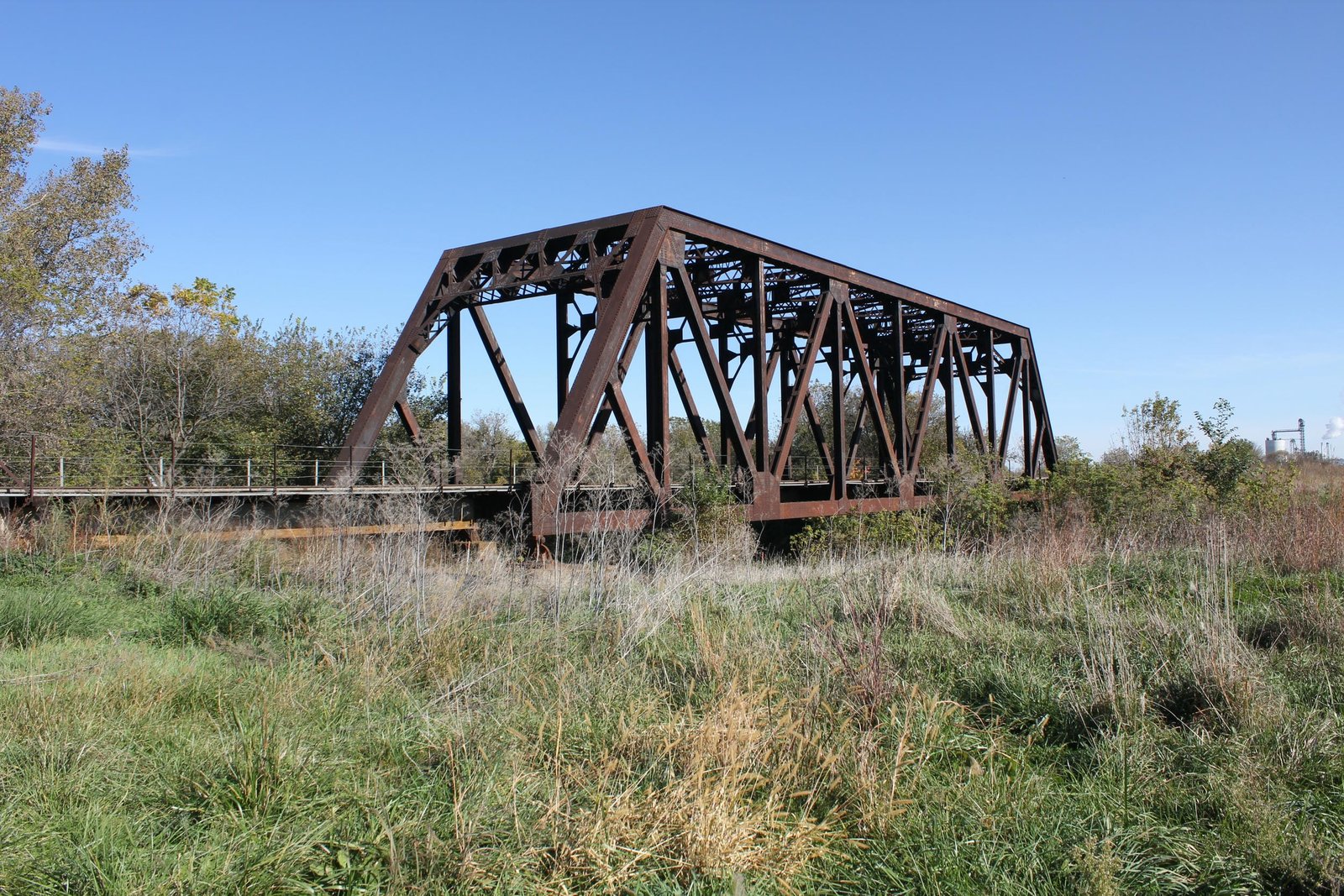
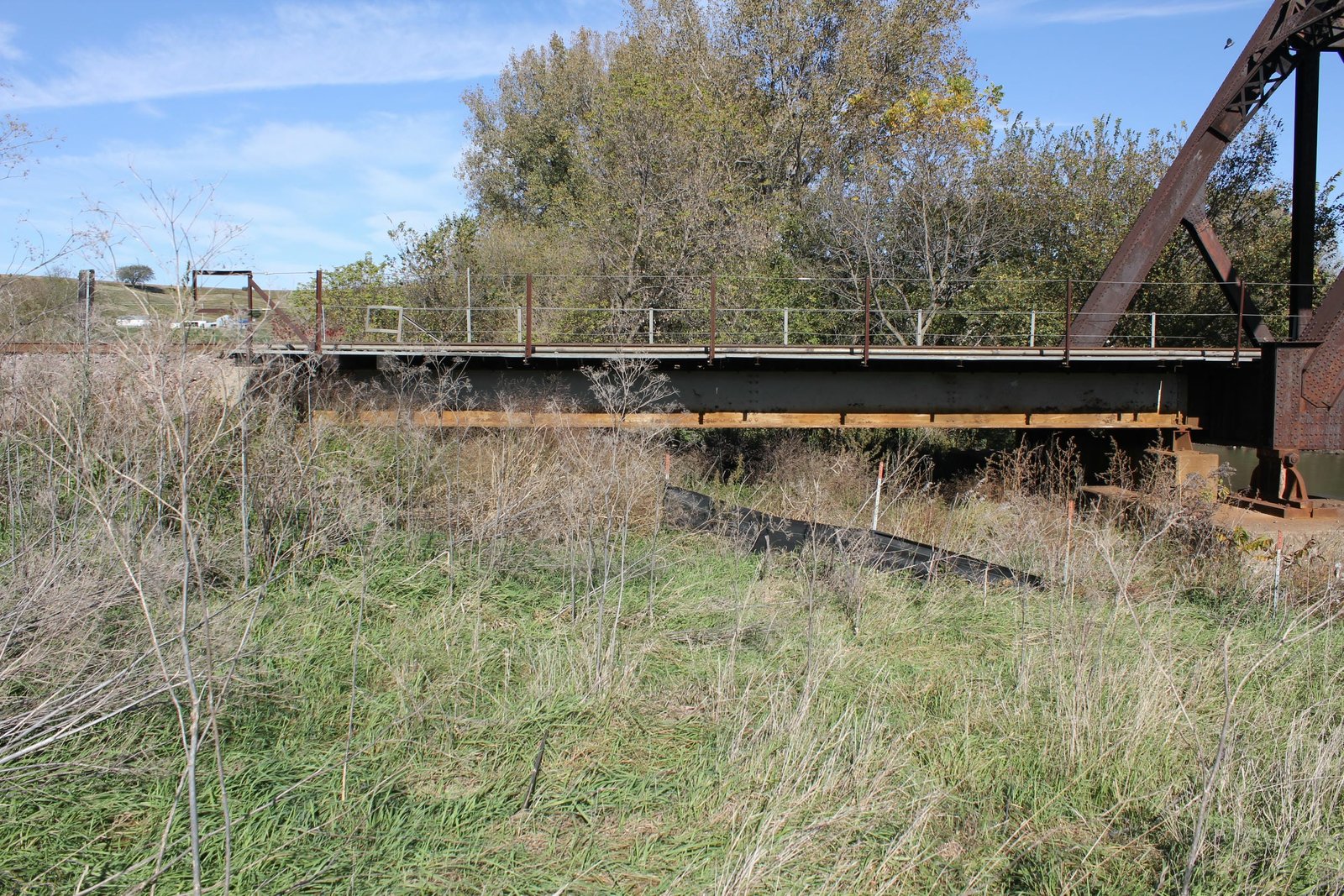
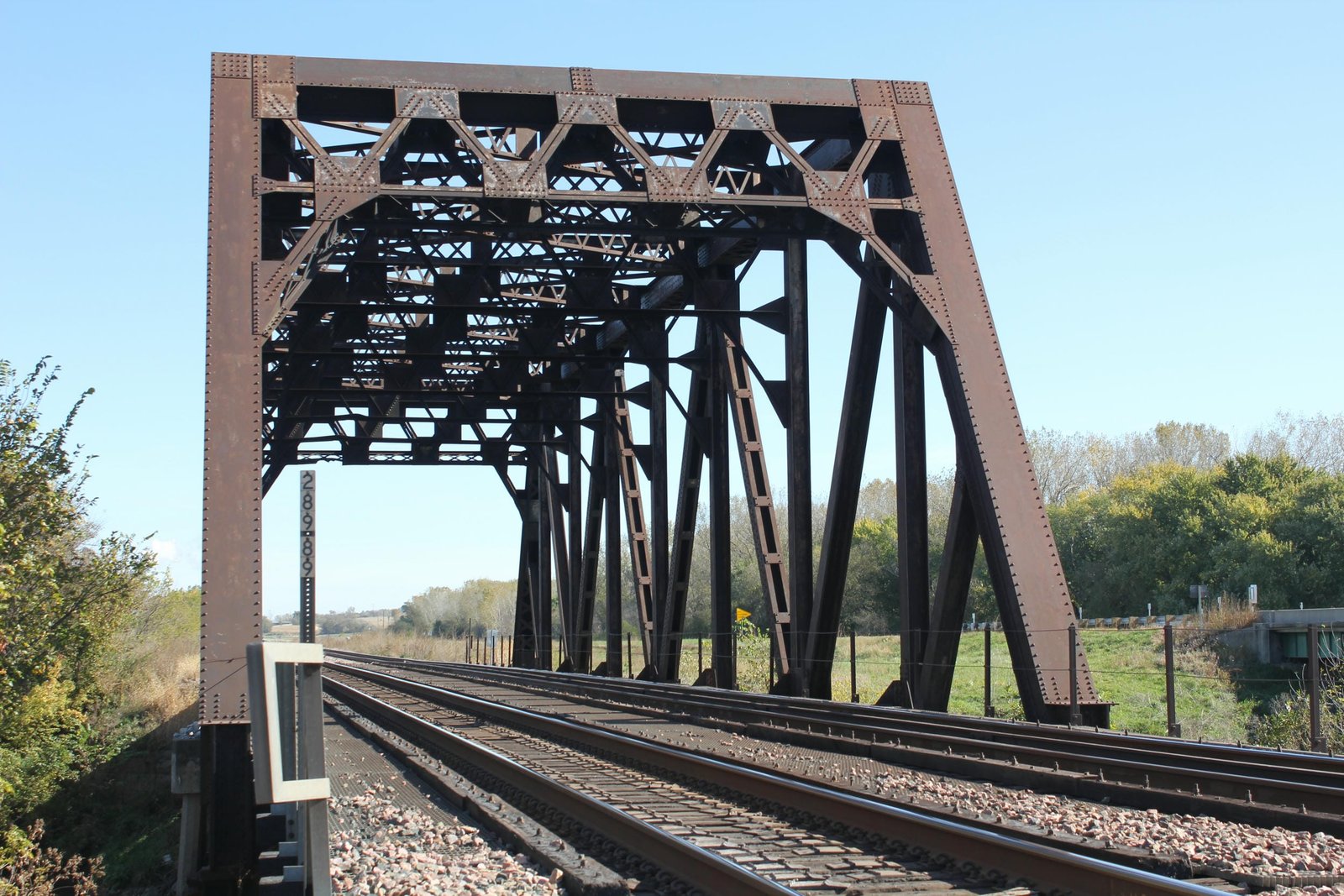
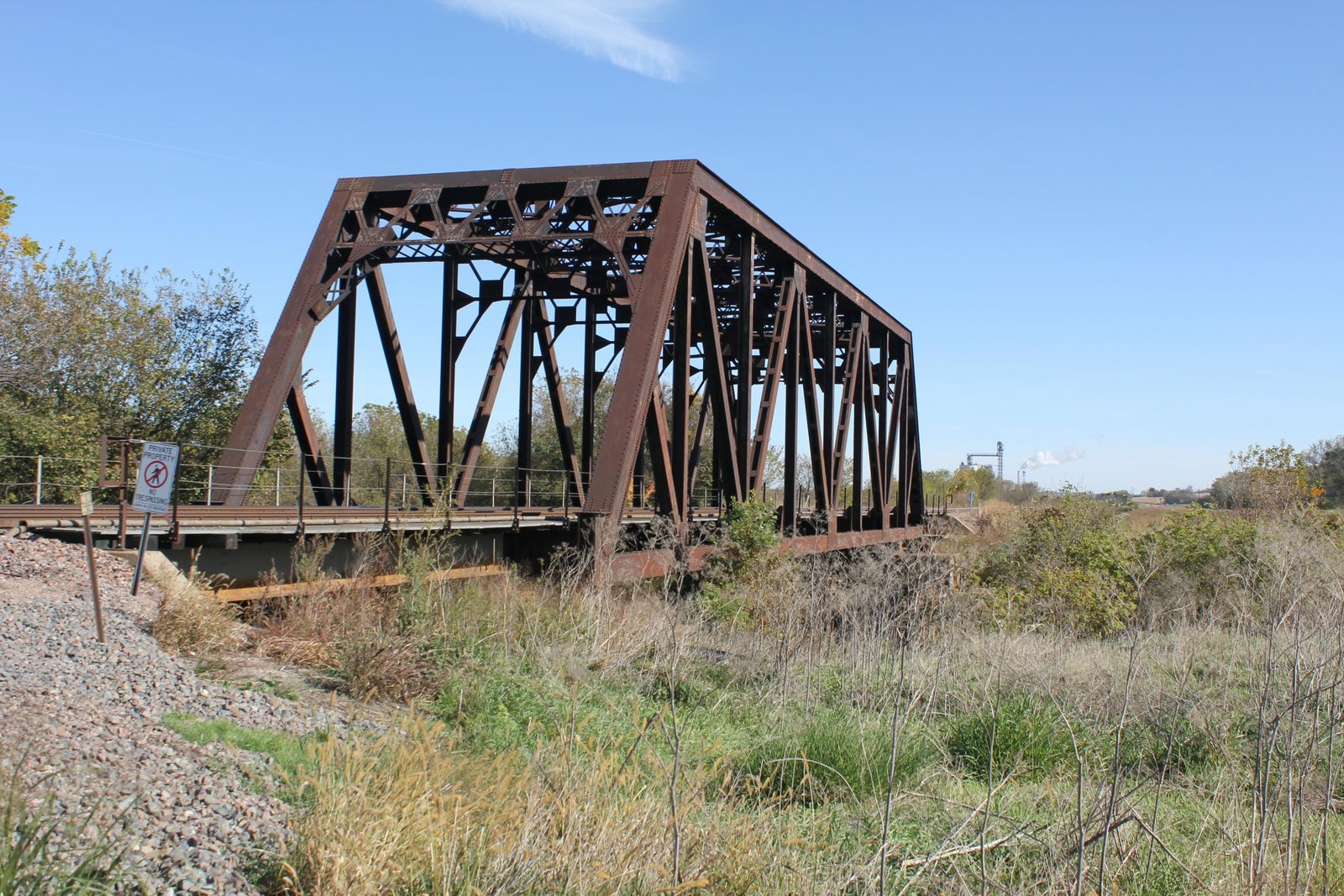
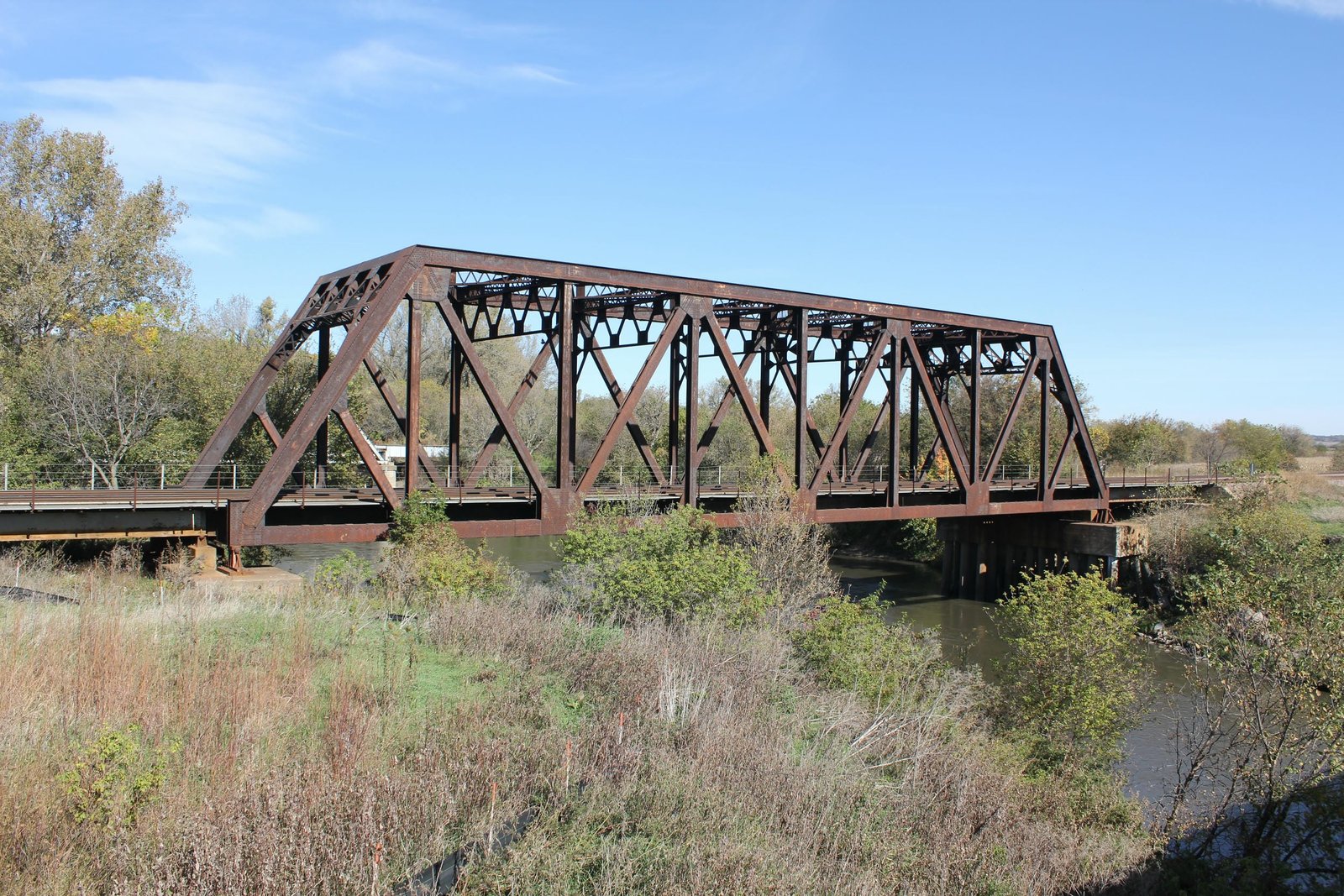
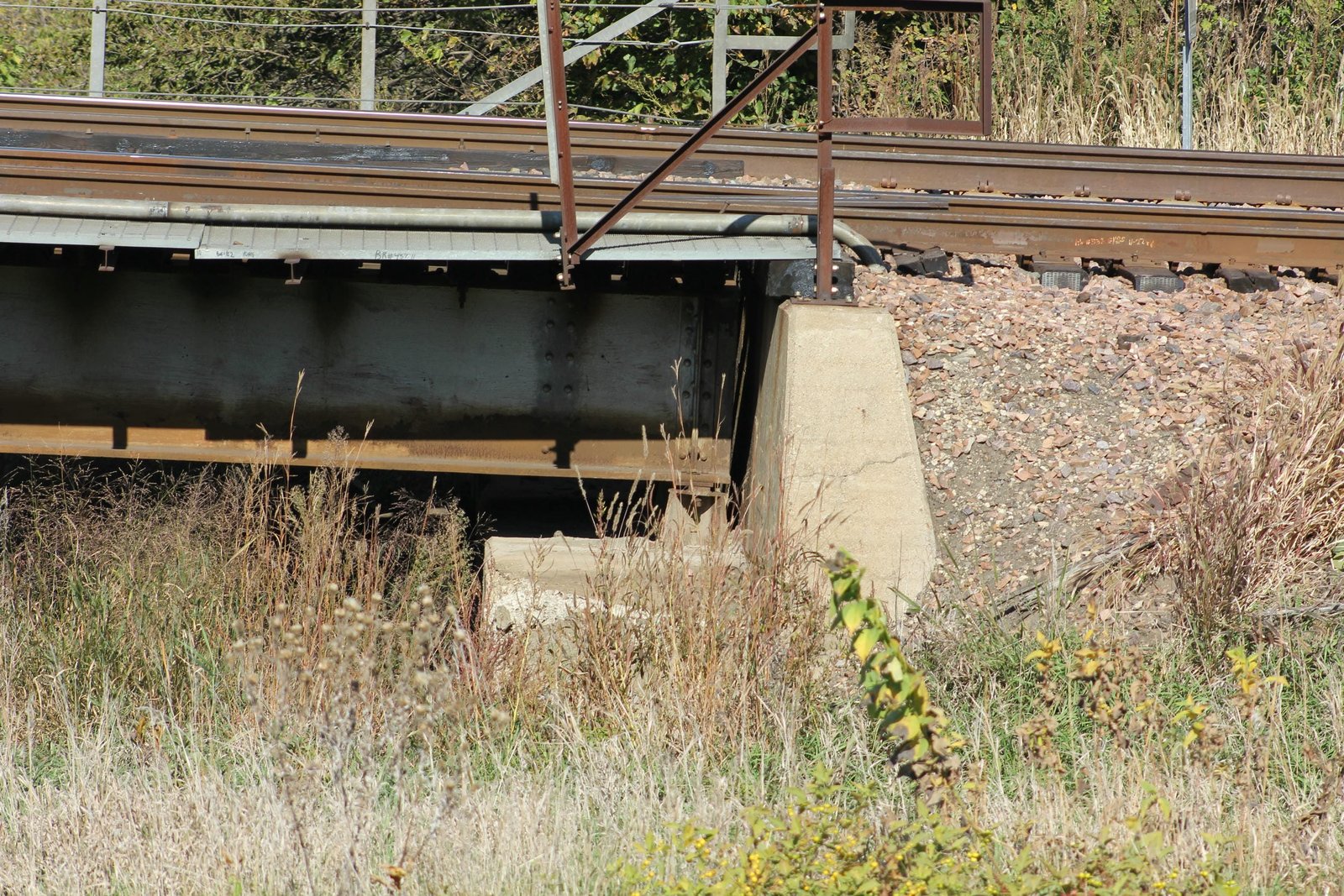
.Located along US Highway 30 between Denison and Arion, this large through truss bridge is the eastern of three similar bridges and the first of four bridges carrying a former Chicago & North Western Railway mainline over the Boyer River. Since the railroad first arrived in the area, the Boyer River had been troublesome, often flooding, washing out the tracks and requiring larger bridges to be constructed. The first bridge at this location likely consisted of a timber truss bridge, constructed when the line was first built. In 1874, the bridge was rebuilt with a 119-foot combination Howe through truss span, set onto timber pile substructures and approached by timber pile trestle spans. The bridge was replaced in 1883-84 with a pair of single track 127-foot iron quadrangular lattice through truss spans, set onto stone substructures. Between 1898 and 1902, the C&NW undertook a major reconstruction of this route, double tracking the line between Cedar Rapids, Iowa and Council Bluffs, Iowa. As part of the project, the truss spans were replaced by two double track 86-foot through plate girder spans, set onto stone substructures. It is believed these spans were fabricated by American Bridge Company, and the stone substructures were constructed by the Widell Company of Mankato, Minnesota. After severe flooding in the summer of 1945, it was decided to channelize the Boyer River between Denison and Logan, which also required raising the C&NW line and rebuilding three crossings of the Boyer River. Contracts for the project were awarded in early 1947, with construction beginning that summer and finishing in June 1948. As part of the work, a large through truss span was erected around the 1902-era plate girder spans to minimize impacts to railroad traffic. Currently, the bridge consists of a double track 175-foot, 8-panel, riveted Warren through truss span, approached by a 48-foot steel stringer span on either end. The entire bridge is set onto concrete pile substructures, which are capped with concrete bridge seats.
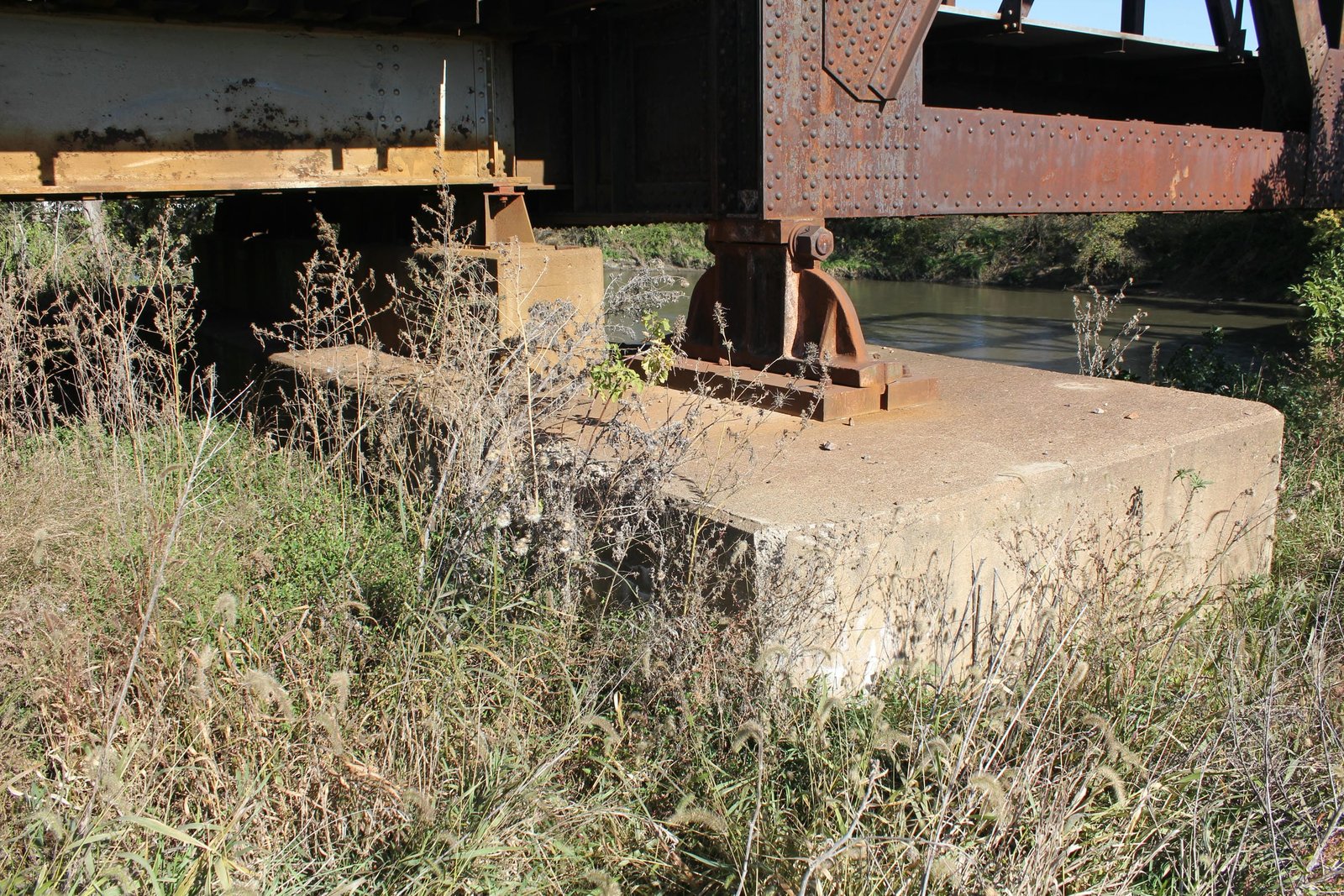
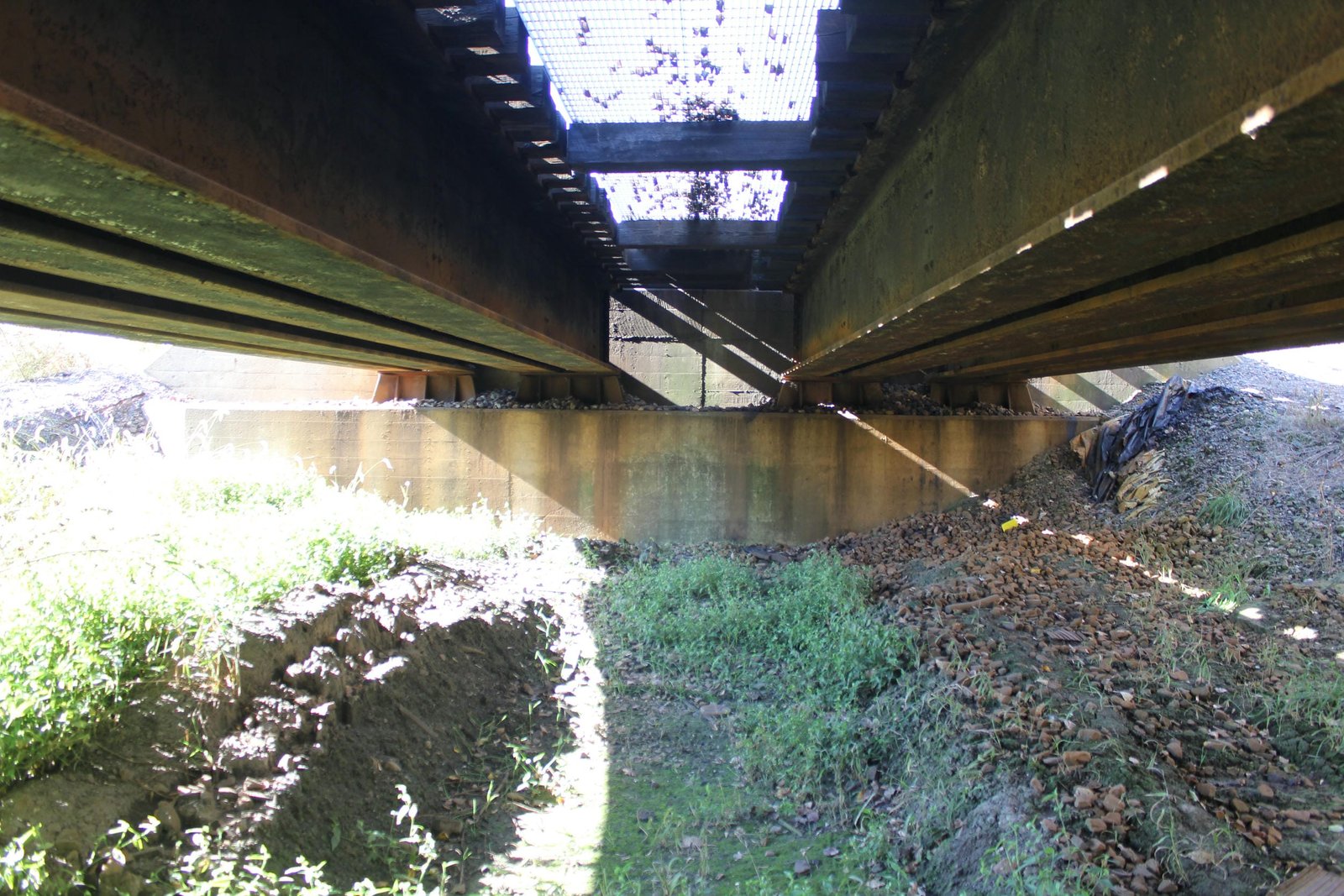
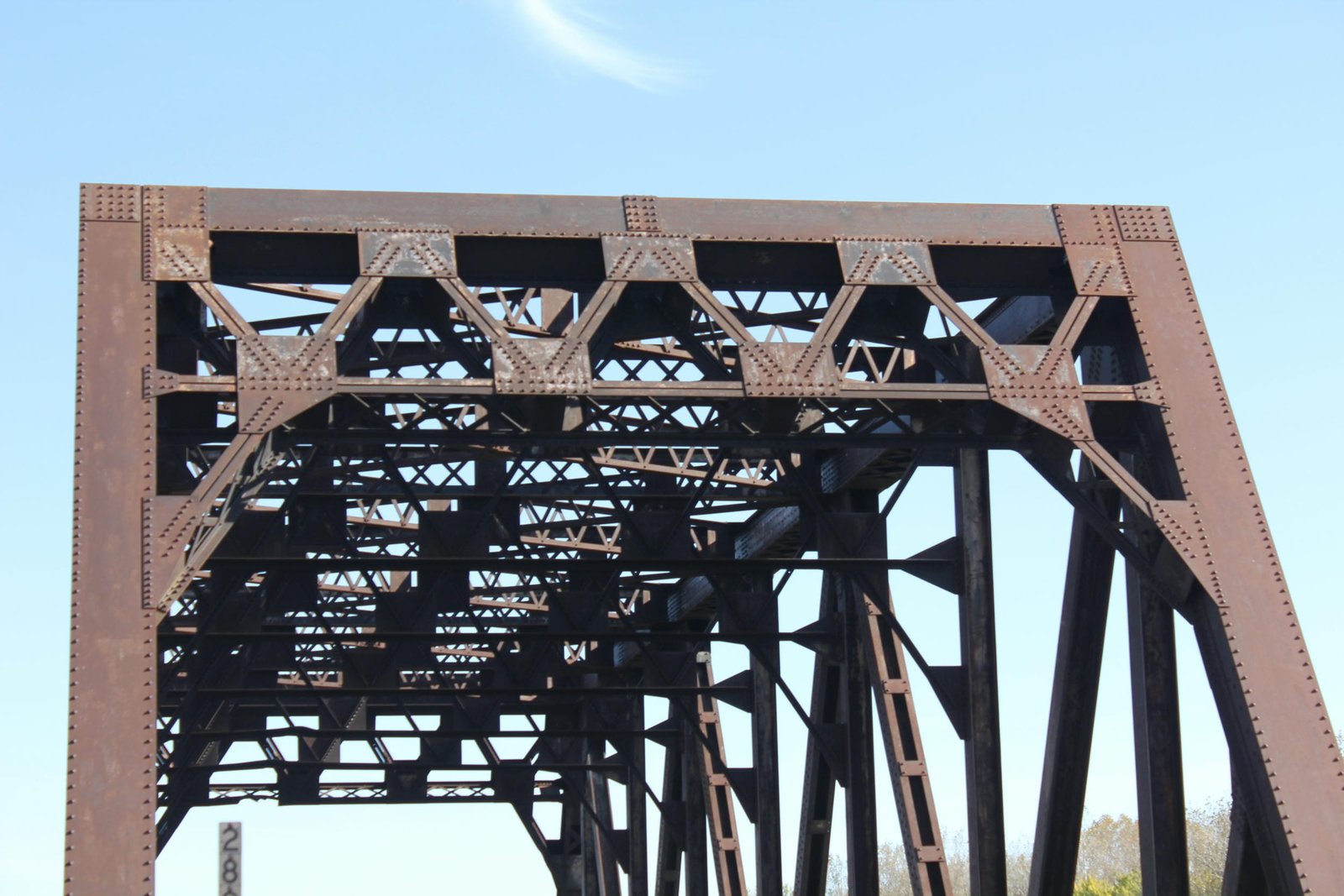
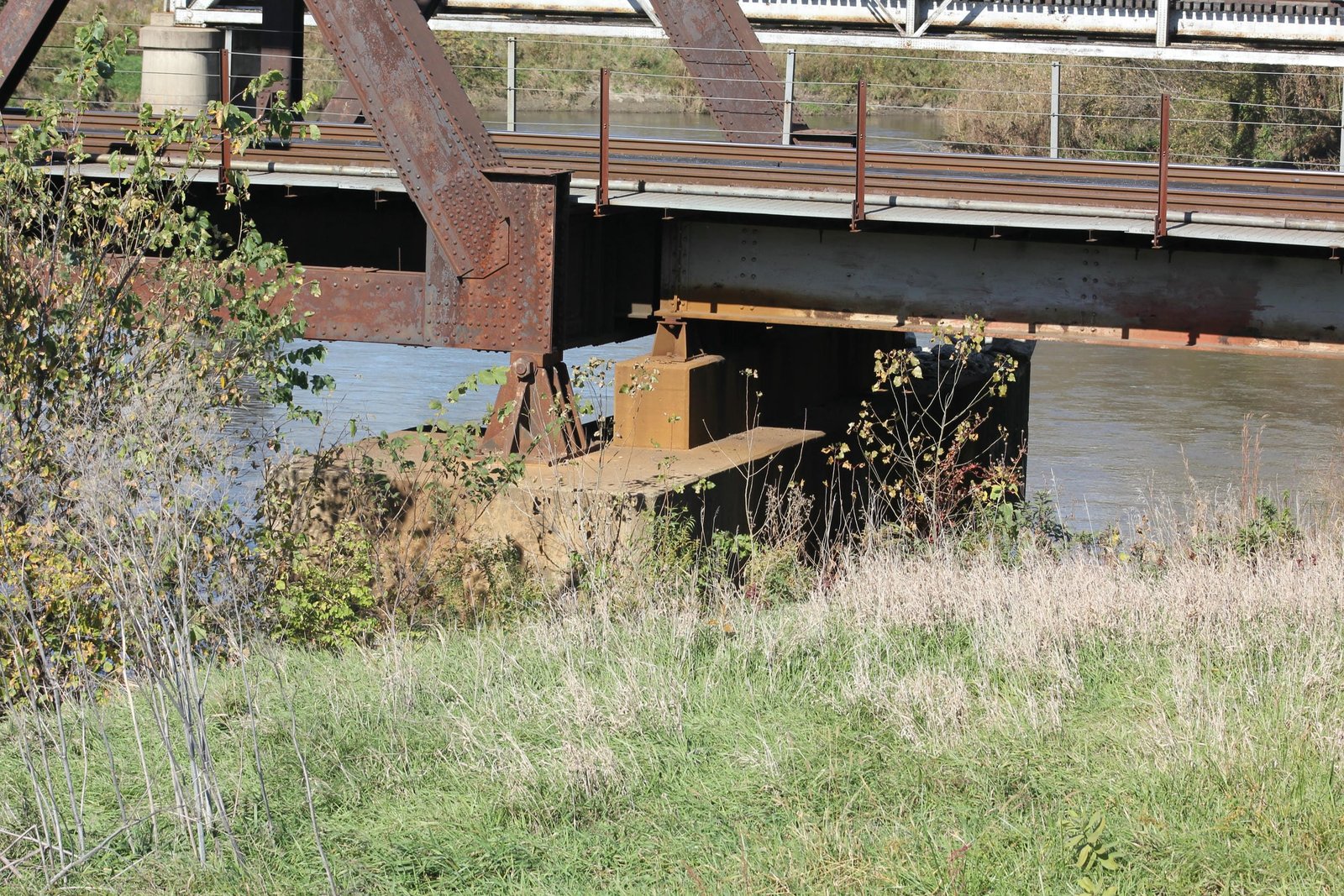
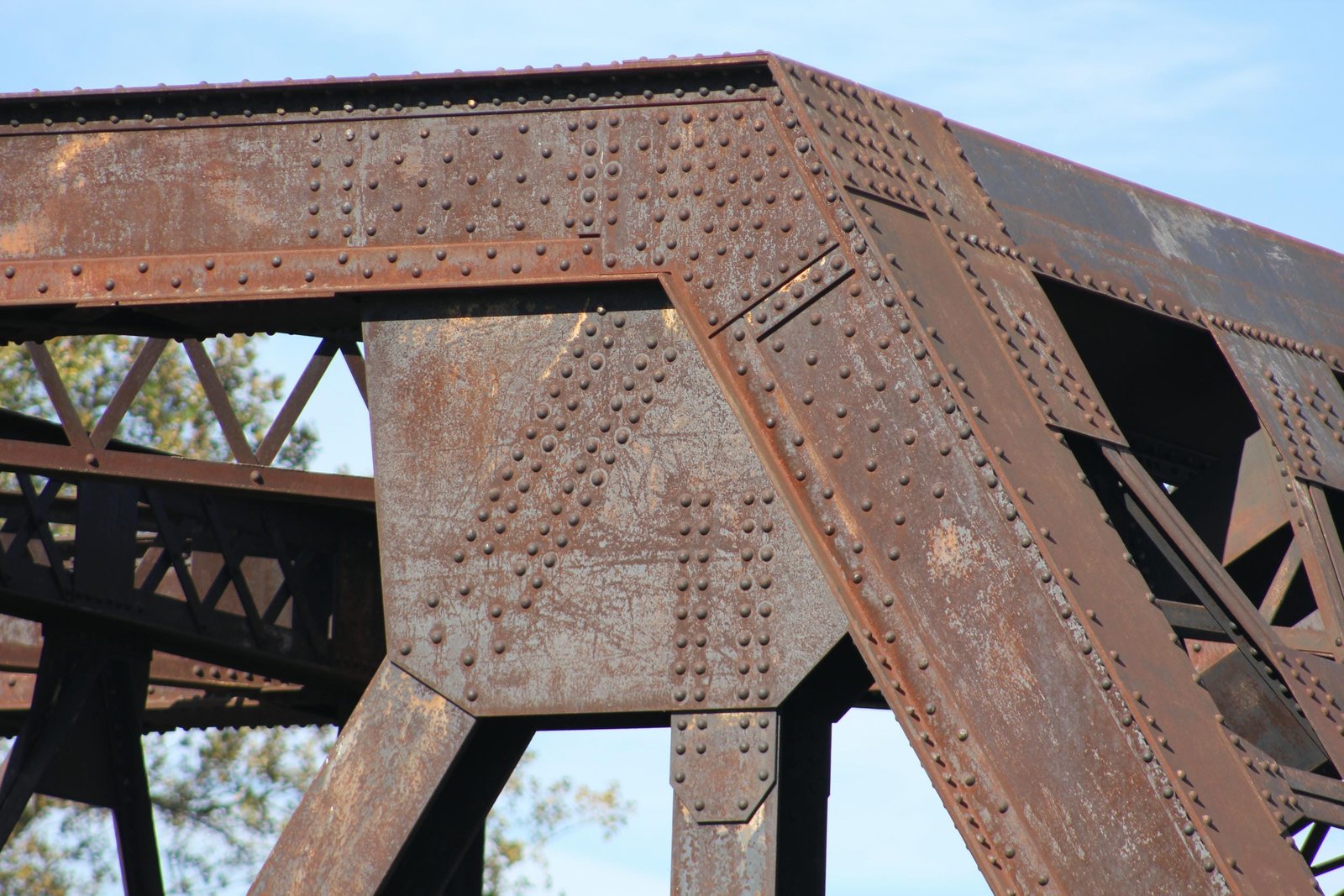
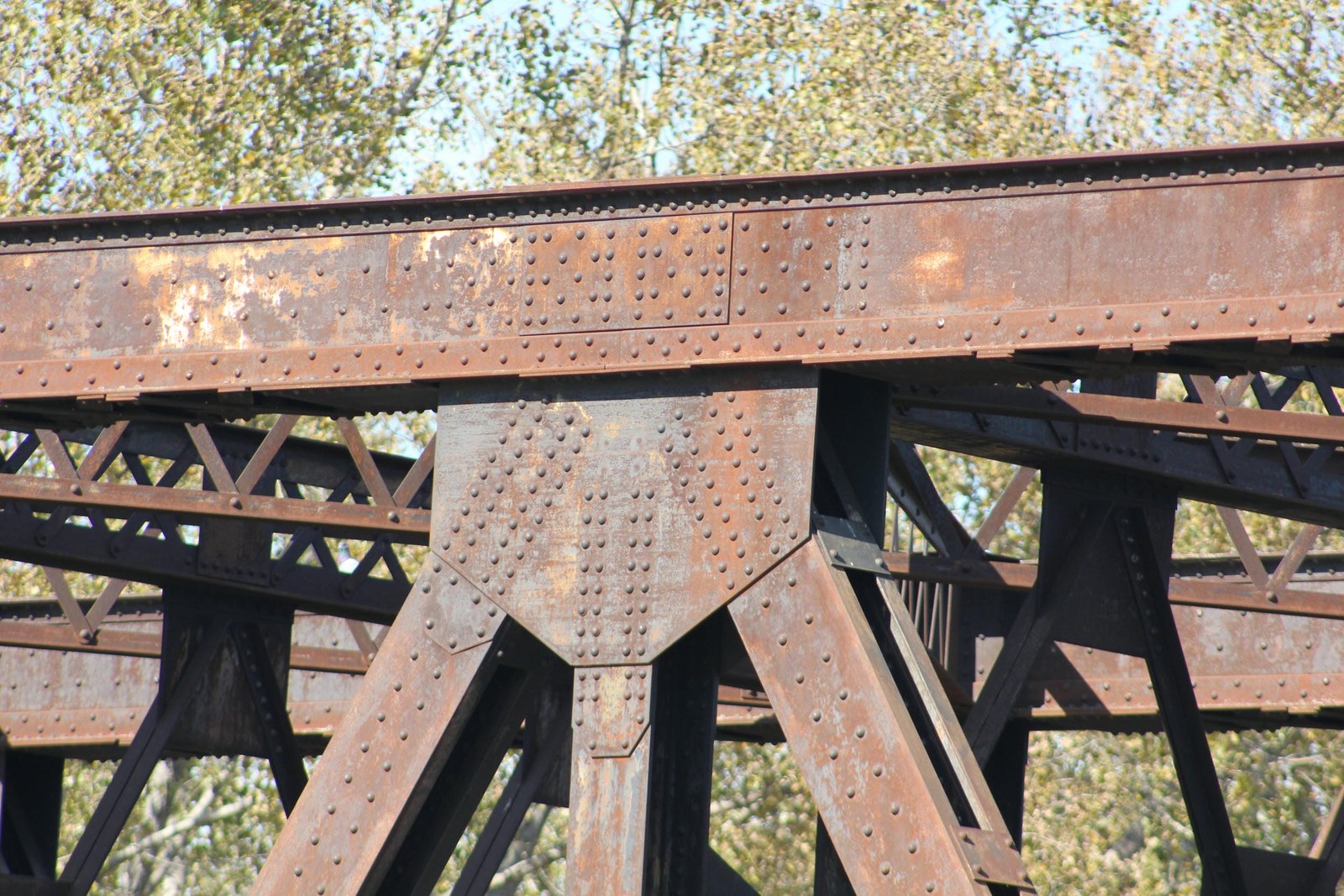
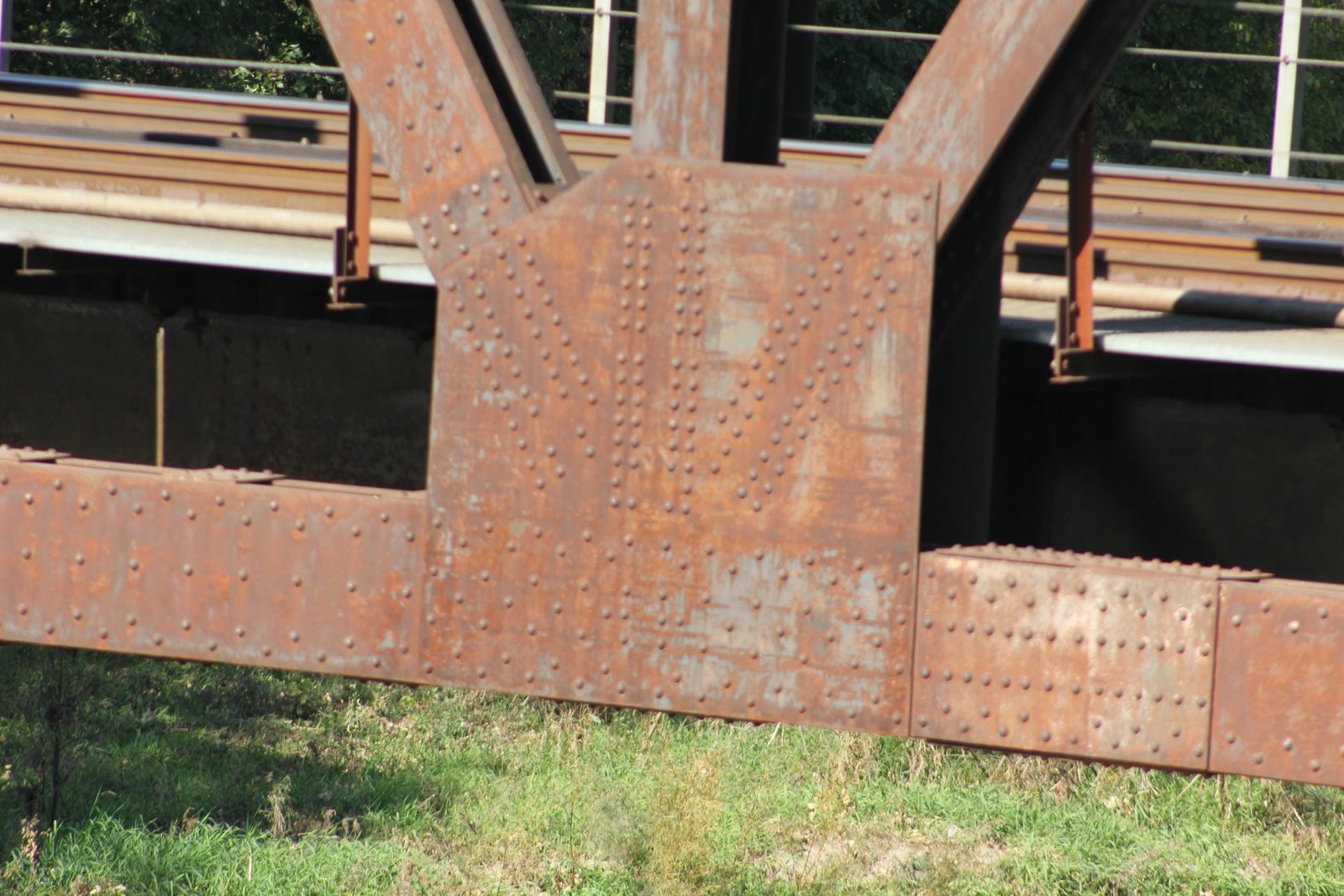
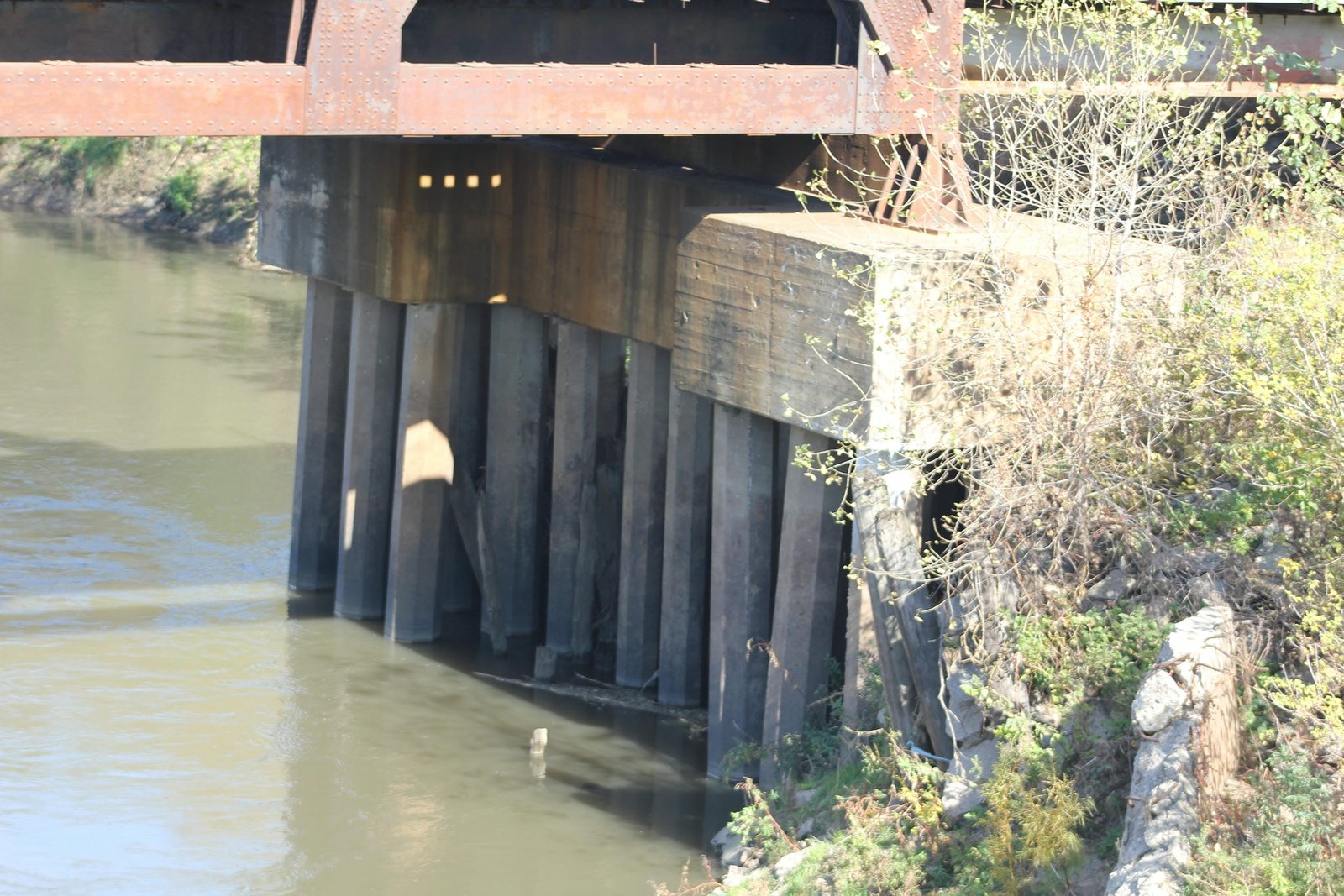
The truss span follows a standard design for the era, with heavy members, a standard floor and utilitarian portal bracings. The top chord and endposts consist of heavily constructed built-up beams, which are composed of two channels connected by solid plates on the top and X-lacing on the bottom. The bottom chord is constructed using two channels, which are connected by thin transverse plates on both sides. Near the middle of the span, the diagonal members are constructed with a similar design to the bottom chord. Vertical members and the remaining diagonal members are composed using solid beams, typical for spans from this era. The floor system is composed of two plate girder stringers per track and plate girder floorbeams. The portal bracing uses a Warren design, which is formed out of X-laced beams and heavy riveted connections. The sway bracing follows a similar design, and is formed out of L-shaped bars. The upper lateral bracing is constructed using V-laced beams, while the lower lateral bracing is constructed using L-shaped bars. The approach spans each consist of four shallow I-beams, arranged into two sets of two. The substructures are all formed using octagonal piles, which are covered by concrete caps. American Bridge Company fabricated and erected the steel spans, while railroad company forces cast and drove the piles. The Condon-Cunningham Company was contracted to complete the concrete substructures above the concrete piles.
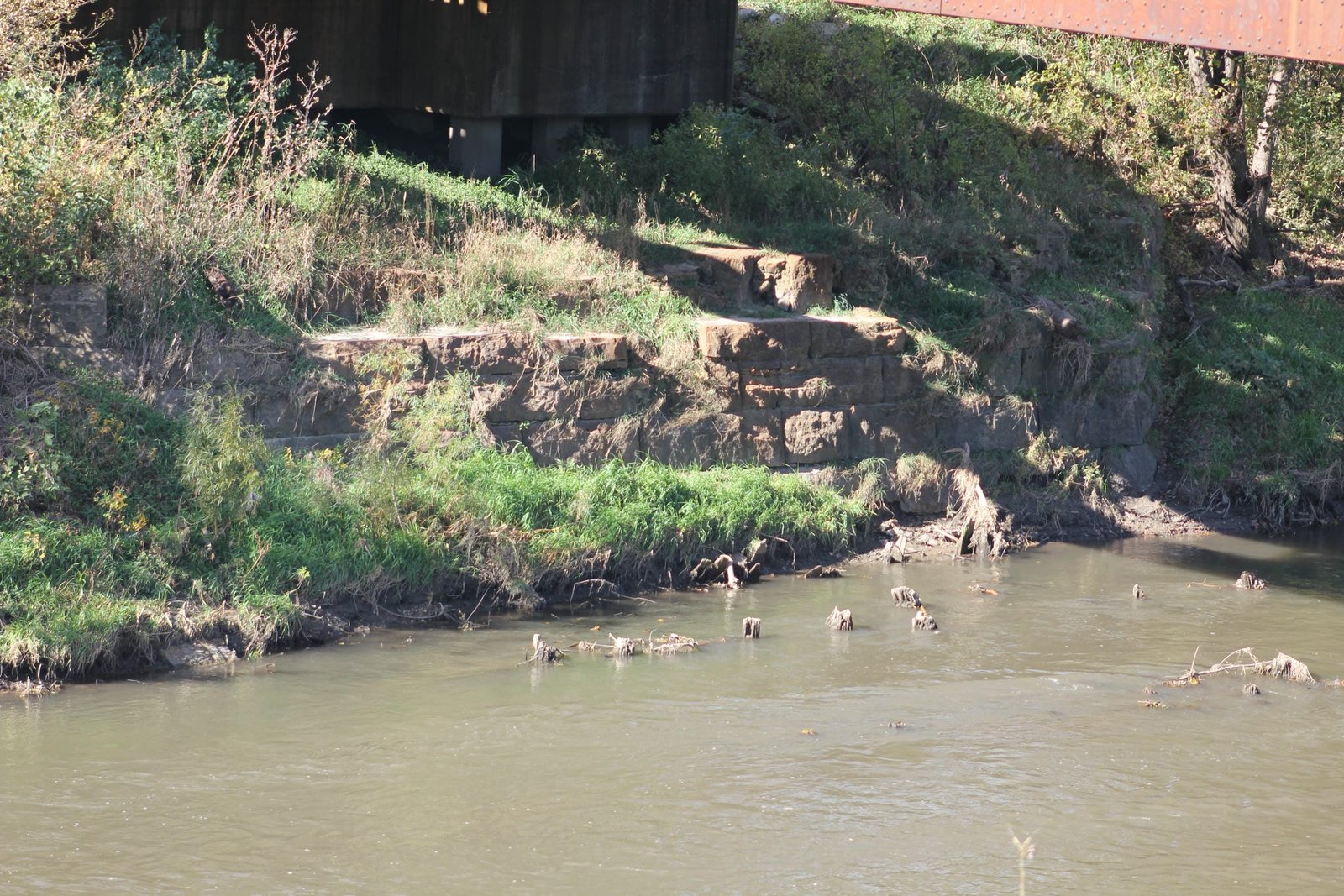
Riveted Warren truss spans became popular for railroad use around the turn of the 20th Century. This design was heavier and more rigid than traditional pin-connected designs, while maintaining simplicity and economy. Between the 1870s and late 1920s, the C&NW had strongly preferred lattice truss designs, using the design nearly exclusively. After the design fell out of favor around 1930, the C&NW switched to using Warren spans, although relatively few Warren spans were ever constructed for the C&NW. Since the initial construction, the bridge has seen no significant alterations. Today, the bridge remains heavily used as part of a Union Pacific Railroad mainline. In addition, portions of the stone abutments from the previous bridge are visible below the truss span. Overall, the bridge appears to be in good condition, with no significant deterioration noted. The author has ranked this bridge as being moderately significant, due to the truss design.
Citations
| Build date and builders | Railway Track & Structures; Volume 45, Issue 1 |
| Railroad History Citation | ICC Valuation Information, Compiled by Richard S. Steele |