

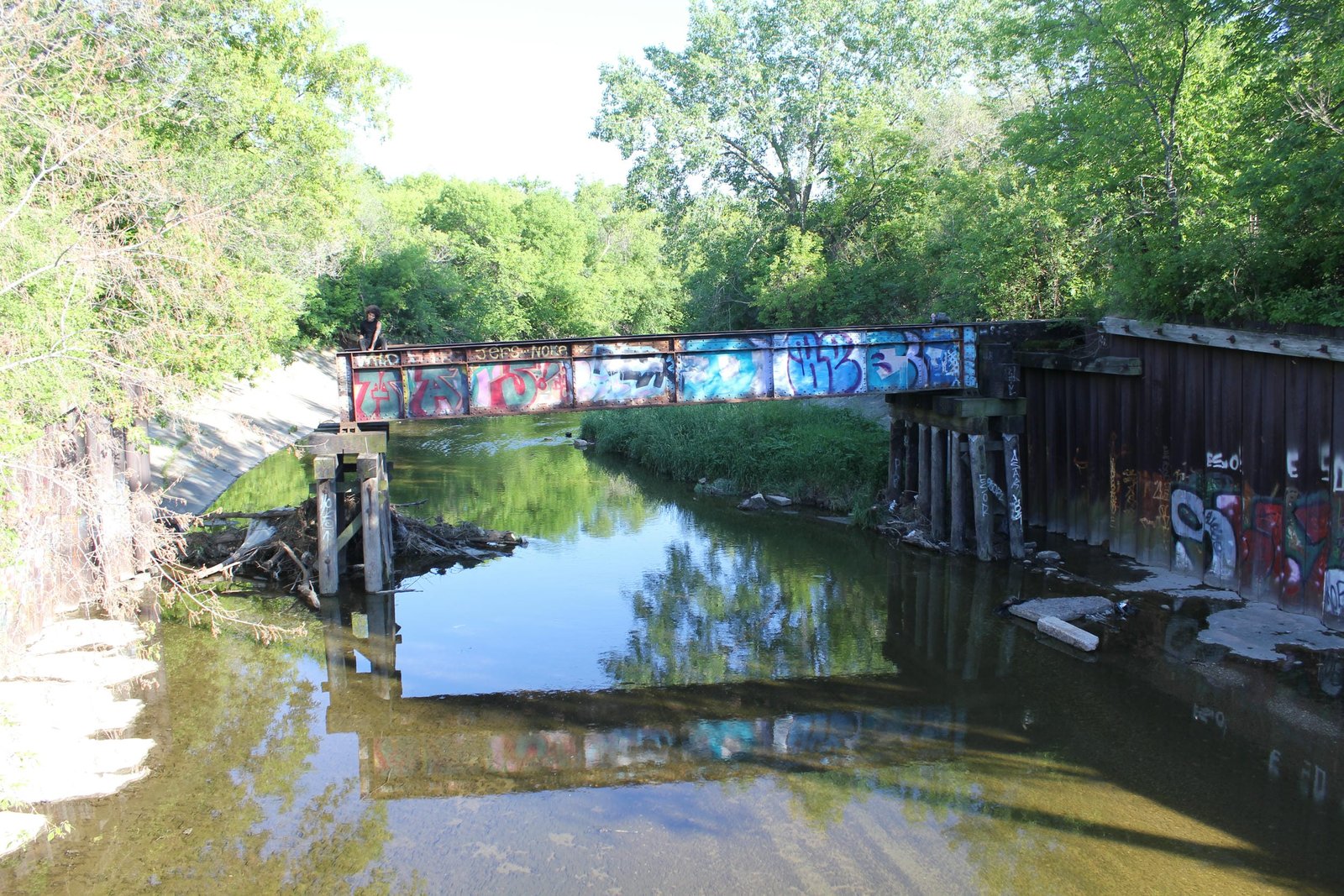
Click the photo to view the full-size version
| Name | C&NW Kinnickinnic River Bridge Chicago & North Western Railway Bridge #W-1022A |
| Built By | Chicago & North Western Railway |
| Currently Owned By | City of Milwaukee |
| Superstructure Contractor | Unknown |
| Length | 80 Feet Total, 45 Foot Main Span |
| Width | 1 Track |
| Height Above Ground | 15 Feet (Estimated) |
| Superstructure Design | Deck Plate Girder and Timber Pile Trestle |
| Substructure Design | Timber Pile |
| Date Built | c. 1930, Using a Span Fabricated c. 1910 |
| Original Location | Unknown |
| Traffic Count | 0 Trains/Day (Bridge is Abandoned) |
| Current Status | Abandoned and Partially Removed |
| Chicago & North Western Railway Bridge Number | W-1022A |
| Significance | Local Significance |
| Documentation Date | 6/14/2014 |
In 1878, the Chicago and Tomah Railroad Company (C&T) constructed 31 miles of new narrow gauge railroad, extending from Woodman, Wisconsin to Lancaster, Wisconsin. The following year, an additional 14 miles would be constructed to Montfort Junction, Wisconsin. In 1880, the railroad was formed into the Milwaukee and Madison Railway Company (M&M). In 1881, the M&M became part of the Chicago, Milwaukee and North Western Railway (CM&NW). That year, an additional 61 miles were completed between Montfort Junction and Madison, Wisconsin; followed by an additional 80 miles between Madison and downtown Milwaukee, Wisconsin in 1882. The CM&NW also converted the Montfort Junction to Fennimore segment to a standard gauge. The CM&NW was consolidated with the Chicago & North Western Railway (C&NW) in mid-1883. During the late 19th Century, the C&NW had begun to acquire and construct a large network of railroad tracks throughout the Midwest, particularly in Wisconsin. The western portion ine served as a secondary line, linking Milwaukee to Madison and the mining communities in southwest Wisconsin. The segment between Milwaukee and Madison was initially a mainline, and provided the C&NW one of their main connections between Milwaukee and the Twin Cities.
A second track was built in Milwaukee in 1902, to allow for more efficient train operation, and a second track was constructed between West Allis and 6th Street (Chase) in 1911. The 1911 double tracking project was constructed in conjunction with the C&NW opening new freight cutoffs to improve operations in Wisconsin and around Chicago. As part of the cutoff, a new bypass was built around Milwaukee, connecting to this line near West Allis and leaving this line near 6th Street (Chase). By the 1920s, the C&NW was operating an expansive railroad network throughout the Midwest, radiating north and west from Chicago. The railroad had become one of the premiere Midwest railroads, and handled a wide variety of commodities and passengers. 16 miles of railroad between Fennimore and Woodman was removed in 1926, due to the diminishing mining significance of the area. A segment from the junction at Chase to downtown Milwaukee was abandoned in 1966.
In the 1980s, the C&NW began to consolidate operations and abandon excess lines. The segment from Mt. Horeb, Wisconsin to Fennimore was abandoned in 1980, followed by the segment from Fitchburg, Wisconsin to Mt. Horeb, Wisconsin in 1982 and from Waukesha, Wisconson to Cottage Grove, Wisconsin in 1984. Much of the two abandoned segments were purchased by the Wisconsin Department of Natural Resources for trail use. In 1995, the C&NW would be purchased by Union Pacific Railroad. In 1996, UP sold the Fitchburg to In the 1980s, the C&NW began to consolidate operations and abandon excess lines. The segment from Mt. Horeb, Wisconsin to Fennimore was abandoned in 1980, followed by the segment from Fitchburg, Wisconsin to Mt. Horeb, Wisconsin in 1982 and from Waukesha, Wisconson to Cottage Grove, Wisconsin in 1984. Much of the two abandoned segments were purchased by the Wisconsin Department of Natural Resources for trail use. In 1995, the C&NW would be purchased by Union Pacific Railroad. In 1996, UP sold the Fitchburg to
In the 1980s, the C&NW began to consolidate operations and abandon excess lines. The segment from Mt. Horeb, Wisconsin to Fennimore was abandoned in 1980, followed by the segment from Fitchburg, Wisconsin to Mt. Horeb, Wisconsin in 1982 and from Waukesha, Wisconson to Cottage Grove, Wisconsin in 1984. Much of the two abandoned segments were purchased by the Wisconsin Department of Natural Resources for trail use. In 1995, the C&NW would be purchased by Union Pacific Railroad (UP). In 1996, UP sold the Cottage Grove to Fitchburg segment to the Wisconsin & Southern Railroad (WSOR). In 2014, this segment was sold to the State of Wisconsin. Today, UP continues to operate a segment from West Allis to Waukesha as the Waukesha Industrial Lead, and from West Allis to Chase as part of the Milwaukee Subdivision. The WSOR operates the Fitchburg to Cottage Grove segment as the Cottage Grove Subdivision. The Military Ridge State Trail uses the former railroad grade between Fitchburg and Dodgeville, while the Glacial Drumlin State Trail uses the former railroad between Waukesha and Cottage Grove.
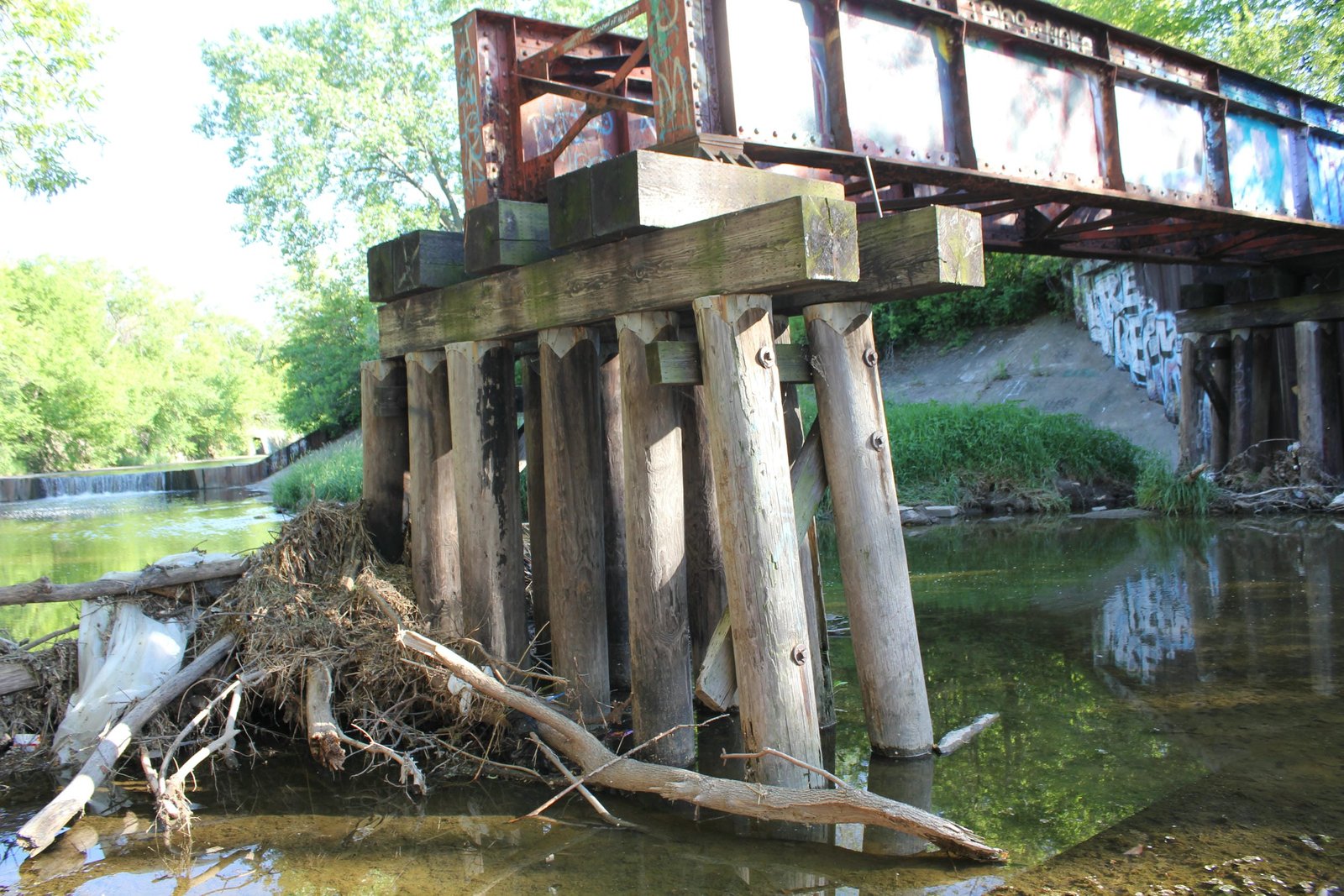
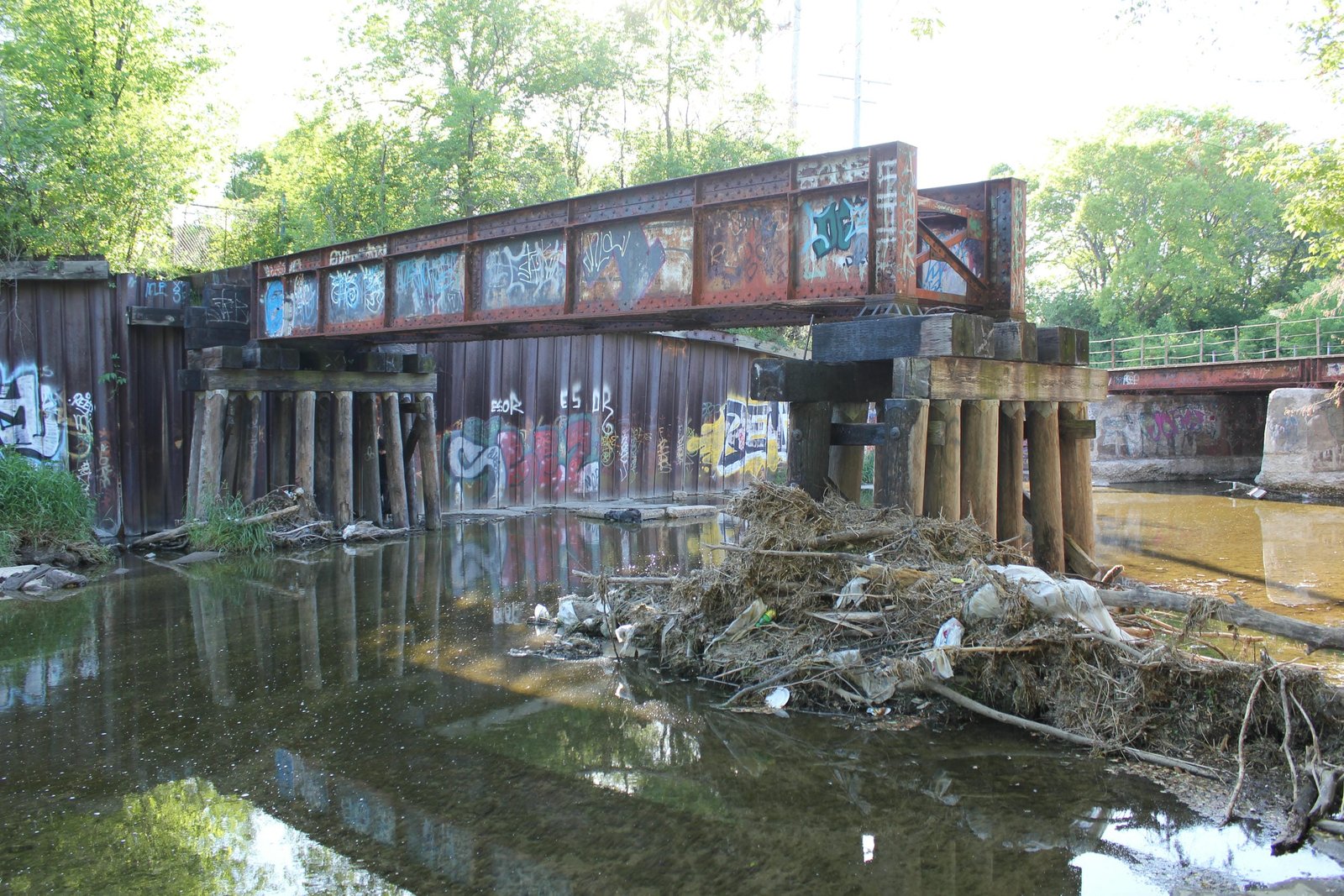
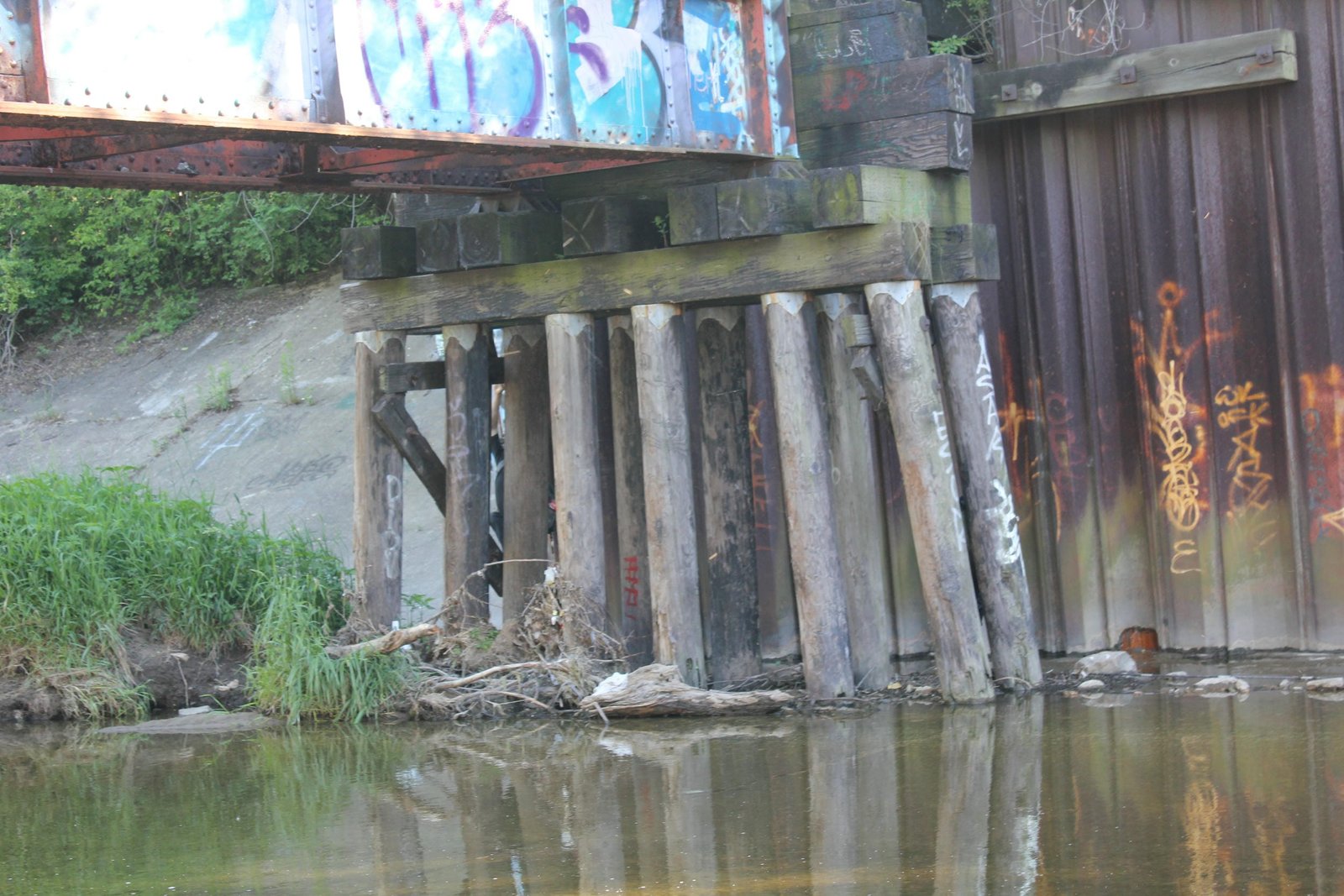
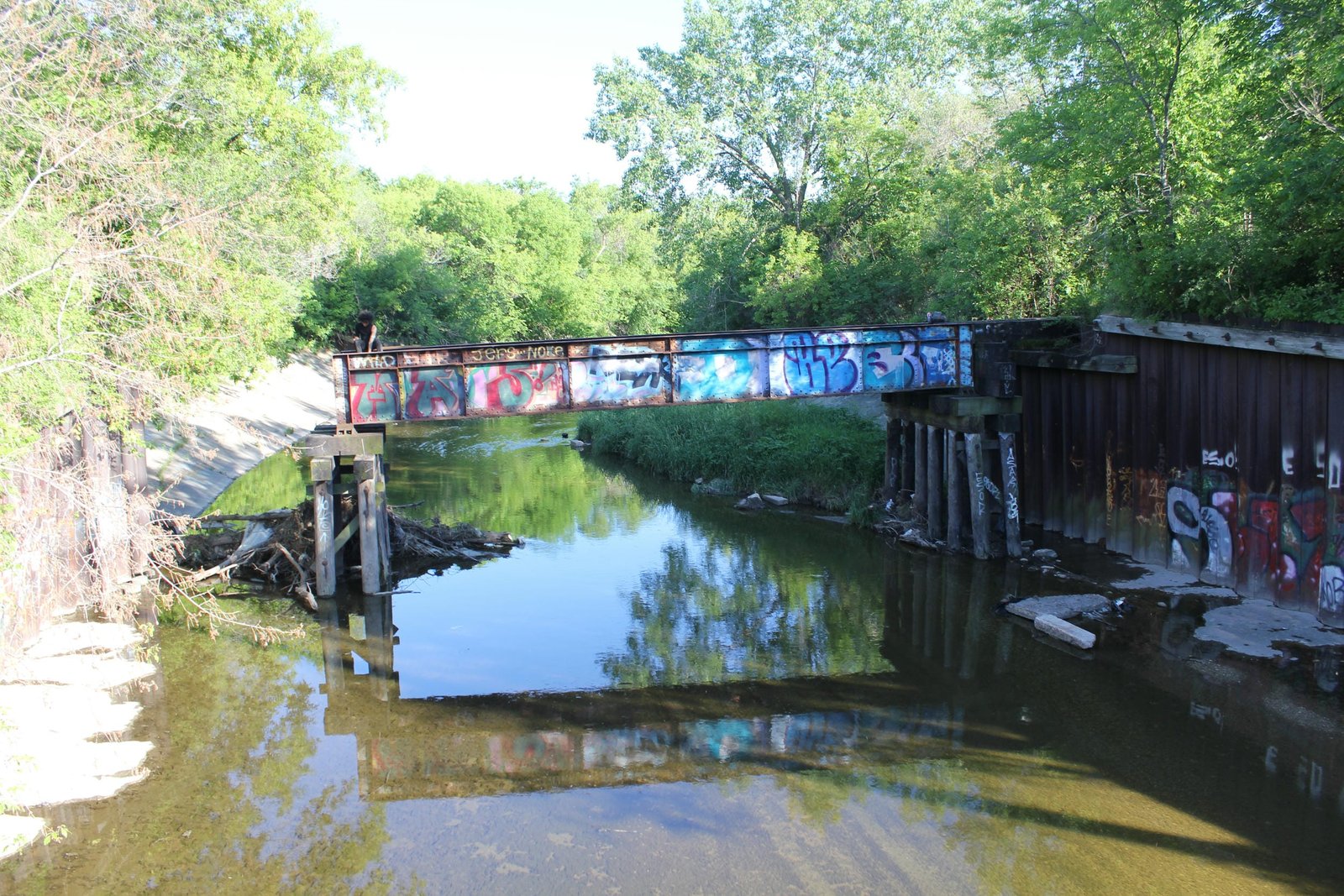
Located on the south side of Milwaukee, this deck plate girder bridge carries a former Chicago & North Western Railway spur over the Kinnickinnic River. Little is known about the history of this bridge. In approximately 1930, the bridge was constructed to carry a single track spur to an industry located southwest of the bridge. After the spur was abandoned in the mid-1990s, the tracks were removed from the bridge, and the east span removed. Currently, the bridge consists of a 45-foot deck plate girder span, approached by a timber pile trestle span and set onto timber pile piers. The superstructure uses a standard design, with two heavy girders and an open deck. This span was likely fabricated in approximately 1910 for use at an unknown location, before being relocated here. An unknown contractor fabricated the superstructure, while the timber components of the bridge were constructed by railroad company forces. Deck plate girder spans were commonly used by railroads, as they were durable and easy to construct. Railroads often reused steel and iron spans, as it provided a cost effective way to replace aging bridges without requiring large amounts of new material. Like many railroads, the C&NW reused spans wherever possible. Many of these spans would be extensively strengthened or rebuilt upon relocation. It is not clear if this span was modified upon relocation here. Currently, the bridge is abandoned with the deck removed. Overall, the bridge appears to be in fair condition, with some deterioration noted to the timber substructures. The author has ranked this bridge as being locally significant, due to the common design and unknown history.
Citations
| Railroad History Citation | ICC Valuation Information, Compiled by Richard S. Steele |