
Click the photo to view the full-size version
| Name | C&NW Honey Creek Bridge #8 Chicago & North Western Railway Bridge #637 |
| Built By | Chicago & North Western Railway |
| Currently Owned By | United States of America |
| Superstructure Contractor | Unknown |
| Substructure Contractor | Unknown |
| Length | 79 Feet Total |
| Width | 1 Track |
| Height Above Ground | 15 Feet (Estimated) |
| Superstructure Design | Deck Plate Girder |
| Substructure Design | Stone Masonry |
| Date Built | 1898 |
| Date Removed | September 1933 |
| Traffic Count | 0 Trains/Day (Bridge has been Removed) |
| Current Status | Removed but not replaced |
| Chicago & North Western Railway Bridge Number | 637 |
| Significance | Local Significance |
| Documentation Date | 8/12/2013 |
In 1867, the Cedar Rapids & Missouri River Railroad (CR&MR) continued constructing a mainline westward from Boone, Iowa. In the late 1850s and early 1860s, the CR&MR had participated in constructing a line from Clinton, Iowa to Boone. The CR&MR was leased by the Chicago & North Western Railway (C&NW), which was seeking a route connecting Chicago to the Missouri River. In 1867, an impressive 150 miles were constructed between Boone, Iowa and Council Bluffs, Iowa, completing a connection between Chicago and the Missouri River. The line also allowed for a short spur from Missouri Valley, Iowa to the Missouri River opposite of Blair, Nebraska. This spur would eventually be extended across the Missouri River and into Nebraska. Between 1869 and 1872, Union Pacific Railroad (UP) constructed a bridge across the Missouri River between Council Bluffs and Omaha, Nebraska; and the C&NW obtained trackage rights over the bridge to reach Omaha. During the second half of the 19th Century, the C&NW had constructed and acquired a large amount of trackage throughout the Midwest. In 1884, the CR&MR was formally purchased by the C&NW; and this line quickly became a core asset of the C&NW system.
By the late 19th Century, traffic over this line had increased to the point significant upgrades were required. In 1893, a 5-mile section of railroad was relocated west of Jefferson, Iowa to improve grades and eliminate curves. One of the most significant barriers to efficient operation over this line was the Des Moines River Valley between Boone and Ogden, Iowa. The original route crossed the Des Moines River at Moingona, which was approached by winding and steep approaches on each bank. In 1899, C&NW subsidiary Boone County Railway (BCR) began construction on a more direct route between Boone and Ogden, Iowa; including a massive viaduct across the Des Moines River. The BCR was consolidated into the C&NW in 1900, and the new cutoff was completed in May 1901. The new alignment shortened the route by 3 miles, cut grades in half and only required two small curves. The original mainline through Moingona was maintained as an emergency backup and to serve industries in the area. Between 1901 and 1902, a second track was also constructed between Ogden and Council Bluffs, including a 5-mile realignment near Arcadia, Iowa. The double tracking of this line provided the C&NW with a well constructed double track mainline between Chicago and Council Bluffs.
By the 20th Century, the C&NW was operating an extensive railroad network, which radiated north and west from Chicago. The original mainline into Moingona was abandoned in 1930. This line served as the backbone of the C&NW, connecting transcontinental freight and passengers at Omaha to Chicago. Known as the Overland Route, this line became one of the most significant railroad routes in the United States. This route saw continuous upgrades during the 20th Century, including significant bridge, rail, tie and signal upgrades. In 1995, the C&NW was purchased by UP, which provided UP with a mainline into the railroad hub of Chicago. Into the 21st Century, the line has seen continuous upgrades, and remains one of the most significant railroad lines in the United States. Today, UP operates this line as the Boone Subdivision between Boone and Missouri Valley; and the Omaha Subdivision between Missouri Valley and Council Bluffs.
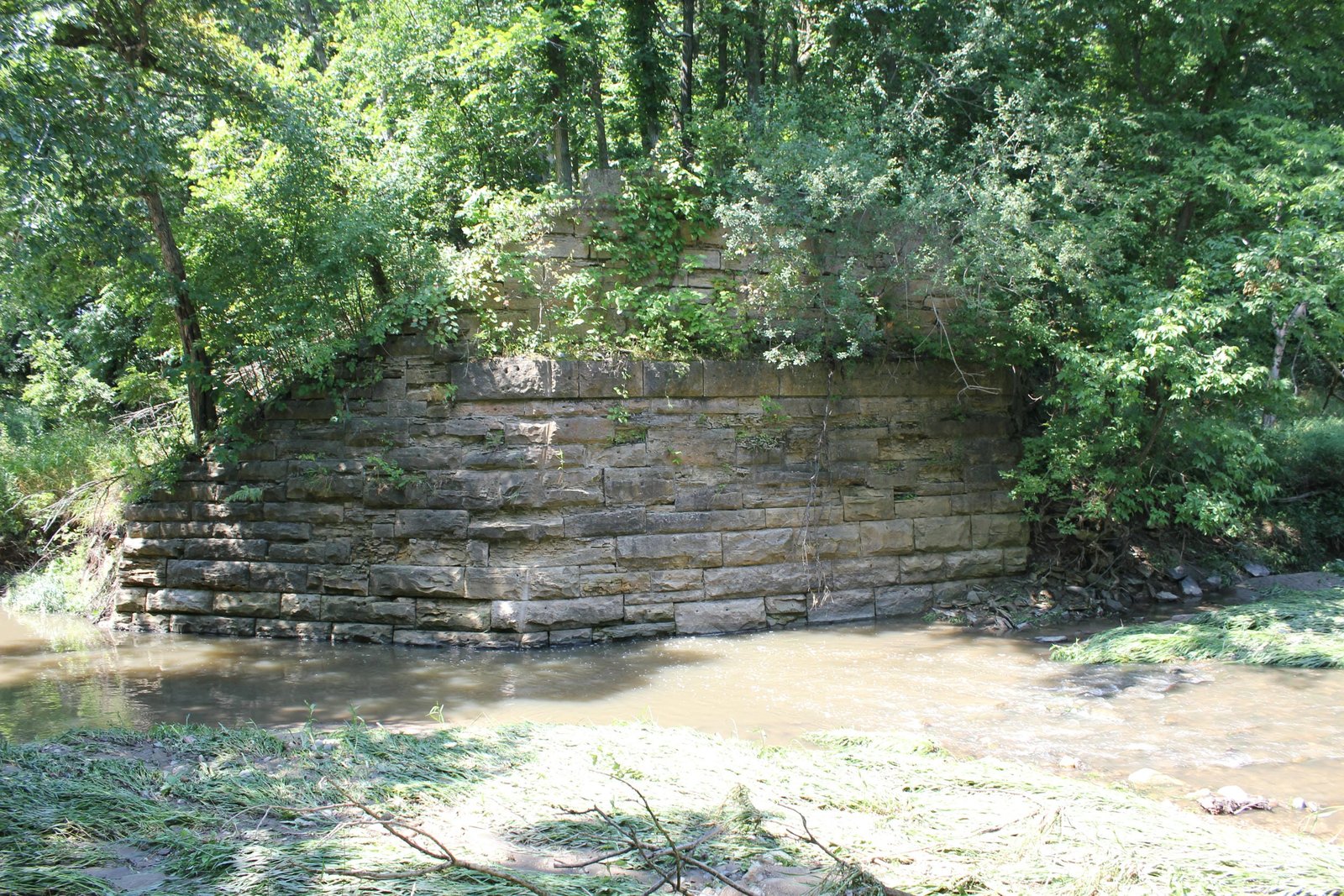
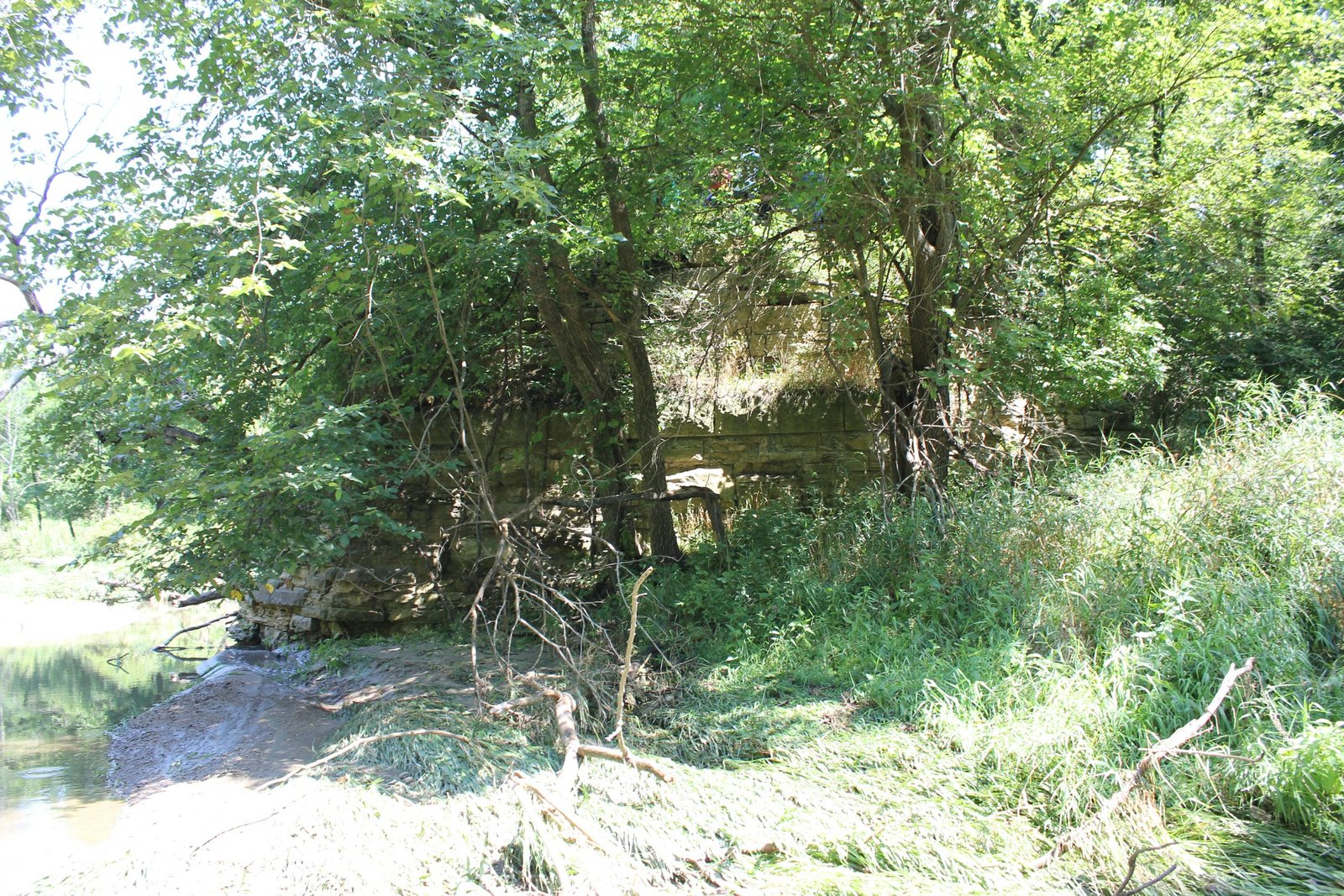
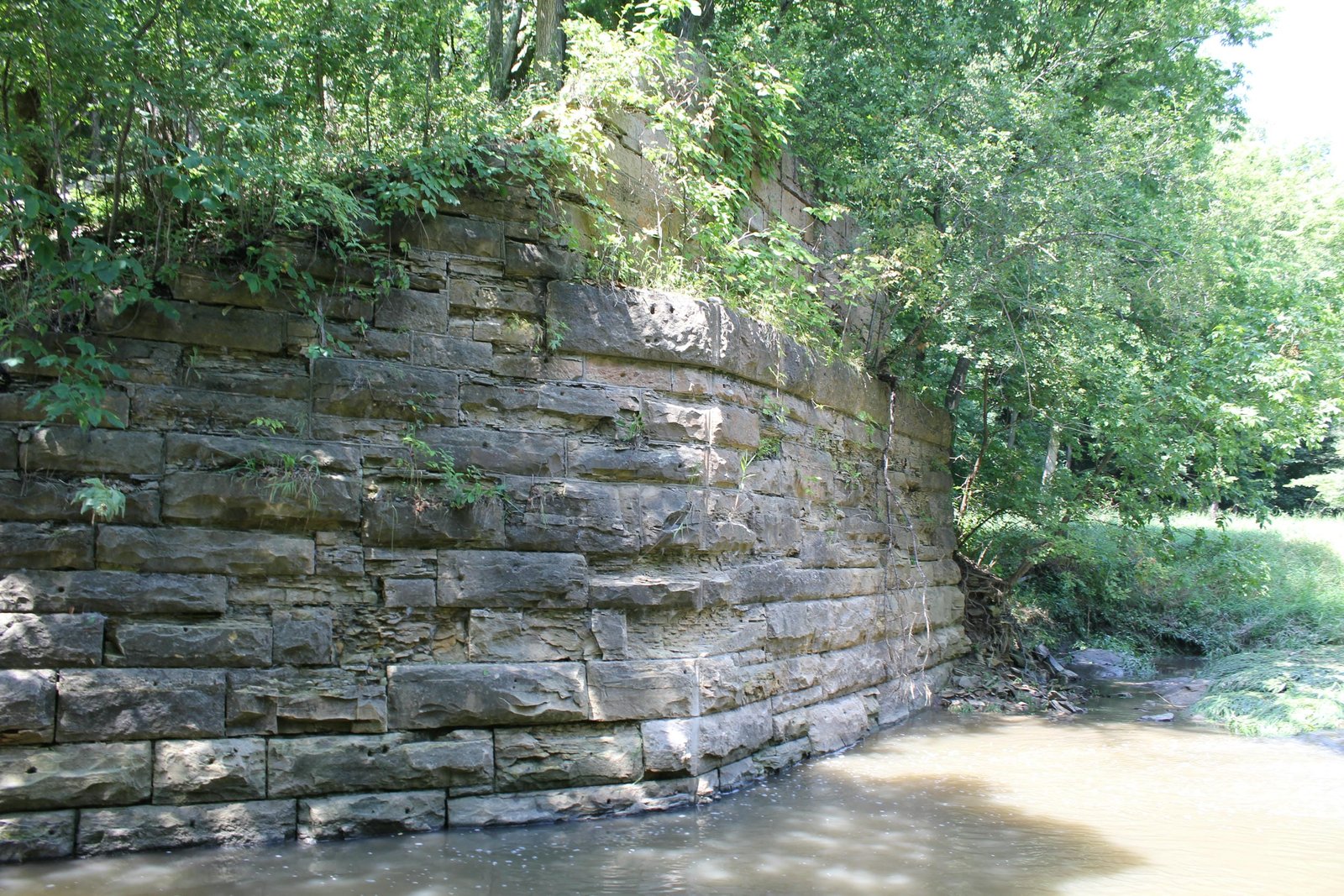
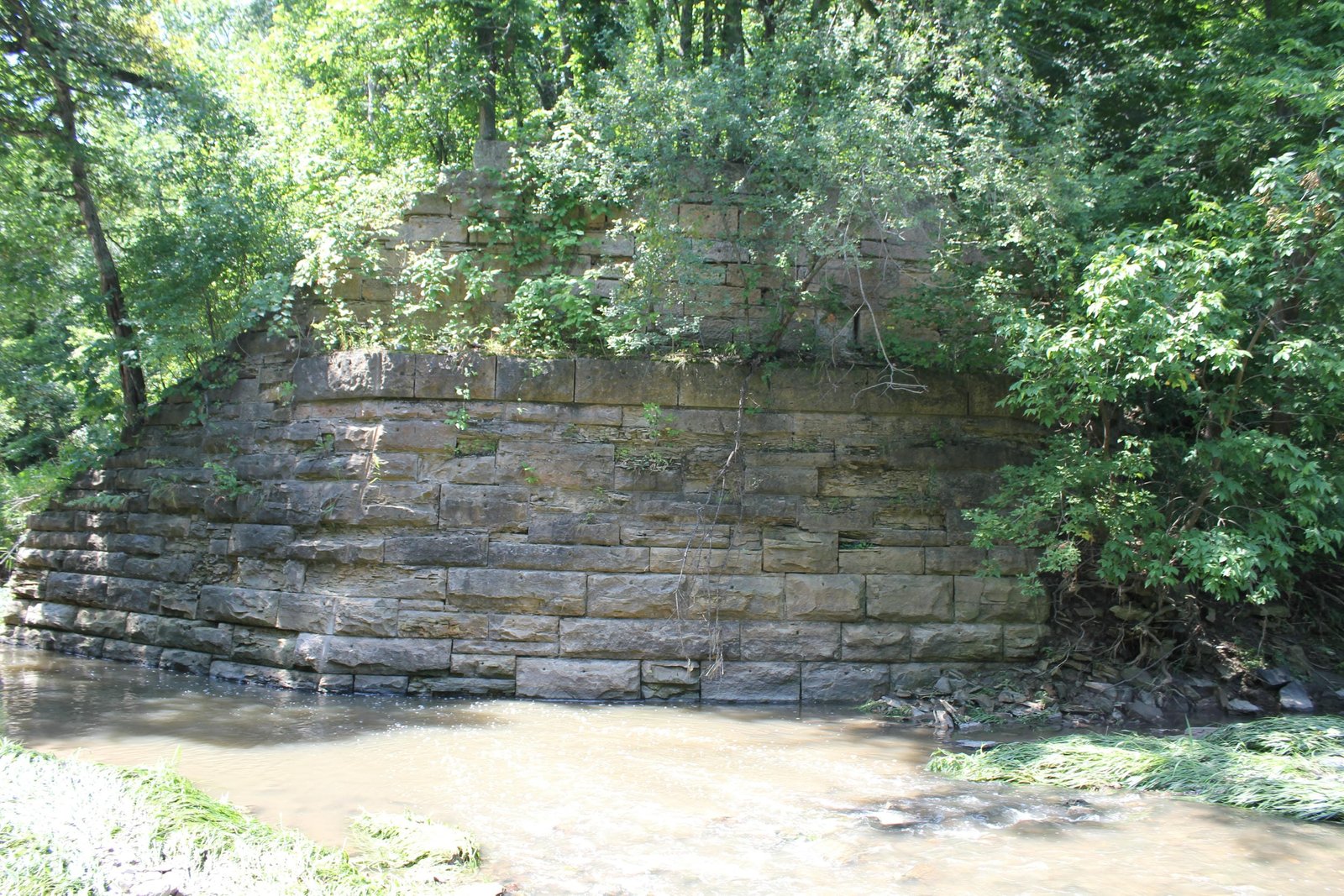
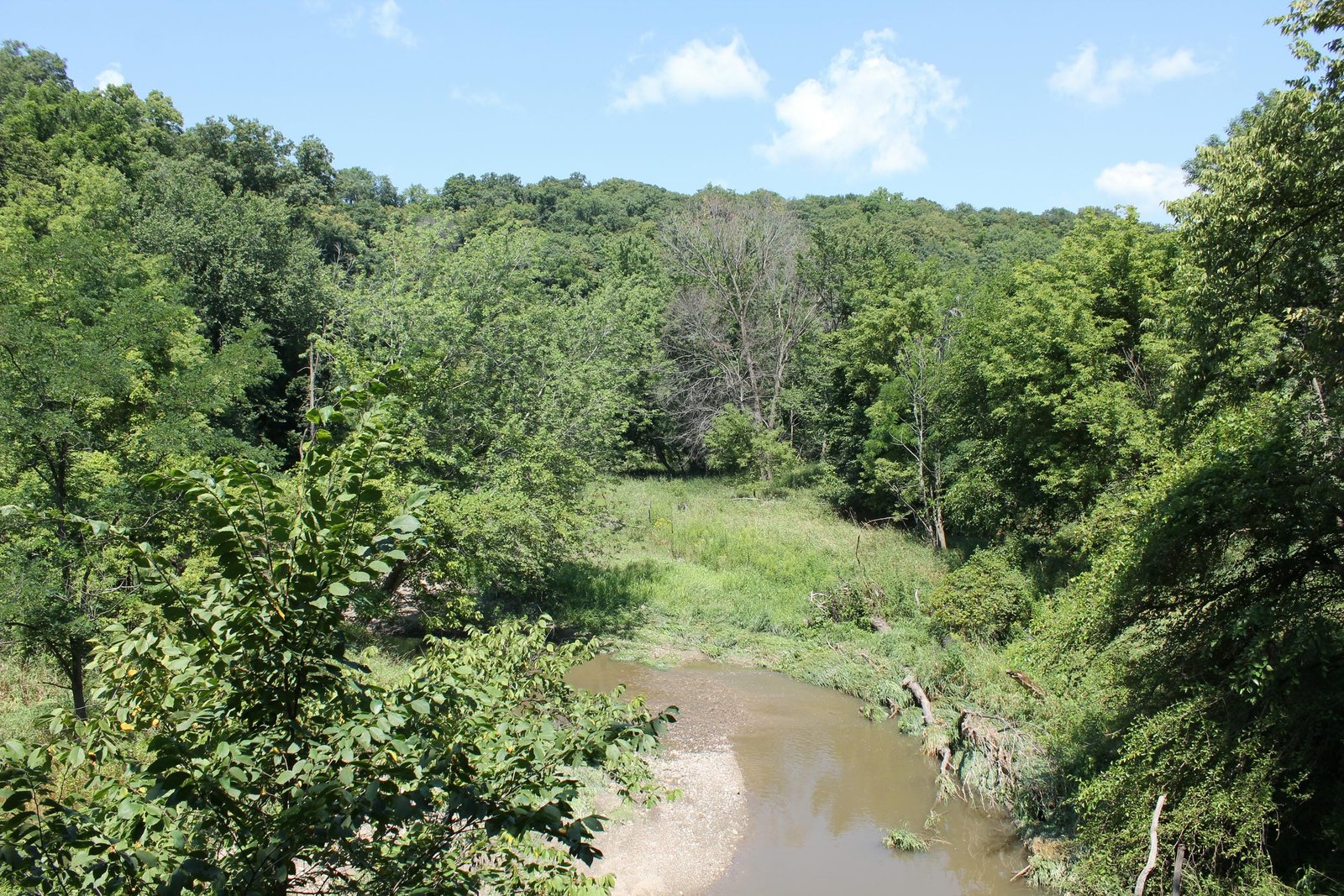
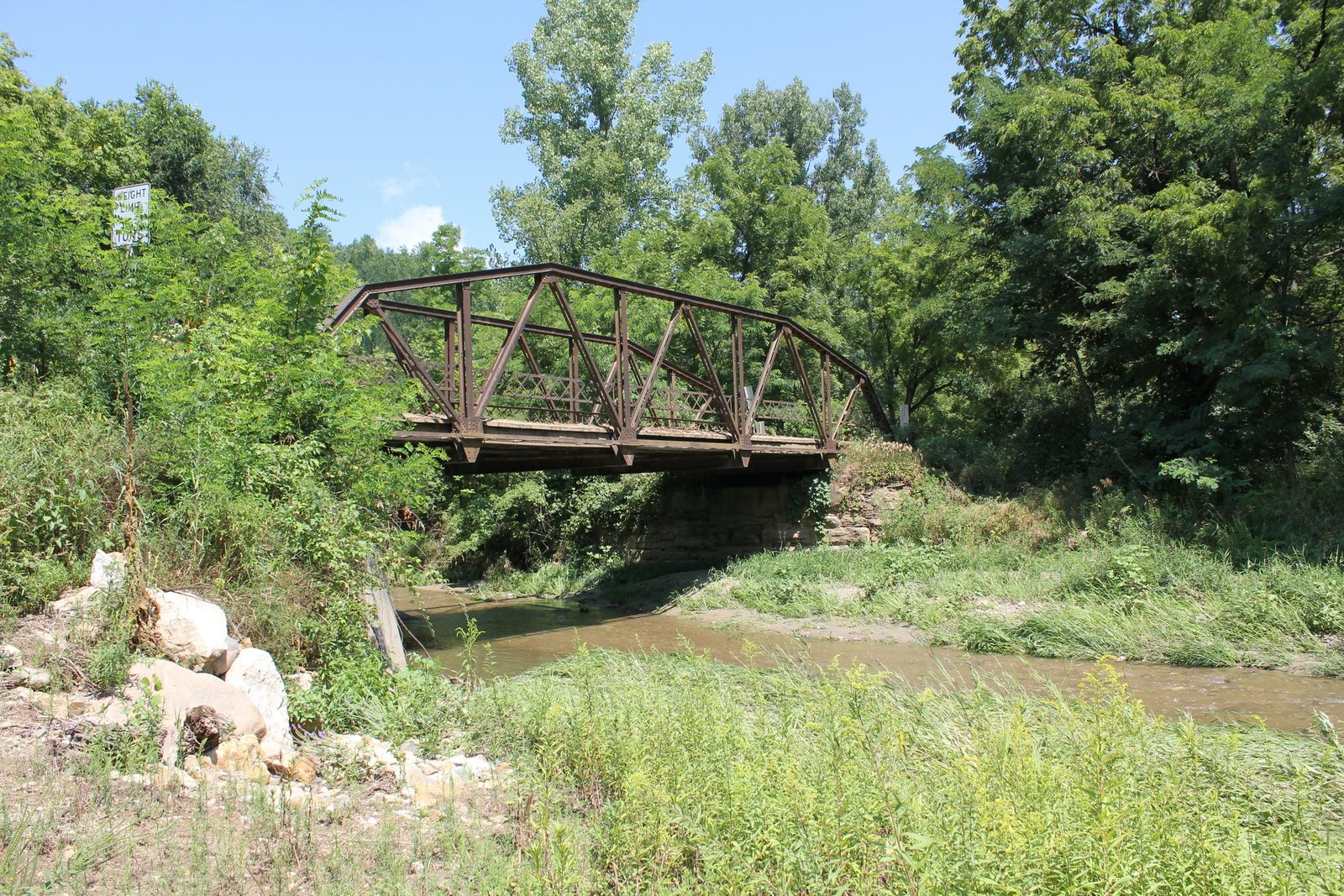
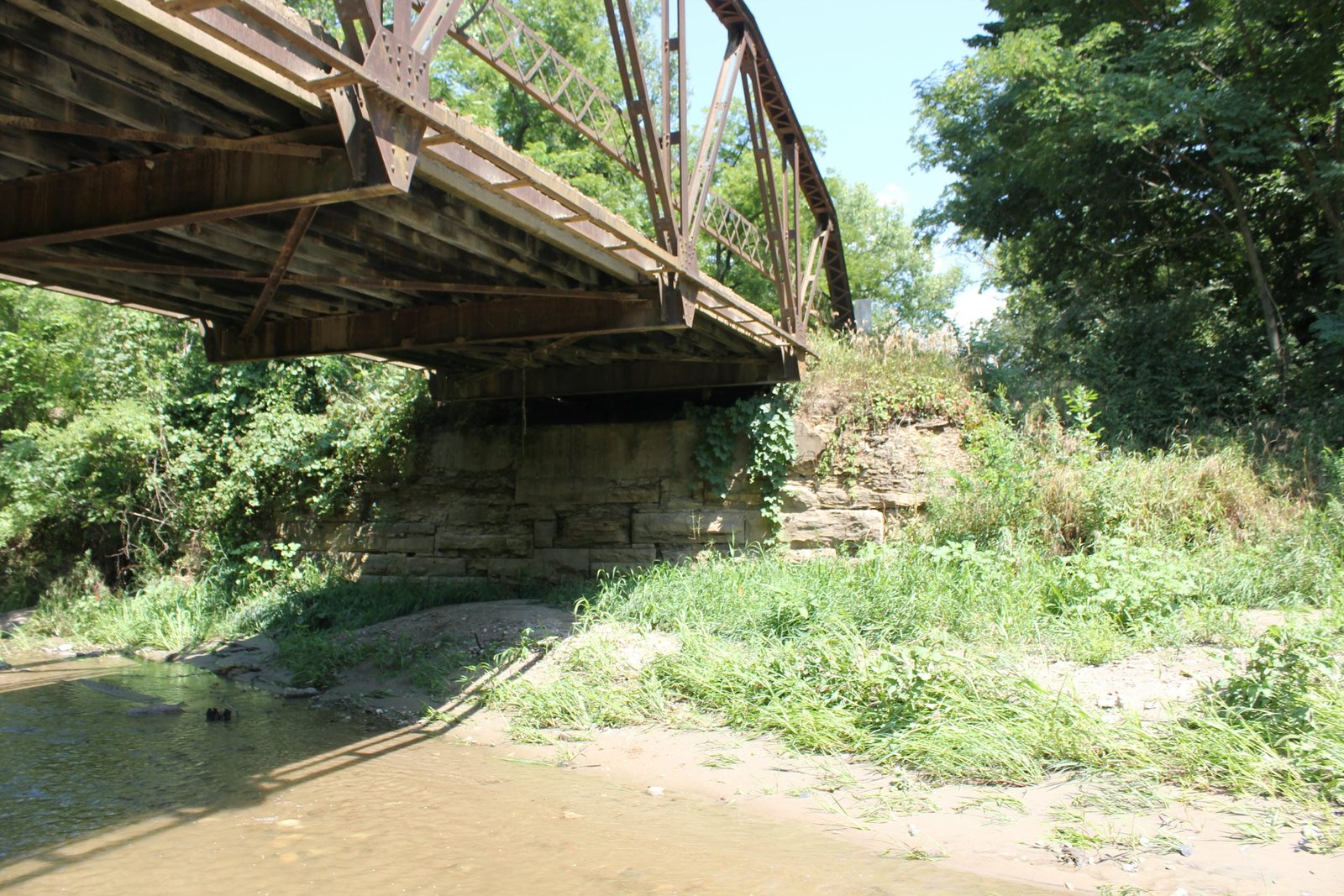
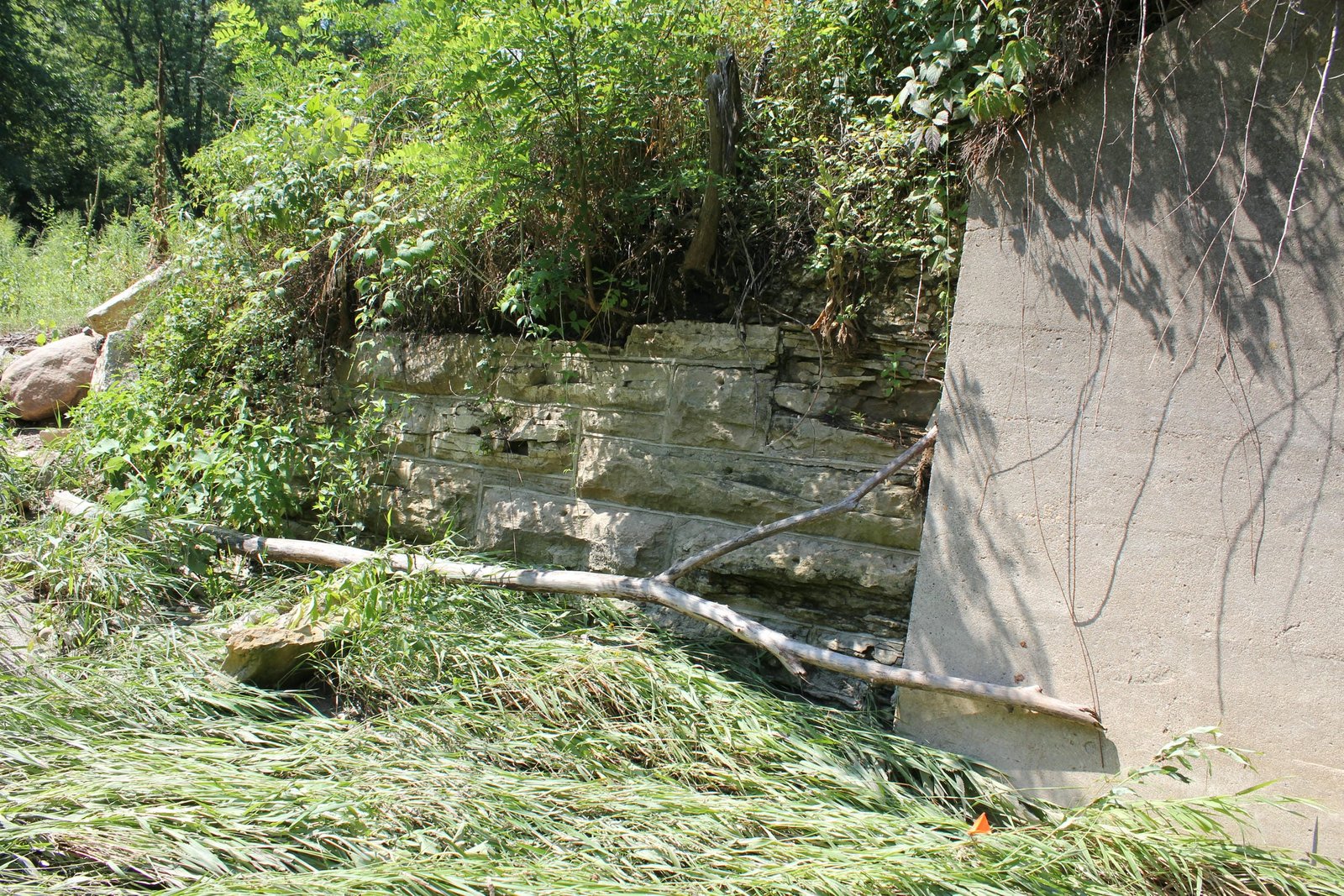
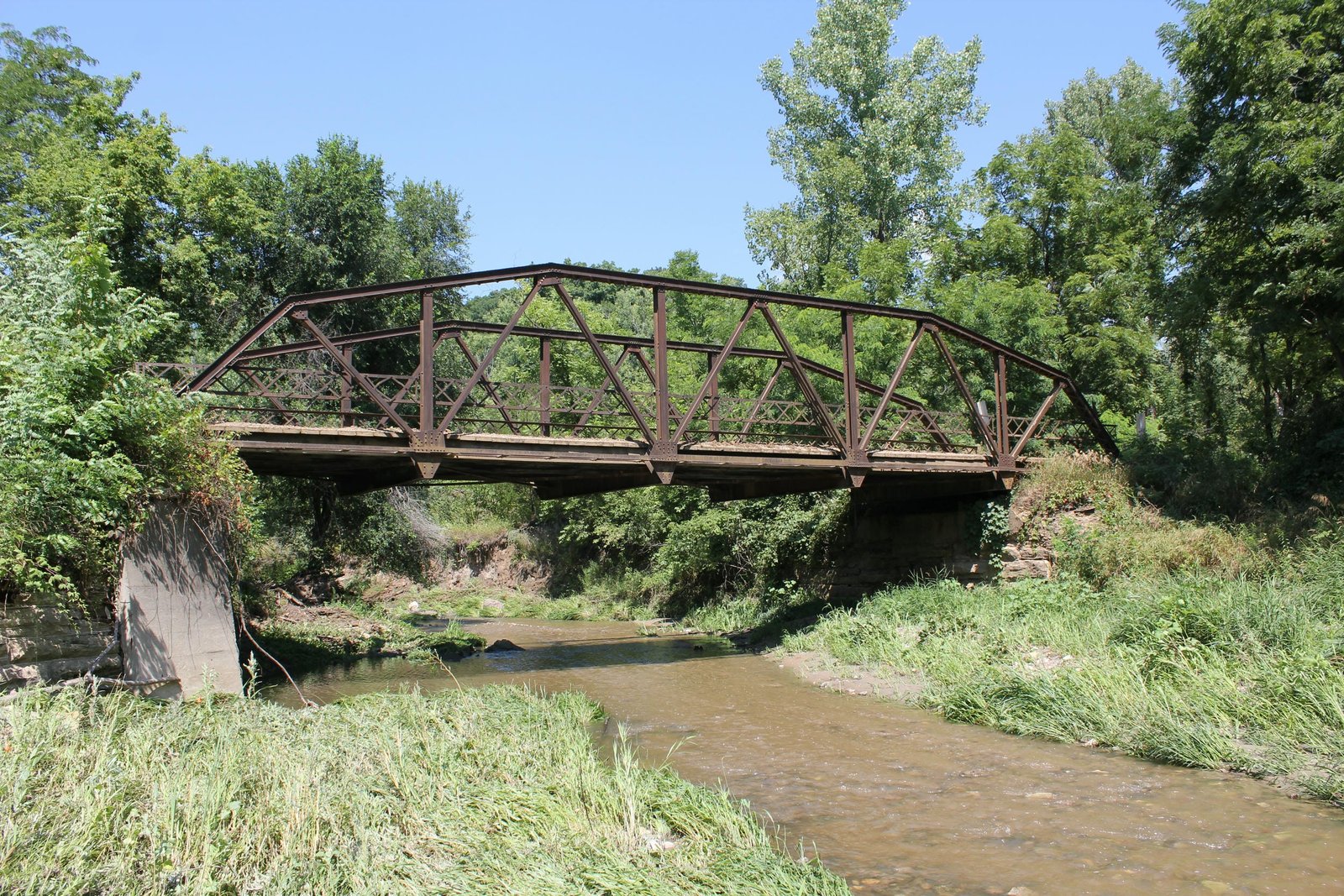
Located east of Moingona, this deck plate girder bridge once carried a Chicago & North Western Railway line across Honey Creek. Originally, the C&NW mainline between Boone and Ogden turned southwest at Boone, following Honey Creek to its mouth at the Des Moines River opposite of Moingona, crossed the Des Moines River at Moingona and turned northwest to reach Ogden. This route required harsh grades, sharp curves and eight crossings of Honey Creek. This bridge was the eighth and final crossing of Honey Creek. The first bridge at this location consisted of a timber pile trestle bridge, constructed when the line was first built. On July 6, 1881; a train checking the condition of the bridge during a flood plunged through the trestle, and the bridge was rebuilt soon after with another timber pile trestle bridge. As traffic over the line grew in the late 1870s and early 1880s, the C&NW made significant upgrades to the line, replacing timber bridges with stone and iron structures. In 1882, a 79-foot iron deck plate girder span was installed on new stone abutments. The bridge was rebuilt with a steel deck girder span in 1898, giving the bridge its final configuration. Between 1899 and 1901, a new double track cutoff was constructed between Boone and Ogden, and the original line was downgraded to a branch line, before being abandoned in 1930. At the time of abandonment, the bridge consisted of a 79-foot deck plate girder span, set onto stone abutments. It is believed that the deck girder used a standard design, with two heavy plate girders and an open deck. The abutments also followed a standard design, with stepped wing walls extending diagonally from the bridge. Stone for the abutments consisted of a tan limestone, quarried at an unknown location. An unknown contractor fabricated the superstructure, and an additional unknown contractor constructed the abutments. Deck plate girder bridges were popular for railroad use, as they were durable and easy to construct. The C&NW ceased operations over this line in 1930, and residents of Boone County sought to turn the railroad grade from Boone to Ogden into a scenic drive to honor Kate Shelley. Due to the Great Depression, these plans fell through, and the bridges were scrapped in September 1933. It is unclear if the deck girder span was reused elsewhere. Today, all that remains are the two stone abutments. If the bridge were still standing, the author would have ranked this bridge as being locally significant, due to the common design.
Perhaps the most famous railroad event in Iowa took place at this location. Throughout the day of July 6, 1881; severe thunderstorms caused a rapid rise in Honey Creek, threatening several bridges along this line. At approximately 11 PM, a crew was sent east from Moingona to check track conditions. Unknown to the crew, flooding had badly damaged several pilings supporting the timber bridge at this location. When the train reached the bridge, it collapsed, sending the locomotive and four crew members into Honey Creek. A 15-year-old girl named Kate Shelley, who lived near the bridge, heard the collapse and went to the scene. There, she found the two surviving crew members and knew an eastbound passenger train was due in Moingona around midnight. Armed with a lantern, the young girl braved a storm to alert the station agent at Moingona that the Honey Creek bridge had collapsed. On the way, her lantern went out, and she was forced to crawl across the Des Moines River bridge using only light from the lightning flashes. She reached the station at Moingona in time to stop the train, and the two surviving crew members were rescued soon after. By the following day, news of her bravery had spread through the United States. As a reward for her bravery, passengers, the railroad company and the State of Iowa rewarded her with medals, money and supplies.
Later in life, her bravery had not been forgotten. When the Shelley land had been mortgaged, Chicagoans donated the money required to keep the land in her family. Kate Shelley worked various odd jobs in the 1890s and early 1900s, including as a menial at the Iowa State Capitol and as a school teacher. When the new double track viaduct opened in 1901, it became known as the Kate Shelley Bridge. Shelley was reportedly in attendance at the opening ceremonies of the viaduct. In 1903, she was hired as the station agent at the Moingona depot, a job she held for the rest of her life. Kate Shelley died in 1912, but the story of her bravery in 1881 remained an important piece of Iowa folklore. The Chicago & North Western Railway operated the "Kate Shelley 400" between Chicago and Boone in the early 1950s. Timetables for the C&NW west suburban commuter service and its successor the Metra UP-W line used and continue to use "Kate Shelley Rose" as an honor to her. When the 1901-era viaduct was replaced with a new viaduct in 2009, the viaduct was also named in honor of her. Today, the Moingona Depot has been preserved as a museum dedicated to her bravery.
Citations
| Build date | Chicago & North Western Railway Valuation Notes at the Chicago & North Western Historical Society Archives |
| Railroad History Citation | ICC Valuation Information, Compiled by Richard S. Steele |