
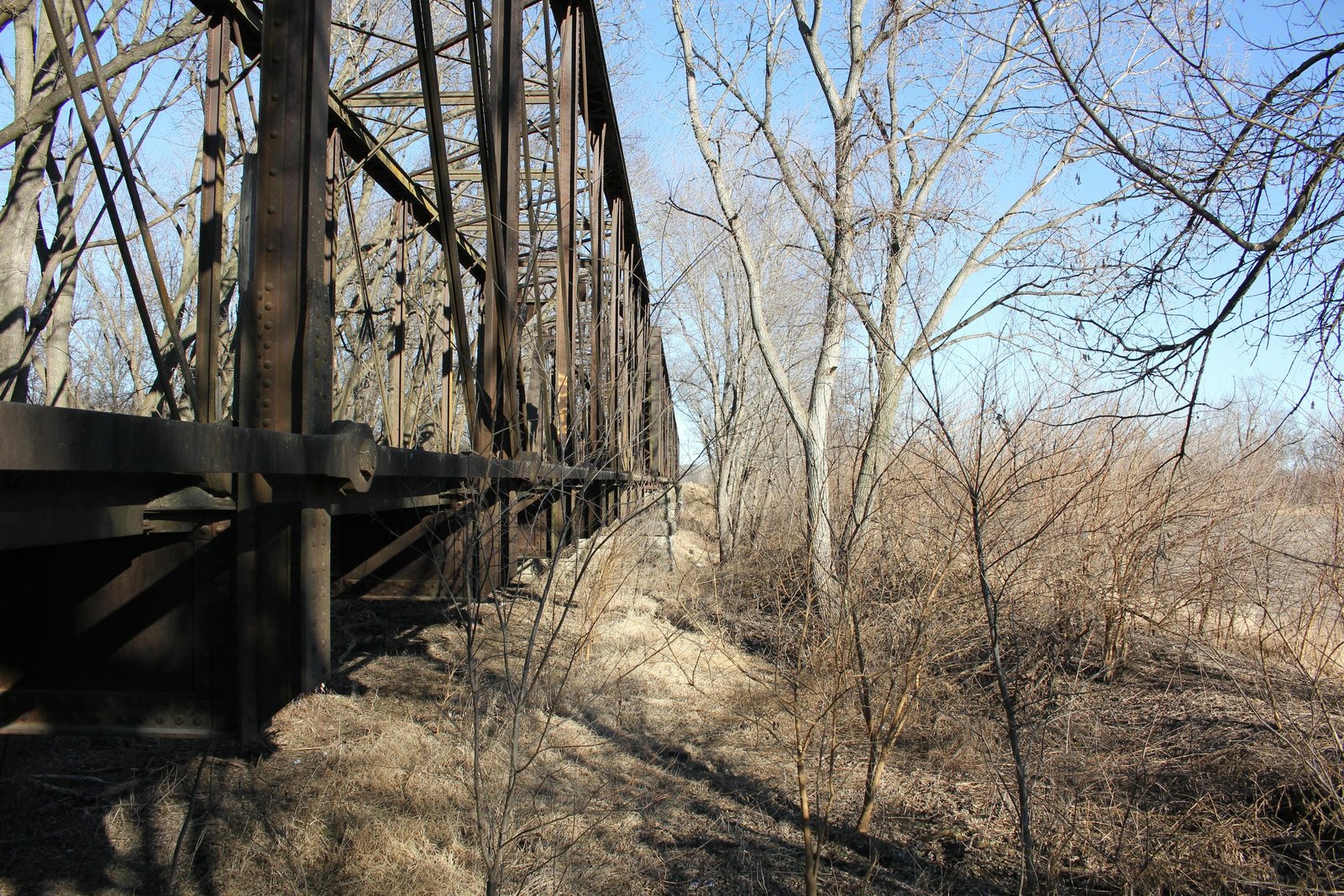
Click the photo to view the full-size version
| Name | Harvey Railroad Bridge Chicago, Rock Island & Pacific Railroad Bridge #3157 |
| Built By | Chicago, Rock Island & Pacific Railway |
| Currently Owned By | Marion County |
| Superstructure Contractor | American Bridge Company of Chicago, Illinois |
| Substructure Contractor | Unknown |
| Length | 600 Feet Total, 150 Foot Spans |
| Width | 1 Track |
| Height Above Ground | 10 Feet (Estimated) |
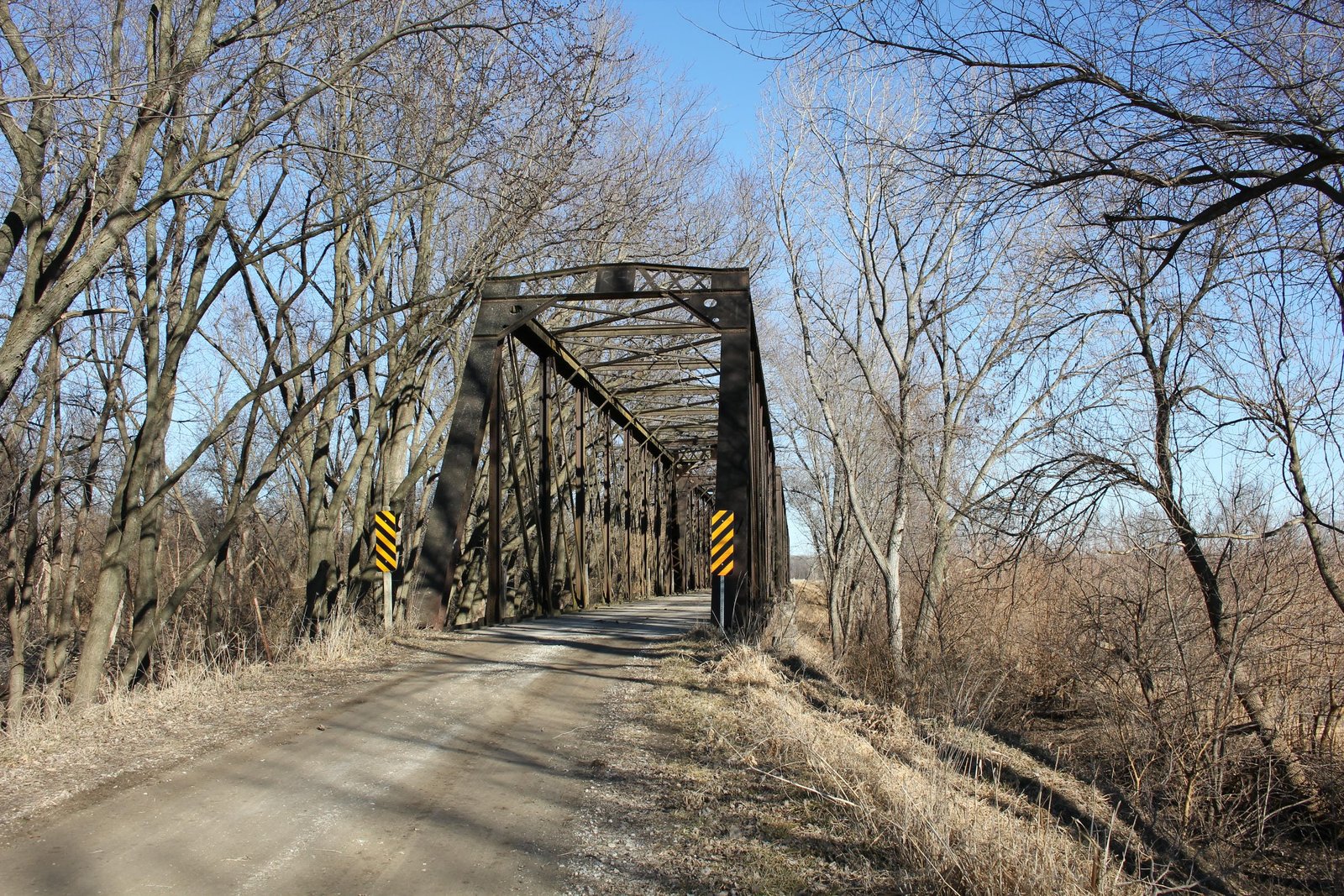
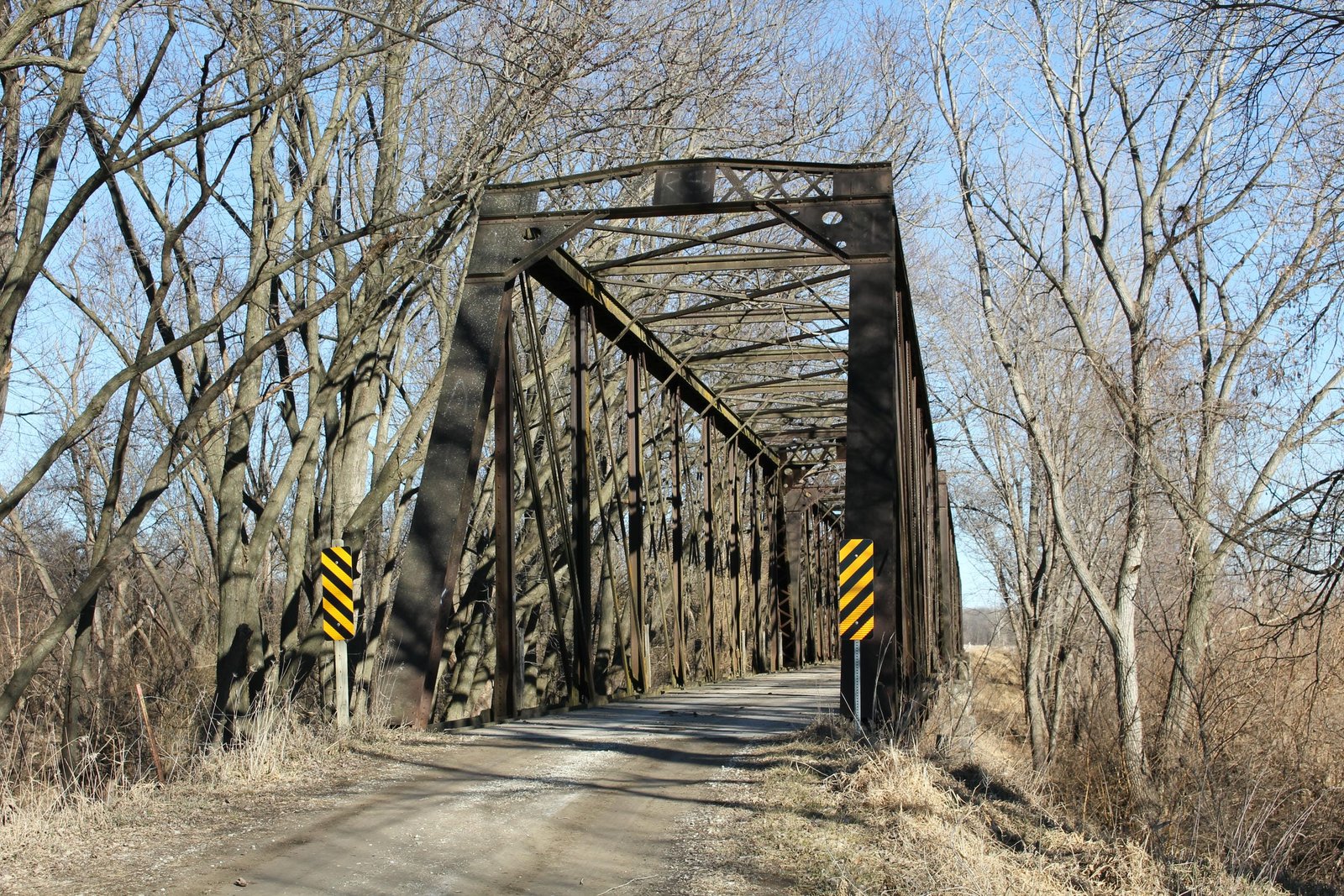
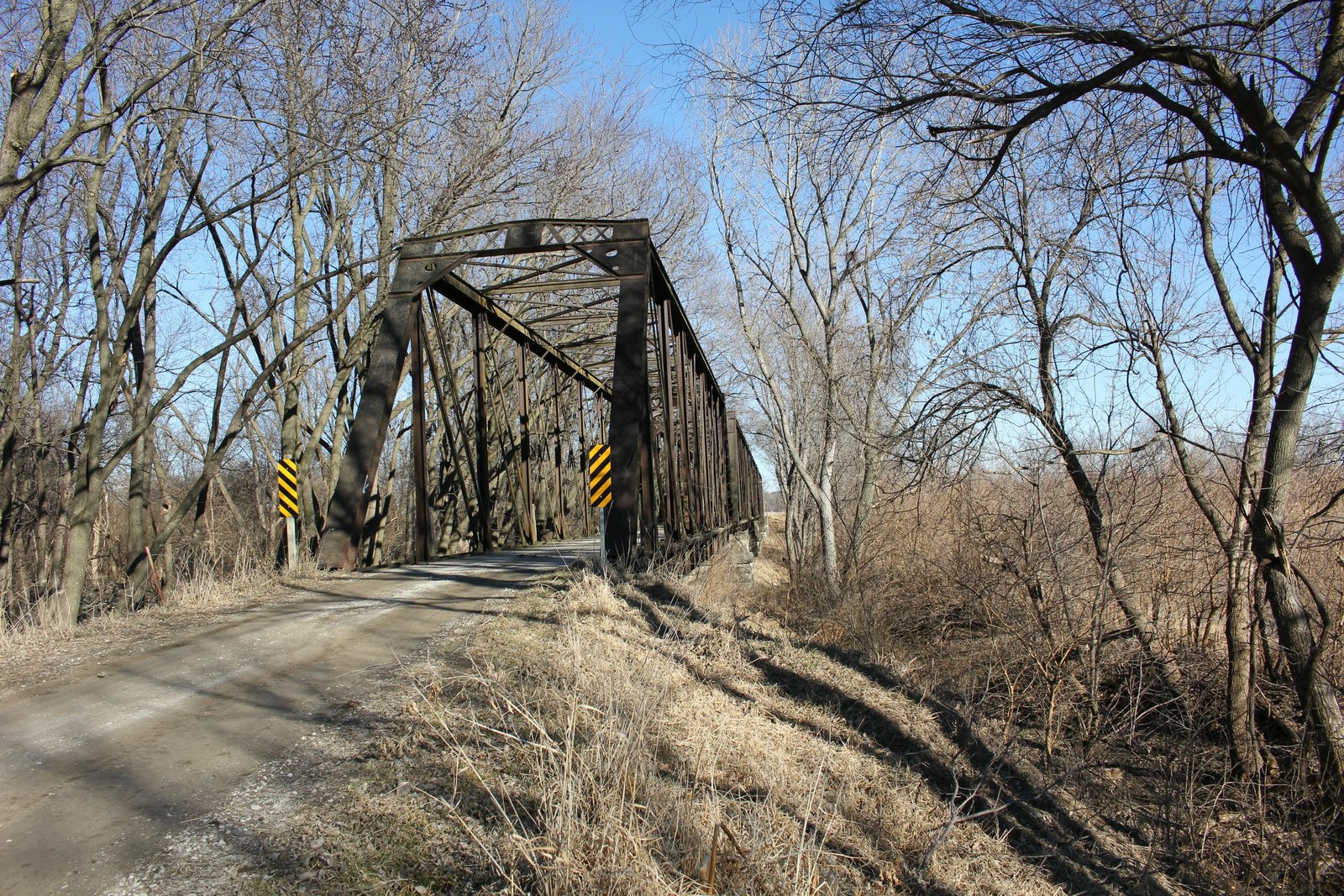
| Superstructure Design | Pratt Through Truss |
| Substructure Design | Stone Masonry and Concrete |
| Date Built | 1896, Using Spans Fabricated 1878 |
| Possible Original Location | Bridge #2946; Des Moines River Bridge; Eldon, Iowa |
| Traffic Count | 20 Vehicles/Day (2014) |
| Current Status | Open to Automobile Traffic |
| Chicago, Rock Island & Pacific Railroad Bridge Number | 3157 |
| Significance | High Significance |
| Documentation Date | 6/30/2013; 2/12/2017 |
In 1872, the Chicago, Rock Island & Pacific Railroad (Rock Island) constructed a 28-mile railroad line, extending from an existing railroad at Washington, Iowa to Signourney, Iowa. The line was extended another 25 miles in 1875, reaching Oskaloosa, Iowa. The following year, an additional 25 miles were constructed to Knoxville, Iowa. In 1880, the railroad was reorganized as the Chicago, Rock Island & Pacific Railway (Rock Island). This line formed a secondary route for the Rock Island, roughly paralleling the existing mainline between Iowa City, Iowa and Des Moines, Iowa. This line also provided access to coal fields located in south central Iowa. The Rock Island struggled financially throughout much of its history, experiencing repeated bankruptcies and chronic instability. In 1938, the segment between Oskaloosa and Knoxville was abandoned. After World War II, the Rock Island struggled to survive, proposing mergers and deferring maintenance on their routes. The railroad reorganized as the Chicago, Rock Island & Pacific Railroad in 1948.
Another section of this line between Keota and Oskaloosa was abandoned in 1967. By the mid-1970s, the railroad was in serious decline. The railroad secured loans to eliminate slow orders, acquired new equipment, and attempted to restore profitability. Several sections of this line had fallen into serious disrepair, hampering the Rock Islands ability to maintain efficient operations. In 1978, the railroad came close to profit, but creditors were lobbying for a complete shutdown of the Rock Island. During the fall of 1979, a strike crippled the railroad, and by January of 1980, the entire system was ordered to be shut down and liquidated. Many of the lines and equipment were scrapped. Profitable sections of railroad were prepared for sale. In 1983, the Kewash Railroad (KWTR) purchased the remaining segment Washington to Keota, before ultimately abandoning it in 1988. Today, much of this line is abandoned and has been converted to farm fields. A short segment between Washington and Keota has been reused as part of the Kewash Trail.
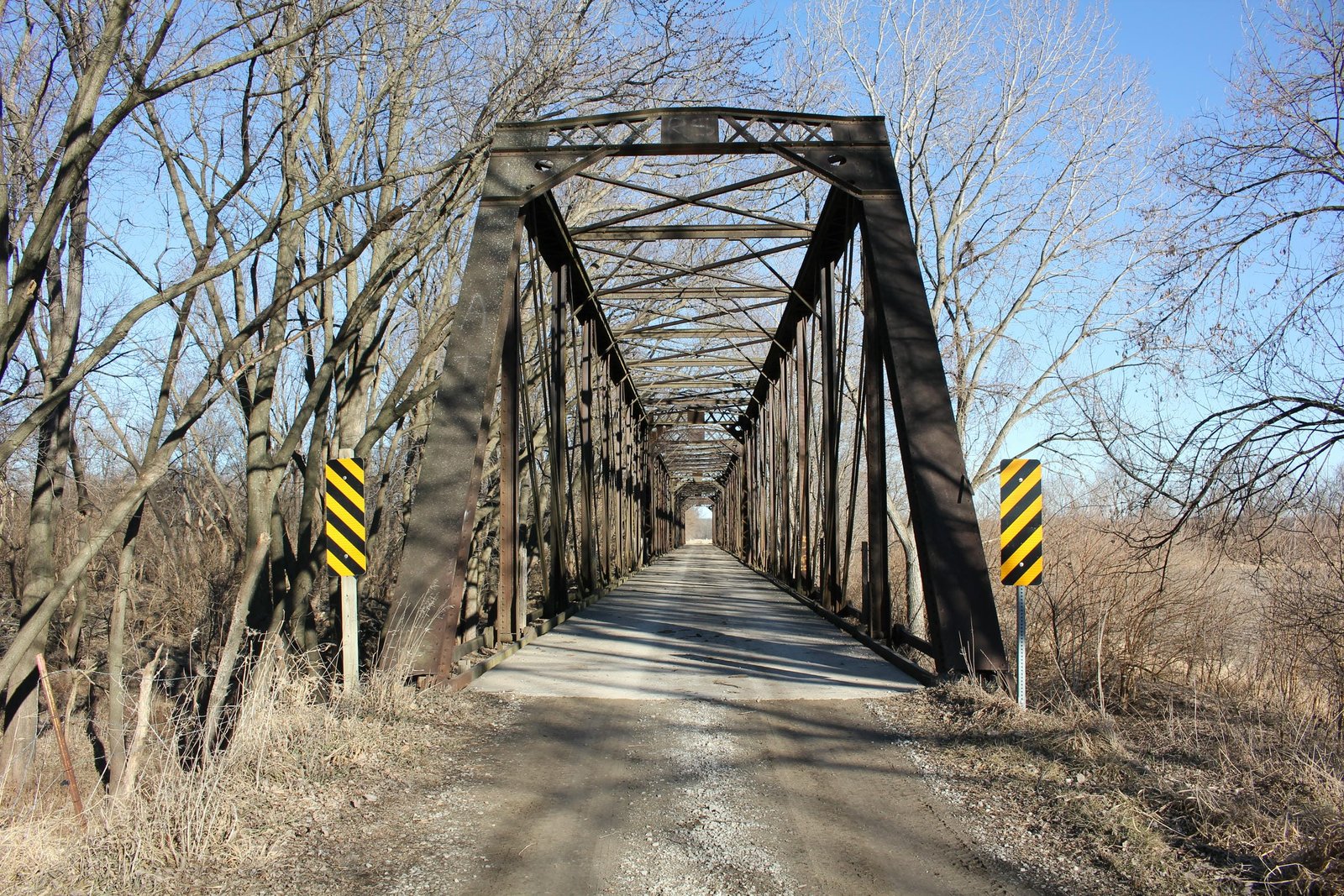
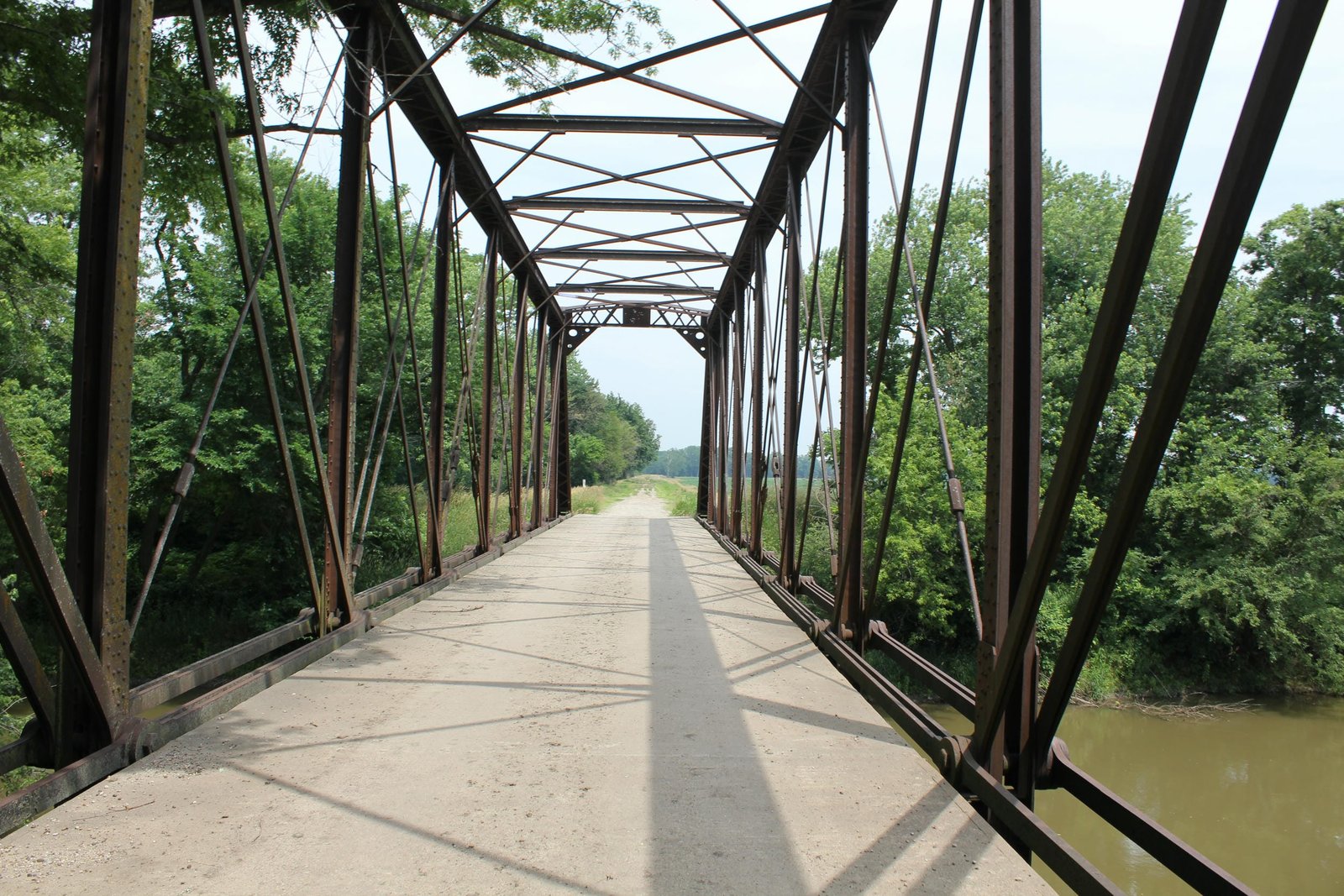
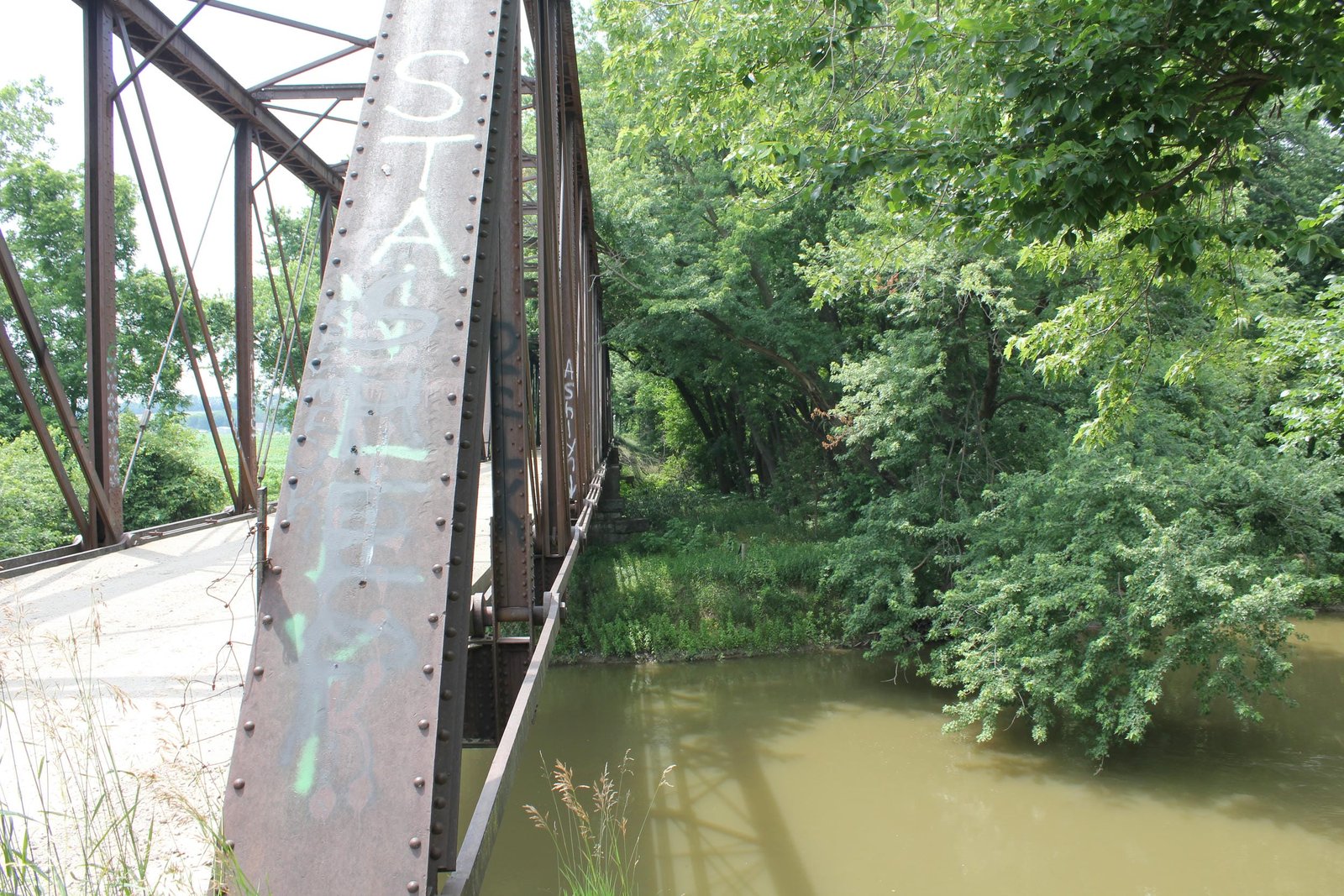
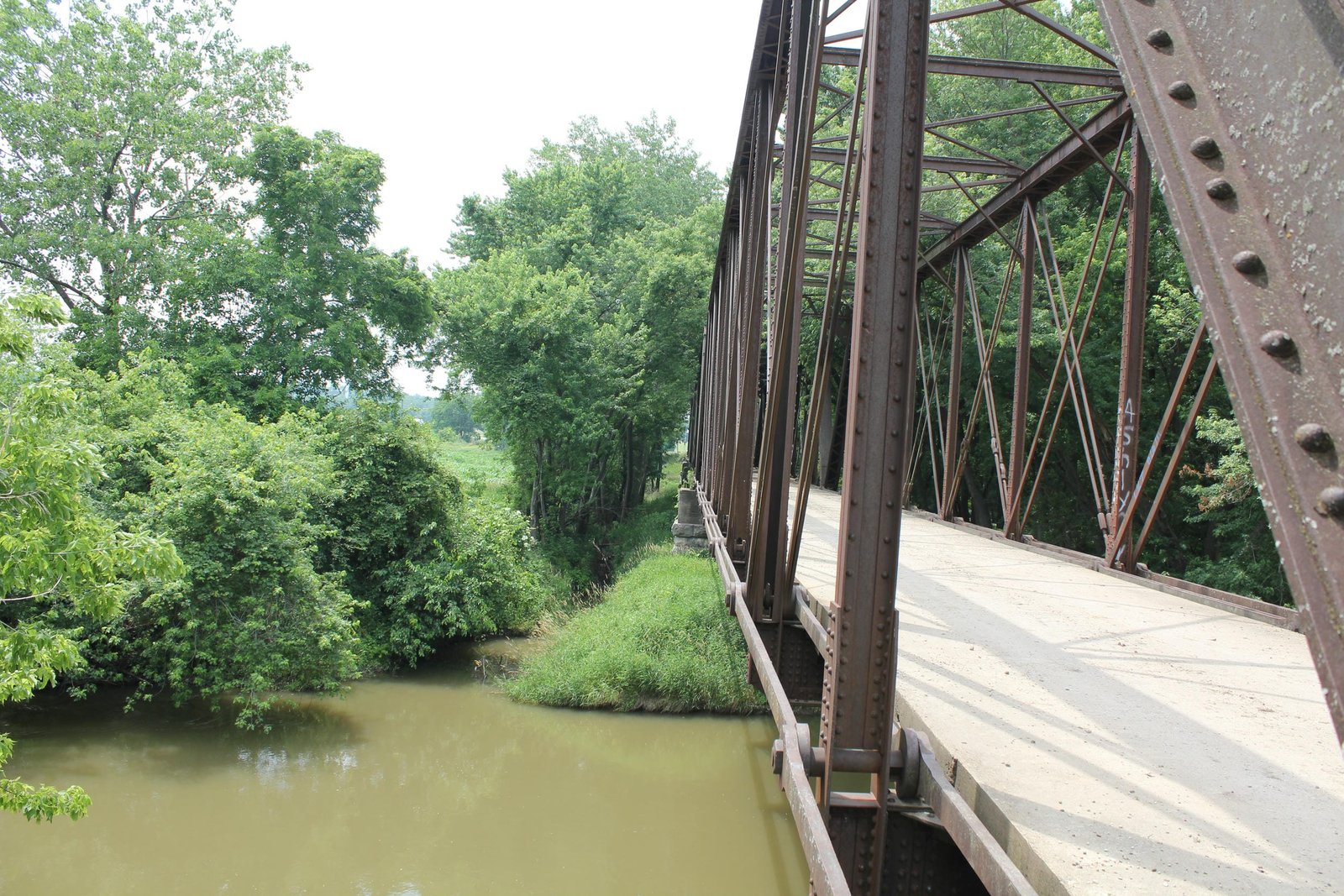
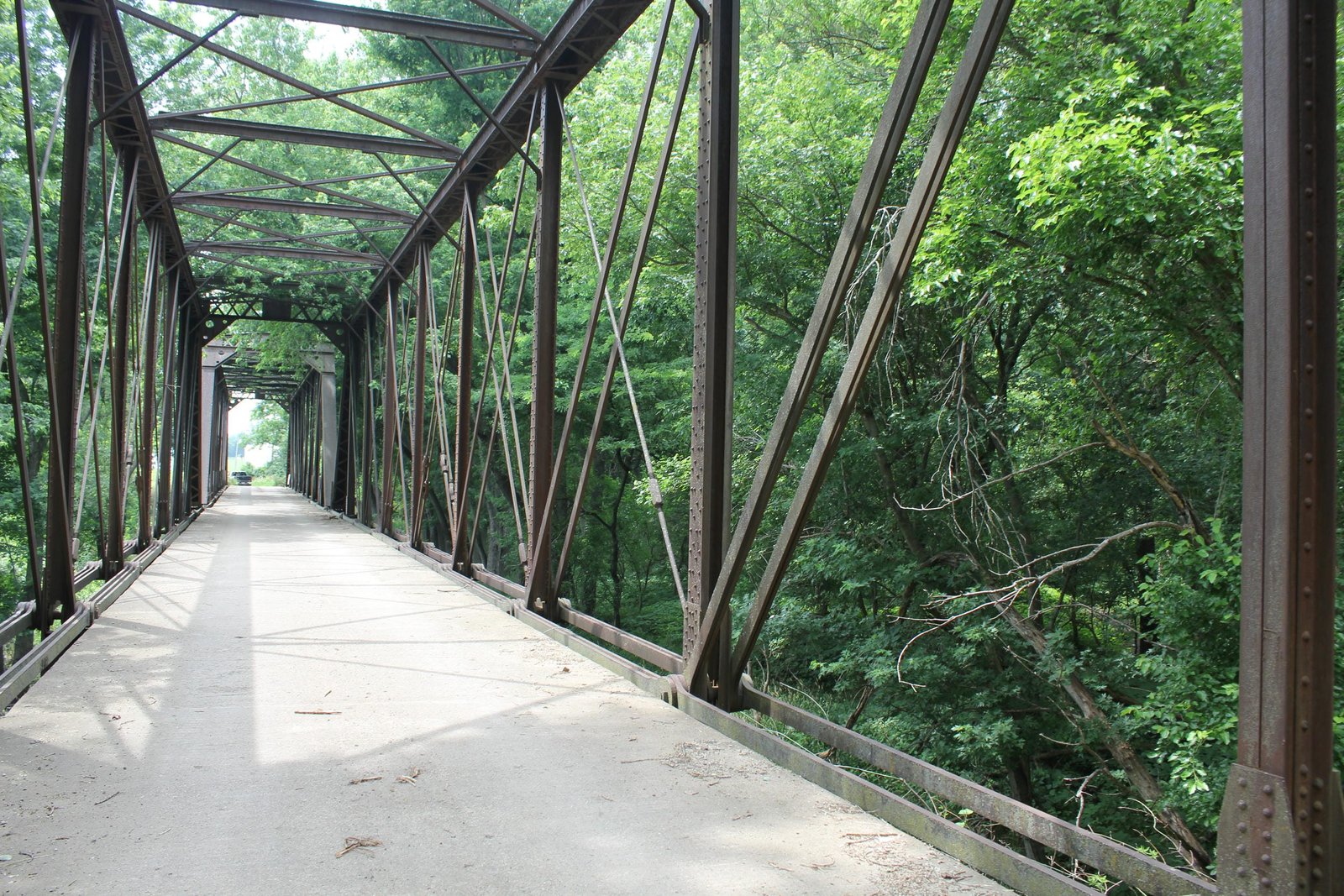
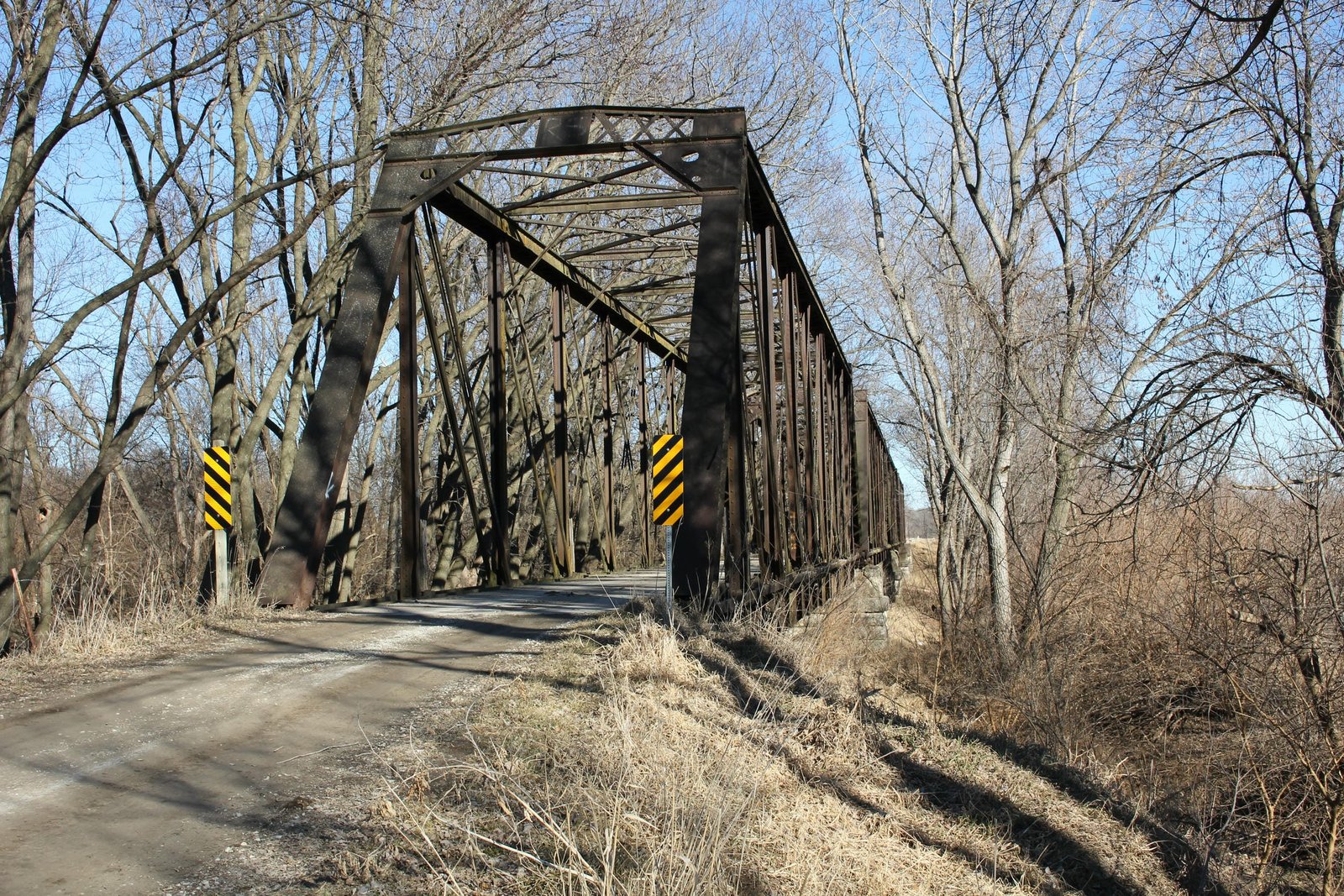
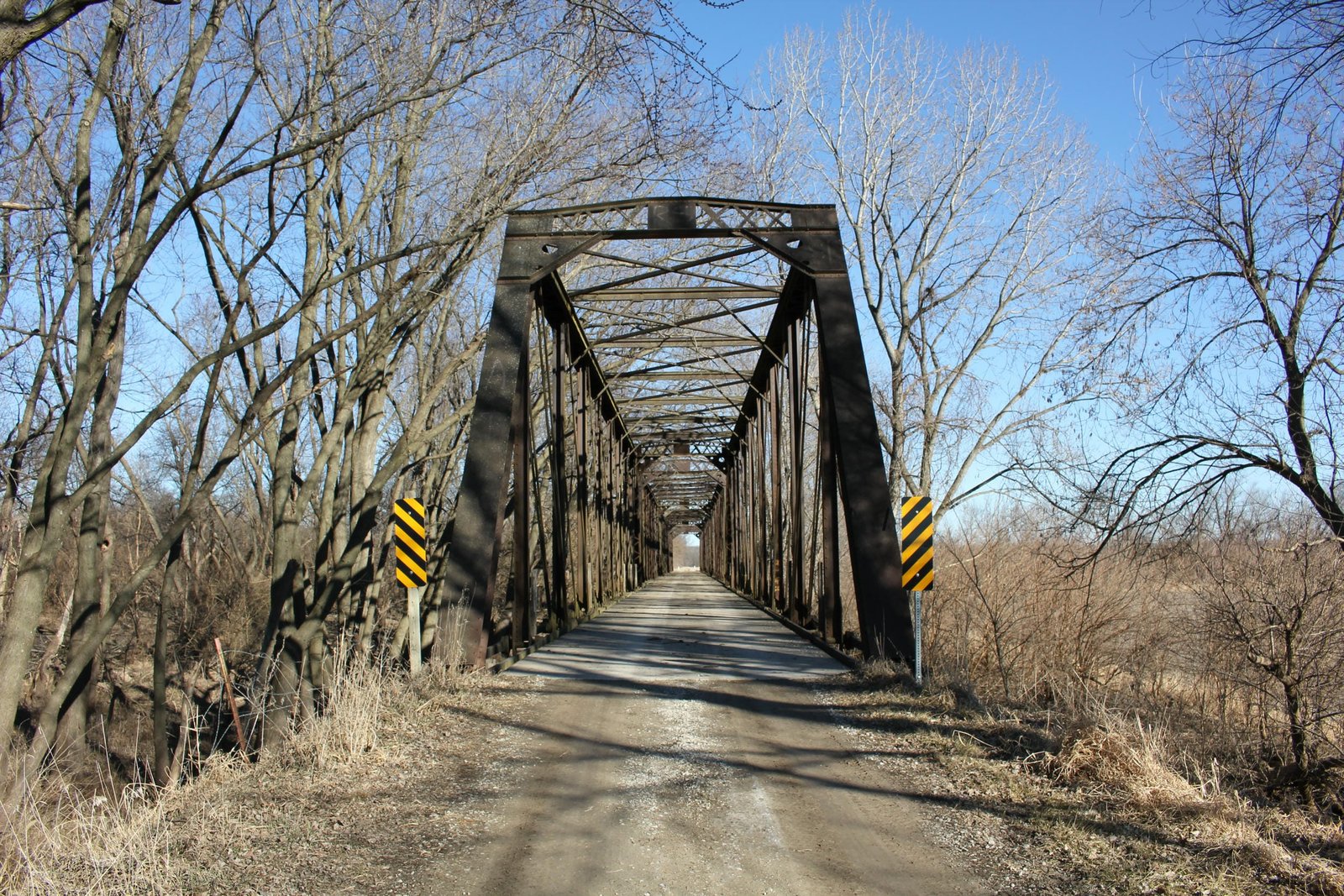
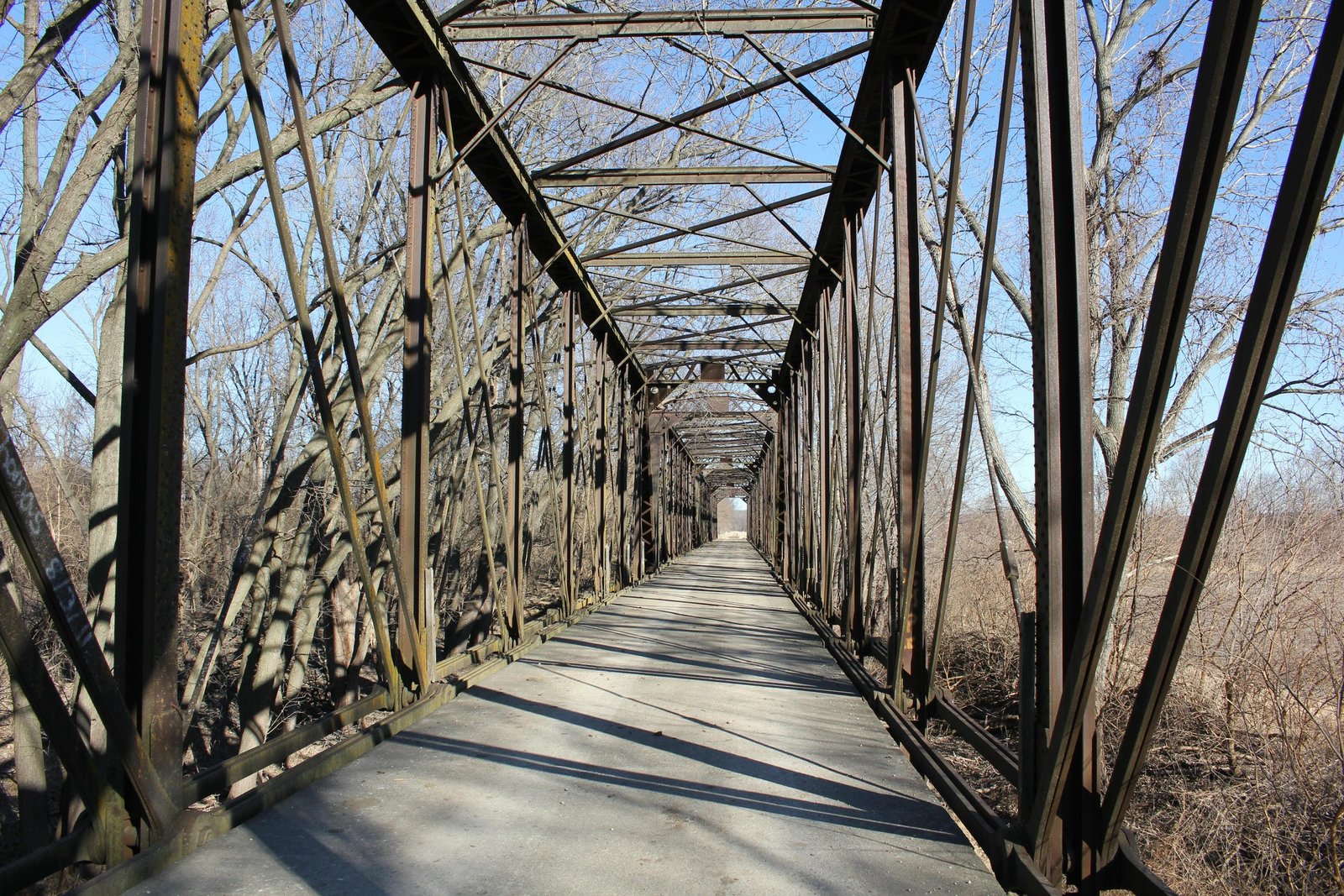
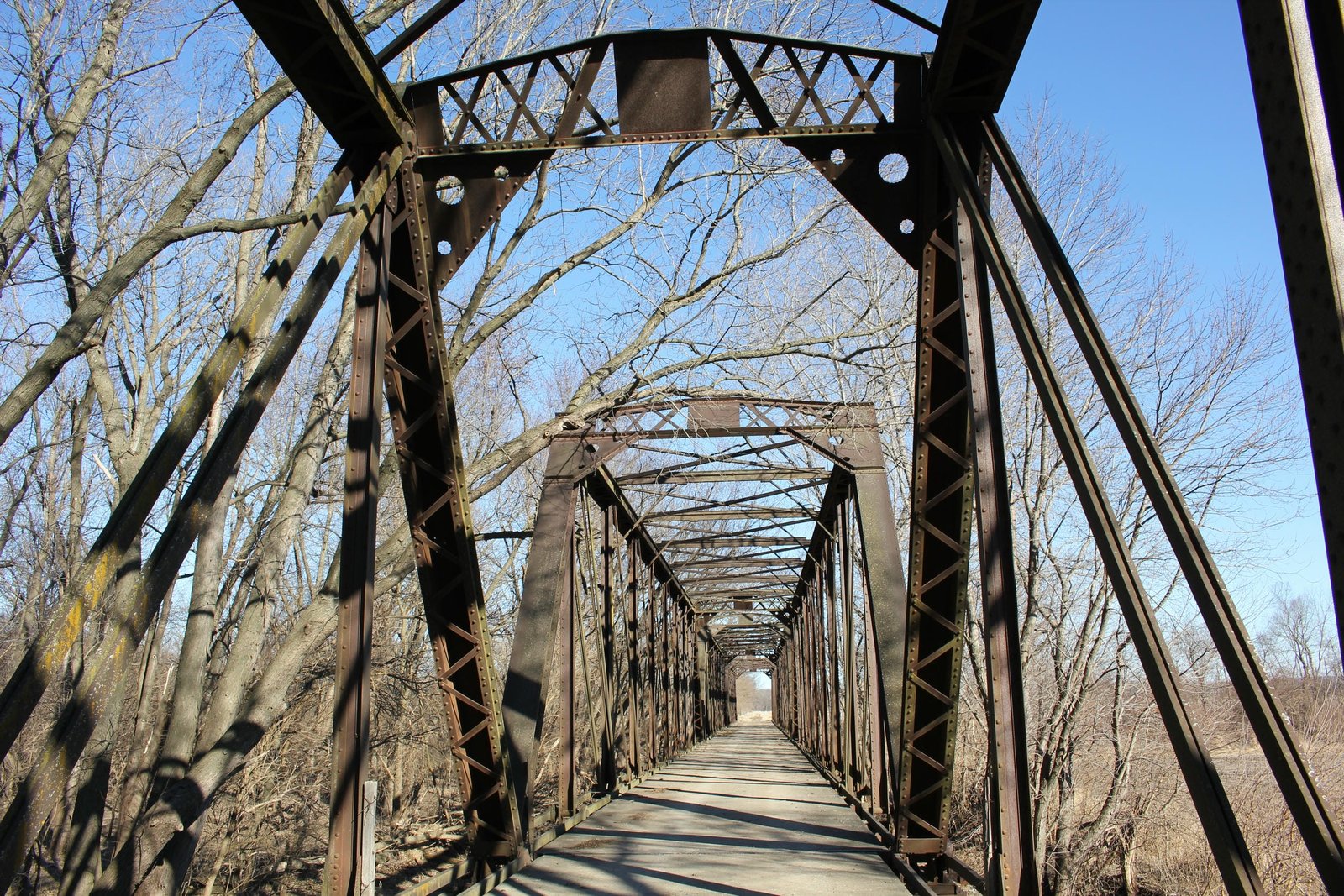
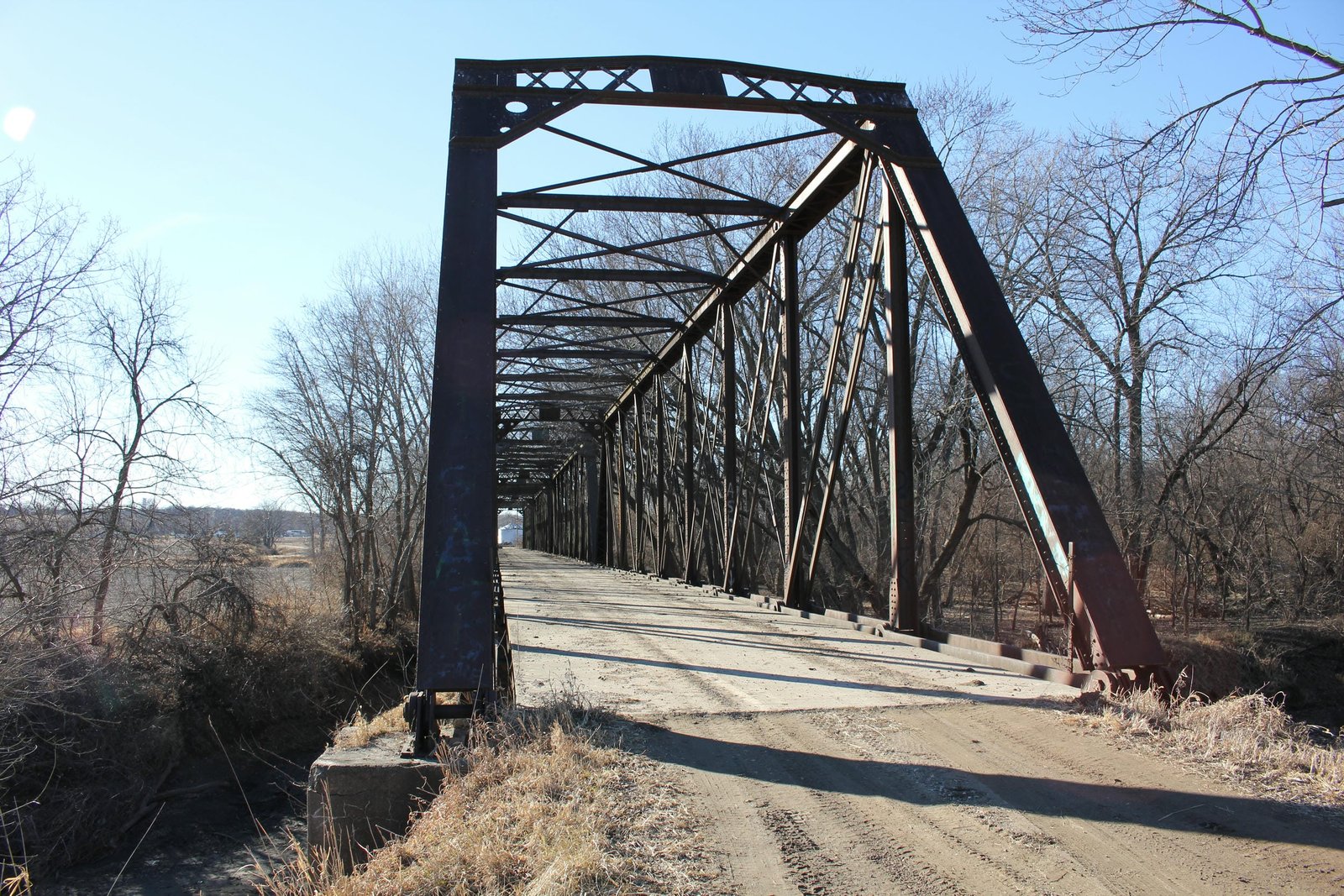
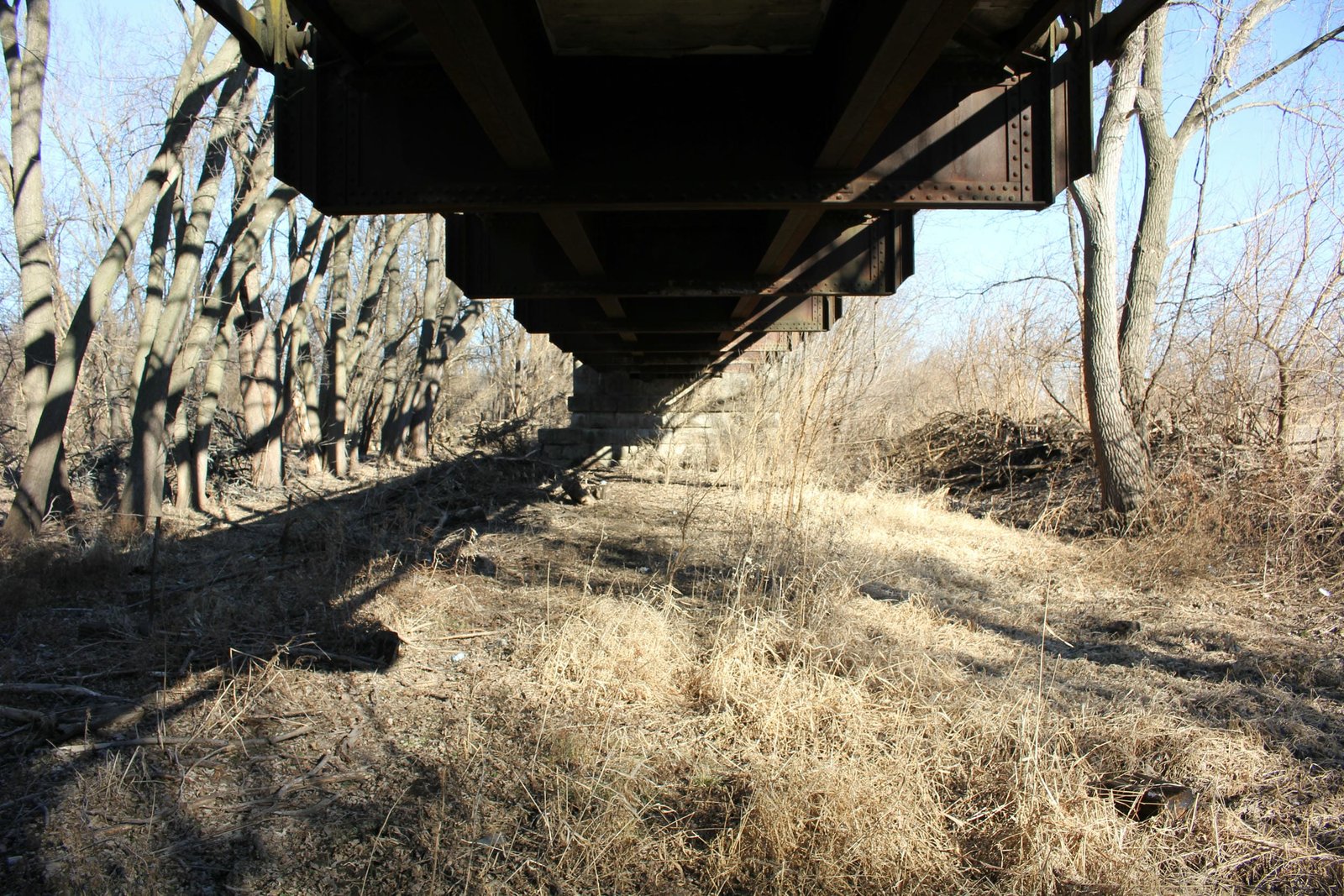
Located in Harvey, this historic through truss bridge carries a former Chicago, Rock Island & Pacific Railway (Rock Island) branch line over a former channel of the Des Moines River. Originally, the main channel of the Des Moines River flowed under this bridge. An additional bridge further east was known as the "Lake Bridge", and crossed an intermittent overflow of the Des Moines River. The first bridge at this location was likely a wooden truss bridge, set onto timber pile piers. This bridge was probably renewed at least once in the 1880s. By the 1890s, wooden trusses were largely obsolete for railroad use, and it was decided to replace the bridge with a new iron structure. Work on the stone piers began in mid-1895, and secondhand iron truss spans were installed in late 1896. A series of floods in the early 20th Century altered the course of the river, resulting in the main channel shifting to the "Lake Bridge", which was a wooden trestle at the time. This trestle was seriously damaged during the floods, and two secondhand 155-foot truss spans were installed on new concrete piers in 1905. It is believed this bridge was also raised approximately four feet at this time. By 1907, the channel had completely shifted, and an additional truss span was added to the eastern bridge. After the railroad abandoned this line in 1938, this bridge was sold to Marion County, while the eastern bridge was removed. It is possible that the truss spans from the eastern bridge were reused at unknown locations. Upon acquisition by Marion County, the bridge was retrofitted with a concrete deck, giving the structure its present appearance.
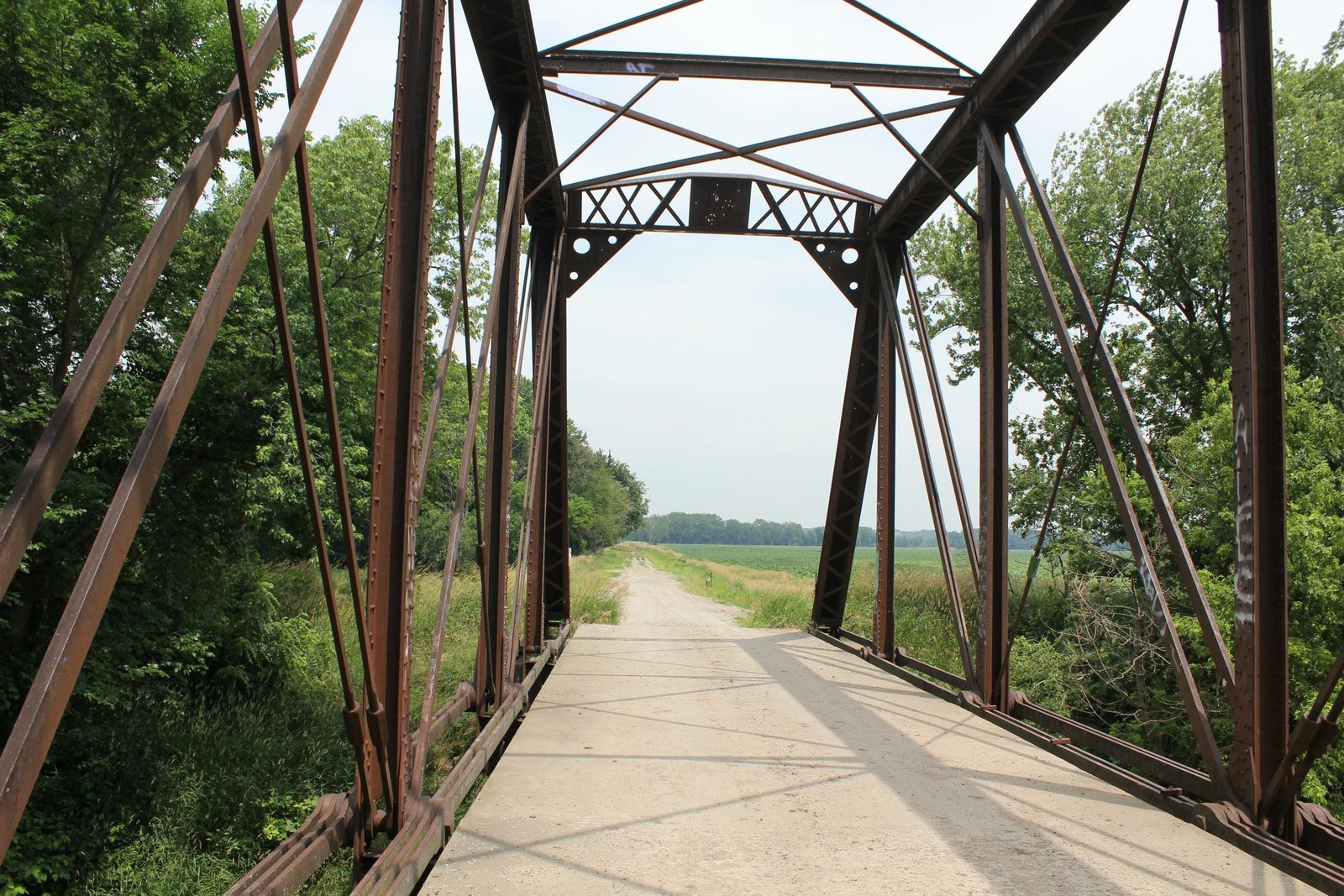
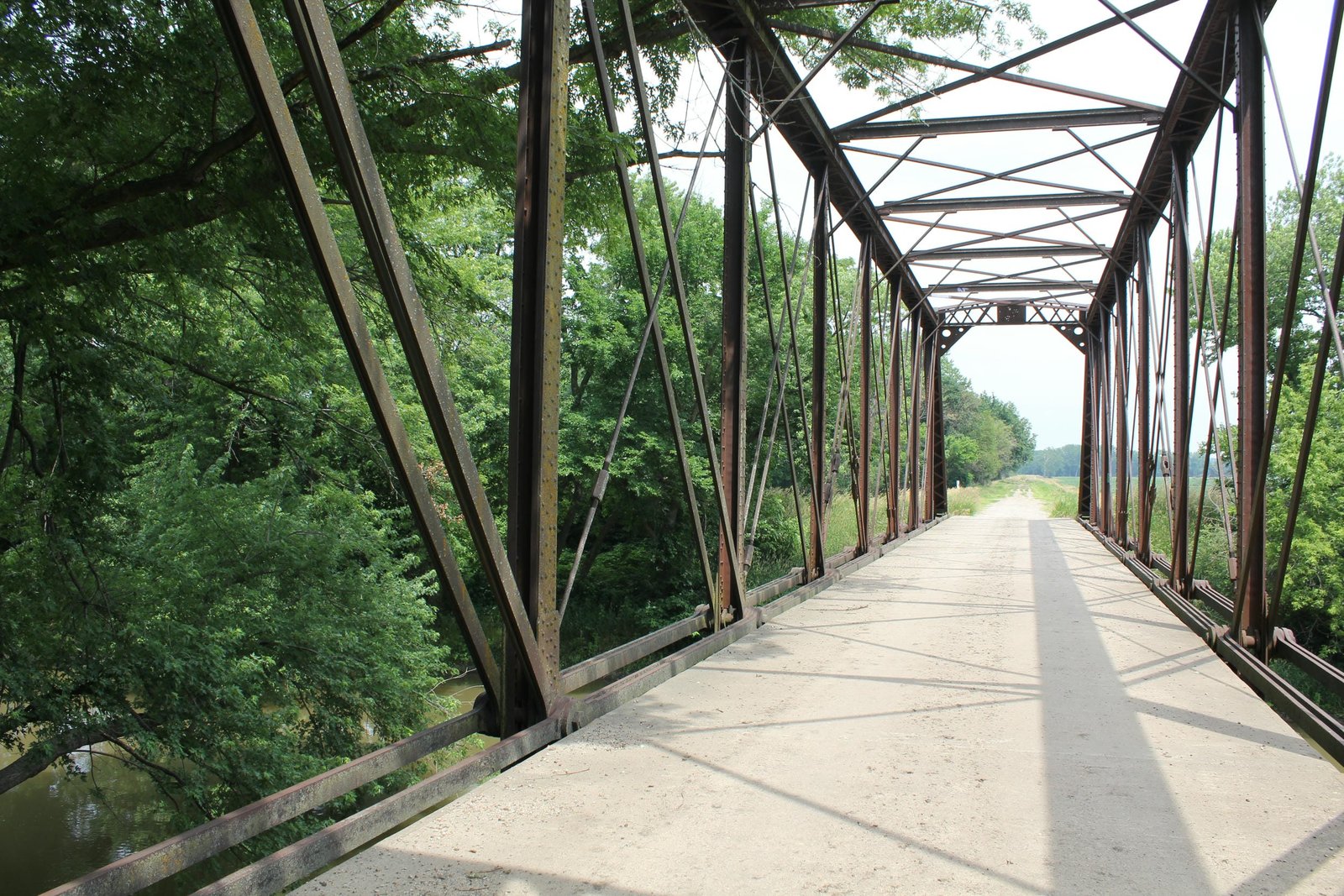
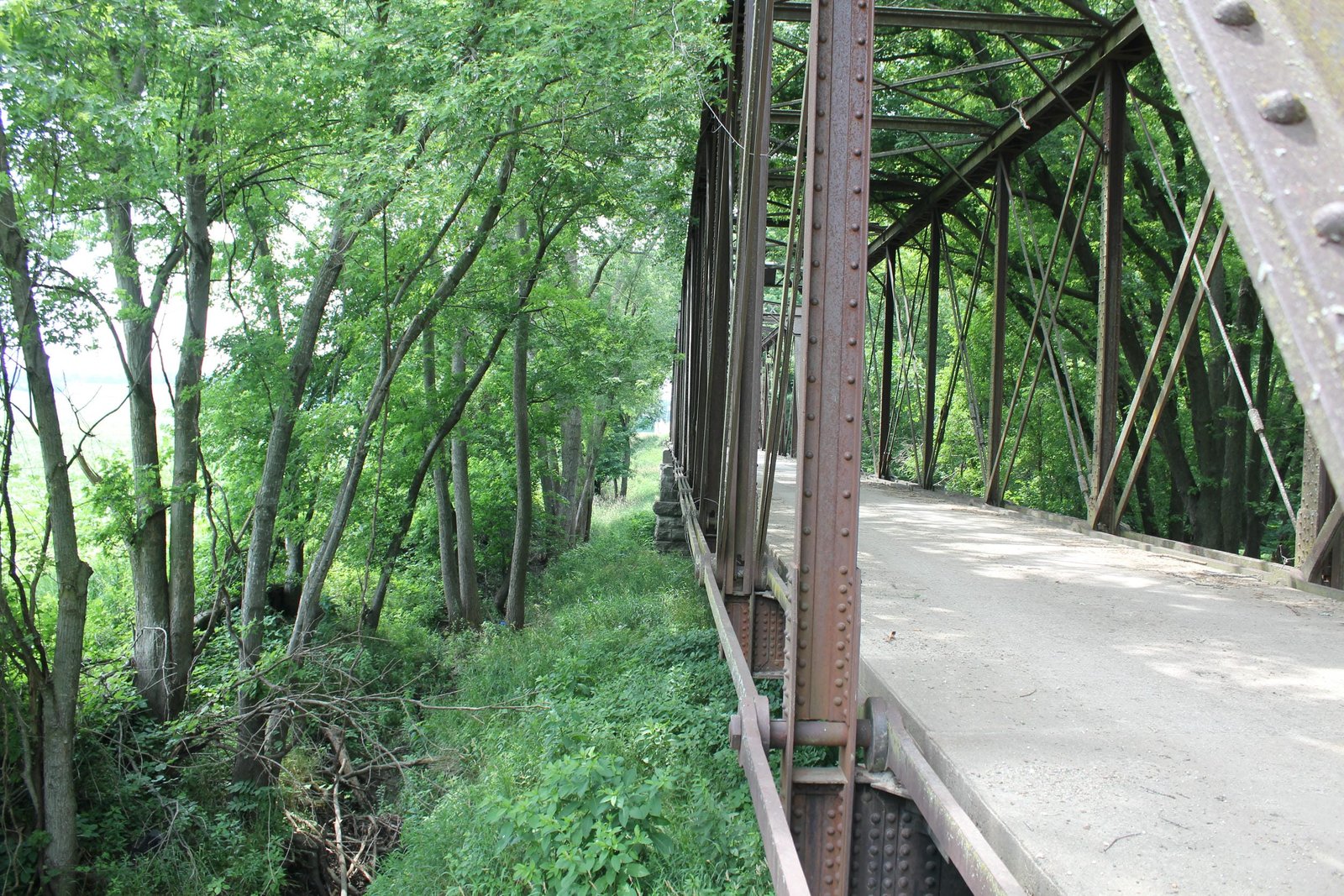
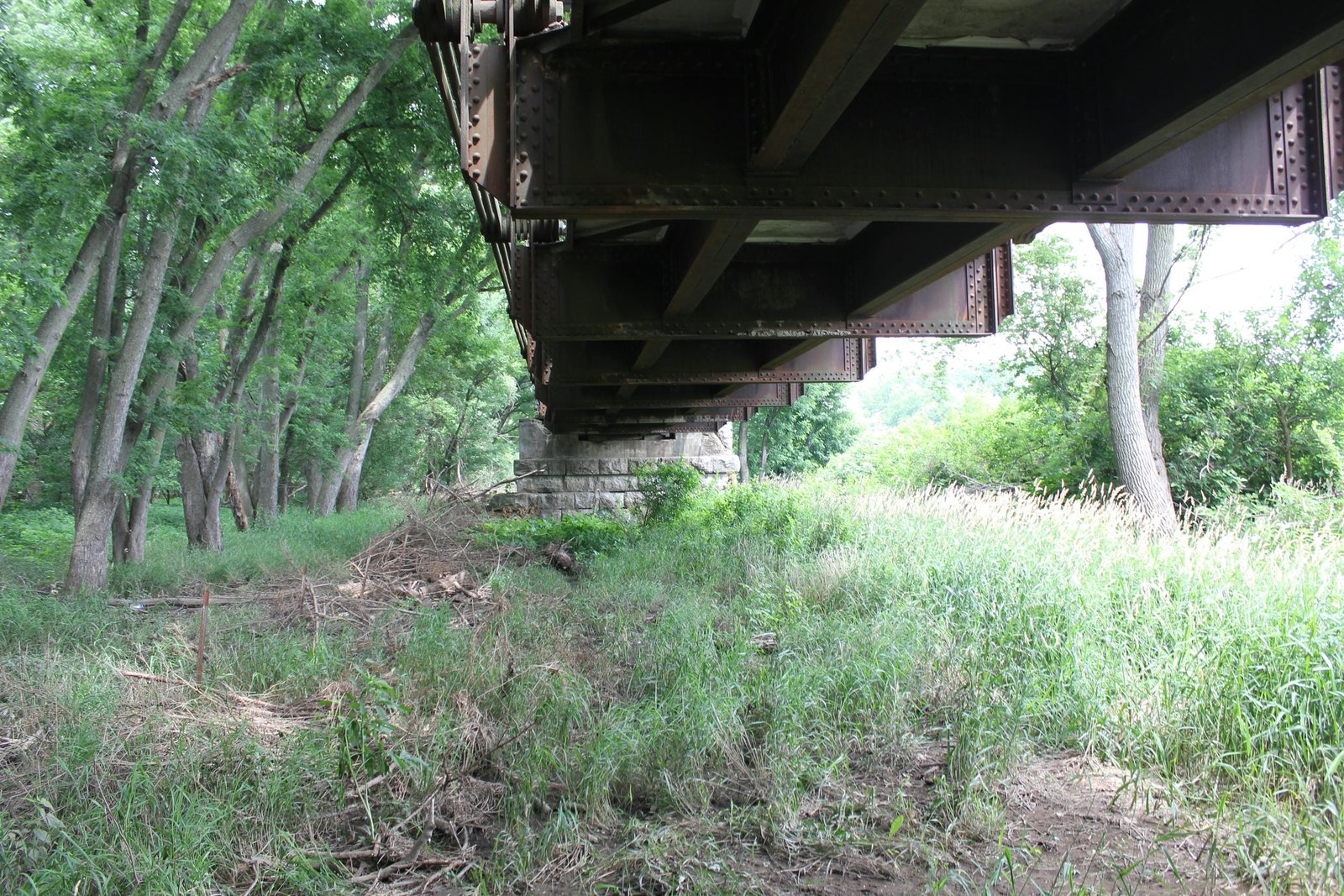
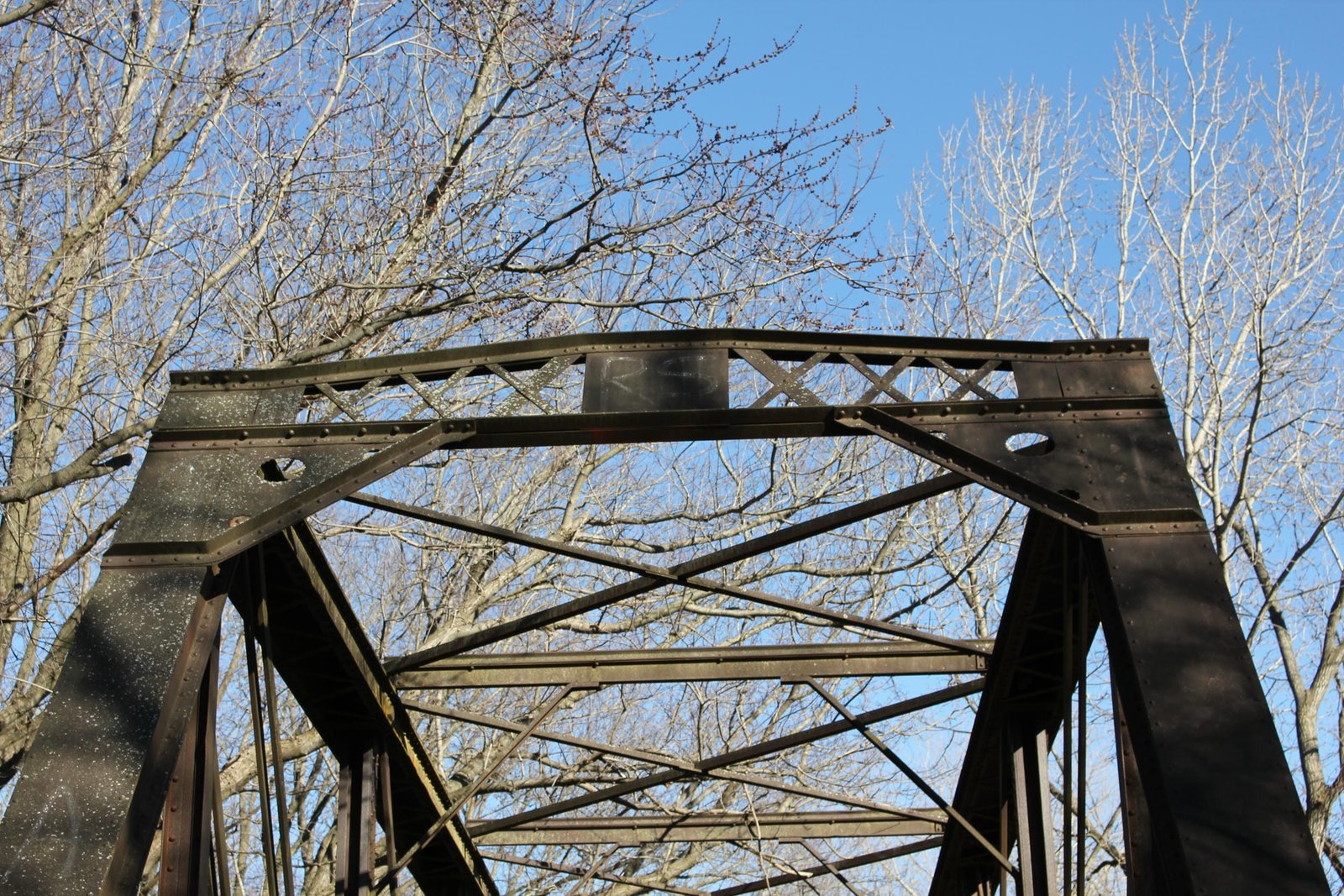
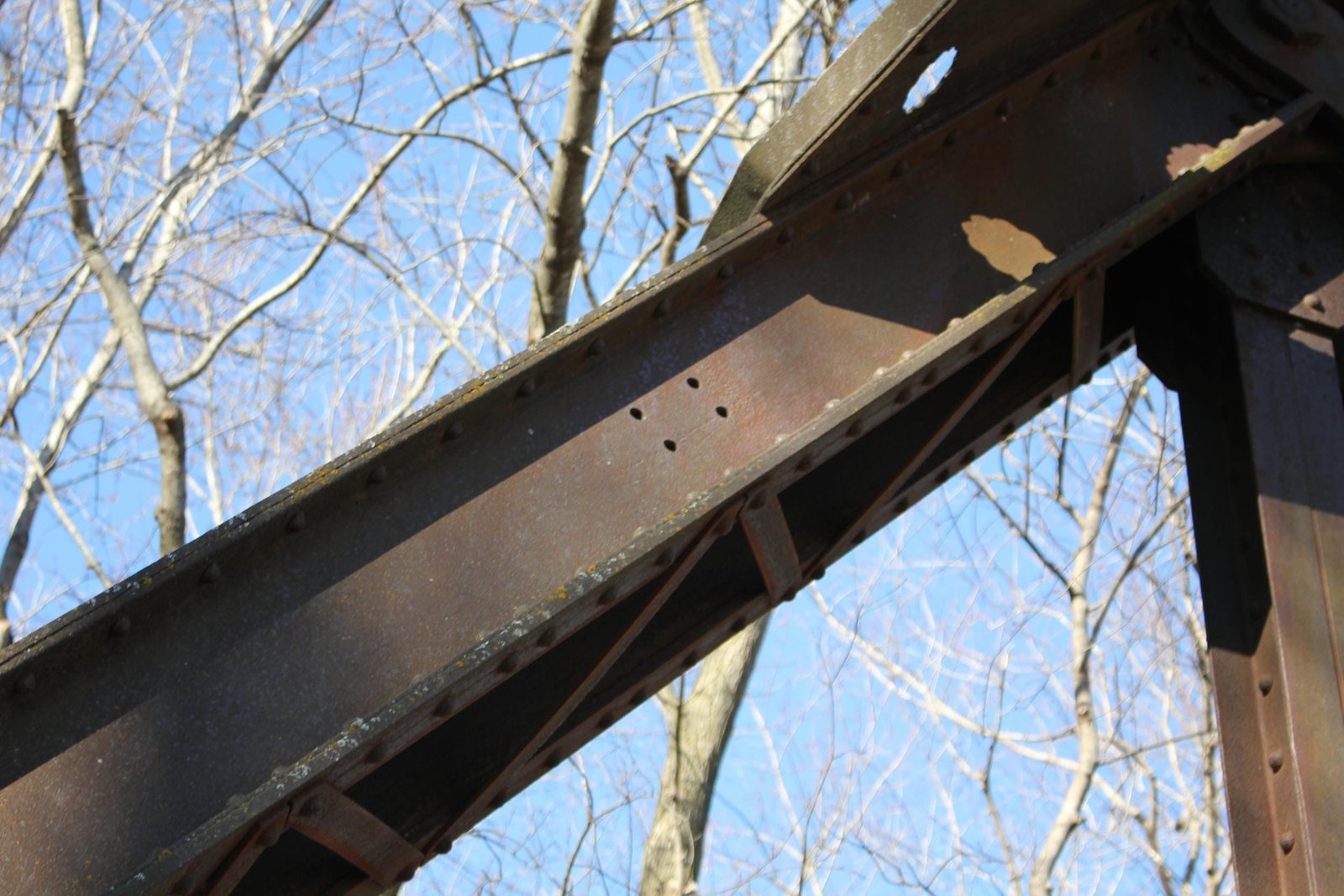
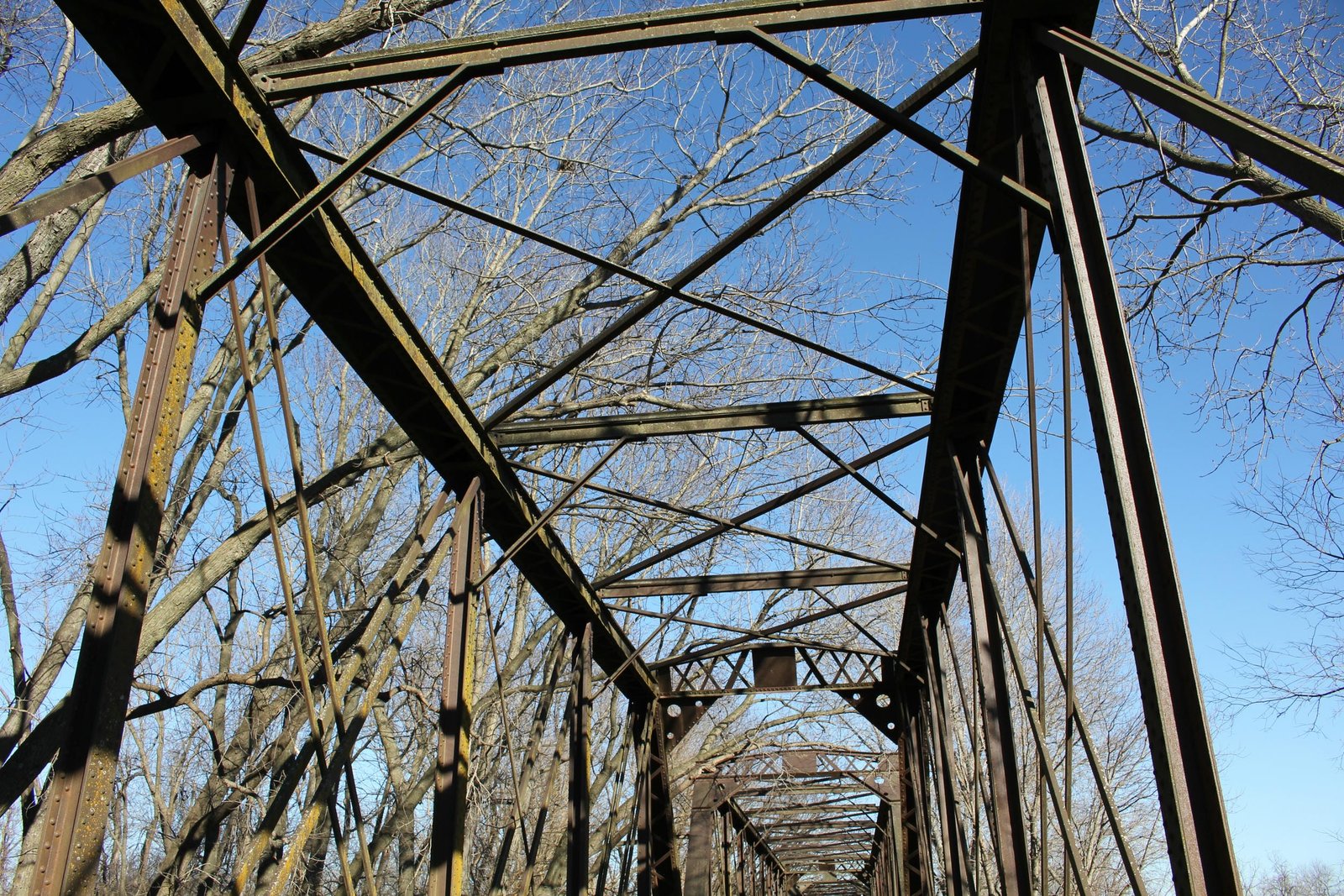
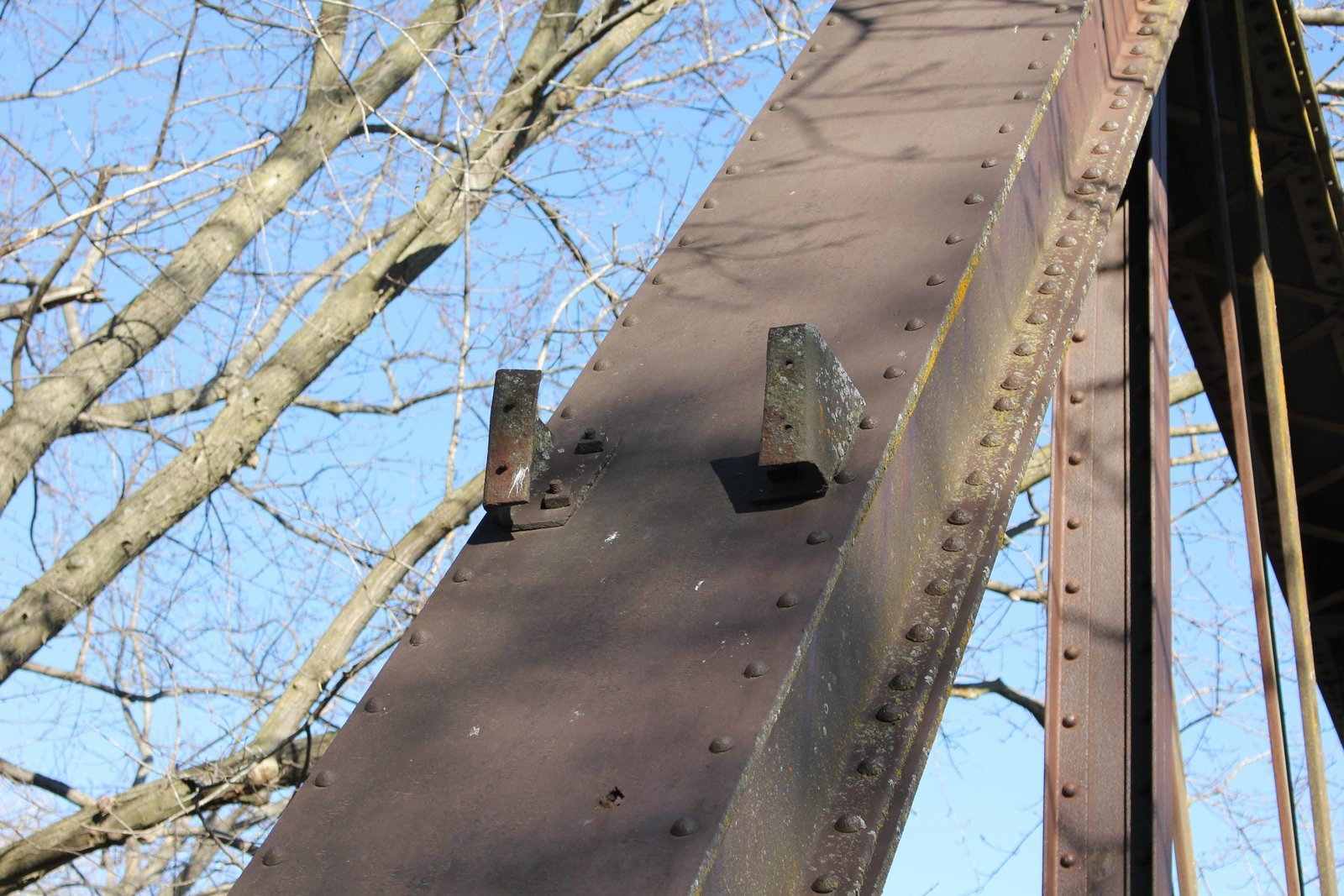
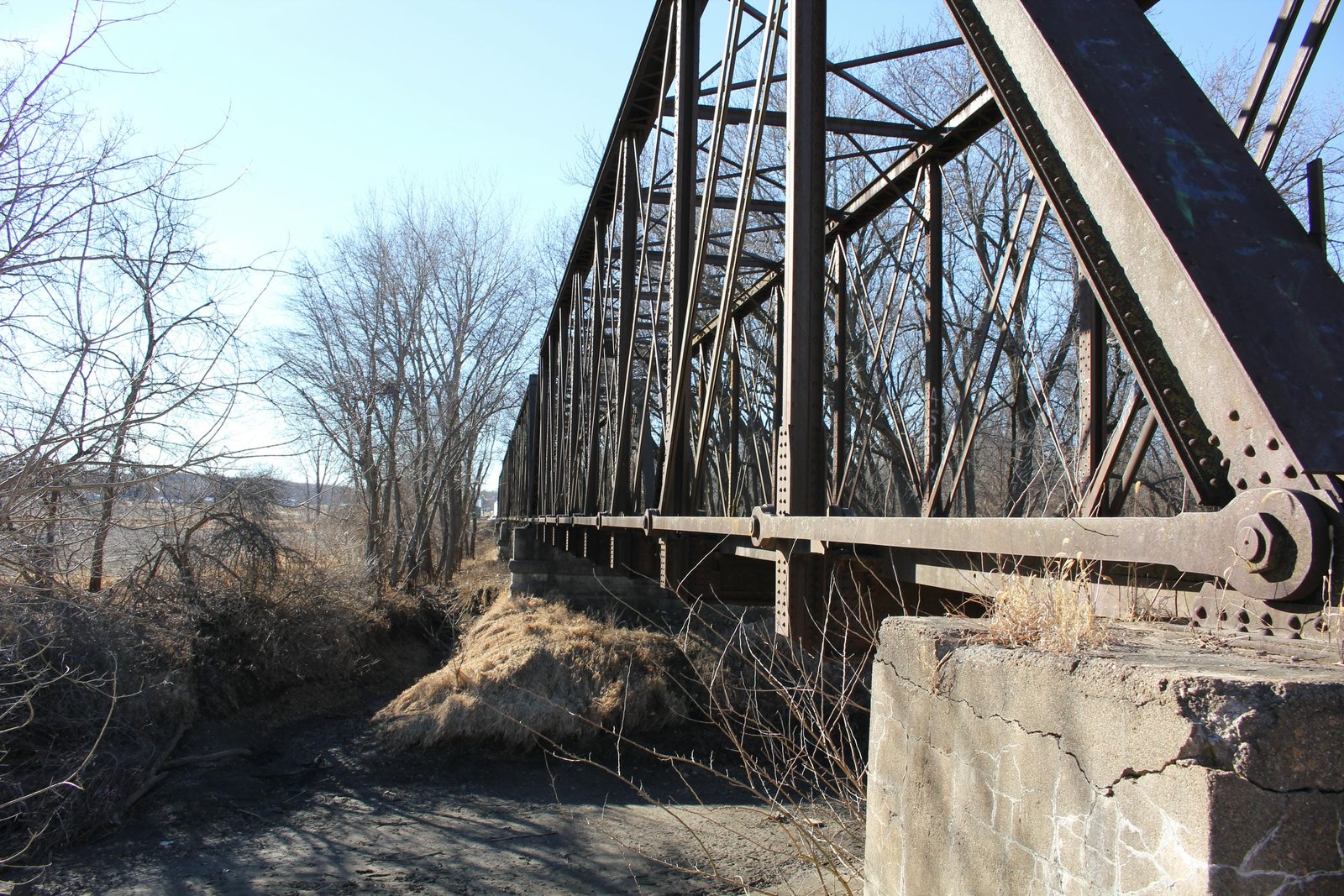
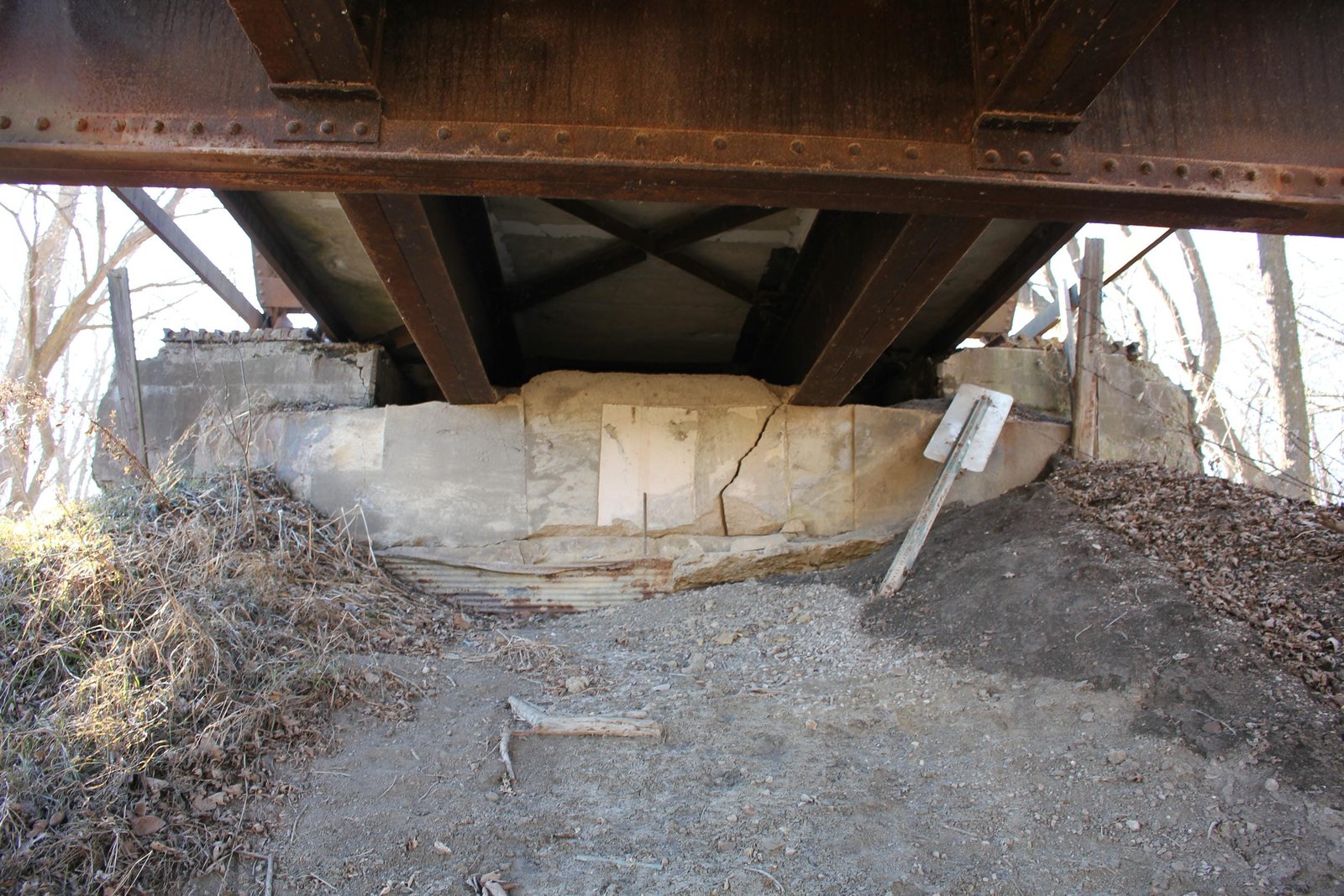
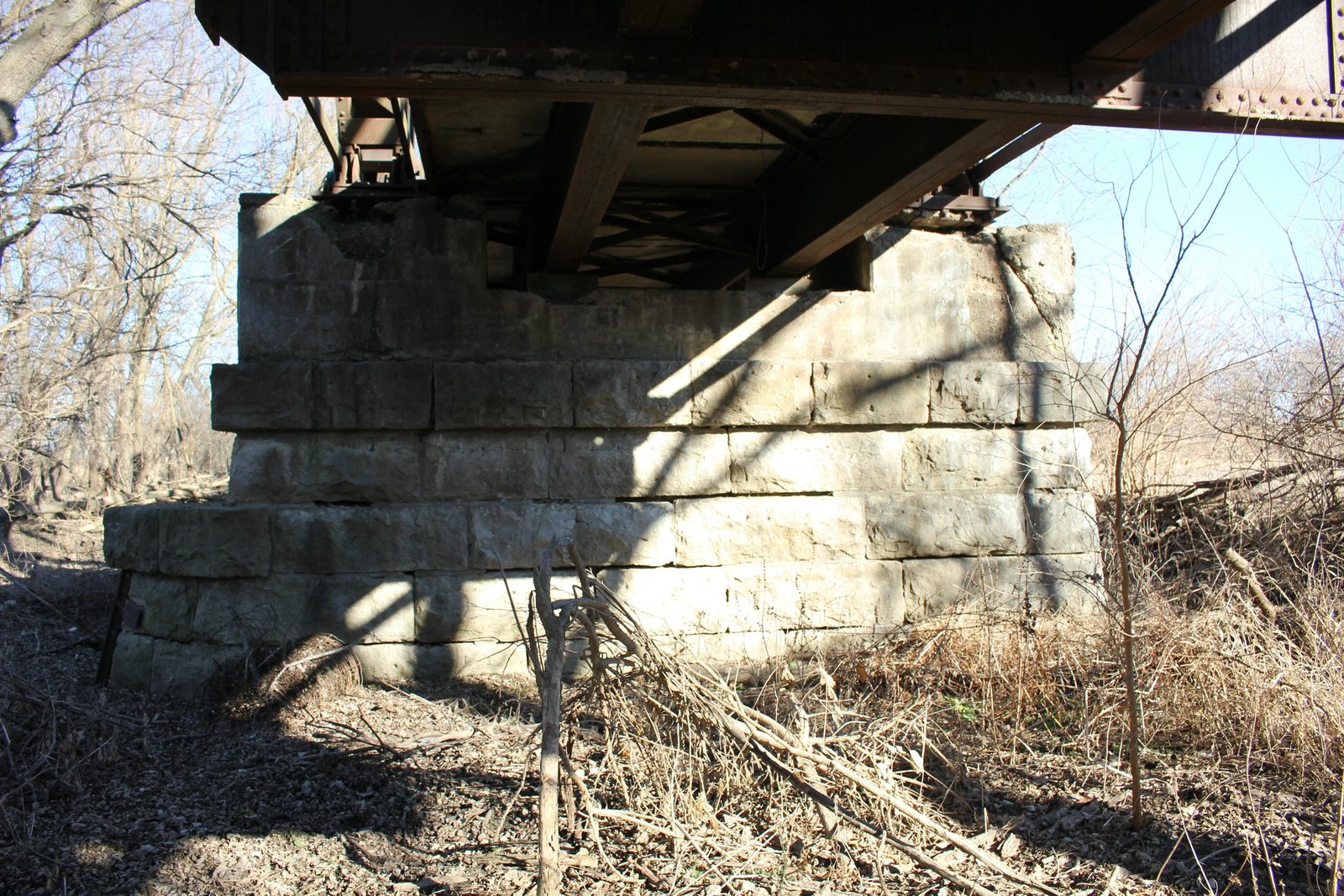
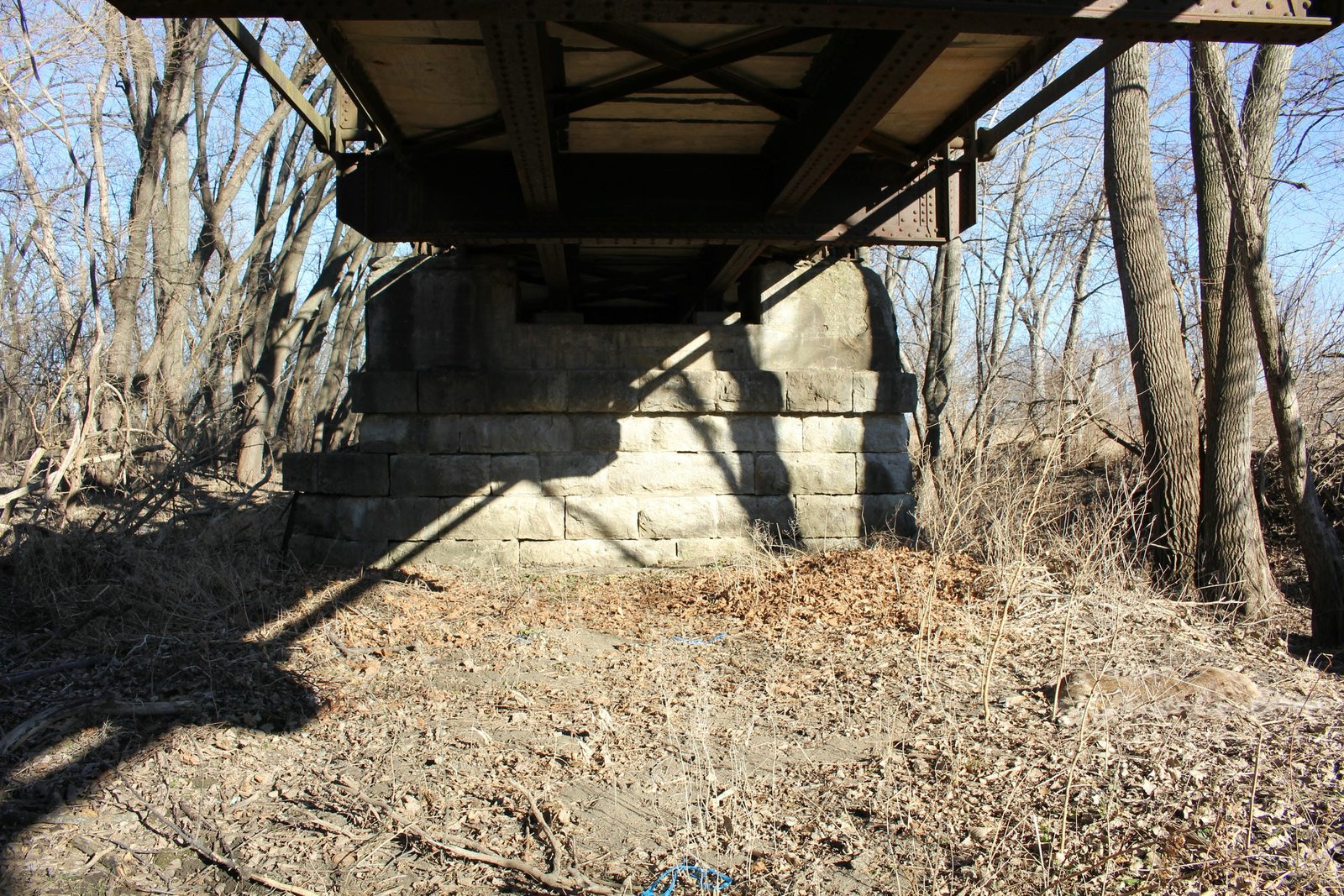
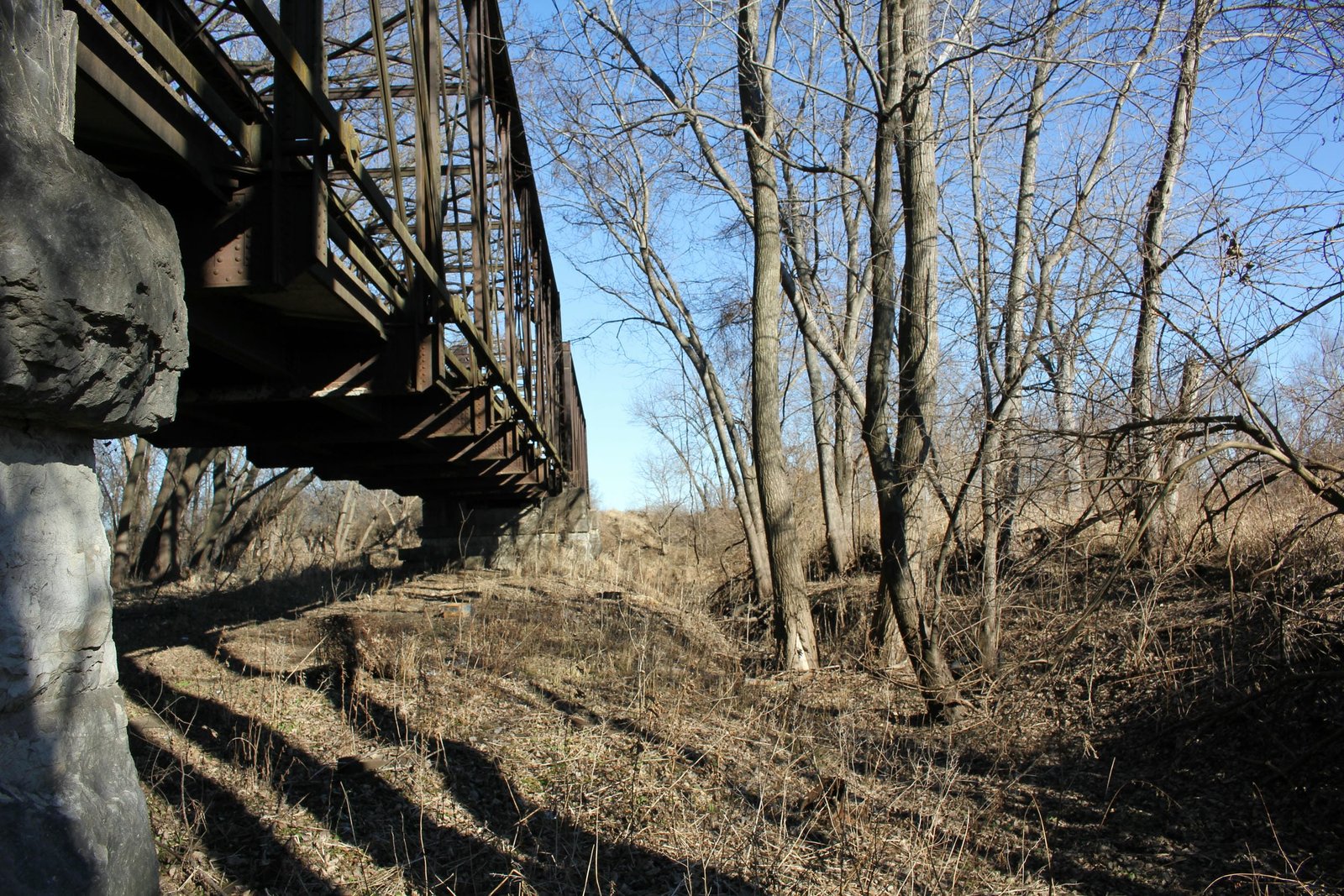
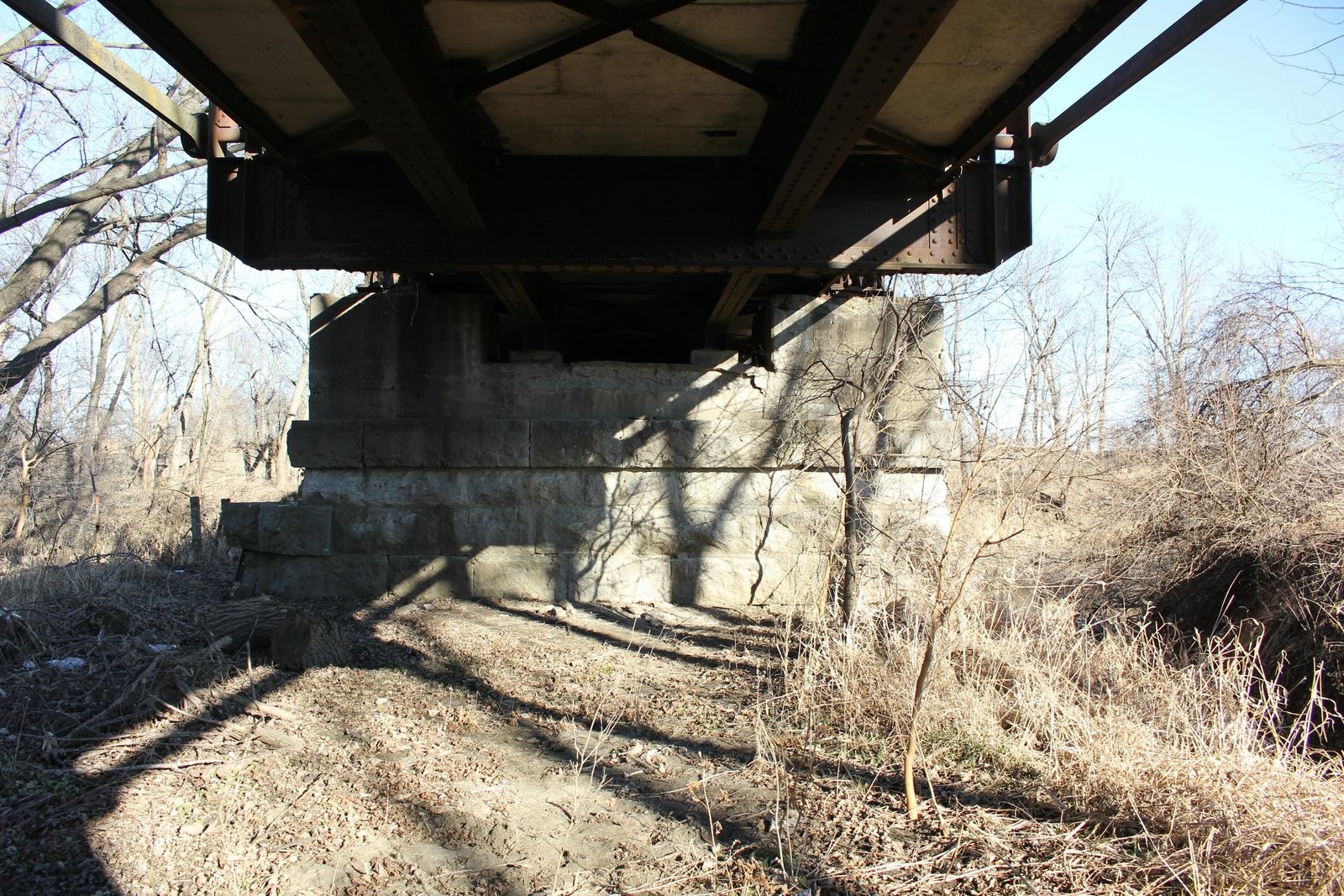
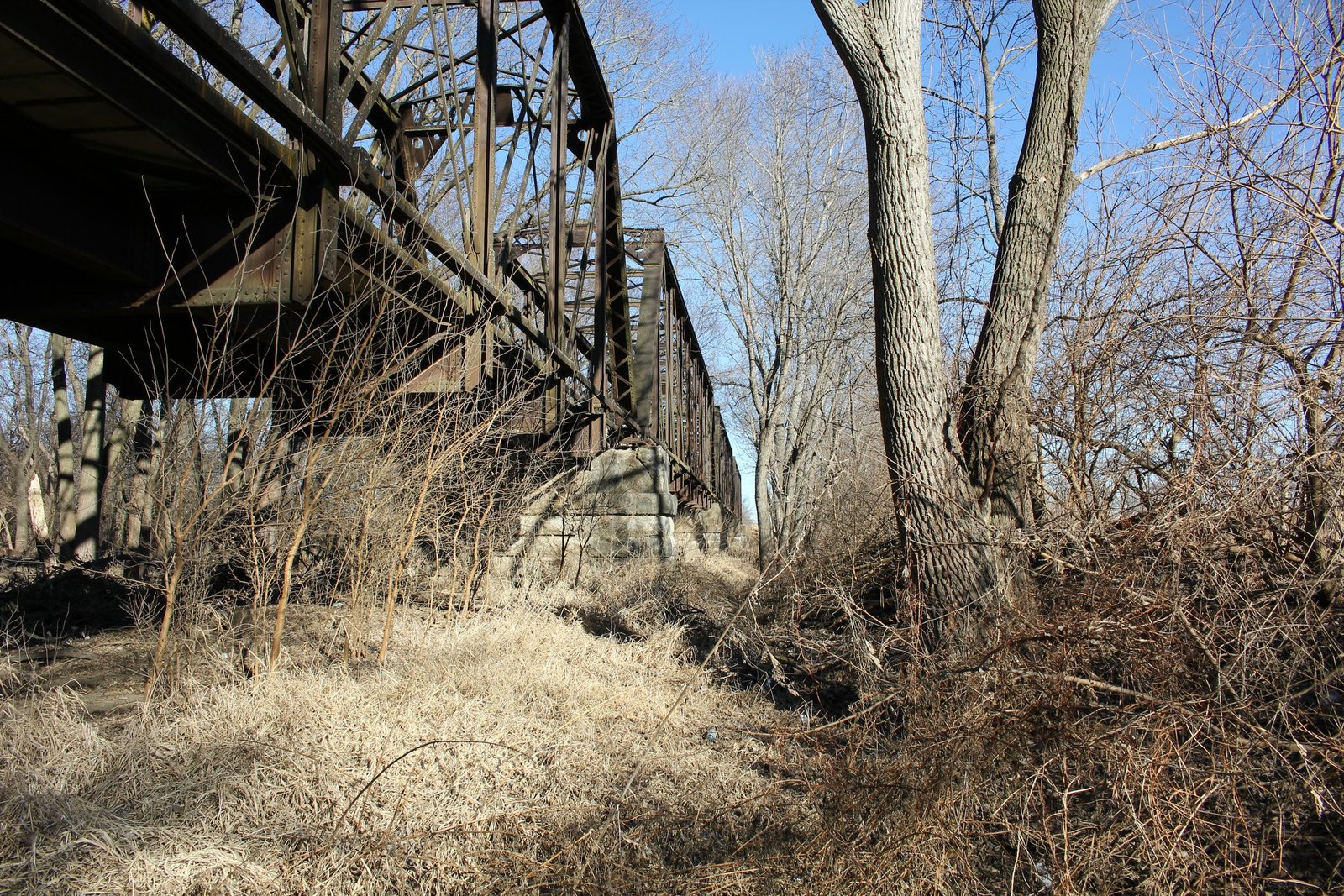
Currently, the bridge consists of four identical 150-foot, 9-panel, pin-connected Pratt through truss spans, set onto stone and concrete substructures. The truss spans were originally fabricated in 1878 by the American Bridge Company (of Chicago, Illinois) for use at an unconfirmed location. One likely theory is that the spans were part of a five span bridge across the Des Moines River at Eldon, Iowa. Because the American Bridge Company was a prominent bridge building firm, trade magazines often reported on bridge orders made with the firm. Between 1877 and 1879, the Rock Island only made one order with the form, for five 150-foot through truss spans to be used at Eldon in 1878. In addition, the Eldon bridge was replaced by a heavier lattice truss bridge in 1895, which would have released the 1878-era spans for reuse at other locations. Upon installation here, it appears that the trusses may have been slightly altered with new portal bracing, as evidenced by empty rivet holes on the sides of the endposts. Based on the style of portal bracing, it appears that any alterations were likely completed by the Lassig Bridge & Iron Works, a preferred bridge contractor of the Rock Island in the 1880s and 1890s. It is unclear if the stone substructures were constructed by railroad company forces or by an unknown contractor. It is also likely that railroad company forces completed the concrete alterations to the substructures. It is unclear if these alterations were explicitly for raising the bridge, or if the bridge was possibly damaged in a flood and required repairs to the substructures.
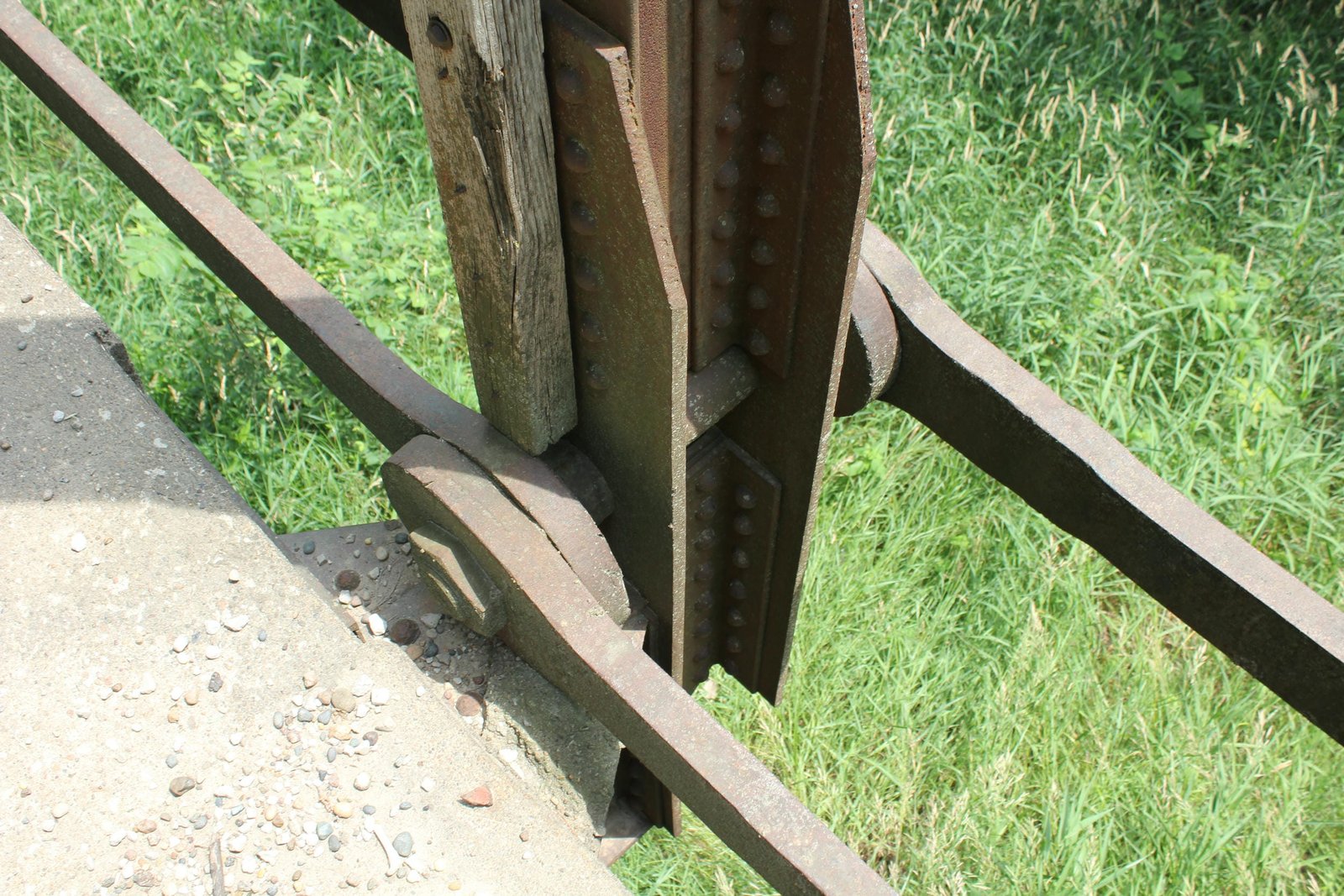
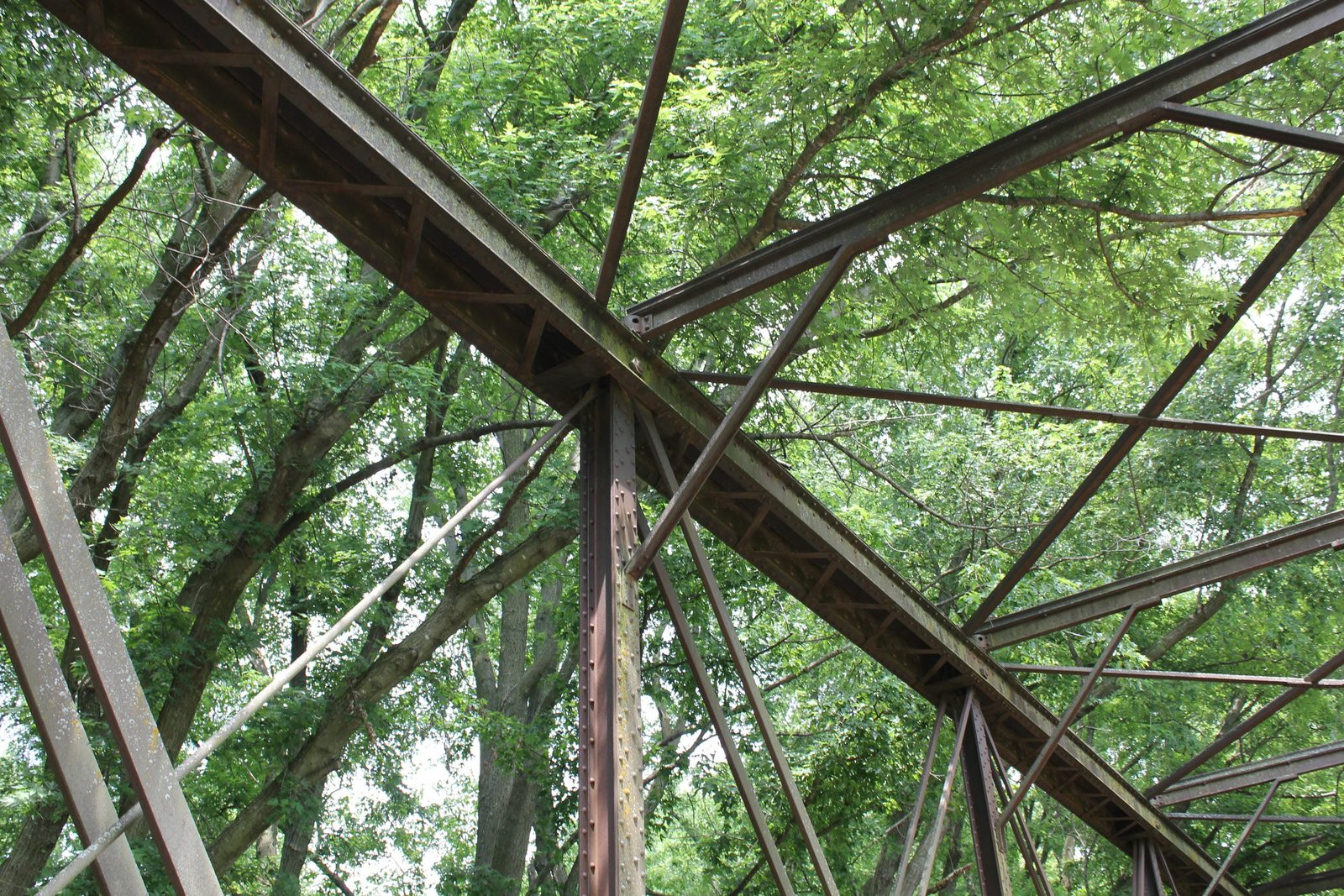
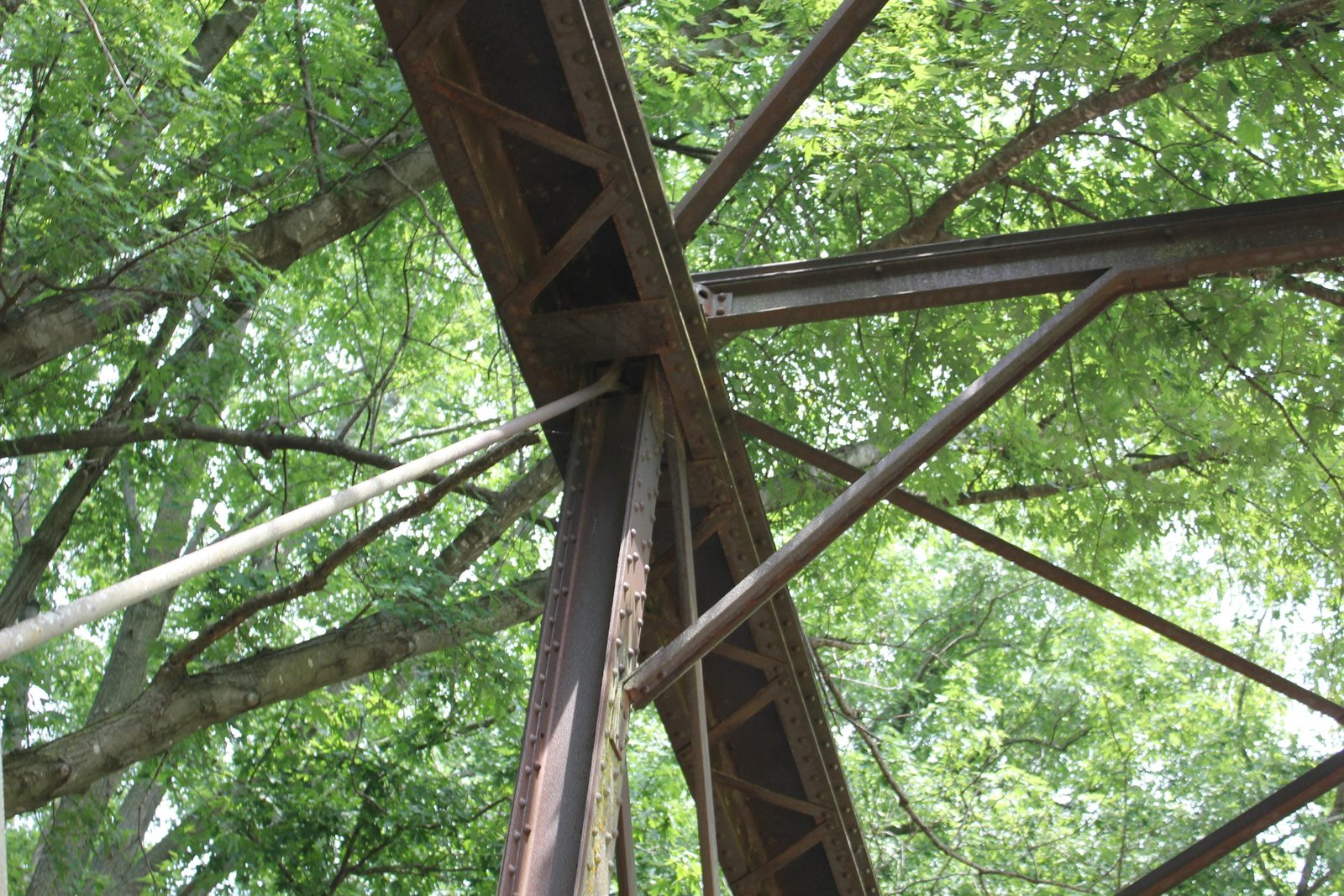
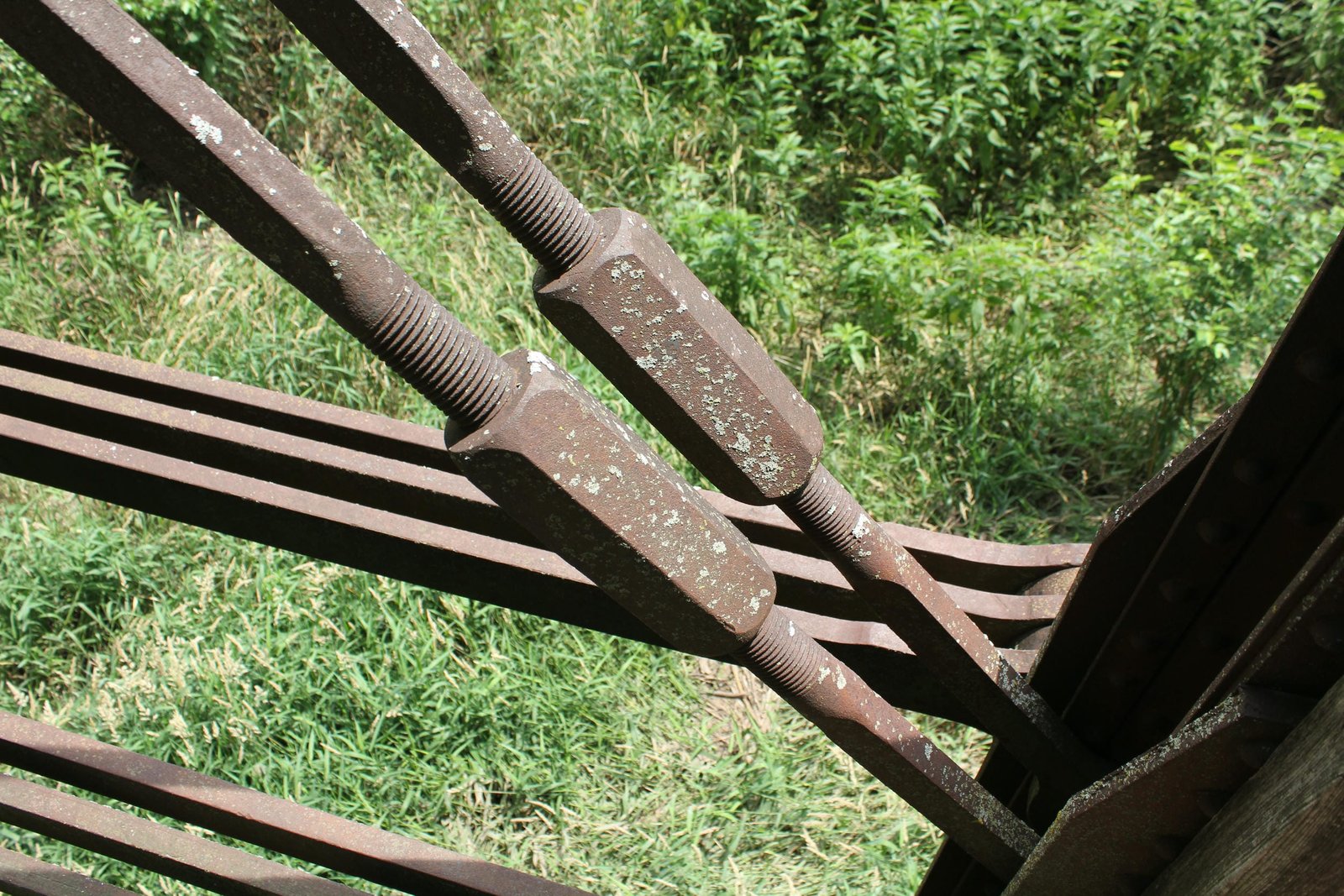
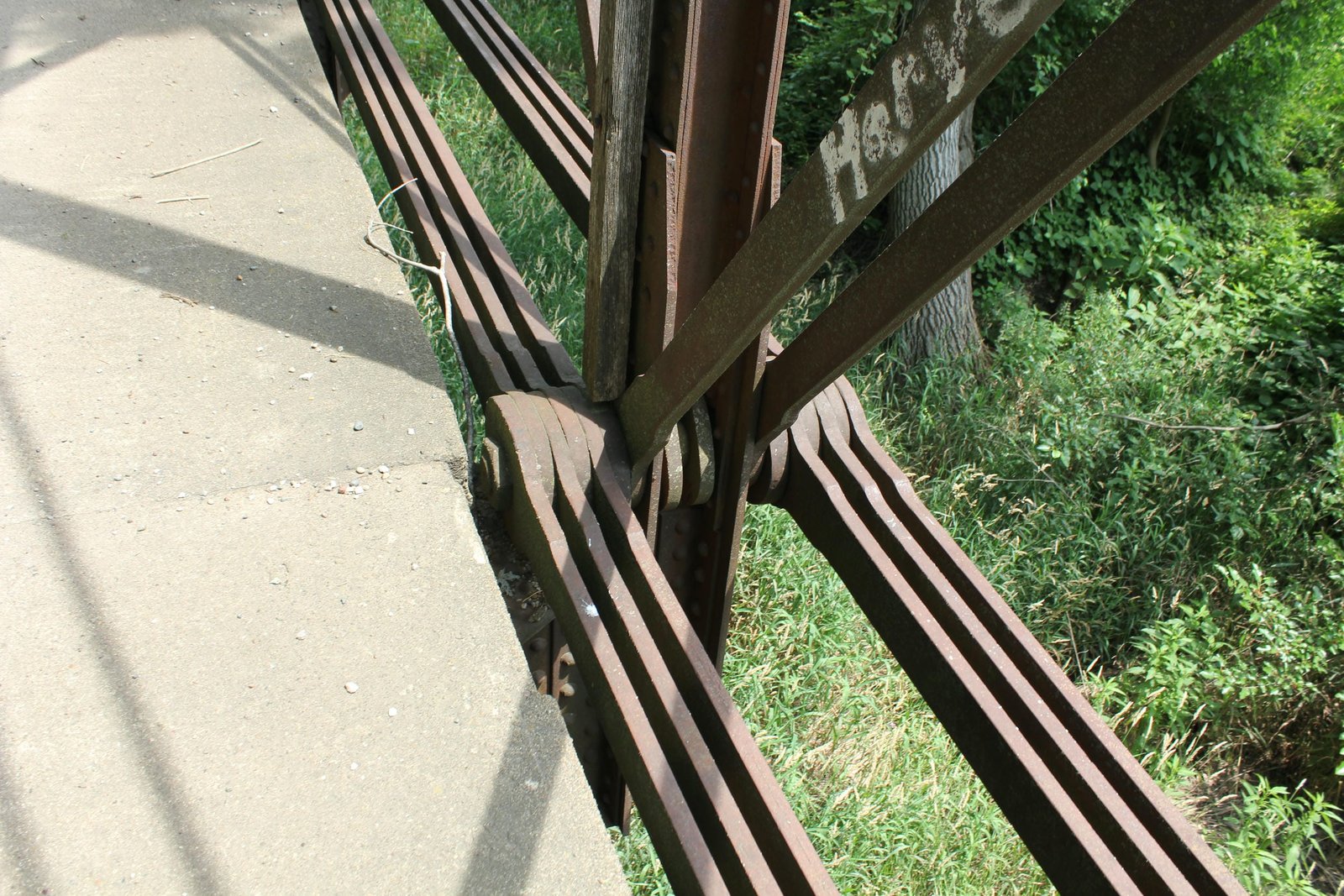
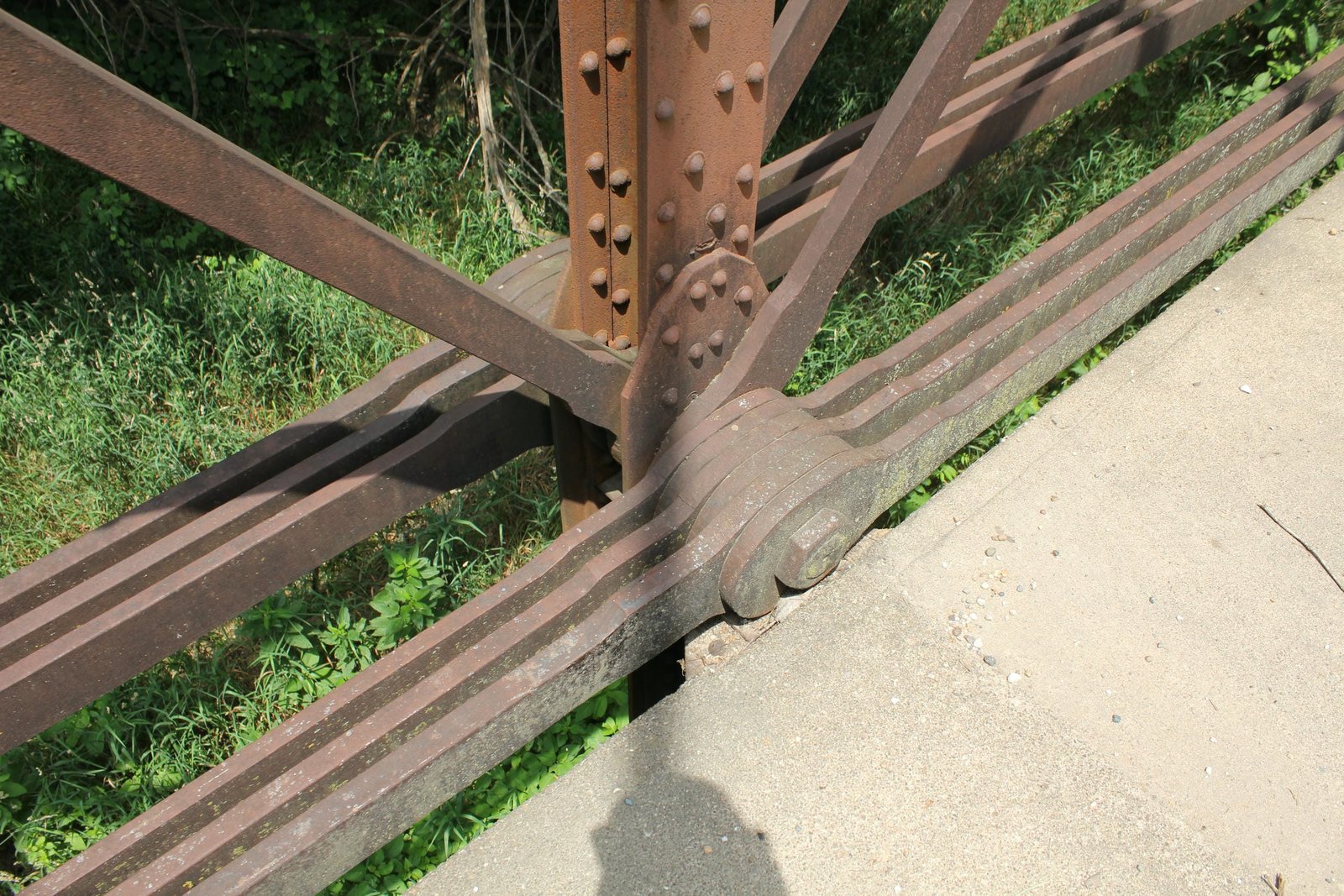
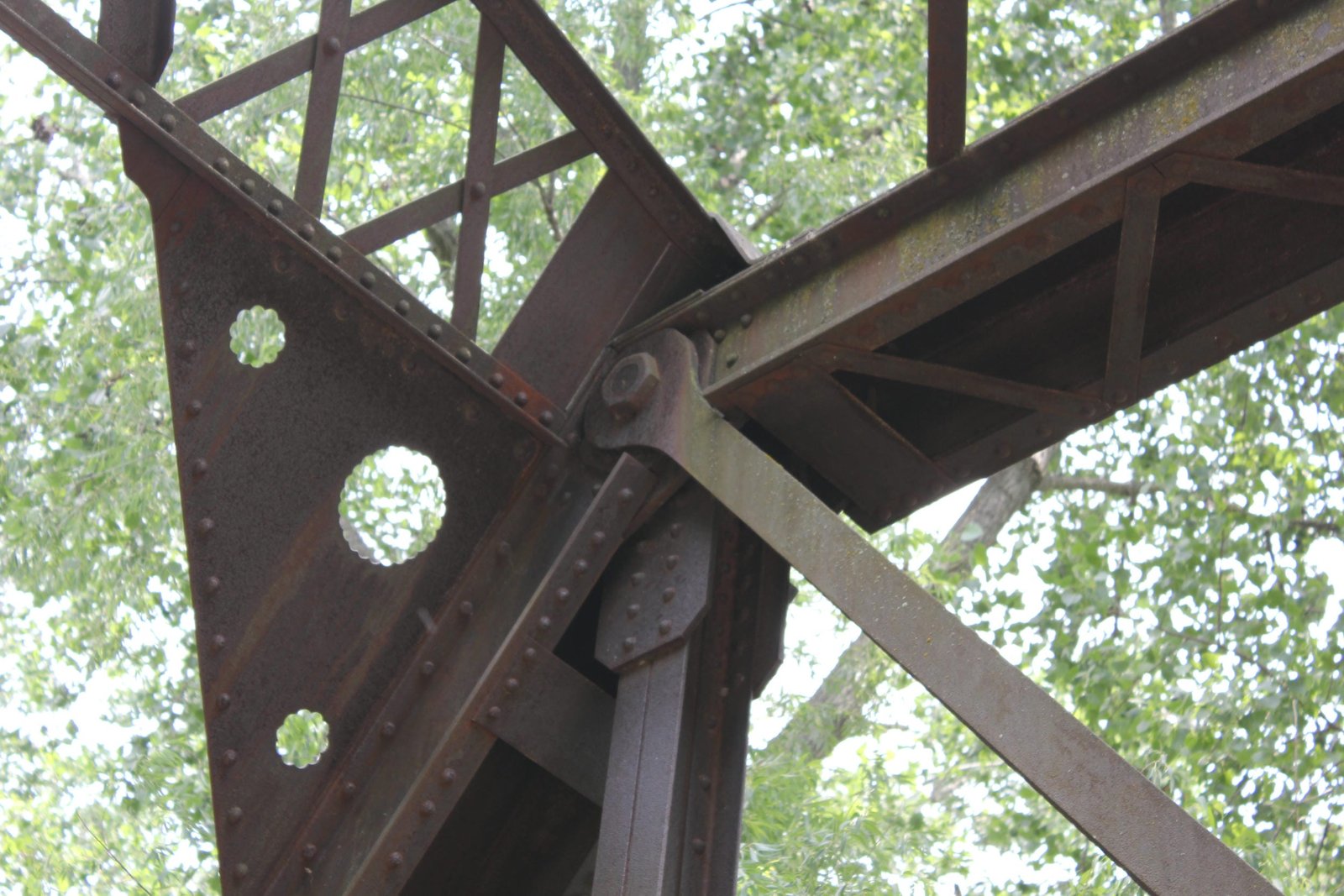
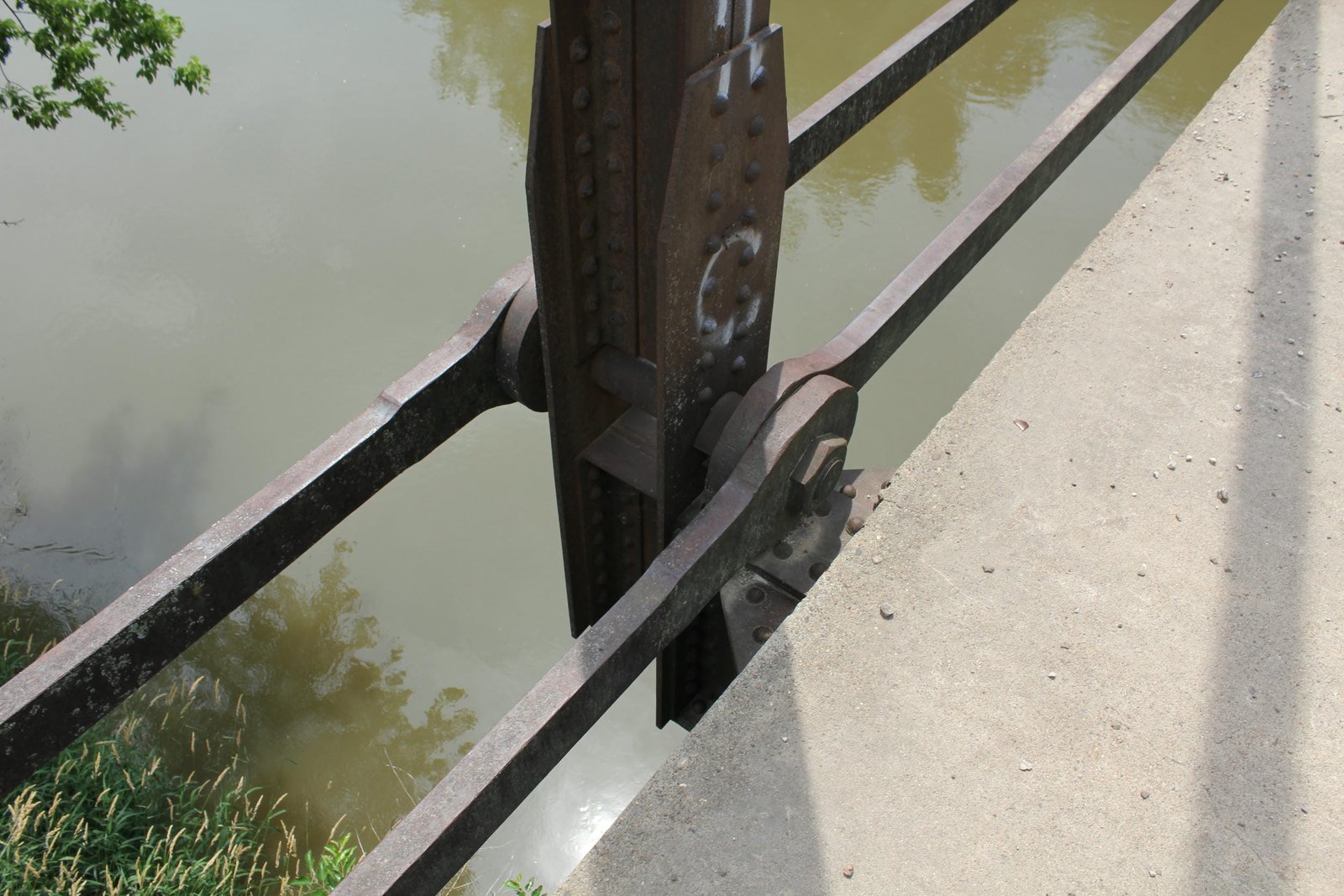
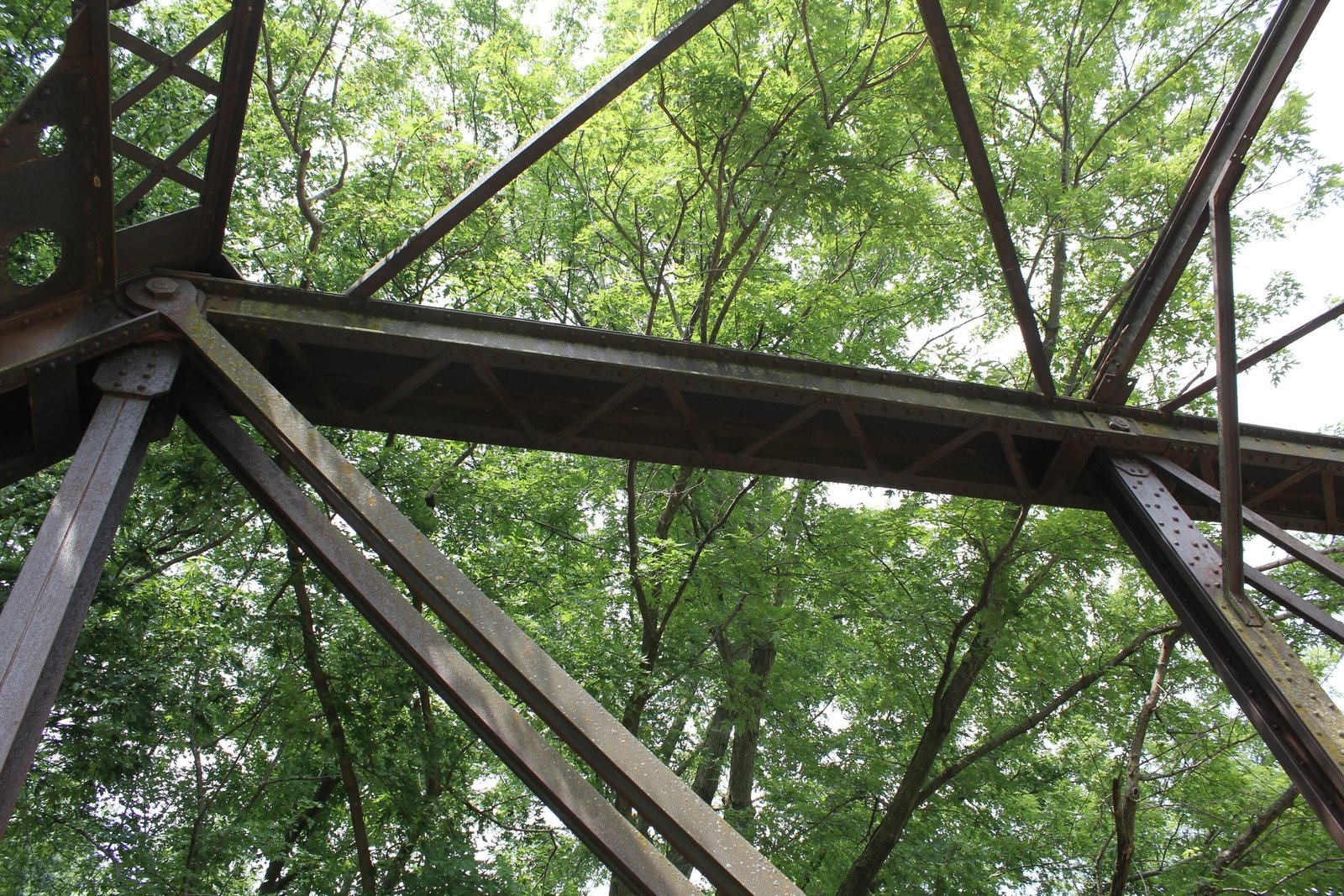
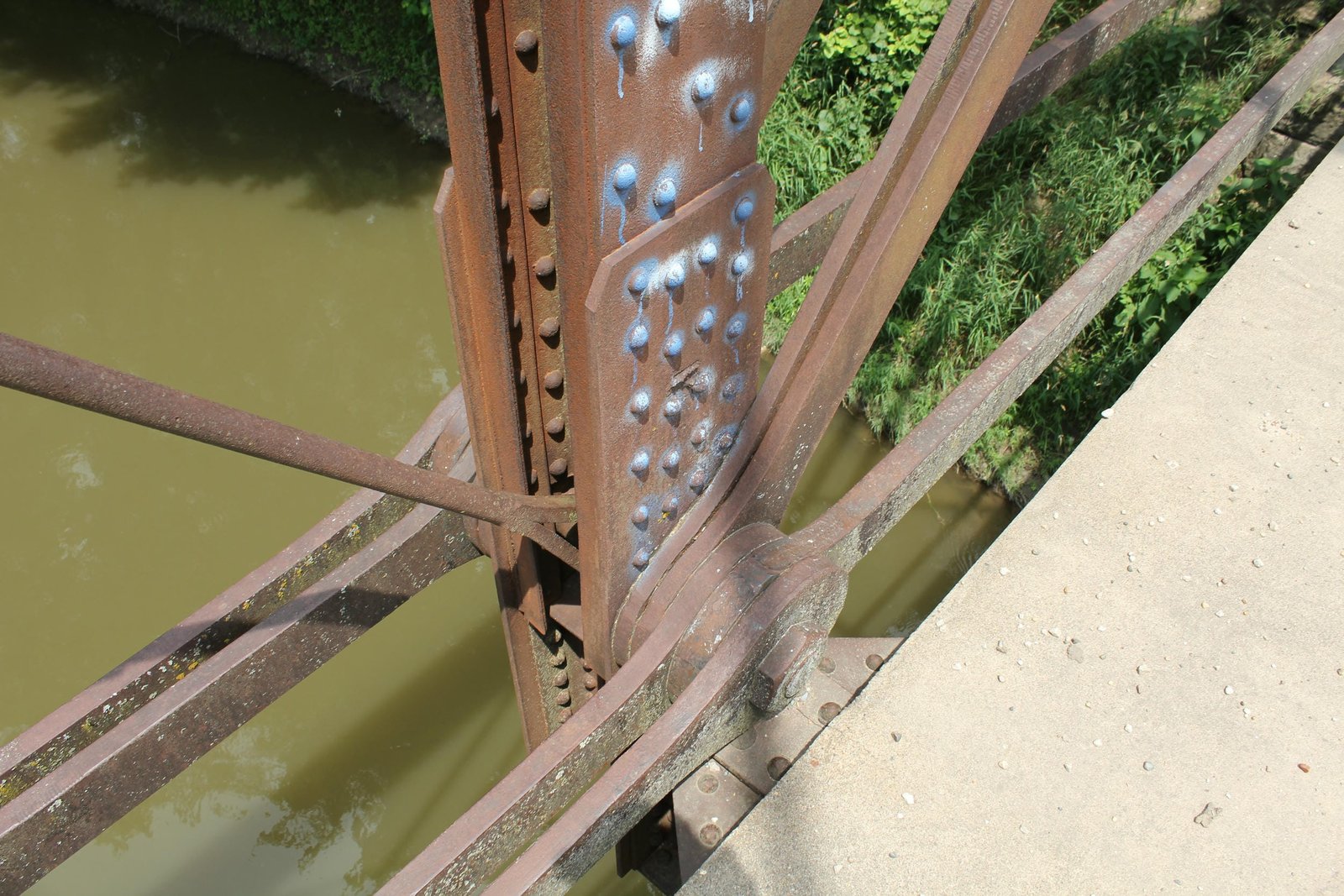
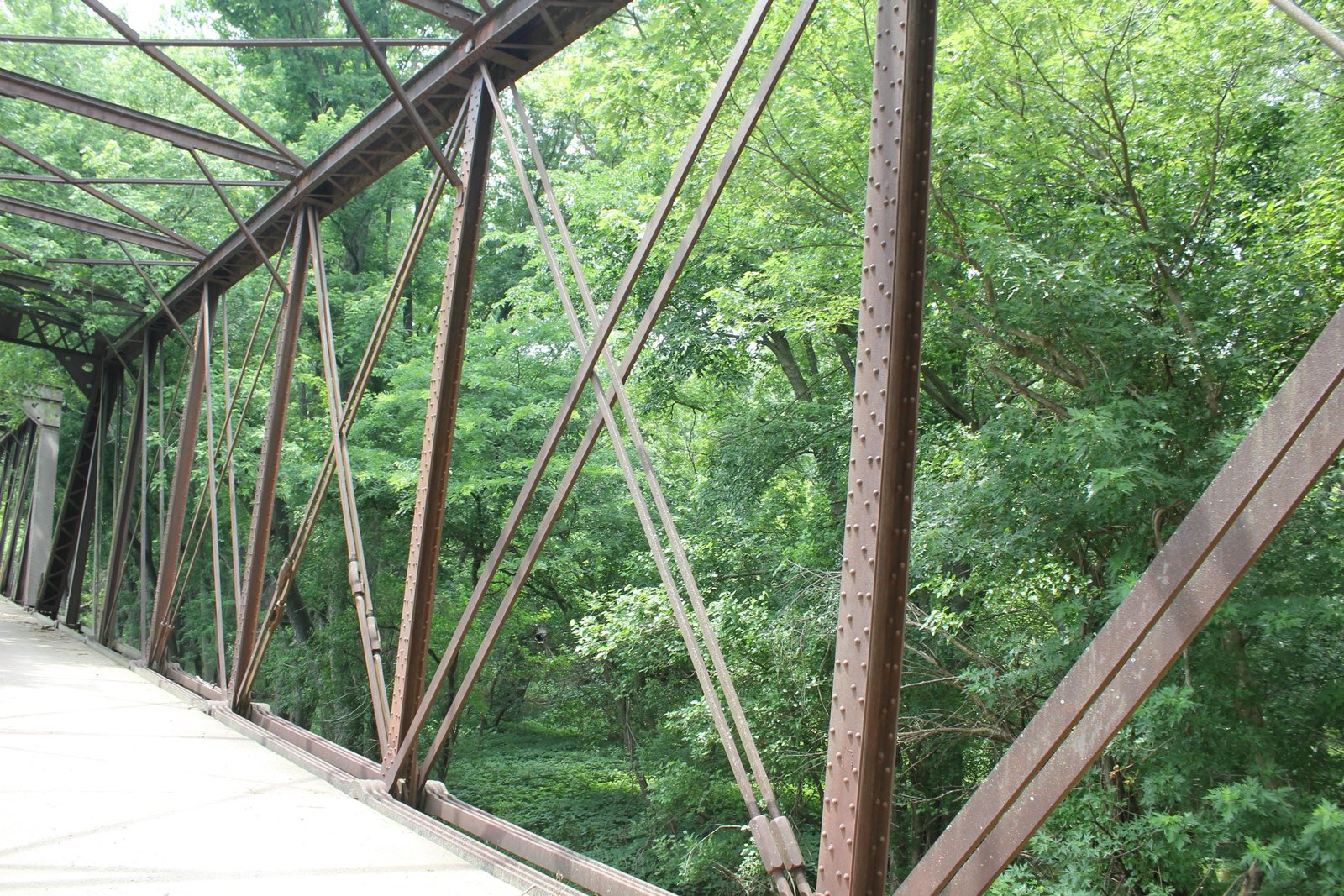
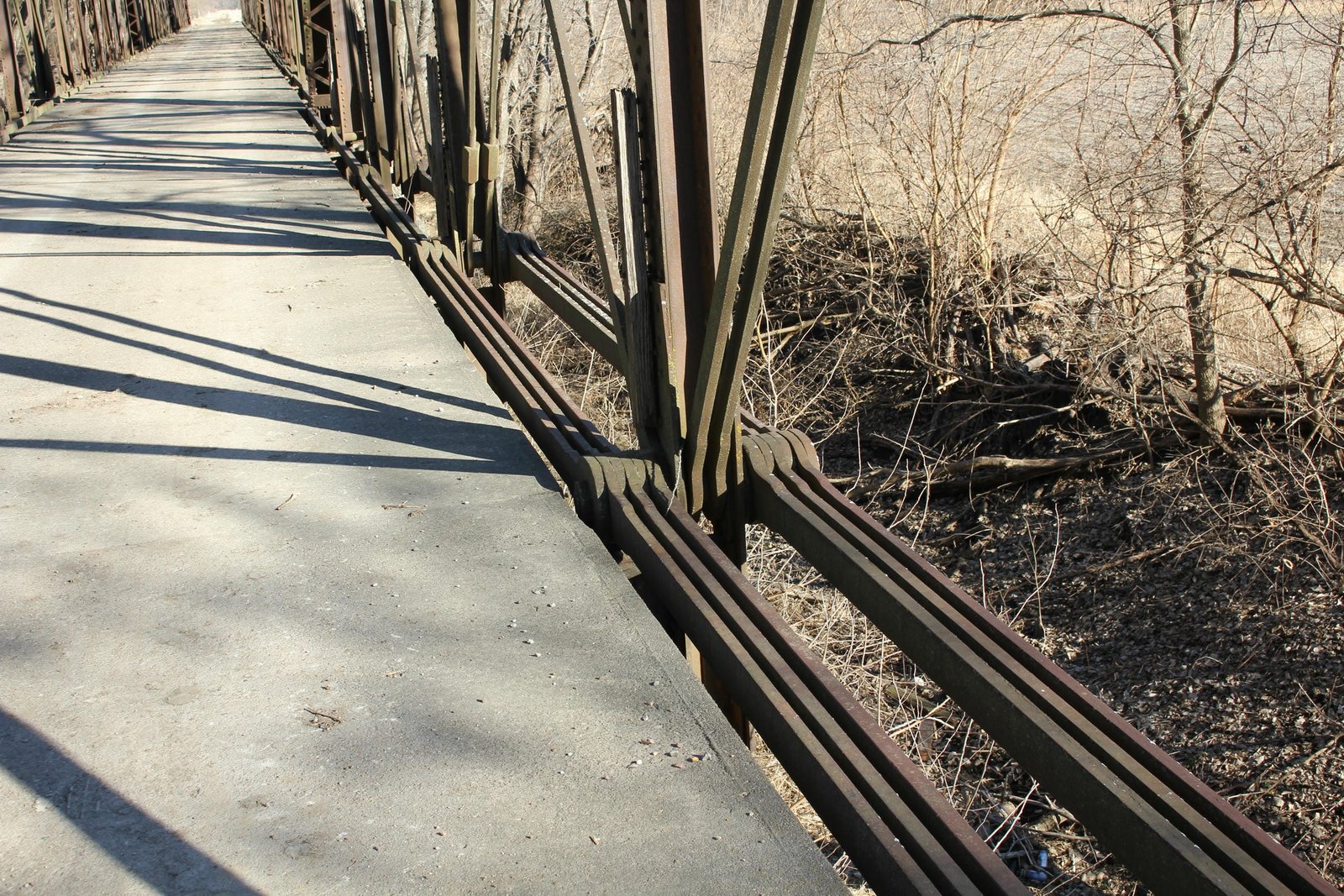
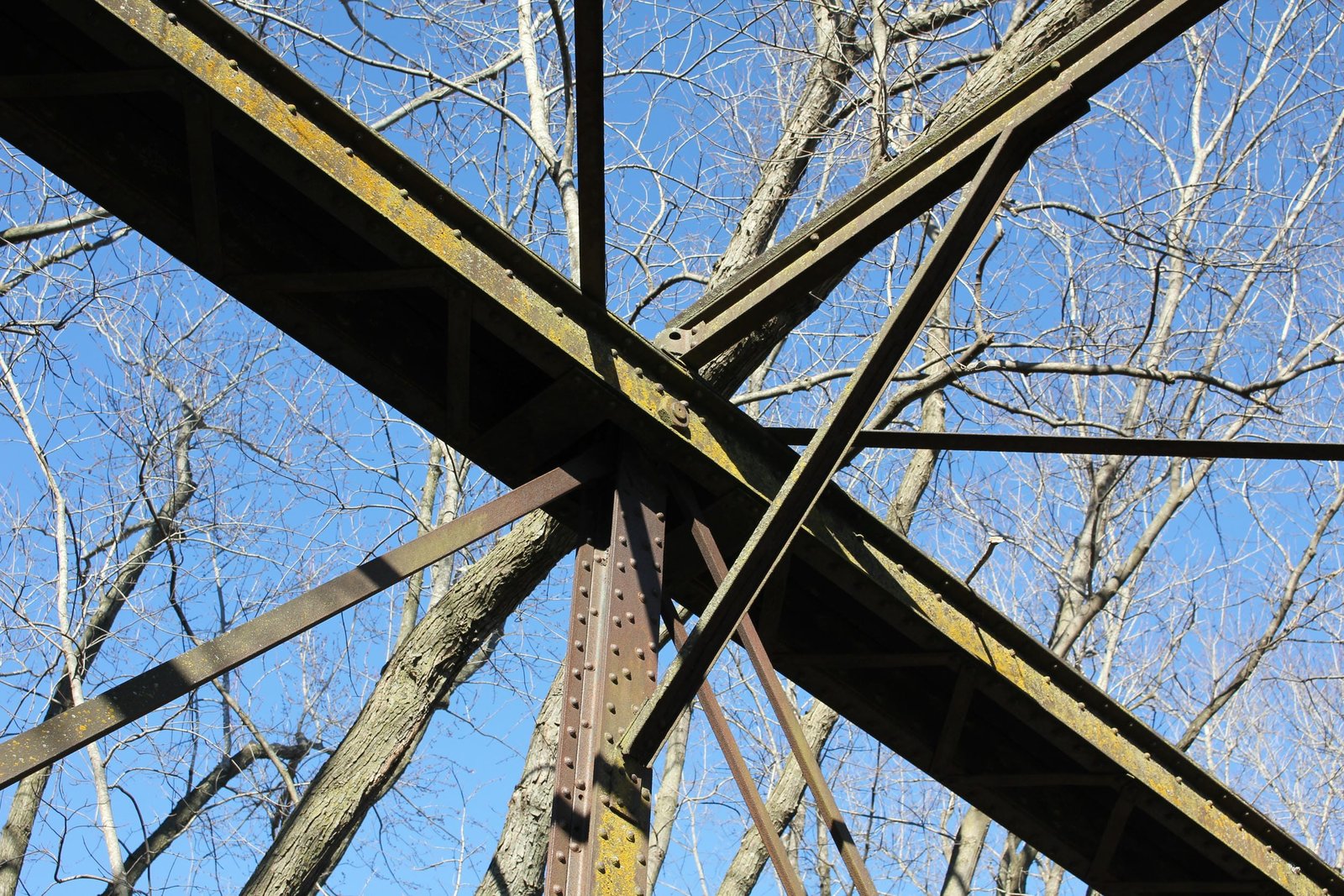
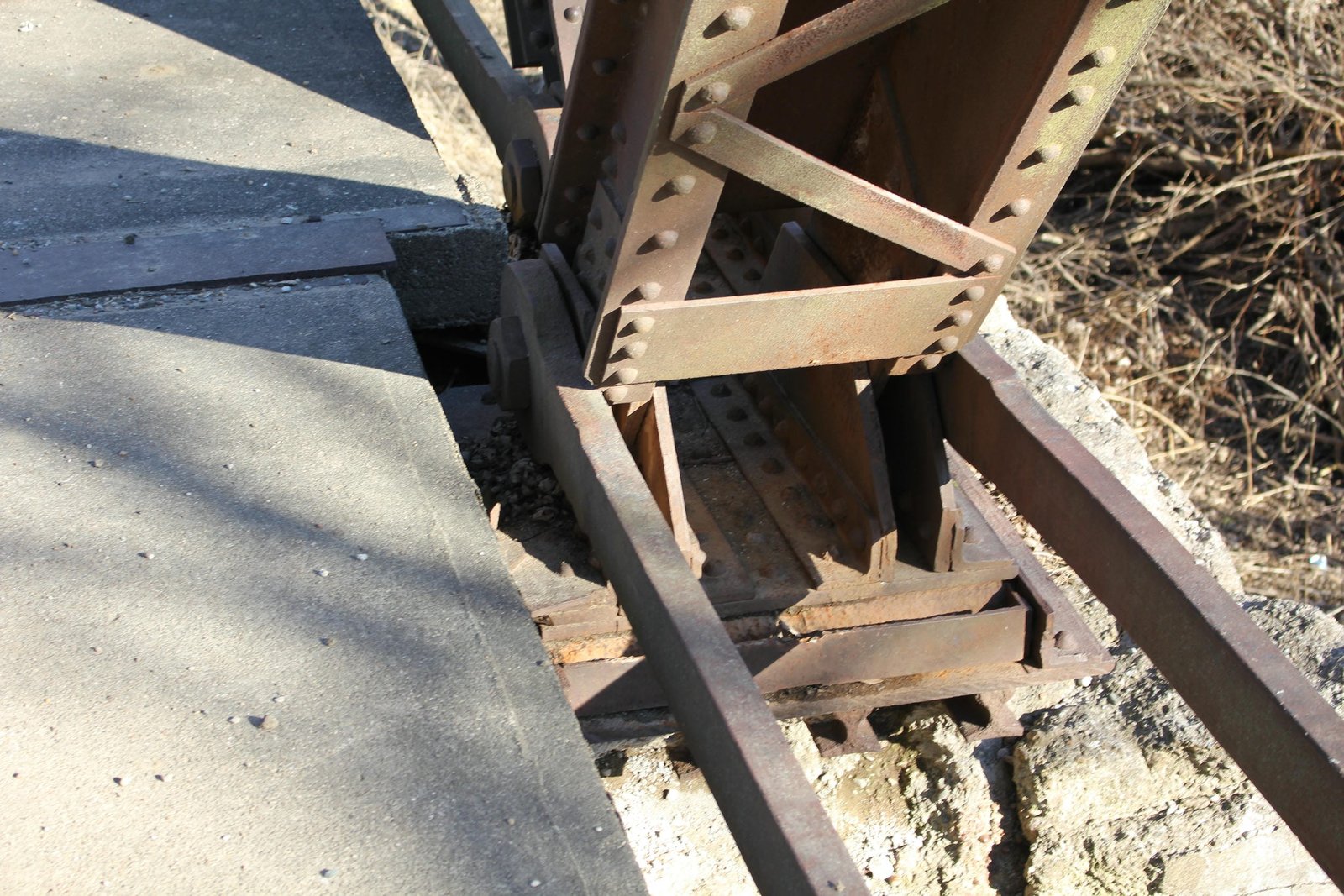
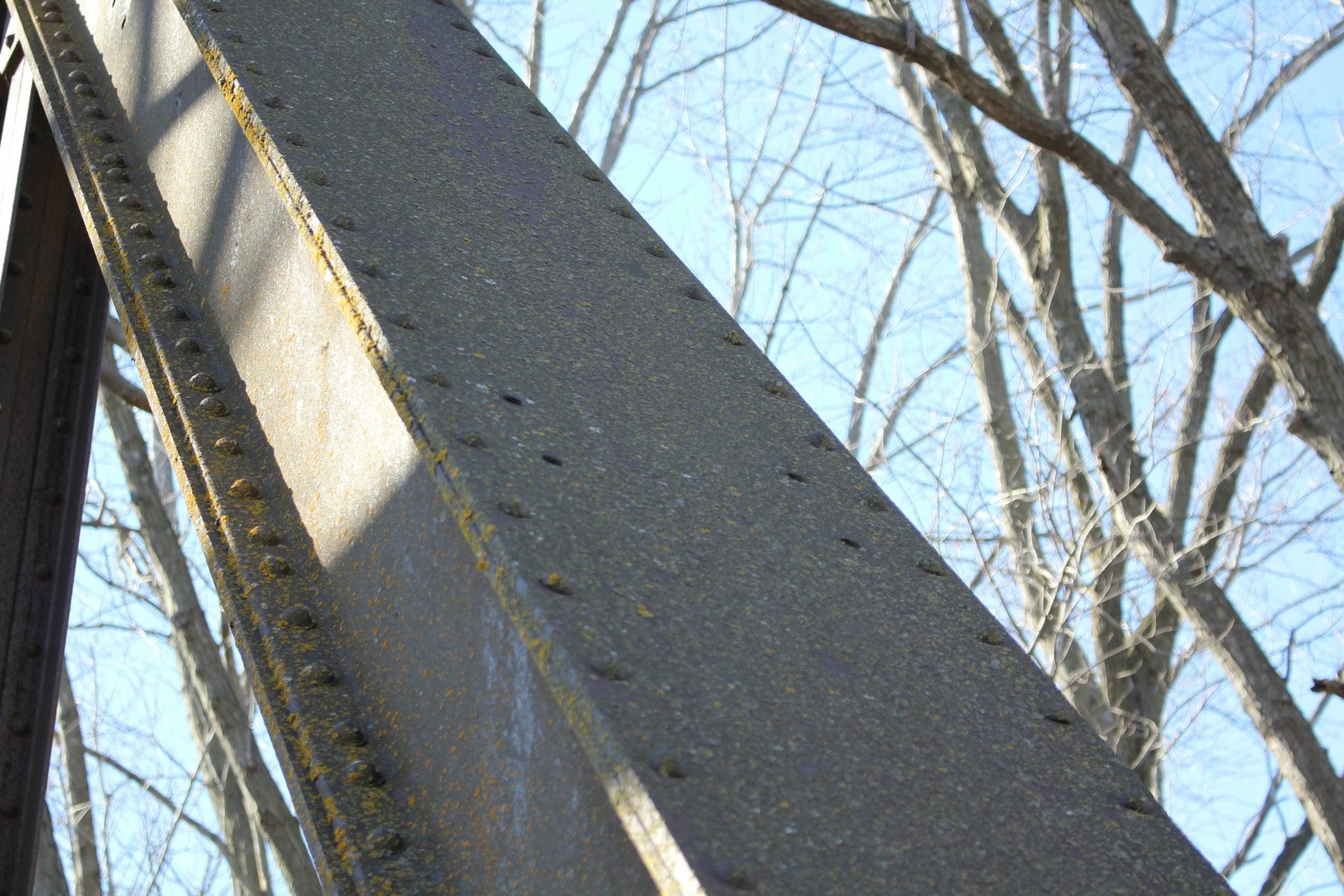
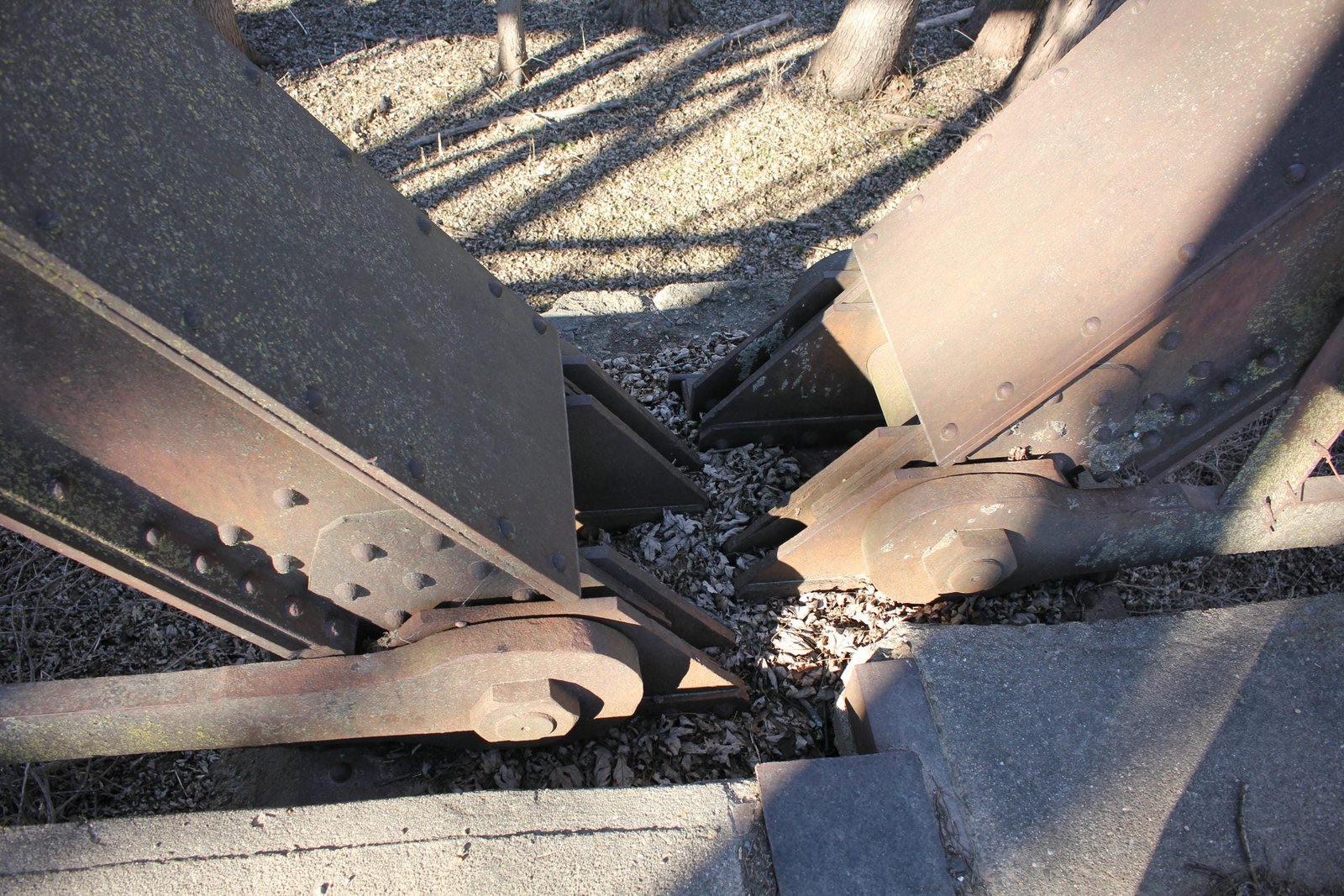
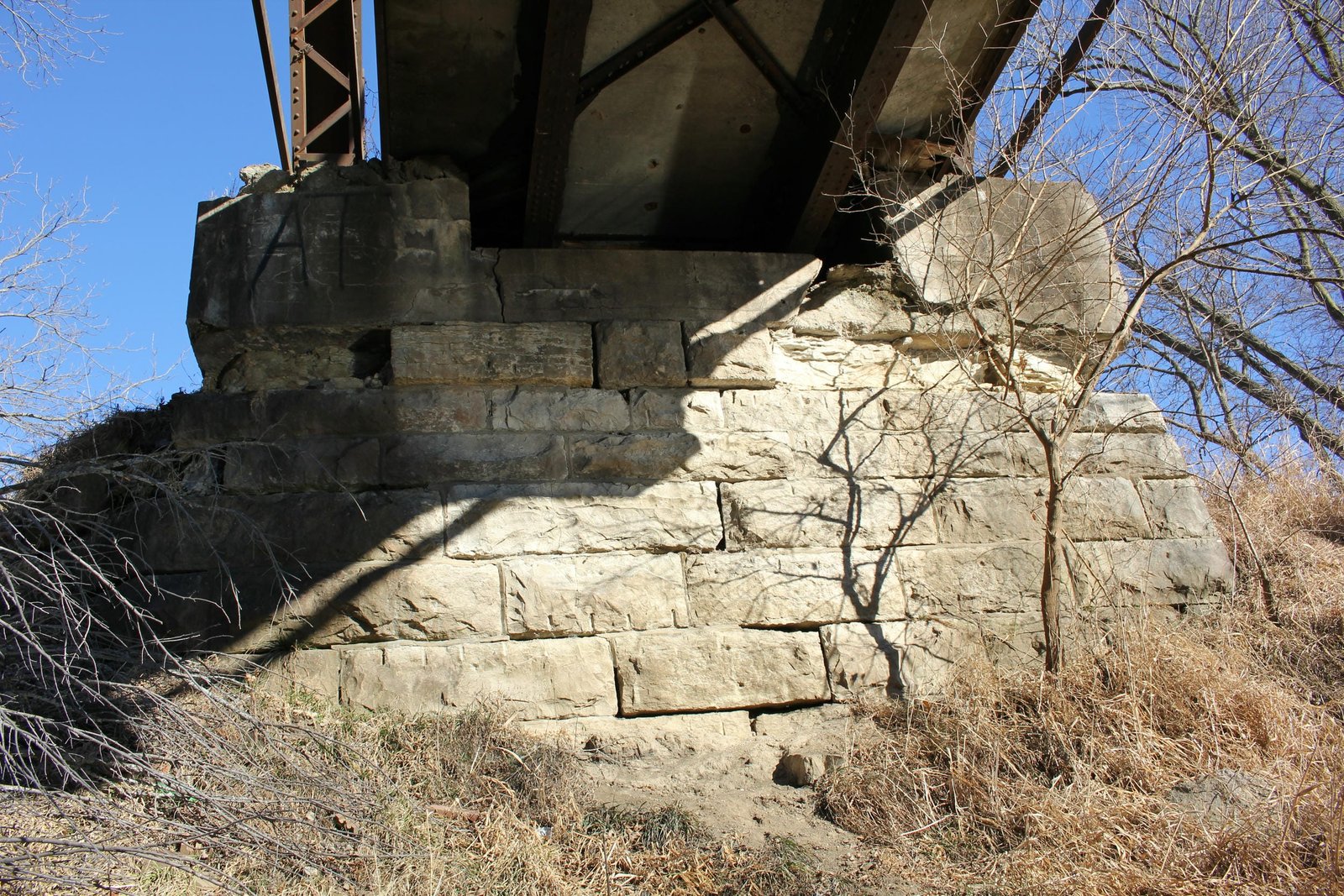
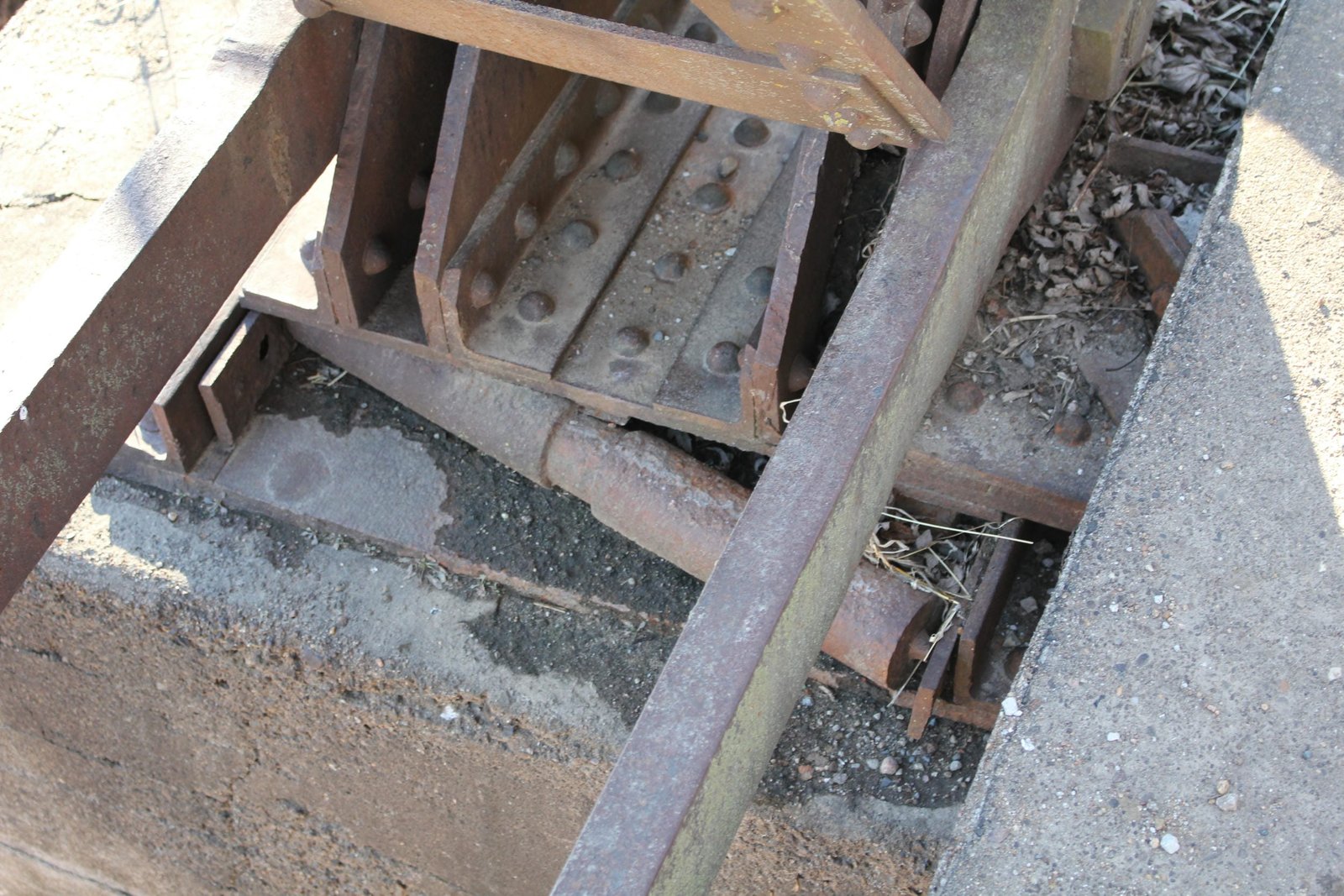
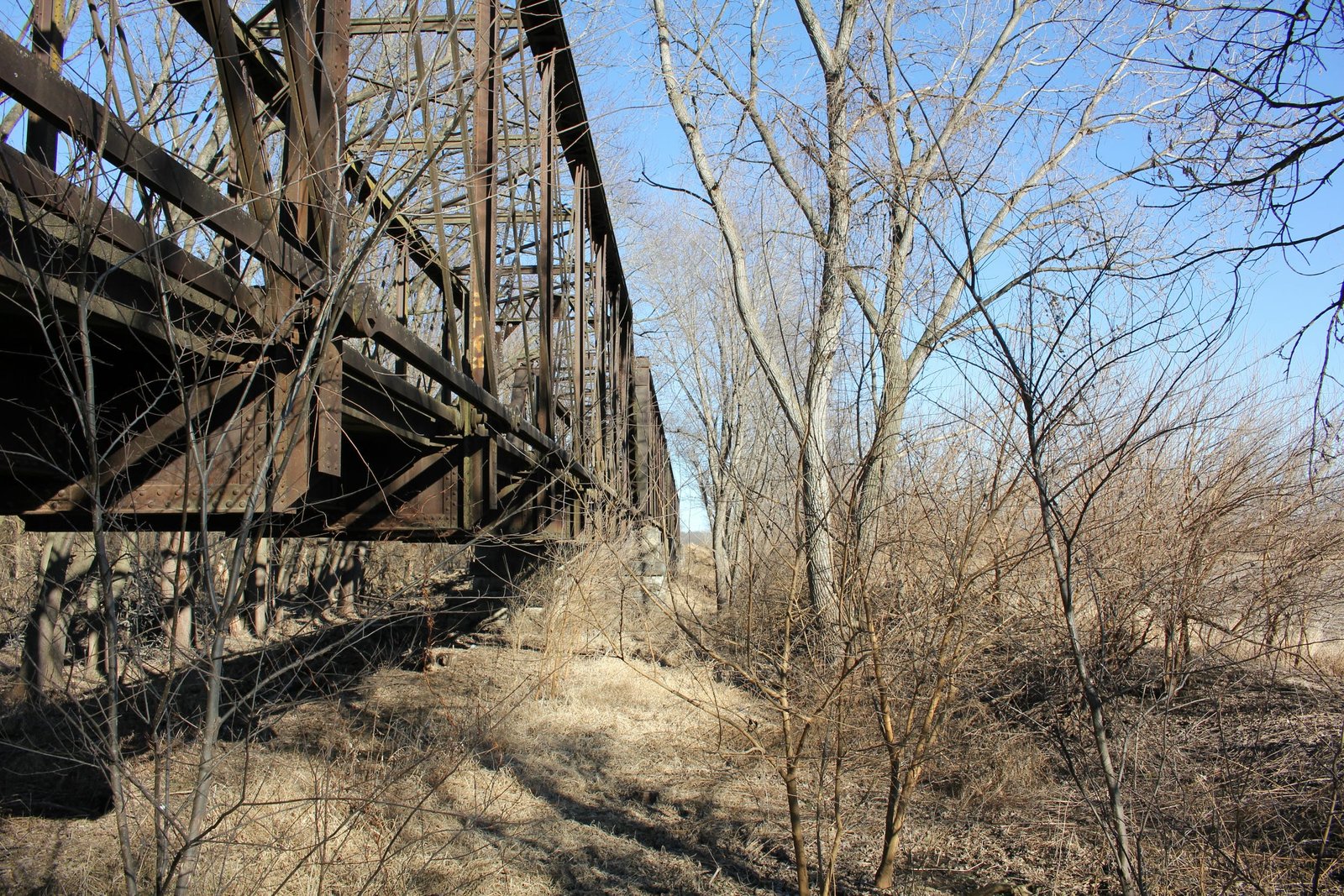
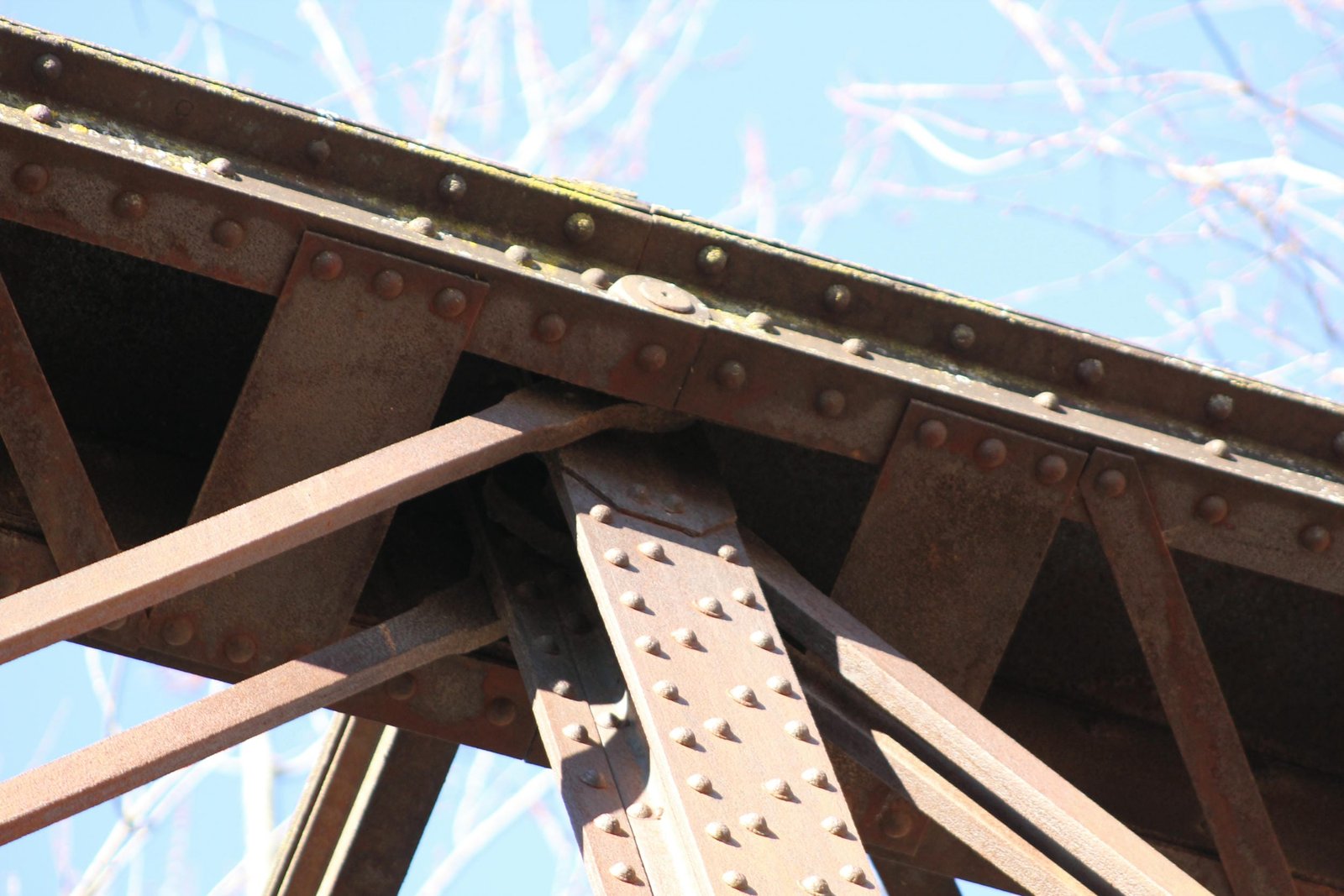
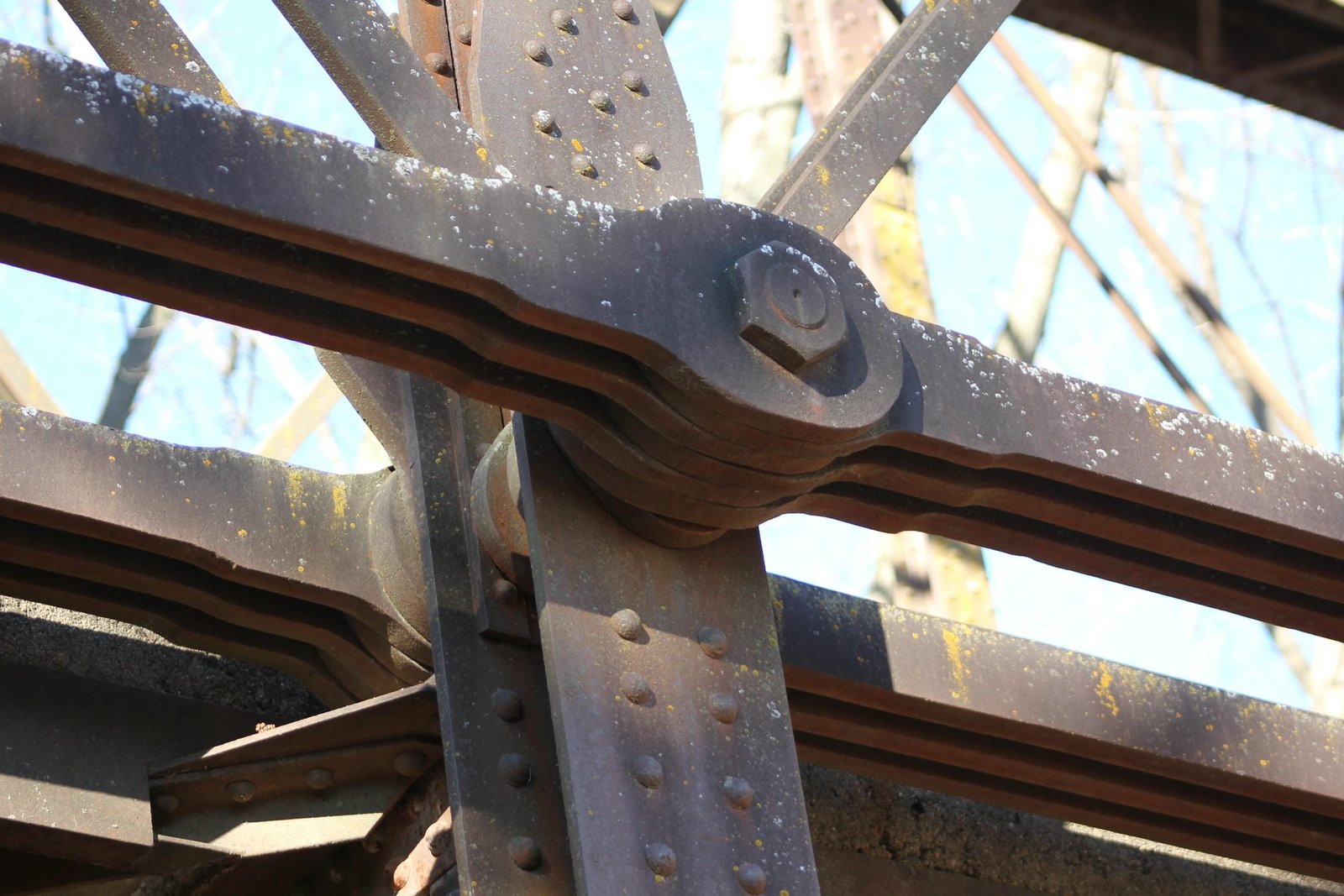
The truss spans consist of a standard design for the era, with extensive use of eyebars, light built-up beams and a light floor system. It appears the spans are constructed almost exclusively of wrought iron. Both the top chord and endposts use a built-up design, consisting of two channels which are connected by solid plates on the top and V-lacing on the bottom. The bottom chord is composed exclusively of eyebars, with two bars at the outer two panels, four bars at the intermediate panels and six bars at the cneter panels. Each eyebar is heavily constructed and appears to have been punched instead of forged. The vertical members all consist of solid rolled beams, which also have flanges riveted to the beam. At the tops and bottoms of the vertical members, large plates are riveted to the beams to provide greater strength at the connections. The diagonal members mainly consist of eyebars, which are arranged into sets of one and two bars each. The counter members consist of slender rods, which are looped on the ends and contain turnbuckles. The floor system consists of plate girder floorbeams and two plate girder stringers. The stringers are held on the floorbeams by hangers, while the floorbeams are connected to the vertical members by trapezoidal iron plates riveted to the ends. Unique to this bridge, the lower lateral bracing is set above the stringers, and consists of L-shaped bars. The portal bracing uses a typical Lassig design for the era, with a pedimented lattice beam, divided by a solid plate in the middle. A decorative heel bracing is present, which consists of a triangular plate with flower-shaped cutouts. Empty holes on the endposts indicate this portal bracing was likely added when the spans were installed here. It is unclear what the original portal bracing may have looked like, but it is believed the heel bracing was probably significantly deeper. The sway bracing consists of I-shaped beams, set above the top chord and braced by a diagonal bracket. Empty holes and unused plates indicate this additional diagonal bracing was likely added at a different time, and the original bracing may have used a more decorative design. The upper lateral bracing consists of square bars, which are riveted to the top chord. The piers and abutments are rectangular, and appear to have been constructed using tan sandstone possibly quarried at Cedar Valley, Iowa.
The Pratt truss pattern was arguably the most popular railroad truss bridge design during the second half of the 19th Century. This design was simple, durable, strong and economical. Early versions of these spans extensively used eyebars while minimizing the use of built-up members. The design remained popular until around the turn of the 20th Century, when it was largely superseded by riveted Warren trusses, which were stronger while retaining simplicity. Railroads often reused steel and iron spans, as it provided a cost effective way to upgrade bridges without requiring large amounts of new material. The Rock Island was particularly cost-aware, and reused metal bridge spans wherever possible. While most early railroad truss spans in the Midwest were scrapped long ago, some early spans remain standing, mainly due to relocations and/or reuse. The spans on this bridge are among the oldest remaining railroad truss spans in Iowa, and are an excellent example of an early truss design. In addition, it is believed there are very few remaining wrought iron railroad truss spans remaining in Iowa.
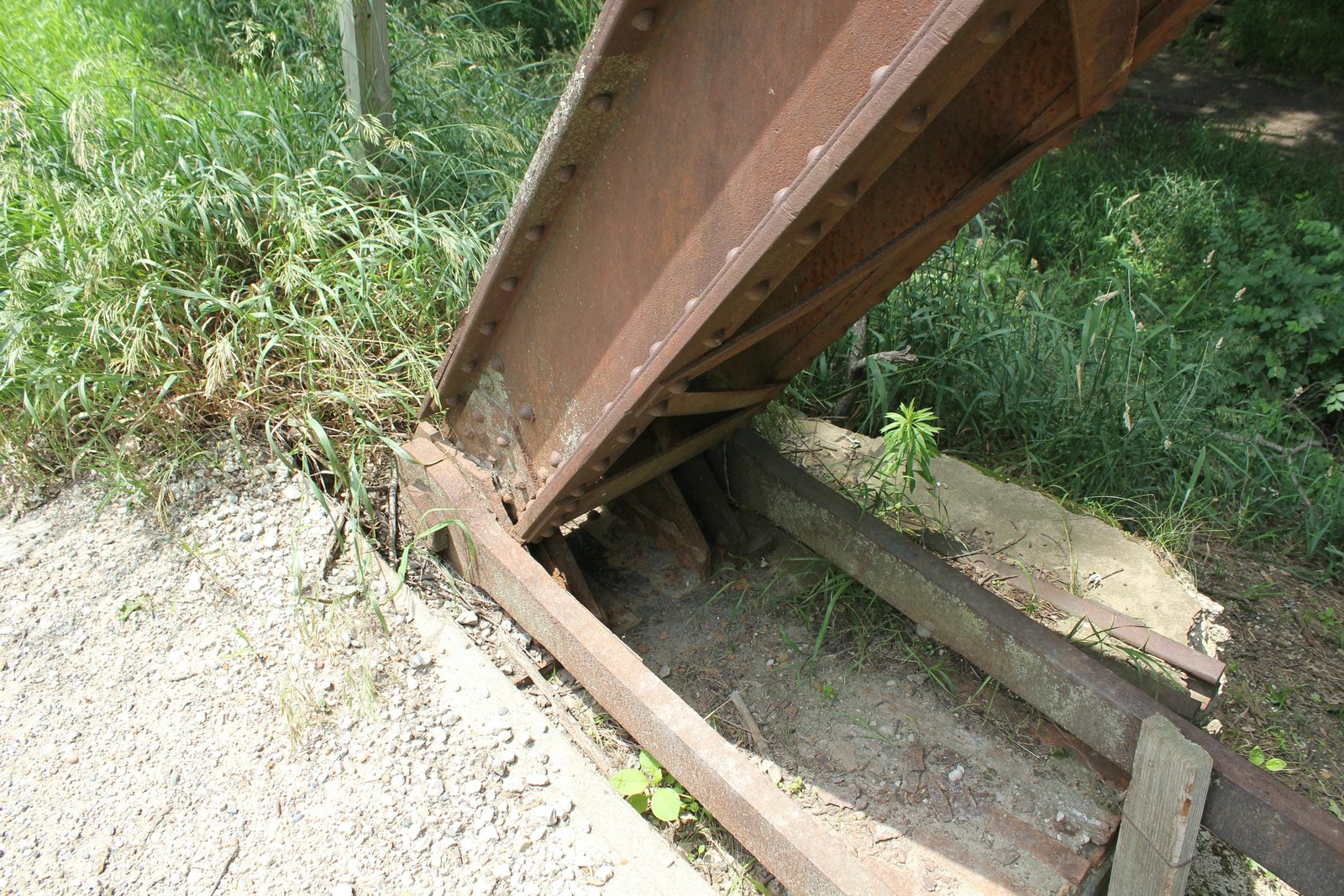
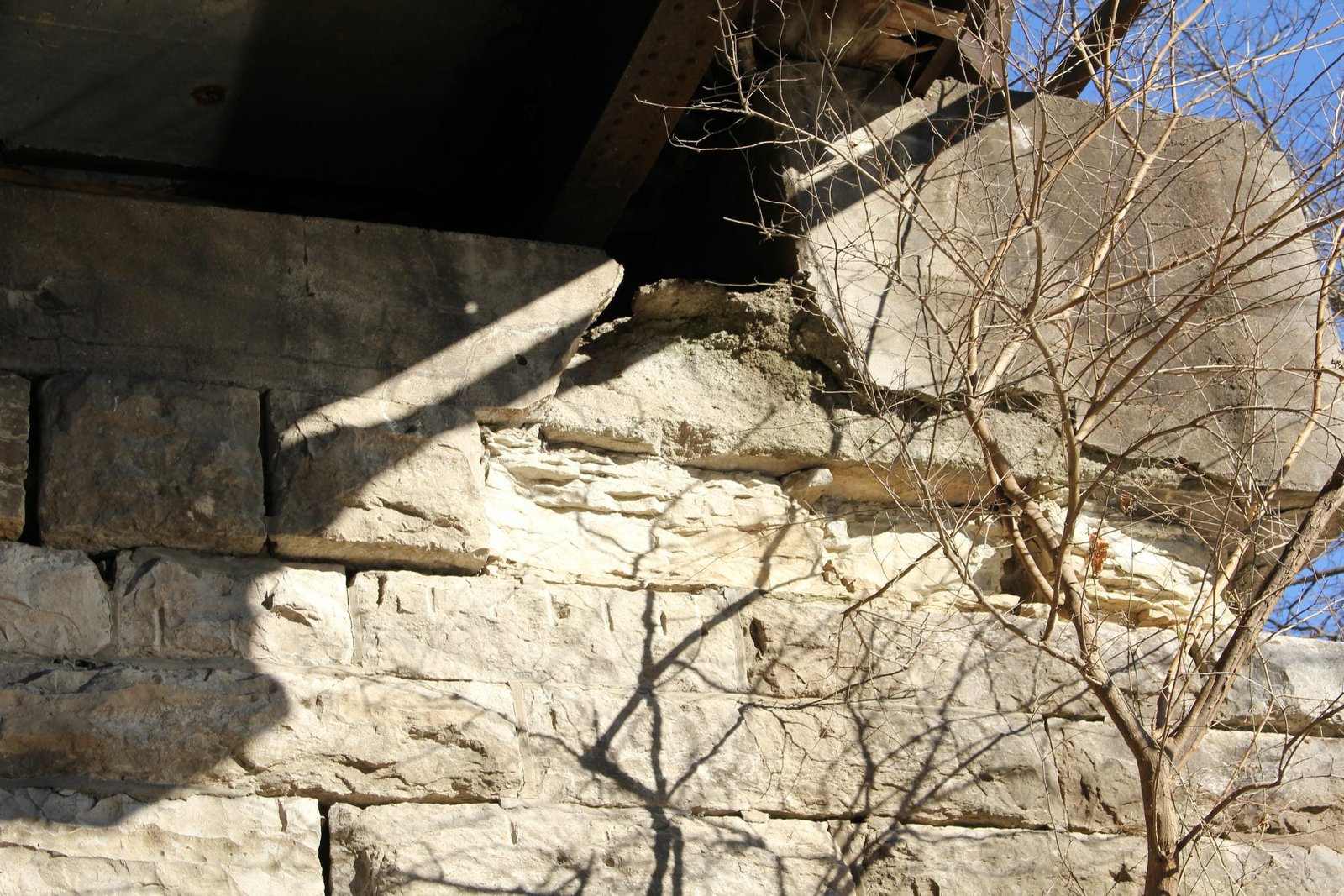
In 1992, Clayton Fraser was retained by the Iowa Department of Transportation to document historic bridges throughout the state. While the author commends Fraser's dedication to the subject, much of the documentation for this bridge was inaccurate and not representative of the bridges true history. The bridge was listed on the National Register of Historic Places in 1998 using factually incorrect information, including that the bridge was constructed for the Chicago, Burlington & Quincy Railroad (CB&Q) as an original structure on the CB&Q Albia, Iowa to Des Moines branch line. Unfortunately, this false information has followed this bridge to this day, and even appears in the official Iowa Department of Transportation record for this bridge. The author is continuing to research the original location of the spans, the substructure contractor(s) and any applicable alterations to provide a complete and accurate history of this unique bridge. Overall, the bridge appears to be in poor condition, with significant cracking to the substructures and failure of some bearing blocks. The superstructure and deck appear to be in fair condition. Despite the defects, the bridge only carries a small amount of vehicles and it would likely be too costly to rehabilitate. It is hoped that funds are available to repair the defects and restore this historic bridge in the future. The author has ranked this bridge as being highly significant, due to the age, truss design and history.
Citations
| Fabrication date and builder (superstructure) | American Bridge Company plaque |
| Erection date | The Knoxville Journal; October 17, 1896 |
| Railroad History Citation | ICC Valuation Information, Compiled by Richard S. Steele |