
Click the photo to view the full-size version
| Name | Quaker Oats Railroad Bridge Chicago & North Western Railway Bridge #202 |
| Built By | Chicago & North Western Railway |
| Currently Owned By | Union Pacific Railroad |
| Superstructure Contractor | Detroit Bridge & Iron Works of Detroit, Michigan |
| Substructure Builder | Chicago & North Western Railway Company Forces |
| Length | 735 Feet Total, 146 Foot Spans |
| Width | 2 Tracks, 1 In Use |
| Height Above Ground | 15 Feet (Estimated) |
| Superstructure Design | Pratt Through Truss |
| Substructure Design | Stone Masonry |
| Date Built | 1898 |
| Traffic Count | 4 Trains/Day (Estimated) |
| Current Status | In Use |
| Chicago & North Western Railway Bridge Number | 202 |
| Significance | Regional Significance |
| Documentation Date | 8/10/2013; 6/3/2018 |
In 1856, the Chicago, Iowa & Nebraska Rail Road (CI&N) began construction on a new mainline across Iowa, connecting an existing Galena & Chicago Union Railroad (G&CU) line at Fulton, Illinois to the Missouri River. To establish construction, a temporary ferry was installed across the Mississippi River at Clinton in 1856. In 1857, the first 44 miles were completed to Wheatland, Iowa. The following year, 20 miles were completed to Lisbon, Iowa; and in 1859, an addition 17 miles were completed to Cedar Rapids, Iowa. In 1861, the Cedar Rapids & Missouri River Railroad (CR&MR) constructed an additional 41 miles to Chelsea, Iowa; followed by 29 miles to Marshalltown, Iowa in 1862. After pausing in 1863, an additional 29 miles were completed to Nevada, Iowa in 1864, followed by 23 additional miles to Boone, Iowa in 1865. In 1864, both the CI&N and CR&MR were leased by the Chicago & North Western Railway (C&NW). In 1867, the line continued west from Boone, reaching the Missouri River at Council Bluffs, Iowa in 1867.
During the second half of the 19th Century, the C&NW had constructed and acquired a large amount of trackage throughout the Midwest. This line formed a principal mainline for the C&NW, connecting western railroads at Omaha to the railroad hub of Chicago. In 1884, the C&IN and CM&MR were formally acquired by the C&NW. In 1887, the Linn County Railway (LC) constructed a 6-mile cutoff, bypassing Cedar Rapids to the south between Otis, Iowa and Beverly, Iowa. At the end of the year, the LC was formally acquired by the C&NW. During the late 19th Century, several other improvements were made to this line. Between 1890 and 1891, a second track was constructed between Clinton and Lowden, Iowa; and between Libson and the Cedar River bridge. Between 1893 and 1894, a second track was constructed between Lowden and Lisbon. A second track was added to the original mainline through Cedar Rapids in 1898, and between 1898 and 1899, a second track was constructed between the Cedar River bridge and the west side of Marshalltown. In 1901, a second track was completed between Marshalltown and Boone, and new facilities were constructed at Boone. Throughout the 20th Century, the Cedar River bridge remained a gauntlet structure, severely hindering efficient operations.
By the 20th Century, the C&NW was operating an extensive railroad network, which radiated north and west from Chicago. This line served as the backbone of the C&NW, connecting transcontinental freight and passengers at Omaha to Chicago. Known as the Overland Route, this line became one of the most significant railroad routes in the United States. This route saw continuous upgrades during the 20th Century, including significant bridge, rail, tie and signal upgrades. In 1995, the C&NW was purchased by Union Pacific Railroad (UP). In 2002, UP constructed a second track at the Cedar River bridge, eliminating a single track bottleneck in the network. Today, this line remains vital to UP and is still well maintained. The Clinton to Boone segment is known as the Clinton Subdivision, and remains a heavily used double track mainline.
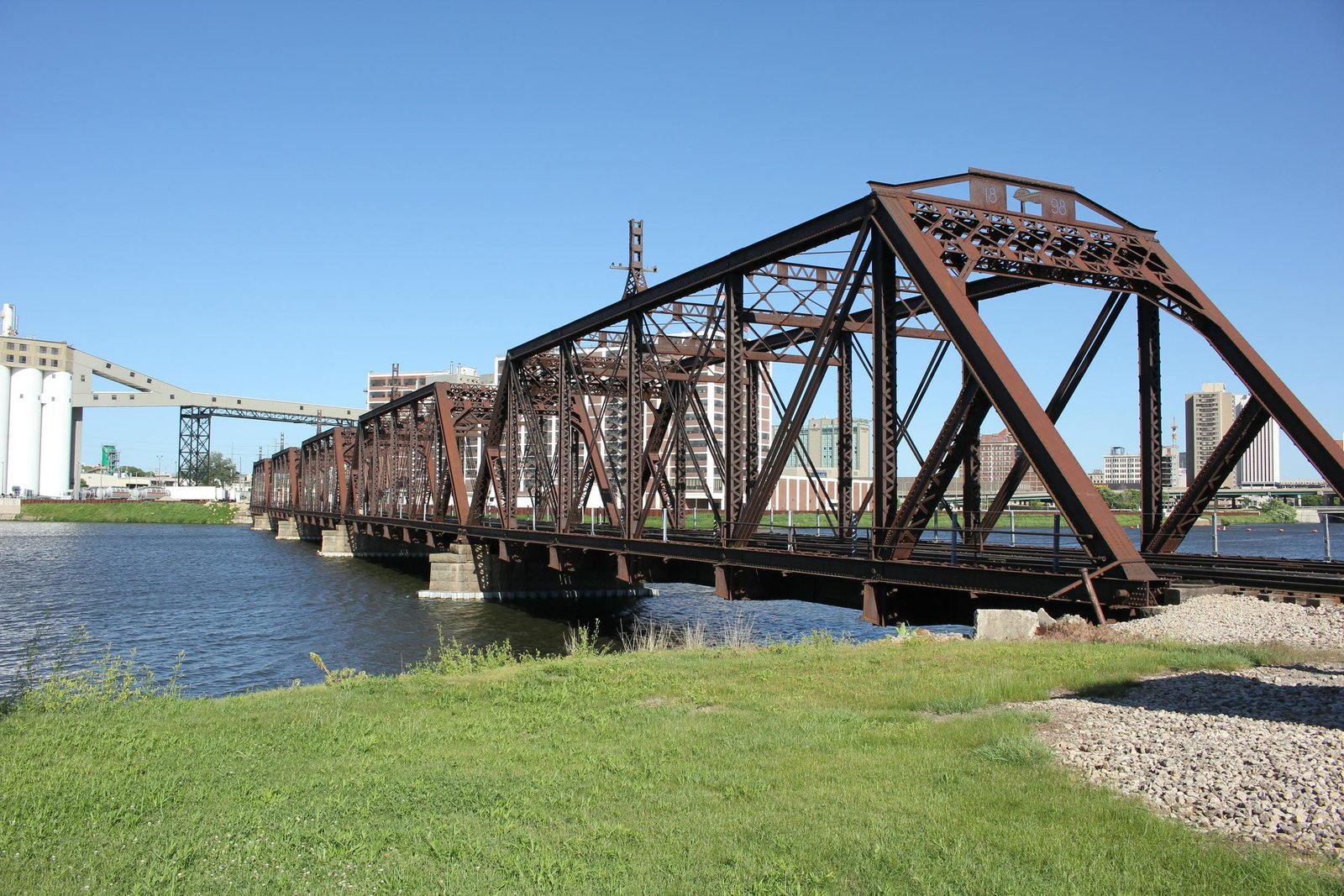
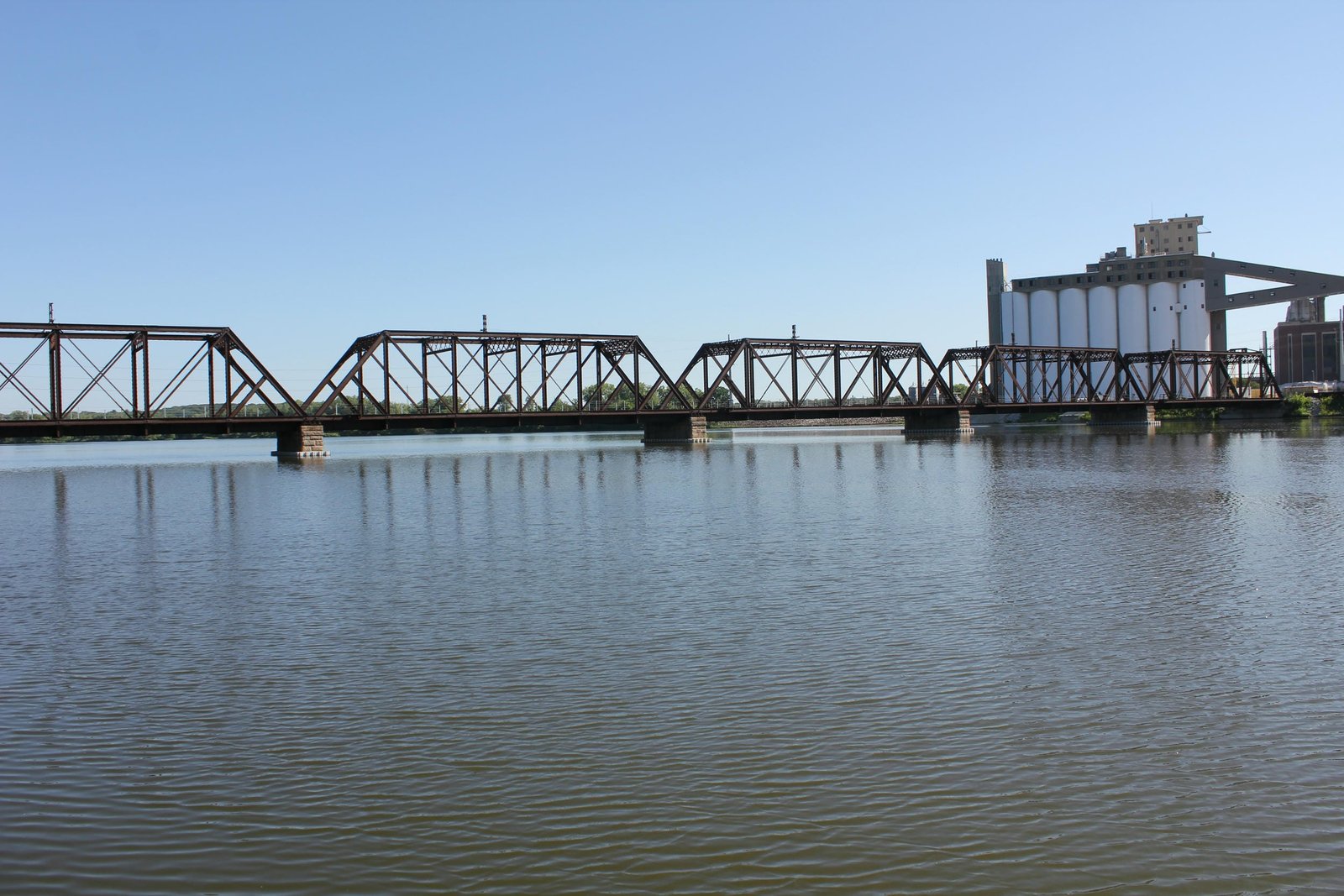
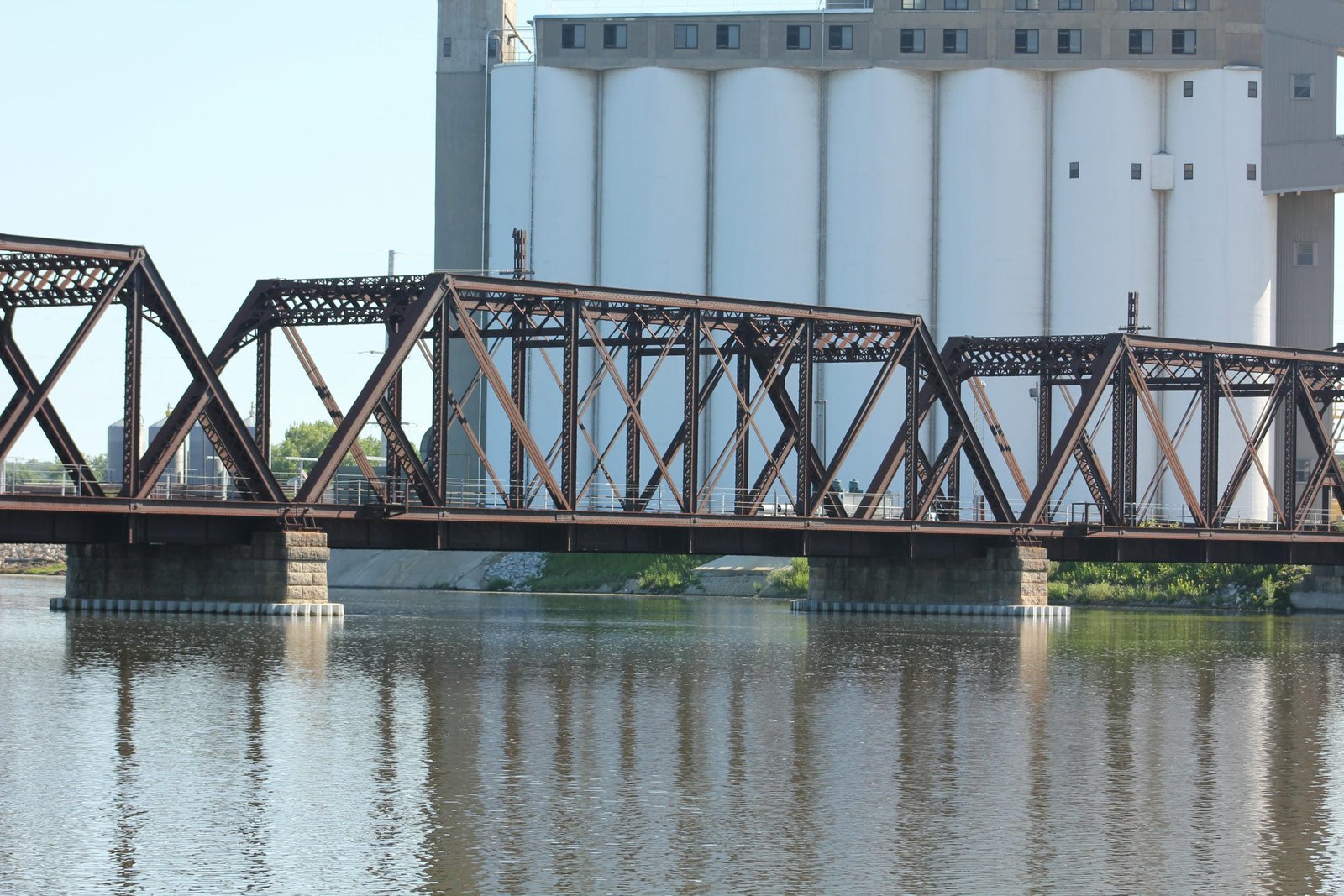
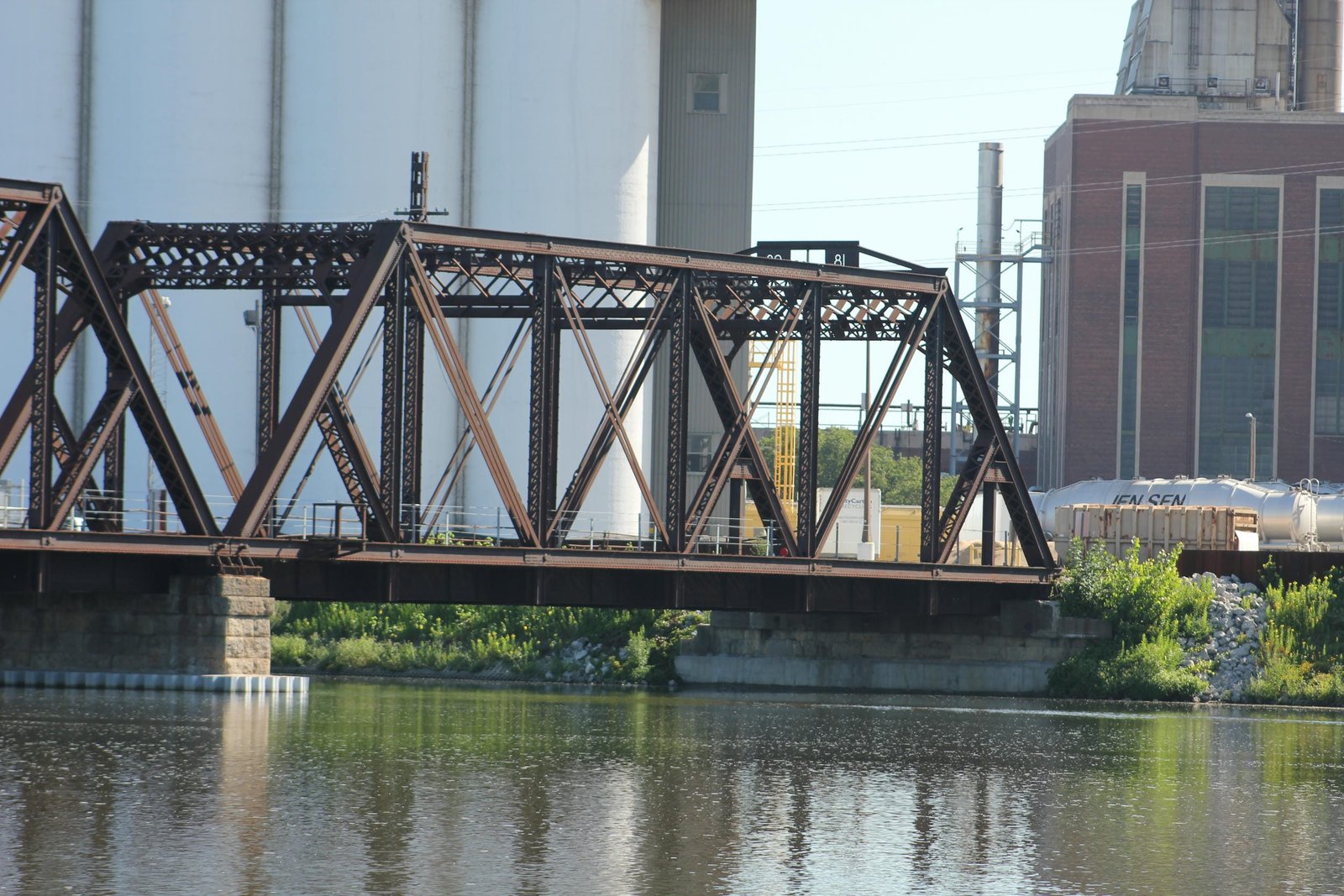
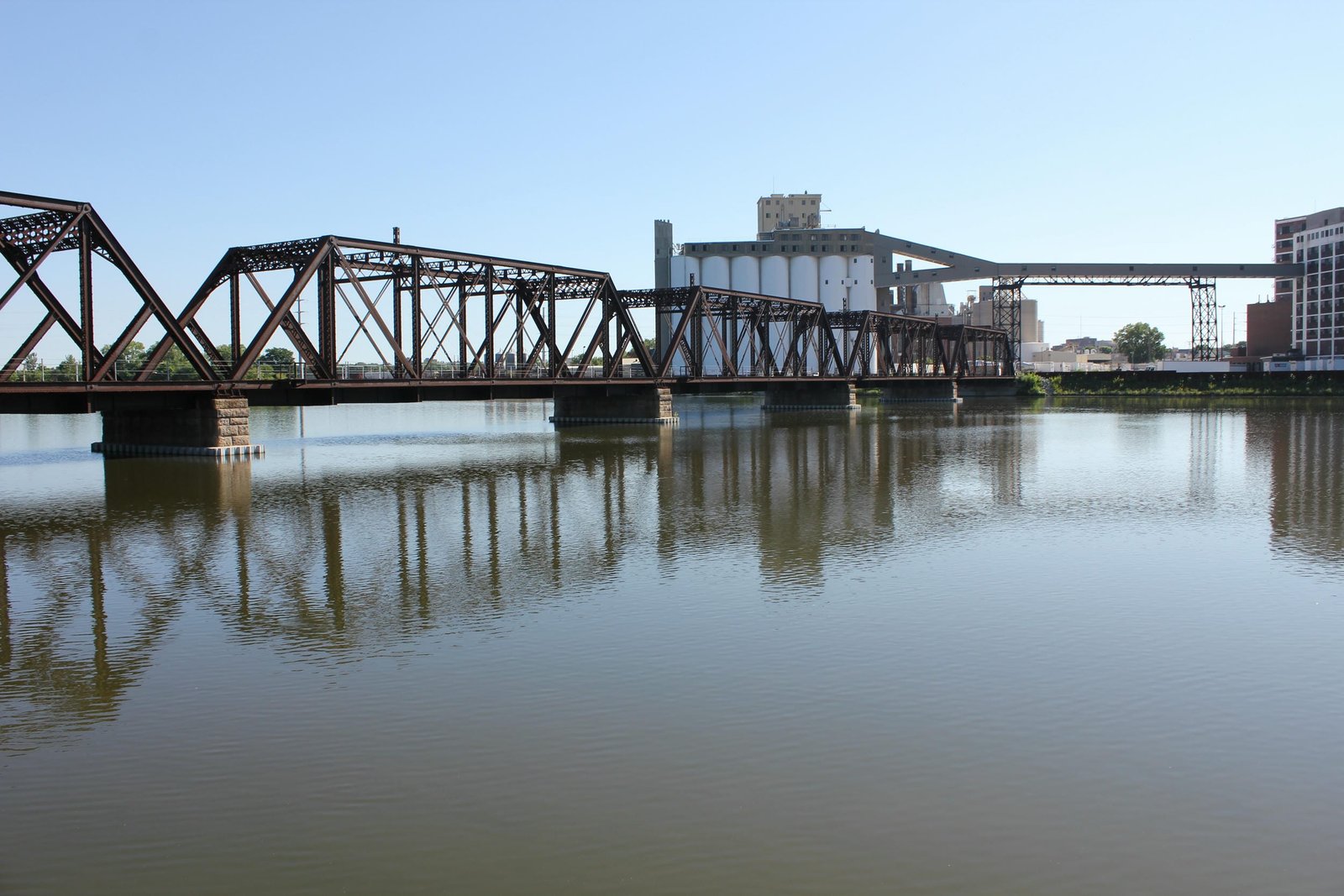
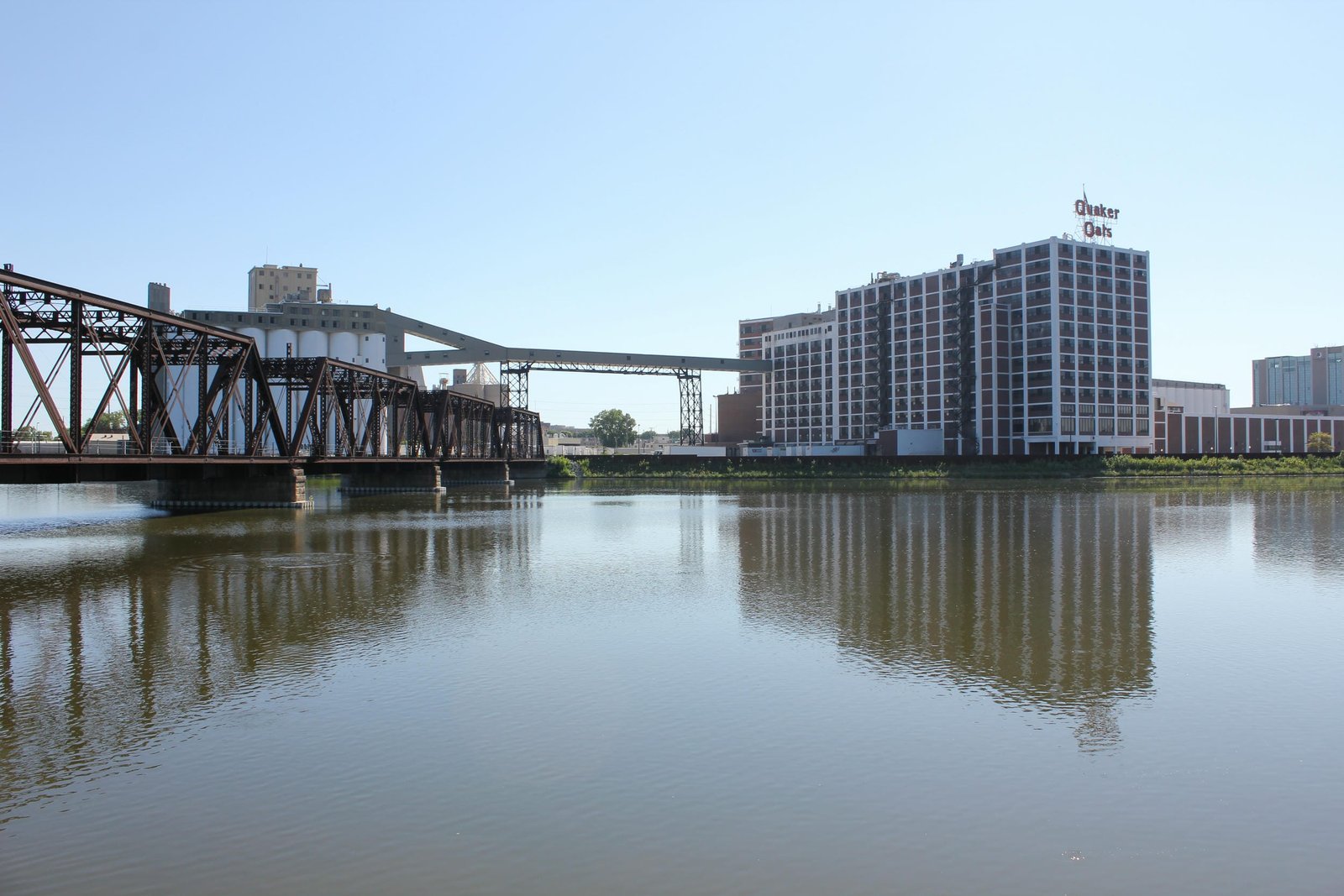
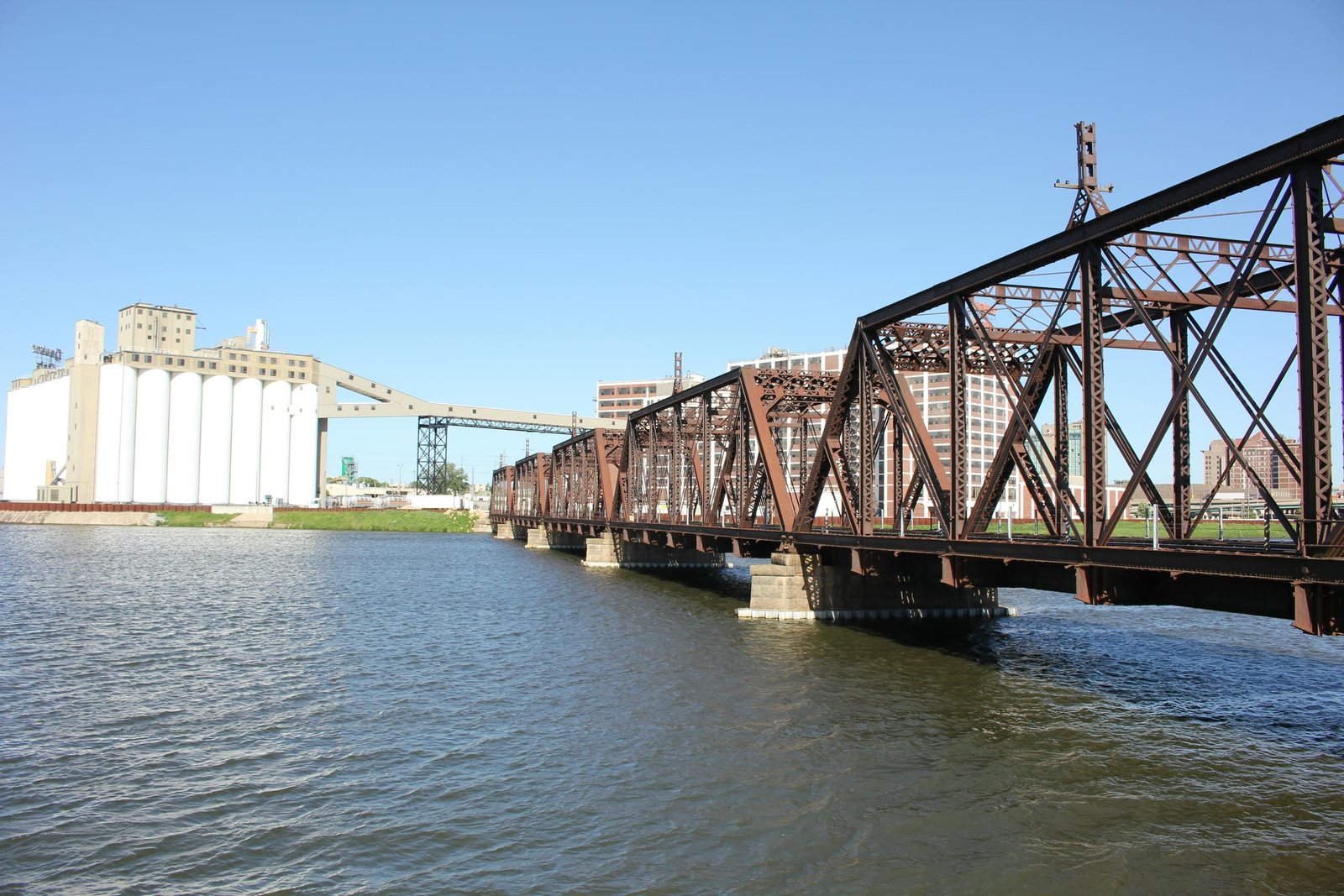
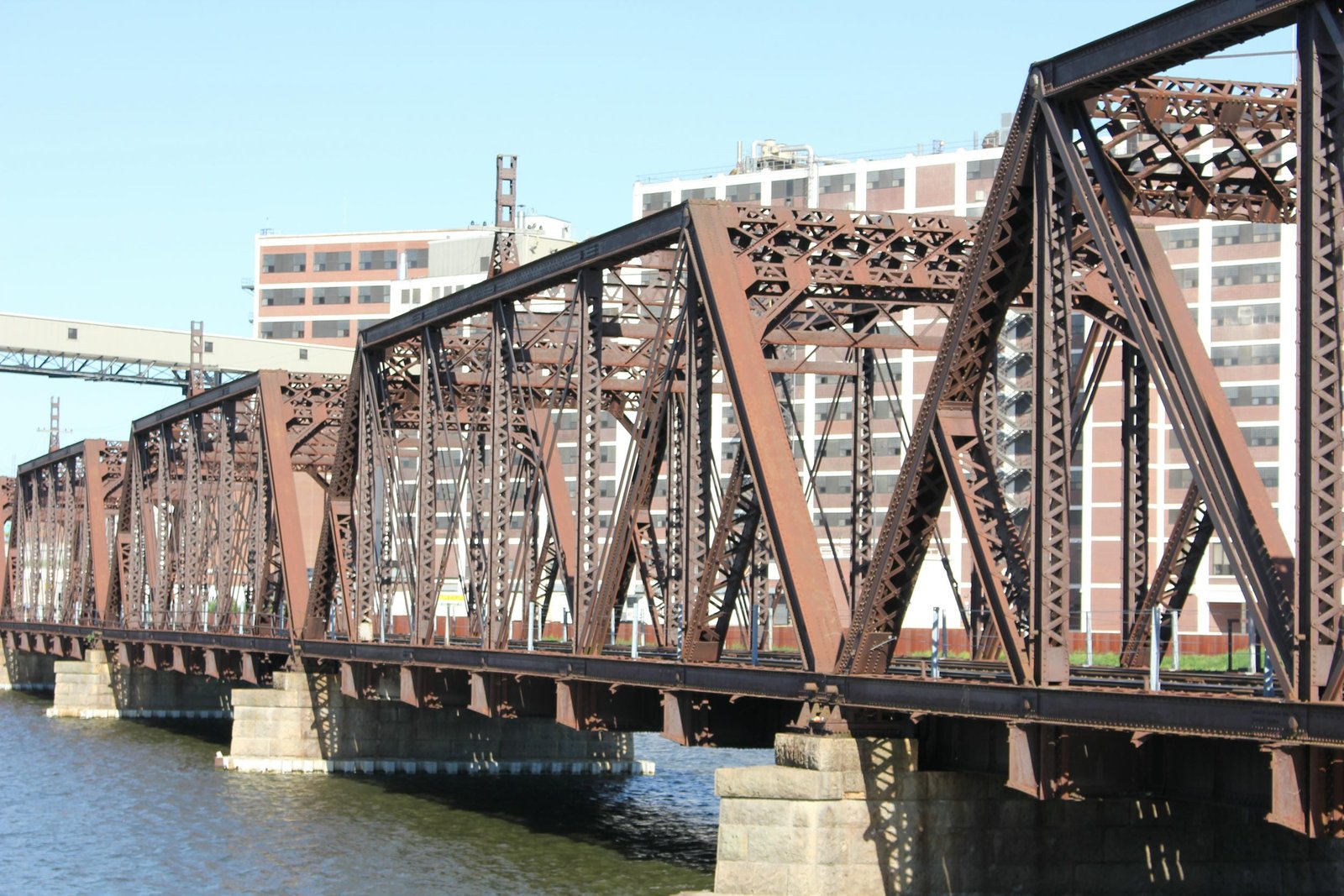
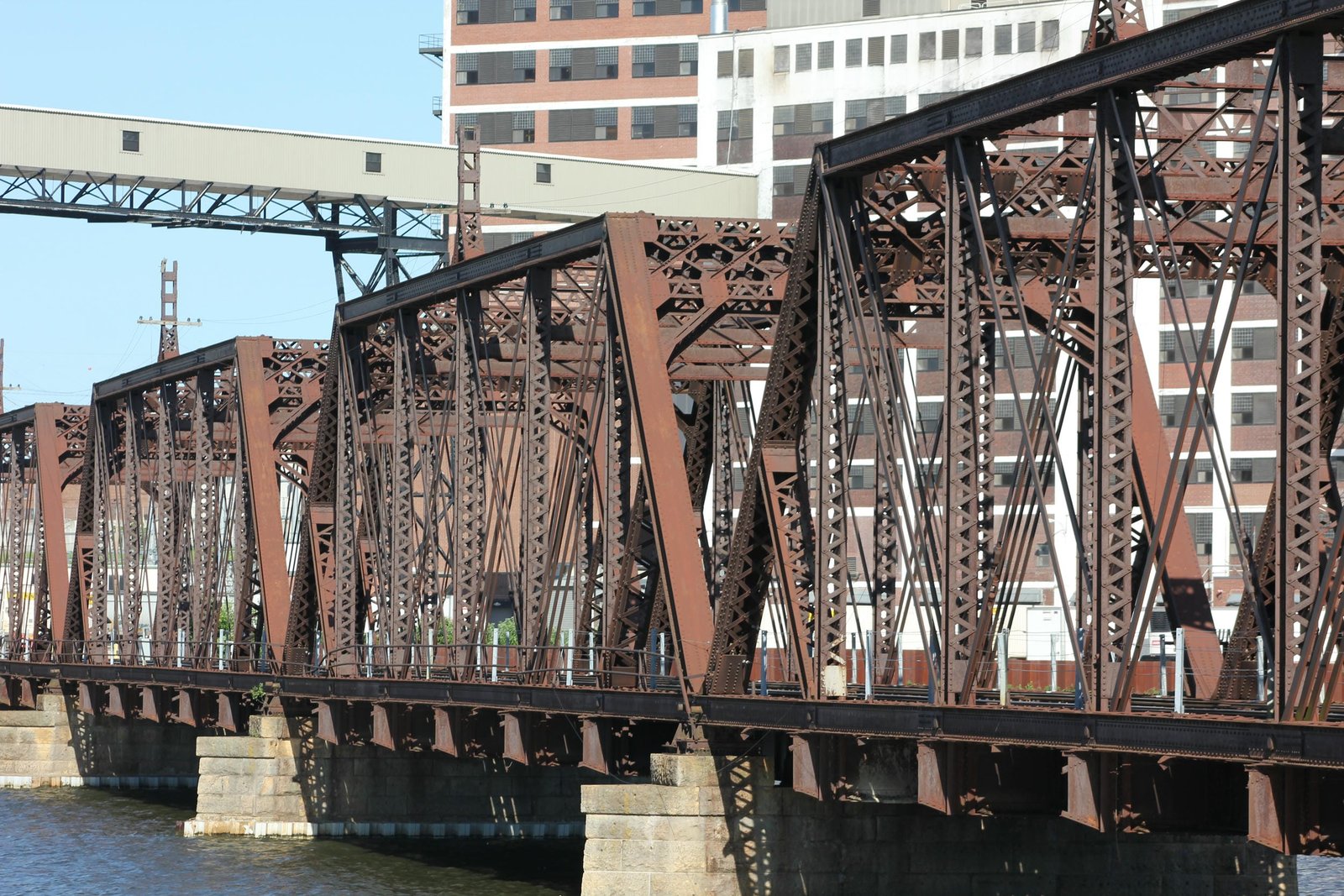
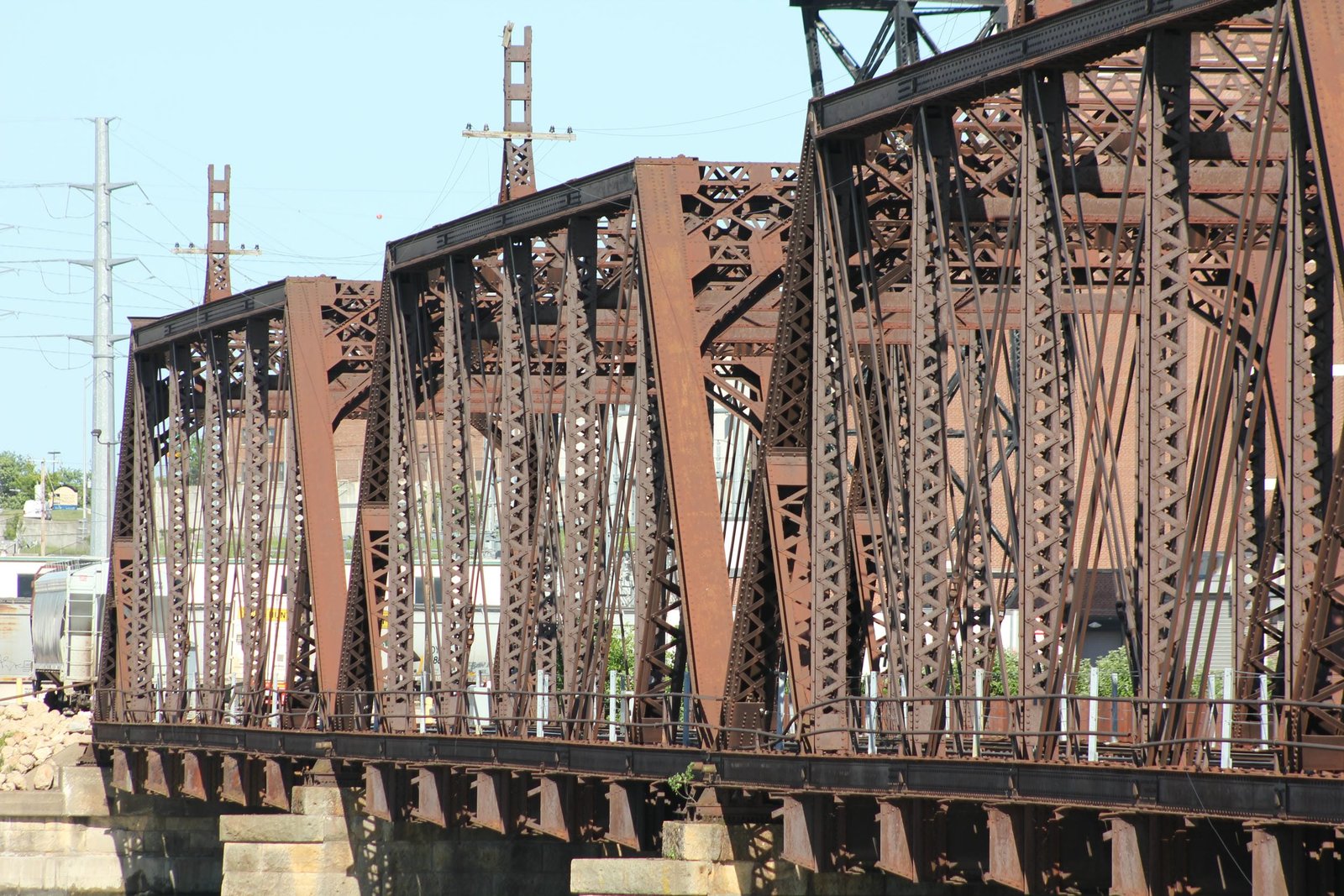
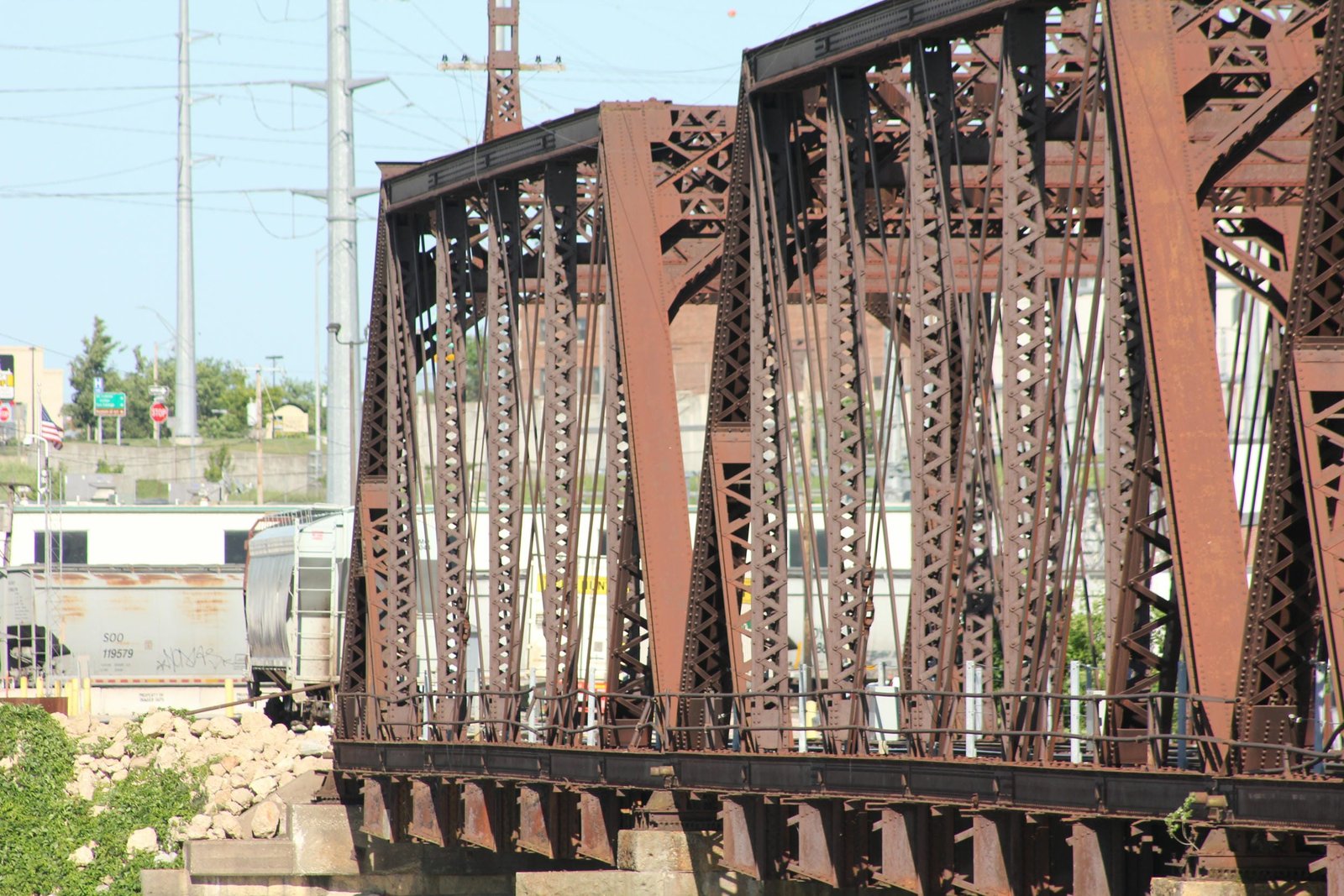
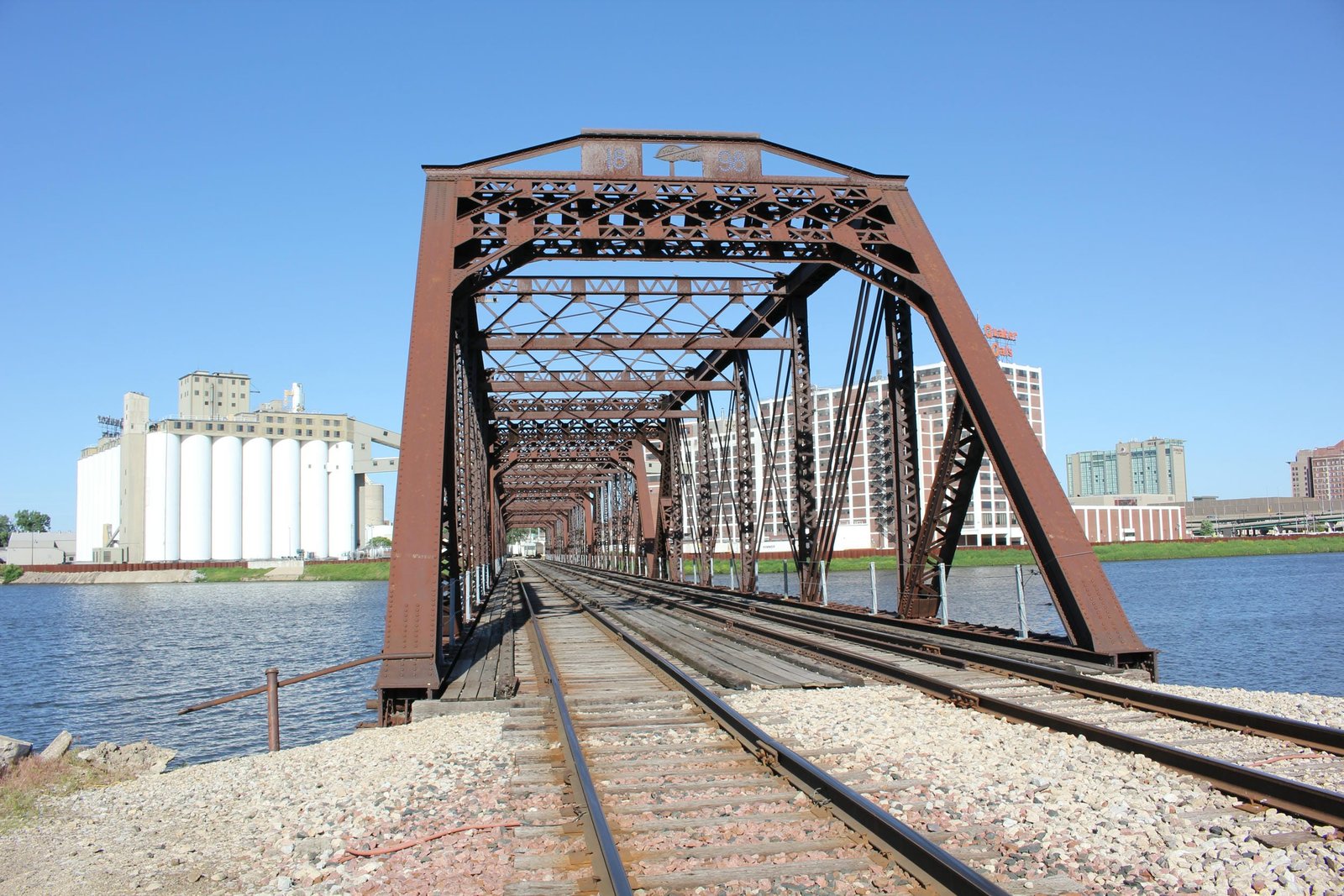
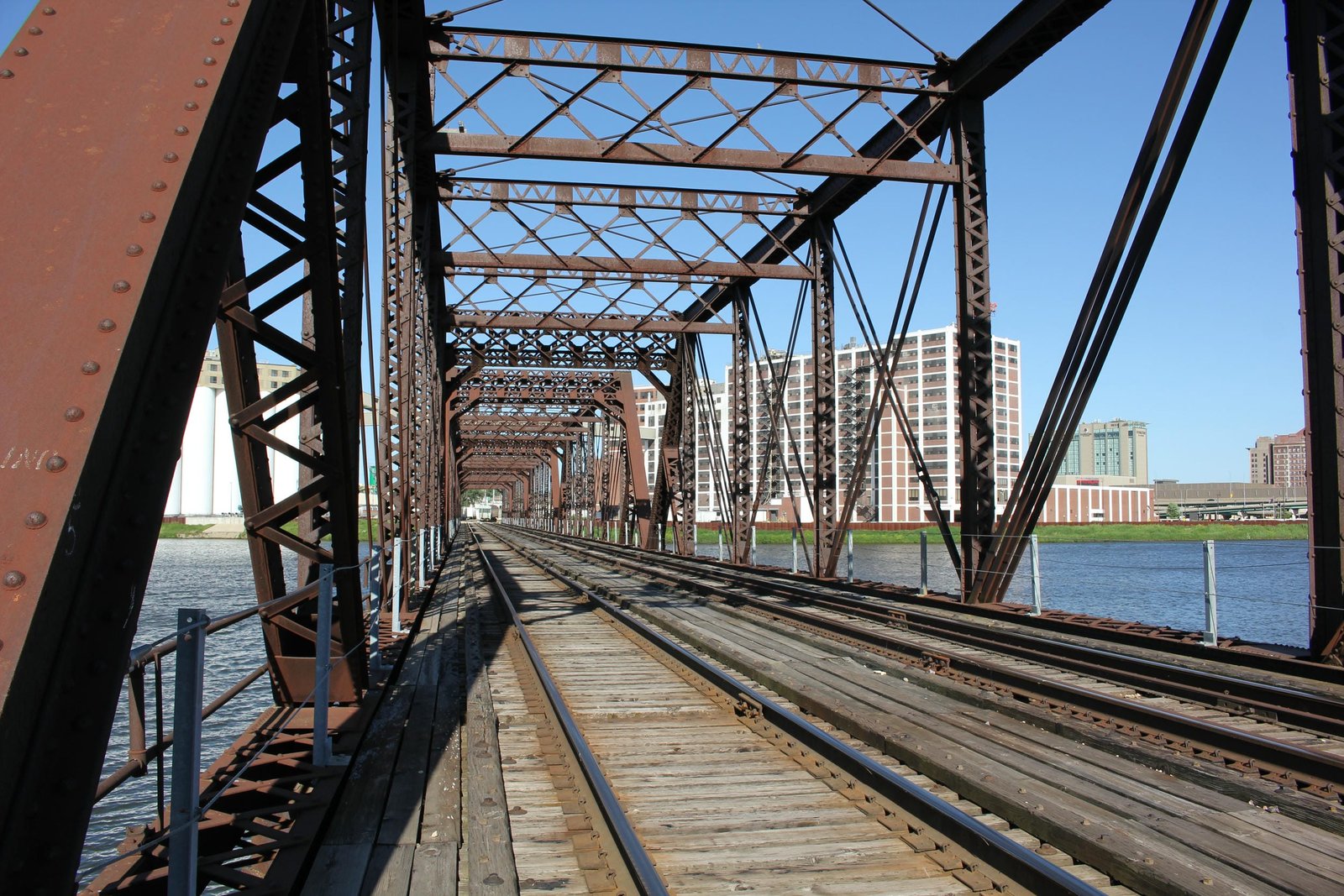
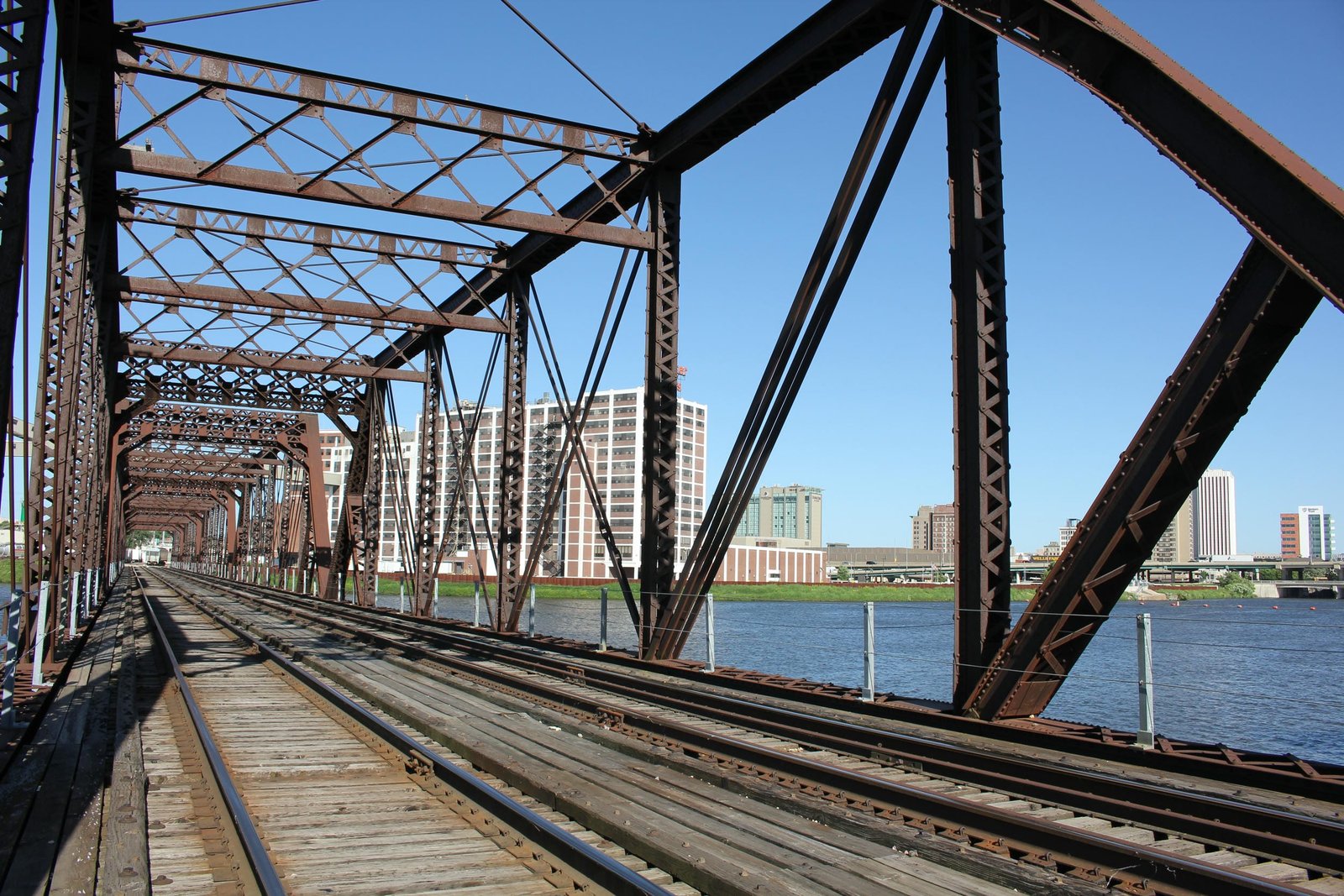
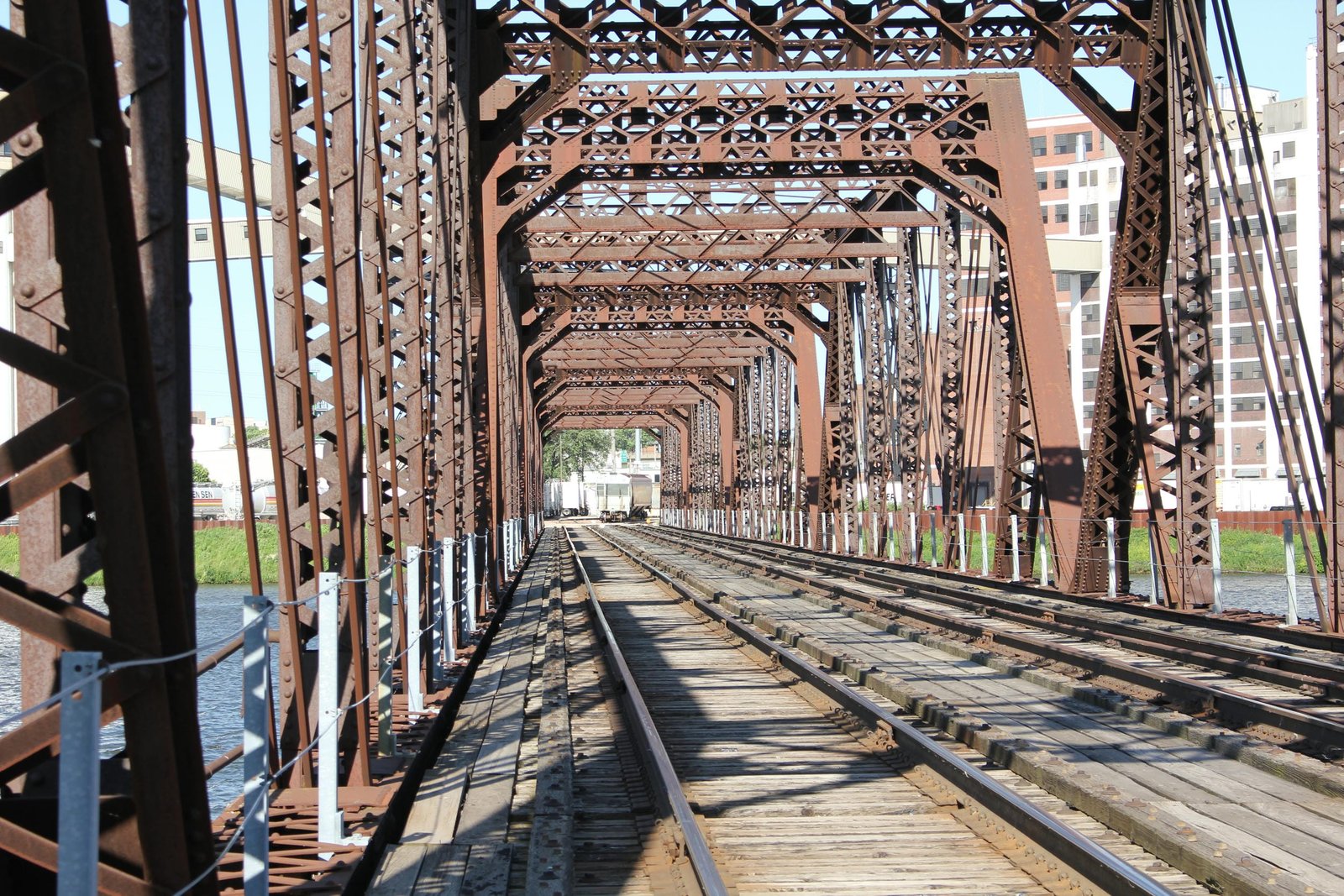
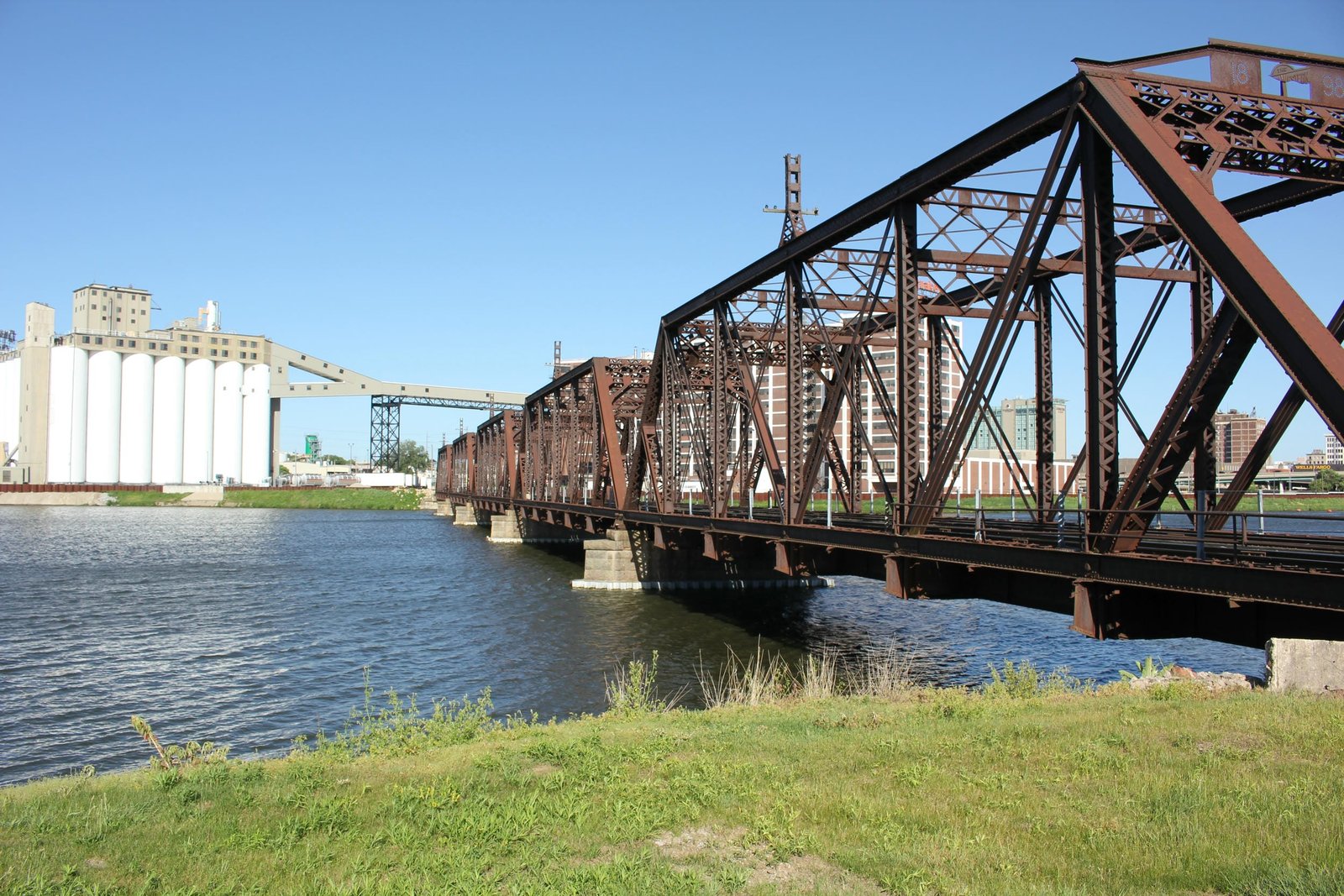
Located in Cedar Rapids, this large through truss bridge carries a former Chicago & North Western Railway mainline over the Cedar River. The first bridge at this location consisted of six single track 150-foot timber Howe through truss spans, set onto stone substructures and constructed for a single track. In 1876, two of the spans were renewed with combination Howe through truss spans; and the following year, the remaining four spans were renewed. Combination trusses were popular for railroad use in the mid to late 19th Century, as they were economical and relatively durable. These spans used iron tension members and wooden tension members to provide greater strength. When the Linn County Railway opened in 1887, a new bridge was constructed south of Cedar Rapids, and much of the mainline traffic began using that structure. By the late 1890s, the C&NW sought to double track the original mainline through Cedar Rapids and construct a new bridge. Work on a new bridge began in mid-1898, with the removal and disassembly of the old combination trusses. A temporary trestle was erected across the river and the old stone piers were demolished. A portion of the east end was filled, reducing the bridge to five total spans. New stone piers and abutments were completed by October 1898, and the trusses were erected later that fall. The old bridge was reportedly carefully disassembled for possible reuse, although it is unclear if it was ever reused. Currently, the bridge consists of five double track 146-foot, 6-panel, pin-connected Pratt through truss spans, set onto stone substructures. Detroit Bridge & Iron Works fabricated the superstructure, while the substructure was reportedly constructed by railroad company labor under the direction of "Foreman Morris", who was employed by the Bridge Department of the C&NW.
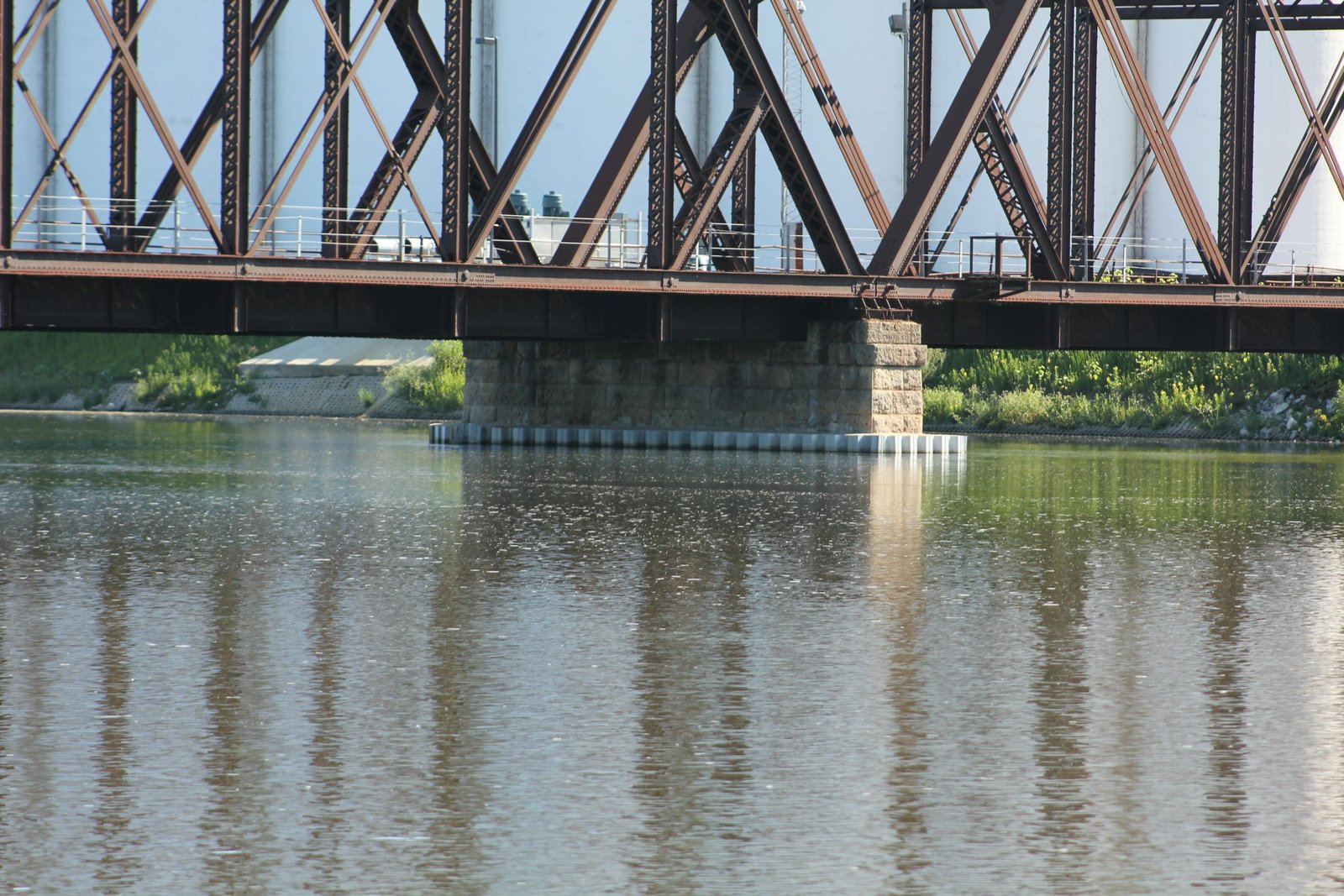
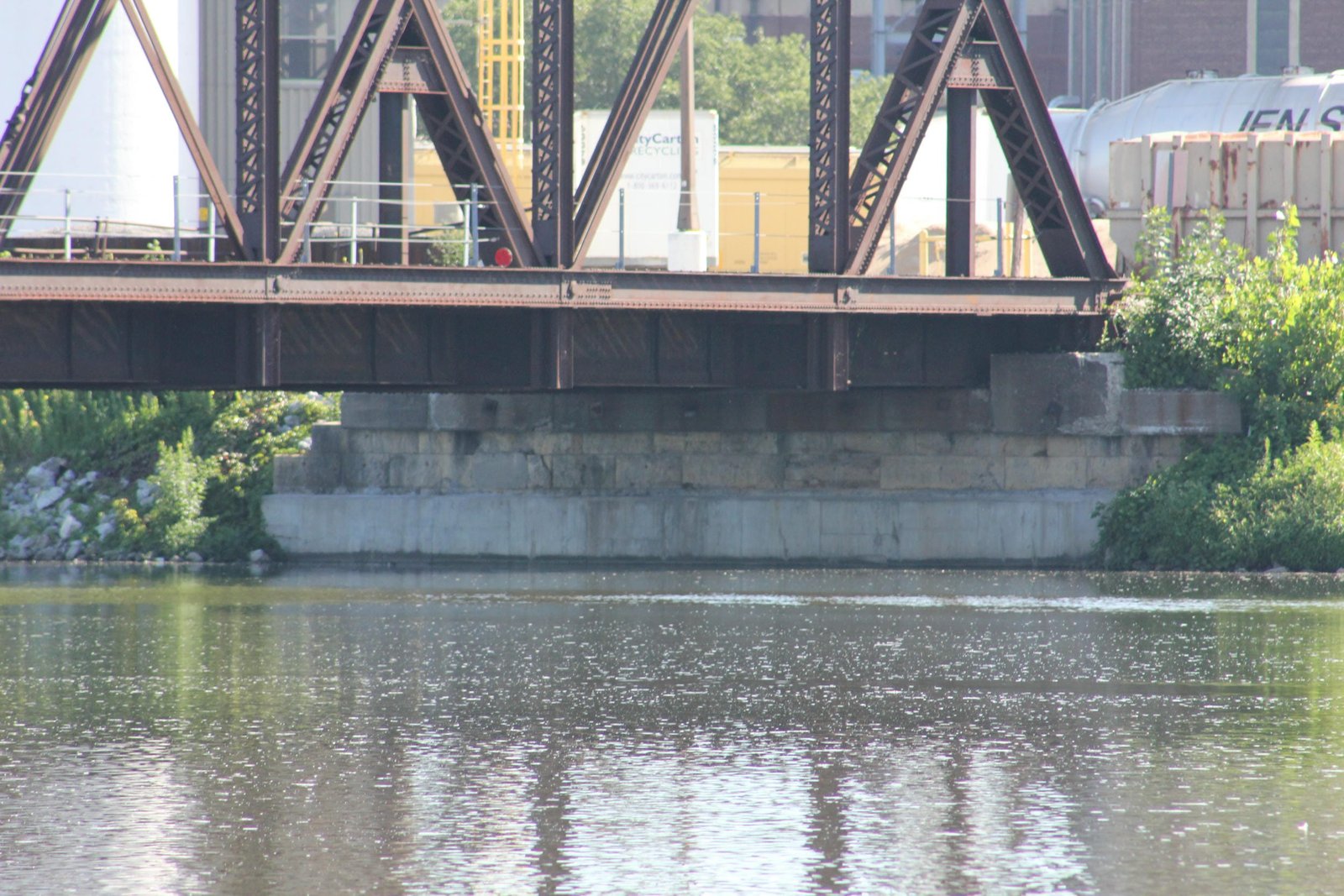
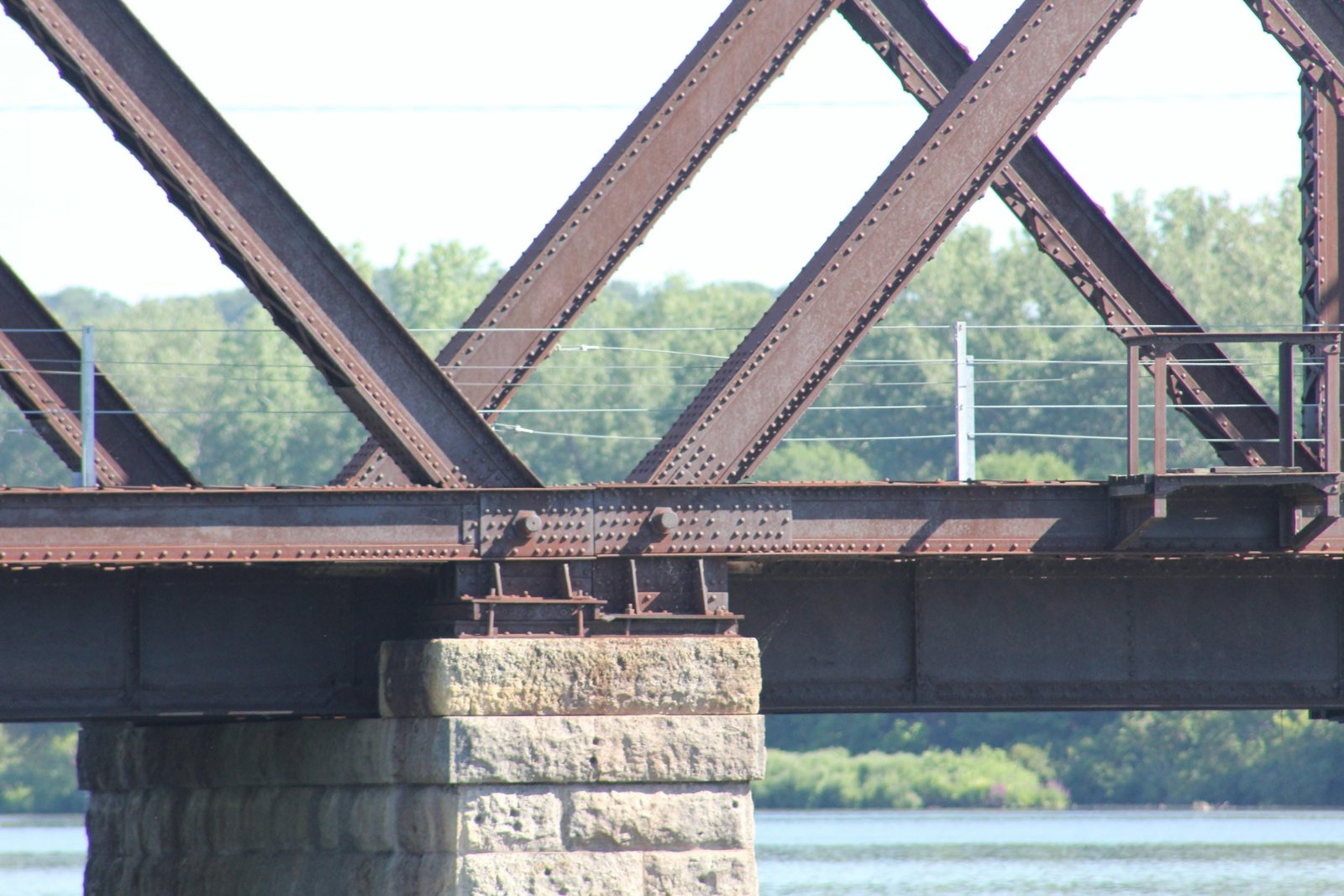
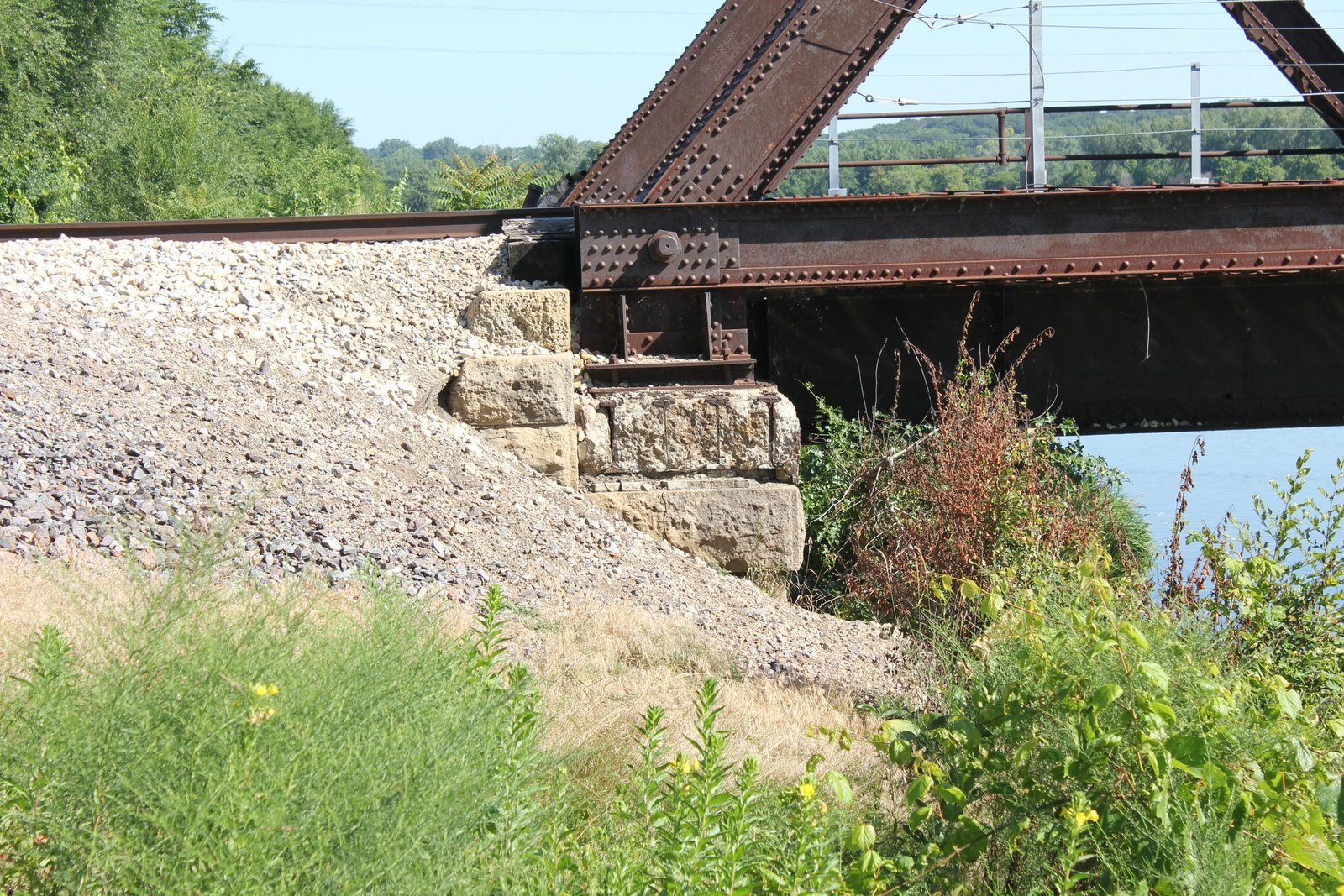
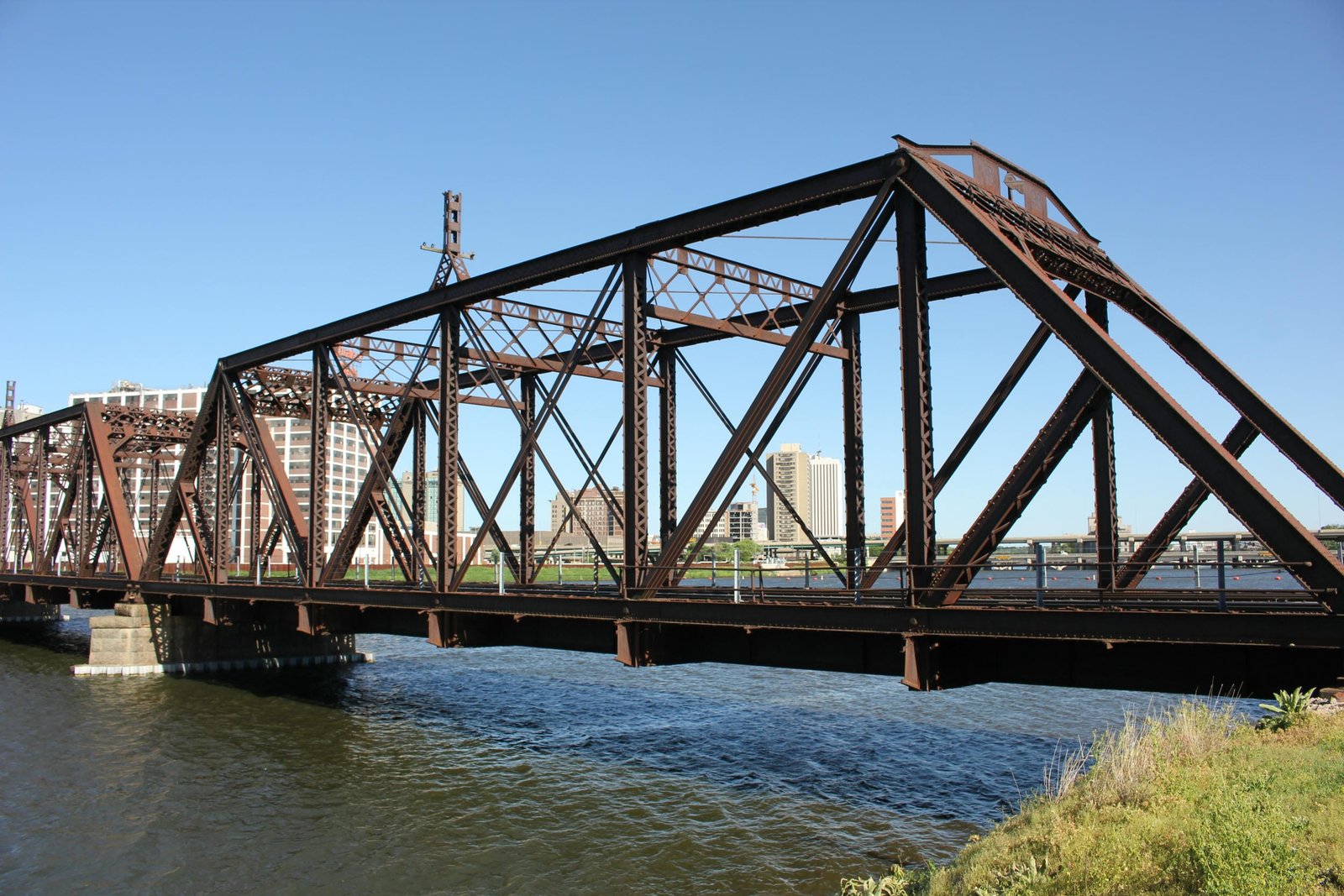
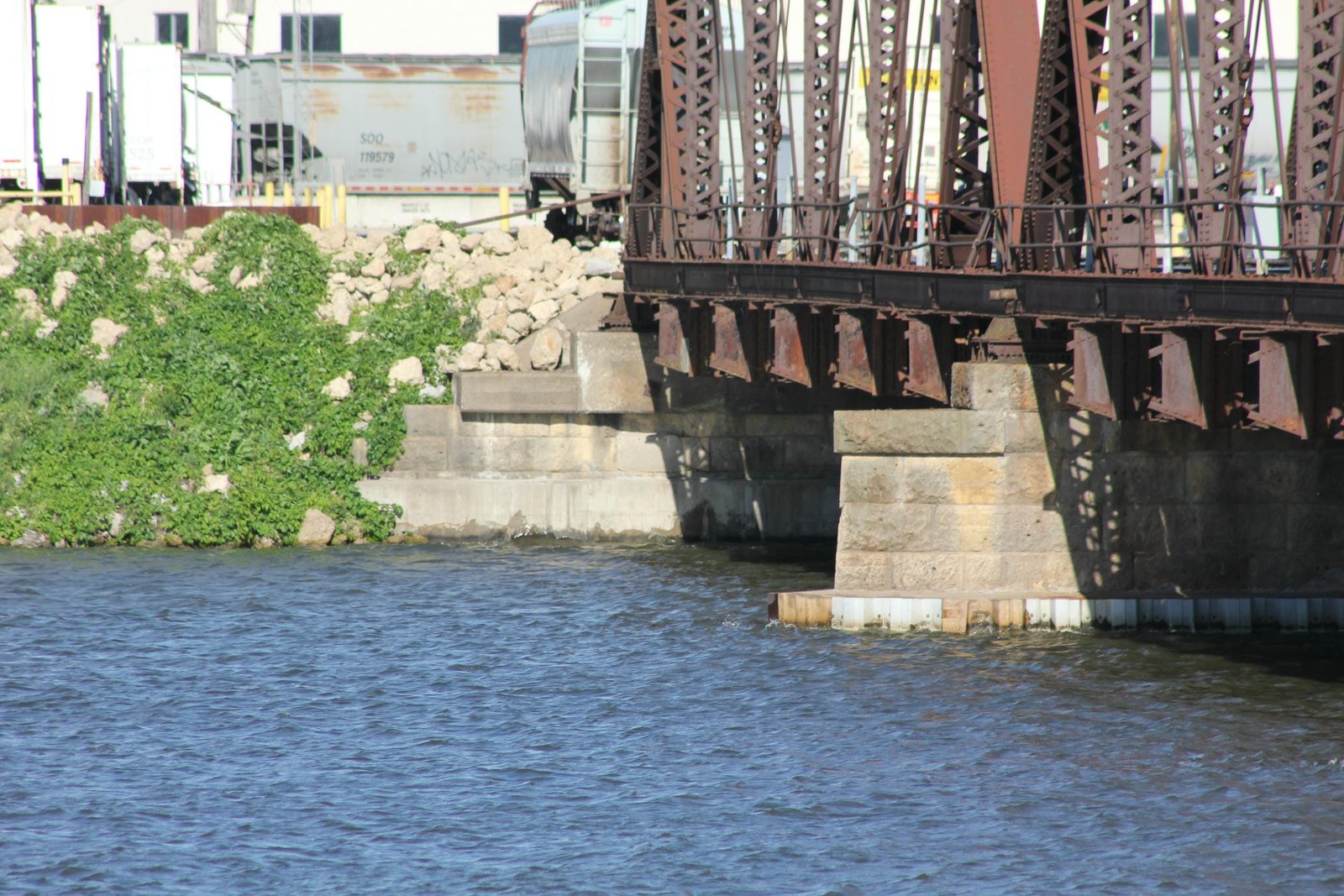
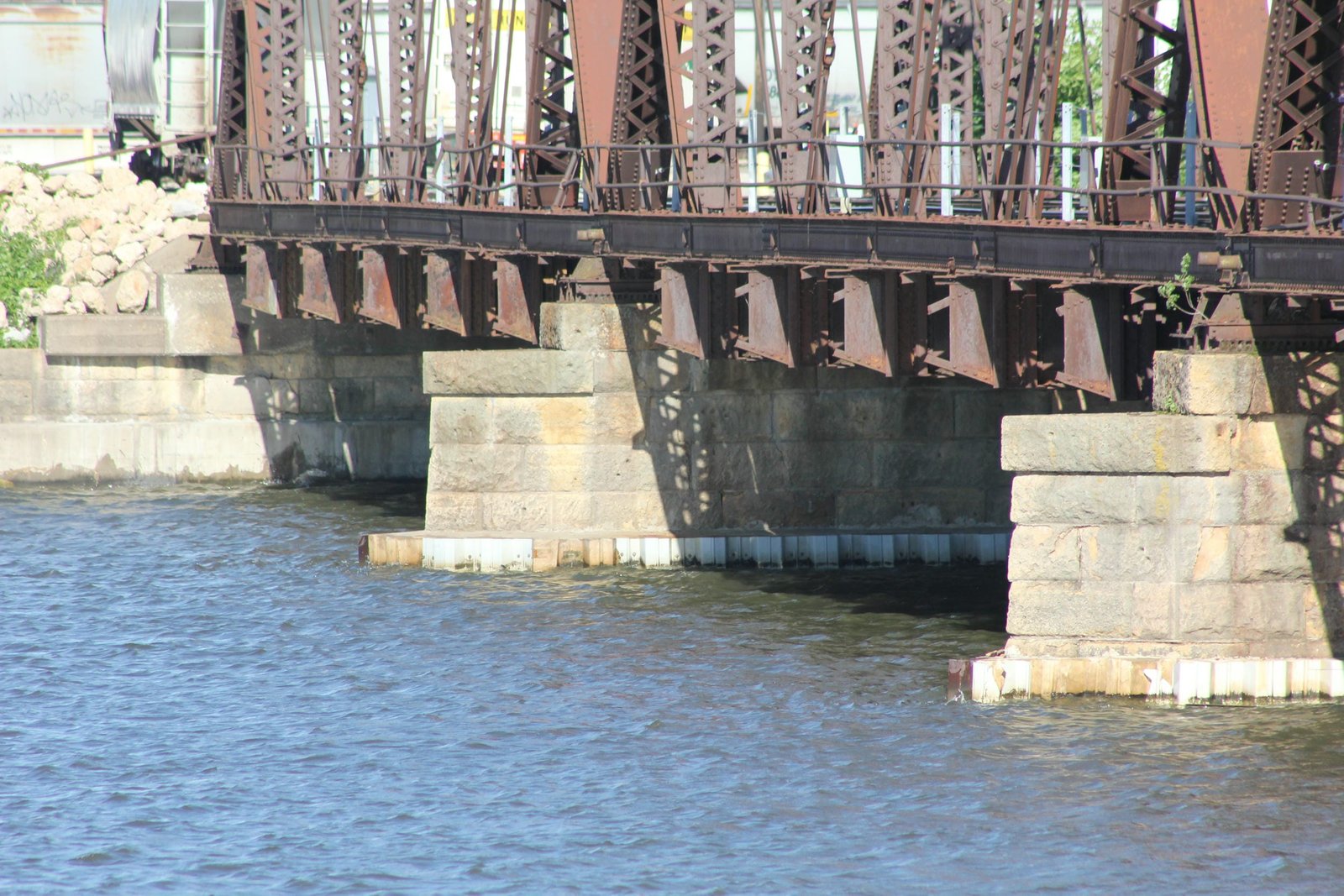
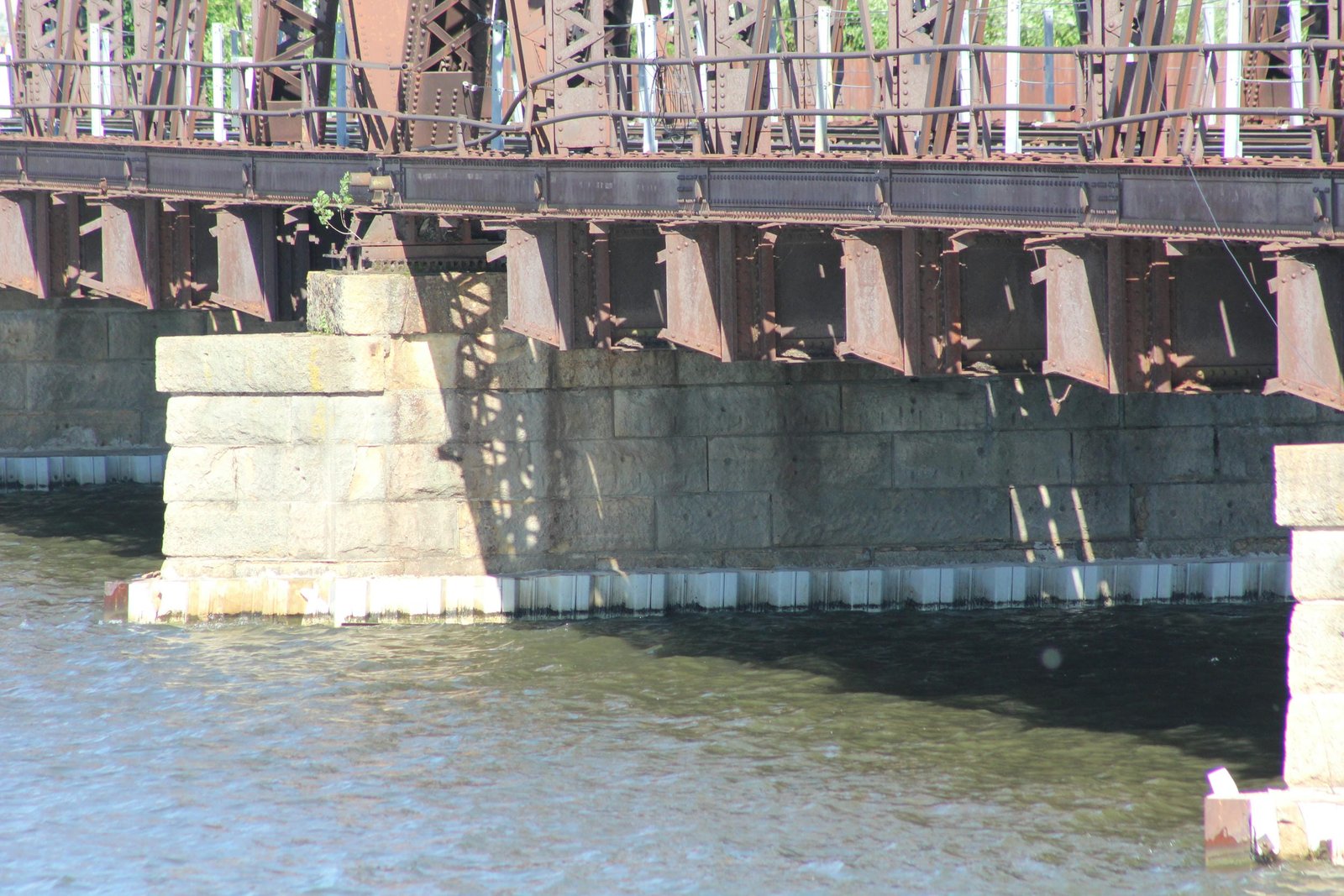
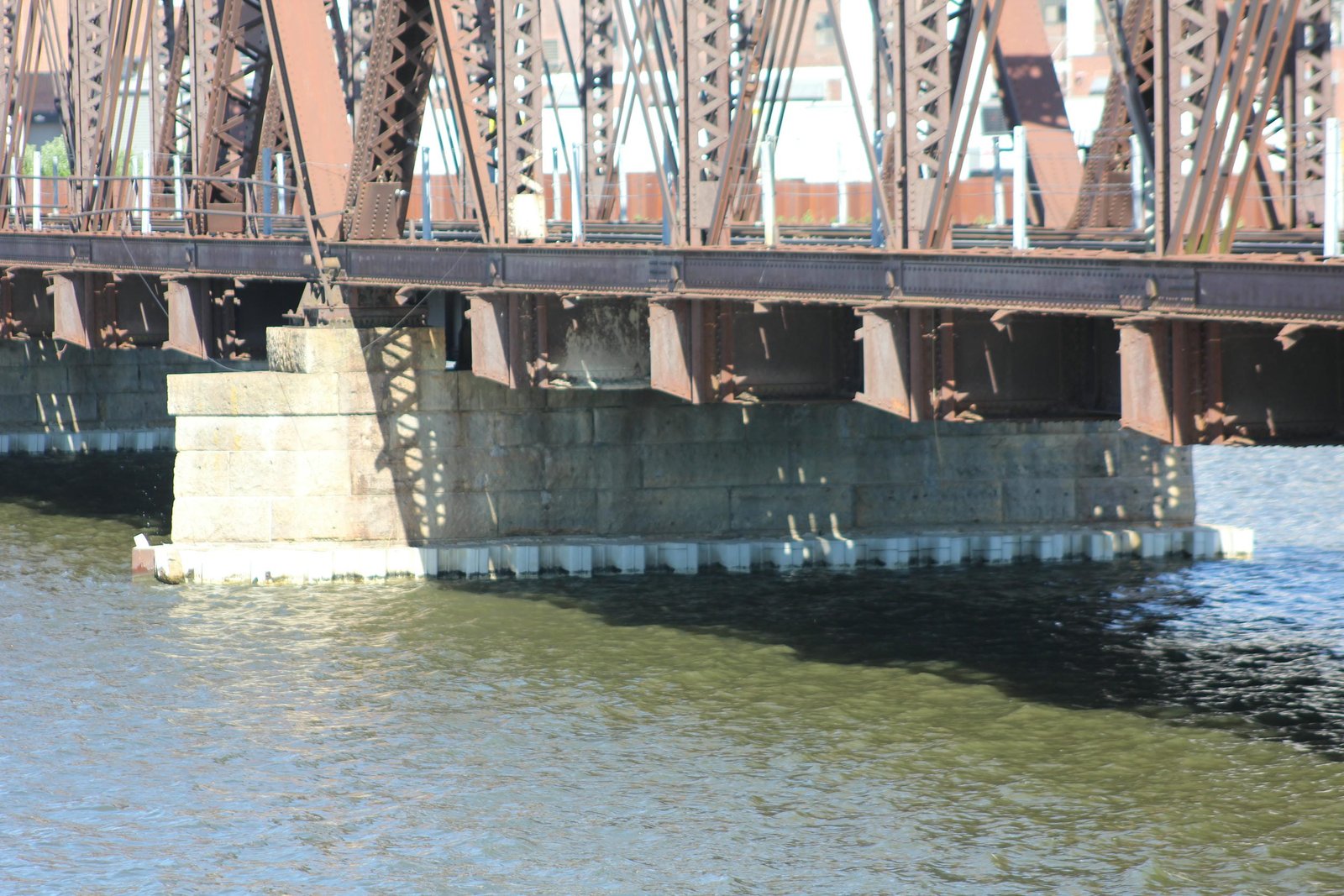
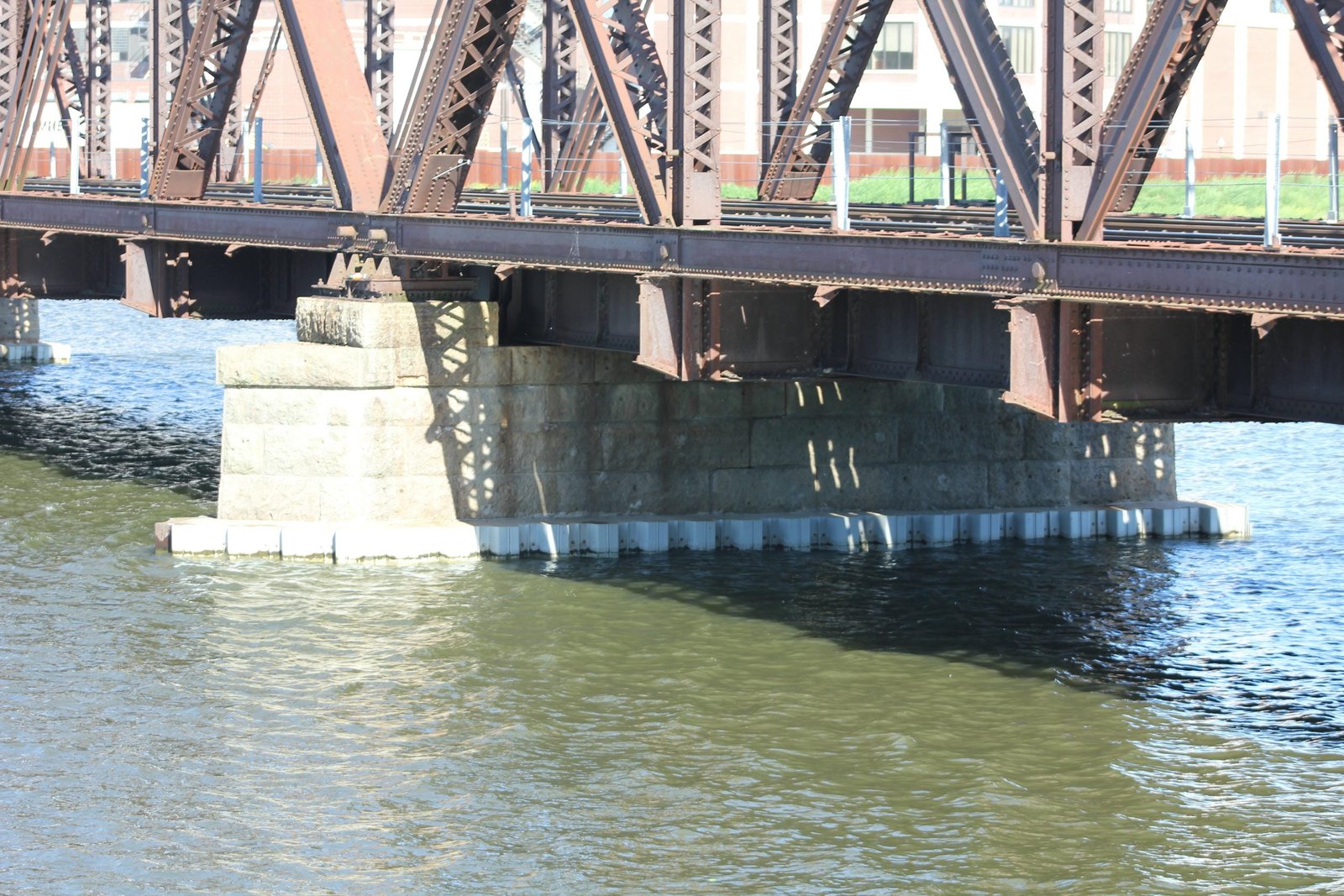
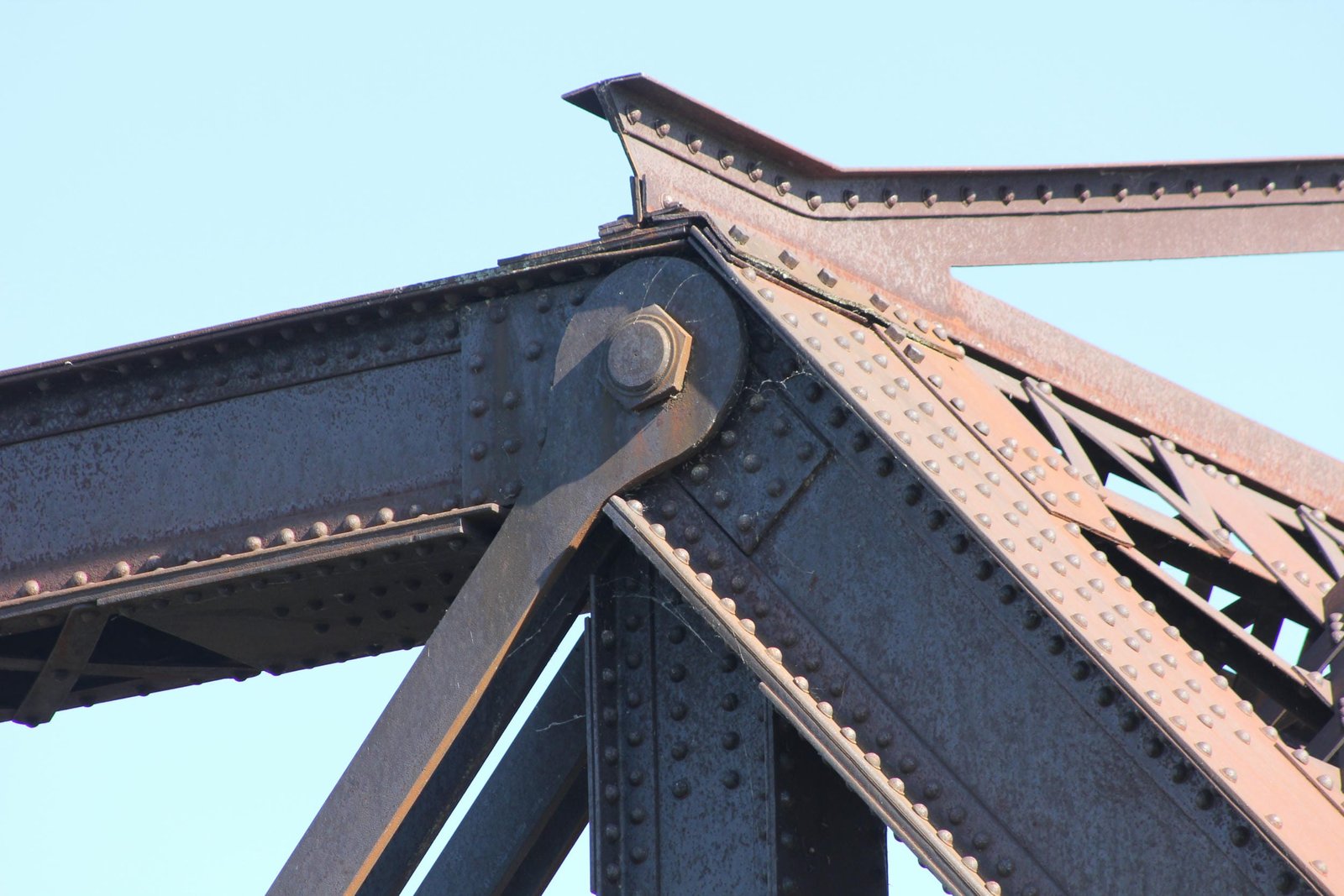
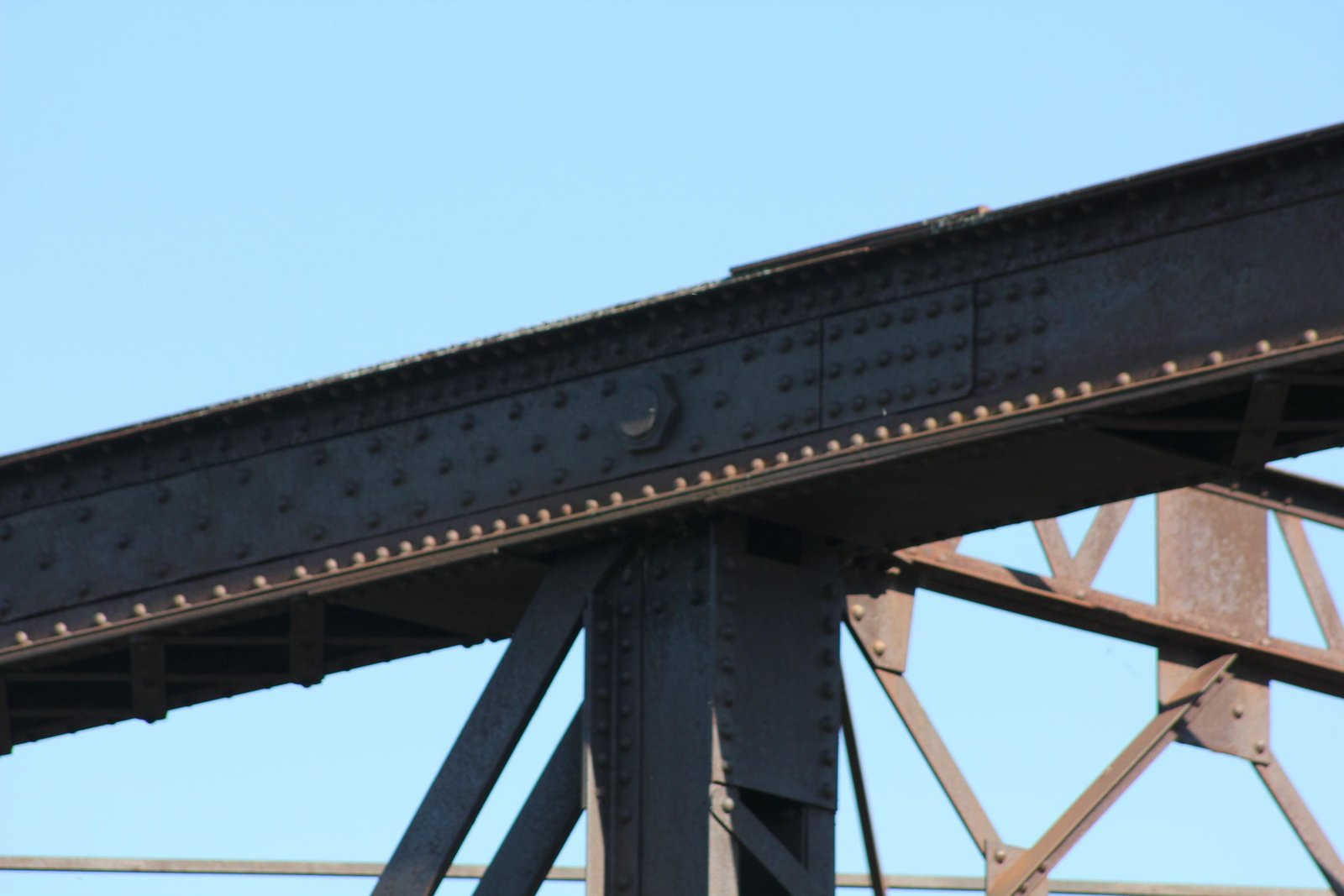
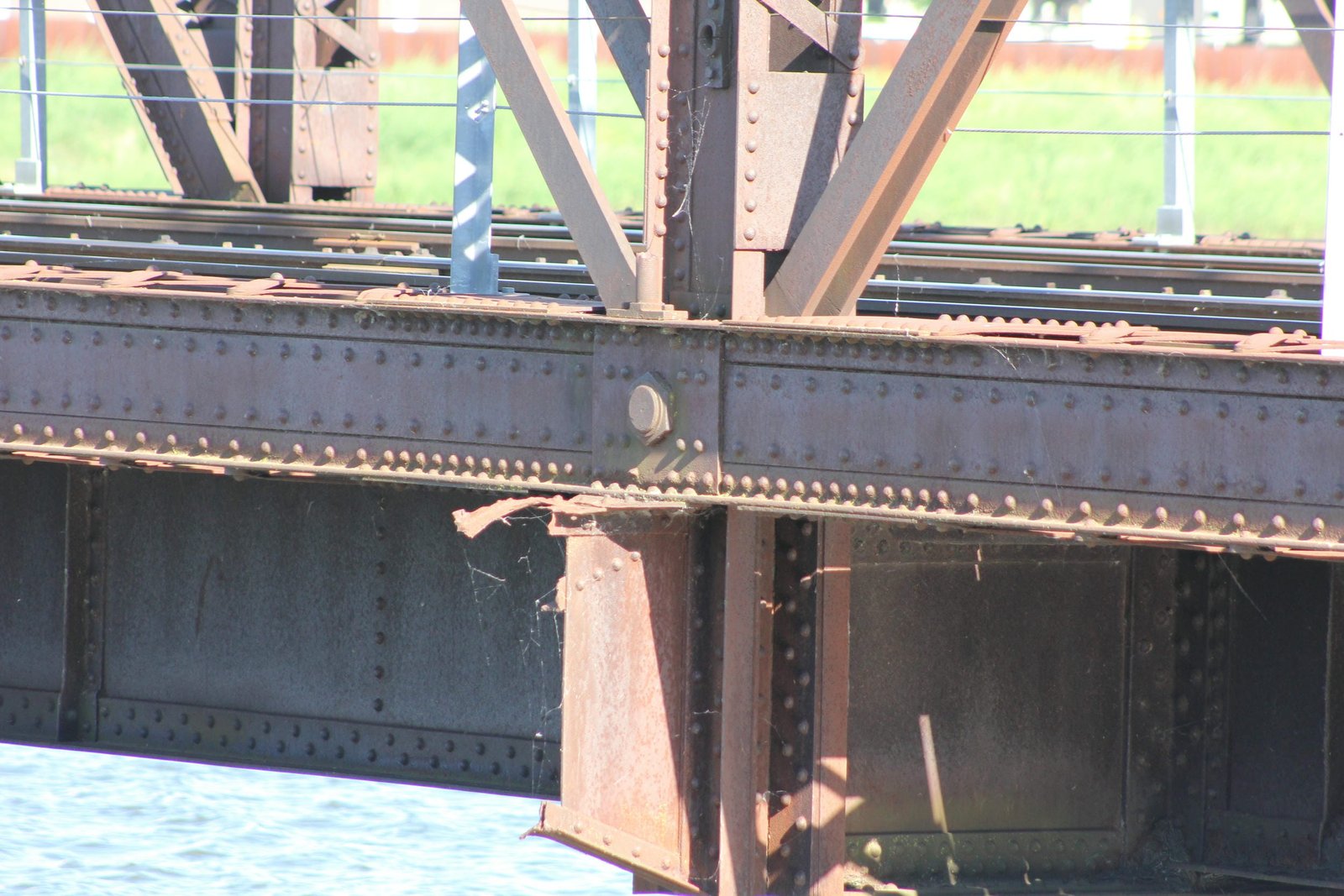
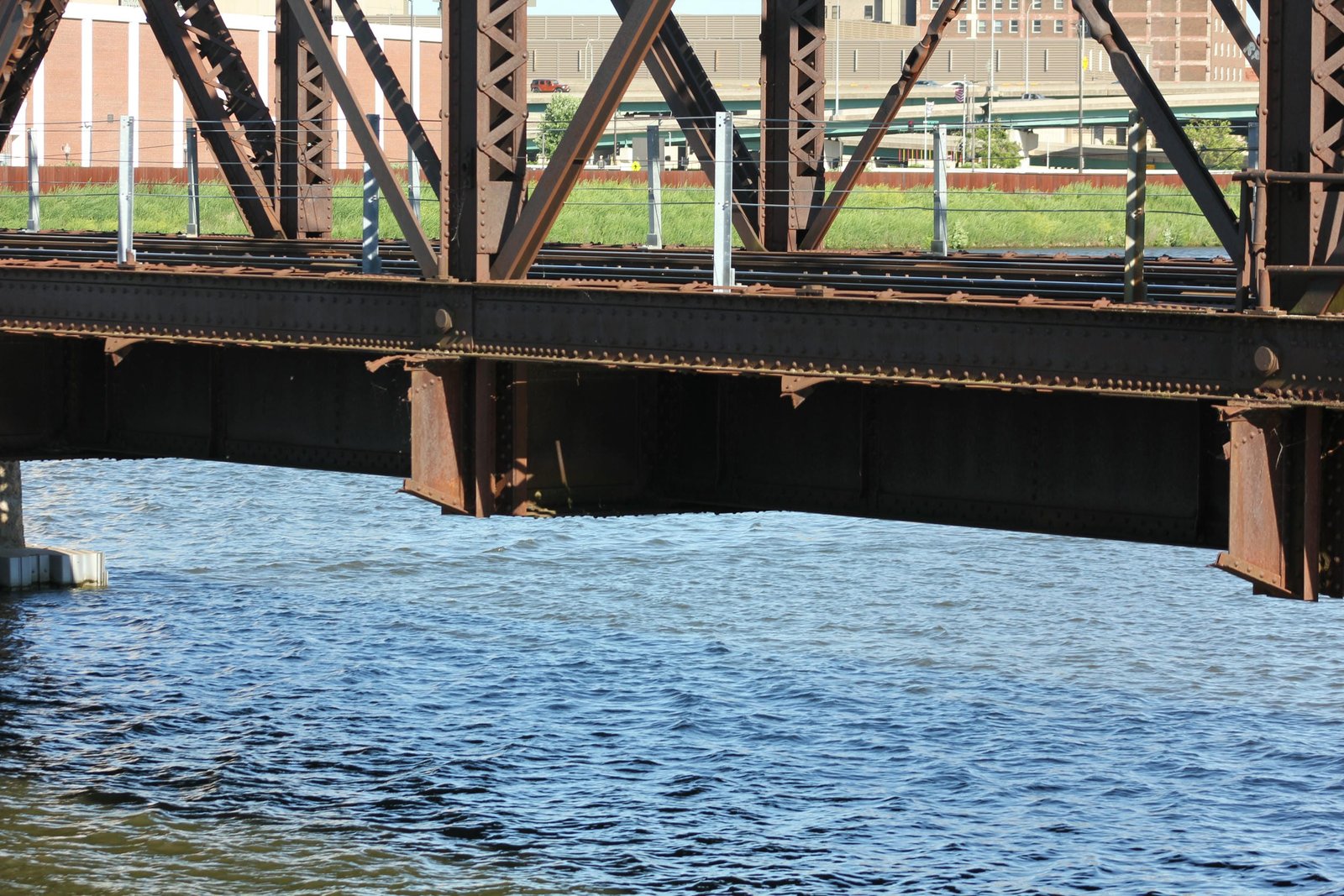
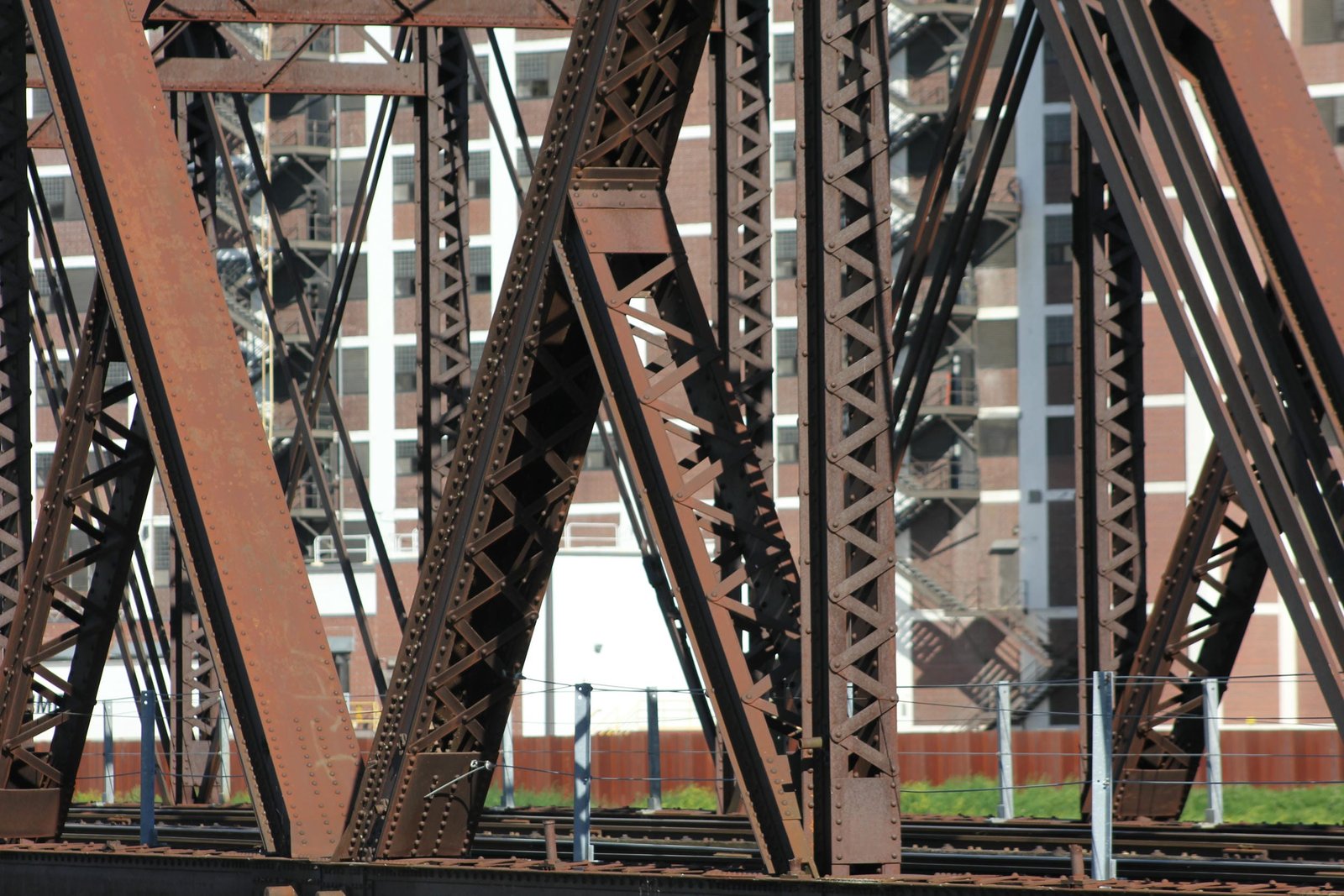
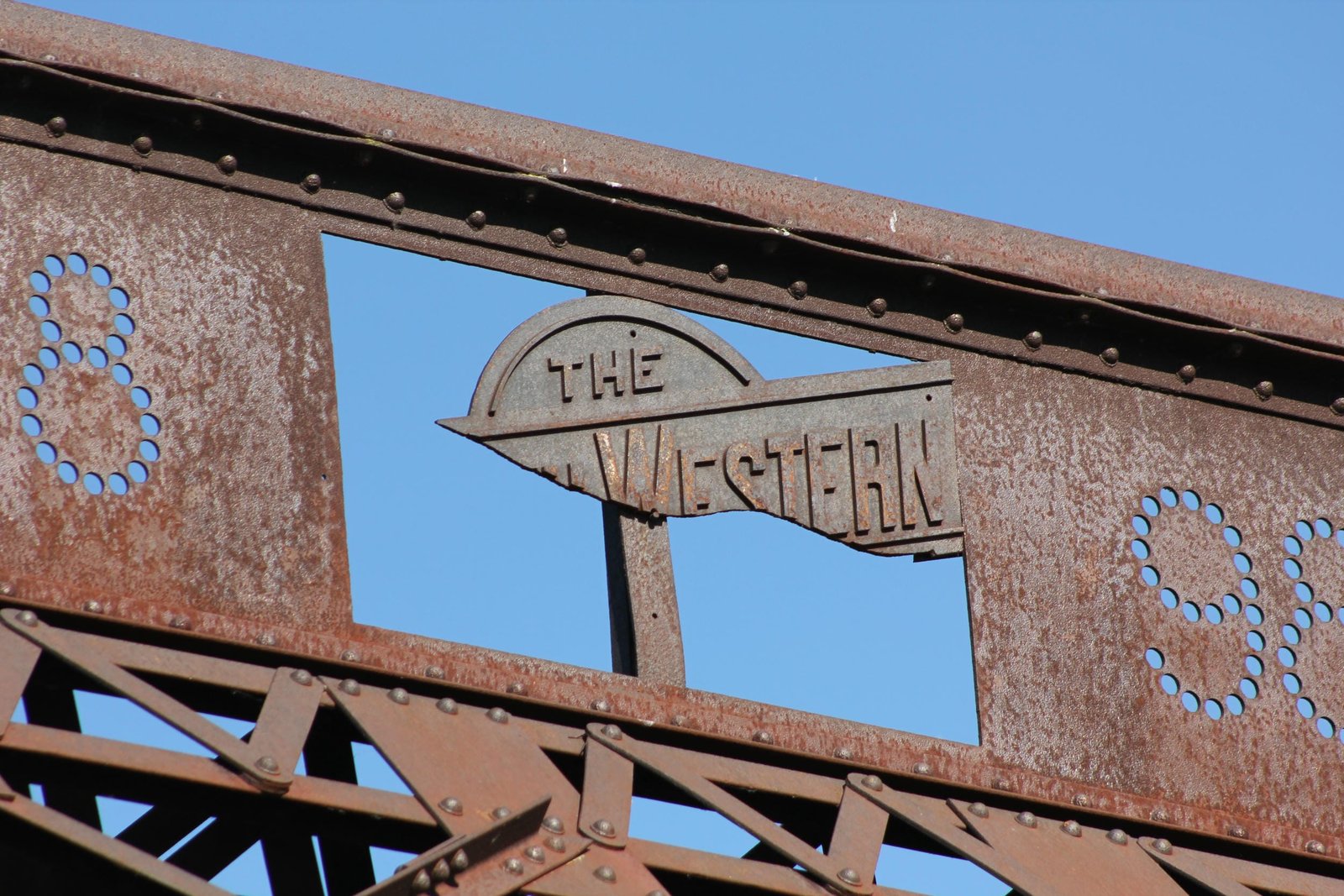
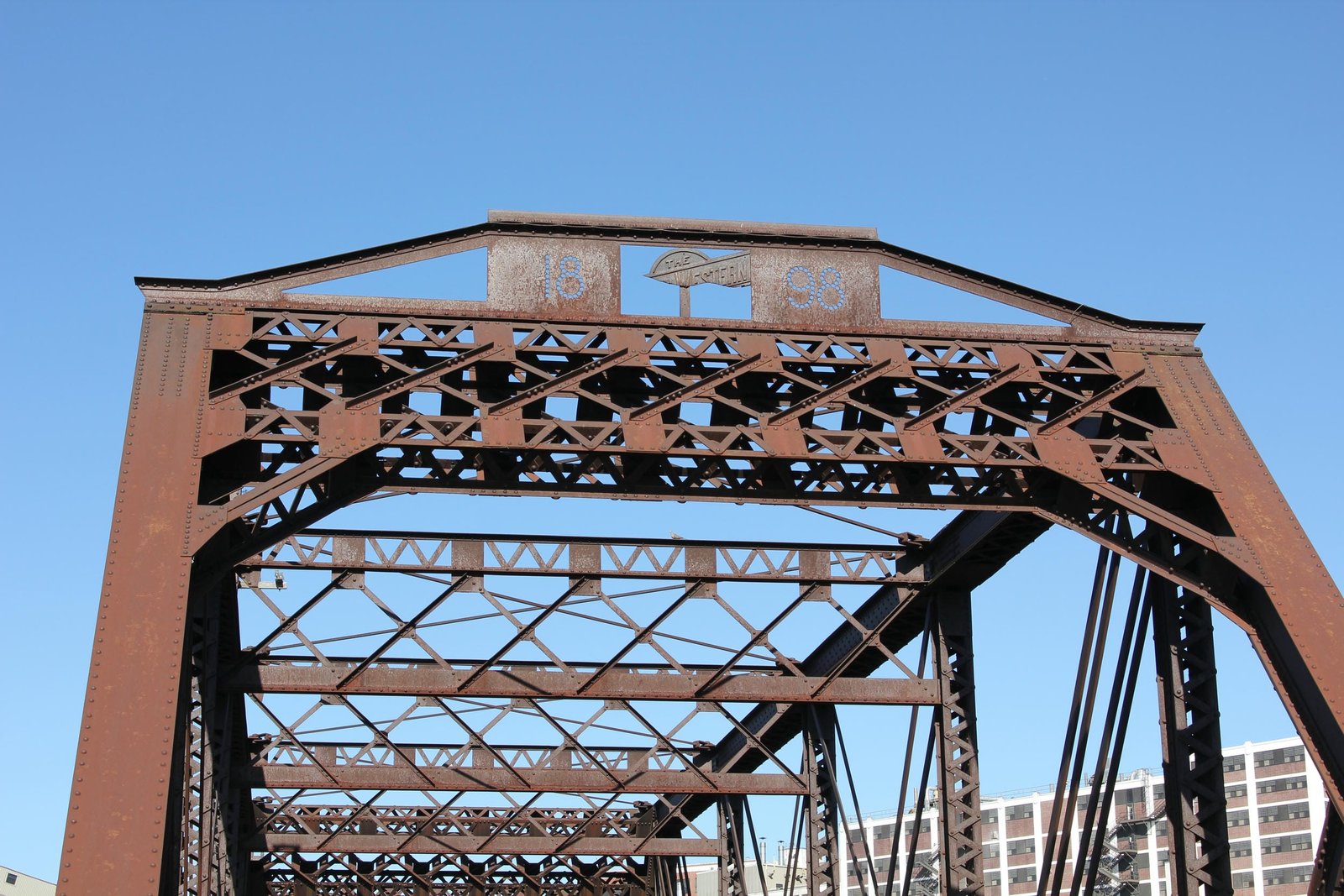
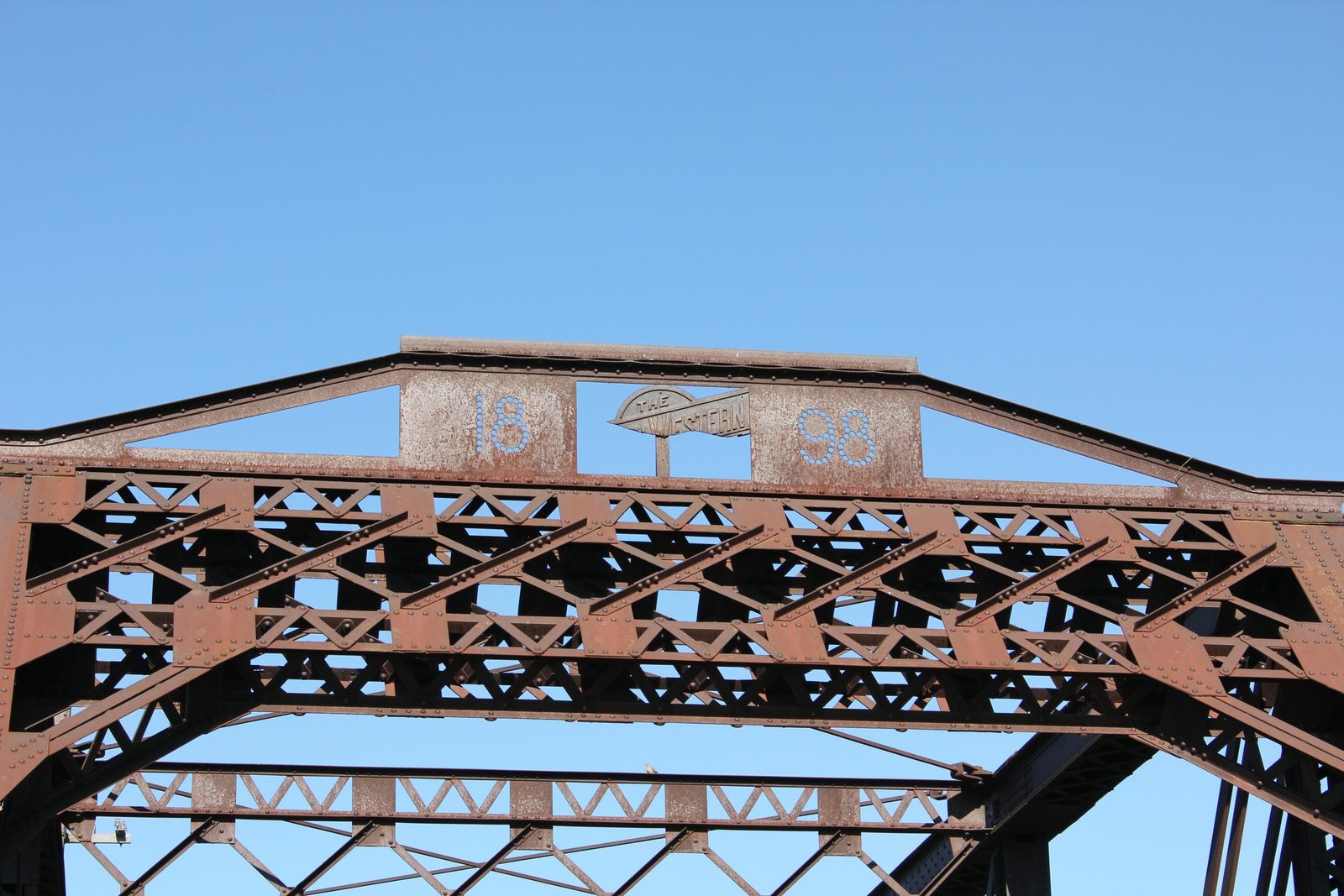
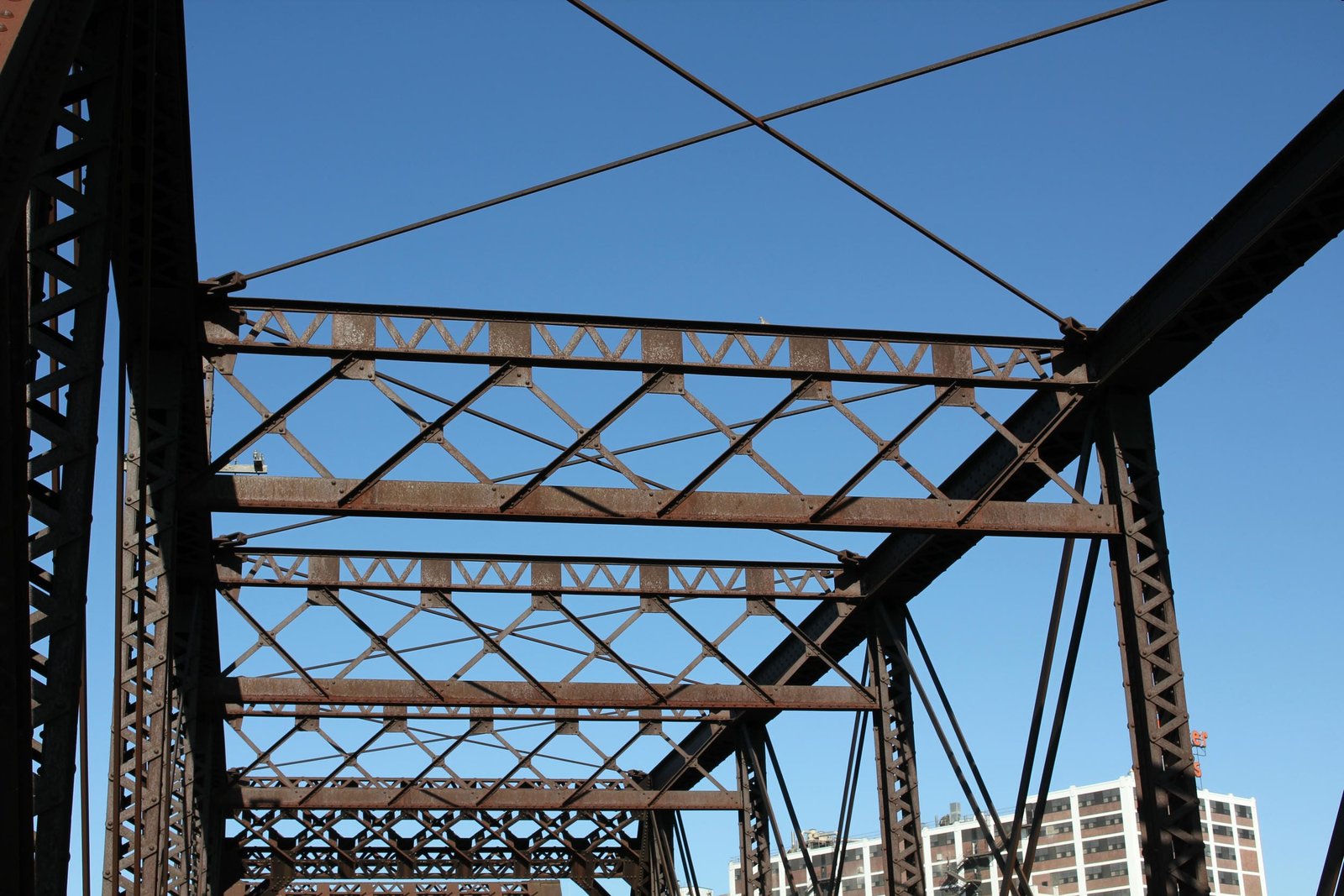
The truss spans are heavily constructed, with built-up members, a standard floor and decorative portal bracing. Both the top chord and endposts consist of heavy built-up beams, constructed from two U-shaped channels joined by a solid plate on the exterior and X-lacing on the interior. The bottom chord is also constructed of built-up beams, composed of two U-shaped channels joined by X-lacing on both sides. All vertical members use a built-up design with V-lacing on both sides, while most of the diagonal members consist of heavy eyebars. At the second and fourth panels, the eyebars are arranged into two sets of two; while the center panels use two sets of two eyebars set into different directions. In addition, the end panels use a crash bar, constructed of a heavy V-laced beam. The floor system consists of heavy plate girder floorbeams at the panel points, which are riveted to the vertical members. The tracks are each supported by two heavy plate girder stringers, which are riveted to the floorbeams. There does not appear to be any lower lateral bracing, possibly due to the depth of the floor system. The portal bracing uses an unusual crested lattice design with decorative cutouts and a decorative herald. The lower portion is composed of two sets of transverse beams, constructed with V-lacing and plates on all four sides. These beams are connected by seven sets of L-shaped bars, which form an "X" shape. The bottom transverse beam is connected to the endpost by a diagonal V-laced beam, which forms the heel bracing. Above the top transverse beam, L-shaped bars form a trapezoidal crest. Originally, the bridge was built with a cast iron "The North-Western Line" bar-and-ball herald. Each othe piers uses a standard rectangular shape with an angled upstream nose, while the abutments use a standard design with short stepped wing walls. Stone for the substructure consists of a yellow limestone, reportedly quarried at the Gustaf Widdell quarry at Mankato, Minnesota. Originally, the bridge also had a sidewalk on the north face, which was cantilevered from the floorbeams. This sidewalk was removed in the 20th Century, and the floorbeams cut as part of the removal process.
The Pratt truss design was arguably the most popular railroad truss pattern during the second half of the 20th Century. This design provided strength, durability, economy and a simple design. By the turn of the 20th Century, many railroads had begun using riveted Warren truss spans instead, as that design provided greater rigidity and strength. Unlike most railroads which preferred simple designs, the C&NW used lattice-style trusses almost exclusively between the mid-1870s and late 1920s. This design was preferred by the C&NW as it was believed to be stronger and more resilient in case of a derailment. The main drawback of lattice designs was that the pattern was statically indeterminate. It was highly unusual for a railroad to maintain a single preferred design for a 50-plus year period, especially as bridge designs evolved significantly between the 1870s and the 1920s. This bridge was one of only a few non-lattice truss spans constructed anywhere along the C&NW system during that period. Since the initial construction, the bridge has seen few significant alterations. The only major repairs to the bridge include the reinforcement of the base of the piers with sheet piling and concrete, which appears to have been completed in the early 21st Century. Today, the bridge remains in use as part of a Union Pacific Railroad industrial lead, with only the north track presently in use. While the south track remains fully intact, it was disconnected at either end in approximately 2020. Overall, the bridge appears to be in good condition, with no significant deterioration noted. The author has ranked this bridge as being regionally significant, as it is an excellent example of a large multiple-span through truss bridge.
Citations
| Build date | Portal cutout |
| Builders (superstructure and substructure) | The Cedar Rapids Evening Gazette; September 15, 1898 |
| Railroad History Citation | ICC Valuation Information, Compiled by Richard S. Steele |