
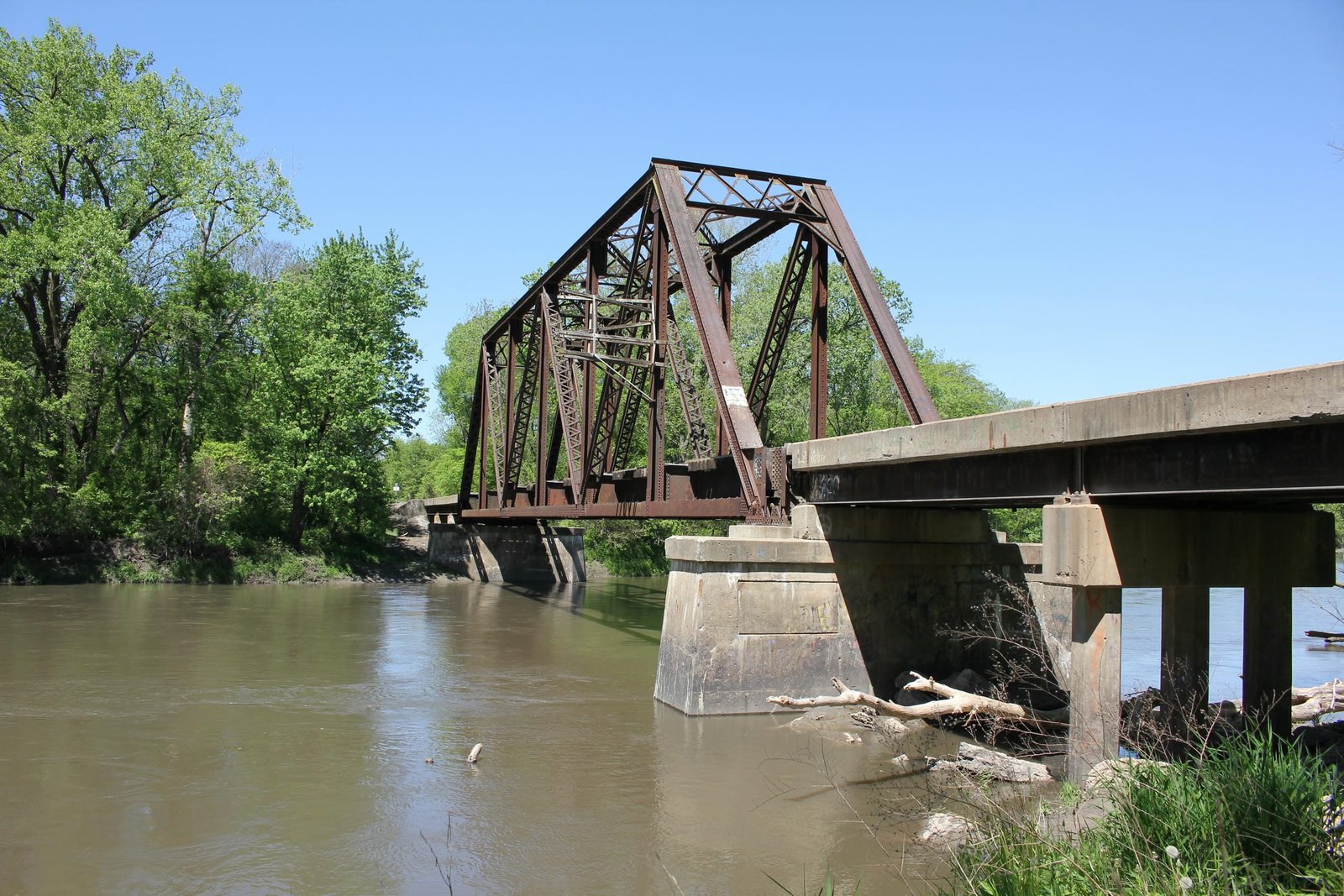
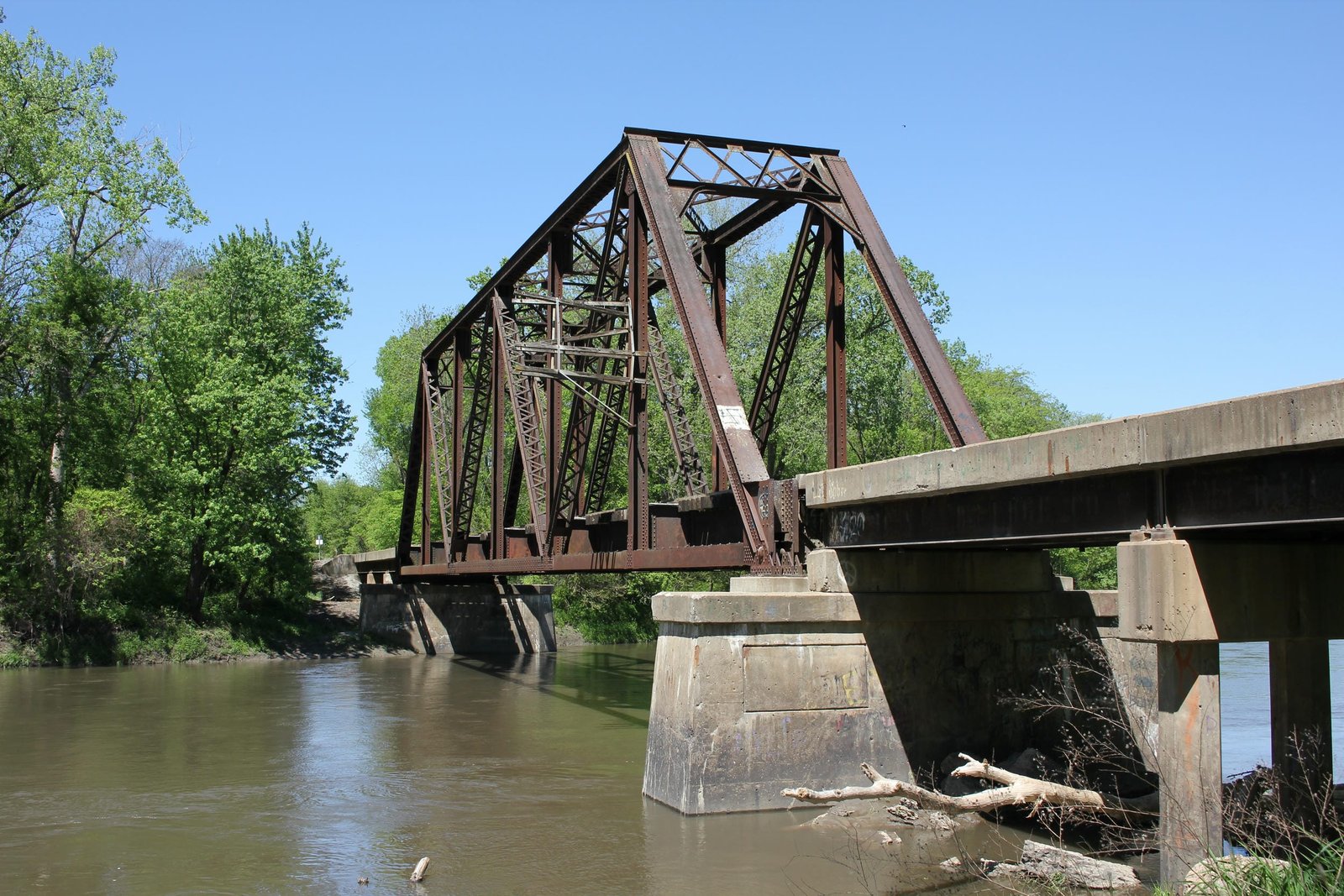
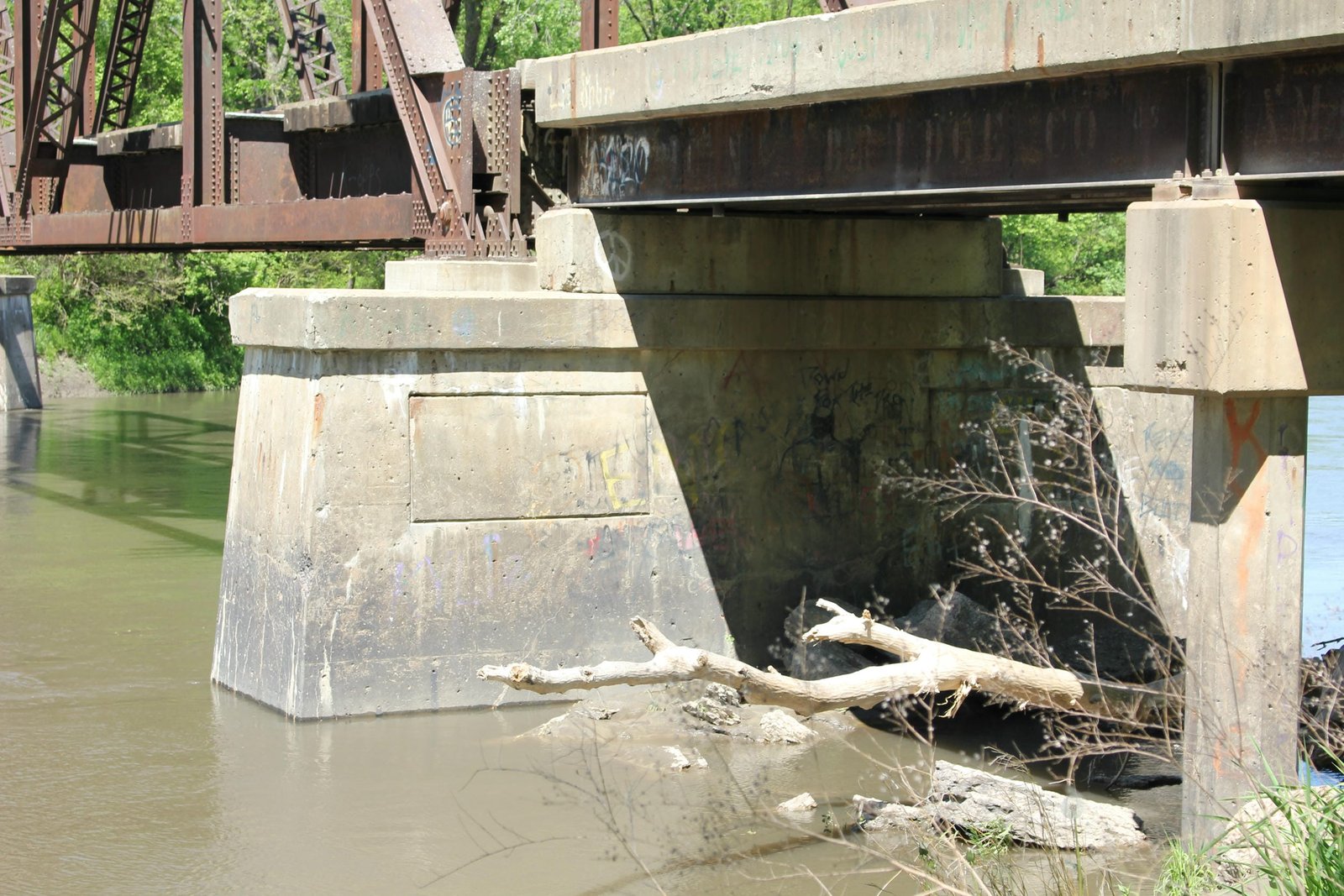
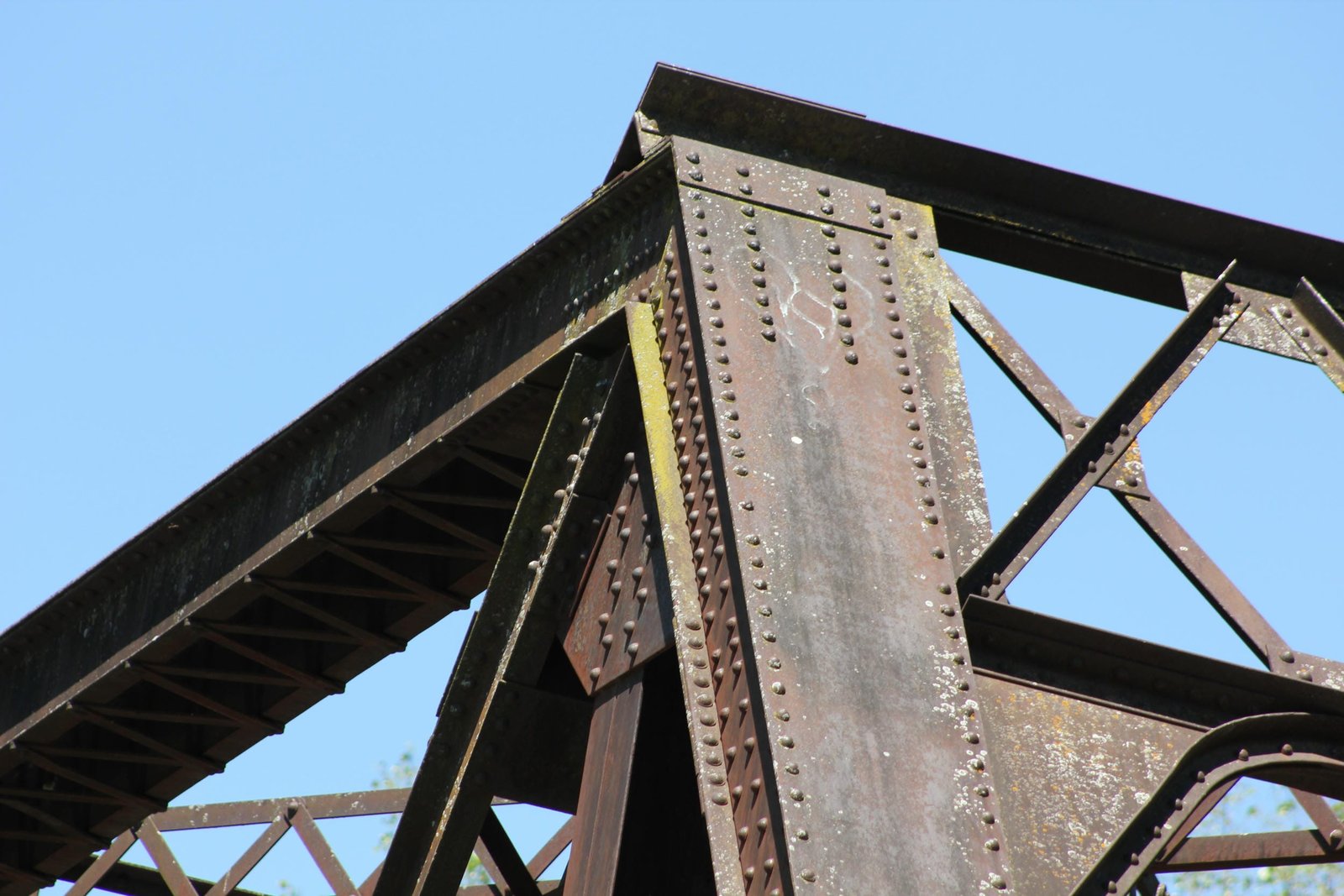
Click the photo to view the full-size version
| Name | IAIS South Skunk River Bridge Chicago, Rock Island & Pacific Railroad Bridge #3292 |
| Built By | Chicago, Rock Island & Pacific Railroad |
| Currently Owned By | Iowa Interstate Railroad |
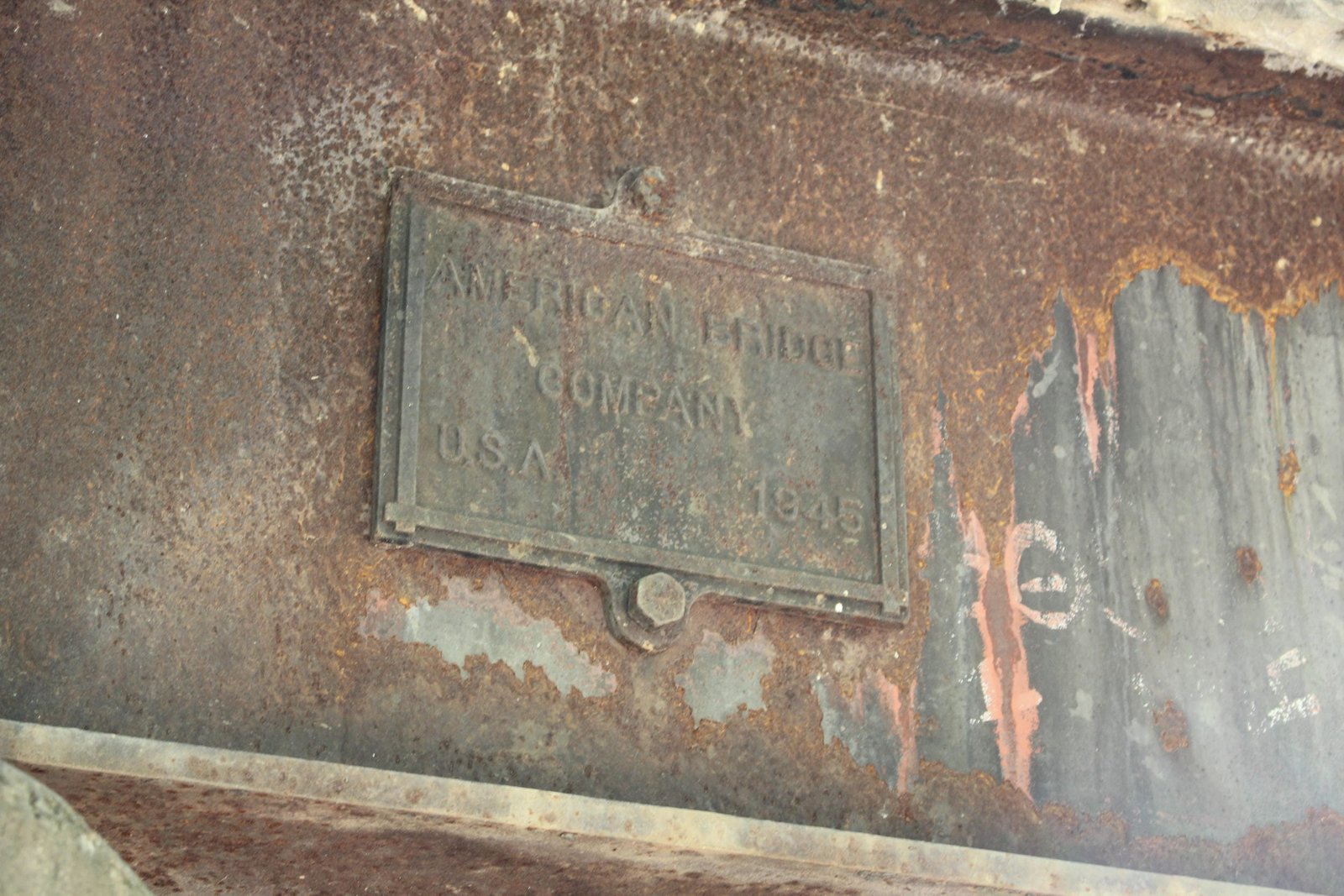
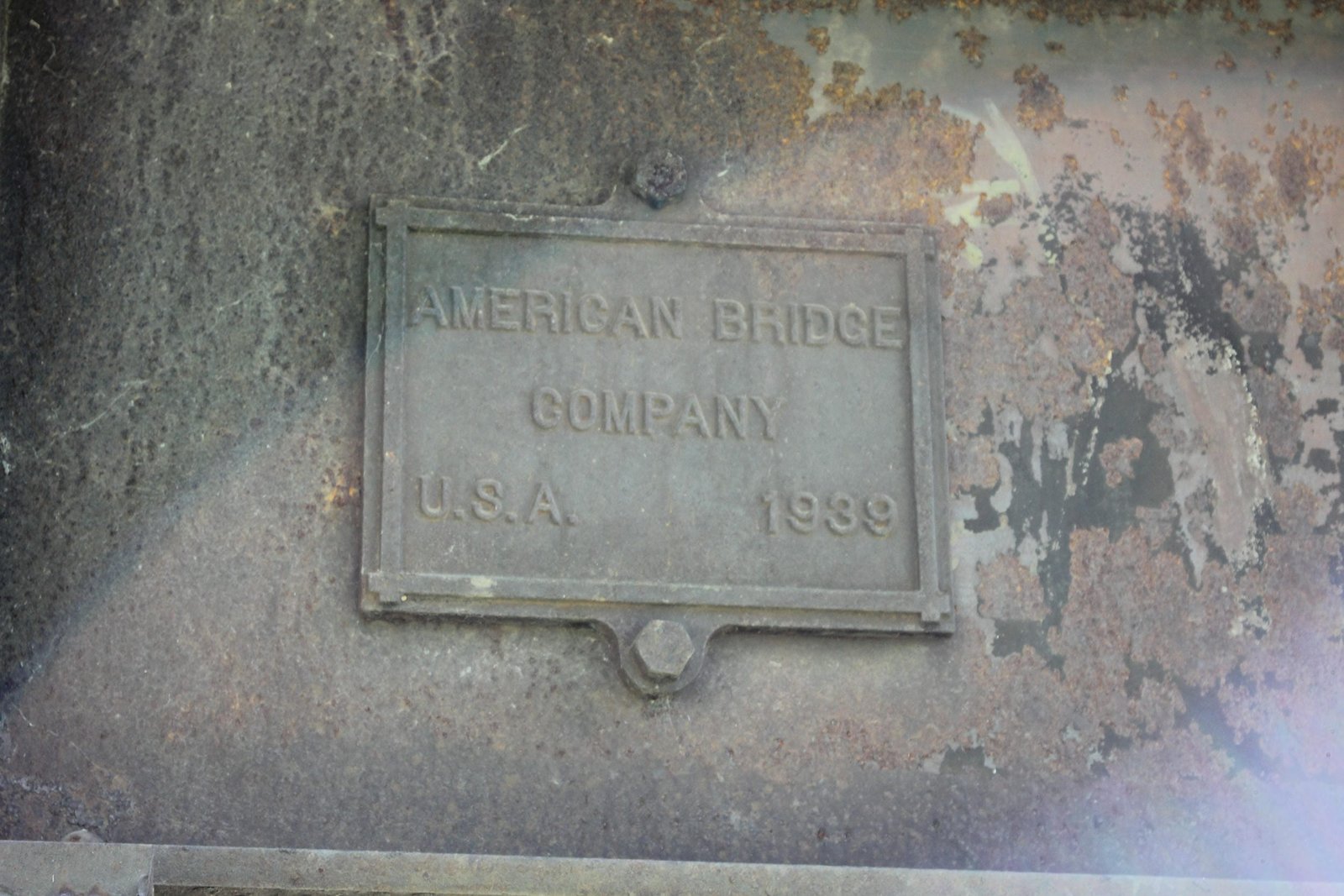
| Superstructure Contractor | American Bridge Company of New York |
| Substructure Contractor | Gould Construction Company of Davenport, Iowa (Piers #2-#8 and West Abutment) Unknown (Pier #1 and East Abutment) |
| Length | 380 Feet Total, 155 Foot Main Span |
| Width | 1 Track |
| Height Above Ground | 15 Feet (Estimated) |
| Superstructure Design | Warren Through Truss and Steel Stringer |
| Substructure Design | Concrete and Concrete Pile |
| Date Fabricated | c. 1905 (Truss Span) 1939 (Spans #3-#5 and West Approach) 1945 (Spans #1 and #2) |
| Date Erected | 1939 (Truss Span, Spans #3-#5 and West Approach) 1945 (Spans #1 and #2) |
| Original Location | Unknown |
| Traffic Count | 5 Trains/Day (Estimated) |
| Current Status | In Use |
| Chicago, Rock Island & Pacific Railroad Bridge Number | 3292 |
| Iowa Interstate Railroad Bridge Number | 329.20 |
| Significance | Moderate Significance |
| Documentation Date | 6/30/2013; 5/12/2017 |
In 1856, the Mississippi and Missouri Rail Road Company (M&M) constructed 55 miles of new railroad, extending from Davenport, Iowa to Iowa City, Iowa. As part of the work, a wooden bridge was constructed across the Mississippi River, connecting Rock Island, Illinois and Davenport. In 1862, the line was extended an additional 31 miles to Marengo, Iowa; followed by an additional 20 miles to Brooklyn, Iowa in 1863 and 26 miles to Kellogg, Iowa in 1864. In 1866, the M&M and the Chicago and Rock Island Rail Road Company (C&RI) merged to form the Chicago, Rock Island & Pacific Railroad (Rock Island), which constructed an additional 44 miles to Des Moines, Iowa in 1867. In 1869, the line would continue to be extended west towards the Missouri River. At Davenport, this line connected to an existing Rock Island line, which extended east to Chicago, Illinois. In 1880, the Rock Island was reorganized as the Chicago, Rock Island & Pacific Railway. The Rock Island constructed and acquired a large network of railroads, primarily in Iowa during the late 1880s. This line became part of the principal mainline of the Rock Island, and allowed for further development of branch lines throughout central Iowa and eventual expansion west of the Missouri River.
In the late 19th Century, several improvements were made to the line, including revising grades, curves and replacing wooden bridges with stone and iron structures. Due to heavy traffic over this line, portions of the line between Davenport and West Liberty was double tracked in the late 1890s. The Rock Island struggled financially throughout much of its history, experiencing repeated bankruptcies and chronic instability. After World War II, the Rock Island struggled to survive, proposing mergers and deferring maintenance on their routes. The railroad reorganized as the Chicago, Rock Island & Pacific Railroad in 1948. By the mid-1970s, the railroad was in serious decline. The railroad secured loans to eliminate slow orders, acquired new equipment, and attempted to restore profitability. Several sections of this line had fallen into serious disrepair, hampering the Rock Islands ability to maintain efficient operations. In 1978, the railroad came close to profit, but creditors were lobbying for a complete shutdown of the Rock Island. During the fall of 1979, a strike crippled the railroad, and by January of 1980, the entire system was ordered to be shut down and liquidated. Many of the lines and equipment were scrapped. Profitable sections of railroad were prepared for sale.
In November 1981, the Iowa Railroad Company (IARR) began operations over the former Rock Island mainline in western Iowa. In June 1982, the IARR entered into a two-year lease for the entire Rock Island mainline between Bureau, Illinois and Council Bluffs, Iowa; including the Davenport to Des Moines section. In 1983, concerns had grown over the ability of the IARR to provide reliable service to shippers along the line, and several industries came together to form Heartland Rail Corporation, which purchased the line between Bureau and Council Bluffs from the Rock Island trustees. Iowa Interstate Railroad (IAIS) was chosen to operate the line, and began operations in late 1984. After years of thin profit margins, IAIS began making significant financial strides in the 1990s and early 2000s, eventually becoming a major railroad in central Iowa. Increased profit margins and large grants meant IAIS could rebuild deteriorated track, improve bridges and expand operations. Today, IAIS continues to operate the Iowa City Subdivision between Davenport and South Amana, as well as the Newton Subdivision between South Amana and Des Moines.
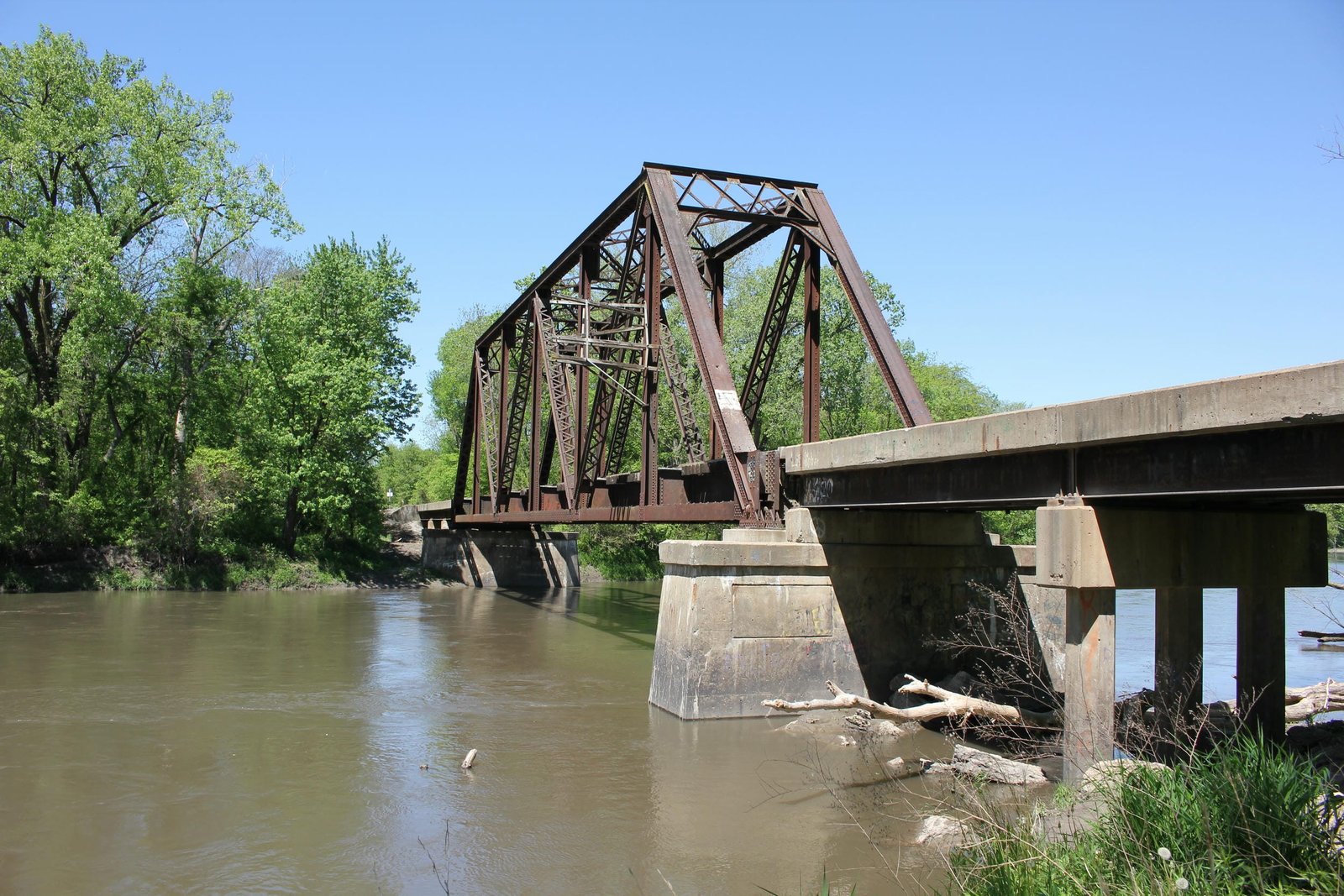
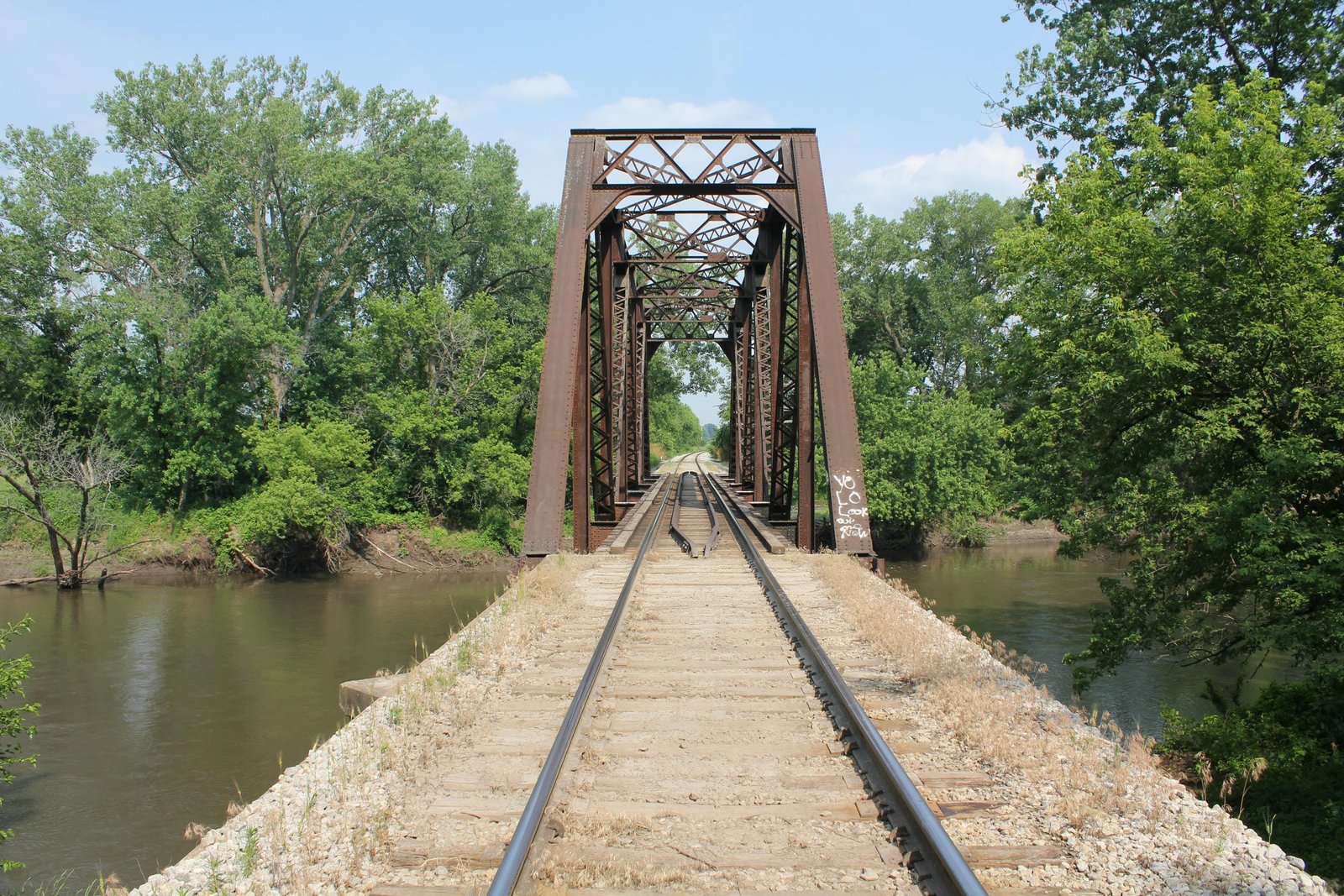
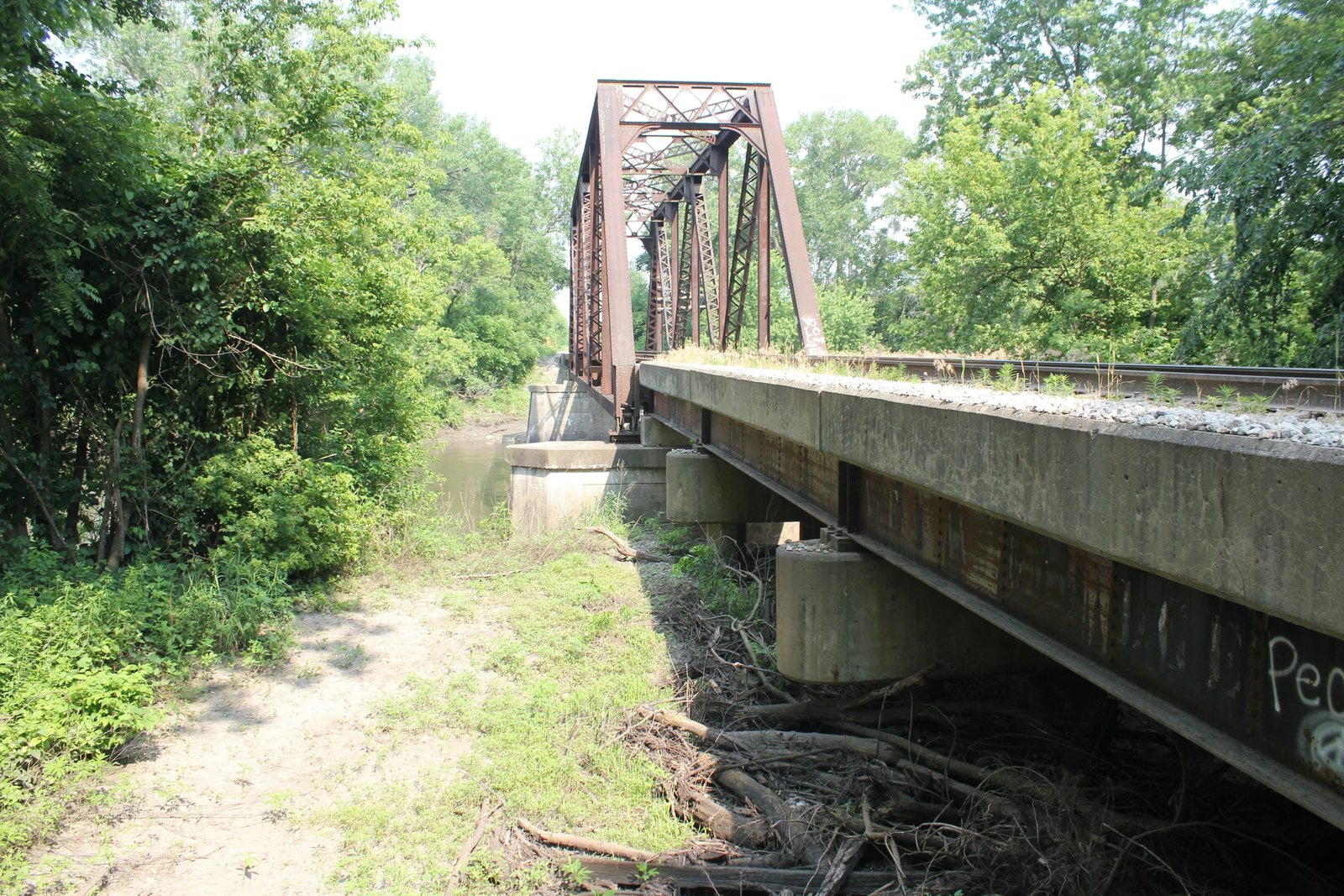
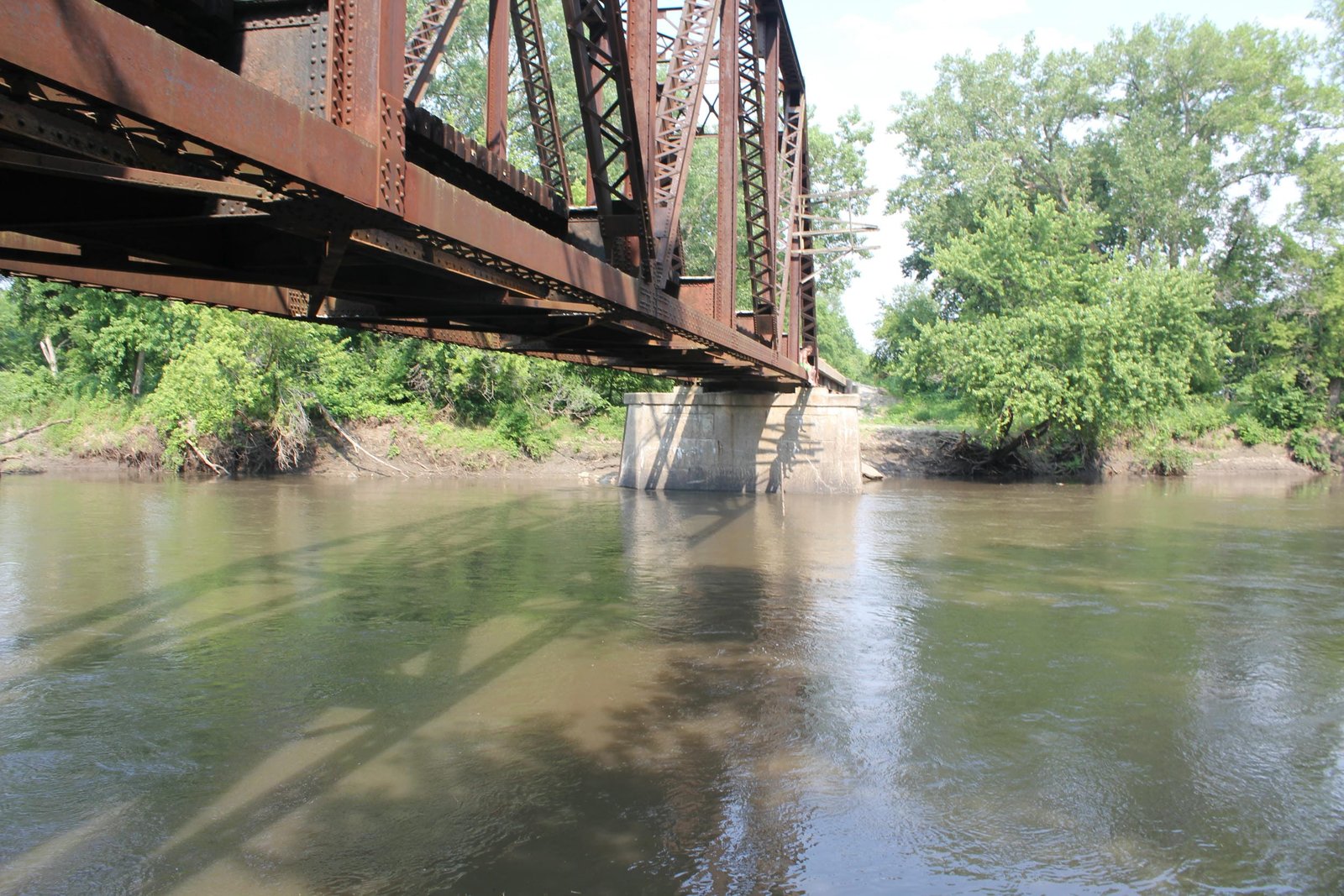
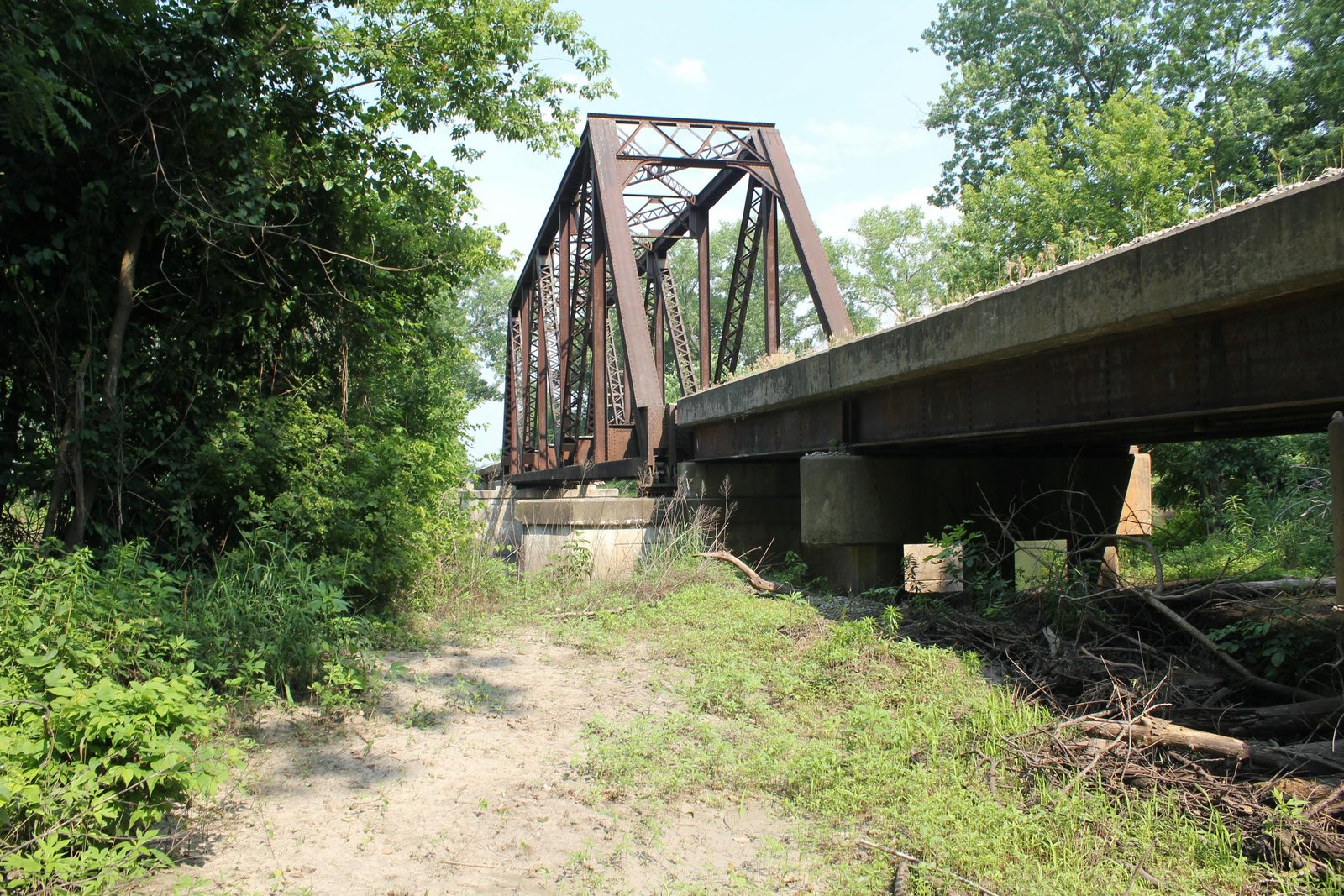
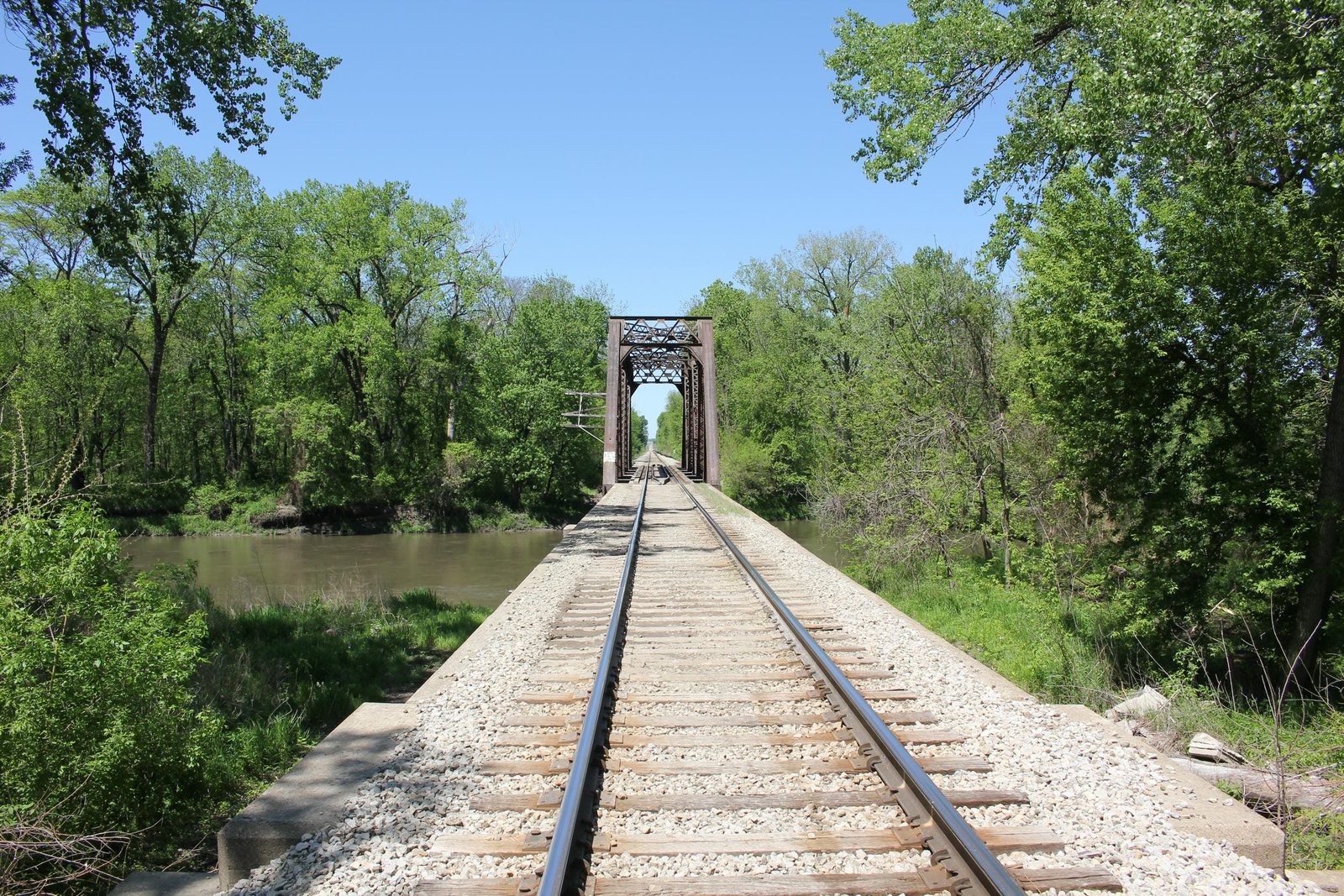
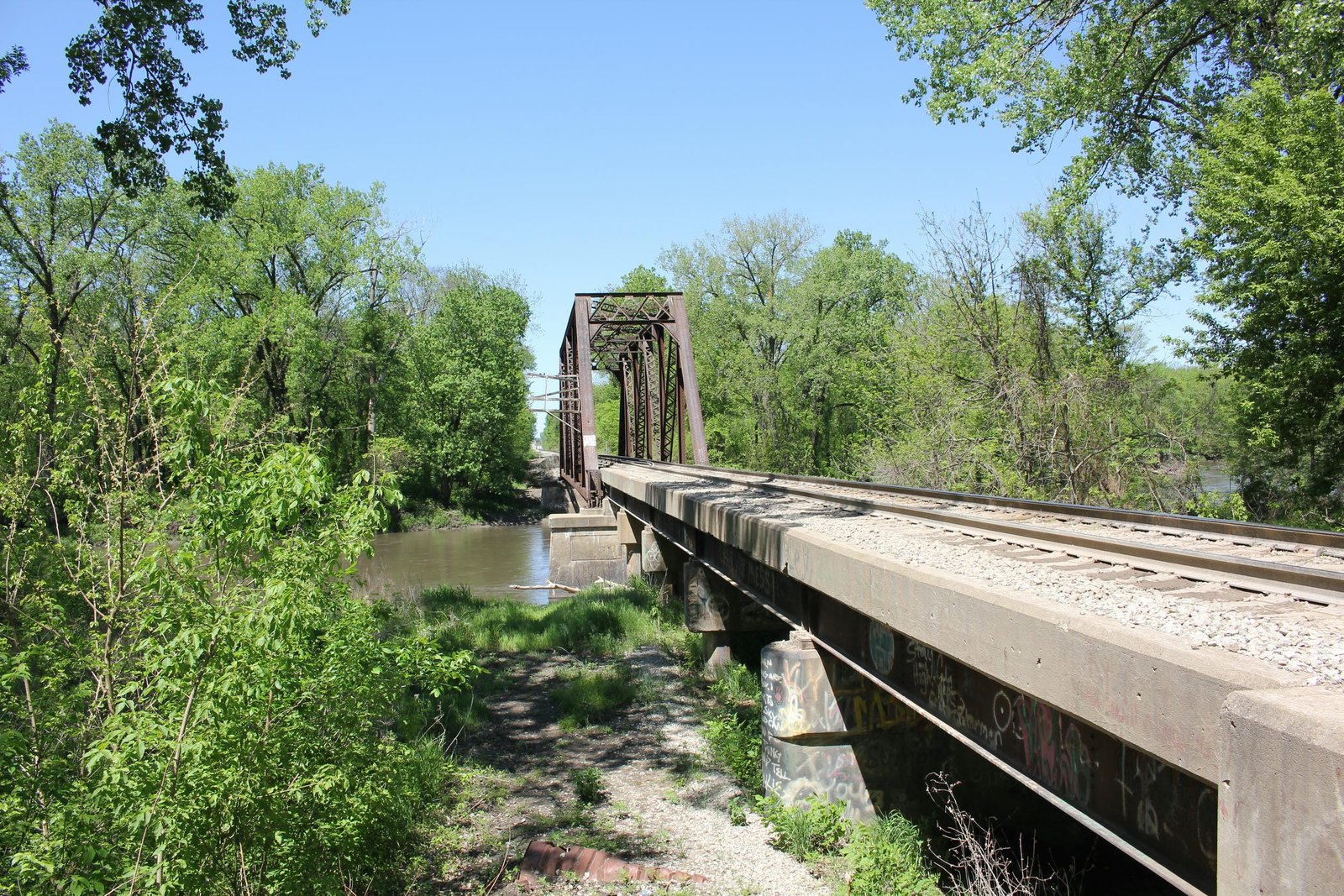
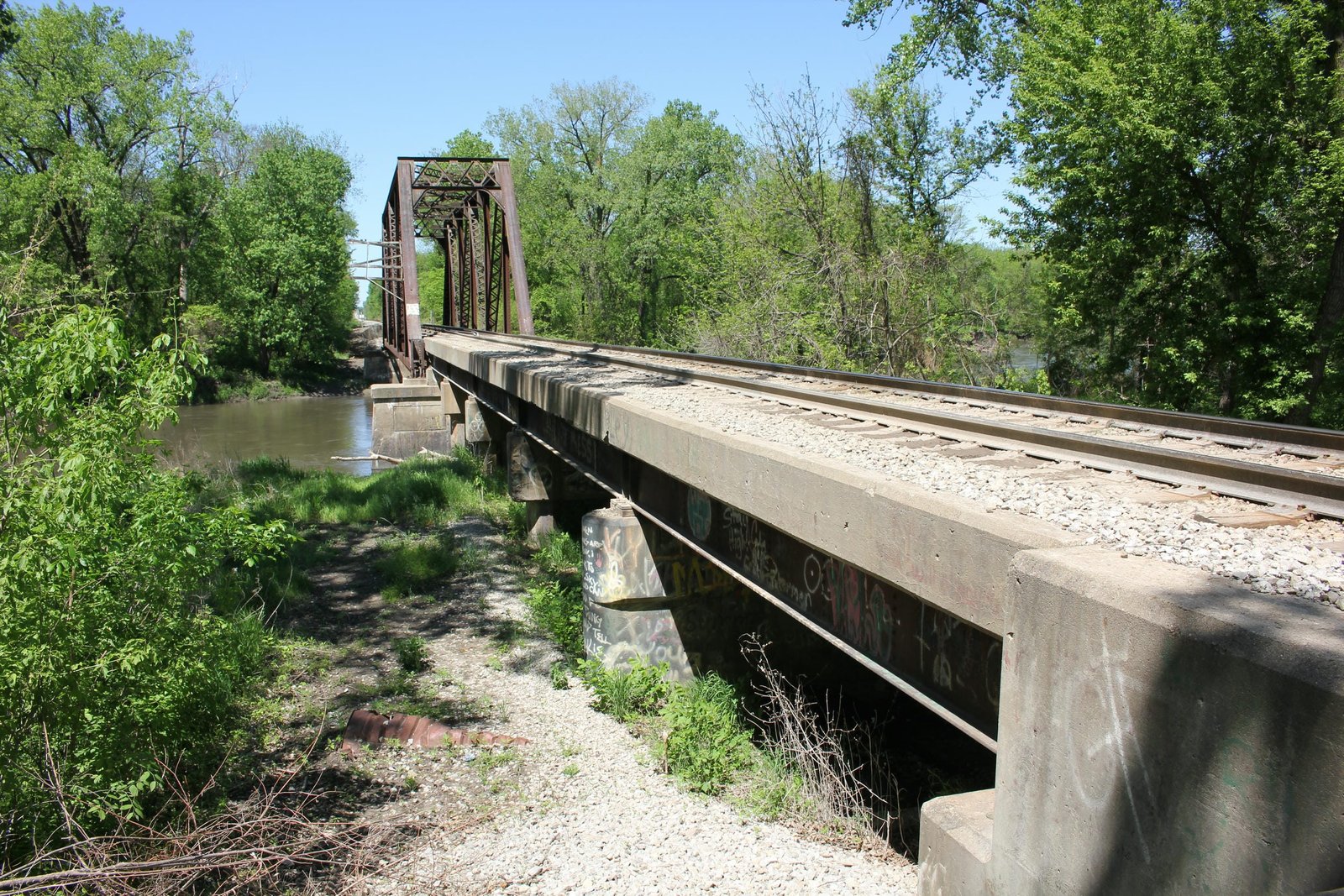
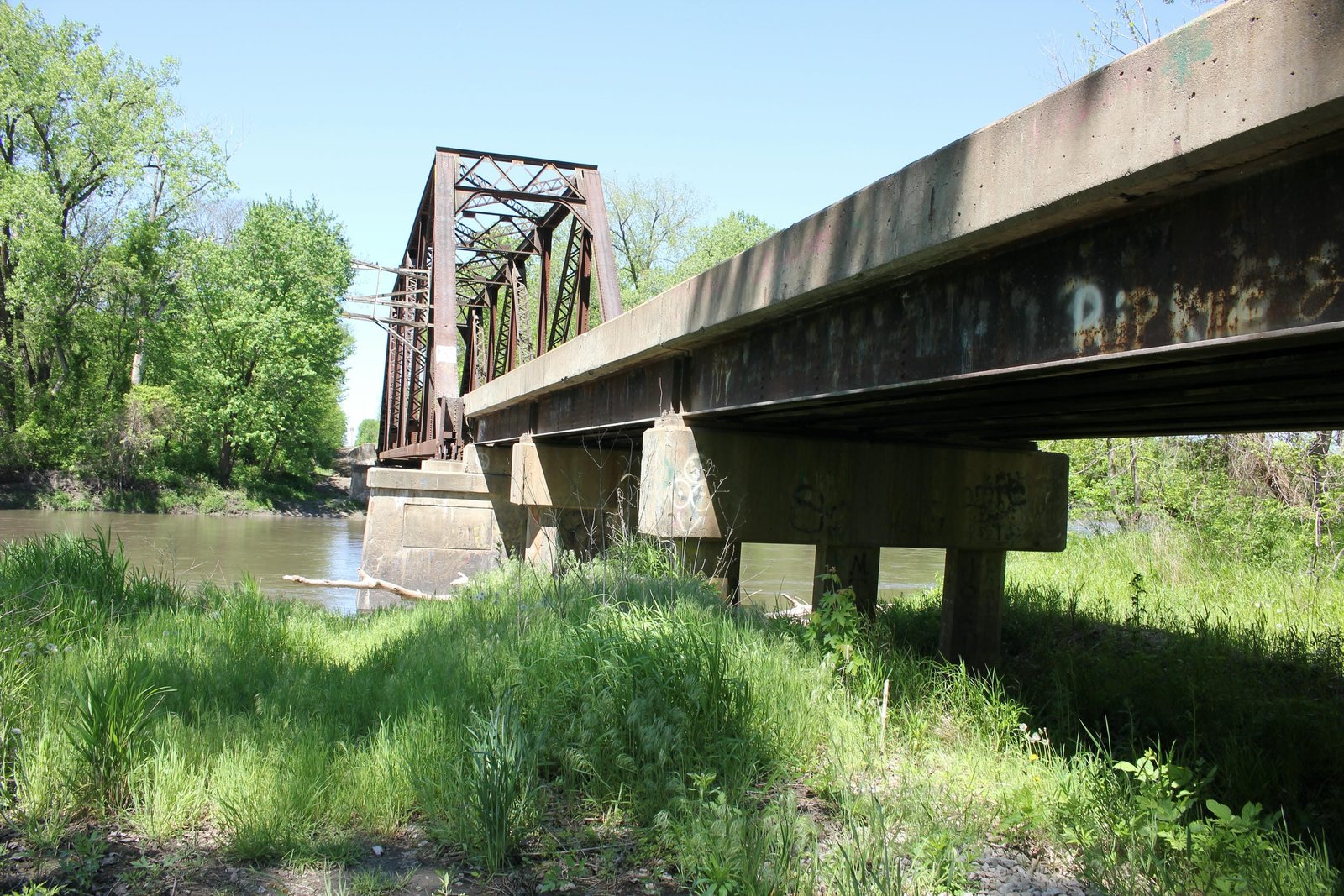
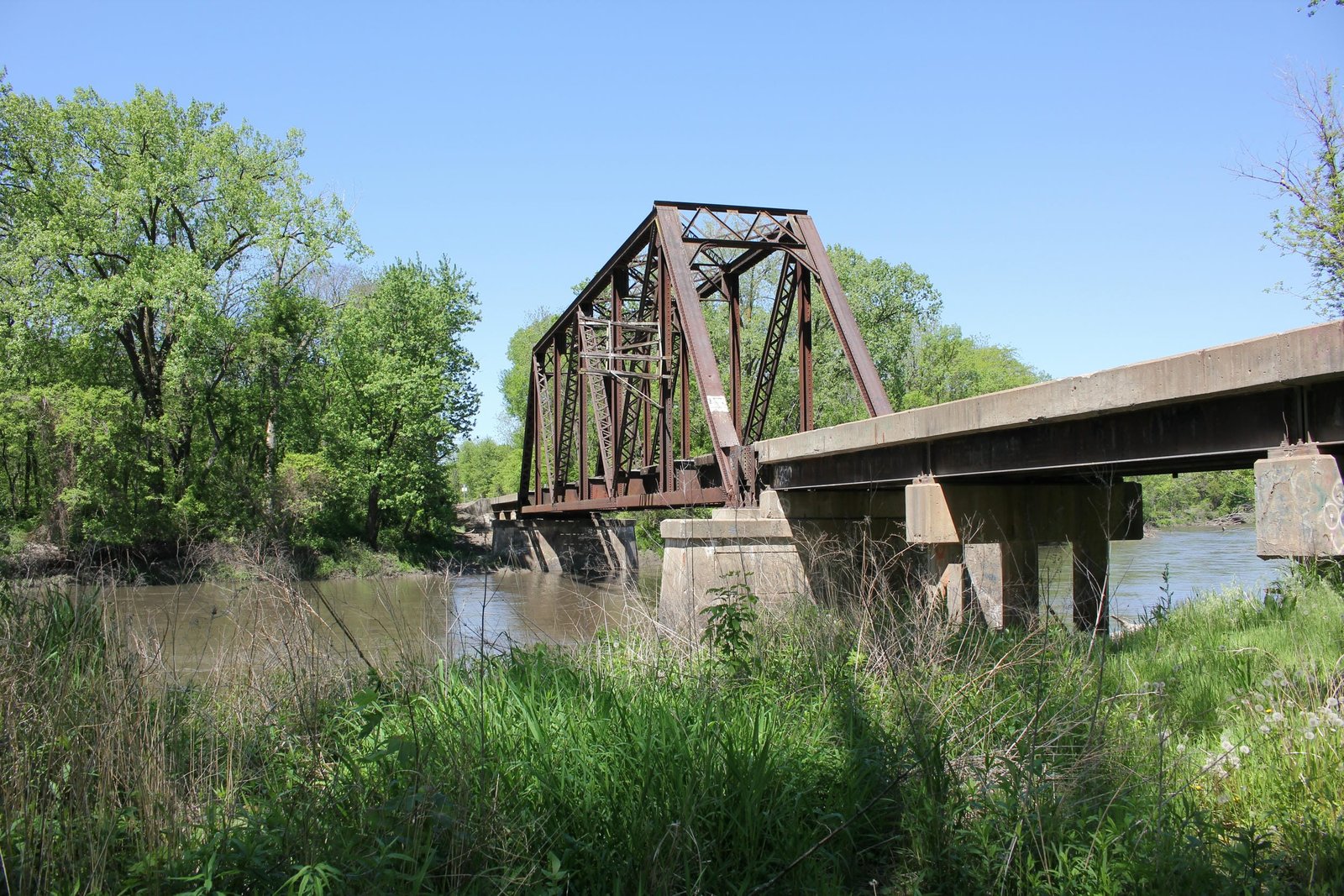
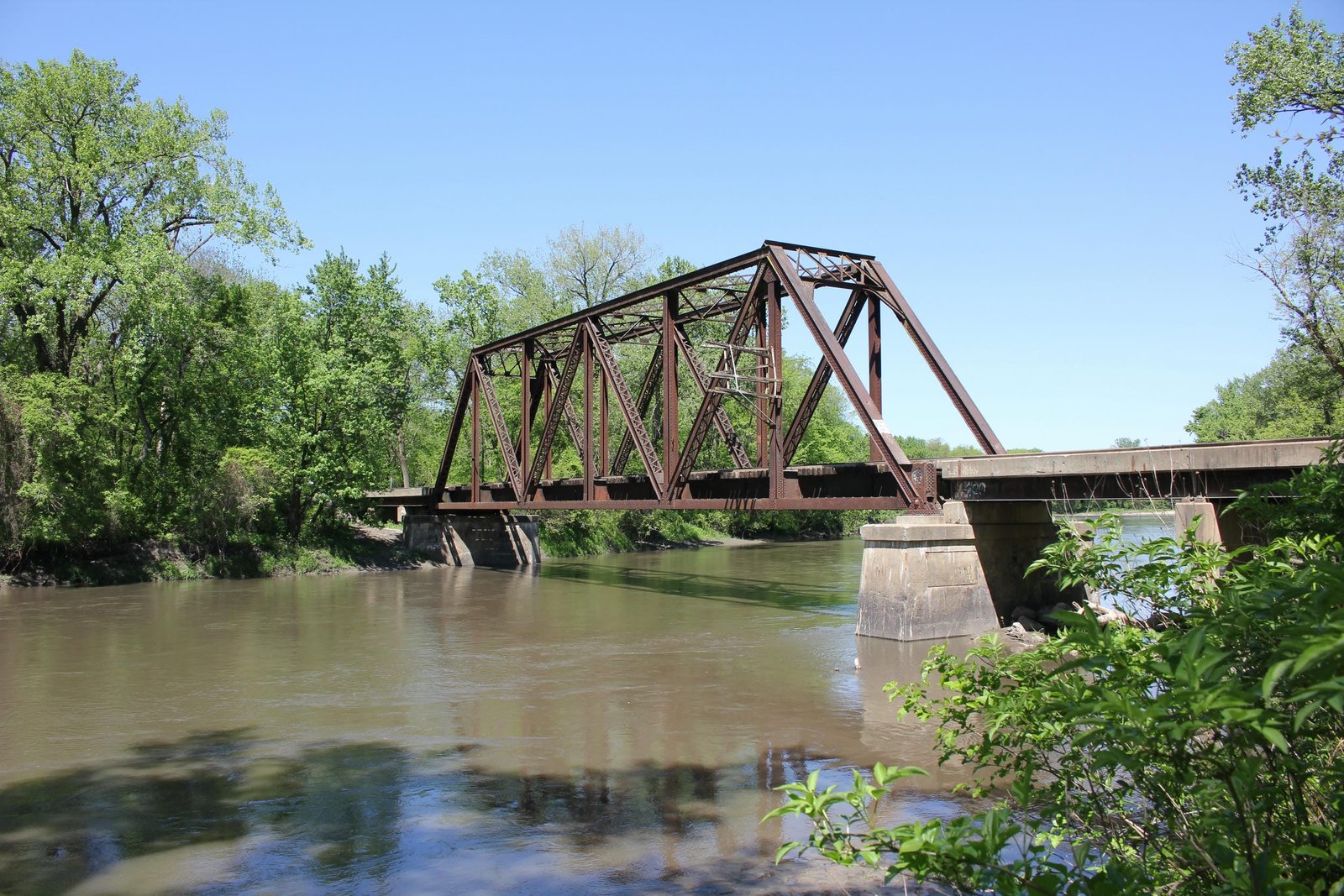
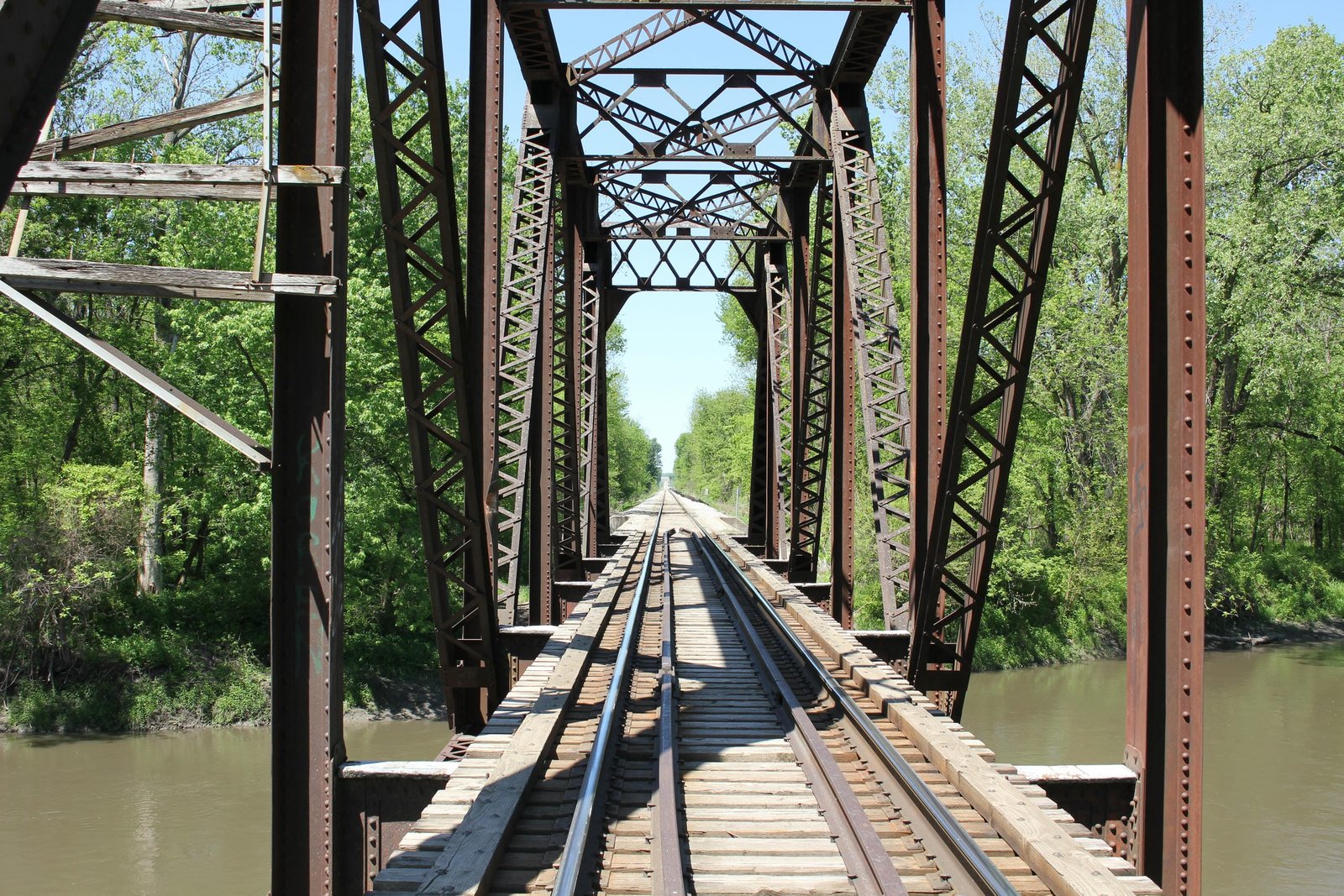
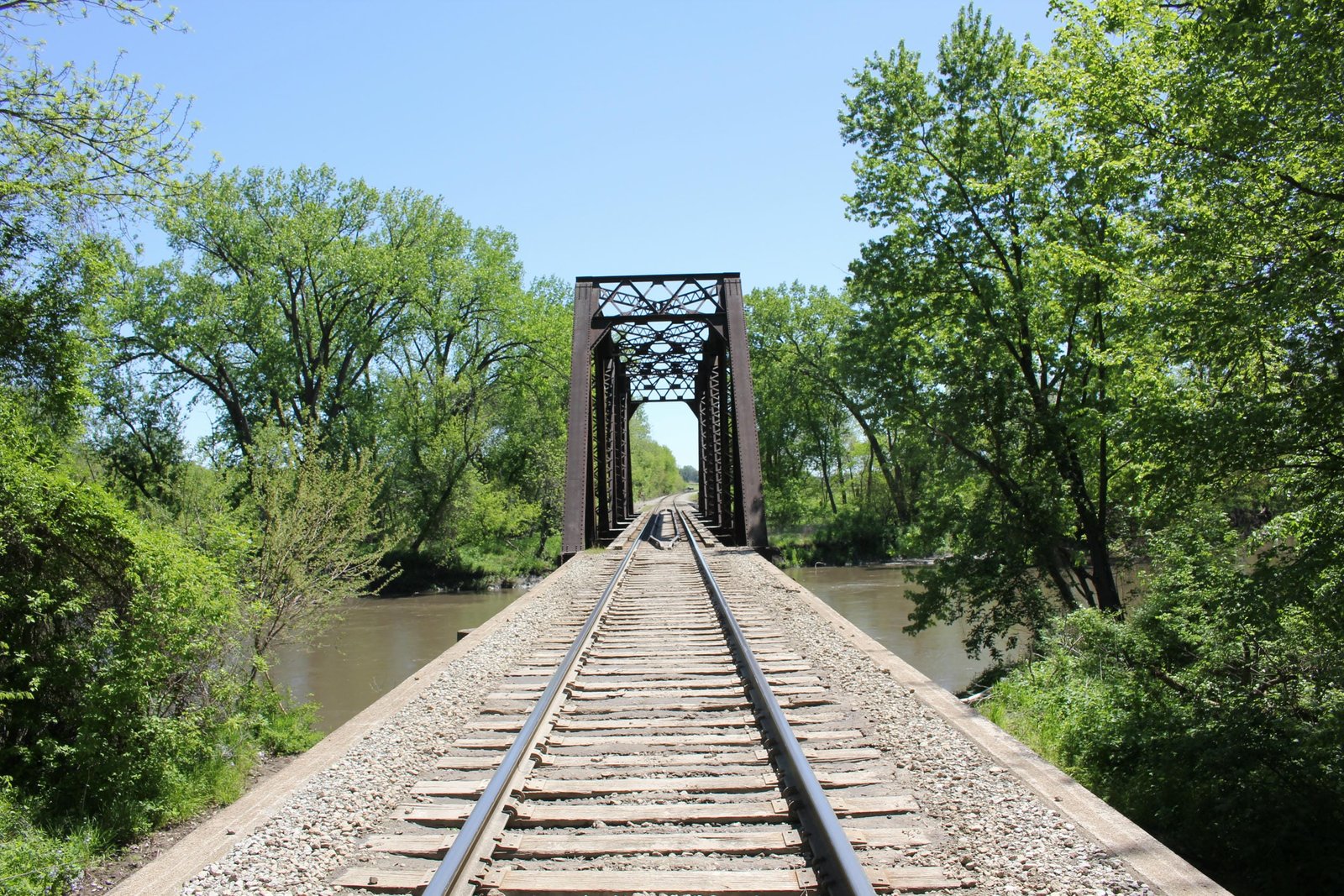
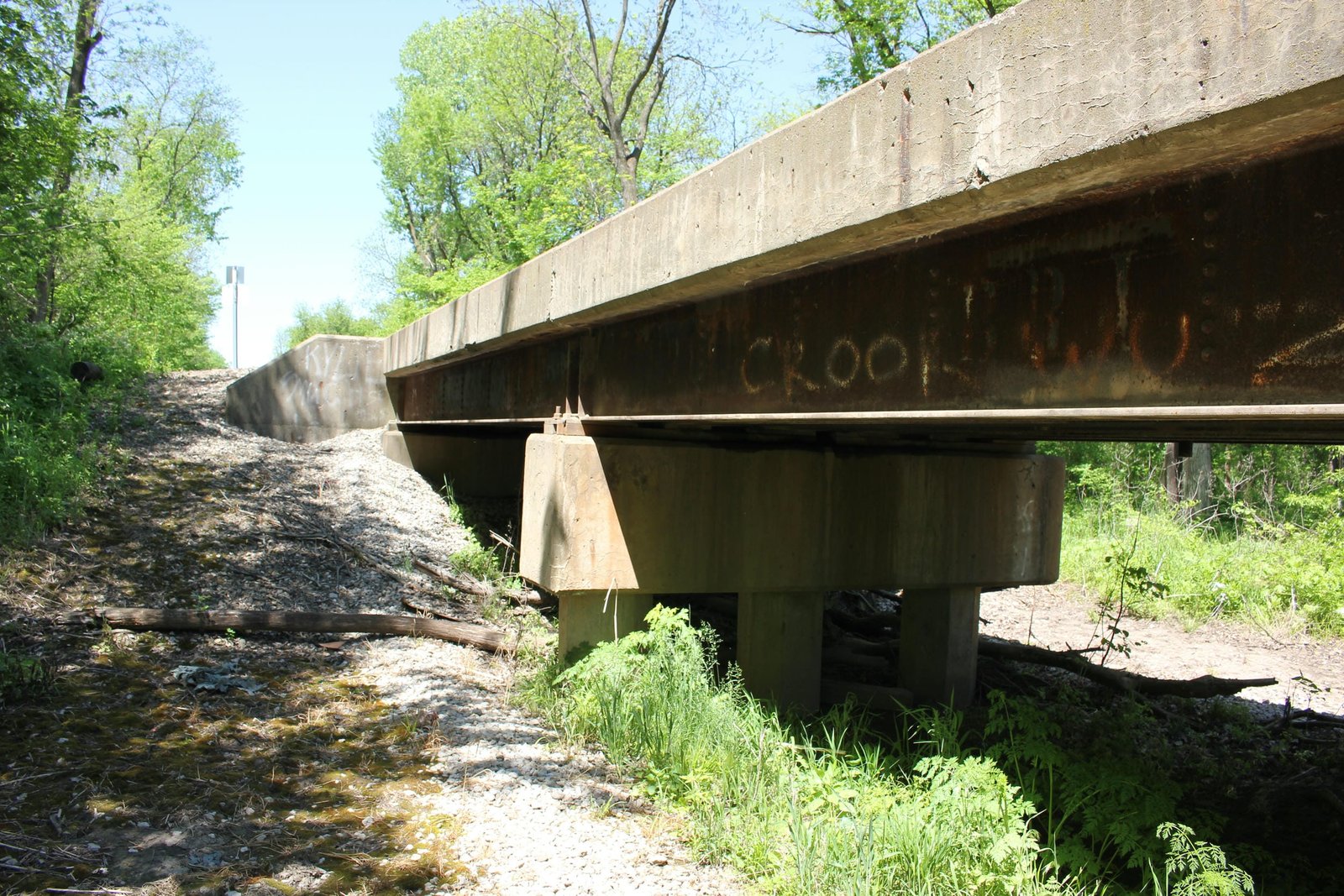
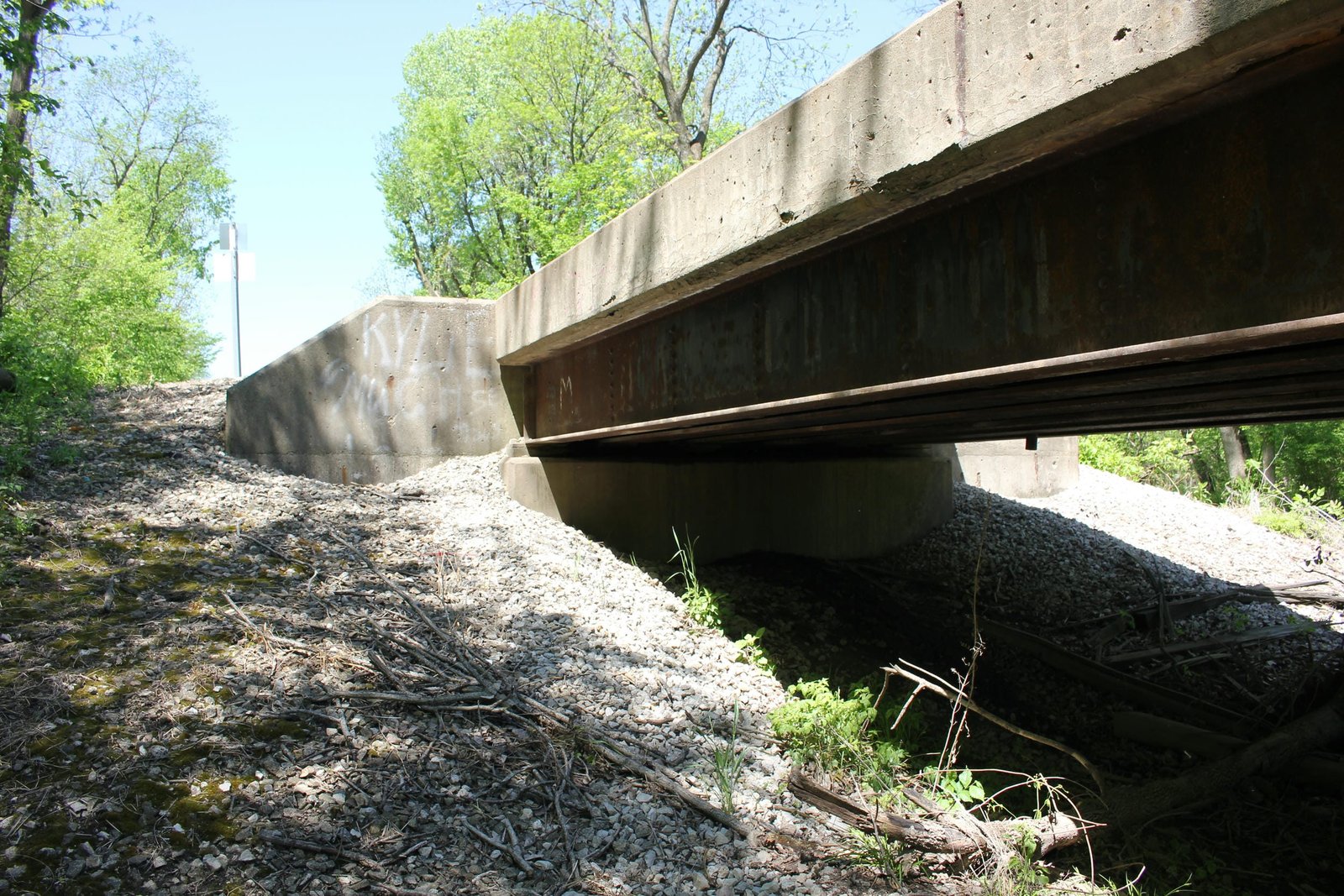
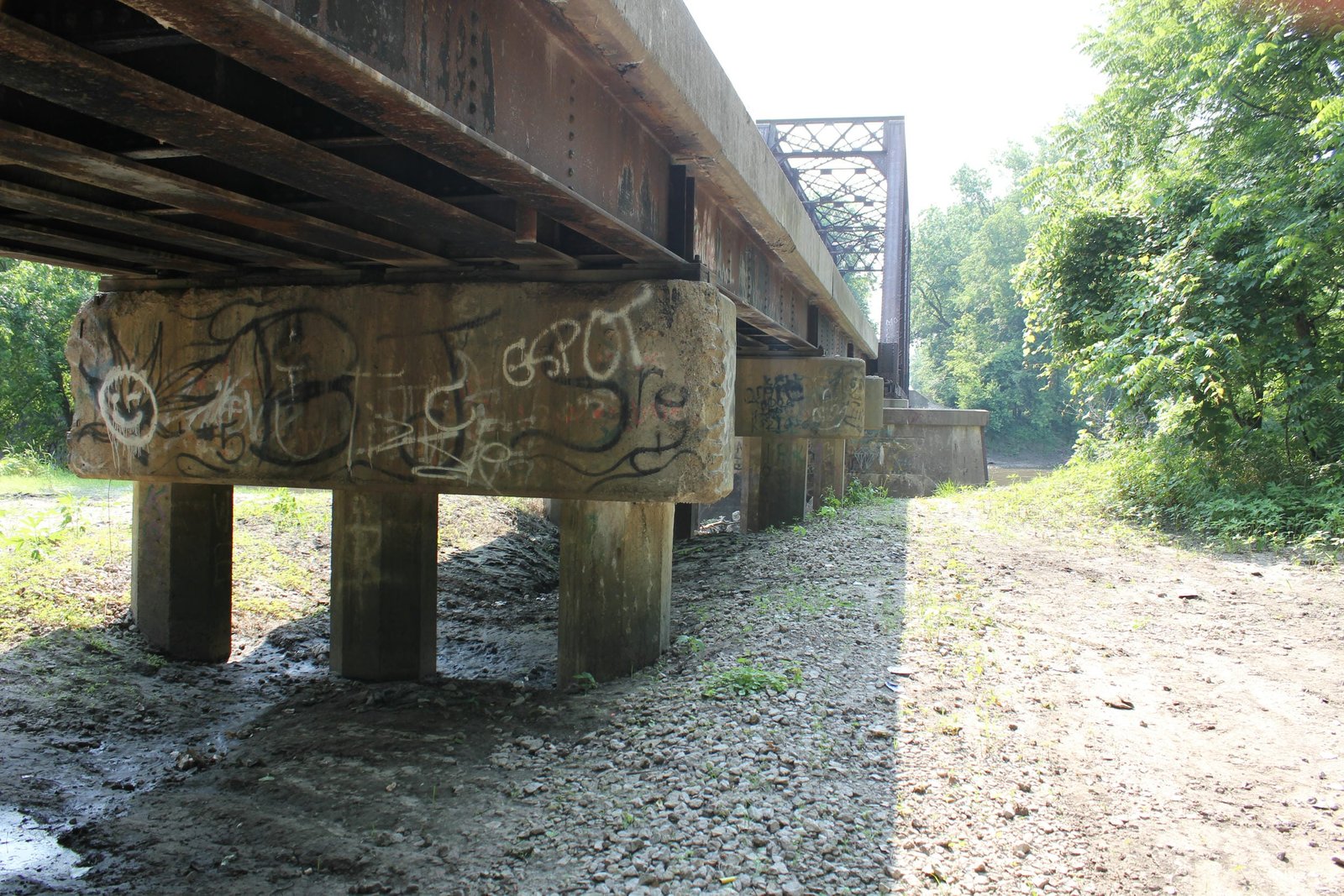
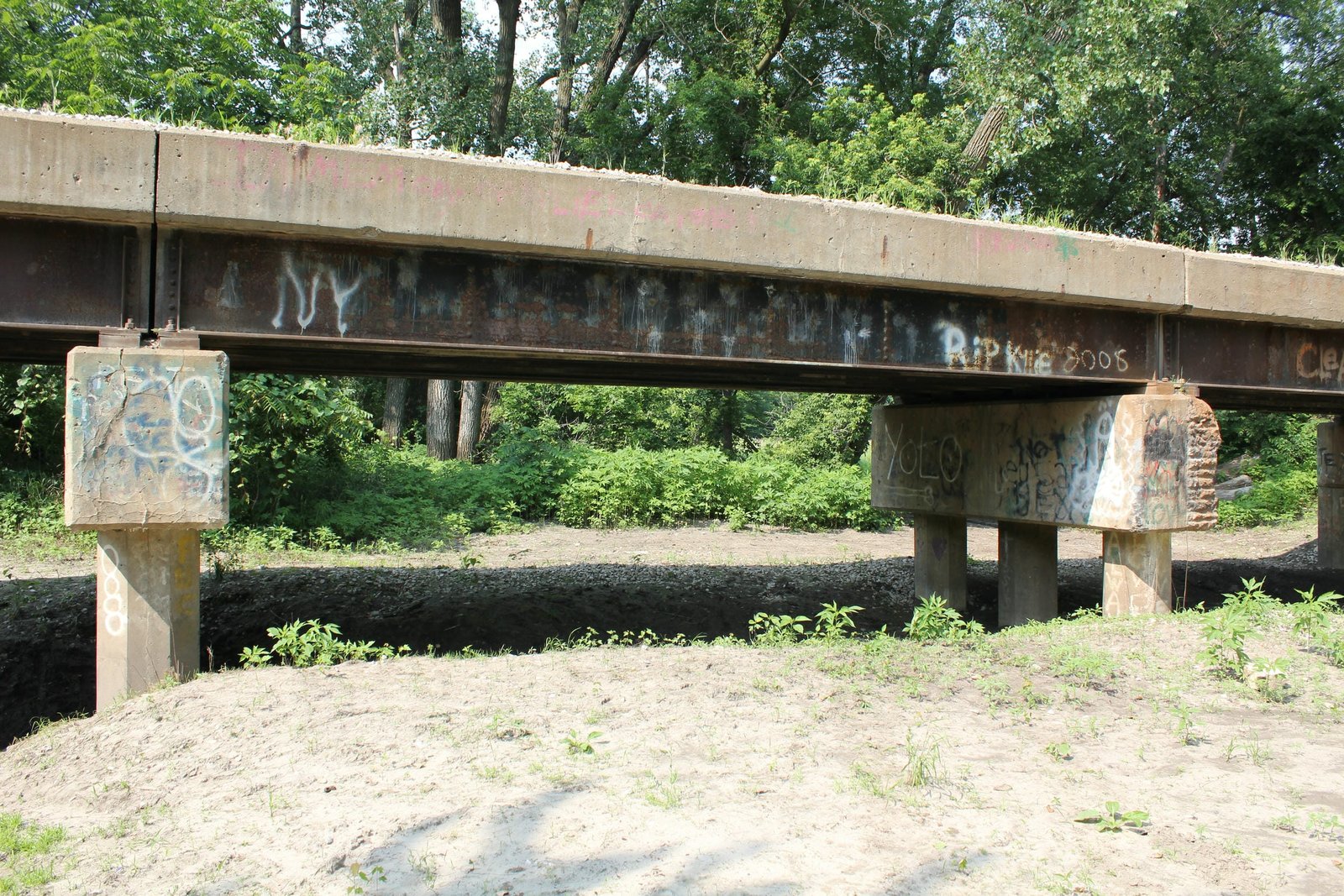
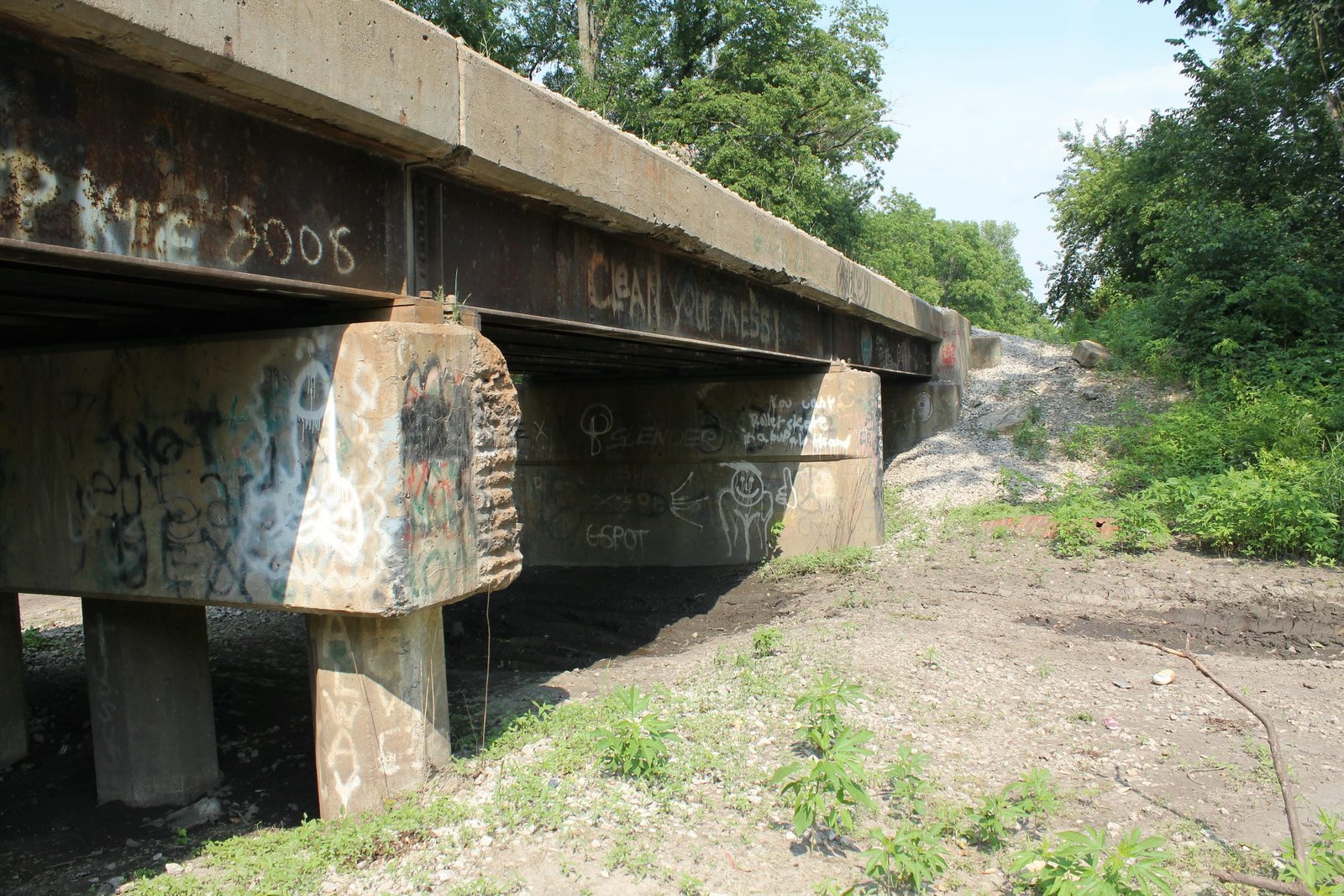
Located between Newton and Colfax near the former station of Metz, this through truss bridge carries a former Chicago, Rock Island & Pacific Railroad (Rock Island) mainline over the South Skunk River. The first bridge at this location was likely a timber truss bridge, constructed when the line was first built. In 1888, the bridge was replaced with a 155-foot quadrangular lattice through truss span, set onto stone abutments. Starting in the late 1930s, a series of improvements were made to the bridge, which completely reconstructed and lengthened the structure. Between late 1937 and early 1938, the original abutments were reconstructed with concrete piers, and new concrete approach piers were constructed. Starting in October 1938 and continuing through December 1939, the original truss span was replaced by a heavier secondhand truss span and three steel stringer spans were constructed on either end. It is unclear if the original truss span was reused at another location. The most recent alteration to the bridge came in 1945, when the east end was further lengthened by installing two additional steel stringer spans on a new concrete pier and concrete abutment. Currently, the bridge consists of a 155-foot, 6-panel, riveted Warren through truss span, approached by five 28-foot steel stringer spans on the east end and three 28-foot steel stringer spans on the west end. The main piers (piers #5 and #6), east approach pier (pier #1) and both abutments consist of a concrete design, while the remaining piers are constructed with concrete piles. The truss span was originally fabricated in approximately 1905 for use at an unknown location. During the late 1930s and early 1940s, a number of similar spans were reused throughout the Rock Island system, although it is unclear where they were originally constructed. American Bridge Company fabricated all of the superstructure, while much of the substructure was constructed by Gould Construction Company. An unknown contractor constructed the east abutment and east pier (pier #1).
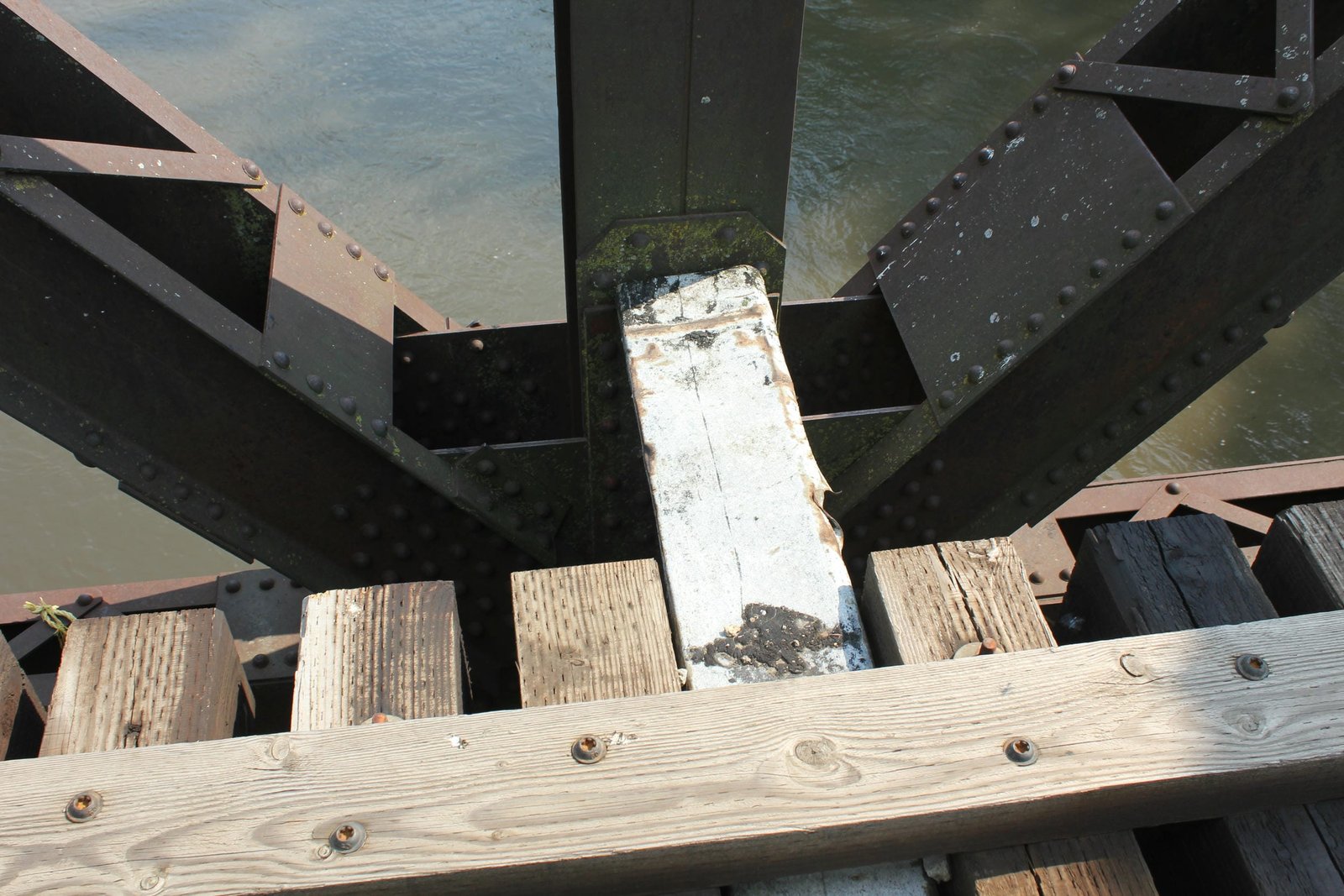
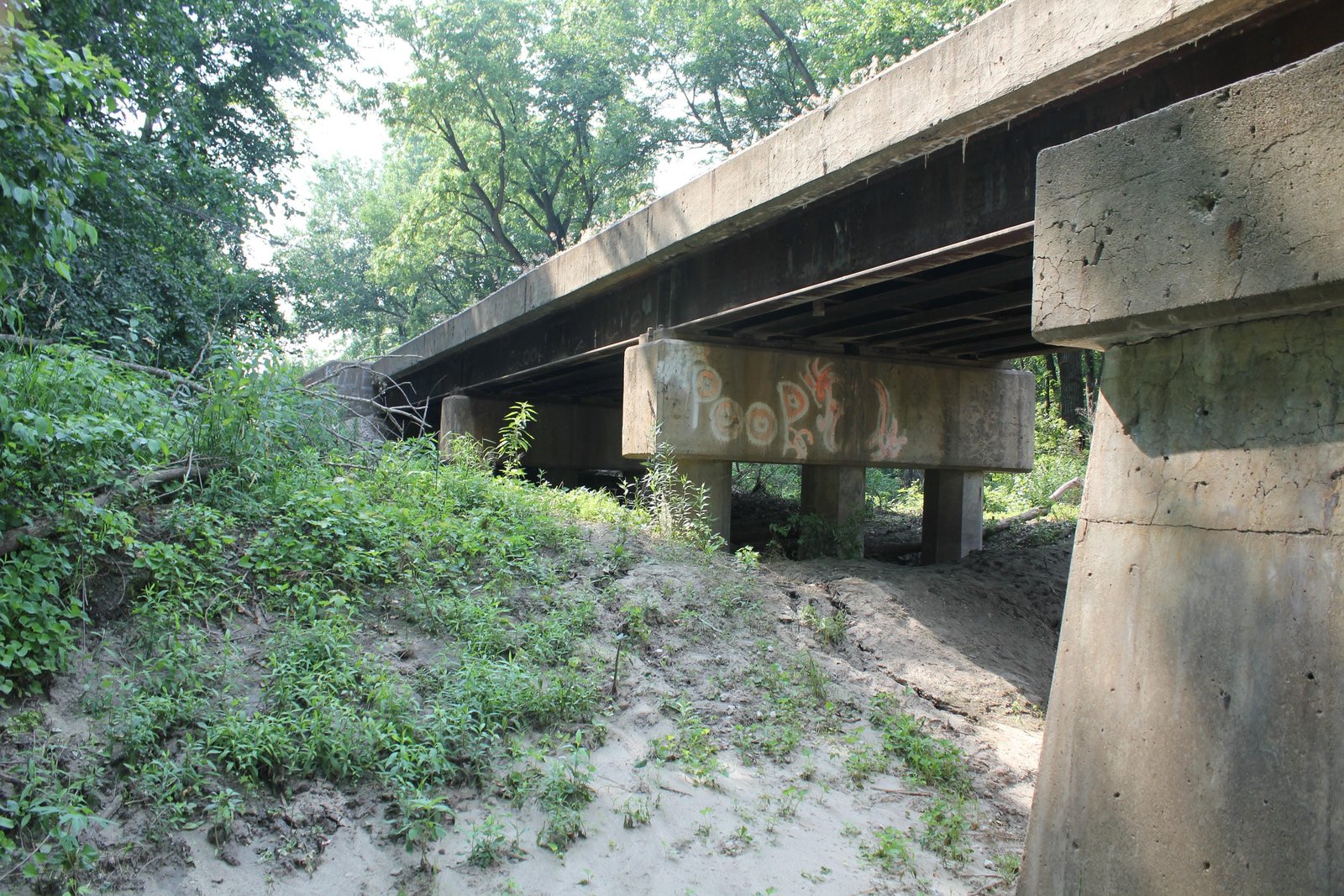
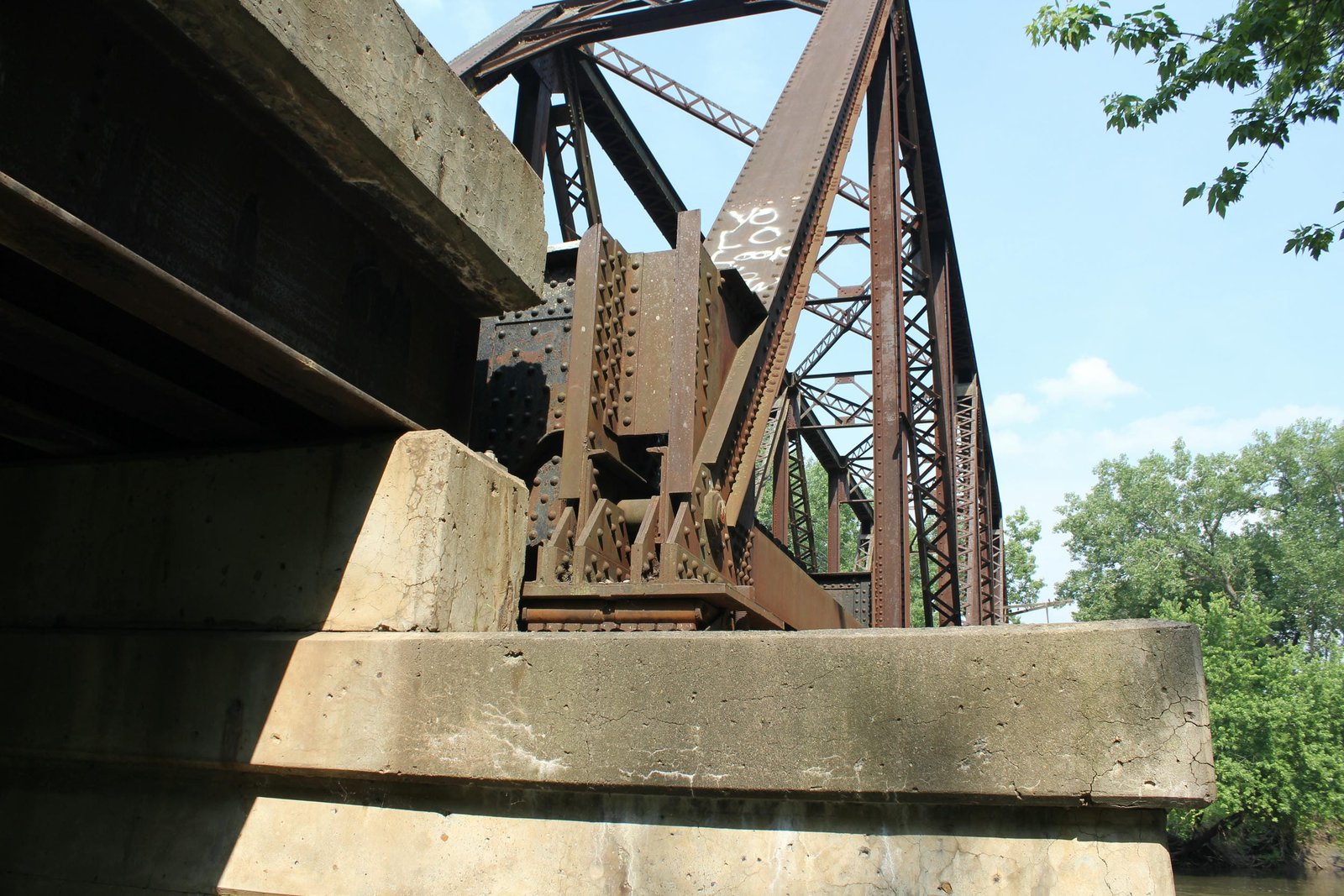
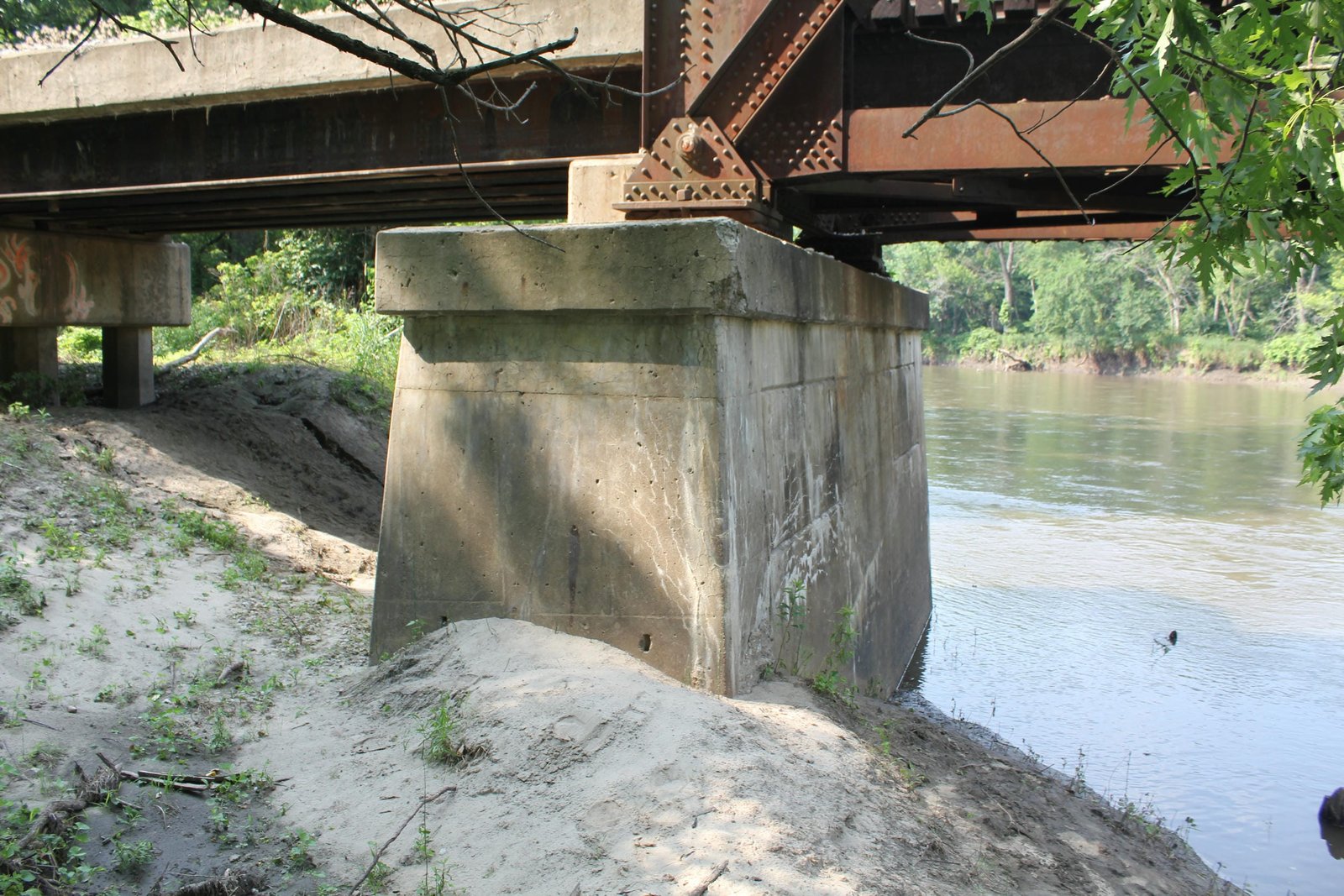
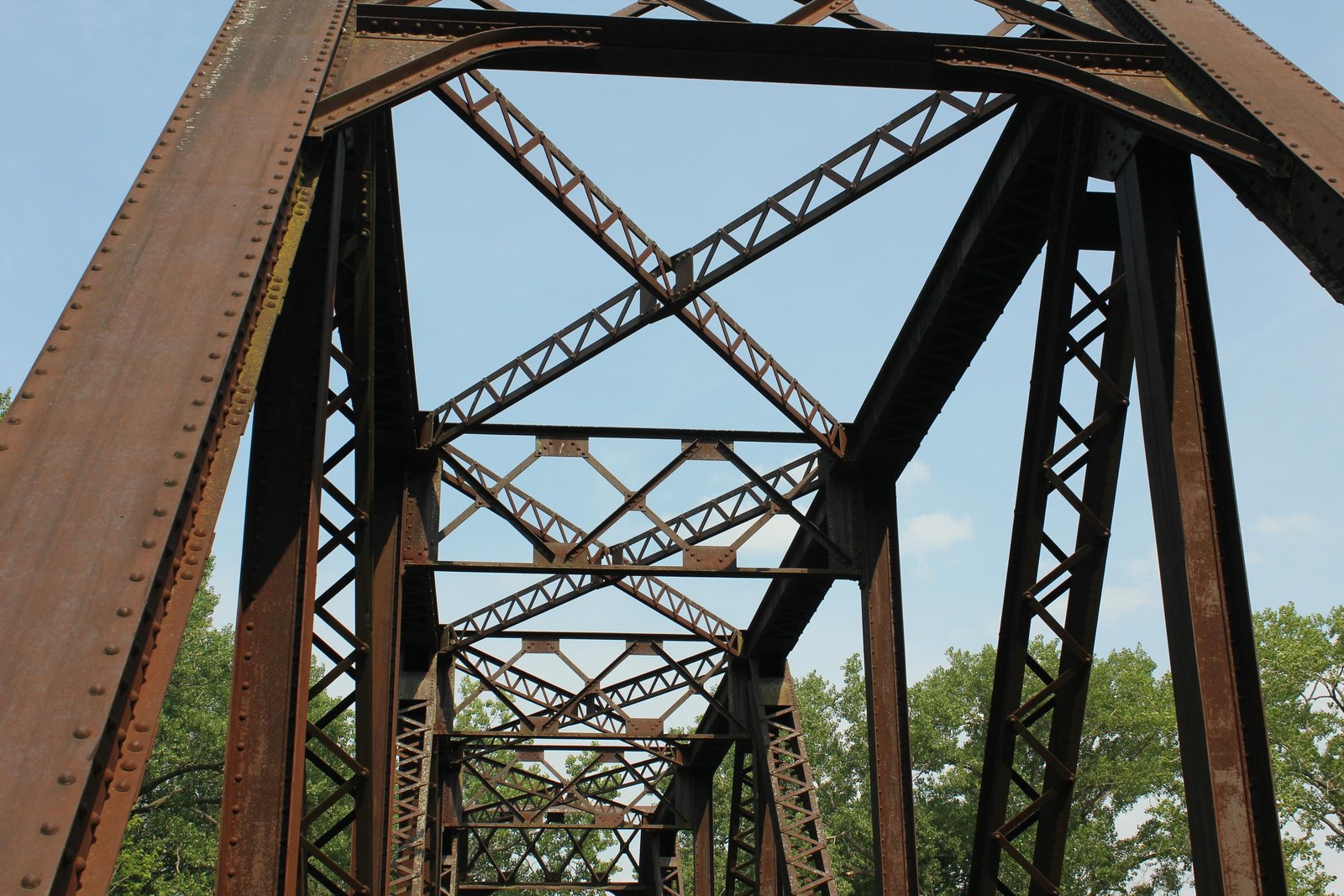
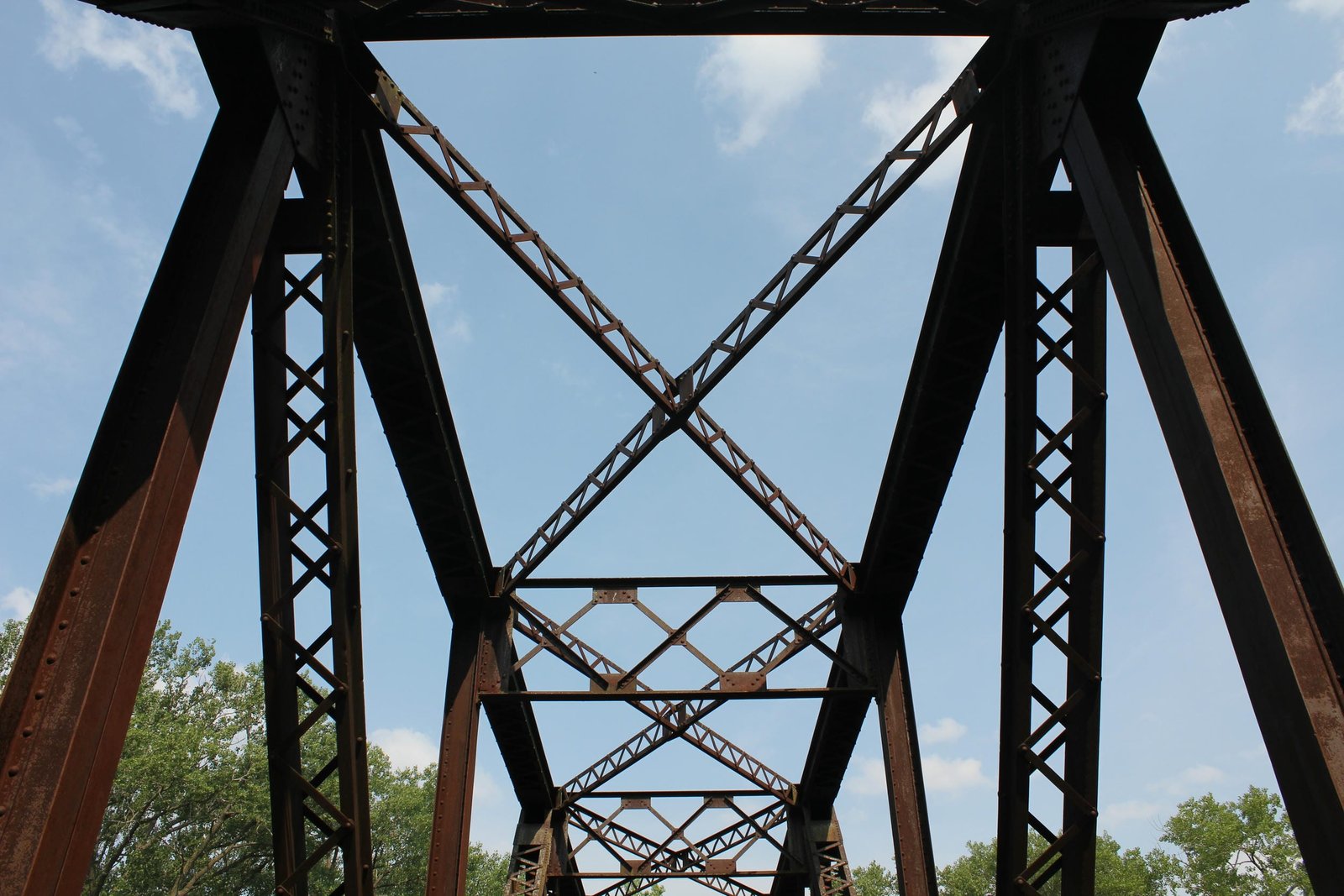
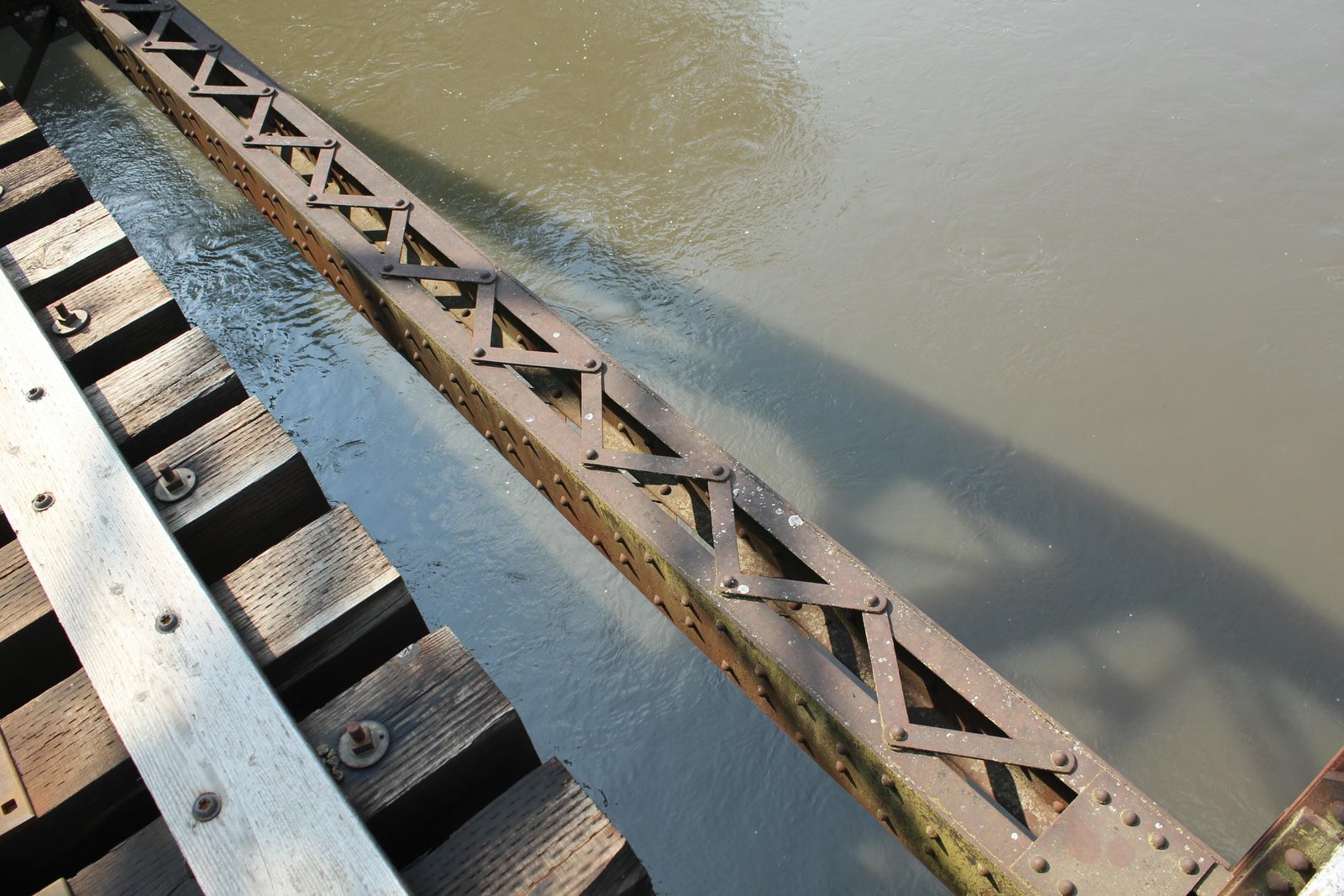
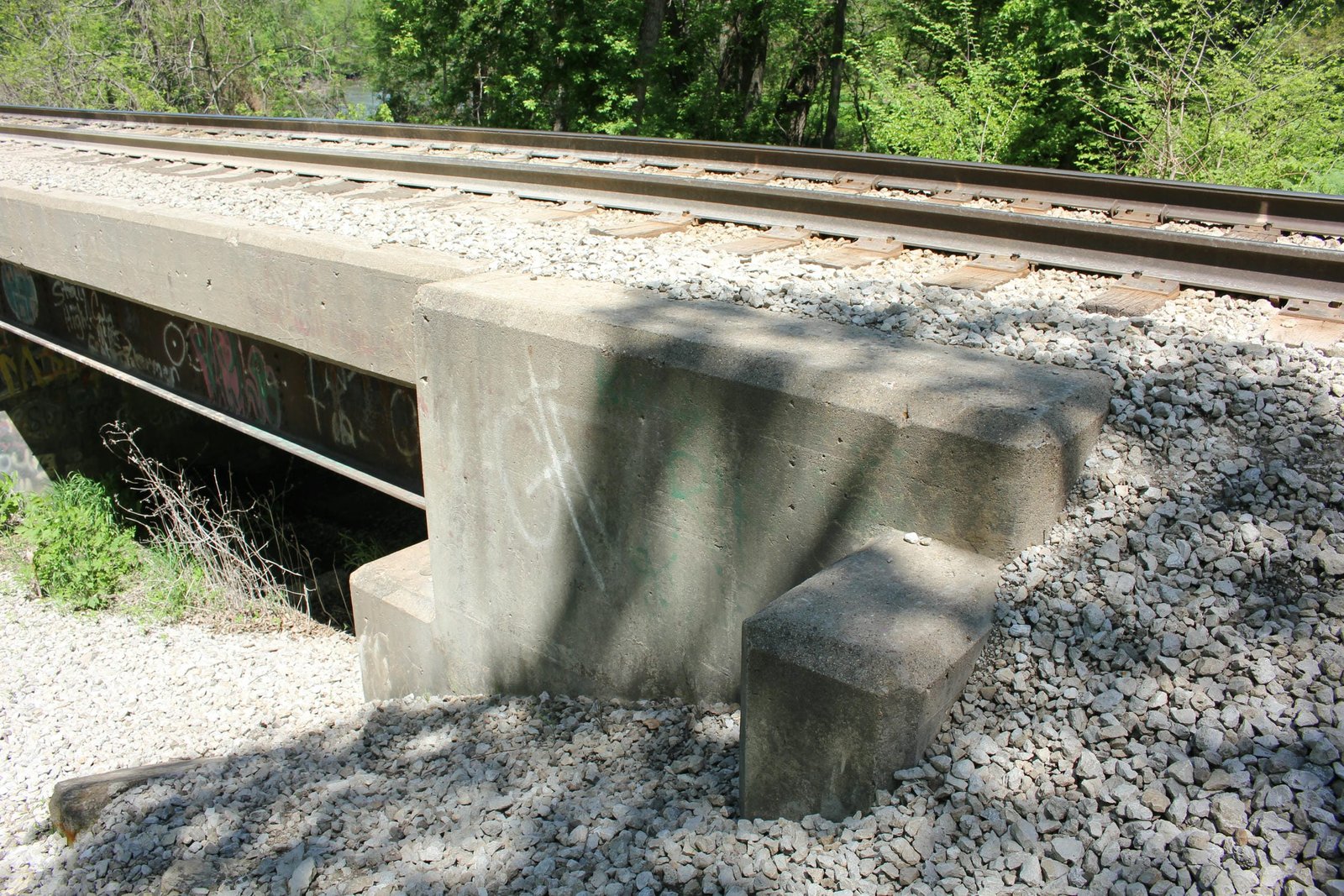
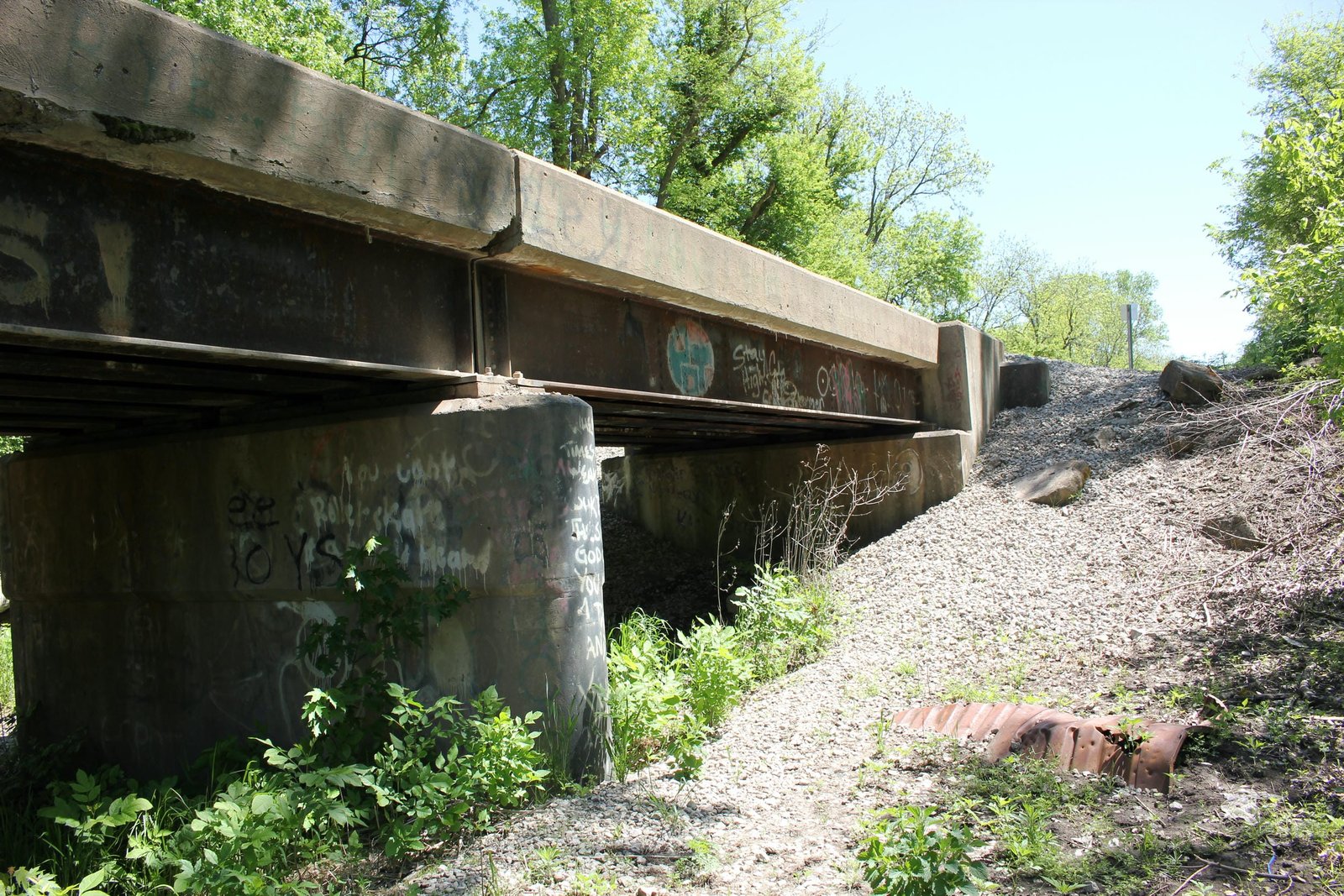
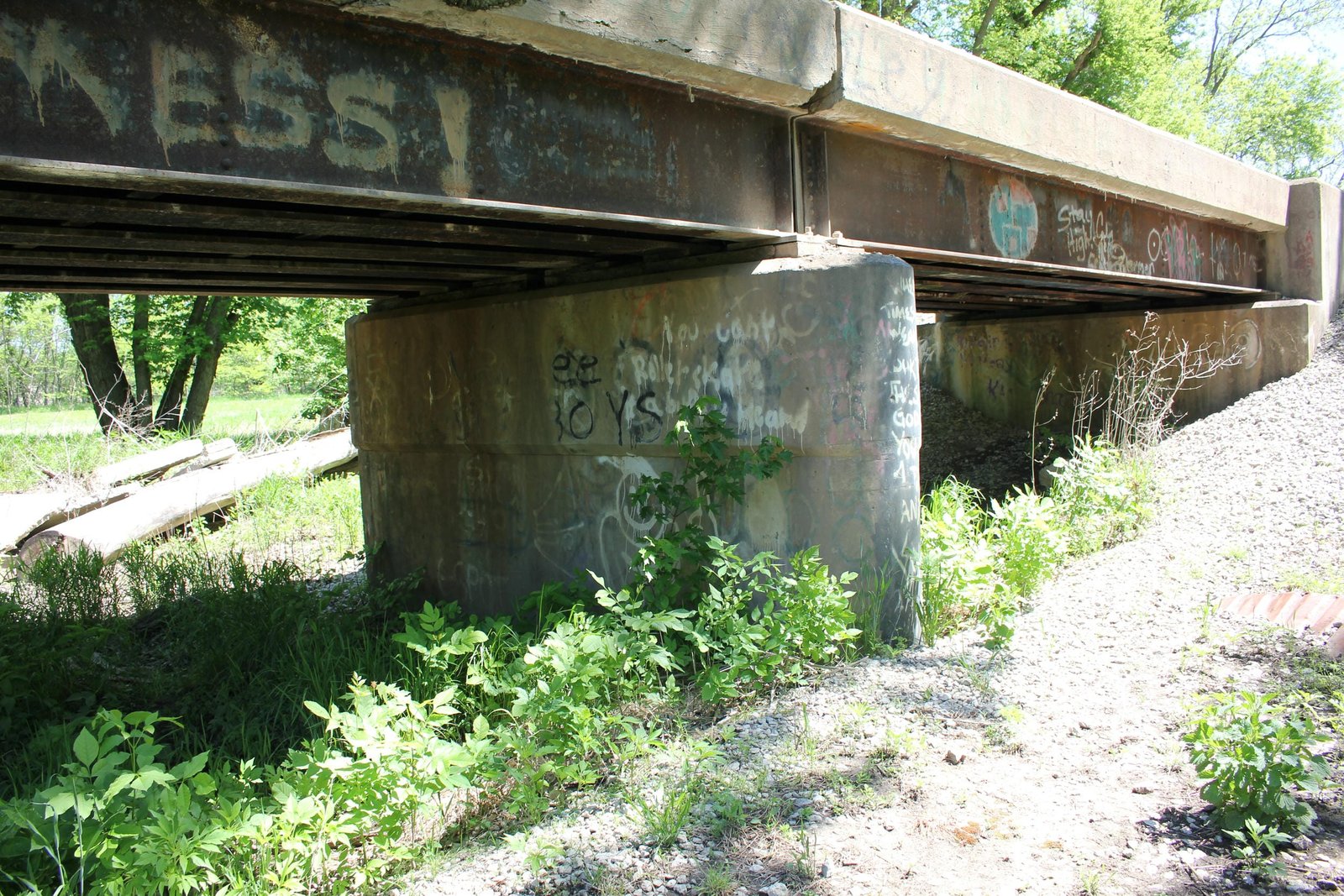
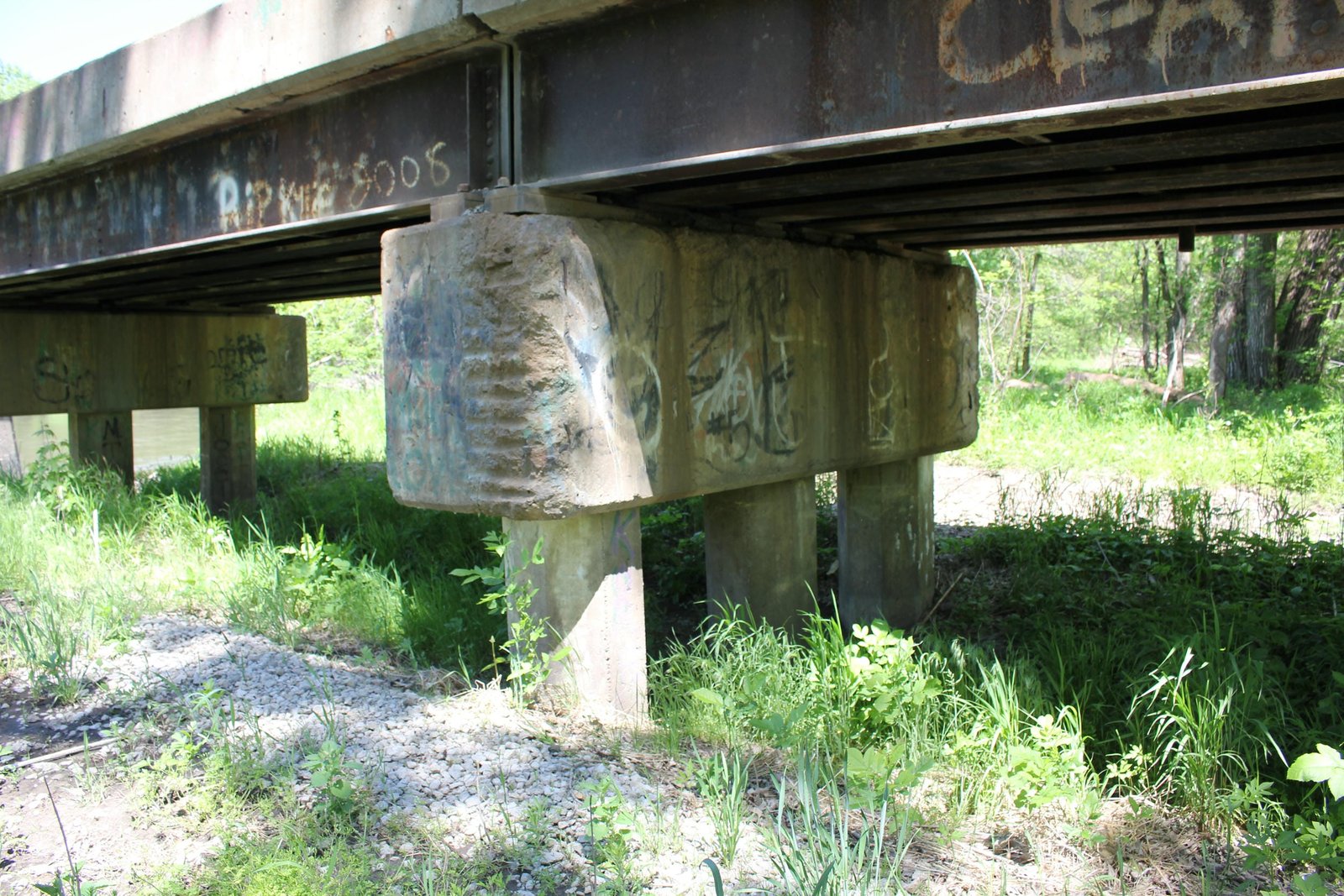
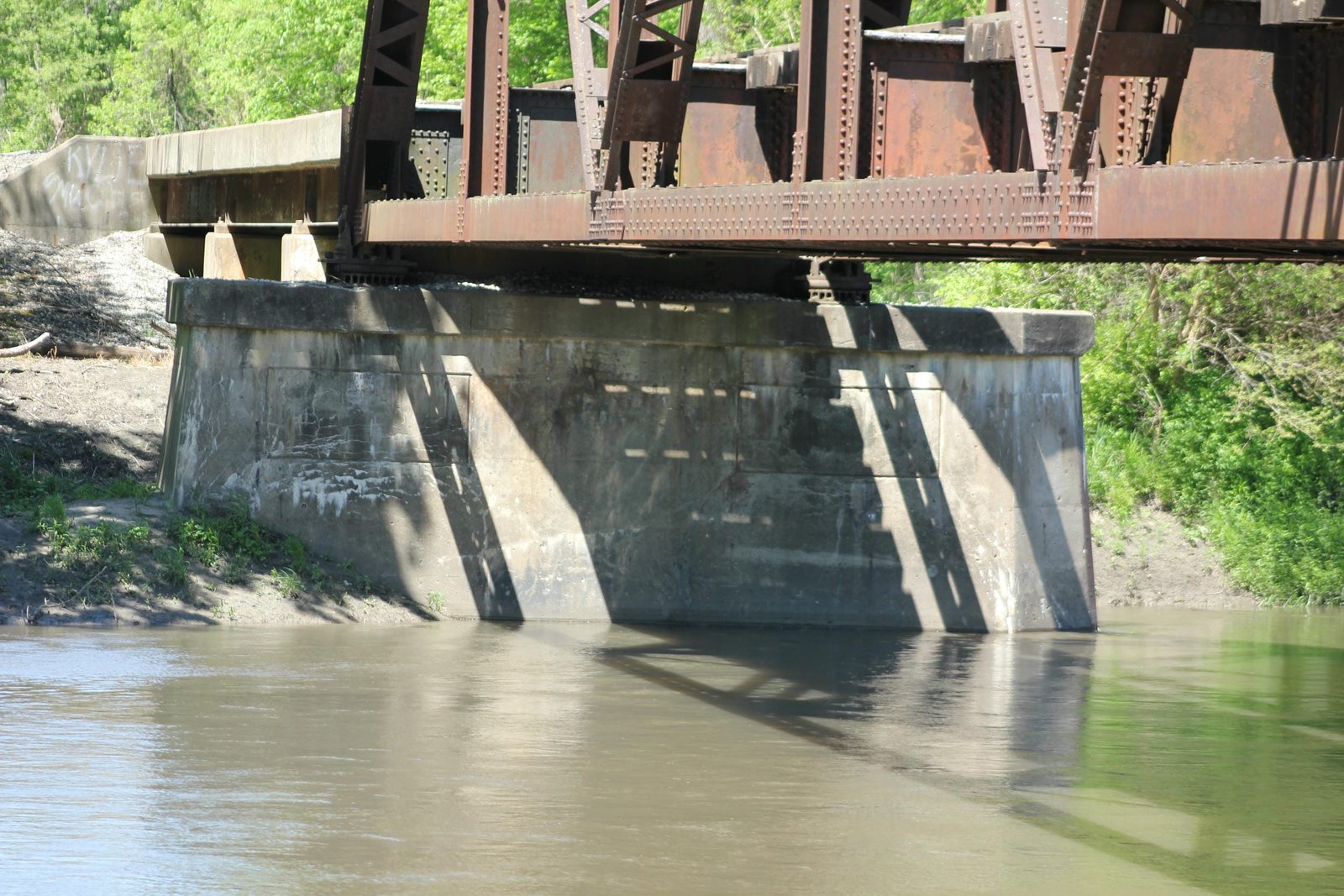
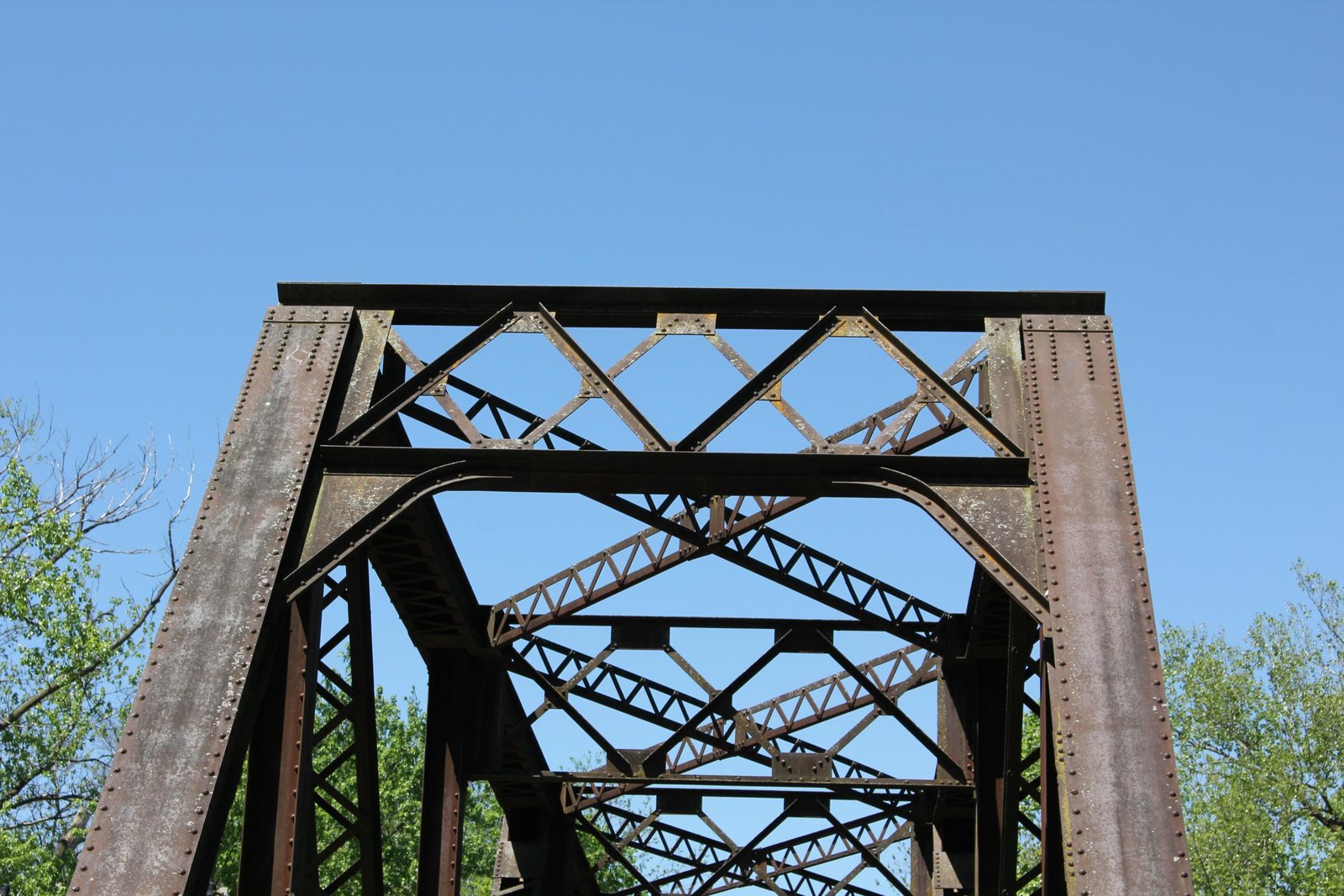
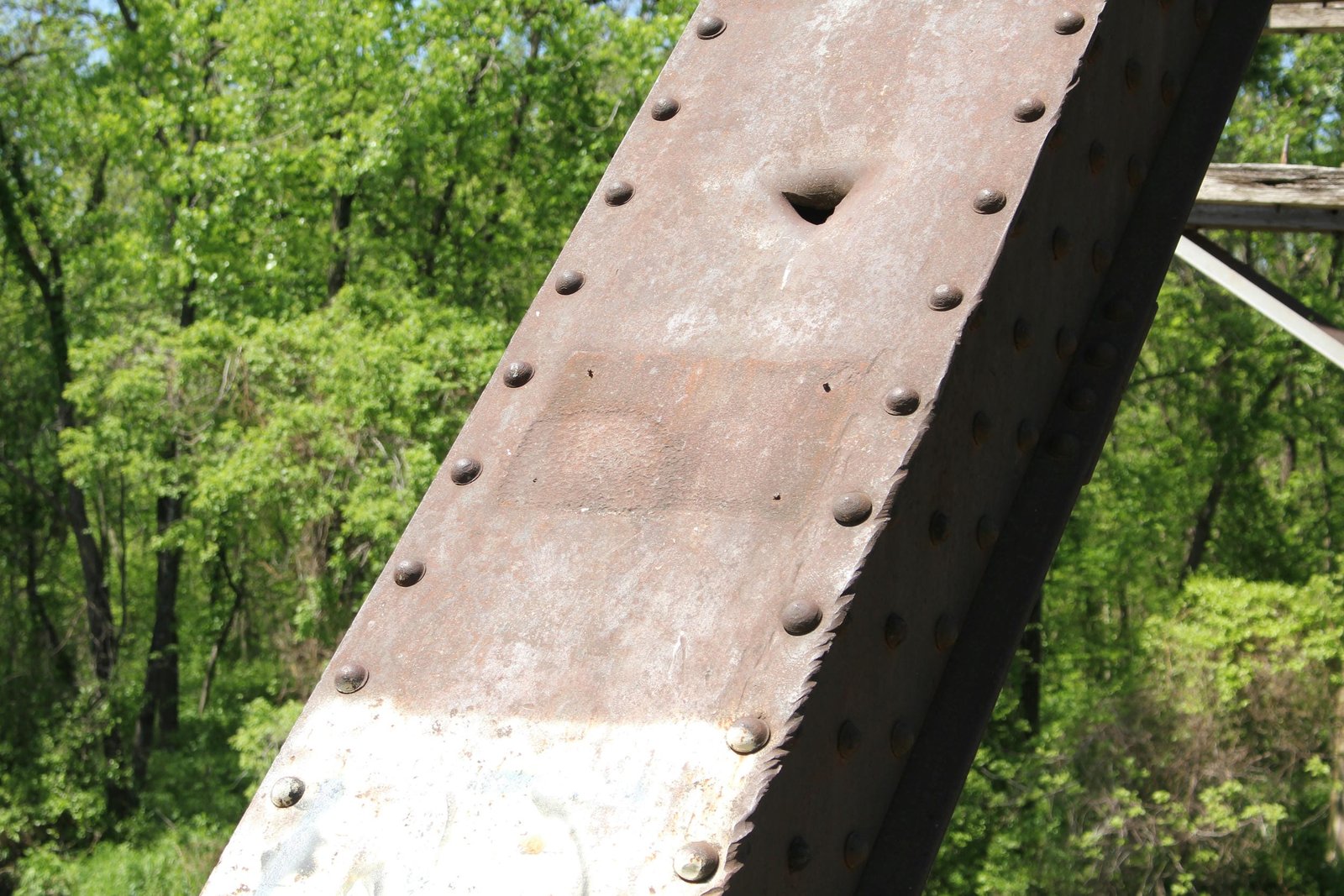
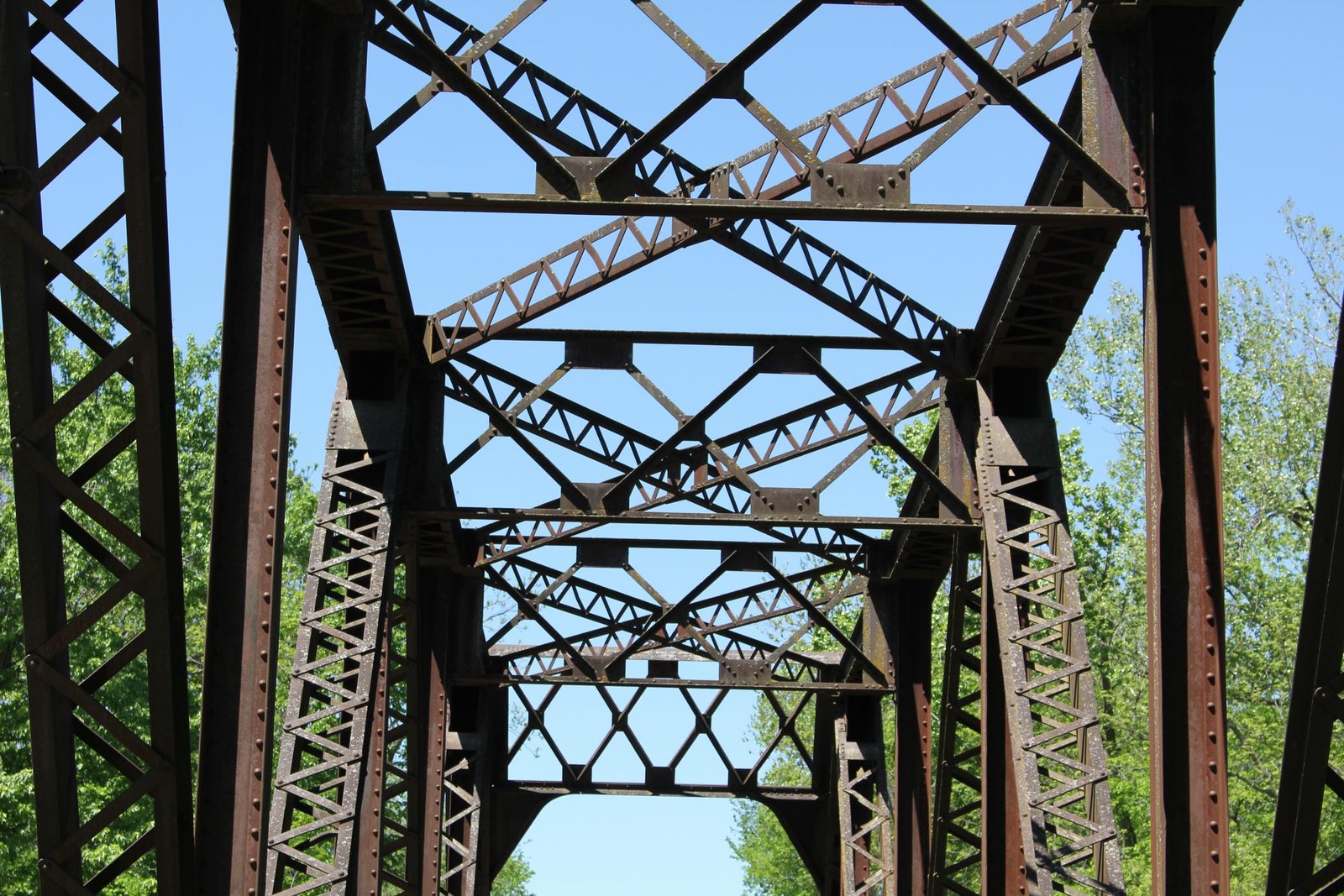
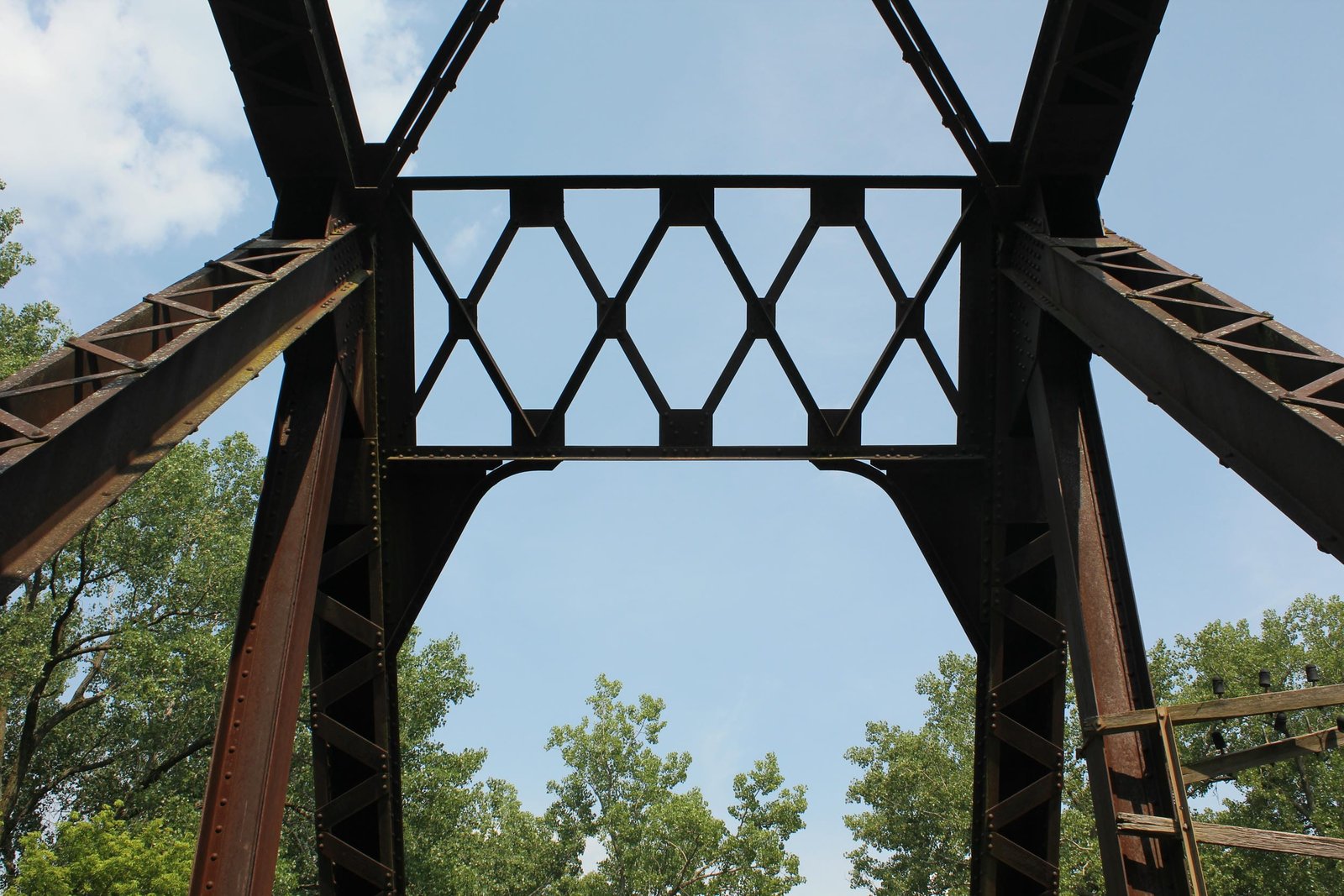
The truss span follows a standard Rock Island design that was used in the early 20th Century, with heavy members, riveted connections and a traditionally composed floor. Both the top chord and endposts consist of heavily constructed members, built of two U-shaped channels connected by solid plates on the top/exterior and V-lacing on the bottom/interior. The bottom chord is constructed using two U-shaped channels, connected by widely set V-lacing on both sides. The vertical members are also constructed of solid beams, while the diagonal members are composed of built-up beams which use V-lacing on both sides. The floor system is composed of heavy plate girder floorbeams placed at the panel points and two heavy plate girder stringers. The portal bracing uses a standard Rock Island design, consisting of a lattice design with four "X"s. At the corners, a triangular heel bracing with a rounded edge connects the bottom of the portal bracing to the endposts. The sway bracing uses a similar design to the portal bracing, with 4 "X"s and plates at the connections. The upper lateral bracing is composed of light V-laced beams, while the lower lateral bracing is constructed of L-shaped bars. All of the approach spans consist of six shallow beams, spaced equally and covered by a concrete ballast deck. The main piers use a standard rectangular shape with an angled upstream nose, and it is unclear if portions of the original abutments were reused in these piers. The east pier (pier #1) uses a standard rounded rectangular shape, and the east abutment uses a standard U-shaped design. The remaining approach piers consist of three octagonal concrete piles with a concrete cap. The west abutment also uses a standard design for the era, with short sloped backwalls.
Warren trusses became popular in the early 20th Century as an alternative to pin-connected Pratt truss spans. Throughout the late 19th Century, the Rock Island primarily preferred using lattice trusses for through truss spans. However, once heavier riveted Warren trusses were introduced around 1900, the Rock Island quickly switched to using this design as the preferred truss bridge configuration. Dozens of similar spans were constructed by the Rock Island between 1900 and 1920. Riveted Warren trusses were economical and simple, while also being far stronger than pin-connected Pratt spans constructed in the 19th Century. Railroads often reused steel and iron spans, as it provided a cost effective way to rebuild bridges without requiring a large amount of new material. The Rock Island preferred reusing spans, as the railroad was often in financial distress. Since the initial construction, the bridge has seen only minor alterations, including the encasement of the abutments in a concrete facing. Today, the bridge continues to carry railroad traffic. Overall, the bridge appears to be in fair to good condition, with no significant deterioration noted. This bridge is likely to be replaced in the coming years, as Iowa Interstate Railroad is seeking to replace all truss bridges on their mainline. The author has ranked this bridge as being moderately significant, due to the truss design.
Citations
| Erection date (truss span) | Jasper County Record; January 4, 1940 |
| Build dates and builder (approach spans) | American Bridge Company plaque |
| Builder (main piers) | Jasper County Record; March 17, 1938 |
| Railroad History Citation | ICC Valuation Information, Compiled by Richard S. Steele |