


Click the photo to view the full-size version
| Name | WSOR Lincoln Creek Bridge Chicago, Milwaukee & St. Paul Railway Bridge #D-30 |
| Built By | Chicago, Milwaukee & St. Paul Railway |
| Currently Owned By | State of Wisconsin (Operated by Wisconsin & Southern Railroad) |
| Length | 12 Feet Total |
| Width | 1 Track (53 Feet) |
| Height Above Ground | 10 Feet (Estimated) |
| Superstructure Design | Concrete Arch |
| Substructure Design | Concrete |
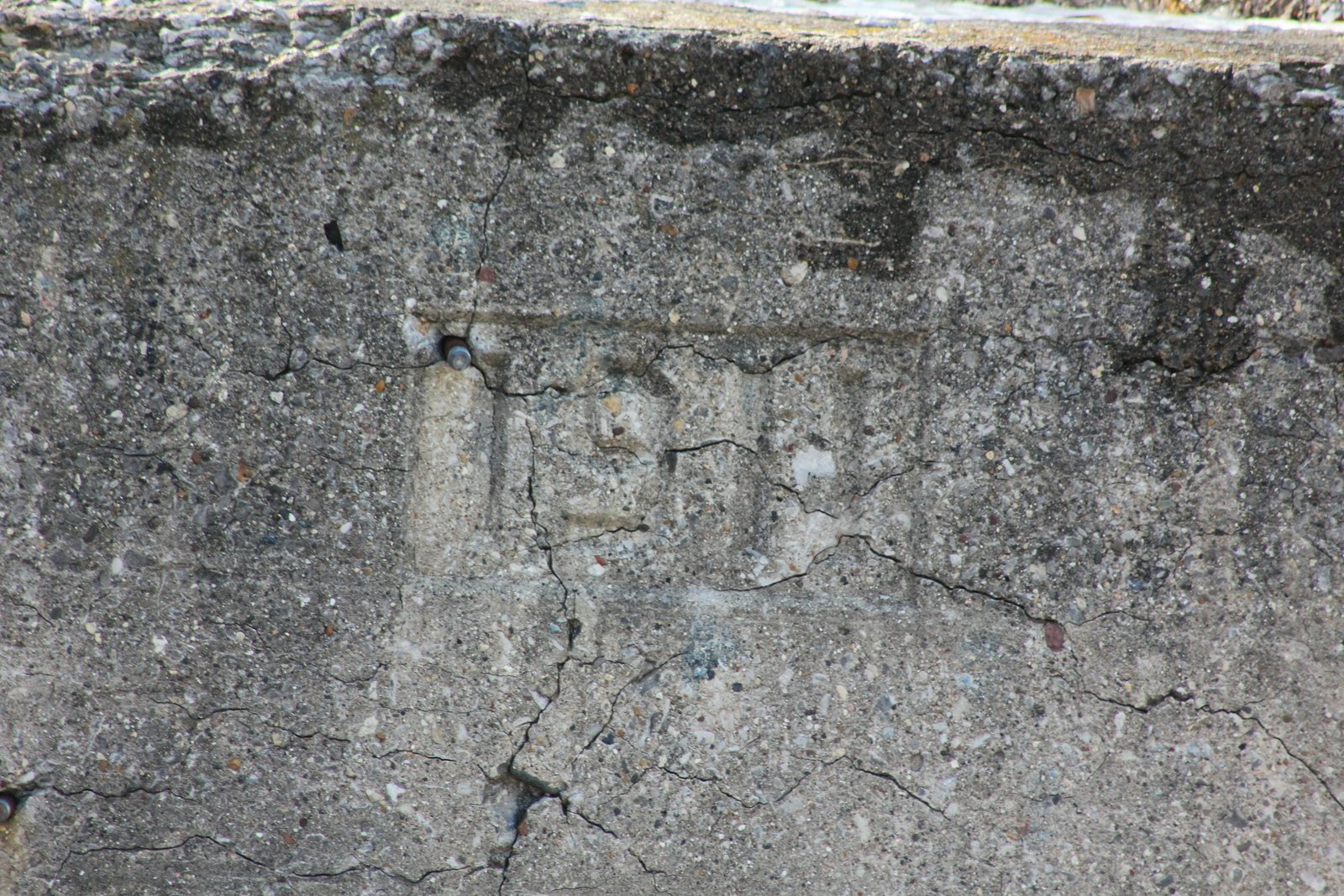
| Date Built | 1911 |
| Traffic Count | 4 Trains/Day (Estimated) |
| Current Status | In Use |
| Chicago, Milwaukee & St. Paul Railway Bridge Number | D-30 |
| Wisconsin & Southern Railroad Bridge Number | D-30 |
| Significance | Local Significance |
| Documentation Date | 2/11/2023 |
In 1852, the La Crosse & Milwaukee Railroad (LC&M) began construction on a new line, extending from Milwaukee, Wisconsin to Portage, Wisconsin. The first 9 mile section of railroad opened in 1853, and included a portion of line along the north bank of the Menomonee River and present-day 30th Street to North Milwaukee. By 1855, another 46 miles would be completed to Horicon, Wisconsin. By 1857, an additional 43 miles would be completed to Portage, Wisconsin. Throughout the remainder of the 1850s, the LC&M continued west, eventually reaching La Crosse, Wisconsin by the end of 1858. This line became the Eastern Division of the LC&M, which served as the first significant connection between Milwaukee and La Crosse. The railroad was sold at a foreclosure sale, and was acquired by the Milwaukee & St. Paul Railway (M&StP) in 1867. In 1874, the M&StP changed its name to the Chicago, Milwaukee & St. Paul Railway (Milwaukee Road).
With the completion of a new line between Milwaukee and Portage via Watertown in 1864, this route diminished in significance. During the late 19th Century, the Milwaukee Road acquired and constructed a vast railroad network throughout the Midwest. A second track was constructed at points throughout Milwaukee in the late 19th Century. In addition, this line provided the opportunity for new branch lines to be constructed. One such line was a branch to Fox Lake, which had been constructed as a horse-drawn railroad shortly after the railroad passed south of the town. This line was converted to a standard gauge steam railroad in 1884. An additional spur at Beaver Dam served the central business district, and larger branch lines extended from Iron Ridge and Horicon, and served Fond du Lac and Oshkosh, respectively. In 1908, the western end of this line at Portage was realigned to improve operations in the city. In the early 20th Century, the 30th Street line would be grade separated by constructing underpasses and overpasses.
The Milwaukee Road was often in financial trouble, especially after the costly Pacific Extension was completed in 1909. In 1925, the company declared bankruptcy, and reorganized as the Chicago, Milwaukee, St. Paul and Pacific Railroad in 1928. Throughout the 20th Century, financial conditions for the Milwaukee Road continued to deteriorate. This line began to fall into disrepair, and was downgraded to a branch line. The railroad again entered bankruptcy in 1977, and was forced to liquidate unprofitable lines. The line from North Milwaukee to Cambria was sold to the State of Wisconsin in 1980, which leased it to the Wisconsin & Southern Railroad (WSOR) the same year. In the early 1980s, the segment between Cambria, Wisconsin and Portage would be abandoned. By 1985, a suitor for the Milwaukee Road was being sought, and the Soo Line Railroad, controlled by Canadian Pacific Railway (CP) purchased the Milwaukee Road in 1986. The Soo Line continued to operate a short segment of this line between North Milwaukee and 1st Street. In 2007, WSOR began to lease and operate a segment between North Milwaukee and Miller Valley, and outright purchased the line in 2020. CP merged with Kansas City Southern Railway in 2023 to form CPKC. Today, WSOR operates the Milwaukee Subdivision between Miller Valley and Horicon; and the Cambria Subdivision between Horicon and Cambria. CPKC continues to operate the line between 1st Street and Miller Valley in Milwaukee.
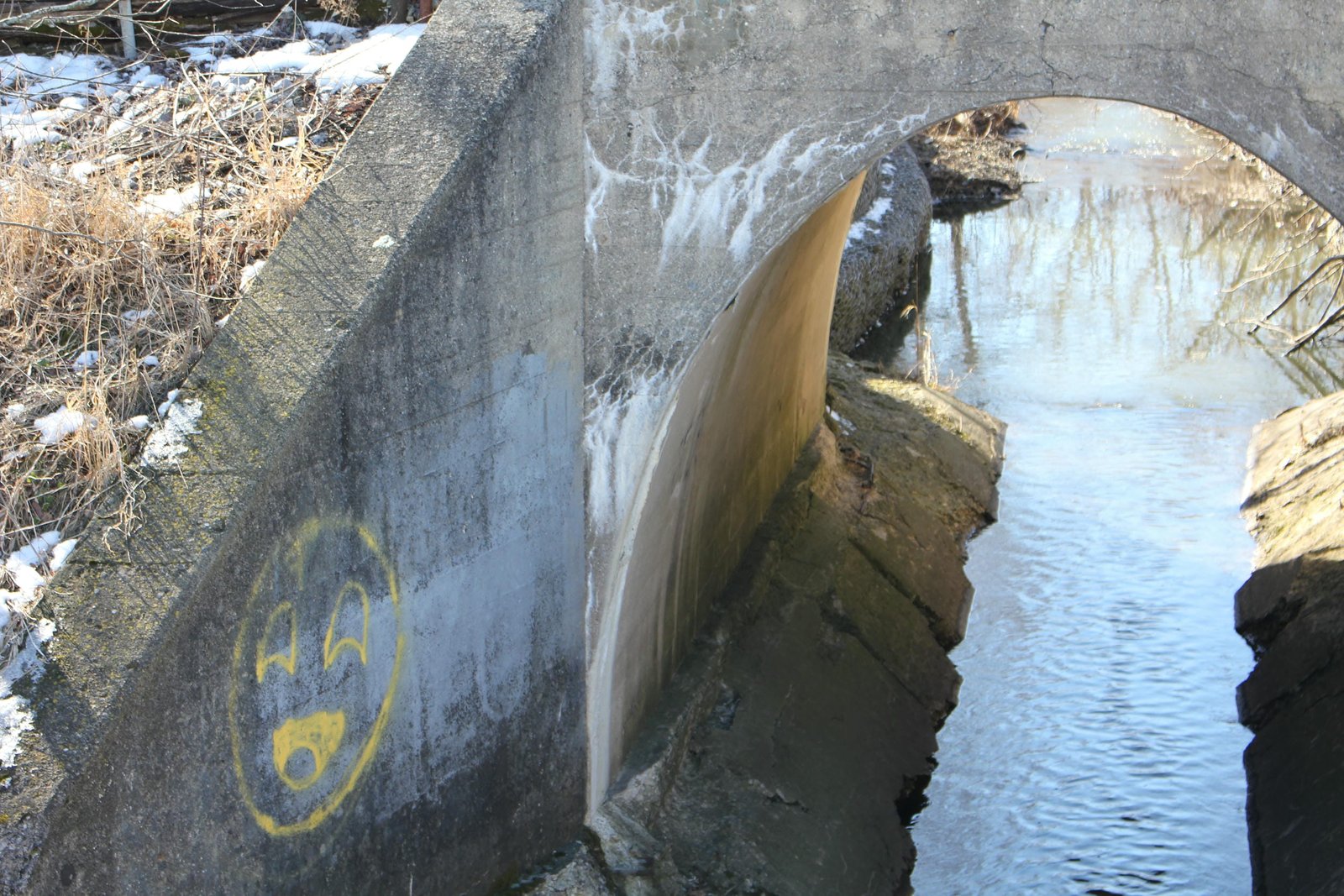
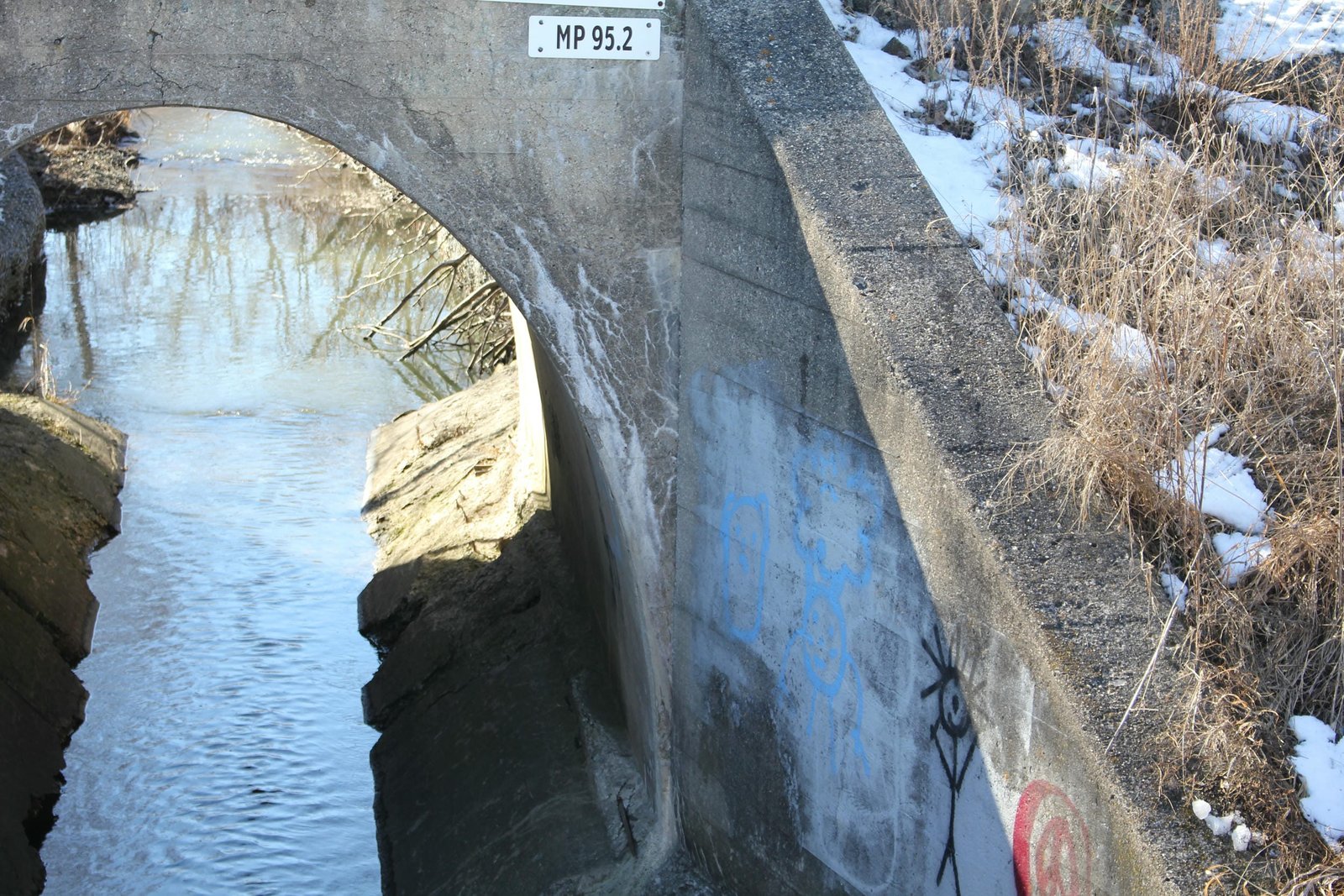
Located in Havenwoods State Forest on the northwest side of Milwaukee, this small concrete arch bridge carries a former Chicago, Milwaukee, St. Paul & Pacific Railroad (Milwaukee Road) line over Lincoln Creek. The first bridge at this location was a timber pile trestle, constructed when the line was first built. In the early 20th Century, the Milwaukee Road made a number of upgrades to this line, replacing timber bridges with steel and concrete structures. In 1911, the present structure was constructed to replace the original timber bridge. Currently, the bridge consists of a 12-foot concrete arch bridge, set onto concrete substructures and constructed at a width of 53 feet. The superstructure uses a standard design, with an egg-shaped arch. The substructure also uses a standard design, with sloped wing walls extending diagonally from the structure. Typical of concrete bridges constructed by the Milwaukee Road, the bridge was constructed by labor employed by the Milwaukee Road Bridge & Building Department. Railroads often used concrete arch bridges, as they were durable and easy to construct. Since the initial construction, the bridge has seen no significant alterations, and the bridge currently remains in use. Overall, the bridge appears to be in fair to good condition, with no significant deterioration noted. The author has ranked this bridge as being locally significant, due to the common design.
Citations
| Build date | Date stamp |
| Railroad History Citation | ICC Valuation Information, Compiled by Richard S. Steele |