
Click the photo to view the full-size version
| Name | NS Des Moines River Bridge |
| Built By | Wabash Railroad Chicago, Burlington & Quincy Railroad |
| Currently Owned By | Norfolk Southern Railway |
| Superstructure Contractor | Unknown |
| Substructure Contractor | L.G. Barcus Company of Kansas City, Kansas |
| Design Engineer | Sverdrup, Parcell & Associates of St. Louis, Missouri |
| Length | 2134 Feet Total, 188 Foot Main Spans |
| Width | 1 Track |
| Height Above Ground | 40 Feet (Estimated) |
| Superstructure Design | Warren Through Truss and Steel Stringer |
| Substructure Design | Concrete |
| Date Built | 1964 |
| Traffic Count | 2 Trains/Day (Estimated) |
| Current Status | In Use |
| Wabash Railroad Bridge Number | 2957 |
| Norfolk Southern Railway Bridge Number | 322.12 |
| Significance | Local Significance |
| Documentation Date | 7/21/2012 |
In 1882, the Des Moines and St. Louis Railroad (DM&StL) constructed 68 miles of new railroad, extending from Albia, Iowa to Des Moines, Iowa. In 1888, about 2.5 miles within the city limits of Des Moines were sold to the Des Moines Union Railway, a switching railroad operating within Des Moines. In 1899, the Moulton, Albia and Des Moines Railroad (MA&DM) constructed an additional 29 miles of track, connecting an existing line at Moulton, Iowa to the end of the DM&StL at Albia. Both railroads were consolidated into the Wabash Railroad in 1899. The Wabash was reorganized as the Wabash Railway in 1915. The Wabash would become a respected railroad network in the Midwest, with a principal mainline connecting Detroit with Kansas City. While the Wabash was a smaller railroad, it also operated a number of branch lines to serve other railroad hubs in the Midwest. Between Albia and Harvey, Iowa; the Wabash line paralleled a Chicago, Burlington & Quincy Railroad (CB&Q) line that served the same endpoints. In 1934, the Wabash and CB&Q agreed to share trackage between Albia and Tracy, Iowa. The original Wabash was removed between Albia and Hamilton, Iowa in 1935; and the Wabash and CB&Q shared the Wabash tracks between Hamilton and Tracy. The Wabash was controlled by the Pennsylvania from 1931 through the early 1960s.
During the early 1960s, Iowa began work on Lake Red Rock, a large dam and lake to improve flooding concerns on the Des Moines River. As part of the work, the Wabash was forced to consolidate operations and relocate between Harvey and Runnells, on the southeast side of Des Moines. The Wabash and CB&Q agreed to jointly use the CB&Q tracks between Harvey and Swan, Iowa; and Wabash tracks between Runnells and Des Moines. In 1964, a new connection and bridge across the Des Moines River was completed between Swan and Runnells. In 1964, the railroad was acquired by the Norfolk and Western Railway (N&W), which operated a sizable network of railroads in the eastern United States. In 1982, the N&W was merged with the Southern Railway to form Norfolk Southern Railway (NS). The segment between Moulton Junction, Iowa and Albia was abandoned in 1993 and sold to the Appanoose County Community Railroad (APNC). In 2016, the APNC was purchased by the Iowa Southern Railway (ISRY), which is operated by Progressive Rail. Today, NS continues to operate the Albia to Des Moines line jointly with CB&Q successor BNSF Railway. ISRY operates the segment between Moulton Junction and Albia. The remainder of the line has been abandoned, with much of the original route between Harvey and Runnells under Lake Red Rock.
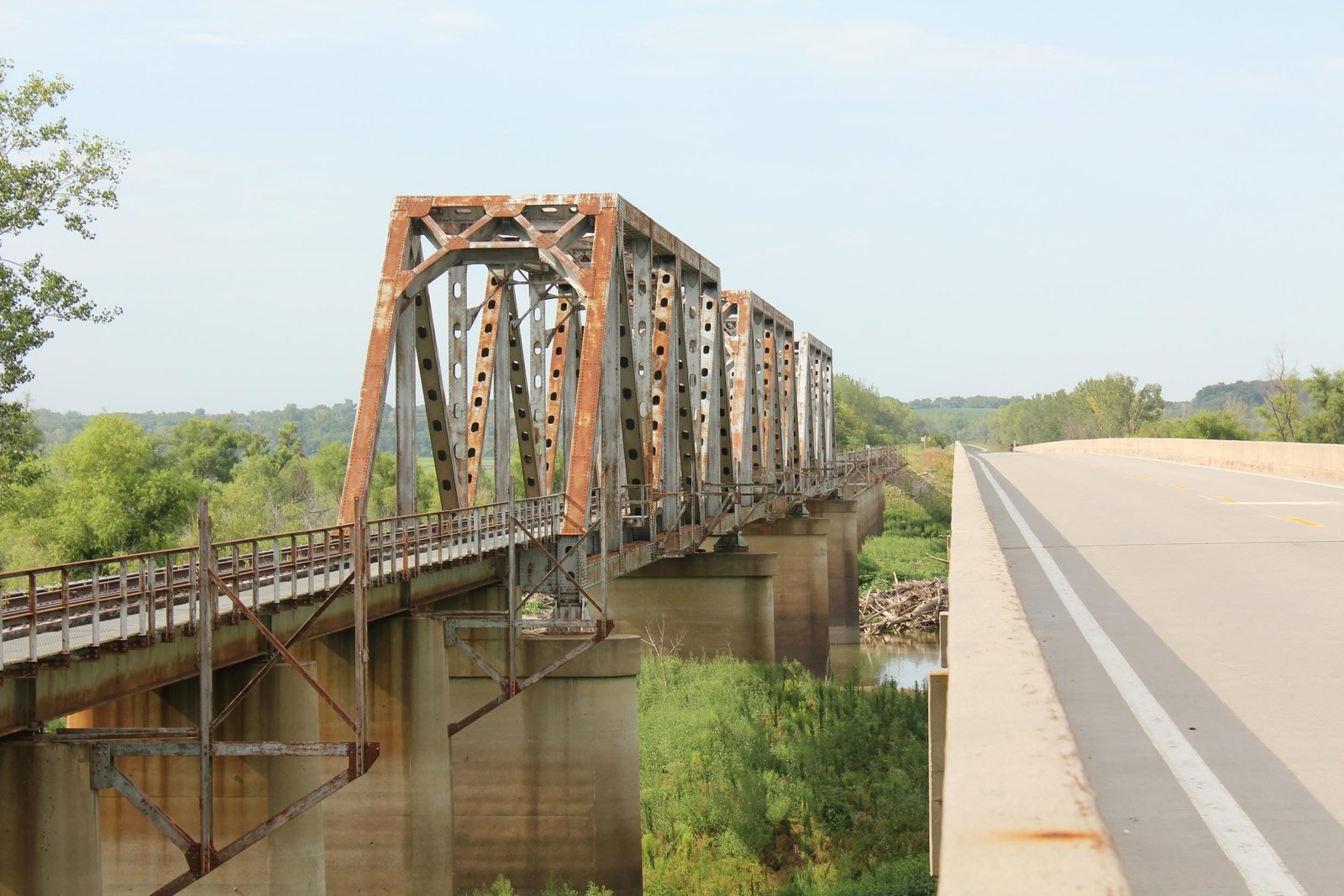
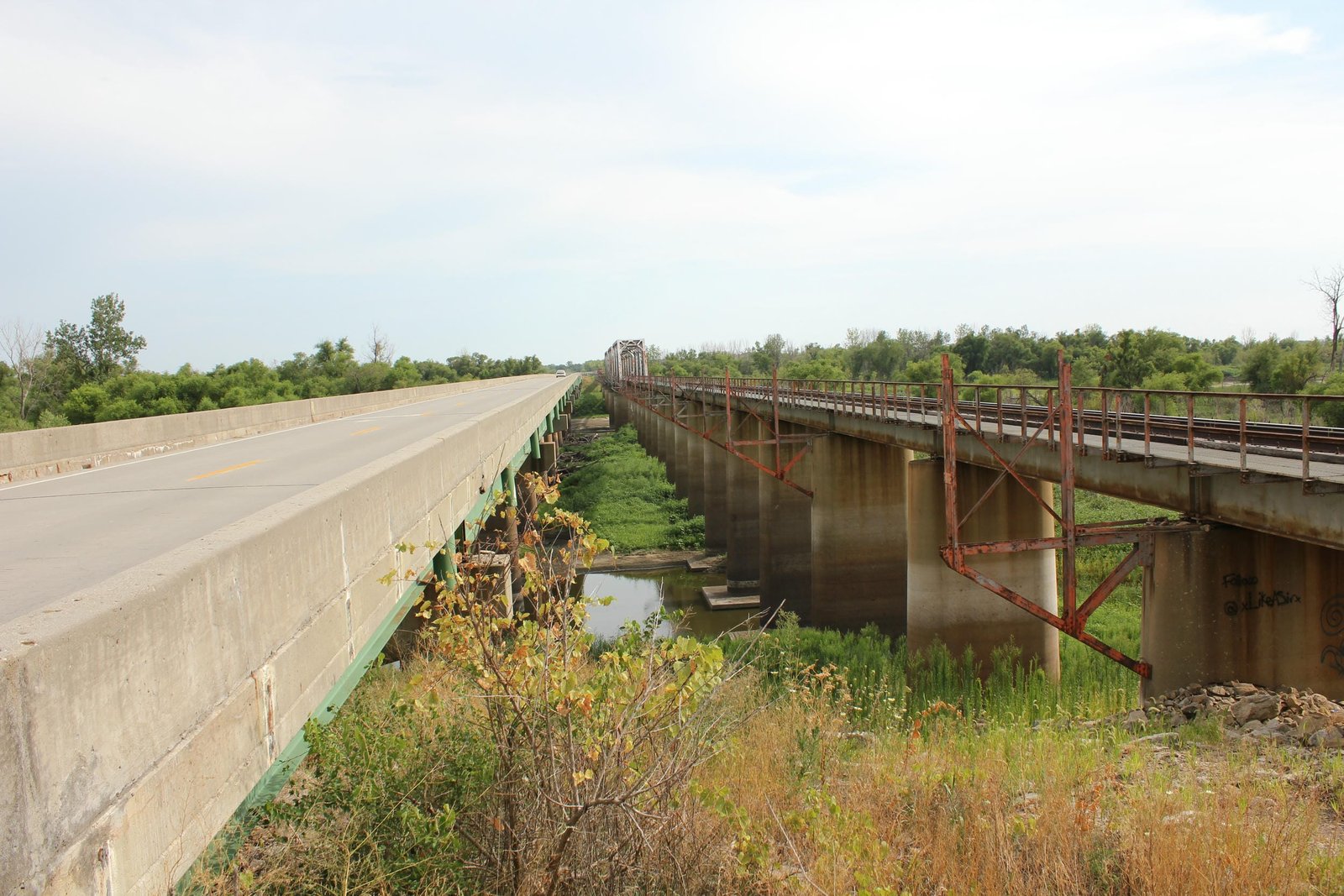
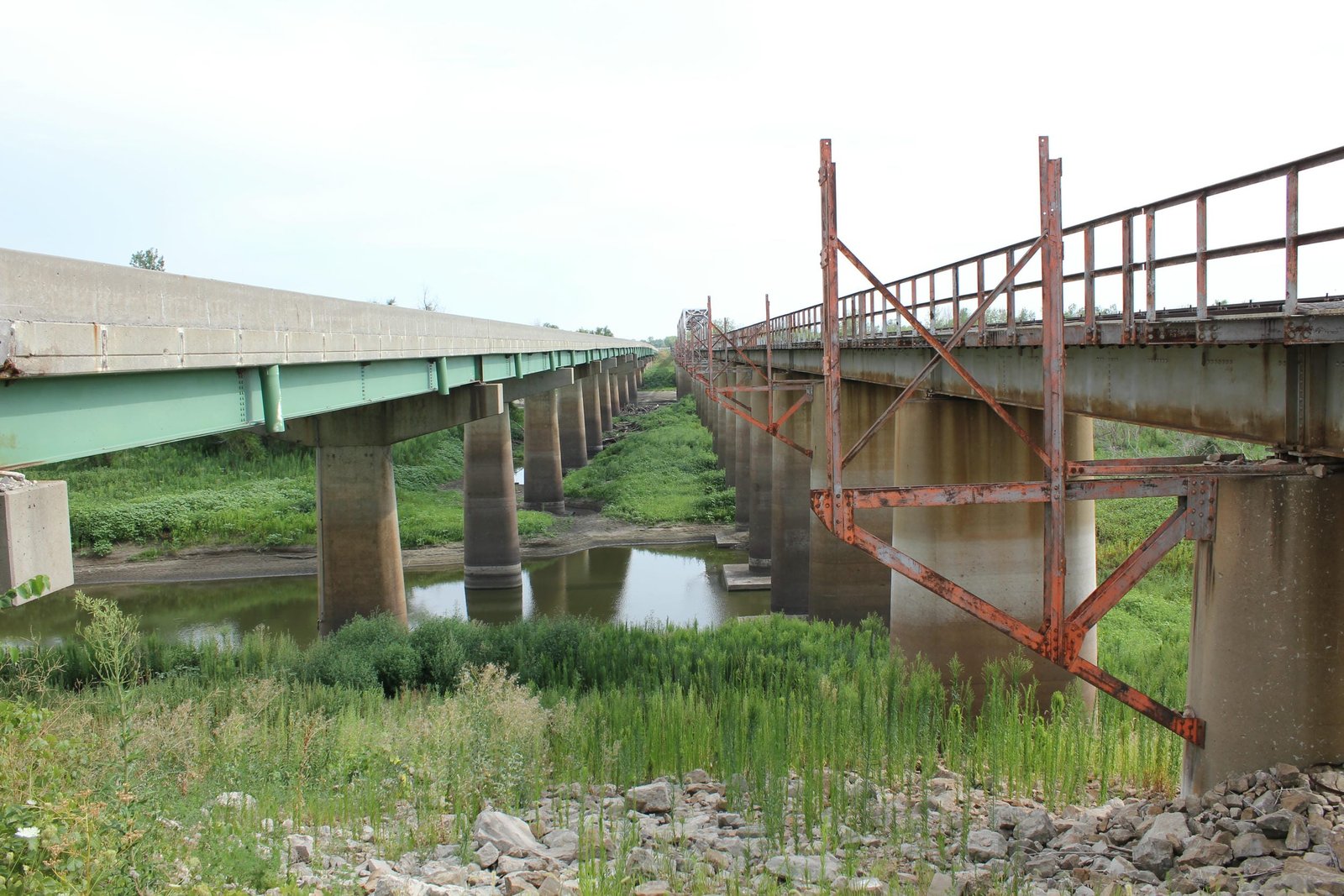
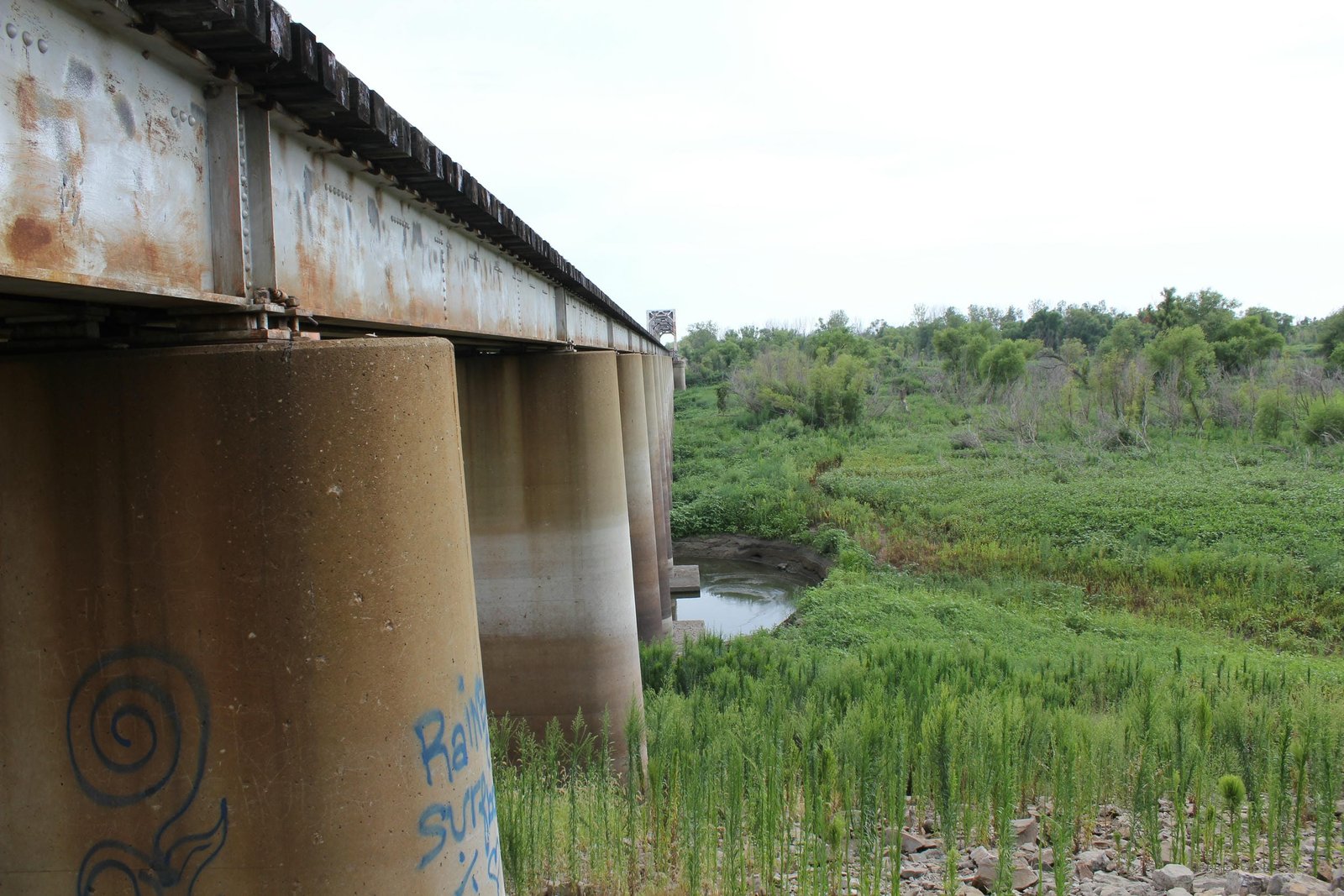
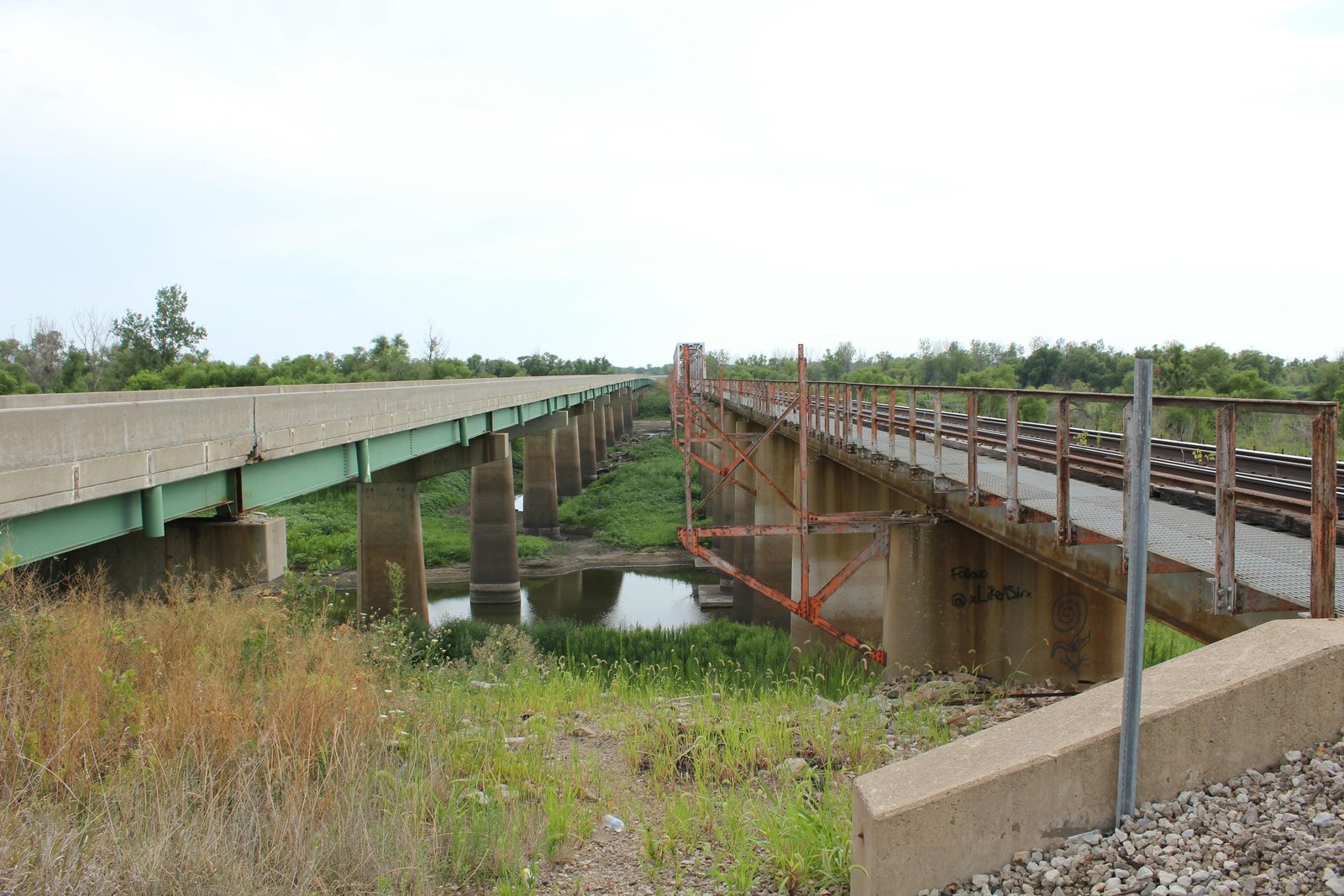
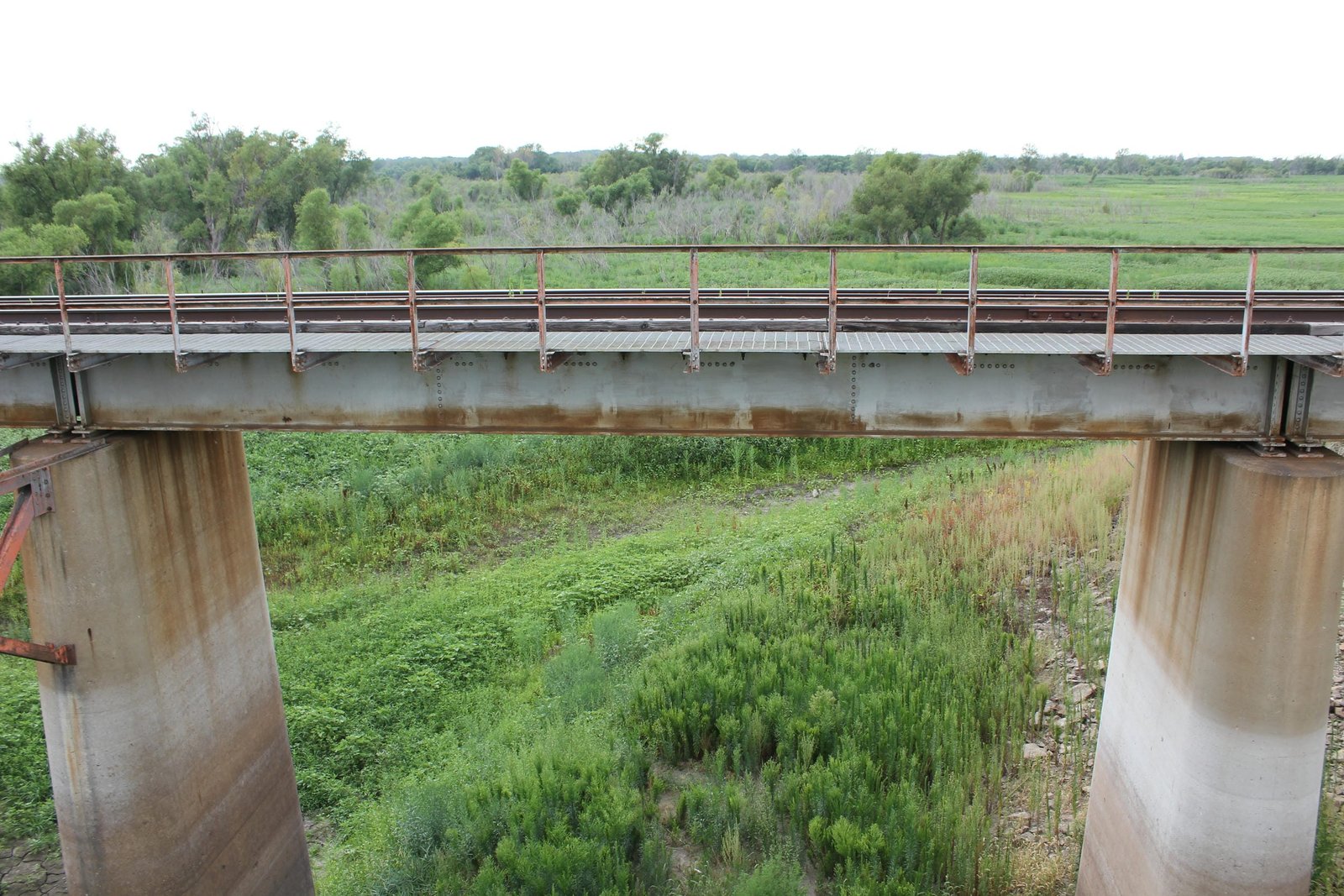
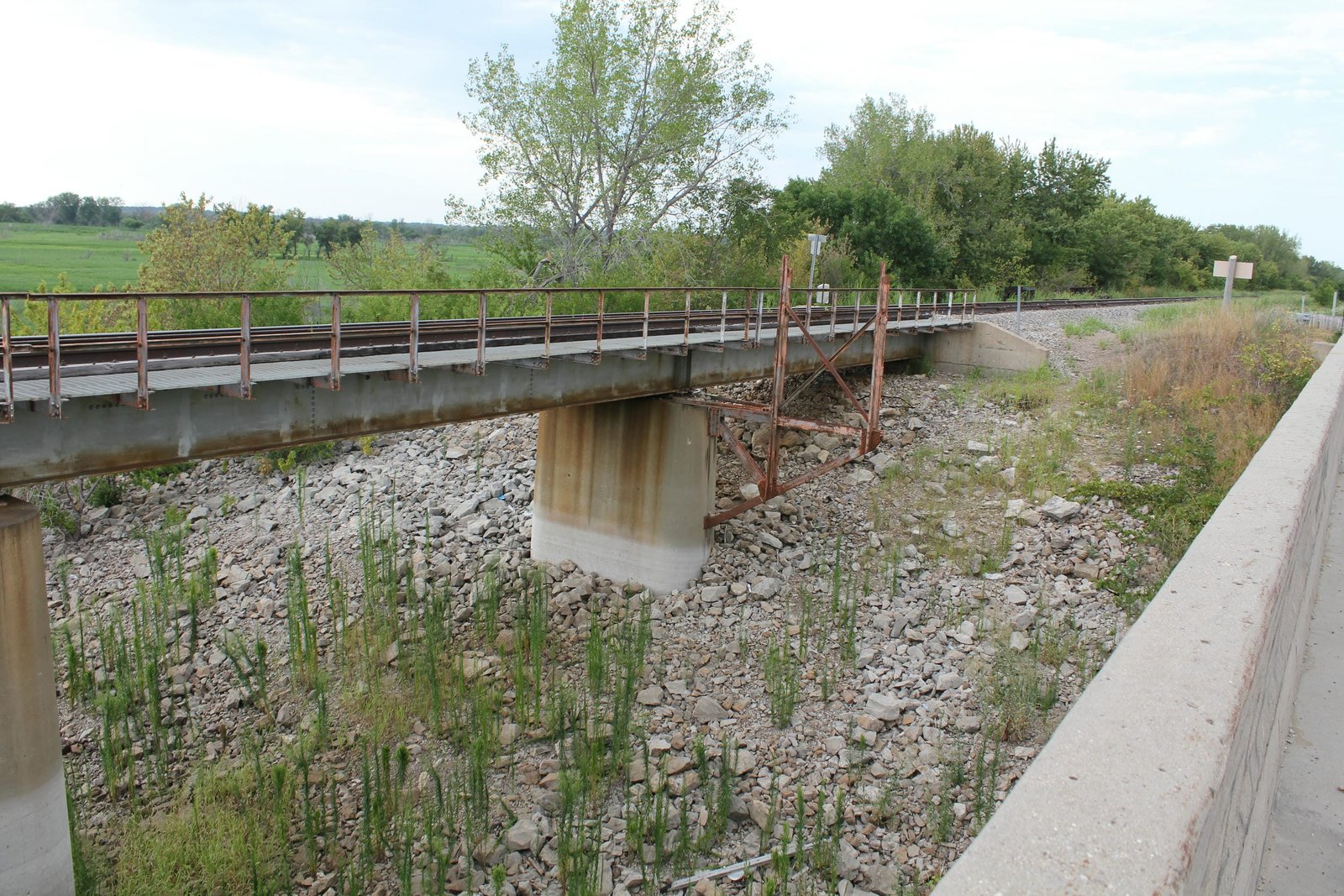
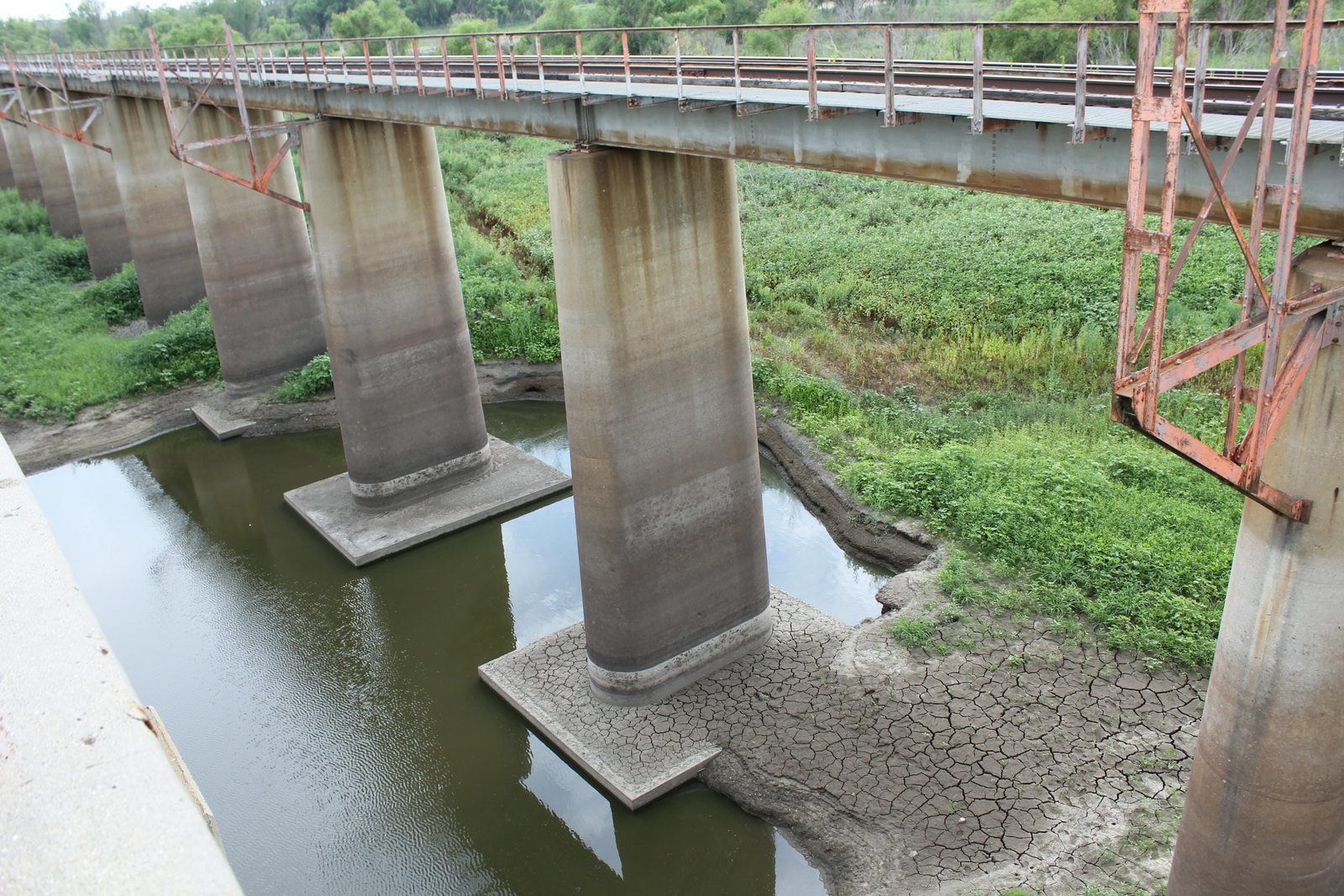
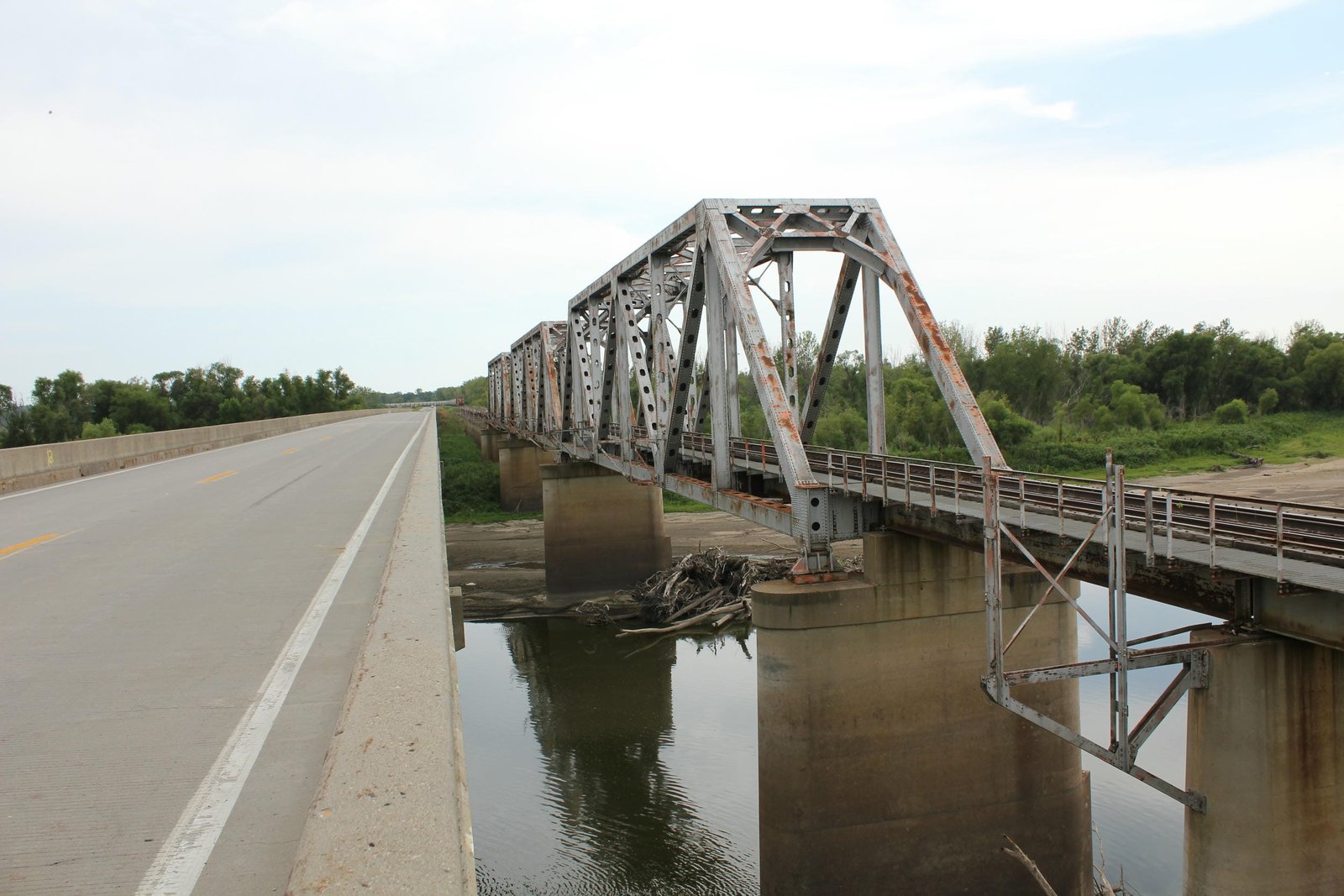
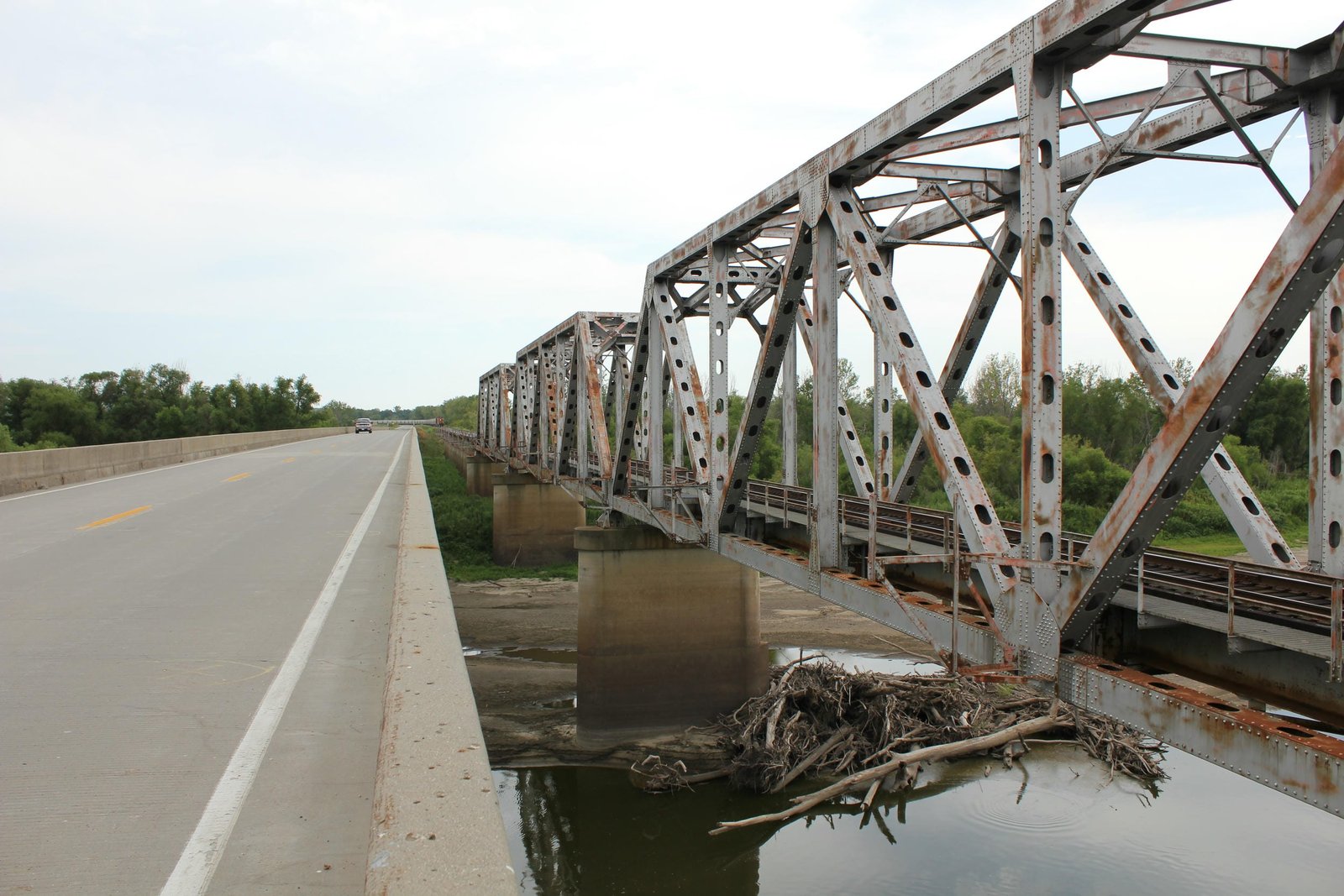
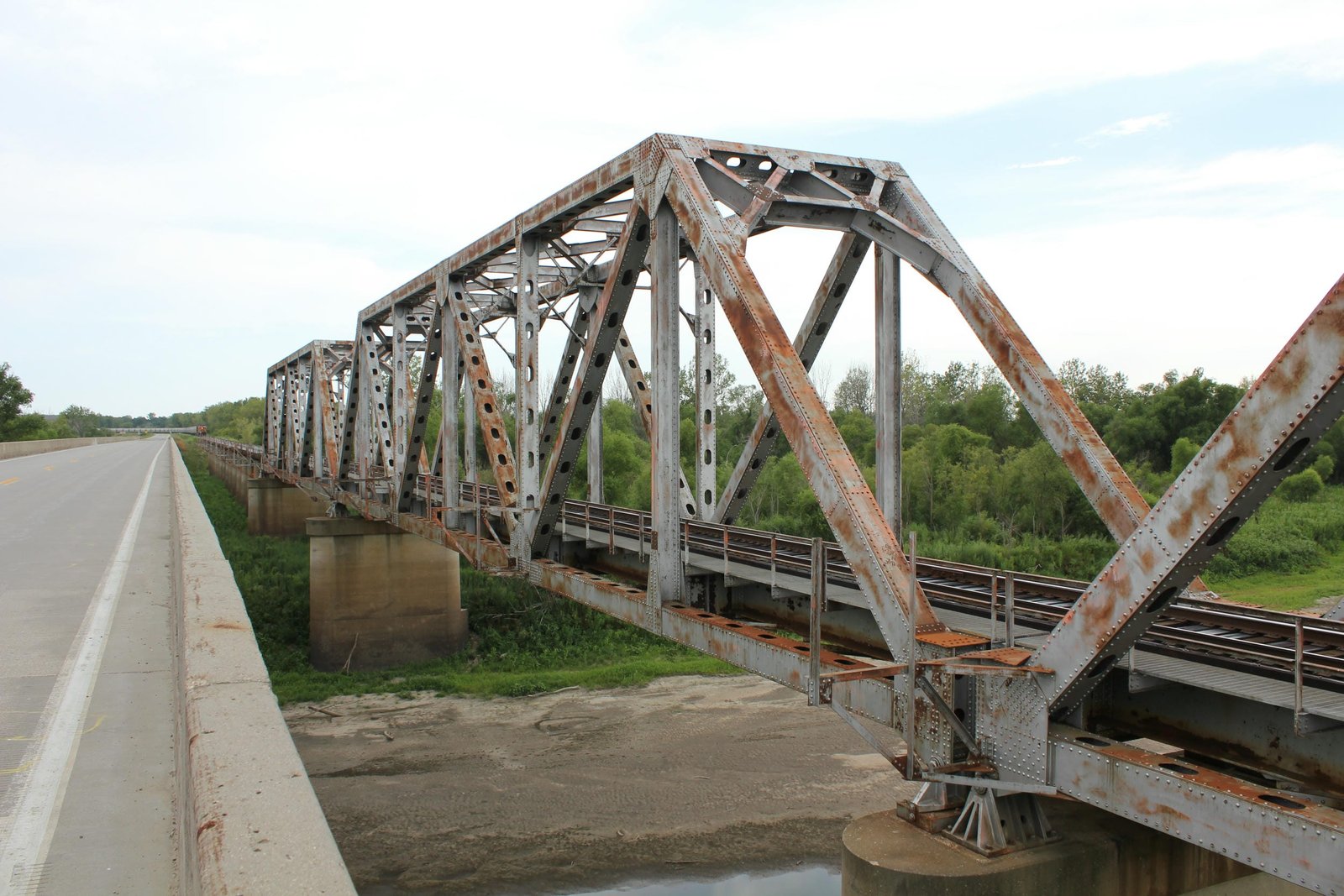
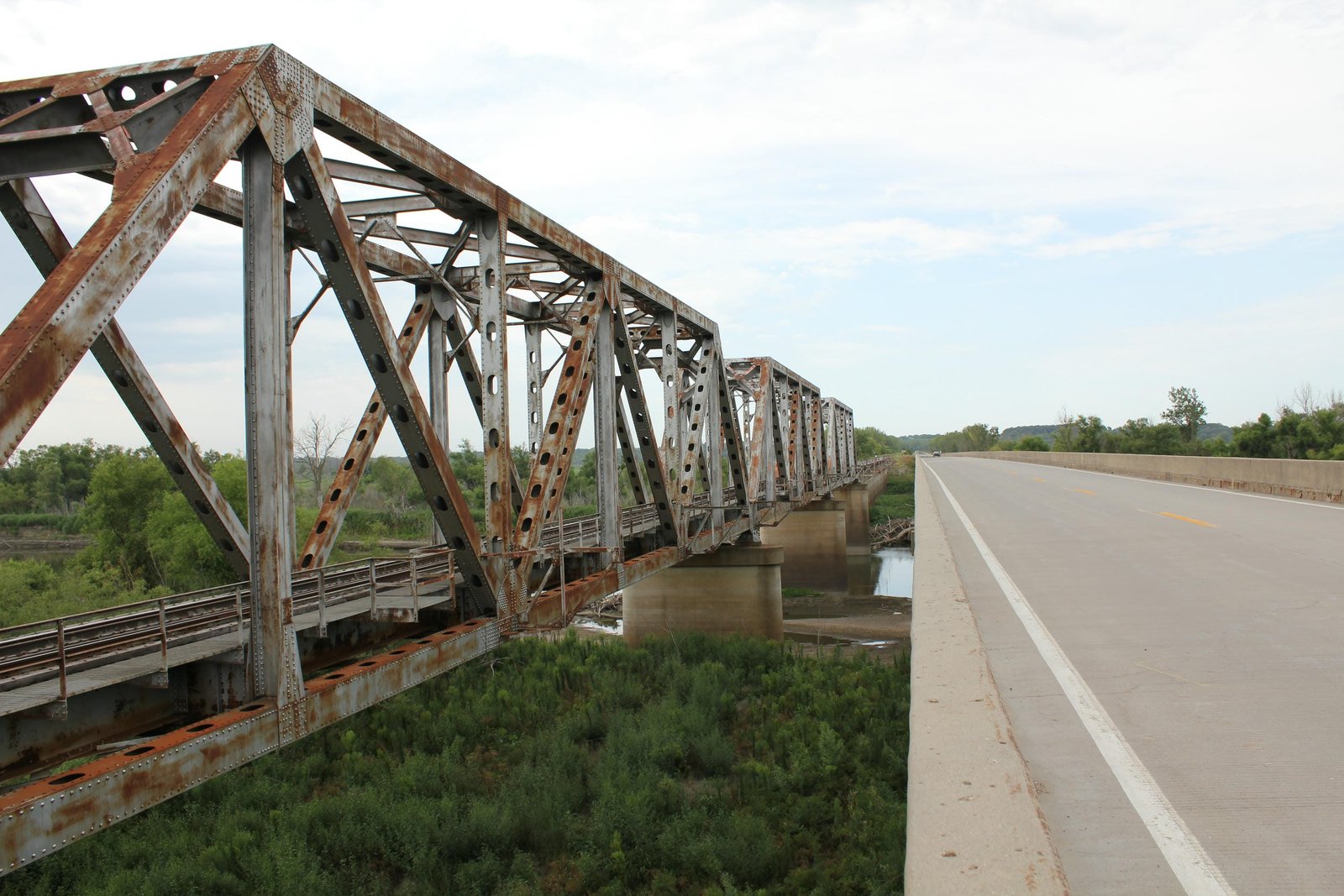
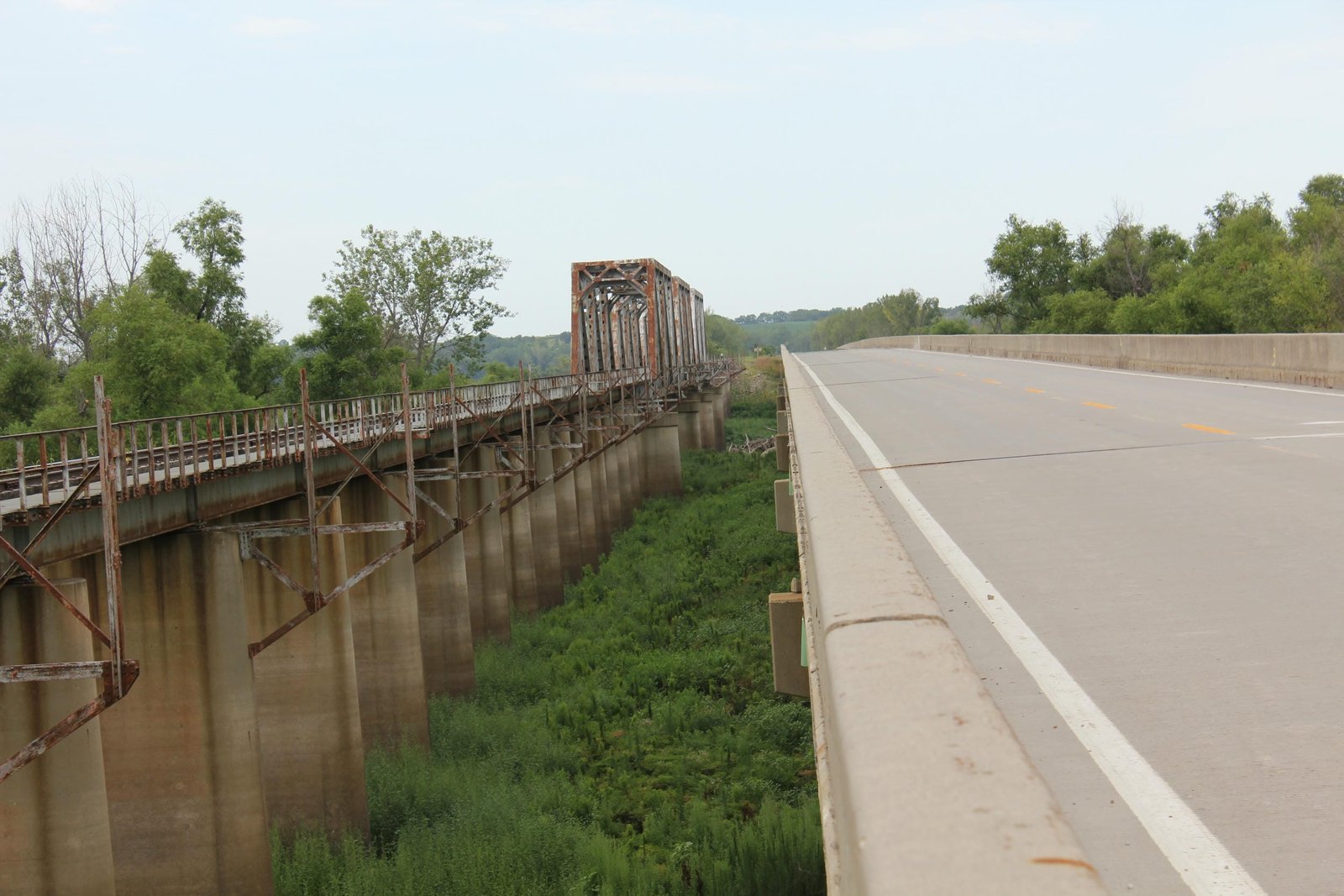
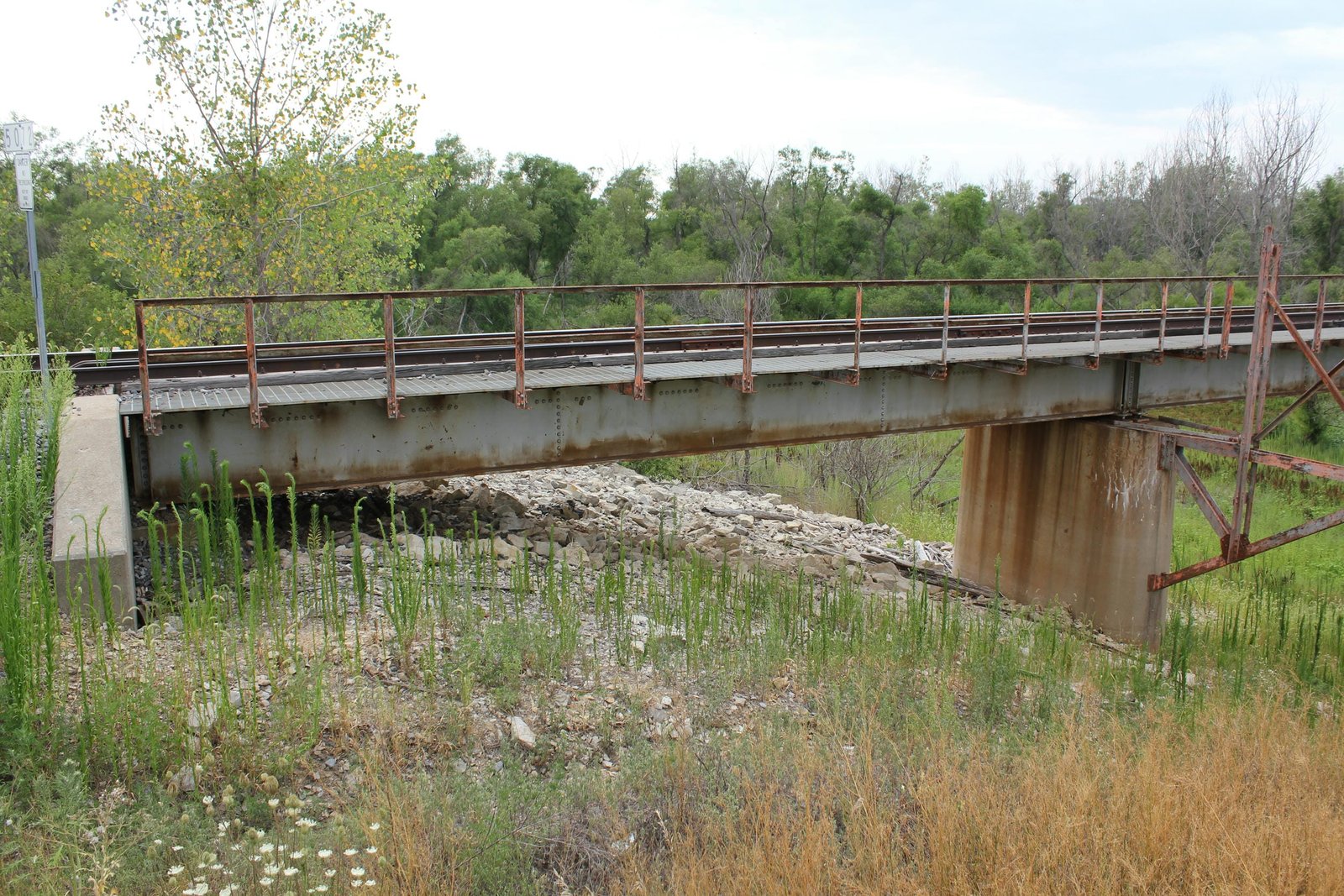
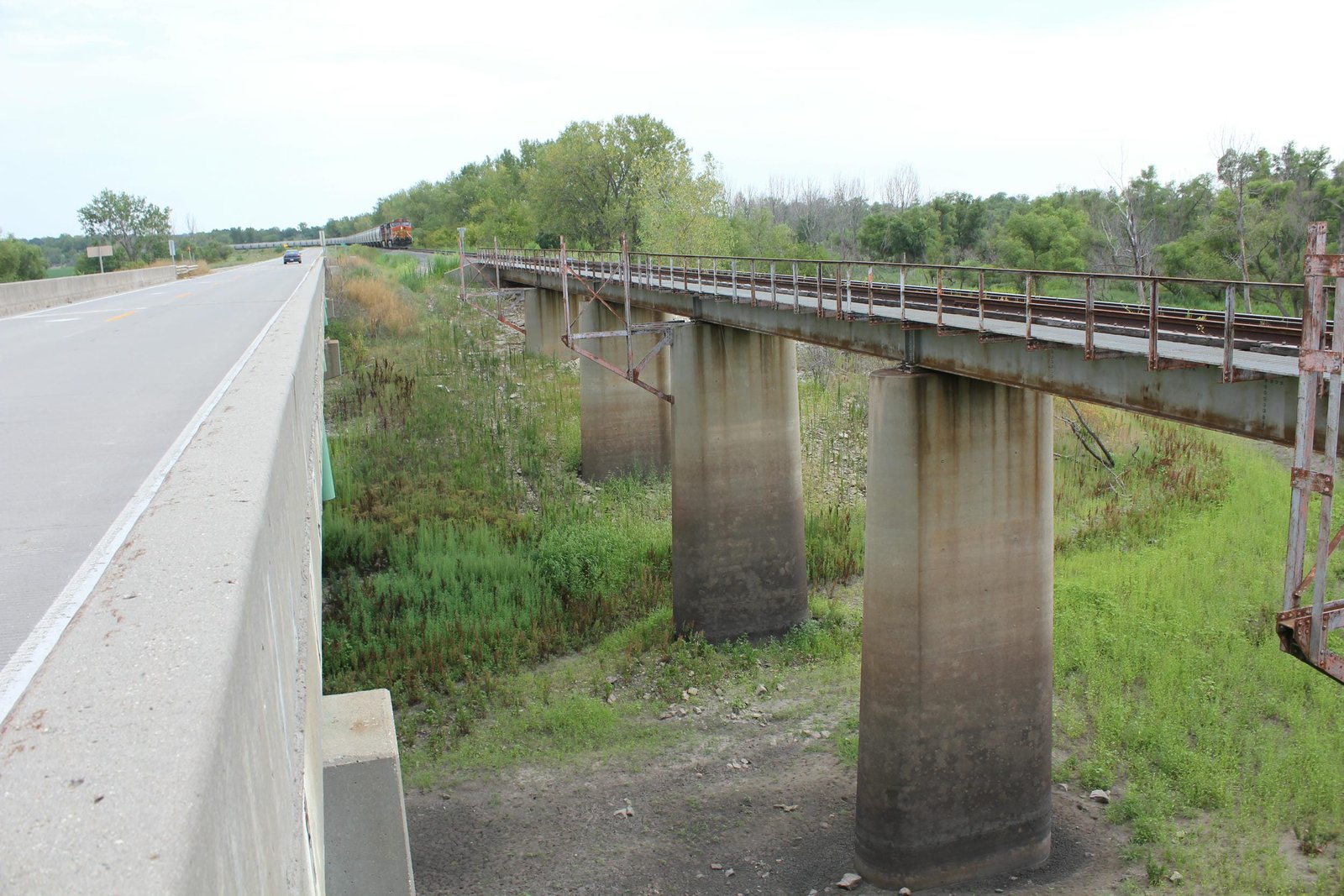
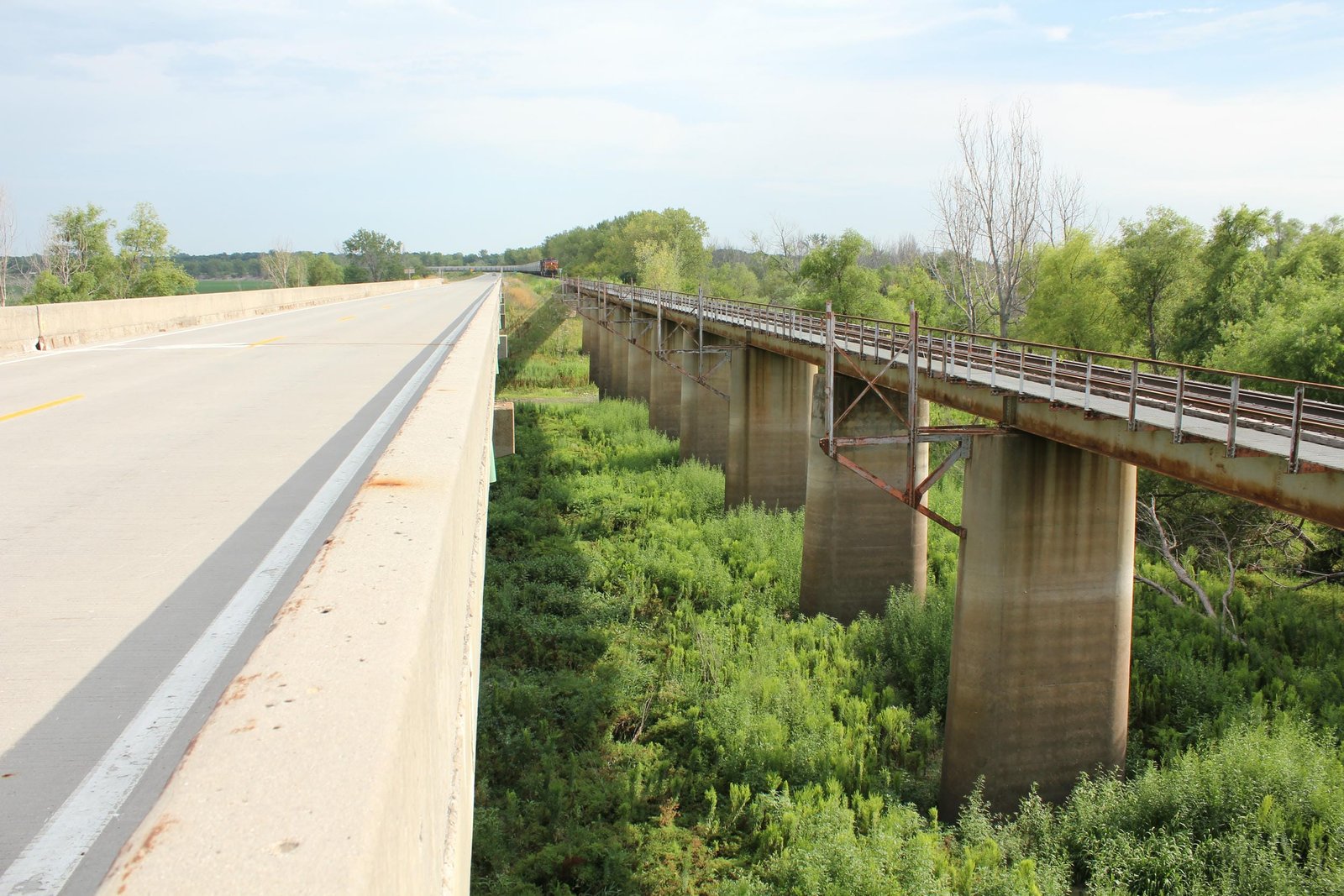
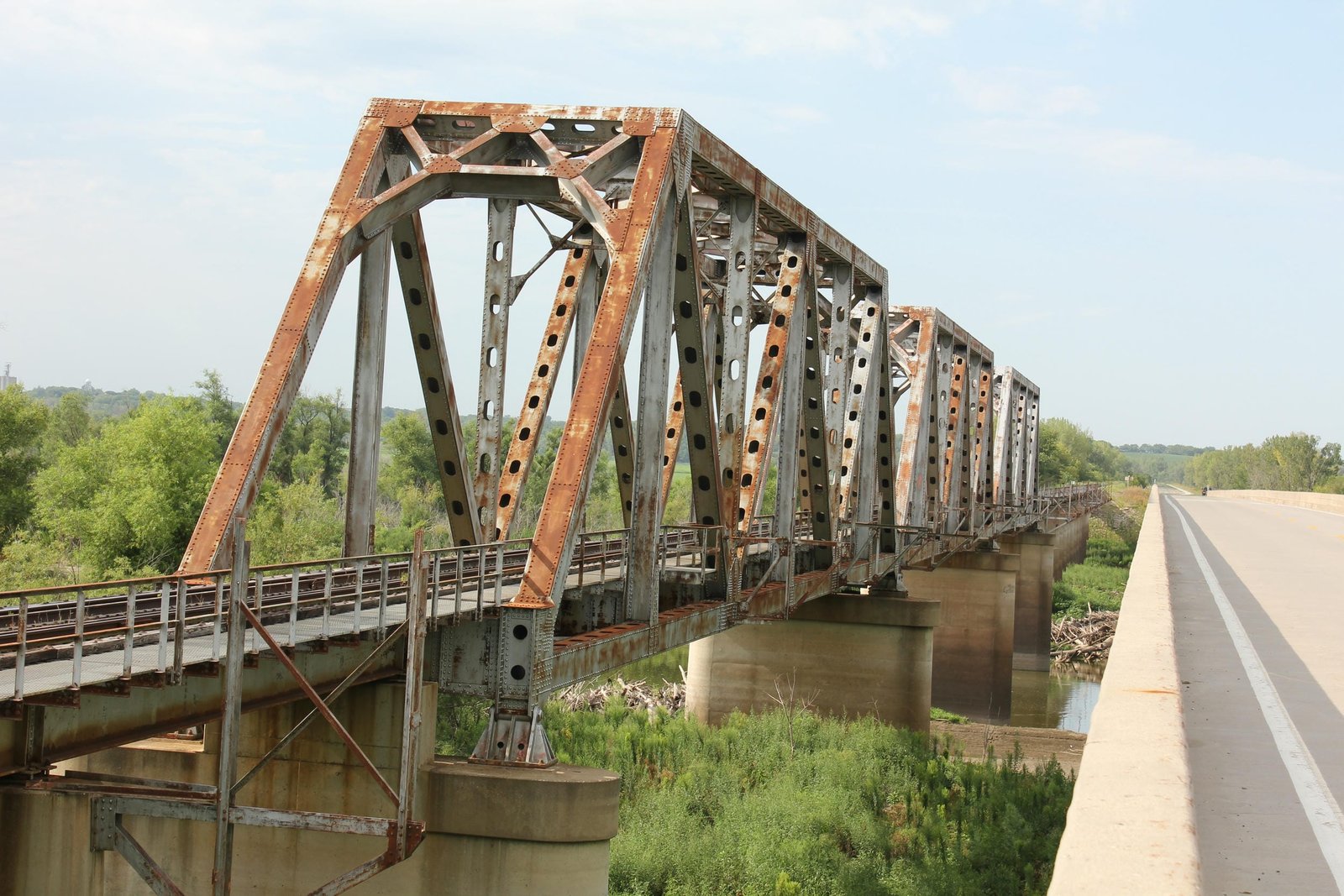
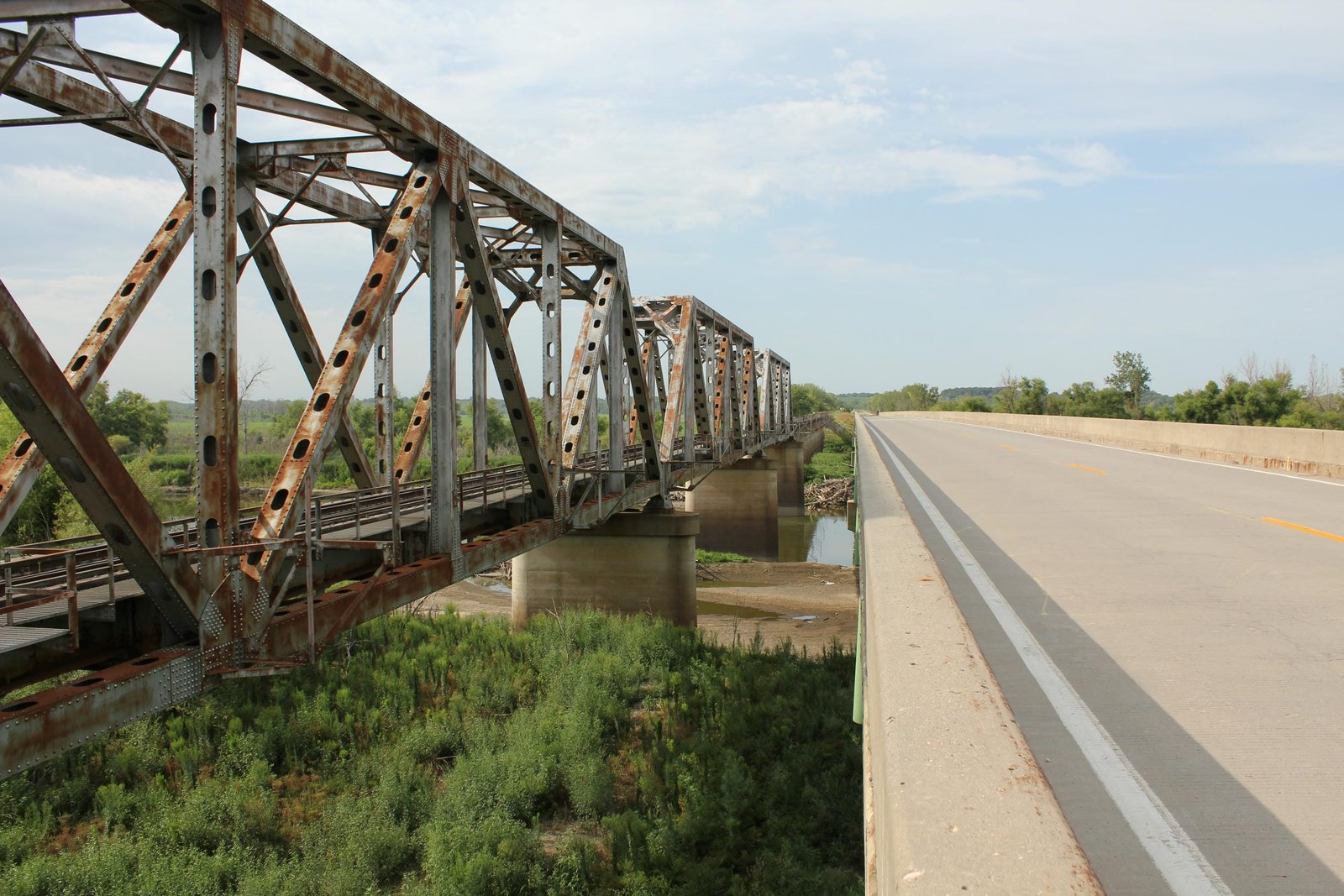
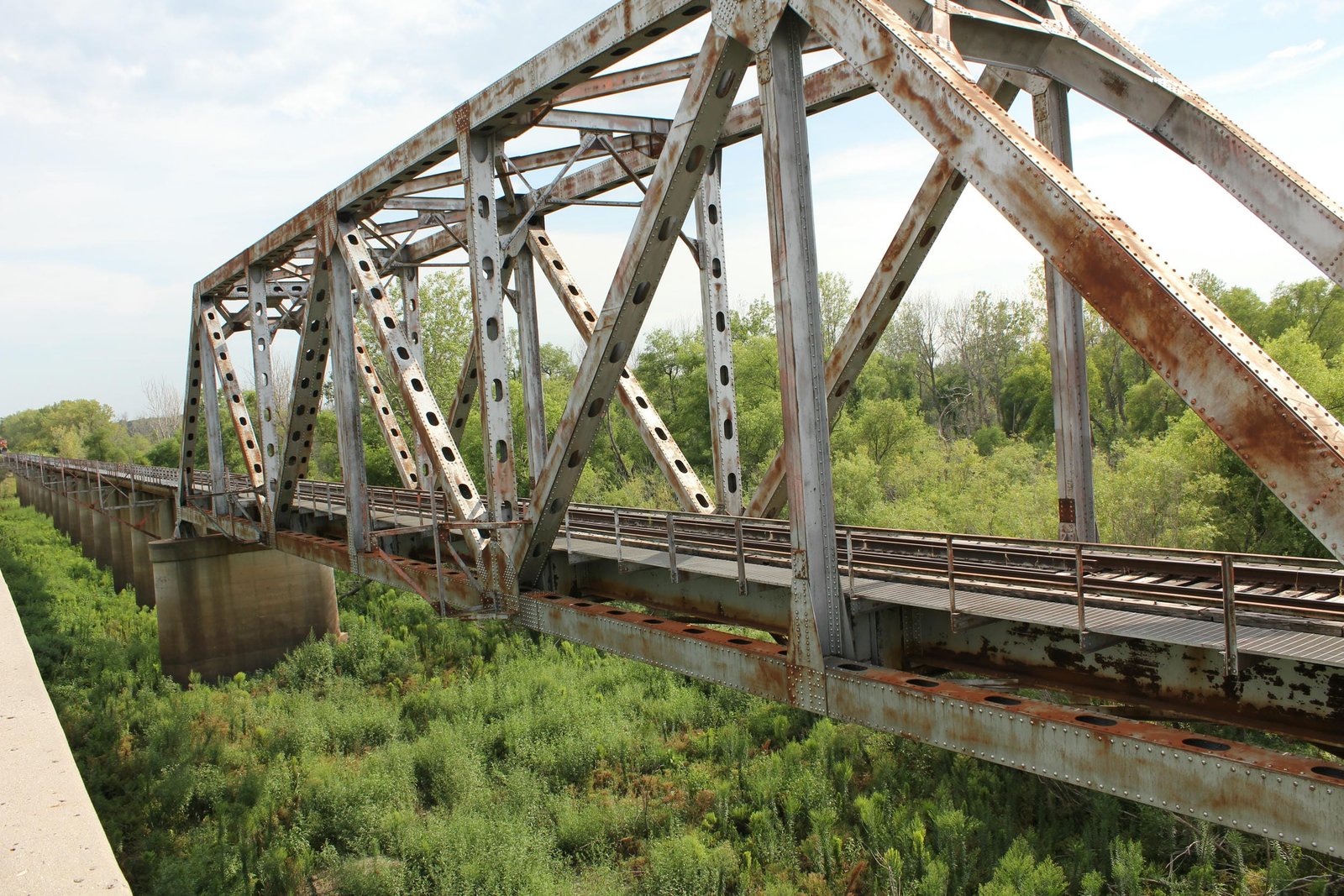
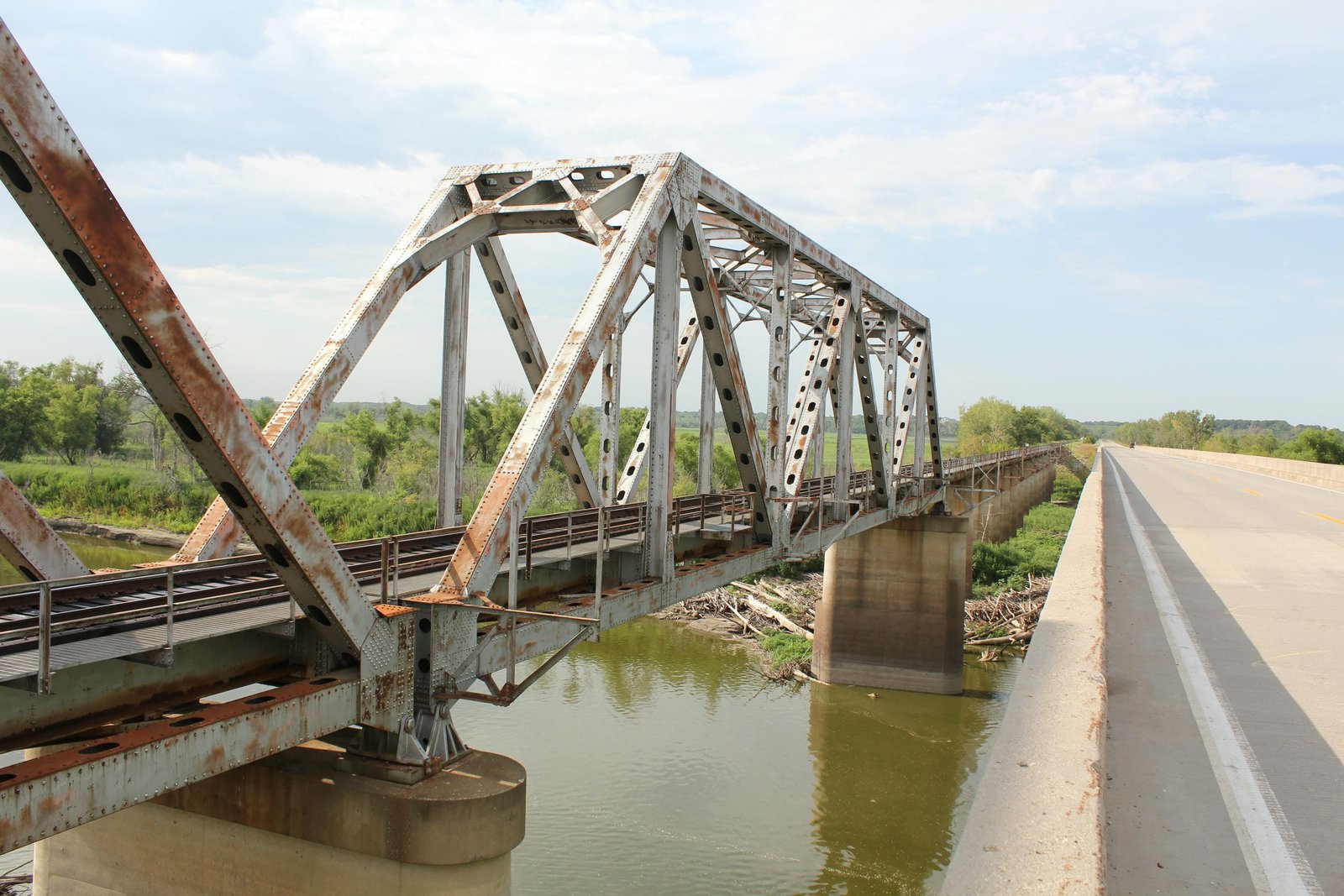
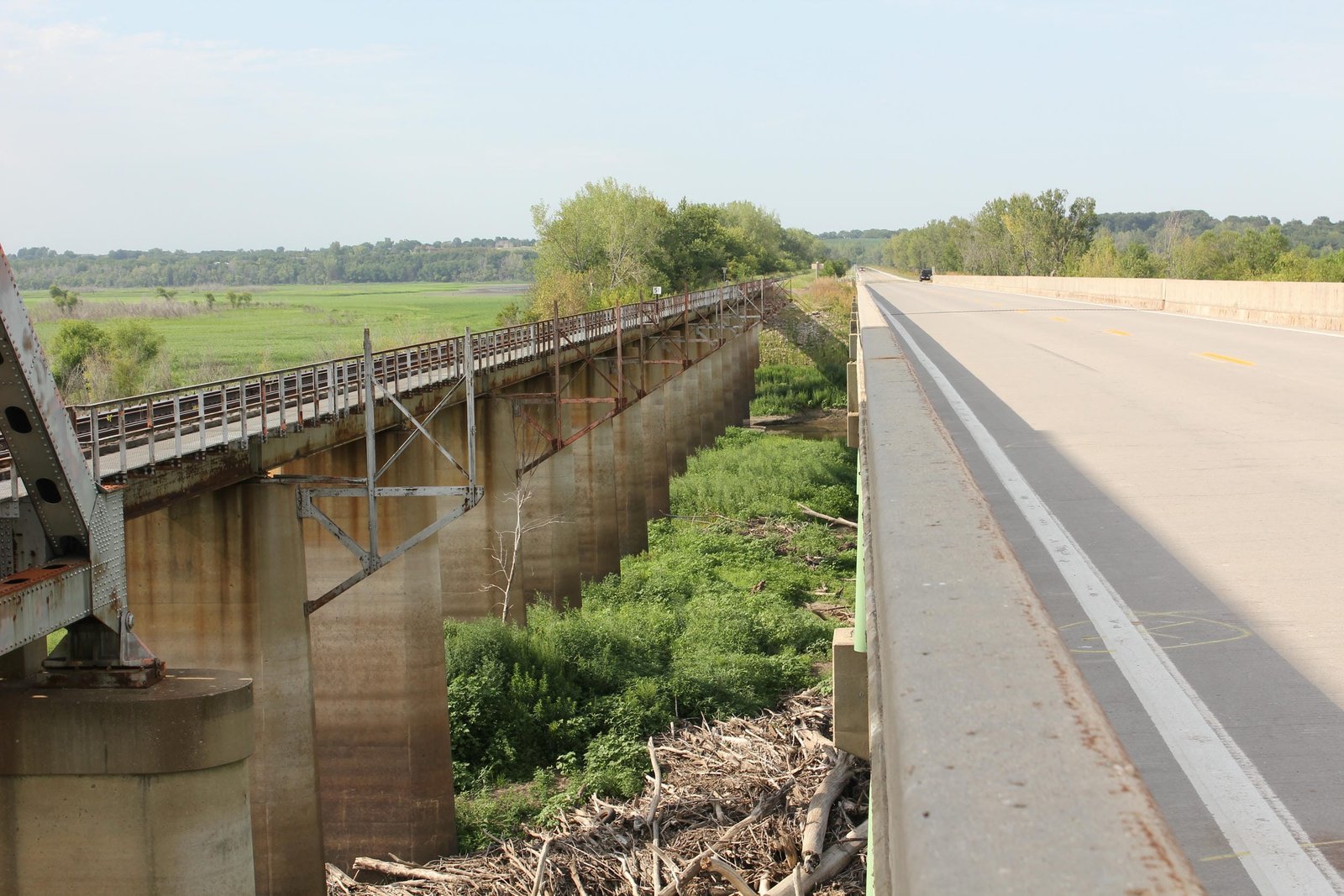
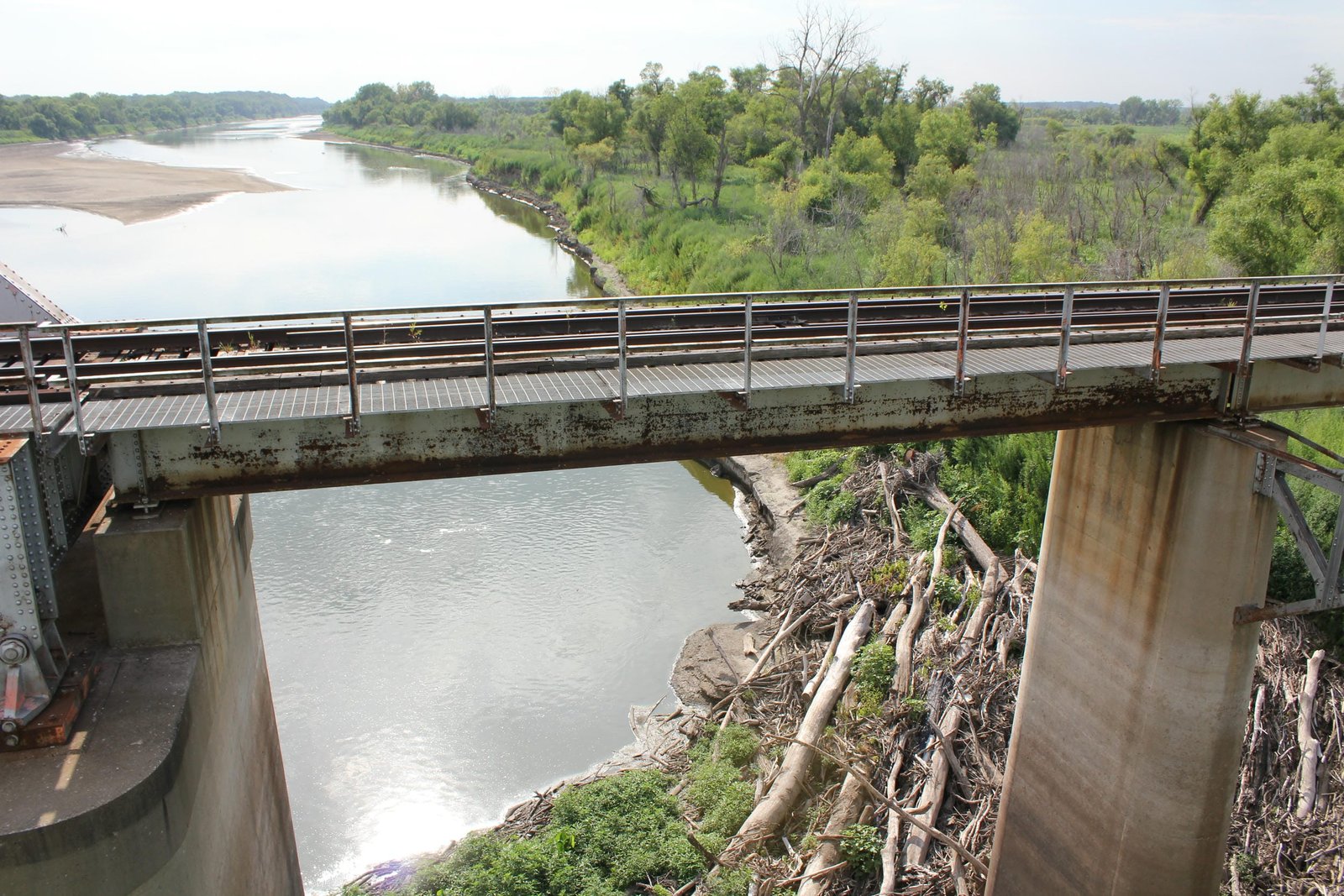
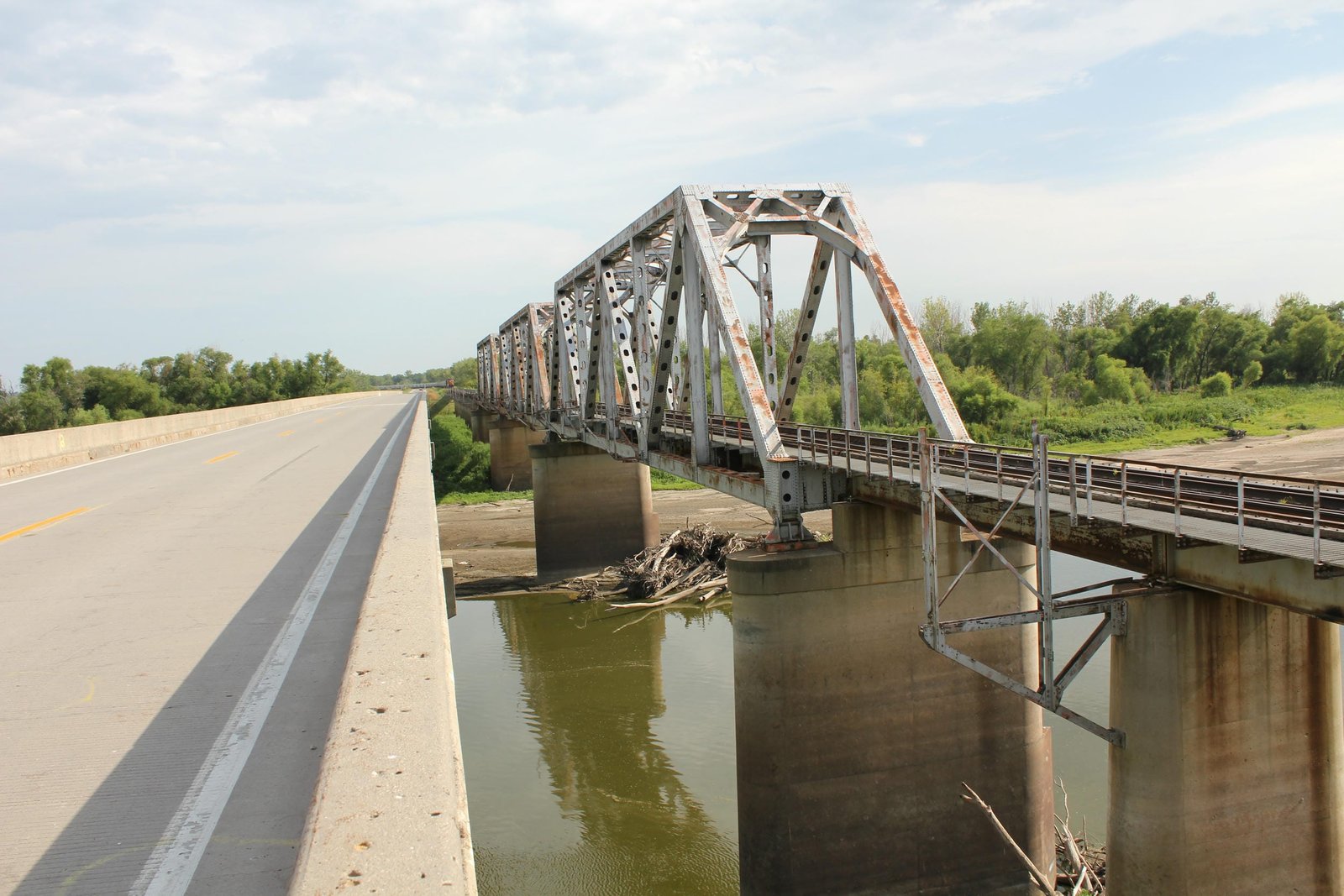
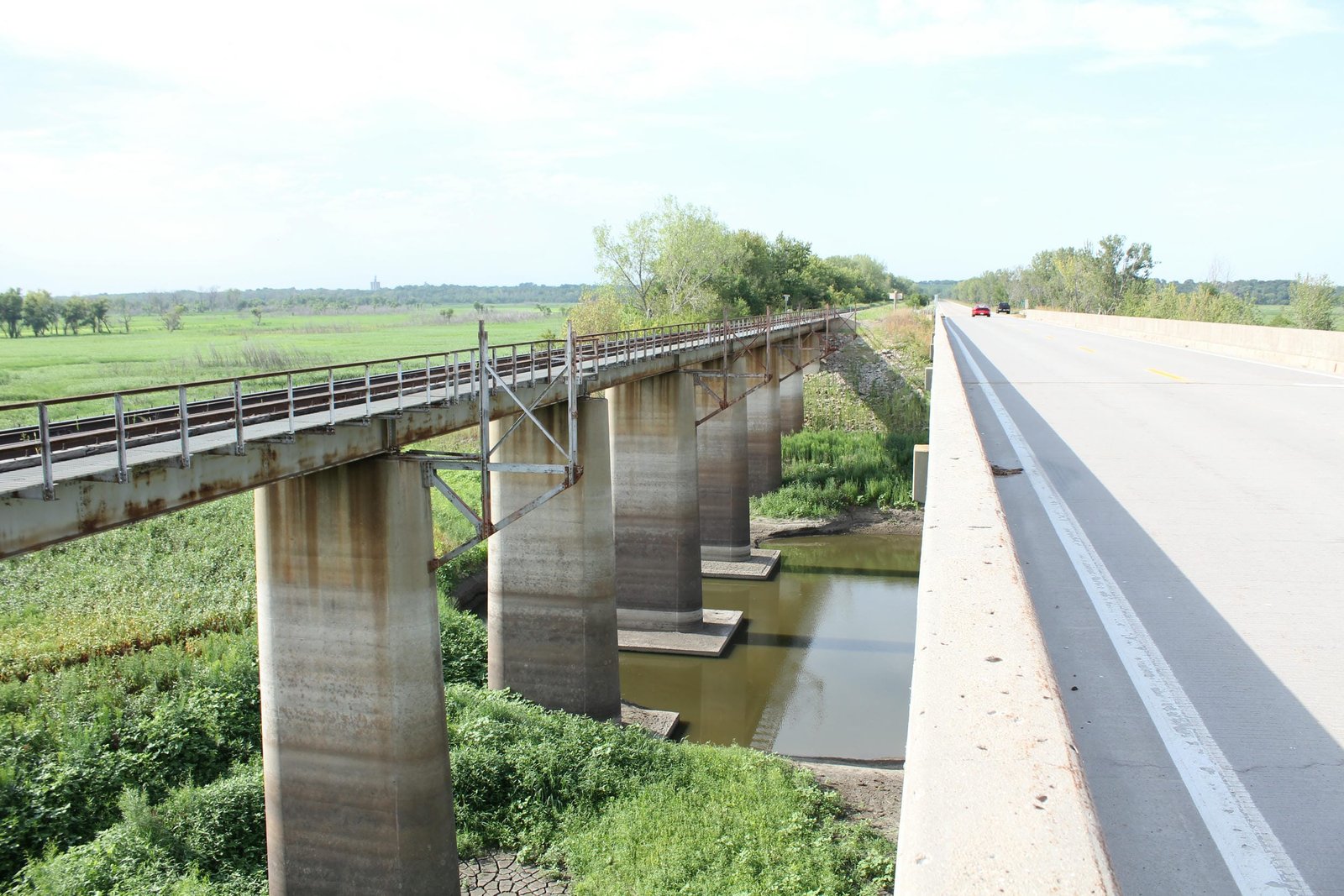
Located south of Runnells, this large through truss and steel stringer bridge carries a former Wabash Railroad branch line over the Des Moines River alongside Iowa Highway 316. Originally, the Wabash and Chicago, Burlington & Quincy Railroad (CB&Q) operated branch lines between Albia and Des Moines on opposite sides of the Des Moines River. The Wabash operated a line which crossed the Des Moines River near Harvey, Iowa and continued along the north side of the river into Des Moines, while the CB&Q operated a line along the south side of the river, which crossed the Des Moines River in southeast Des Moines. using a four-span through truss bridge, fabricated in 1879. Starting in the 1950s, the Army Corps of Engineers planned a series of improvements to reduce flooding along the Des Moines River. One of the selected projects was the Red Rock Dam, which would be constructed near Pella and result in a large pool forming upstream. As a result, the Wabash line would be inundated. The Army Corps of Engineers worked with the Wabash and CB&Q to devise a solution. It was decided that the CB&Q and Wabash would share a line between Albia and Des Moines. The CB&Q line between Albia and the small town of Swan would be retained, a new bridge constructed across the Des Moines River, and the Wabash line between Runnells and Des Moines retained. The CB&Q between Swan and Des Moines and the Wabash between Albia and Runnells would be abandoned. Work on the project began in 1963, and was completed in late 1964. Currently, the bridge consists of three 188-foot, 6-panel, riveted Warren through truss spans, approached by eighteen 43-foot steel stringer spans on either end. The entire bridge is set onto concrete substructures.
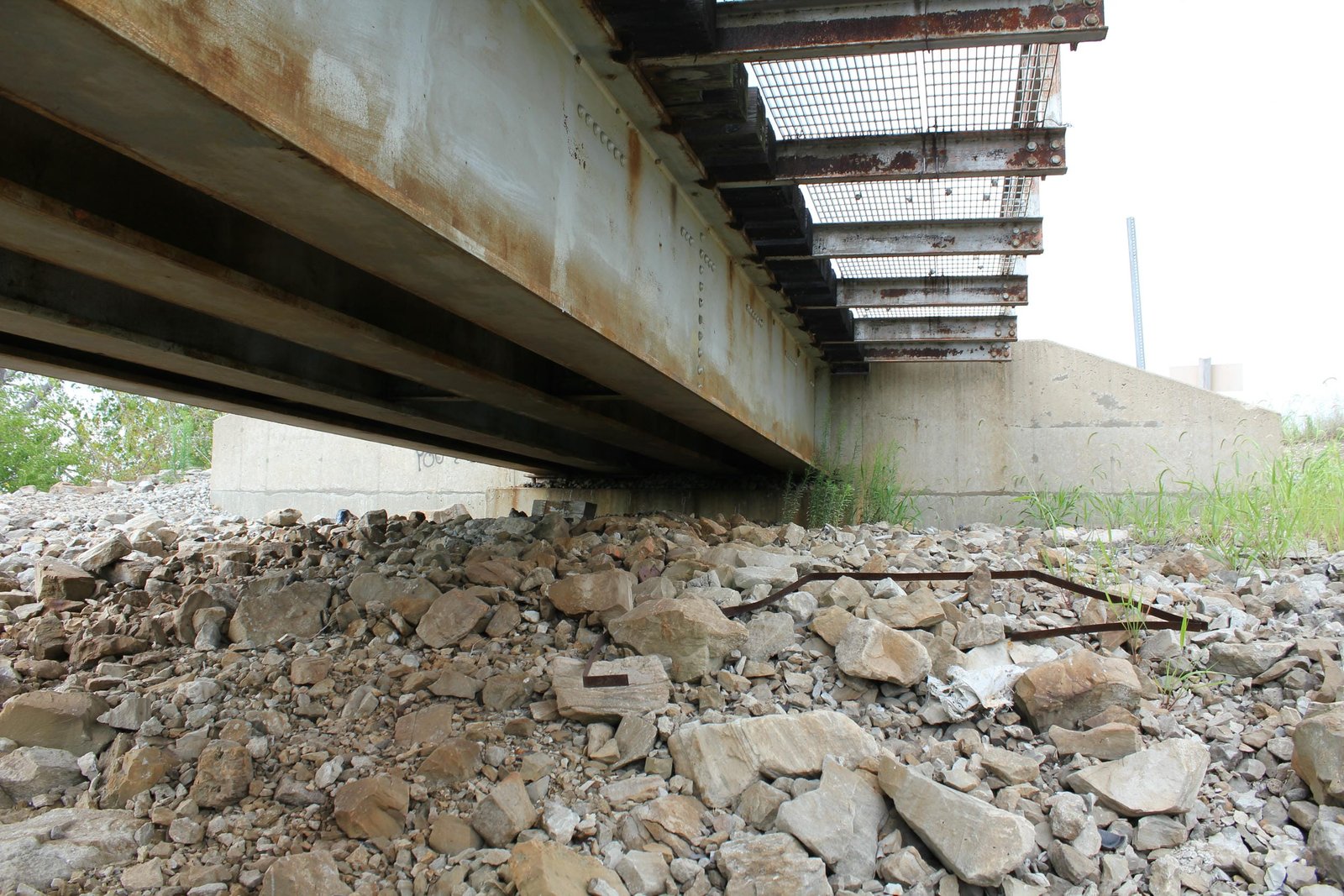
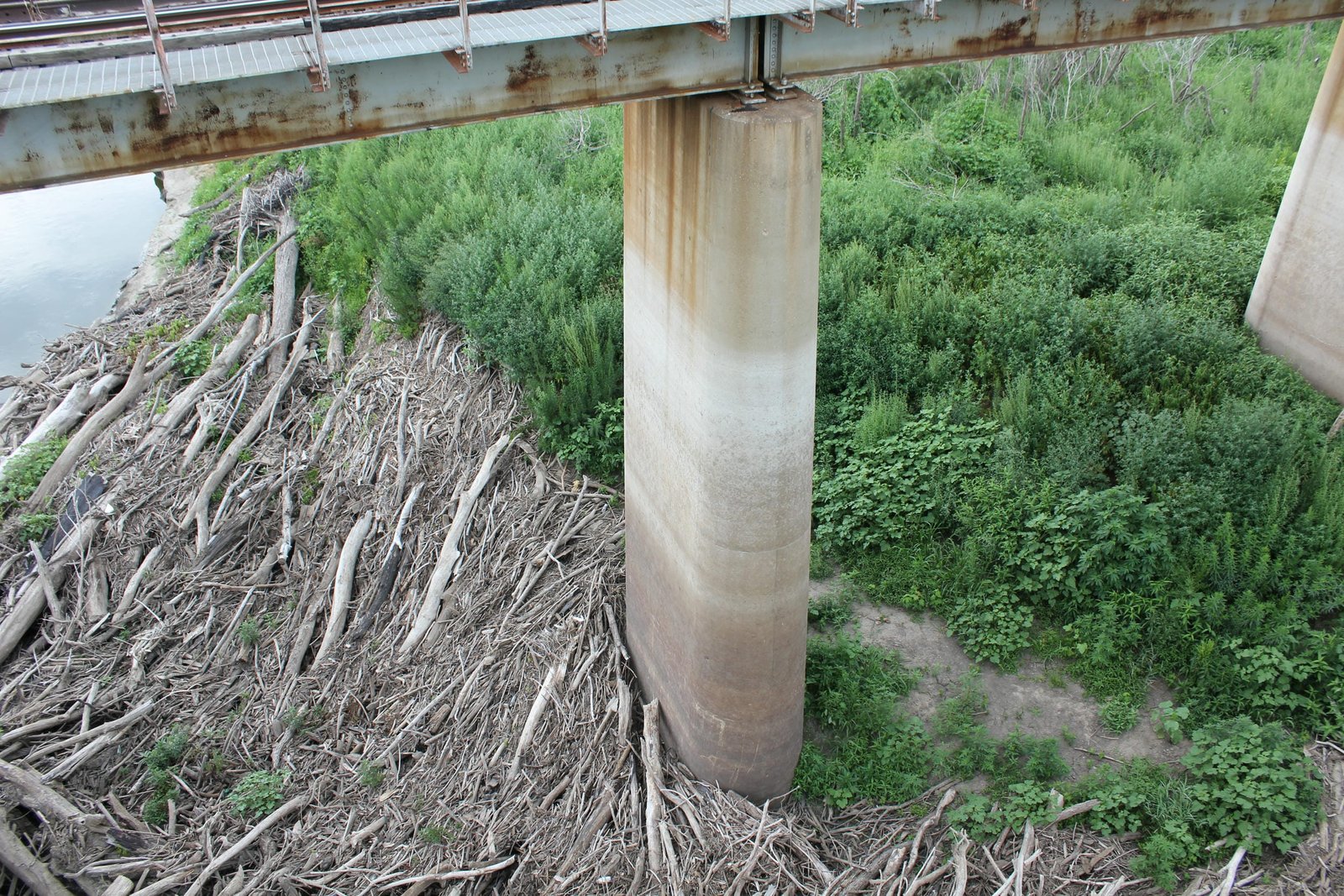
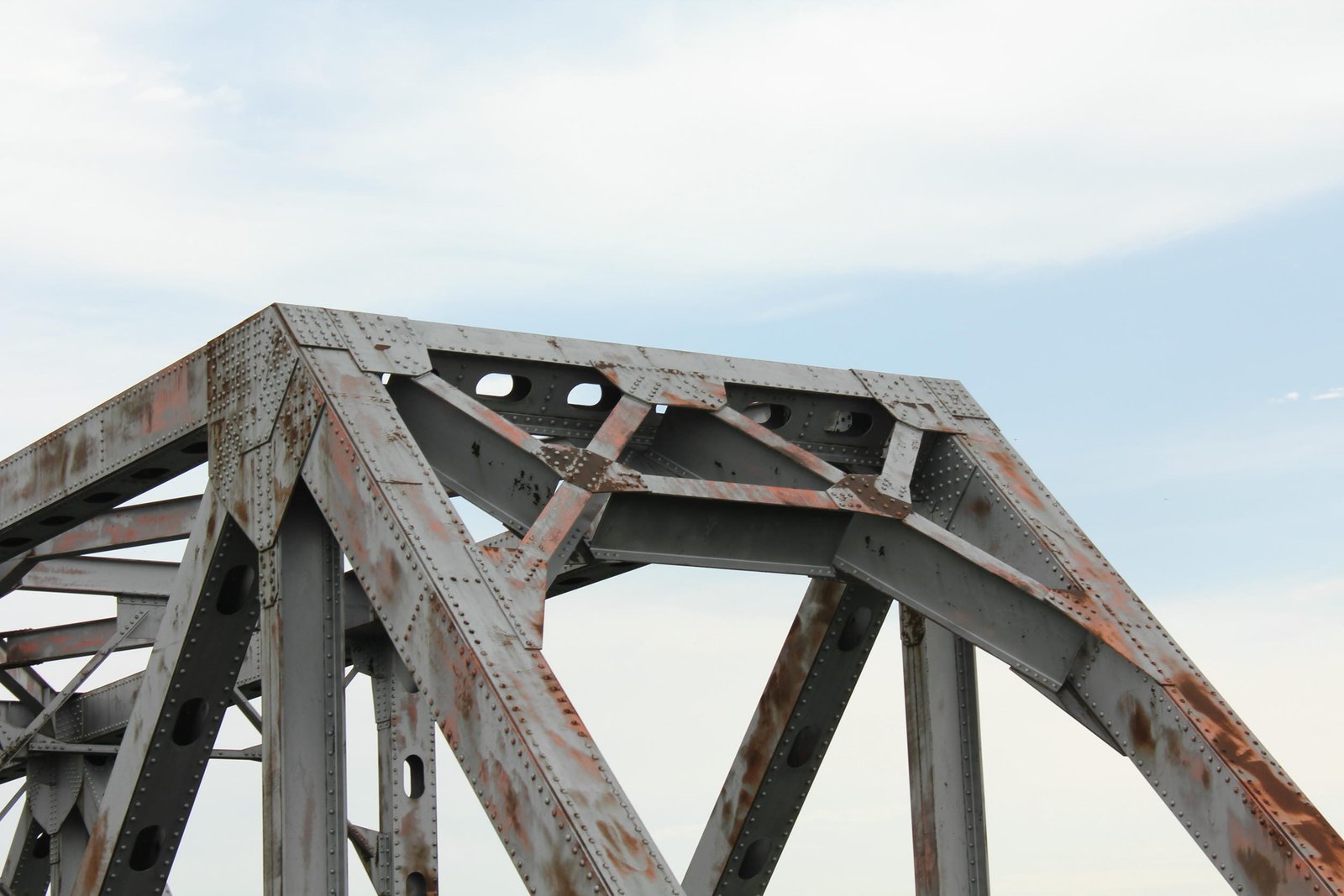
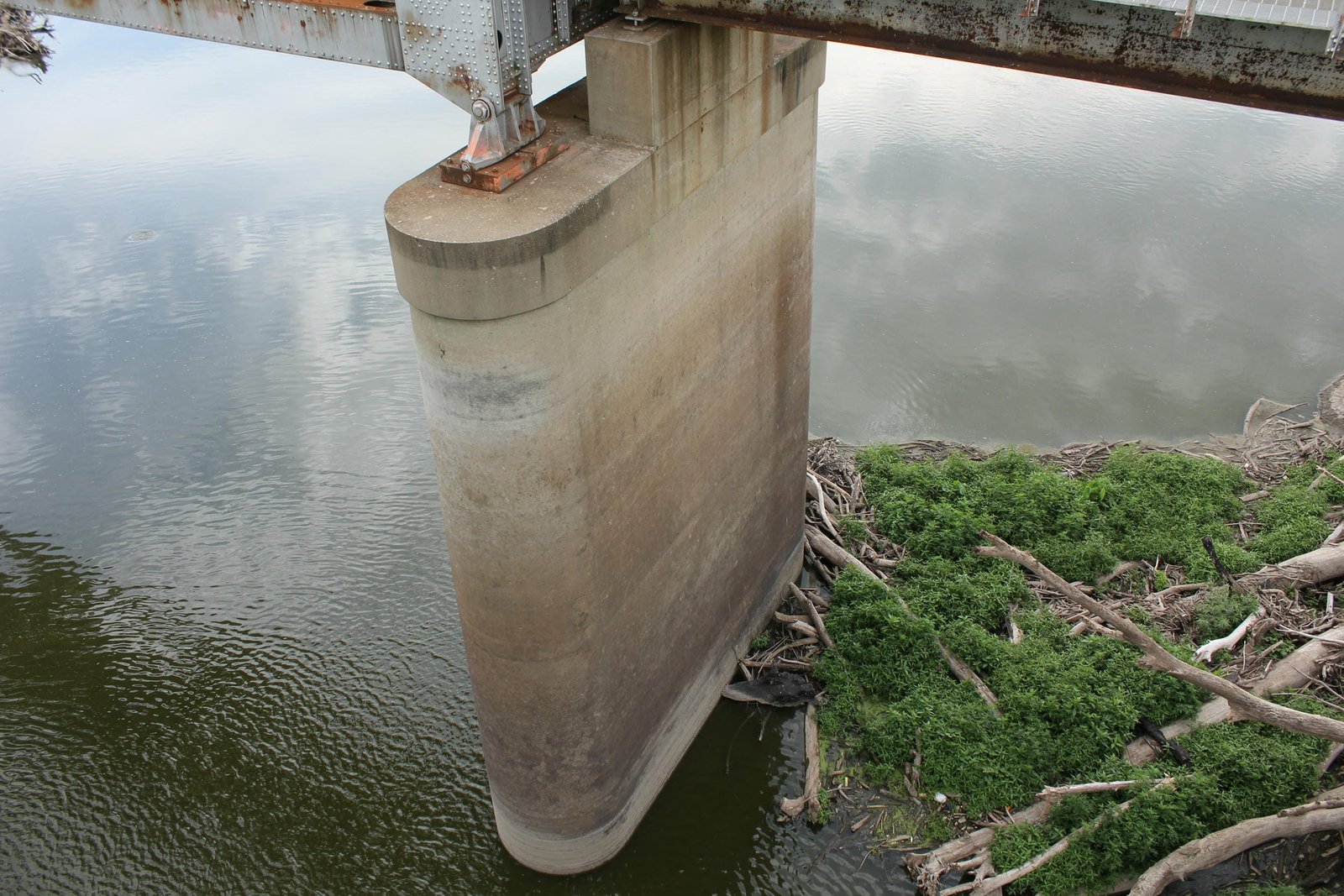
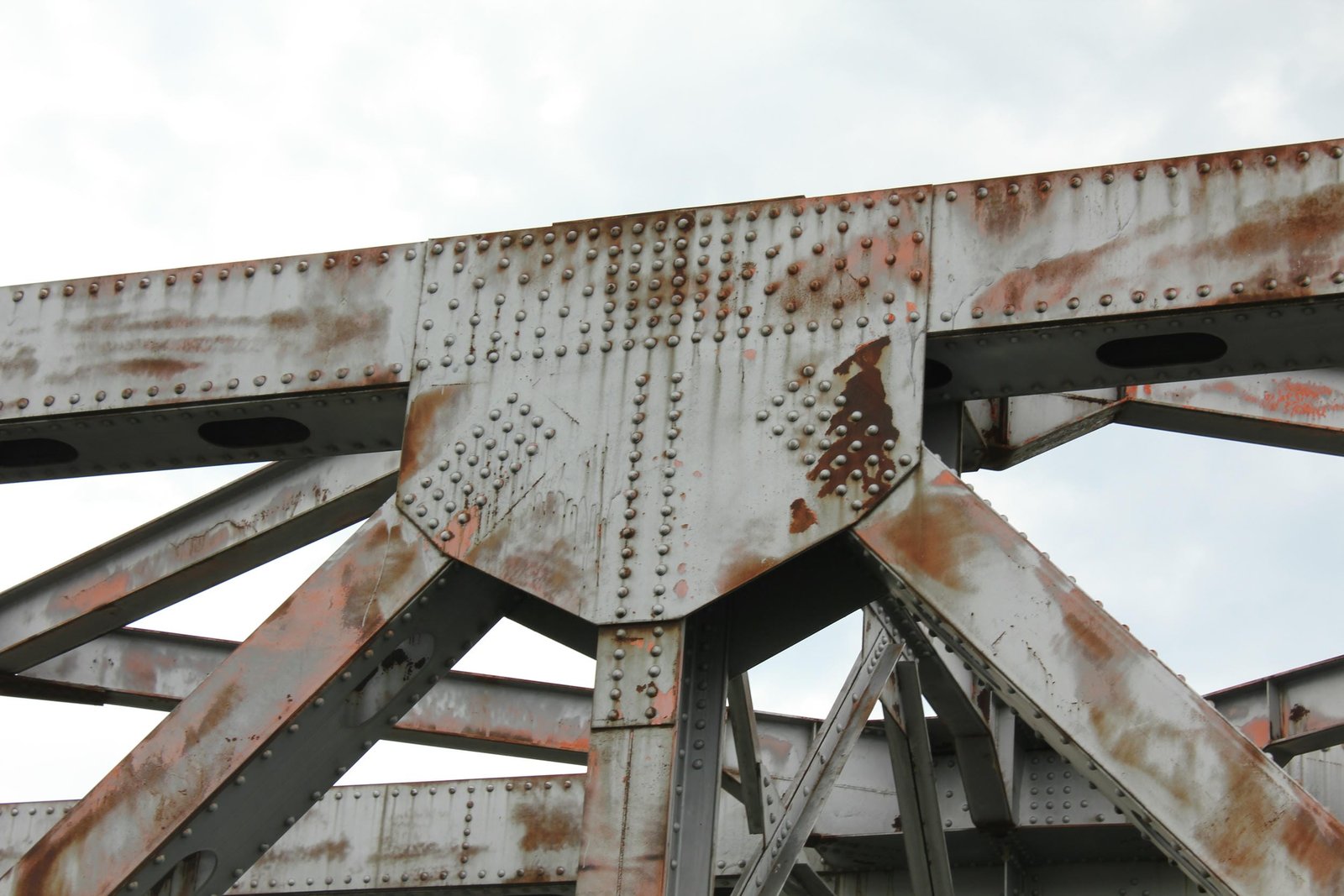
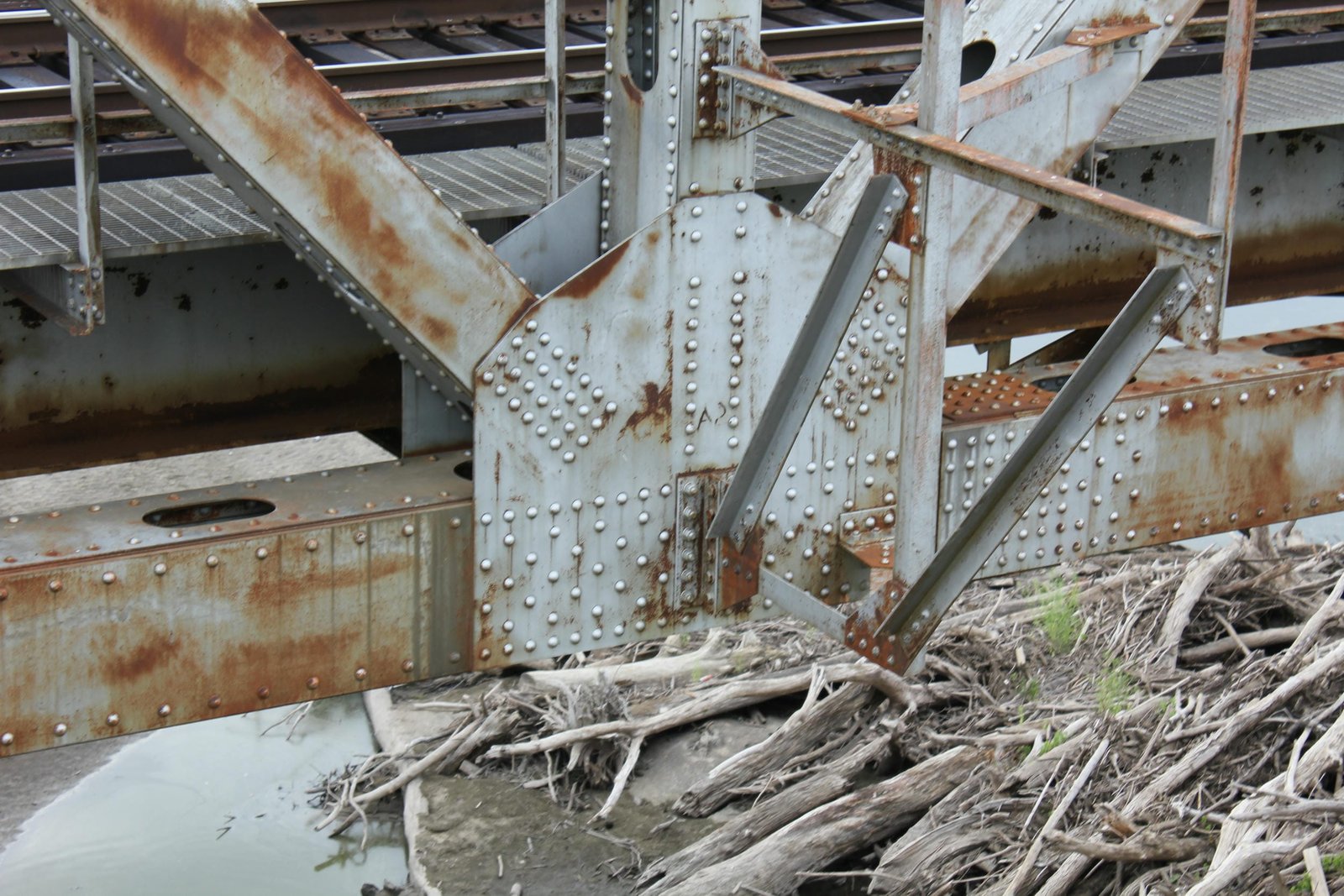
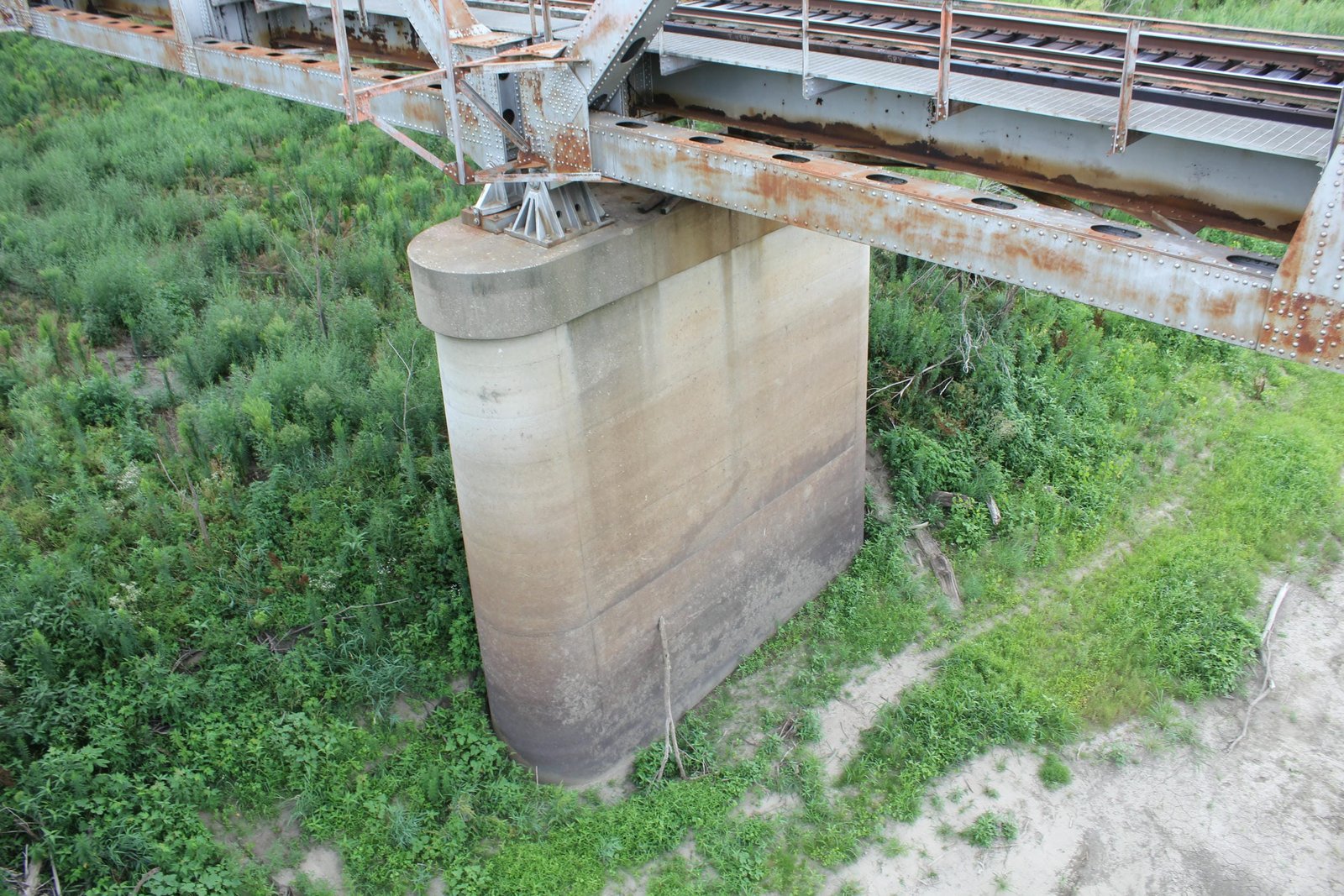
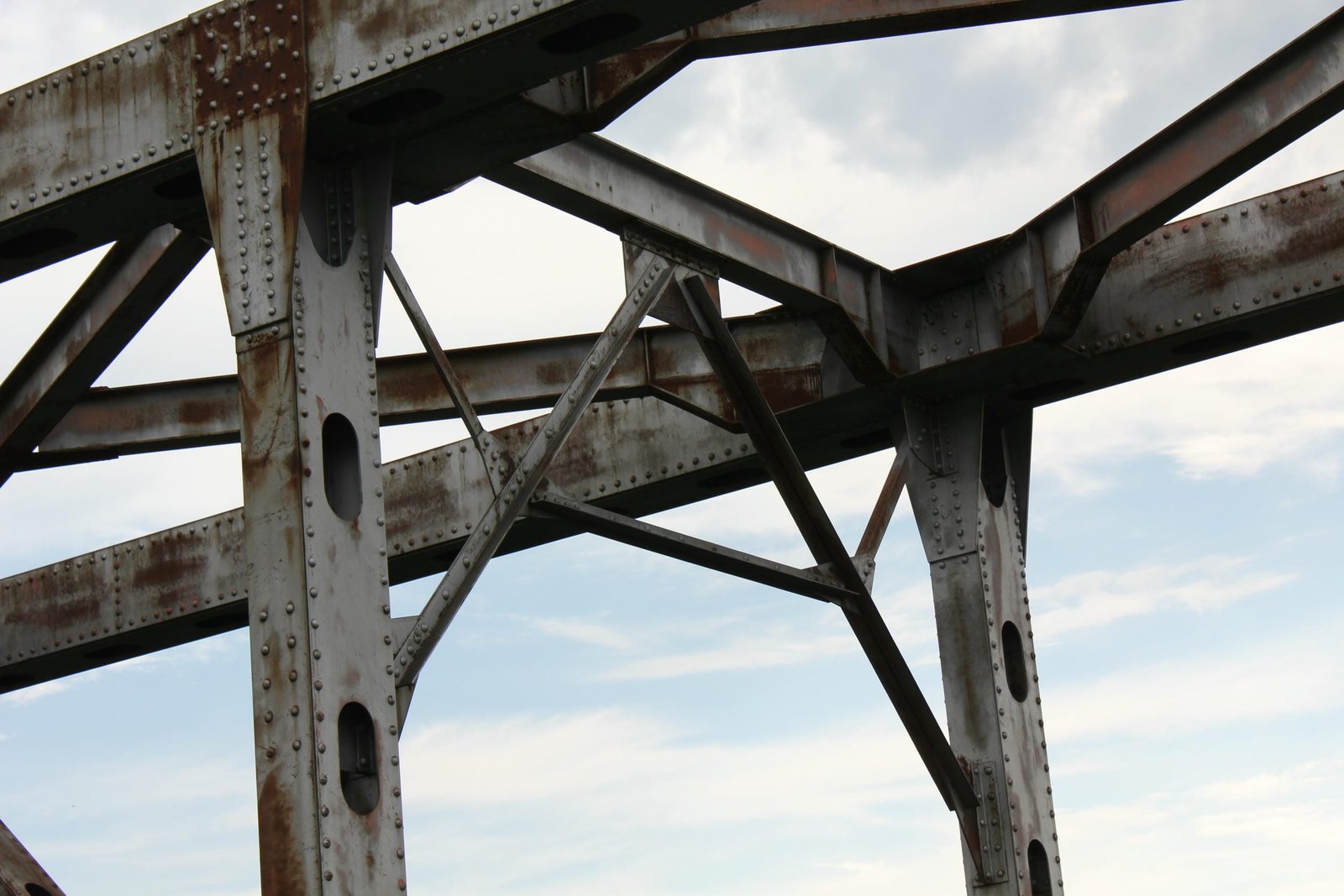
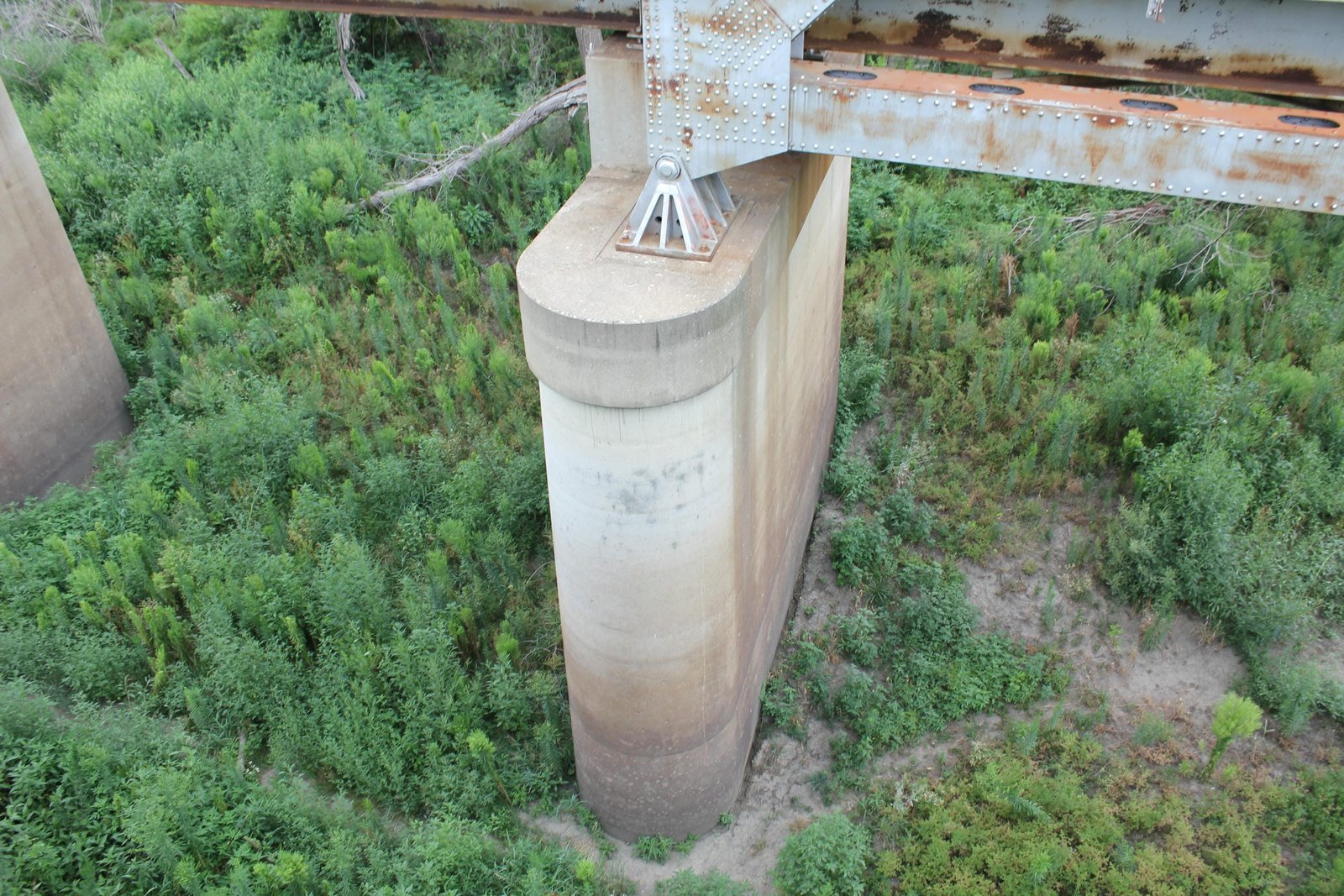
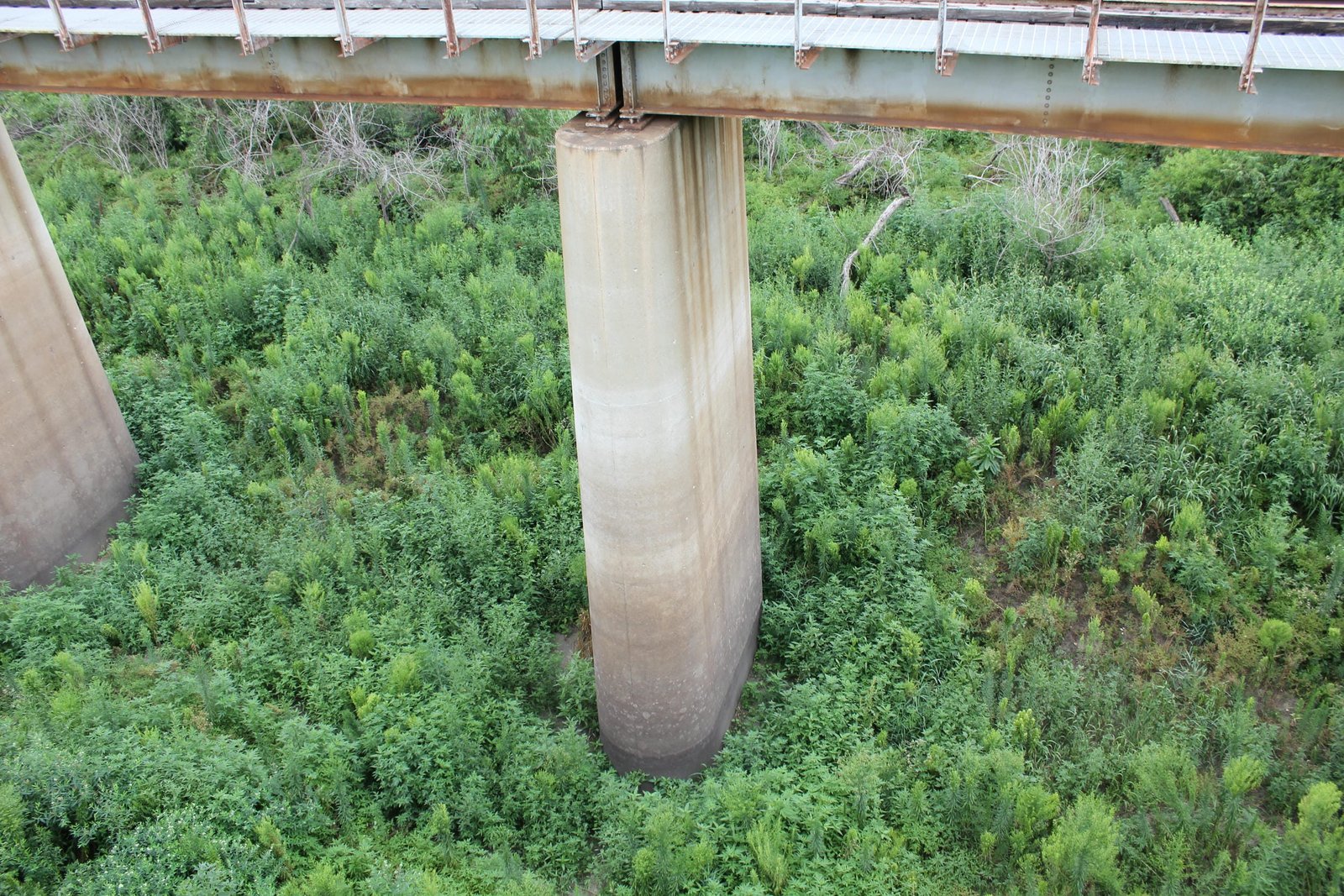
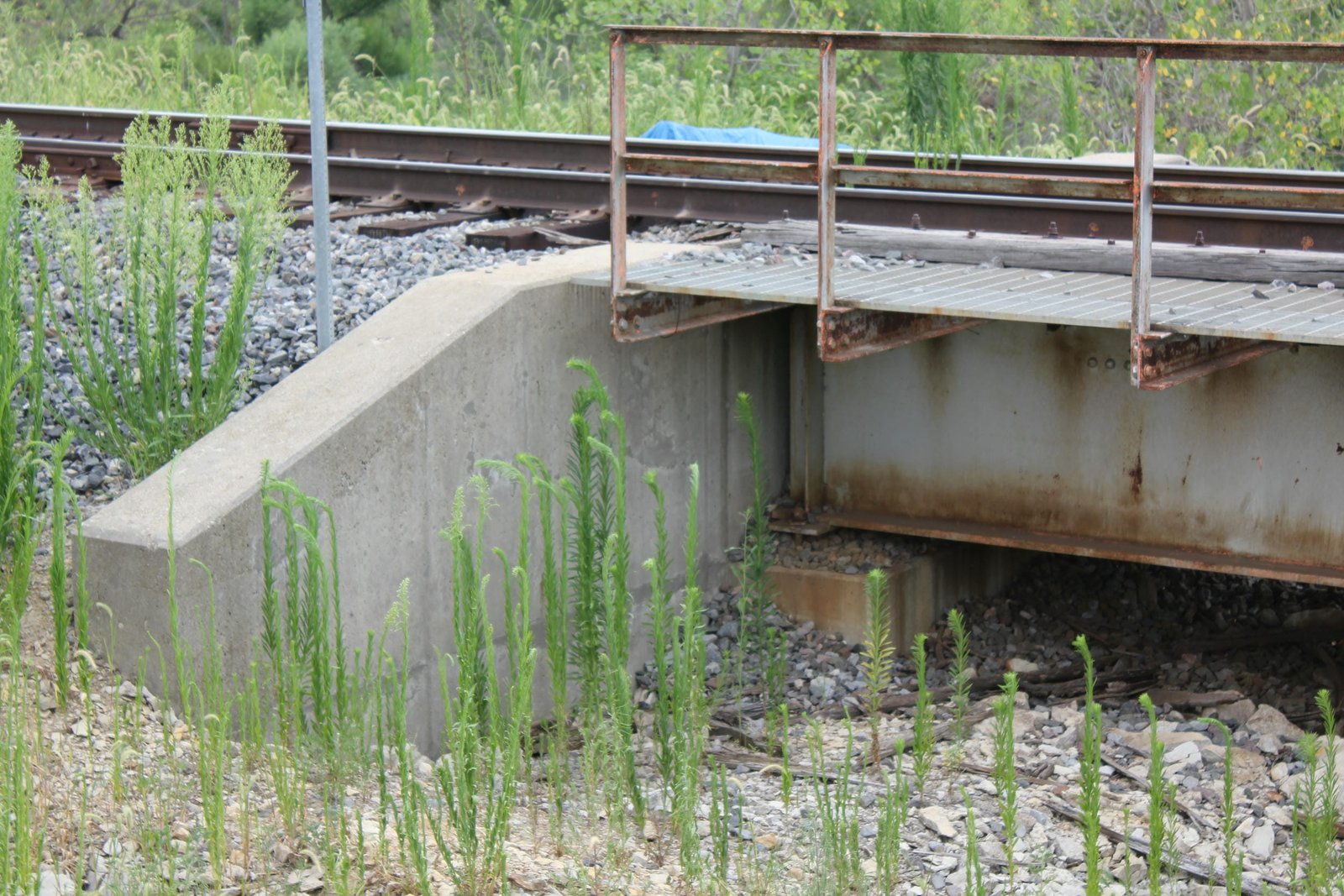
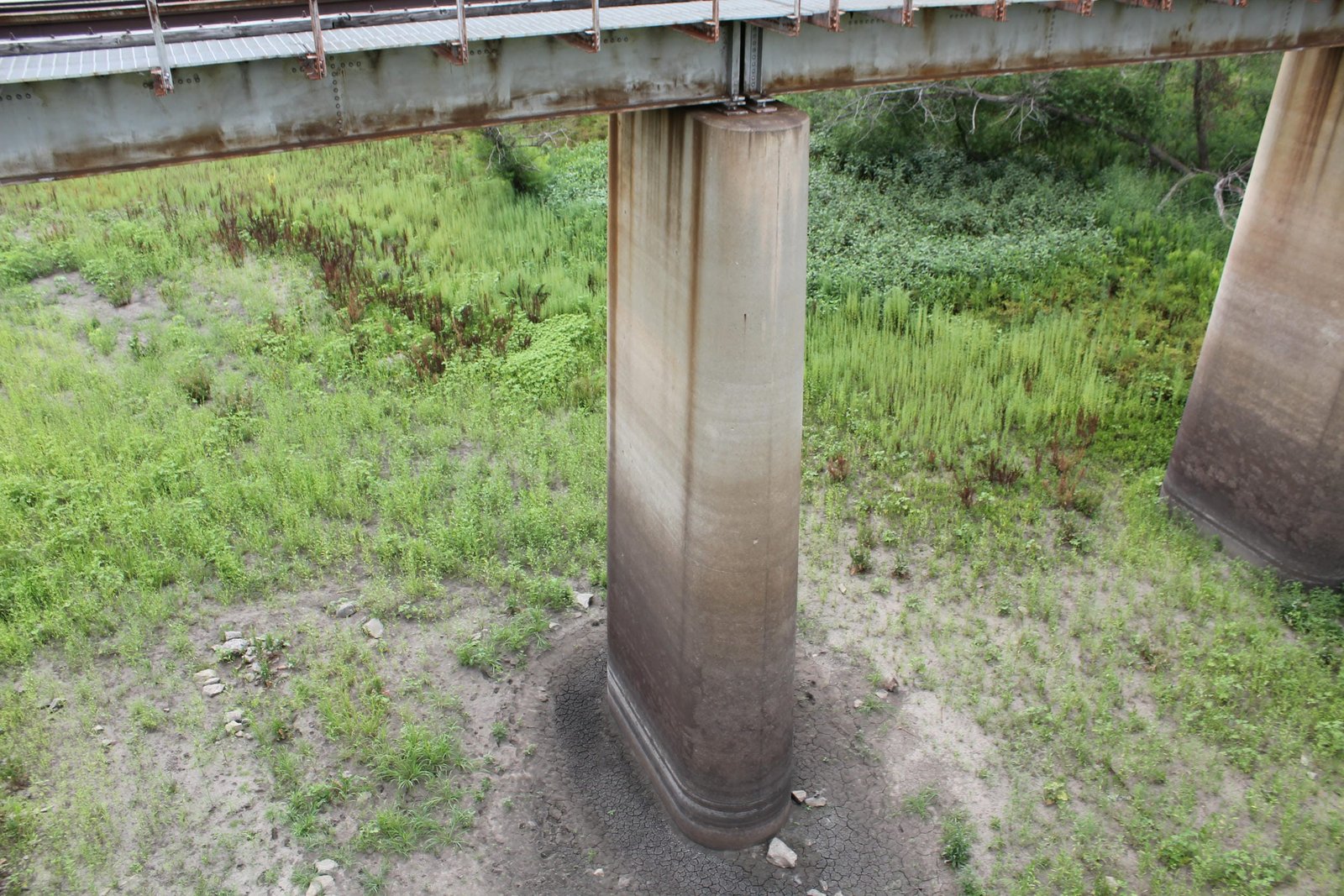
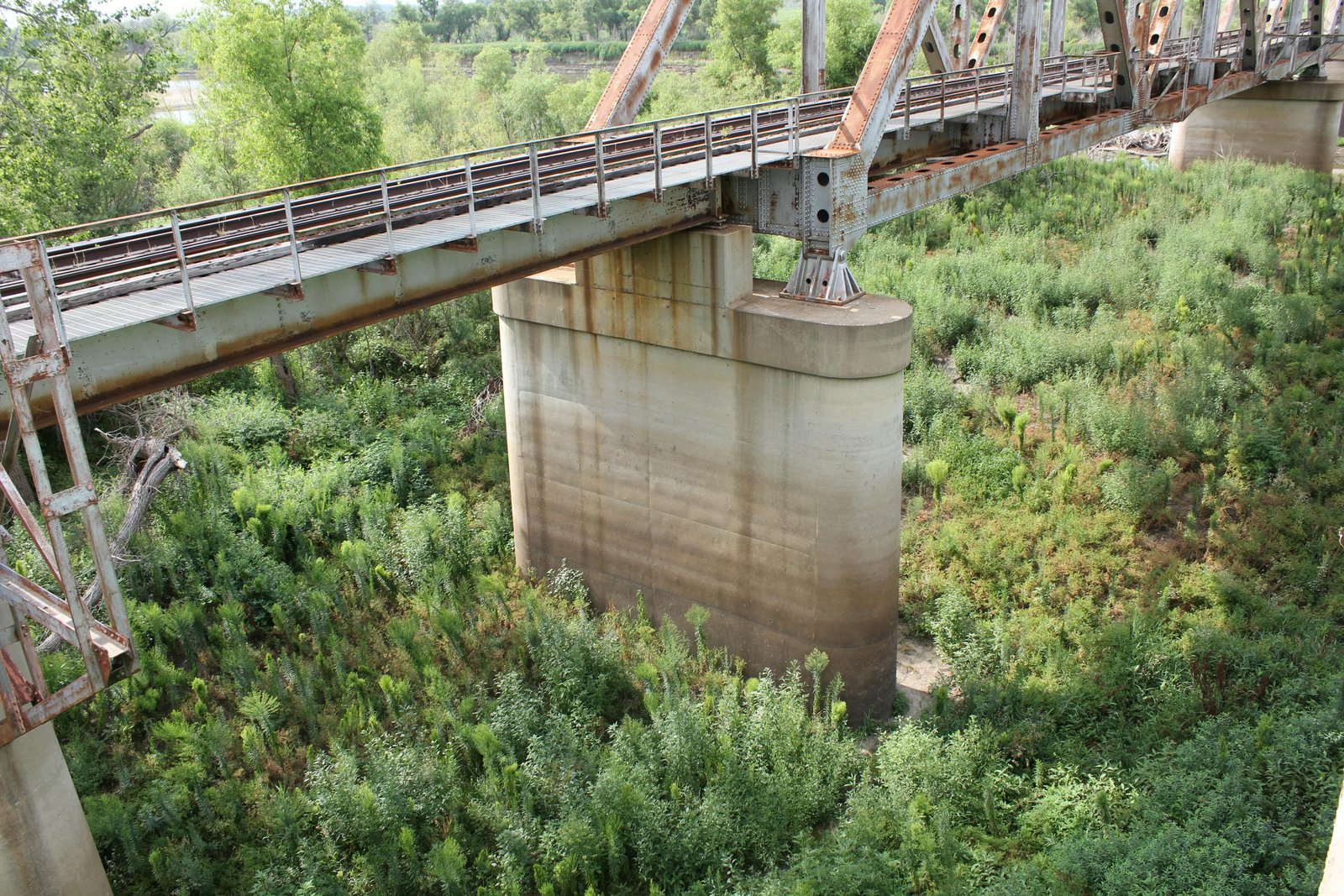
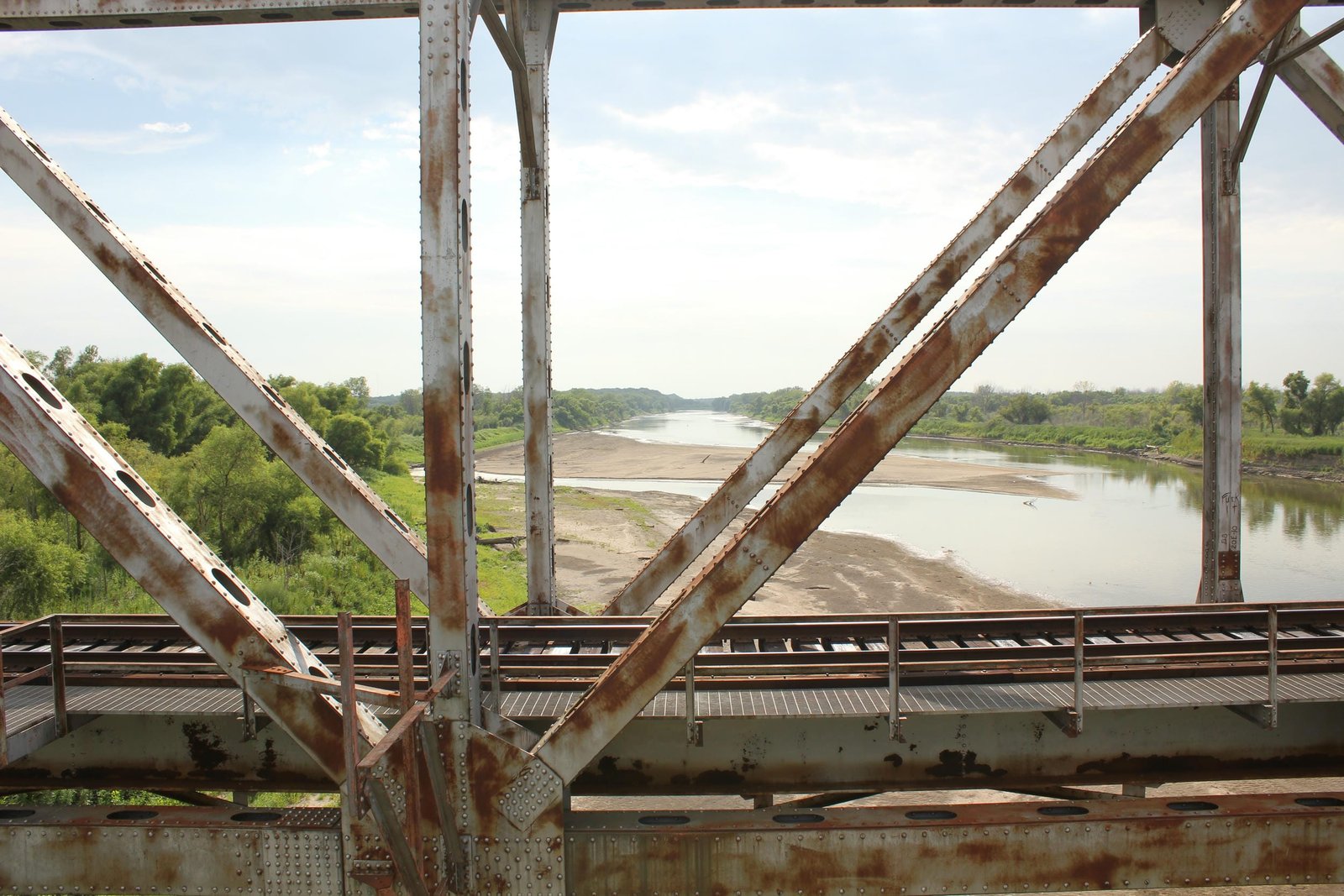
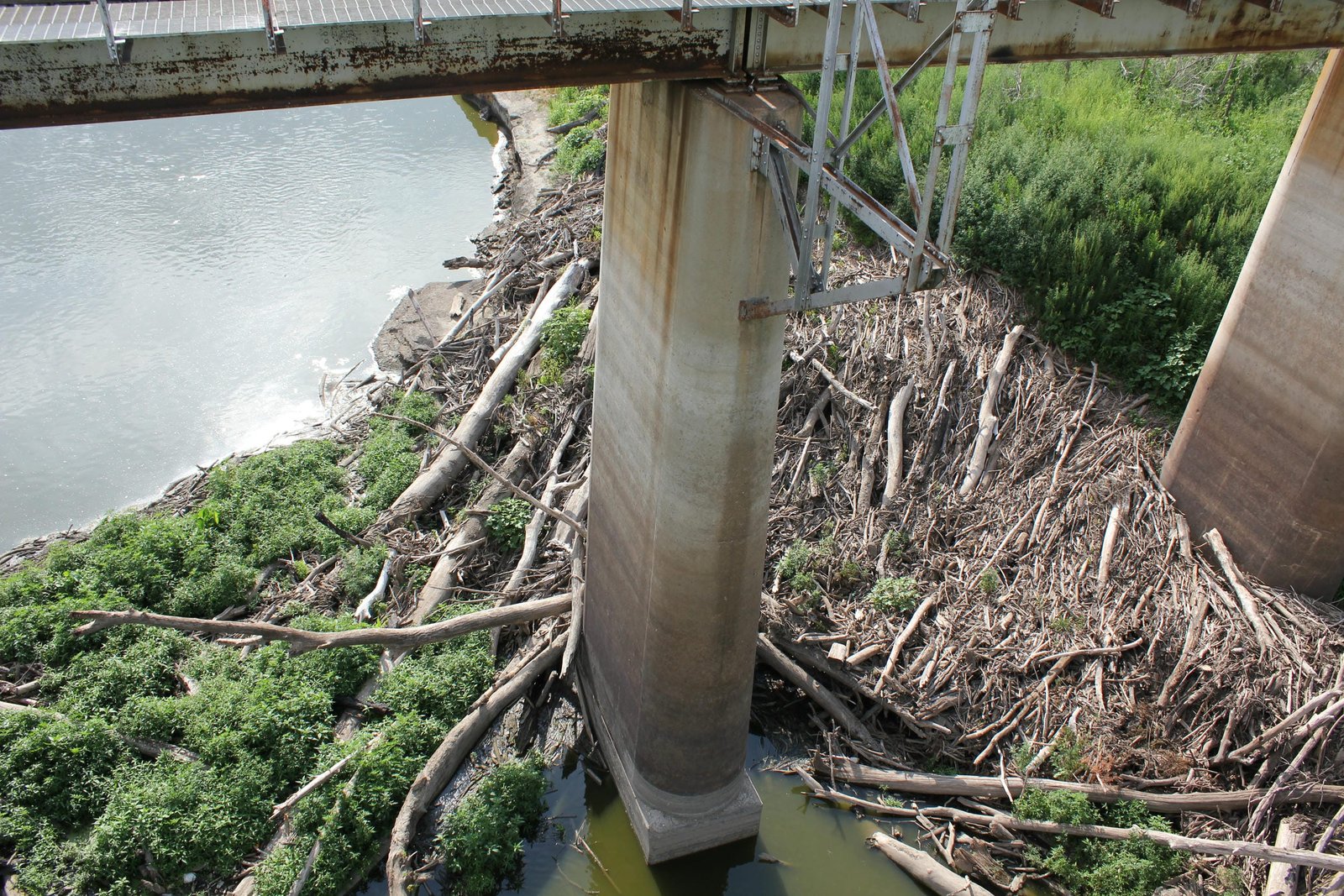
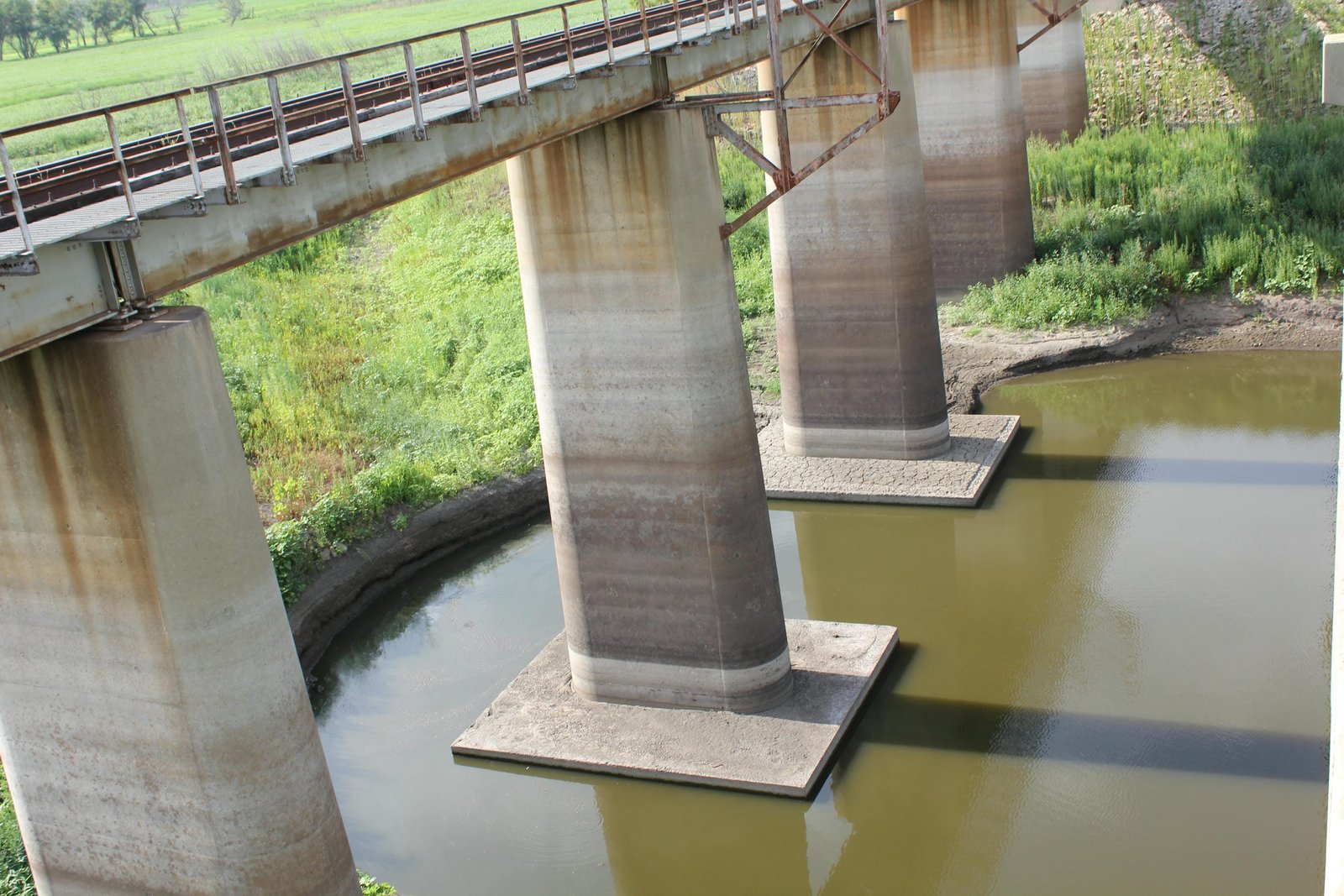
The truss spans follow a typical mid-20th Century design, with punch-plate style members, a standard floor and a utilitarian appearance. The "punch-plate" design was introduced in the mid-20th Century as an alternative to X-lacing and V-lacing. A punch plate consists of a simple plate with large holes punched into it. Both the top chord and endposts use a built-up design, consisting of a box-shaped beam connected by punch-plate pieces on the interior and a solid plate on the exterior. The bottom chord, the diagonal members and alternating vertical members use a similar design, with punch-plate pieces on both sides of the beam. The first, center and fifth vertical members all consist of heavy solid beams. The floor system consists of plate girder floorbeams and two heavy plate girder stringers. Both the lower and upper lateral bracing consist of standard steel bars of different shapes. The portal bracing is heavily constructed, using an A-frame design with a punch-plate top strut and solid beams for the remaining portions. The sway bracing also uses an A-frame design, and consists of solid beams for the top strut and L-shaped bars for the remaining portions. The approach spans each consist of four shallow beams, arranged equidistant. All piers use a standard rounded rectangular shape, and the abutments use a standard design with short sloped wing walls.
An unknown contractor fabricated the superstructure, while L.G. Barcus Company constructed the substructure. The bridge was designed by Sverdrup, Parcell & Associates; a notable 20th Century structural designer. In particular, this firm is noted for having designed the Chesapeake Bay Bridge-Tunnel; the ill-fated Interstate 35W Mississippi River Bridge in Minneapolis, Minnesota and a handful of notable sports stadiums. The Warren pattern became popular for railroad trusses in the early 20th Century, especially as riveted connections became more economical. This pattern offered a simple, economical and durable design. After World War II, the design remained popular, but instead used high-strength steel and punch-plate style members. Into the 20th Century, the design has continued to be the most popular truss pattern for both railroad and roadway use. Since the initial construction, the bridge has seen no significant alterations. Today, Norfolk Southern Railway (NS) and BNSF Railway share rights to the bridge. Overall, the bridge appears to be in good condition, with no major defects noted. The author has ranked this bridge as being locally significant, due to the truss design and newer age. The bridge remains among the longest railroad bridges in Iowa and serves an important role in the regions railroad network.
Citations
| Build date, builder (superstructure) and engineer | Norfolk & Western Magazine; 1964 |
| Railroad History Citation | ICC Valuation Information, Compiled by Richard S. Steele |