
Click the photo to view the full-size version
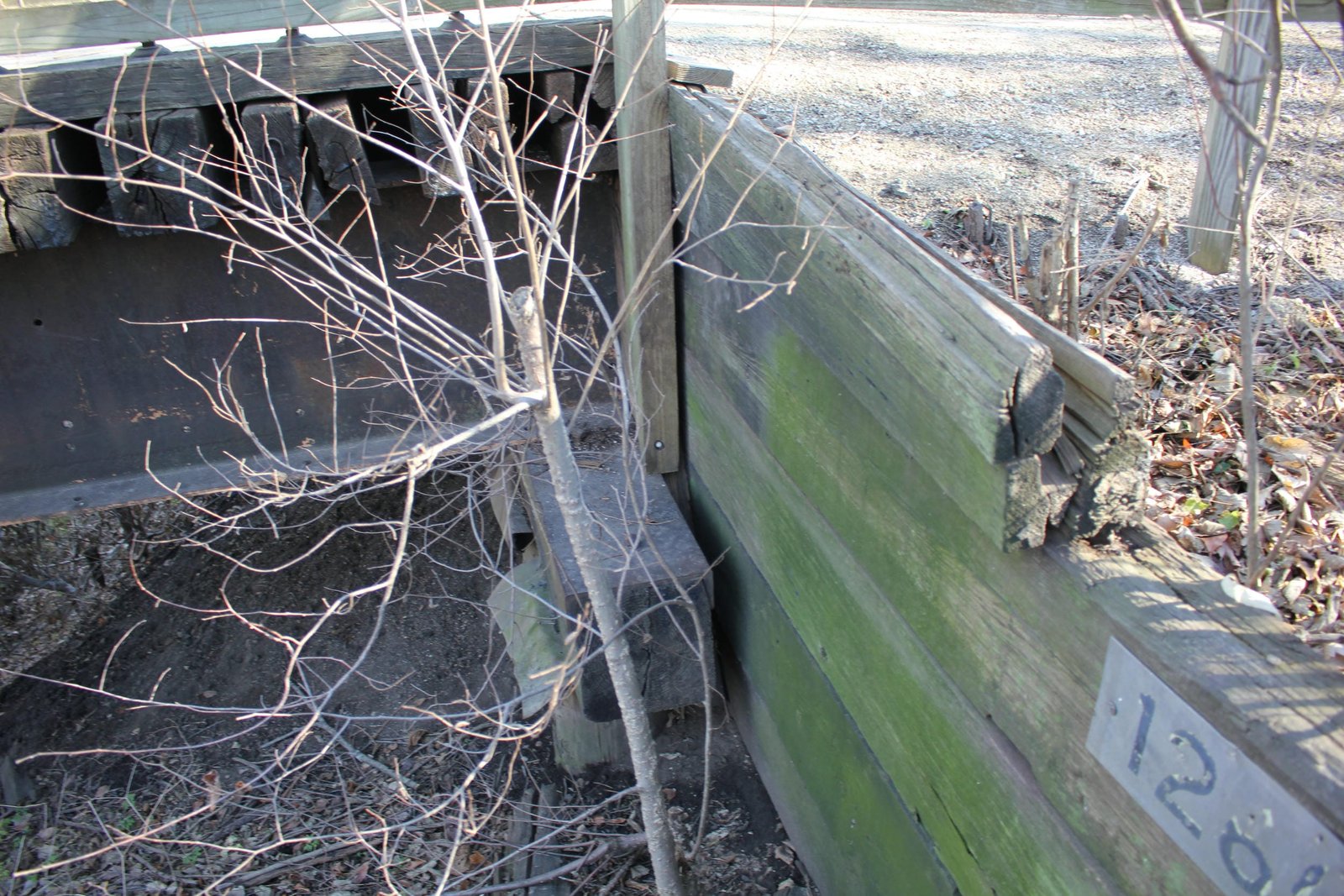
| Name | N&W Bridge #391.25 Wabash Railroad Bridge #1260 |
| Built By | Wabash Railroad |
| Currently Owned By | Mills County Conservation Board |
| Superstructure Contractor | Unknown |
| Length | 98 Feet Total, 35 Foot Main Span |
| Width | 1 Track |
| Height Above Ground | 15 Feet (Estimated) |
| Superstructure Design | Deck Plate Girder and Steel Stringer |
| Substructure Design | Timber Pile |
| Date Built | c. 1940, Using a Span Fabricated c. 1910 |
| Original Location (Span #2) | Unknown |
| Traffic Count | 0 Trains/Day (Bridge is Open to Pedestrian Traffic) |
| Current Status | Open to Pedestrian Traffic |
| Wabash Railroad Bridge Number | 1260 |
| Norfolk & Western Railway Bridge Number | 391.25 |
| Significance | Local Significance |
| Documentation Date | 11/28/2020 |
In 1869, the Chillocthe and Omaha Railroad (C&O) began working on a 42-mile railroad line, extending from Chillicothe, Missouri to Pattonsburg, Missouri. In 1870, the Chillicothe and Brunswick Railroad (C&B) began construction on a 37-mile railroad line, connecting Bruncwick, Missouri to Chillicothe. In 1870, the C&O was purchased by the St. Louis, Council Bluffs and Omaha Railroad (StLCB&O); and both lines were completed in 1871. In 1873, the C&B was reorganized as the Brunswick and Chillicothe Railroad (B&C). Between 1878 and 1879, the St. Louis, Kansas City and Northern Railway (StLKC&N) constructed an additional 100 miles of new railroad, extending from Pattonsburg to the Missouri/Iowa State Line. At the same time, the Council Bluffs and St. Louis Railway completed an additional 66 miles from the State Line to Council Bluffs, Iowa. The StlKC&N, B&C and StLCB&O were consolidated into the Wabash, St. Louis and Pacific Railway (WStL&P) in 1879. In 1886, the WStL&P was foreclosed upon and broken up into sections. The Omaha & St. Louis Railway (O&StL) was sold the Pattonsburg to Council Bluffs segment; while the Wabash Western Railway (WW) was given control of the Brunswick to Pattonsburg segments, which were returned to the original owners (B&C and StLCB&O) and remained under WW (and later Wabash Railroad) control. The O&StL was consolidated into the Wabash Railroad Company in 1901. The Wabash was reorganized as the Wabash Railway in 1915, and the B&C and StLCB&O were fully merged into the system in 1924.
The Wabash would become a respected railroad network in the Midwest, with a principal mainline connecting Detroit with Kansas City. While the Wabash was a smaller railroad, it also operated a number of branch lines to serve other railroad hubs in the Midwest. The Wabash was controlled by the Pennsylvania from 1931 through the early 1960s. In 1964, the railroad was acquired by the Norfolk and Western Railway (N&W), which operated a sizable network of railroads in the eastern United States. In 1982, the N&W was merged with the Southern Railway to form Norfolk Southern Railway (NS). In 1983, N&W filed to abandon the line. A segment between Blanchard, Iowa and Council Bluffs was purchased by the Iowa Southern Railroad. A segment from Brunswick to Chillicothe was sold to the Northern Missouri Railroad (NMR) in 1984. The railroad was reorganized as the Chillicothe–Brunswick Rail Maintenance Authority (CBRMA) in 1986. In 1988, the ISR abandoned the entire line between Blanchard and Council Bluffs. After different operators tried and failed to operate the Brunswick to Chillicothe line, it was abandoned in 2007 and sold to the city of Chillicothe in 2008. Today, much of the line has been abandoned and reverted to adjacent landowers. The Wabash Trace Nature Trail uses the line between Blanchard and Council Bluffs, while the segment between Brunswick and Chillicothe may become part of a trail in the future.
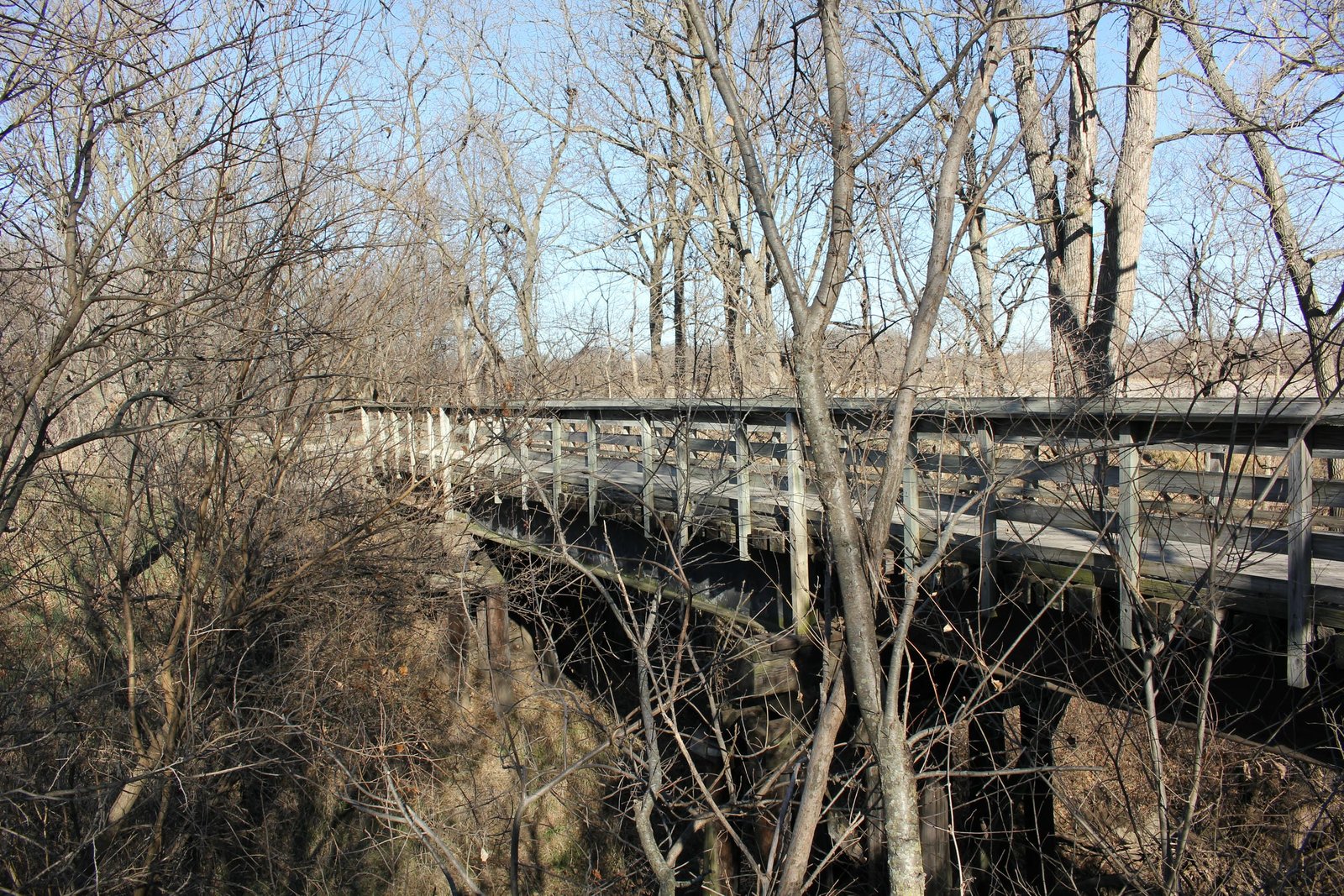
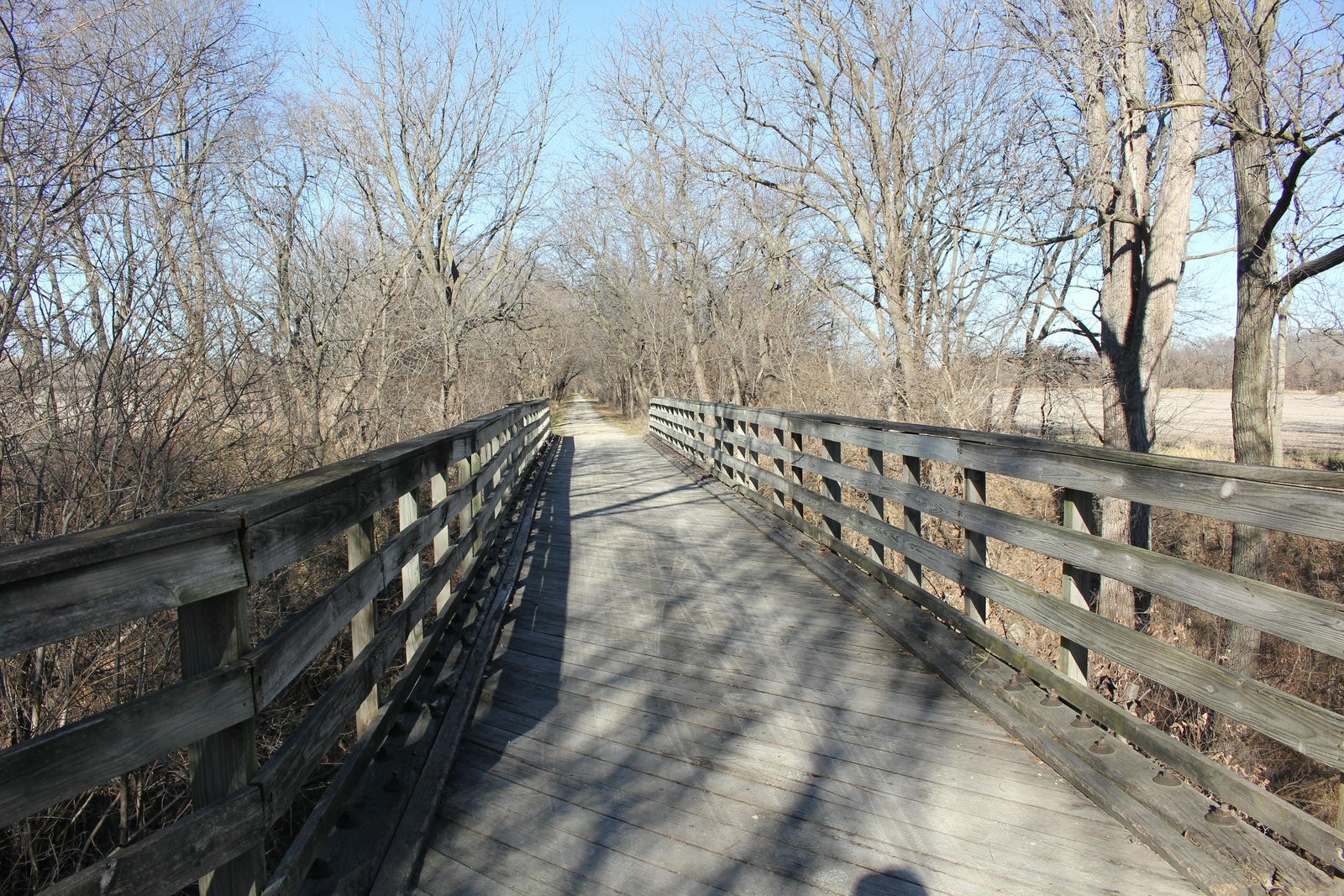
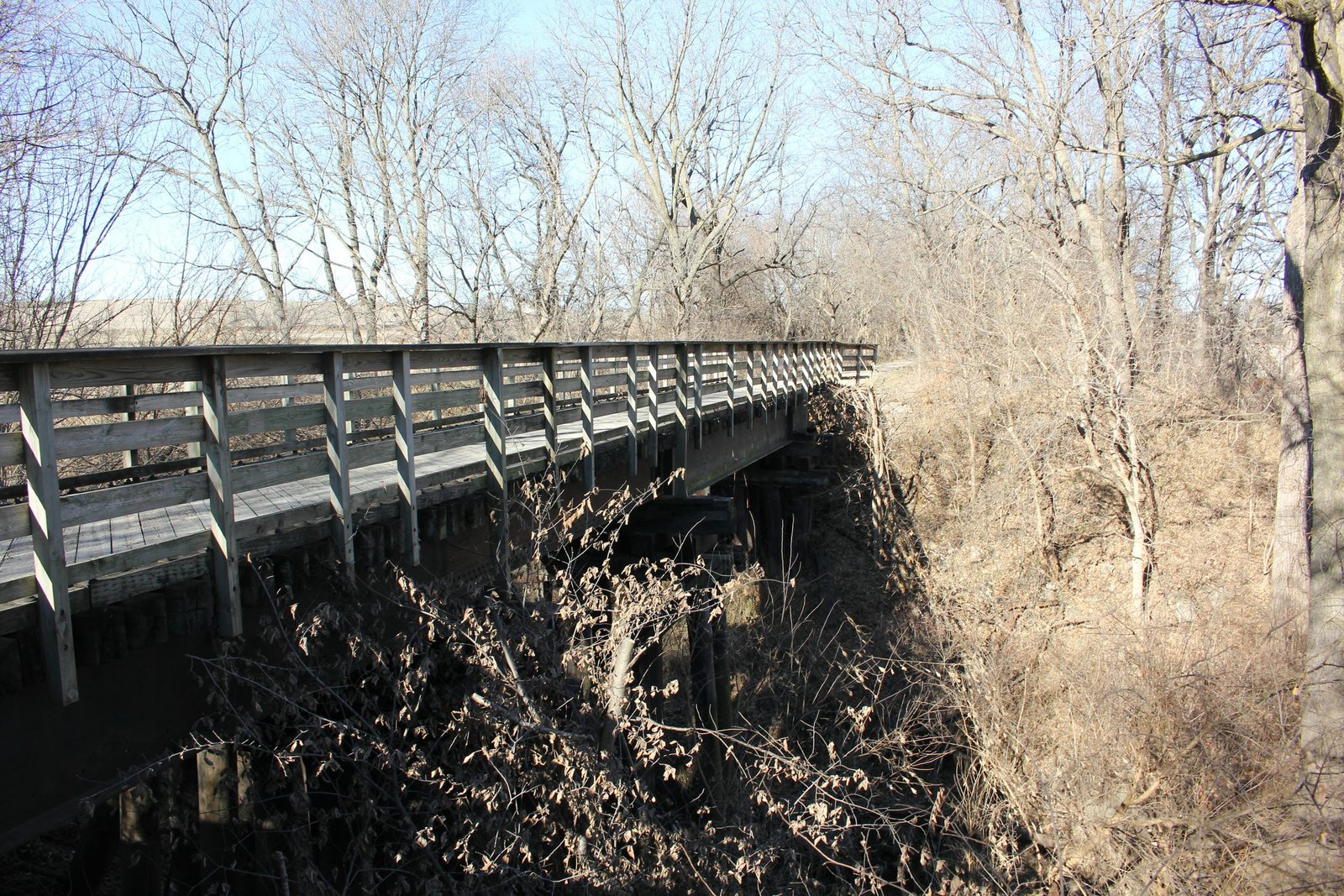
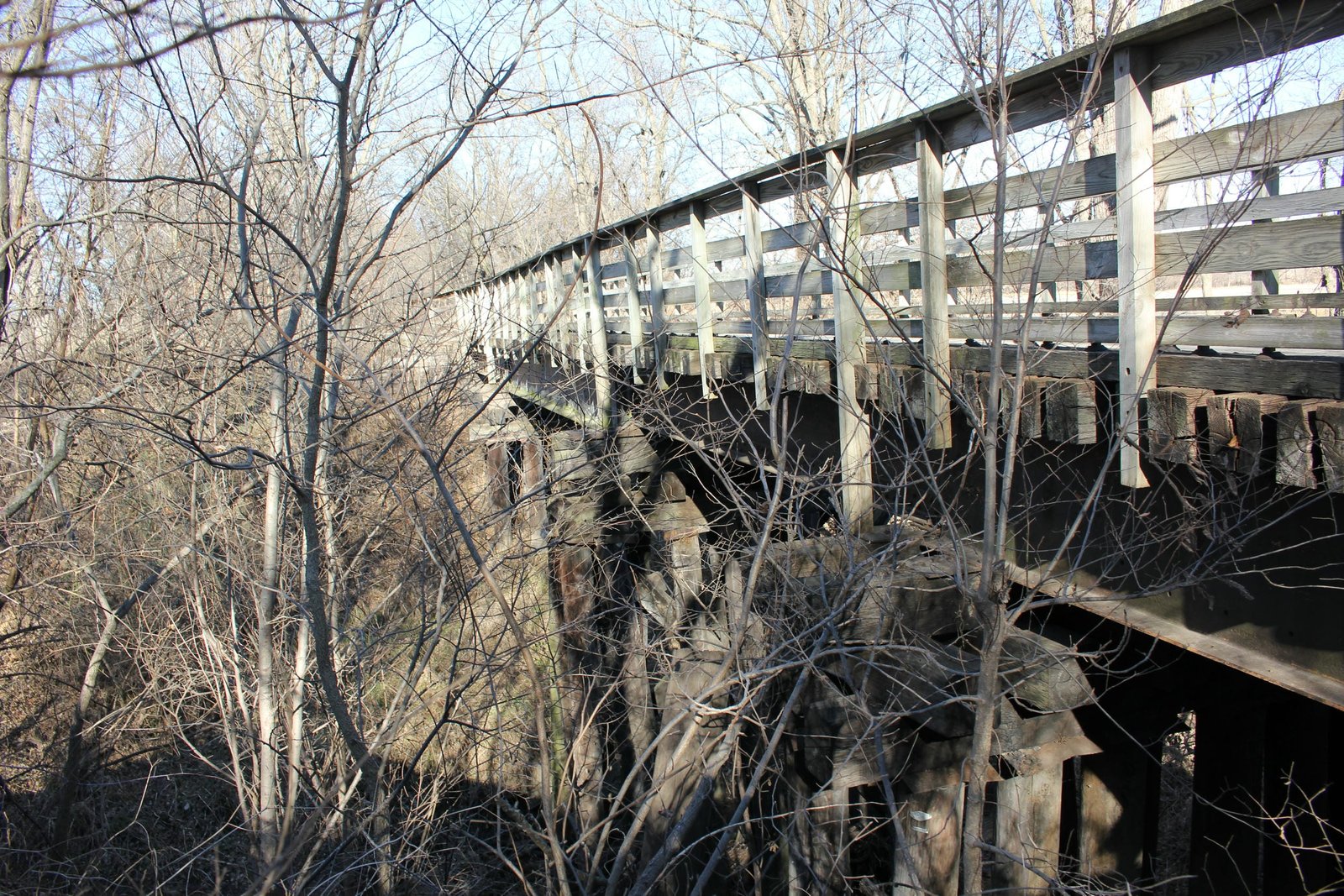
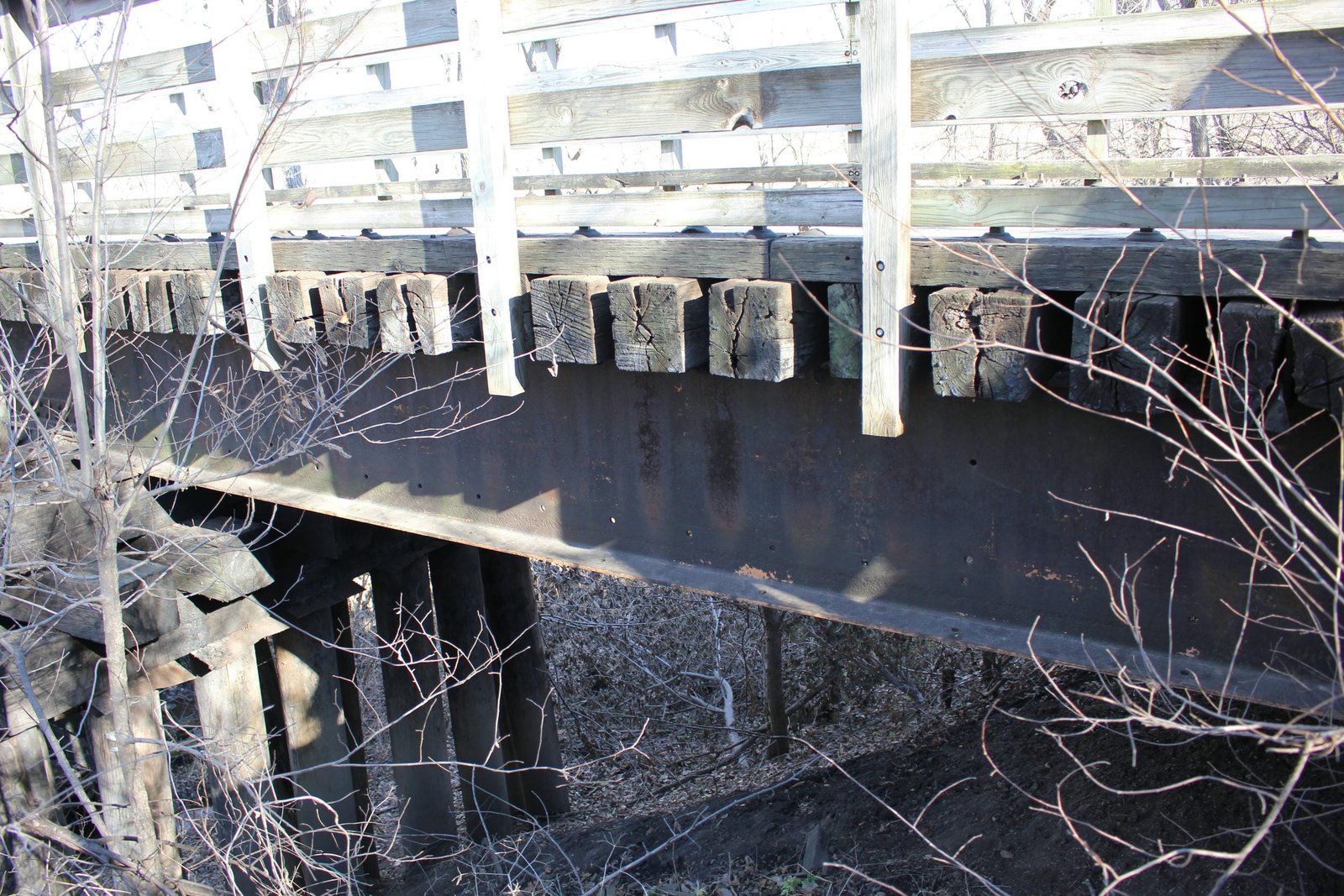
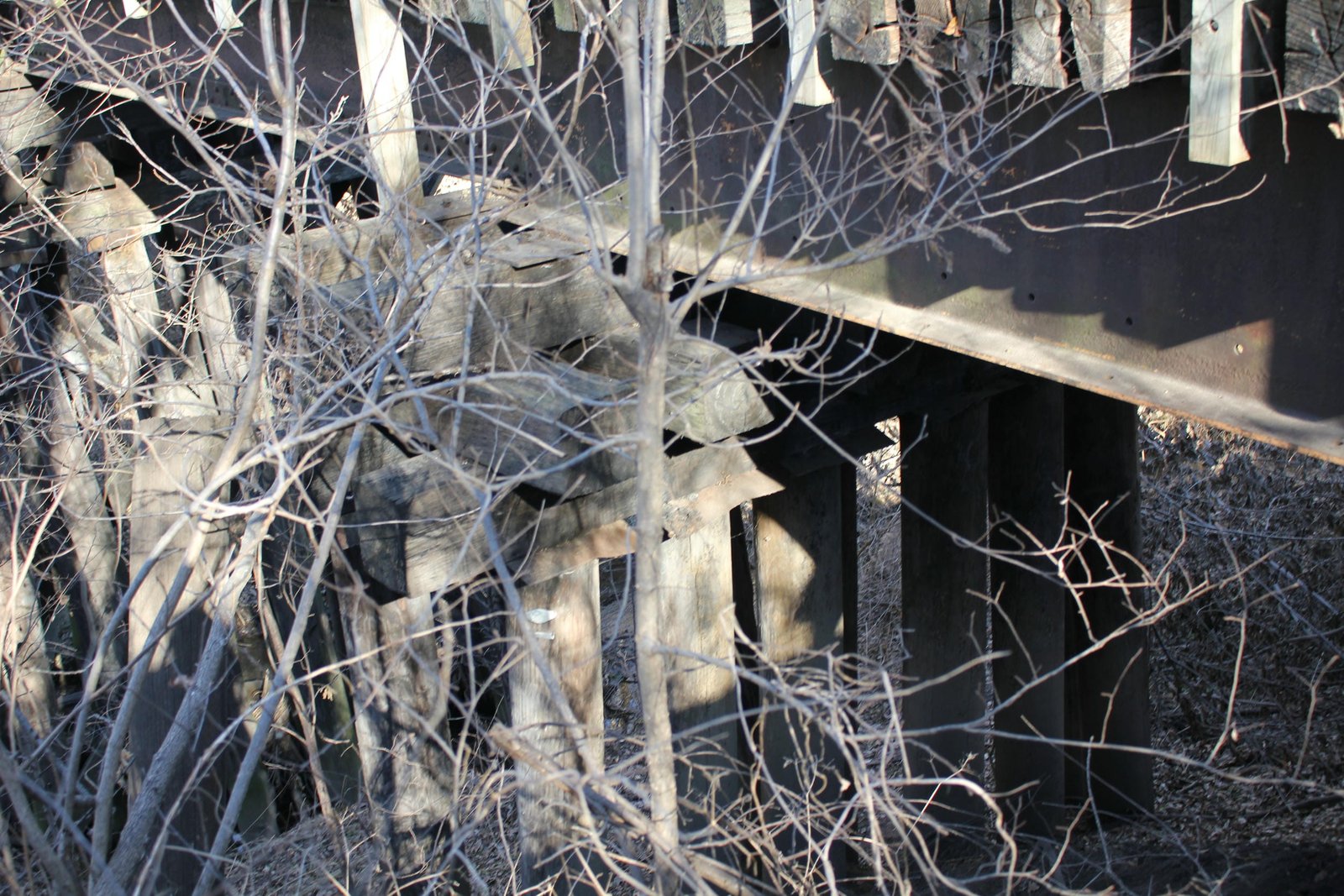
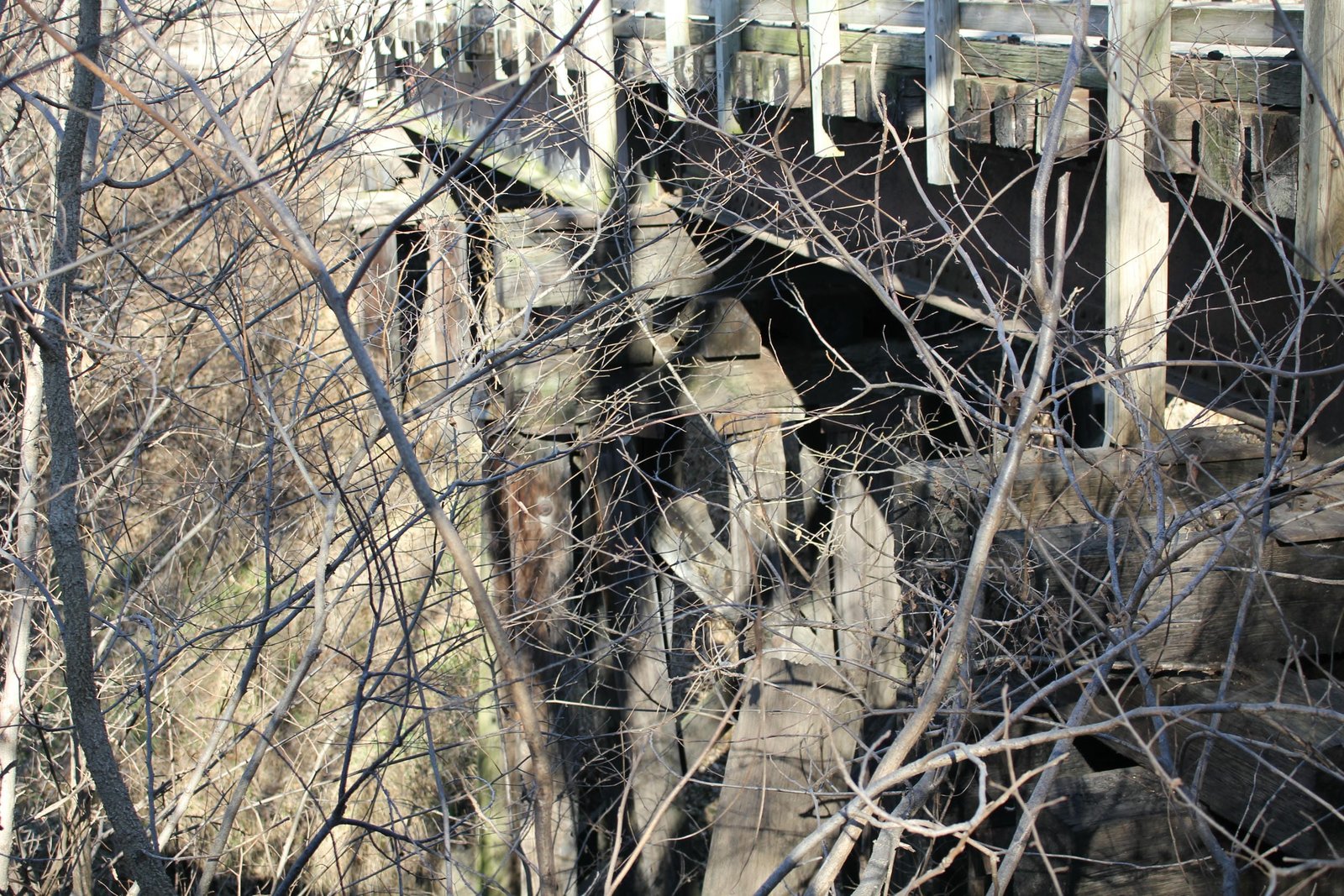
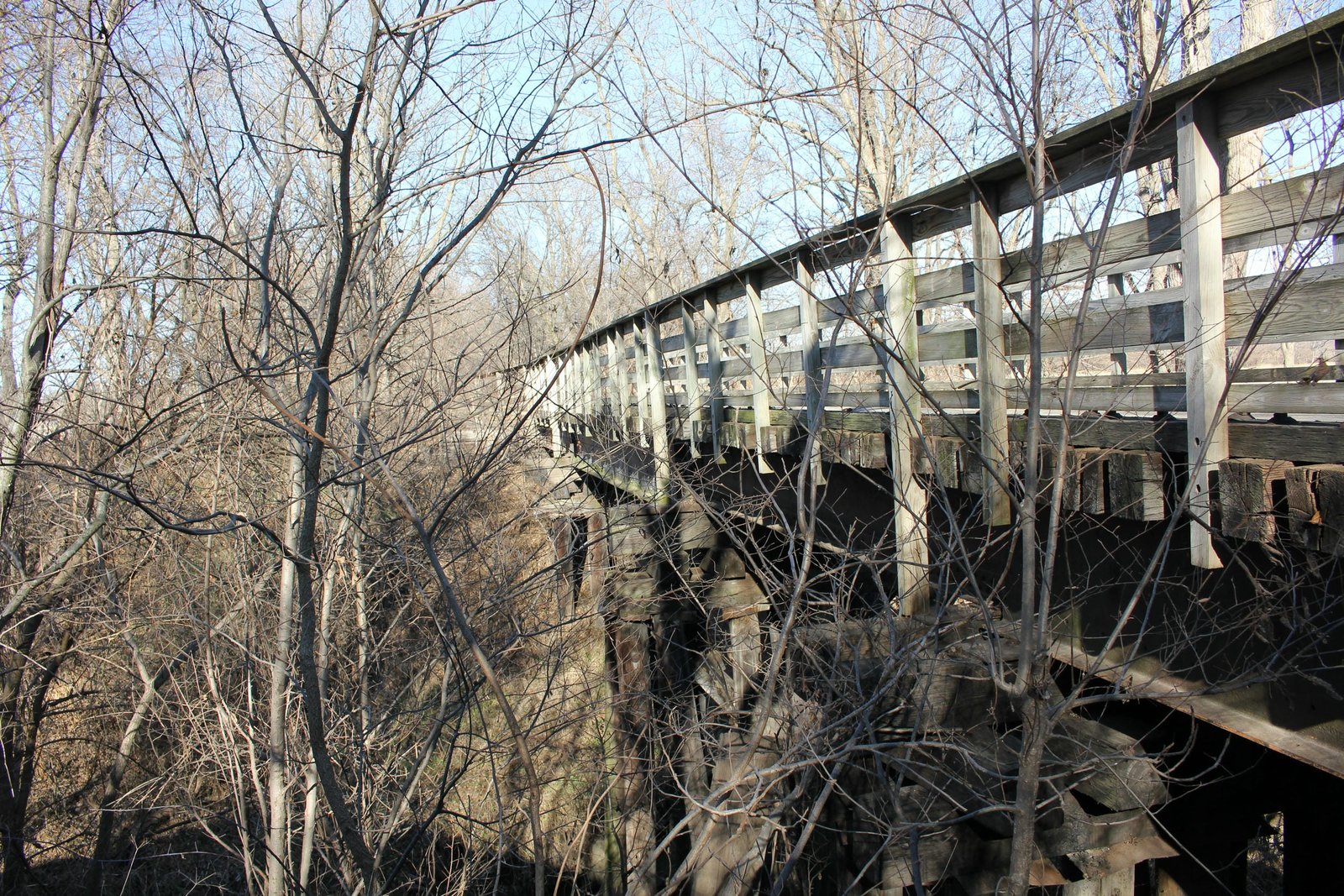
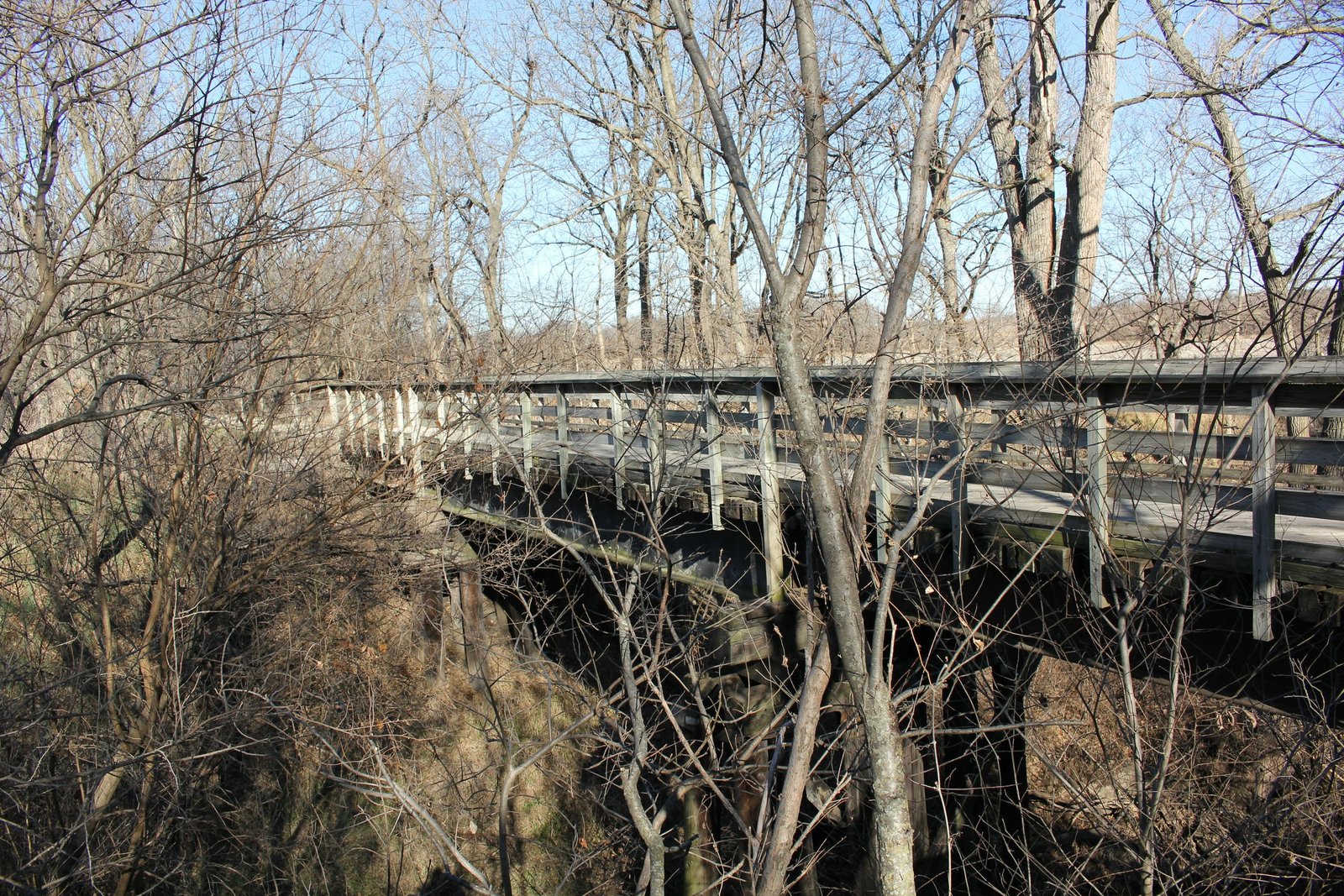
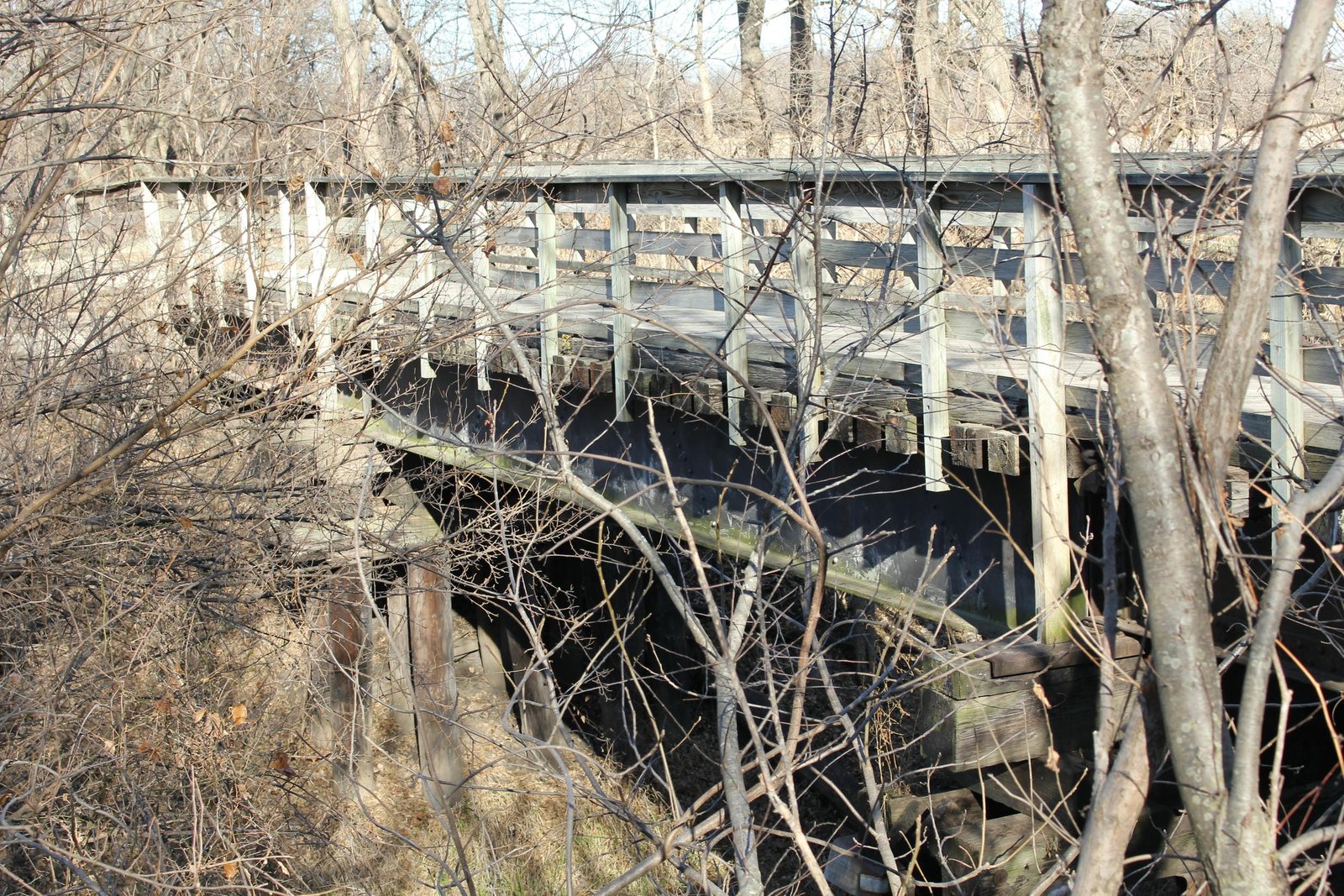
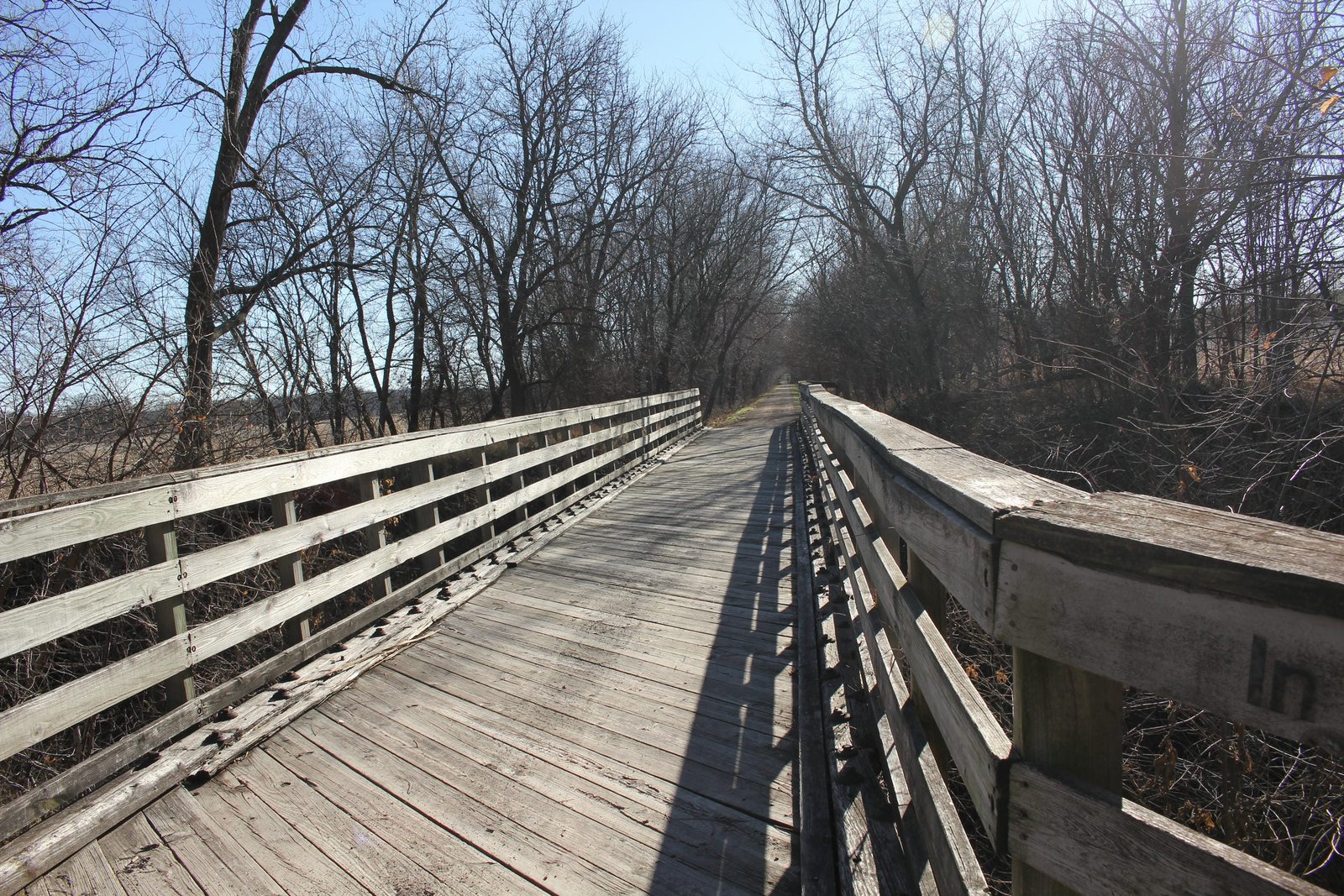
Located south of Silver City, this small deck girder and steel stringer bridge carries a former Wabash Railroad branch line over an unnamed creek. The first bridge at this location consisted of a timber pile trestle bridge, constructed when the line was first built. In the 1930s and 1940s, the Wabash invested capital into this line, renewing select timber bridges with steel spans. In approximately 1940, the bridge was rebuilt with the present steel bridge. Currently, the bridge consists of a 35-foot steel stringer span, approached by a 22-foot deck plate girder and 20-foot steel stringer span on the south end and a 20-foot steel stringer span on the north end. The entire bridge is set onto timber pile substructures. The main span and 20-foot approach spans use a standard Wabash design, consisting of four shallow beams arranged into two sets of two. The deck girder span uses a shallow design, with two shallow plate girders and an open deck. It is believed this span was fabricated in approximately 1910 for use at an unknown location. The piers supporting the main span consist of two sets of timber bents, while the remaining substructures use standard timber pile bents. An unknown contractor fabricated the steel stringer spans, and an additional unknown contractor fabricated the deck girder span. It is believed the timber components were constructed by railroad company forces. Railroads often reused steel and iron spans, as it provided a cost effective way to upgrade bridges without requiring large amounts of new material. Steel stringer spans were popular for railroad use, as they were durable and easy to construct. The Wabash used steel stringer spans extensively, especially in place of traditional timber stringers supported by timber piles. Typical of most bridges along this line, the substructures are made from timber components, which provided a cost effective material. Since the initial construction, the bridge has seen no significant alterations. A timber deck and railings were added to the bridge, and it now carries the Wabash Trace Nature Trail. Overall, the bridge appears to be in fair condition, with some deterioration noted to the timber components. The author has ranked this bridge as being locally significant, due to the common design and unknown history.
Citations
| Railroad History Citation | ICC Valuation Information, Compiled by Richard S. Steele |