
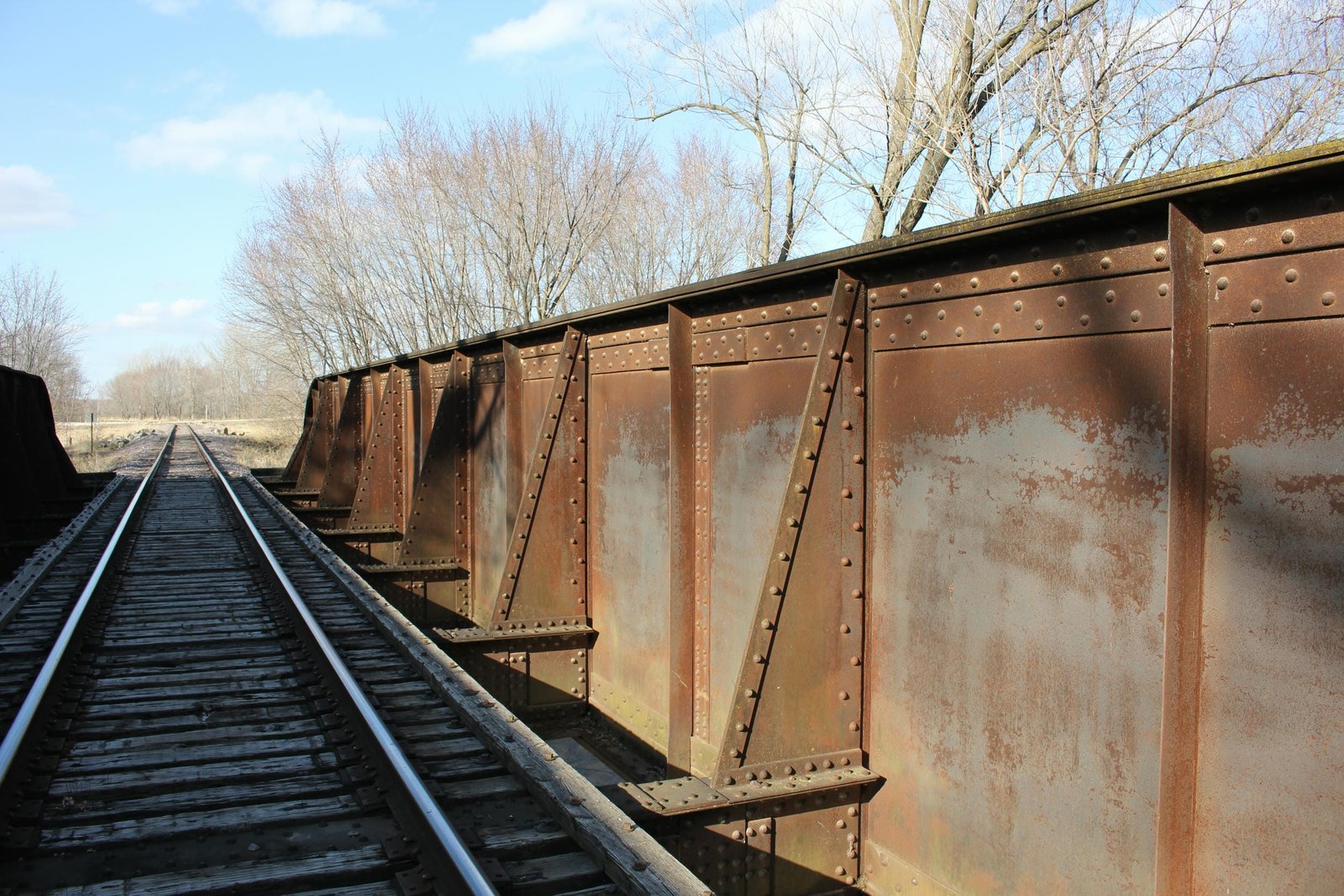
Click the photo to view the full-size version
| Name | UP Muchakinock Creek Bridge #4 Chicago, Rock Island & Pacific Railroad Bridge #932 |
| Built By | Chicago, Rock Island & Pacific Railway |
| Currently Owned By | Union Pacific Railroad |
| Superstructure Contractor | Unknown |
| Substructure Contractor | Unknown |
| Length | 112 Feet Total |
| Width | 1 Track |
| Height Above Ground | 10 Feet (Estimated) |
| Superstructure Design | Through Plate Girder |
| Substructure Design | Concrete |
| Date Built | c. 1930 |
| Traffic Count | 1 Train/Day (Estimated) |
| Current Status | In Use |
| Chicago, Rock Island & Pacific Railroad Bridge Number | 932 |
| Union Pacific Railroad Bridge Number | 309.90 |
| Significance | Local Significance |
| Documentation Date | 3/21/2020 |
In 1853, the Keokuk, Fort Des Moines & Minnesota Railroad (KFDM&M) was organized to construct a new railroad, extending from the Mississippi River at the southeast town of Keokuk, Iowa to Des Moines, Iowa; located near the center of the state. Grading began in 1855, and track laying commenced the following year. The first 40 miles were completed between Keokuk and Bentonsport, Iowa by the end of 1857, followed by an additional 36 miles to Ottumwa, Iowa by the end of 1860. In 1861, an additional 16 miles were completed to Eddyville, Iowa; where work paused due to the Civil War. Work resumed in 1864, and an additional 23 miles were completed to Pella, Iowa by the end of that year. The KFDM&M was reorganized as the Des Moines Valley Railroad (DMV) at the end of that year. In 1865, an additional 14 miles were completed to Monroe, Iowa; and in 1866, the final 33 miles were completed to Des Moines, Iowa. When the railroad reached Des Moines, it was the first railroad to enter the city. Work eventually continued northwest from Des Moines. In 1873, the DMV went bankrupt, and was split into two separate railroads. The Keokuk & Des Moines Railway (K&DM) was awarded the segment between Keokuk and Des Moines; and the Des Moines & Fort Dodge Railroad (DM&FD) was awarded sections constructed northwest of Des Moines.
During the 1870s, the Chicago, Rock Island & Pacific Railroad (Rock Island) was rapidly expanding throughout Iowa. In 1878, the Rock Island secured a lease and began operating the property of the K&DM. The Rock Island was reorganized as the Chicago, Rock Island & Pacific Railway (Rock Island) in 1880. The Rock Island operated this route as a secondary mainline, serving industries in southeast Iowa and connecting to other branch lines. In 1924, the K&DM was merged into the St. Paul & Kansas City Short Line Railroad (StP&KCSL), a Rock Island subsidiary. The Rock Island struggled financially throughout much of its history, experiencing repeated bankruptcies and chronic instability. After World War II, the Rock Island struggled to survive, proposing mergers and deferring maintenance on their routes. The railroad reorganized as the Chicago, Rock Island & Pacific Railroad in 1948, and the StP&KCSL was merged into the Rock Island at that time. Between Oskaloosa and Eddyville, the Minneapolis & St. Louis Railway (M&StL) had operated a parallel line to the Rock Island. After the M&StL was acquired by the Chicago & North Western Railway (C&NW) in 1960, the C&NW and Rock Island consolidated operations onto one line. Between Eddyville and Givin, the Rock Island line was maintained and the former M&StL abandoned. Between Givin and Oskaloosa, the former Rock Island line was abandoned.
By the mid-1970s, the Rock Island was in serious decline. The railroad secured loans to eliminate slow orders, acquired new equipment, and attempted to restore profitability. Several sections of this line had fallen into serious disrepair, hampering the Rock Islands ability to maintain efficient operations. In 1978, the railroad came close to profit, but creditors were lobbying for a complete shutdown of the Rock Island. During the fall of 1979, a strike crippled the railroad, and by January of 1980, the entire system was ordered to be shut down and liquidated. Many of the lines and equipment were scrapped. Profitable sections of railroad were prepared for sale. The line between Keokuk and Pella was abandoned at the time of shut down. Iowa Interstate Railroad (IAIS) acquired a short segment between Des Moines and Pella in 1984, and abandoned the Des Moines to Altoona segment in 1986. In 1995, the C&NW was purchased by Union Pacific Railroad (UP). In 1998, IAIS abandoned the line between Pella and Otley; followed by the segment between Otley and Prairie City in 2000 and between Prairie City and Mitchellville in 2014. Today, UP continues to operate a short segment of this line north of Eddyville, while IAIS continues to operate a short segment between Mitchellville and Altoona. A segment between Monroe and Prairie City has been reused as a trail, while the remainder of the line has been abandoned.
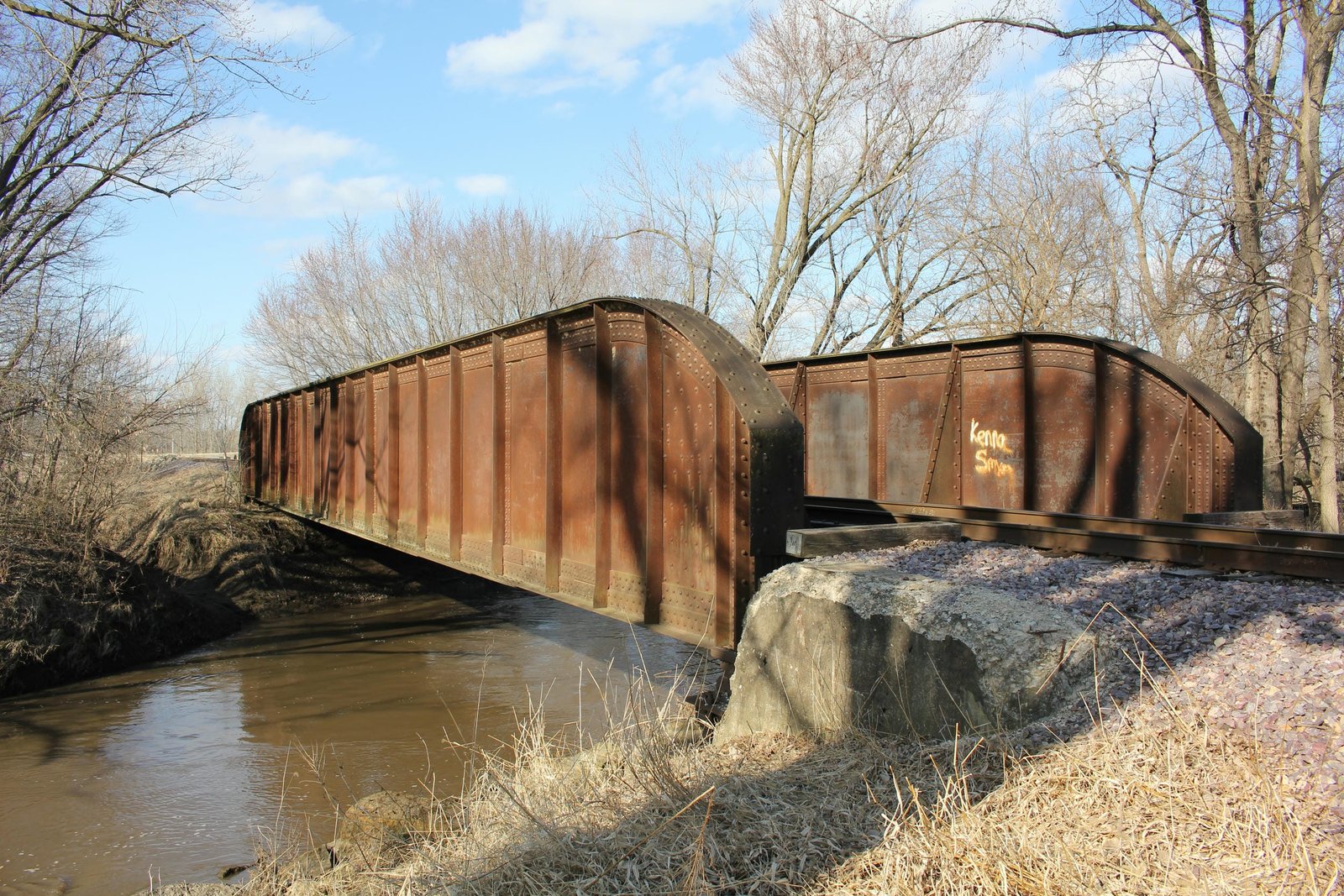
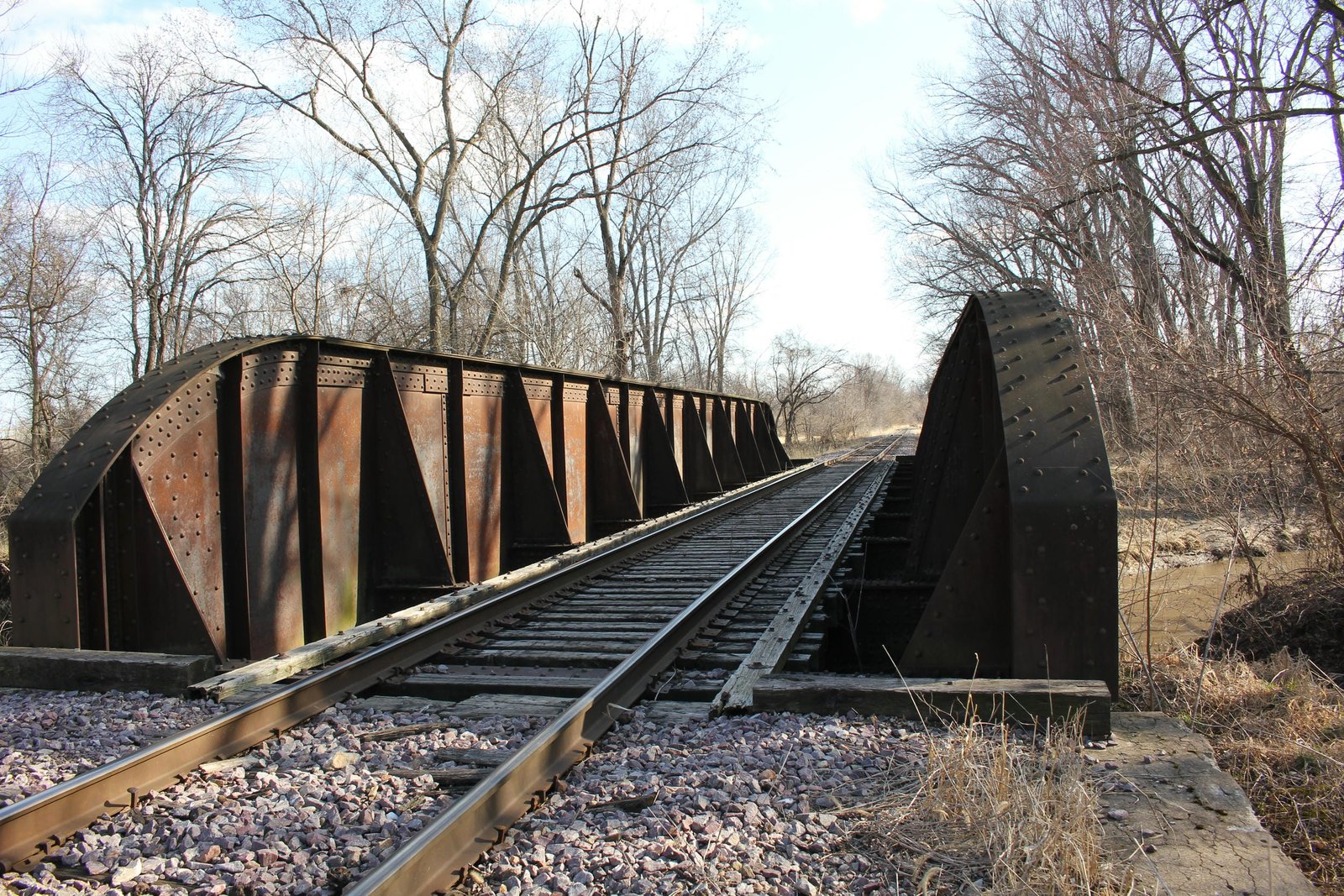
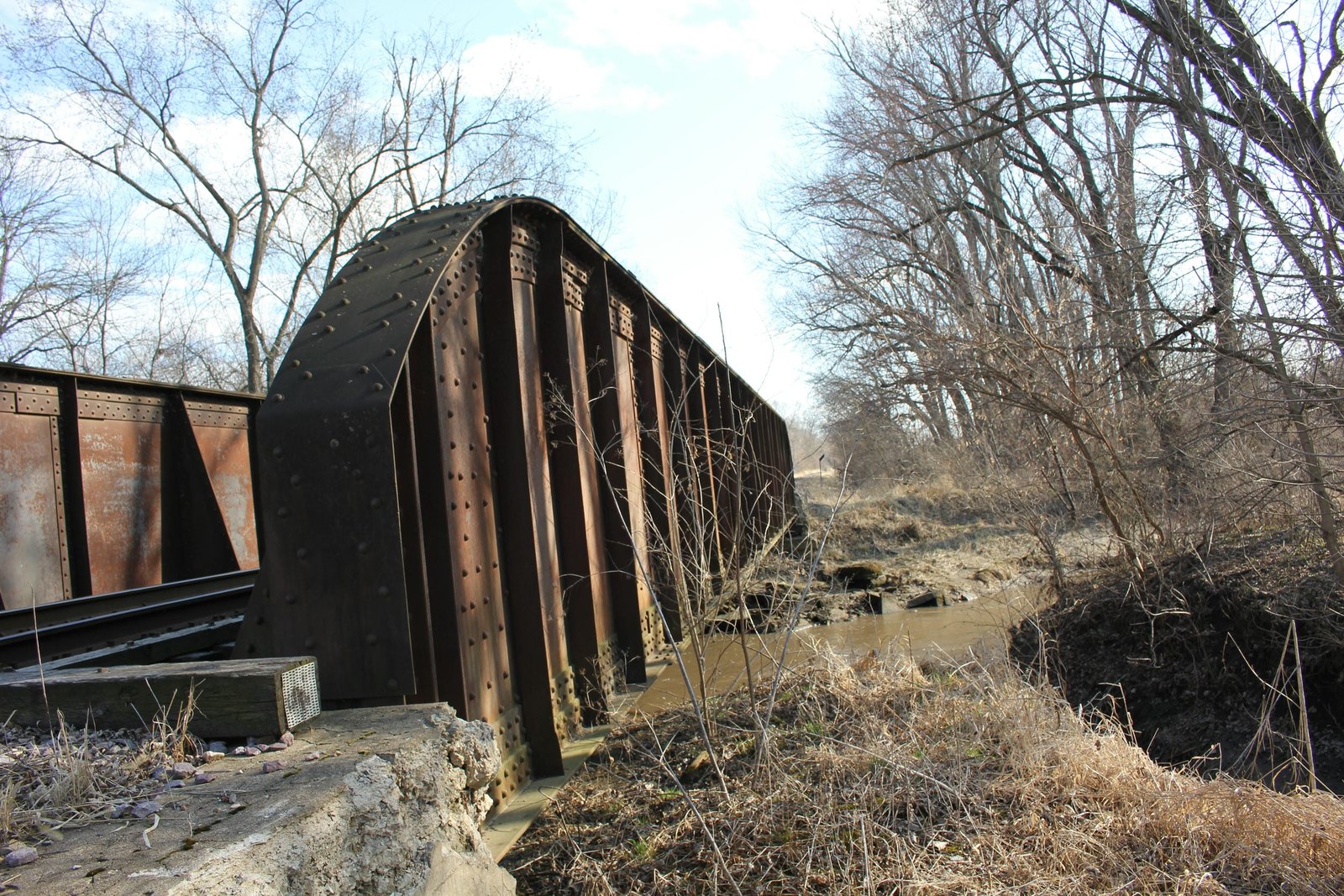
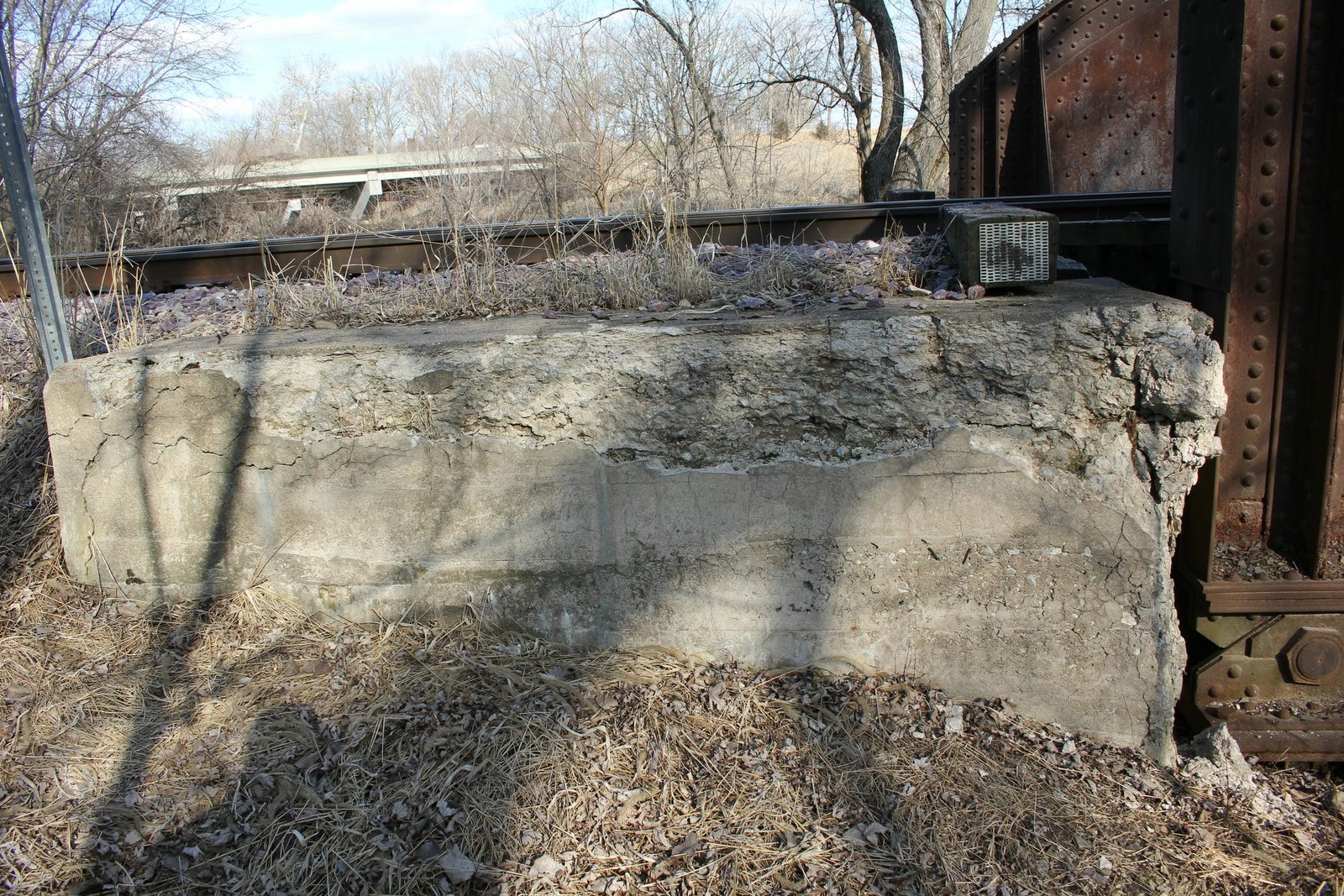
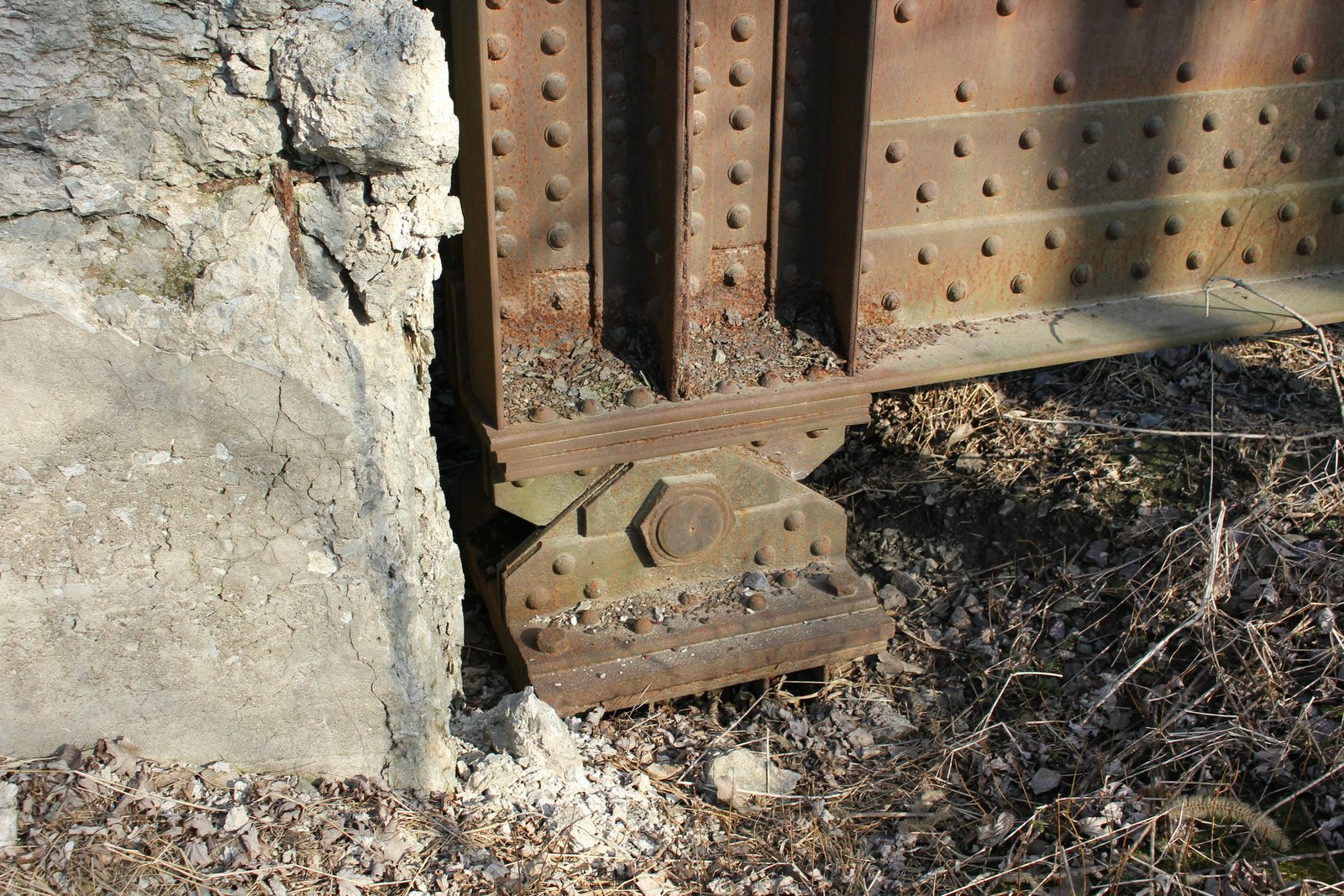
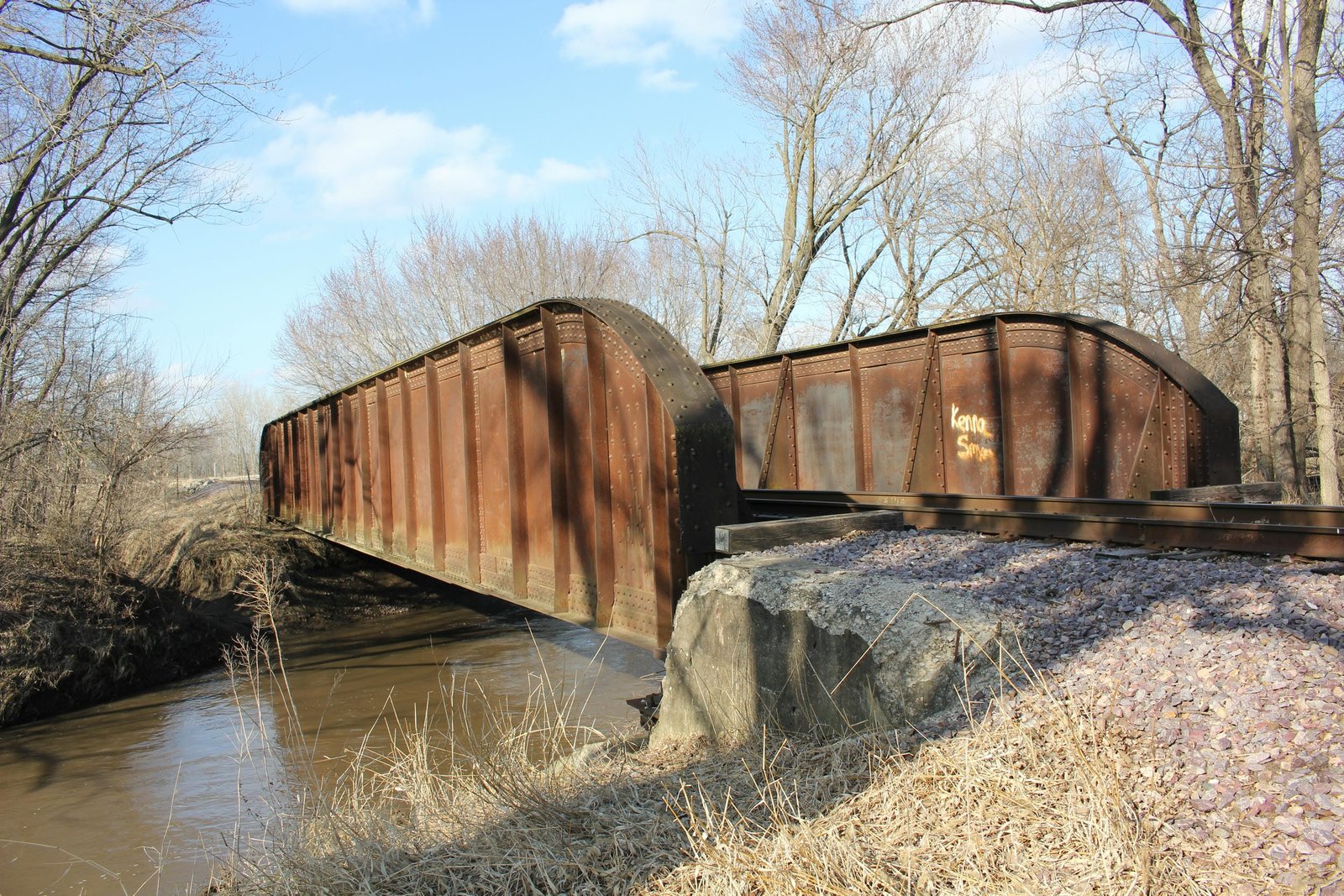
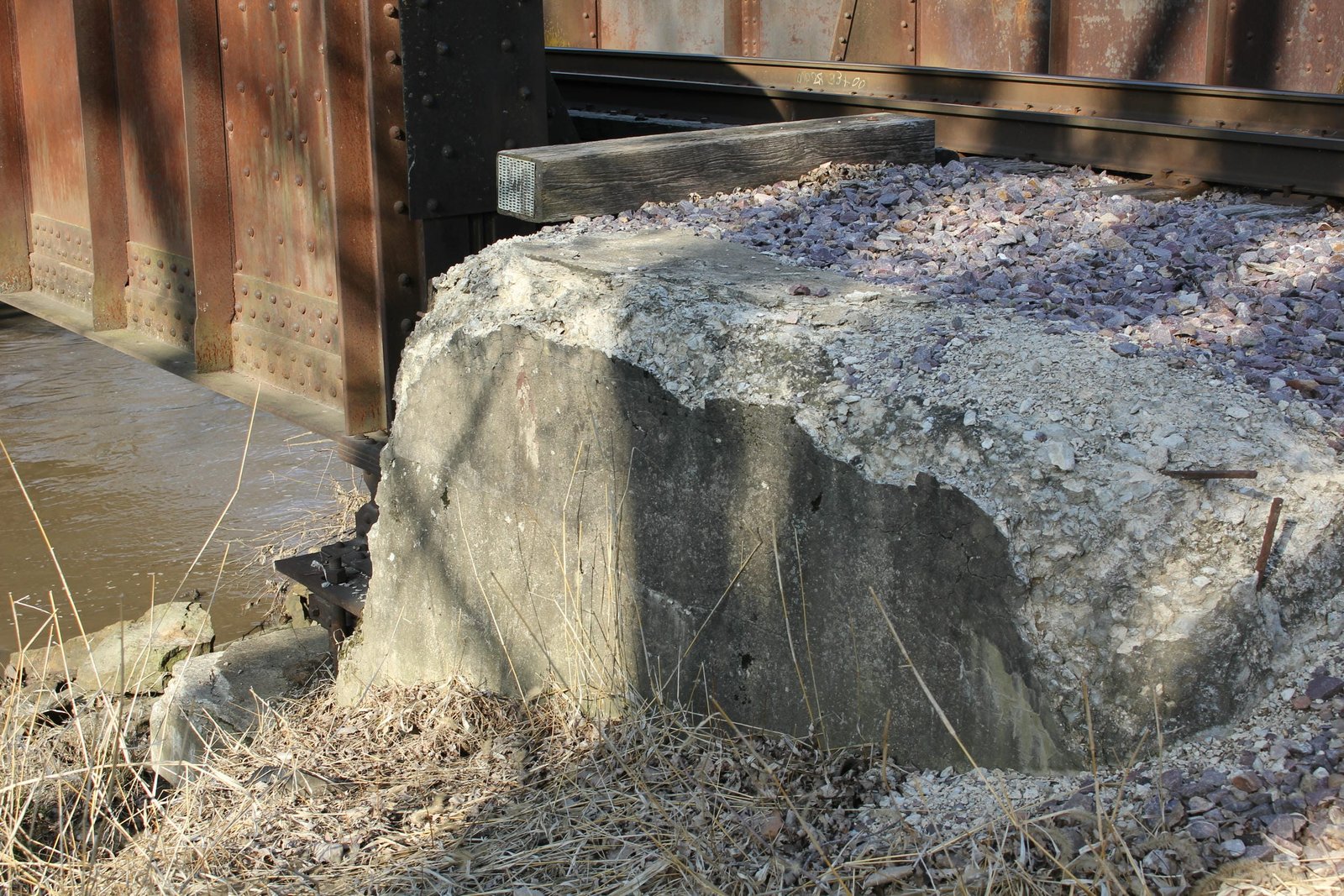
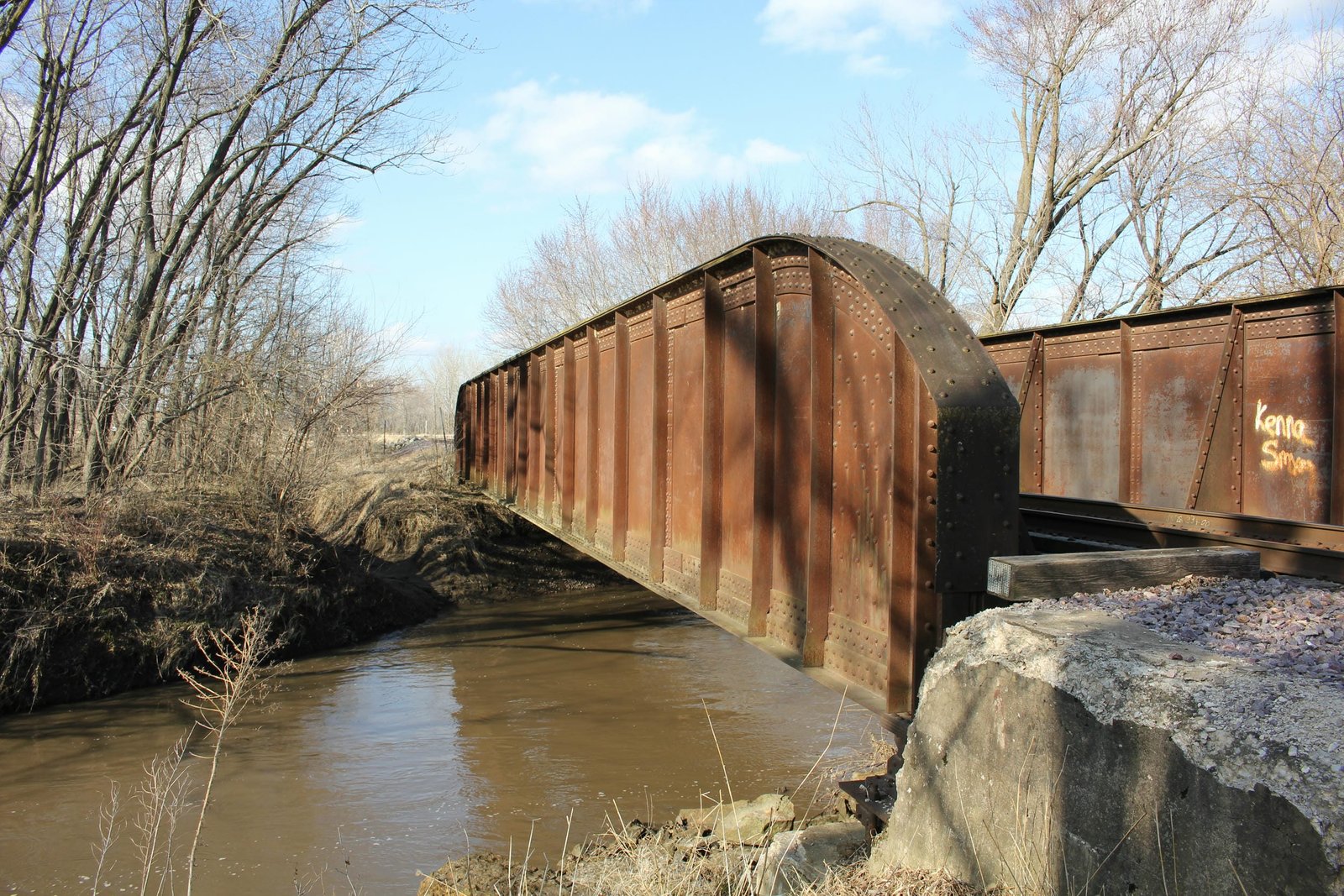
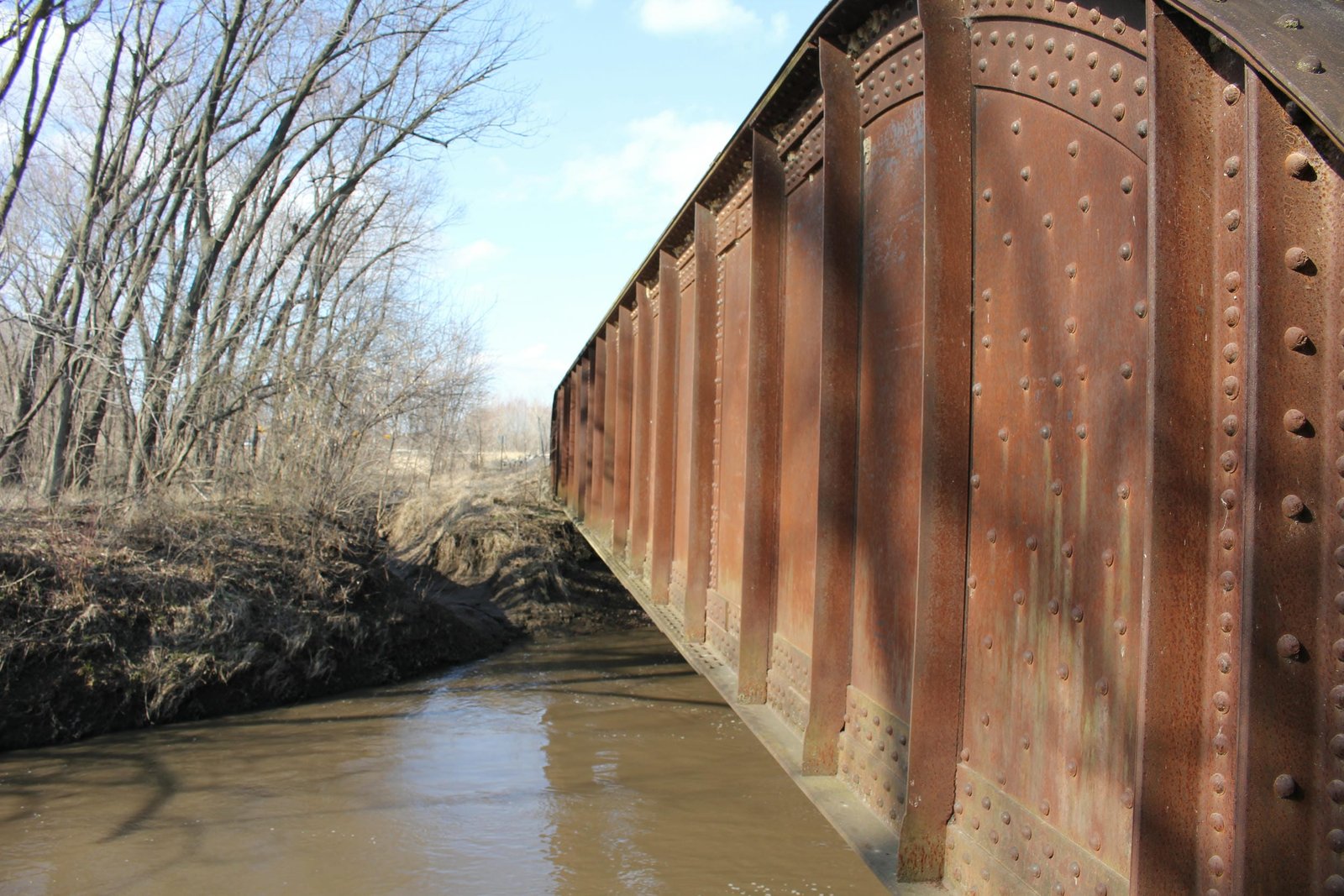
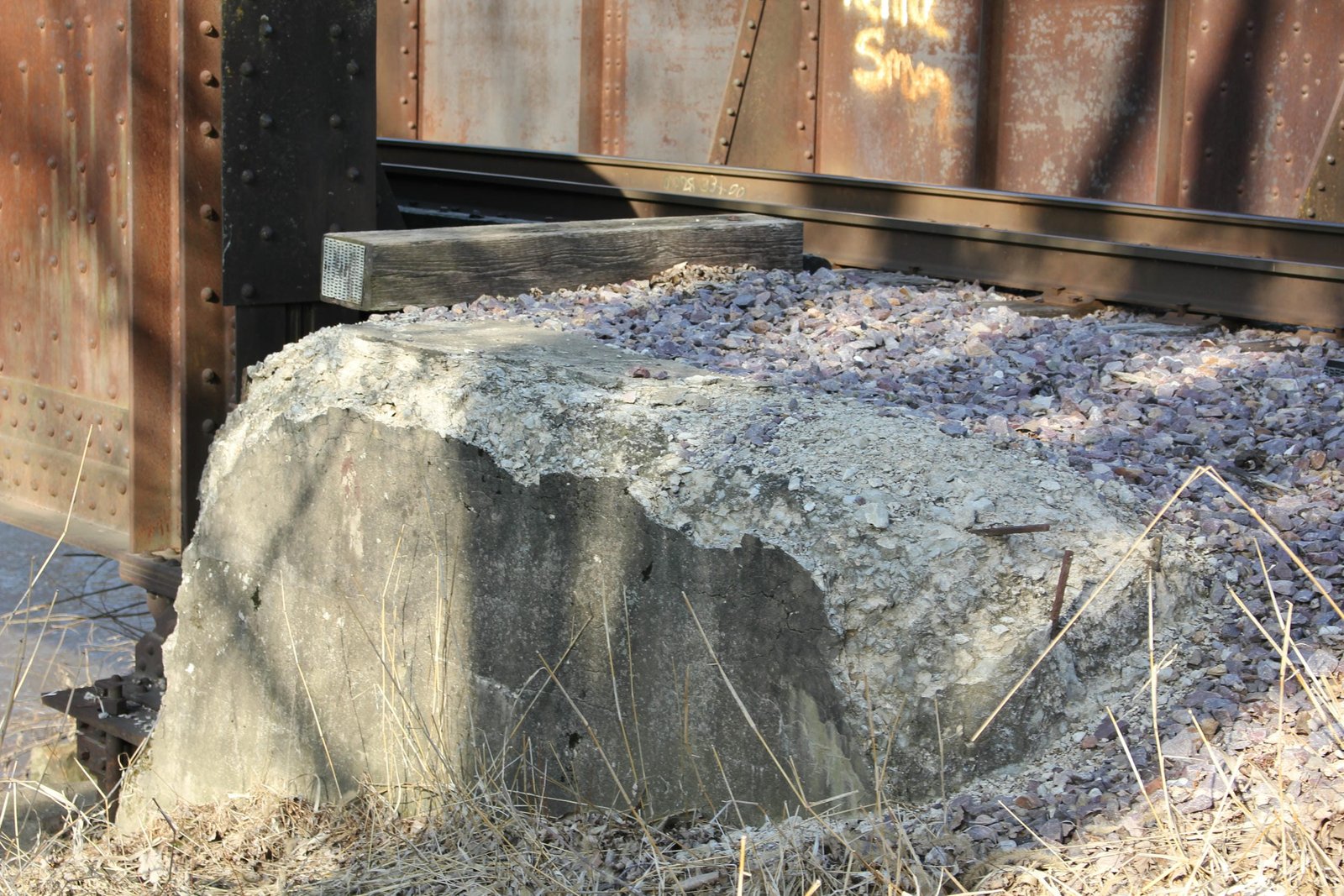
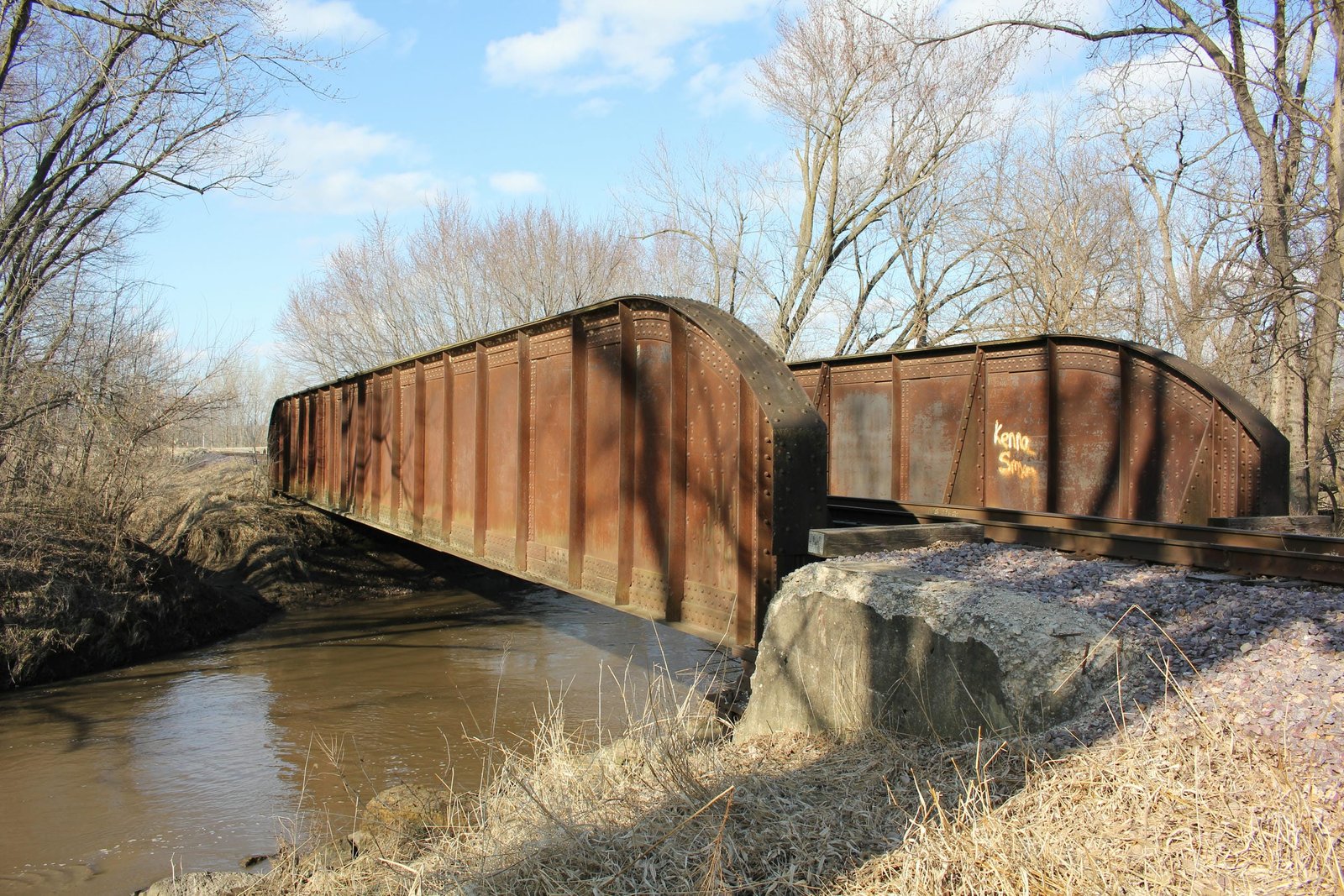
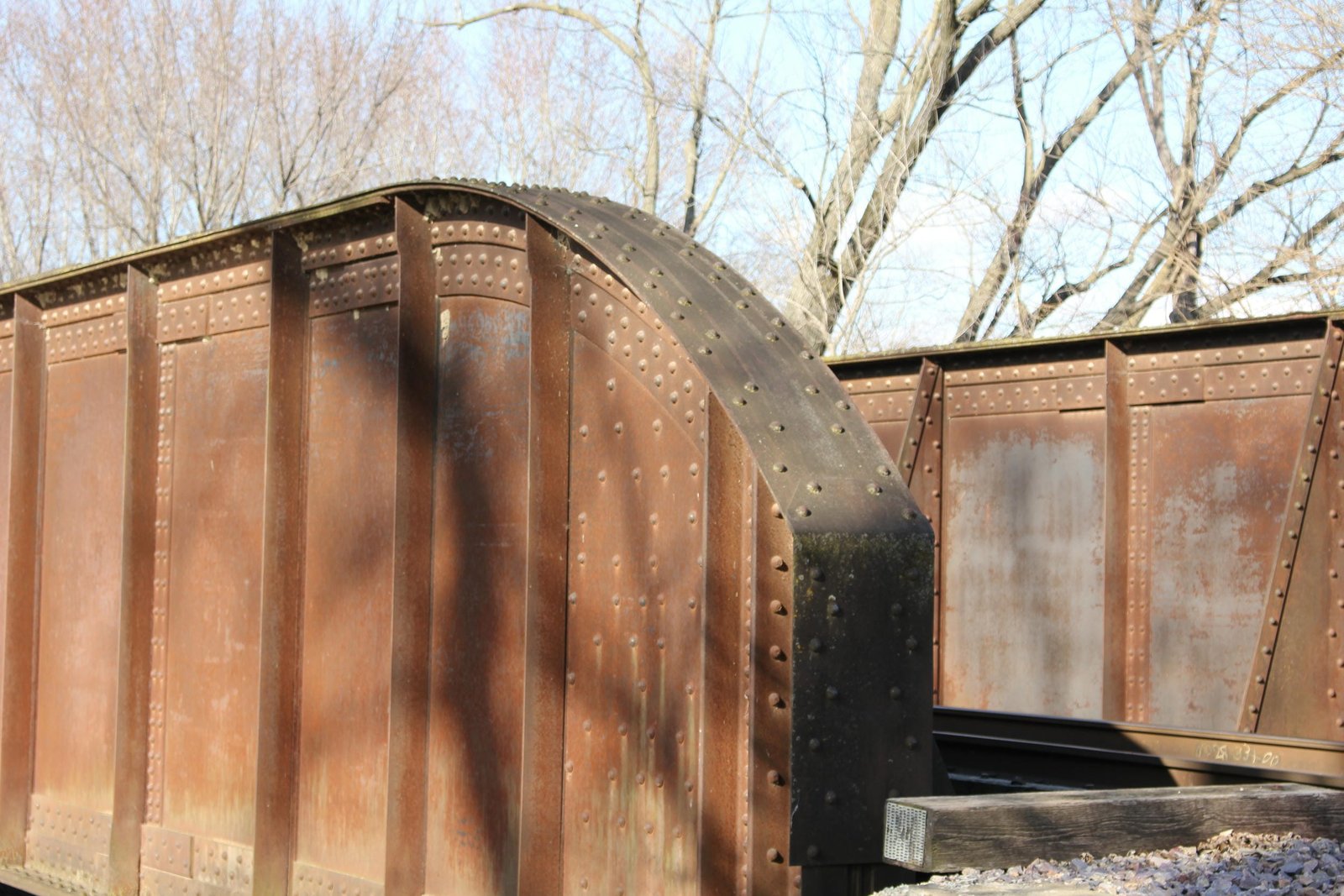
Located on the north side of Eddyville, this large through plate girder bridge carries a former Chicago, Rock Island & Pacific Railroad (Rock Island) mainline over Muchakinock Creek. Originally, two bridges existed at this location, with the Minneapolis & St. Louis Railway (M&StL) also owning a 97-foot Pratt through truss span, fabricated in 1892, immediately west of this bridge. In 1960, the M&StL was purchased by the Chicago & North Western Railway (C&NW), and the operations of the Rock Island and former M&StL were consolidated onto the Rock Island tracks at this location. The first bridge at this location likely consisted of a timber pile trestle, constructed when the line was first built. It is believed that the bridge was reconstructed with a 112-foot quadrangular lattice through truss span set onto stone abutments in approximately 1890. In approximately 1930, the bridge was replaced by the present structure. It is unknown if the truss span was reused at another location or scrapped. Currently, the bridge consists of a 112-foot through plate girder span, set onto concrete abutments. The superstructure follows a standard design, and consists of two massive plate girders, rounded and tapered girder ends and a standard floor system. Both abutments also use a standard design, and consist of U-shaped structures with no wing walls. An unknown contractor fabricated the superstructure, and an additional unknown contractor constructed the substructure. Through plate girder spans were popular for railroad use, as they were durable and easy to construct. The length of this bridge is abnormally long for a girder span from this era, resulting in heavier than usual girders. Since the initial construction, the bridge has seen no significant alterations. Today, it remains in occasional use to serve a large agricultural facility south of Eddyville. Overall, the bridge appears to be in fair to good condition, with some spalling noted throughout the abutments. The author has ranked this bridge as being locally significant, due to the common design.
Citations
| Railroad History Citation | ICC Valuation Information, Compiled by Richard S. Steele |