
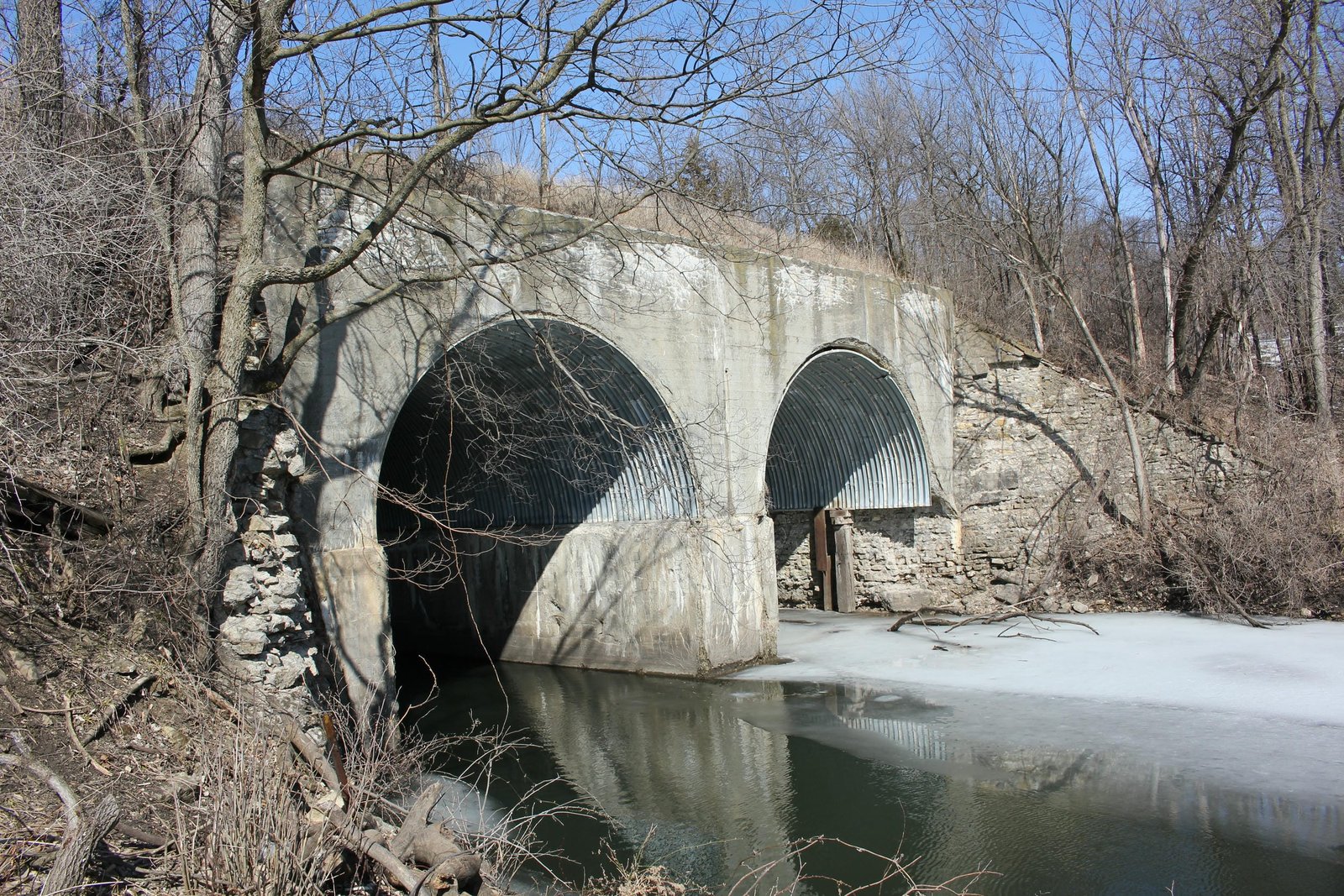
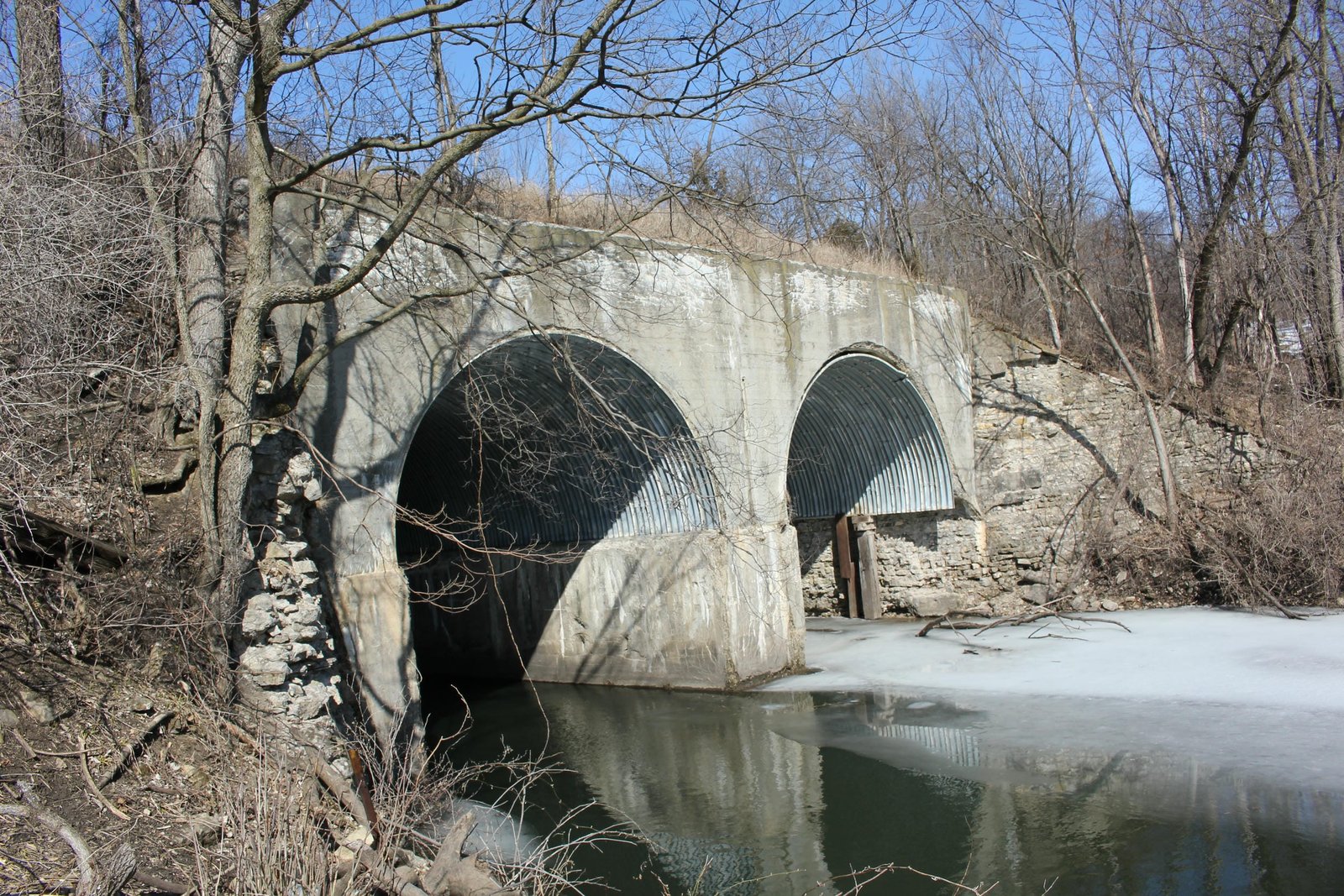
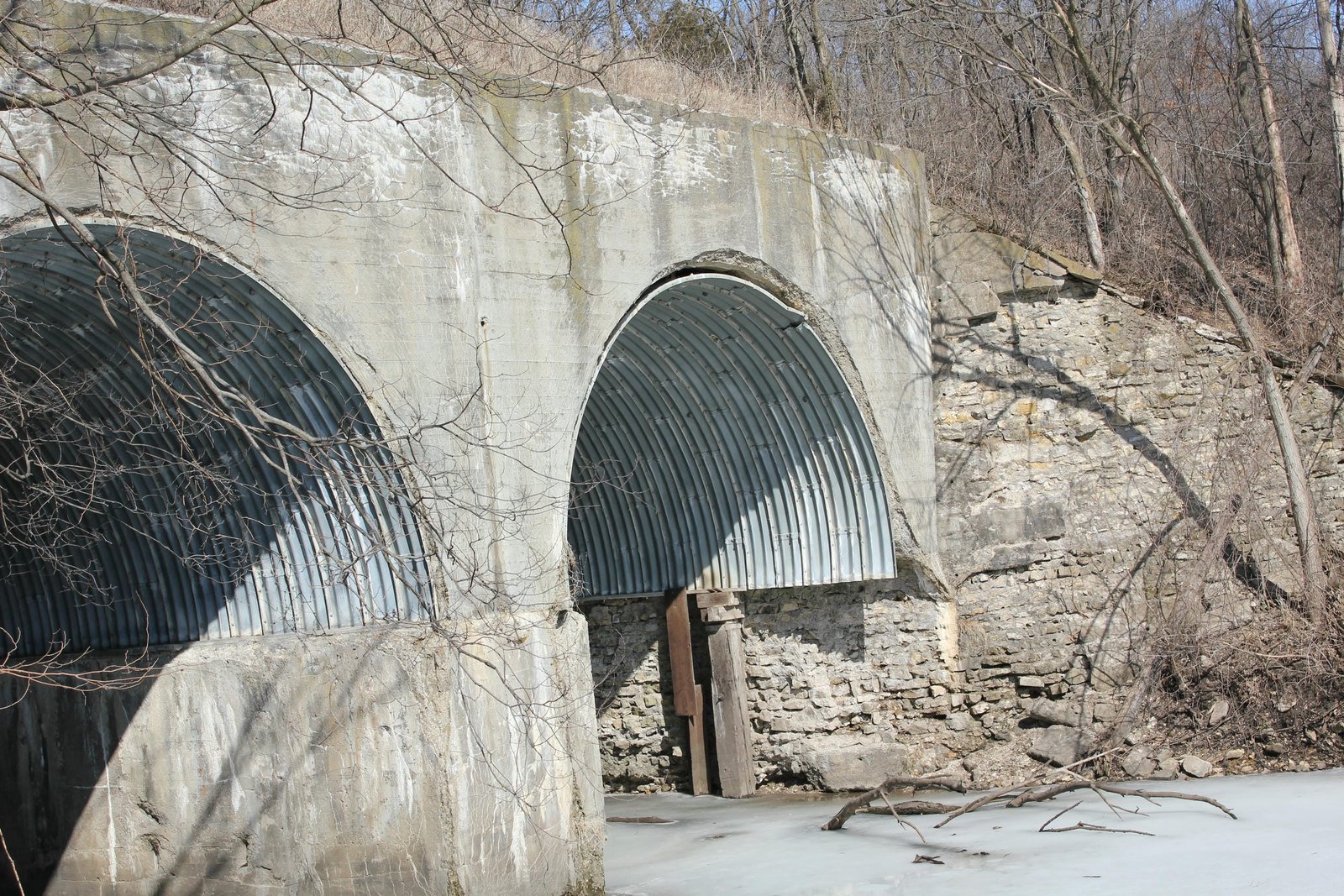
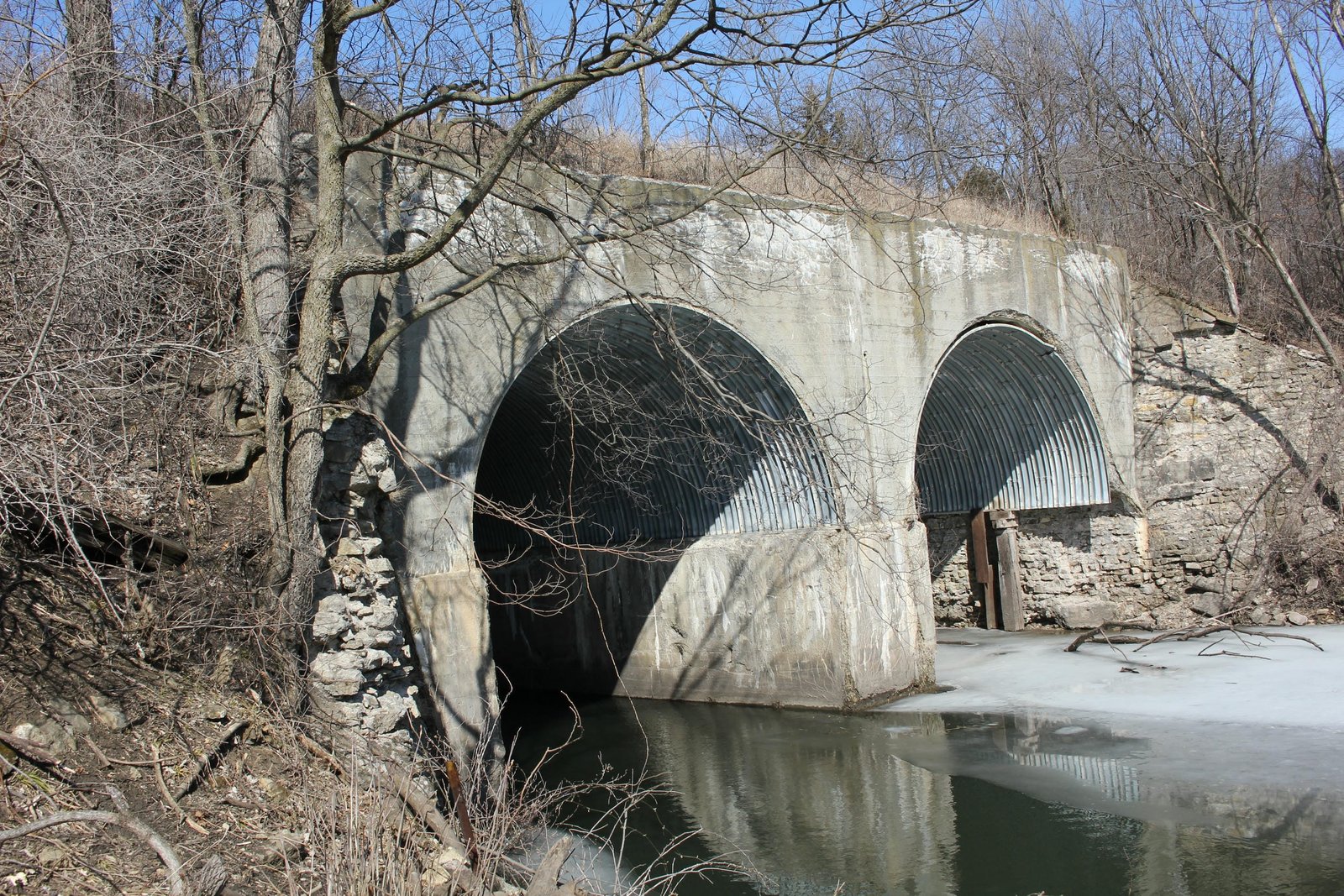
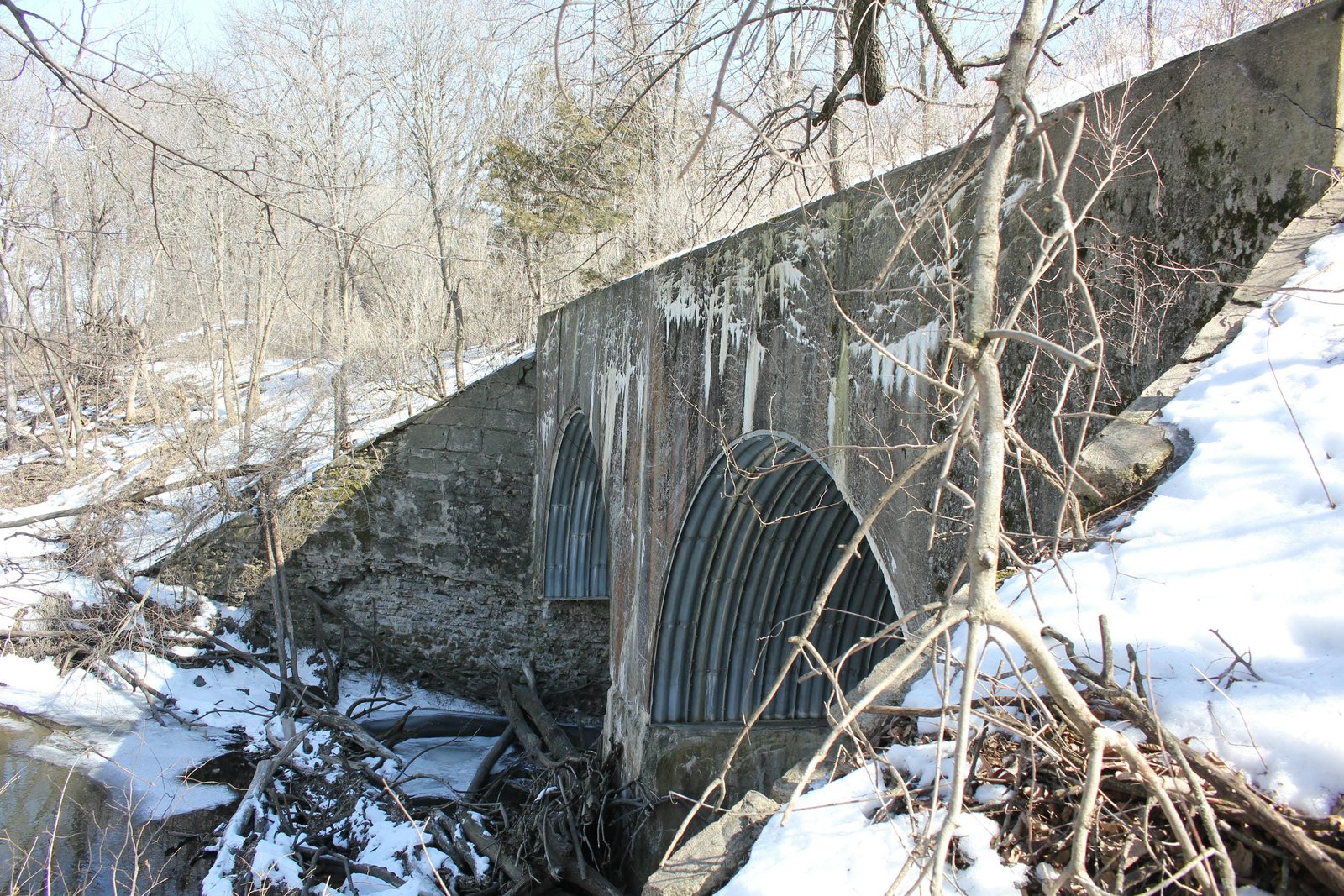
Click the photo to view the full-size version
| Name | Future Rolling Prairie Trail - Boylan Creek Bridge Chicago Great Western Railway Bridge #C302.29 |
| Built By | Chicago Great Western Railway |
| Currently Owned By | Butler County Conservation Board |
| Contractor | Unknown (Stone Abutments) Unknown (Concrete Arches) |
| Length | 50 Feet Total, 25 Foot Spans |
| Width | 1 Track (56 Feet) |
| Height Above Ground | 20 Feet (Estimated) |
| Superstructure Design | Concrete Arch |
| Substructure Design | Stone Masonry and Concrete |
| Date Built | 1901 |
| Traffic Count | 0 Trains/Day (Bridge is Closed To Traffic) |
| Current Status | Closed to all Traffic; Awaiting Trail Development |
| Chicago Great Western Railway Bridge Number | C302.29 (Old #D67) |
| Union Pacific Railroad Bridge Number | 302.29 |
| Significance | Local Significance |
| Documentation Date | 2/29/2020 |
In 1879, the Dubuque & Dakota Rail Road (D&D) constructed 41 miles of new railroad, extending from Waverly, Iowa to Hampton, Iowa. In 1887, the D&D was sold to the Minnesota and Northwestern Railroad (M&NW), which merged with the Chicago, St. Paul & Kansas City Railway (CStP&KC) in 1887. The CStP&KC was sold to the Chicago Great Western Railway (CGW) in 1893. In 1902, the CGW sold the Hampton to Waverly line to the Mason City & Fort Dodge Railway (MC&FD Ry), which rehabilitated the line. Concurrently, the Mason City & Fort Dodge Railroad (MC&FD) constructed 27 additional miles from Hampton, Iowa to Clarion, Iowa. Both the MC&FD Ry and MC&FD were leased by the CGW. The MC&FD Ry completed an additional 29 miles of new railroad between Oelwein, Iowa and Waverly in 1904, and was merged into the MC&FD in 1905. The CGW would be reorganized as the Chicago Great Western Railroad in 1909, and maintained a lease of the MC&FD property.
The CGW had acquired and constructed a modest railroad network throughout Illinois, Iowa, Minnesota and Missouri; connecting major cities in these states. The CGW was one of the smaller railroads in the area, and was late to develop lines. As a result, the railroad never saw the fortunes of other railroads in the area. This line served as a principal mainline for the CGW, serving agricultural industries and providing a connection to terminals at Omaha, Nebraska. In the early 20th Century, the CGW was often surviving on razor-thin profit margins. In 1940, the CGW entered bankruptcy, and was again reorganized as the Chicago Great Western Railway. At this time, the MC&FD was formally merged into the CGW. After the bankruptcy, the CGW became an innovative railroad, pioneering intermodal service and becoming one of the first railroads to completely switch to diesel locomotives. A capital improvement program was launched in 1949, which sought to rebuild and rehabilitate deteriorated infrastructure.
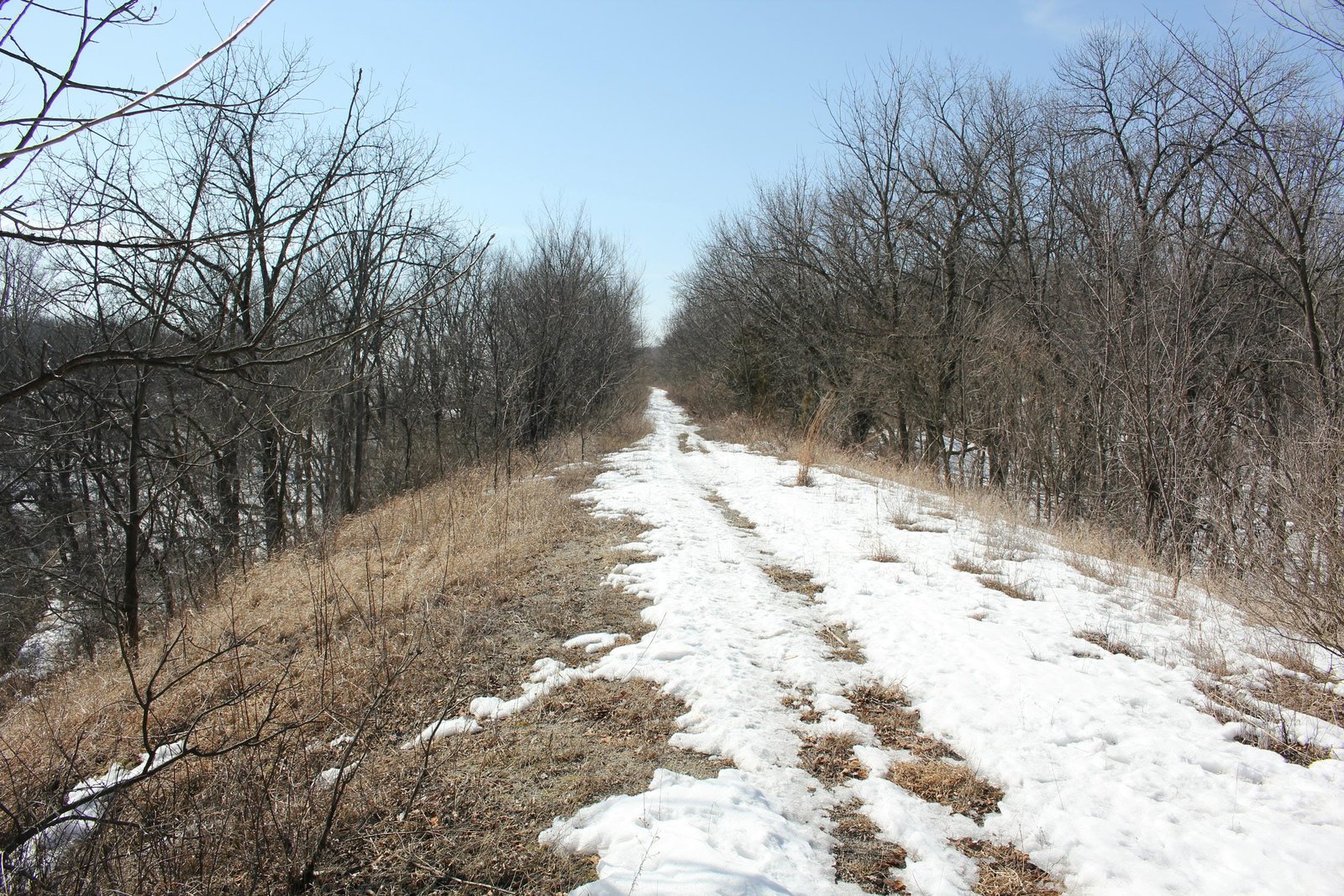
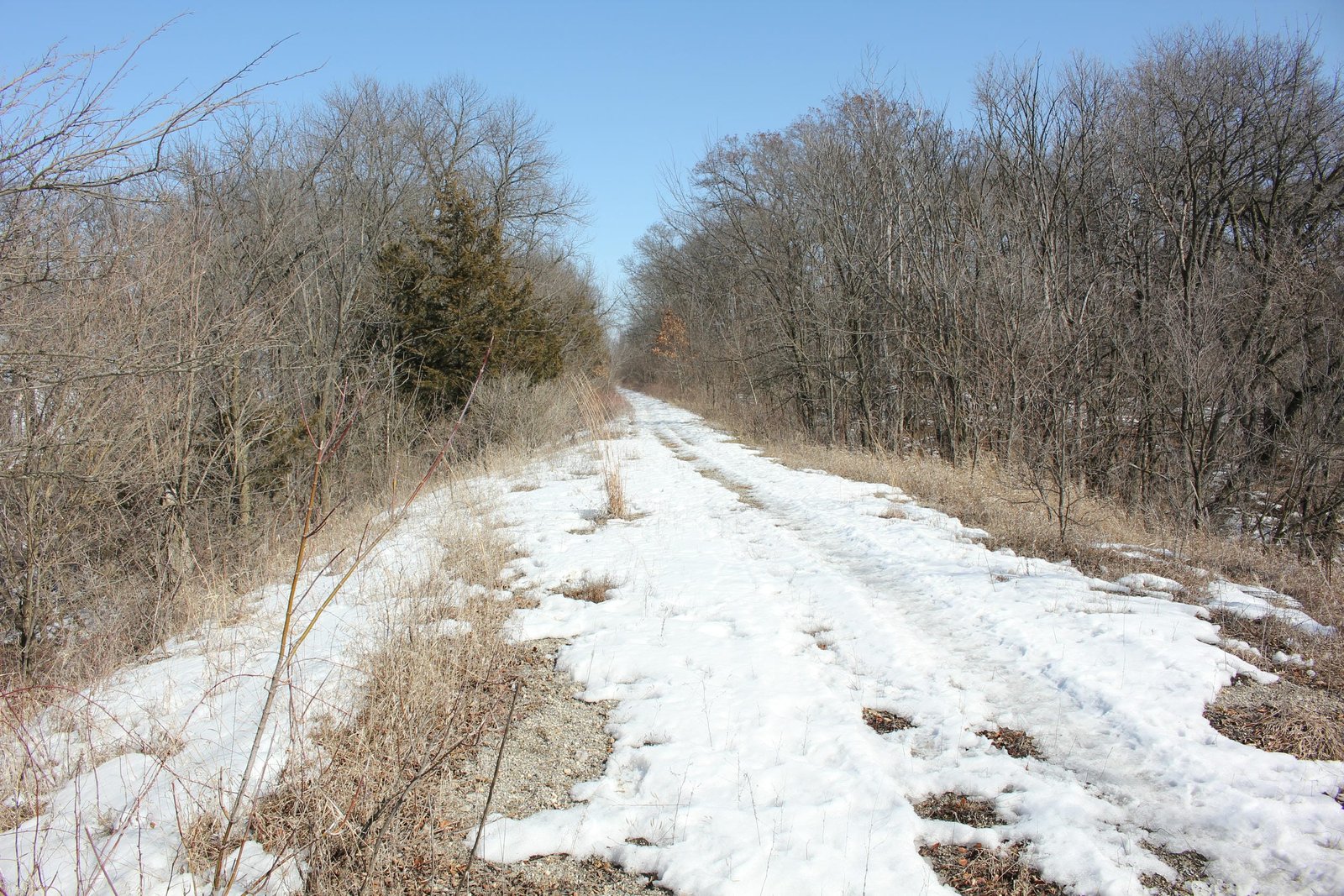
In 1968, the CGW was purchased by the Chicago & North Western Railway (C&NW). The C&NW already owned a better constructed route, which ran roughly parallel to this line. In 1979, the C&NW abandoned a section between Coulter, Iowa and Clarion; followed by a large section between Oelwein and Shell Rock, Iowa in 1986. A short segment was abandoned between Shell Rock and Clarksville, Iowa in 1988. In 1995, the C&NW was purchased by Union Pacific Railroad (UP). UP abandoned a section between Clarksville and Allison, Iowa in 1998, followed by the remaining section between Allison and Coulter in 2003. Today, much of the line has been acquired for trail use. The Rolling Prairie Trail currently uses the right-of-way between Readlyn and Waverly, between Clarksville and Bristow and between Hampton and Coulter. The remaining section between Bristow and Hampton is scheduled to become part of the trail, while the remaining sections are currently abandoned.
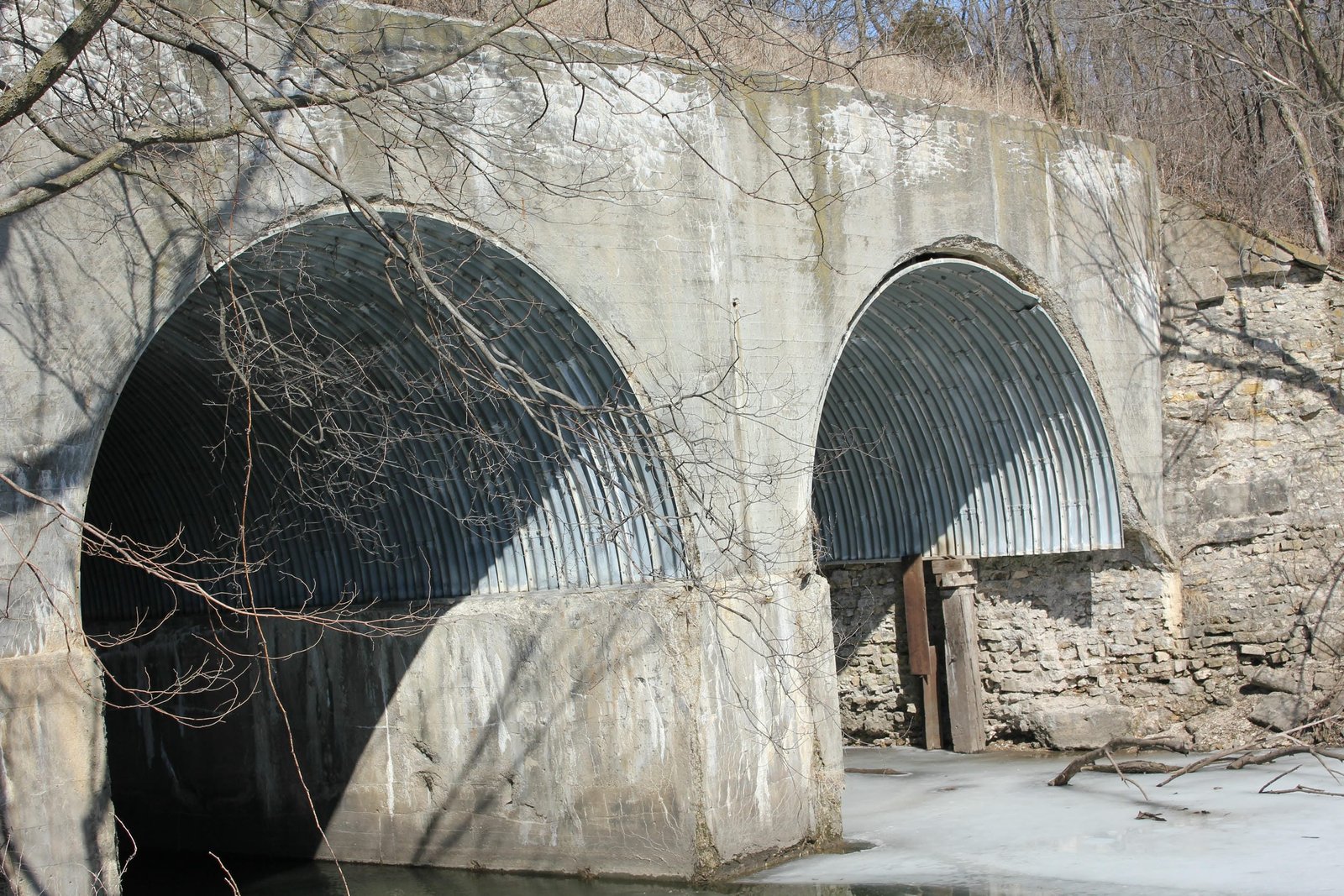
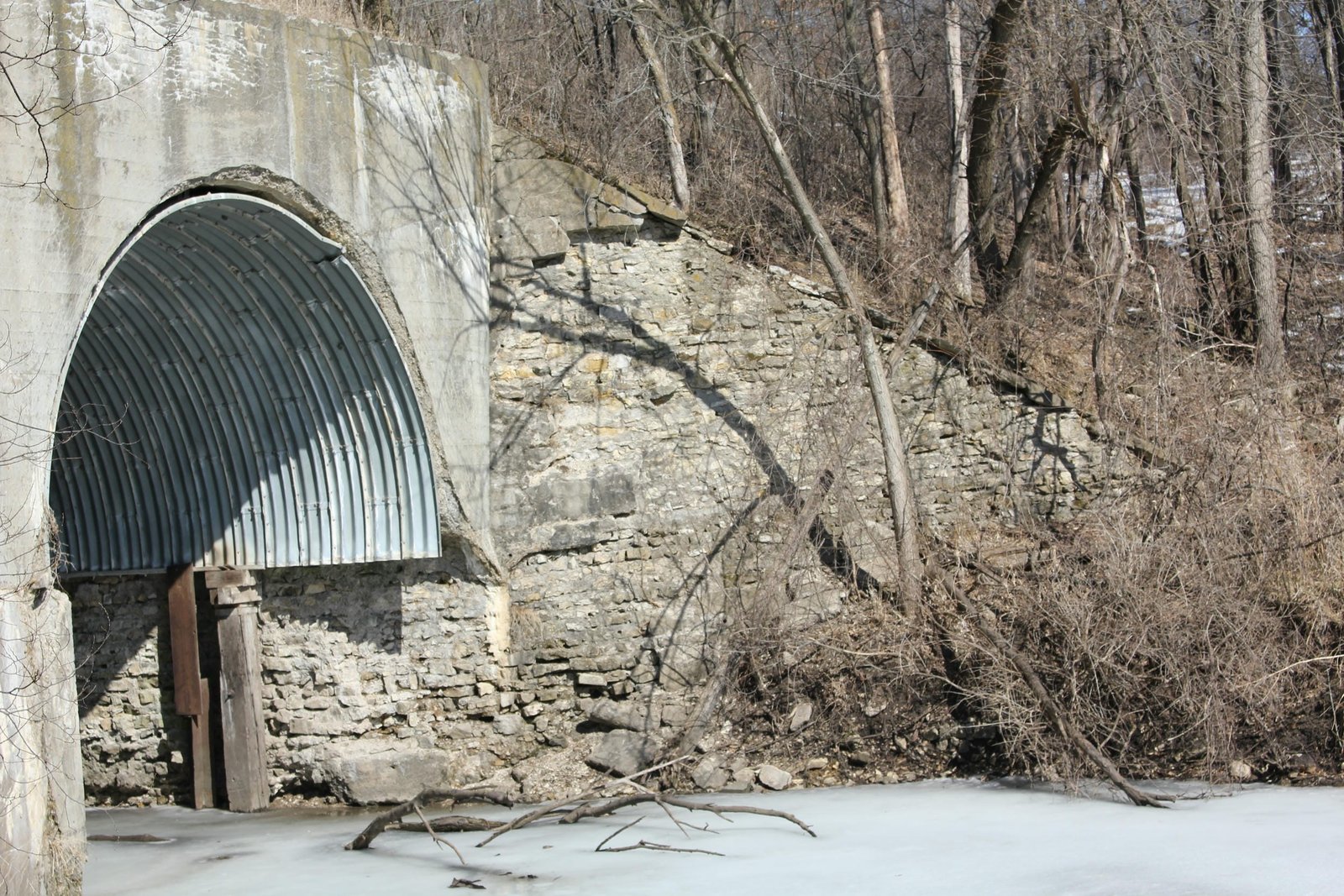
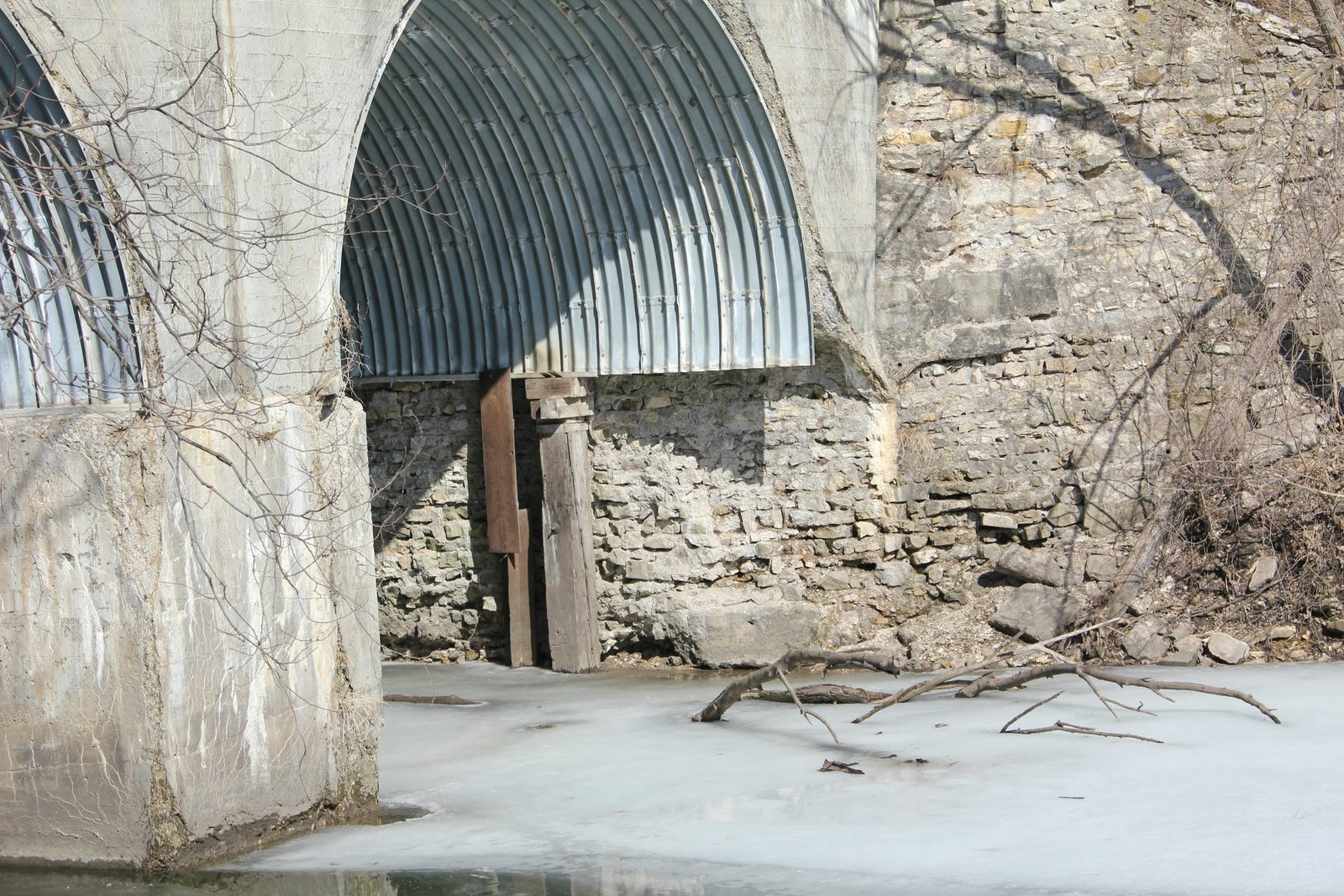
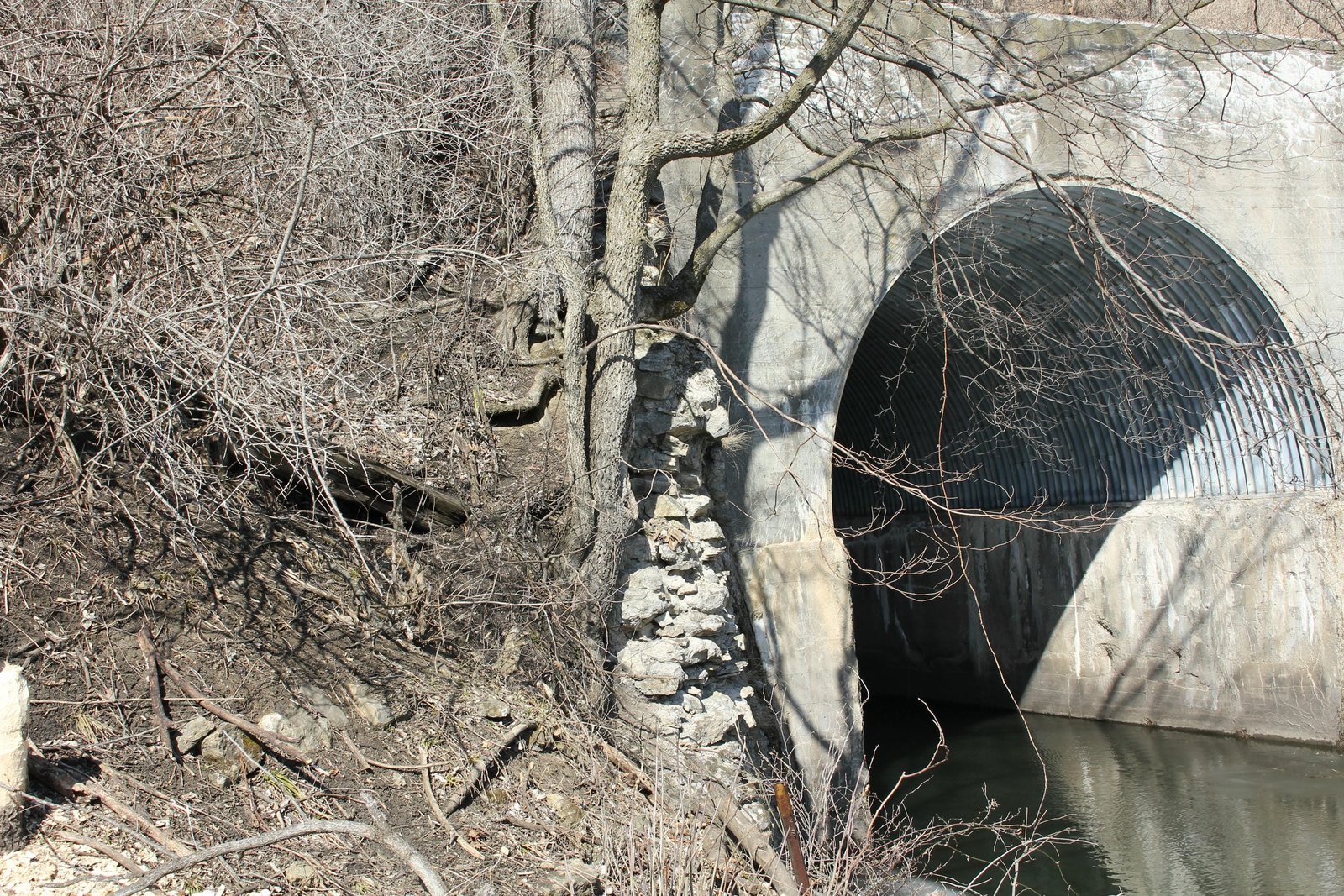
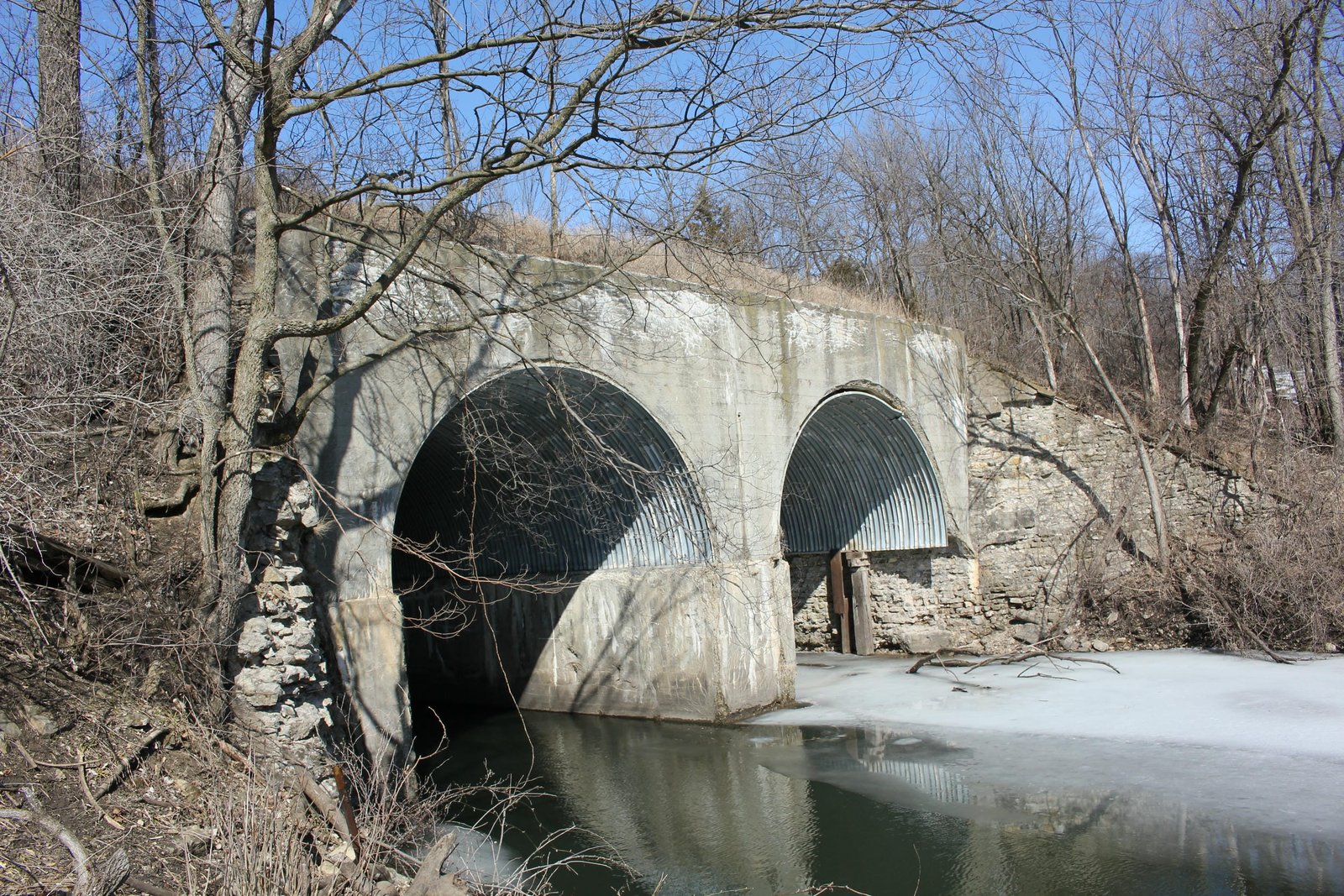
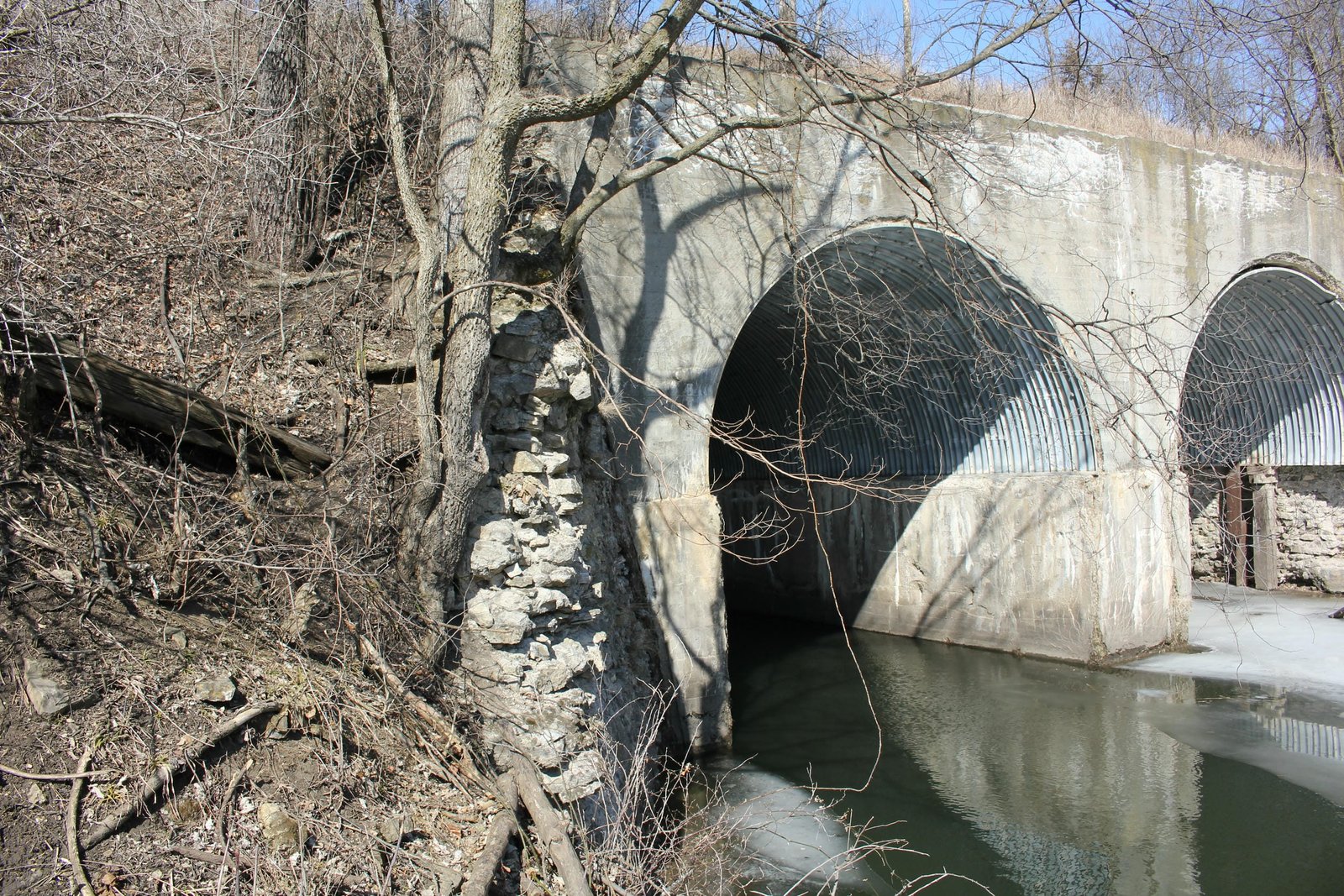
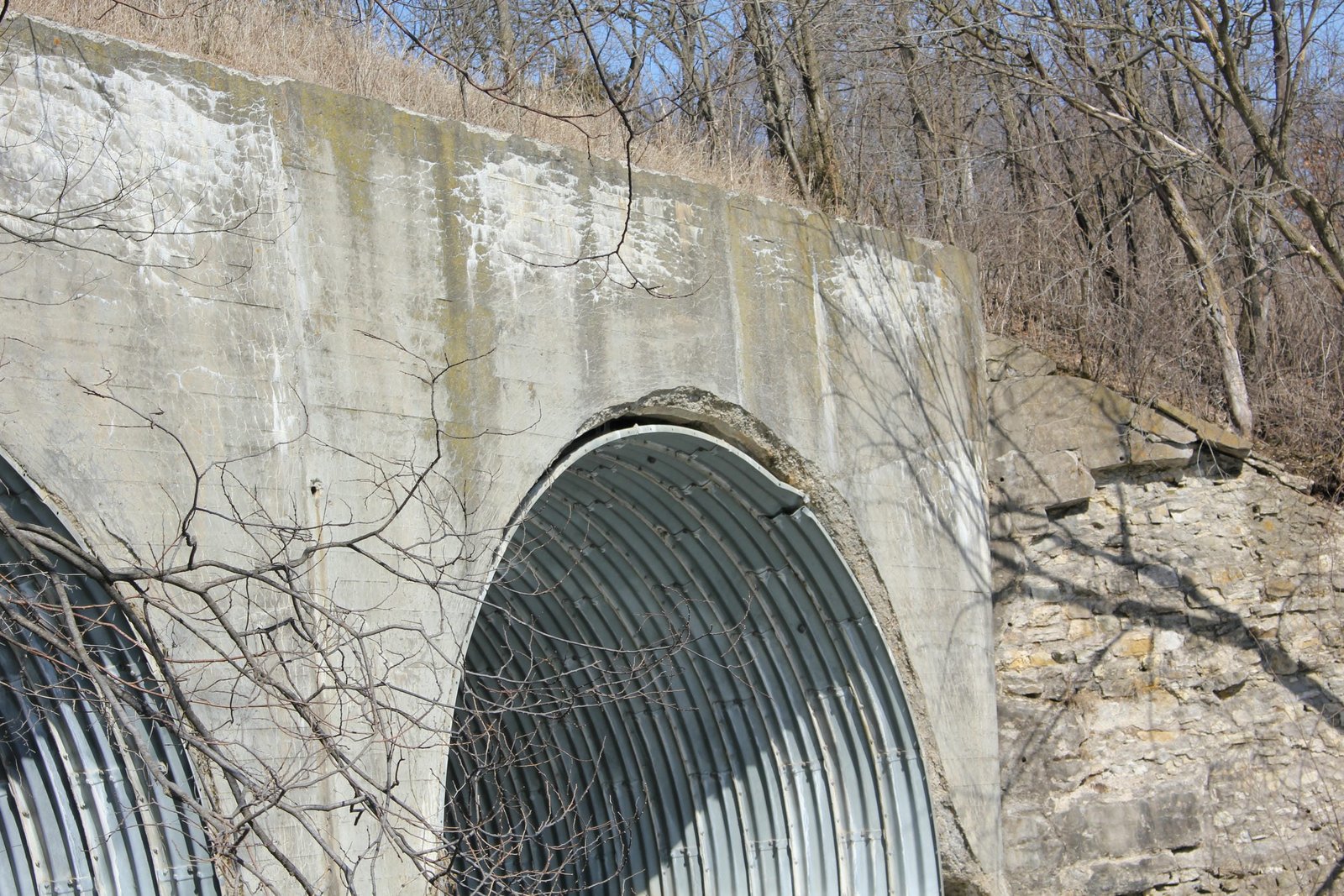
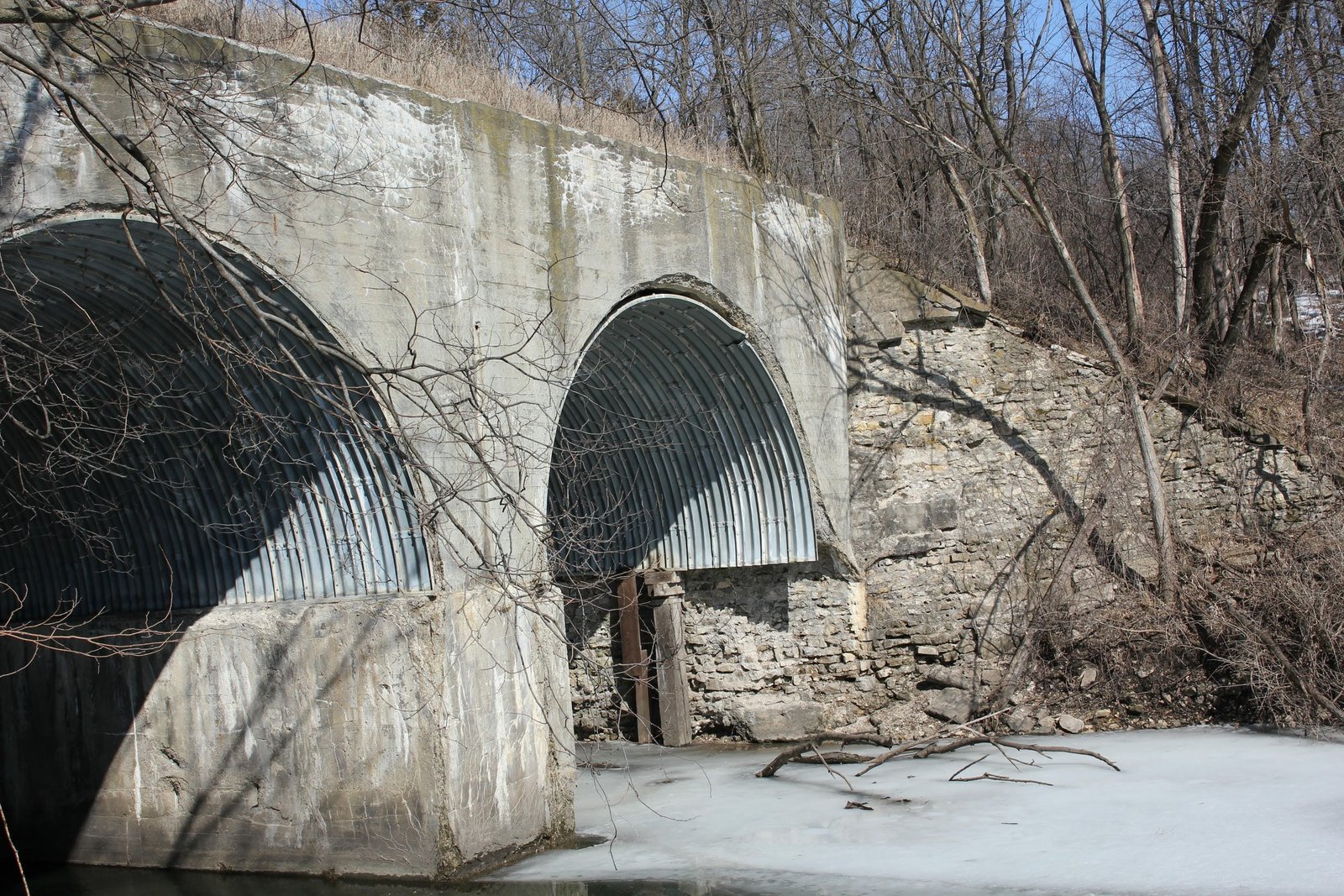
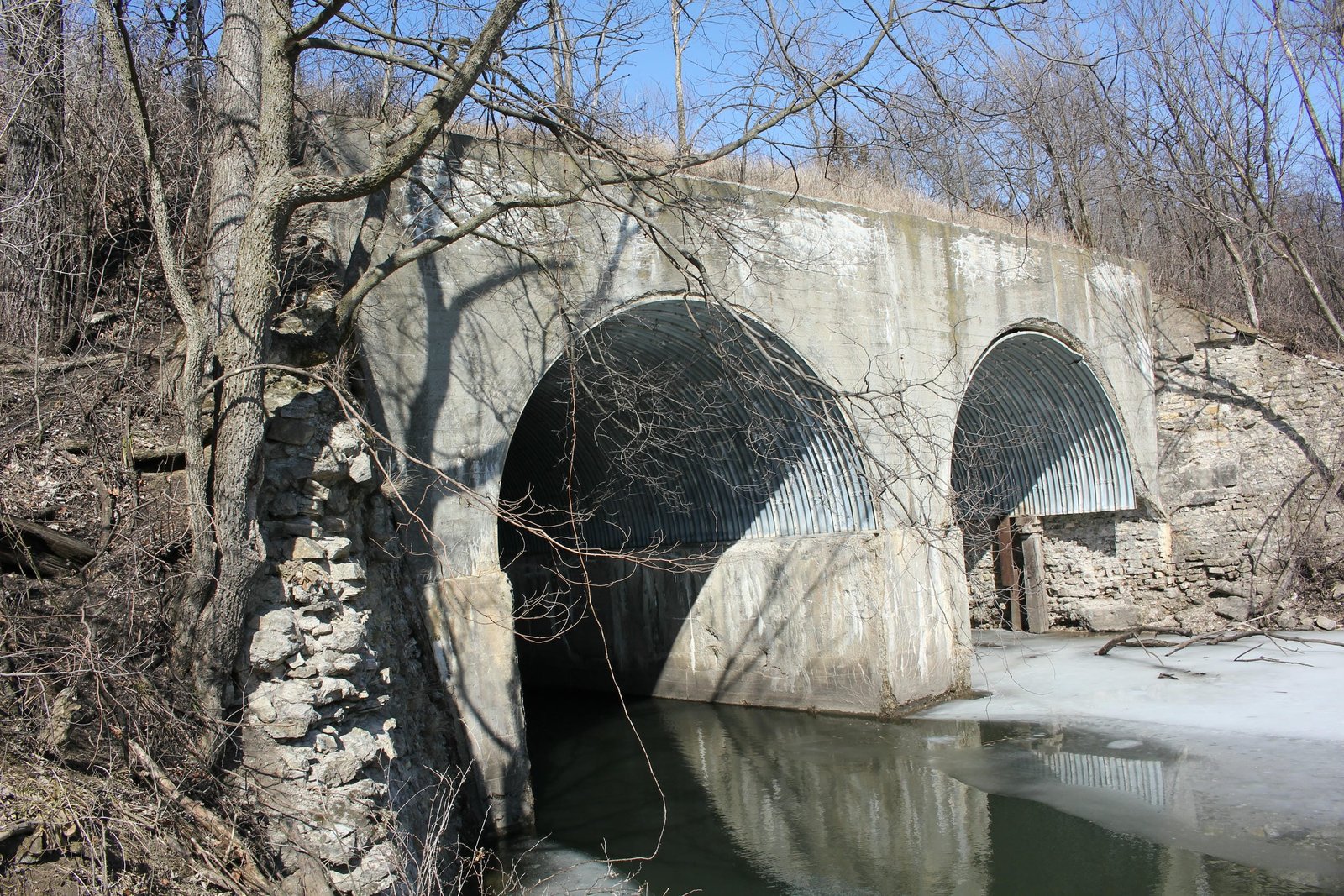
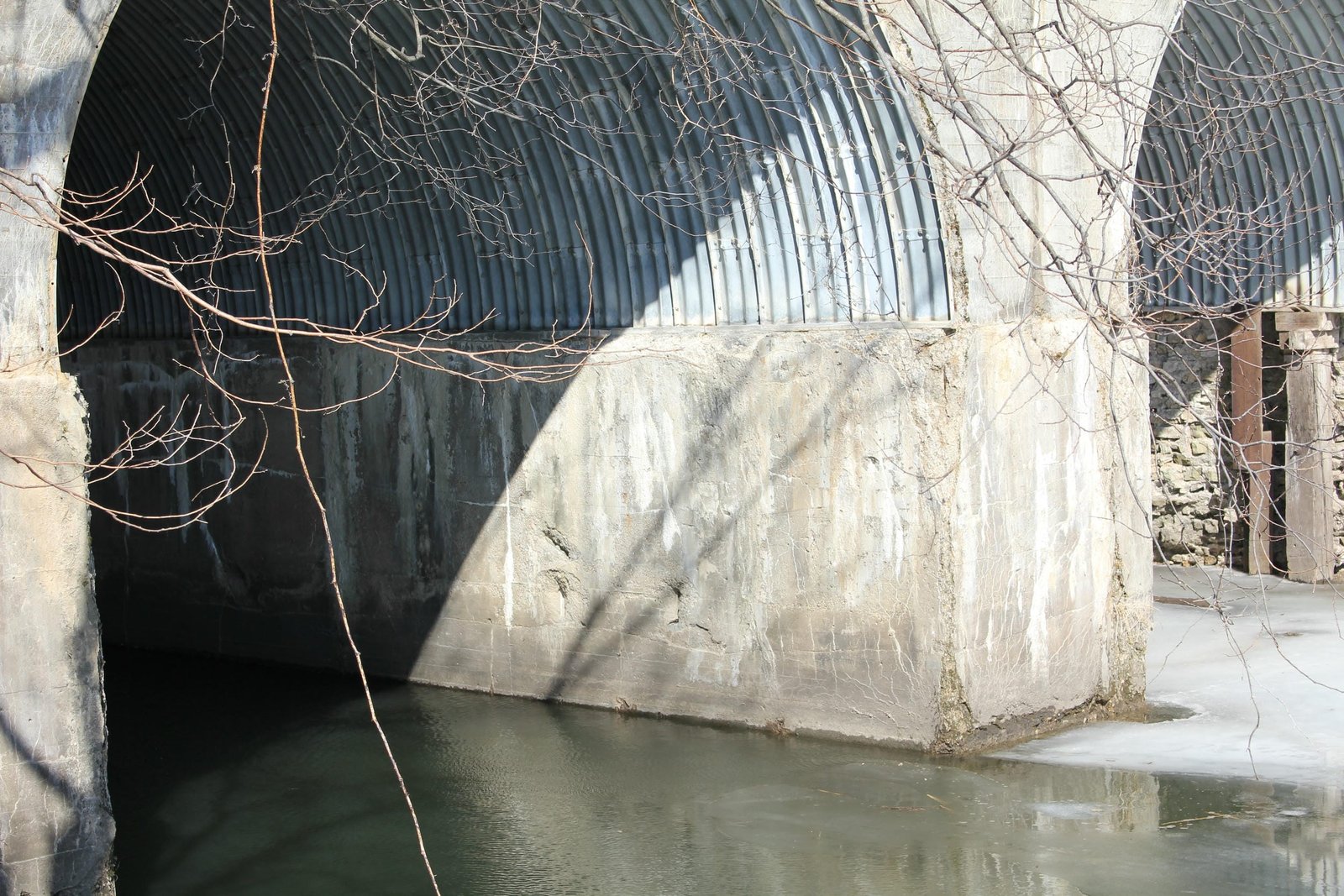
Located between Bristow and Dumont, this concrete arch bridge carries a former Chicago Great Western Railway mainline over Boylan Creek. The first bridge at this location likely consisted of a timber pile trestle bridge, constructed when the line was first built. This trestle was apparently several hundred feet long, and stood high above the creek below. In late 1882, the bridge was rebuilt with two 30-foot timber "strain beams", set onto stone substructures and approached by timber pile trestle spans on either end. In 1896, the bridge was rebuilt with two 30-foot iron beam spans, and the balance of the trestle approaches were filled with embankment. During the early 20th Century, the CGW invested significant capital into their system, replacing aging bridges with new steel, stone and concrete structures. During the 1901 construction season, a force of laborers was reportedly working west of Bristow to make permanent improvements along this line. It is believed a new concrete arch bridge was constructed at that time, reusing portions of the old stone substructures. A "cement culvert across Boylan's Creek" was reportedly damaged during a 1903 flood, but later repaired. Currently, the bridge consists of two large 25-foot concrete arches, set onto stone and concrete substructures and constructed for a single track at a width of 56 feet. The superstructure follows a standard design, with semicircular arches and short headwalls. It appears that the ends of the arches directly sit on the old stone abutments. The substructure is unusual, and consists of a rubble quality limestone with angled wing walls that extend from the structure at an angle. It appears that these wing walls were once covered by concrete, which has largely broken off. Stone for the substructures consists of a tan limestone, quarried at an unknown location. An unknown contractor constructed the concrete arches, while an additional unknown contractor constructed the stone portions of the substructure. Concrete arches were popular for railroad use, as they were durable and easy to construct. Since the initial construction, the bridge has seen a number of alterations, mainly the addition of a corrugated metal lining underneath the arch. Today, the bridge is abandoned but awaiting future development as part of the Rolling Prairie Trail. Overall, the bridge appears to be in fair to poor condition, with significant cracking and spalling throughout the structure, primarily at the abutments. In addition, timber cribbing has been installed to help hold the corrugated metal lining of the east span. The author has ranked this bridge as being locally significant, due to the common design and unclear history.
Citations
| Build date | Clarksville Star; August 29, 1901 |
| Railroad History Citation | ICC Valuation Information, Compiled by Richard S. Steele |