
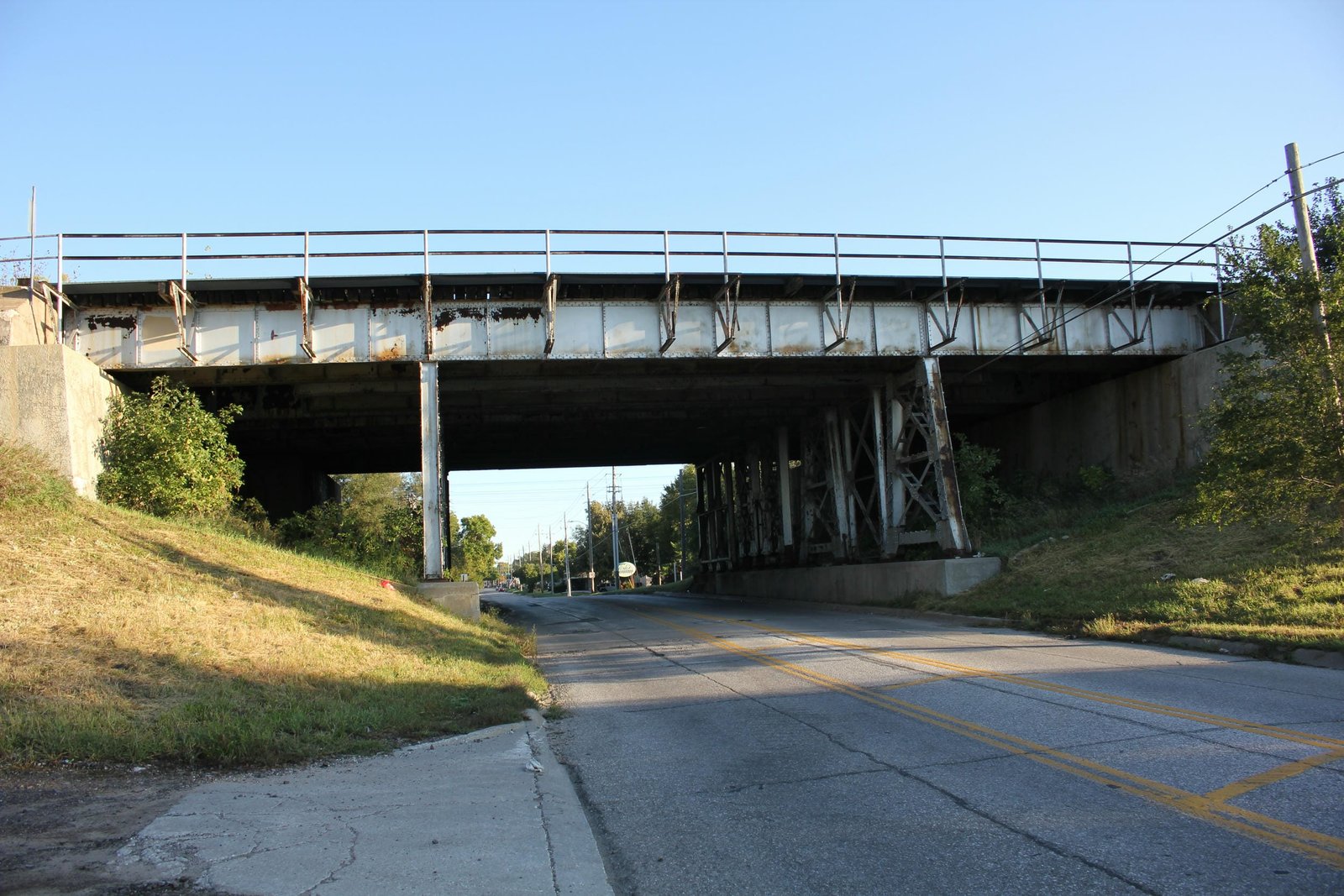
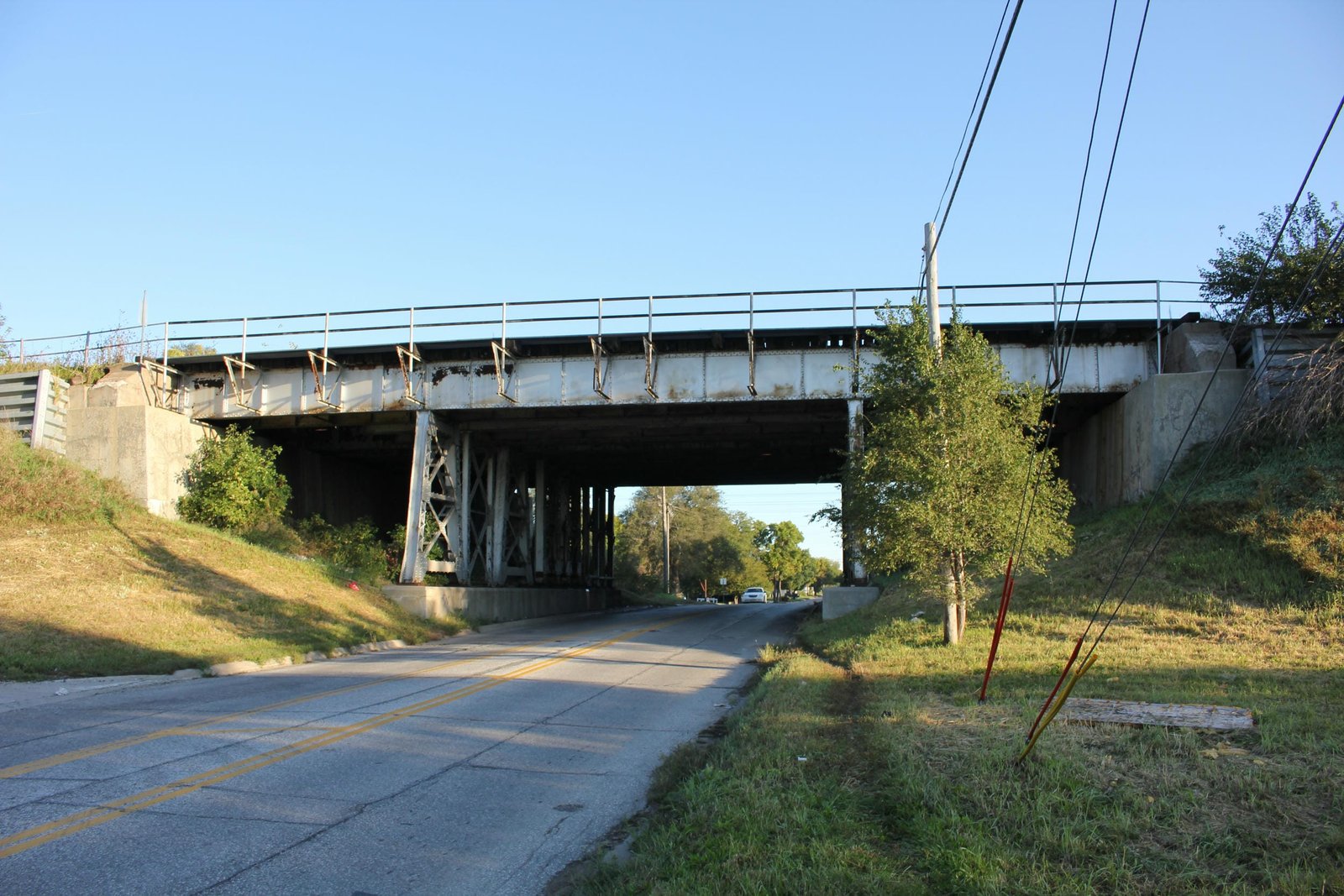
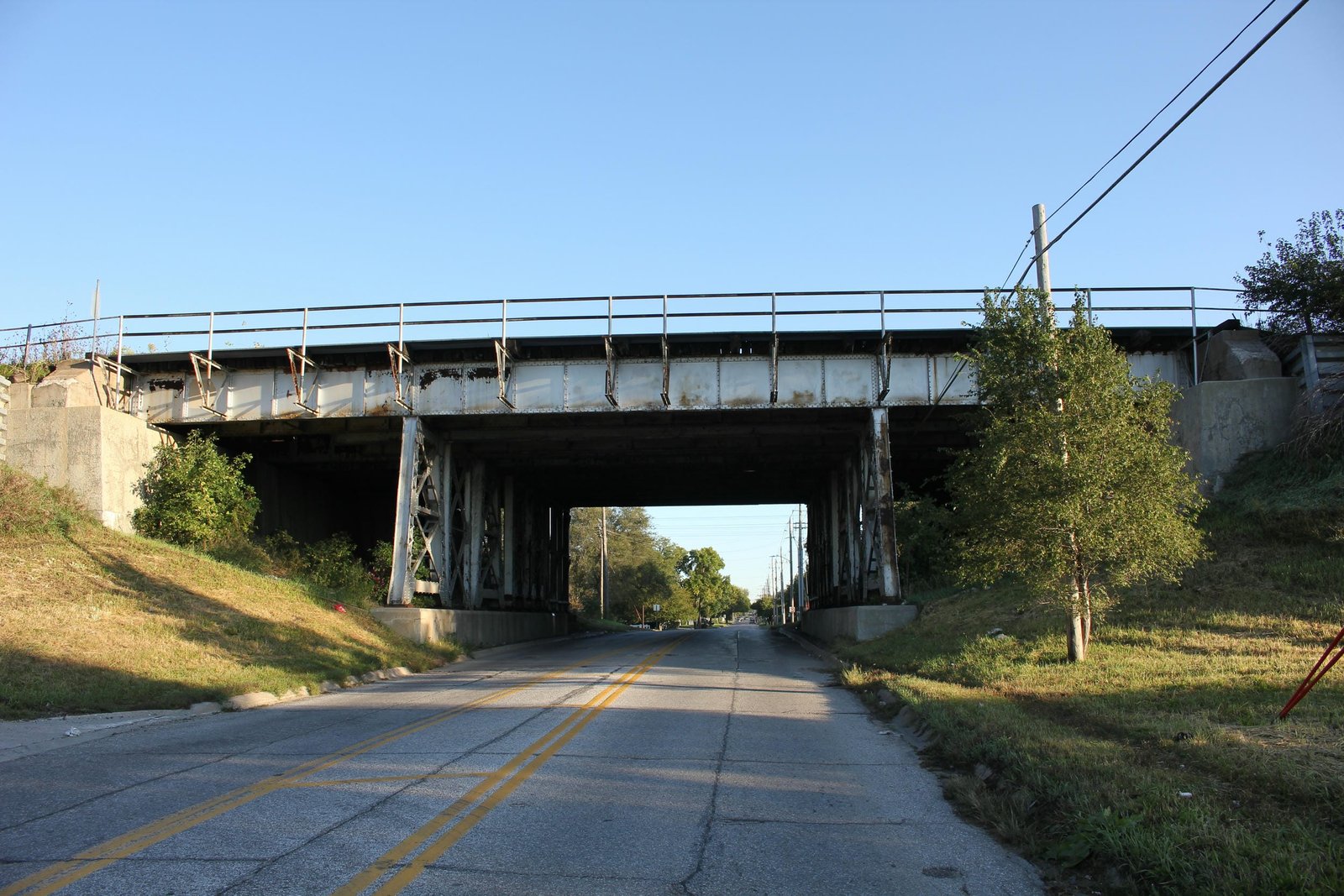
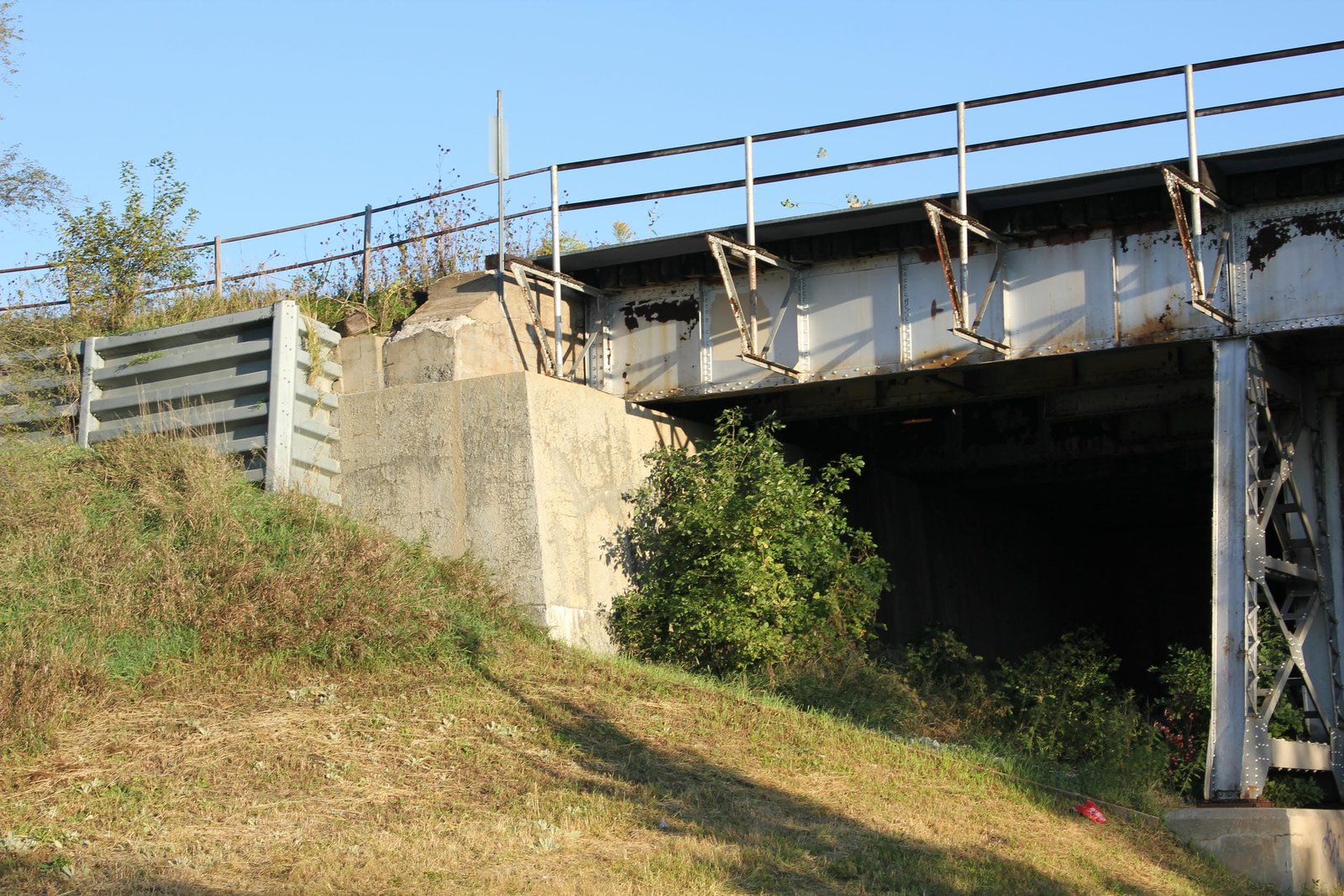
Click the photo to view the full-size version
| Name | UP 35th Street Bridge Union Pacific Railroad Bridge #1.46 |
| Built By | Union Pacific Railroad |
| Currently Owned By | Union Pacific Railroad |
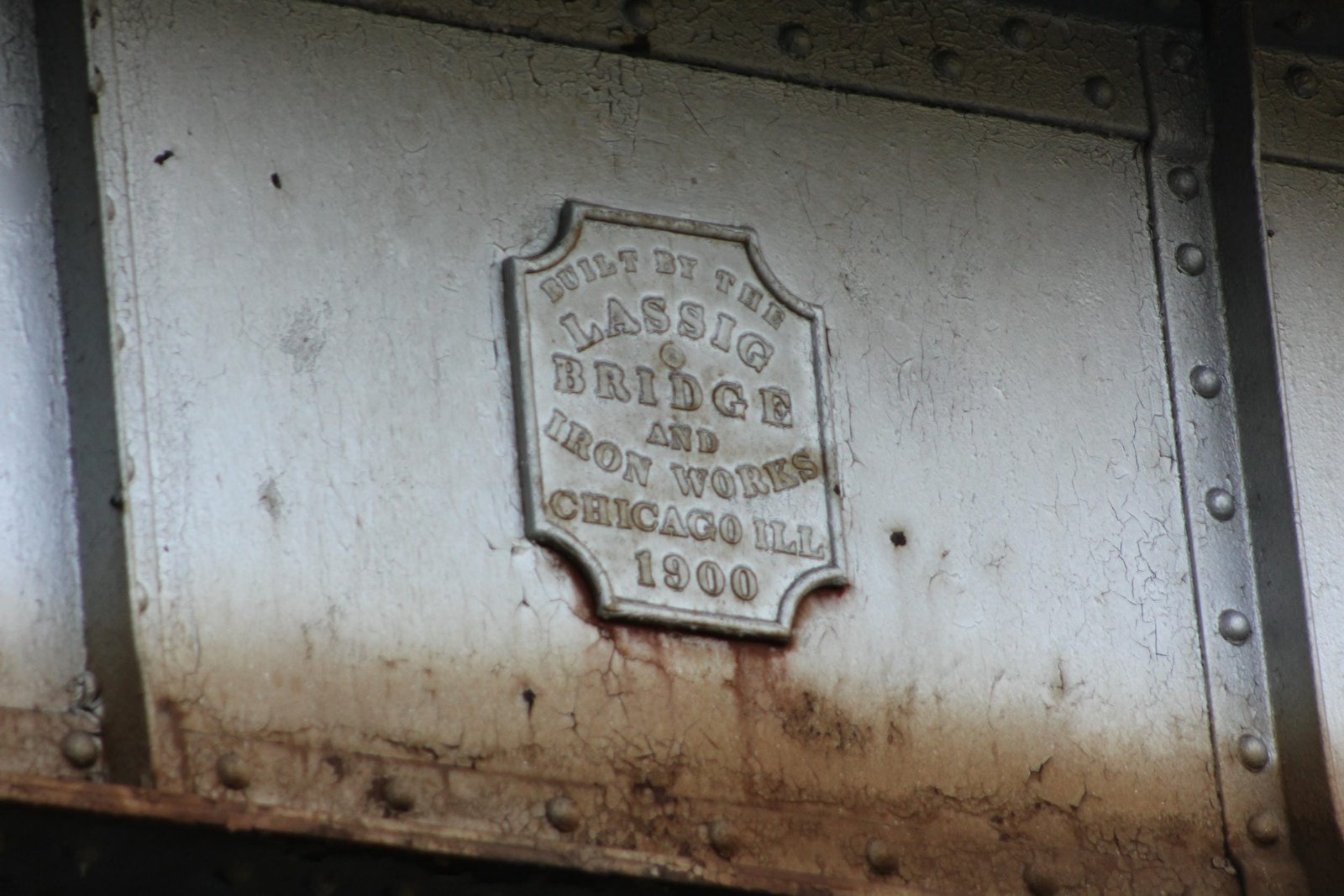
| Superstructure Contractor | Unknown (Tracks #1-#5) Lassig Bridge & Iron Works of Chicago, Illinois (Tracks #6 and #7) |
| Substructure Contractor | Unknown |
| Length | 100 Feet Total, 43 Foot Main Span (Tracks #6 and #7) 90 Feet Total, 43 Foot Main Span (Tracks #1-#5) |
| Width | 7 Tracks, 5 In Use |
| Height Above Ground | 25 Feet (Estimated) |
| Superstructure Design | Deck Plate Girder |
| Substructure Design | Stone Masonry, Concrete and Steel Bent |
| Date Fabricated | c. 1890 (Track #2) 1900 (Tracks #6 and #7) c. 1910 (Tracks #1 and #3) 1921 (Tracks #4 and #5) |
| Date Erected | 1900 (Tracks #6 and #7) c. 1910 (Tracks #1, #2 and #3) 1921 (Tracks #4 and #5) |
| Traffic Count | 50 Trains/Day (Estimated) |
| Current Status | In Use |
| Union Pacific Railroad Bridge Number | 1.46 |
| Significance | Moderate Significance |
| Documentation Date | 10/7/2019 |
In 1862, United States President Abraham Lincoln signed the Union Pacific Charter, declaring a railroad would be built west from Omaha, to a point on the West Coast at San Francisco. Construction on the Union Pacific Railroad began in Omaha in 1865, with construction of a line extending south of Omaha, to Bellevue, Nebraska; where the line would turn west and extend to Millard. The railroad then headed northwest to Fremont, Nebraska, being completed in December of that year. The railroad then turned west along the Platte River Valley. By the end of 1866, the railroad had reached North Platte, Nebraska; extending through the towns of Columbus, Grand Island and Kearney. Some 240 miles of new railroad were constructed in 1866. Work continued the following spring, reaching Cheyenne, Wyoming by the end of the year, some 500 miles west of Omaha. Work continued westwards in 1868 and 1869, with the line meeting the Central Pacific Railroad at Promontory Point, Utah in 1869.
This route became the backboke of the Union Pacific Railroad, known as the Overland Route. A bridge was completed into Council Bluffs in 1872, where the line linked with the heavily used Chicago & North Western Railway mainline to Chicago. Numerous revisions were made to the route throughout the 19th and 20th Centuries. Much of the route was double tracked between 1900 and 1917, and the railroad was realigned in Omaha. A new cutoff was constructed, bypassing the original route between Omaha and Millard. The original route between Omaha and Millard was utilized as a secondary route. The route between Paillion and Bellevue was abandoned in 1989, and two more miles on the west end were abandoned in 1994. The original line was further abandoned in 2004, when the line was abandoned to Millard. In 2024, Union Pacific continues to operate this line, and it handles considerable traffic. Portions of the original line around Omaha have became a trail. Union Pacific currently operates the Omaha Subdivision between Omaha and Fremont, the Columbus Subdivision between Fremont and Grand Island, the Kearney Subdivision between Grand Island and North Platte, and the Sidney Subdivision from North Platte to Cheyenne.
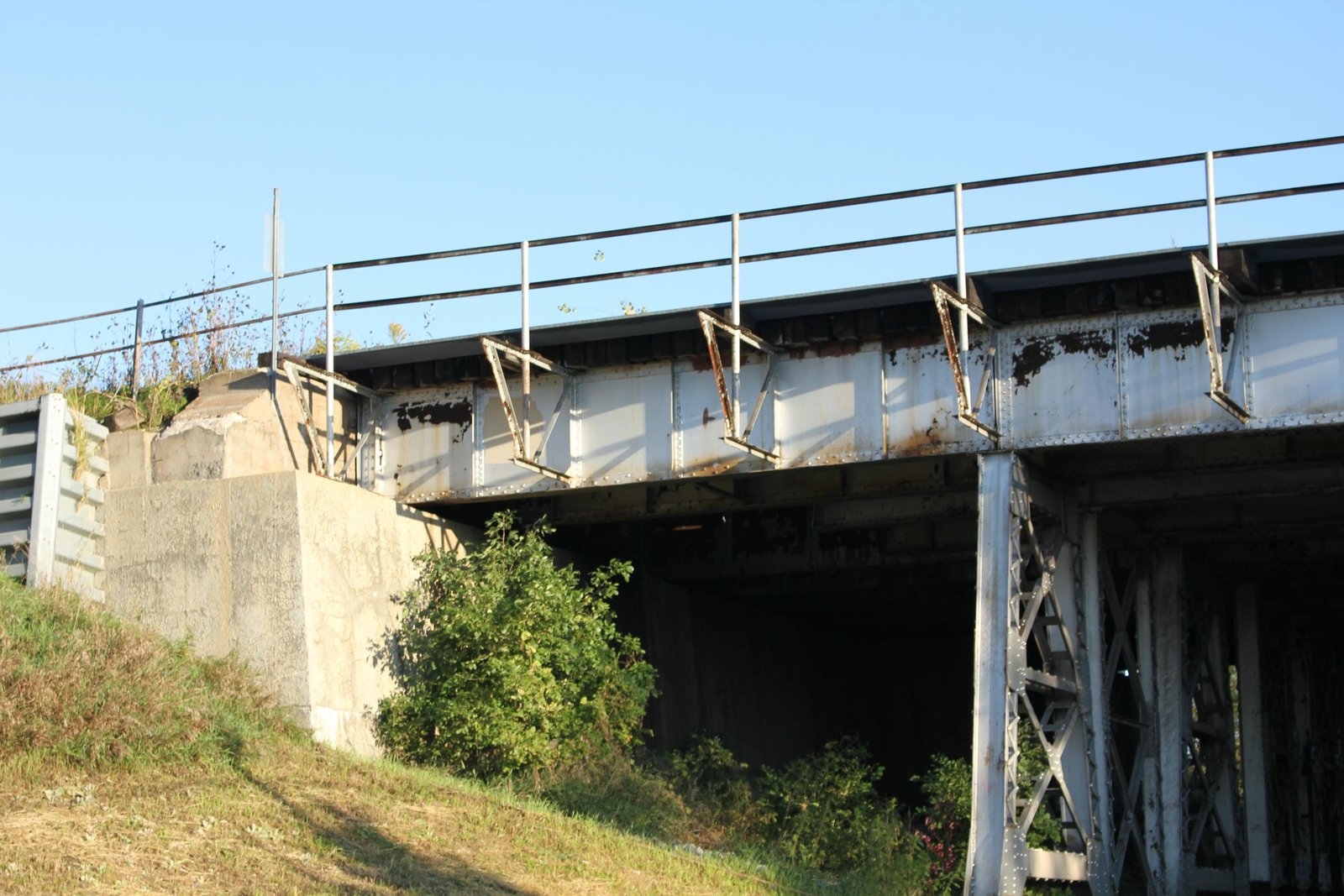
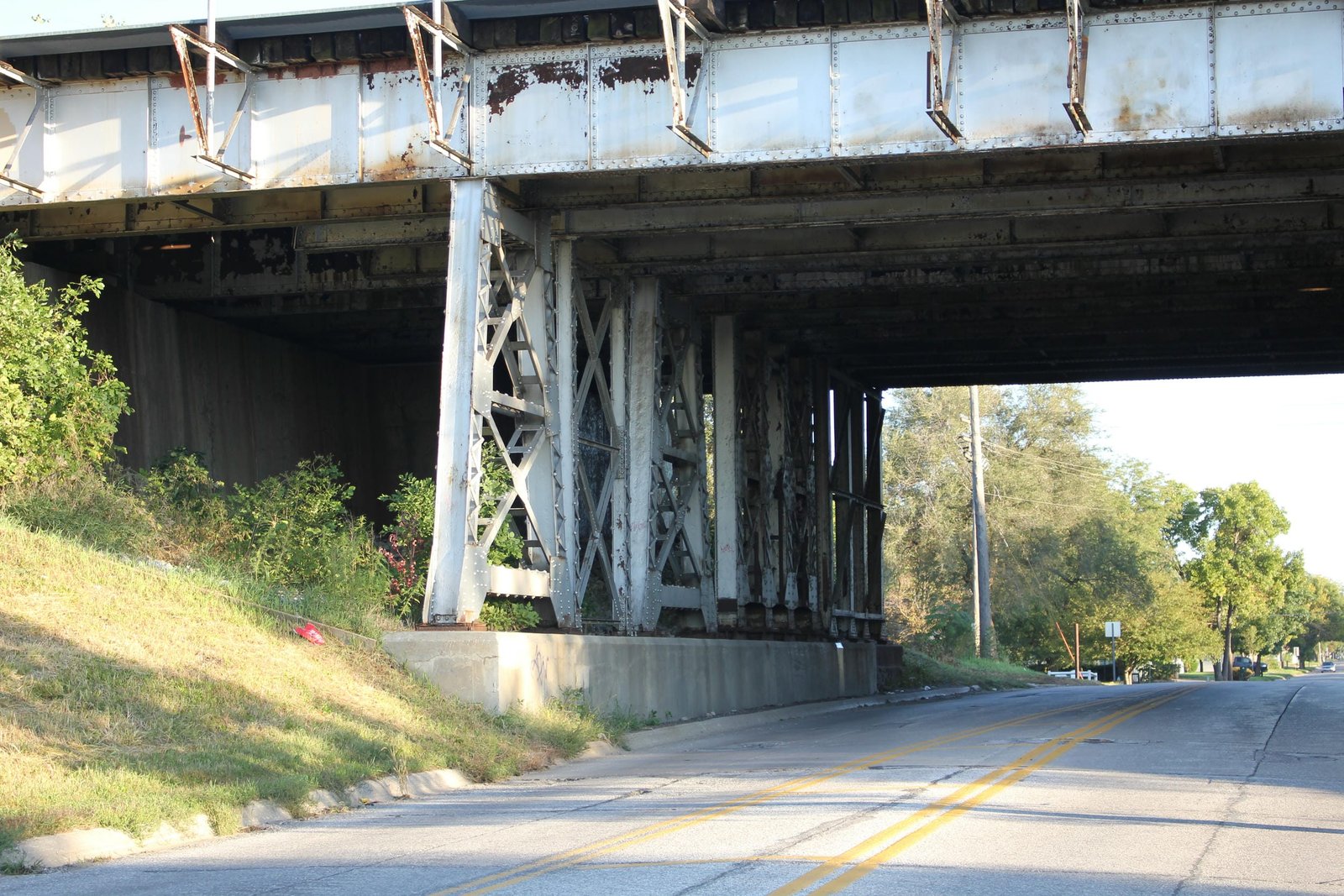
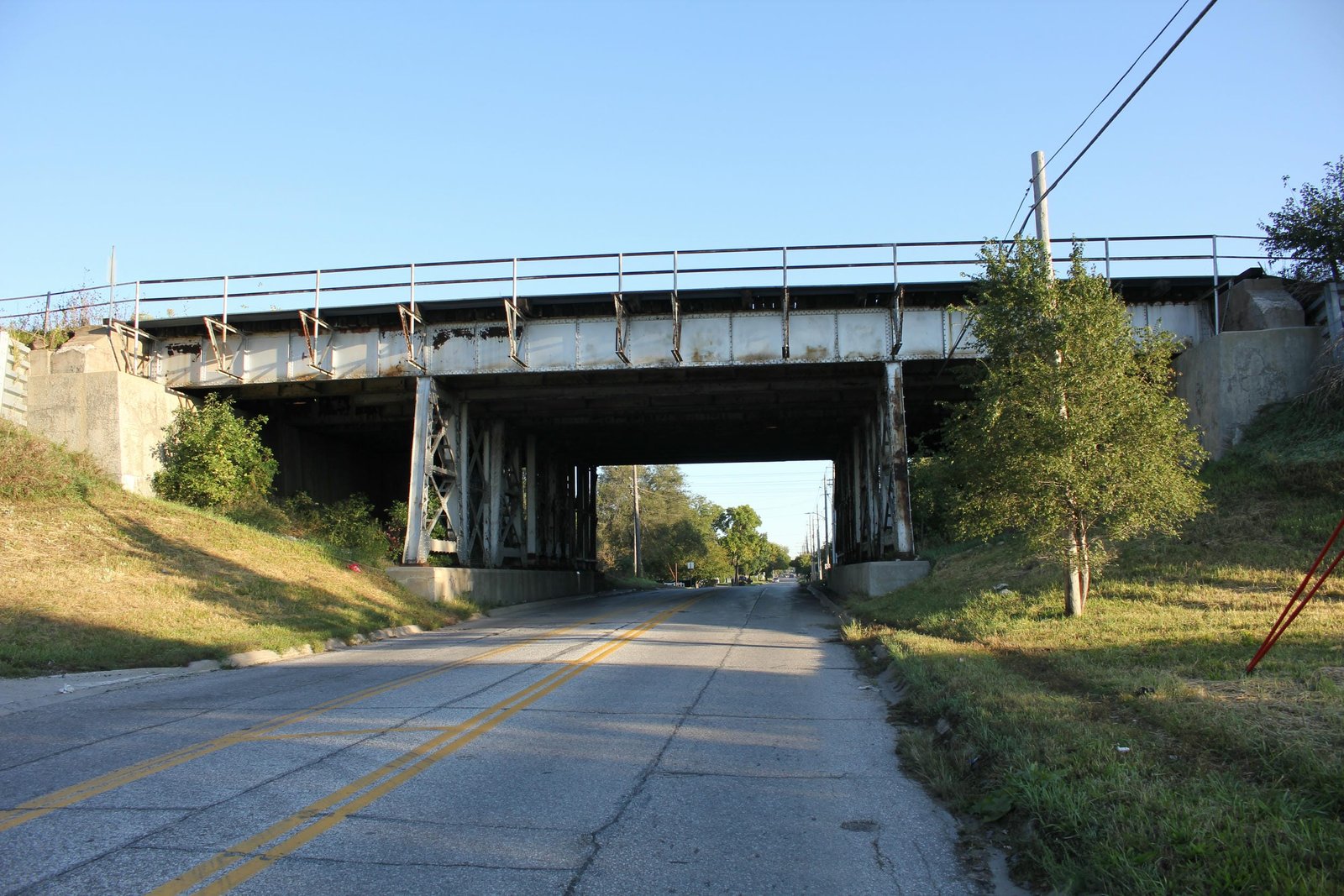
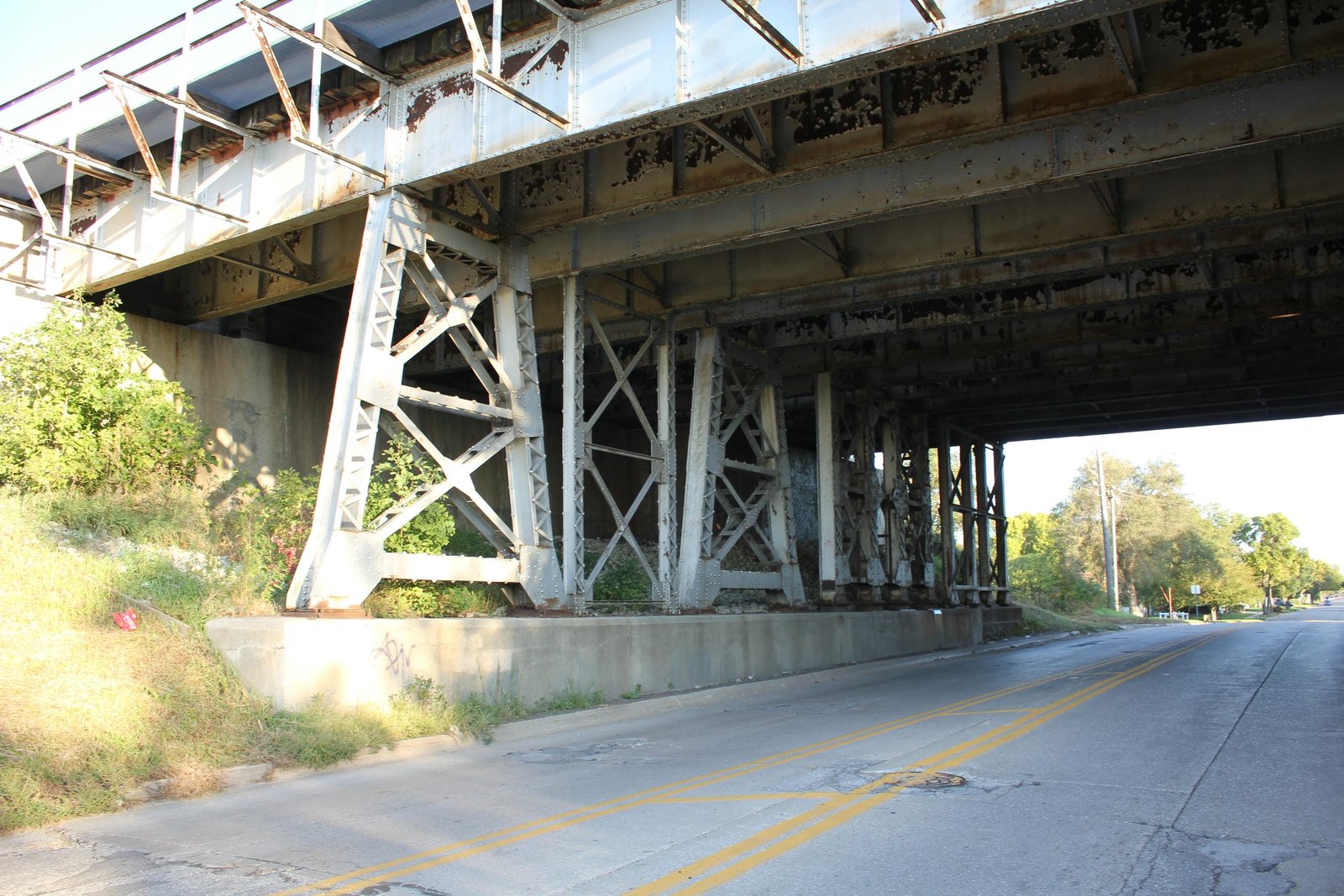
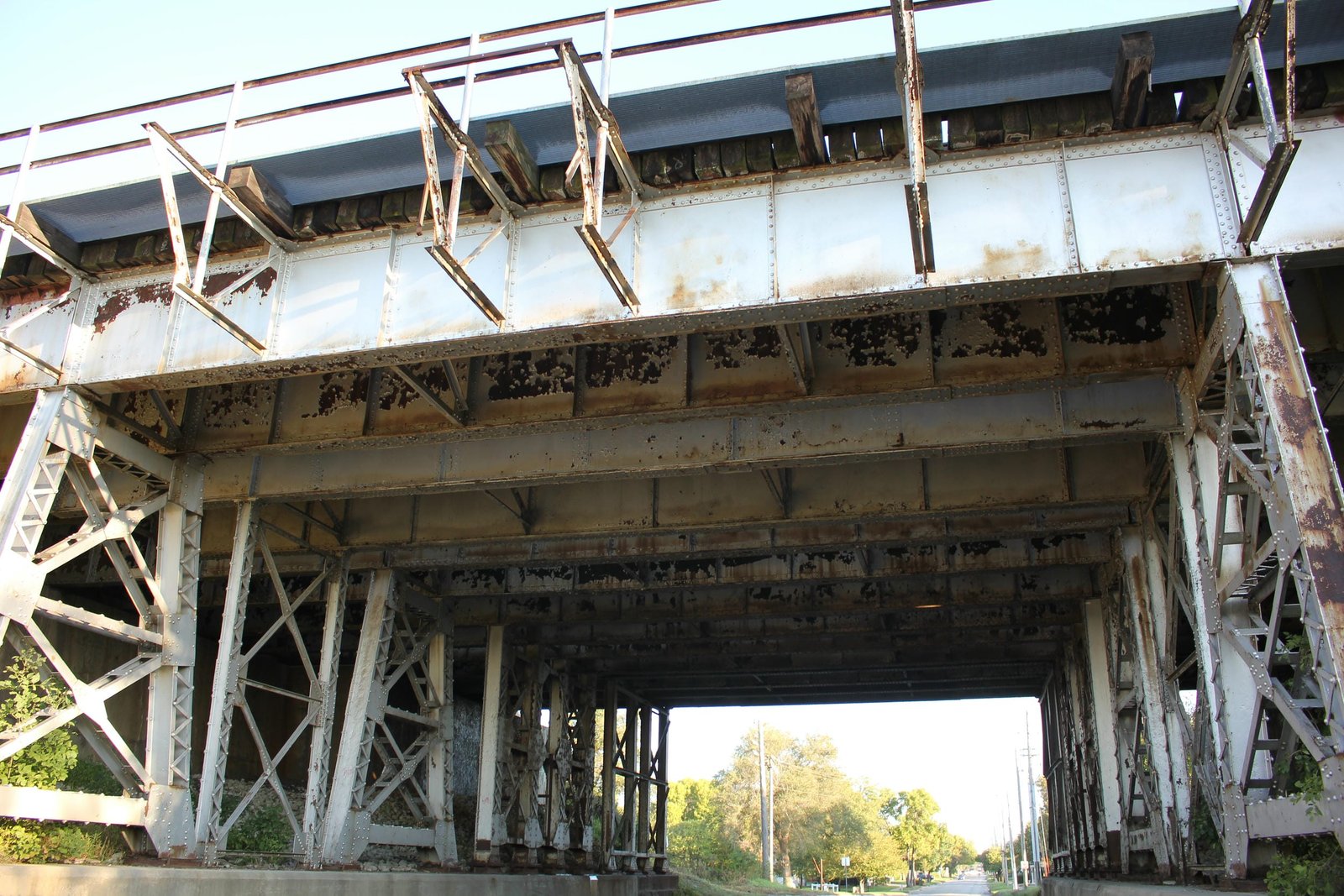
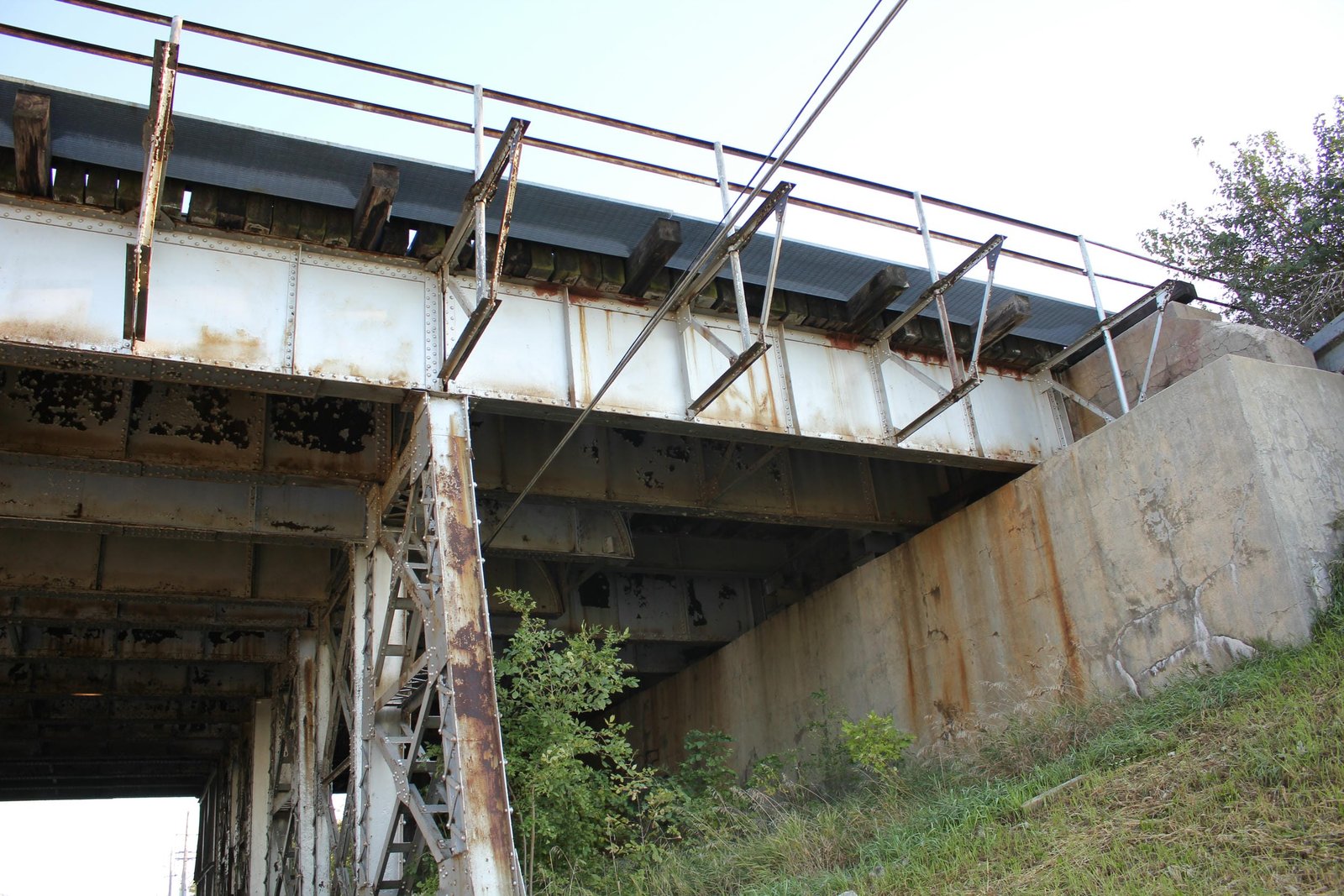
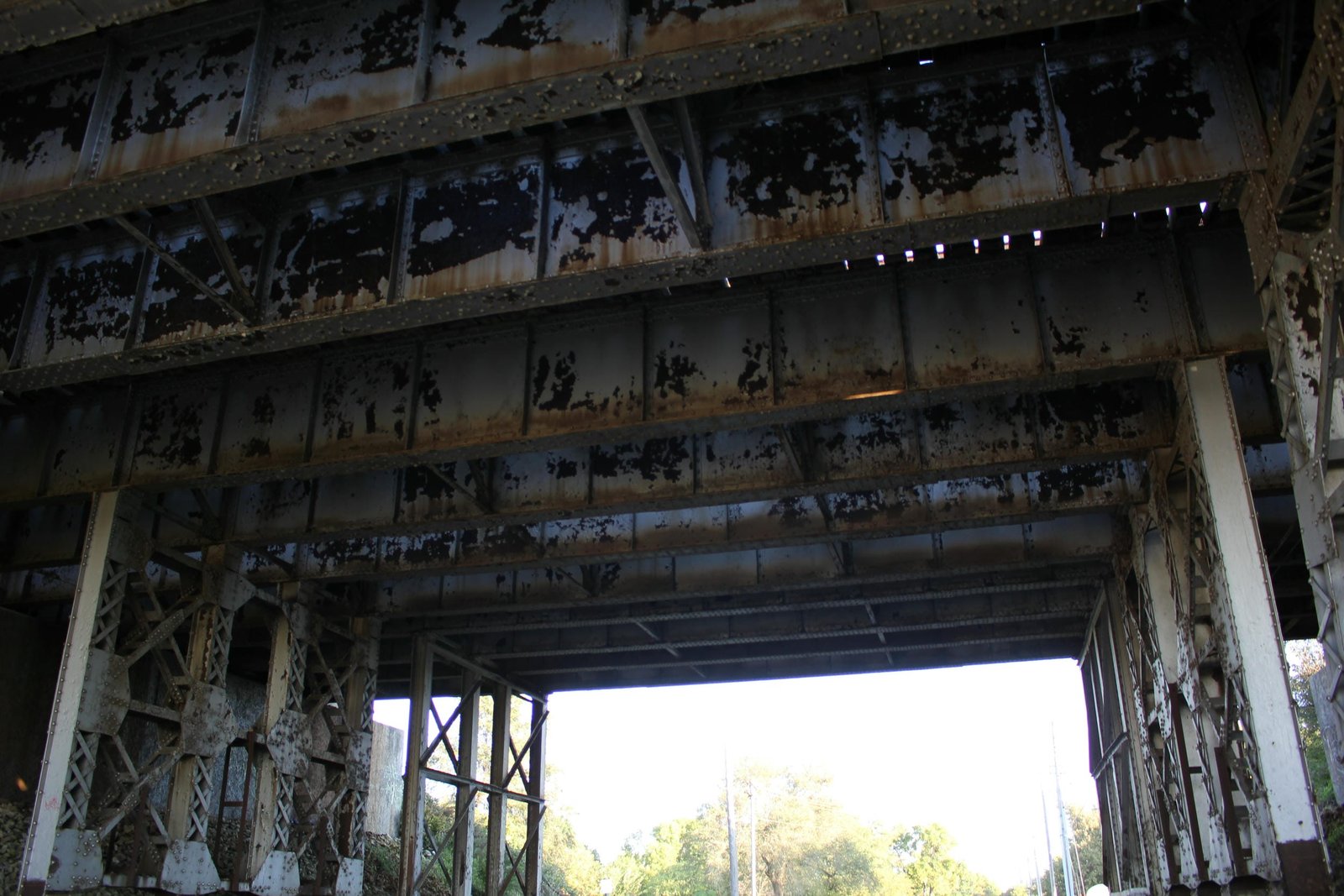
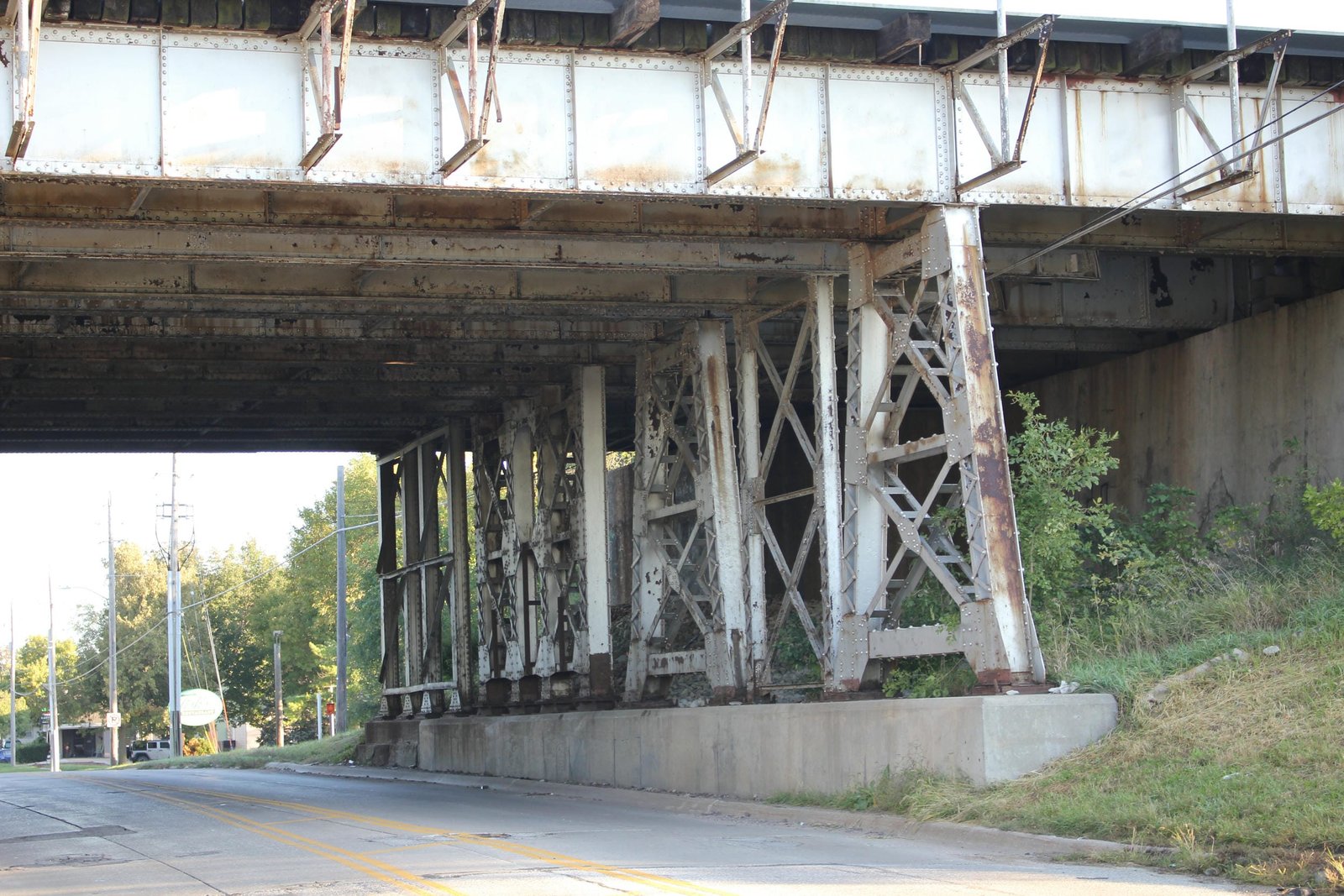
Located in Council Bluffs, this unusual deck plate girder bridge carries a former Union Pacific Railroad mainline and yard over 35th Street. Much of the history of this bridge is unclear. It is believed the first bridge at this location was constructed in 1900, and consisted of a deck plate girder bridge constructed for two tracks (now the northern tracks, #6 and #7). In approximately 1910, the bridge was widened and three additional tracks were added (now the southern tracks, #1, #2 and #3). Due to the expansion of the Pacific Fruit Express icing facility near this bridge, the bridge was expanded again in 1921, when tracks #4 and #5 were added to the bridge, giving the structure its present configuration. Currently, the bridge consists of a 43-foot deck plate girder main span, approached by a 23-foot deck plate girder span on either end (tracks #6 and #7) or a 28-foot deck plate girder span on either end (tracks #1 through #5). The bridge is set onto a variety of steel bents, stone footings and concrete abutments. It also appears that several components of the bridge may have been reused here at other locations. Due to the various expansions, the bridge has a number of different designs.
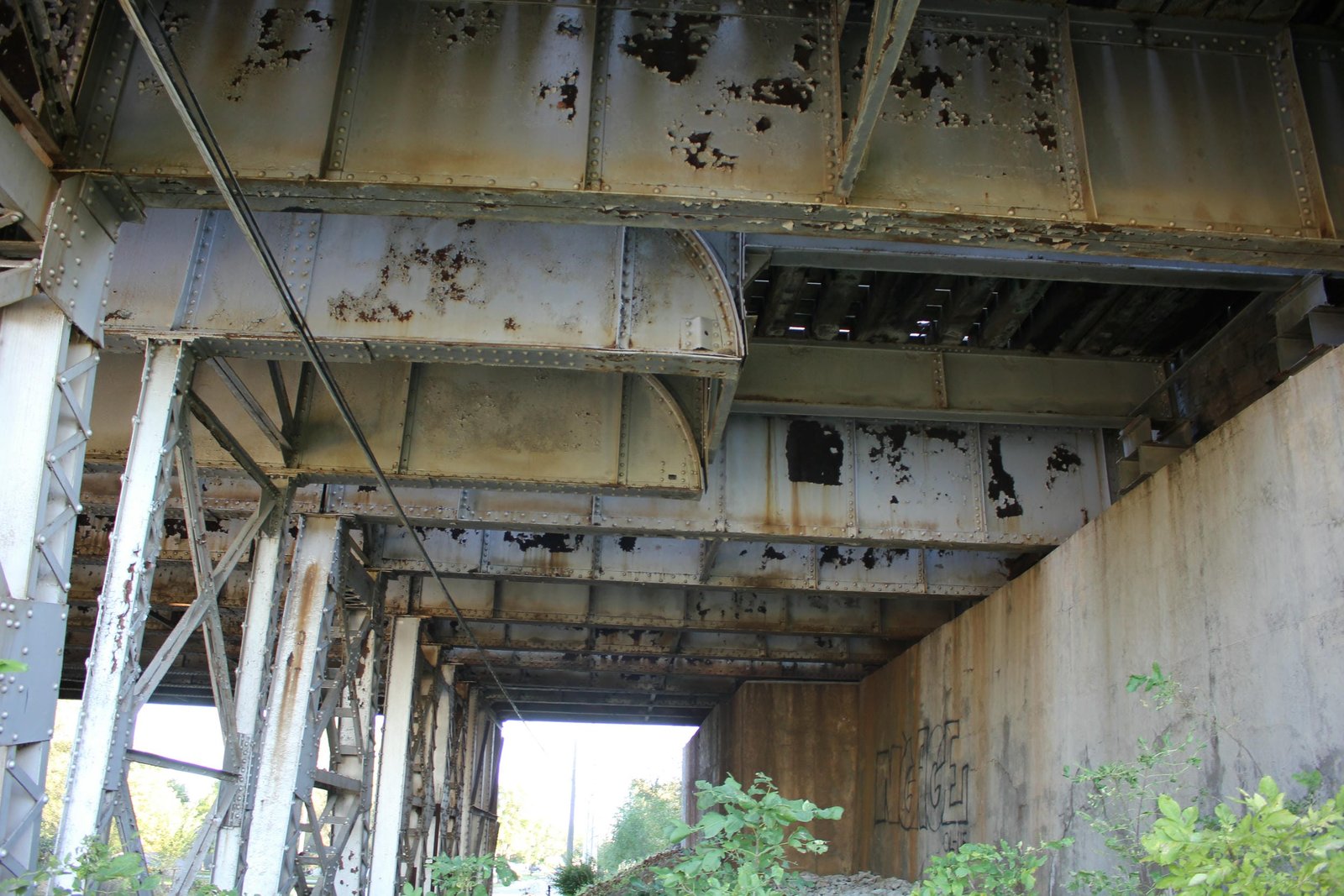
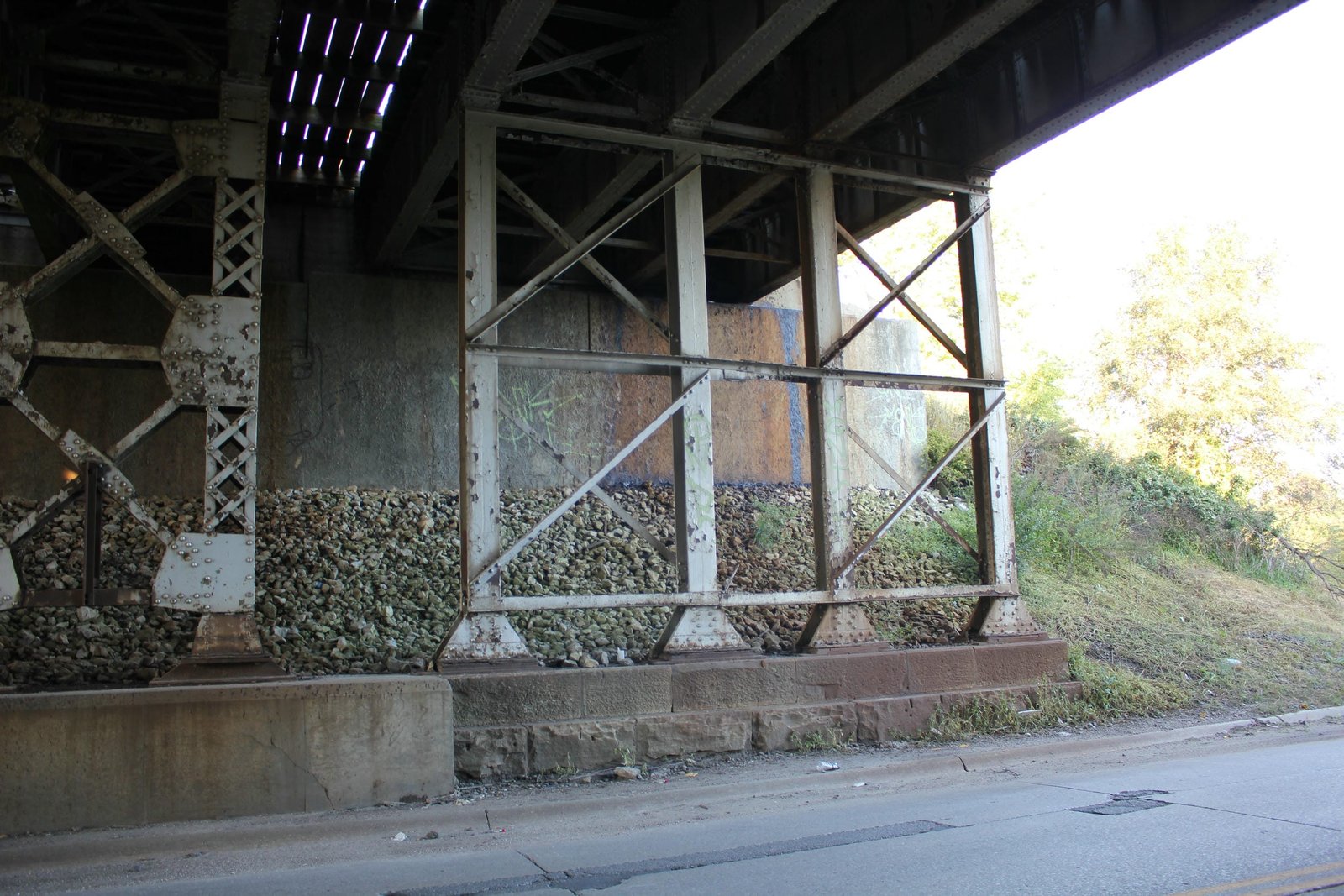
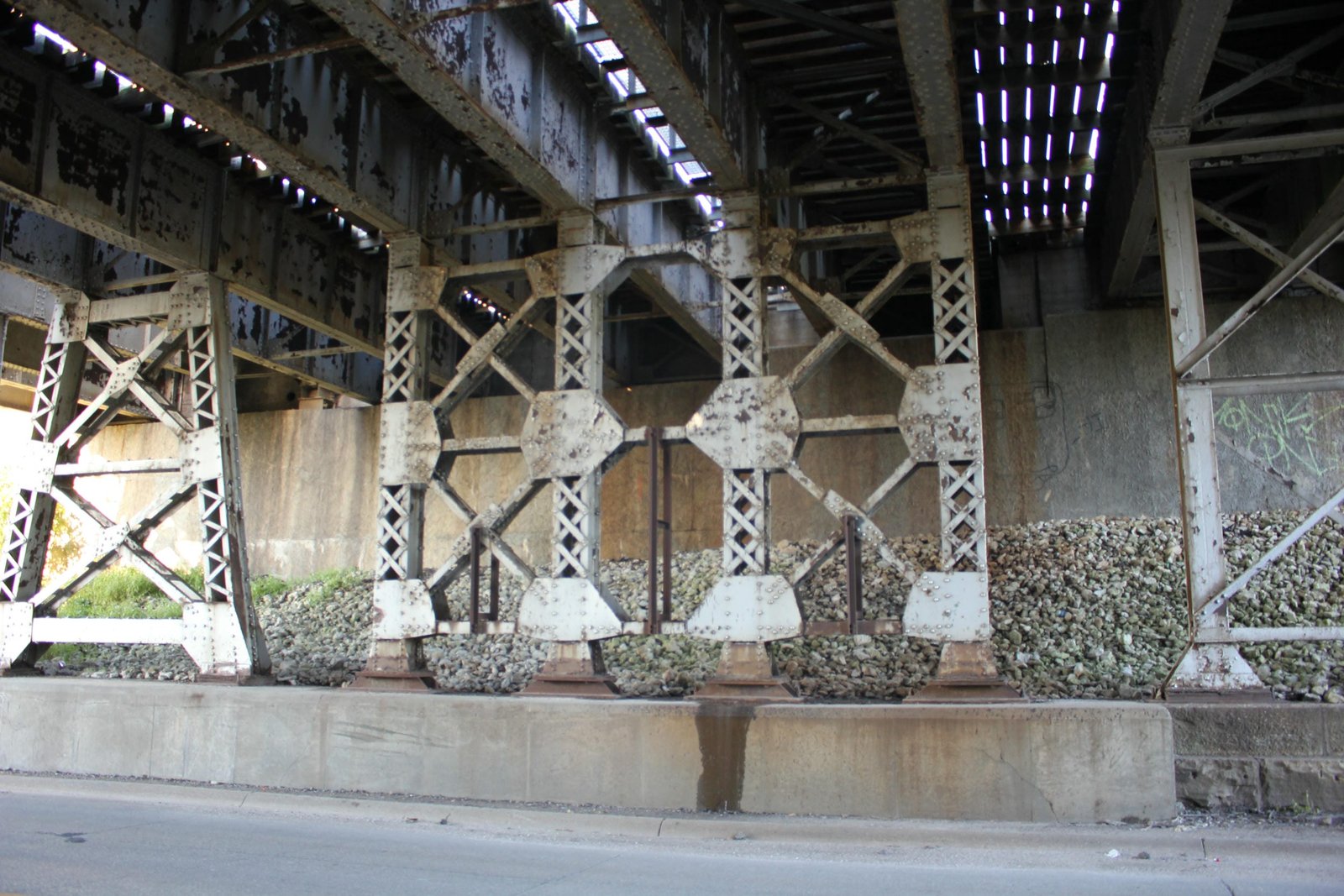
Tracks #1 and #3 are virtually identical, with the girders using a consistent depth and standard design. The interior of the girders are connected with standard X-frames and lateral bracing. The bents consist of V-laced beams, formed into an A-shape. Track #2 consists of a very unusual design, with the main span significantly overhanging the bents on either side. The ends of the girders are rounded, and additional triangular plates have been added at the ends. Inside the main span, the interior bracing consists of light X-frame braces and a light lateral bracing on the top. The approach spans use shallow girders, which have no internal bracing and are stacked on blocks at the ends. The bents are considerably lighter than the other tracks of the bridge, and are constructed of light V-laced beams, constructed in a rectangular shape. It appears the main span was likely fabricated in approximately 1890, likely for use at an unknown location. It also appears that the approach girders and bents were fabricated around the same time and salvaged from unknown structure(s). Tracks #4 and #5 are also vertically identical, consisting of similar spans to tracks #1 and #3. The bents for these tracks consist of four X-laced columns, connected by transverse bracing at the bottom, middle and top. A number of additional repairs have been made to the bents, including new structural members. Tracks #6 and #7 also use a standard design, with three girders of the same depth. The X-frames and lateral bracing is slightly lighter than adjacent spans. The bents are composed of four solid columns, connected by transverse bracing at the top, bottom and middle.
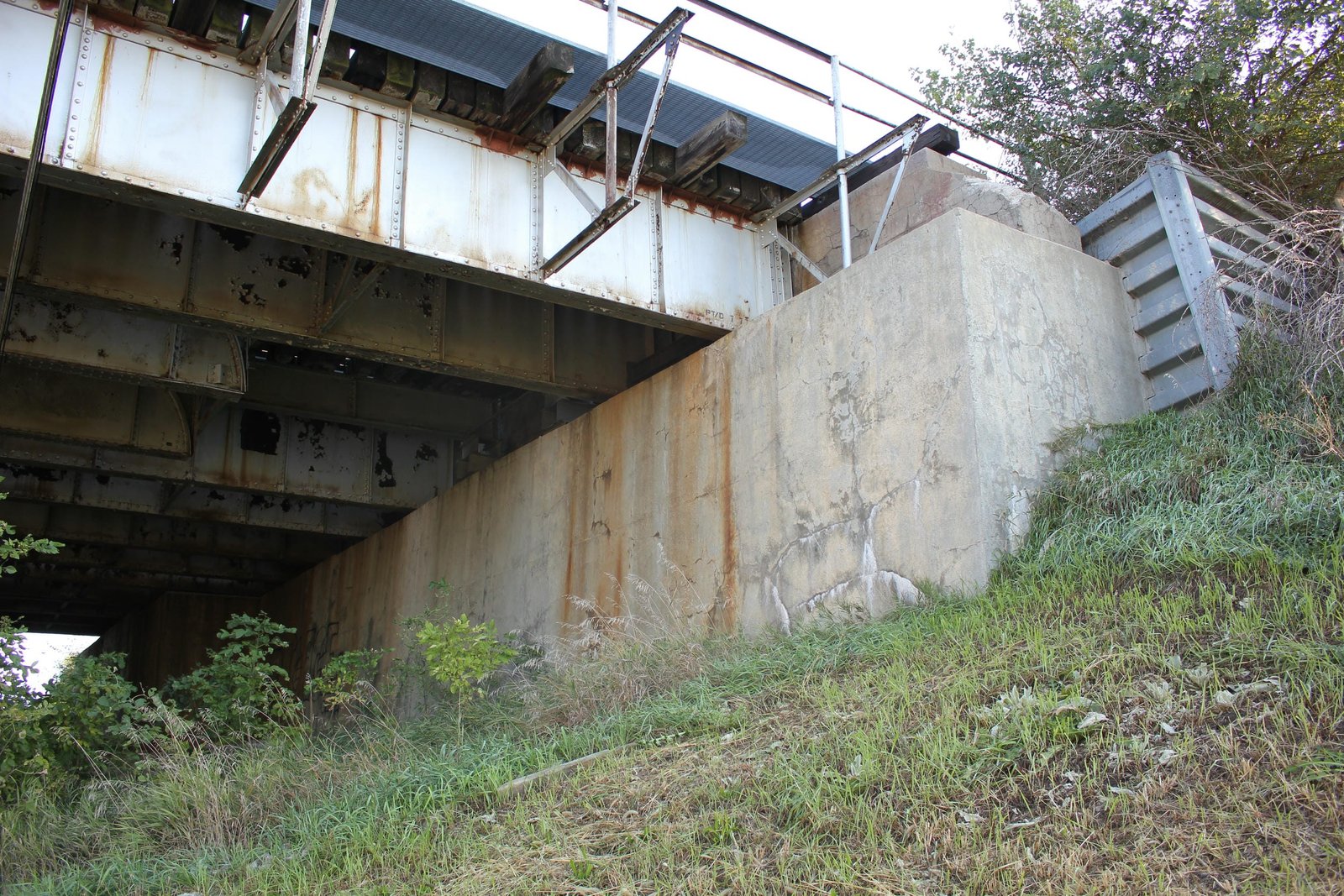
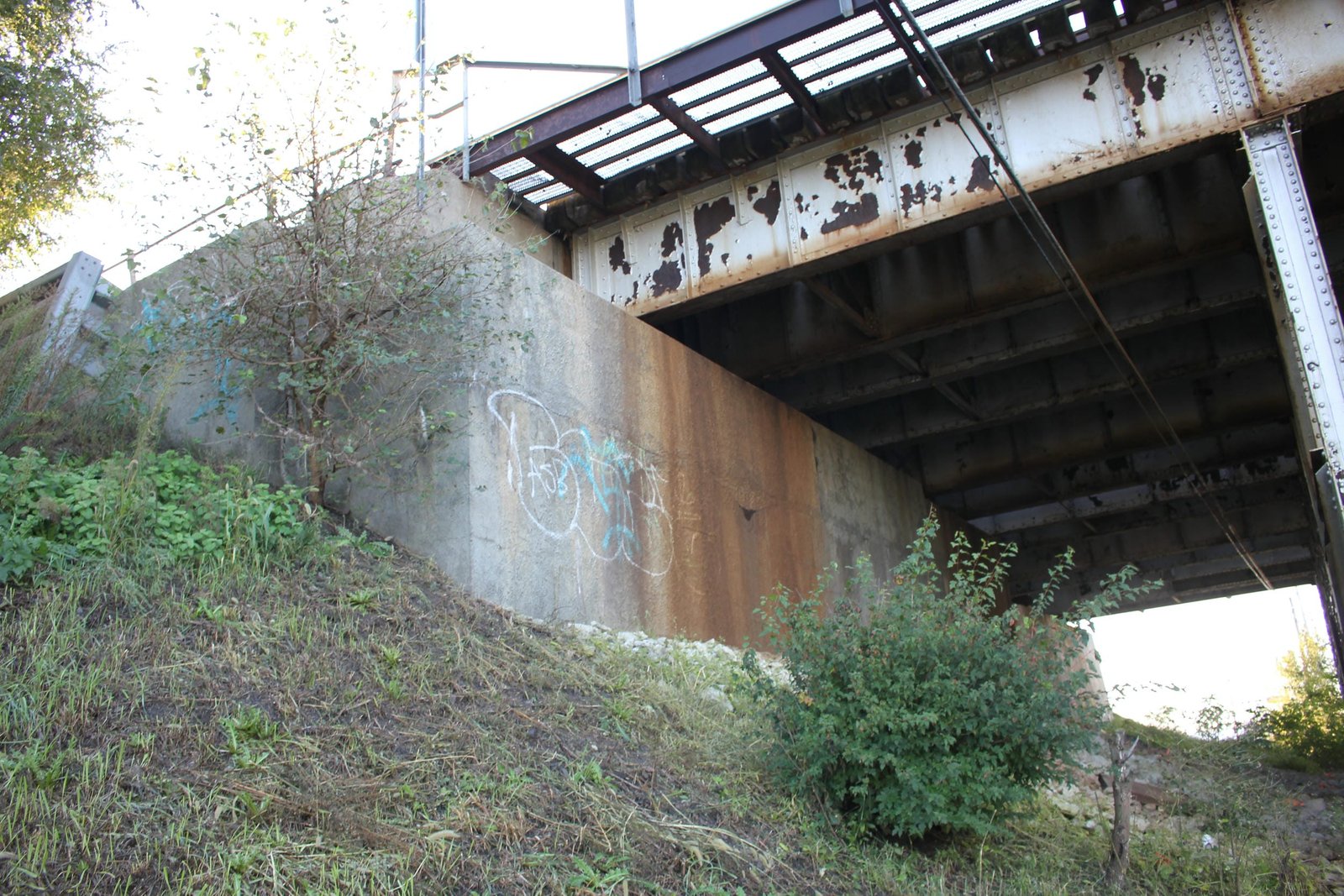
Unique to this bridge, the abutments use a design giving the bridge two different lengths. Tracks #6 and #7 are slightly shorter than the remaining tracks, and the abutments jog in between track #5 and track #6. Both abutments use a standard U-shaped design, and do not use wing walls. The bents for tracks #1 through #5 are set onto a continuous concrete wall, which appears to have been constructed at one time. The bents for tracks #6 and #7 are set onto a stone footing, constructed of a tan limestone. Lassig Bridge & Iron Works fabricated the superstructure for tracks #6 and #7, while unknown contractors fabricated the remaining superstructure. It is unclear if the substructure was constructed by railroad company forces, unknown contractors or a combination of both. Deck plate girder spans were commonly used by railroads, as they were durable and easy to construct. Deck girder spans with steel bents were popular for both tall and long bridges, as they provided the most cost effective design. Other than the various expansion projects, the bridge has seen only minor repairs, including various concrete repairs. Today, the bridge remains in regular use, with five of the seven tracks remaining active. Overall, the bridge appears to be in fair to good condition, with no significant deterioration noted. The author has ranked this bridge as being moderately significant, due to the unusual combination of similar spans and various build dates. In particular, the center span of track #2 is extremely unique.
Citations
| Build date and builder (tracks #6 and #7 superstructure) | Lassig Bridge & Iron Works plaque |
| Build date (tracks #4 and #5) | Annual Report of the Union Pacific System; Year Ended December 31, 1921 |
| Railroad History Citation | ICC Valuation Information, Compiled by Richard S. Steele |