










Click the photo to view the full-size version
| Name | B Avenue Overpass Chicago & North Western Railway Bridge #423 1/2 |
| Built By | Chicago & North Western Railway |
| Currently Owned By | Union Pacific Railroad |
| Superstructure Contractor | Unknown (Initial Fabrication) Unknown (1900 Alterations) |
| Substructure Contractor | Widell Company of Mankato, Minnesota |
| Length | 136 Feet Total, 79 Foot Main Span |
| Width | 18 Feet |
| Height Above Ground | 25 Feet (Estimated) |
| Superstructure Design | Double Intersection Warren Pony Truss and Timber Pile Trestle |
| Substructure Design | Stone Masonry and Timber Pile |
| Date Built | 1900, Using a Span Fabricated c. 1885 |
| Original Location | Unknown |
| Traffic Count | 0 Vehicles/Day (Bridge is Closed To Traffic) |
| Current Status | Closed to all Traffic; Future Uncertain |
| Chicago & North Western Railway Bridge Number | 423 1/2 |
| Union Pacific Railroad Bridge Number | 141.86 |
| Significance | Regional Significance |
| Documentation Date | 12/15/2018 |
In 1856, the Chicago, Iowa & Nebraska Rail Road (CI&N) began construction on a new mainline across Iowa, connecting an existing Galena & Chicago Union Railroad (G&CU) line at Fulton, Illinois to the Missouri River. To establish construction, a temporary ferry was installed across the Mississippi River at Clinton in 1856. In 1857, the first 44 miles were completed to Wheatland, Iowa. The following year, 20 miles were completed to Lisbon, Iowa; and in 1859, an addition 17 miles were completed to Cedar Rapids, Iowa. In 1861, the Cedar Rapids & Missouri River Railroad (CR&MR) constructed an additional 41 miles to Chelsea, Iowa; followed by 29 miles to Marshalltown, Iowa in 1862. After pausing in 1863, an additional 29 miles were completed to Nevada, Iowa in 1864, followed by 23 additional miles to Boone, Iowa in 1865. In 1864, both the CI&N and CR&MR were leased by the Chicago & North Western Railway (C&NW). In 1867, the line continued west from Boone, reaching the Missouri River at Council Bluffs, Iowa in 1867.
During the second half of the 19th Century, the C&NW had constructed and acquired a large amount of trackage throughout the Midwest. This line formed a principal mainline for the C&NW, connecting western railroads at Omaha to the railroad hub of Chicago. In 1884, the C&IN and CM&MR were formally acquired by the C&NW. In 1887, the Linn County Railway (LC) constructed a 6-mile cutoff, bypassing Cedar Rapids to the south between Otis, Iowa and Beverly, Iowa. At the end of the year, the LC was formally acquired by the C&NW. During the late 19th Century, several other improvements were made to this line. Between 1890 and 1891, a second track was constructed between Clinton and Lowden, Iowa; and between Libson and the Cedar River bridge. Between 1893 and 1894, a second track was constructed between Lowden and Lisbon. A second track was added to the original mainline through Cedar Rapids in 1898, and between 1898 and 1899, a second track was constructed between the Cedar River bridge and the west side of Marshalltown. In 1901, a second track was completed between Marshalltown and Boone, and new facilities were constructed at Boone. Throughout the 20th Century, the Cedar River bridge remained a gauntlet structure, severely hindering efficient operations.
By the 20th Century, the C&NW was operating an extensive railroad network, which radiated north and west from Chicago. This line served as the backbone of the C&NW, connecting transcontinental freight and passengers at Omaha to Chicago. Known as the Overland Route, this line became one of the most significant railroad routes in the United States. This route saw continuous upgrades during the 20th Century, including significant bridge, rail, tie and signal upgrades. In 1995, the C&NW was purchased by Union Pacific Railroad (UP). In 2002, UP constructed a second track at the Cedar River bridge, eliminating a single track bottleneck in the network. Today, this line remains vital to UP and is still well maintained. The Clinton to Boone segment is known as the Clinton Subdivision, and remains a heavily used double track mainline.
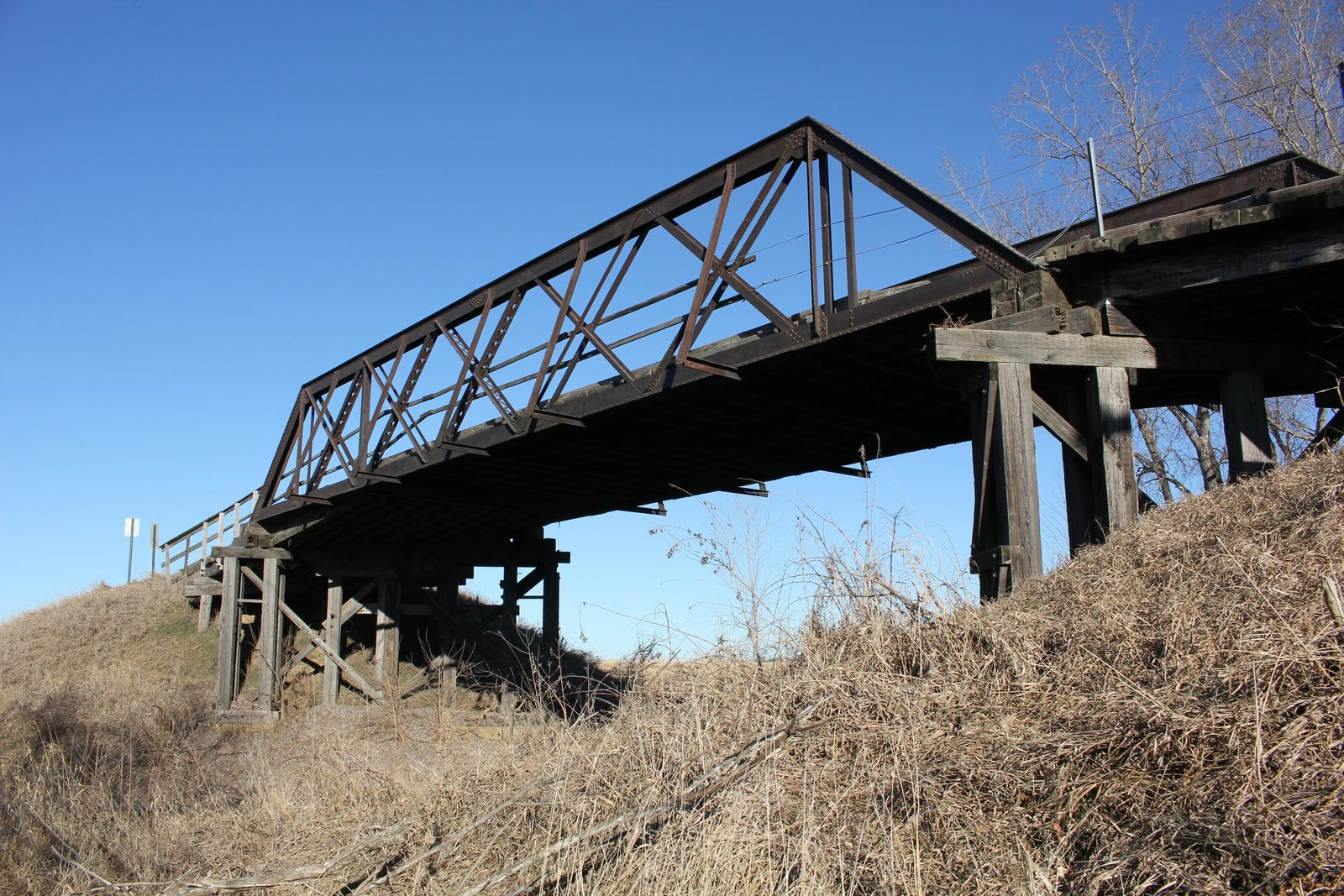
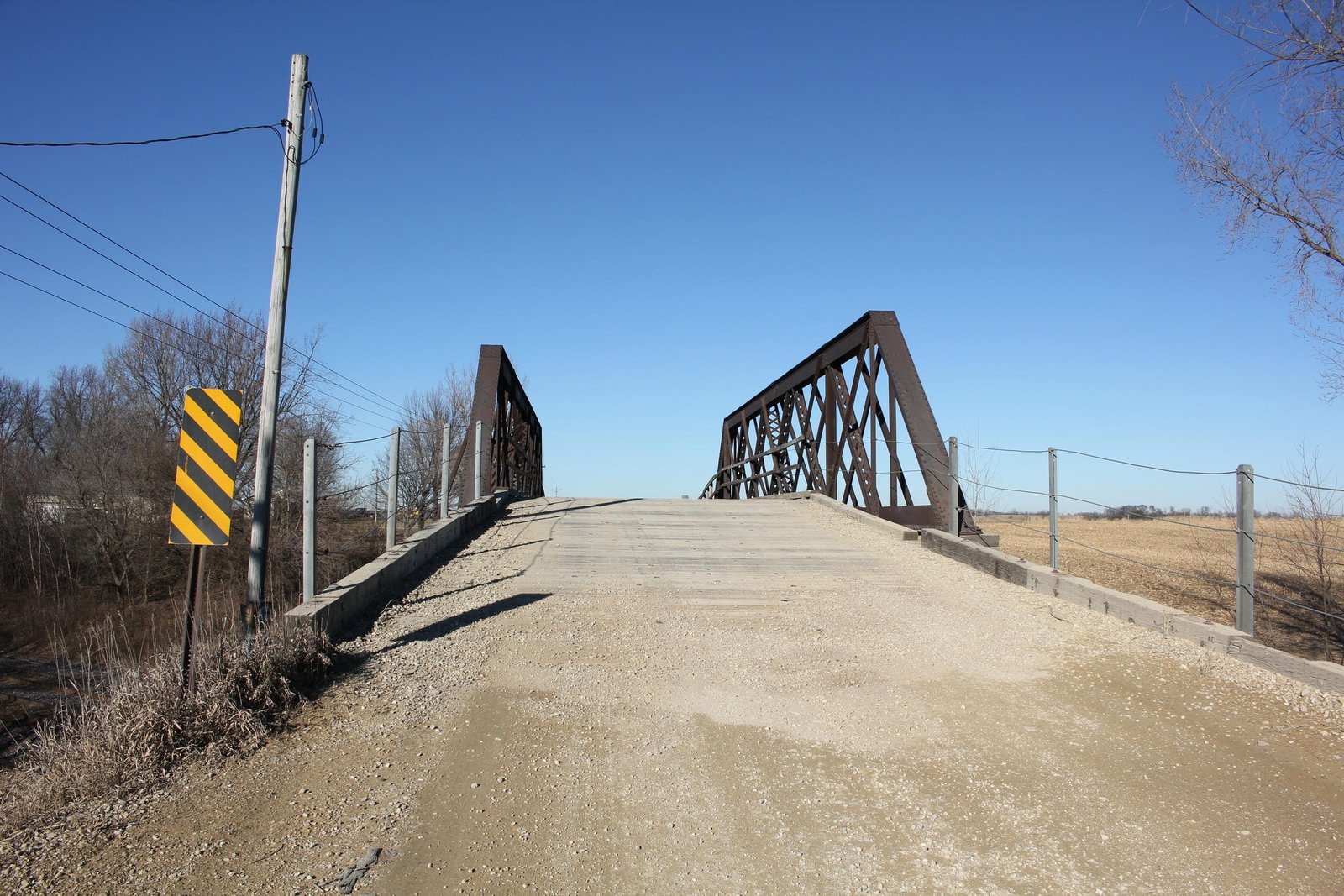
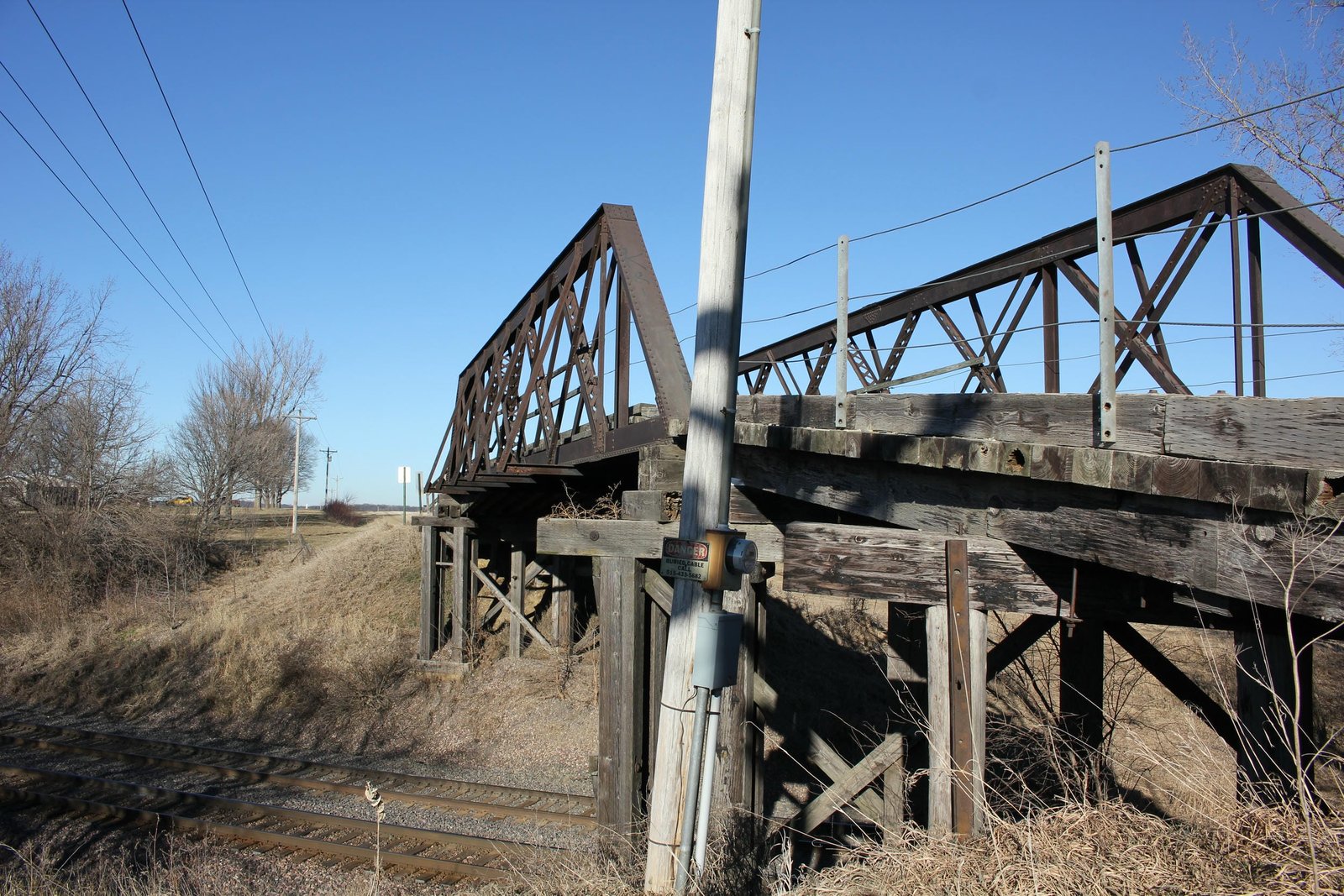
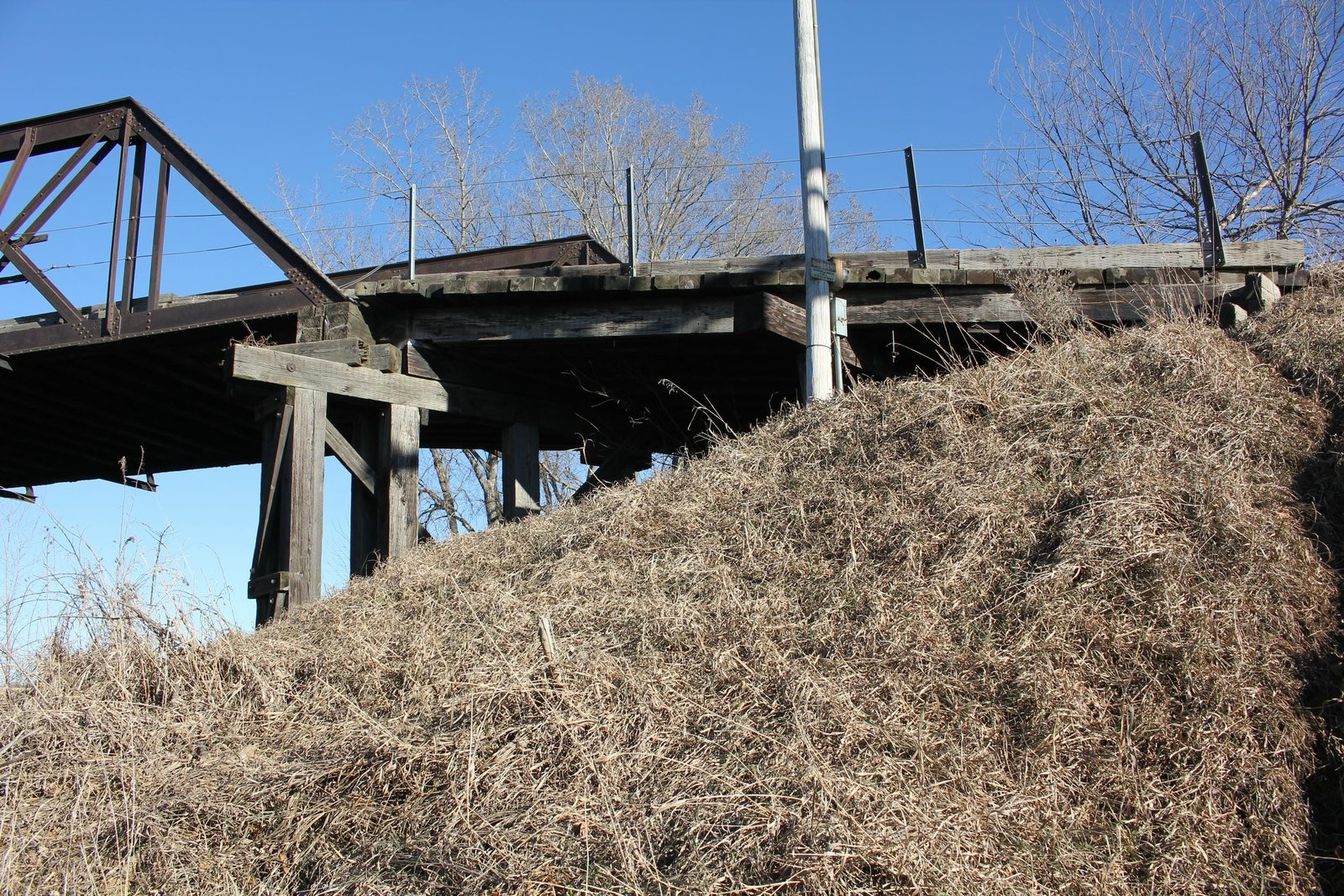
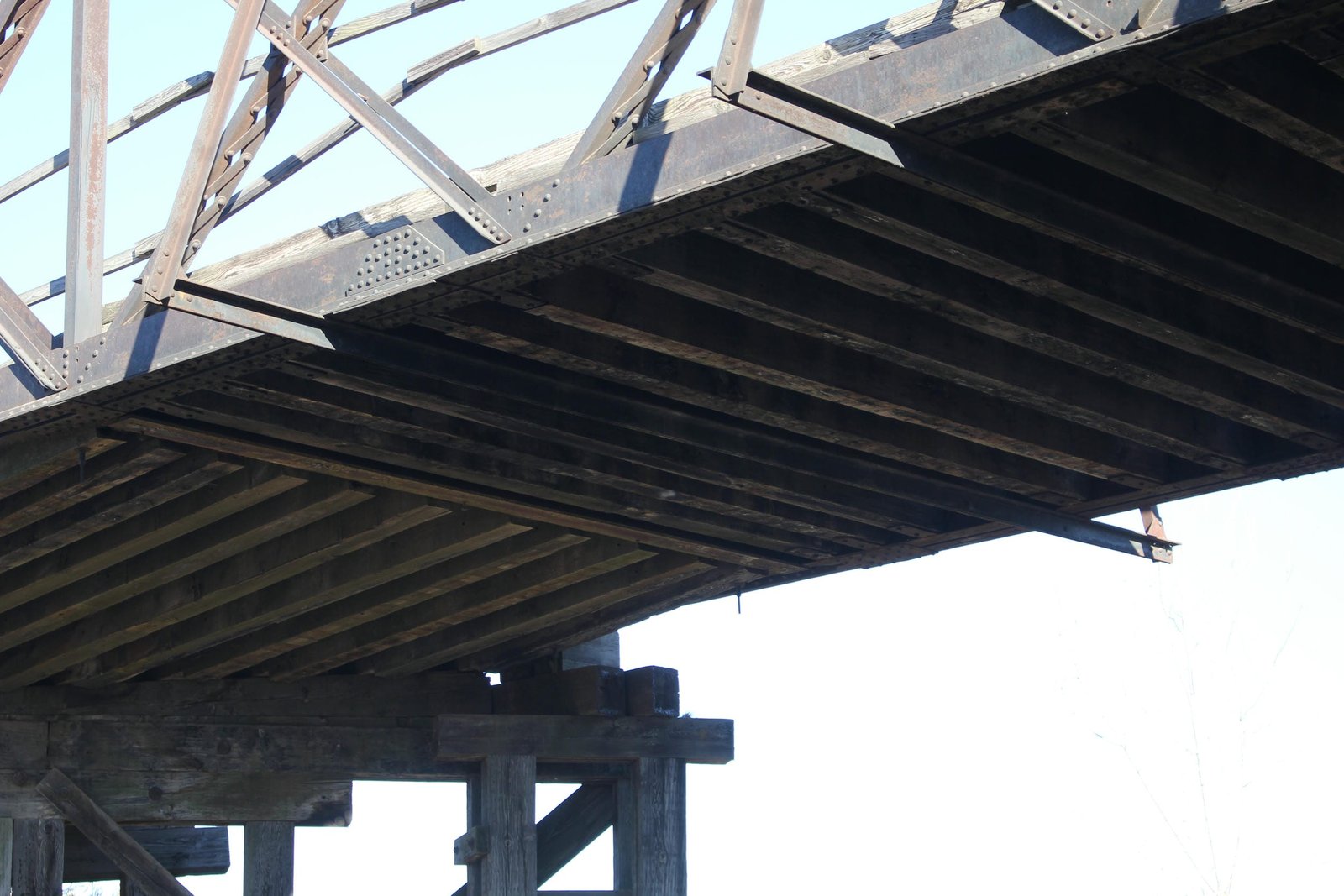
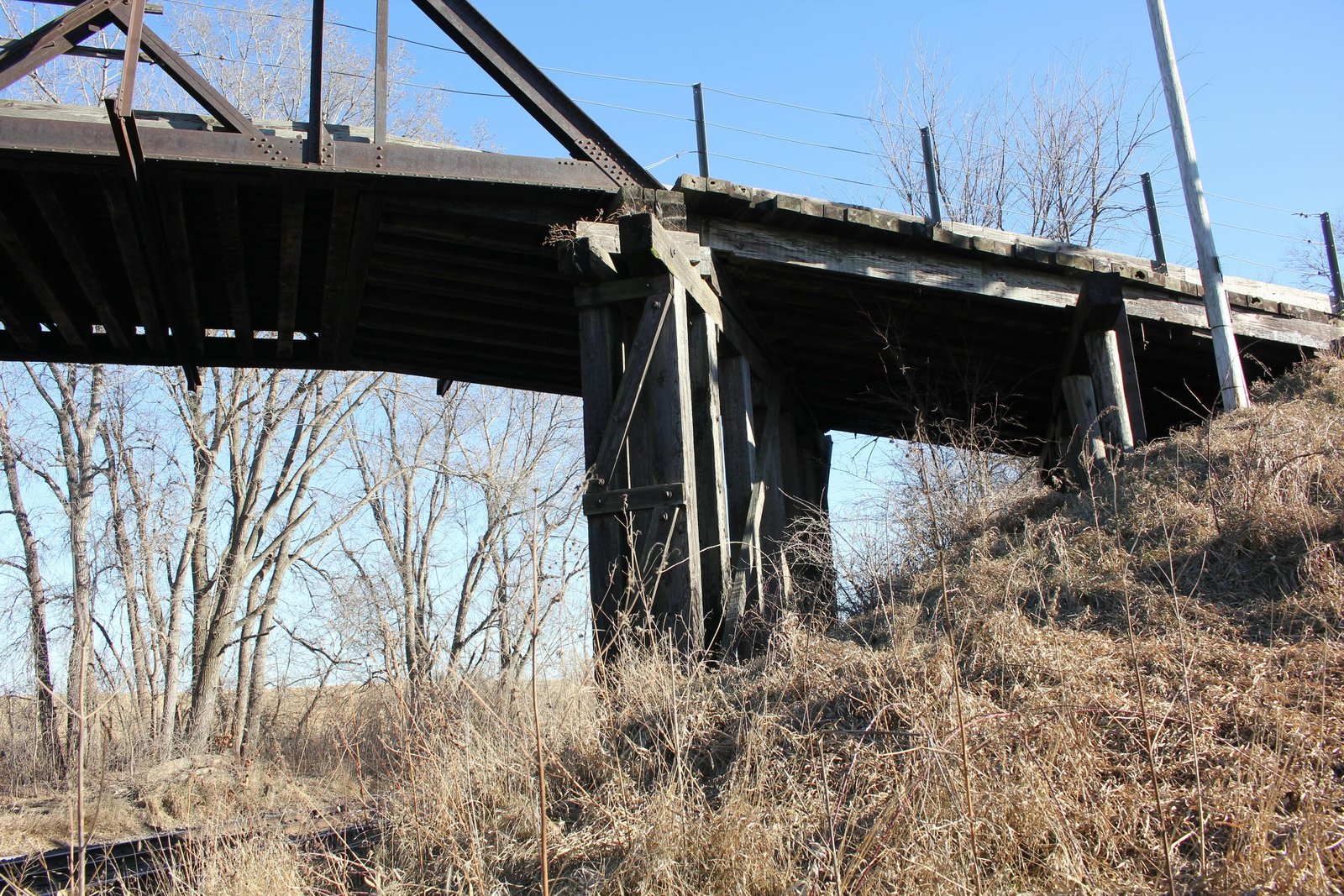
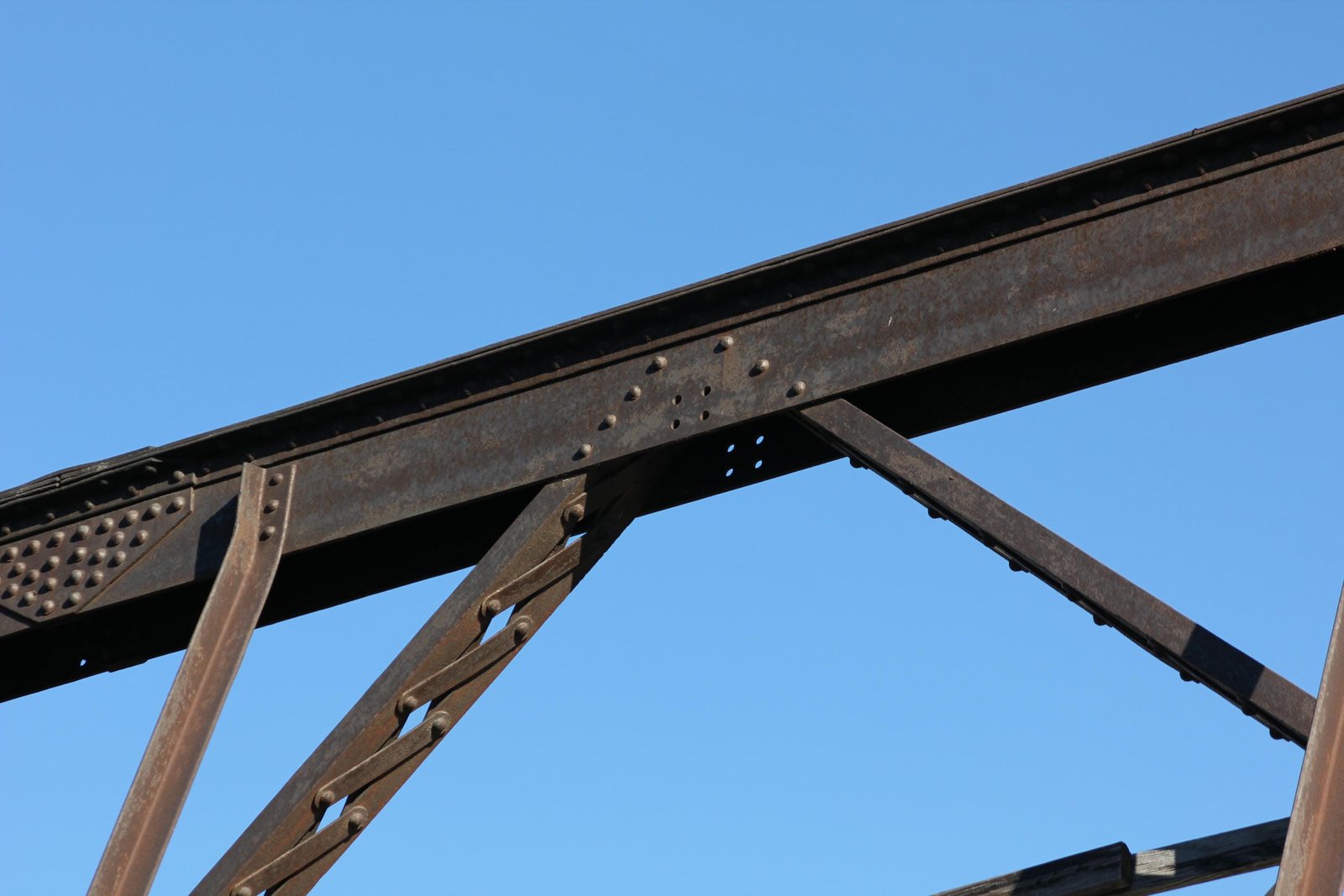
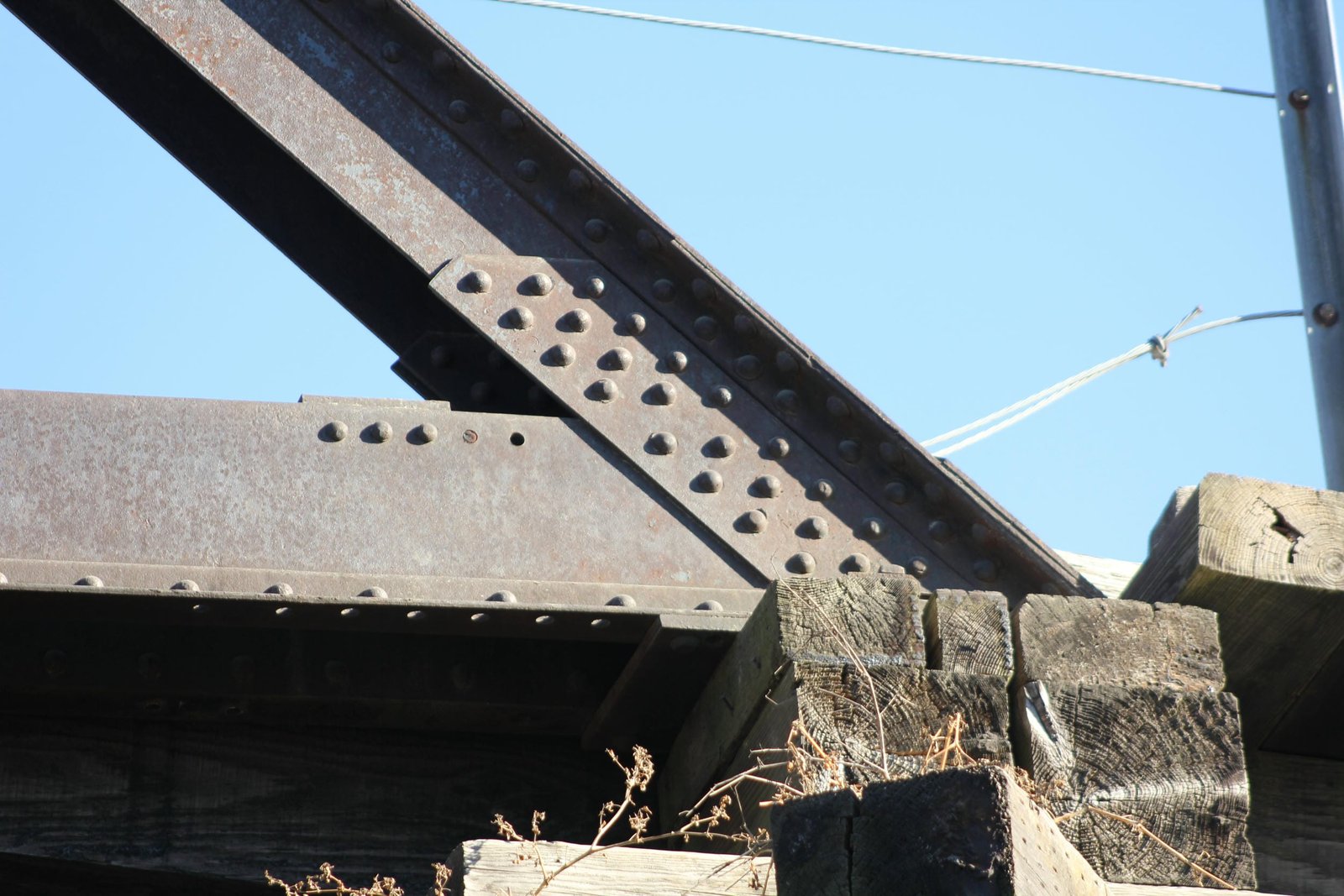
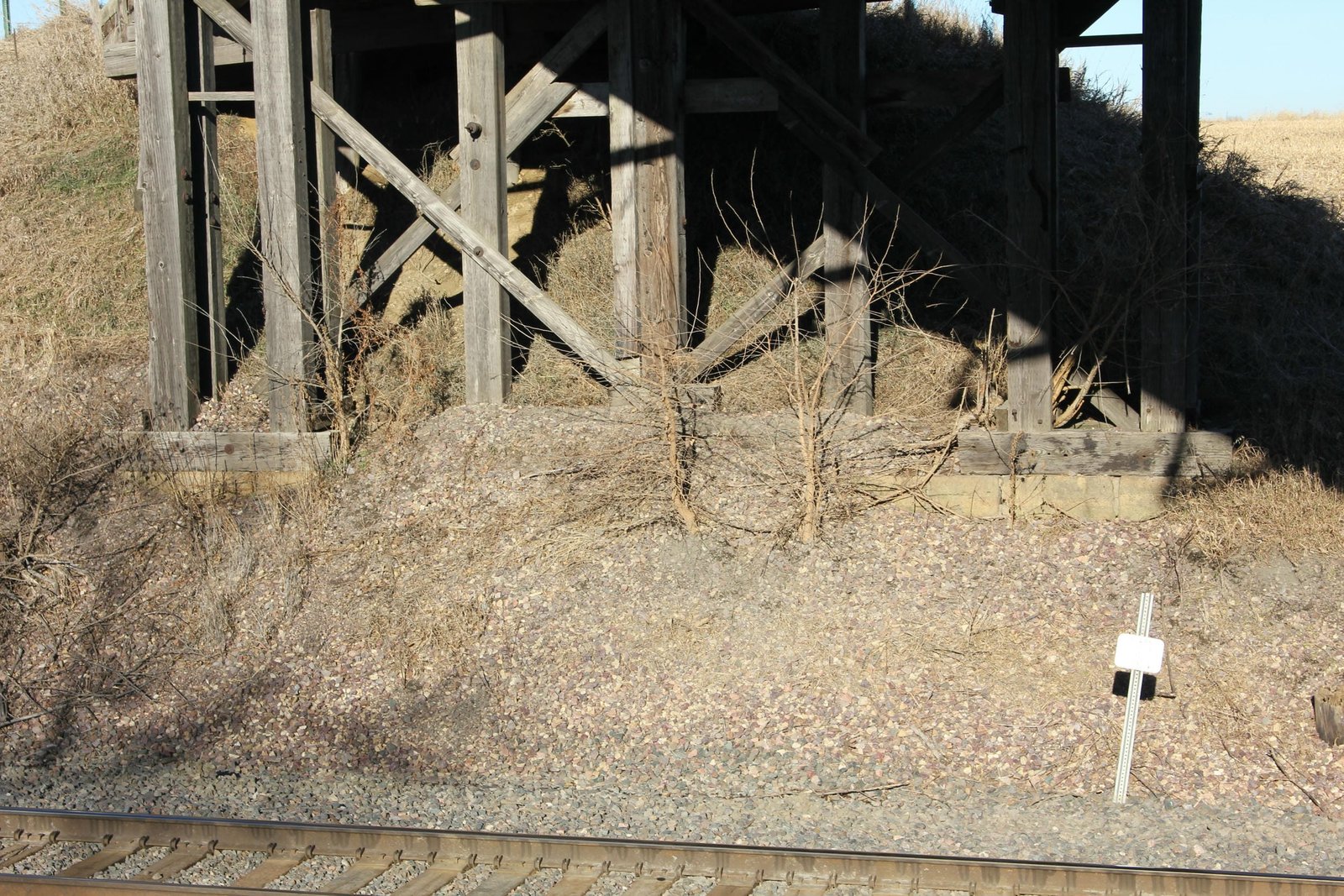
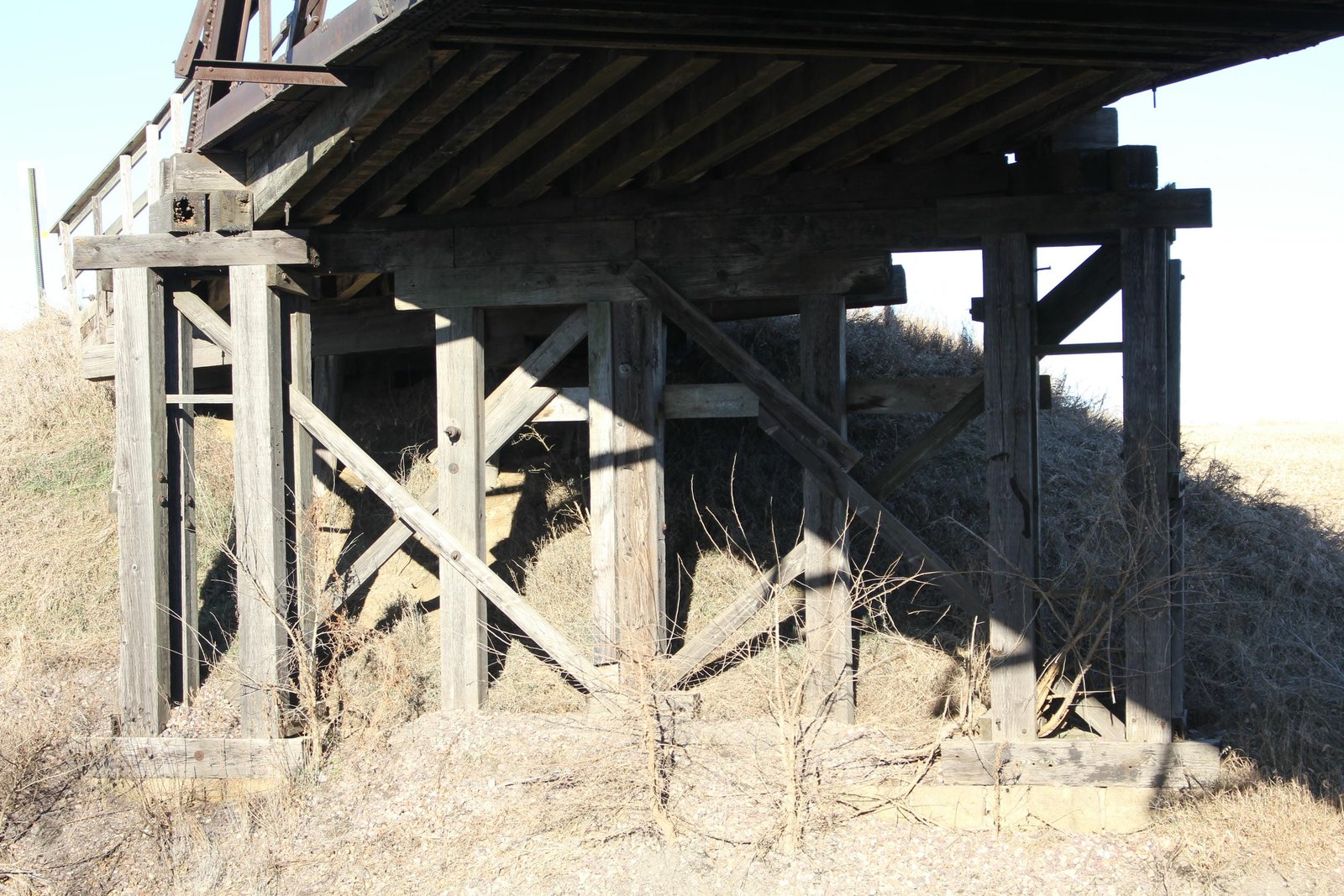
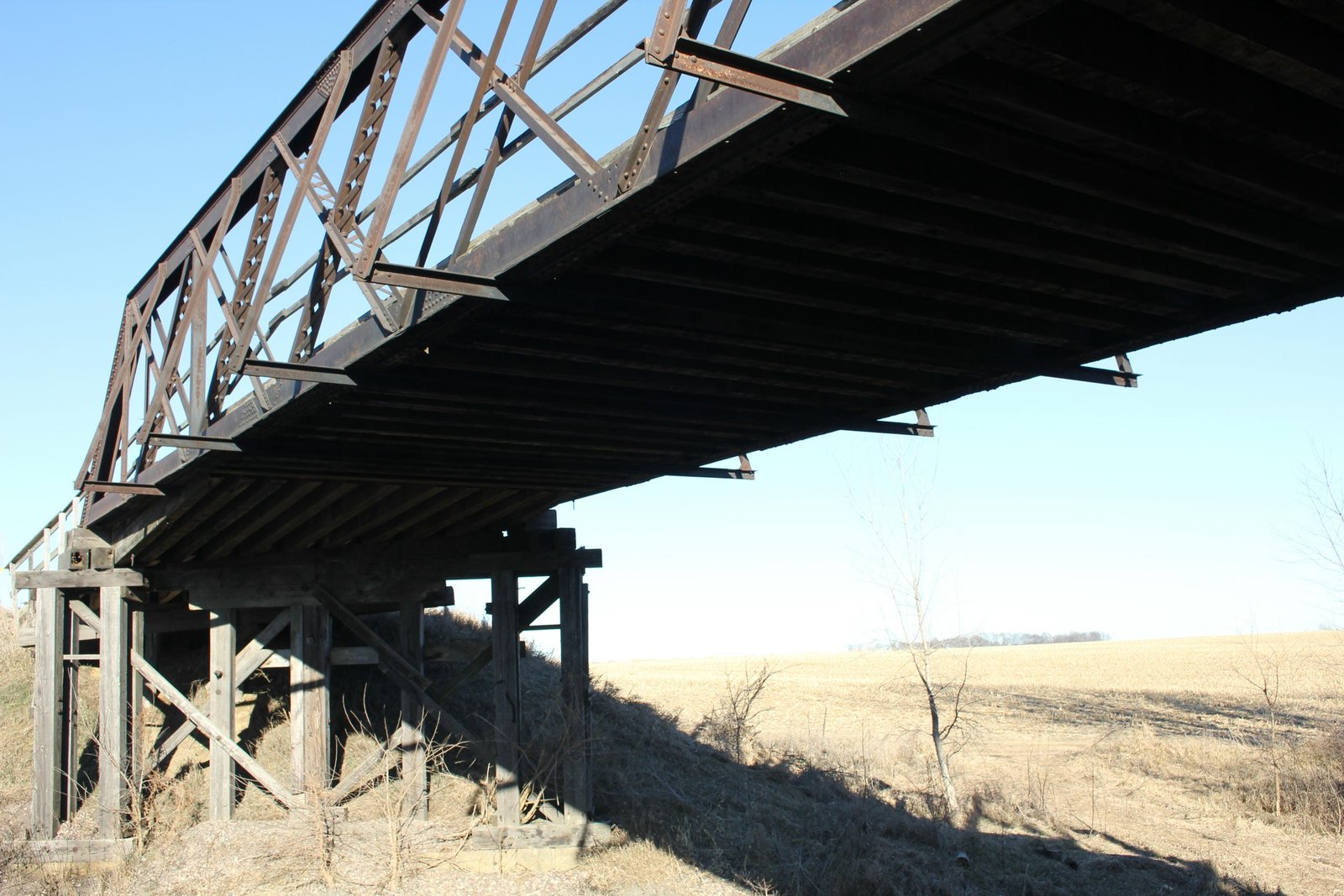
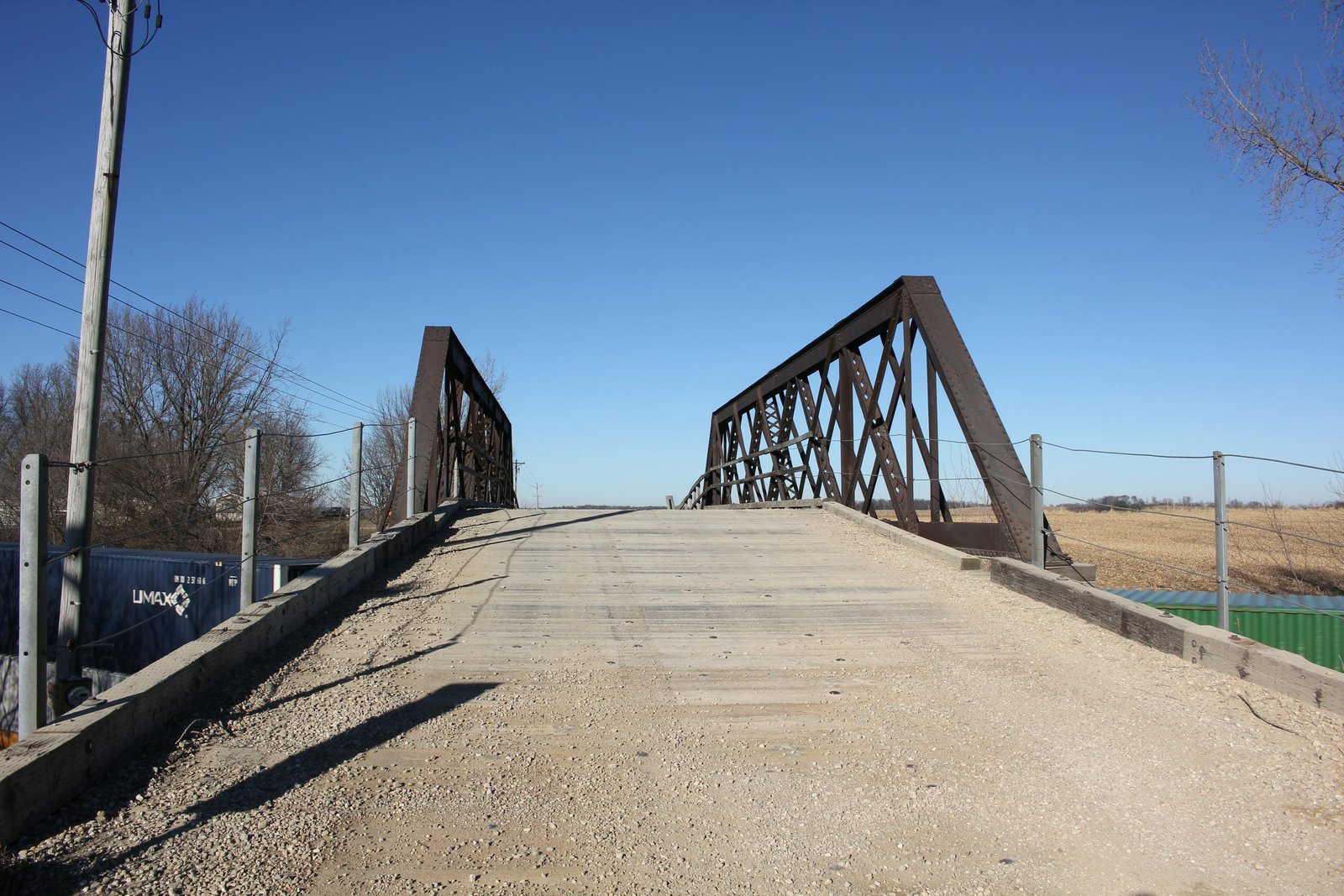
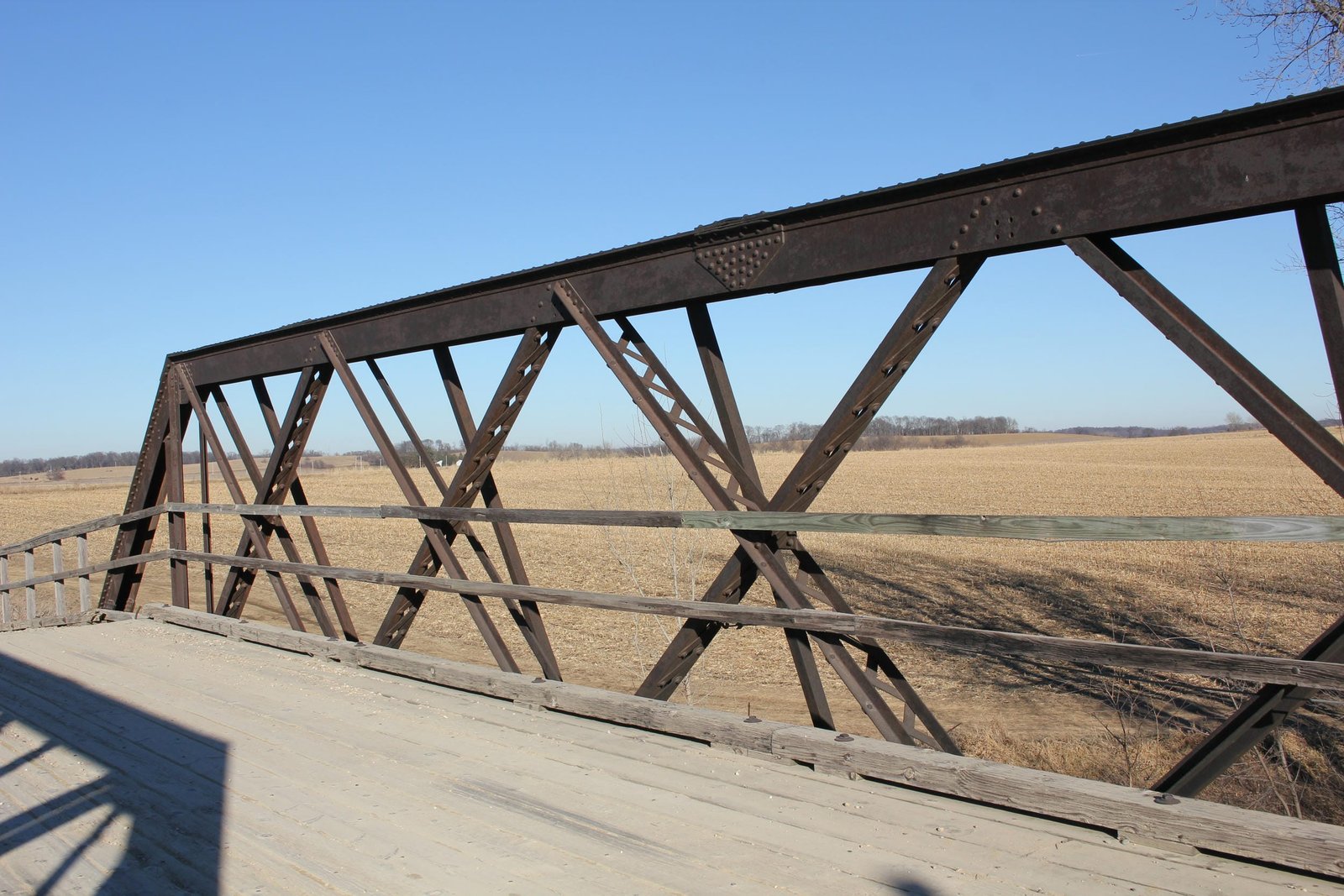
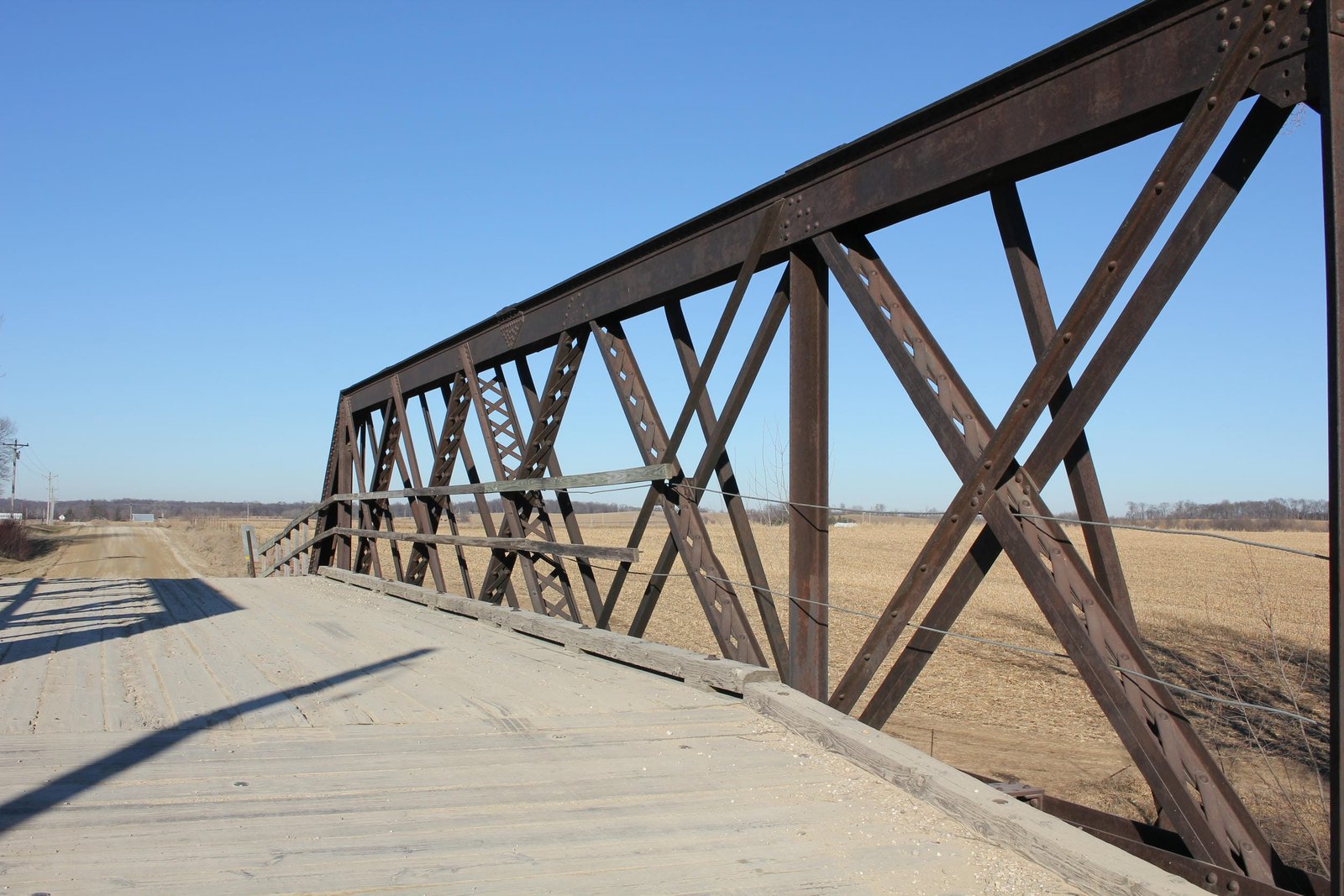
Located between Montour and LeGrand, this historic pony truss bridge carries B Avenue over a former Chicago & North Western Railway mainline. Prior to the 20th Century, it is believed that a grade crossing existed at this location. Between 1898 and 1902, the C&NW undertook a large double tracking project between Cedar Rapids, Iowa and Council Bluffs, Iowa. As part of the project, an overpass was constructed to carry B Avenue over the widened railroad right-of-way in 1900. Similar to other overpasses along this line, the bridge was constructed using a secondhand iron truss span, which had originally been constructed for railroad use. Unlike many of the other overpasses, this bridge has not been significantly altered since the 1900 construction. Currently, the overpass consists of a modified 79-foot, 7-panel, riveted double intersection Warren pony truss span. Each end of the pony truss is approached by two timber pile trestle spans, giving the bridge a distinct "humpback" shape. The entire bridge is set onto timber pile substructures, with the main piers resting on stone pedestals. In addition, the bridge runs at a heavy skew and has a total deck width of 18 feet. The main span was reused from a single-track railroad bridge, originally fabricated in approximately 1885 at an unknown location. An unknown contractor fabricated the span, while a second unknown contractor completed the alterations to the span in 1900. The Widell Company constructed the stone pedestals, while the timber components were constructed by railroad company forces. Between the late 1890s and approximately 1903, the Widell Company is reported to have constructed much of the stone bridges and culverts along the Iowa Division.
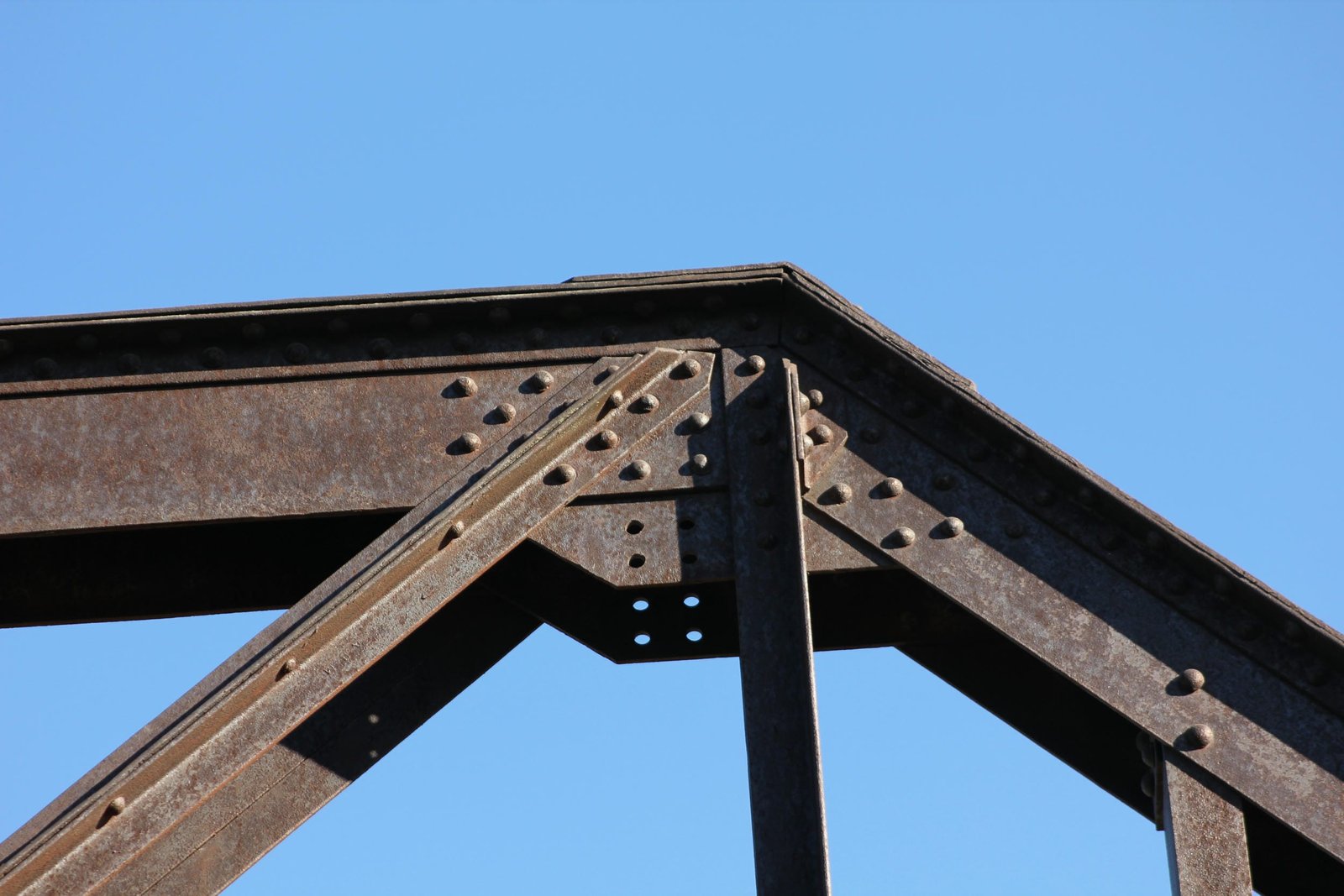
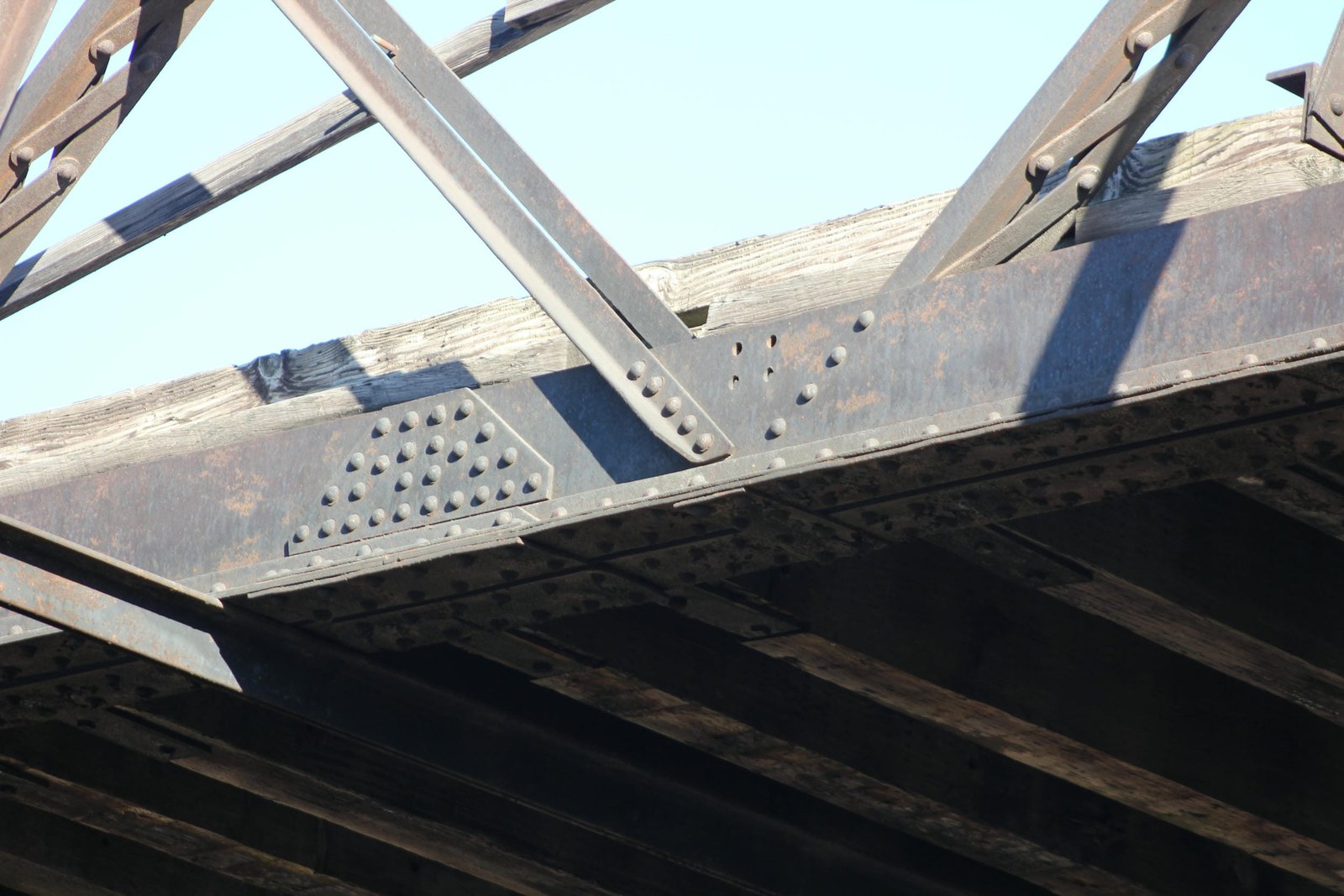
The truss span follows a standard design for a mid-1880s pony truss span, with light members consisting of plates, L-shaped bars and built-up diagonal members.
This type of span was popular with the C&NW from the mid-1870s into the late 1880s. This design provided a sufficiently strong iron span for early mainline use, and was particularly popular before heavier plate girders were developed in the early 1880s. A number of different variations of these spans were constructed, typically in standard 64-foot, 72-foot and 84-foot lengths. This span is unique for having used a 75-foot length, a non-standard design. Early versions of this design used exclusively rolled members and did not have any significant lattice or built-up beams. Spans of this design were nearly exclusively constructed by the Leighton Bridge & Iron Works, and later the Alden and Lassig Bridge & Iron Works. This particular design was also popular for reuse as an overpass, as it could be easily modified to serve roadway use. Railroads often reused steel and iron spans, as it provided a cost effective way to construct bridges without requiring large amounts of new material. Like many railroads, the C&NW reused steel and iron girder and truss spans for roadway overpasses, as these spans could easily be reconstructed and adapted for roadway use. Since the mid-20th Century, a vast majority of these historic overpasses have been removed or replaced. Unfortunately, many of these overpasses used some of the oldest truss and girders available for reuse, with many dating to the early 1880s or before. Since the original construction, the bridge has seen relatively few alterations, and today it remains in use carrying a limited amount of automobile traffic. Overall, the bridge appears to be in fair condition, with most of the timber components showing relatively little deterioration. However, the original iron components of the truss span remain in fair to good condition. It is likely that this bridge will eventually be demolished and replaced. If this bridge is demolished, the truss span could feasibly be repaired for pedestrian or light motorized vehicle use. The author has ranked this bridge as being highly significant, due to the age and design.
Citations
| Build date | Chicago & North Western Railway Valuation Notes at the Chicago & North Western Historical Society Archives |
| Builder (substructure) | Mankato Free Press; May 5, 1899 |
| Railroad History Citation | ICC Valuation Information, Compiled by Richard S. Steele |