
Click the photo to view the full-size version
| Name | Waterloo Railroad Crossing Chicago Great Western Railway Bridge #K325.95 |
| Built By | Chicago Great Western Railway |
| Currently Owned By | Union Pacific Railroad |
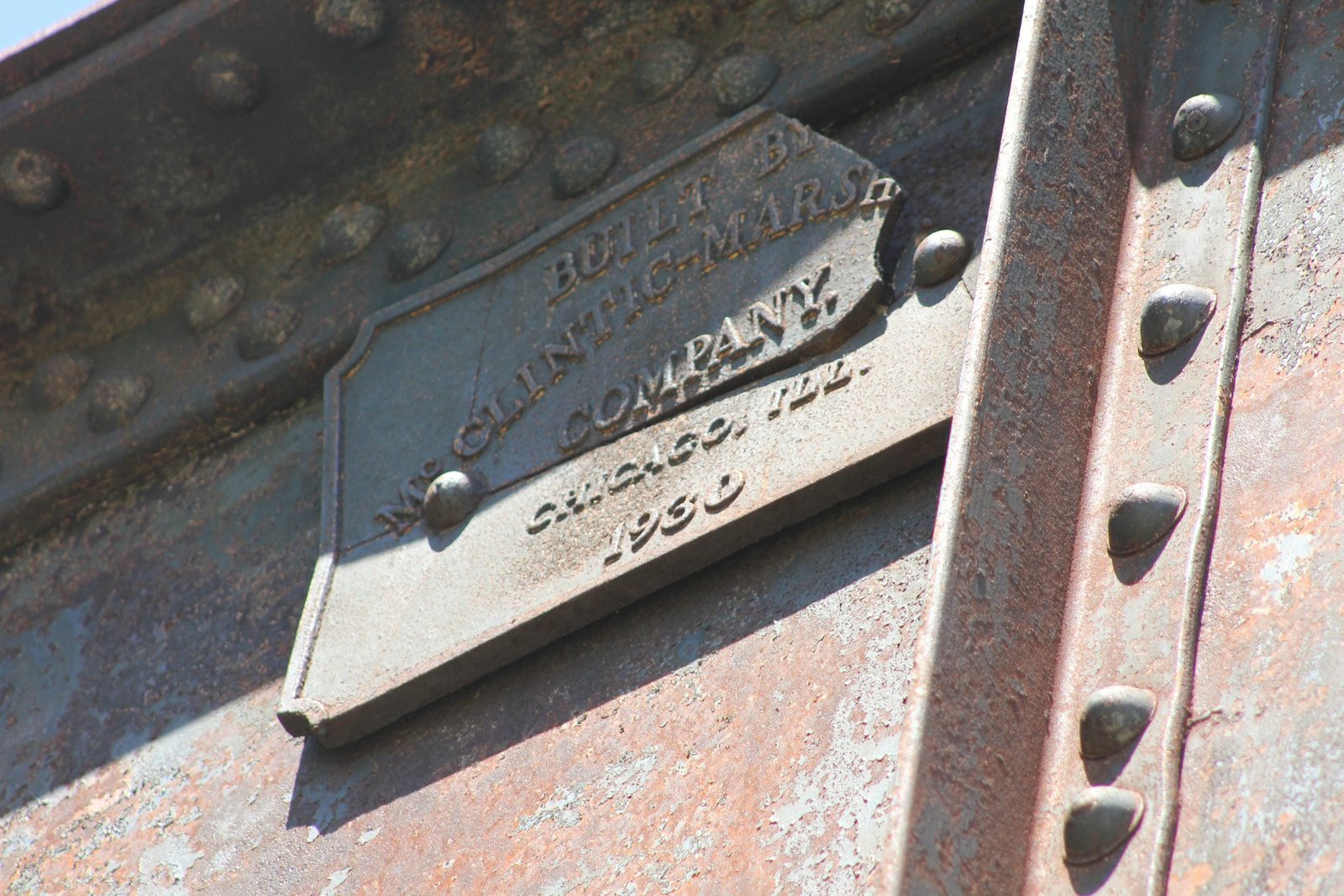
| Superstructure Contractor | McClintic-Marshall Corporation of Chicago, Illinois |
| Substructure Contractor | W.B. Craig of Mankato, Minnesota (North Track) T.H. Houston of Minneapolis, Minnesota (South Track) |
| Length | 105 Feet Total, 66 Foot Largest Span |
| Width | 2 Tracks, 1 In Use |
| Height Above Ground | 25 Feet (Estimated) |
| Superstructure Design | Through Plate Girder |
| Substructure Design | Stone Masonry, Concrete and Steel Bent |
| Date Built | 1930 |
| Traffic Count | 5 Trains/Day (Estimated) |
| Current Status | In Use |
| Chicago Great Western Railway Bridge Number | K325.95 |
| Union Pacific Railroad Bridge Number | 325.95 |
| Significance | Local Significance |
| Documentation Date | 5/26/2018 |
In 1884, the Wisconsin, Iowa & Nebraska Railway (WI&N) constructed 104 miles of new railroad, extending from Waterloo, Iowa to Des Moines, Iowa. In 1886, the WI&N was sold to the Chicago, St. Paul & Kansas City Railway (CStP&KC). In 1887, the CStP&KC constructed 27 miles of additional railroad between Oelwein, Iowa and Waterloo; followed by 159 miles between Des Moines and St. Joseph, Missouri in 1888. In 1891, the Leavenworth & St. Joseph Railway (L&StJ) completed an additional 23 miles between St. Joseph and Beverly, Missouri. In 1892, the L&StJ was sold to the Chicago Great Western Railway (CGW), followed by the CStP&KC in 1893. The CGW would be reorganized as the Chicago Great Western Railroad in 1909. The CGW had acquired and constructed a modest railroad network throughout Illinois, Iowa, Minnesota and Missouri; connecting major cities in these states. The CGW was one of the smaller railroads in the area, and was late to develop lines. As a result, the railroad never saw the fortunes of other railroads in the area. This line served as a principal mainline for the CGW, proving a connection to Kansas City via a swing bridge at Leavenworth, Kansas and trackage rights over the Missouri Pacific Railway.
In the early 20th Century, the CGW was often surviving on razor-thin profit margins. In 1940, the CGW entered bankruptcy, and was again reorganized as the Chicago Great Western Railway. At this time, the MC&FD was formally merged into the CGW. After the bankruptcy, the CGW became an innovative railroad, pioneering intermodal service and becoming one of the first railroads to completely switch to diesel locomotives. A capital improvement program was launched in 1949, which sought to rebuild and rehabilitate deteriorated infrastructure. In 1968, the CGW was purchased by the Chicago & North Western Railway (C&NW). This route provided the C&NW with access to Kansas City, although deteriorated track conditions limited effective operations. After the C&NW purchased the former Rock Island "Spine Line", the former CGW route became excess. In 1983, the line between Marshalltown and Bondurant, Iowa was abandoned, followed by the entire line between Des Moines and Beverly in 1984. Another segment between Waterloo and Marshalltown was abandoned in 1988.
In 1995, C&NW was purchased by Union Pacific Railroad (UP). UP abandoned a section of the line in Des Moines in 2001. In 2003, UP sold the Oelwein to Waterloo segment to Iowa Northern Railway (IANR). Another section of the line between Bondurant and Des Moines was abandoned in 2011. In 2025, IANR was purchased by Canadian National Railway (CN). Today, CN continues to operate the Oelwein segment as the Oelwein Subdivision. Several sections of this line have been reused as parts of trails, including the Sargent Road Trail between Waterloo and Hudson; the Chichaqua Valley Trail between Baxter and the north side of Des Moines and the Great Western Trail between the south side of Des Moines and Martensdale. The remainder of the railroad has been abandoned and reverted to adjacent property owners. However, much of the original right-of-way is intact.
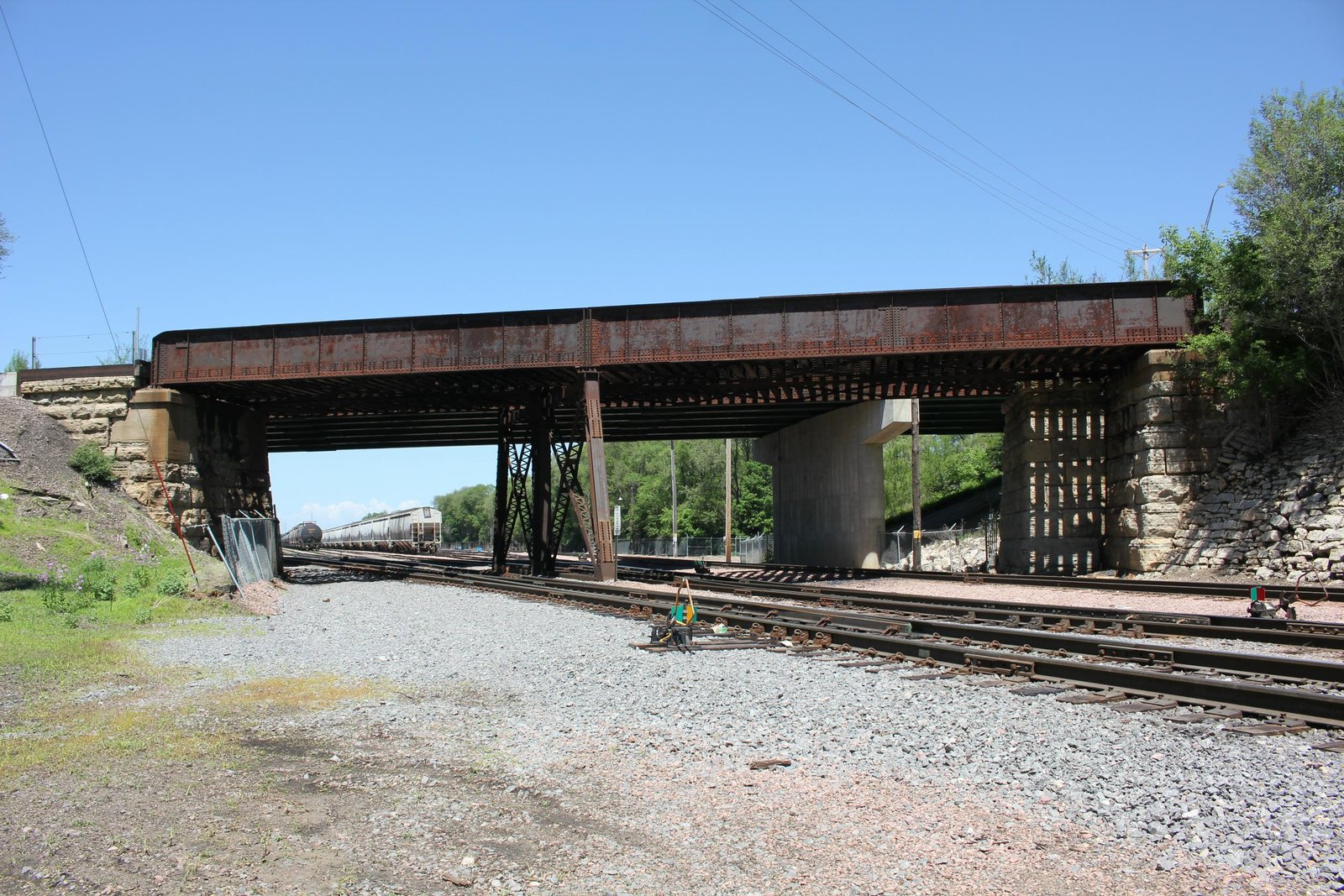
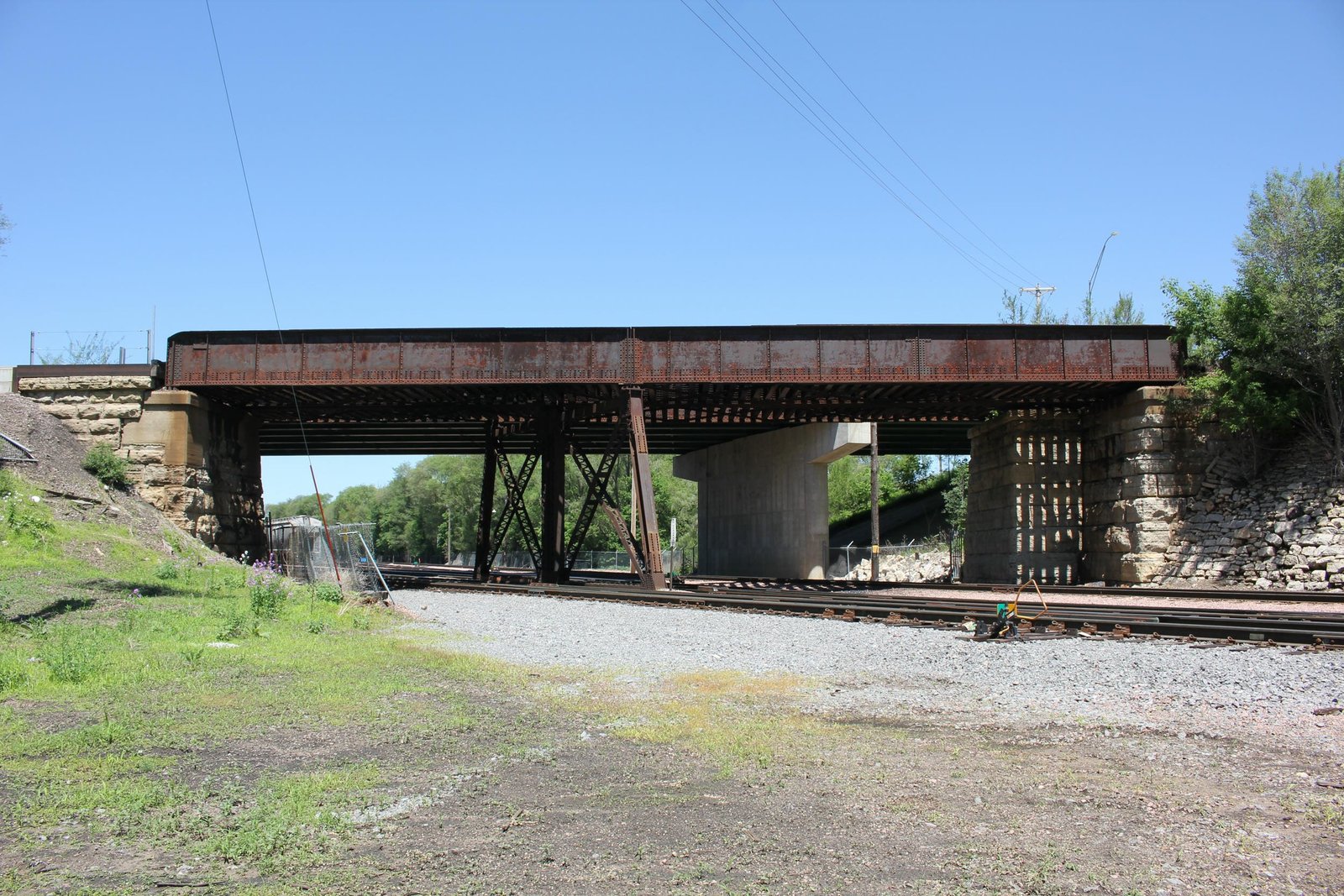
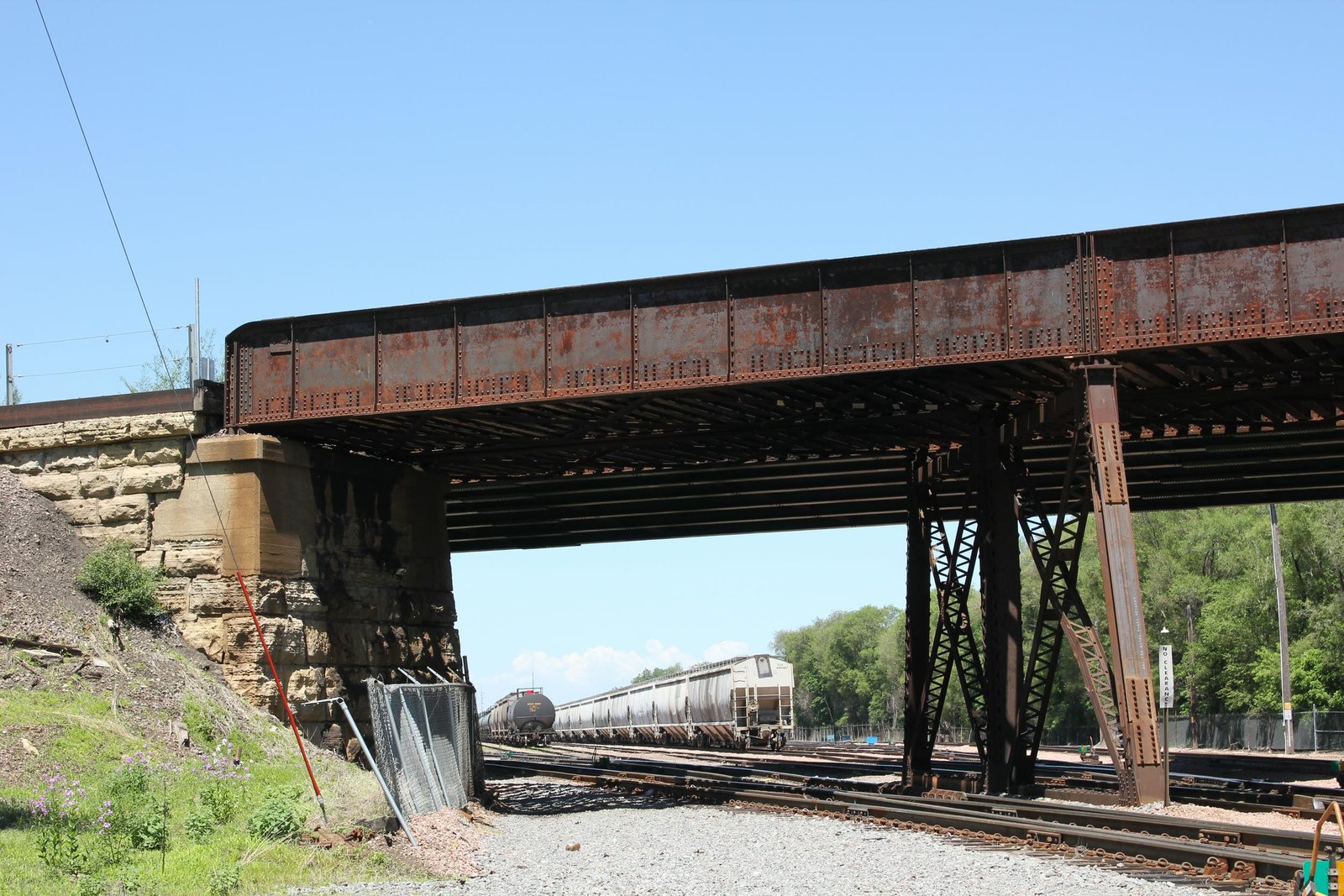
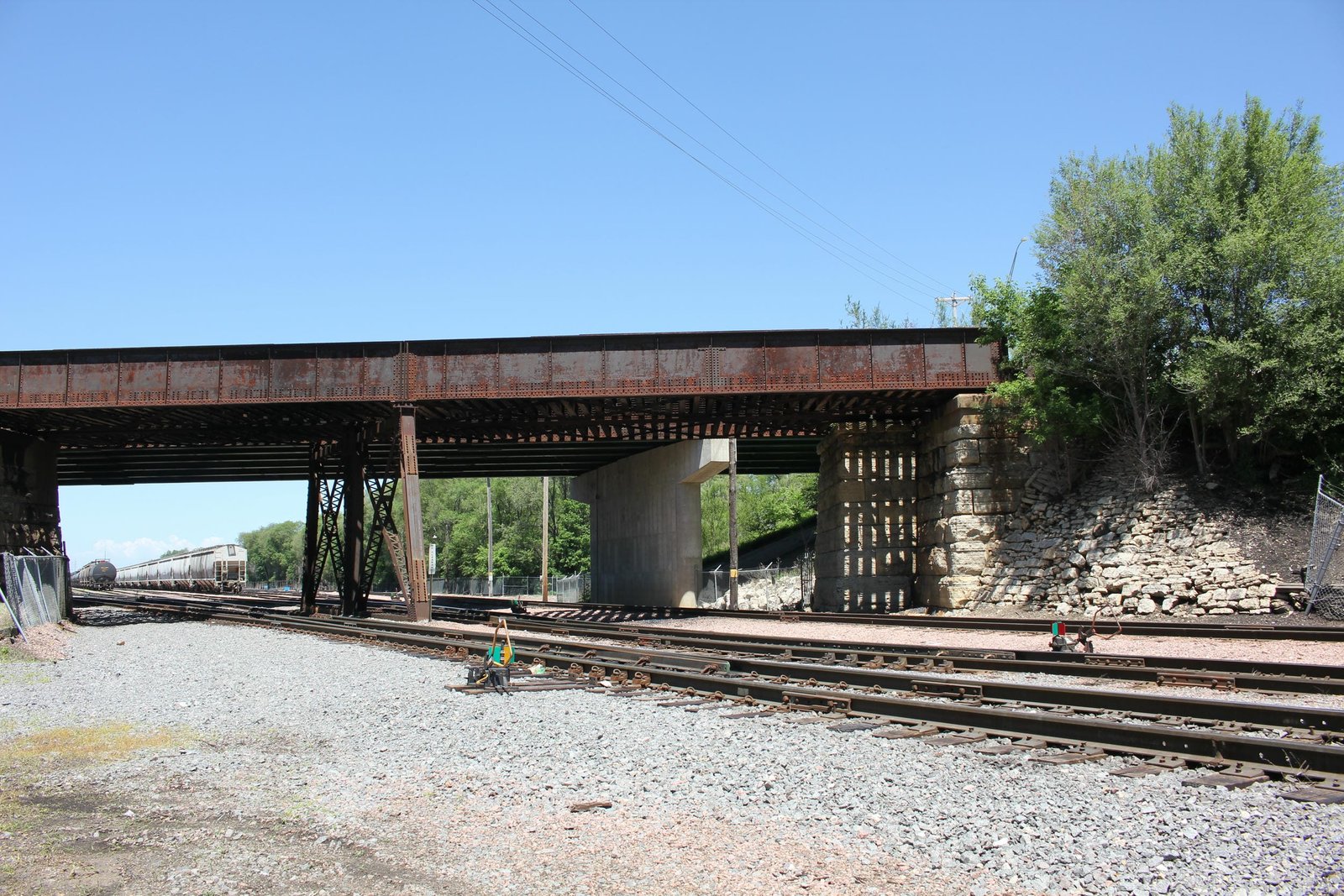
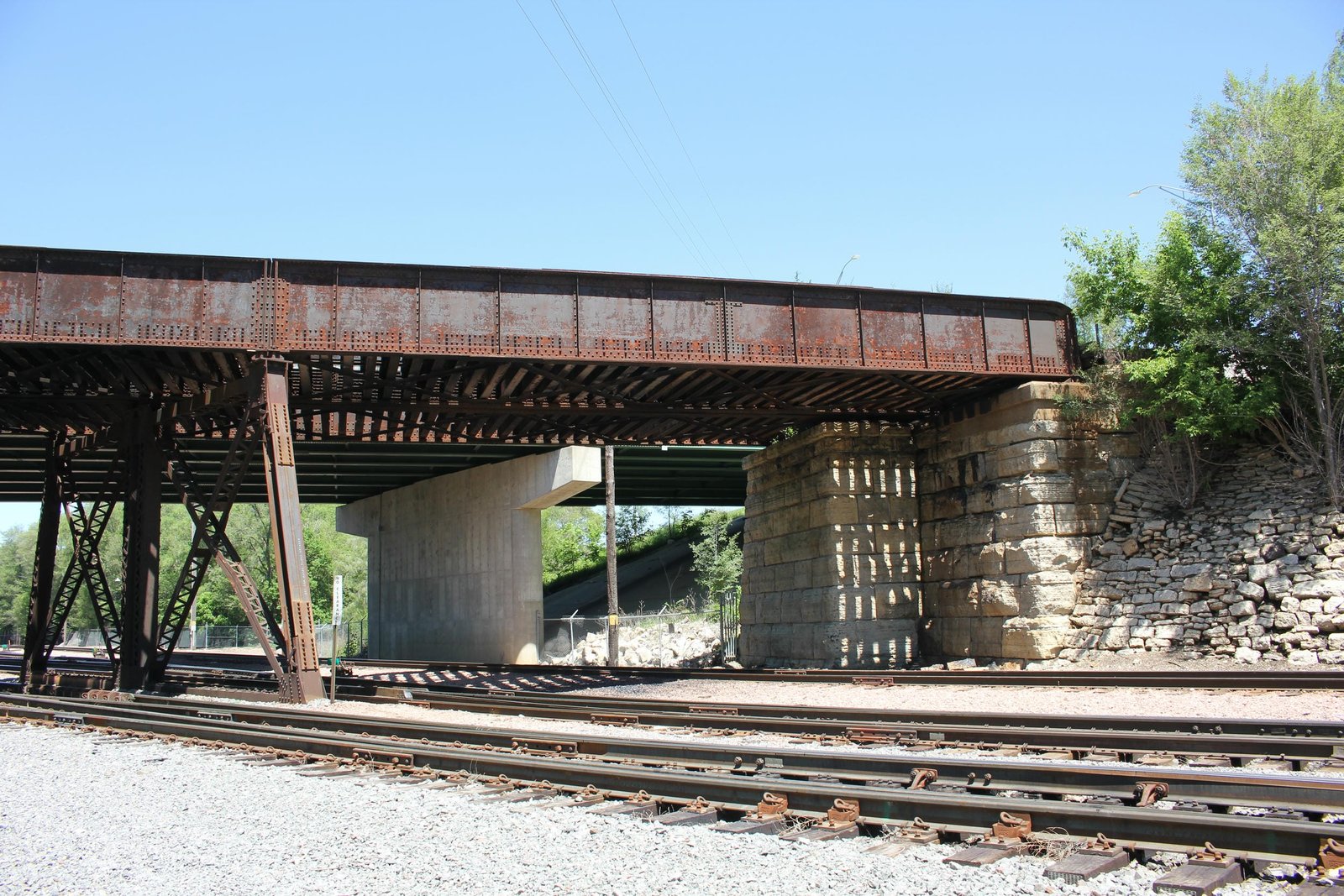
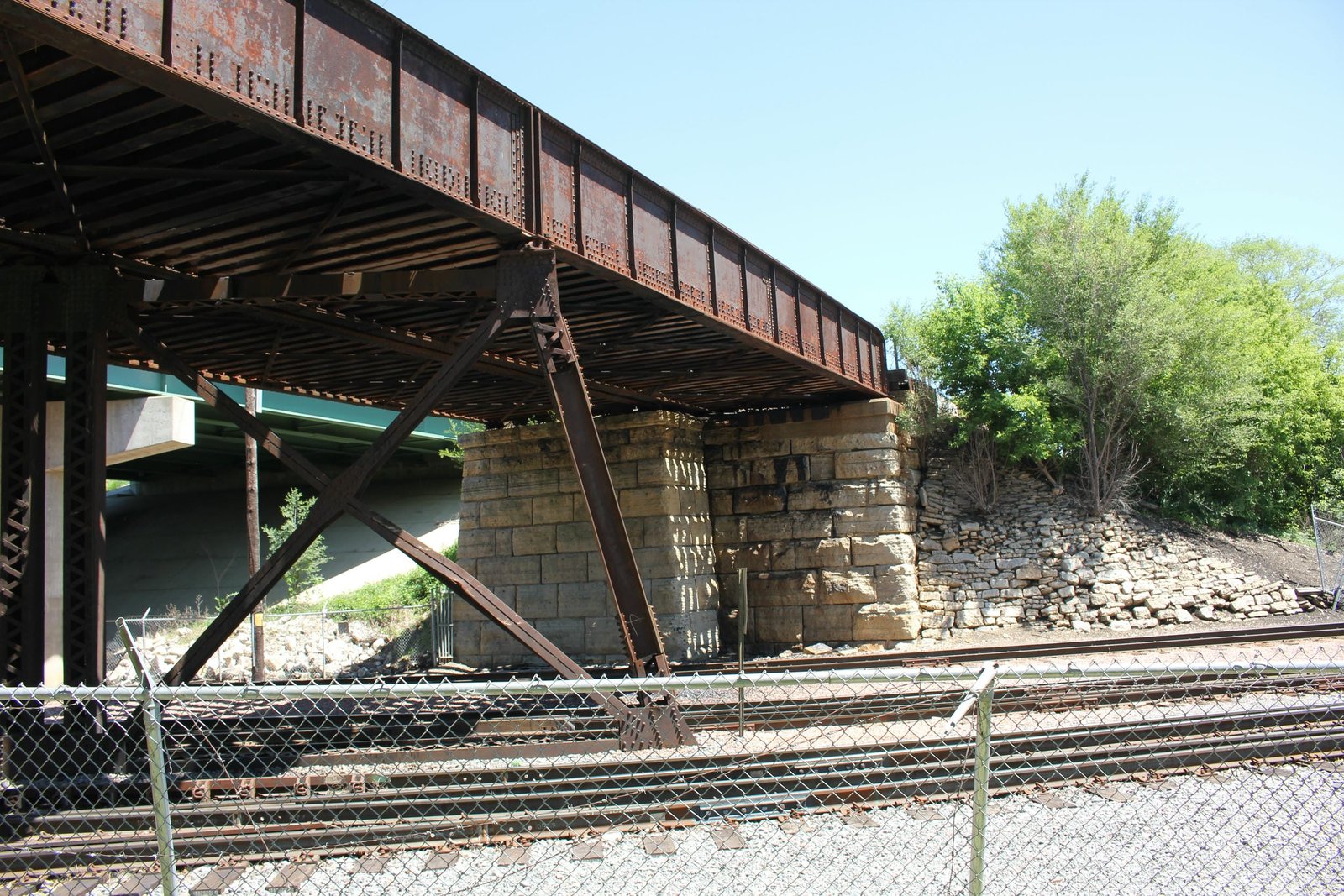
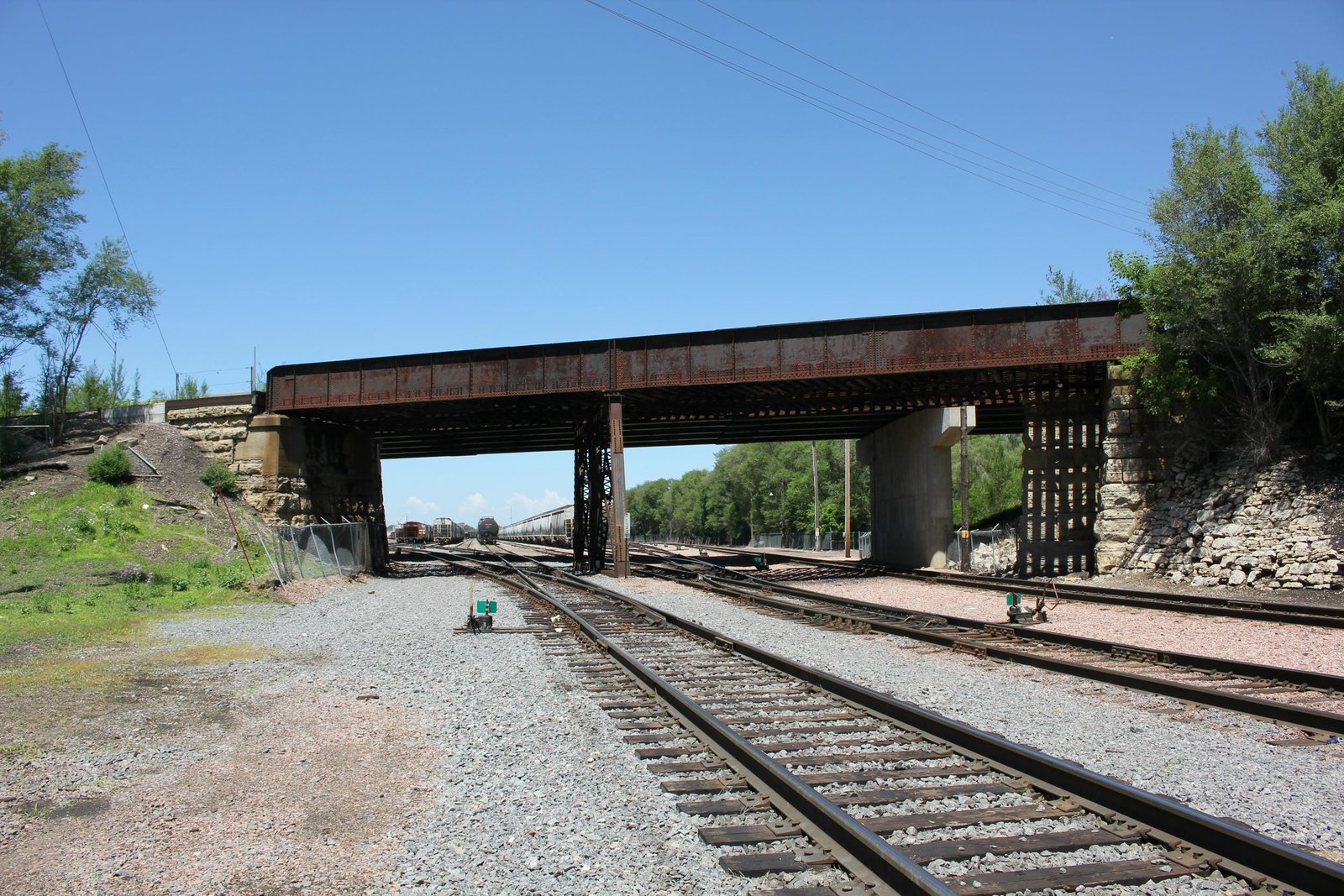
Located in Waterloo, this through plate girder bridge carries a former Chicago Great Western Railway mainline over a Canadian National Railway (former Illinois Central Railroad) mainline. When the CStP&KC first reached Waterloo, the IC objected to having an at-grade crossing on the east side of Waterloo. The IC already operated a sprawling terminal in the area, and an at-grade crossing would have negatively impacted operations. The first bridge at this location was constructed in 1887, and consisted of an iron span set onto stone abutments. It is unclear if this span was a girder or truss, although it is known that it was fabricated by the Keystone Bridge Company. After negotiations, the CGW reached an agreement with the IC in late 1901 to widen the bridge for a second track. In 1902, a second track was added to the south side of the bridge, and a two span girder bridge was installed. As trains became heavier in the 20th Century, it became necessary to again rebuild the bridge. In 1930, the bridge was replaced with the present structure. Currently, the bridge consists of a 66-foot and a 39-foot through plate girder span, set onto stone abutments and a steel bent pier. The bridge is set at a heavy skew, and the two tracks are slightly offset.
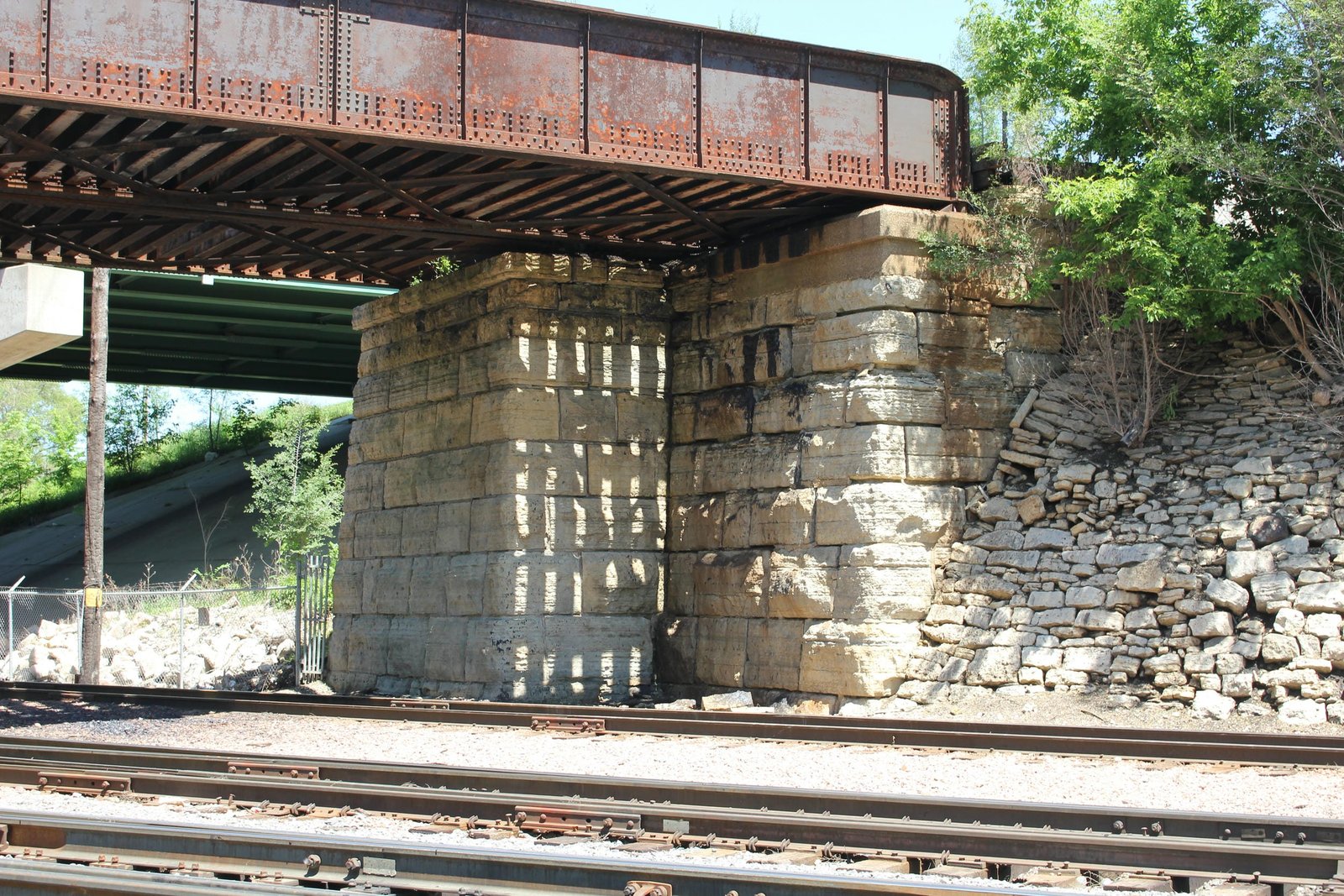
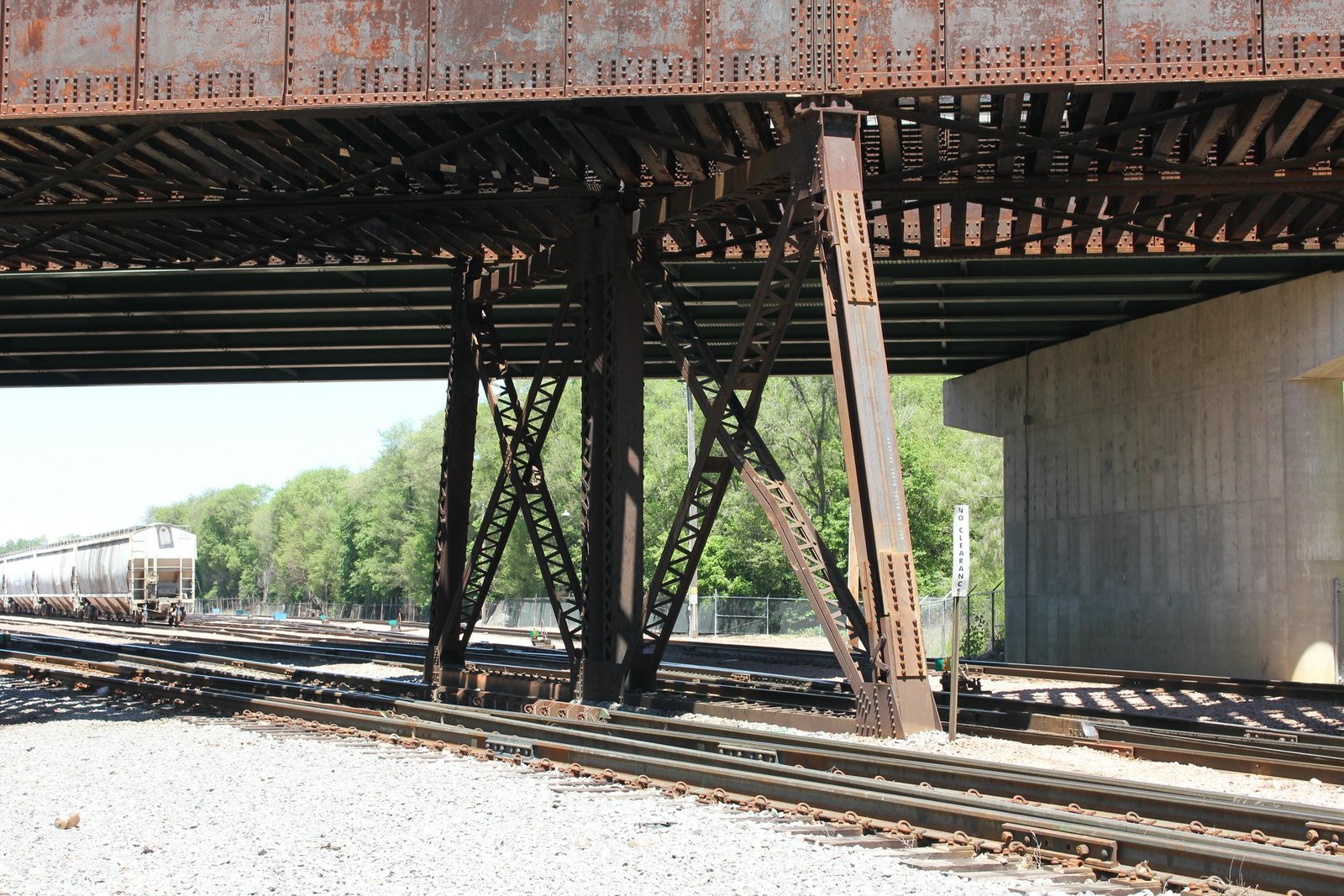
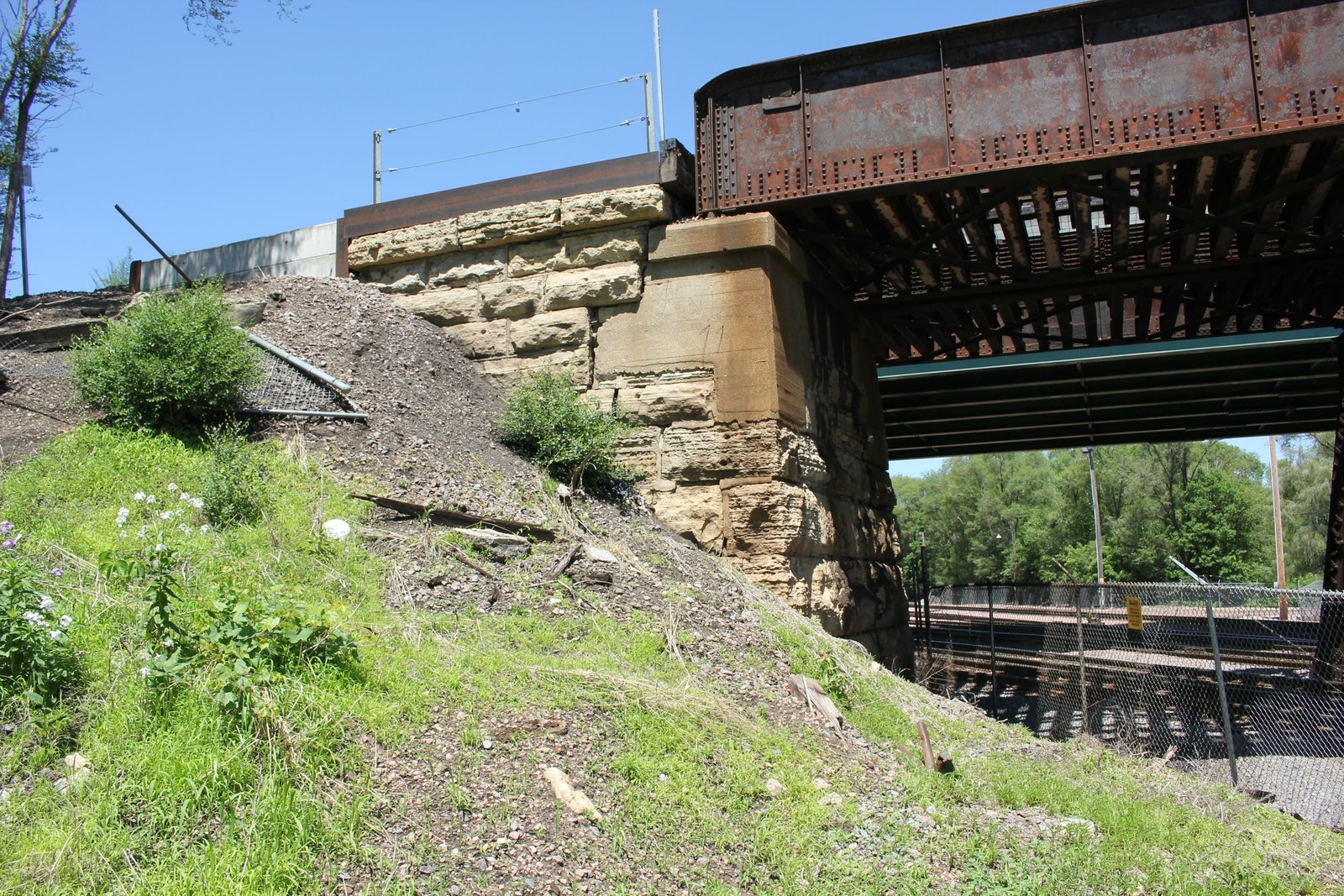
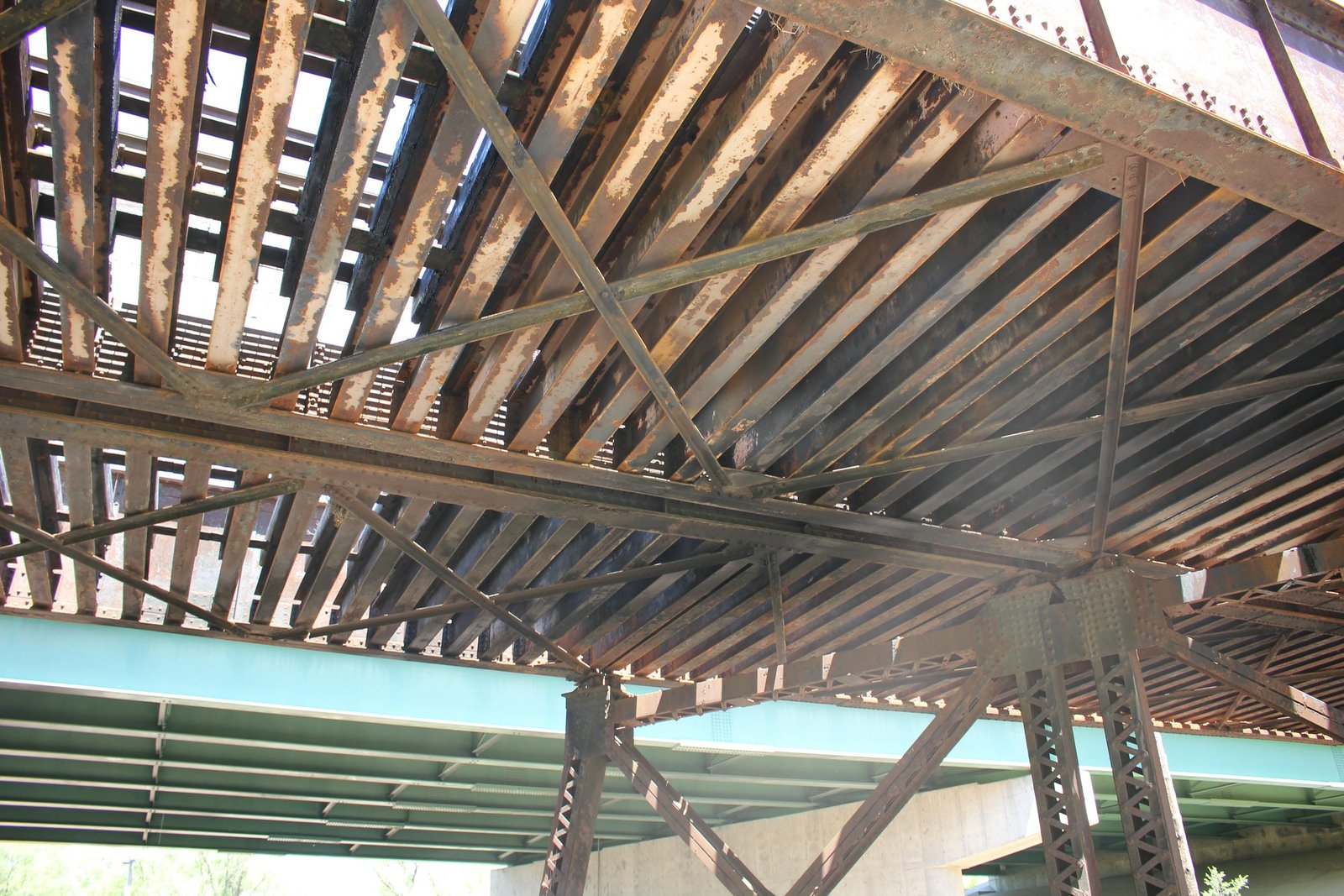
The superstructure follows a unique design, with four shallow plate girders, rounded and tapered girder ends and a floor constructed of parallel I-beams placed transversely between the girders. Both abutments use a U-shaped design, which are offset from one another. In addition, the south track abutment has been repaired with concrete. The center pier is composed of V-laced posts, connected by V-laced lateral bracing and V-laced transverse bracing and the top and bottom. The southernmost post was replaced by an I-beam in the 21st Century, possibly due to strike damage. Stone for the abutments consists of two different grades of limestone. The north track abutment uses a higher grade limestone, likely quarried at Mankato, Minnesota; while the south abutment is a lower grade limestone, possibly quarried at Mantorville, Minnesota. McClintic-Marshall Corporation fabricated the superstructure and center bent. It is believed that W.B. Craig constructed the north track abutments as part of his work in Waterloo, while the south track abutments were constructed by T.H. Houston. It is unclear if the concrete alterations were constructed by railroad company forces or by an unknown contractor. Through plate girder spans were popular for railroad use, as they were durable and easy to construct. Since the initial construction, the bridge has seen no significant alterations. Today, only the south track is in use. While the bridge is still owned by Union Pacific Railroad; Canadian National Railway operates over the bridge. Overall, the bridge appears to be in fair to good condition, with no significant deterioration noted. The author has ranked this bridge as being locally significant, due to the common design.
Citations
| Build date and builder (superstructure) | McClintic-Marshall Corporation plaque |
| Builder (north track substructure) | The Waterloo Courier; April 13, 1887 |
| Builder (south track substructure) | Iowa State Reporter; January 24, 1902 |
| Railroad History Citation | ICC Valuation Information, Compiled by Richard S. Steele |