
Click the photo to view the full-size version
| Name | CPKC IA-1 Bridge Chicago, Milwaukee, St. Paul & Pacific Railroad Bridge #I-1074 1/2 |
| Built By | Chicago, Milwaukee, St. Paul & Pacific Railroad |
| Currently Owned By | Canadian Pacific Kansas City Limited |
| Superstructure Contractor | Unknown |
| Substructure Contractor | Schmidt Construction Company of Winfield, Iowa |
| Length | 156 Feet Total, 52 Foot Spans |
| Width | 1 Track |
| Height Above Ground | 15 Feet (Estimated) |
| Superstructure Design | Steel Stringer |
| Substructure Design | Concrete |
| Date Built | 1955 |
| Traffic Count | 10 Trains/Day (Estimated) |
| Current Status | In Use |
| Chicago, Milwaukee, St. Paul & Pacific Railroad Bridge Number | I-1074 1/2 |
| Significance | Minimal Significance |
| Documentation Date | 1/27/2018 |
In 1882, the Chicago, Milwaukee & St. Paul Railway (Milwaukee
Road) began construction on a new railroad line, extending from Cedar
Rapids, Iowa to Ottumwa, Iowa. The 40-mile line would be completed in
1884. By 1885, work was authorized to begin towards Kansas City,
Missouri; a critical railroad hub in the Midwest. The extension opened
in 1887, giving the Milwaukee Road a direct route between Chicago and
Kansas City. The Milwaukee Road acquired and constructed a large amount
of track throughout the Midwest during the 1870s and 1880s. At the
Cedar Rapids suburb of Marion, the route connected to the Milwaukee Road
mainline across Iowa. By the early 1900s, a direct connection to the
Mississippi River town of Davenport was desired, and in 1901, the
Rutledge Cutoff was completed. The cutoff extended from Rutledge, Iowa
to Muscatine, Iowa, and allowed for a quicker way to access the
Milwaukee Road facilities at Davenport, as well as shortened the travel
time and distance from Chicago to Kansas City. Between Davenport and
Muscatine, the railroad jointly owned a line with the Chicago, Rock
Island & Pacific Railroad (Rock Island).
The Milwaukee Road operated this route as a principal mainline, and the line served as a primary connection between the two largest railroad hubs in the United States. The Milwaukee Road was often in financial trouble, especially after the costly Pacific Extension was completed in 1909. In 1925, the company declared bankruptcy, and reorganized as the Chicago, Milwaukee, St. Paul and Pacific Railroad in 1928. Significant upgrades were made to the line in the 1930s and 1940s, although the line remained single tracked. In 1930-1931, the Milwaukee Road and Rock Island reconstructed their lines from Polo, Missouri to Kansas City, abandoning much of the original line. A new bridge into Kansas City was completed in 1945, further improving operations. In 1980, the Rock Island went bankrupt, and the Milwaukee Road purchased the Davenport to Washington, Iowa line; abandoning their own line between Washington and Muscatine. By 1985, a suitor for the Milwaukee Road was being sought, and the Soo Line Railroad, controlled by Canadian Pacific Railway (CP) purchased the Milwaukee Road in 1986. In 1997, CP sold this line to I&M Rail Link, which later sold it to Iowa, Chicago & Eastern Railroad (IC&E), a subsidiary of Dakota, Minnesota & Eastern Railroad (DM&E). In 2008, DM&E and IC&E were purchased by CP. CP merged with Kansas City Southern Railway in 2023 to form CPKC, the current owner of this route. The CPKC operates the Ottumwa Subdivision between Davenport and Ottumwa, the Laredo Subdivision between Ottumwa and Laredo, Missouri; as well as the Kansas City Subdivision between Laredo and Kansas City. The route between Polo and Kansas City is shared with Union Pacific Railroad, which eventually acquired the former Rock Island line. This route now forms the principal mainline of the CPKC system, and traffic is expected to increase significantly over the coming years.
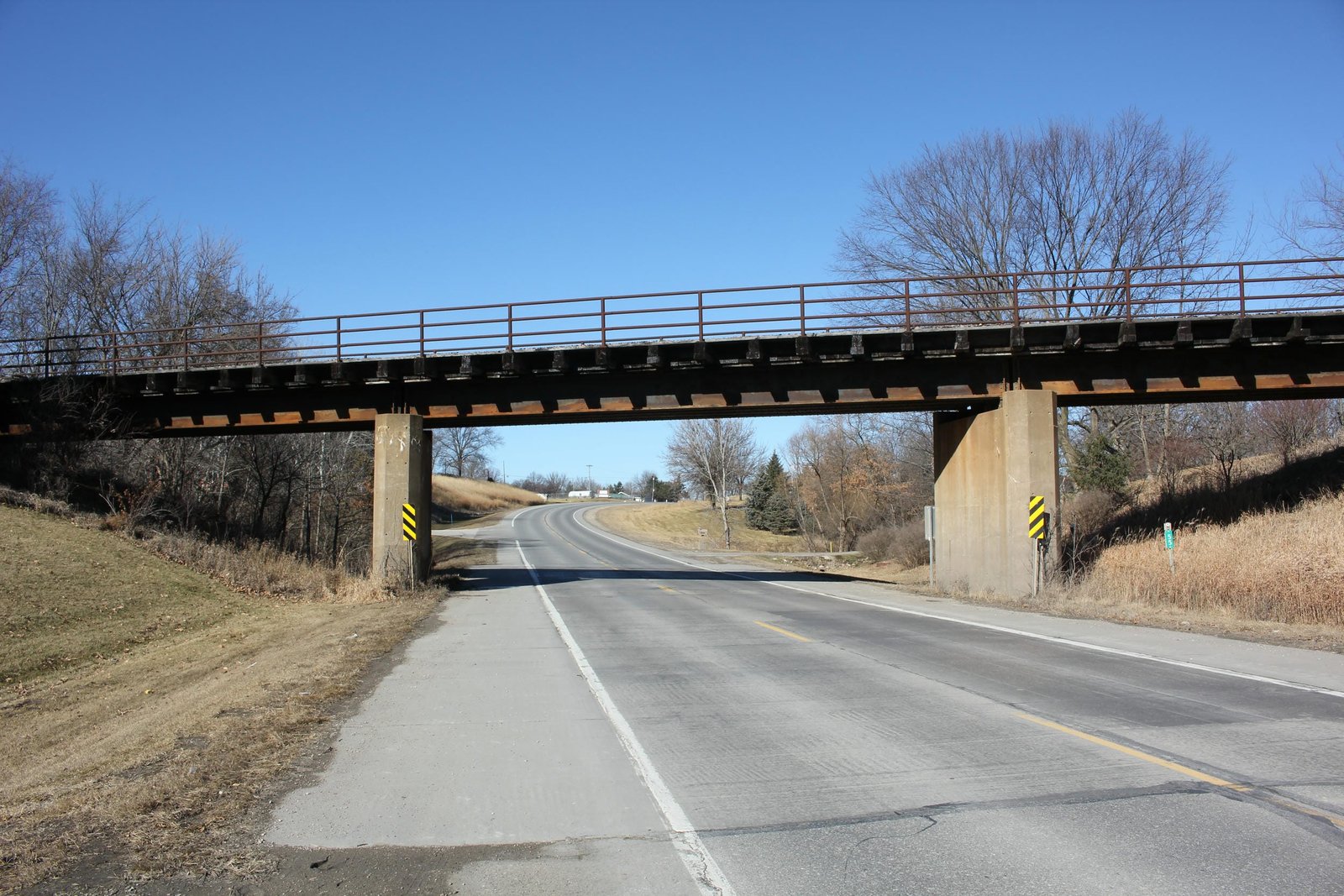
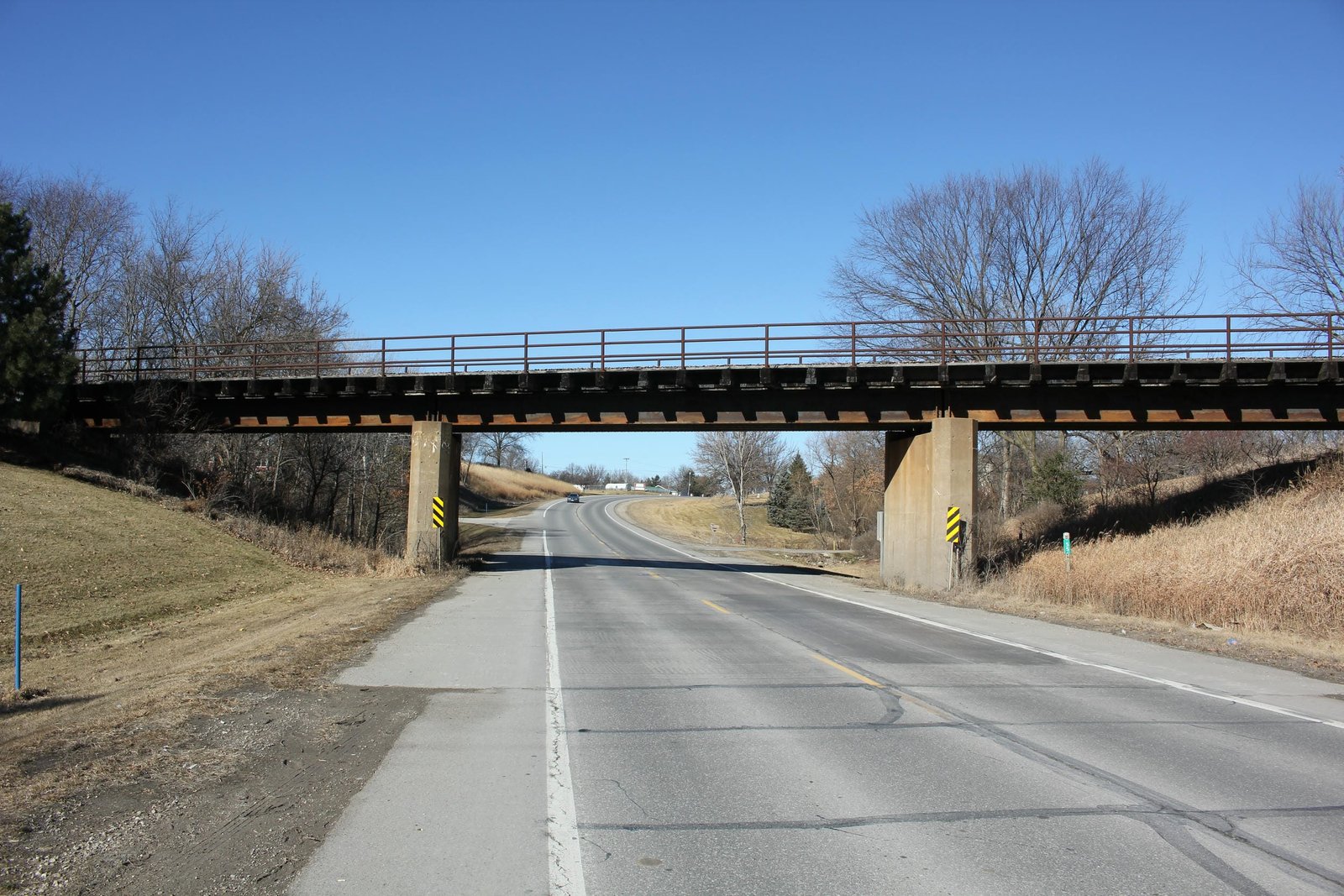
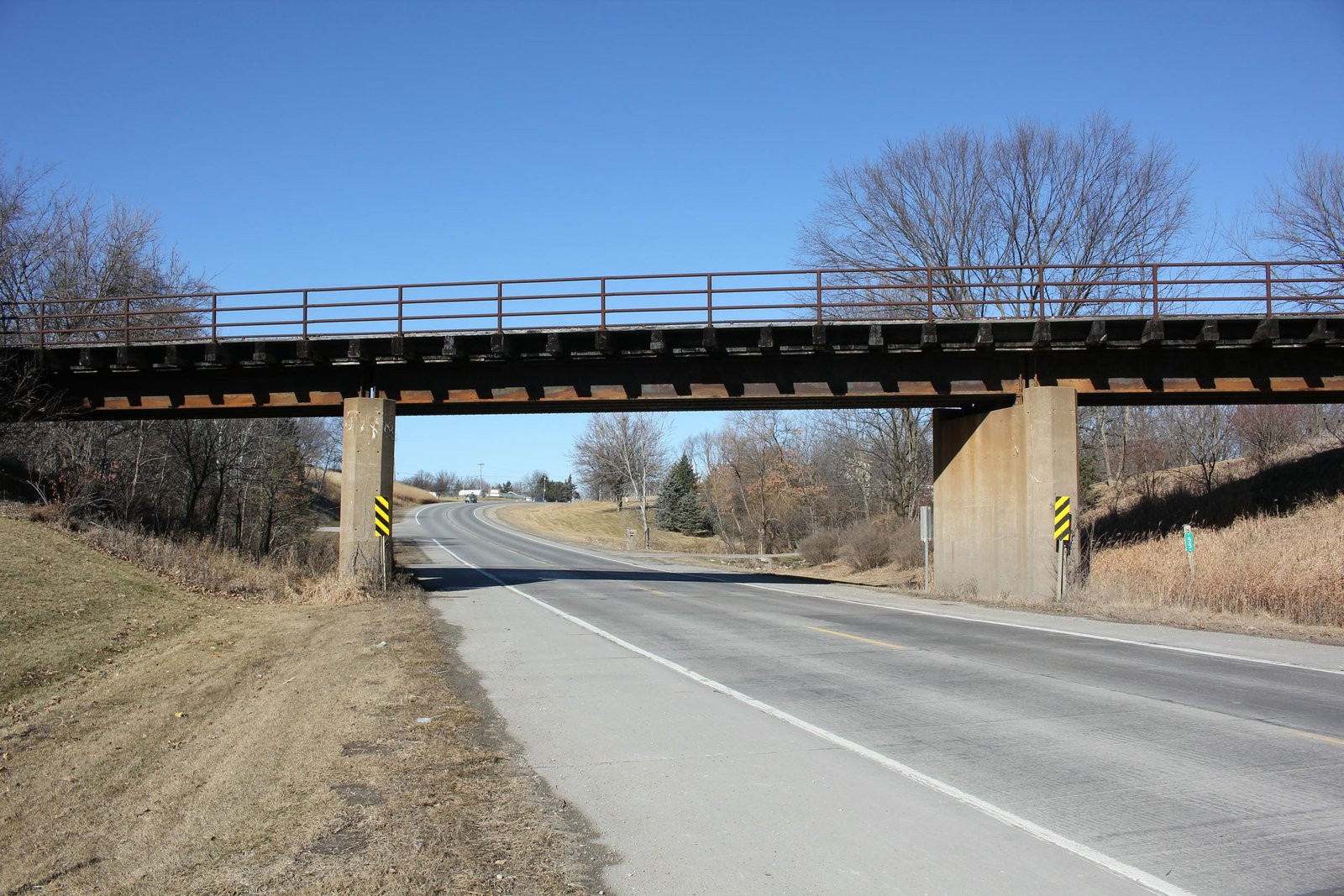
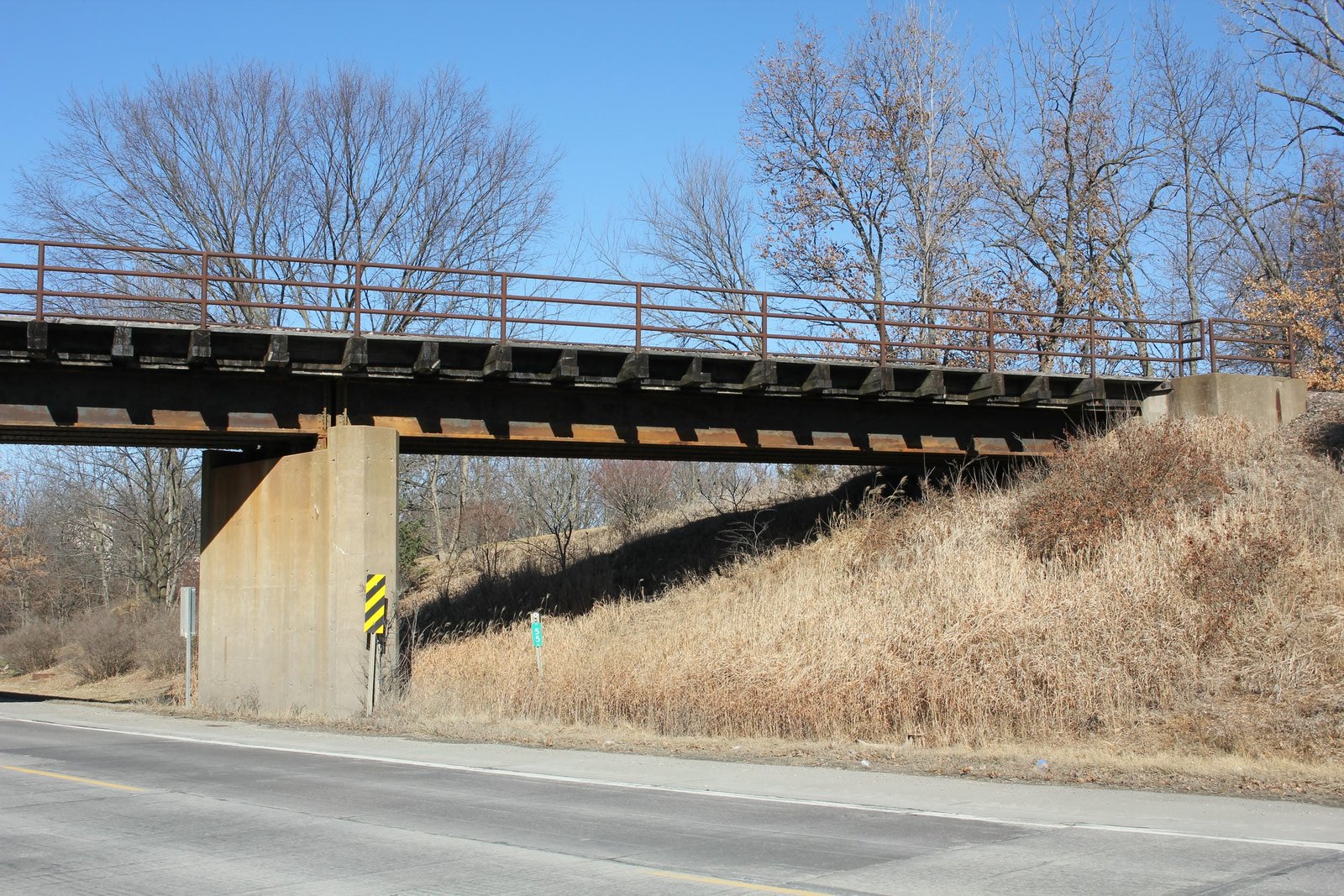
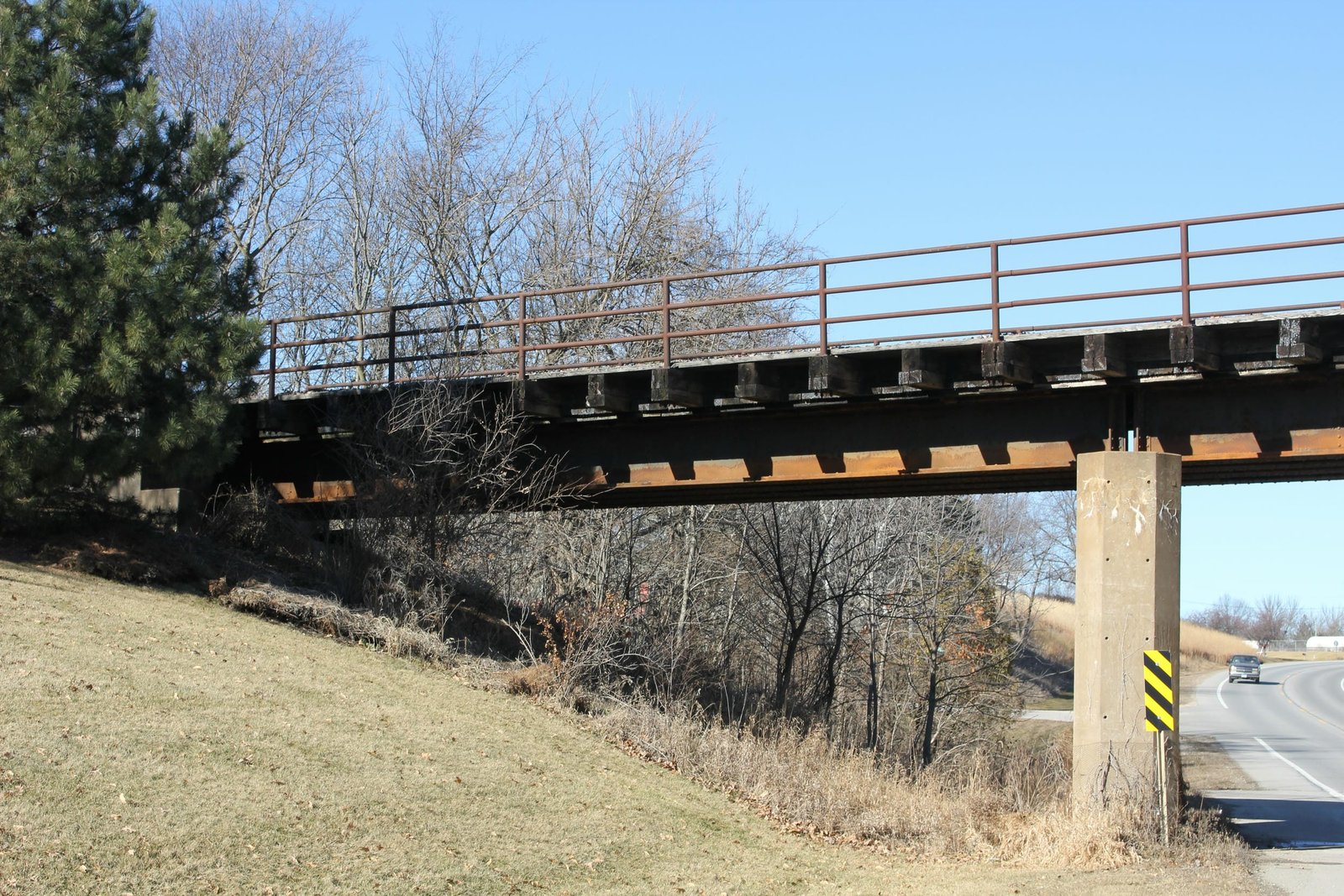
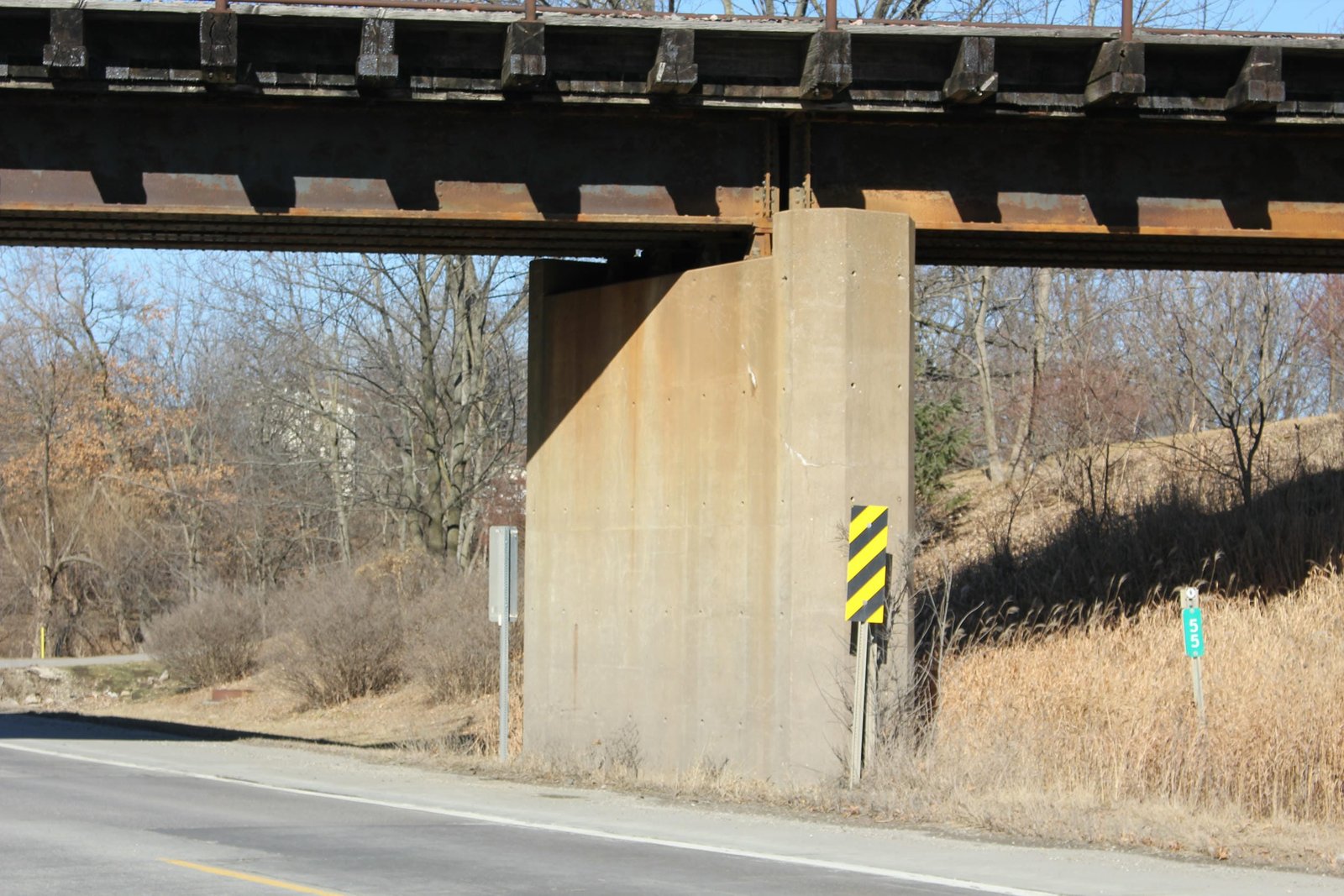
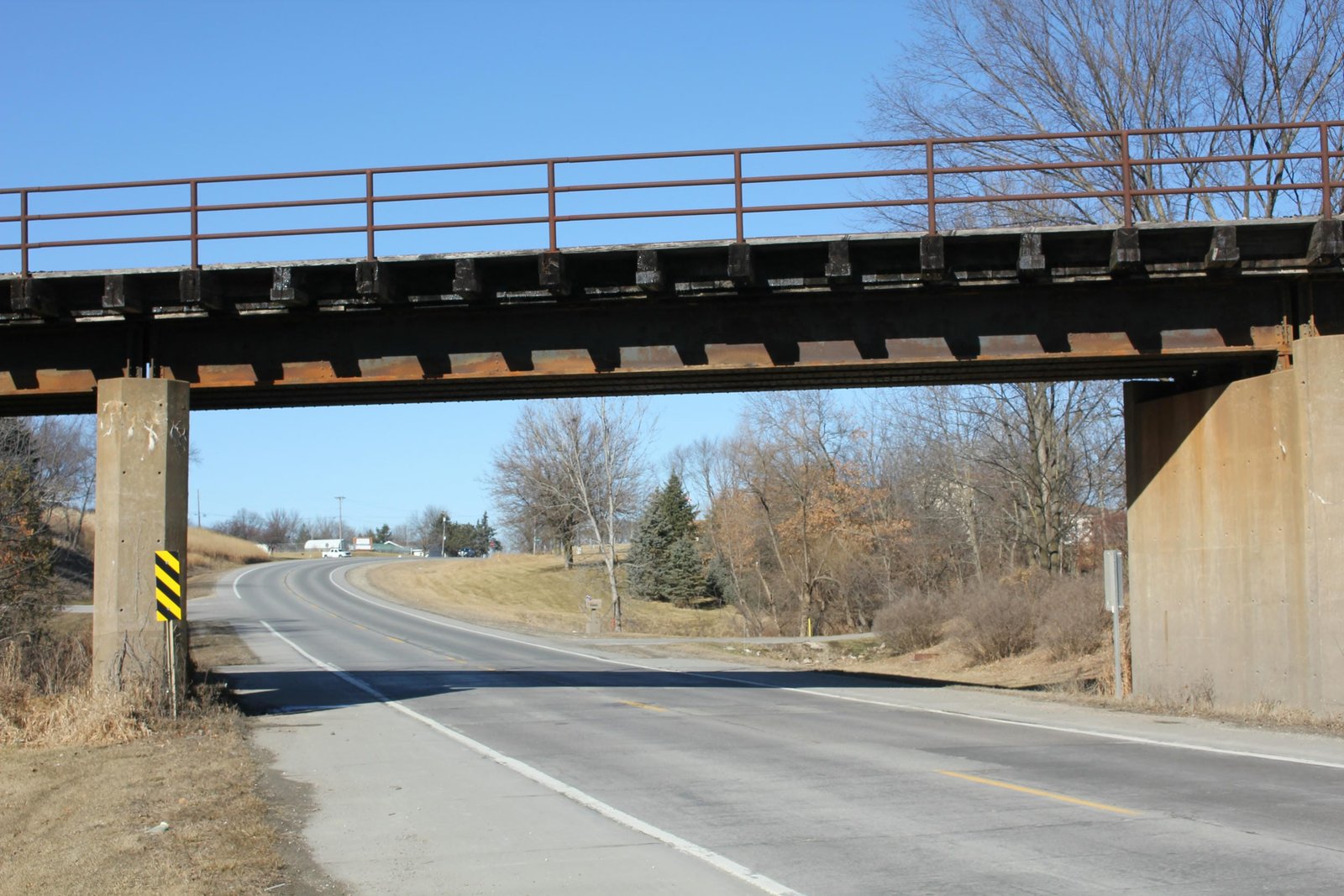
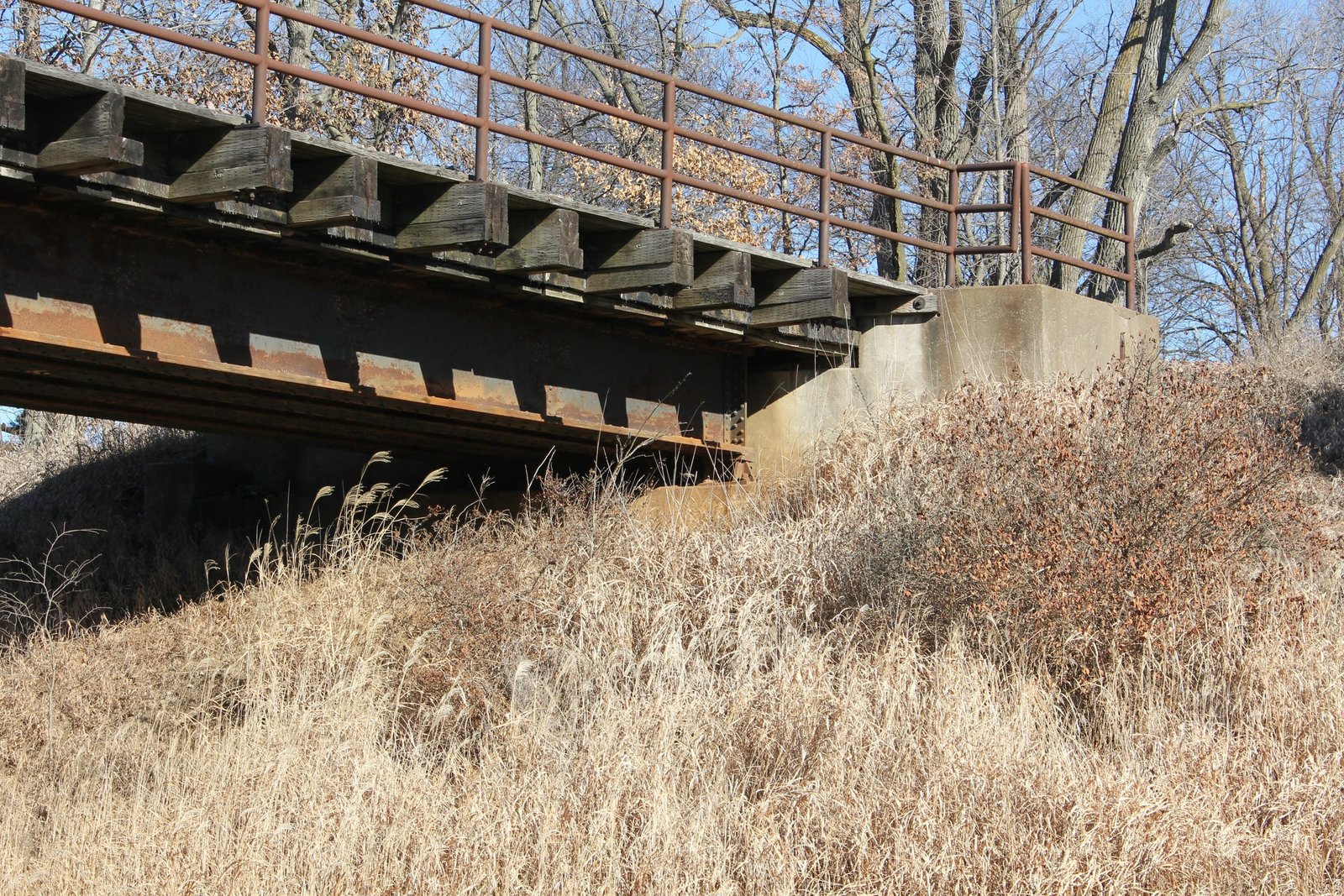
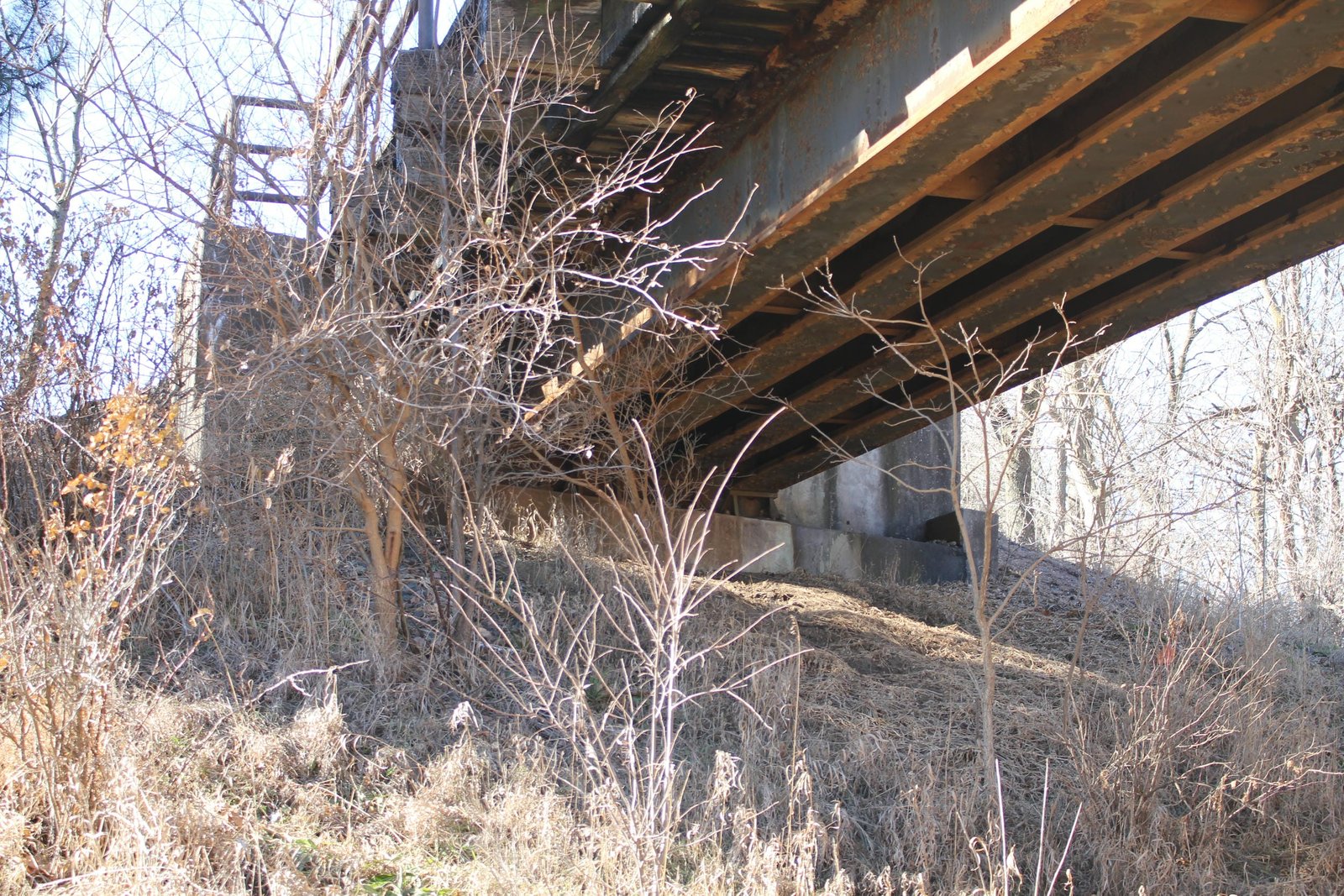
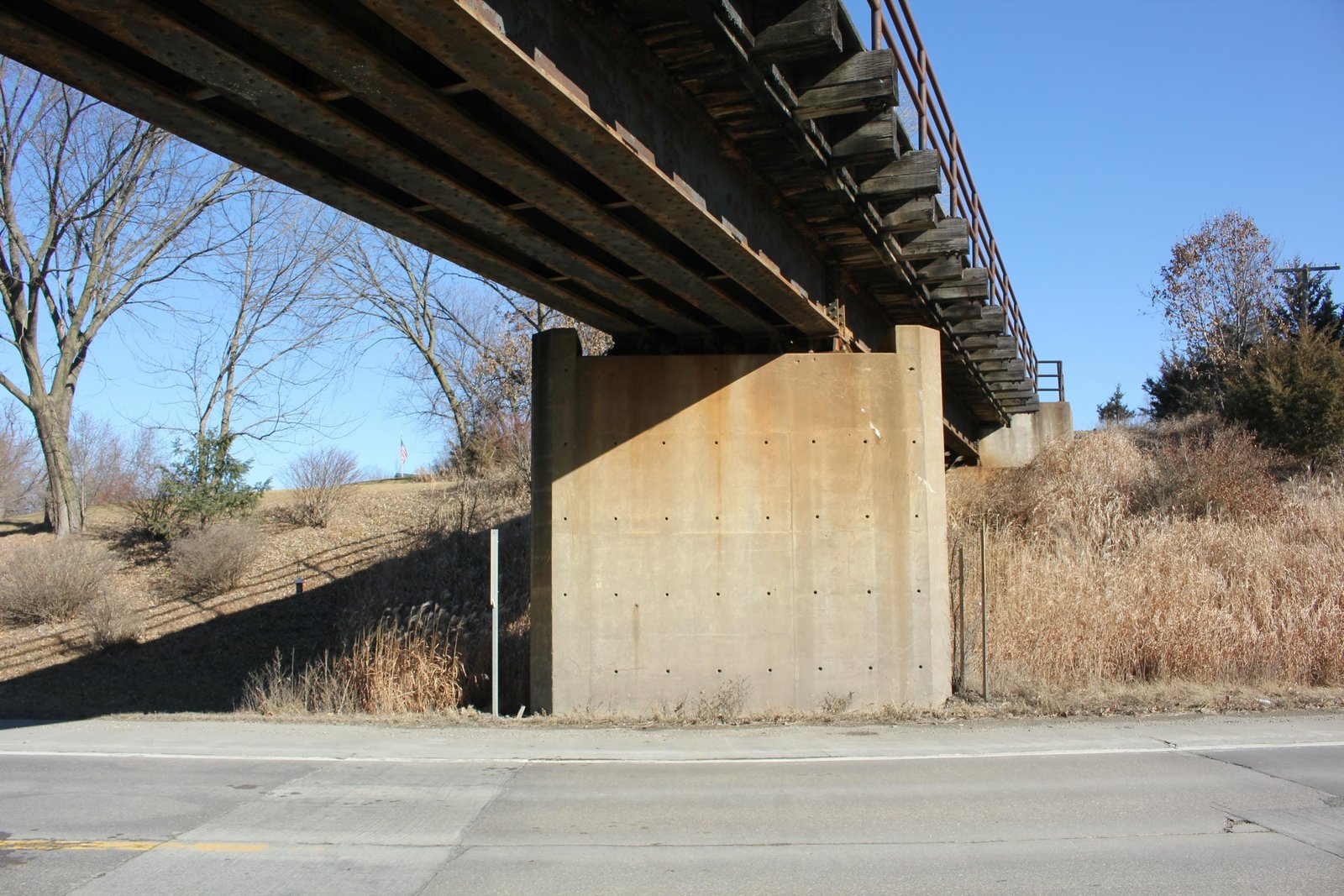
Located on the southwest side of Washington, this steel stringer bridge carries a former Chicago, Milwaukee, St. Paul & Pacific Railroad (Milwaukee Road) mainline over Iowa Highways 1 and 92 (Madison Street). Originally, the highways ran through downtown Washington, crossing under the Milwaukee Road tracks at 2nd Avenue. By the mid-1950s, this arrangement was no longer suitable, and it was decided to relocate the roadway to bypass Washington. Contracts for the project were awarded in early June 1955, and work began soon after. Currently, the bridge consists of three 52-foot steel stringer spans, set onto concrete substructures and running at a slight skew. The superstructure follows a standard design, with four shallow beams per span covered by a ballast deck. The substructure also follows a standard design, with rectangular piers and abutments. An unknown contractor fabricated the superstructure, while the substructure was constructed by the Schmidt Construction Company. Steel stringer spans were popular for railroad use, as they were durable and easy to construct. Since the initial construction, the bridge has seen no significant alterations, and remains in regular use. Overall, the bridge appears to be in fair to good condition, with no significant deterioration noted. The author has ranked this bridge as being minimally significant, due to the common design and newer age.
Citations
| Build date and builder (substructure) | Washington Evening Journal; June 2, 1955 |
| Railroad History Citation | ICC Valuation Information, Compiled by Richard S. Steele |