
Click the photo to view the full-size version
| Name | CPKC N. Fork Long Creek Bridge Chicago, Rock Island & Pacific Railroad Bridge #2408 |
| Built By | Chicago, Rock Island & Pacific Railway |
| Currently Owned By | Canadian Pacific Kansas City Limited |
| Superstructure Contractor | American Bridge Company of New York |
| Substructure Contractor | Unknown |
| Length | 63 Feet Total |
| Width | 1 Track |
| Height Above Ground | 15 Feet (Estimated) |
| Superstructure Design | Deck Plate Girder |
| Substructure Design | Stone Masonry and Concrete |
| Date Built | 1912 |
| Traffic Count | 10 Trains/Day (Estimated) |
| Current Status | In Use |
| Chicago, Rock Island & Pacific Railroad Bridge Number | 2408 |
| Significance | Local Significance |
| Documentation Date | 1/27/2018 |
In 1856, the Mississippi and Missouri Rail Road Company (M&M) constructed a 12-mile railroad line, extending from Wilton, Iowa to Muscatine, Iowa. In 1859, the line was extended an additional 35 miles to Washington, Iowa. In 1866, the M&M and the Chicago and Rock Island Rail Road Company (C&RI) merged to form the Chicago, Rock Island & Pacific Railroad (Rock Island). Between 1869 and 1870, the Chicago & South Western Railway (C&SW) constructed an additional 268 miles of railroad, extending from Washington, Iowa to Stillings Junction, Missouri (opposite of Leavenworth, Kansas). The C&SW became part of the Iowa Southern & Missouri Northern Railroad (IS&MN) in 1876, and the IS&MN and Rock Island were consolidated to form the Chicago, Rock Island & Pacific Railway (Rock Island) in 1880. In 1881, the Rock Island completed an additional 26 miles of railroad, extending from Davenport, Iowa to Muscatine. The Rock Island had constructed and acquired a large railroad network in the central United States during the late 19th Century. This line formed one of the principal mainlines, connecting the eastern and western portions of the system. In 1931, a new cutoff was constructed between Trenton, Missouri and Kansas City, reducing the importance of the western section of this line. The segment between Wilton and Muscatine was abandoned in 1934 in favor of the Davenport-Muscatine line. Between 1944 and 1948, almost the entire line between Washington and Centerville, Iowa was rebuilt on a new alignment. The new line instead turned southwest at Ainsworth, roughly paralleling the old route on a straighter and flatter alignment. With the exception of the line between Ainsworth and Washington and a short spur into Centerville, the entirety of the old line was abandoned.
The Rock Island struggled financially throughout much of its history, experiencing repeated bankruptcies and chronic instability. After World War II, the Rock Island struggled to survive, proposing mergers and deferring maintenance on their routes. The railroad reorganized as the Chicago, Rock Island & Pacific Railroad in 1948. Further improvements were made in 1950, when portions between Centerville and Allerton, Iowa were realigned. The segment from Trenton to Stillings Junction was abandoned in approximately 1973. By the mid-1970s, the railroad was in serious decline. The railroad secured loans to eliminate slow orders, acquired new equipment, and attempted to restore profitability. Several sections of this line had fallen into serious disrepair, hampering the Rock Islands ability to maintain efficient operations. In 1978, the railroad came close to profit, but creditors were lobbying for a complete shutdown of the Rock Island. During the fall of 1979, a strike crippled the railroad, and by January of 1980, the entire system was ordered to be shut down and liquidated. Many of the lines and equipment were scrapped. Profitable sections of railroad were prepared for sale.
The segment between Davenport and Washington was sold to the Chicago, Milwaukee, St. Paul & Pacific Railroad (Milwaukee Road) in 1981 to replace their line between Muscatine and Washington. The segment between Allerton and Trenton was sold to the Chicago & North Western Railway (C&NW) in 1981 as part of a sale for the St. Paul-Kansas City "Spine Line". A short segment southeast of Centerville was sold to the Appanoose County Community Railroad (APNC) in 1984. The remainder of the line between Ainsworth and Allerton was abandoned. In the early 1980s, both the Milwaukee Road and C&NW made improvements to deteriorated Rock Island track on their purchased segments. By 1985, a suitor for the struggling Milwaukee Road was being sought, and the Soo Line Railroad, controlled by Canadian Pacific Railway (CP) purchased the Milwaukee Road in 1986. In 1995, Union Pacific Railroad (UP) purchased the C&NW. In 2016, the APNC was purchased by the Iowa Southern Railway (ISRY), which is operated by Progressive Rail. CP merged with Kansas City Southern Railway in 2023 to form CPKC. Today, CPKC operates the Davenport to Washington segment of this line as part of the Ottumwa Subdivision; UP operates the Allerton to Trenton portion of this line as part of the Trenton Subdivision and ISRY continues to operate a short segment of track near Centerville. The remainder of the line has been reverted to adjacent landowners.
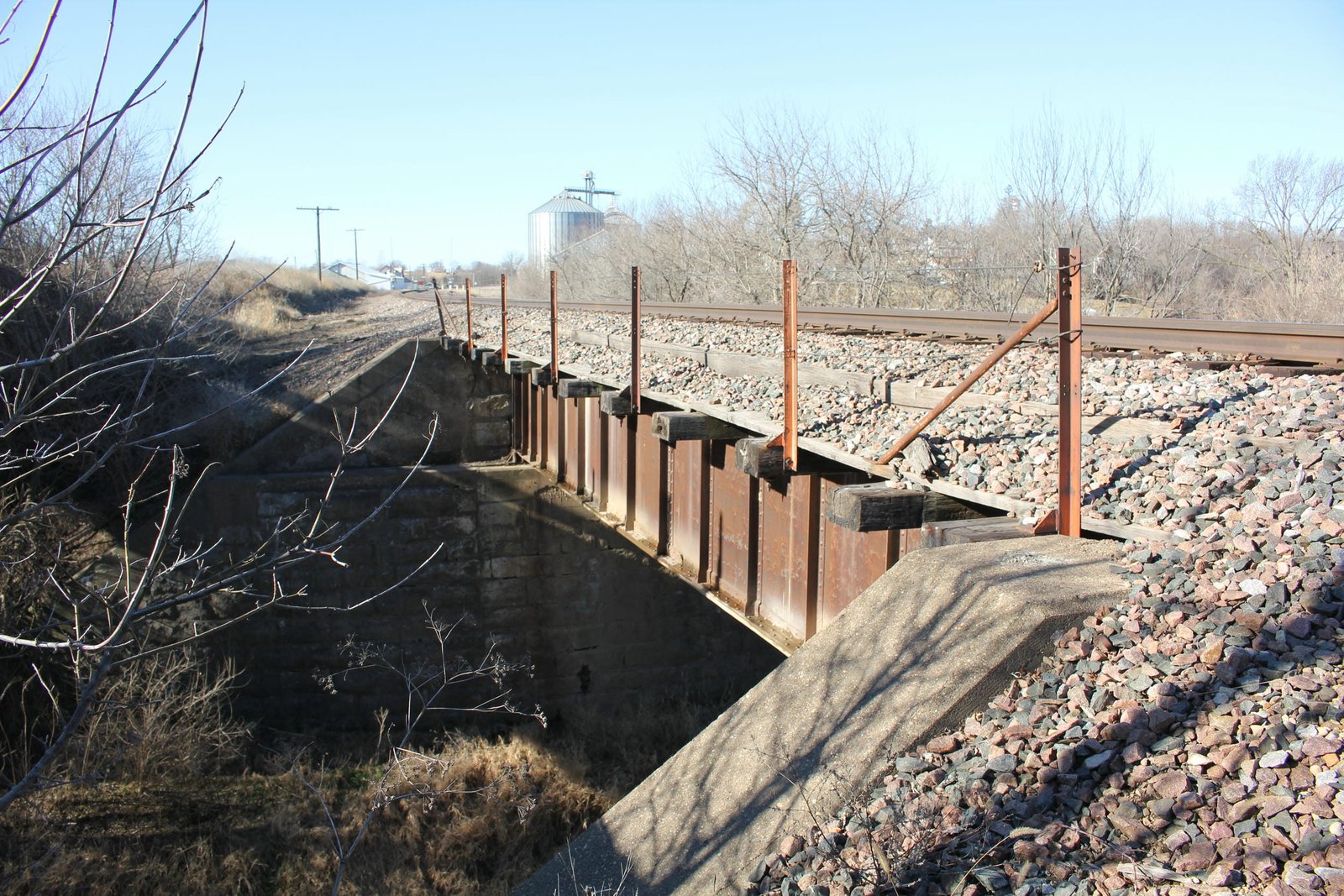
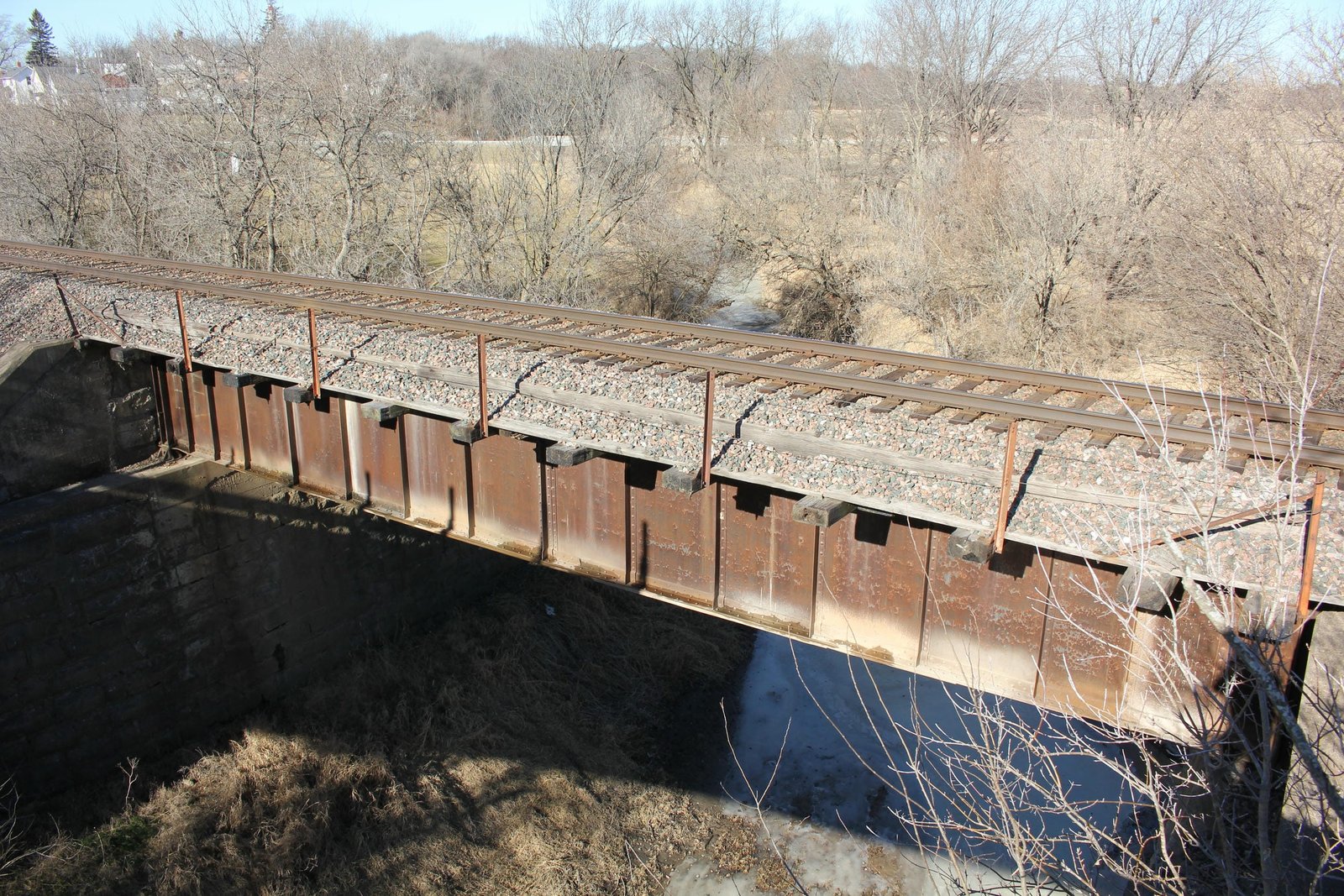
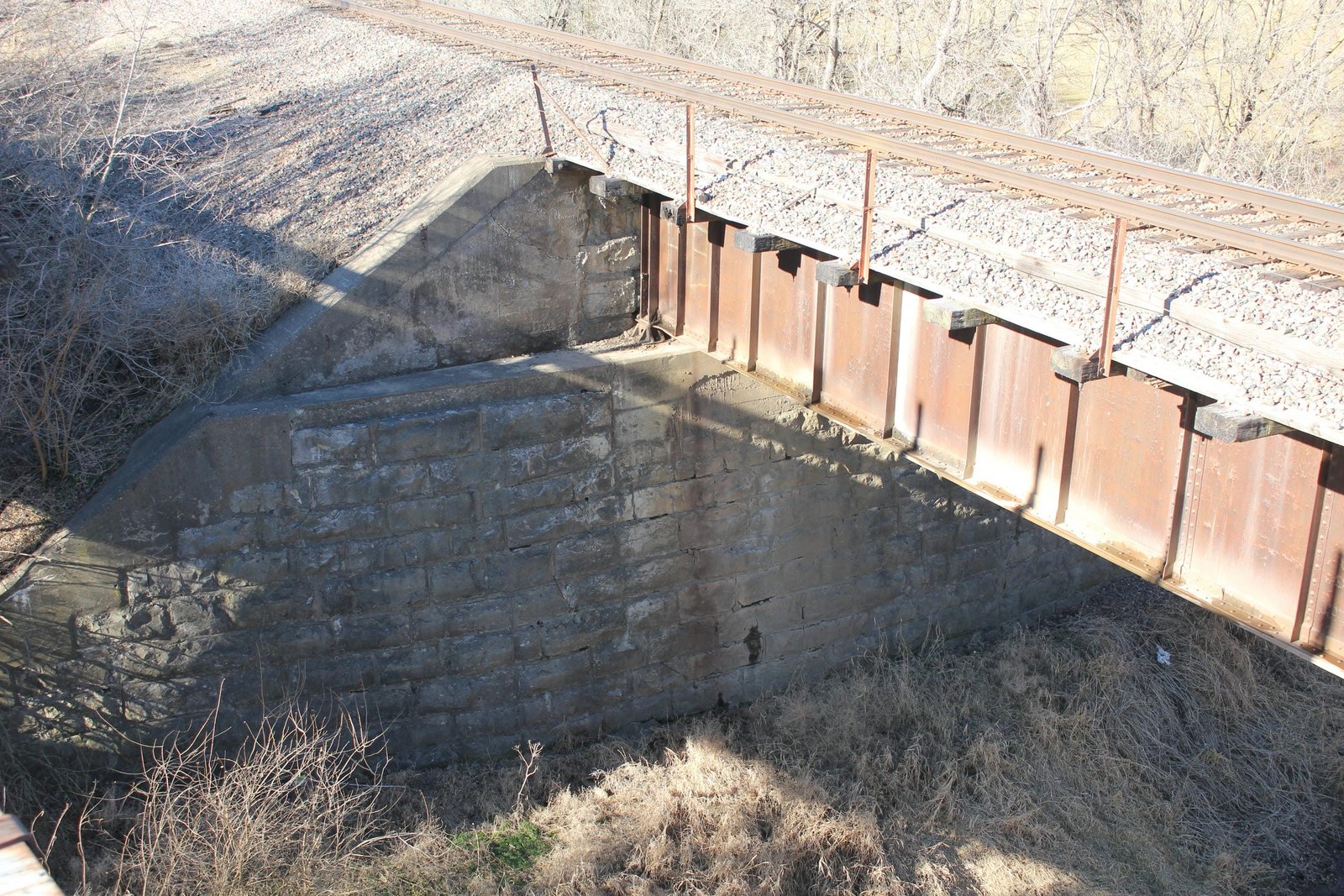
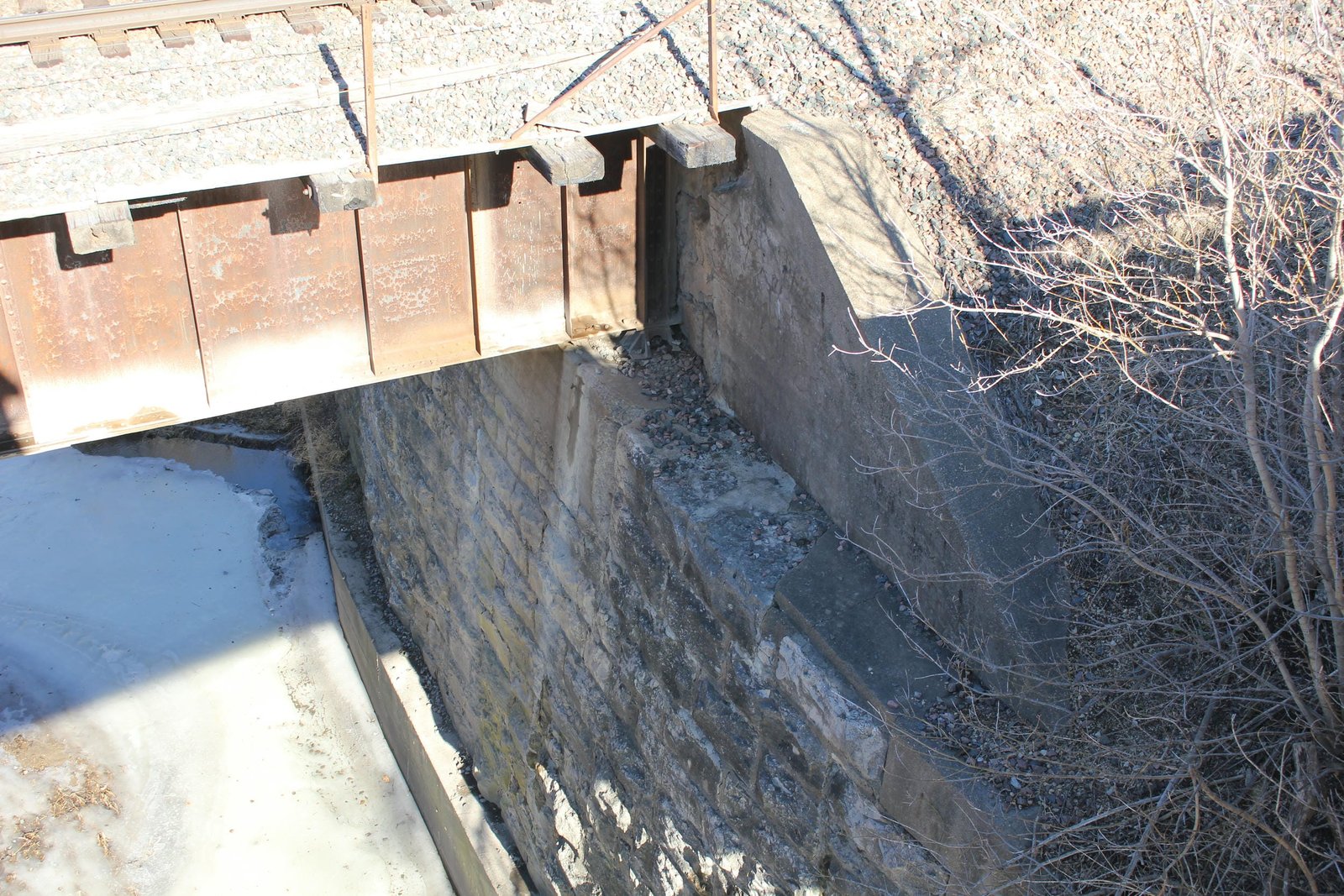
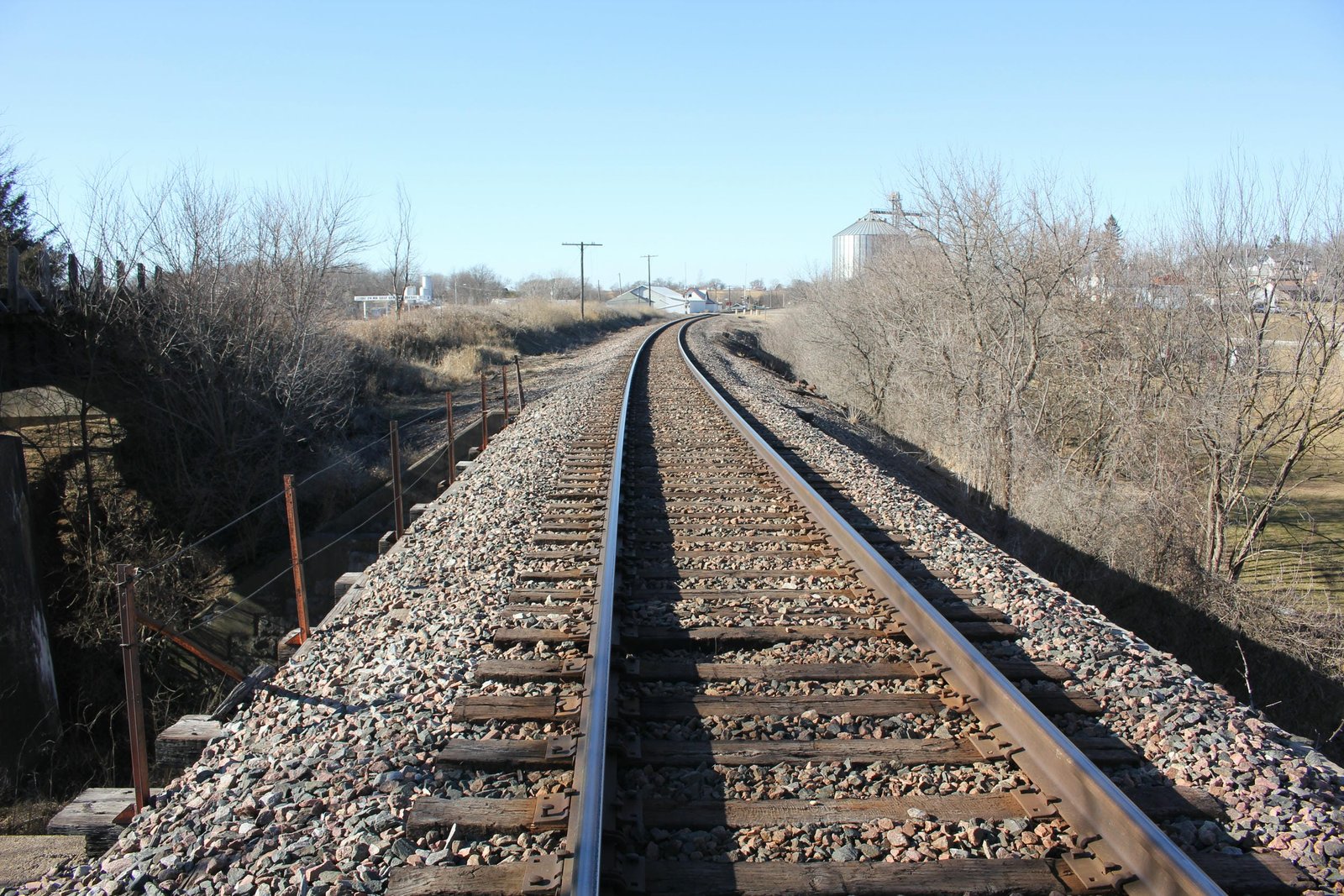
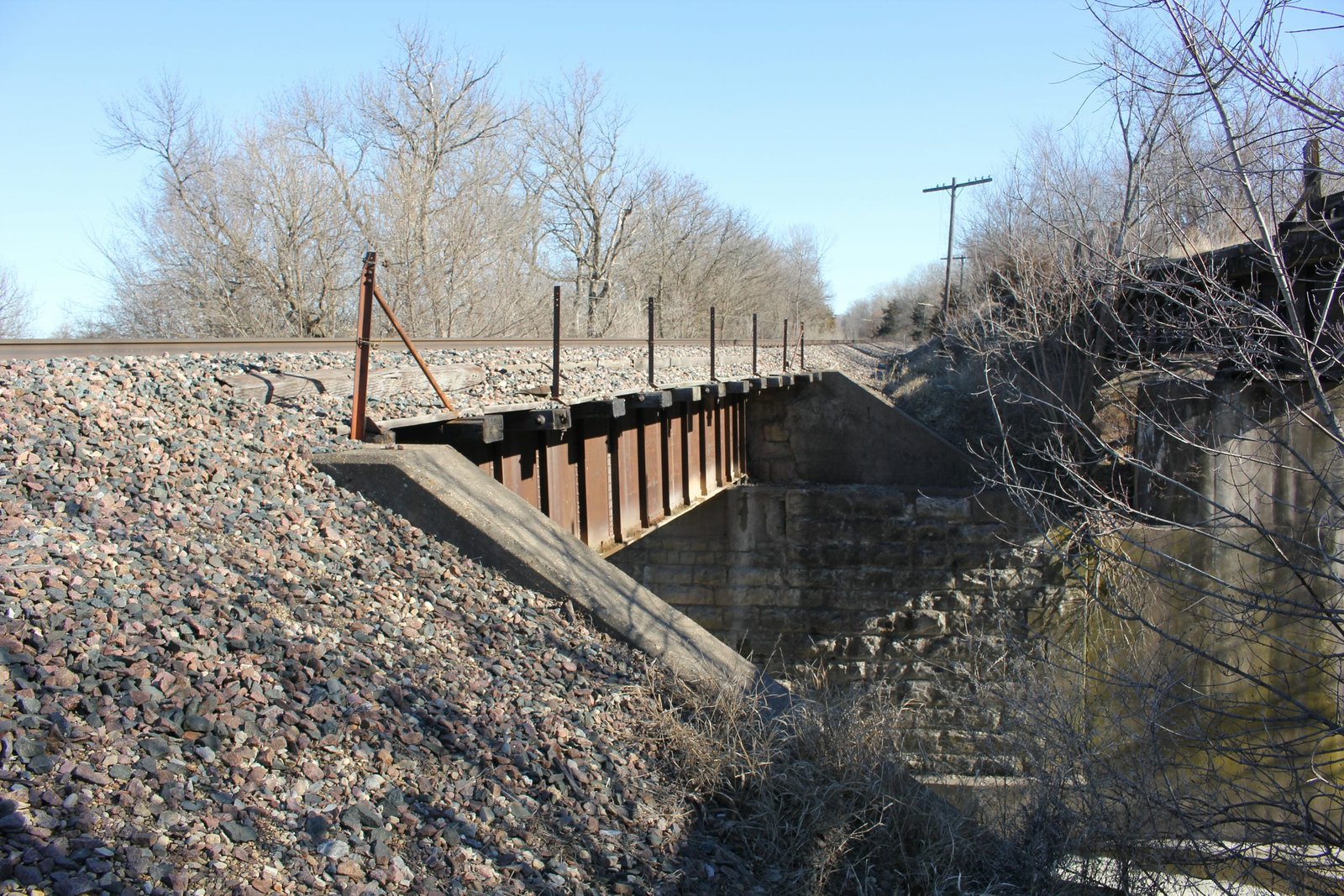
Located on the east side of Ainsworth, this bridge is the northern of two parallel bridges carrying a former Chicago, Rock Island & Pacific Railroad (Rock Island) mainline over North Fork Long Creek. The first bridge at this location was likely a timber pile trestle bridge, constructed when the line was first built. At some point in the 1870s or 1880s, the timber bridge was replaced with an iron bridge set onto new stone abutments. It is unclear what type of bridge this may have been, although it is possible that it was an iron girder or an iron deck truss. In 1912, the bridge was replaced by the present structure. Currently, the bridge consists of a 63-foot deck plate girder span, set onto stone and concrete abutments. The superstructure follows a standard design, with two heavy plate girders covered by a timber ballast deck. The substructure also follows a standard design, with stepped wing walls extending perpendicularly from the bridge. When the current structure was built, concrete additions were added to the top of the abutments, giving the abutments sloped wing walls. Stone for the abutments consists of a tan limestone, quarried at an unknown location. American Bridge Company fabricated the superstructure, while the substructure was constructed by unknown contractors. While the bridge originally served the Rock Island mainline, it was bypassed in 1947 by a new bridge, constructed as part of a realignment project. Between 1947 and 1982, the bridge served a Rock Island branch line, until the Milwaukee Road acquired this section of track. Since the initial construction, the bridge has seen no significant alterations, and remains in regular use. Overall, the bridge appears to be in fair to good condition, with no significant deterioration noted. The author has ranked this bridge as being locally significant, due to the common design.
Citations
| Build date | Chicago, Rock Island & Pacific Railway Valuation Engineering Field Notes at the National Archives |
| Builder (superstructure) | Missing American Bridge Company plaque |
| Railroad History Citation | ICC Valuation Information, Compiled by Richard S. Steele |