
Click the photo to view the full-size version
| Name | Bass Point Creek High Bridge |
| Built By | Fort Dodge, Des Moines & Southern Railroad |
| Currently Owned By | Boone and Scenic Valley Railroad |
| Superstructure Contractor | American Bridge Company of New York |
| Substructure Contractor | Albert W. Merrick of Boone, Iowa |
| Consulting Engineer | William M. Hughes |
| Length | 784 Feet Total, 80 Foot Largest Spans |
| Width | 1 Track |
| Height Above Ground | 156 Feet |
| Superstructure Design | Deck Plate Girder |
| Substructure Design | Concrete and Steel Tower |
| Date Built | 1913 |
| Traffic Count | 2 Trains/Day (Estimated) |
| Current Status | In Use |
| Significance | Regional Significance |
| Documentation Date | 10/22/2017 |
In the late 19th and early 20th Centuries, electric interurban railways became popular throughout the United States, particularly in suburban and rural areas. In rural areas, the interurban represented a reliable form of transportation, independent of the steam railroads. Unlike other interurbans in the United States, the Fort Dodge, Des Moines and Southern Railroad (FDDM&S) began as a series of small coal hauling railroads in central Iowa. In 1876, the Crooked Creek Railroad (CCR) constructed a short narrow gauge line, extending from the Dubuque & Sioux City Railroad (Illinois Central Railroad) mainline east of Fort Dodge, Iowa to coal mines near Lehigh, Iowa. In 1886, the Webster City & Southwestern Railroad (WC&SW) constructed a 14-mile line between the CCR near Lehigh and Webster City, Iowa, and the CCR was standard gauged at this time. The WC&SW purchased by the CCR in 1890 to streamline operations. In 1893, the Boone Valley Coal & Railway Company (BVCRC) constructed a short line, extending from Fraser, Iowa to the Minneapolis & St. Louis Railway west of Fraser. The owners of the BVCRC charted the Marshalltown & Dakota Railway (M&D) in 1899 to further expand the coal line. A segment between Fraser and Gowrie, Iowa was completed that year. The railroad was renamed the Newton & Northwestern (N&NW) in 1902. A large segment between Newton, Iowa and Rockwell City, Iowa (using the Fraser to Gowrie line); as well as a branch to Colfax, Iowa were opened in 1905. The railroad was sold to new owners in 1905, and renamed the Fort Dodge, Des Moines and Southern Railroad (FDDM&S).
After the FDDM&S was formed, the new owners realized the potential In 1906, the FDDM&S purchased the Ames & College Street Railway (A&C); and constructed a new mainline into Ames. The A&C had been constructed between 1890 and 1891 to connect downtown Ames to the Iowa State University campus. Electrified lines were opened between Des Moines and Midvale, Iowa and between Boxholm, Iowa and Fort Dodge in 1907. In 1911, the Midvale to Newton line was abandoned, rendering much of the system electrified. Also in 1911, a segment of the line near Ankeny, Iowa was relocated to be roughly parallel to the existing Chicago & North Western Railway (C&NW) line and better serve interchange partners. The original line south of Ankeny was abandoned the next year. In 1916, the CCR was formally purchased by the FDDM&S. A short segment between Fort Dodge and Brushy, Iowa was opened in 1917 to serve gypsum mines in the area. The FDDM&S was successful during the early 20th Century, due to its many steam railroad interchange partners and focus on both passenger service and freight. In 1930, the FDDM&S entered receivership, and reemerged as the Fort Dodge, Des Moines & Southern Railway (FDDM&S) in 1942.
By the mid-20th Century, operations over the railroad were beginning to slow down. In 1954, the FDDM&S fell under control of the Des Moines & Central Iowa Railway (DCI), and in 1955 passenger service ended and the line was converted to diesel locomotives. In 1962, the lines towards Lehigh were abandoned. In 1965, the Gowrie to Rockwell City segment and the Ames branch were abandoned. In 1968, the FDDM&S and DCI were acquired by the C&NW. The C&NW operated parallel tracks at many points, rendering the FDDM&S lines excess. The Boxholm to Gowrie segment was abandoned in 1972, and the Webster City branch was abandoned in 1979. In 1983, the C&NW sought to abandon the remainder of the line, except for a short segment on the north side of Des Moines. A 12-mile section between Boone and Fraser Junction was sold to a private group in 1983, and the Boone & Scenic Valley Railroad (B&SV) was formed to begin tourist operations over the line. In 1995, the C&NW was purchased by Union Pacific Railroad (UP). Today, the B&SV continues to be a major attraction as a tourist railroad, and operates the segment between Boone and Fraser Junction. UP still owns segments on the north side of Des Moines and east side of Fort Dodge. The remainder of the line has been abandoned and largely reverted to adjacent property owners.
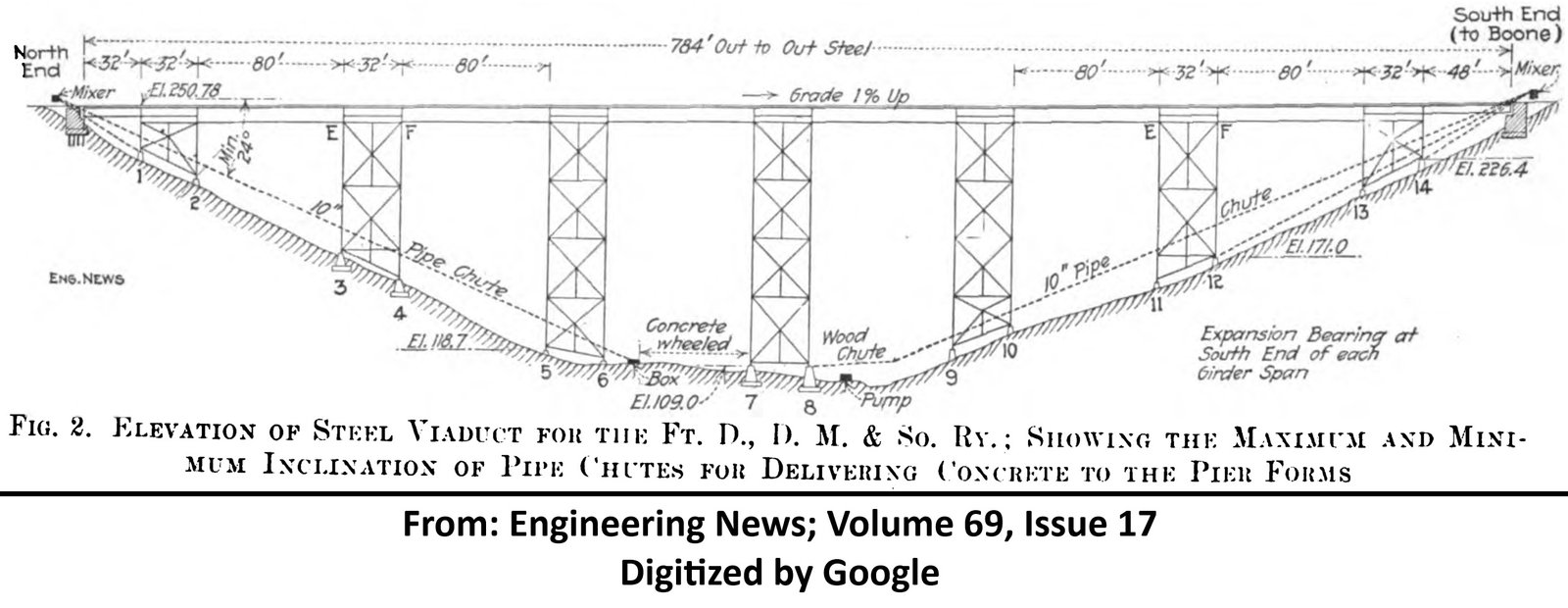
View a historic article discussing the construction of this bridge (digitized by Google)
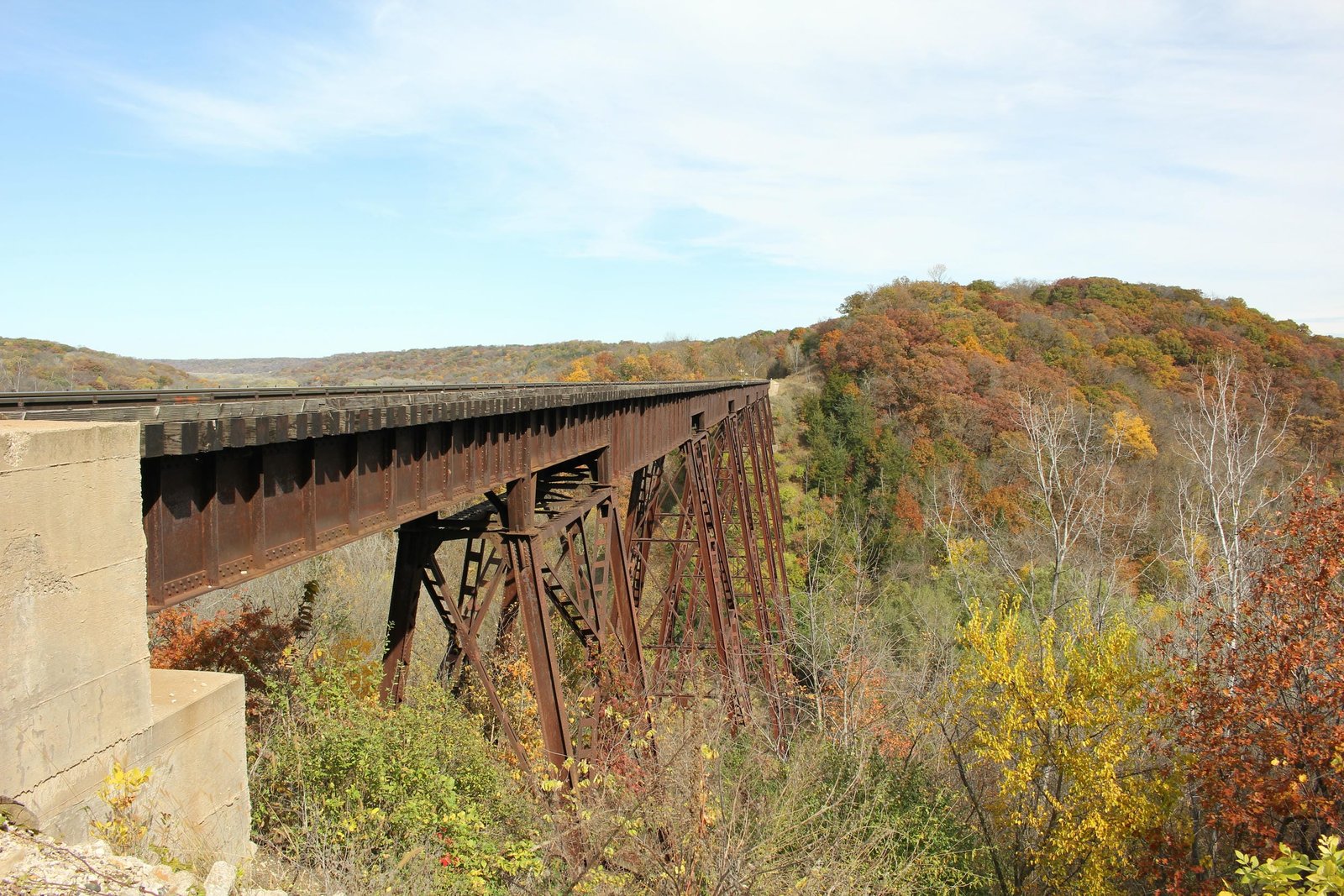
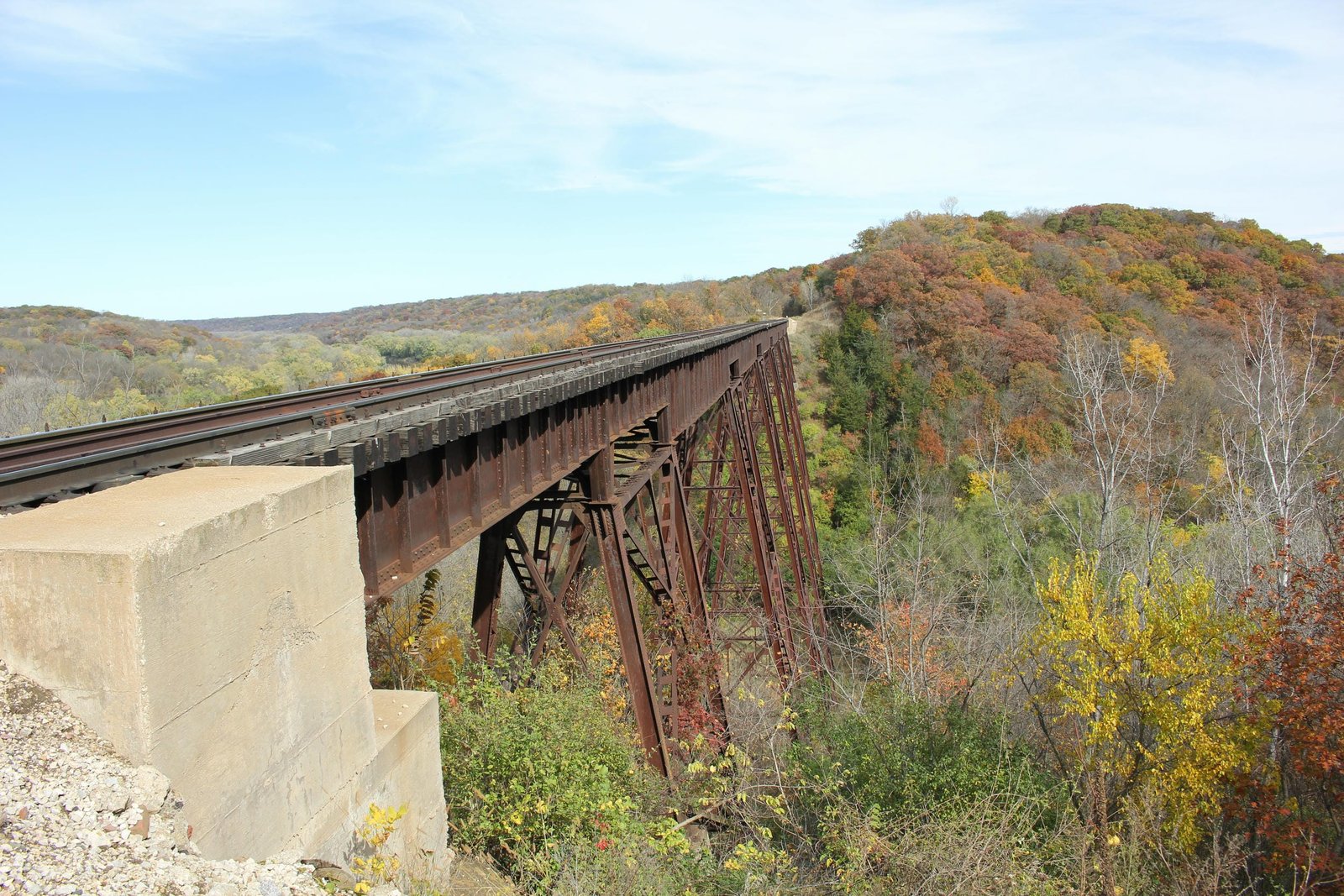
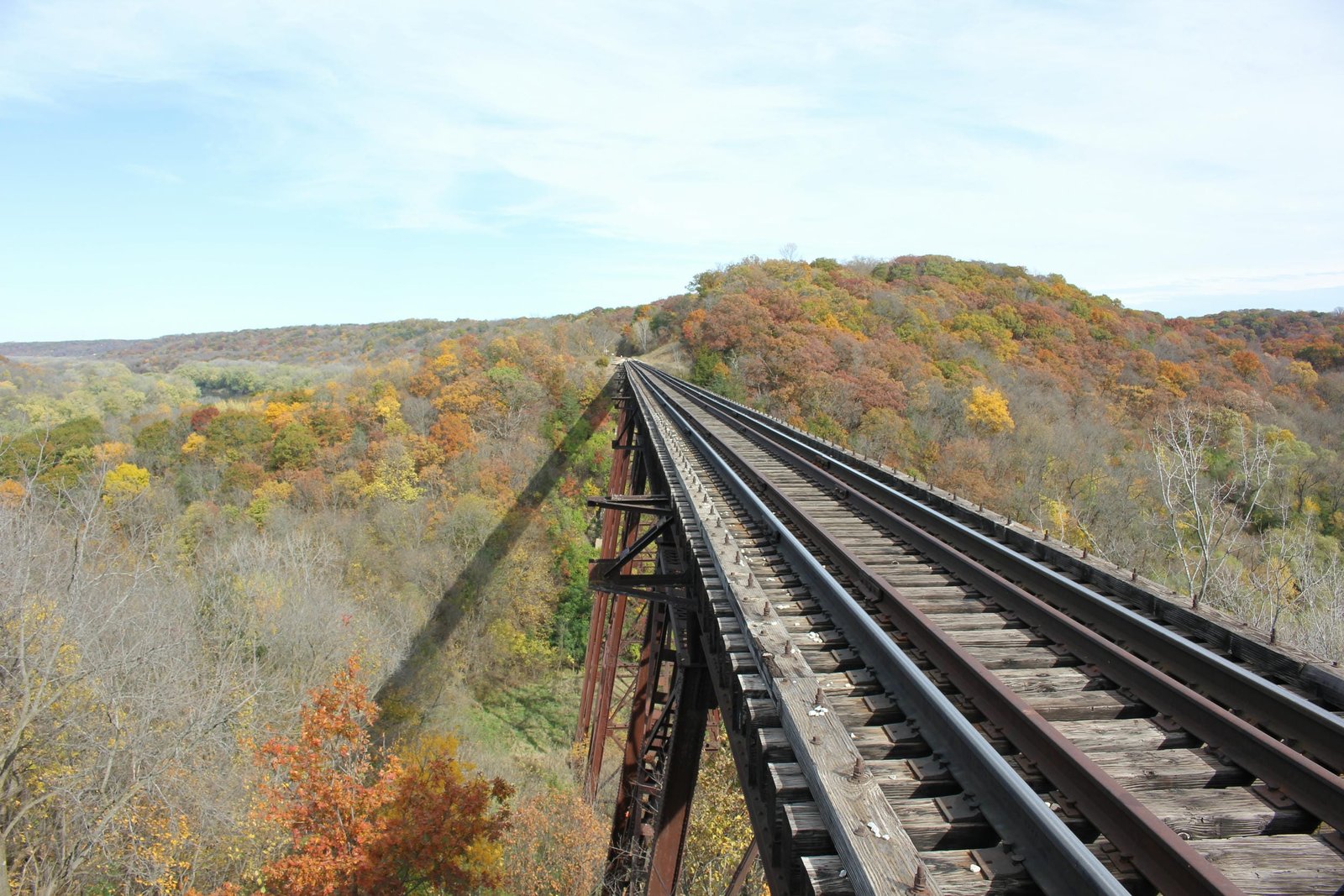
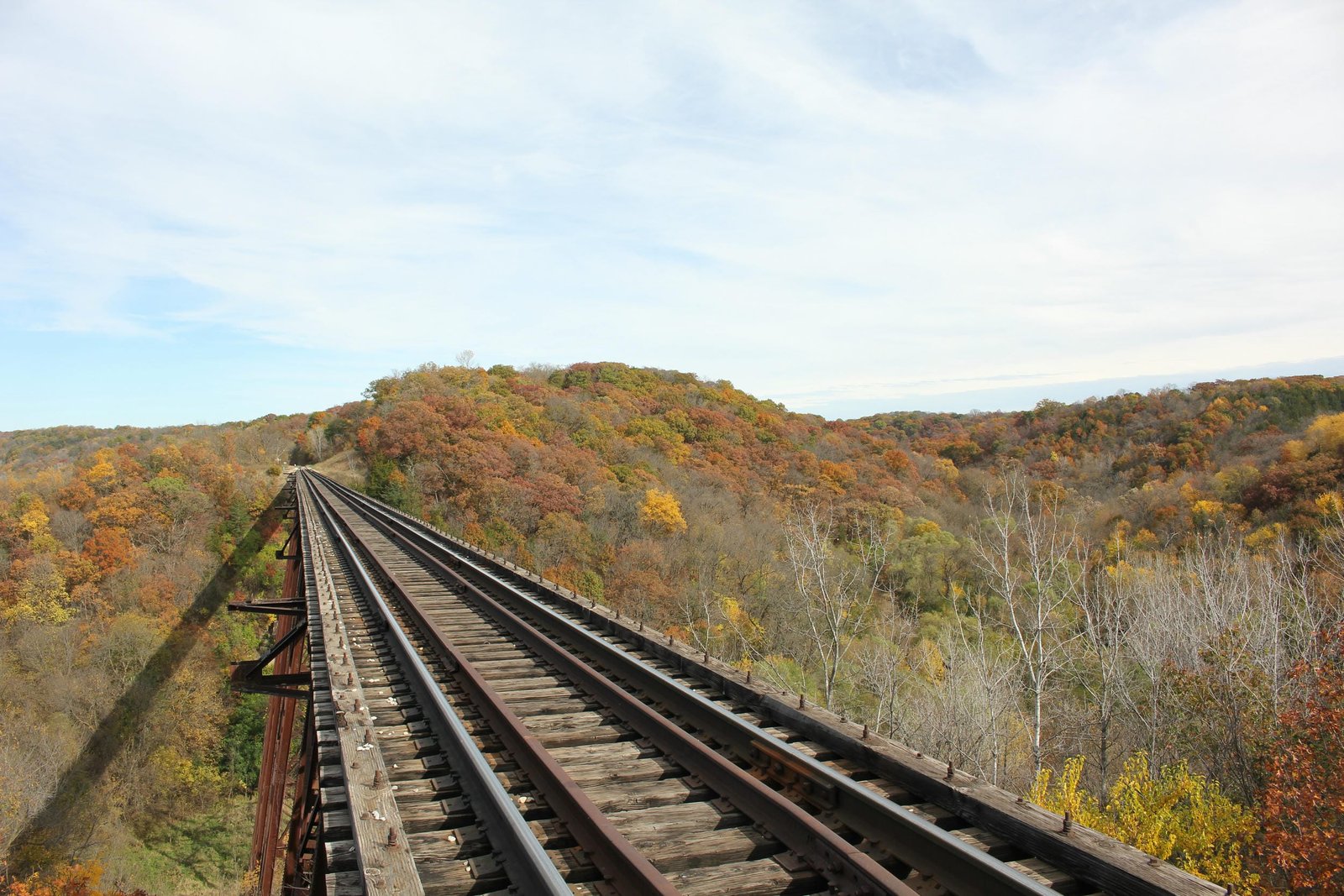
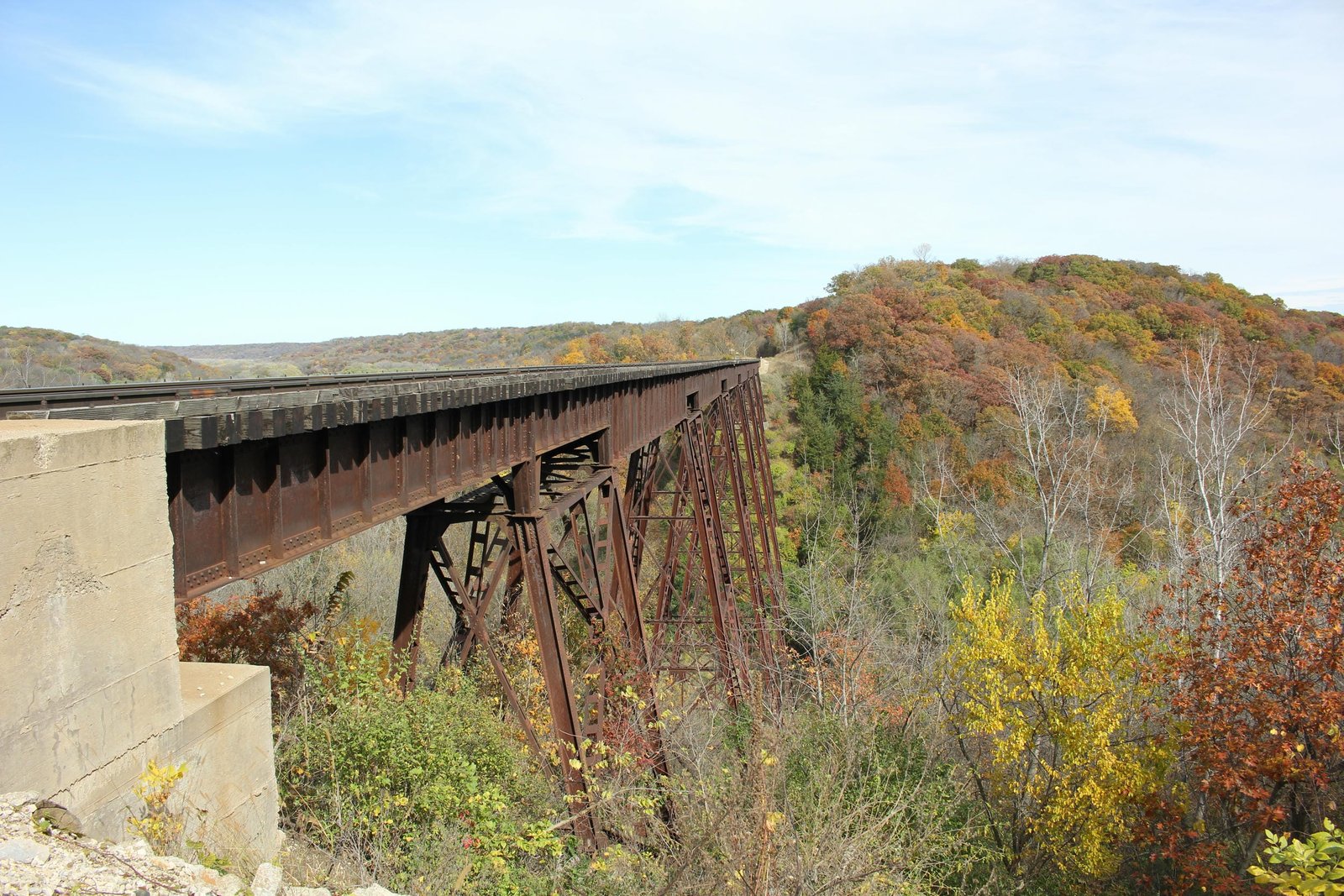
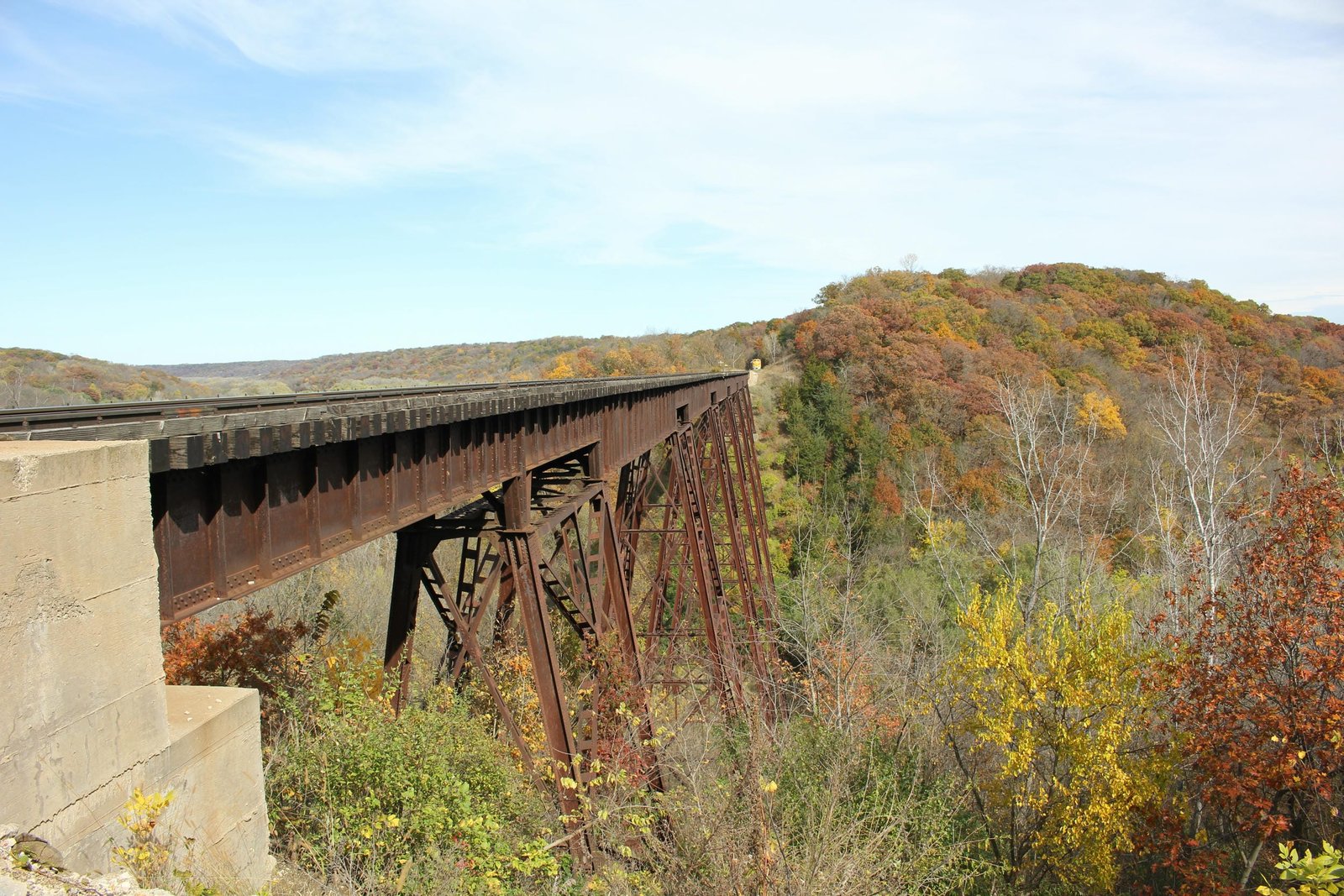
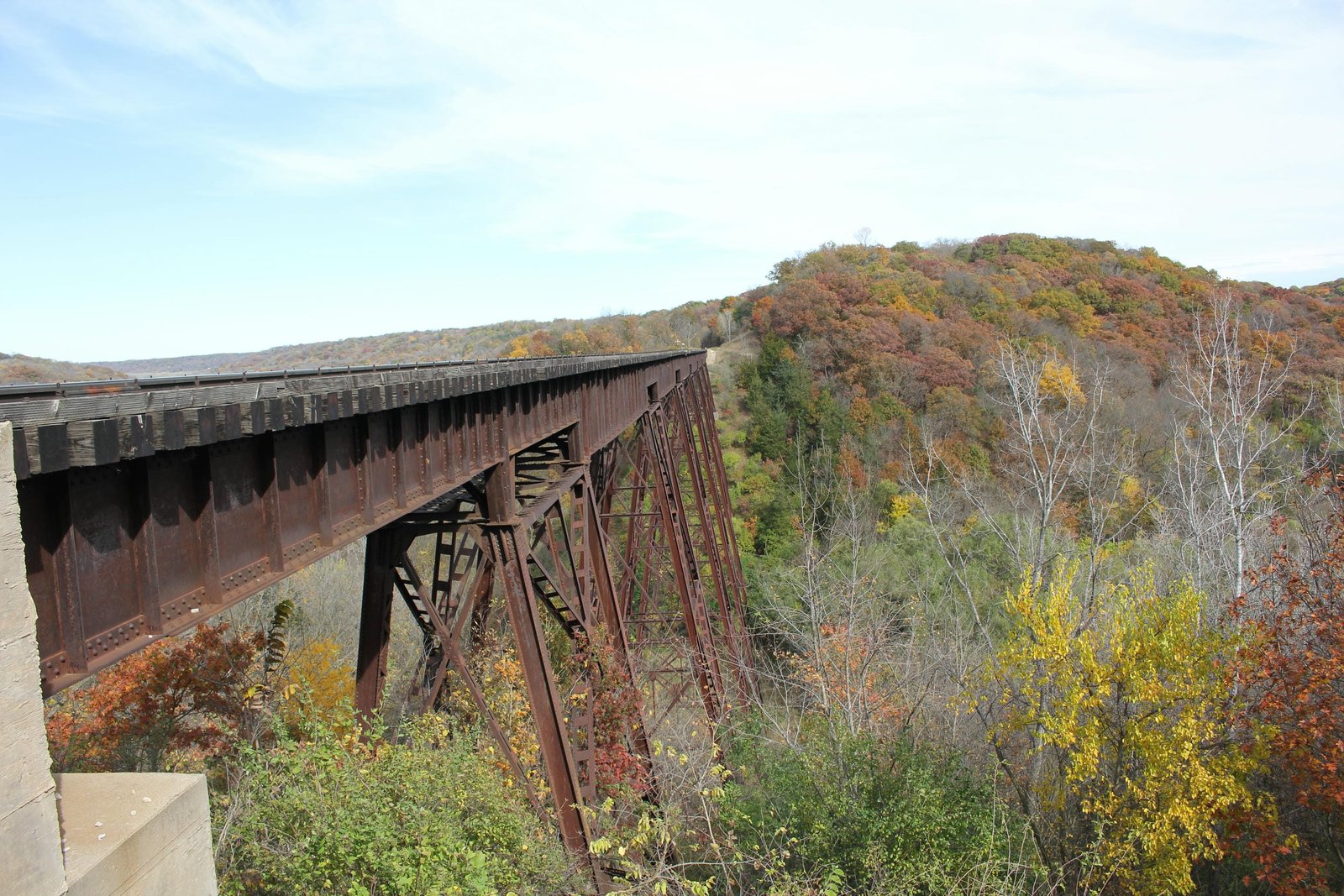
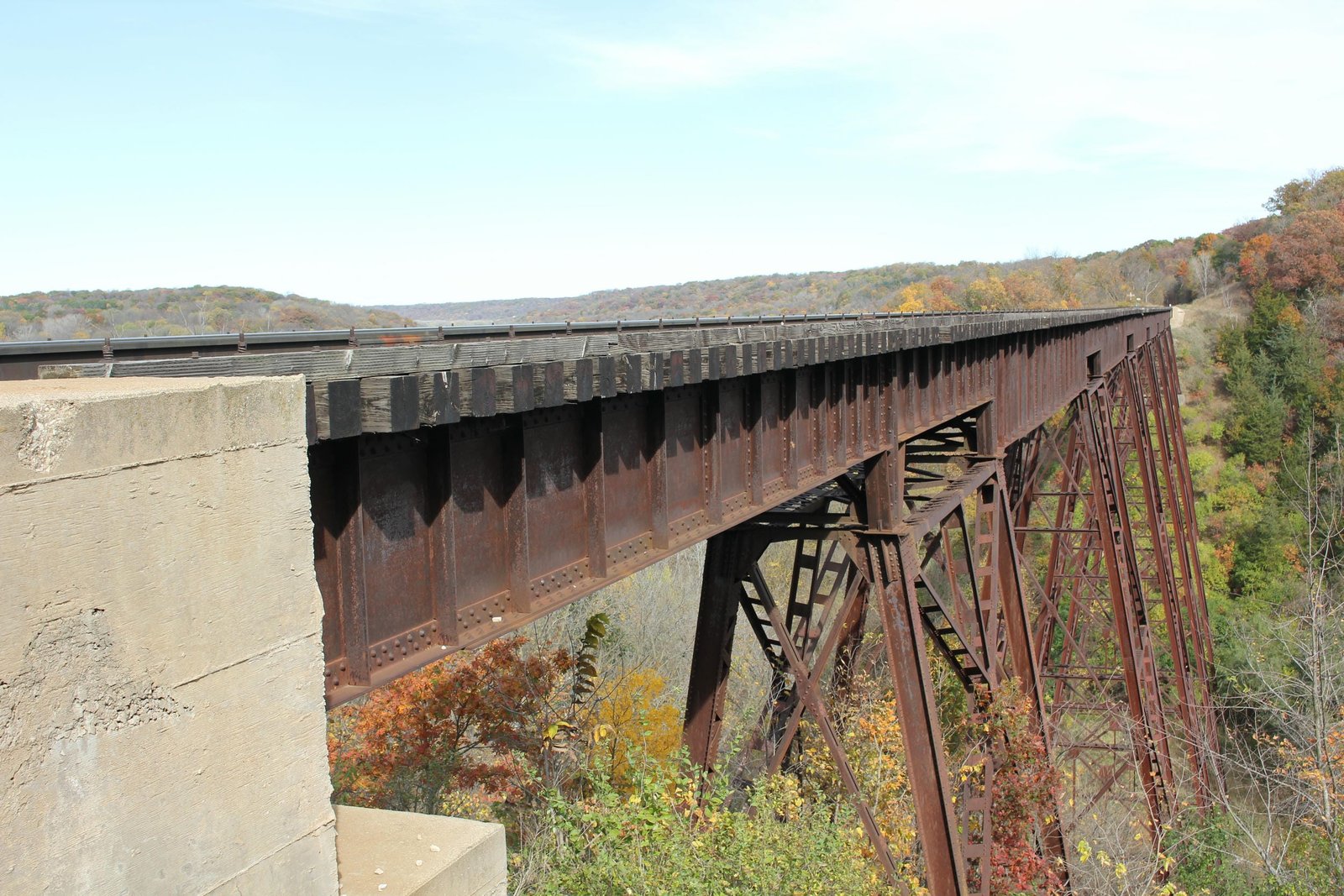
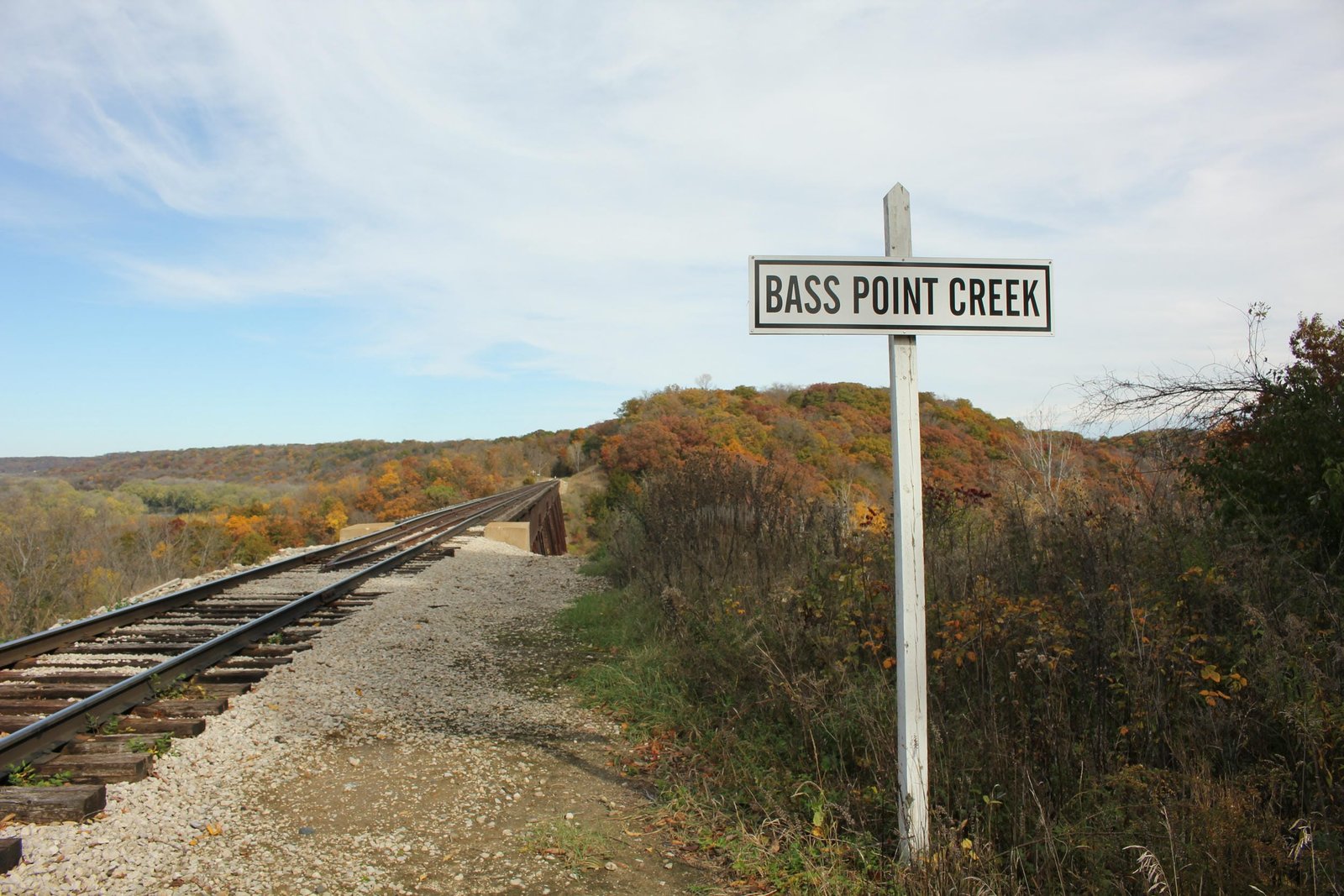
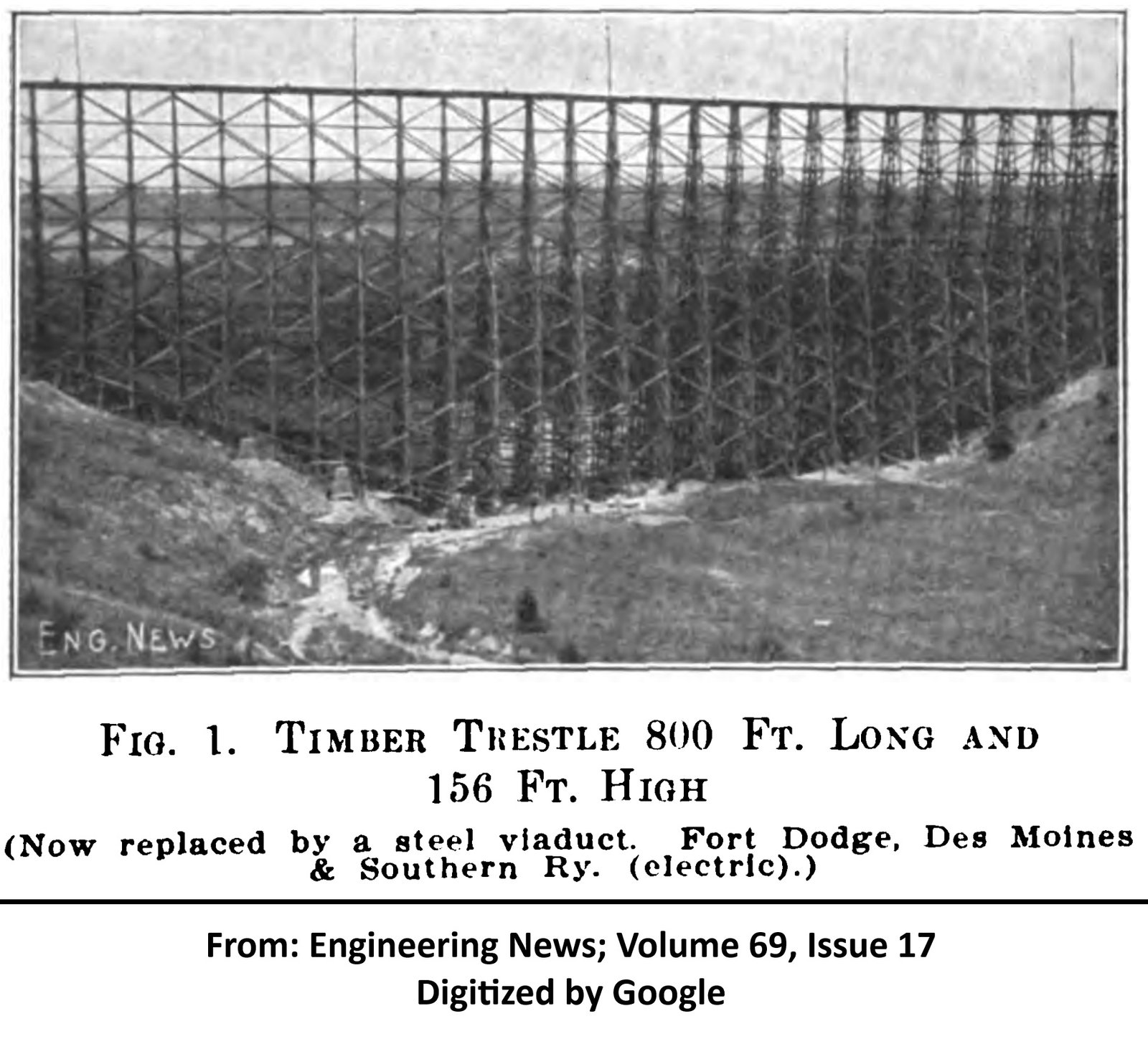
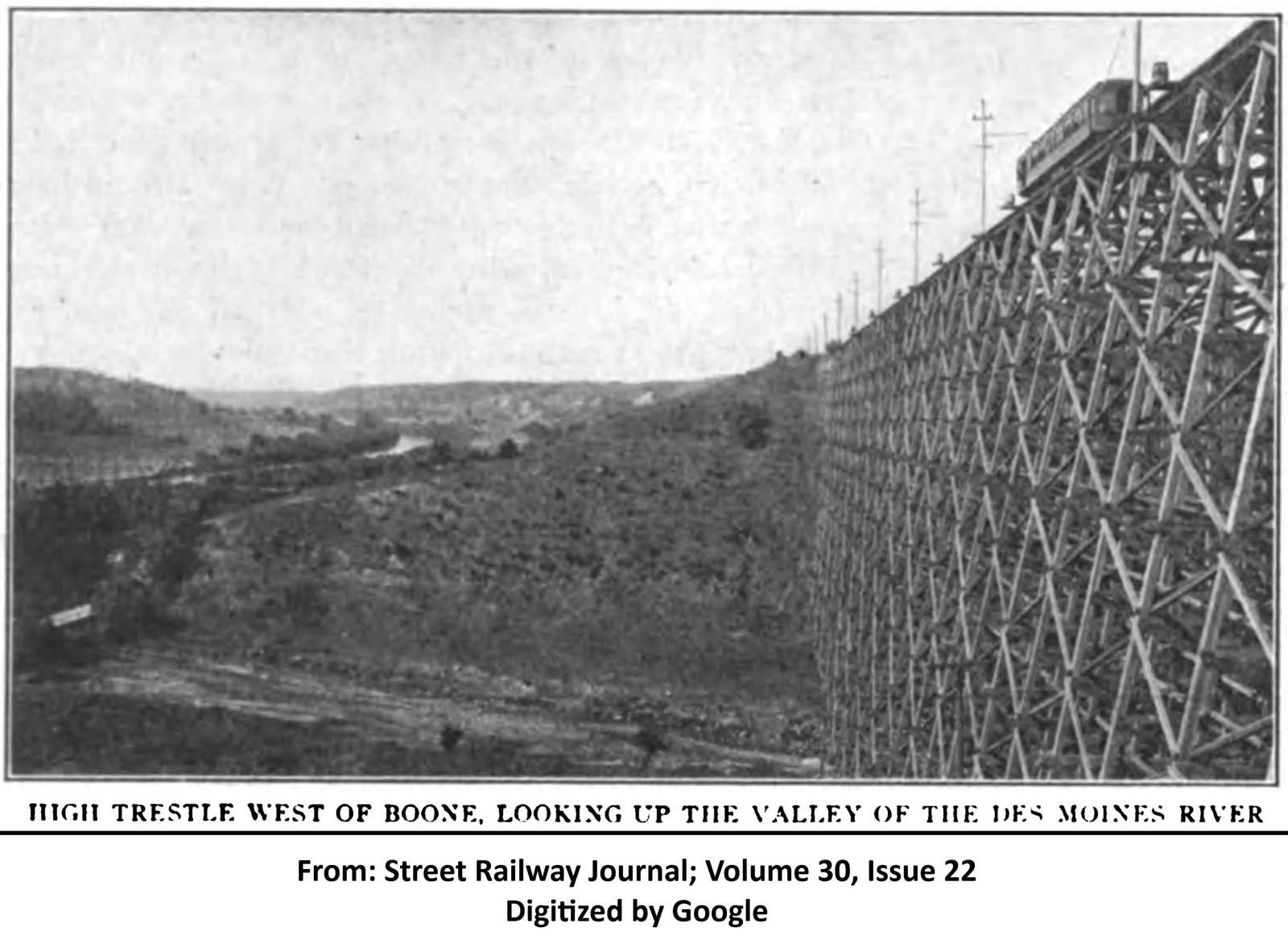
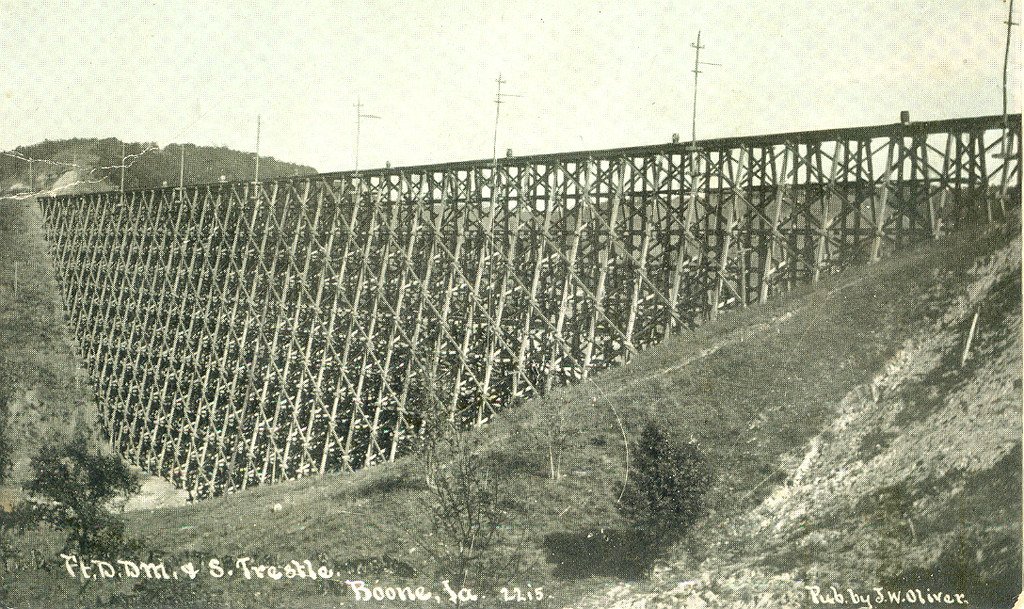
Located north of Boone, this iconic deck plate girder viaduct carries a former Fort Dodge, Des Moines & Southern Railroad line over Bass Point Creek near its mouth at the Des Moines River. When the FDDM&S first constructed its line in 1903, several timber pile trestle bridges were used between Boone and Fraser. The first bridge at this location was a large timber pile trestle bridge, constructed at a length of 800 feet. This tall trestle was among the largest timber pile trestle bridges in Iowa at the time of construction. By 1910, the railroad began a program to eliminate the timber trestles for both safety and permanent improvement. All of the smaller trestles were filled in with solid embankment and small culverts, leaving the towering structure over Bass Point Creek. Since trains operated over the bridge at regular intervals, it was critical to plan the reconstruction to avoid significant interference to traffic. William M. Hughes was chosen as the consulting engineer to design the new viaduct. Hughes had served as a consulting engineer for several interurban projects in the Midwest, and also had designed portions of the "L" system in Chicago. It was decided to place the new structure about 14 feet upstream from the old trestle, which also allowed for a reduction in curvature on the north end of the viaduct. In addition, the new viaduct was designed with spans in lengths of 16 feet, which allowed the new footings to be constructed mid-span of the adjacent trestle to avoid interfering with operations. In mid-1912, contracts were awarded for its replacement with a steel structure, with construction beginning soon after. Early investigations revealed that the soil below was made up of several layers of different material, primarily different types of clay. While it was originally planned to drive piles, it was determined that bearing capacity could be reached by using deeper foundations.
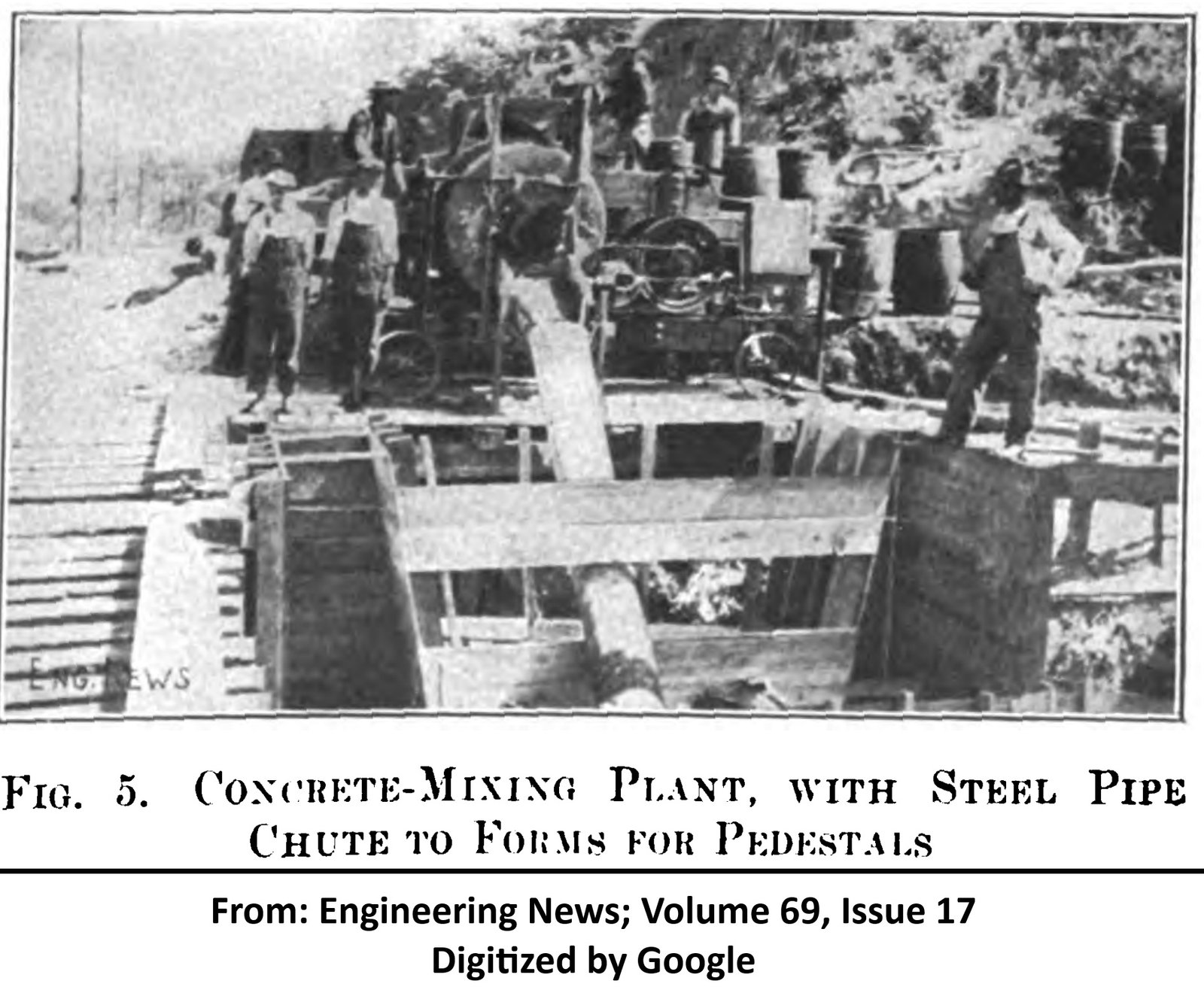
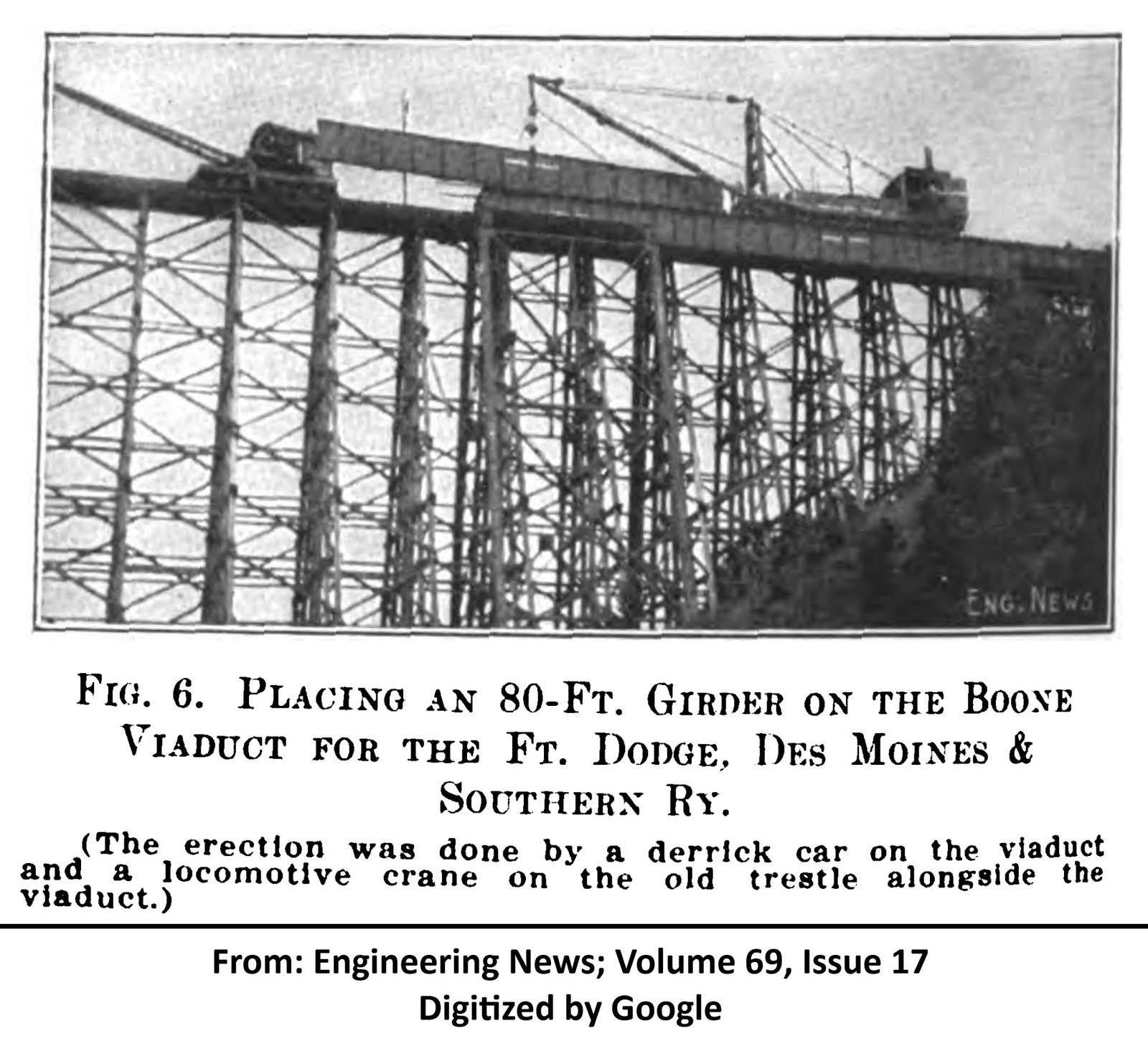
Due to the steep slopes on either end of the viaduct, it was impractical to move the mixer down the slope or to wheel concrete into place. Instead, it was decided to construct a steel chute at each end of the viaduct and to pour concrete into the chute. The chute was then adjusted to the desired point, and concrete was moved into place for the footings. Twelve men and a single foreman made up the concrete crew, a far smaller crew than typical bridge construction. With only a couple of exceptions, the concrete foundations were poured in a continuous manner and had no construction joints. Within 40 days, all concrete was placed, anchor bolts were installed, and the superstructure was ready to be erected. Unloading of material was completed on a new track on the north end of the viaduct. The northernmost span and bent for the northern tower were erected using a derrick car from the north abutment. After these pieces were erected, the remainder of the bridge was erected from a locomotive crane stationed on the old trestle. The locomotive crane was able to clear the tracks within 10 minutes to avoid interruption to railroad traffic. 95 days were required to erect the bridge, with much of the riveting being completed in the field with compressed air. The viaduct was designed by William M. Hughes, and the construction was overseen by C.J. Stiegleder, Assistant Engineer of the FDDM&S. The spans and towers were fabricated by American Bridge Company at the Lassig Plant in Chicago, and this firm completed the erection of the viaduct. The foundations were constructed by local contractor Andrew W. Merrick, with railroad company forces completing all excavation. After the bridge was completed, the old trestle was demolished, and the timber reused where possible.
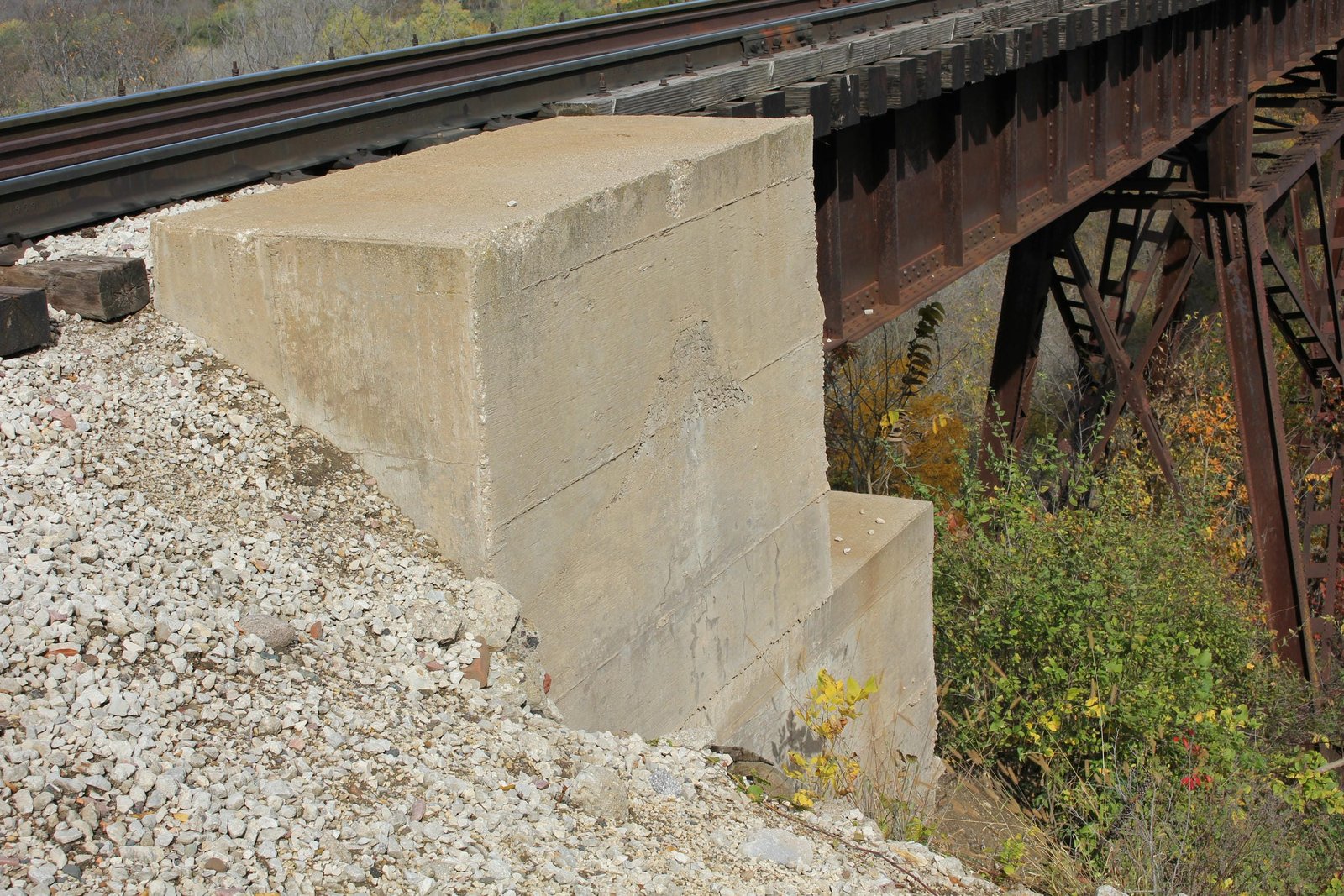
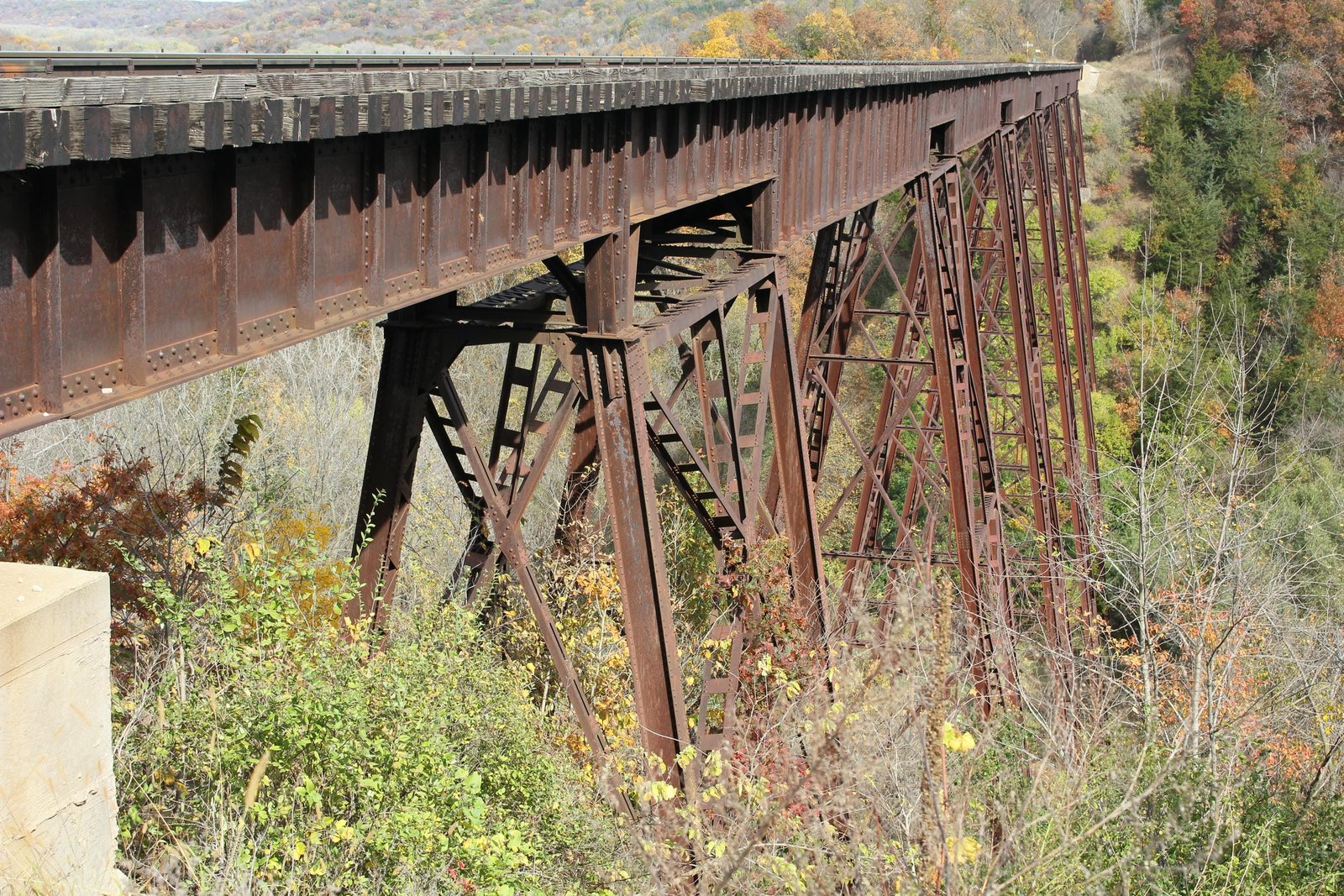
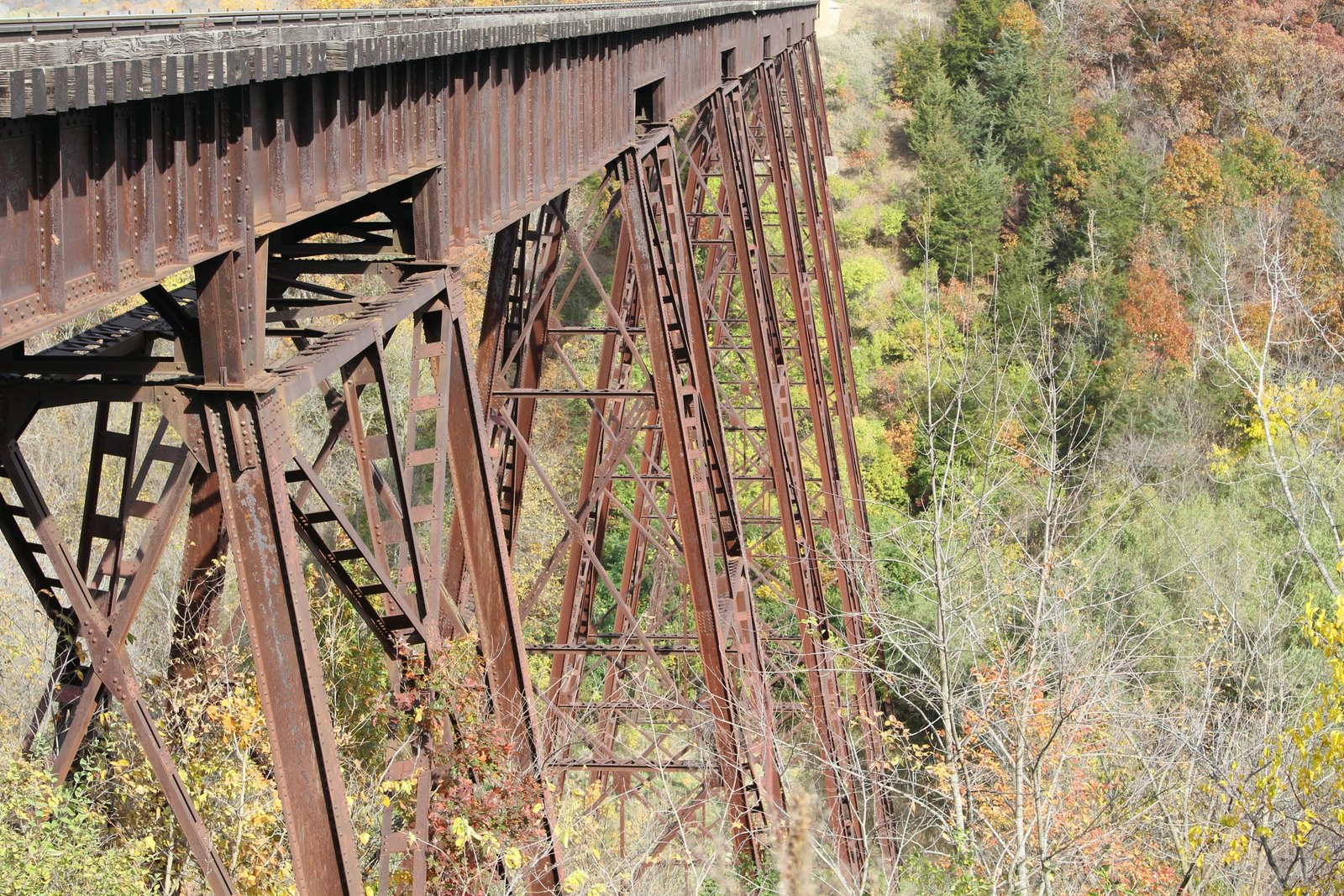
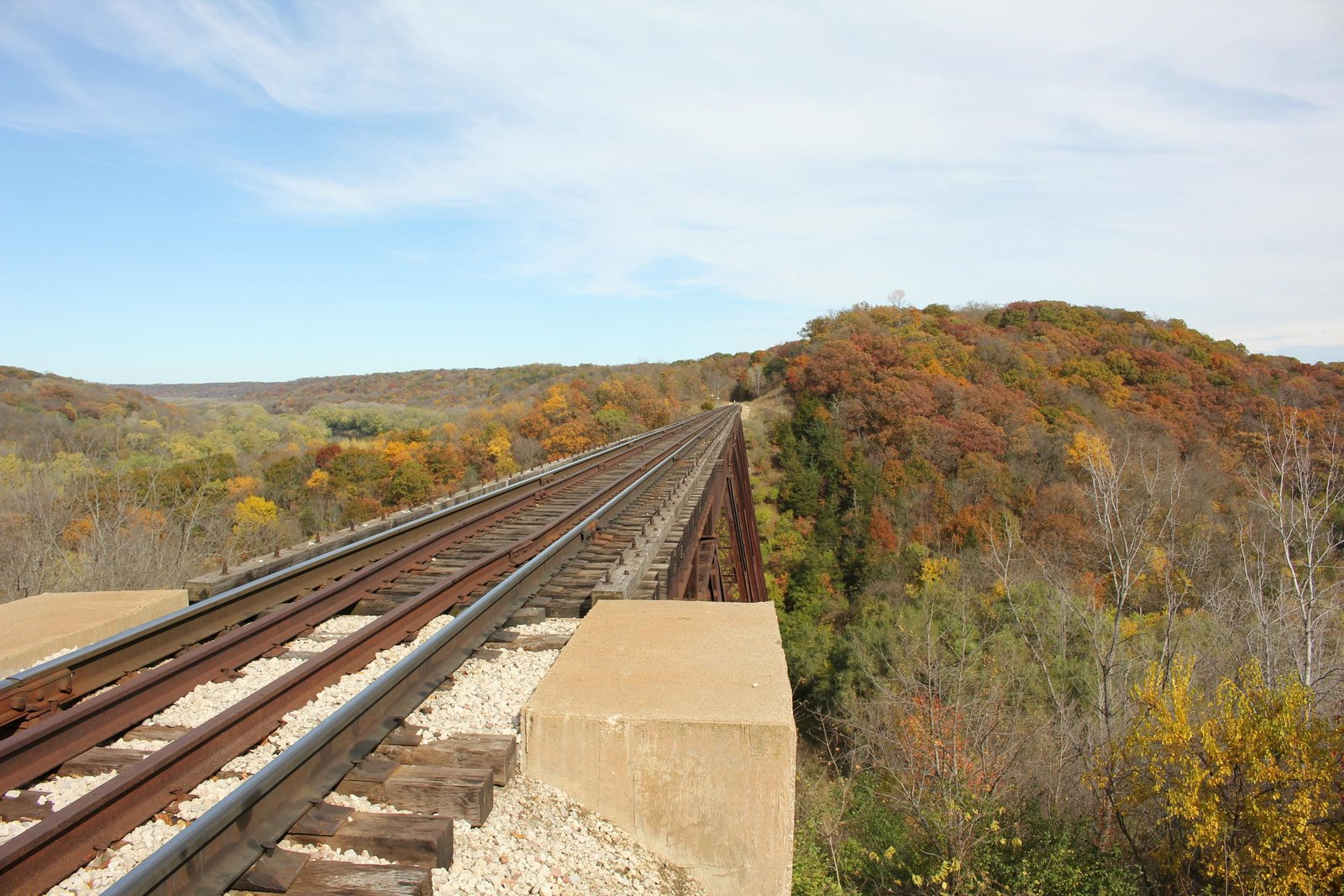
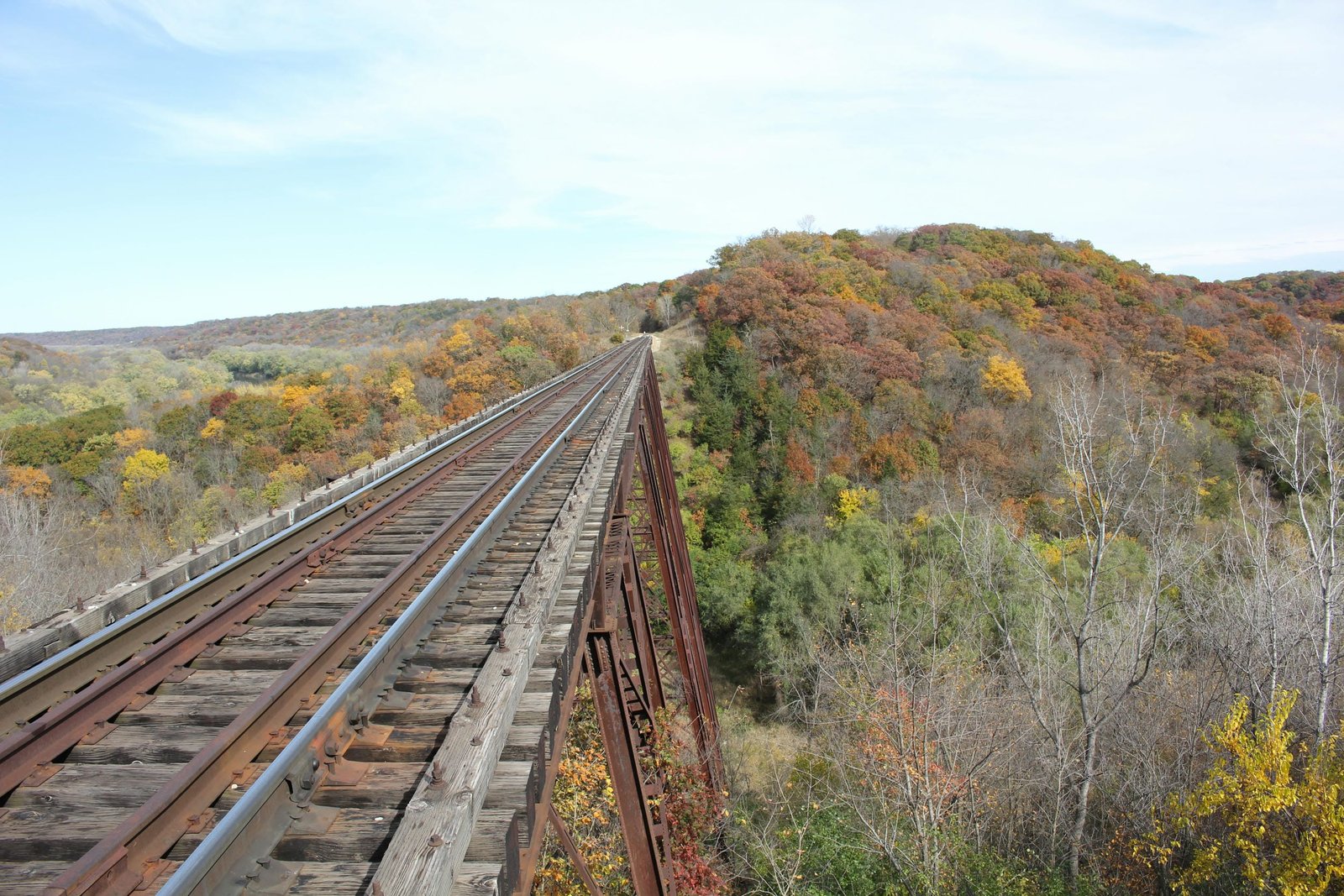
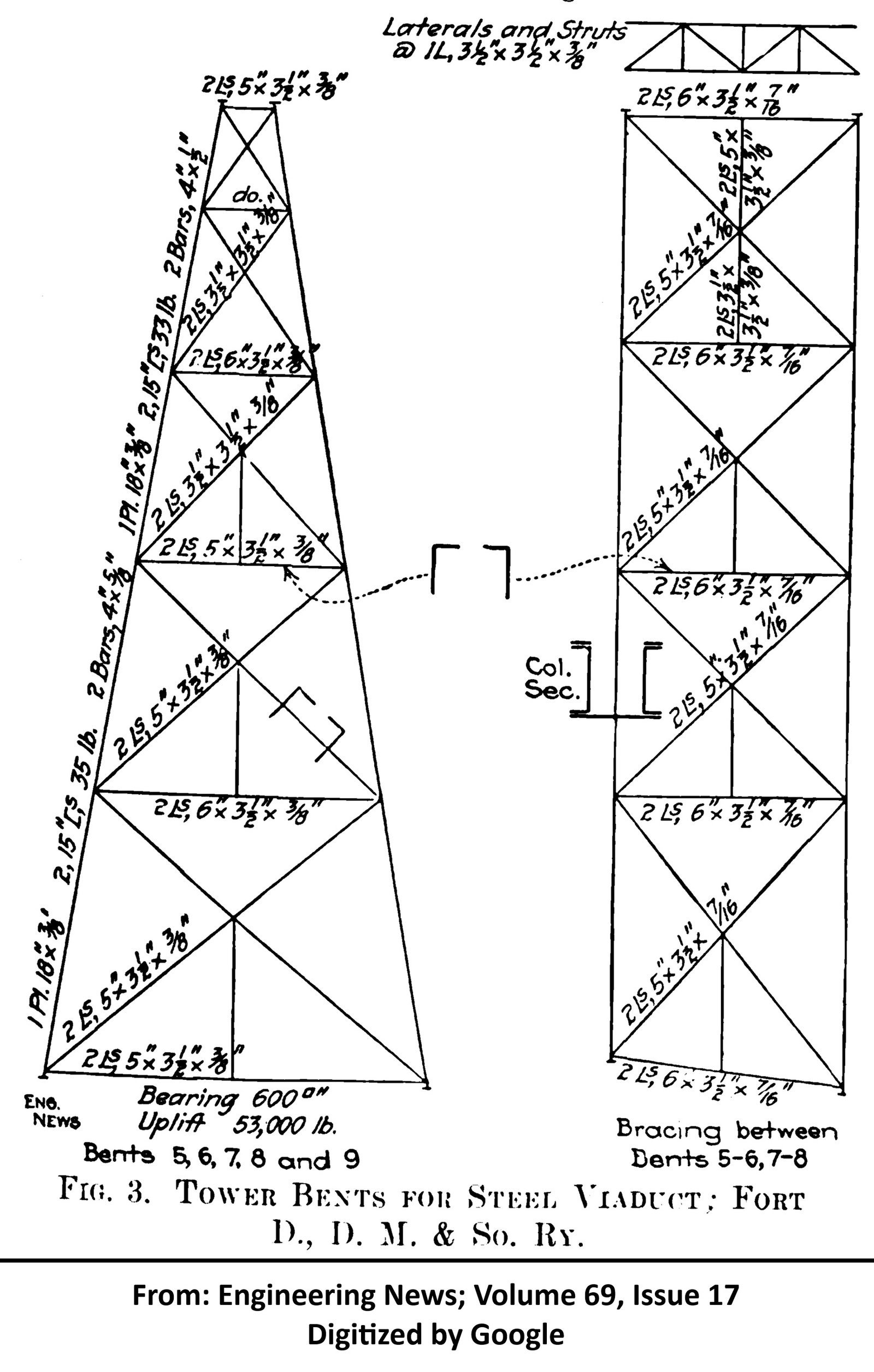
Currently, the viaduct consists of two 32-foot deck plate girder spans on the north end, then twelve alternating 80-foot and 32-foot deck plate girder spans, and a 48-foot deck plate girder span on the south end. The viaduct is set onto concrete abutments and pedestals, and is supported by seven steel towers. The total length of the bridge is 784 feet, and the viaduct stands 156 feet above Bass Point Creek. The deck plate girder spans use a standard design, with two plate girder spans spaced at seven feet. The 32-foot and 48-foot spans are constructed with girders that are 48-inches deep, while the longer 80-foot spans use 90-inch-deep girders. The shorter spans are balanced on triangular risers, which allow the towers to be constructed at the same height throughout the structure. Each tower is formed from four columns, which form two bents. The columns are composed of two 15-inch channels, which are connected by a cover plate on the outside and V-lacing on the inside. The bents are composed of lateral V-laced beams at the top, bottom and intervals throughout the height, with two channels riveted together forming the X-bracing. Lower levels of each bent have a vertical brace, which is formed from a simple channel. Each tower has two bents, which are connected by V-laced beams at the top, bottom and same intervals as the bents. The diagonal bracing is made up of two L-shaped bars, which are connected by thin plates. In addition, a vertical bracing runs the full length of the first interval, with the remaining intervals having a vertical bracing between the center and bottom of each level. The pedestals all use a 5-foot by 5-foot square shape, and the abutments use a standard U-shaped design.
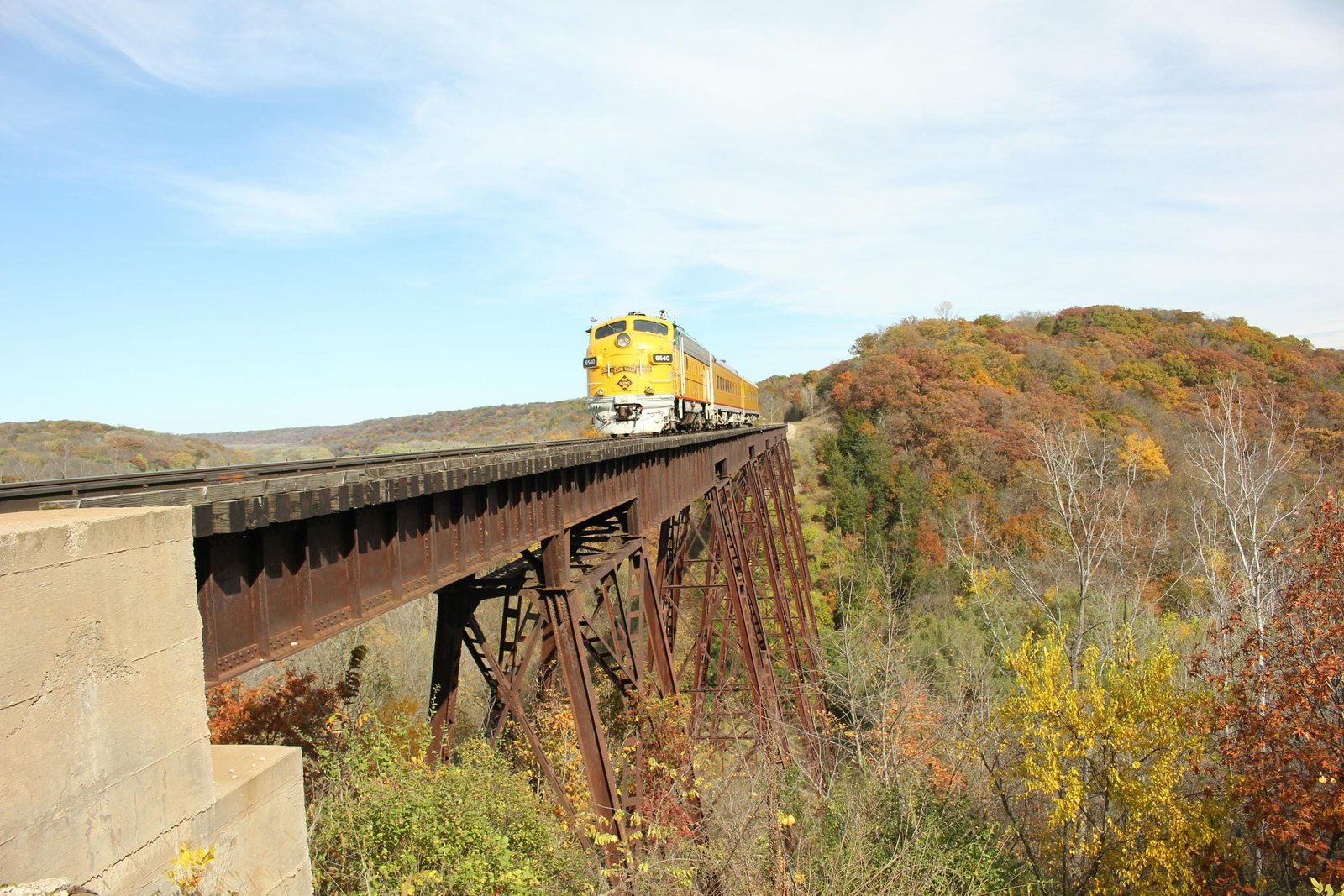
Deck plate girder viaducts were popular for crossing deep, wide ravines. This type of viaduct was simple to design, easy to construct and provided the greatest economy. In addition, this type of viaduct could often be constructed quickly and with minimal interruption to existing railroad traffic. In the Midwest, relatively few bridges like this were constructed, as the terrain is typically flatter. Deck plate girder spans were popular for railroad use, as they were durable and easy to construct. During the 20th Century, this viaduct was an iconic piece of the FDDM&S, and photographs were often used on timetables and promotional materials. In 1982, the Chicago & North Western Railway planned to abandon and scrap this line. A local group called "Save The Tracks" used $50,000 in donations to acquire the railroad line between Boone and Fraser, and the Boone and Scenic Valley Railroad (BSVY) began operations in October 1983. The BSVY was created to preserve historic railroad equipment and offer tourist rides over the scenic line. Today, the viaduct remains the highlight of the railroad, which continues to see thousands of visitors every year. Overall, the bridge appears to be in fair to good condition, and appears to be well maintained. The author has ranked this bridge as being regionally significant, as it is an iconic piece of central Iowa railroad architecture and one of the few railroad viaducts in Iowa.
Citations
| Build date and builders | Engineering News; Volume 69, Issue 17 |
| Railroad History Citation | ICC Valuation Information, Compiled by Richard S. Steele |