
Click the photo to view the full-size version
| Name | BNSF 625th Avenue Bridge Chicago, Burlington and Quincy Railroad Bridge #307.44 |
| Built By | Chicago, Burlington & Quincy Railroad |
| Currently Owned By | BNSF Railway |
| Superstructure Contractor | King Bridge Company of Cleveland, Ohio |
| Substructure Contractor | Unknown |
| Length | 212 Feet Total, 60 Foot Spans |
| Width | 1 Track |
| Height Above Ground | 25 Feet (Estimated) |
| Superstructure Design | Deck Plate Girder and Concrete Modular Girder |
| Substructure Design | Concrete |
| Date Built | 1903, Approaches Replaced c. 2000 |
| Traffic Count | 10 Trains/Day (Estimated) |
| Current Status | In Use |
| Chicago, Burlington & Quincy Railroad Bridge Number | 307.44 |
| BNSF Railway Bridge Number | 307.44 |
| Significance | Local Significance |
| Documentation Date | 10/8/2017 |
In May 1854, the Burlington and Missouri River Railroad (B&MR) began constructing a new mainline across southern Iowa, with the goal of connecting the Mississippi River at Burlington, Iowa to the Missouri River near Omaha, Nebraska. In 1857, the first 34 miles between Burlington and the Skunk River near Rome, Iowa were completed. In 1859, an additional 41 miles between the Skunk River and Ottumwa, Iowa were completed. The railroad ceased progress during the Civil War, and eventually continued west in 1866. That year, an additional 24 miles were completed between Ottumwa and Albia, Iowa. Work continued in 1867, when an additional 46 miles were completed to Woodburn, Iowa. Between 1867 and 1868, the Chicago, Burlington & Quincy Railroad (CB&Q) constructed a bridge across the Mississippi River to connect this line to their lines in Chicago. In 1868, an additional 34 miles opened west to Afton, Iowa; followed by an additional 59 miles west to Red Oak, Iowa in 1869 and an additional 32 miles to the Pacific Junction, Iowa in 1870. In 1872, the B&MR was leased by the CB&Q; and was fully absorbed by the company in 1875. In the 1870s, the line would be extended into Nebraska, and in 1880, a bridge was constructed across the Missouri River at Plattsmouth.
This line formed a critical backbone for the CB&Q, connecting Chicago to territories west of the Missouri River. By the late 1870s, the need for a second track on this route had become apparent. A second track was constructed between Chillicothe, Iowa and Albia in 1879, including a new alignment around the south side of Albia. In 1880, a second track was constructed between Burlington and West Burlington, Iowa; as well as between Albia and Russell, Iowa. In 1885, a second track was constructed between Russell and Chariton, Iowa; followed by between Ottumwa and Chillicothe the following year. A large segment of second track opened between West Burlington and Mt. Pleasant, Iowa in 1889. By the turn of the 20th Century, several sections of this line required extensive upgrades in addition to a second track. In 1900, a second track was completed from Mt. Pleasant to Ottumwa and from Chariton to Creston, Iowa. A new alignment was constructed between Fairfield, Iowa and Batavia, Iowa; and between Agency, Iowa and Ottumwa in 1900. In 1901, the line was double tracked between Chariton and Creston. The 1901 work involved constructing a second single track alignment between Indianola Junction and Lucas, Iowa; between Woodburn and Osceola, Iowa and between Murray, Iowa and Creston. Between 1902 and 1905, the Creston to Pacific Junction segment was double tracked. In 1904, a realignment between Nodaway, Iowa and Emerson, Iowa opened to traffic; followed by a large realignment between Malvern, Iowa and Pacific Junction in 1905.
Throughout the 20th Century, this line remained critical to the CB&Q. The CB&Q invested significant capital into maintaining this line, replacing bridges, revising grades and changing the alignment in spots. One of the most prominent changes came in 1949, when the westbound track near Frederic, Iowa was straightened, to eliminate a segment of curvy original mainline. In 1970, CB&Q merged with Northern Pacific Railway and Great Northern Railway to form Burlington Northern Railroad (BN). Several segments of this line were single tracked in the mid to late 20th Century. In 1996, BN merged with Atchison, Topeka & Santa Fe Railway to form BNSF Railway, the current owner of this line. Today, this line remains a critical piece of railroad infrastructure. BNSF currently operates a portion of the Ottumwa Subdivision between Burlington and Creston; and a portion of the Creston Subdivision between Creston and Pacific Junction.
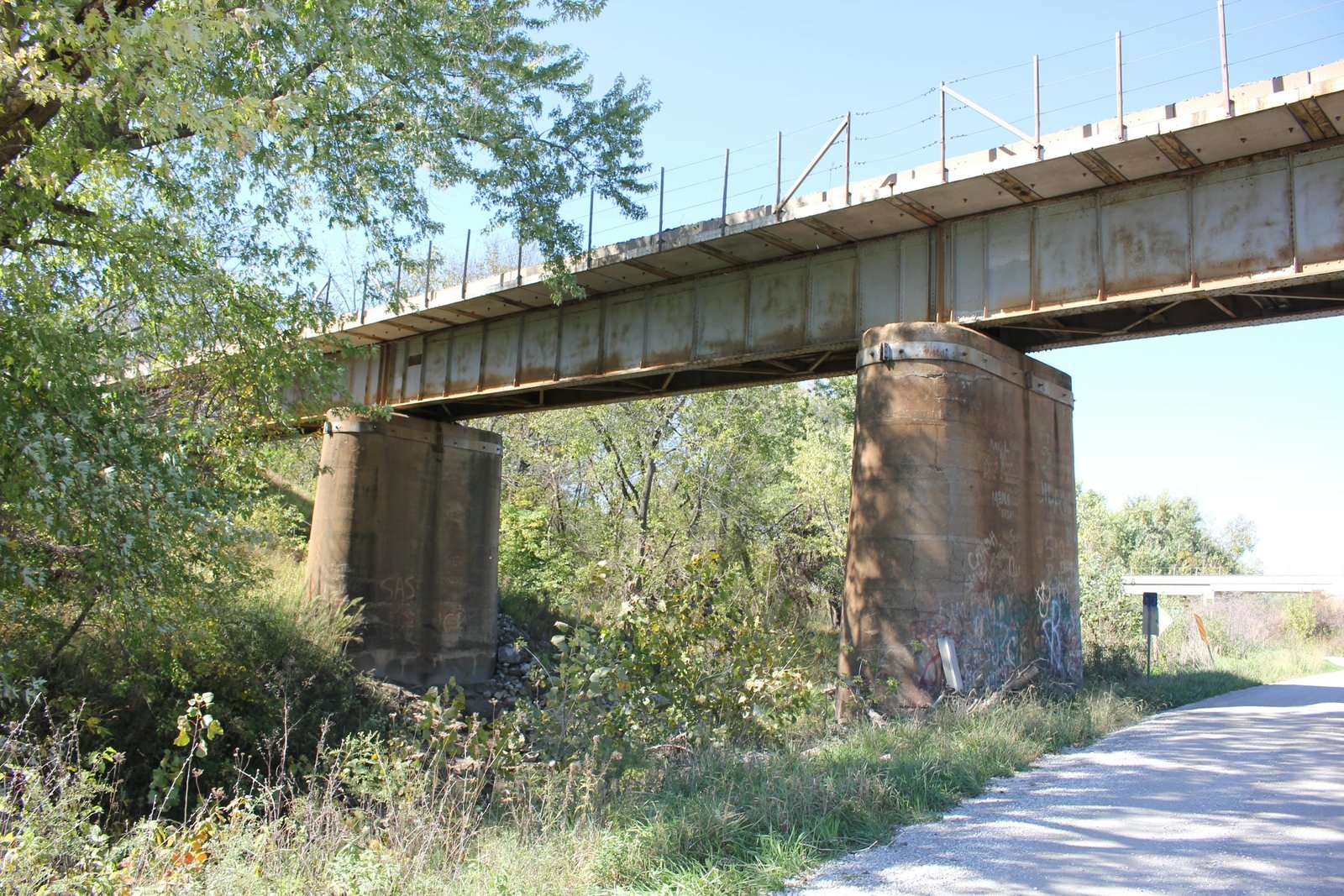
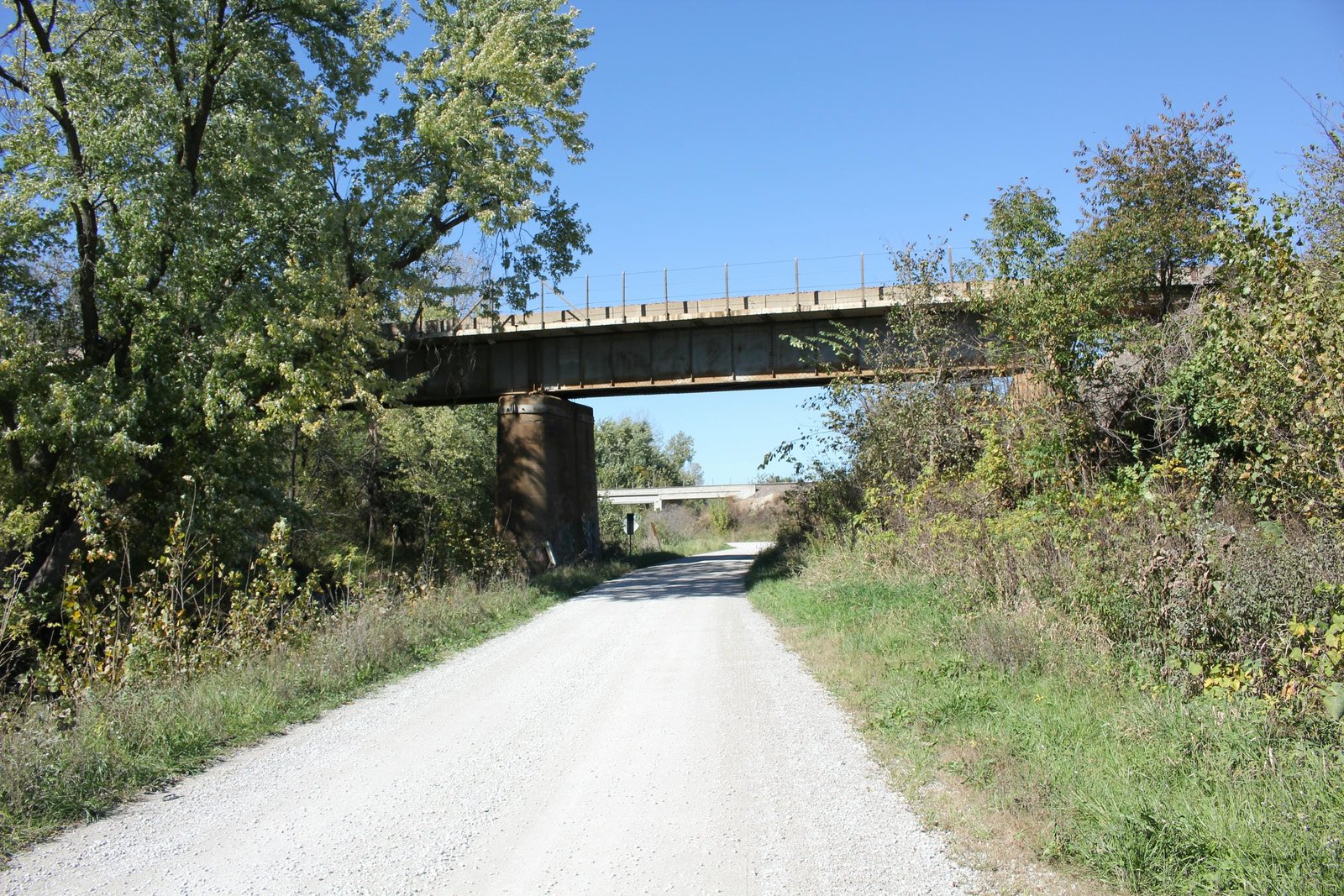
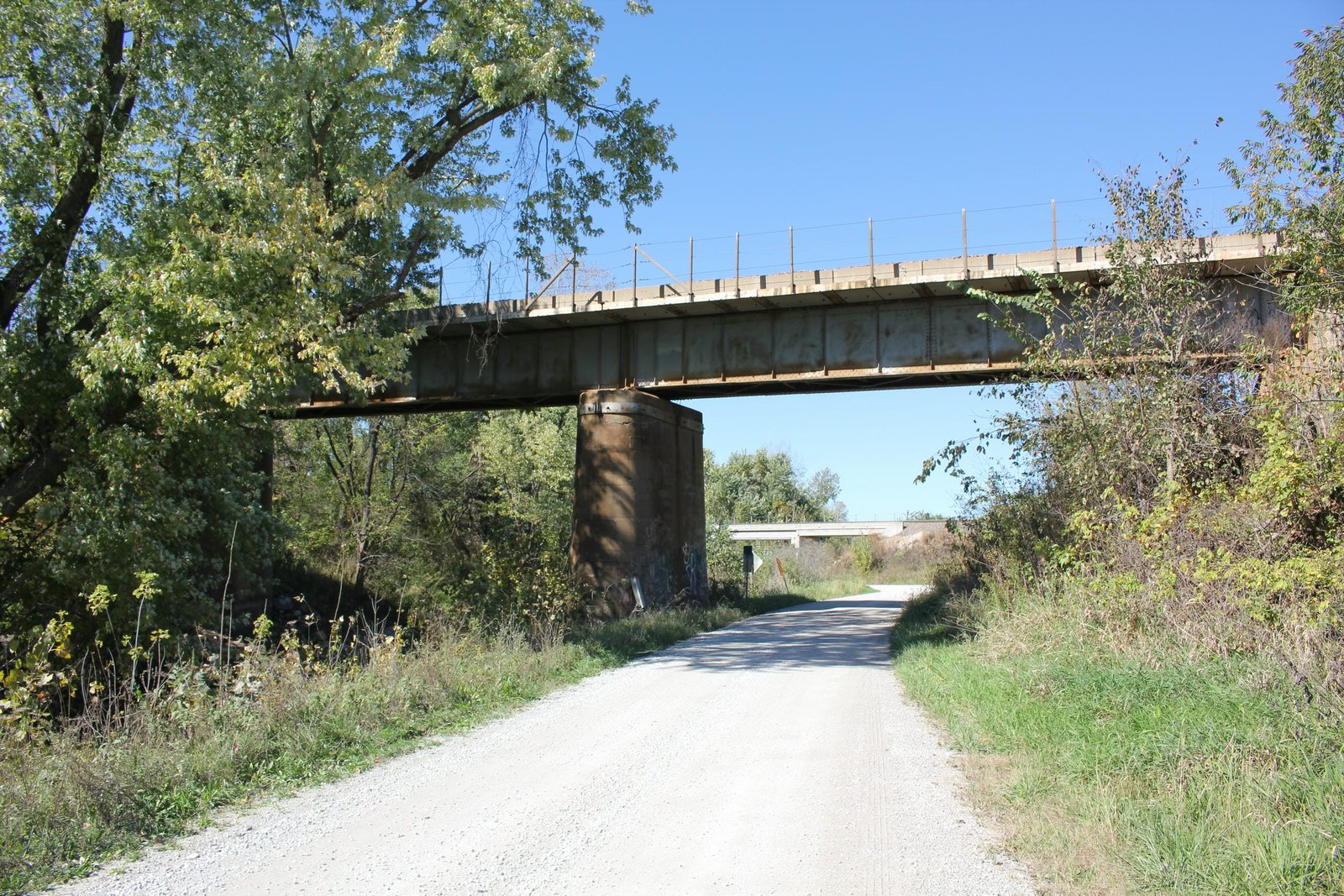
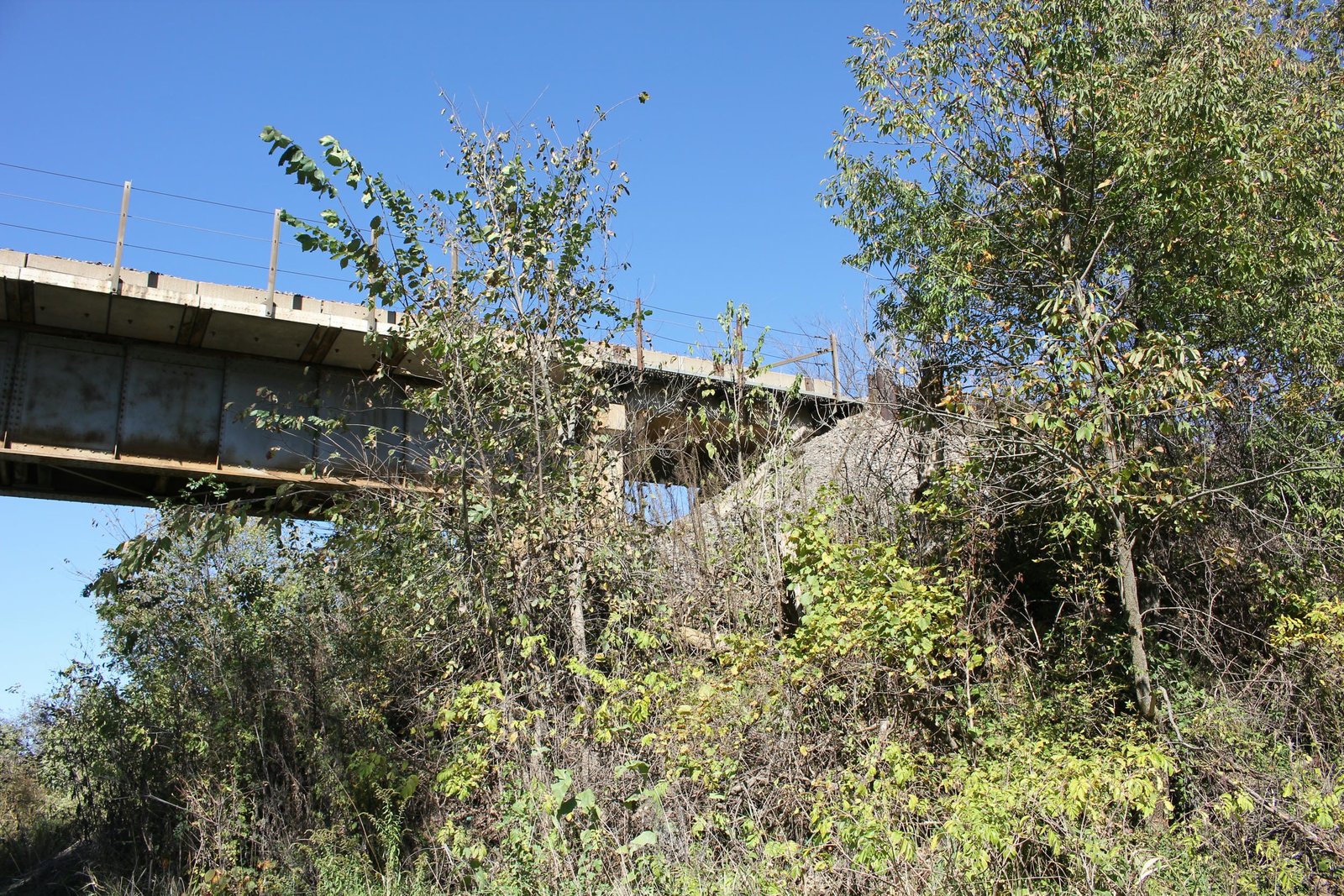
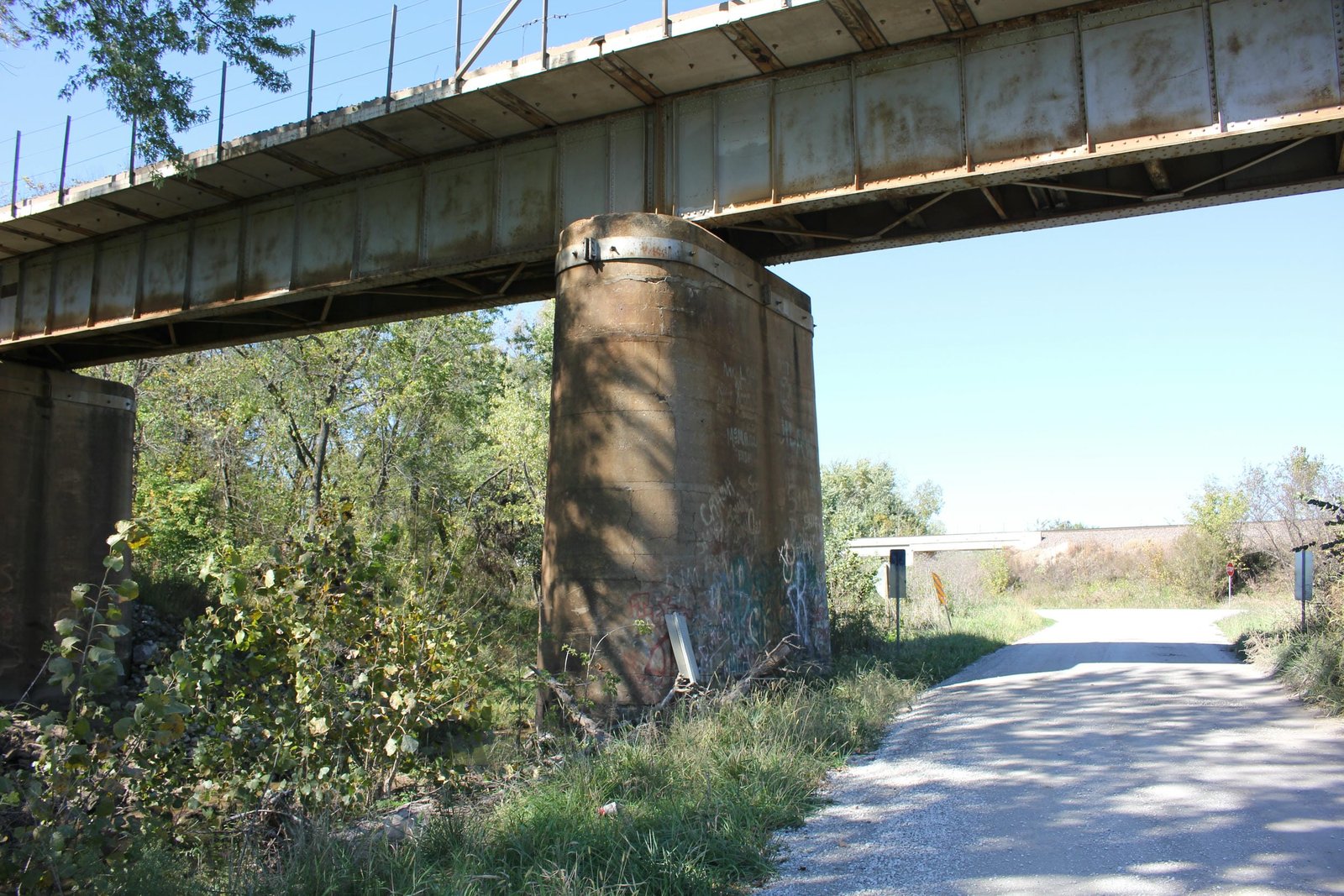
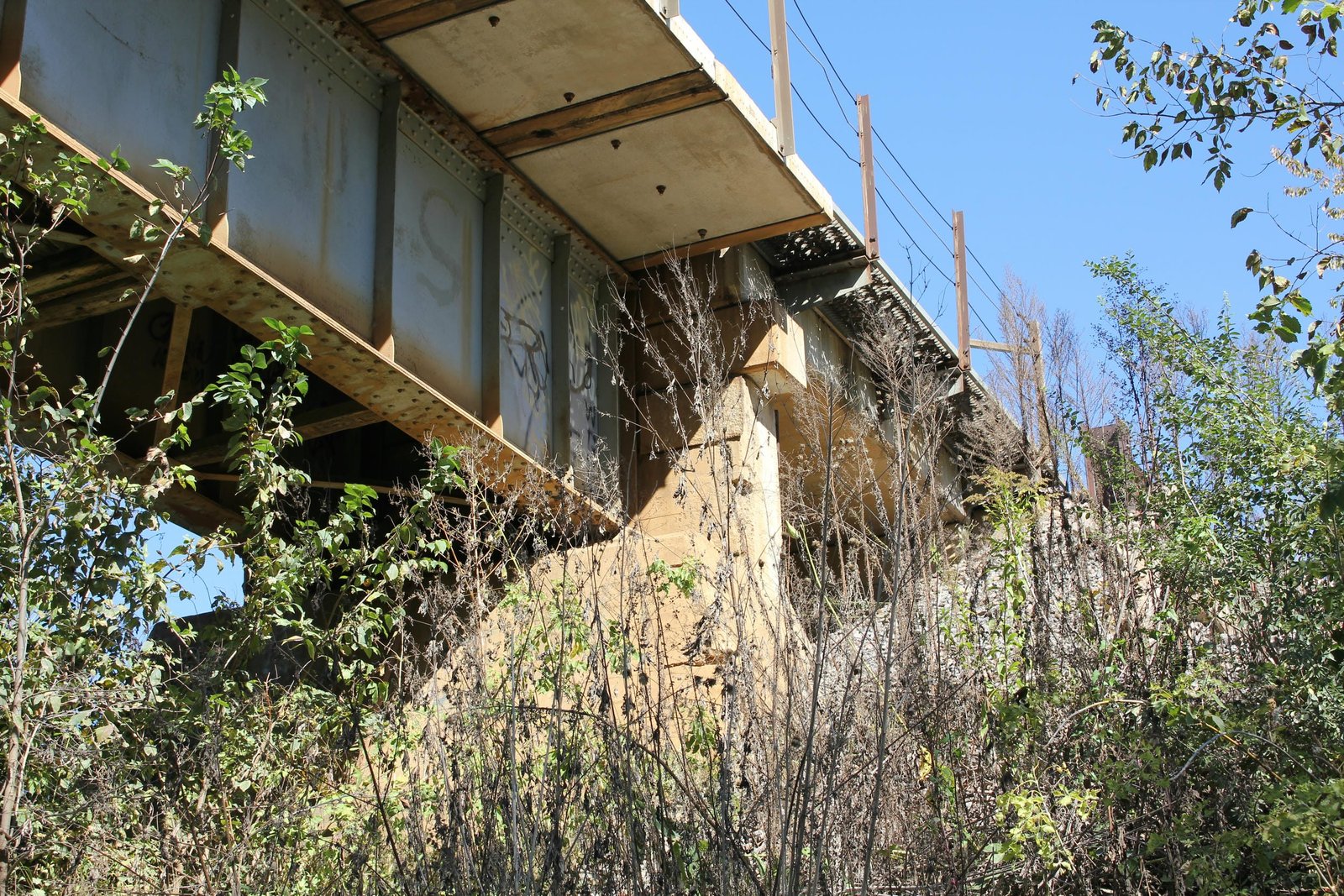
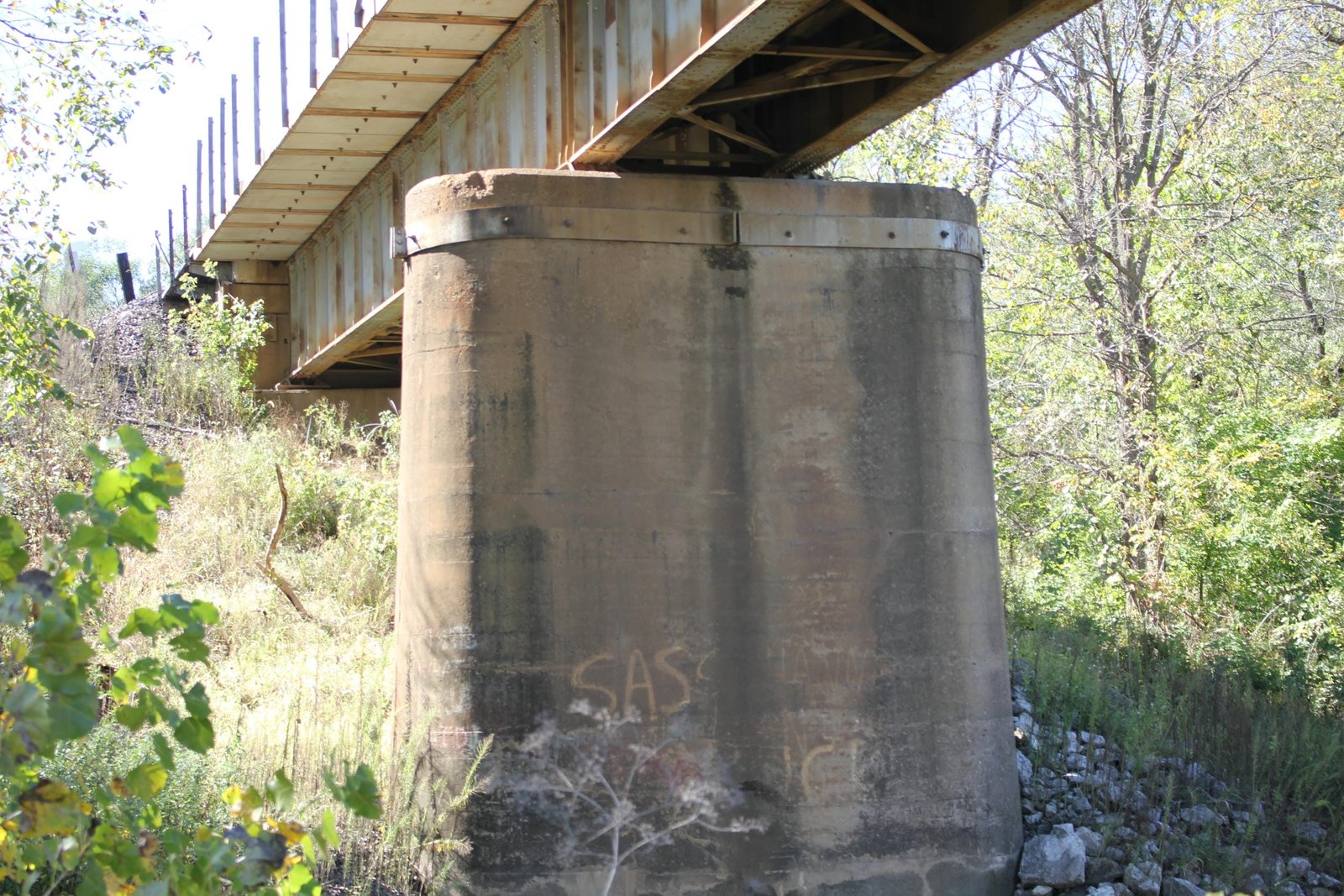
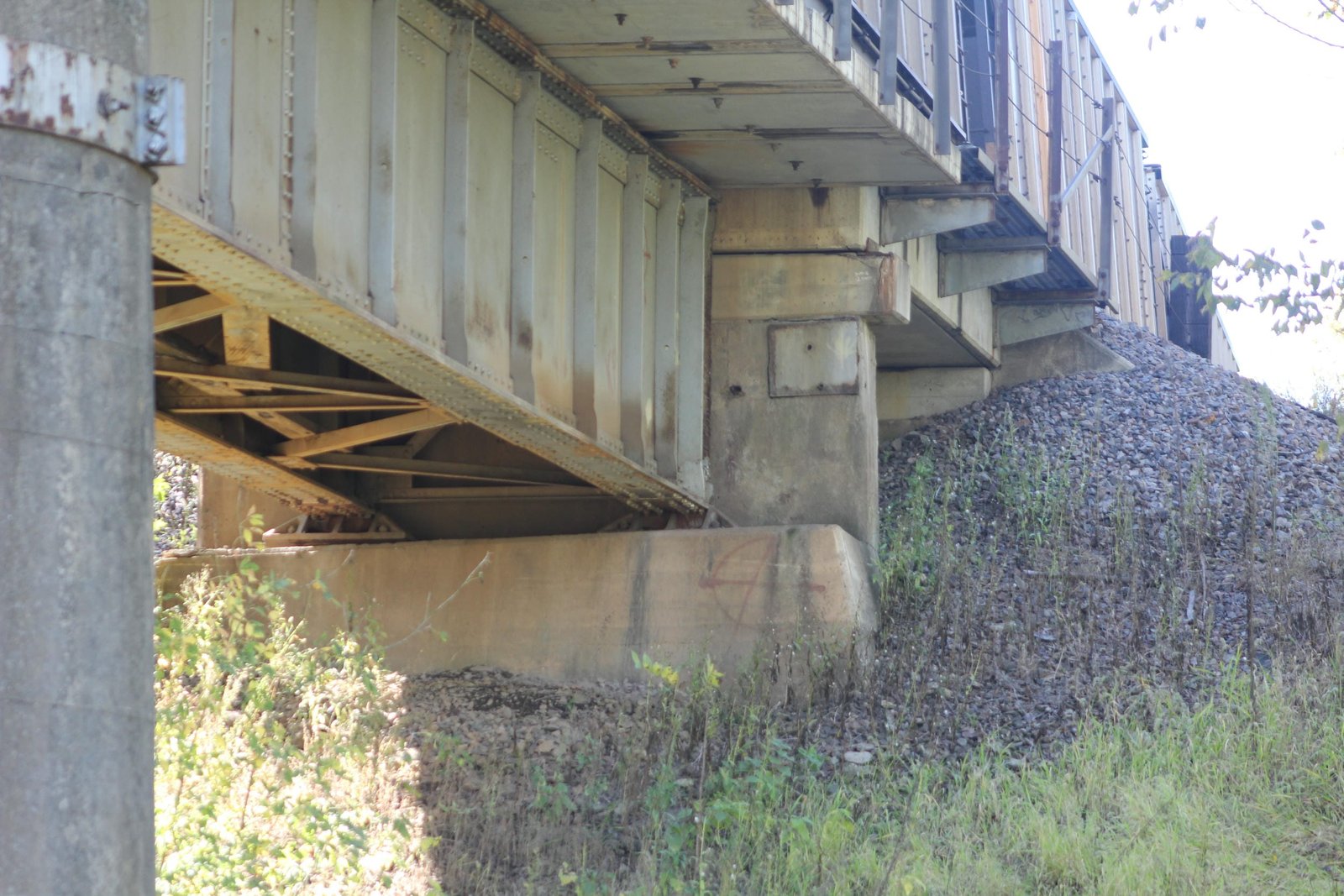
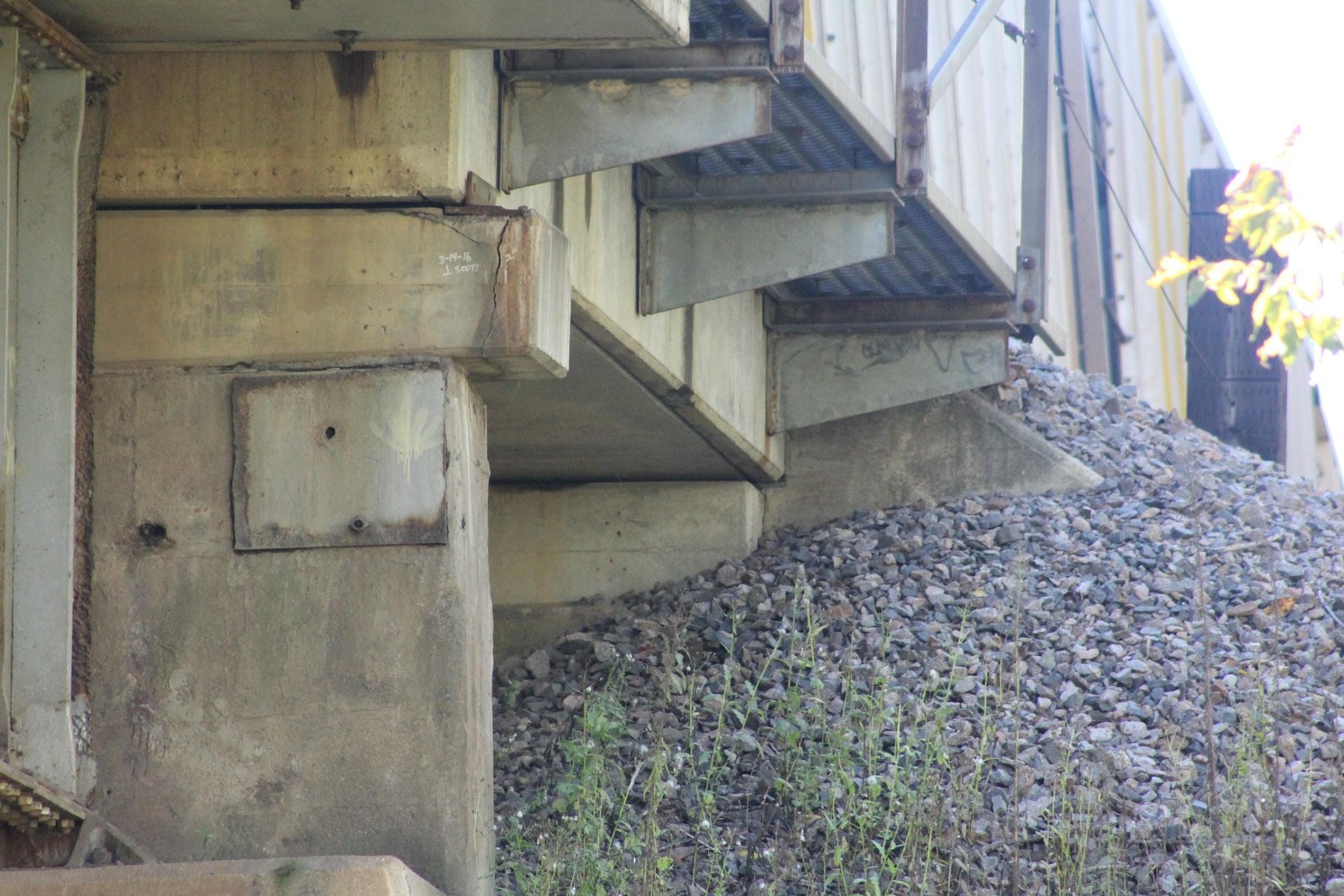
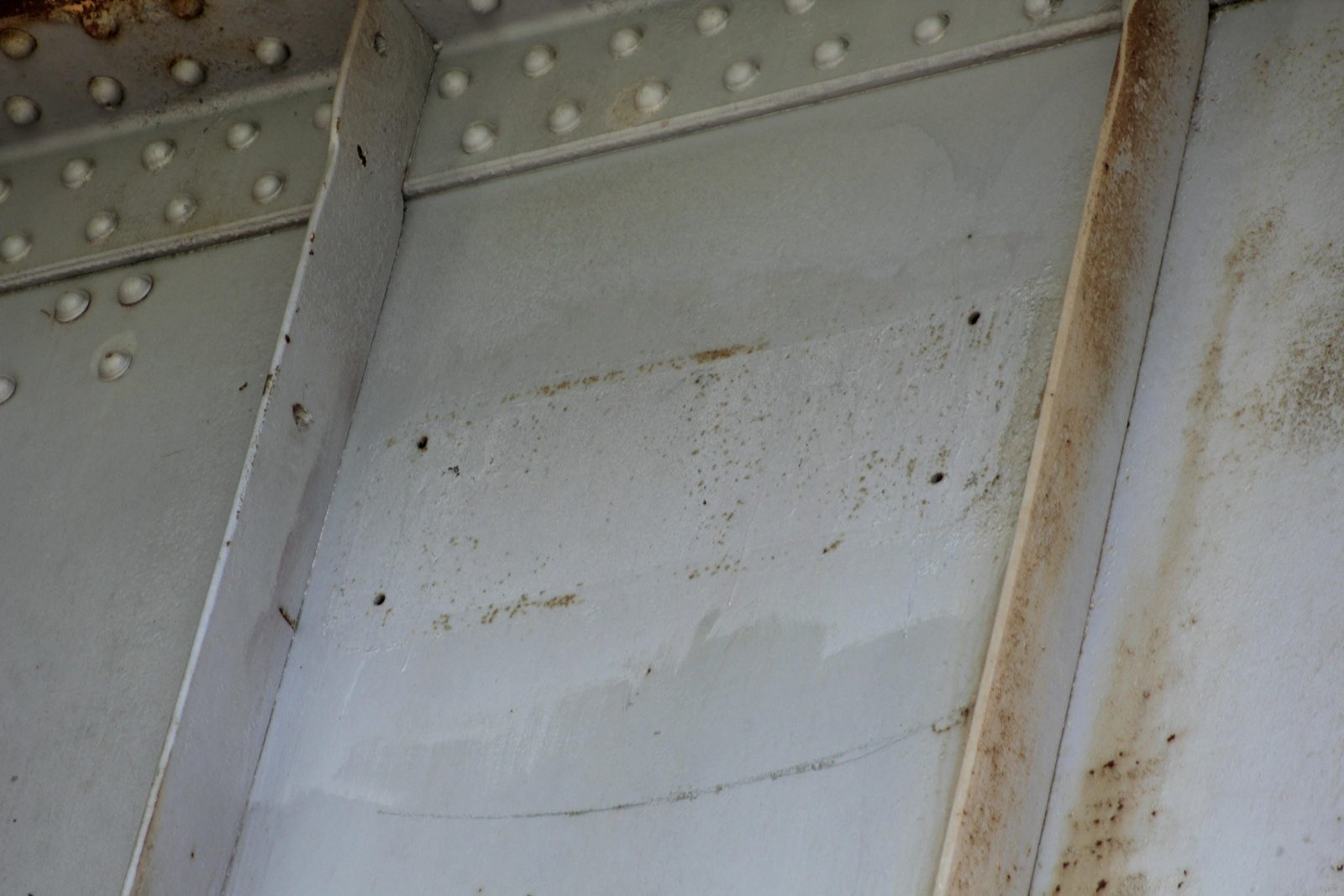
Located west of Albia, this deck plate girder bridge carries the southern track of a former Chicago, Burlington & Quincy Railroad mainline across Coal Creek and 625th Avenue. Originally, the CB&Q mainline followed a more northerly alignment, which was constructed when the line was first built. In 1879, the CB&Q double tracked a portion of the line near Albia by constructing a second, separate single track alignment. It is unclear if the first bridge at this location was a timber pile trestle or possibly an iron viaduct. In the early years of the 20th Century, the CB&Q upgraded and double tracked the remainder of their line across Iowa. As part of the work, a new single track bridge was constructed at this location. In approximately 2000, the original steel stringer approaches were replaced by modern concrete spans, giving the bridge its present configuration. Currently, the bridge consists of three 60-foot deck plate girder spans, approached by a 16-foot concrete modular girder span on either end. The entire bridge is set onto concrete substructures. The main spans follow a standard design, with two heavy plate girders per span and a modern concrete ballast deck. The main piers use a standard rounded shape, while the end piers use a rectangular shape. Both abutments use a standard design, with short wing walls which extend perpendicularly from the bridge. King Bridge Company fabricated the superstructure, and it is unclear if the substructure was constructed by railroad company forces or by an unknown contractor. Deck plate girder spans were popular for railroad use, as they were durable and easy to construct. Since the initial construction, the bridge has seen only minor alterations, including the addition of a concrete ballast deck to the main spans in approximately 2000. Today, the bridge remains in use as part of a heavily used BNSF Railway mainline. Overall, the bridge appears to be in fair to good condition, with no significant deterioration noted. The author has ranked this bridge as being locally significant, due to the common design. In addition to this bridge, a second bridge carries the northern track over the same road and creek immediately north of this bridge. That bridge initially consisted of one 50-foot and two 45-foot deck plate girder spans, constructed in 1894 and replaced by the present modern structure in approximately 2000.
Citations
| Build date | Chicago, Burlington & Quincy Railroad Valuation Summary at the Newberry Library |
| Builder (superstructure) | Missing King Bridge Company plaque |
| Railroad History Citation | ICC Valuation Information, Compiled by Richard S. Steele |