
Click the photo to view the full-size version
| Name | UP IA-175 Bridge Chicago, Rock Island & Pacific Railroad Bridge #1299 |
| Built By | Chicago & North Western Railway |
| Currently Owned By | Union Pacific Railroad |
| Superstructure Contractor | Unknown |
| Length | 104 Feet Total, 44 Foot Main Span |
| Width | 1 Track |
| Height Above Ground | 15 Feet (Estimated) |
| Superstructure Design | Steel Stringer |
| Substructure Design | Steel Pile |
| Date Built | c. 1985, Using Spans Fabricated c. 1940 and c. 1960 |
| Original Locations | Unknown |
| Traffic Count | 10 Trains/Day (Estimated) |
| Current Status | In Use |
| Chicago, Rock Island & Pacific Railroad Bridge Number | 1299 |
| Union Pacific Railroad Bridge Number | 129.90 |
| Significance | Local Significance |
| Documentation Date | 9/17/2017 |
In 1901, the Des Moines, Iowa Falls & Northern Railway (DMIF&N) constructed a 74-mile railroad line, extending from the existing Chicago, Rock Island & Pacific Railway (Rock Island) mainline at Des Moines, Iowa to Iowa Falls, Iowa. In 1908, the DMIF&N was purchased by the St. Paul & Des Moines Railroad (StP&DM). Between 1908 and 1909, the StP&DM constructed an additional 44 miles of new railroad, extending to Mason City, Iowa. The StP&DM was acquired by the St. Paul & Kansas City Short Line Railroad (StP&KCSL) in 1911, which was a subsidiary of the Rock Island. The purpose of the StP&KCSL was to construct a direct route between St. Paul, Minnesota and Kansas City, Missouri. The Rock Island already owned a line across Missouri, as well as a line between Albert Lea, Minnesota and St. Paul, Minnesota. The StP&KCSL completed the connection between the two lines in 1913. To reach the existing line at Albert Lea, the Rock Island obtained trackage rights over the Chicago Great Western Railway (CGW) between Mason City and Manly, Iowa; and over the Minneapolis & St. Louis Railway (M&StL) between Manly and Albert Lea. The Rock Island was a large railroad, having constructed and acquired a significant railroad network in the central United States. This line provided a critical north-south connection between the northern and southern halves of the system. The line became known as the "Spine Line".
The Rock Island struggled financially throughout much of its history, experiencing repeated bankruptcies and chronic instability. In the early 1930s, the Rock Island constructed a new cutoff into Kansas City, further improving the route. After World War II, the Rock Island struggled to survive, proposing mergers and deferring maintenance on their routes. The railroad reorganized as the Chicago, Rock Island & Pacific Railroad in 1948, and the StP&KCSL was merged into the Rock Island at this time. Throughout the 20th Century, this line remained a critical mainline for the Rock Island. By the mid-1970s, the railroad was in serious decline. The railroad secured loans to eliminate slow orders, acquired new equipment, and attempted to restore profitability. Several sections of this line had fallen into serious disrepair, hampering the Rock Islands ability to maintain efficient operations. In 1978, the railroad came close to profit, but creditors were lobbying for a complete shutdown of the Rock Island. During the fall of 1979, a strike crippled the railroad. Many of the lines and equipment were scrapped. Profitable sections of railroad were prepared for sale. After the fall of the Rock Island, a bidding war ensued between the Chicago & North Western Railway (C&NW) and the Soo Line for the Spine Line. Ultimately, the C&NW was awarded the rights to purchase the line in 1981. Work on rehabilitating the line began soon after, and by 1983, the entire line had been extensively rebuilt. In 1995, the C&NW was purchased by Union Pacific Railroad (UP). Today, UP operates the Des Moines to Mason City segment of the Spine Line as the Mason City Subdivision.
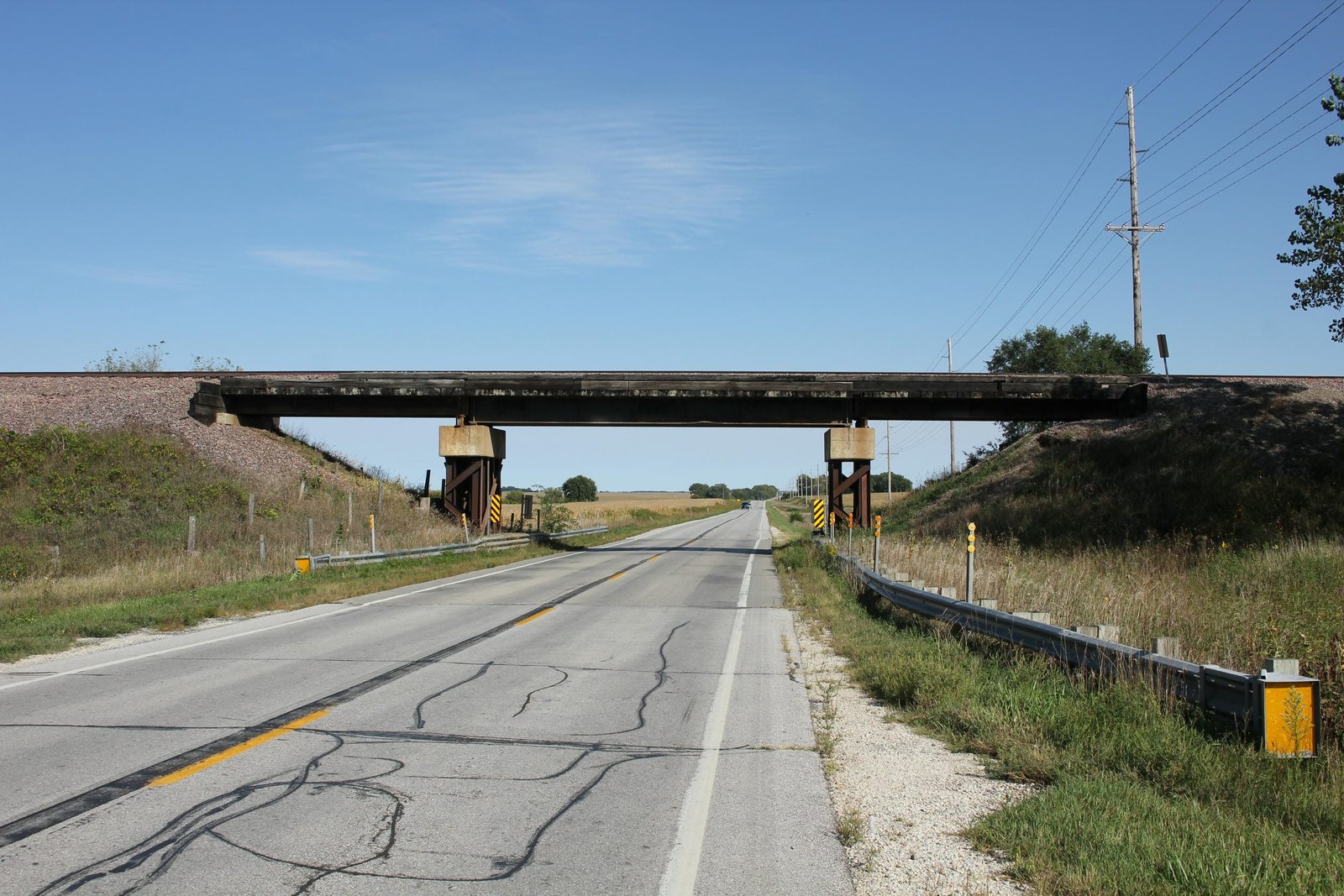
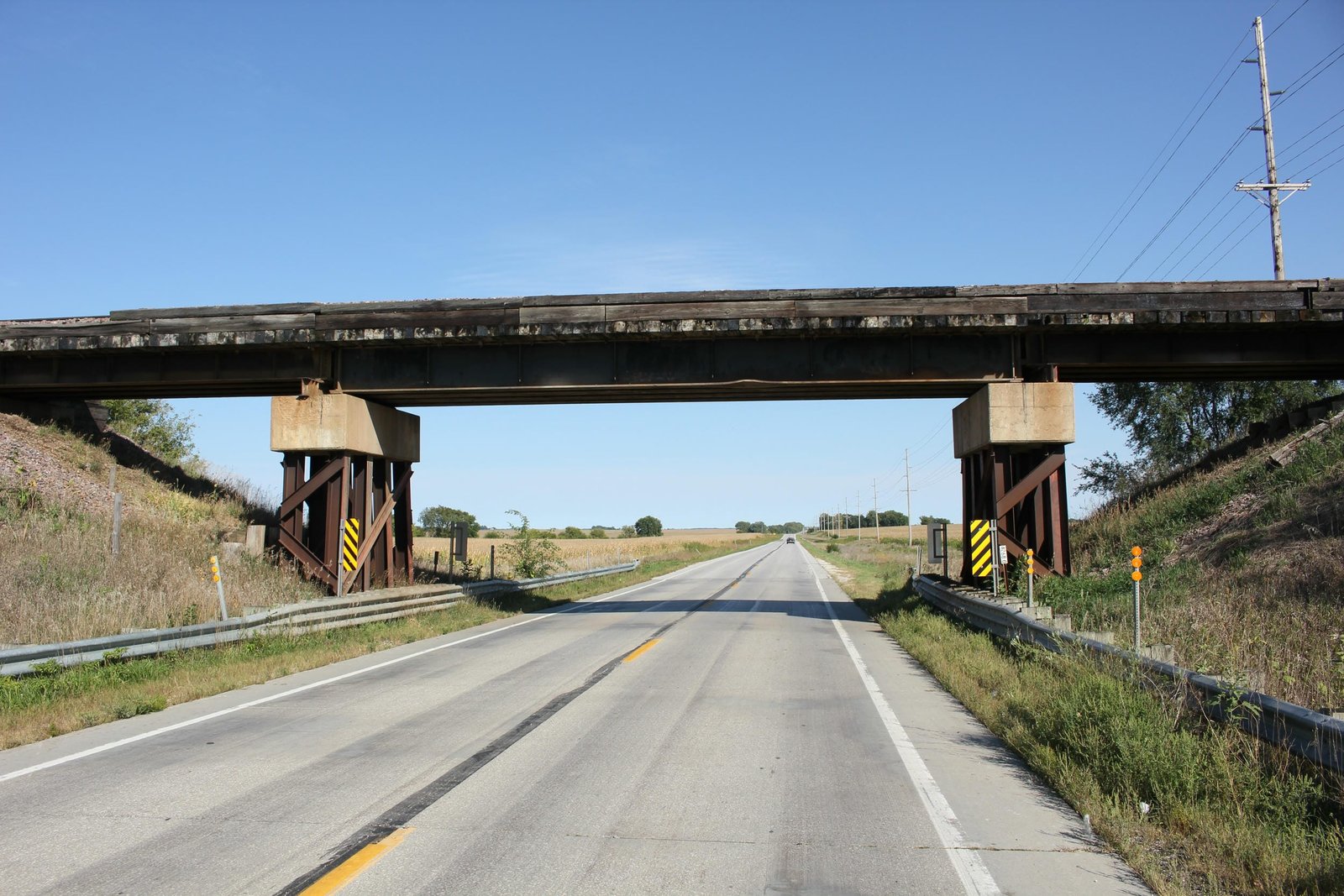
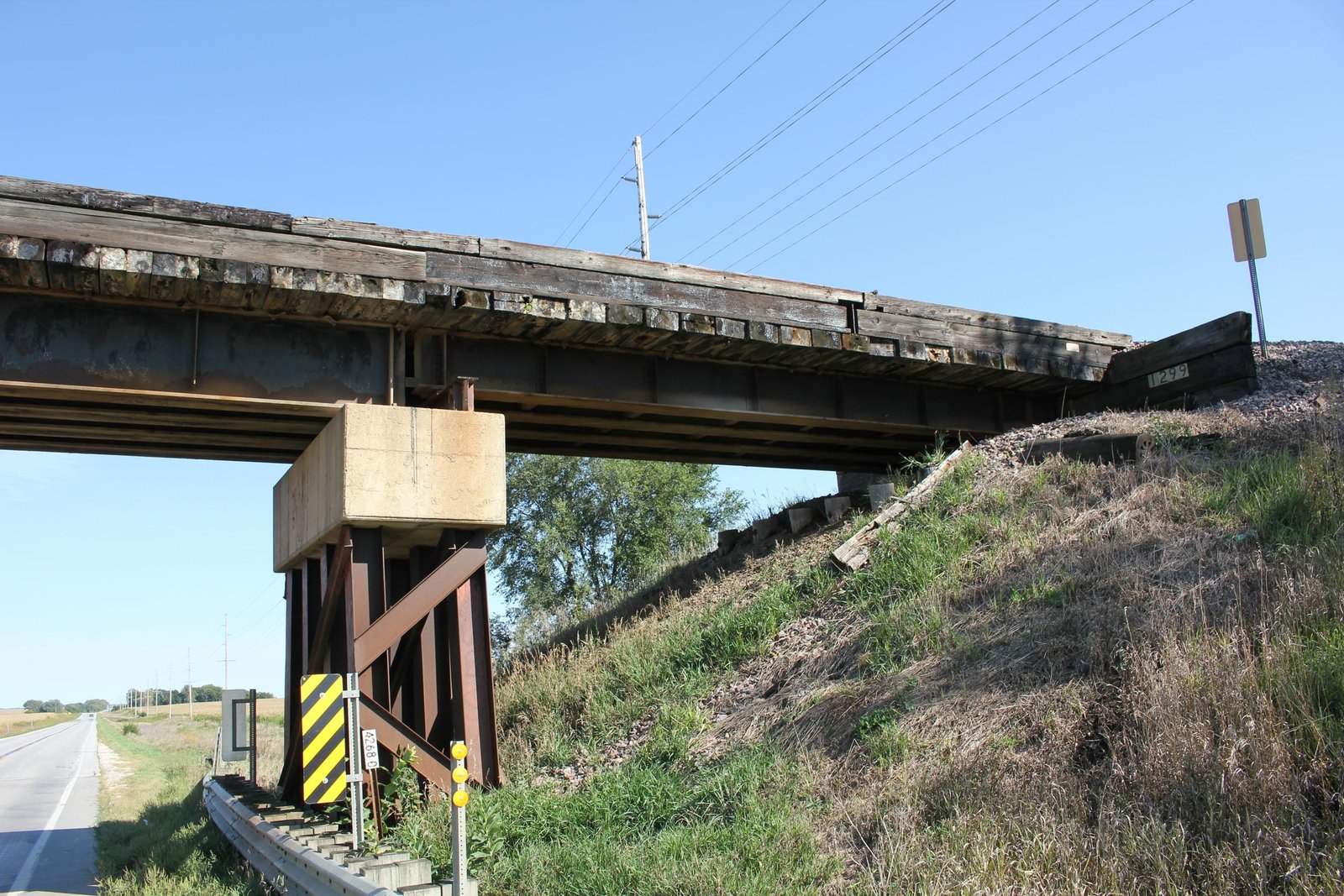
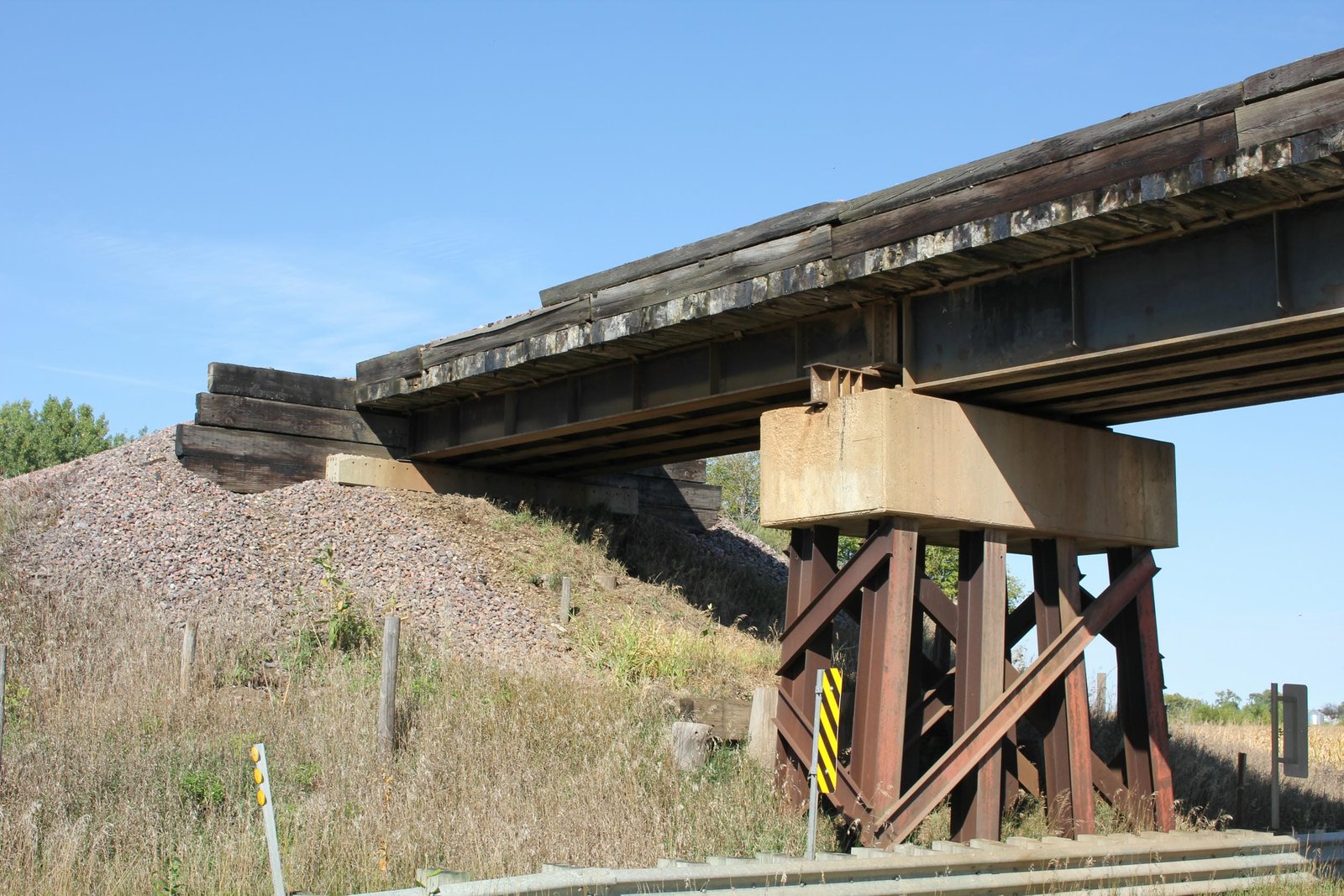
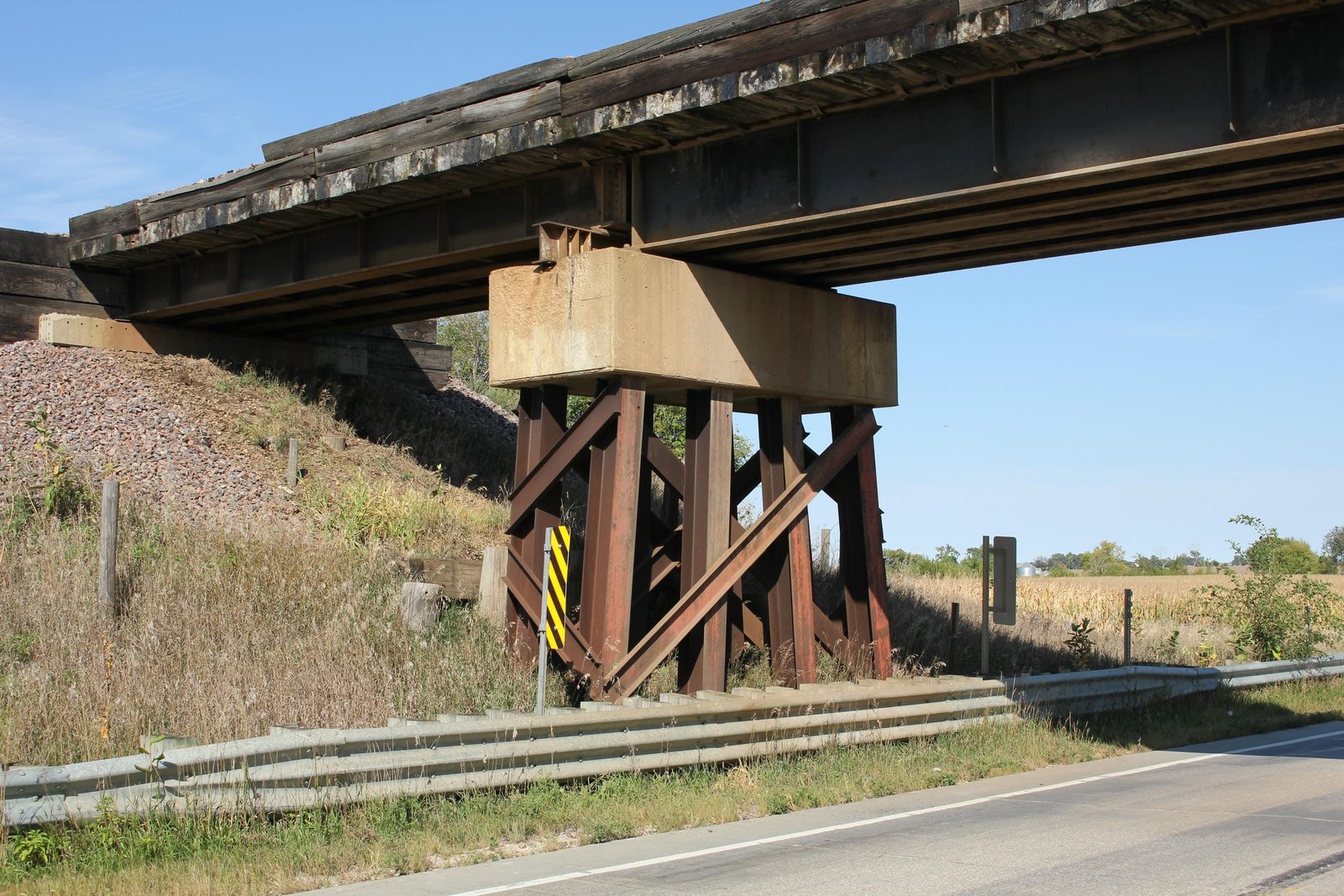
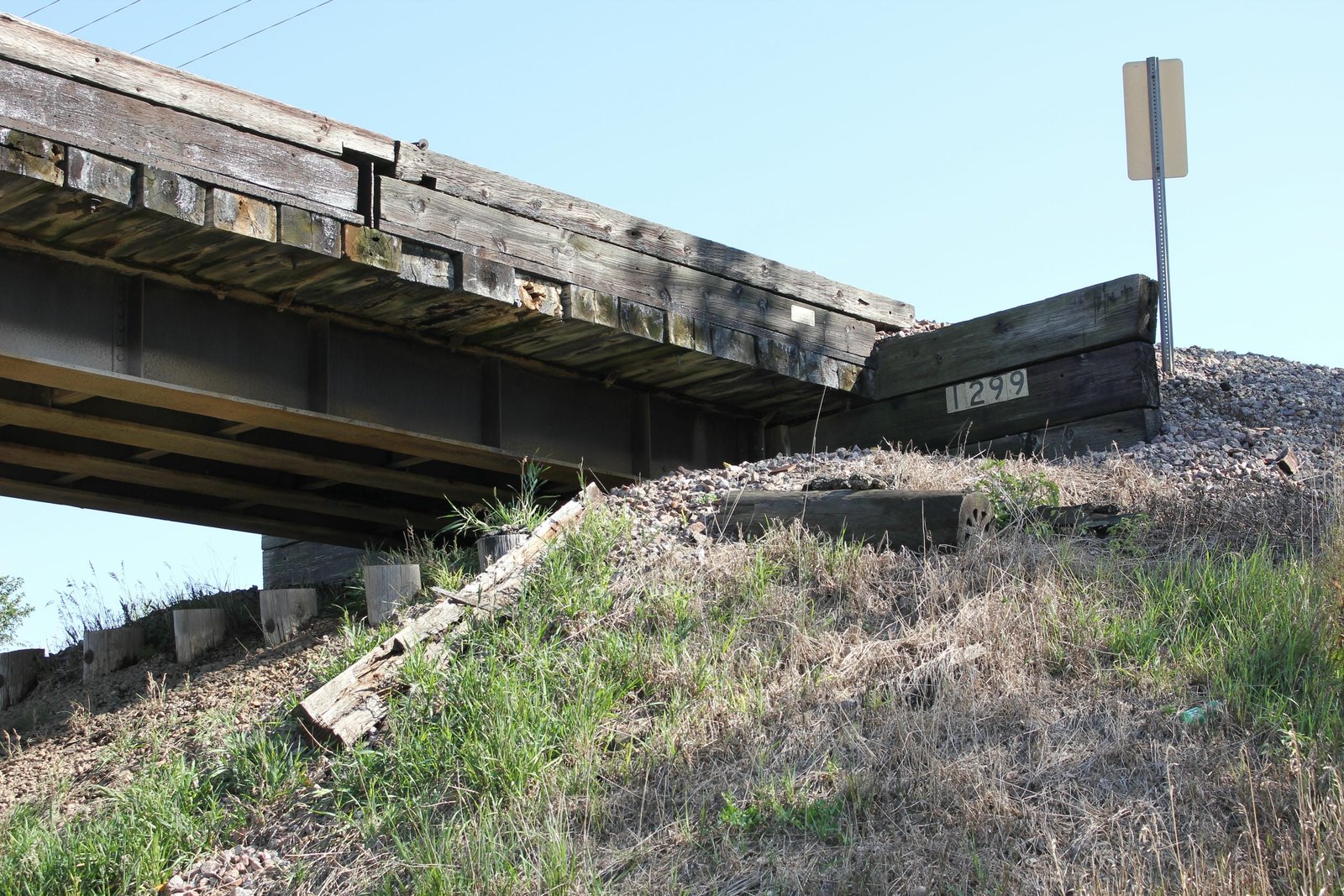
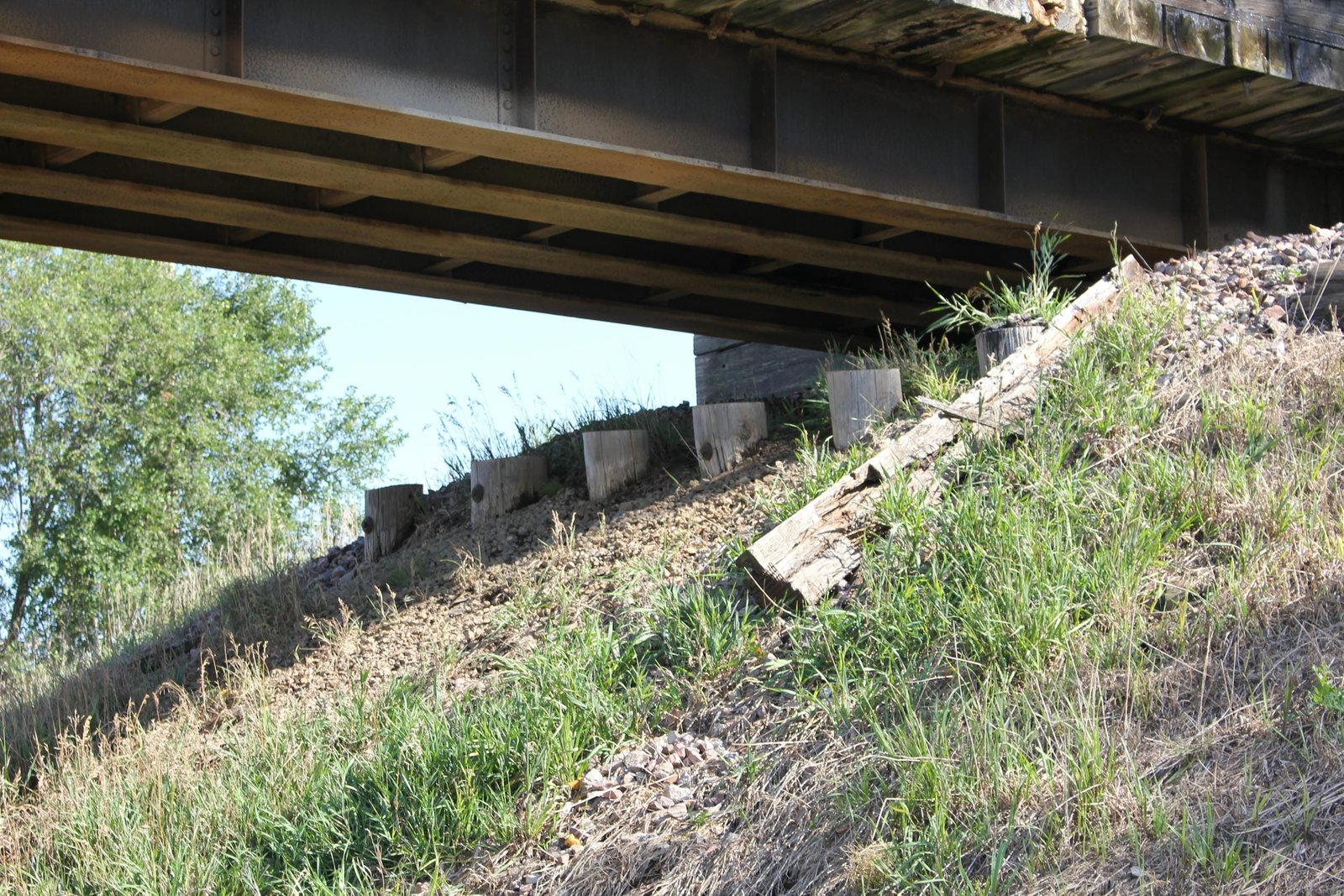
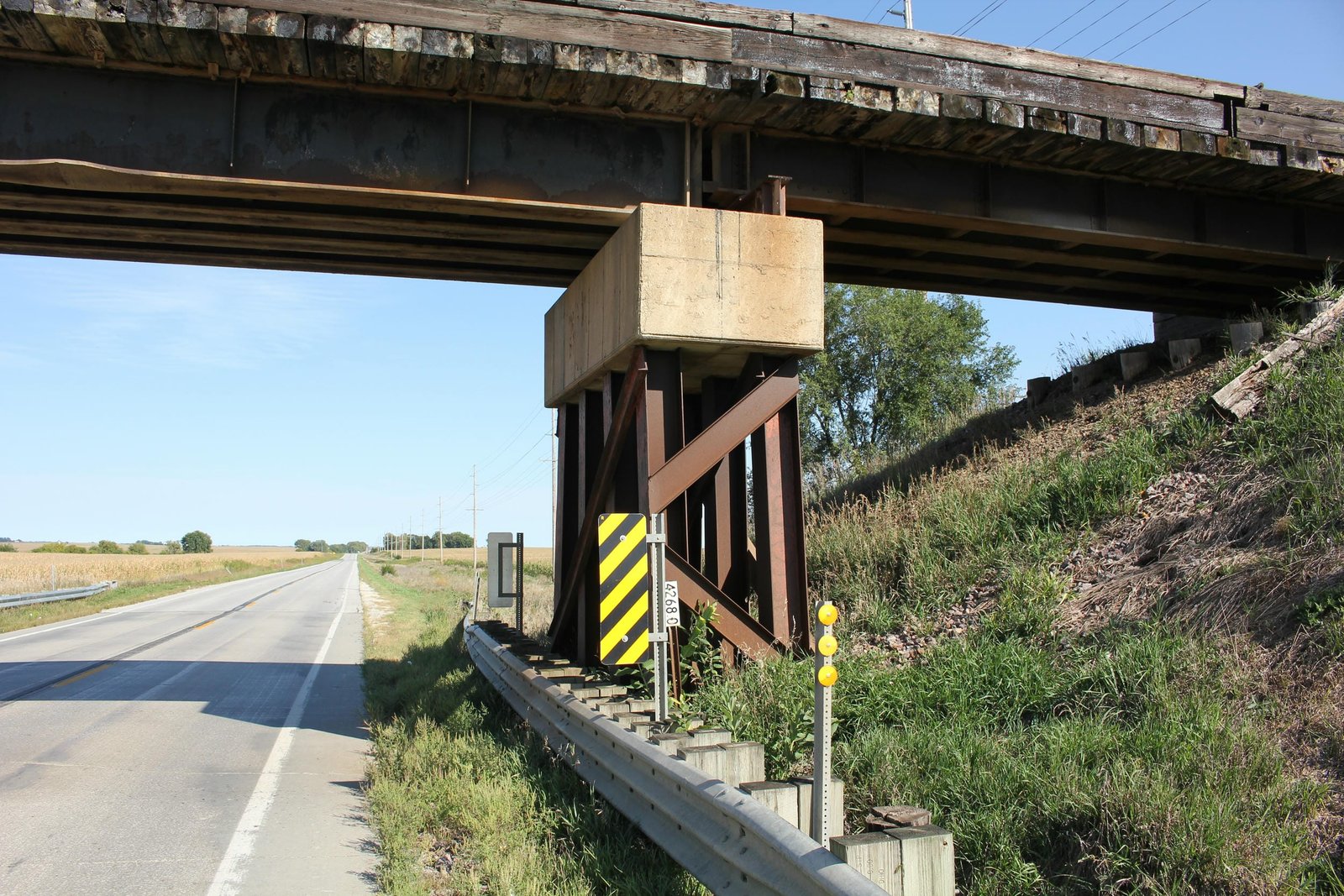
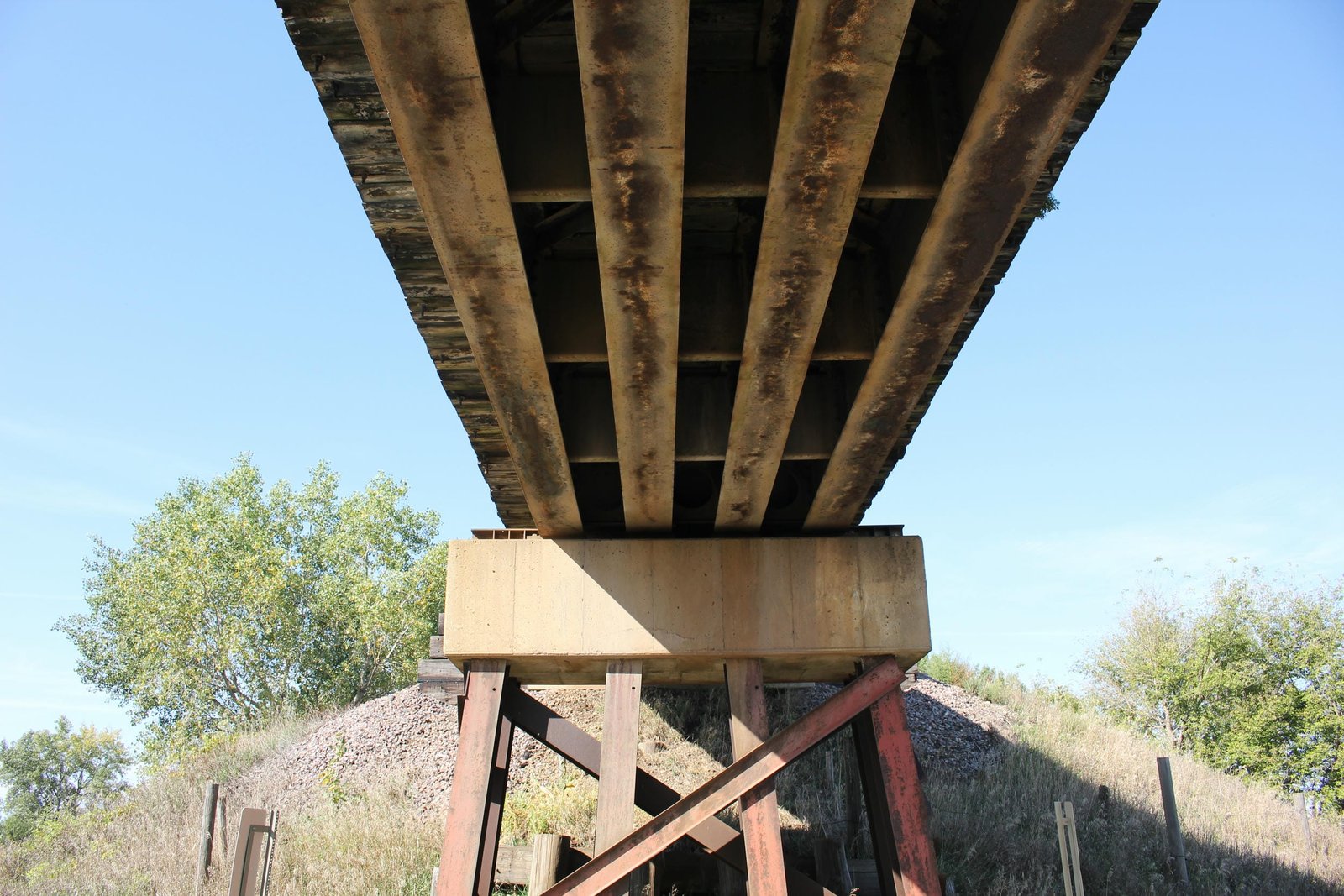
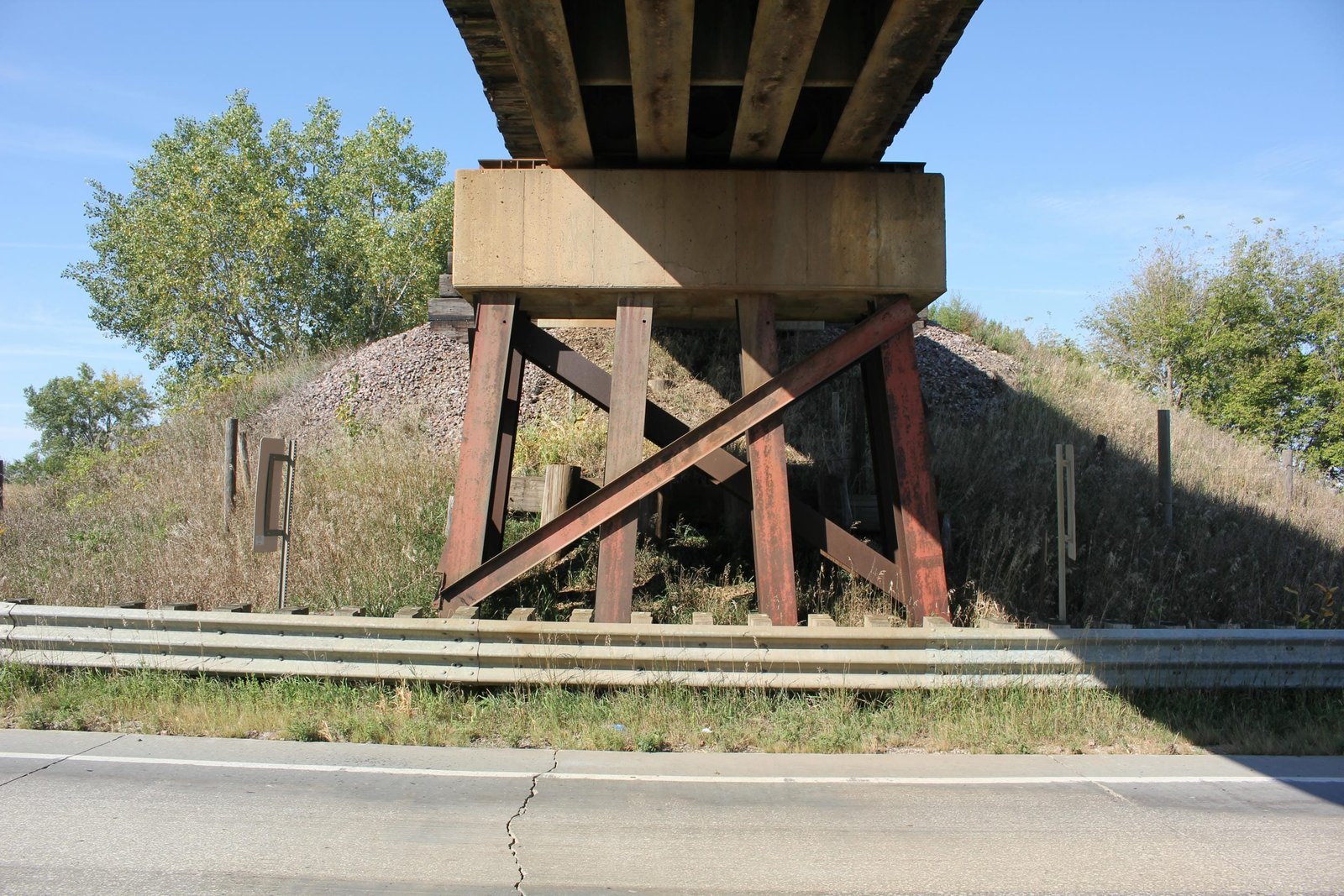
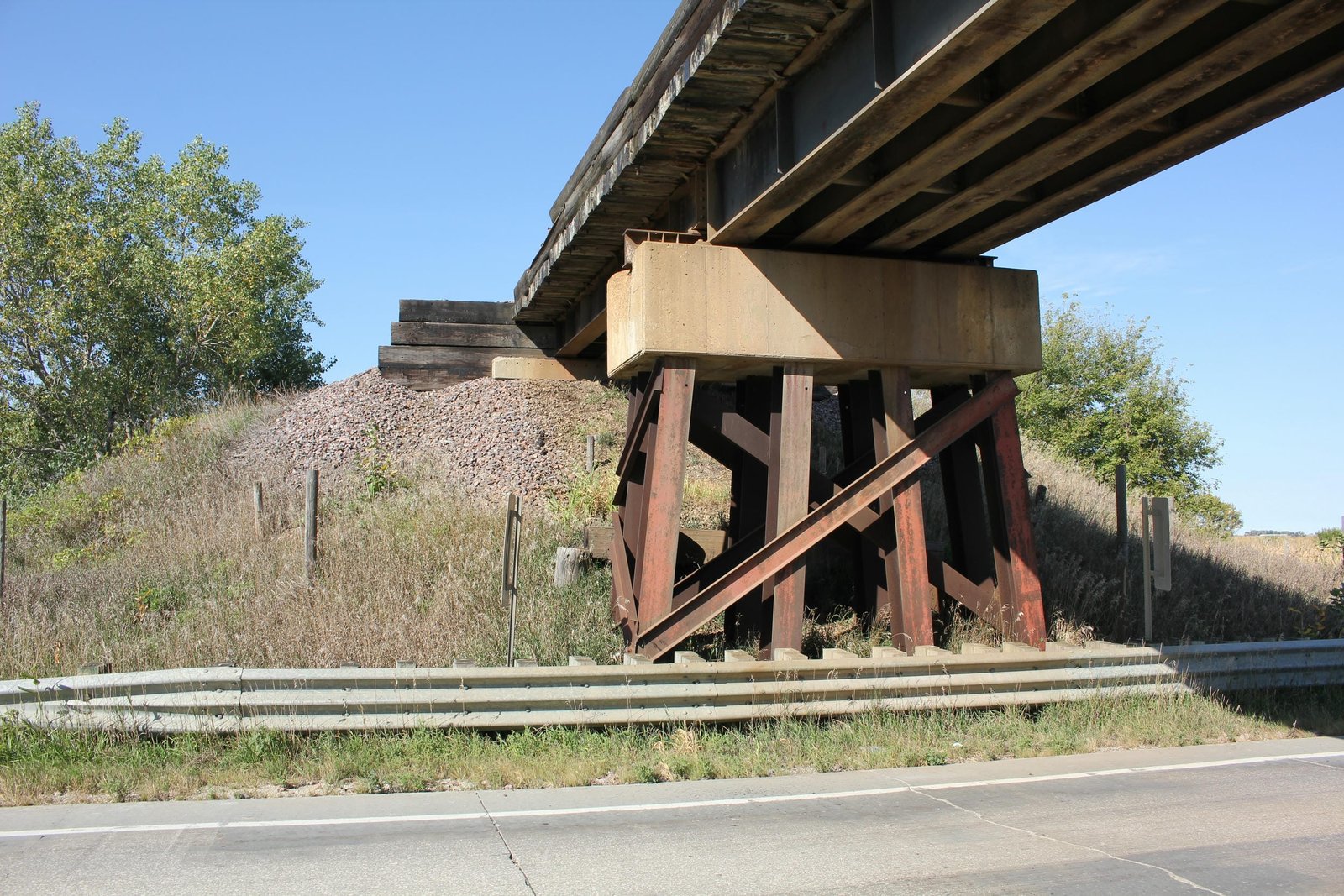
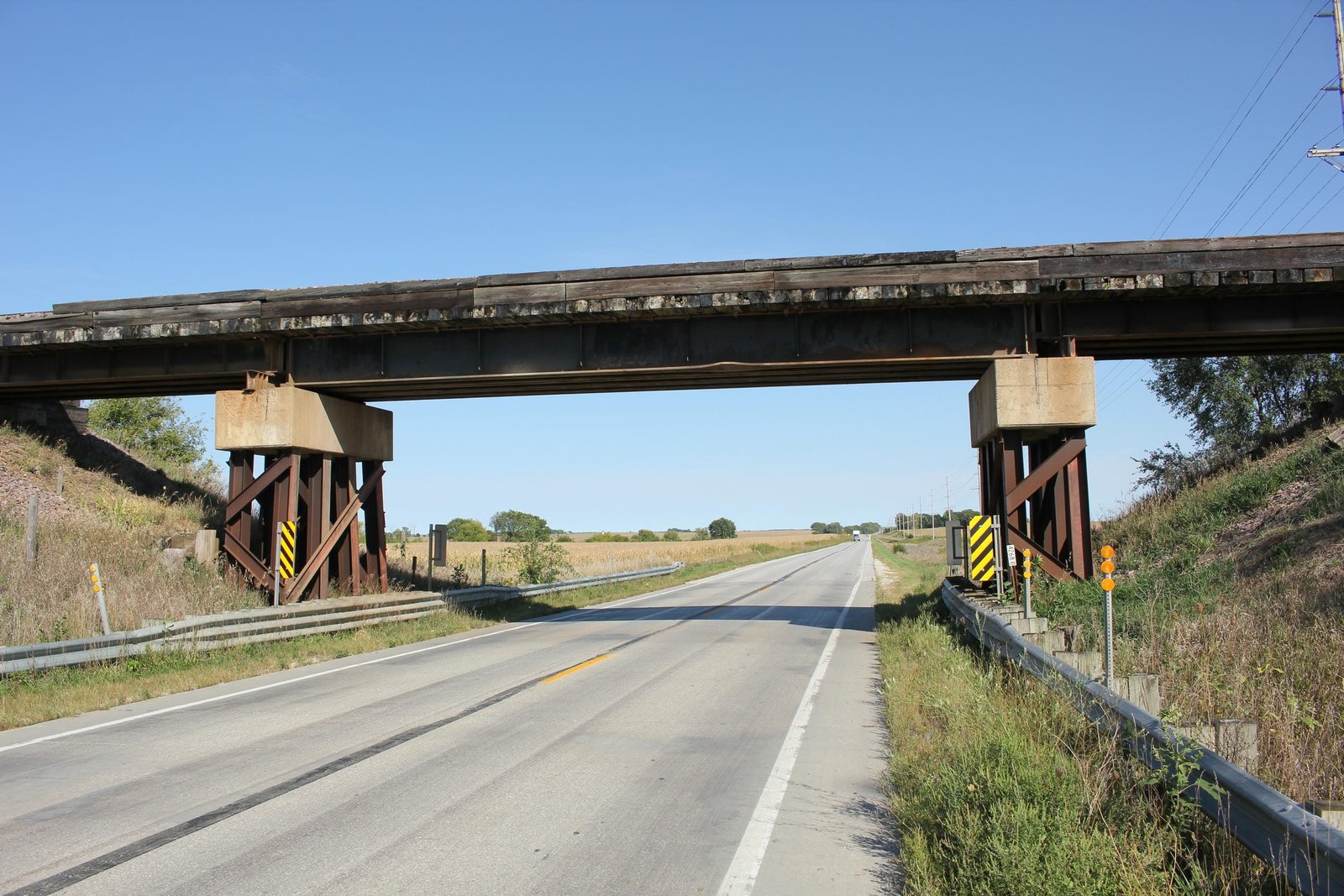
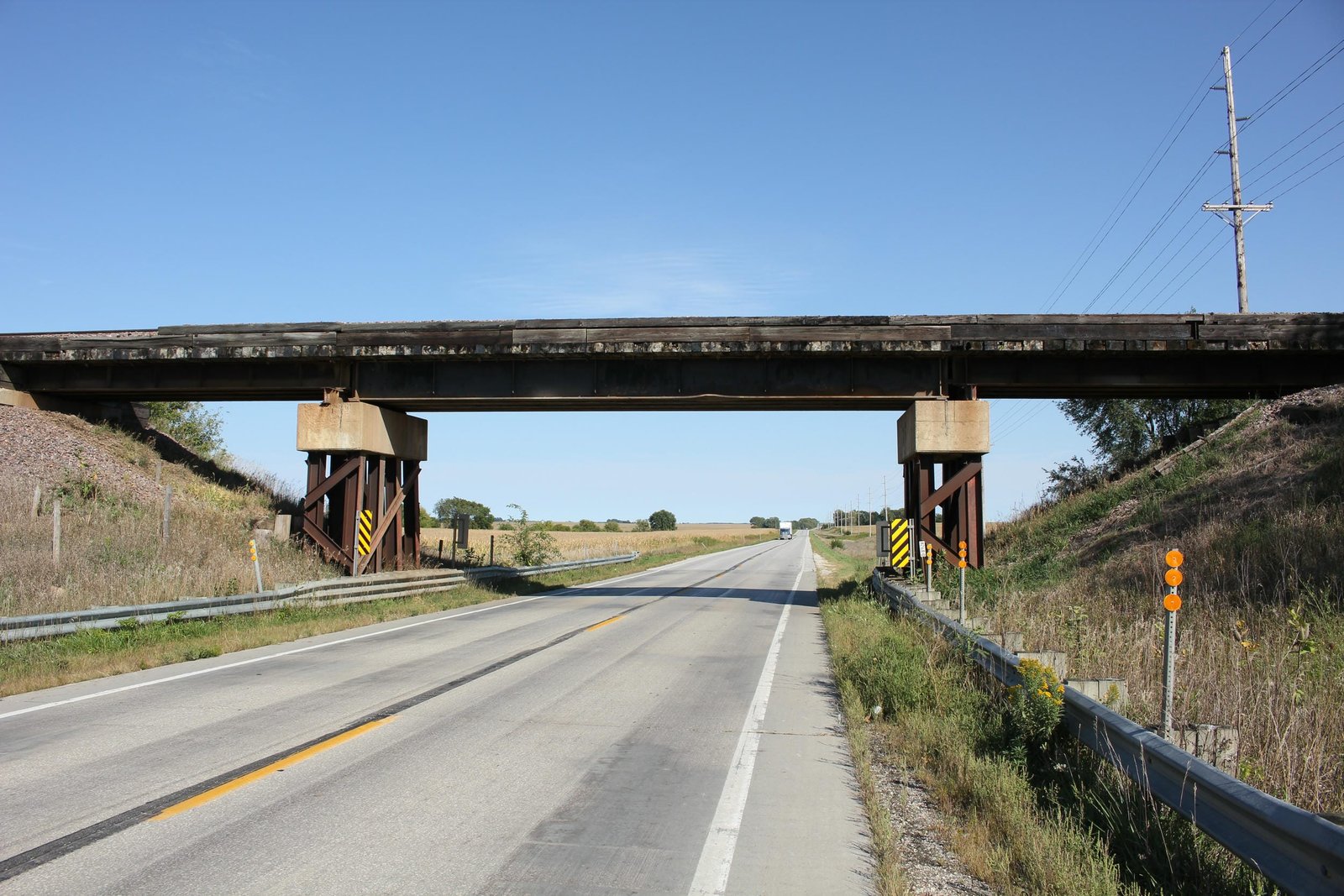
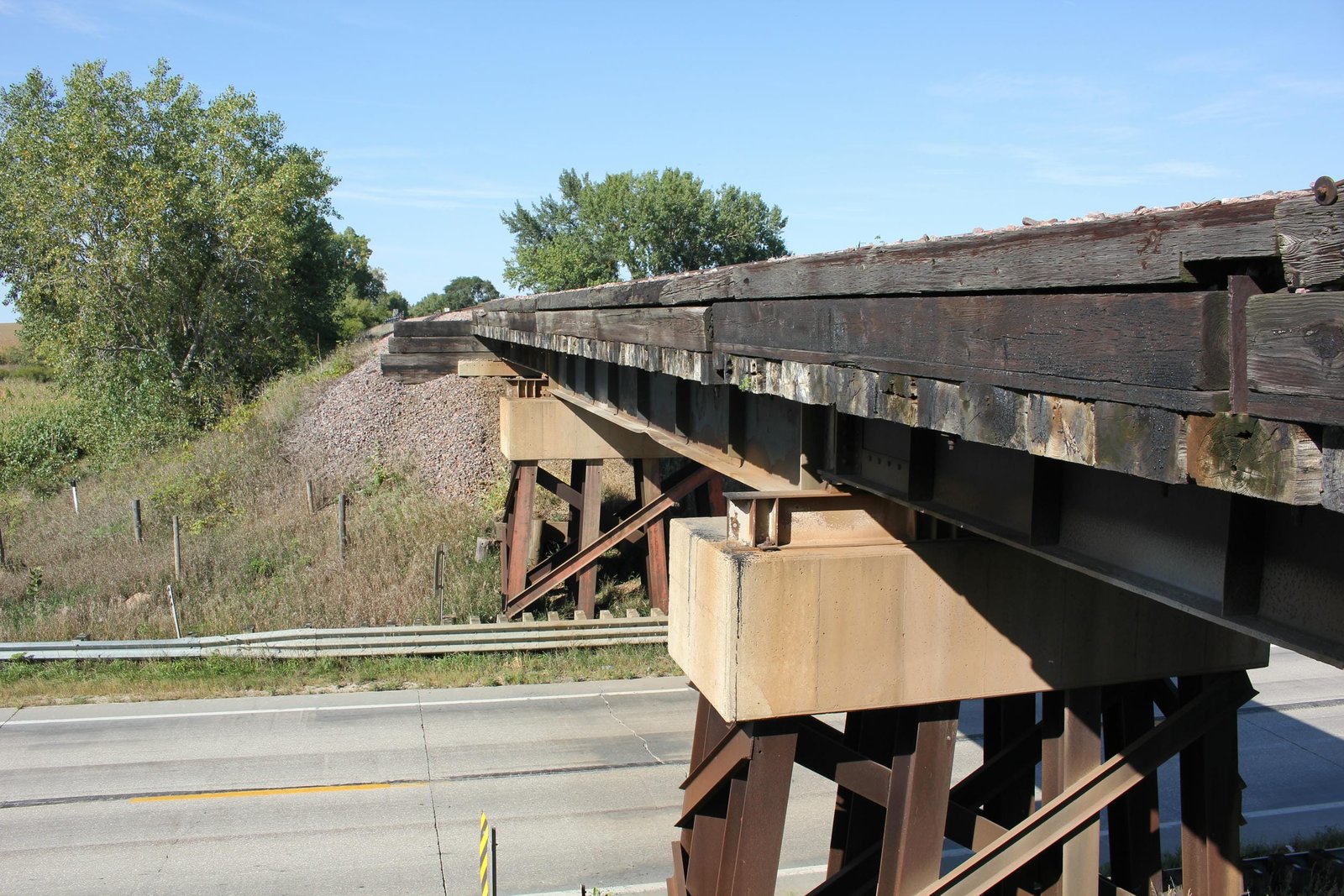
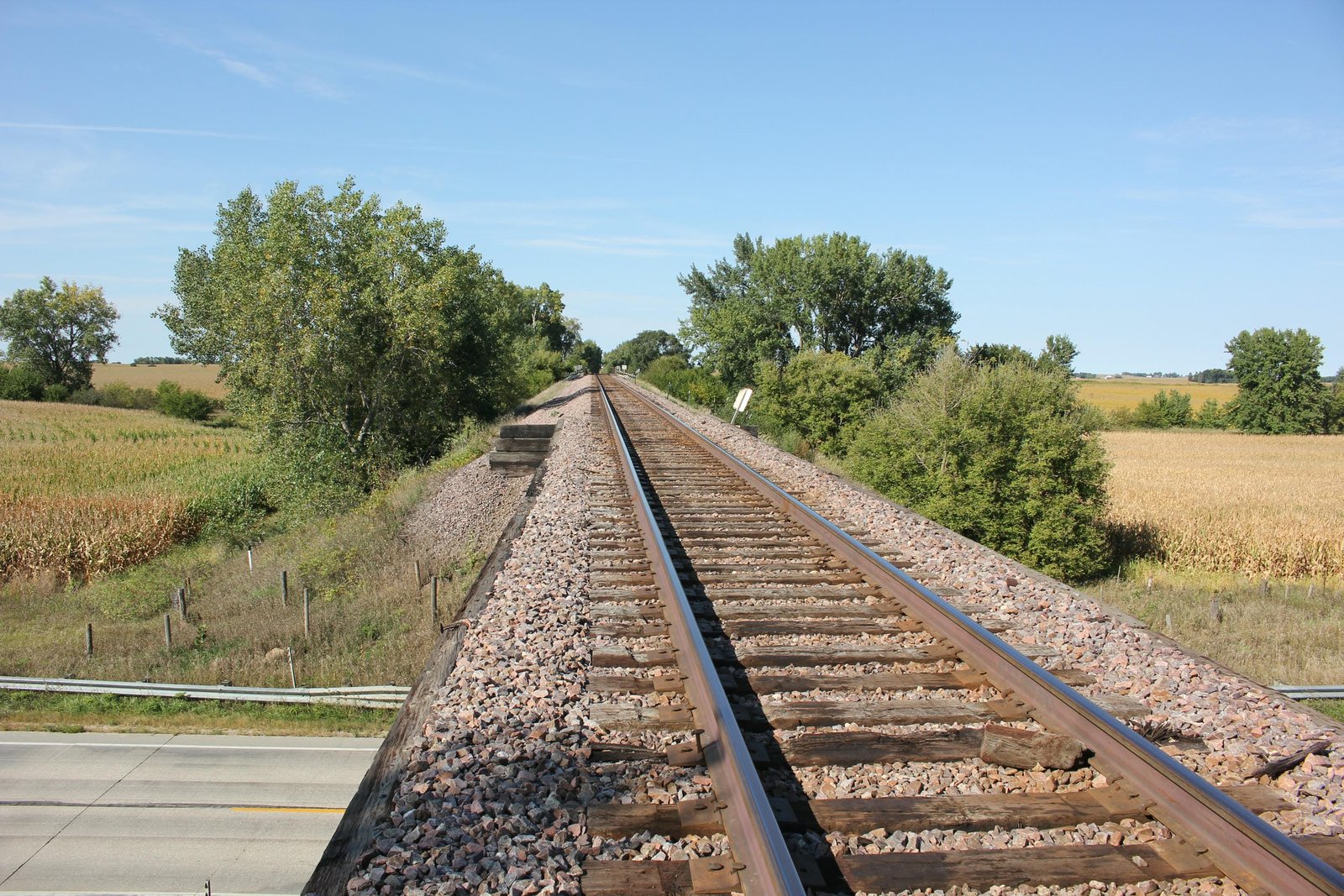
Located east of Radcliffe, this steel stringer bridge carries a former Chicago, Rock Island & Pacific Railroad (Rock Island) mainline over Iowa Highway 175. Little is known about the history of this bridge. The first bridge at this location was constructed in 1901, and likely consisted of a timber pile trestle. It is possible that the bridge was upgraded with a steel stringer center span in the mid-20th Century, retaining timber pile trestle approaches and timber pile substructures. After this line was purchased by the C&NW, it is believed that the bridge was rebuilt with secondhand steel spans and new steel pile substructures. While the approach spans were clearly relocated here, it is unclear if the center span was fabricated new, reused from the previous bridge or also relocated here. Currently, the bridge consists of a 44-foot steel stringer span, approached by a 30-foot steel stringer span on either end. The entire bridge is set onto steel pile substructures, which use concrete caps. The center span appears to be of welded construction, uses four equally spaced beams and appears to have been fabricated in approximately 1960. The approach spans use a riveted design, four equally spaced beams and appear to have been fabricated in approximately 1940. These spans were reused from an unknown location, and it is unclear if that location was on a former Rock Island line, C&NW line or another railroad. The entire bridge uses a creosote timber ballast deck. An unknown contractor fabricated the center span, and an additional unknown contractor fabricated the approach spans. It is believed that the substructures were constructed by railroad company forces. Steel stringer spans were popular for railroad use, as they were durable and easy to construct. As the C&NW rebuilt the former Rock Island lines that were purchased, many bridges were replaced with secondhand steel spans. Since the initial construction, the bridge has seen no significant alterations. Today, it remains in regular use as part of a Union Pacific Railroad mainline. Overall, the bridge appears to be in fair to good condition, with no significant deterioration noted. The author has ranked this bridge as being locally significant, due to the common design and unclear history.
Citations
| Railroad History Citation | ICC Valuation Information, Compiled by Richard S. Steele |