
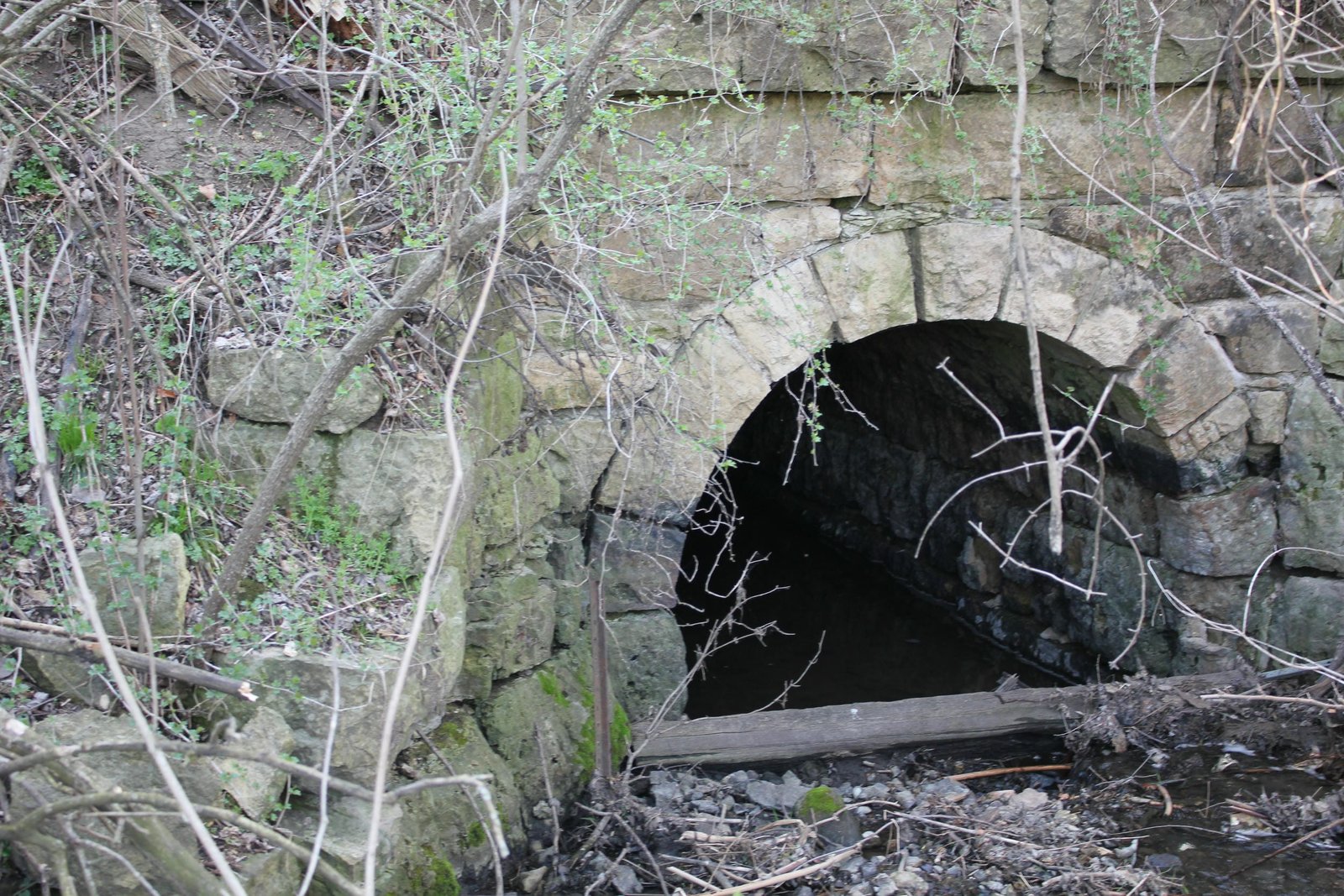
Click the photo to view the full-size version
| Name | Chicago Great Western Railway Culvert #K207.22 |
| Built By | Chicago Great Western Railway |
| Currently Owned By | Warren County Conservation Board |
| Contractor | Unknown |
| Length | 6 Feet Total |
| Width | 1 Track (60 Feet Estimated) |
| Height Above Ground | 5 Feet (Estimated) |
| Superstructure Design | Stone Arch Culvert |
| Substructure Design | Stone Masonry |
| Date Built | c. 1900 |
| Traffic Count | 0 Trains/Day (Bridge is Open to Pedestrian Traffic) |
| Current Status | Open to Pedestrian Traffic |
| Chicago Great Western Railway Bridge Number | K207.22 (Old F281) |
| Significance | Local Significance |
| Documentation Date | 4/11/2017 |
In 1879, the Dubuque & Dakota Rail Road (D&D) constructed 41 miles of new railroad, extending from Waverly, Iowa to Hampton, Iowa. In 1887, the D&D was sold to the Minnesota and Northwestern Railroad (M&NW), which merged with the Chicago, St. Paul & Kansas City Railway (CStP&KC) in 1887. The CStP&KC was sold to the Chicago Great Western Railway (CGW) in 1893. In 1902, the CGW sold the Hampton to Waverly line to the Mason City & Fort Dodge Railway (MC&FD Ry), which rehabilitated the line. Concurrently, the Mason City & Fort Dodge Railroad (MC&FD) constructed 27 additional miles from Hampton, Iowa to Clarion, Iowa. Both the MC&FD Ry and MC&FD were leased by the CGW. The MC&FD Ry completed an additional 29 miles of new railroad between Oelwein, Iowa and Waverly in 1904, and was merged into the MC&FD in 1905. The CGW would be reorganized as the Chicago Great Western Railroad in 1909, and maintained a lease of the MC&FD property.
The CGW had acquired and constructed a modest railroad network throughout Illinois, Iowa, Minnesota and Missouri; connecting major cities in these states. The CGW was one of the smaller railroads in the area, and was late to develop lines. As a result, the railroad never saw the fortunes of other railroads in the area. This line served as a principal mainline for the CGW, serving agricultural industries and providing a connection to terminals at Omaha, Nebraska. In the early 20th Century, the CGW was often surviving on razor-thin profit margins. In 1940, the CGW entered bankruptcy, and was again reorganized as the Chicago Great Western Railway. At this time, the MC&FD was formally merged into the CGW. After the bankruptcy, the CGW became an innovative railroad, pioneering intermodal service and becoming one of the first railroads to completely switch to diesel locomotives. A capital improvement program was launched in 1949, which sought to rebuild and rehabilitate deteriorated infrastructure.
In 1968, the CGW was purchased by the Chicago & North Western Railway (C&NW). The C&NW already owned a better constructed route, which ran roughly parallel to this line. In 1979, the C&NW abandoned a section between Coulter, Iowa and Clarion; followed by a large section between Oelwein and Shell Rock, Iowa in 1986. A short segment was abandoned between Shell Rock and Clarksville, Iowa in 1988. In 1995, the C&NW was purchased by Union Pacific Railroad (UP). UP abandoned a section between Clarksville and Allison, Iowa in 1998, followed by the remaining section between Allison and Coulter in 2003. Today, much of the line has been acquired for trail use. The Rolling Prairie Trail currently uses the right-of-way between Readlyn and Waverly, between Clarksville and Bristow and between Hampton and Coulter. The remaining section between Bristow and Hampton is scheduled to become part of the trail, while the remaining sections are currently abandoned.
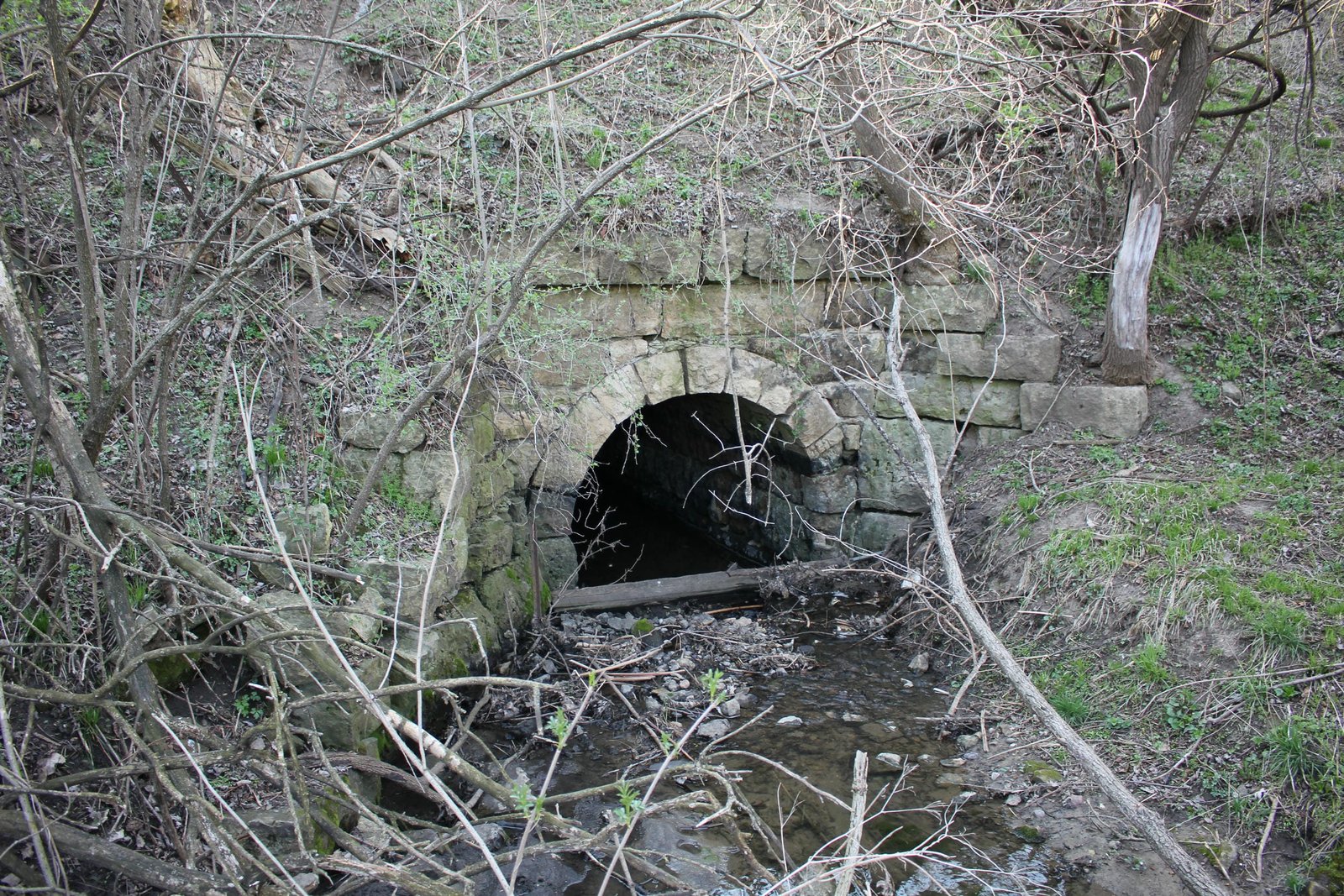
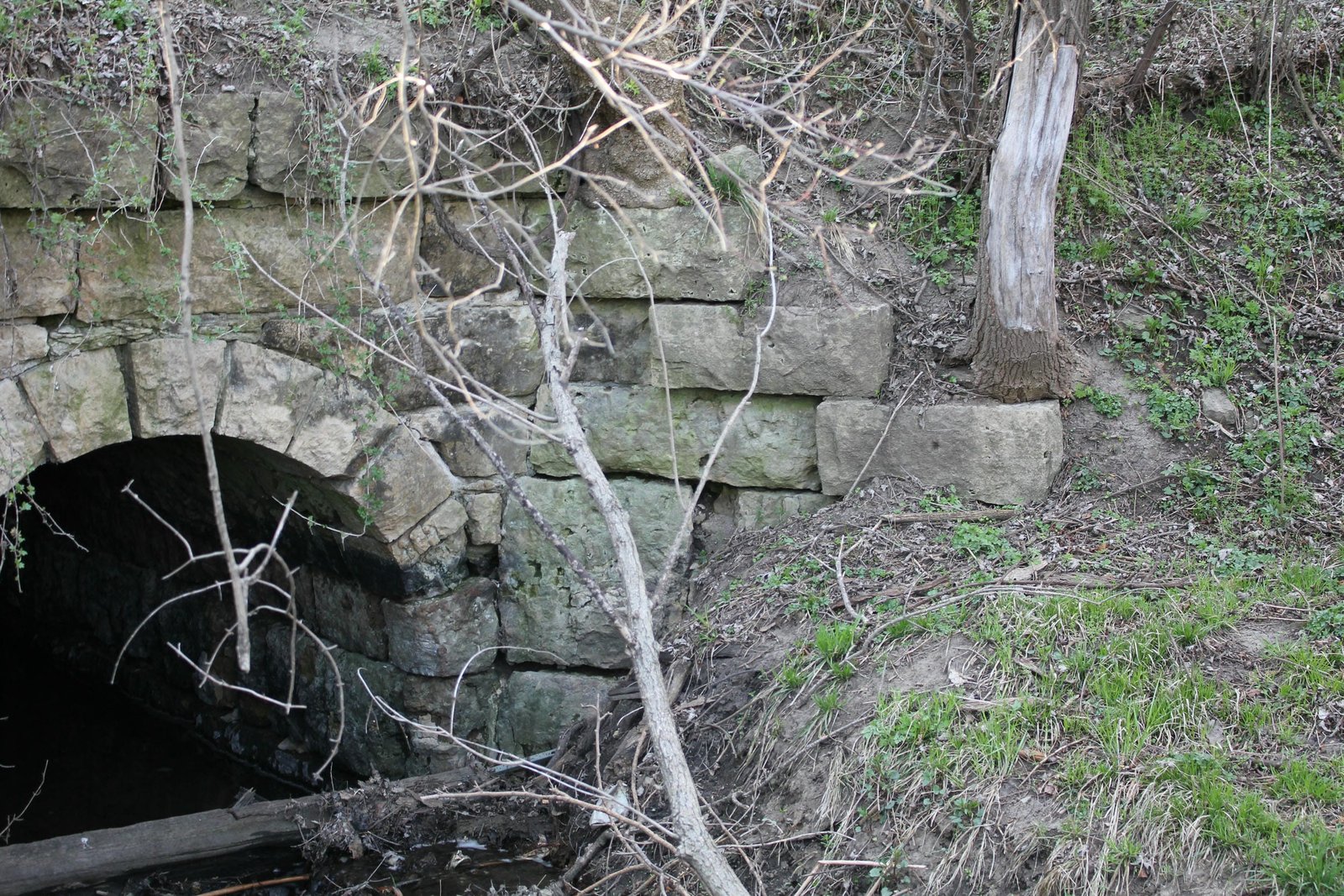
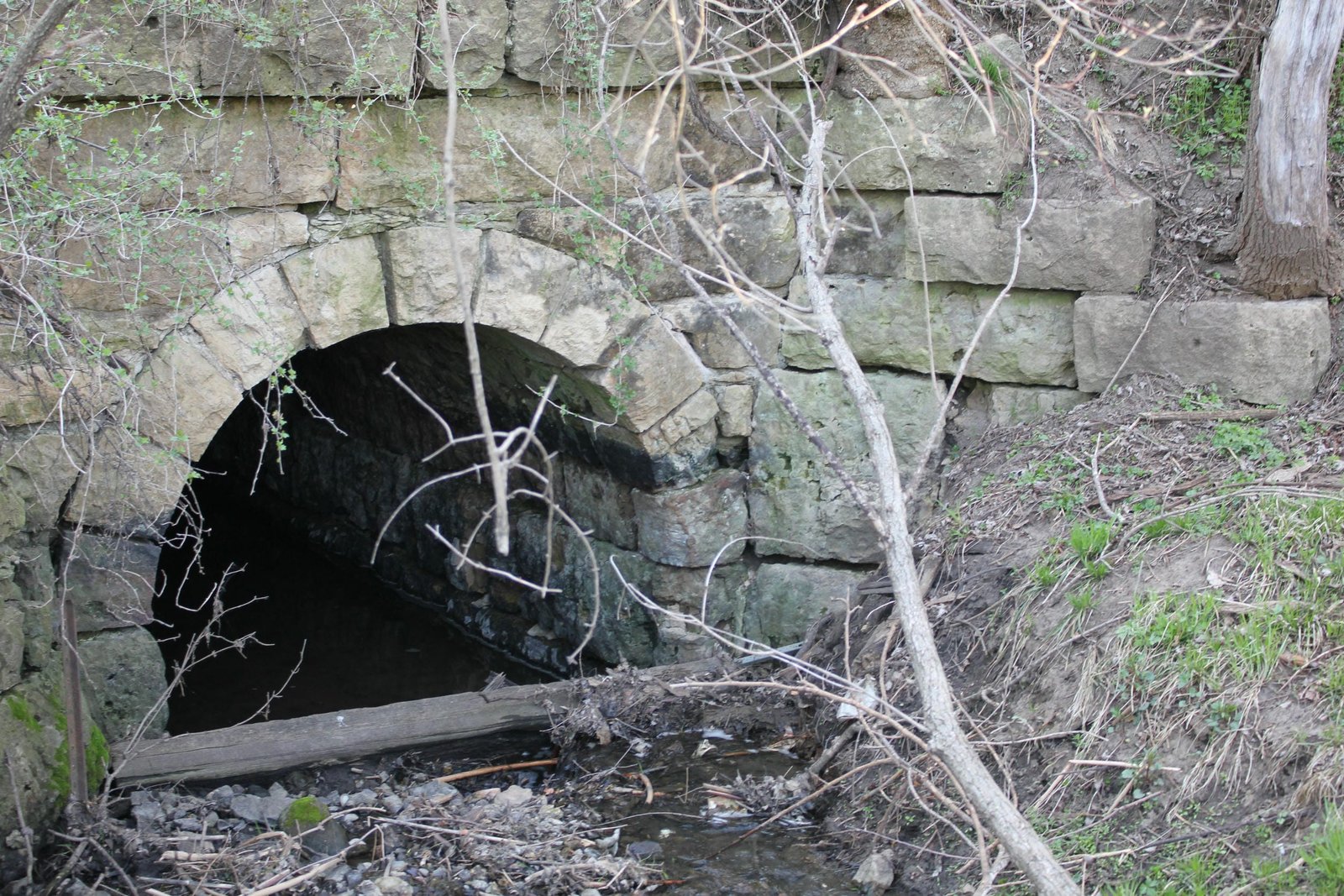
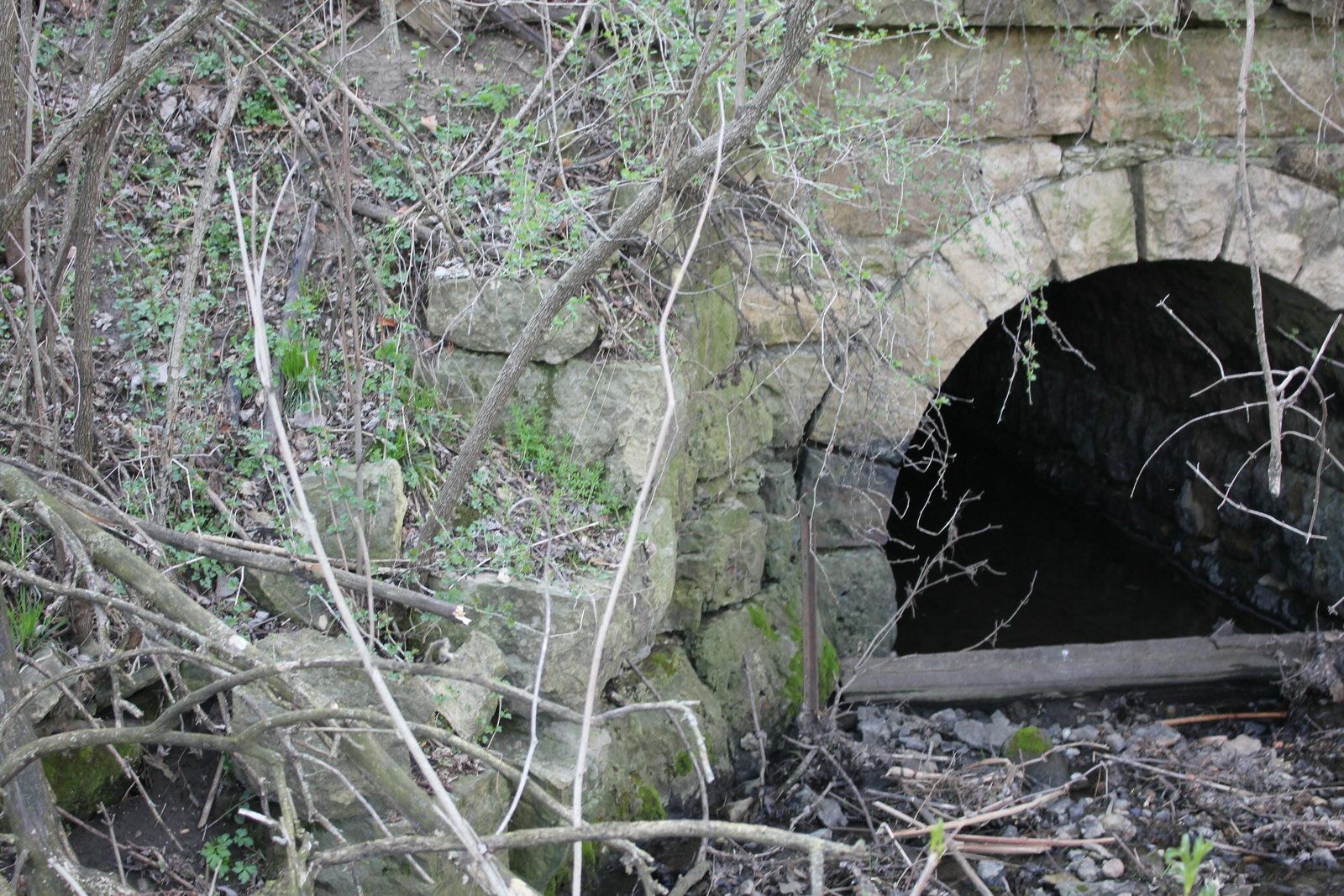
Located on the south side of Cumming, this small stone arch culvert carries a former Chicago Great Western Railway mainline over an unnamed creek. The first bridge at this location was likely a timber pile trestle bridge, constructed when the line was first built. In the late 19th Century and early 20th Century, the CGW made significant upgrades to its property, filling timber bridges and constructing culverts. It is believed the current culvert was constructed in approximately 1900. Currently, the culvert consists of a 6-foot stone arch culvert, set onto stone substructures and constructed at a width of approximately 60 feet. The superstructure follows a standard design, with a semicircular arch and short headwalls. The substructure also follows a standard design, with stepped wing walls extending at a diagonal from the structure. Stone for the culvert consists of a yellow limestone, likely quarried at Mankato, Minnesota. An unknown contractor constructed the culvert, likely as part of a larger contract for culverts and bridges along this line. Stone arches were popular for railroad bridges and culverts, as they were durable and easy to construct. Since the initial construction, the culvert has seen no significant alterations. Today, the culvert is used by the Great Western Trail, a popular trail in the area. Overall, the culvert appears to be in fair condition, with some separation of the stones and loss of stones noted. Former CGW structures have an abnormally high rate of deterioration and failure compared to other railroads in the Midwest. It is unclear why former CGW structures have a higher rate of deterioration and failure, although it is possible that a combination of poor workmanship, substandard materials, lack of maintenance and using smaller structures than an opening required could be the cause. The author has ranked this culvert as being locally significant, due to the common design.
Citations
| Railroad History Citation | ICC Valuation Information, Compiled by Richard S. Steele |