
Click the photo to view the full-size version
| Name | RI Dry Branch Creek Bridge #5 Chicago, Rock Island & Pacific Railroad Bridge #43 |
| Built By | Burlington, Cedar Rapids & Northern Railway |
| Currently Owned By | Private Owner |
| Superstructure Contractor | Unknown |
| Substructure Contractor | Unknown |
| Length | 110 Feet Total, 55 Foot Spans |
| Width | 1 Track |
| Height Above Ground | 10 Feet (Estimated) |
| Superstructure Design | Through Plate Girder |
| Substructure Design | Stone Masonry, Brick and Concrete |
| Date Built | 1898 |
| Traffic Count | 0 Trains/Day (Bridge is Abandoned) |
| Current Status | Abandoned |
| Chicago, Rock Island & Pacific Railroad Bridge Number | 43 |
| Significance | Local Significance |
| Documentation Date | 10/22/2016 |
In 1870, the Burlington, Cedar Rapids & Minnesota Railway (BCR&M) began construction on a new railroad line, constructing 41 miles from Burlington, Iowa north to Columbus Junction, Iowa. The following year, the railroad was completed an additional 116 miles through Cedar Rapids, Iowa to Waterloo, Iowa. In 1872, an additional 64 miles was completed to Plymouth, Iowa. Work on the line resumed in 1877, when the Burlington, Cedar Rapids & Northern Railway (BCR&N) completed an additional 5 miles to Manly, Iowa. In 1878, the BCR&M became part of the BCR&N, completing a diagonal mainline from far southeast Iowa to north central Iowa. By the 1880s, the BCR&N had become an important railroad in Iowa, connecting towns and cities in southeast Iowa to northern Iowa. This line formed the principal mainline of the company, allowing for the construction of many additional branch lines. By the turn of the 20th Century, the BCR&N operated over 1,000 miles of track throughout Iowa, connecting both small towns and large cities. This line also served the basis of a northern extension to St. Paul, Minnesota; which was constructed between 1900 and 1901. In June 1903, the BCR&N was acquired by the Chicago, Rock Island & Pacific Railway (Rock Island), which operated a large railroad network through the central United States. By acquiring the BCR&N, the Rock Island greatly expanded its service area, reaching major hubs such as St. Paul and Sioux Falls, South Dakota.
The Rock Island struggled financially throughout much of its history, experiencing repeated bankruptcies and chronic instability. After World War II, the Rock Island struggled to survive, proposing mergers and deferring maintenance on their routes. The railroad reorganized as the Chicago, Rock Island & Pacific Railroad in 1948. Despite the financial troubles, the Rock Island continued to use this route as a mainline, connecting to major agricultural areas in northern Iowa. By the mid-1970s, the railroad was in serious decline. The railroad secured loans to eliminate slow orders, acquired new equipment, and attempted to restore profitability. In 1978, the railroad came close to profit, but creditors were lobbying for a complete shutdown of the Rock Island. During the fall of 1979, a strike crippled the railroad, and by January of 1980, the entire system was ordered to be shut down and liquidated. Many of the lines and equipment were scrapped. Profitable sections of railroad were prepared for sale. In 1981, a group of grain elevators along the route formed a short line railroad to operate over the bankrupt line.
In 1981 and 1982, the railroad was rehabilitated for use, and the route reopened for service. In 1984, the Iowa Northern Railway (IANR) purchased the line. A derailment near Burlington in 1985 caused the abandonment of much of the line south of Cedar Rapids, with only a small segment at Columbus Junction being sold to the Soo Line, which was controlled by Canadian Pacific Railway (CP) that year. In the late 20th Century, the IANR became a profitable railroad, serving a variety of agricultural industries between Cedar Rapids and Manly. A short segment of the line in Waterloo was abandoned in 1988, as the IANR had acquired trackage rights on a different line. In 1994, IANR was sold to Iron Road Railways (IRR), a holding company. In 1997, CP would sell the line segment to I&M Rail Link, which was later purchased by the Dakota, Minnesota & Eastern Railroad (DM&E) subsidiary Iowa, Chicago & Eastern Railroad (IC&E). After the bankruptcy of the IRR in 2003, the IANR was purchased by a former director of IRR, and grew considerably into a significant regional railroad.
The DM&E/IC&E were purchased by Canadian Pacific in 2008, and the line at Columbus Junction abandoned shortly after due to a bridge collapse during the 2008 floods. In 2025, the IANR was purchased by Canadian National Railway (CN), which already operated a significant railroad network in northern Iowa. This was considered a somewhat unusual example of a large class-one railroad purchasing a short line with the intention of further growing business. At the time of purchase, the IANR not only owned the Cedar Rapids to Manly mainline, but also operated branch lines to Oelwein and Forest City. Today, CN operates the Cedar Rapids Subdivision between Cedar Rapids and Waterloo; and the Manly Subdivision between Waterloo and Manly. South of Cedar Rapids, portions of the line have become part of the Hoover Nature Trail, while other sections are outright abandoned.
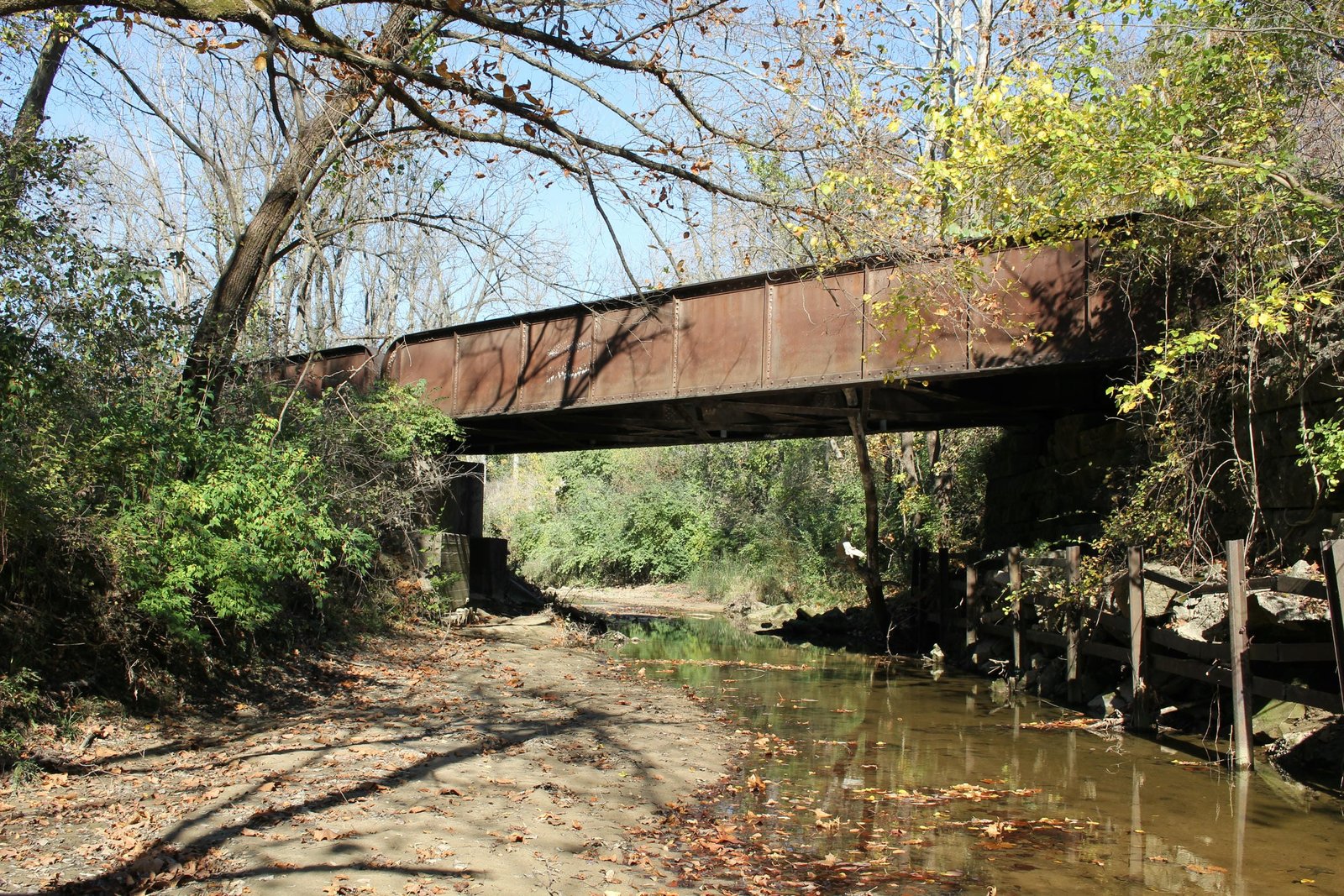
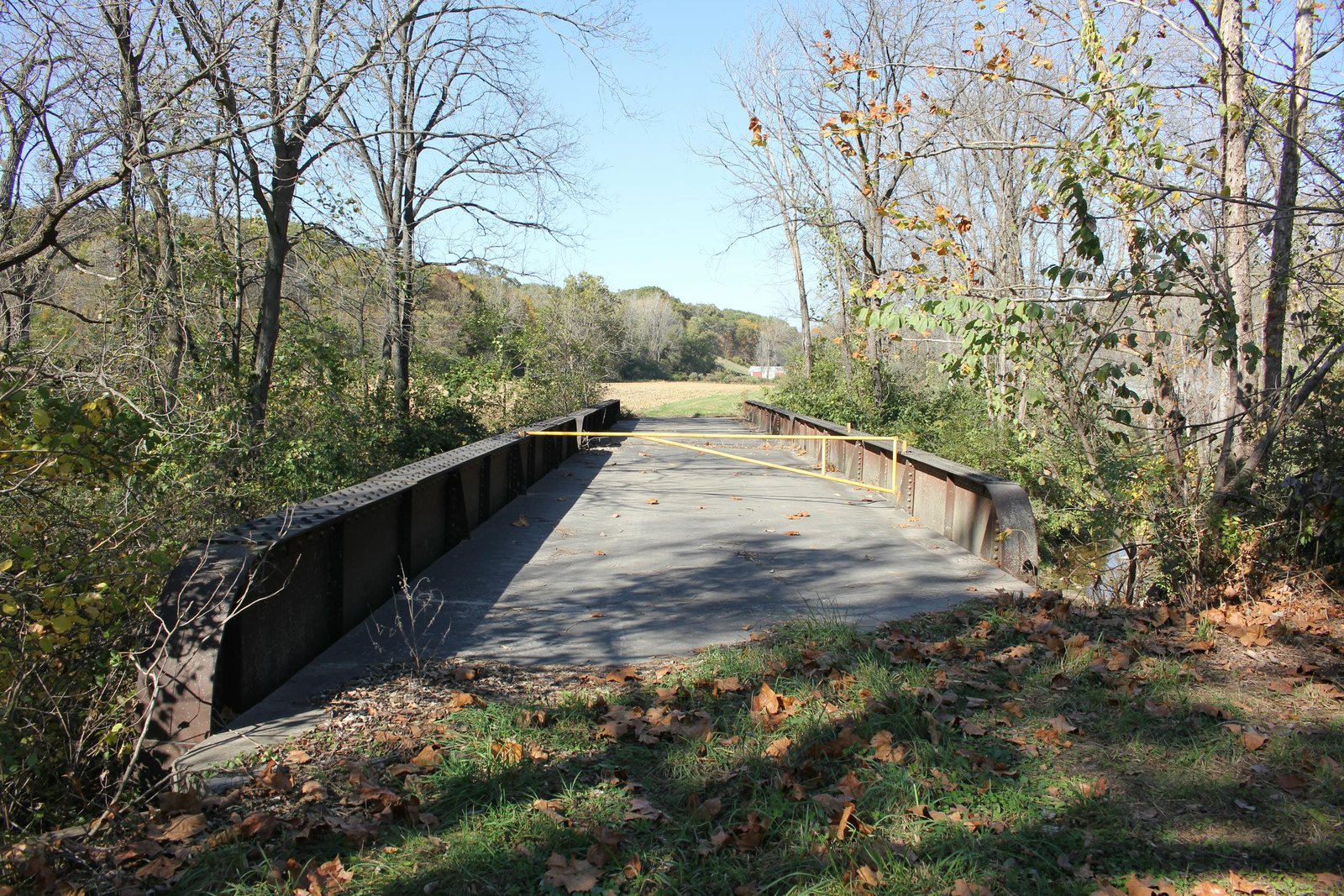
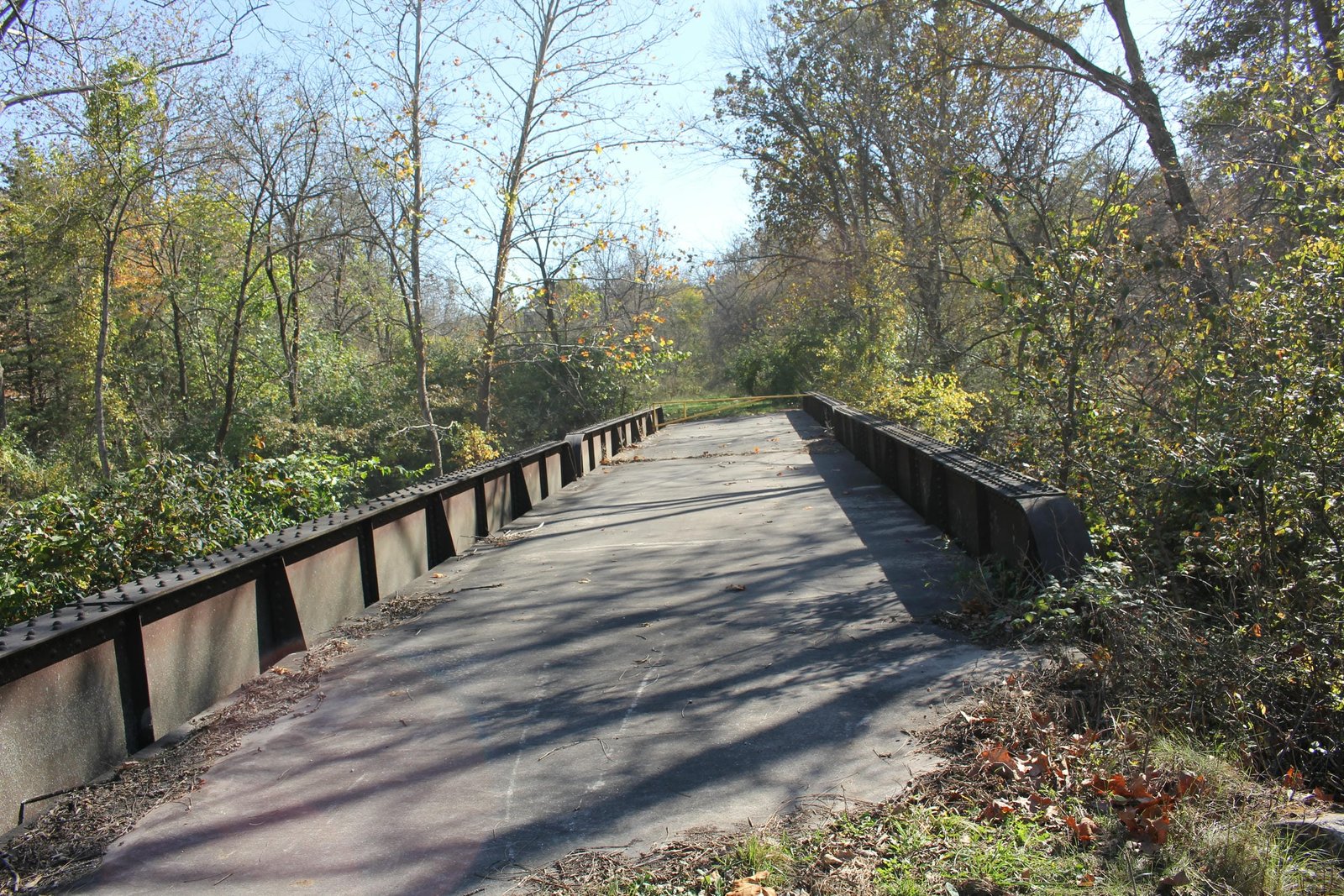
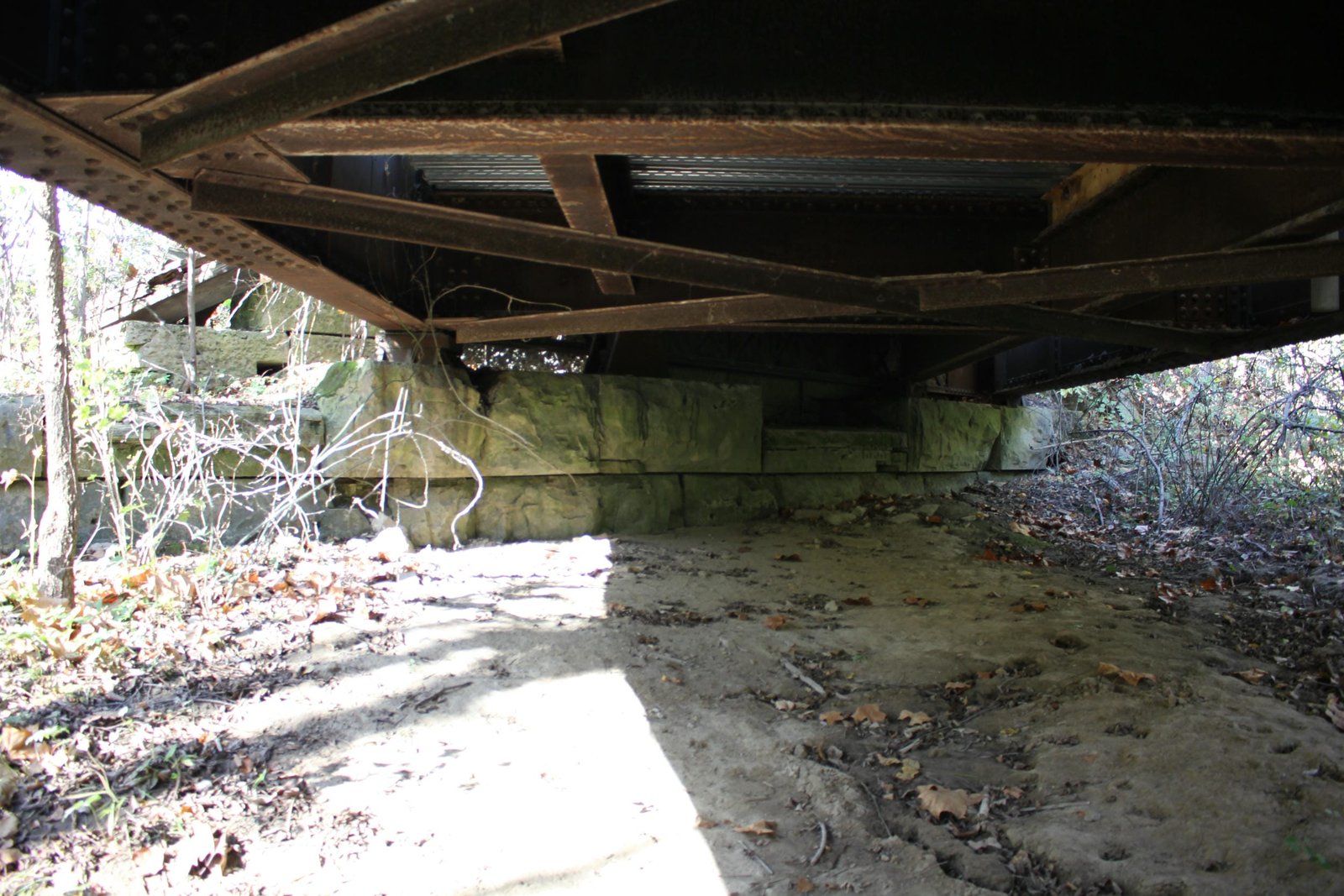
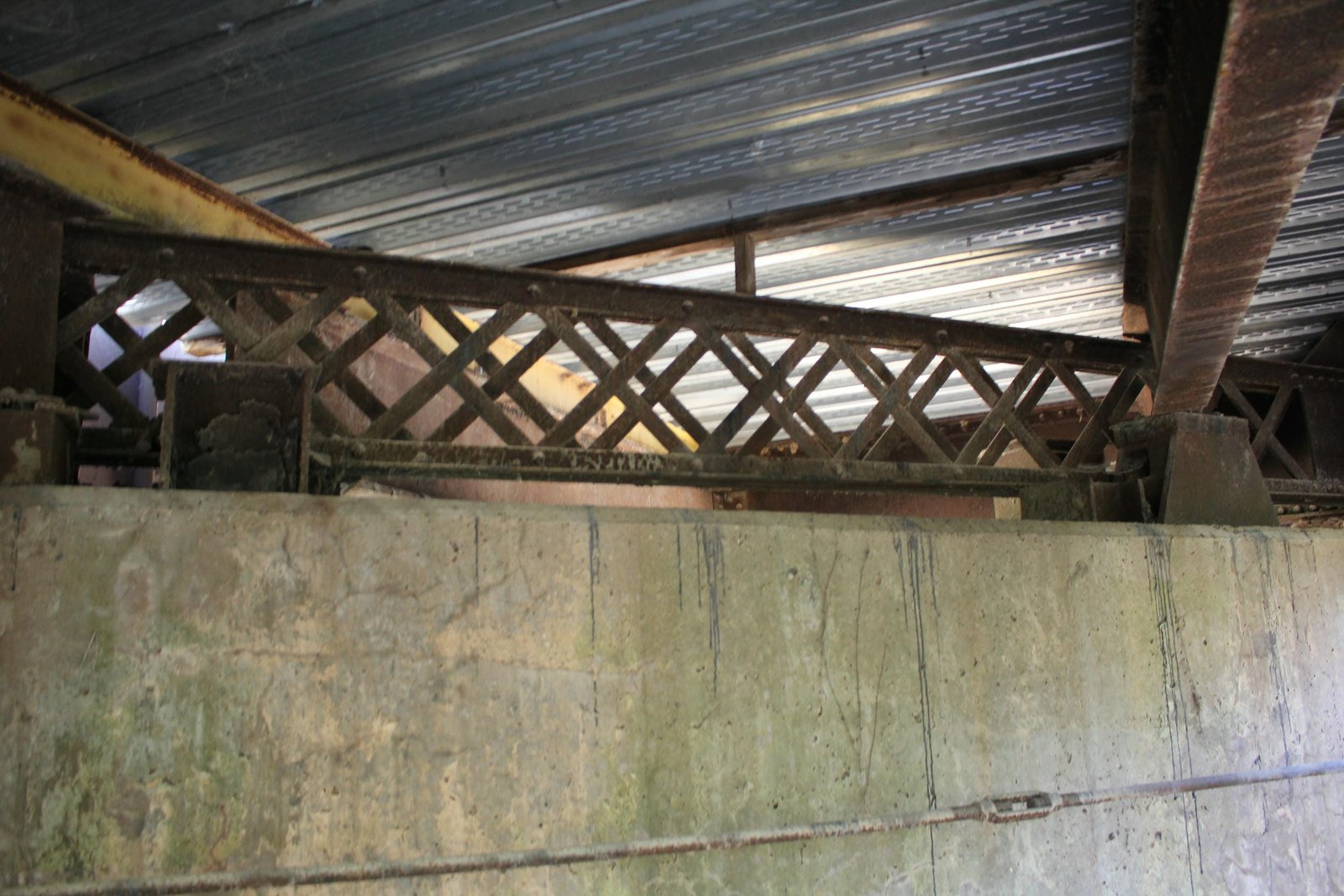
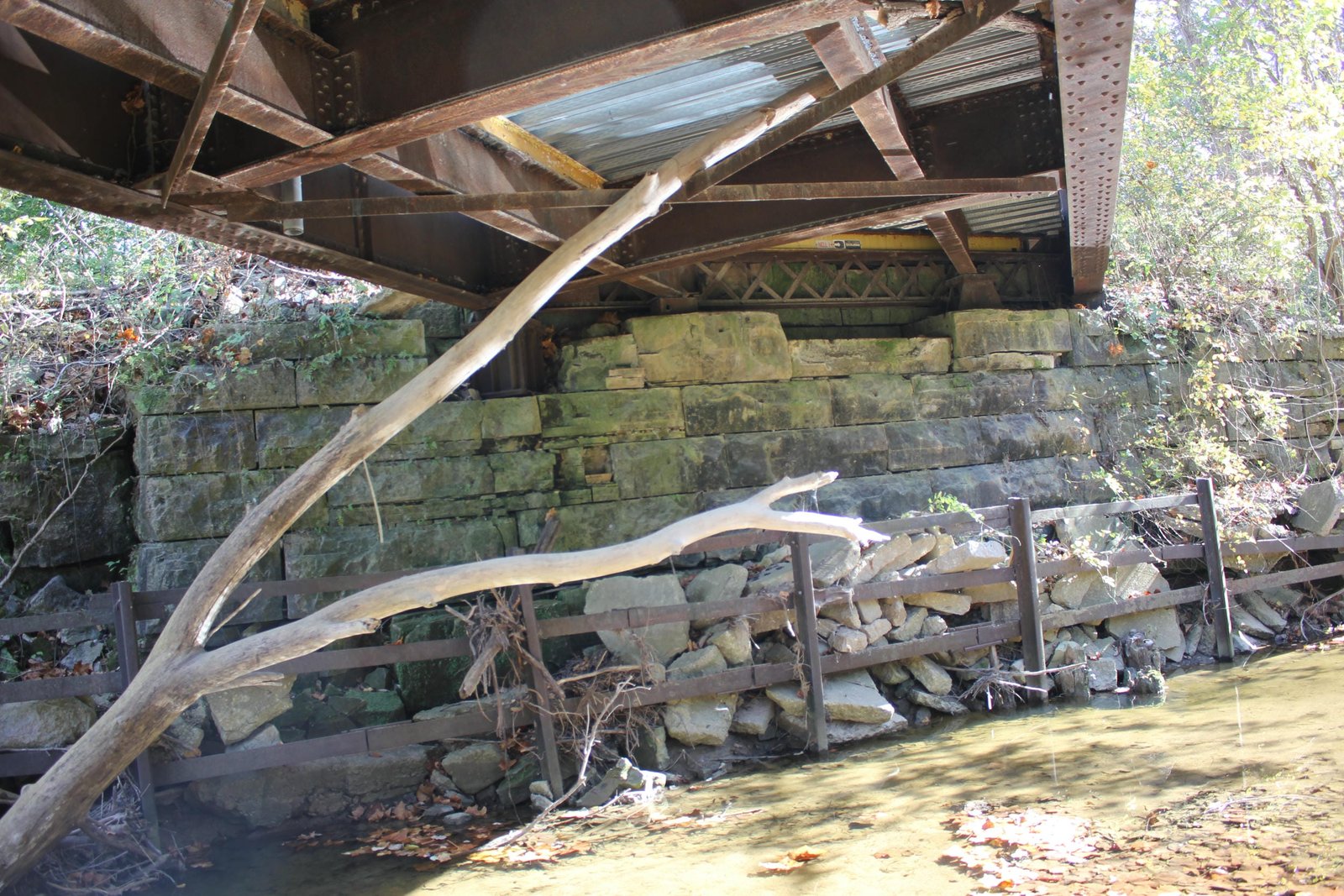
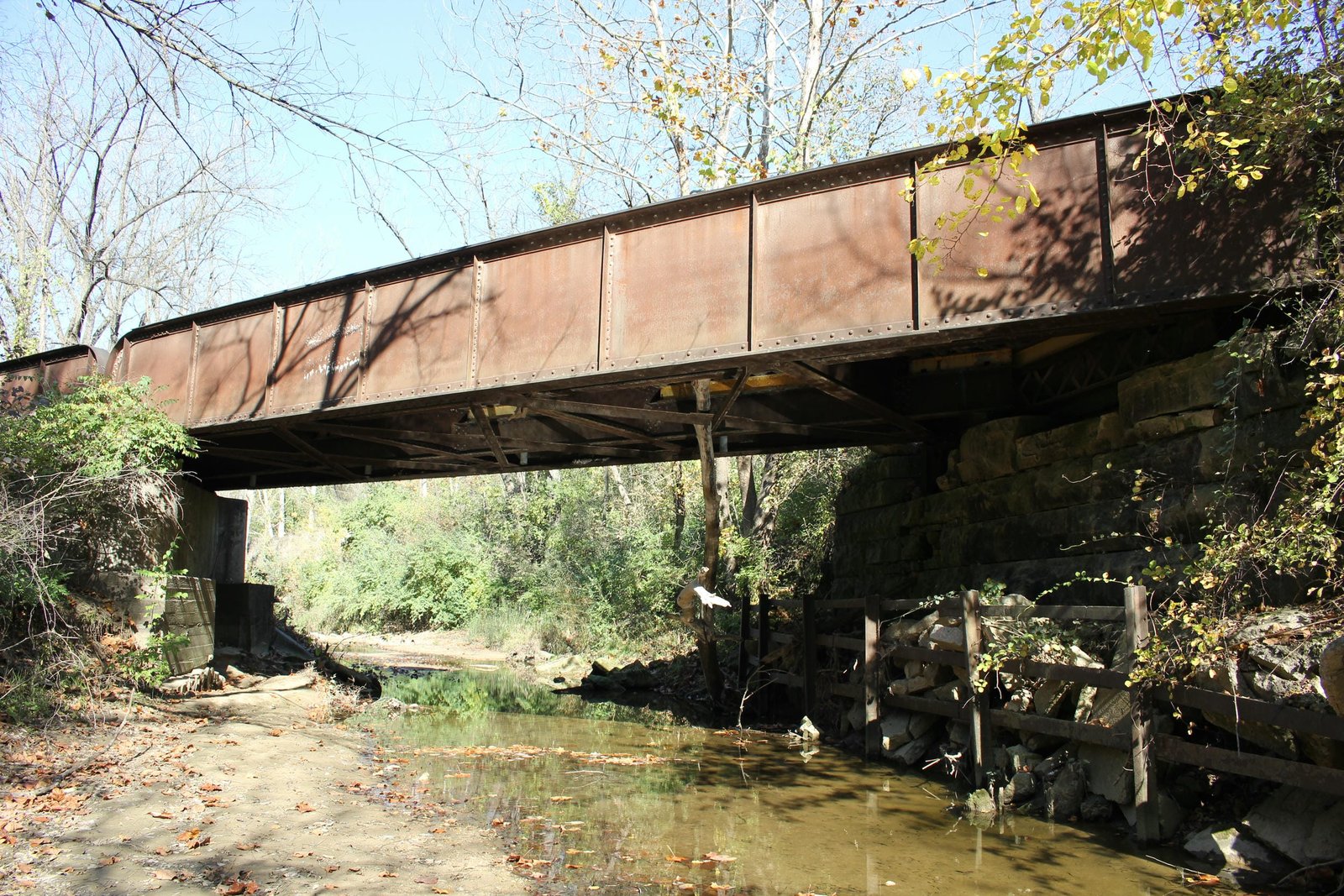
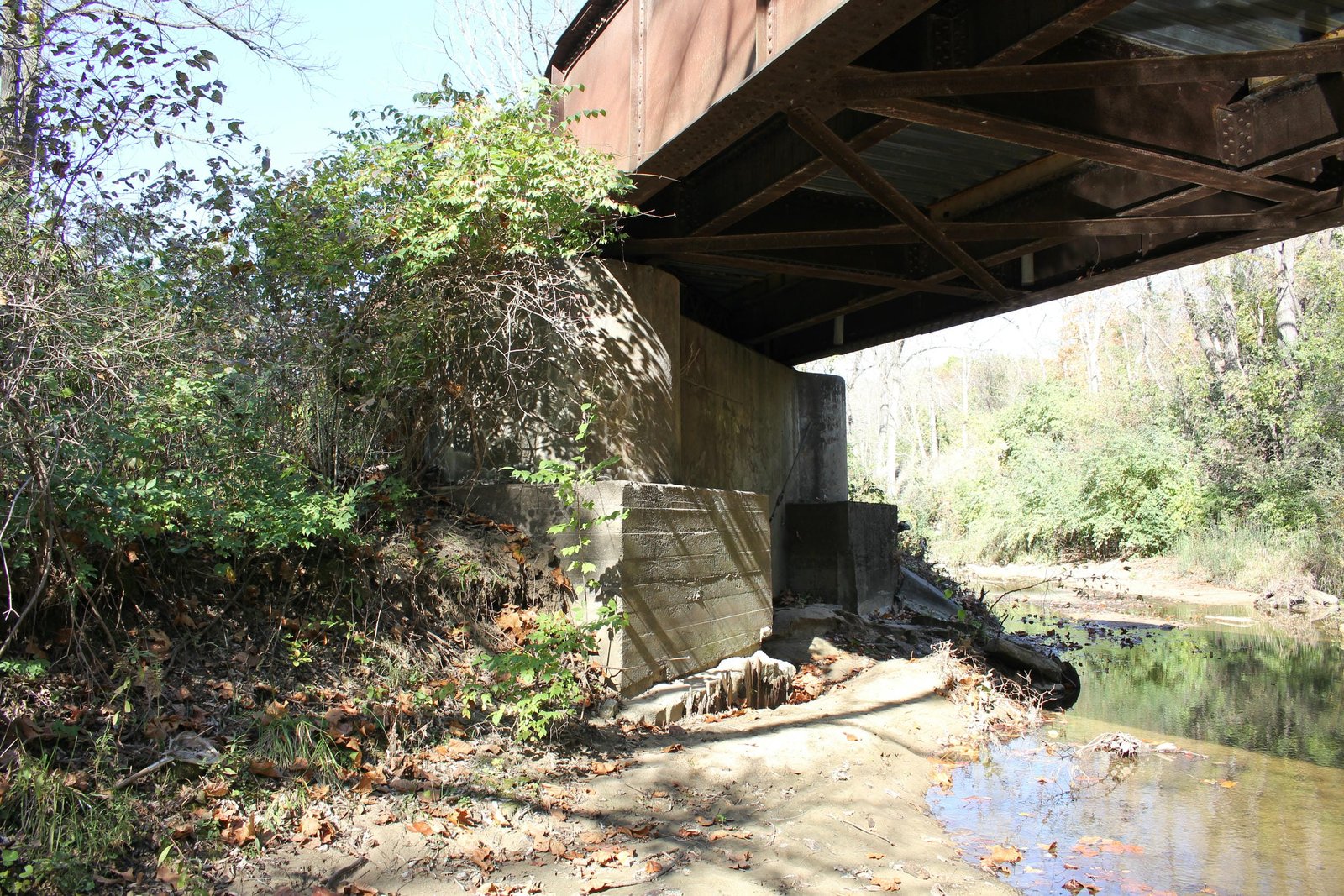
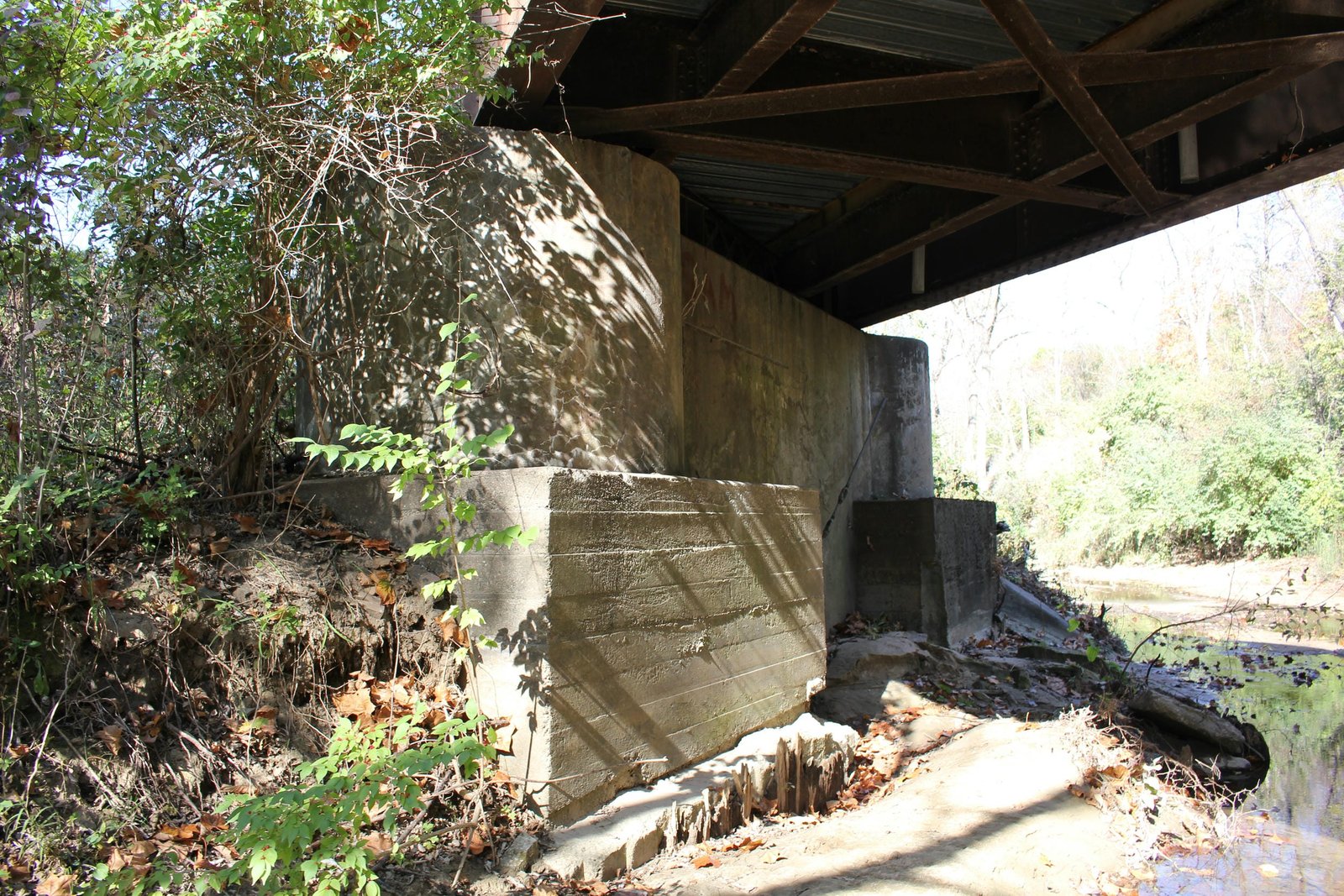
Located along Y Camp Road north of Burlington, this bridge is the fifth crossing of Dry Run Branch along a former Chicago, Rock Island & Pacific (Rock Island) secondary line. The first bridge at this location was likely a timber pile trestle bridge, constructed when the line was first built. In 1886, the original bridge was replaced by a 64-foot wooden Howe pony truss span. As the BCR&N grew, the railroad invested significant capital into property improvements. During the mid to late 1890s, many of the bridges along this line were reconstructed with permanent structures. In 1898, the present bridge was constructed. Currently, the bridge consists of two 55-foot through plate girder spans, set onto stone abutments and an unusual brick pier. In addition, the spans are heavily skewed, and the bridge is located on a 2.5-degree curve. The superstructure uses a somewhat unusual design, consisting of two heavy plate girders, rounded girder ends and a unique floor. The floor system consists of heavy floorbeams, two widely set stringers and unusual lattice beams at the end floorbeams. The abutments both consist of standard stone structures, with no significant wing walls. The pier originally consisted of an unusual brick design with two brick columns connected by a brick arch and capped with stone. However, the original brickwork was encased in concrete during the mid-20th Century. Stone for the abutments consists of a tan-yellow limestone, likely quarried at Cedar Valley, Iowa. An unknown contractor fabricated the superstructure, while an additional unknown contractor constructed the substructures. Through plate girder spans were popular for railroad use, as they were durable and easy to construct. Brick as a substructure material is largely unheard of, although it is known that the BCR&N used brick during the late 1890s. Since the initial construction, the bridge has seen several alterations, including reinforcing the abutments with steel bars and timber piles and encasing the pier in concrete. After the bridge was abandoned, the structure reverted to private ownership. Sometime in the early 2000s, a concrete deck was added to the structure, likely to allow for driveway access. Overall, the bridge appears to be in fair to poor condition, with significant scouring noted at the south abutment. Despite the unusual features, the author has ranked this bridge as being locally significant, due to the common design.
Citations
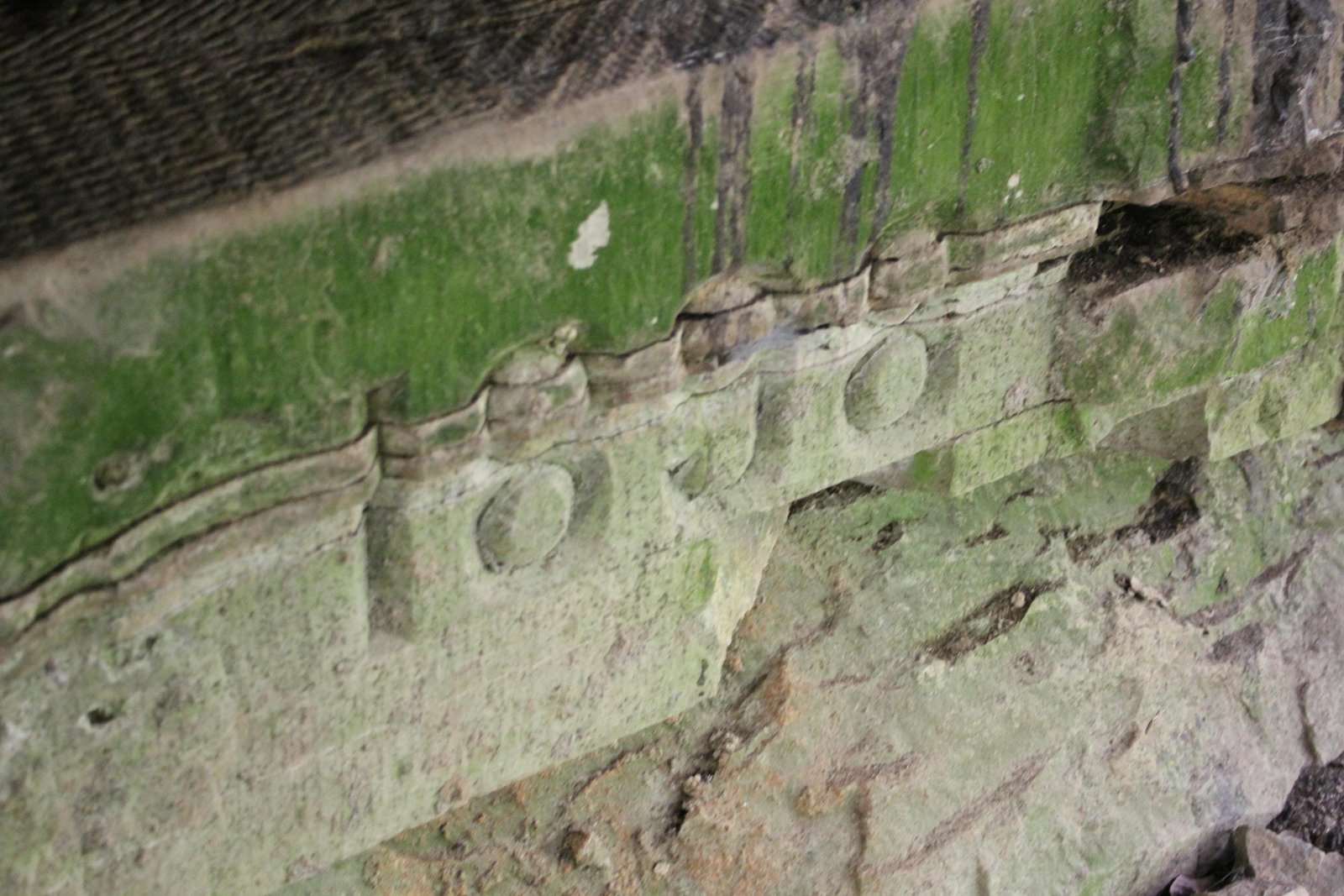
| Build date | Date carving |
| Railroad History Citation | ICC Valuation Information, Compiled by Richard S. Steele |