
Click the photo to view the full-size version
| Name | IC Little Sioux River Bridge #4 Illinois Central Railroad Bridge #T20.8 |
| Built By | Illinois Central Railroad |
| Currently Owned By | Private Owner |
| Superstructure Contractor | Union Bridge Company of Buffalo, New York (South Span) Keystone Bridge Company of Pittsburgh, Pennsylvania (Center and North Spans) |
| Substructure Contractor | Unknown |
| Length | 657 Feet Total, 175 Foot Main Span |
| Width | 1 Track |
| Height Above Ground | 20 Feet (Estimated) |
| Superstructure Design | Pratt Through Truss and Timber Pile Trestle |
| Substructure Design | Stone Masonry and Timber Pile |
| Date Fabricated | 1881 (Center and North Spans) 1887 (South Span) |
| Date Erected | 1887 (South Span) 1911 (Center and North Spans and Approaches) |
| Date Removed (Center and North Spans and Approaches) | c. 1995 |
| Original Location (Center and North Spans) | Tallahatchie River Bridge; Abbeville, Mississippi |
| Traffic Count | 0 Trains/Day (Bridge is Abandoned) |
| Current Status | Abandoned and Partially Removed |
| Illinois Central Railroad Bridge Number | T20.8 |
| Significance | Regional Significance |
| Documentation Date | 12/14/2016 |
Between 1857 and 1870, the Dubuque and Sioux City Railroad (D&SC) had acquired and constructed a mainline across central Iowa, extending from the Mississippi River at Dubuque, Iowa to the Missouri River at Sioux City, Iowa. The D&SC had operated under lease from the Illinois Central Railroad (IC) since 1867, and connected to the IC system by using a bridge across the Mississippi River at Dubuque. This line provided several opportunities for the construction of branch lines. In December 1887, the Cherokee & Dakota Railroad (C&D) completed a 59-mile branch line between Cherokee, Iowa and Onawa, Iowa. In February 1888, the C&D completed an additional 96 miles between Cherokee and Sioux Falls, South Dakota. The C&D was conveyed to the IC-leased D&SC in 1888. These branch lines were constructed with the intent of serving small agricultural communities and the large terminal of Sioux Falls.
By the late 19th Century, the IC had developed and operated a sprawling railroad network in the central United States. This line served as a branch line for the company, furthering the reach of the IC system. In the 20th Century, the IC had become a respected railroad, connecting several major cities in the central United States. In 1942, the segment between Anthon, Iowa and Onawa was abandoned. The D&SC was fully merged into the IC in 1946. In 1972, the IC merged with the Gulf, Mobile & Ohio Railroad (GM&O) to form the Illinois Central Gulf (ICG). The segment between Washta, Iowa and Anthon was abandoned in 1977, followed by the segment between Cherokee and Washta in 1978. The northern branch line to Sioux Falls was abandoned in 1984. Today, much of the right-of-way has reverted to adjacent landowers, and has been plowed under for farm fields.
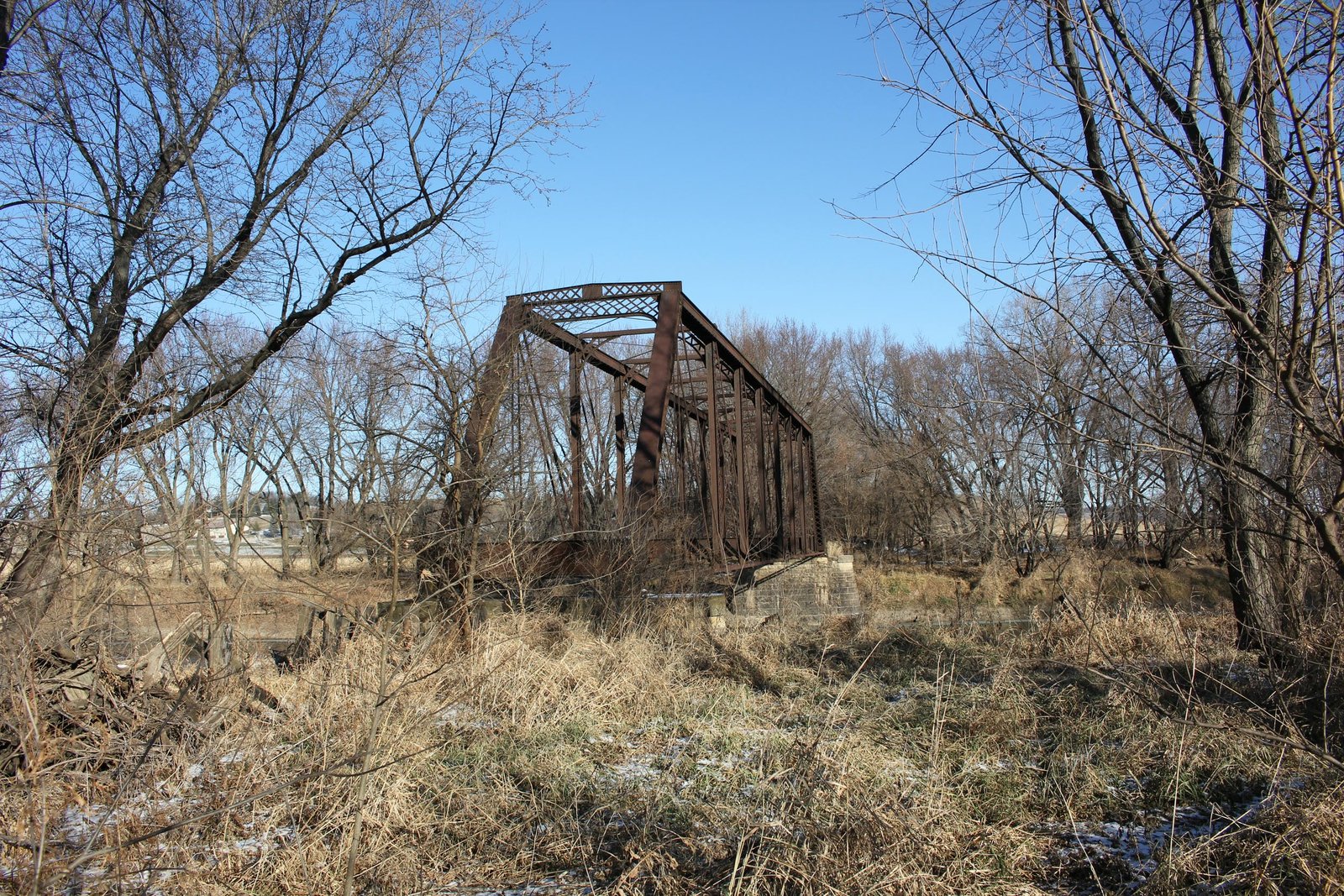
Authors Note: This page has been written to reflect the configuration of this bridge at the time of abandonment.
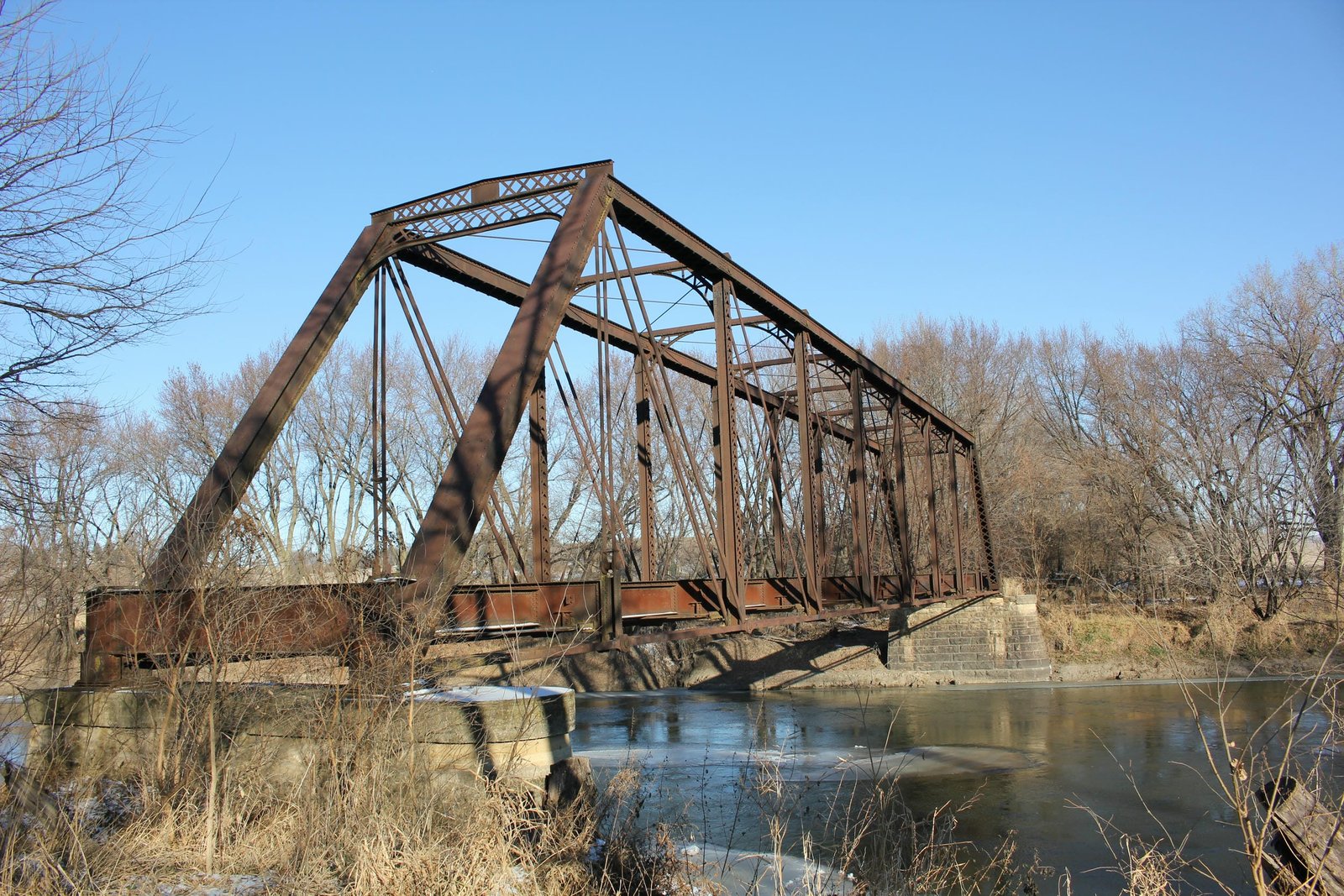
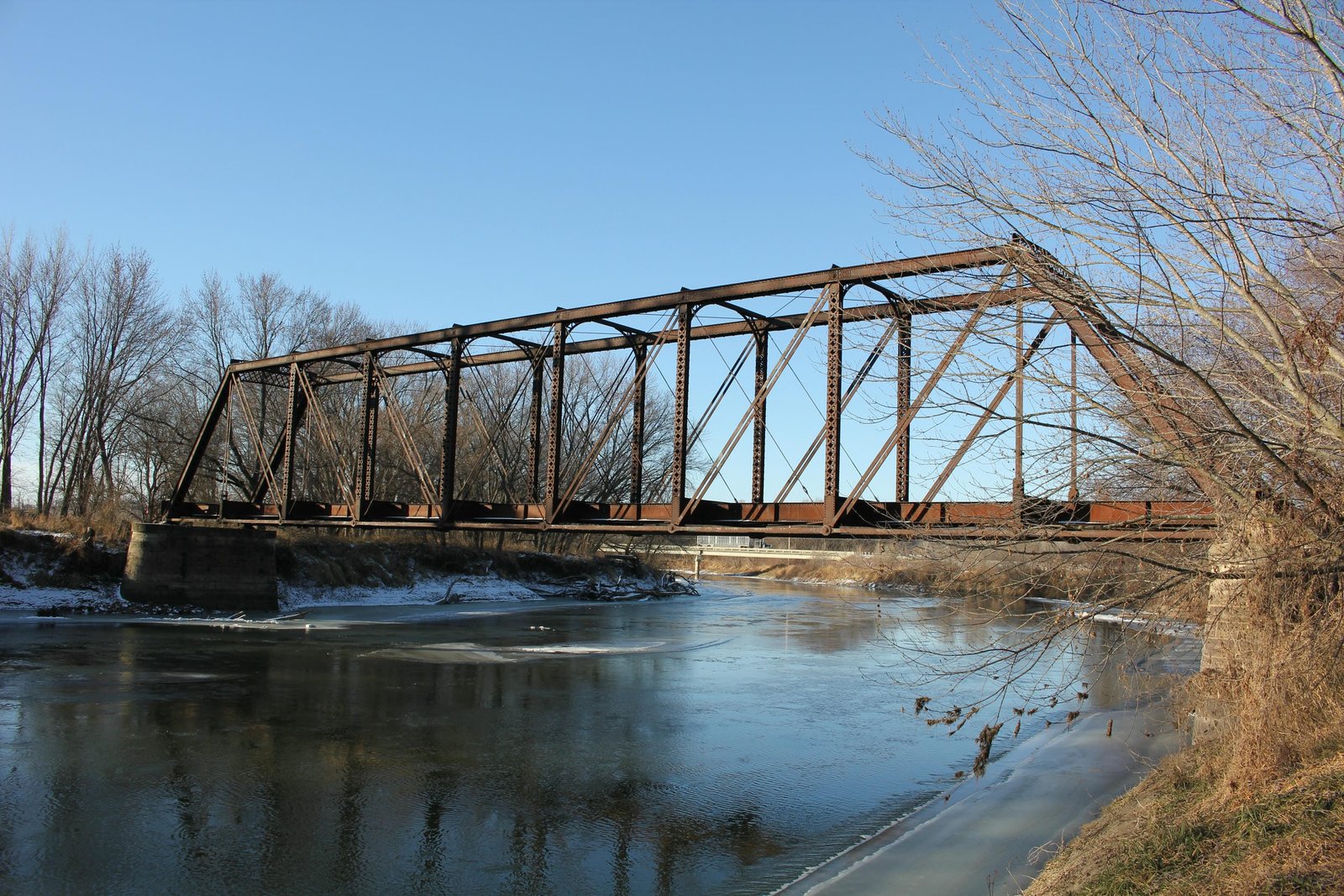
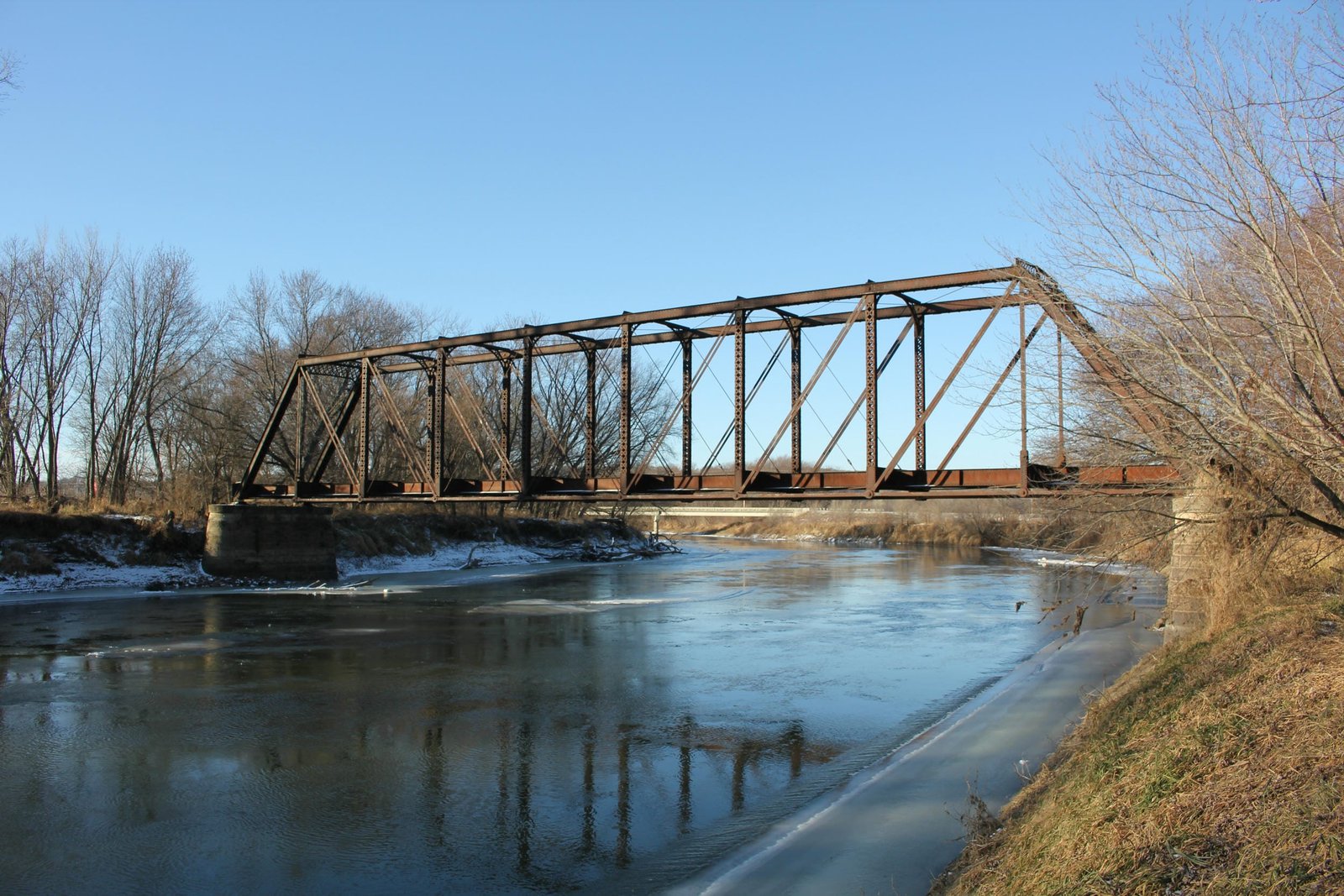
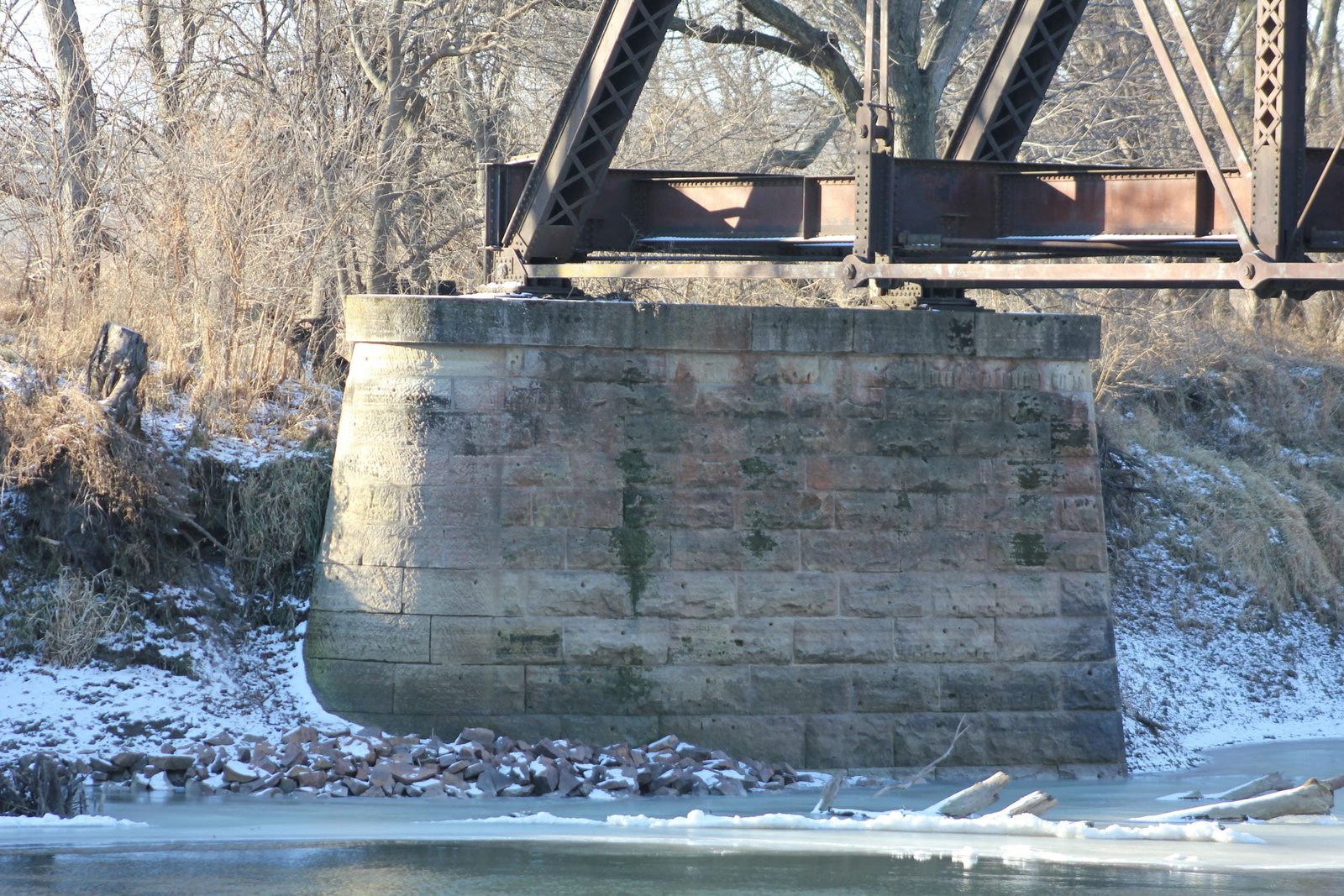
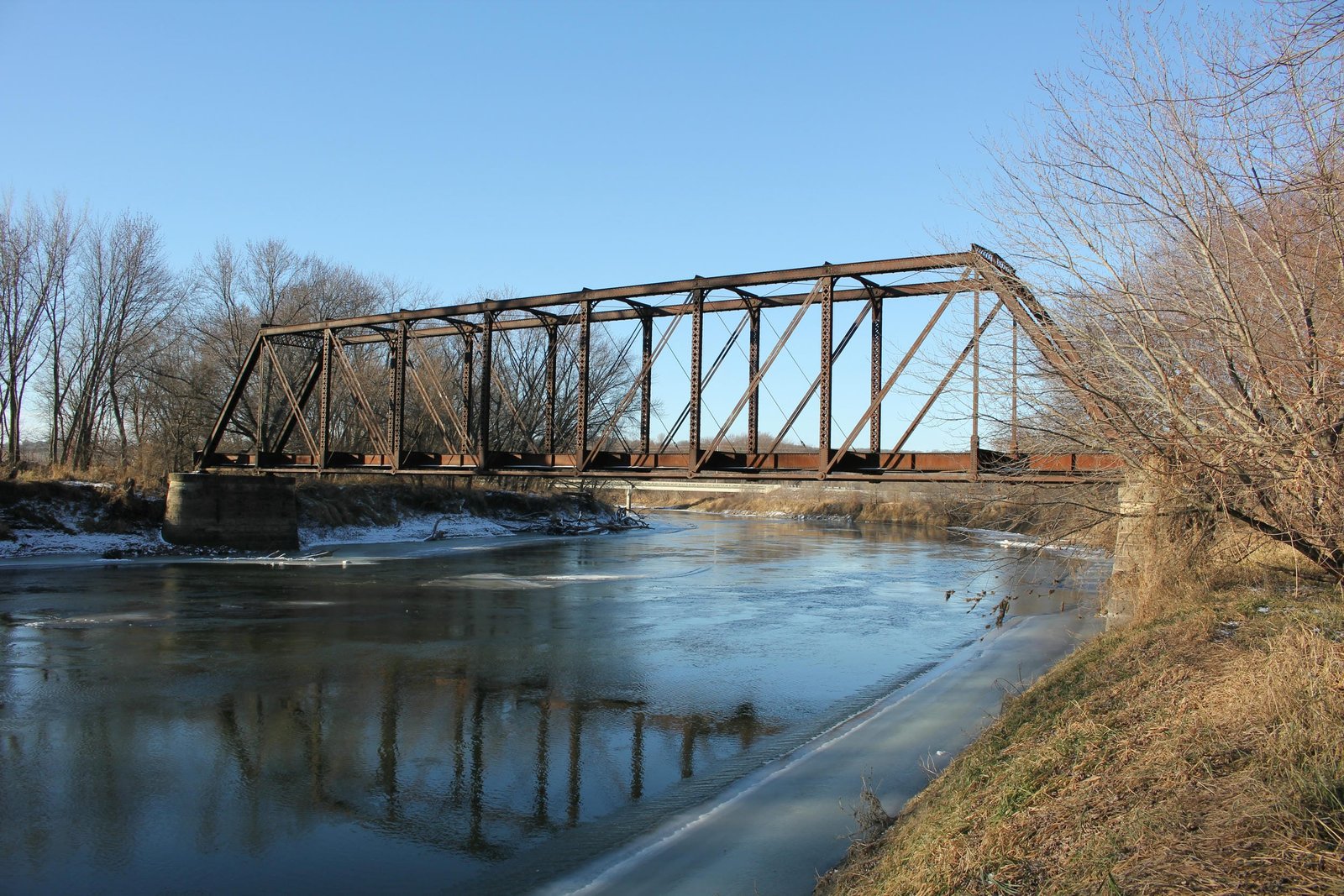
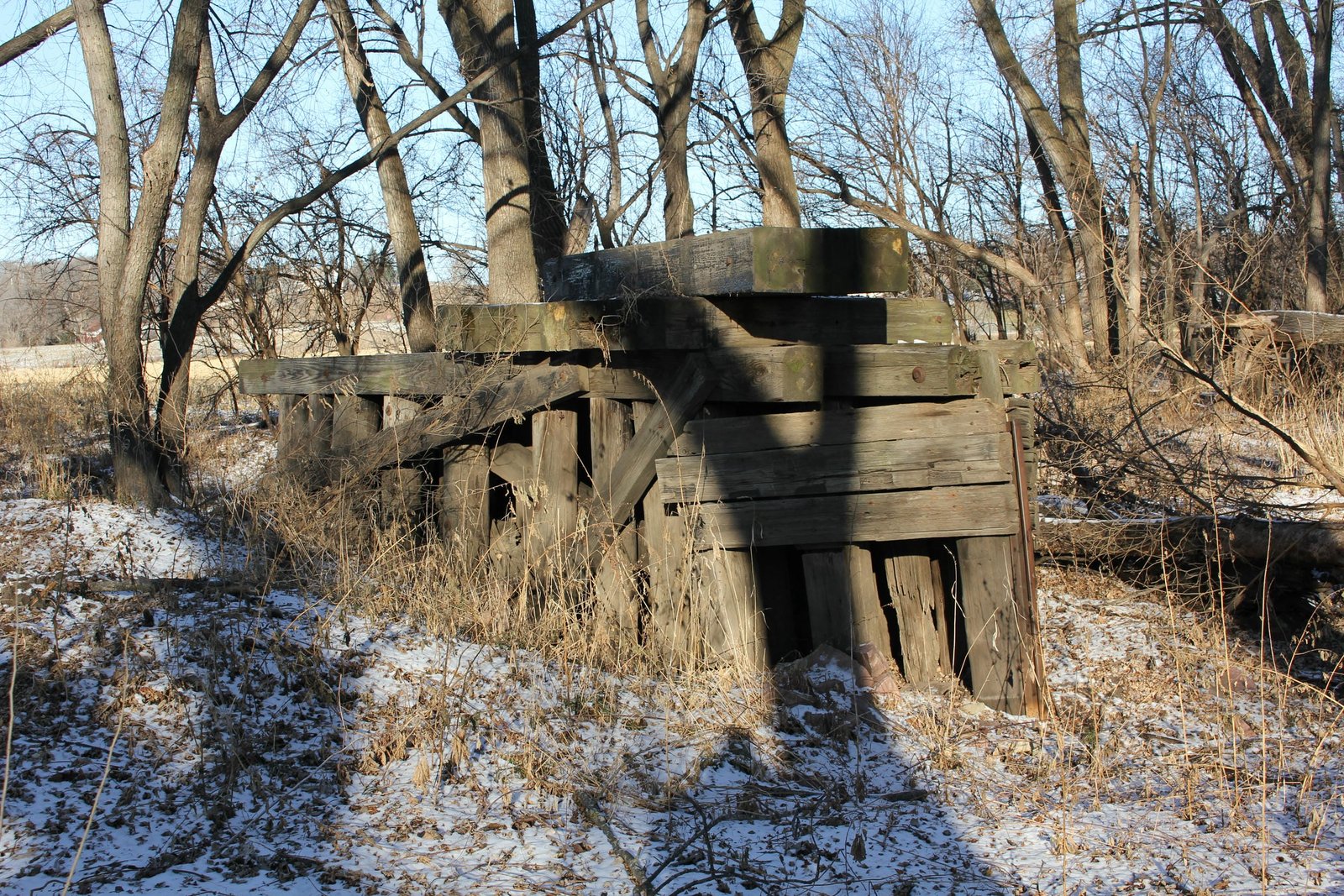
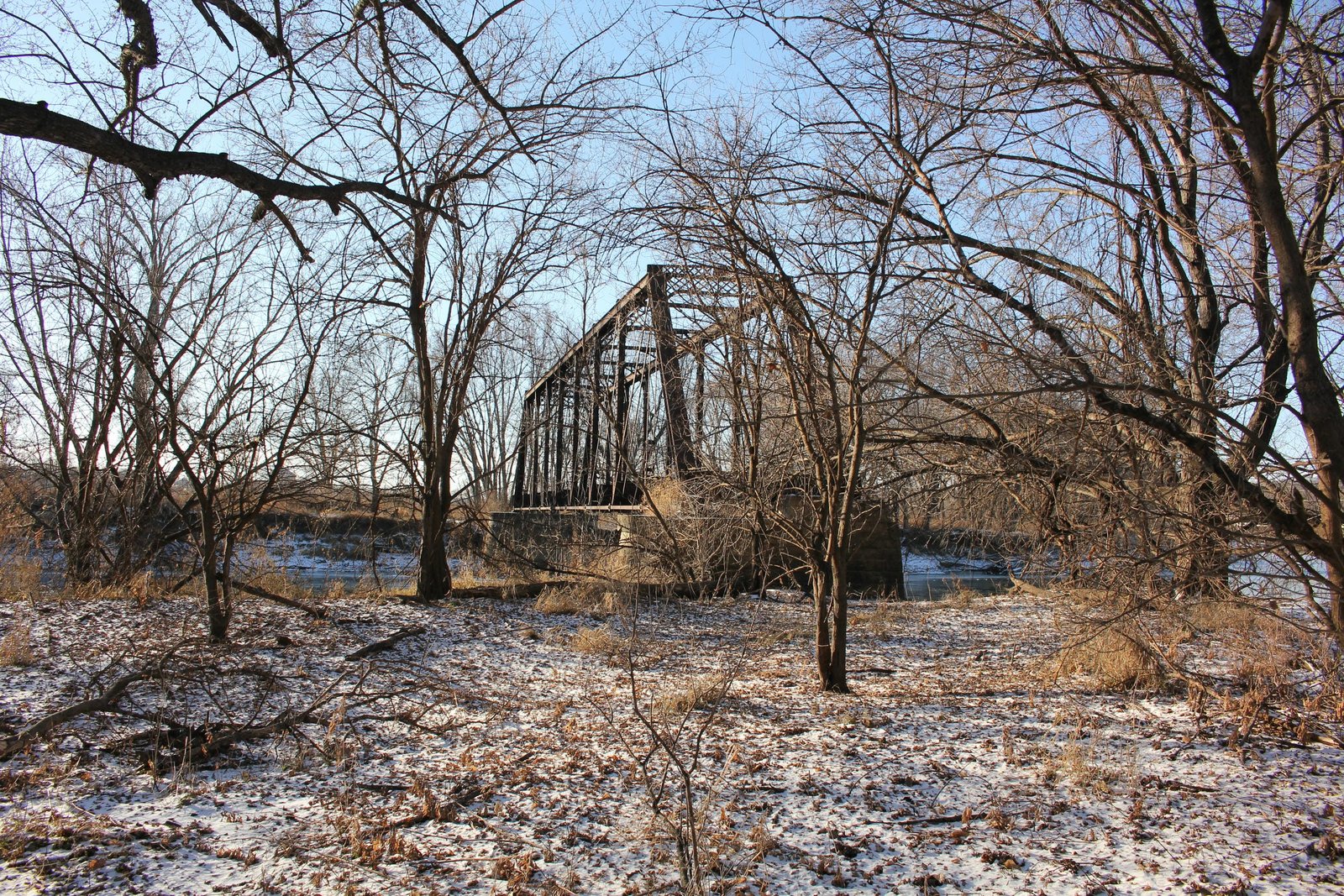
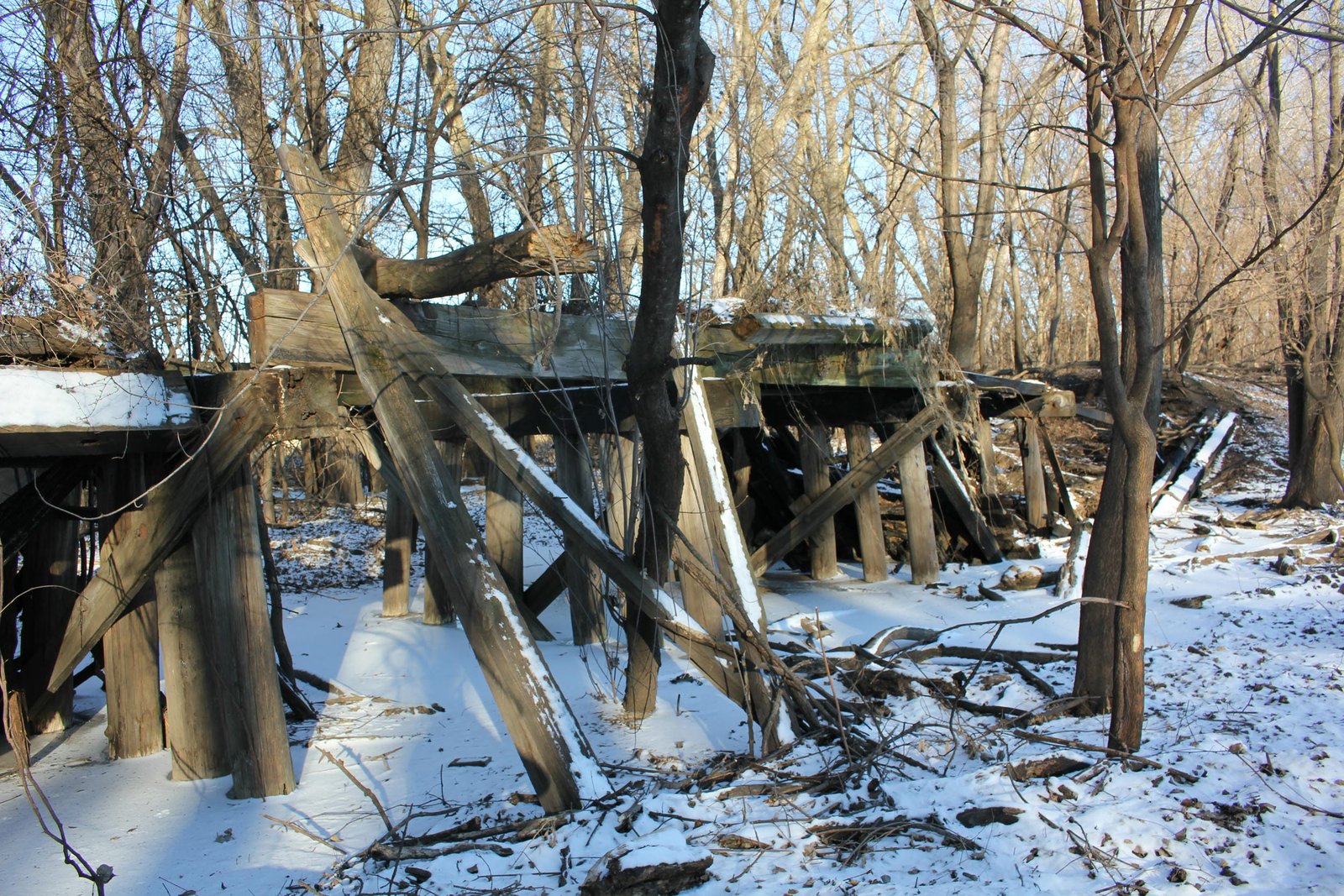
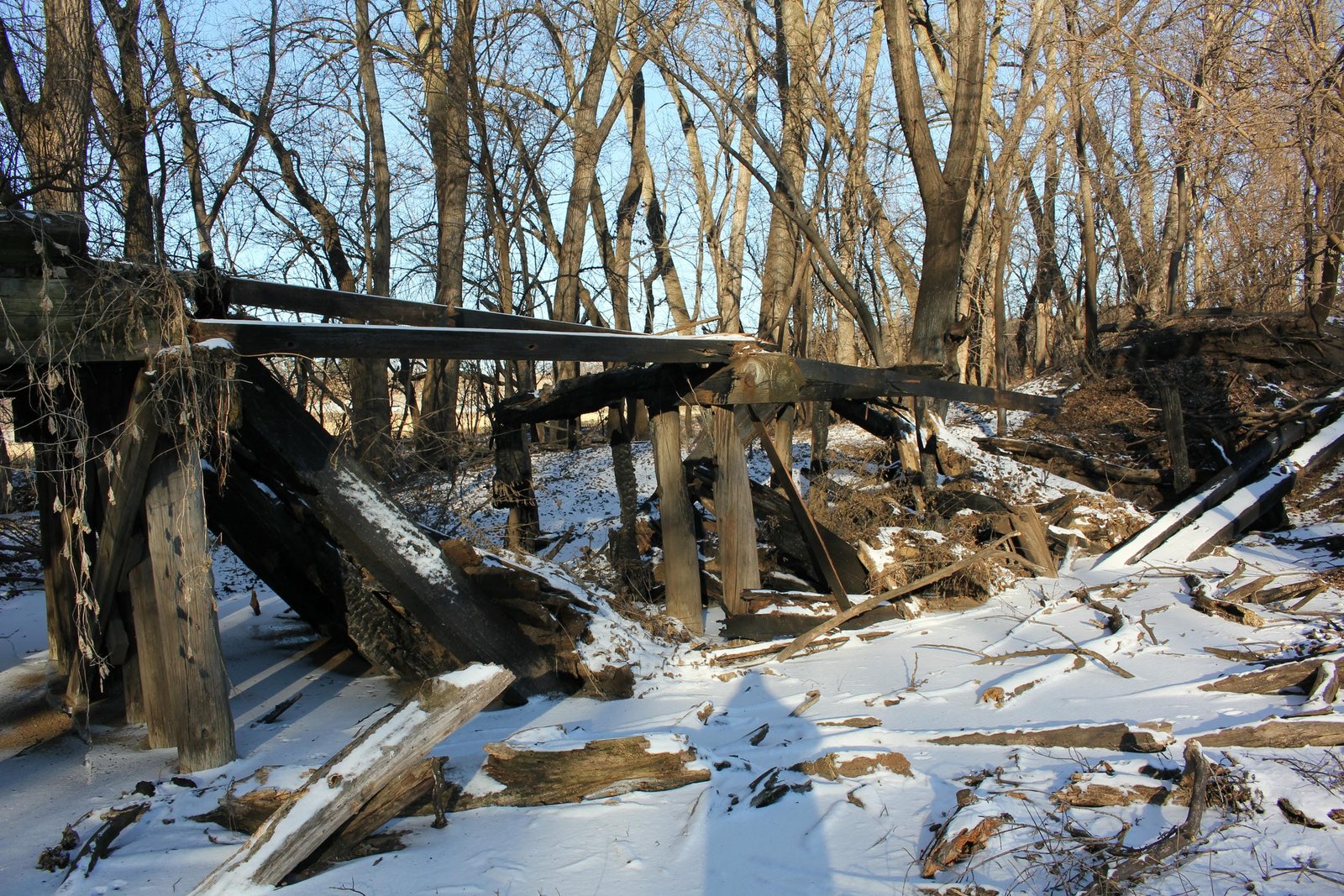
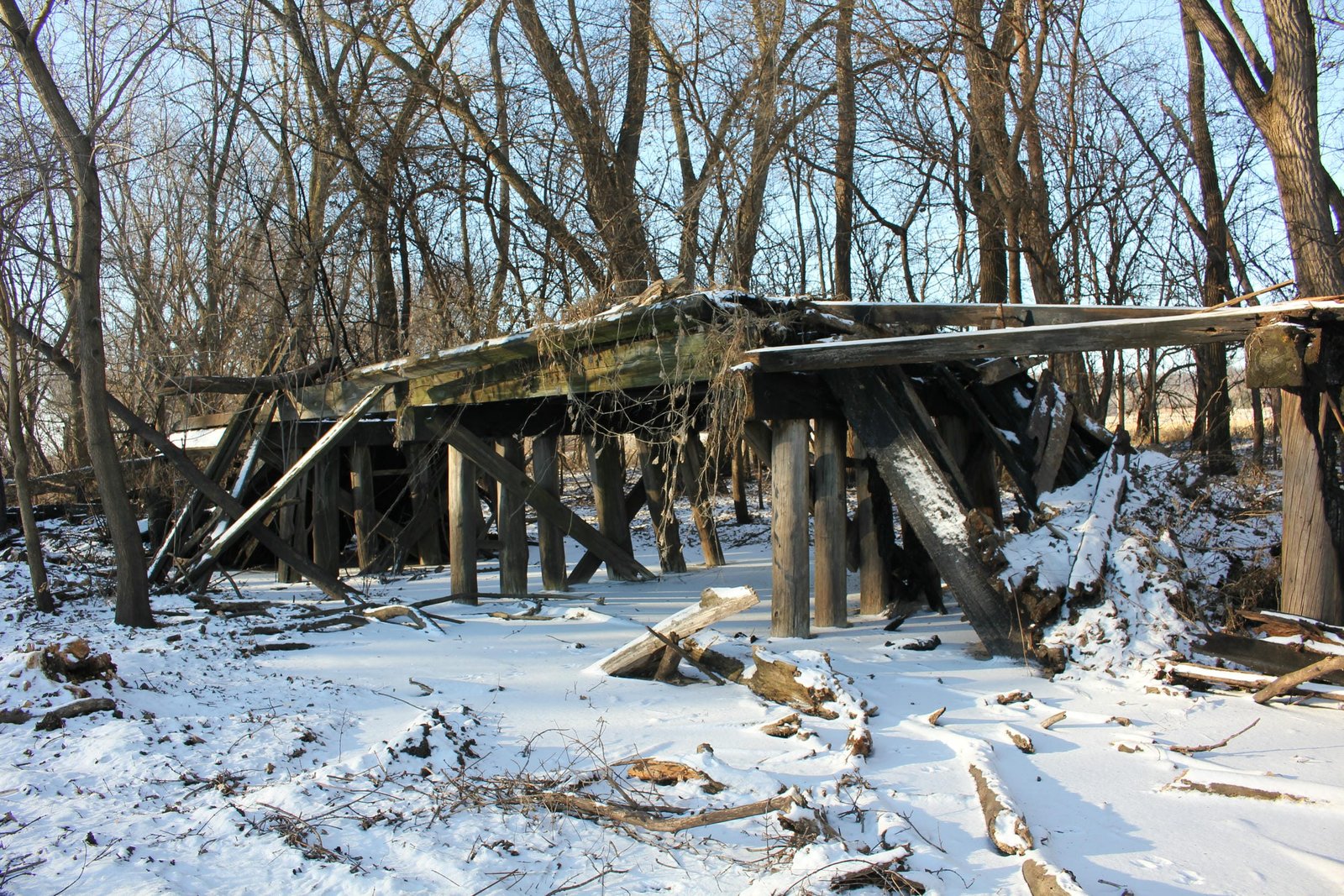
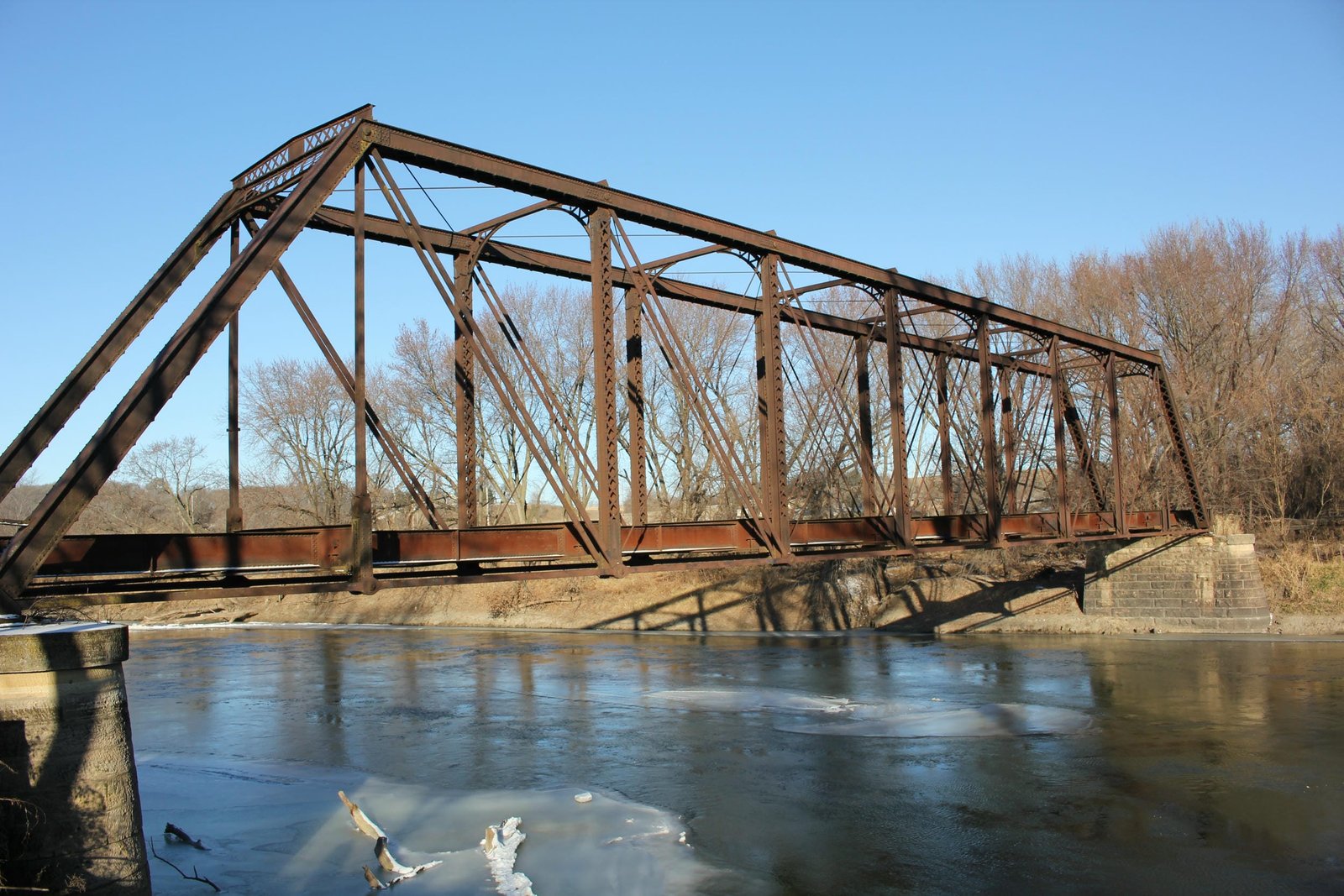
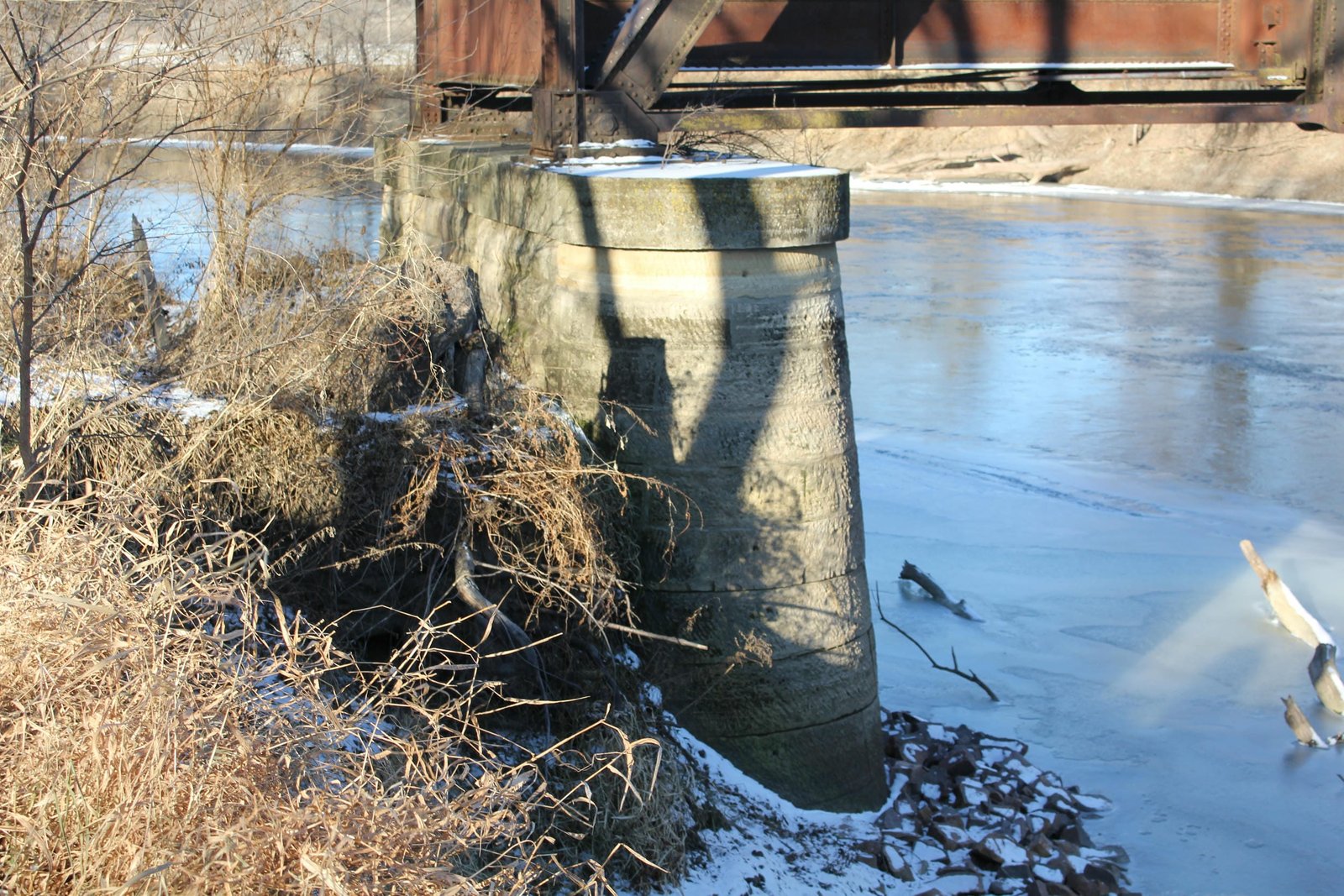
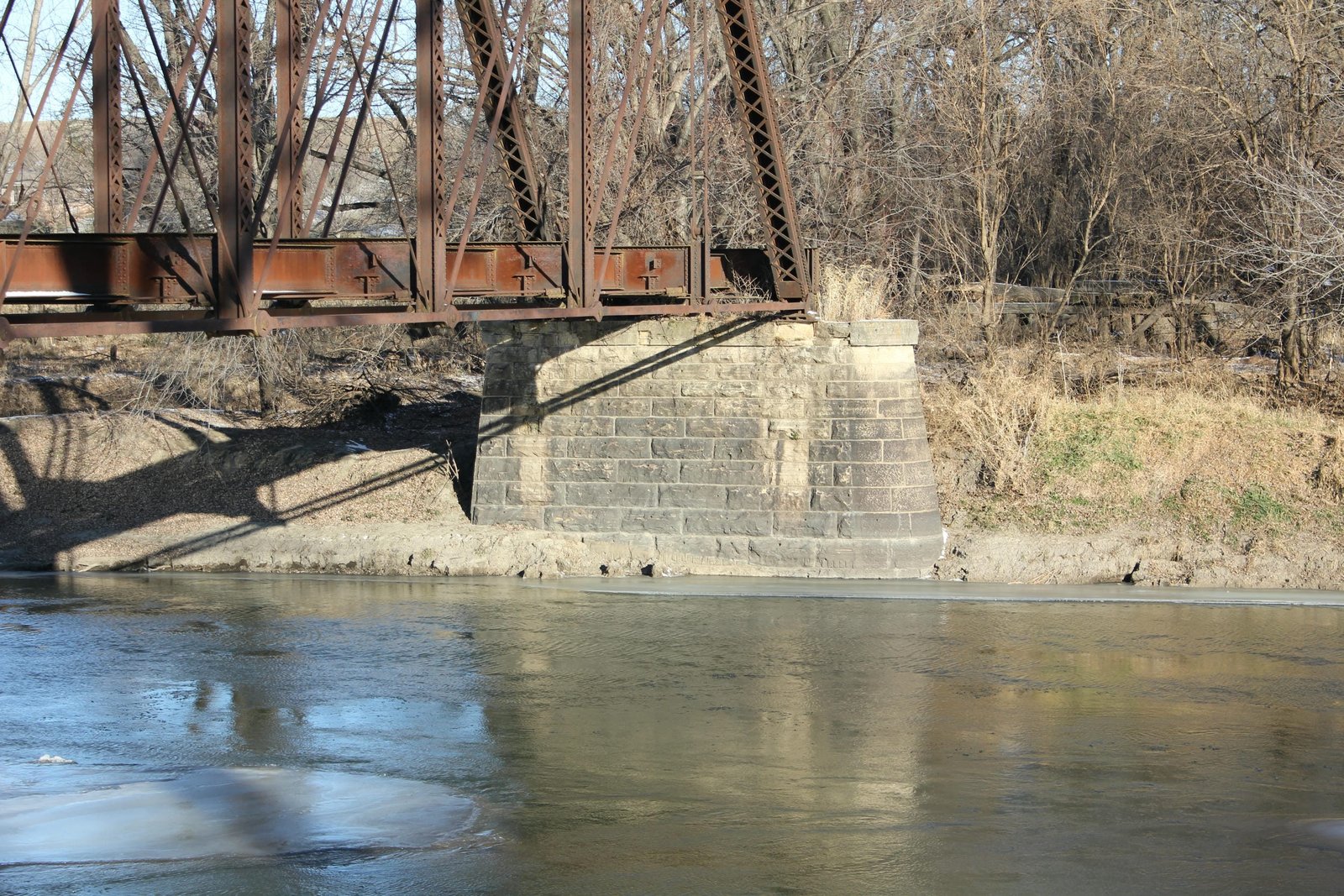
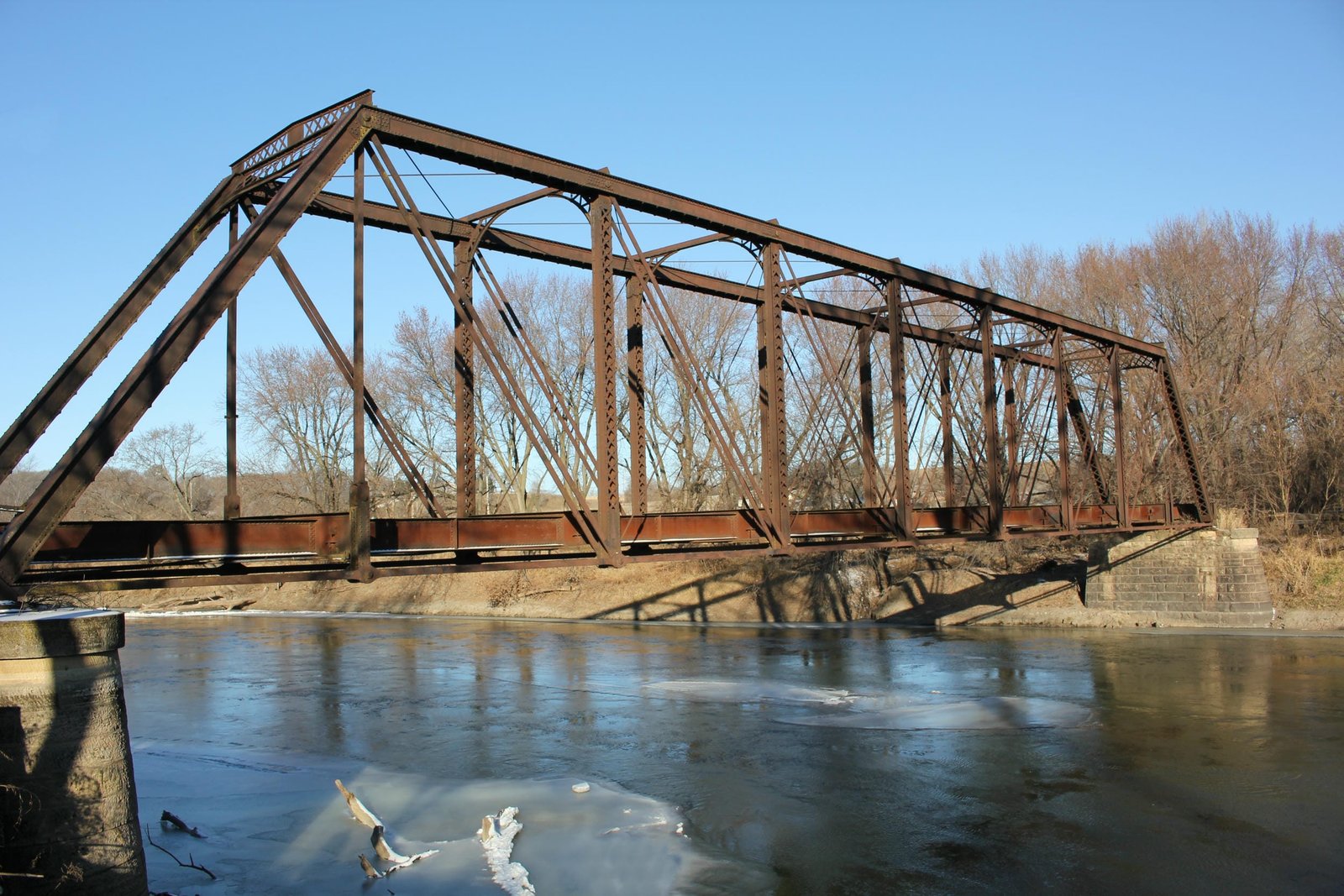
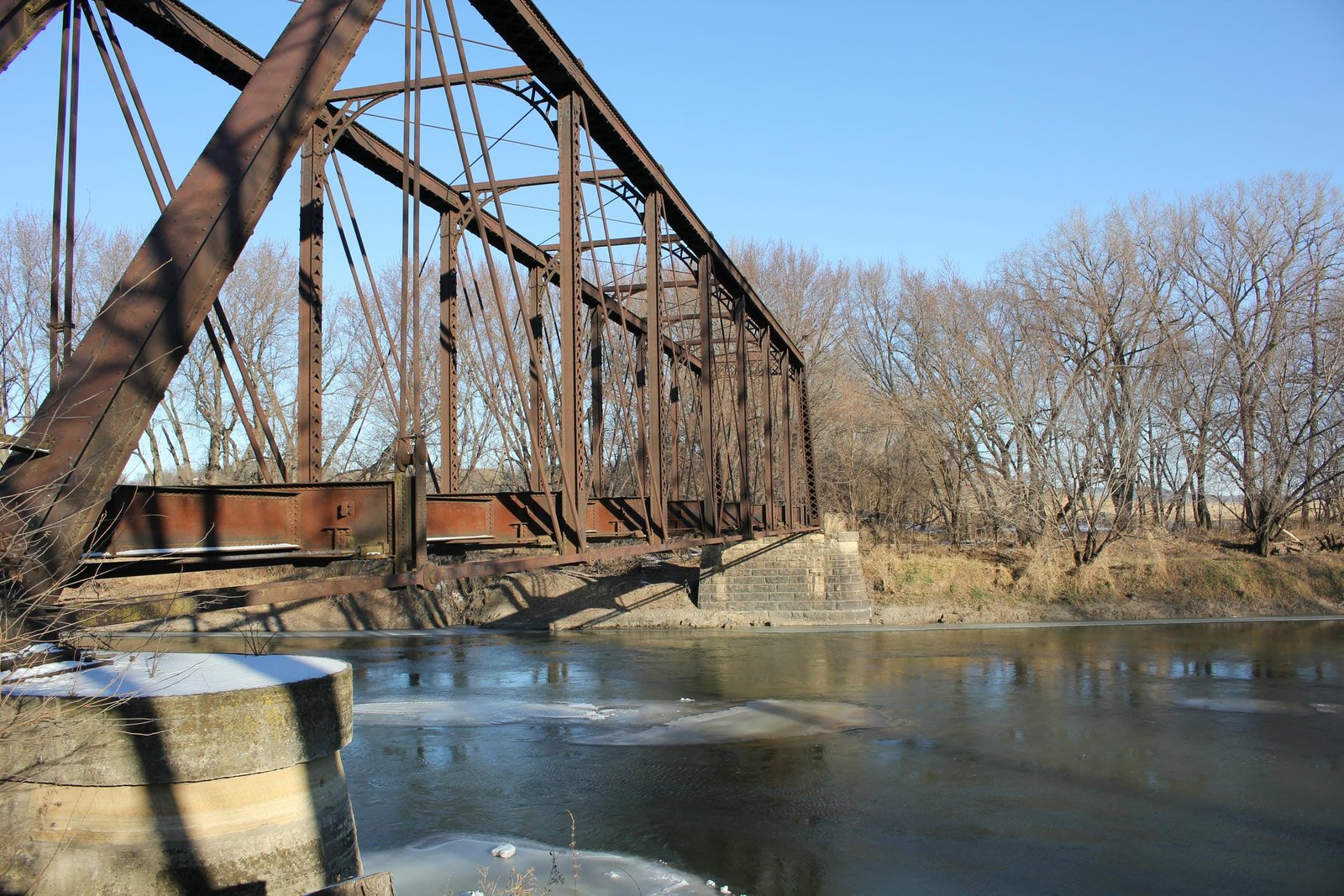
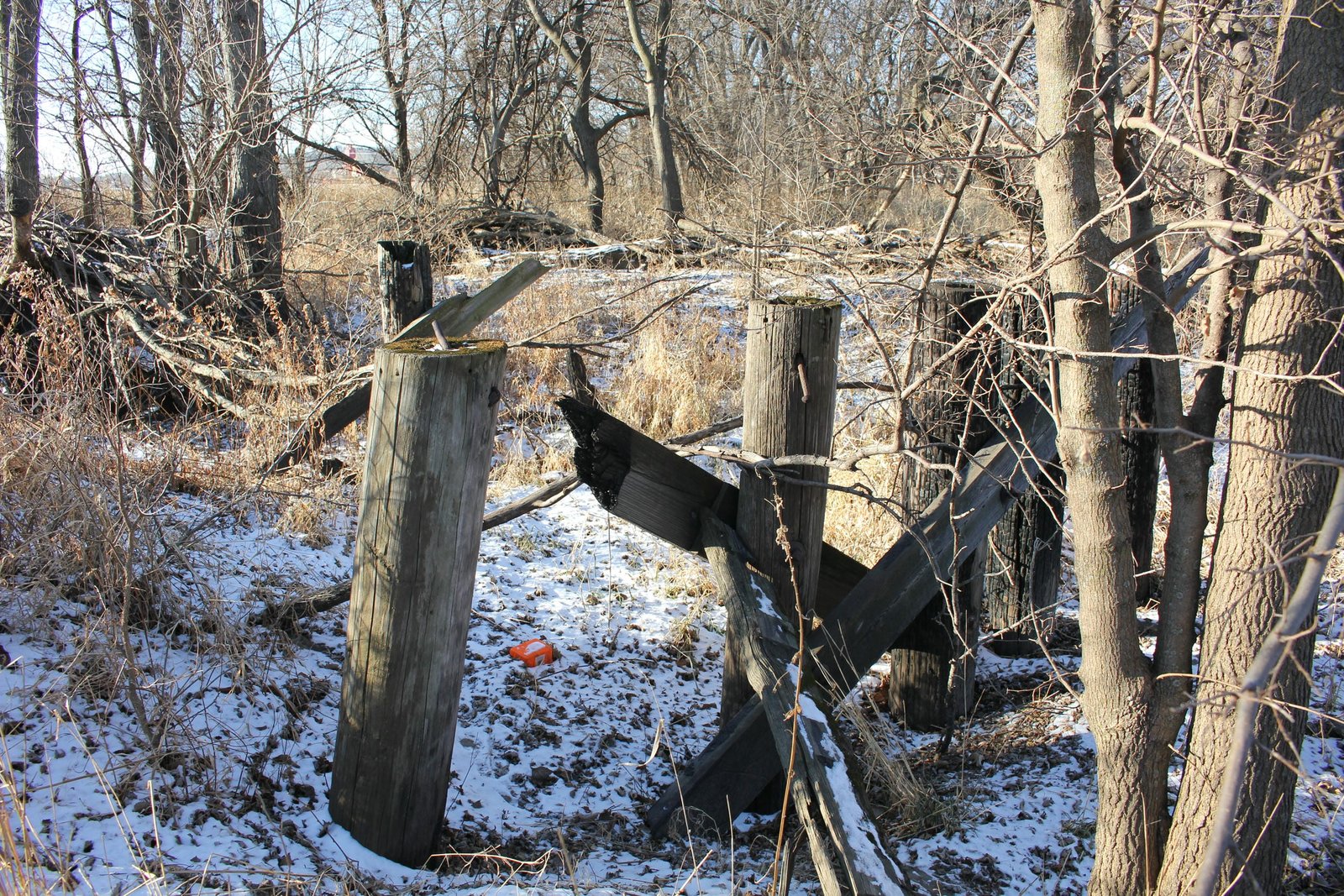
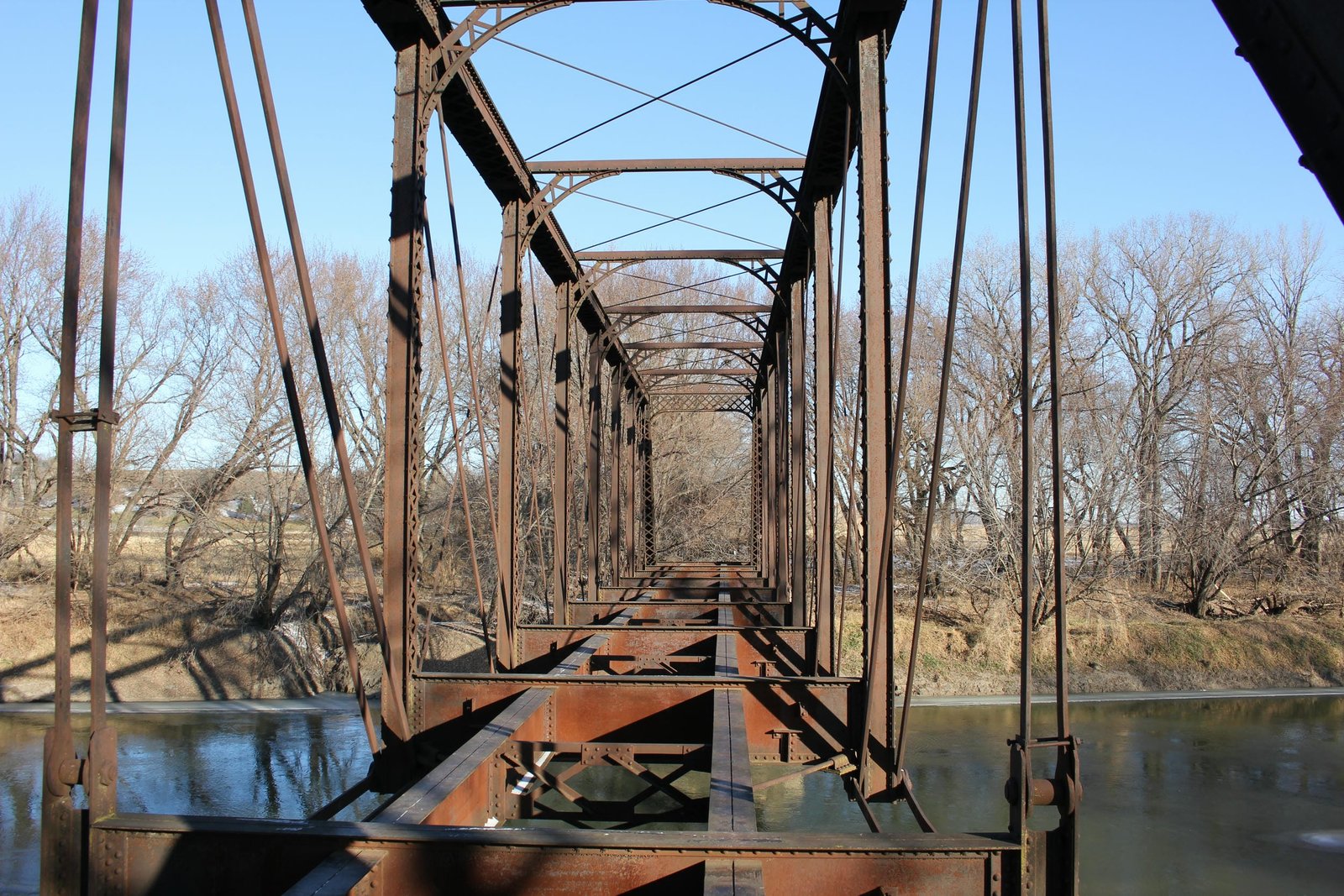
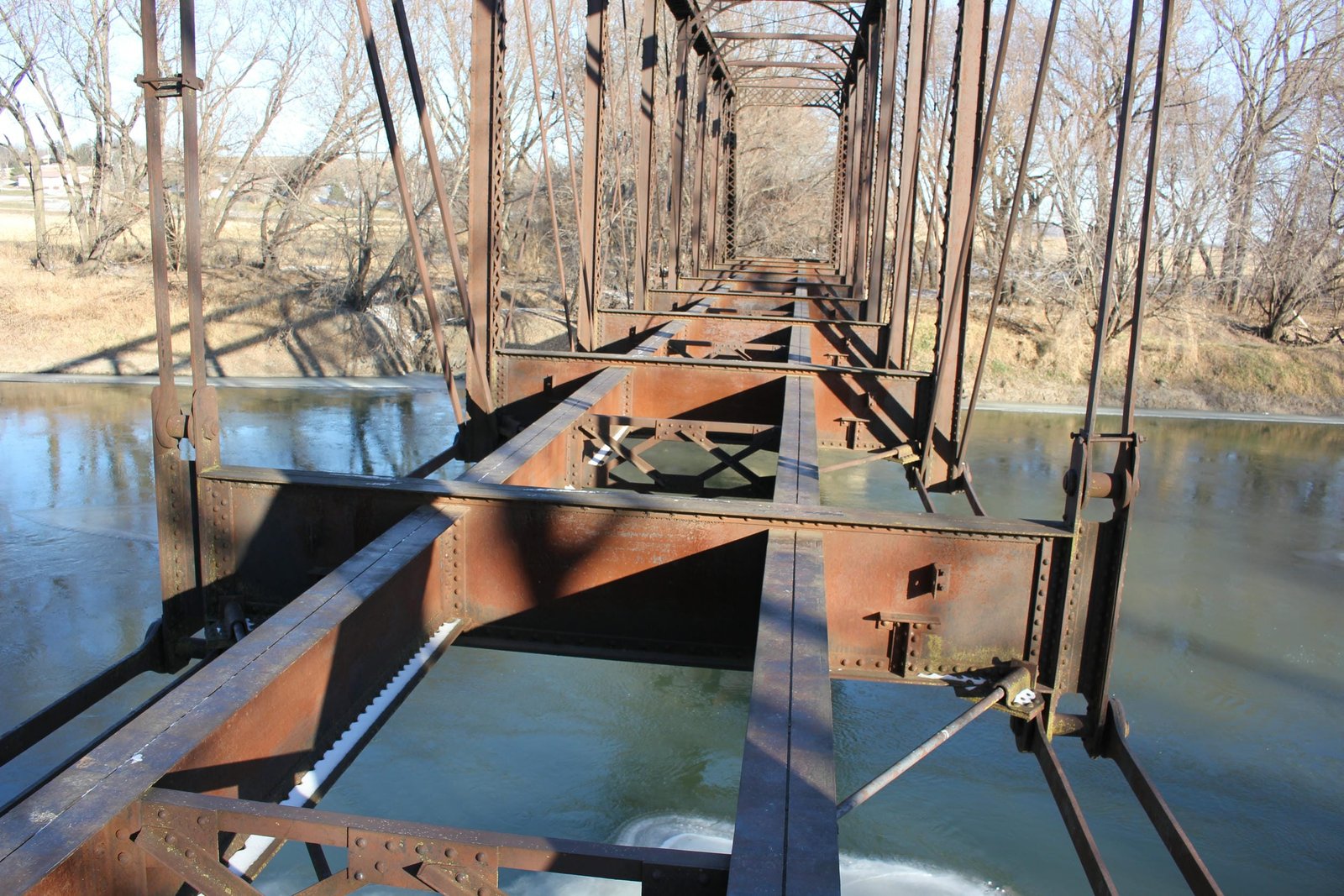
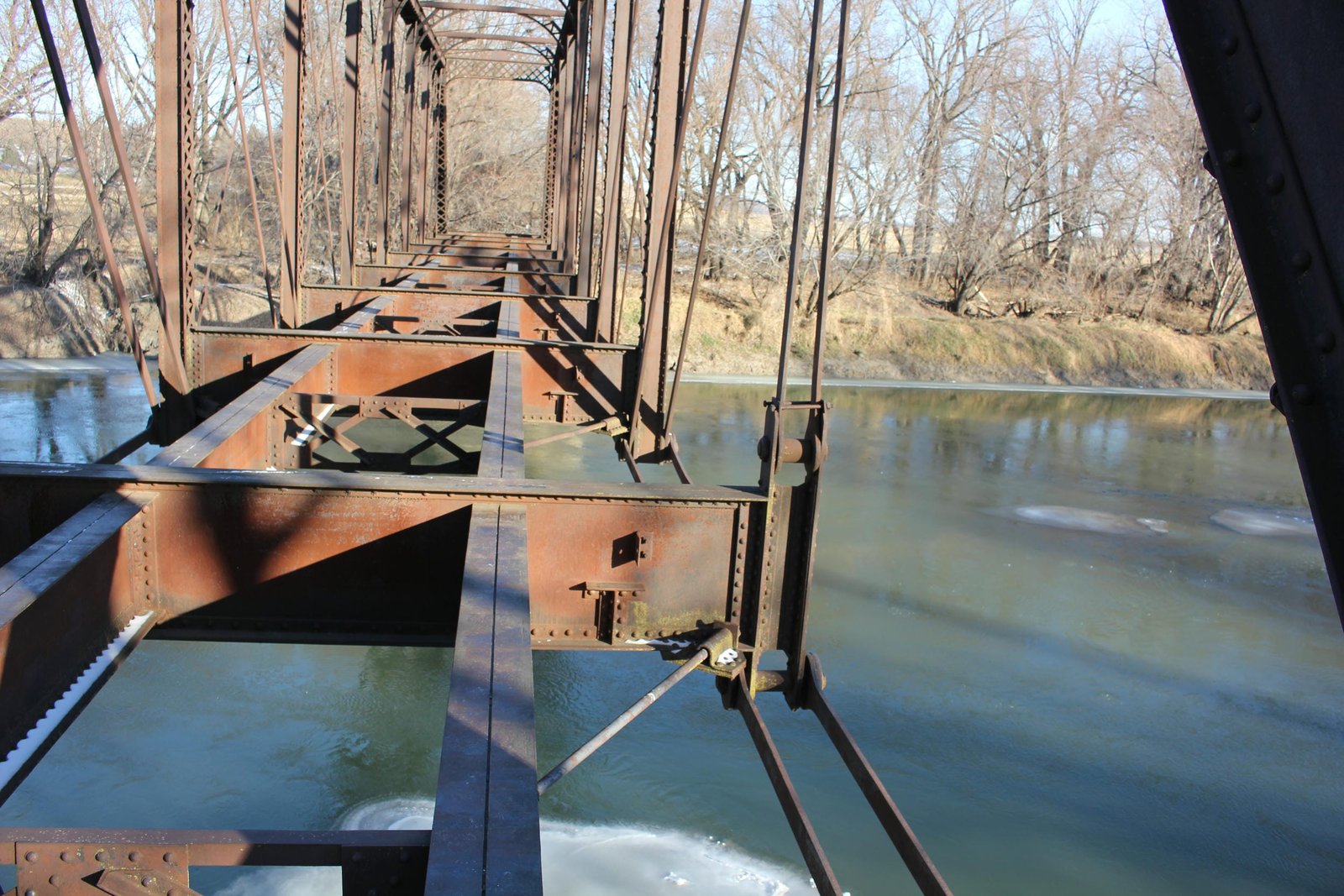
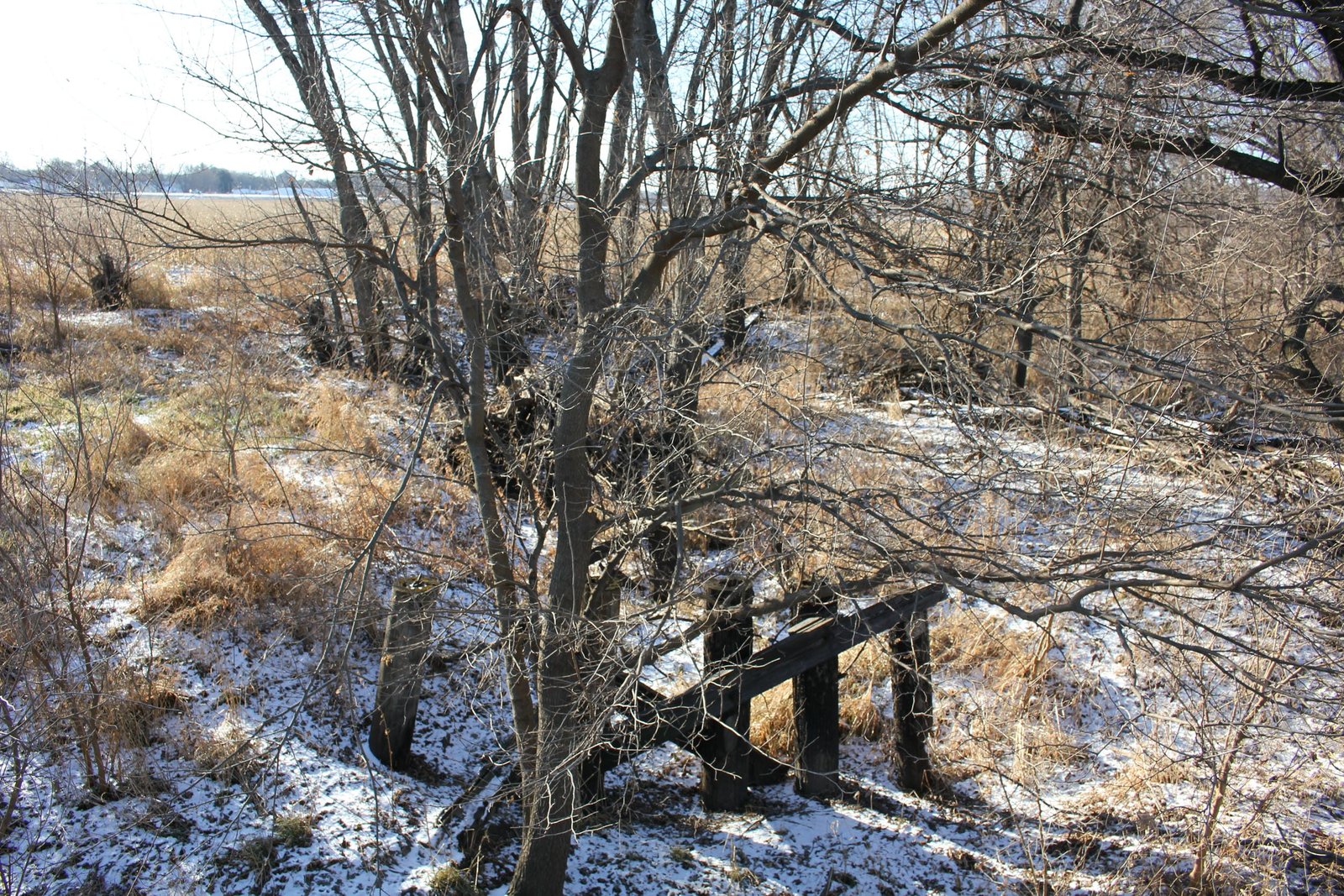
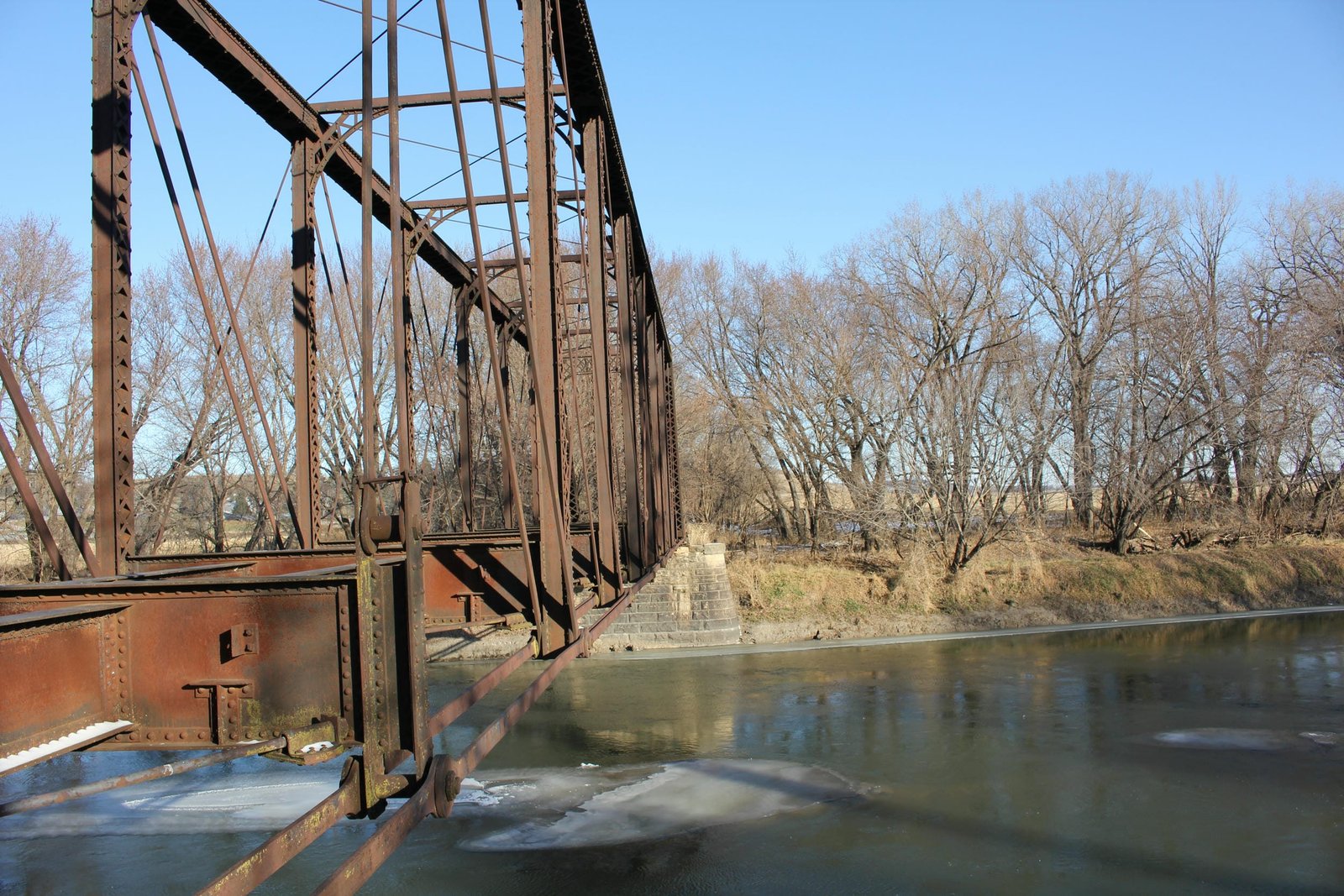
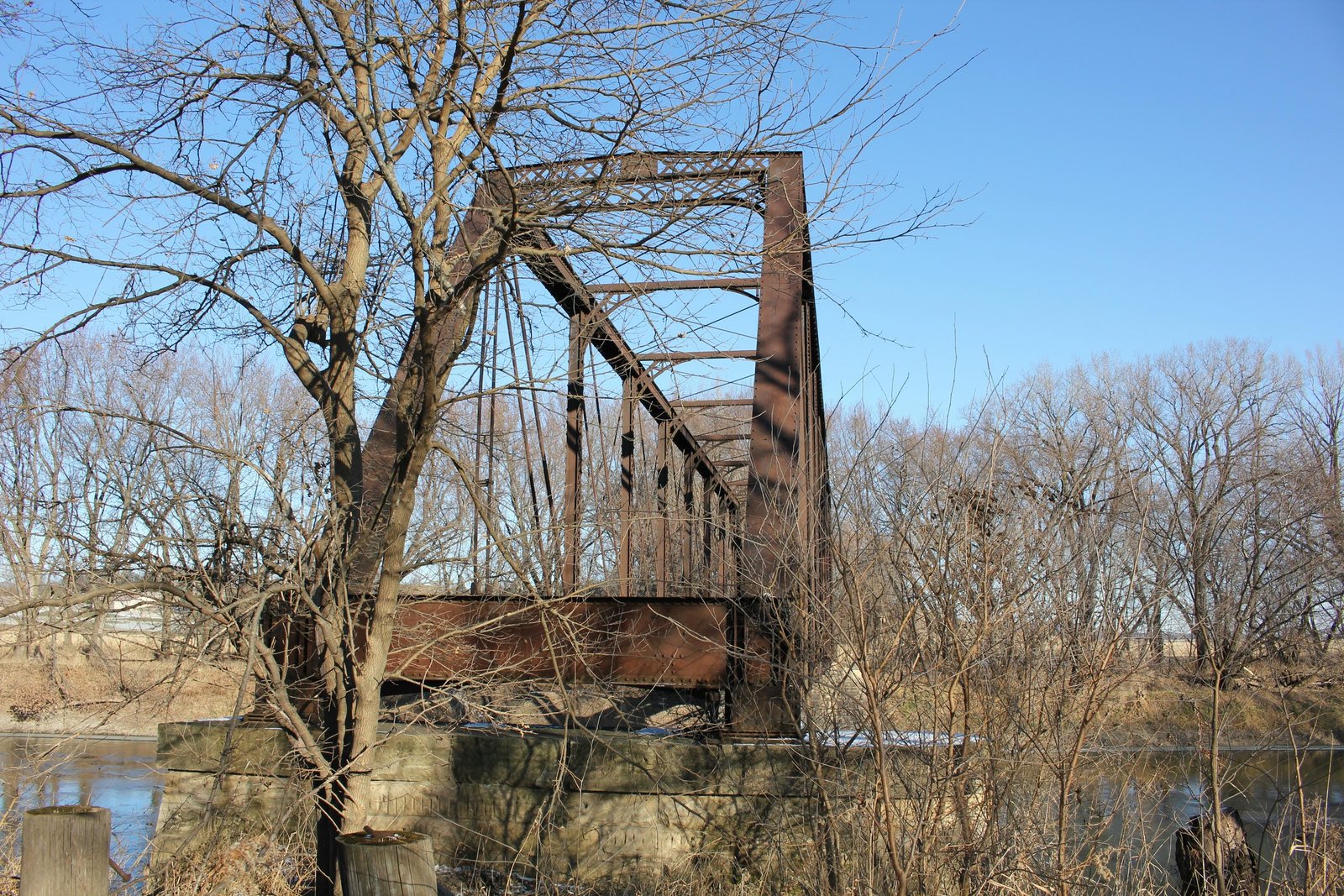
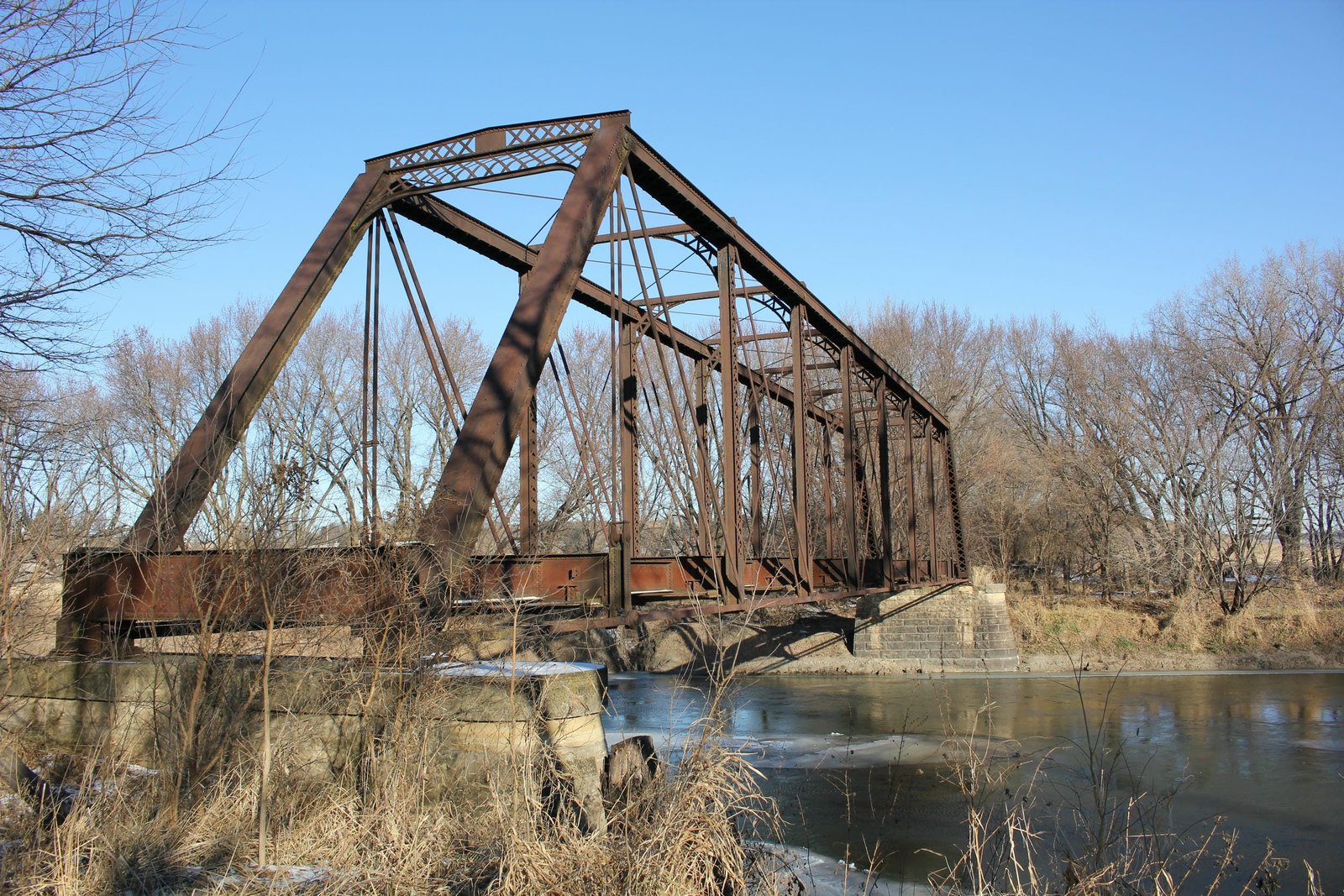
Located on the north side of Correctionville, this historic through truss bridge is the fourth crossing of a former Illinois Central Railroad branch line over the Little Sioux River. When the railroad was first constructed at this location, the bridge consisted of a single through truss span, set onto timber pile piers and approached by timber pile trestle spans on either end. Many railroads commonly used this technique when first constructing new lines, as it allowed for approach embankments to settle without damaging expensive components of bridges. In approximately 1895, two new stone piers were constructed for the bridge, retaining the approach trestles. The bridge was again upgraded in 1911, when a portion of the north approach was replaced with two secondhand through truss spans, and the approaches renewed. At abandonment, the bridge consisted of a 175-foot, 9-panel, Pratt through truss south span and two 123-foot, 8-panel, Pratt through truss center and north spans. All three trusses are believed to have been constructed of wrought iron. The truss spans were approached by timber pile trestle spans on either end. The south truss span was supported by stone piers, while the north piers and approach bents were constructed of timber piles. The stone piers used a standard rectangular design with rounded upstream noses. Stone for the piers was quarried at an unknown location, and the piers were constructed by an unknown contractor.
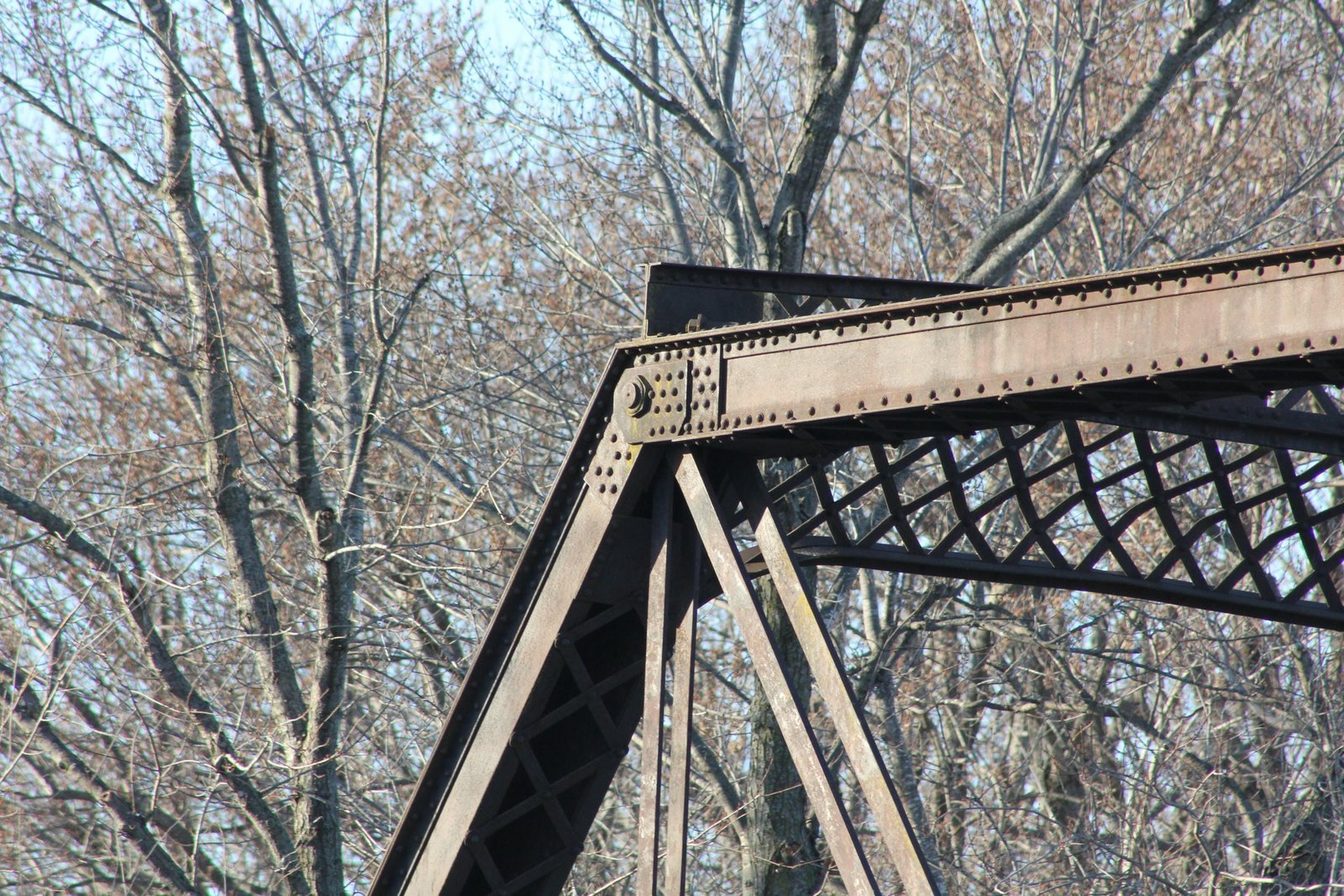
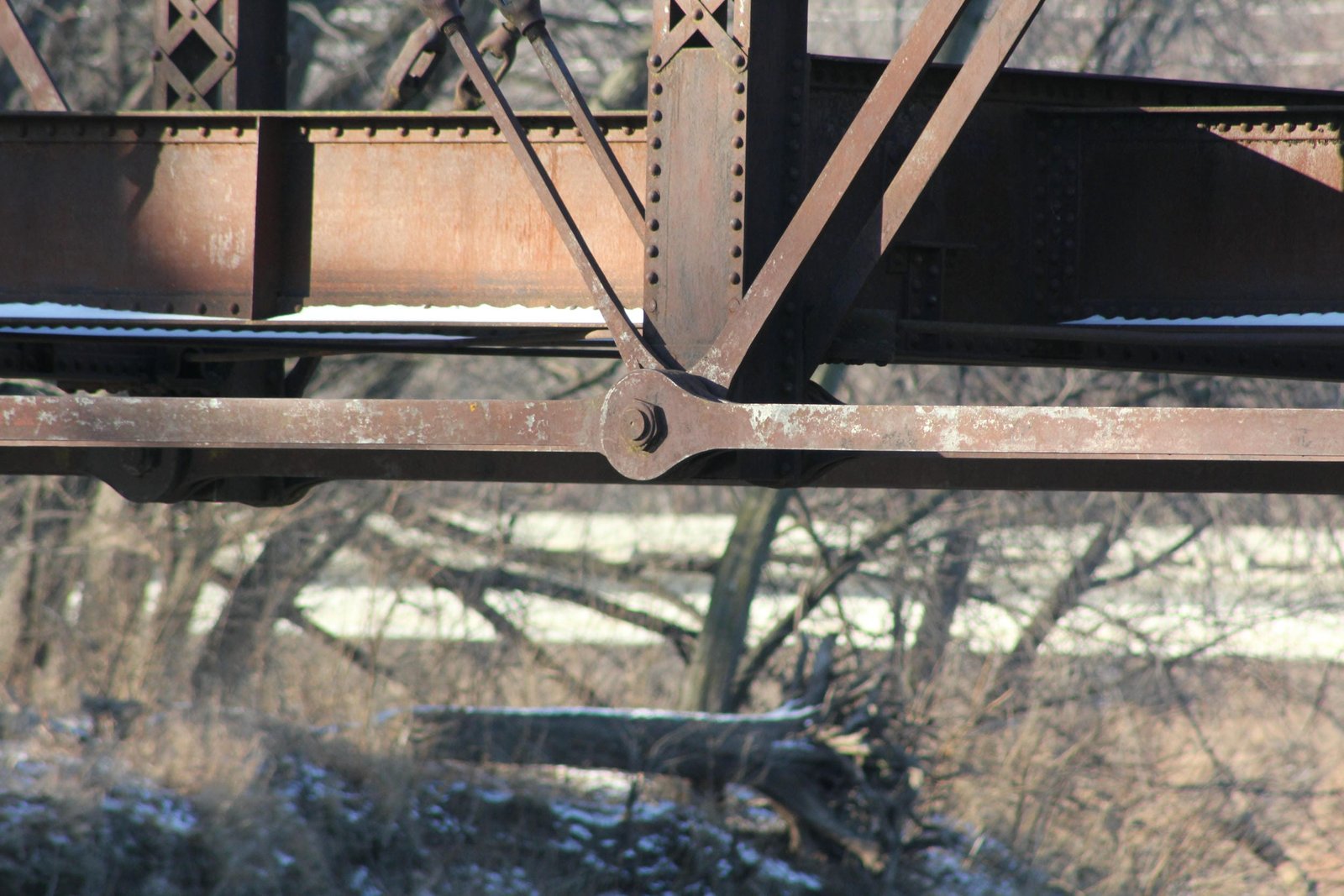
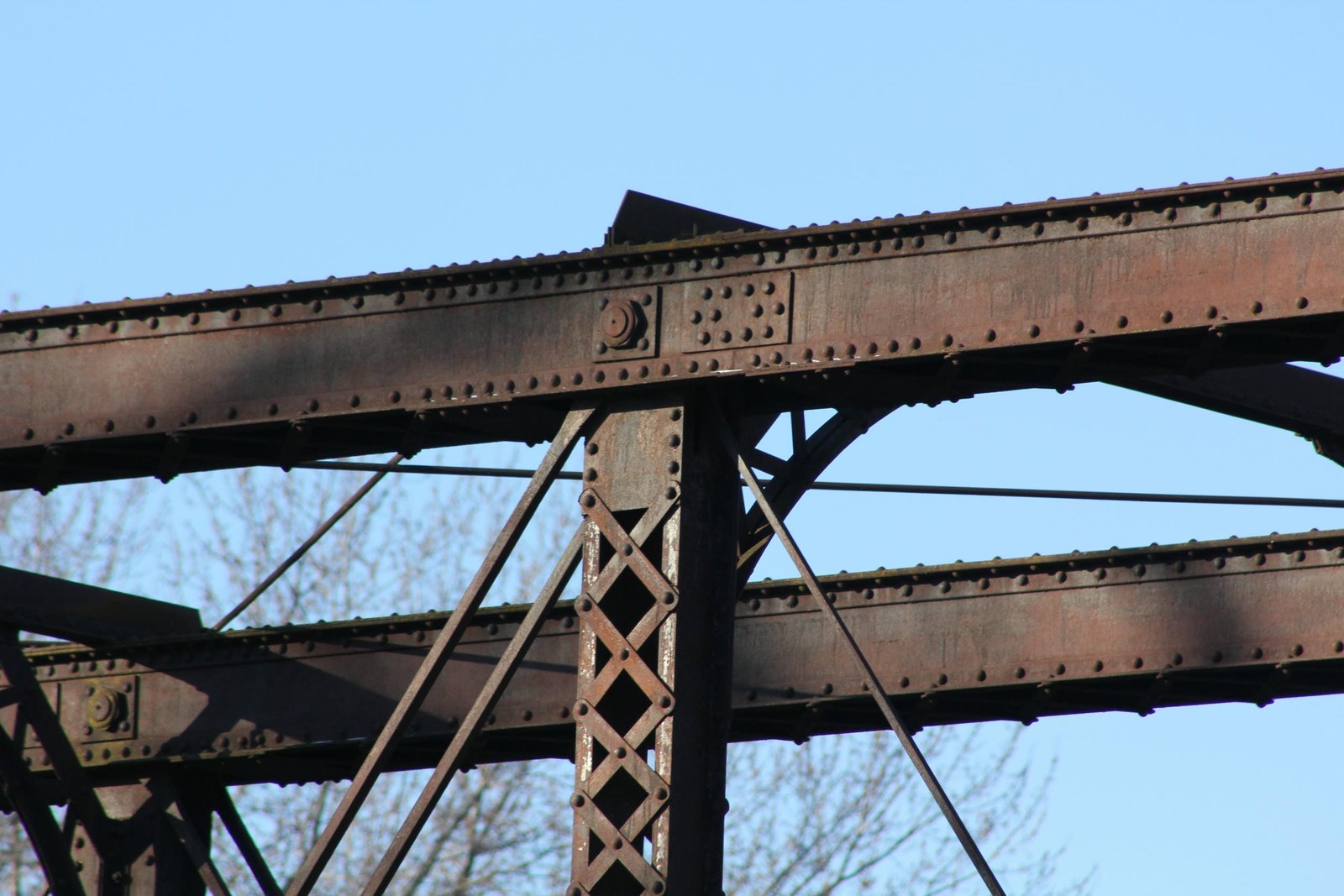
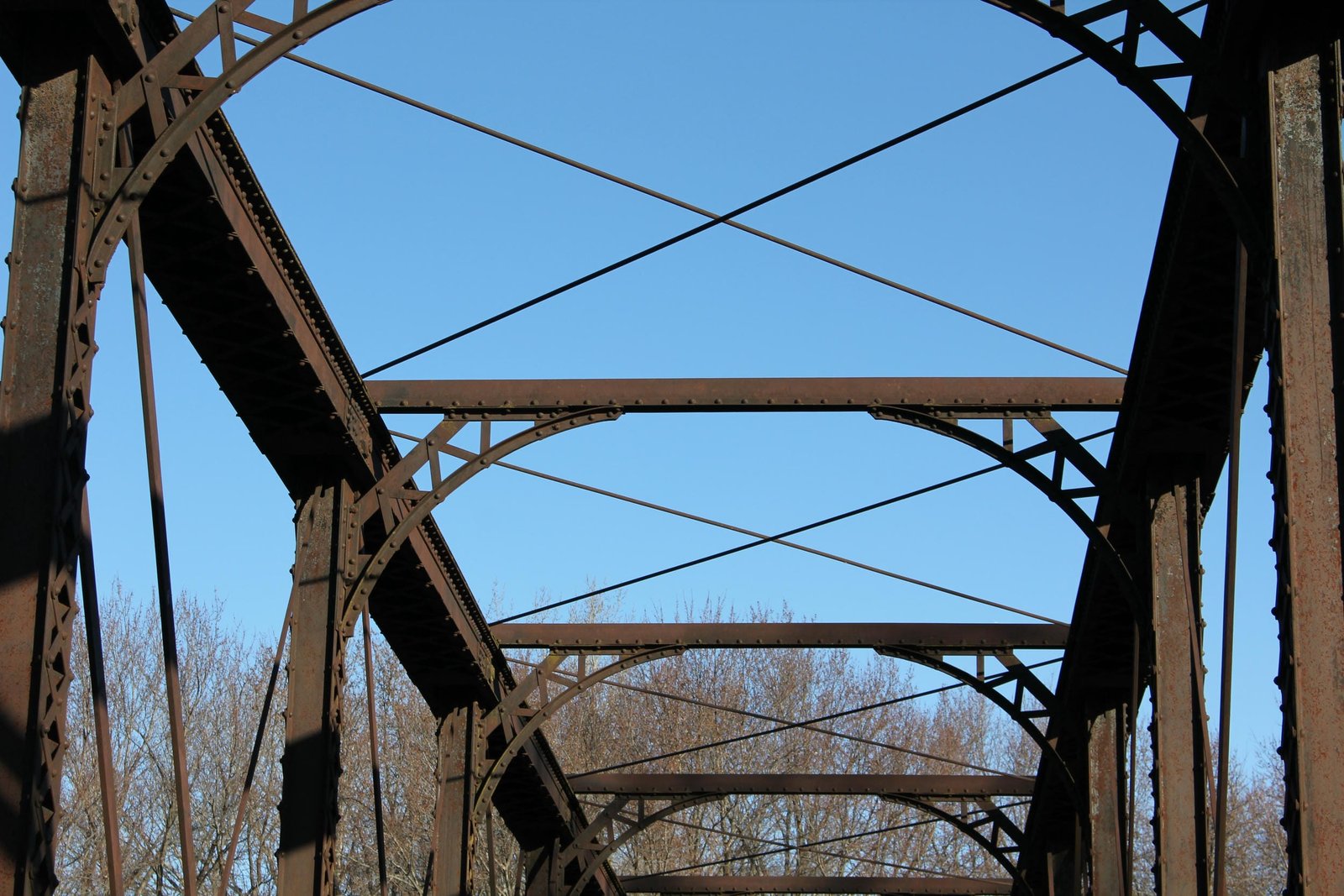
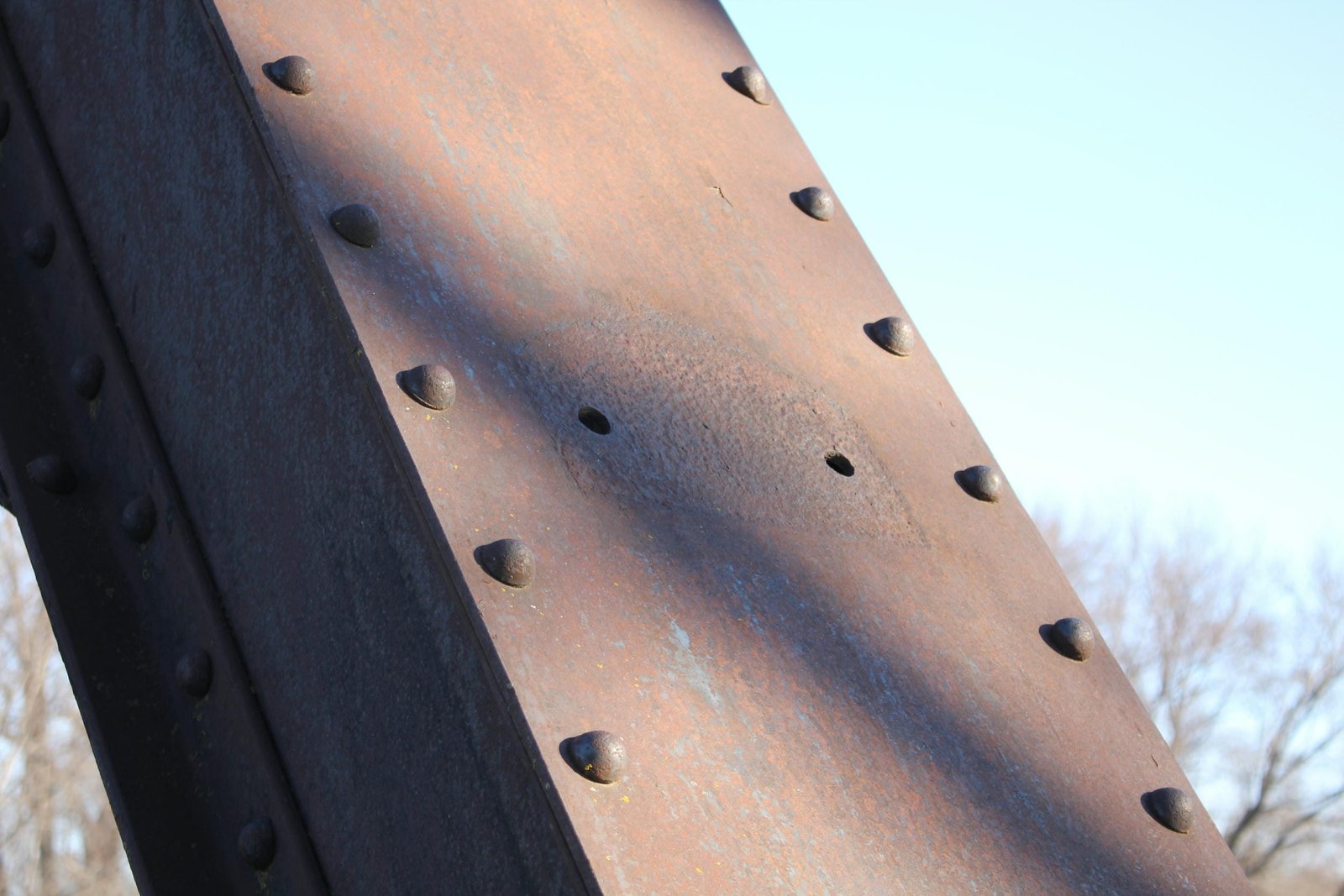
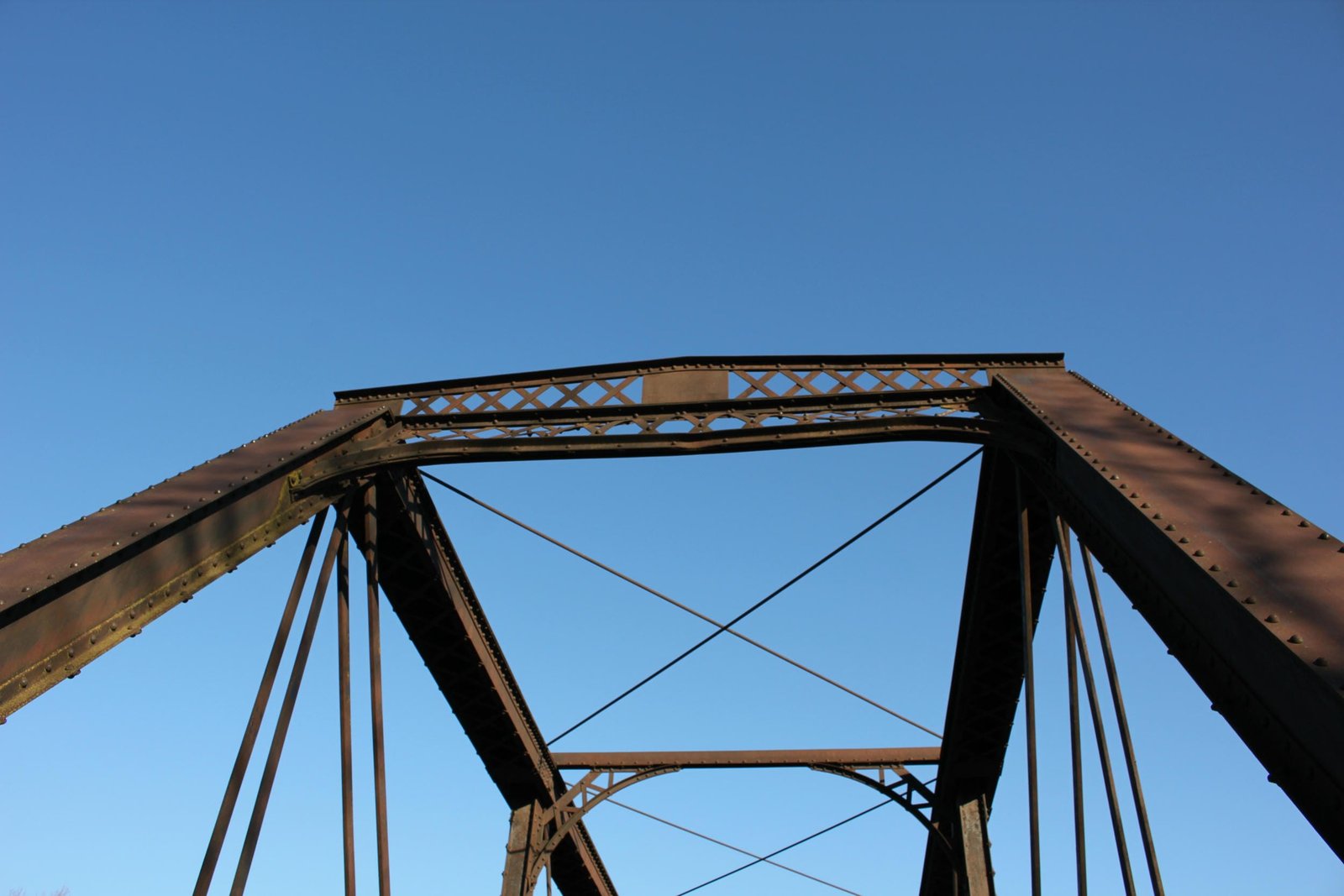
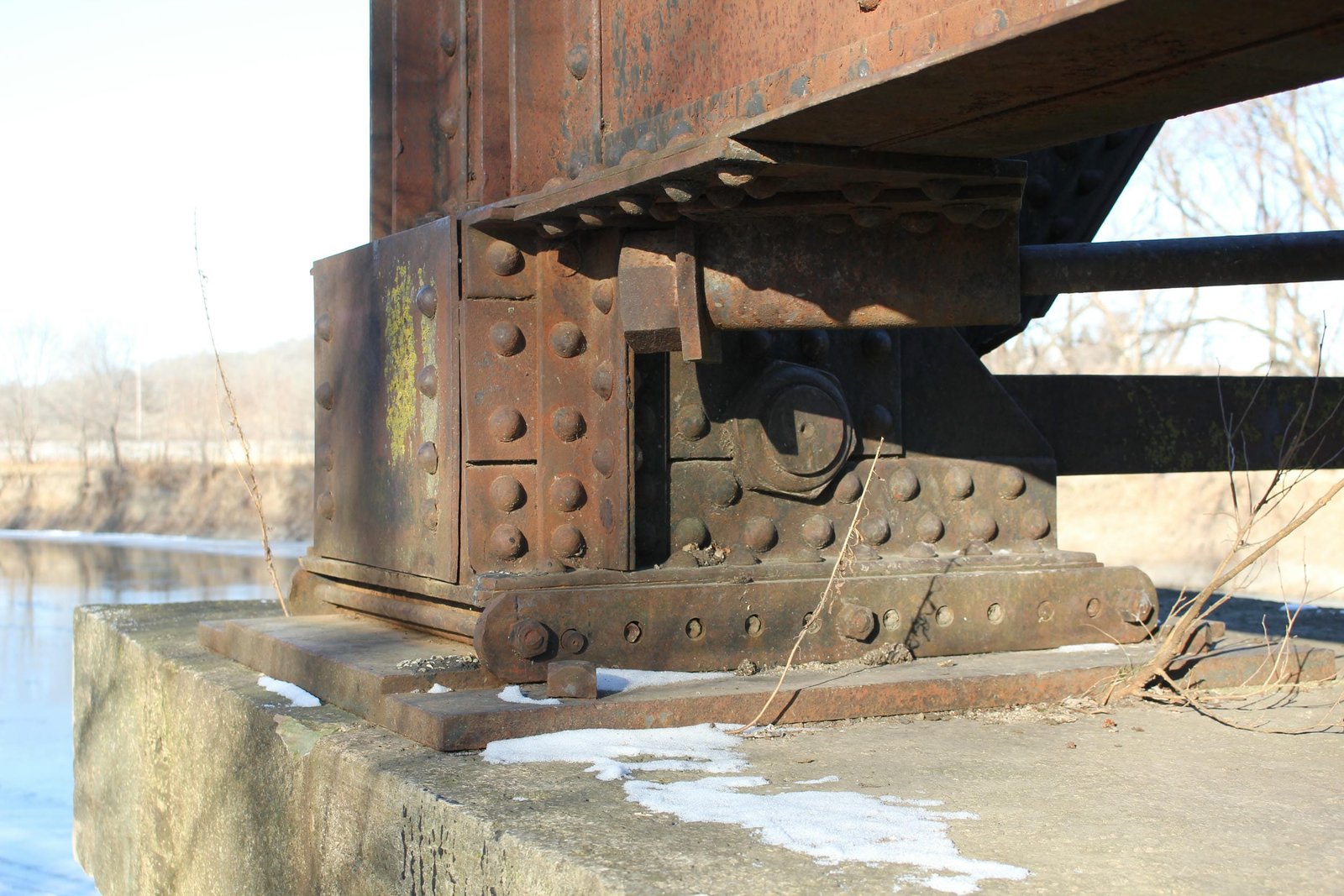
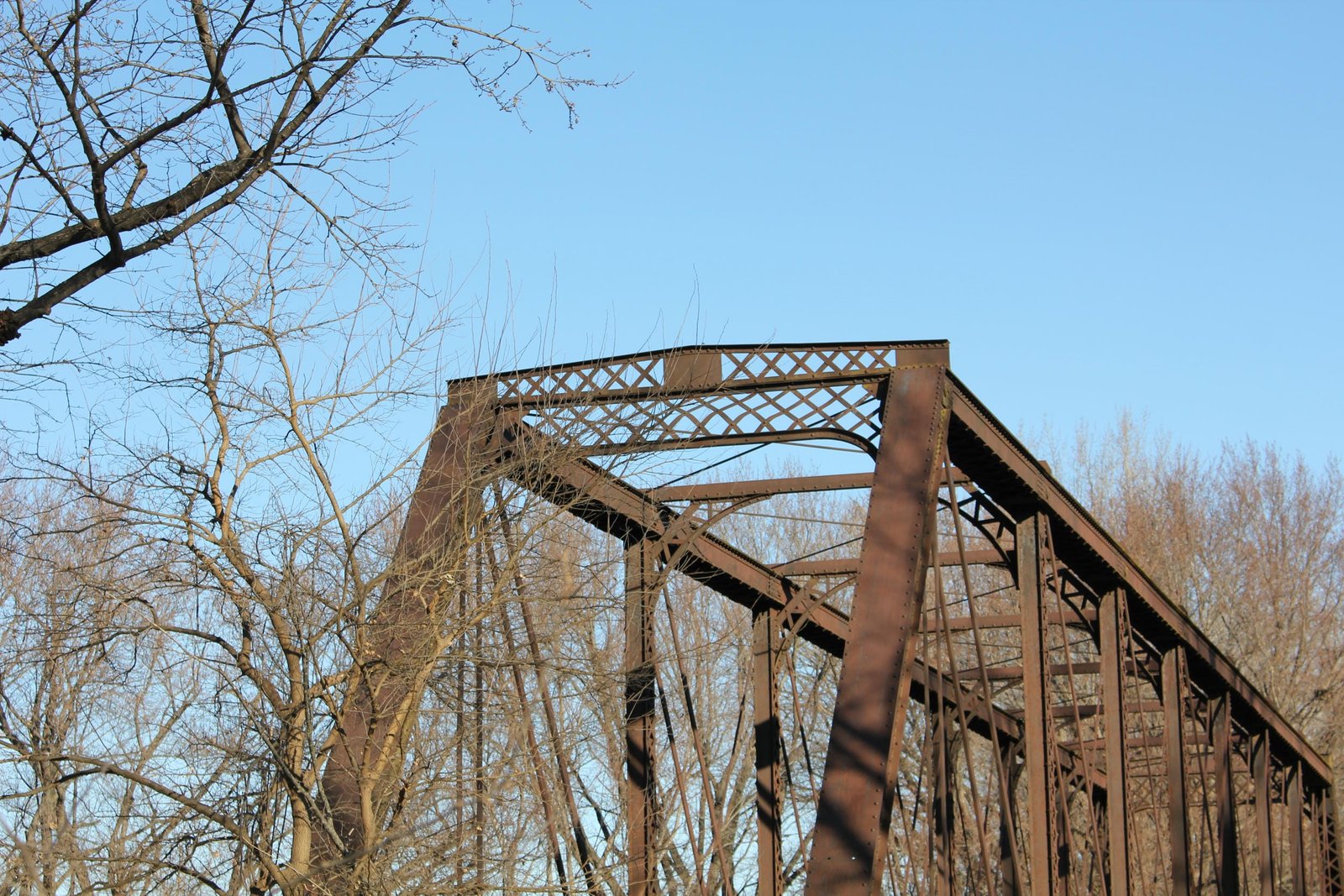
The southern truss was fabricated in 1887 by the Union Bridge Company at their Buffalo, New York plant. In the mid to late 1880s, the IC ordered a large quantity of truss spans from the Union Bridge Company for use on new branch lines and to replace existing light iron trusses. This span utilized built-up vertical members, a traditionally constructed floor and a decorative portal bracing. The top chord and endposts were composed of built-up beams, with a solid plate on the exterior and X-lacing on the interior. The bottom chord was composed of eyebars, with two sets of two at the center panels and two sets of one at the outer panels. Vertical members consisted of built-up beams, composed of tight X-lacing. The diagonal members consisted of eyebars and used a rectangular shape. Similar to other truss spans from this era, the outermost lower connections used a double connection design, with a pinned connection located above and below the floorbeam. The floor was composed of two plate girder stringers, which were affixed to plate girder floorbeams. Additional bracing was present between the two stringers. The lower lateral bracing was composed of metal rods, which were looped at the end and pinned into the floorbeams. The upper lateral bracing consisted of metal rods, and was affixed to the top chord. The portal bracing consisted of a crested lattice beam, a secondary lattice beam beneath and rounded lattice heel bracing. The sway bracing was composed of solid beams, which were connected to the vertical members by a rounded lattice heel bracing.
The center and northern truss spans fabricated in 1881 by the Keystone Bridge Company for use at the Tallahatchie River Bridge north of Abbeville, Mississippi. When that bridge was replaced in 1908, the three truss spans were released for reuse on this line. Two spans were installed at this location, while the third span installed at thefifth crossing of the Little Sioux River, on the south side of Correctionville. These span were considerably lighter than the south span, with light built-up members, a light floor and less substantial portal bracing. The top chord and endposts were composed of built-up beams, with a solid plate on the exterior and light V-lacing on the interior. The bottom chord was composed of eyebars, with two sets of two at the center panels and two sets of one at the outer panels. These eyebars were spaced so each set is on an opposite side of the vertical member. Vertical members consisted of built-up beams, composed of a light V-lacing. The hip vertical members used a set of two light eyebars. The diagonal members consisted of eyebars and used a combination of a rectangular shape and slender rods. The floor was composed of four shallow steel stringers, arranged into two sets of two. These stringers were set on top of shallow floorbeams. It is unclear if this was the original configuration of the floor, as the floorbeams each had two slots formed by L-bars. The lower lateral bracing was composed of rectangular eyebars, which was pinned to a clevis in the floorbeams. The upper lateral bracing consisted of metal rods, which were threaded on each end, slid through a plate at the end of the sway or portal bracing and used an iron nut to be held in place. Both the portal bracing and sway bracing used a thin iron beam with no decorative features. The portal bracing also used a rounded T-shaped bar and decorative iron semicircle for heel bracing.
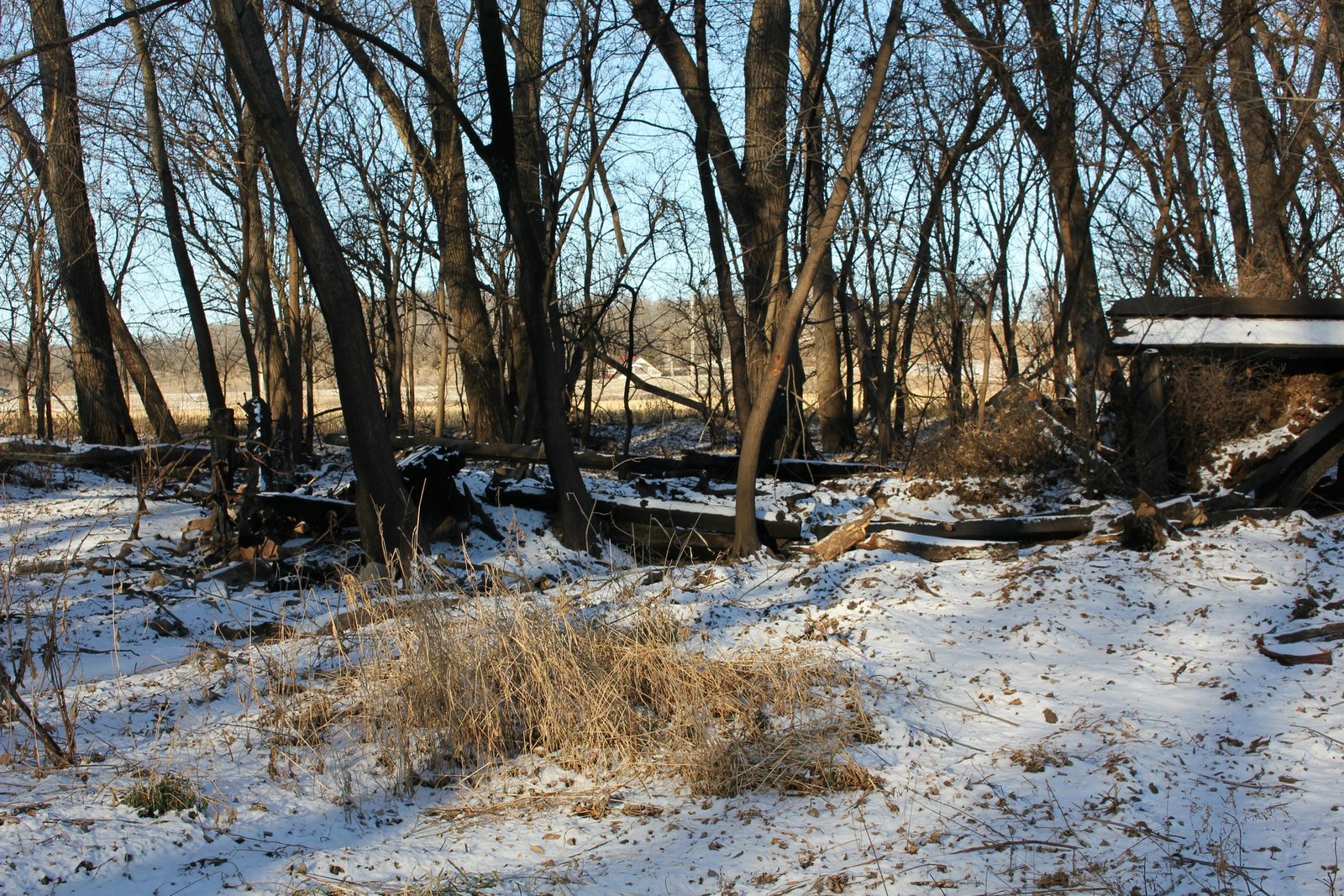
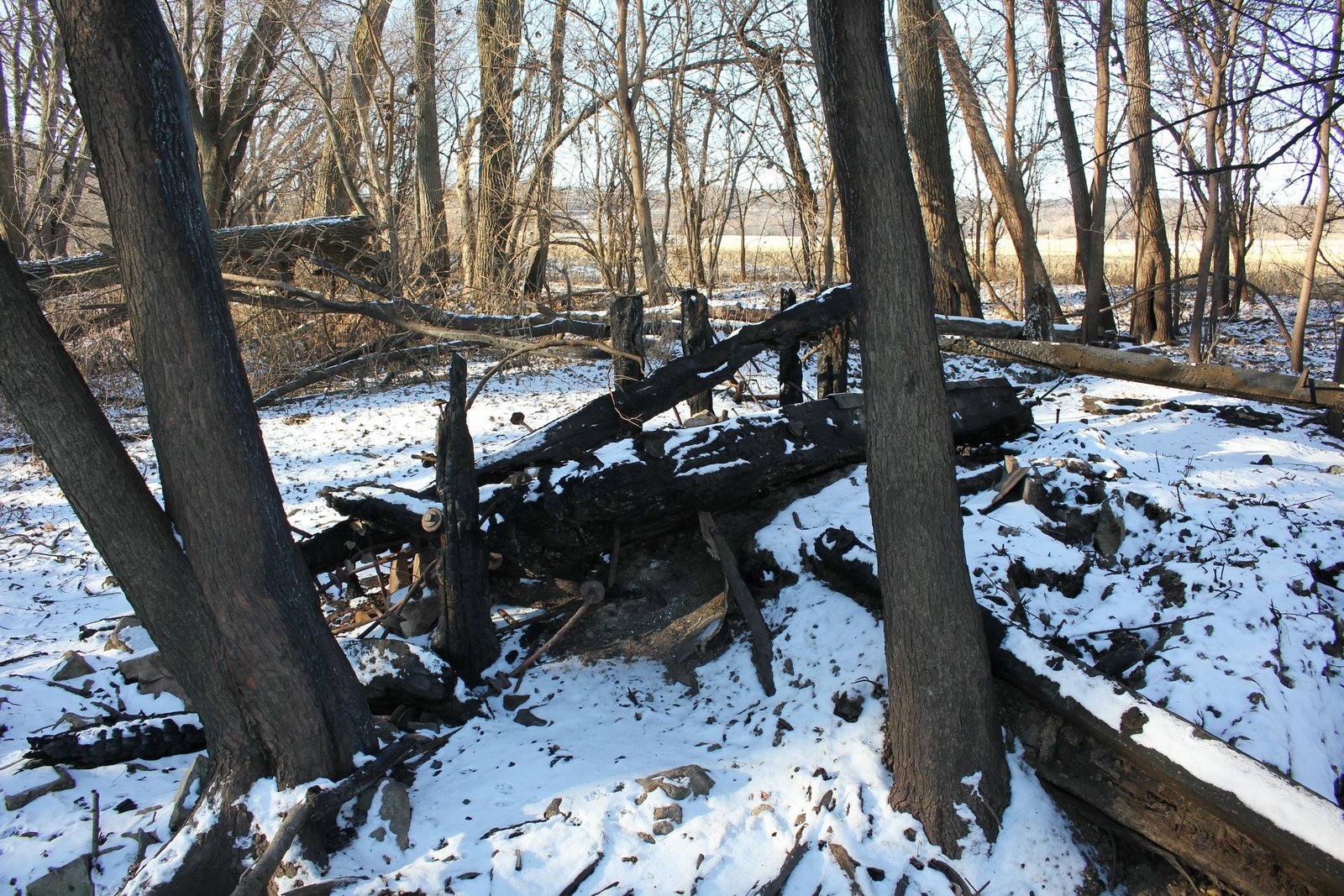
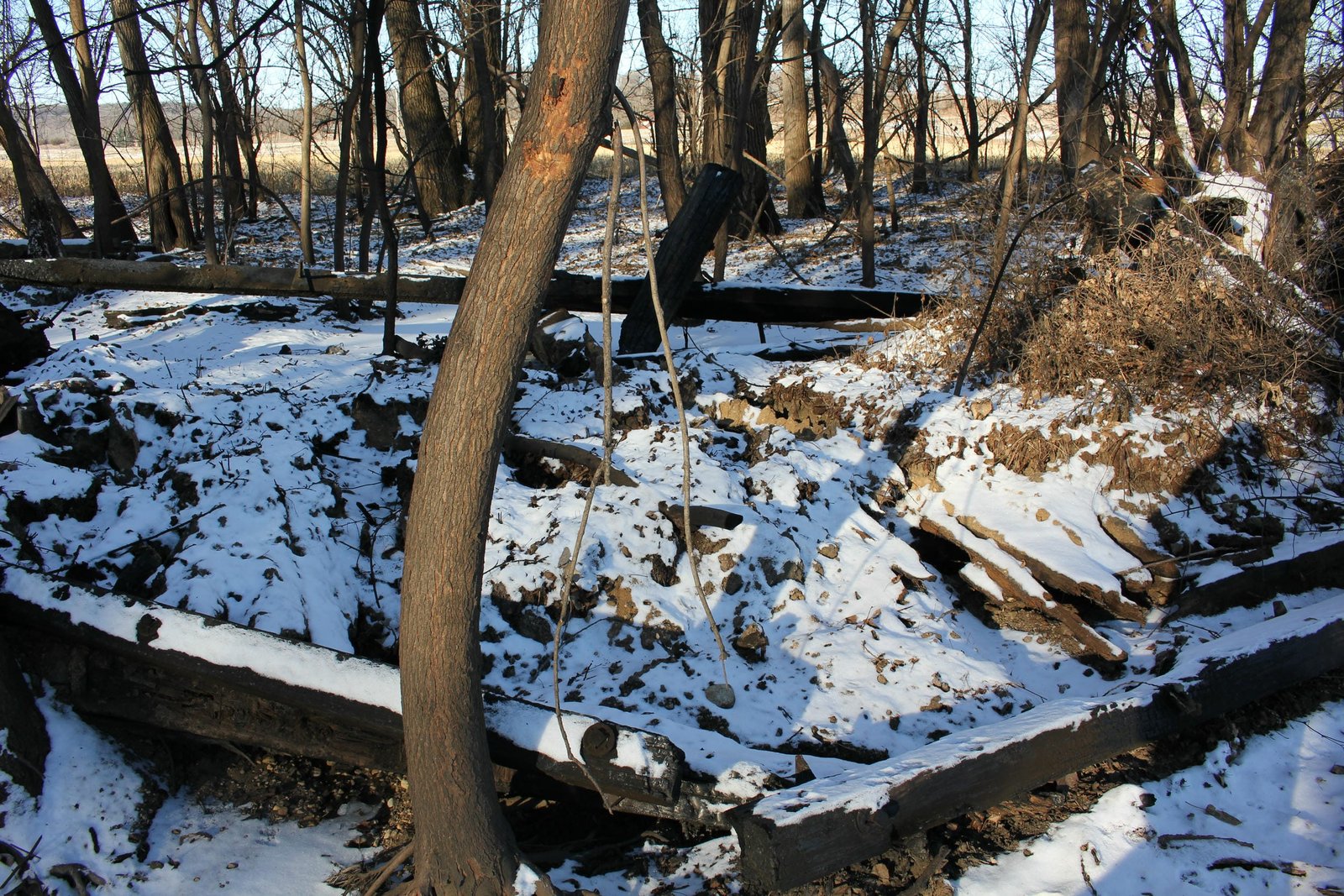
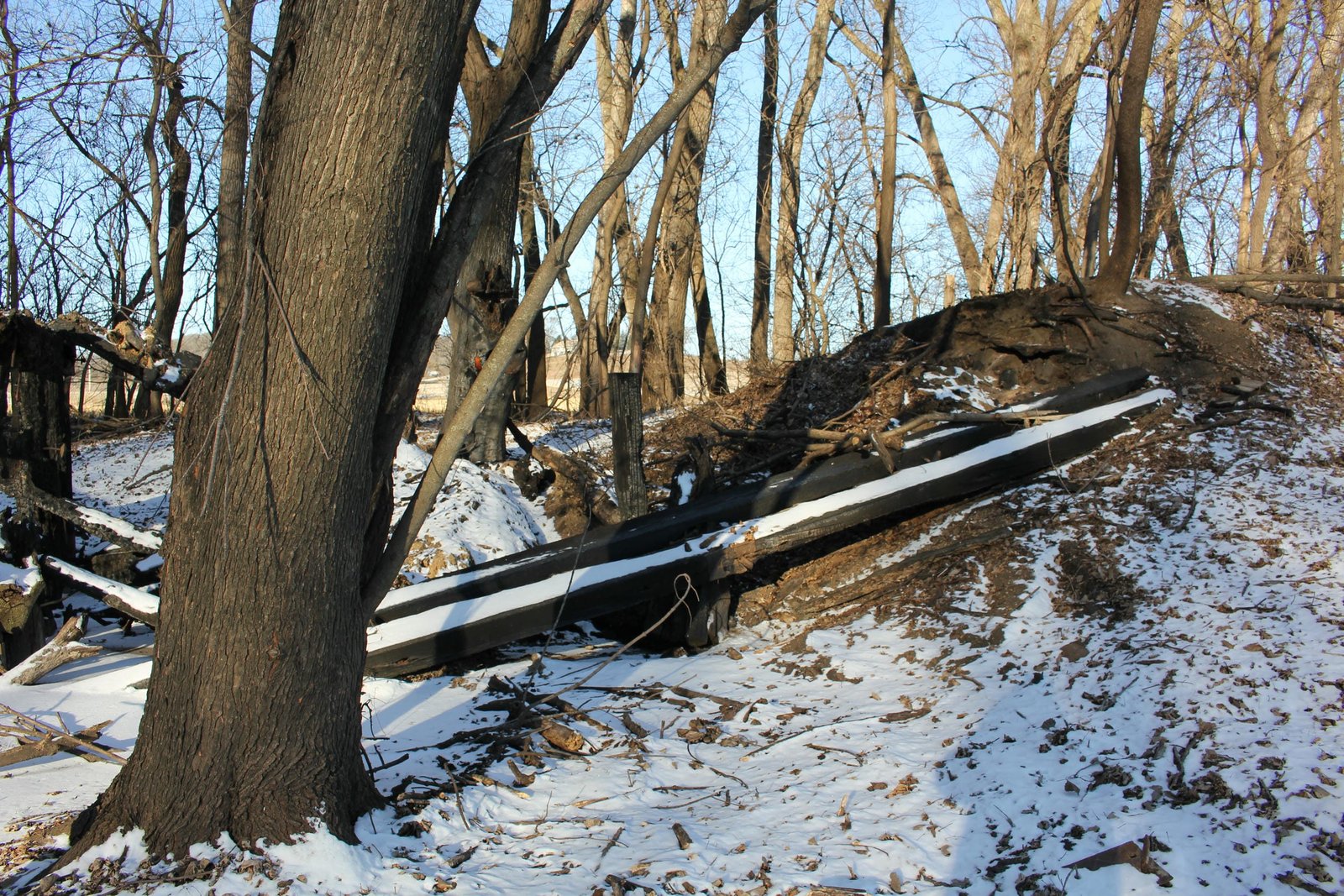
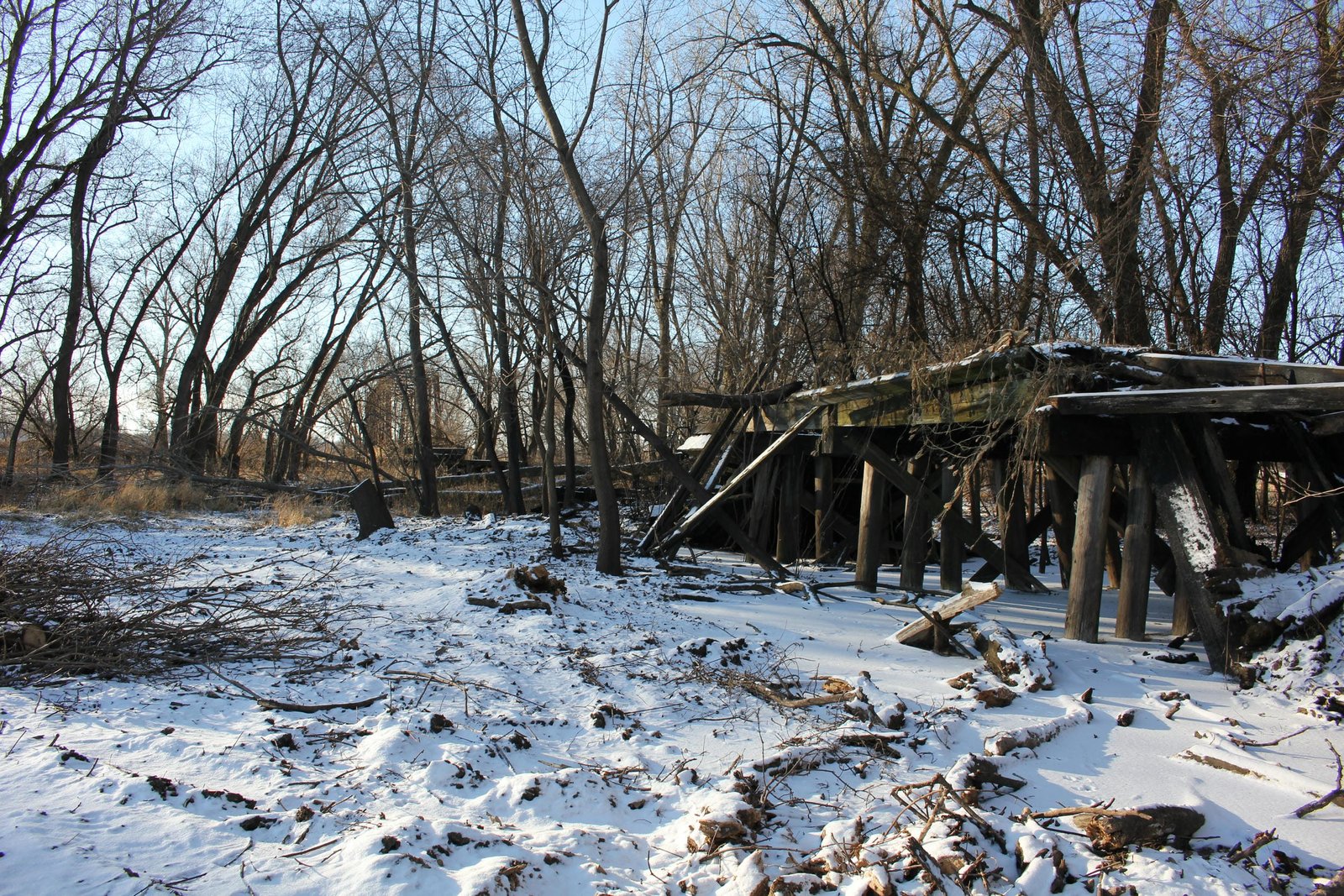
The Pratt truss design was the most popular railroad truss bridge design in the late 19th Century, as it was economical, durable and simple. However, the main limitation of this design was the length. In the mid-1880s, railroad spans of this design were generally limited to 200 feet or less, with most spans 150 feet or less. The southern span represented a longer variation of the standard design, with a handful of examples constructed for the IC. One such identical span remains intact near Freeport, Illinois. The center and north spans represented a typical iron truss span from the early 1880s. After abandonment, the bridge was originally left intact and sold to a private individual. In approximately 1995, the center span, northern span and timber approaches were removed by a farmer, leaving only the southern span standing. Unfortunately, this greatly reduced the significance of the bridge. Today, the southern span remains standing on stone piers, with the entire timber deck having been removed. Overall, the remaining span appears to be in fair to good condition, with no significant deterioration noted. The author has ranked this bridge as being regionally significant, due to the age, history and truss design. The author would have provided a higher rating if the additional truss spans remained intact today.
Citations
| Builders (superstructure), build dates and relocation history | Illinois Central Railroad Valuation Engineering Field Notes at the National Archives |
| Railroad History Citation | ICC Valuation Information, Compiled by Richard S. Steele |