
Click the photo to view the full-size version
| Name | CN Bridge #422.8 Illinois Central Railroad Bridge #WA422.8 |
| Built By | Illinois Central Railroad |
| Currently Owned By | Canadian National Railway |
| Contractor | G.H. Scribner of Chicago, Illinois |
| Length | 6 Feet Total |
| Width | 1 Track (58 Feet) |
| Height Above Ground | 5 Feet (Estimated) |
| Superstructure Design | Concrete Arch Culvert |
| Substructure Design | Concrete |
| Date Built | 1899 |
| Traffic Count | 2 Trains/Day (Estimated) |
| Current Status | In Use |
| Illinois Central Railroad Bridge Number | WA422.8 |
| Canadian National Railway Bridge Number | 422.8 |
| Significance | Local Significance |
| Documentation Date | 12/30/2018 |
In 1889, the Chicago, Rock Island & Pacific Railroad sought to connect the end of their Council Bluffs-Chicago mainline at Council Bluffs to Lincoln, Nebraska and eventually to a point southwest near Fairbury, Nebraska; where the Chicago, Kansas & Nebraska Railway (CK&N) had built in 1887. Because the CK&N had built a considerable network of routes around Kansas, Nebraska and Colorado; this connection was desired to give the Rock Island access to Denver. The Rock Island purchased the CK&N in 1891. Trackage rights were secured to cross the Missouri River on the Union Pacific Bridge into Omaha, before the route turned southwest, running through Papillion and Richfield, before crossing the Platte River at South Bend. From here, the route continued through Murdock, Alvo and Prairie Home. By 1892, the Rock Island had reached Lincoln, passing through the east side of the city. In 1893, work continued south, and the route was built through Rokeby, Hallam, Clatonia, DeWitt and Plymouth before finally reaching the existing line at Jansen, Nebraska. The Rock Island was a poor railroad, facing financial trouble
regularly and often in bankruptcy. This route hosted passenger trains
known as "Rockets" for many years, although passenger trains were later
discontinued. After World War II, the Rock Island struggled to survive,
proposing mergers and deferring maintenance on their routes. Rock
Island sought to keep interchange traffic between Denver and Chicago
running on this line, struggling to compete with a stronger and better
constructed Union Pacific system.
By 1964, the Rock Island
began attempts to merge with Union Pacific, and restructure railroads
west of the Mississippi River. This merger was eventually denied, and
Rock Island turned its last profit in 1965. In the mid-1970s, the
railroad was in serious decline. The railroad received loans to attempt
to fix slow orders, received new equipment and turn a profit. By 1978,
the railroad came close to profit, but creditors were lobbying for a
complete shutdown of the Rock Island. During the fall of 1979, a strike
crippled the railroad, and by January of 1980, the entire system was
ordered to be shut down and liquidated. Many of the lines and equipment
were scrapped. Profitable sections of railroad were prepared for
sale. The route between Omaha and Hallam was abandoned. The route between Jansen and Hallam was sold to Mid States Port
Authority in 1984, and began operations under Union Pacific Railroad the same
year. Today, UP owns the surviving part of this line and operates it as the Hallam Subdivision. The line through Lincoln is now the Rock Island Trail, and plans are being made to extend the trail to US-77. East of Lincoln, a small segment is now the Dave Murdock Trail, and the Platte River Bridge is now part of the Mopac Trail. The remainder of this line is now privately owned and abandoned.
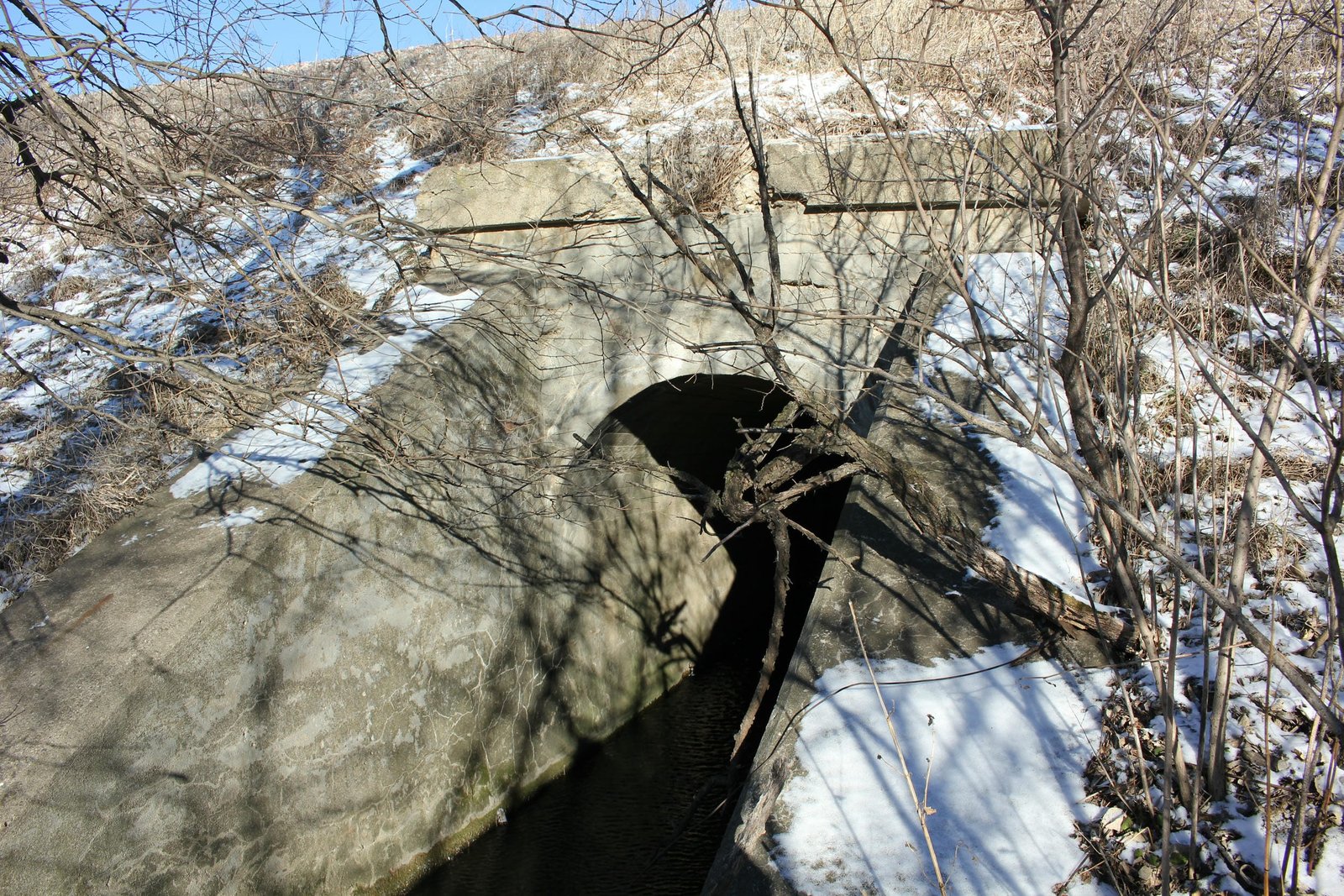
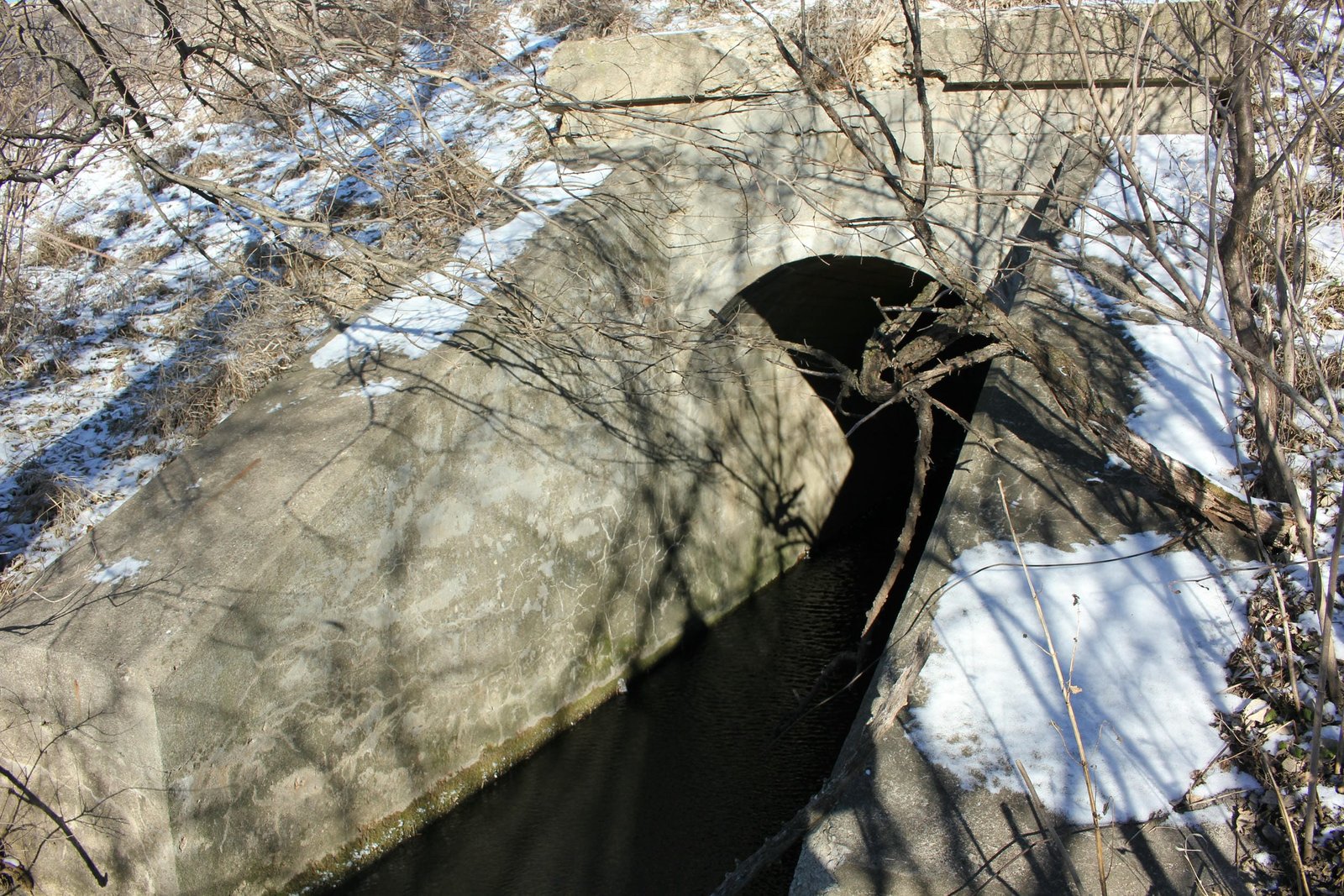
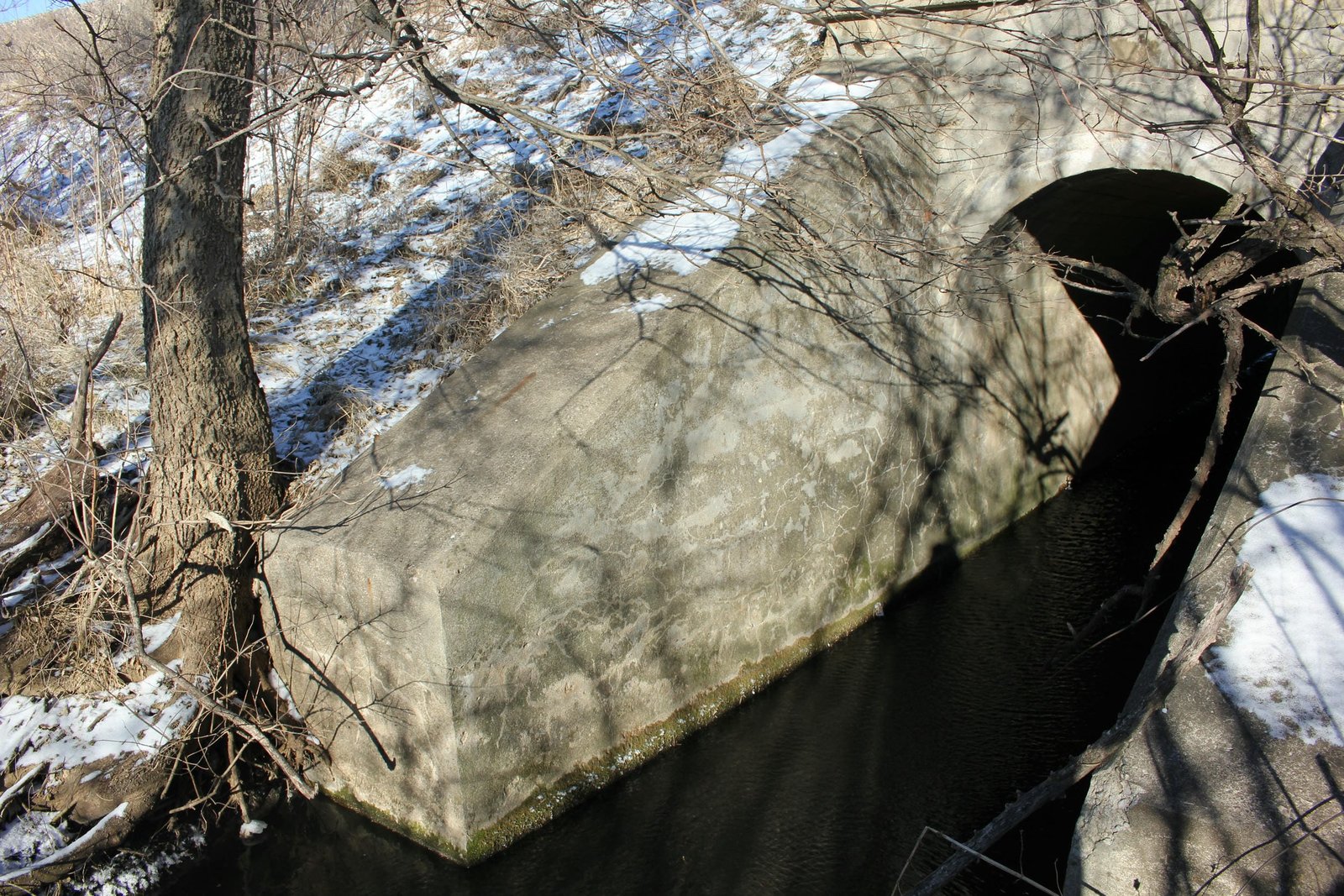
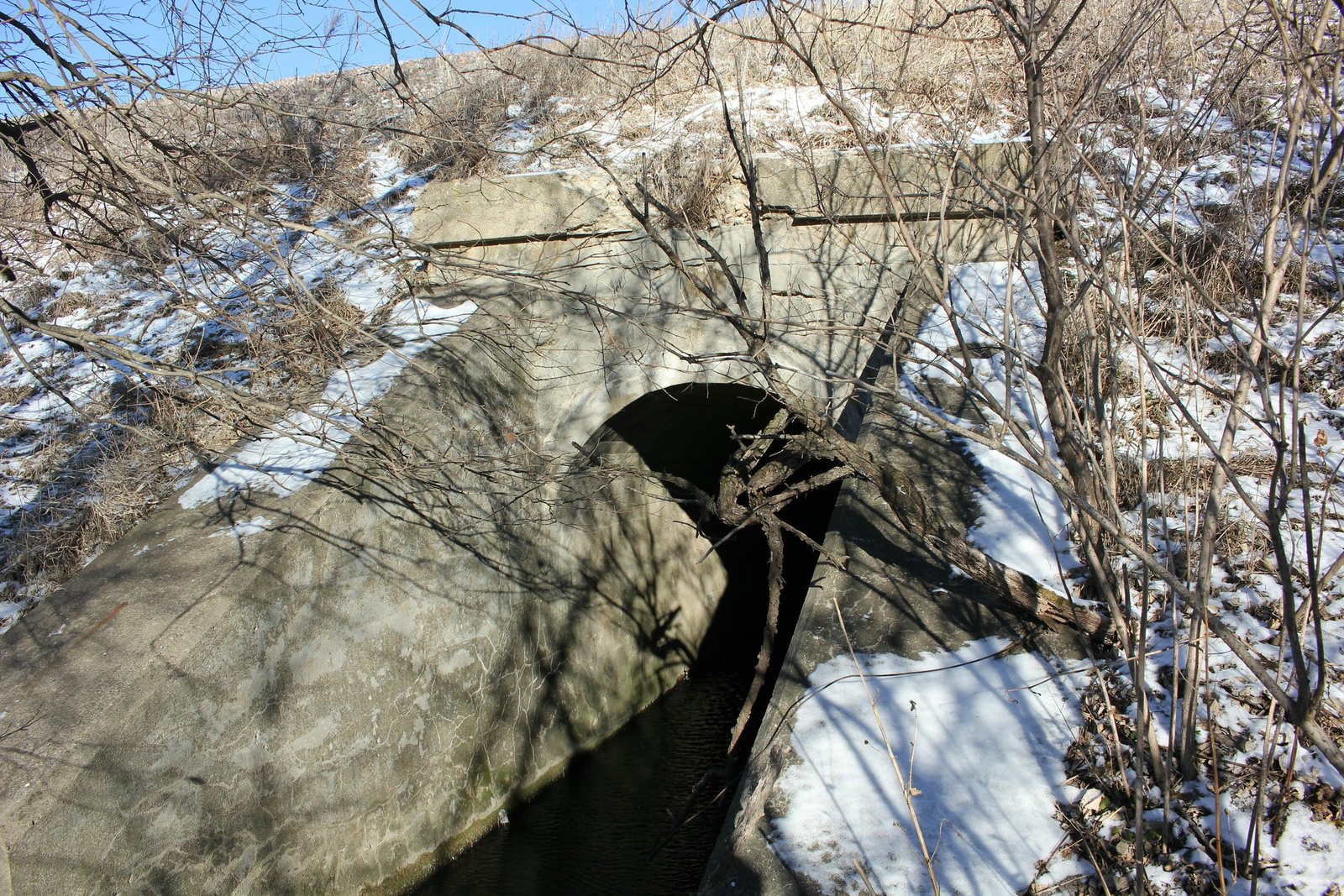
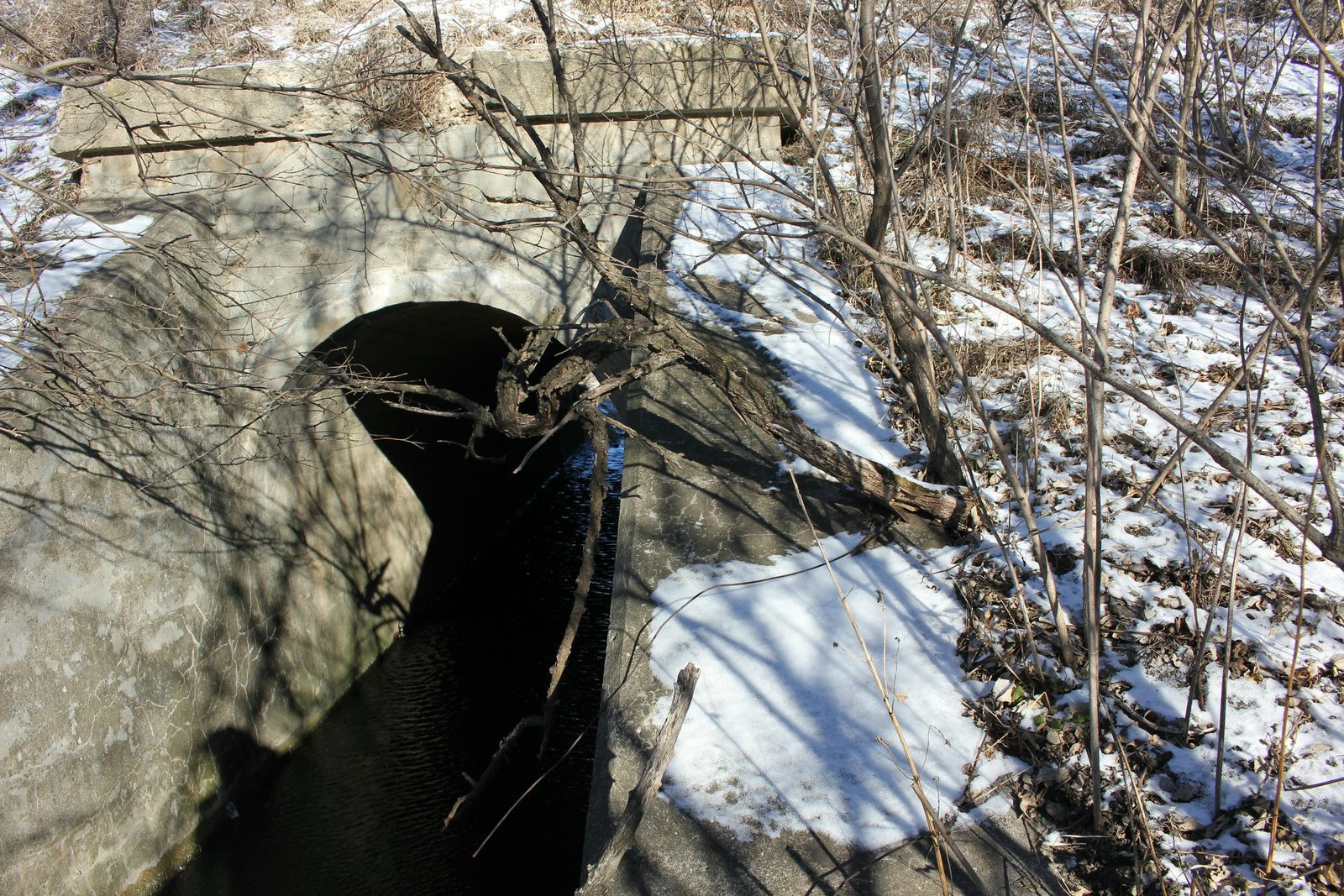
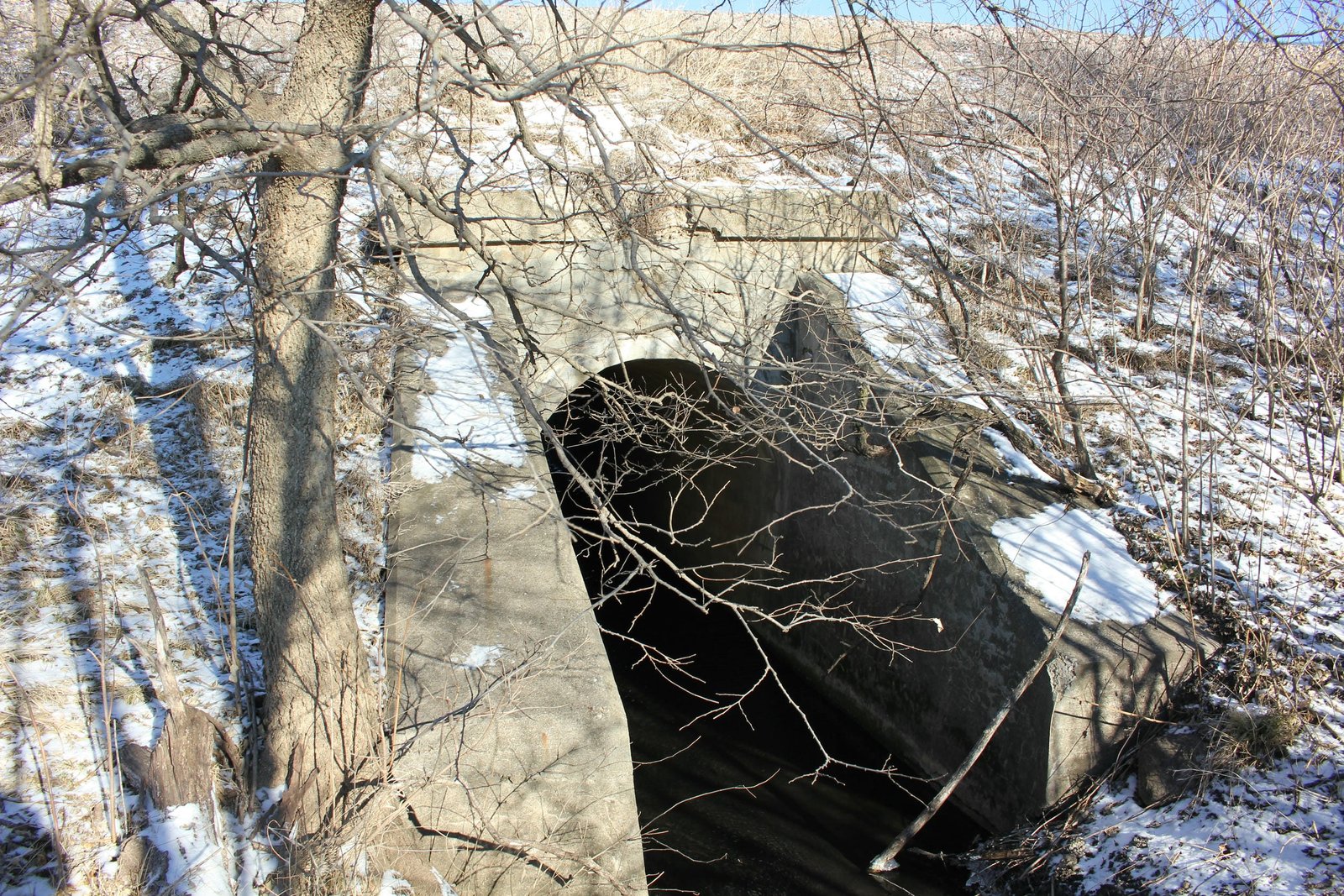
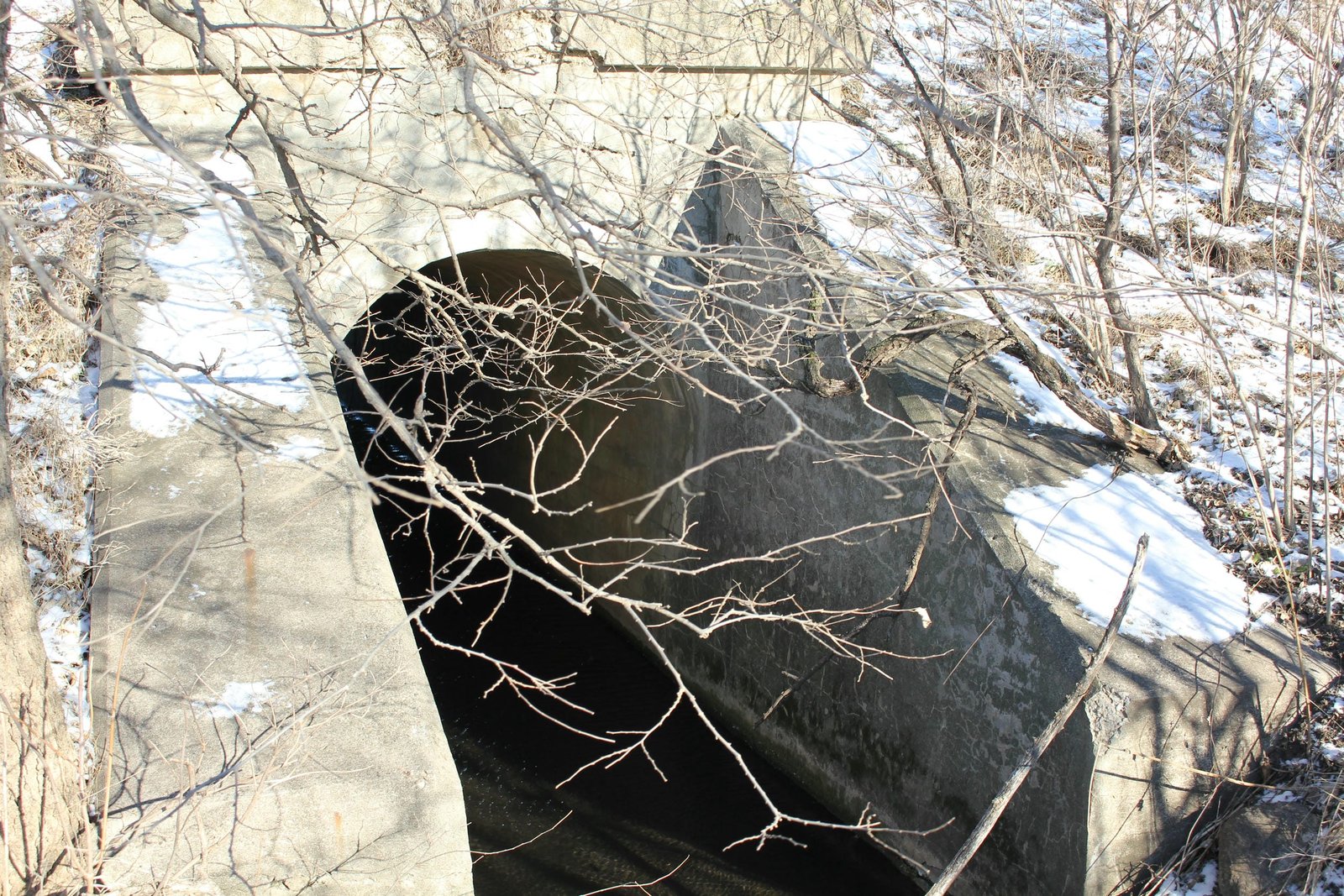
Located near Quincy Avenue north of Carnarvon, this concrete arch culvert carries a former Illinois Central Railroad line over an unnamed creek. The present culvert was constructed in 1899 during the initial construction of this line. Currently, the structure consists of a 6-foot concrete arch culvert, set onto concrete substructures and constructed at a width of 58 feet. The culvert follows a standard design, with a semicircular arch and sloped wing walls which extend perpendicularly to the tracks. G.H. Scribner constructed the culvert as part of the contract for initial construction of concrete bridges and culverts along this line. Concrete arches were popular for railroad use, as they were durable and easy to construct. While most railroads switched to using concrete in the early 20th Century, the IC began using concrete in the mid to late 1890s. Since the initial construction, the culvert has seen no significant alterations, and remains in use. Overall, the culvert appears to be in fair to good condition, with minor cracking and spalling noted throughout the structure. The author has ranked this bridge as being locally significant, due to the common design.
Citations
| Build date | Illinois Central Railroad Valuation Engineering Field Notes at the National Archives |
| Builder | Wall Lake Blade; April 14, 1899 |
| Railroad History Citation | ICC Valuation Information, Compiled by Richard S. Steele |