






Click the photo to view the full-size version
| Name | Fox Cities Trestle Chicago & North Western Railway Bridge #366 |
| Built By | Chicago & North Western Railway |
| Currently Owned By | Wisconsin Department of Natural Resources |
| Superstructure Contractor | Modern Steel Structural Company of Waukesha, Wisconsin |
| Substructure Contractor | O'Keefe & Orbison of Appleton, Wisconsin |
| Length | 1531 Feet Total, 46 Foot Spans |
| Width | 1 Track, Substructures Built For 2 Tracks |
| Height Above Ground | 10 Feet (Estimated) |
| Superstructure Design | Deck Plate Girder |
| Substructure Design | Steel Cylinder |
| Date Built | 1910 |
| Traffic Count | 0 Trains/Day (Bridge is Open to Pedestrian Traffic) |
| Current Status | Open to Pedestrian Traffic |
| Chicago & North Western Railway Bridge Number | 366 |
| Significance | Moderate Significance |
| Documentation Date | 4/6/2024 |
In 1854, the Rock River Valley Union Railroad Company (RRVU) constructed 18 miles of new railroad, extending from Chester, Wisconsin to Fond du Lac, Wisconsin. In 1855, the railroad began construction on an additional 11 miles, prior to being consolidated into the Chicago, St. Paul and Fond du Lac Railroad (CStP&FdL) early that year. The CStP&FdL completed the 11 miles south to Minnesota Junction, Wisconsin (present-day Clyman Junction) in 1855. The CStP&FdL was sold to the Chicago & North Western Railway (C&NW) in 1859. The C&NW constructed an additional 57 miles of railroad between Janesville, Wisconsin and Minnesota Junction in 1859. The same year, the C&NW completed 17 additional miles between Fond du Lac and Oshkosh, Wisconsin; followed by 20 miles between Oshkosh and Appleton, Wisconsin in 1861 and an additional 28 miles between Appleton and Green Bay, Wisconsin in 1862. The C&NW was reorganized in 1864, and the line would be extended north into Michigan in the 1860s and early 1870s.
During the second half of the 19th Century, the C&NW had constructed and acquired a large amount of trackage throughout the Midwest. By the 20th Century, the C&NW was operating an extensive railroad network, which radiated north and west from Chicago. This line served as a mainline, connecting the mainline at Janesville to industrial areas along Lake Winnebago and to Lake Michigan at Green Bay. While the line served as a mainline, it was one of two parallel routes between southern Wisconsin and Green Bay, with the other line following the shore of Lake Michigan north from Milwaukee. By the late 20th Century, the C&NW had begun to consolidate operations and abandon excess lines to remain a profitable railroad. The line between Clyman Junction and Fond du Lac would be abandoned in 1985, and purchased for trail use.
In 1988, the C&NW sold the Fond du Lac to Green Bay segment of this line to the Fox River Valley Railroad, which became the Fox Valley and Western Ltd. (FV&W) in 1993. The FV&W was a subsidiary of the successful Wisconsin Central Ltd. (WC), which had acquired a large amount of former Milwaukee Road and Soo Line trackage in Wisconsin. The C&NW was purchased by Union Pacific Railroad (UP) in 1995. The segment between Janesville and Fort Atkinson, Wisconsin would be abandoned in 1998, and portions acquired for trail use. Portions of the line between Oshkosh and Neenah were also abandoned in the late 1990s. In 2001, WC was purchased by Canadian National Railway (CN), and became the American subsidiary of the railroad. After CN acquired the line, portions of the line in Fond du Lac were abandoned in 2003, and the Fond du Lac to Oshkosh segment would be heavily rebuilt. Today, the Fond du Lac to Clyman Junction segment is used as part of the Wild Goose State Trail, and portions near Fort Atkinson and Neenah are also used by trails. UP operates the Clyman Junction to Fort Atkinson segment as the Clyman Industrial Lead, and CN operates the North Fond du Lac to Green Bay segment as the Fox River Subdivision.
View an article discussing the use of cylinder piers by the C&NW (digitalized by Google)
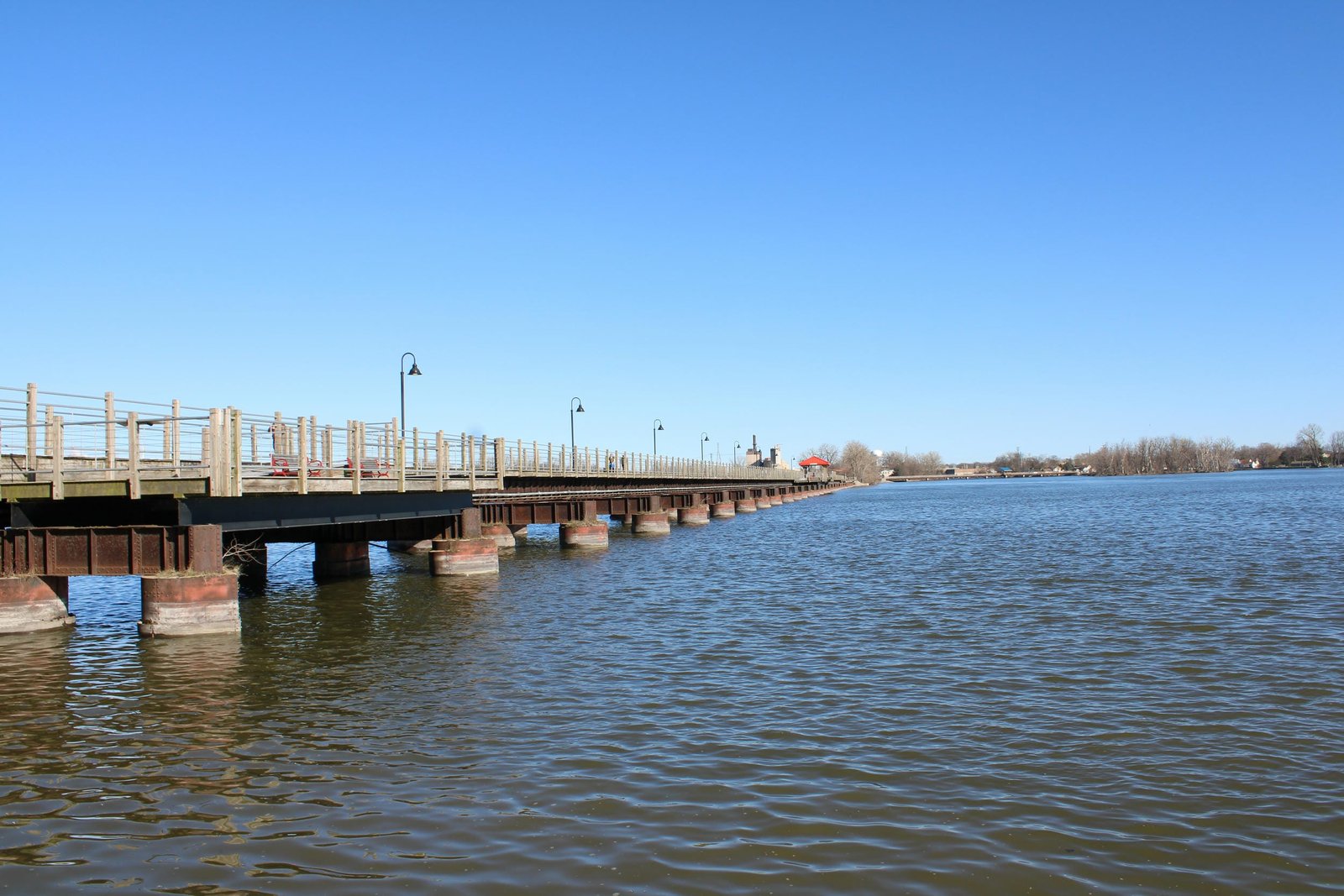
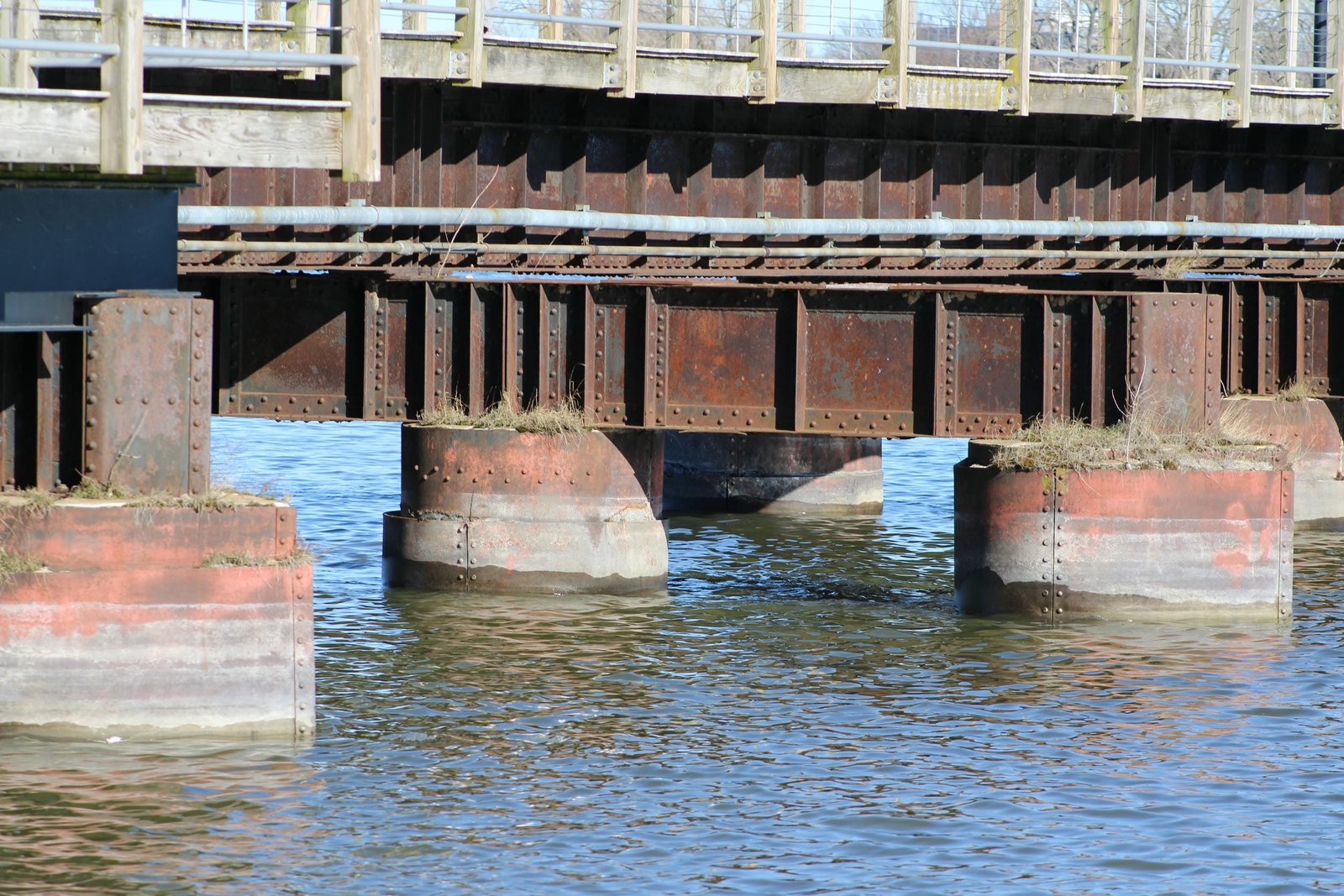
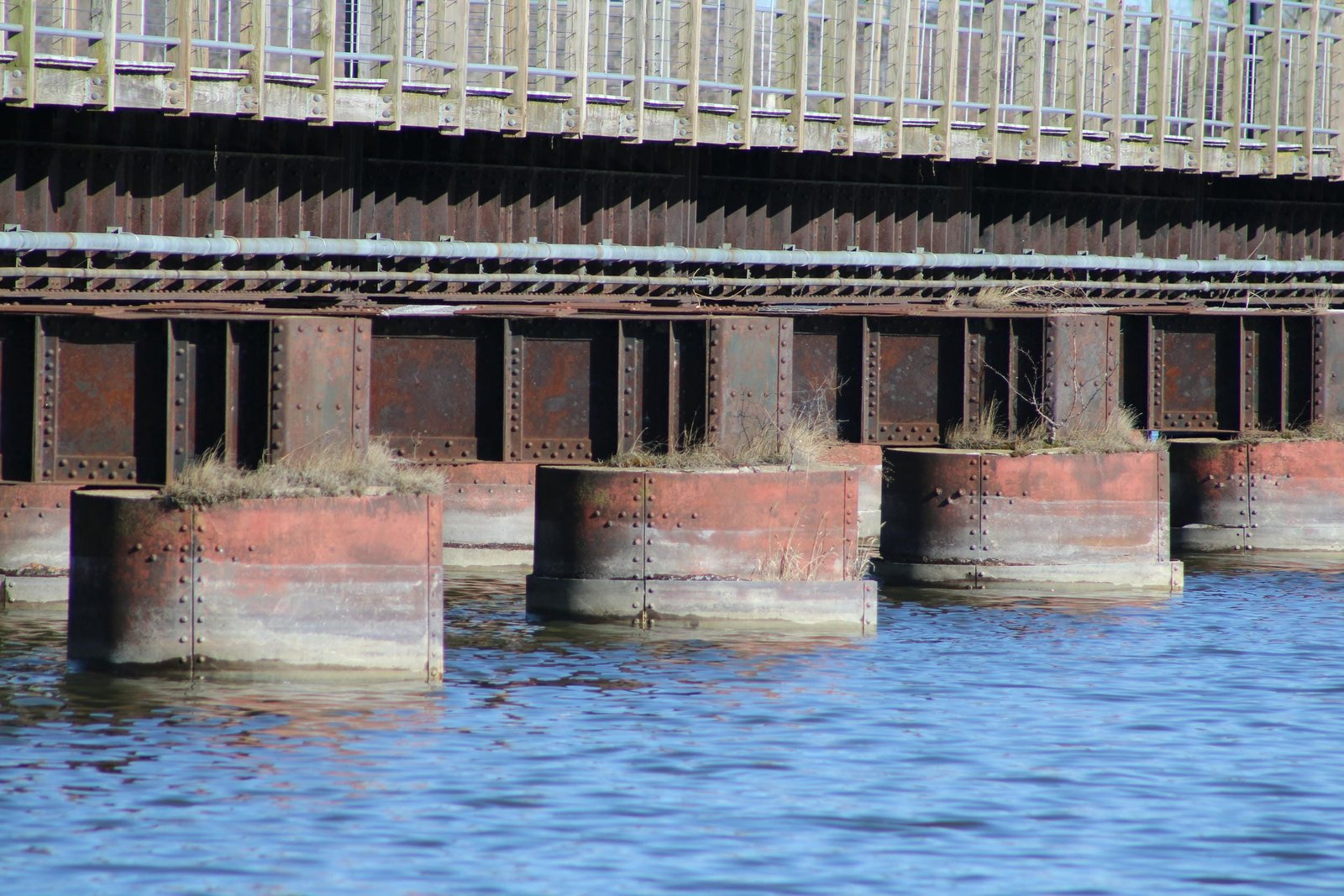
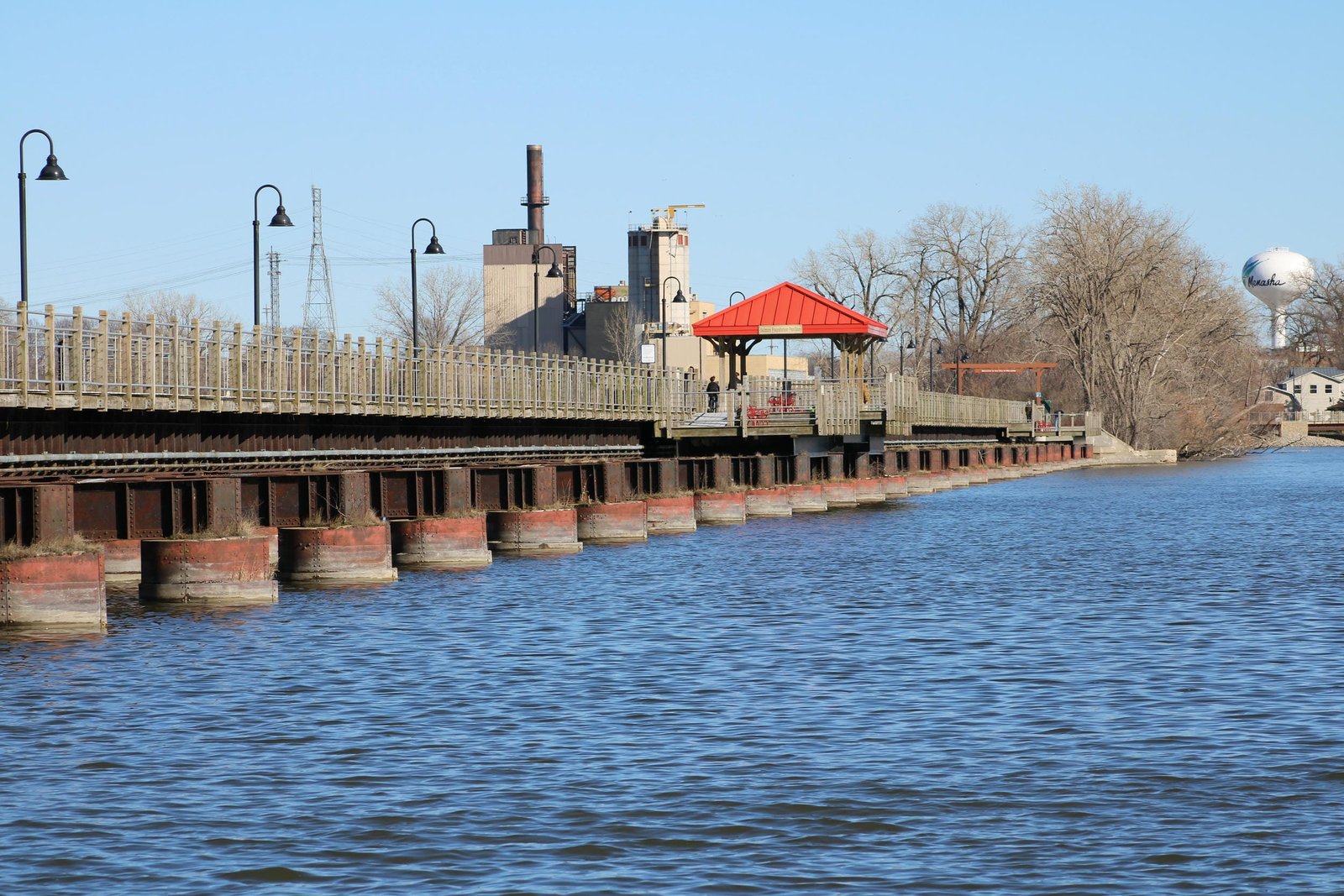
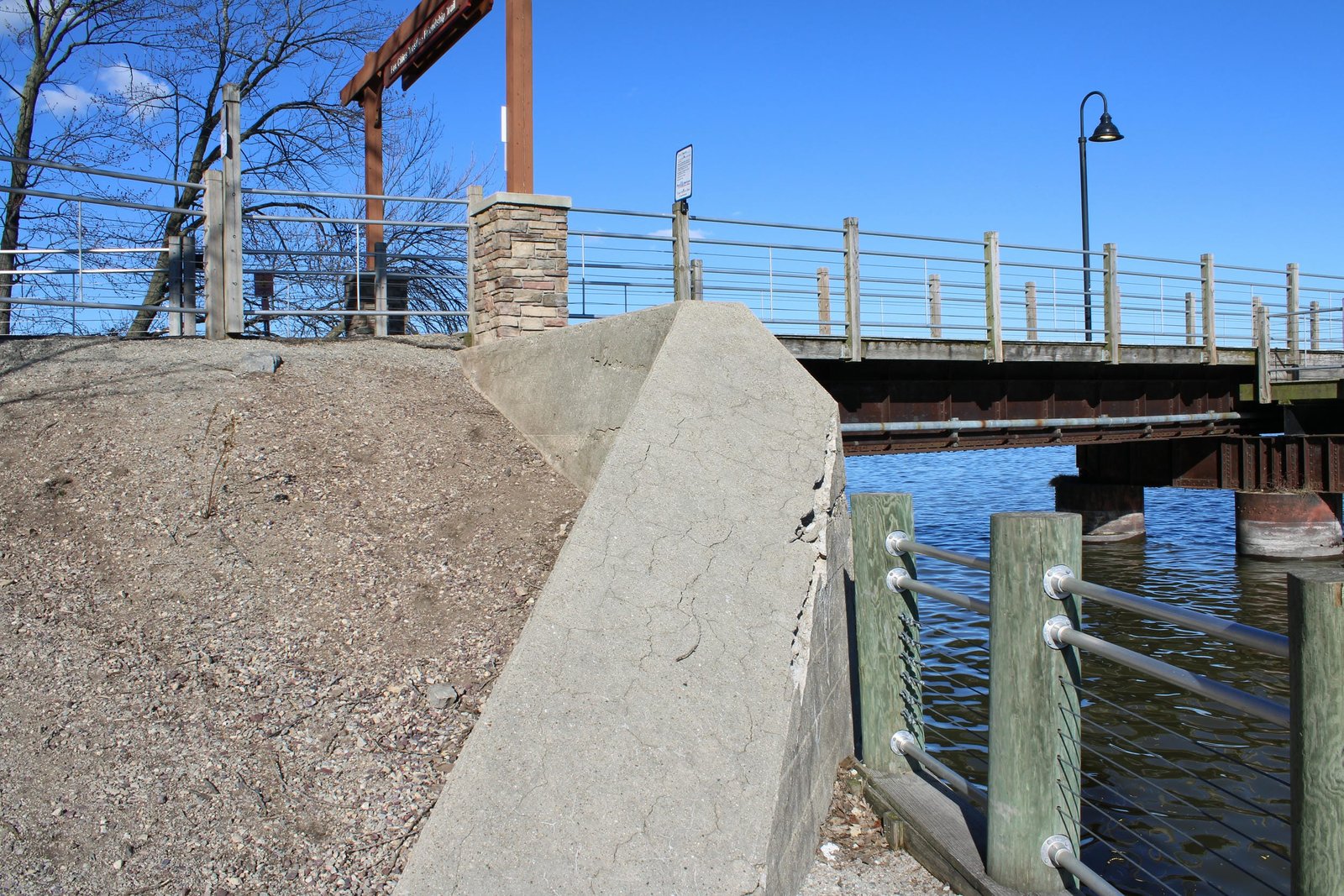
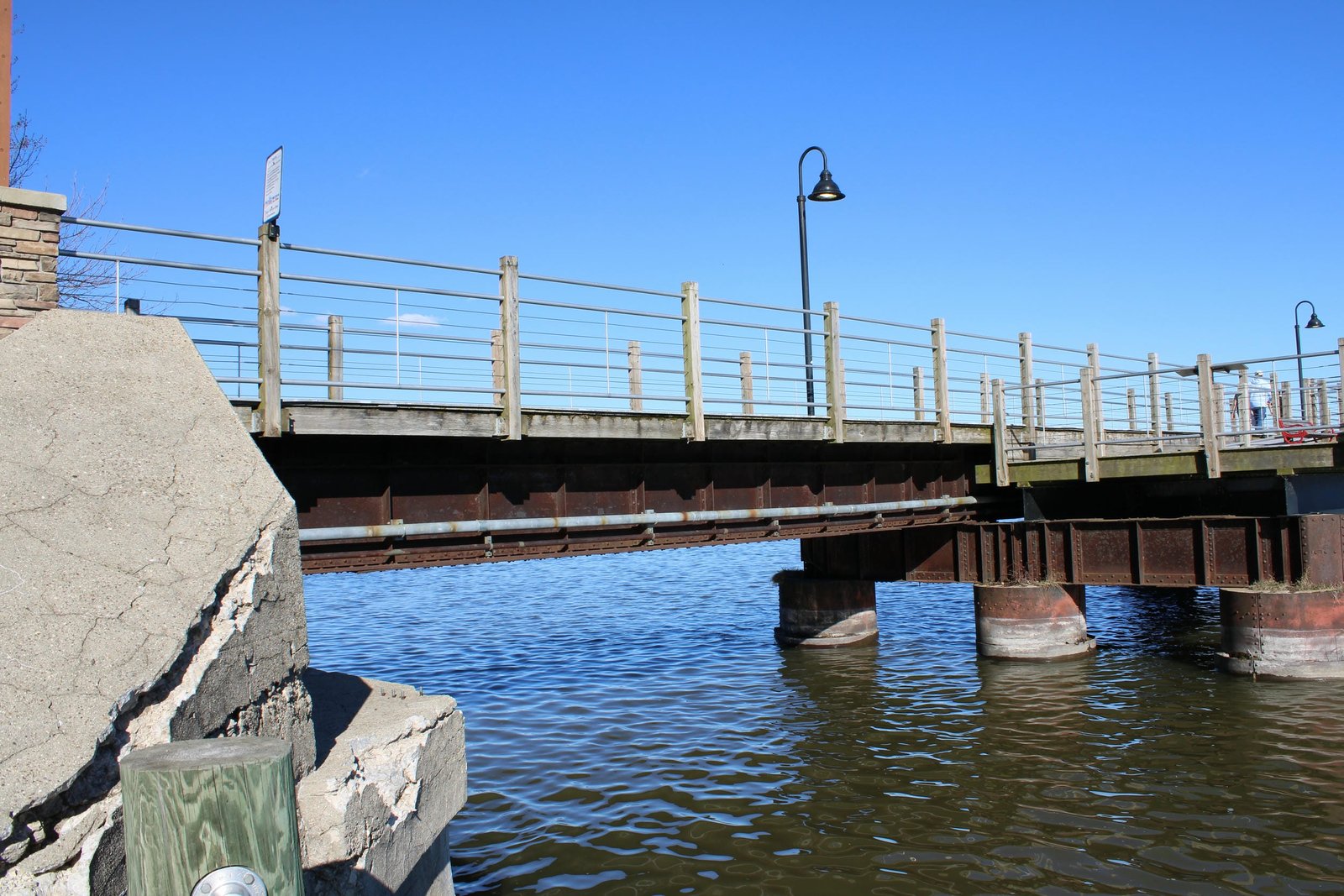
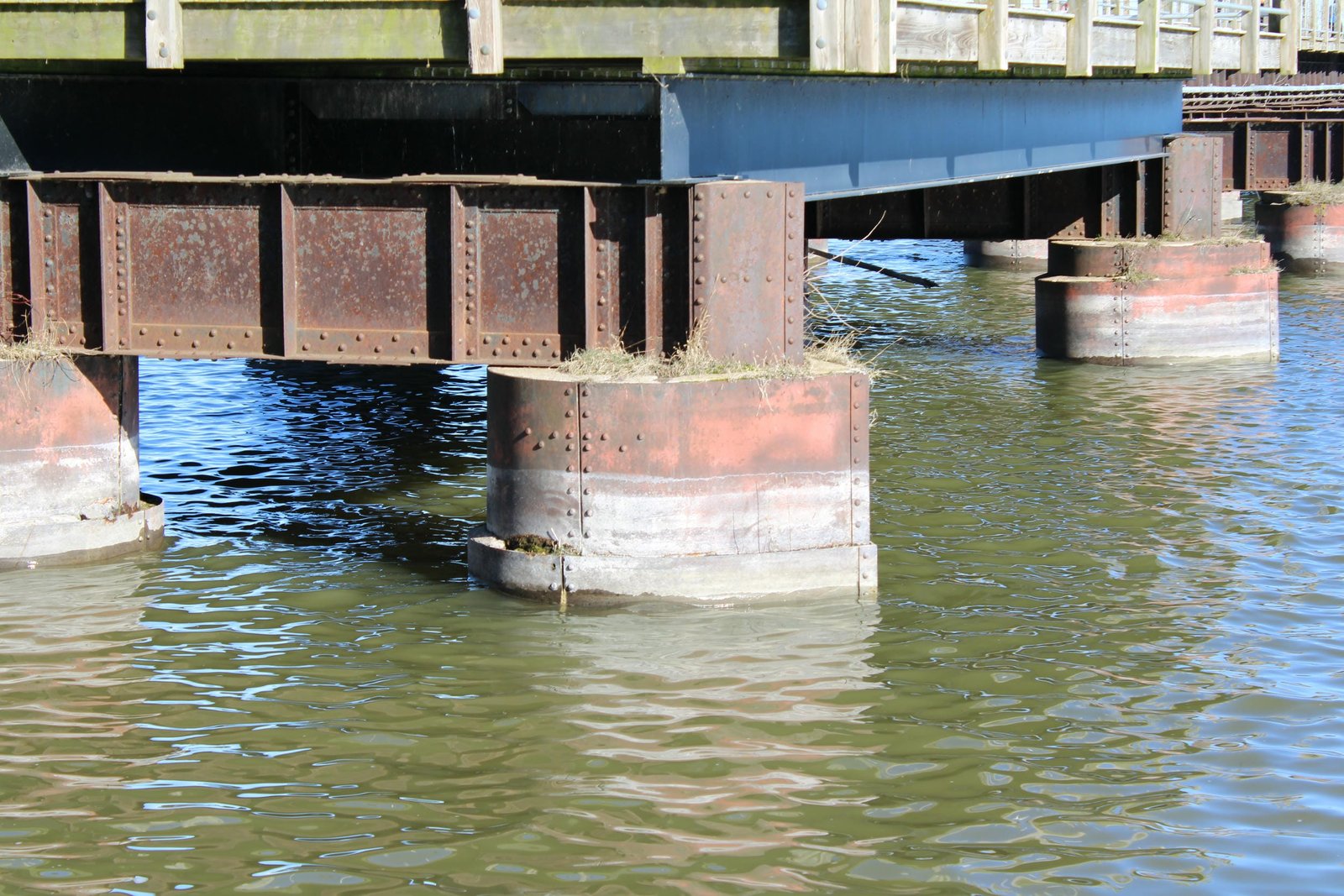
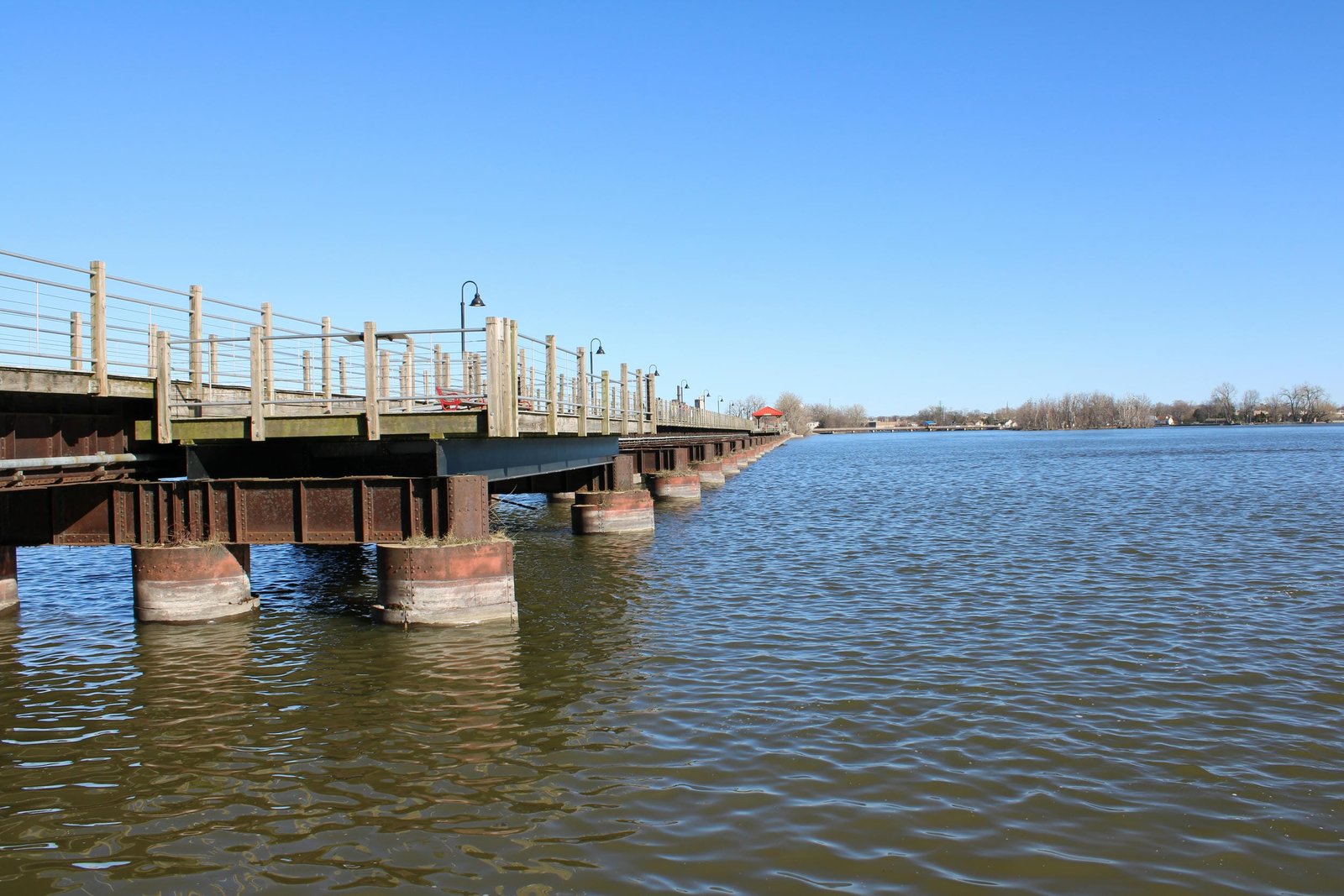
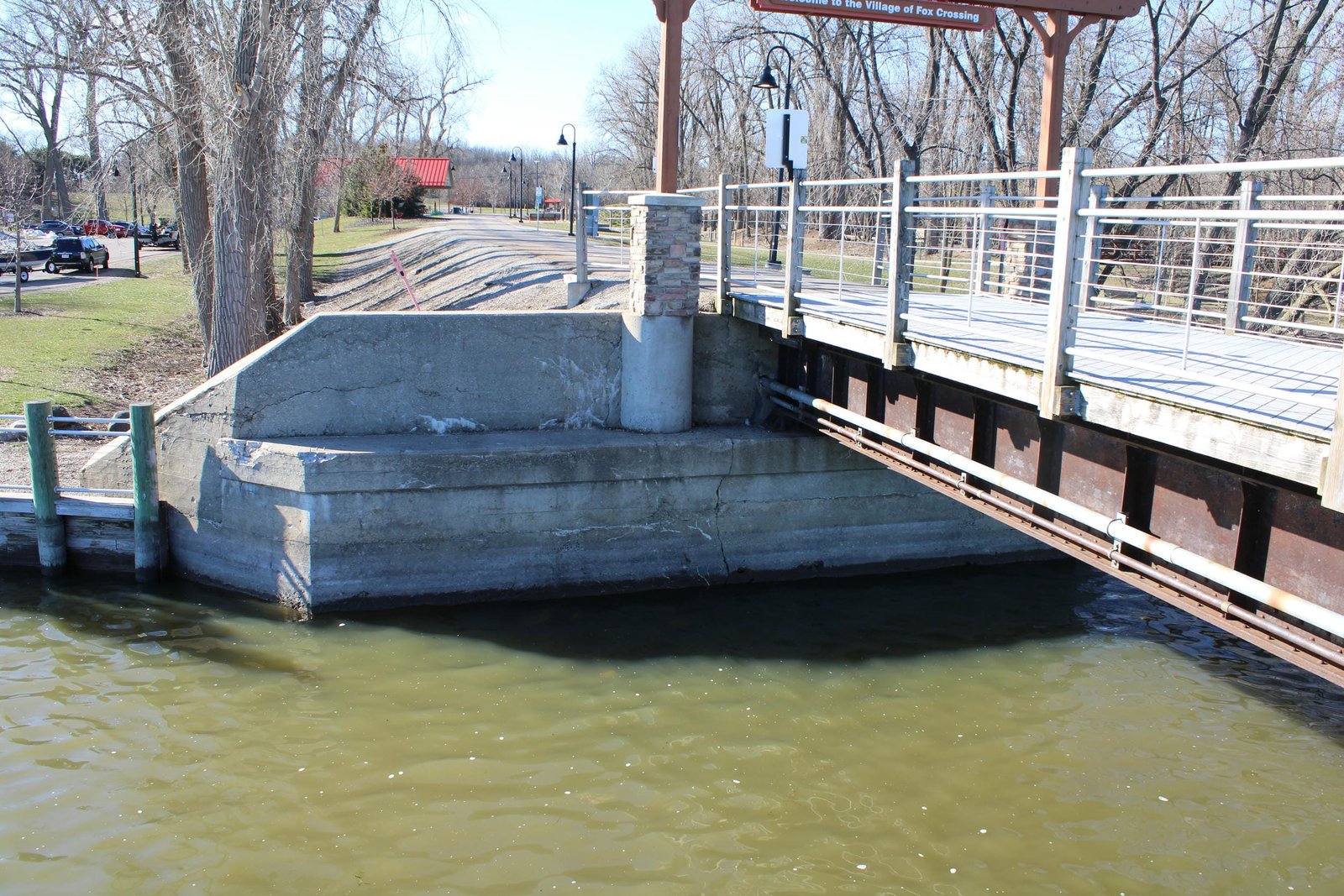
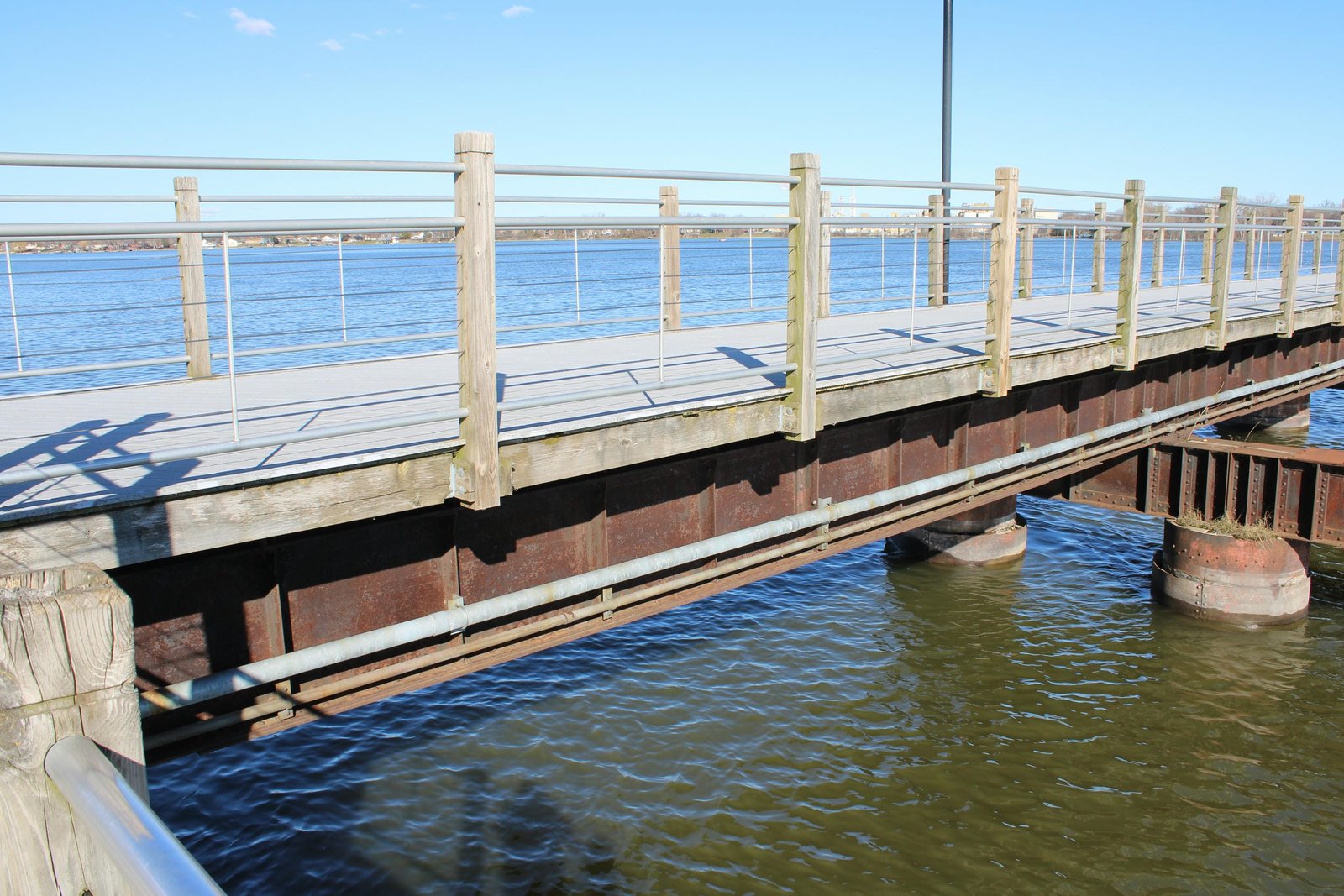
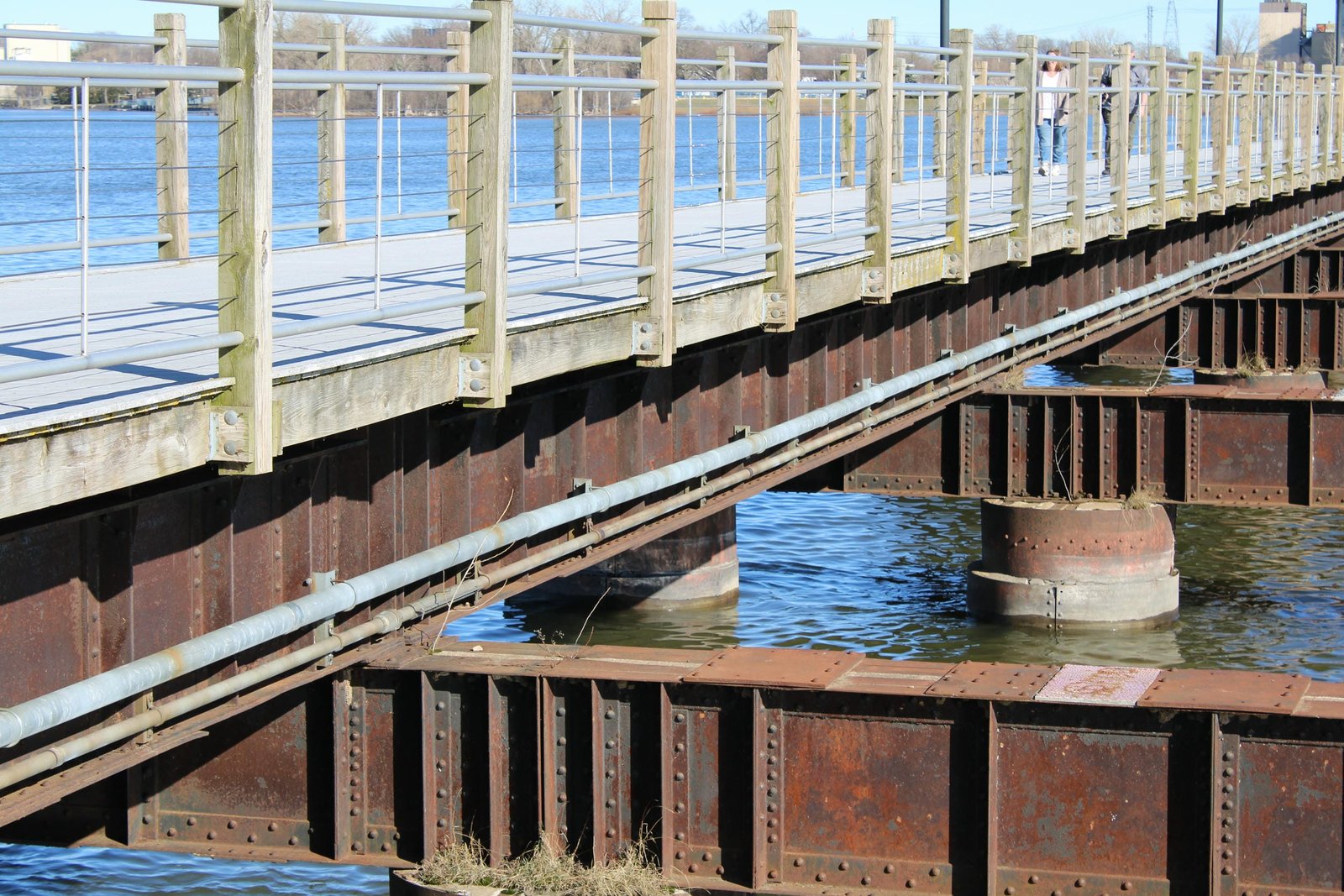
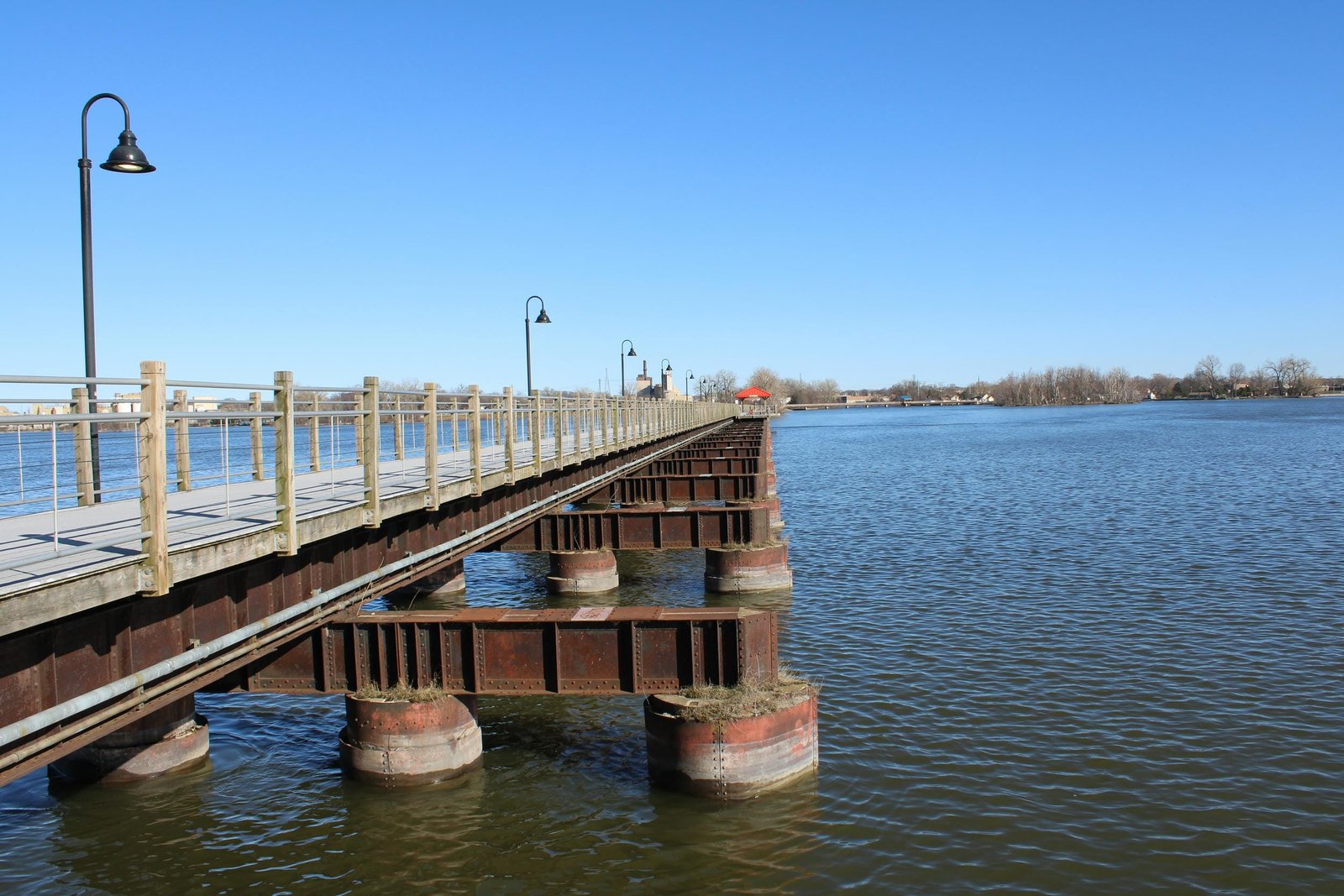
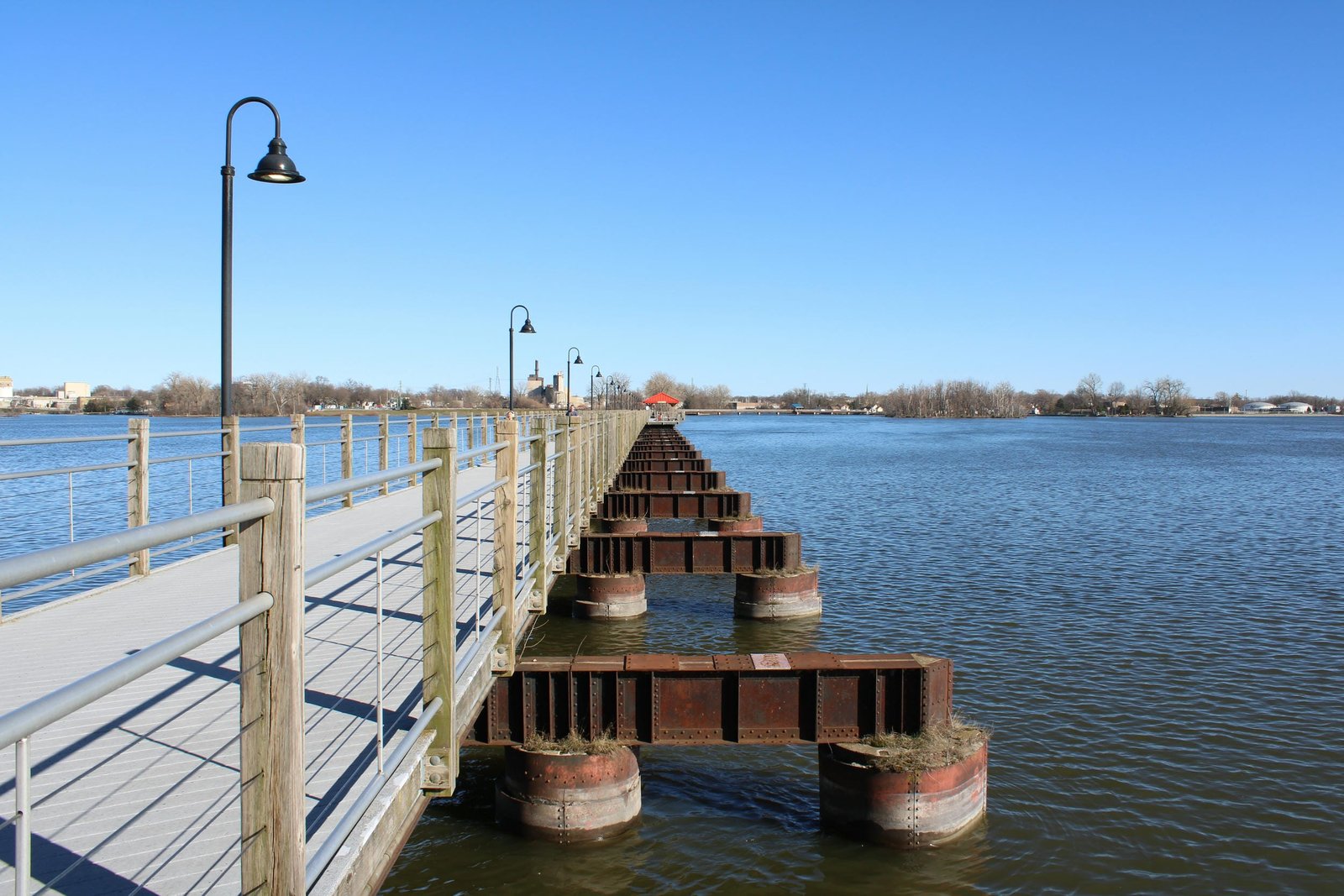
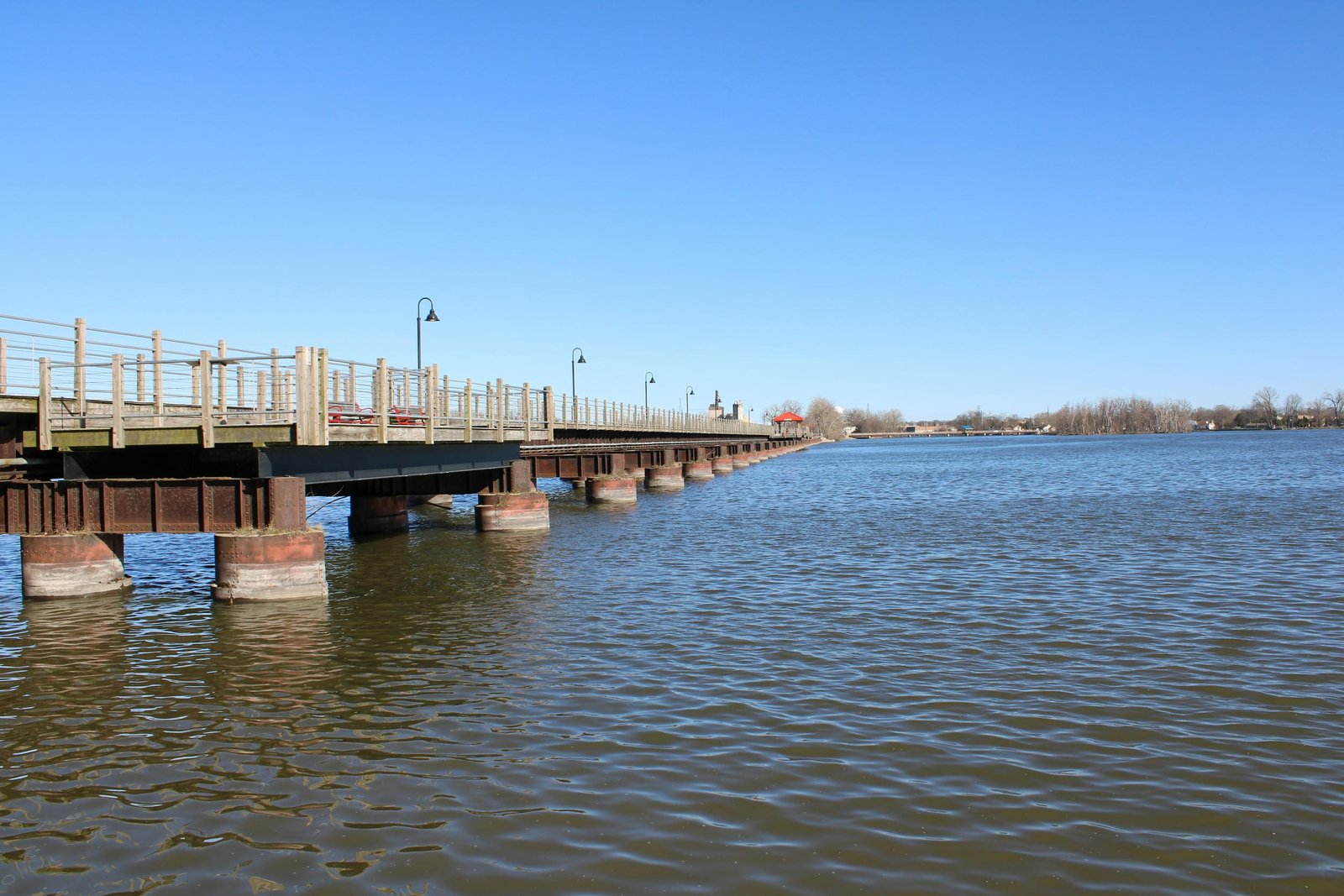
Located in Neenah, this lengthy deck plate girder bridge carries the former Chicago & North Western Railway mainline over Little Lake Butte Des Morts (Fox River). The first bridge at this location was a single track timber pile trestle, which had been repeatedly renewed since the line was first built. In the late 1900s and early 1910s, the C&NW made significant upgrades to its lines in eastern Wisconsin, replacing timber bridges with steel and concrete structures and constructing a double track where feasible. In 1909, contracts were awarded for replacing bridges across Little Lake Butte Des Morts (this bridge), the Neenah Channel and across the Menasha Channel. Work on the structures began in late 1909, and was completed in December 1910. All three bridges used a similar design, with identical sized girders and piers founded on steel cylinders. Currently, the bridge consists of 33 single track 46-foot deck plate girder spans, set onto steel cylinder piers and concrete abutments. The girder spans use a standard design, consisting of two shallow plate girders and an open deck. In addition, the girders have an additional flange which runs longitudinally near the top and walkways which are supported by steel brackets mounted to the girders. The piers consist of three steel cylinders, which have been filled with concrete. A transverse plate girder rests on top of these cylinders, which the superstructure resting on this girder. While the bridge was constructed for a single track, both the piers and abutments were constructed so that a second track could easily be added to the west side of the bridge.
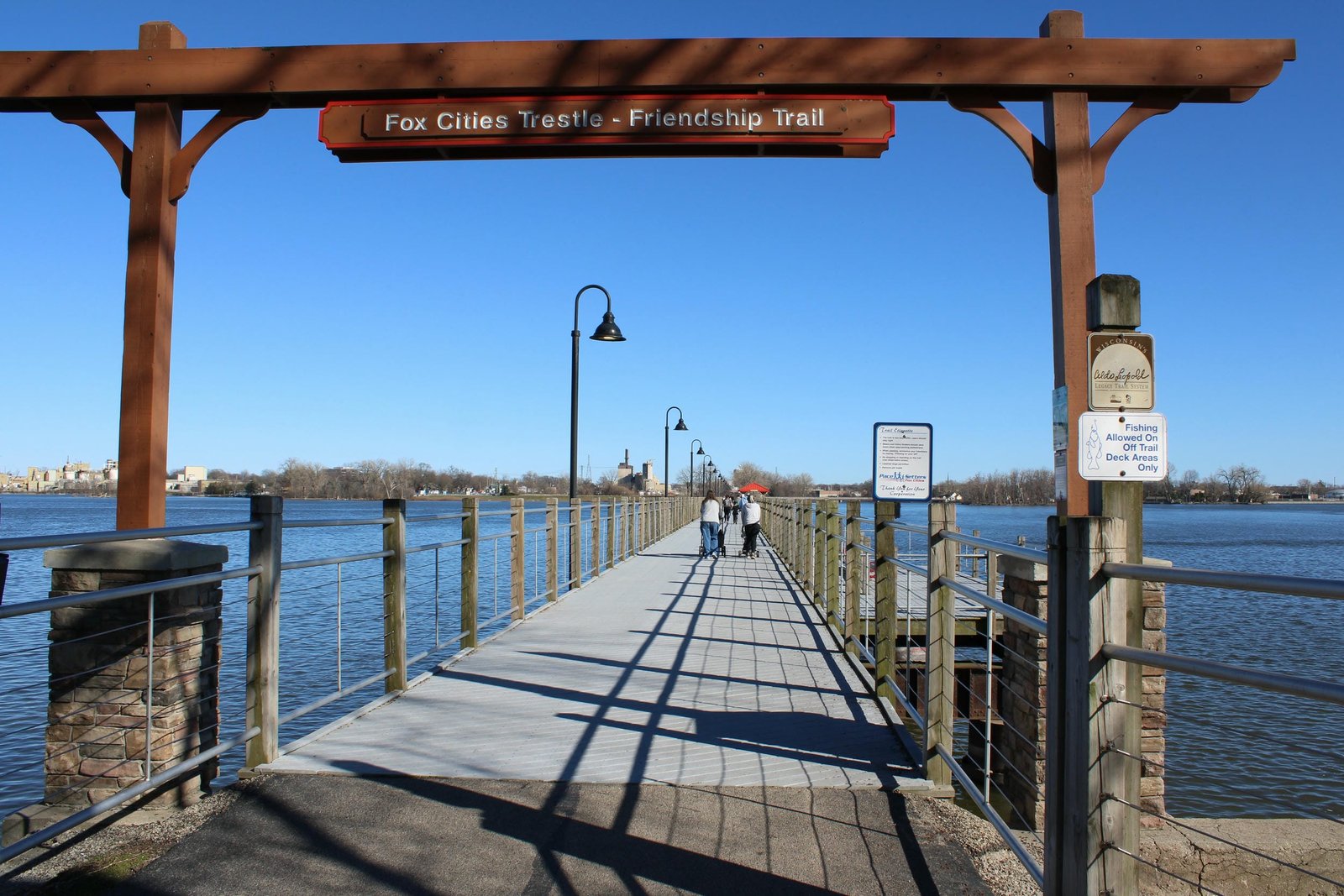
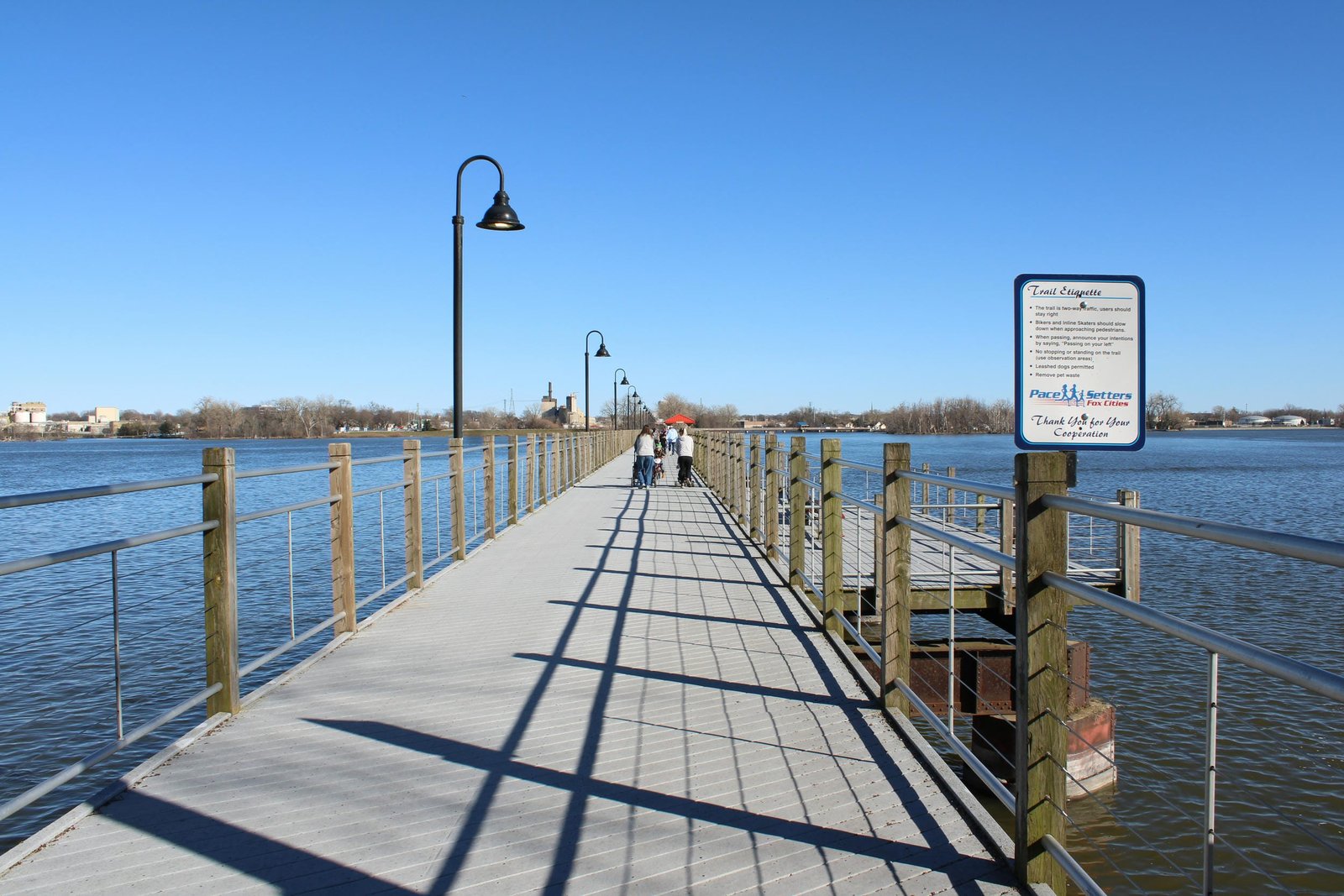
Modern Structural Steel Company fabricated the superstructure and transverse girders, while O'Keefe & Orbison constructed the cylinder piers and abutments. Deck plate girder spans were commonly used by railroads, as they were durable and easy to construct. The C&NW used steel cylinder piers at several major structures during the early 20th Century, as they provided many benefits compared to stone or concrete piers. When a second track is not yet justified but planned in the future, steel cylinder piers provided the greatest economy, with double track piers costing only slightly more. In addition, this design of pier was particularly adept to be constructed under live traffic without minimal interruption to service, and required no dredging or cofferdams to reach stable ground. Many bridges in the Fox Cities area use a similar design to this bridge, due to the dynamic nature of the Fox River and need for lengthy, permanent structures with no concern for clearance underneath. Since the initial construction, the bridge has seen no significant alterations. After abandonment in the late 1990s or early 2000s, the bridge was purchased by the Wisconsin Department of Natural Resources to be reused as a trail. In 2005, the bridge was opened as part of the Friendship Trail. Known as the Fox Cities Trestle, the bridge has been retrofitted with a wooden deck, attractive cable railings and three large observation platforms on the south side of the bridge. Today, the bridge has become a popular piece of the community. Overall, the bridge appears to be in fair to good condition, with no significant deterioration noted. The author has ranked this bridge as being moderately significant, as it is an exceptionally long example of a design commonly seen in the area.
Citations
| Builder (superstructure) | Chicago & North Western Railway Valuation Notes at the Chicago & North Western Historical Society Archives |
| Builder (substructure) and build date | The Neenah Daily Times; December 20, 1910 |
| Railroad History Citation | ICC Valuation Information, Compiled by Richard S. Steele |