





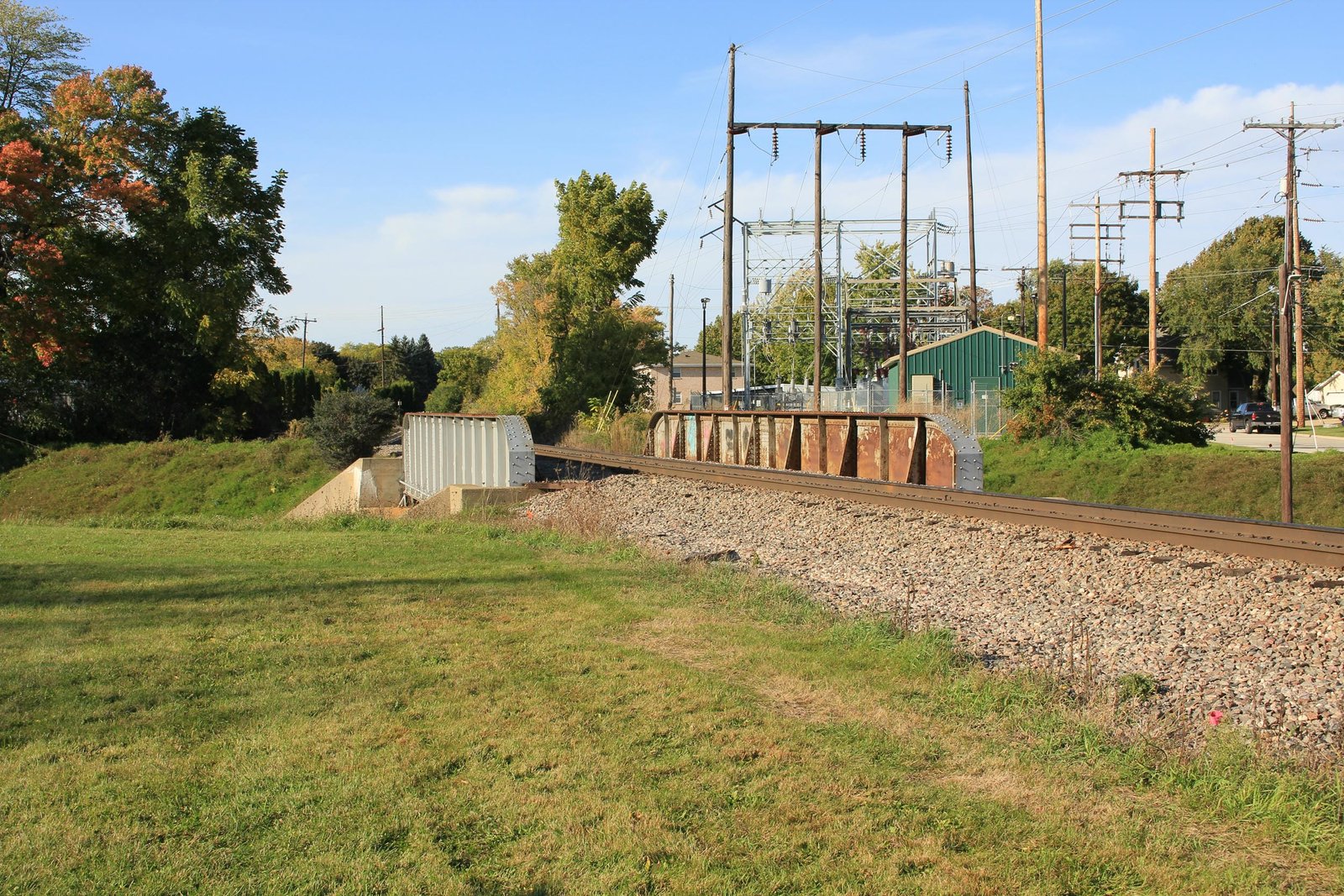
Click the photo to view the full-size version
| Name | CN WIS-32 Bridge Chicago & North Western Railway Bridge #423 1/4 |
| Built By | Chicago & North Western Railway |
| Currently Owned By | Canadian National Railway |
| Superstructure Contractor | Bethlehem Steel Company of Bethlehem, Pennsylvania |
| Substructure Contractor | L.G. Arnold Company of Eau Claire, Wisconsin |
| Length | 68 Feet Total |
| Width | 1 Track |
| Height Above Ground | 14 Feet 0 Inches |
| Superstructure Design | Through Plate Girder |
| Substructure Design | Concrete |
| Date Built | 1952 |
| Traffic Count | 4 Trains/Day (Estimated) |
| Current Status | In Use |
| Chicago & North Western Railway Bridge Number | 423 1/4 |
| Canadian National Railway Bridge Number | 423.25 |
| Significance | Local Significance |
| Documentation Date | 10/8/2022 |
In 1854, the Rock River Valley Union Railroad Company (RRVU) constructed 18 miles of new railroad, extending from Chester, Wisconsin to Fond du Lac, Wisconsin. In 1855, the railroad began construction on an additional 11 miles, prior to being consolidated into the Chicago, St. Paul and Fond du Lac Railroad (CStP&FdL) early that year. The CStP&FdL completed the 11 miles south to Minnesota Junction, Wisconsin (present-day Clyman Junction) in 1855. The CStP&FdL was sold to the Chicago & North Western Railway (C&NW) in 1859. The C&NW constructed an additional 57 miles of railroad between Janesville, Wisconsin and Minnesota Junction in 1859. The same year, the C&NW completed 17 additional miles between Fond du Lac and Oshkosh, Wisconsin; followed by 20 miles between Oshkosh and Appleton, Wisconsin in 1861 and an additional 28 miles between Appleton and Green Bay, Wisconsin in 1862. The C&NW was reorganized in 1864, and the line would be extended north into Michigan in the 1860s and early 1870s.
During the second half of the 19th Century, the C&NW had constructed and acquired a large amount of trackage throughout the Midwest. By the 20th Century, the C&NW was operating an extensive railroad network, which radiated north and west from Chicago. This line served as a mainline, connecting the mainline at Janesville to industrial areas along Lake Winnebago and to Lake Michigan at Green Bay. While the line served as a mainline, it was one of two parallel routes between southern Wisconsin and Green Bay, with the other line following the shore of Lake Michigan north from Milwaukee. By the late 20th Century, the C&NW had begun to consolidate operations and abandon excess lines to remain a profitable railroad. The line between Clyman Junction and Fond du Lac would be abandoned in 1985, and purchased for trail use.
In 1988, the C&NW sold the Fond du Lac to Green Bay segment of this line to the Fox River Valley Railroad, which became the Fox Valley and Western Ltd. (FV&W) in 1993. The FV&W was a subsidiary of the successful Wisconsin Central Ltd. (WC), which had acquired a large amount of former Milwaukee Road and Soo Line trackage in Wisconsin. The C&NW was purchased by Union Pacific Railroad (UP) in 1995. The segment between Janesville and Fort Atkinson, Wisconsin would be abandoned in 1998, and portions acquired for trail use. Portions of the line between Oshkosh and Neenah were also abandoned in the late 1990s. In 2001, WC was purchased by Canadian National Railway (CN), and became the American subsidiary of the railroad. After CN acquired the line, portions of the line in Fond du Lac were abandoned in 2003, and the Fond du Lac to Oshkosh segment would be heavily rebuilt. Today, the Fond du Lac to Clyman Junction segment is used as part of the Wild Goose State Trail, and portions near Fort Atkinson and Neenah are also used by trails. UP operates the Clyman Junction to Fort Atkinson segment as the Clyman Industrial Lead, and CN operates the North Fond du Lac to Green Bay segment as the Fox River Subdivision.
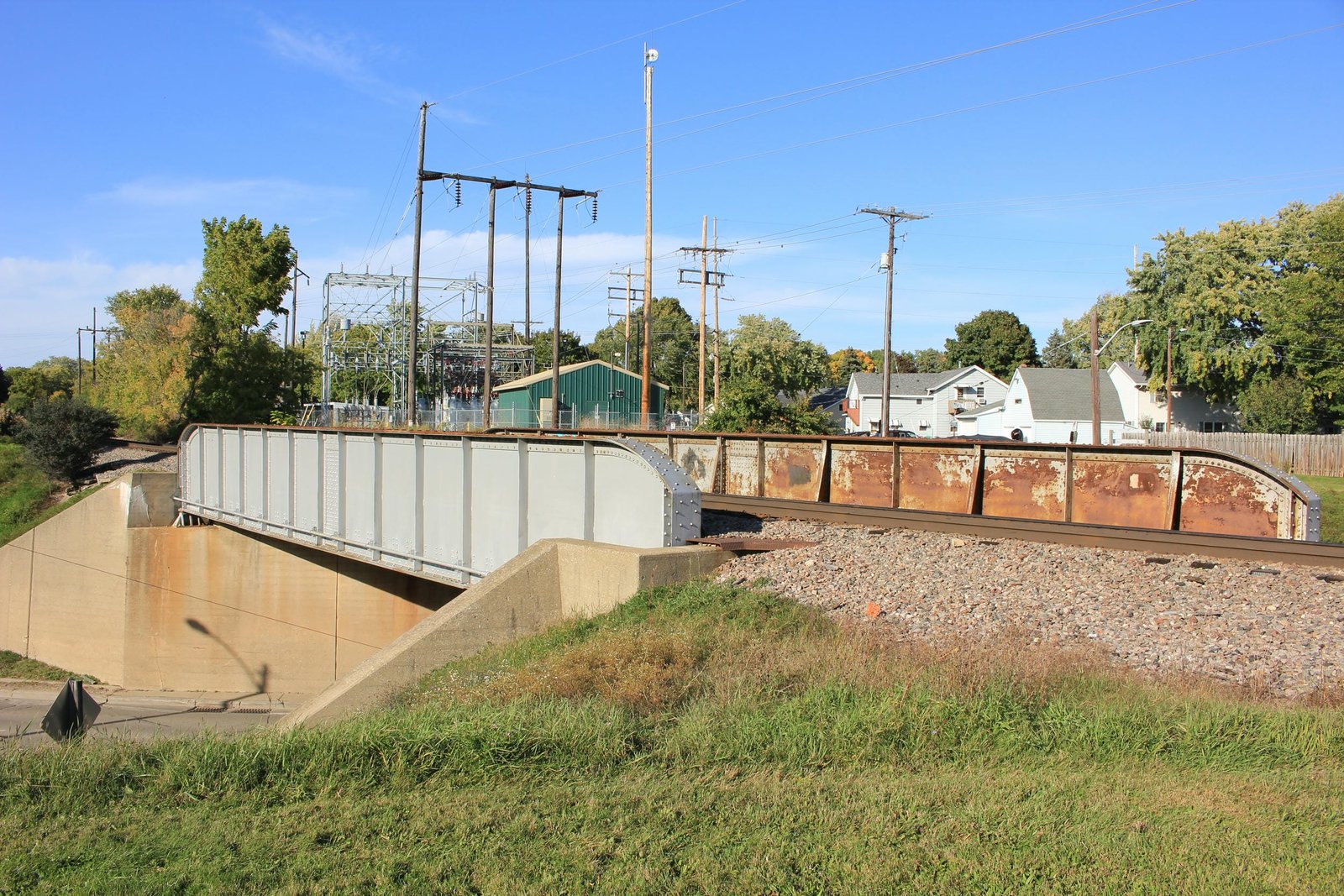
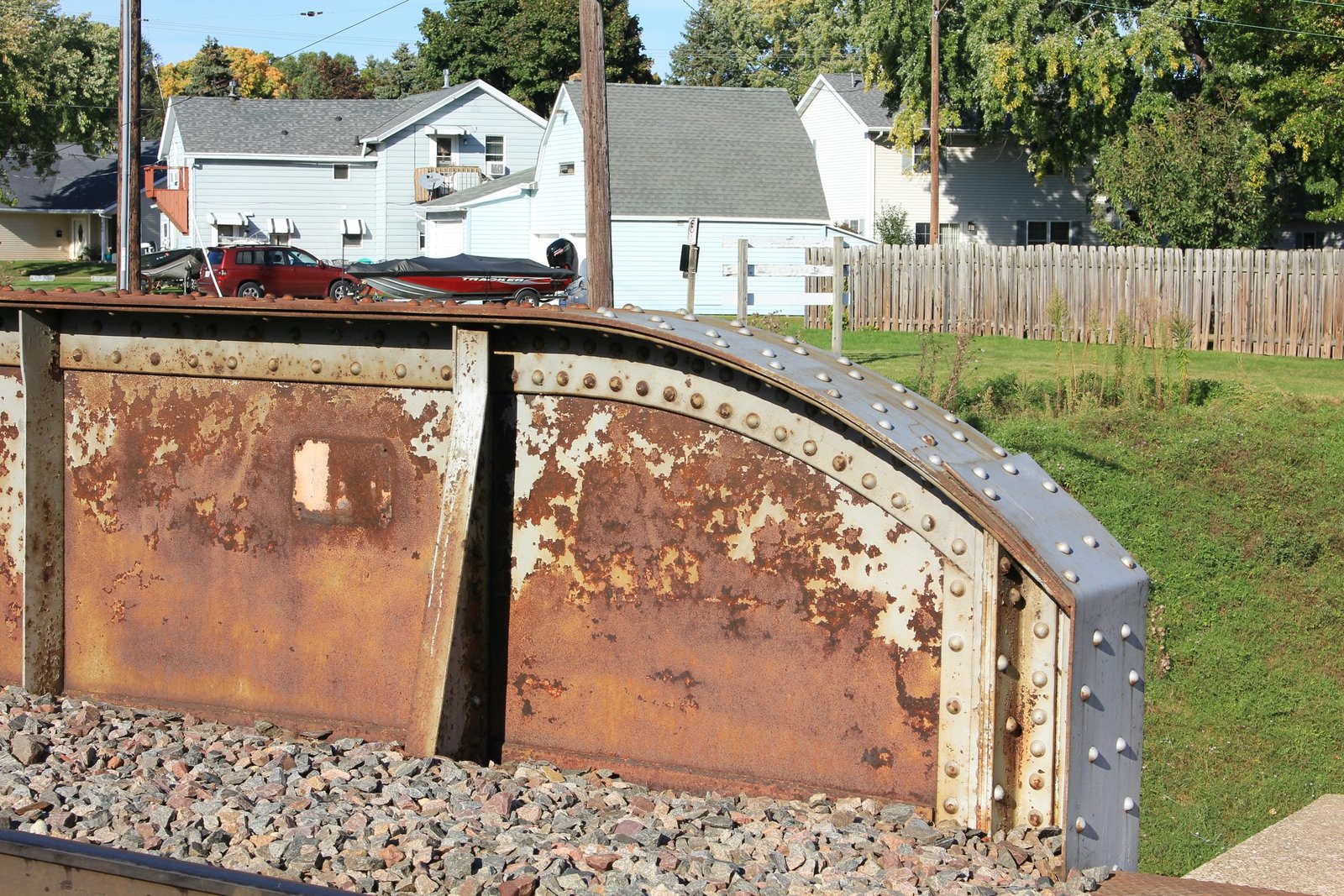
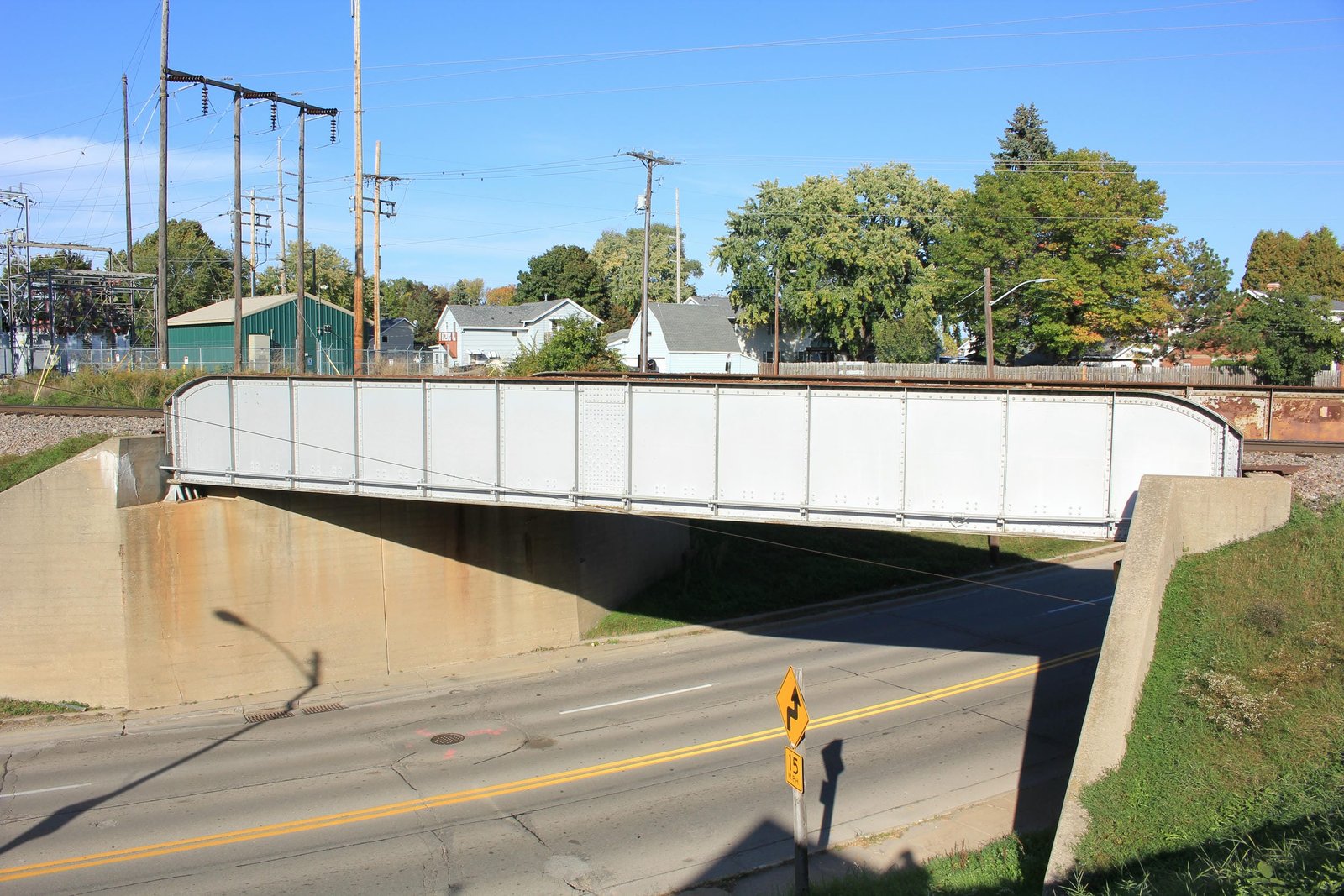
Located in De Pere, this through plate girder bridge carries the former Chicago & North Western Railway mainline over Wisconsin Highway 32 (Main Avenue). In the early 1950s, the Wisconsin State Highway Commission developed a second set of priority projects to improve automobile traffic and safety throughout the state. These projects were intended to construct grade separations at major intersections and built new high speed highways to connect major cities in the state. An underpass was authorized at De Pere in 1950 or 1951 to help alleviate delays caused by trains crossing a major roadway. To facilitate the construction of the underpass, a temporary wooden trestle was constructed to reroute the tracks. Work on the underpass began in early 1952, and was completed by the end of the year. Currently, the bridge consists of a 68-foot skewed single track through plate girder span, set onto concrete abutments. The superstructure uses a typical design for the era, with heavy girders, a ballast deck floor constructed of parallel I-beams and rounded and tapered girder ends. The abutments also use a standard design, with sloped wing walls extending from the bridge at an angle. Bethlehem Steel Company fabricated the superstructure, while L.G. Arnold Company constructed the abutments. Through plate girder spans were commonly used by railroads, as they were durable and easy to construct. Since the initial construction, the bridge has seen no significant alterations, and remains in use. Overall, the bridge appears to be in fair to good condition, with no significant deterioration noted. The author has ranked this bridge as being locally significant, due to the common design.
Citations
| Build date | Wisconsin Department of Transportation Structures Inventory |
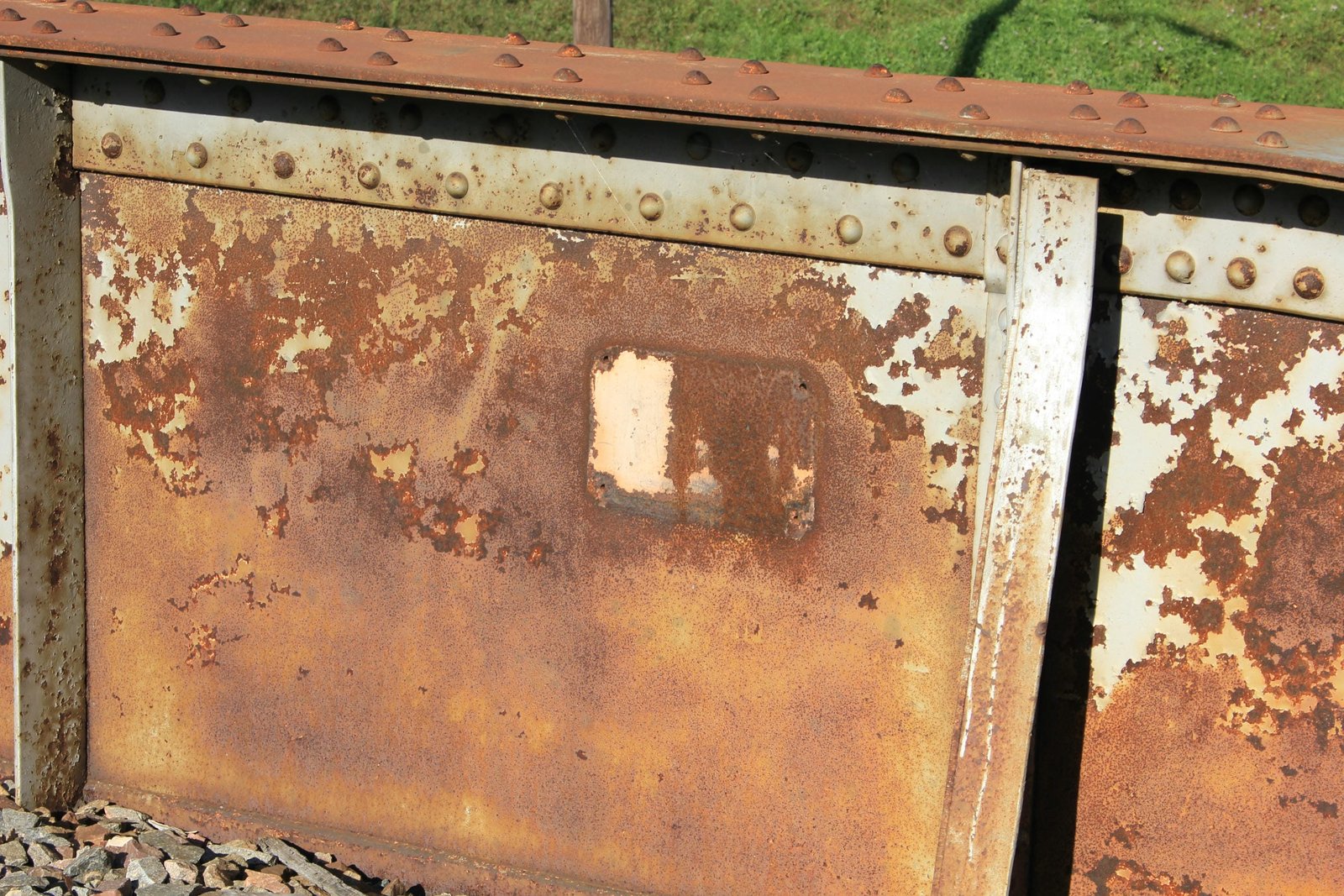
| Builder (superstructure) | Missing Bethlehem Steel Company plaque |
| Builder (substructure) | Green Bay Press-Gazette; October 21, 1952 |
| Railroad History Citation | ICC Valuation Information, Compiled by Richard S. Steele |