


Click the photo to view the full-size version
| Name | CPKC WIS-19 Bridge Chicago, Milwaukee & St. Paul Railway Bridge #C-94 1/2 |
| Built By | Chicago, Milwaukee & St. Paul Railway |
| Currently Owned By | Canadian Pacific Kansas City Limited |
| Superstructure Contractor | Unknown |
| Length | 50 Feet Total |
| Width | 3 Tracks |
| Height Above Ground | 15 Feet (Estimated) |
| Superstructure Design | Through Plate Girder |
| Substructure Design | Concrete |
| Date Built | 1906 (East Track) 1899, Replaced c. 1990 (Center Track) 1913 (West Track) |
| Traffic Count | 20 Trains/Day (Estimated) |
| Current Status | In Use |
| Chicago, Milwaukee & St. Paul Railway Bridge Number | C-94 1/2 |
| Significance | Local Significance |
| Documentation Date | 12/9/2020 |
In 1850, the Milwaukee & Mississippi Rail Road (M&M) began construction on a new railroad line, with the intention of connecting Lake Michigan at Milwaukee with the Mississippi River. The first 12 miles between Milwaukee and Brookfield opened in 1851, and the line eventually continued west. In Milwaukee, this line followed the south side of the Menomonee River. In 1854, the Milwaukee and Watertown Railroad (M&W) began construction on a new line, leaving the original line at Brookfield, Wisconsin. 32 miles of new railroad were completed to Watertown, Wisconsin by 1855. The M&W was acquired by the La Crosse and Milwaukee Railroad (LC&M) in 1856. This railroad had previously constructed a more northerly route between Milwaukee and Portage, Wisconsin. Between 1857 and 1858, the LC&M constructed 103 miles of new railroad, extending from Portage to the Mississippi River at La Crosse, Wisconsin. The M&M was acquired by the Milwaukee and Prairie du Chien Railway (M&PdC) in 1861. The western division of the LC&M, extending from Portage to La Crosse, was sold to the Milwaukee & St. Paul Railway (M&StP) in 1863. In 1864, the M&StP constructed an additional 47 miles of railroad between Watertown and Portage, connecting the two lines. In addition, a 7-mile "airline" would be constructed between Elm Grove and Milwaukee in 1864, allowing for a more direct route into Milwaukee. In 1867, the M&PdC would be sold to the M&StP. In 1874, the M&StP changed its name to the Chicago, Milwaukee & St. Paul Railway (Milwaukee Road).
The Milwaukee to La Crosse line became a critical backbone for the Milwaukee Road, serving as the middle section of a longer line between Chicago and Minneapolis/St. Paul. This line also allowed for the construction of numerous branch lines, as well as the rapid expansion of the Milwaukee Road in the Midwest. Between 1874 and 1876, a bridge across the Mississippi River was constructed at La Crosse. A second track was constructed between Milwaukee and Brookfield during the early 1880s. In 1902, 90 additional miles of second track would be constructed between Brookfield and Watertown, between Portage and Camp Douglas and between West Salem and La Crosse. An additional 47 miles of double track were constructed between Watertown and Portage in 1906, followed by an additional 44 miles of double track between Camp Douglas and West Salem in 1910. The same year, the "airline" was also double tracked. During the 20th Century, the Milwaukee Road had become a prominent railroad in the United States, operating an extensive network of railroad lines primarily in the Midwest.
The Milwaukee Road was often in financial trouble, especially after the costly Pacific Extension was completed in 1909. In 1925, the company declared bankruptcy, and reorganized as the Chicago, Milwaukee, St. Paul and Pacific Railroad in 1928. Despite the financial troubles of the railroad, this line remained a critical line and was well maintained. Financial hardship continued through the 20th Century for the Milwaukee Road, and the railroad again filed bankruptcy in 1977. By 1985, a suitor for the Milwaukee Road was being sought, and the Soo Line Railroad, controlled by Canadian Pacific Railway (CP) purchased the Milwaukee Road in 1986. Upgrades were made to the route, including the installation of CTC. As a result, sections of the second track were removed, and the remaining sections became sidings. The Elm Grove to Milwaukee airline was abandoned in the 1990s, and has since become the Hank Aaron Trail. CP merged with Kansas City Southern Railway in 2023 to form CPKC. CPKC currently operates the Milwaukee to Portage segment as the Portage Subdivision, and the Watertown to La Crosse segment as the Tomah Subdivision. The route remains well used, and hosts both freight and Amtrak trains.
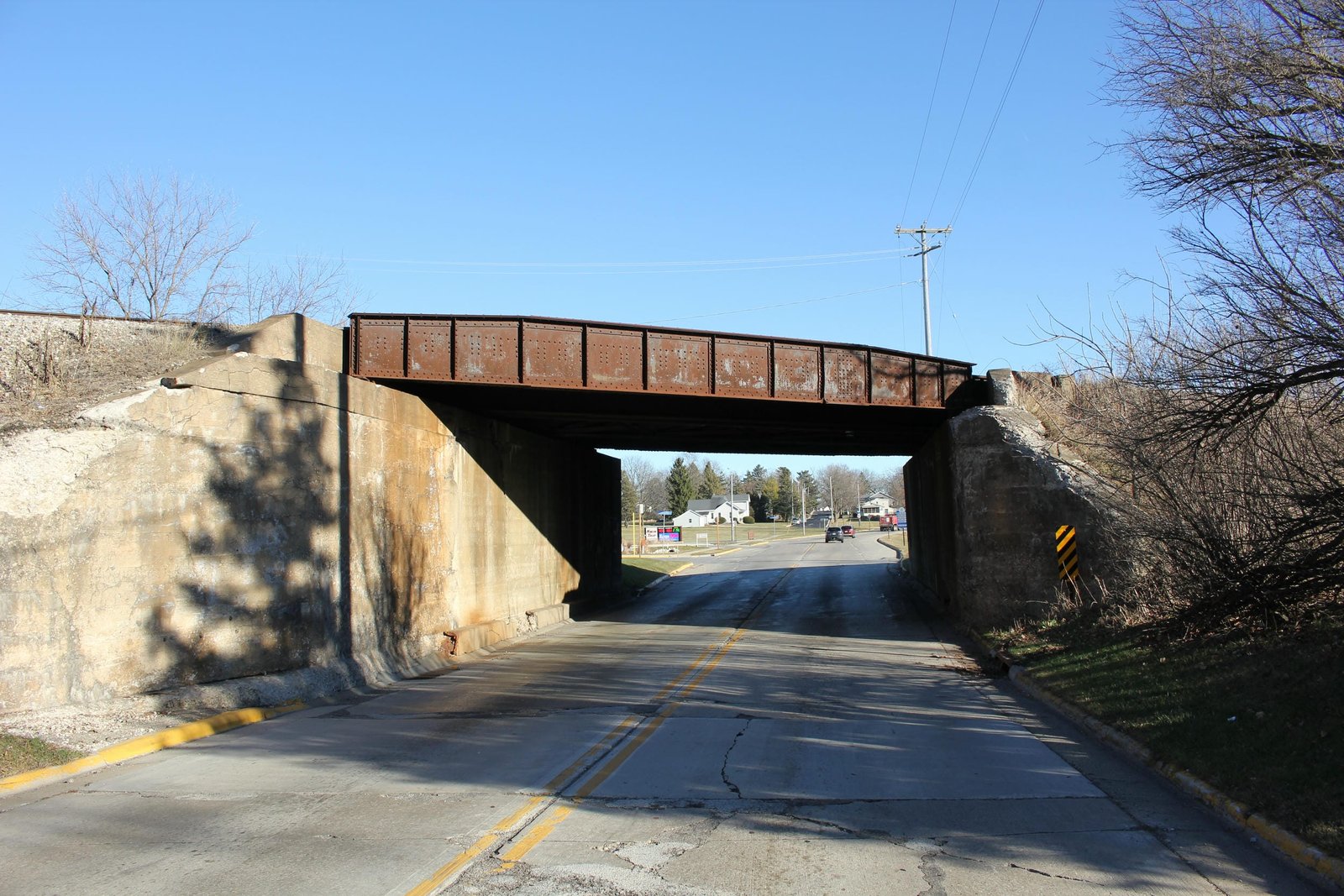
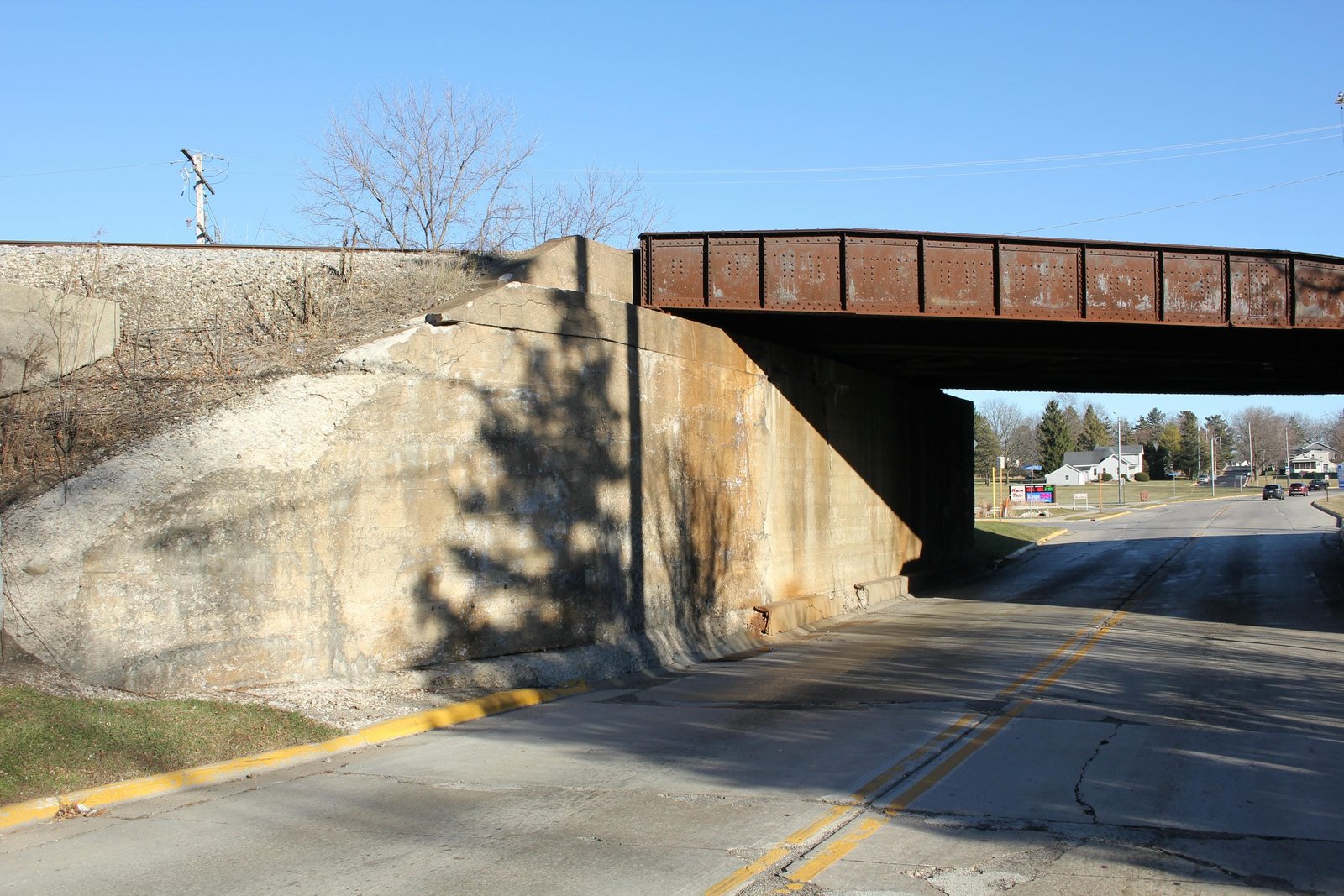
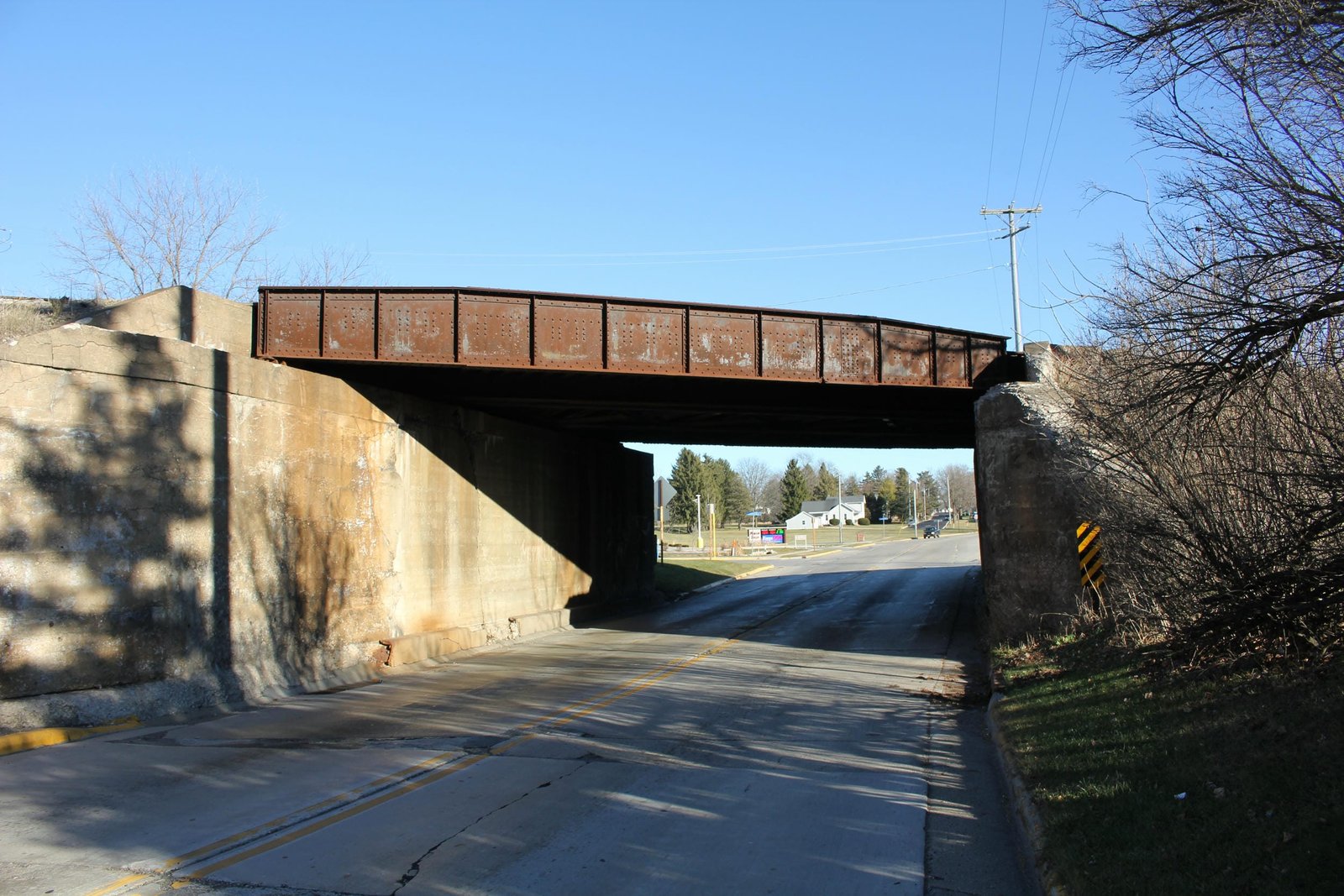
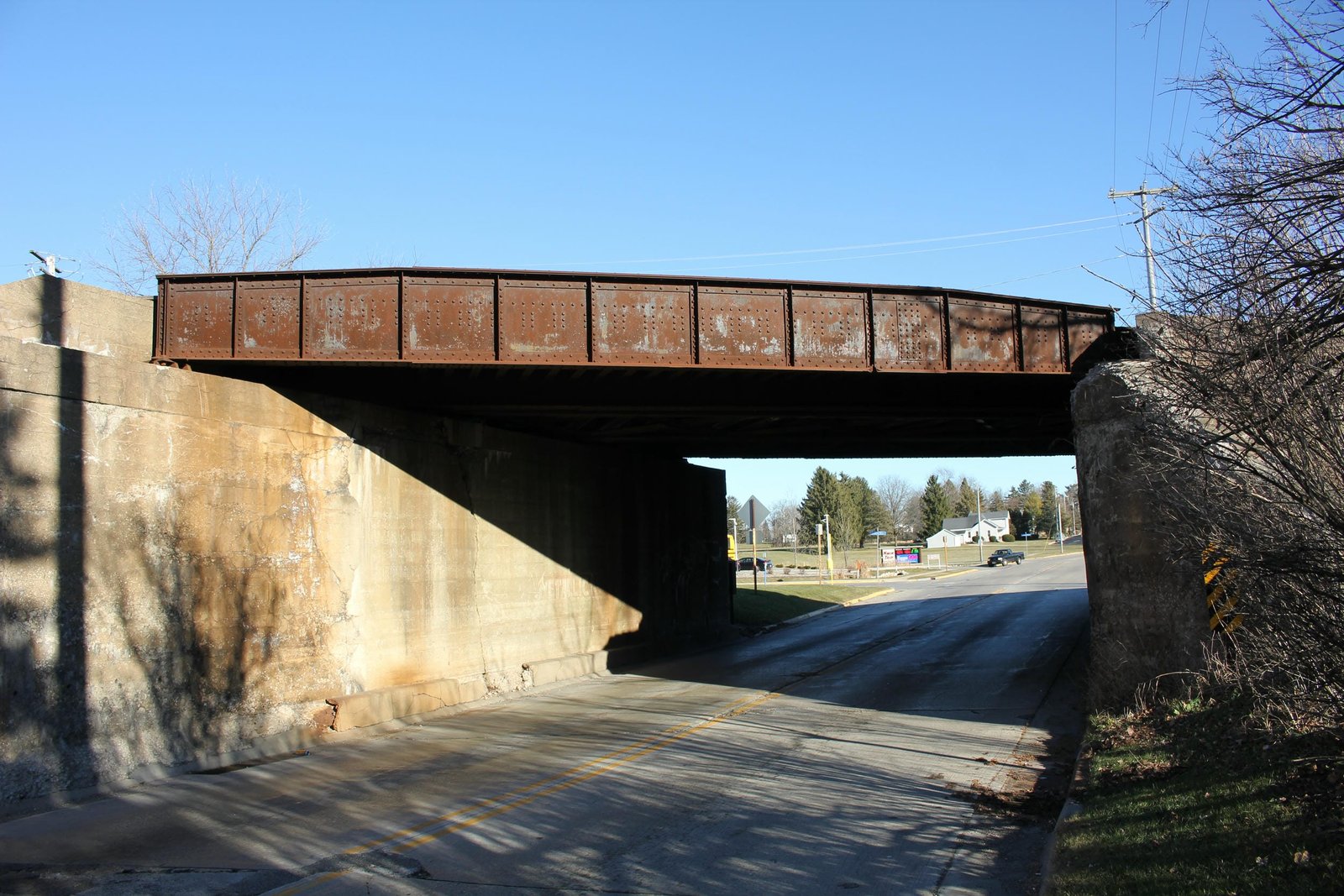
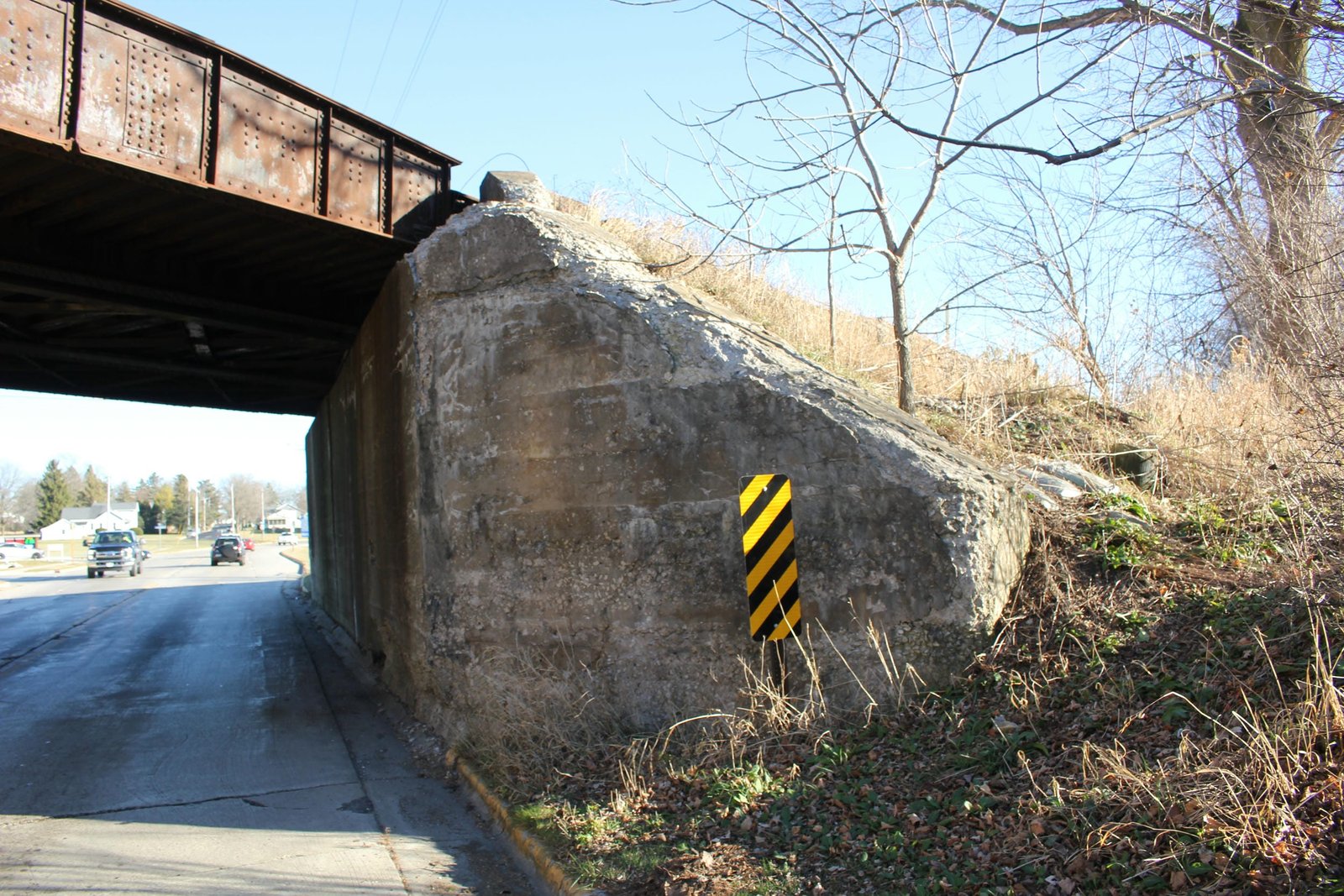
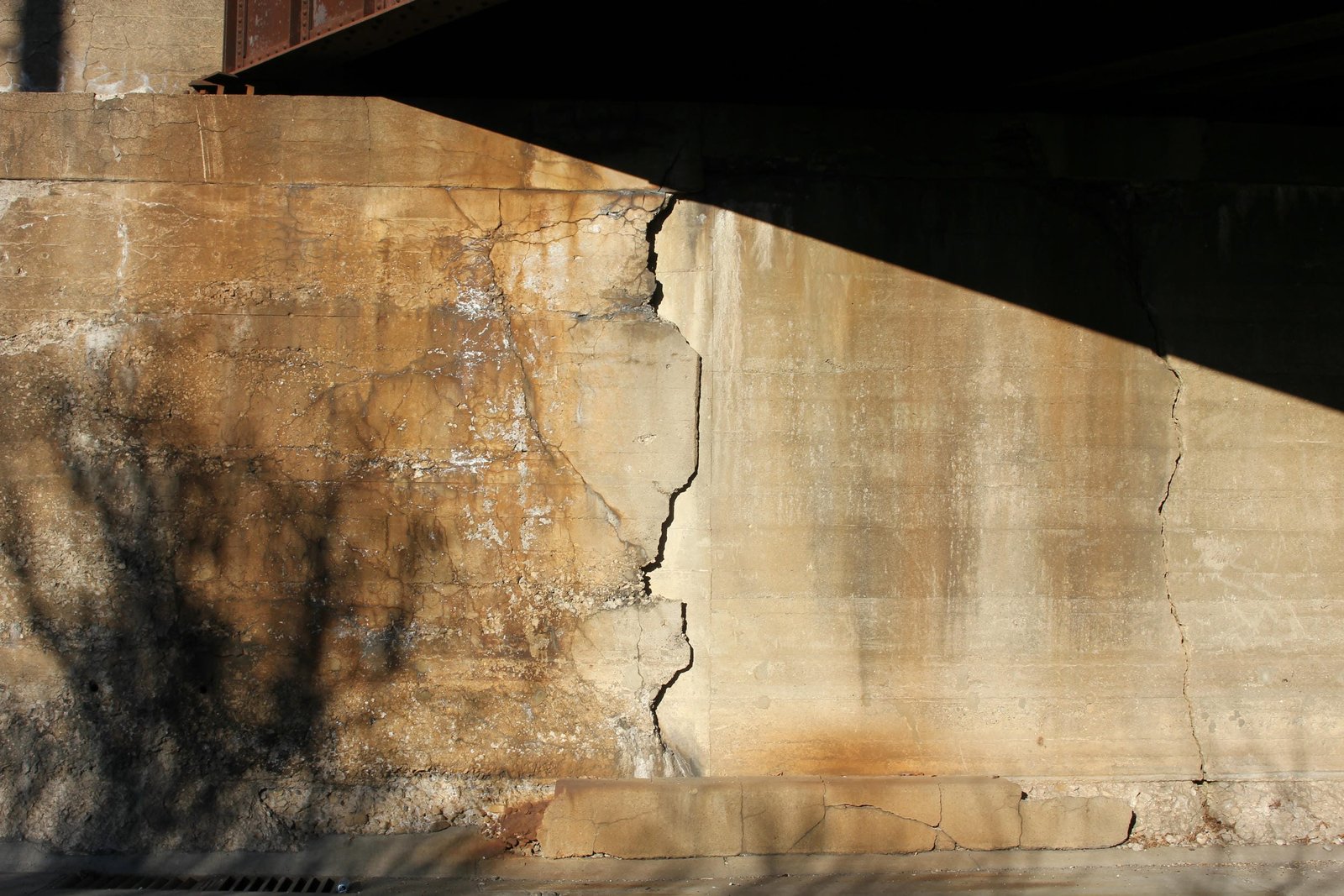
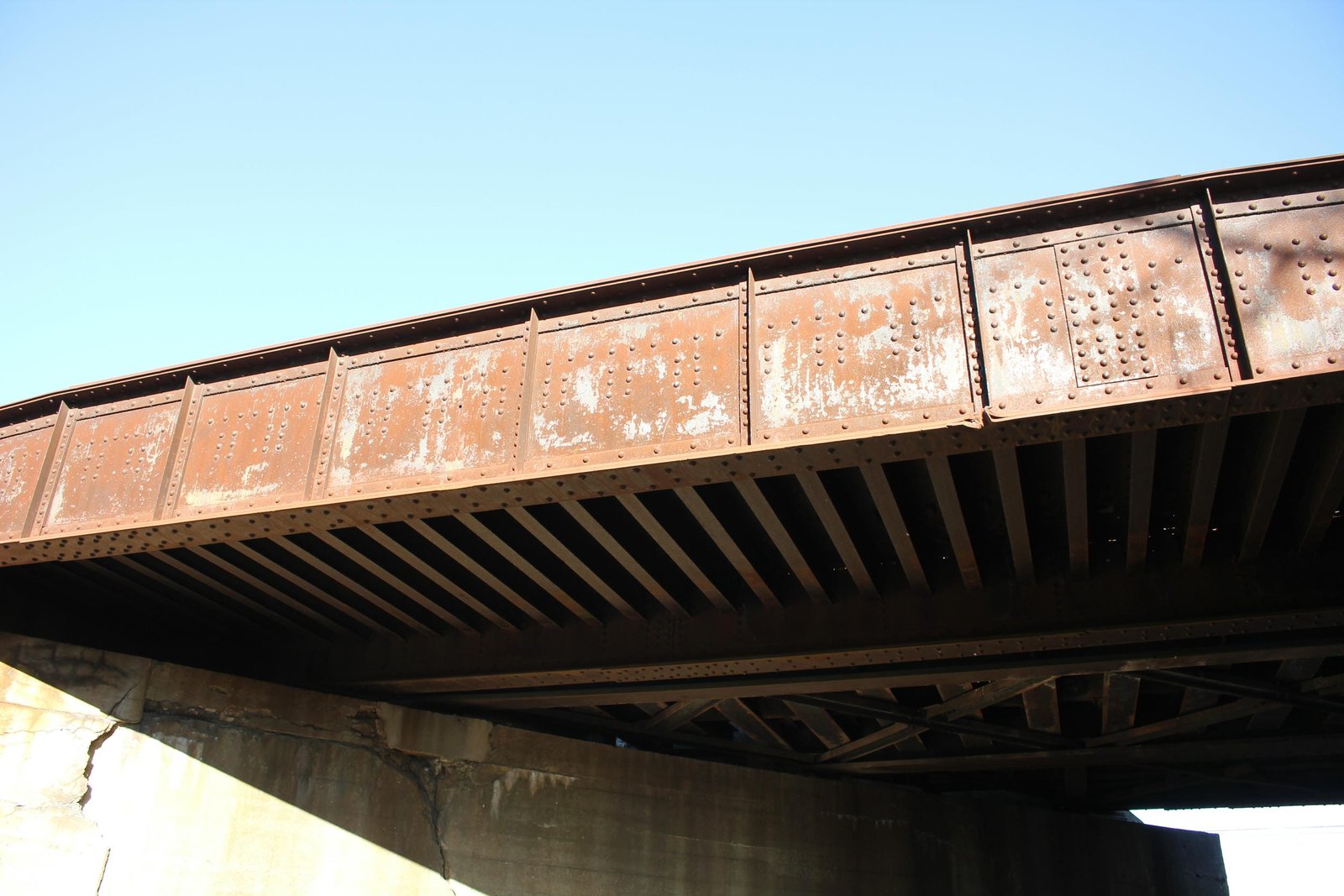
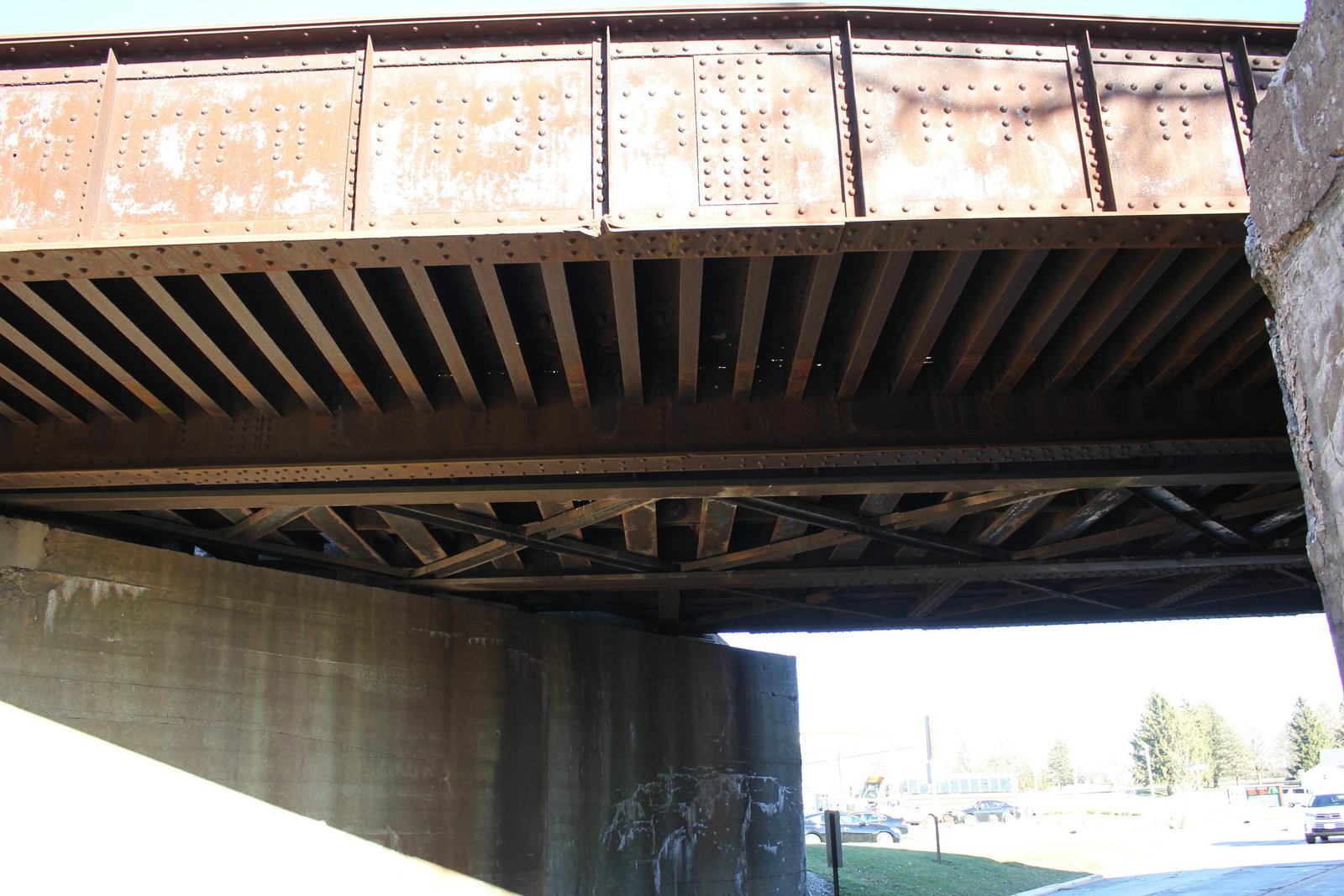
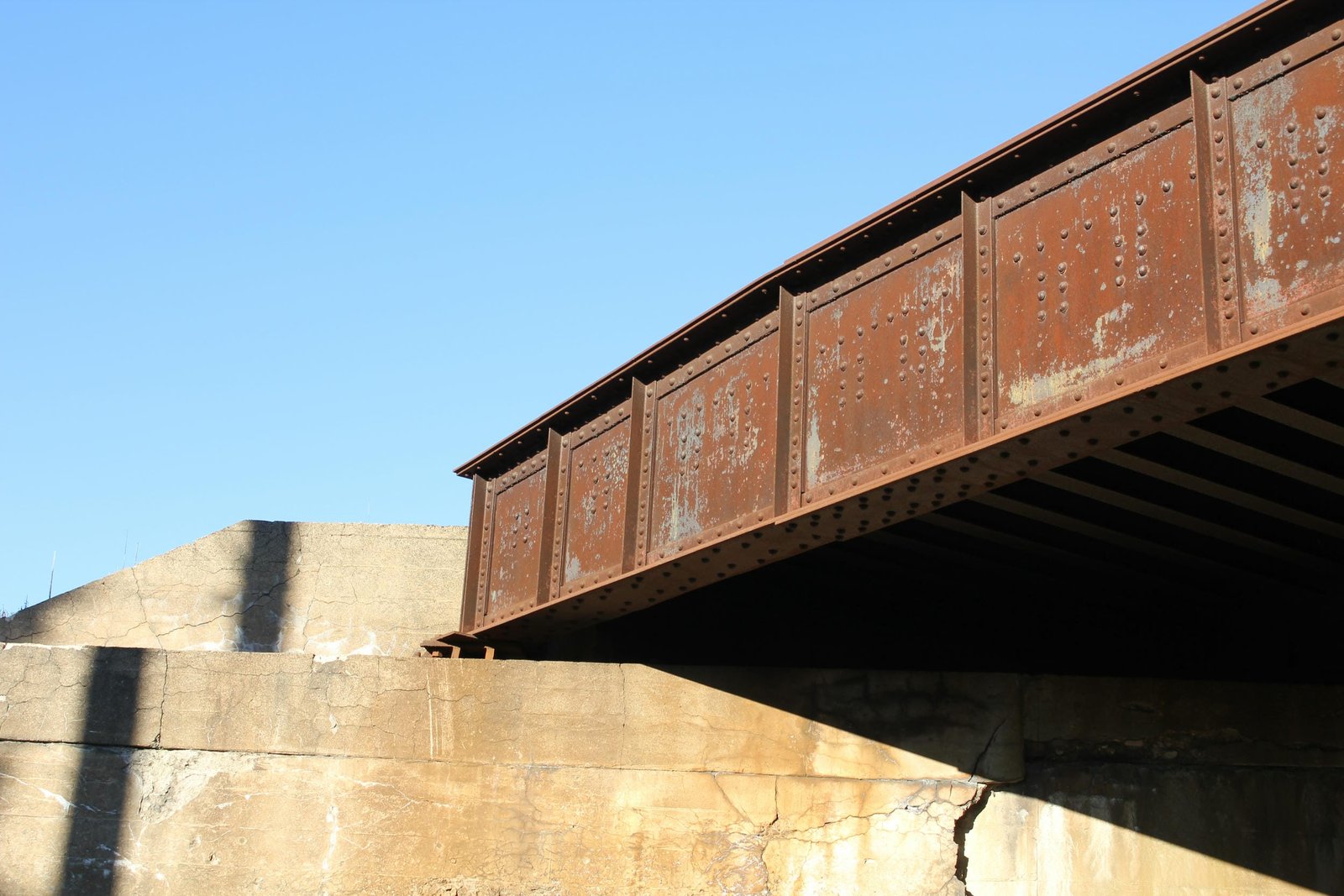
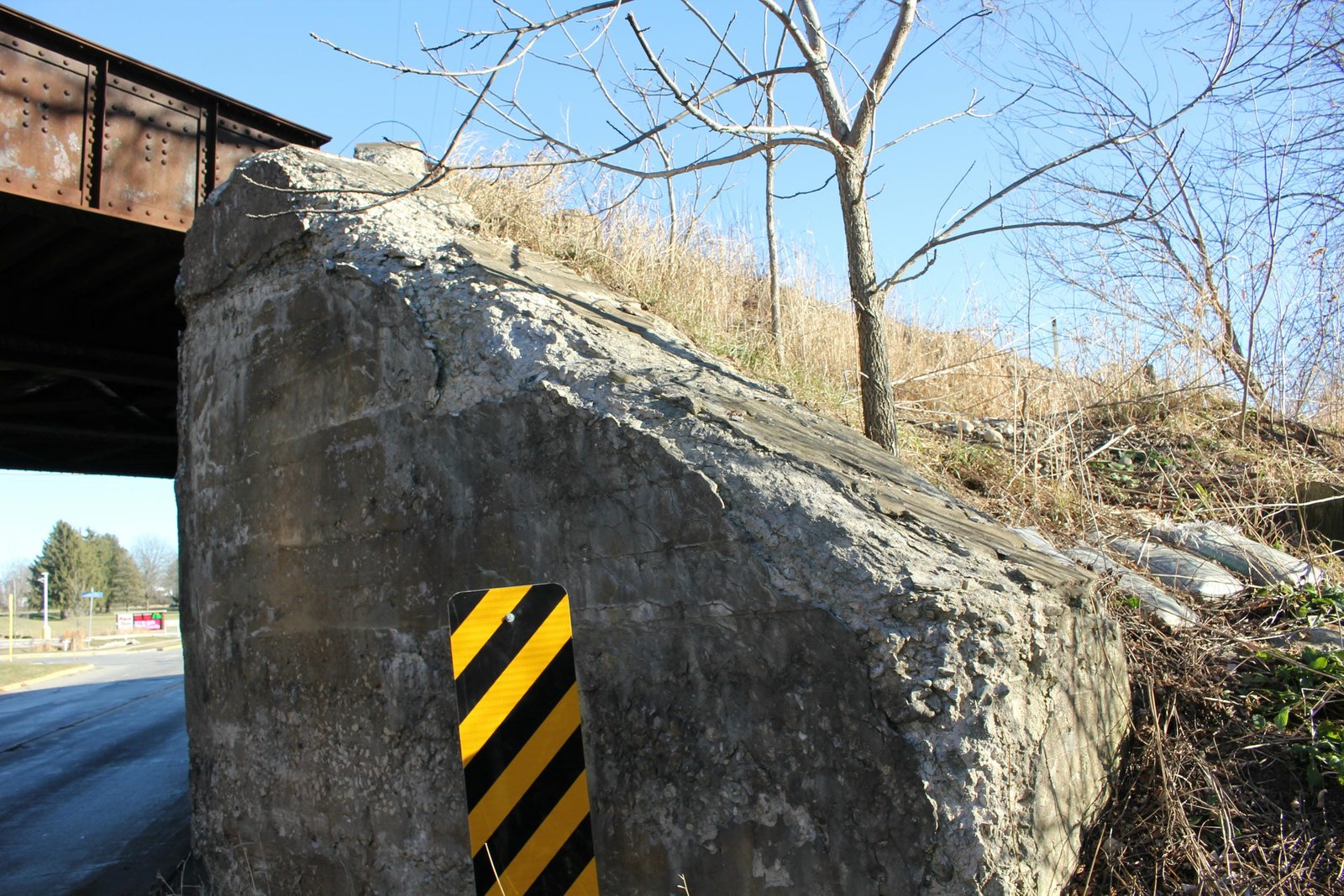
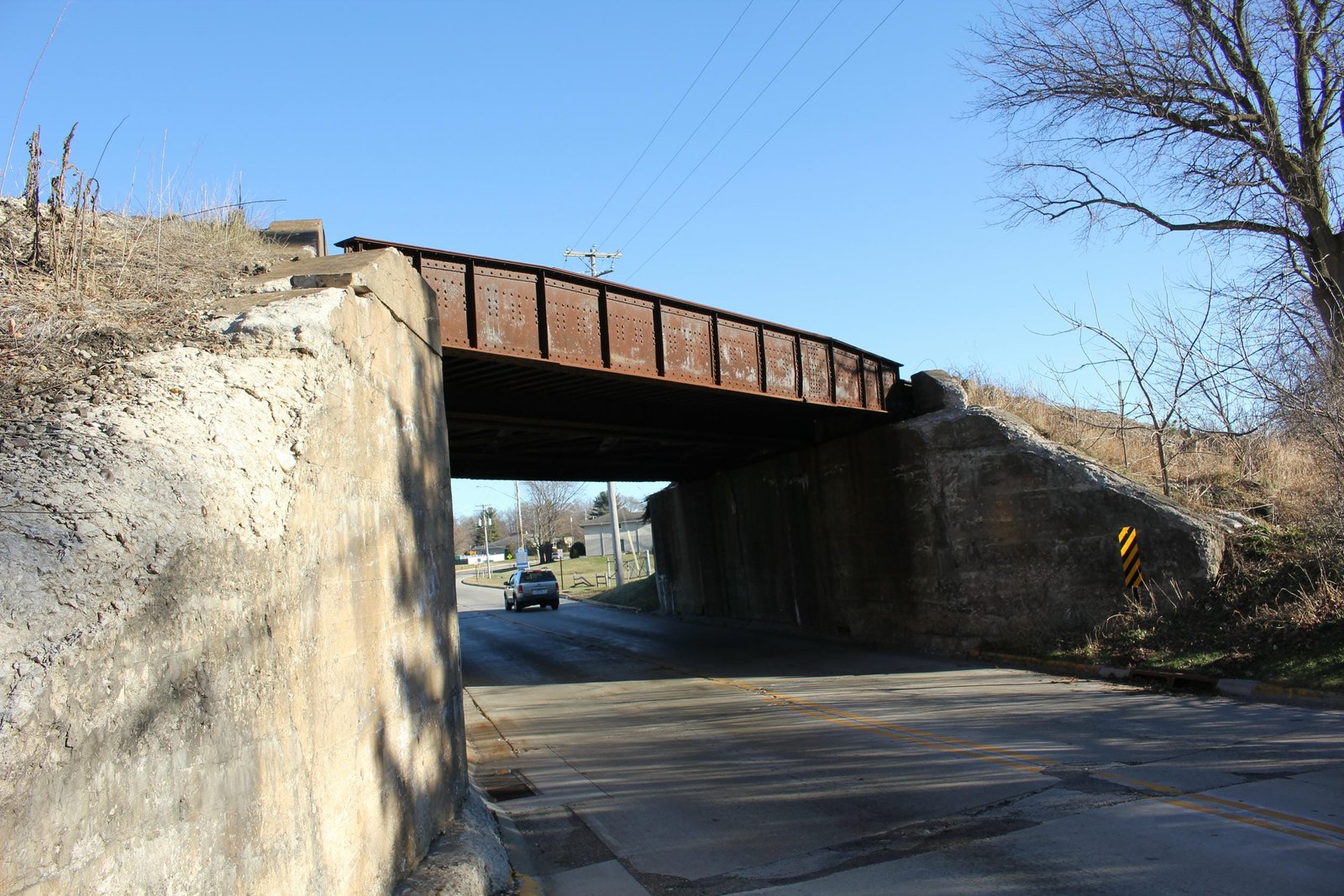
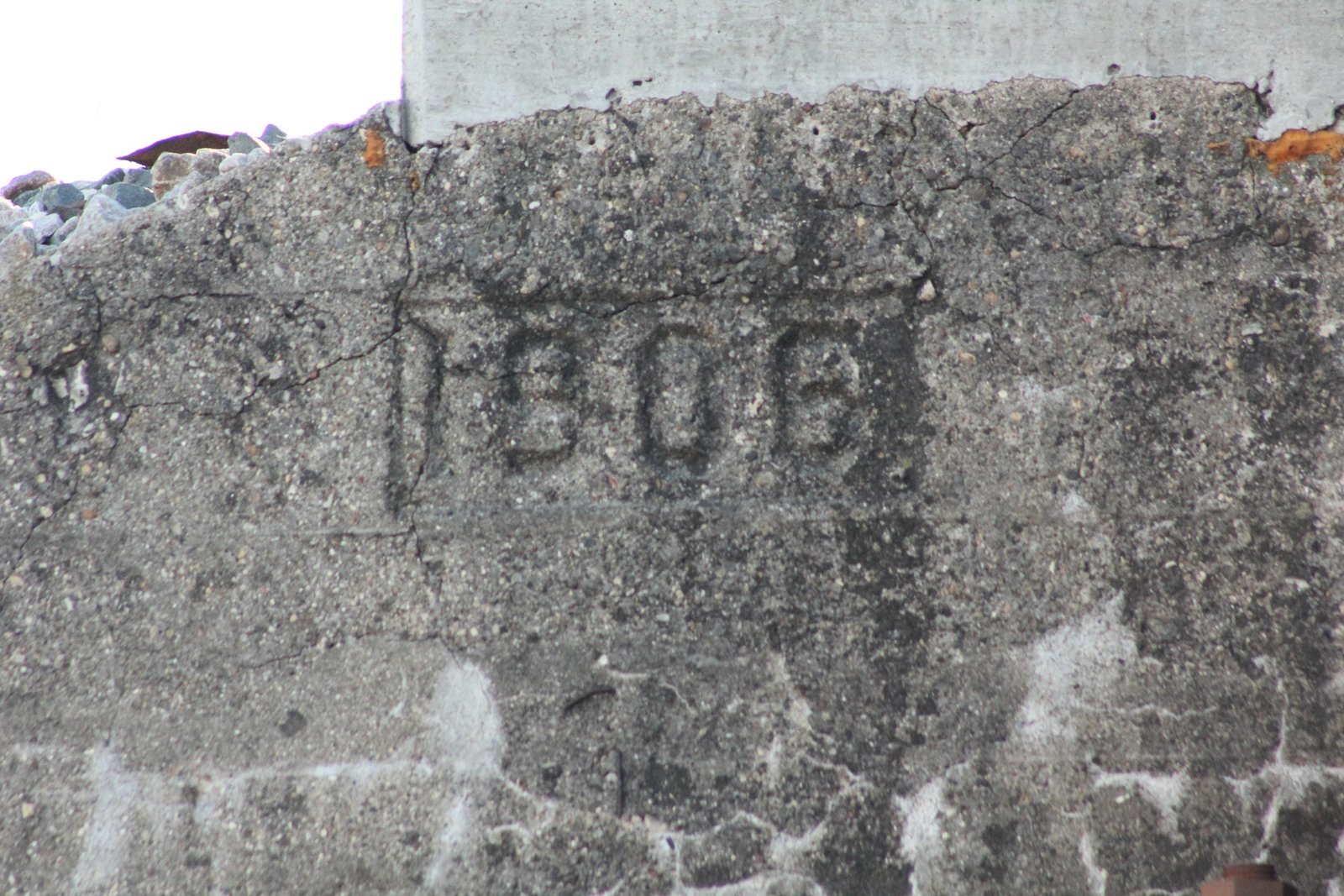
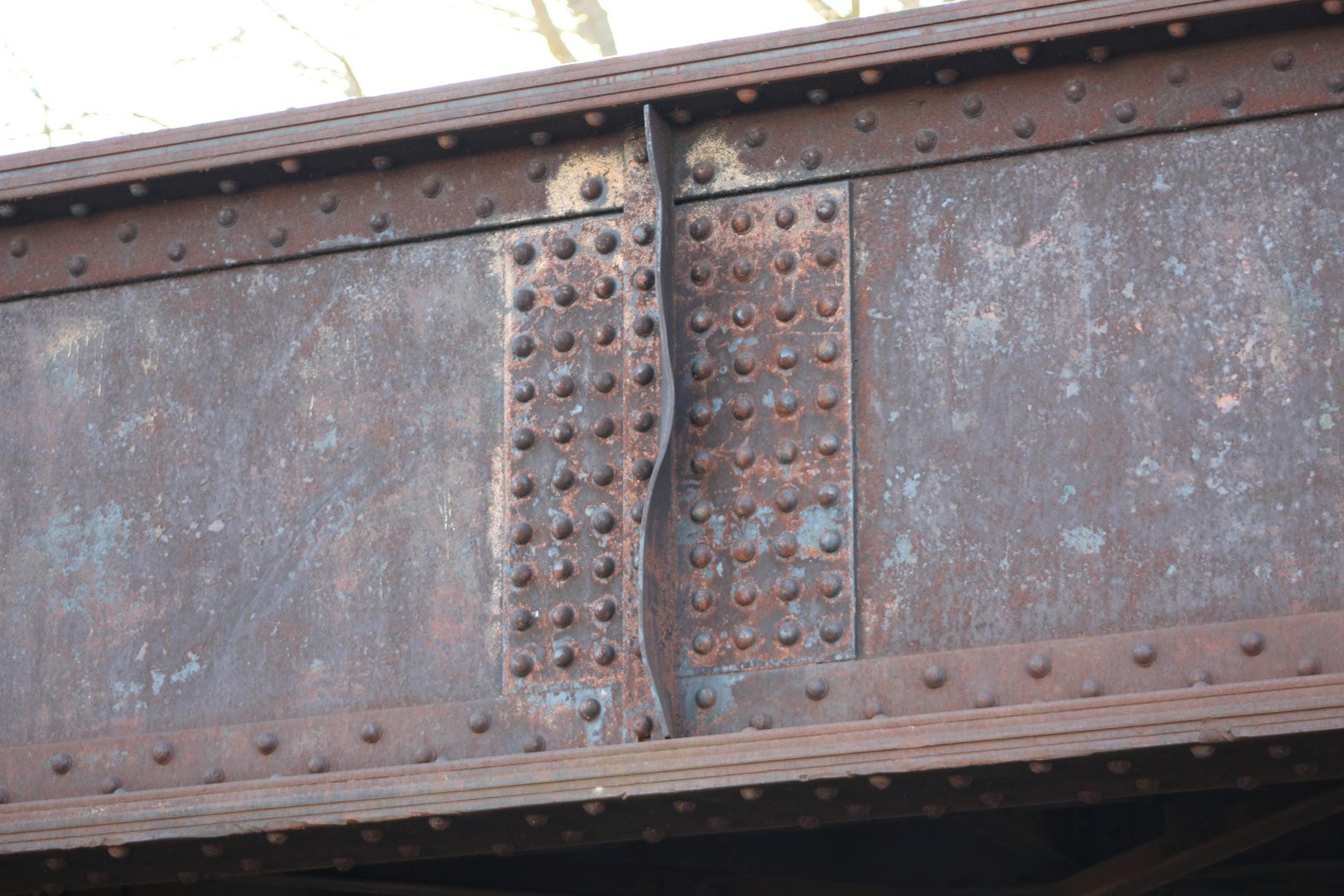
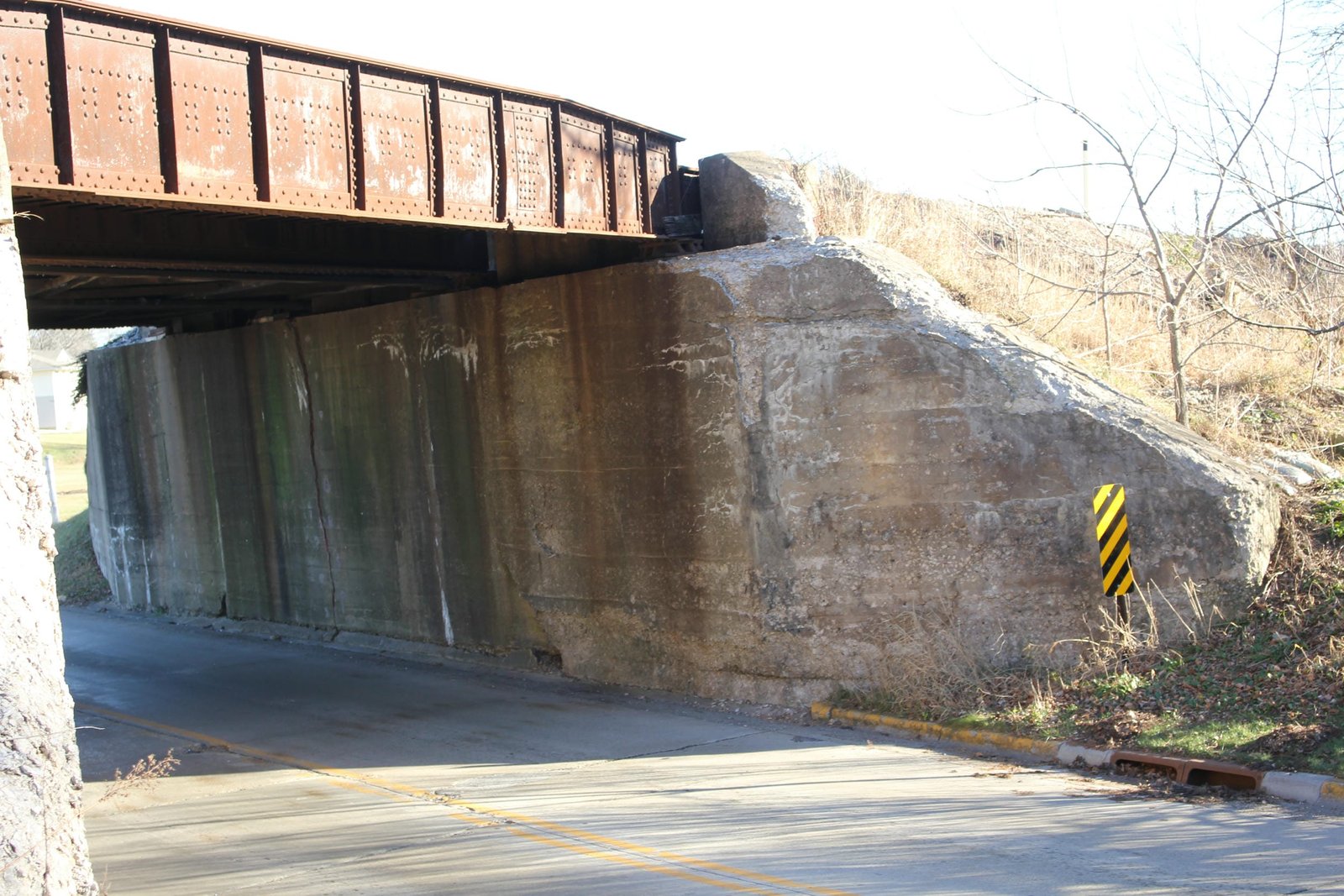
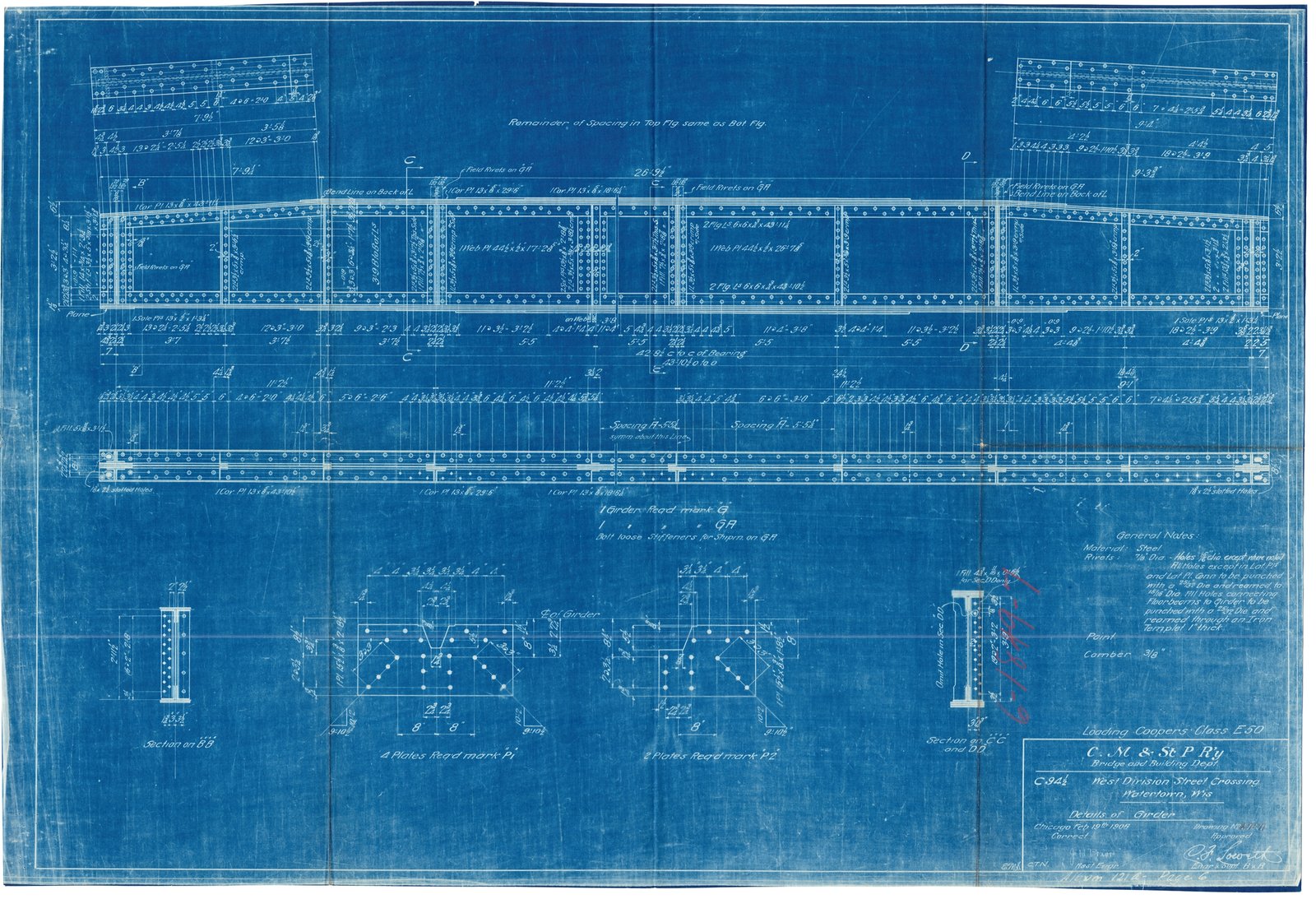
Located in Watertown, this through plate girder bridge carries the former Chicago, Milwaukee, St. Paul & Pacific Railroad (Milwaukee Road) mainline over Wisconsin Highway 19 (Main Street). A bridge was first constructed at this location in 1899, and consisted of a single track 50-foot through plate girder span, set onto concrete abutments. A second track was added to the east face of the bridge, followed by a third track being added to the west face of the bridge in 1913. The most recent alteration came in approximately 1990, when the center track span was replaced by a modern span. Currently, the bridge consists of a triple track 50-foot through plate girder span, set onto concrete substructures. Unique to this bridge, the three tracks all use slightly different designs, although all tracks use shallow girders, a floor placed approximately halfway up the girders and deep tapered girder ends. The original center track used a type "B" through girder, with the ties set onto hangers riveted to the insides of the girders. This span was replaced by a welded and bolted span which uses a typical design. The east track uses a typical type "C3" design, with four stringers arranged into two sets of two and supported by floorbeams placed throughout the structure. These structural components are heavily riveted, somewhat unique to this bridge. The western track uses a design which became popular in the 1910s, with numerous parallel I-beams placed parallel between the girders which are covered by a steel deck. The substructures use a standard design, with sloped diagonal wing walls. Similar to other bridges which have been widened, the abutments were constructed at three different times, as evidenced by construction joints. Unknown contractors fabricated the superstructure, while labor employed by the Milwaukee Road Bridge & Building Department constructed the abutments. Through plate girder spans were commonly used, as they were durable and easy to construct. While many widened bridges use a single structure, it is not entirely unusual to see a bridge use different superstructures for each track. Other than the replacement of the center track, the bridge has seen no significant alterations since construction, and all three tracks remain in use. Overall, the bridge appears to be in fair condition, with cracking, spalling and section loss noted throughout the structure. The author has ranked the bridge as being locally significant, due to the common design and unknown history.
Citations
| Build dates | Milwaukee Road Drawing Collection, located at the Milwaukee Road Archives at the Milwaukee Public Library |
| Railroad History Citation | ICC Valuation Information, Compiled by Richard S. Steele |