
Click the photo to view the full-size version
| Name | UP S. Branch Lizard Creek Bridge Chicago & North Western Railway Bridge #49 |
| Built By | Chicago & North Western Railway |
| Currently Owned By | Union Pacific Railroad |
| Superstructure Contractor | American Bridge Company of New York (Lassig Plant) |
| Length | 167 Feet Total, 45 Foot Main Span |
| Width | 1 Track |
| Height Above Ground | 20 Feet (Estimated) |
| Superstructure Design | Deck Plate Girder and Timber Pile Trestle |
| Substructure Design | Timber Pile |
| Date Built | c. 1965, Using a Span Fabricated 1910 |
| Original Location | Chicago & North Western Railway Bridge #S-1662; Kingsley, Iowa |
| Traffic Count | 1 Train/Day (Estimated) |
| Current Status | In Use |
| Minneapolis & St. Louis Railway Bridge Number | 49 |
| Union Pacific Railroad Bridge Number | 31.09 |
| Significance | Local Significance |
| Documentation Date | 3/15/2019 |
In the late 1850s and 1860s, the Des Moines Valley Railroad (DMV) and predecessors had constructed a significant railroad line, connecting Keokuk, Iowa and Des Moines, Iowa. Between 1869 and 1870, the DMV continued constructing northwest from Des Moines; completing 82 miles to Tara, Iowa. In 1873, the DMV was split into two separate sections, with the Keokuk, Iowa to Des Moines segment being sold to the Keokuk & Des Moines Railway (later leased/owned by the Chicago, Rock Island & Pacific Railway); and the Des Moines to Tara segment being sold to the Des Moines & Fort Dodge Railroad (DM&FD). In 1882, the DM&FD completed an additional 50 miles, reaching Ruthven, Iowa. In 1887, the DM&FD was leased by the Rock Island, and the Minneapolis & St. Louis Railroad (M&StL) began leasing the line in 1905. In 1915, the DM&FD was outright purchased by the M&StL. This line served as a secondary mainline for the M&StL, connecting to other secondary mainlines at Fort Dodge and Ruthven. Between Fort Dodge and Tara, the M&StL obtained trackage rights over the Illinois Central Railroad to connect their lines. Between Ruthven and Spencer, Iowa; the M&StL obtained trackage rights over the Chicago, Milwaukee & St. Paul Railway (Milwaukee Road) to connect their lines. At Des Moines, the line connected to a jointly-owned line with the Chicago, Burlington & Quincy Railroad (CB&Q), which connected this line to the principal mainline at Oskaloosa, Iowa.
The M&StL was a small midwestern railroad, connecting Minneapolis, Minnesota to Peoria, Illinois. The M&StL mainly served as a bridge railroad, allowing eastern and western railroads to interchange while bypassing the congested terminals at Chicago. Because the M&StL had light freight density and limited passenger service, the railroad survived on razor thin margins and often was in financial stress. The M&StL would later reorganize as the Minneapolis & St. Louis Railway in approximately 1920. Through the 1930s, the railroad focused on trimming excess routes and improving the financial situation. After leaving receivership in 1943, the M&StL invested significant capital upgrading infrastructure and modernizing equipment. By the 1950s, it became clear that the M&StL would need to merge with a larger railroad to survive. In 1960, the M&StL was purchased by the Chicago & North Western Railway (C&NW) during one of the first major railroad consolidations in the second half of the 20th Century.
Because of the agricultural industries connected to this line, significant sections of line remained profitable far longer than other M&StL lines. In 1981, the Mallard to Ruthven segment was abandoned, followed by the Rippey to Grand Junction segment in 1984. In 1989, the segment between Perry and Rippey would be abandoned. In 1995, the C&NW was purchased by Union Pacific Railroad (UP). In 2004, the line between Waukee and Perry would be abandoned. Today, UP operates the Tara Subdivision between Grand Junction and Rippey and the Waukee Industrial Lead between Des Moines and Waukee. The segment between Waukee and Perry has been reused as part of the Raccoon River Valley Trail. The remainder of the line has been abandoned and reverted to adjacent landowers.
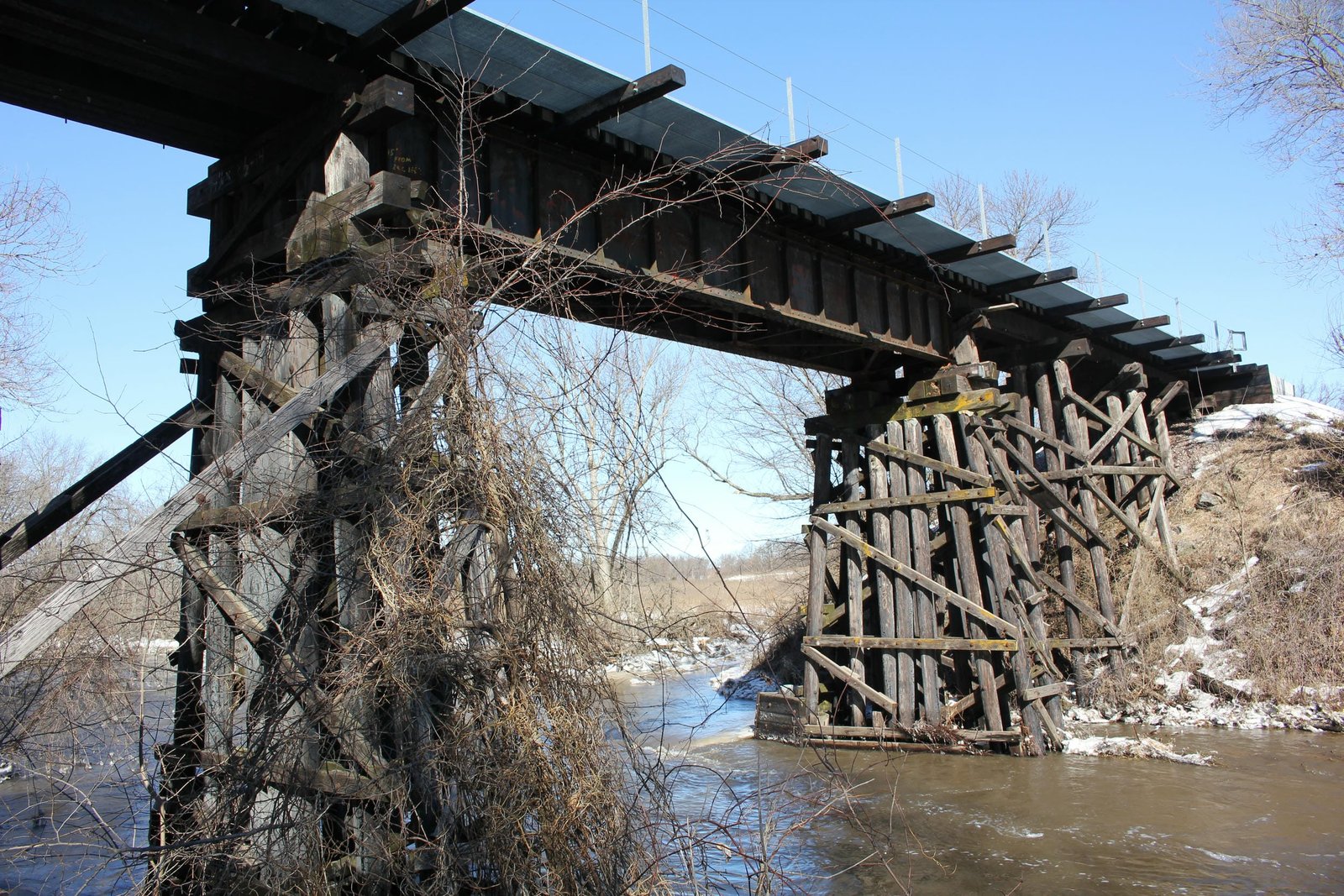
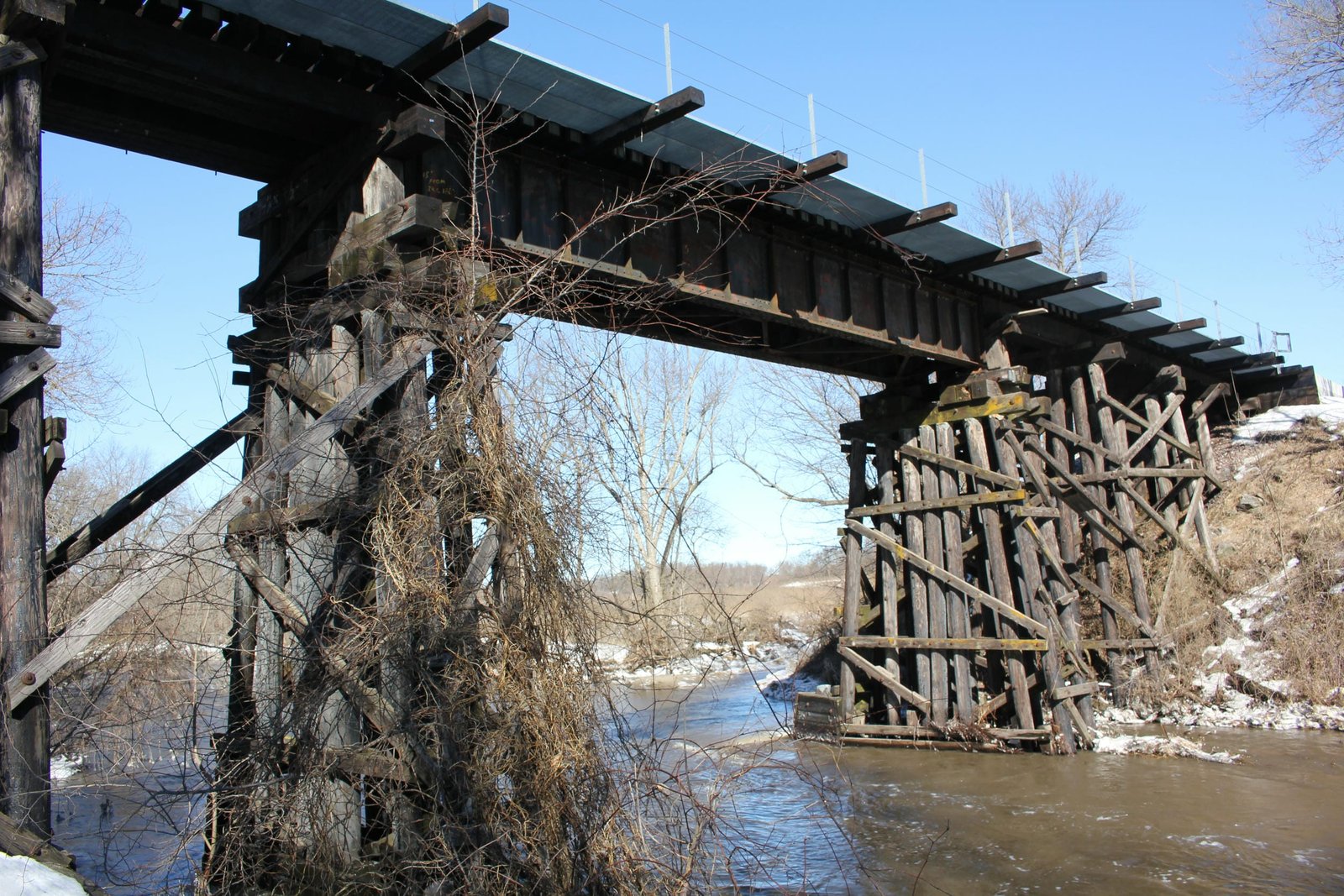
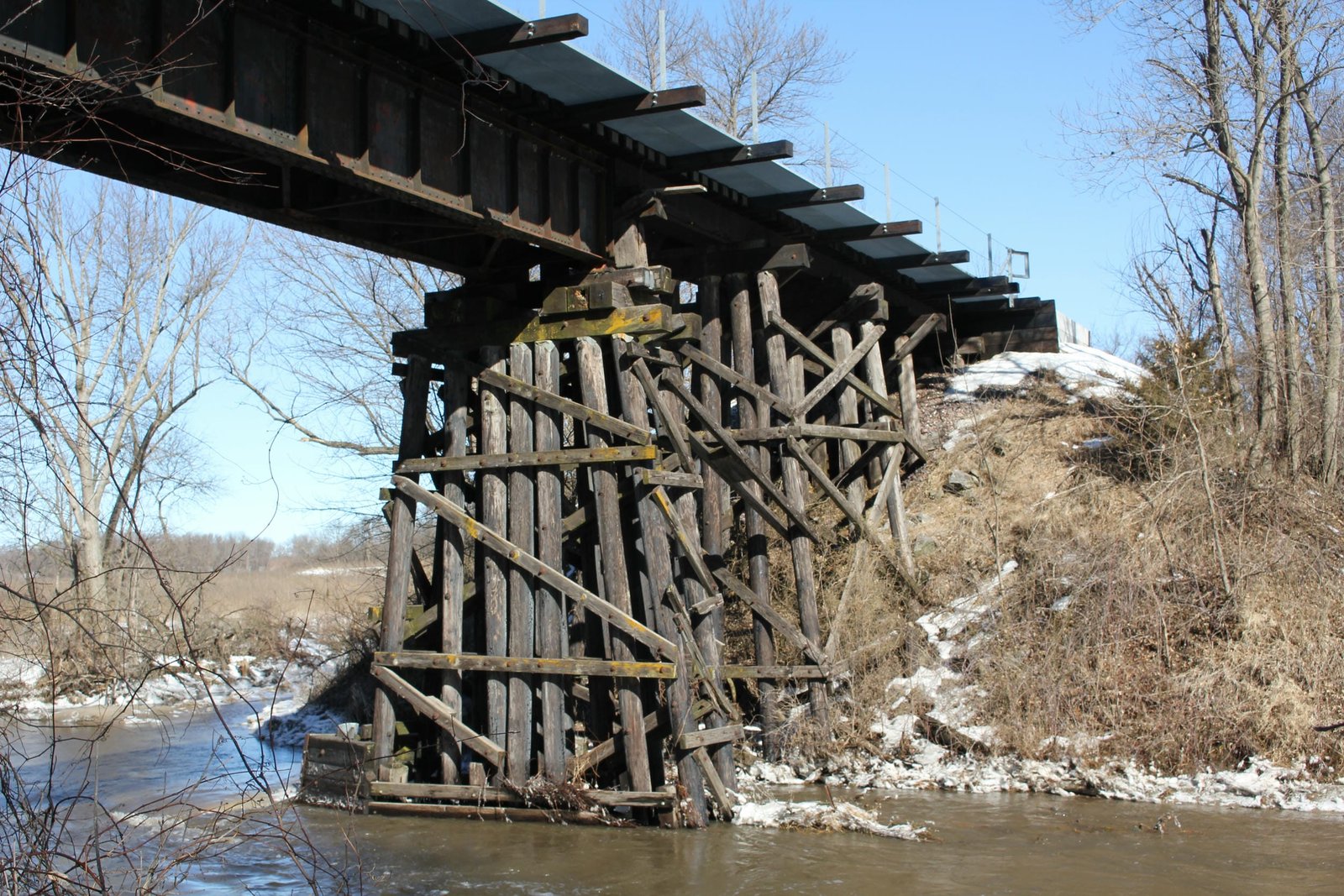
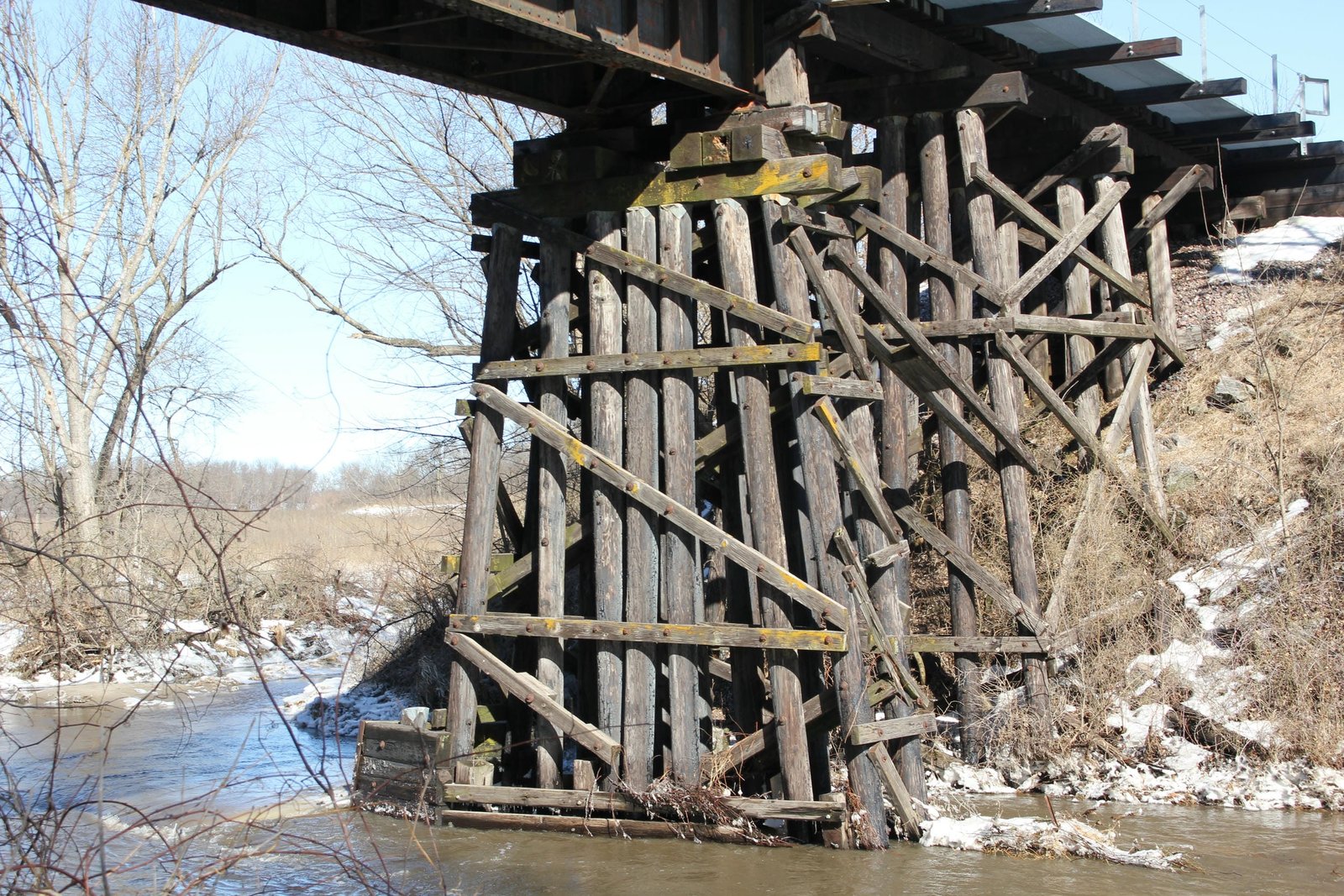
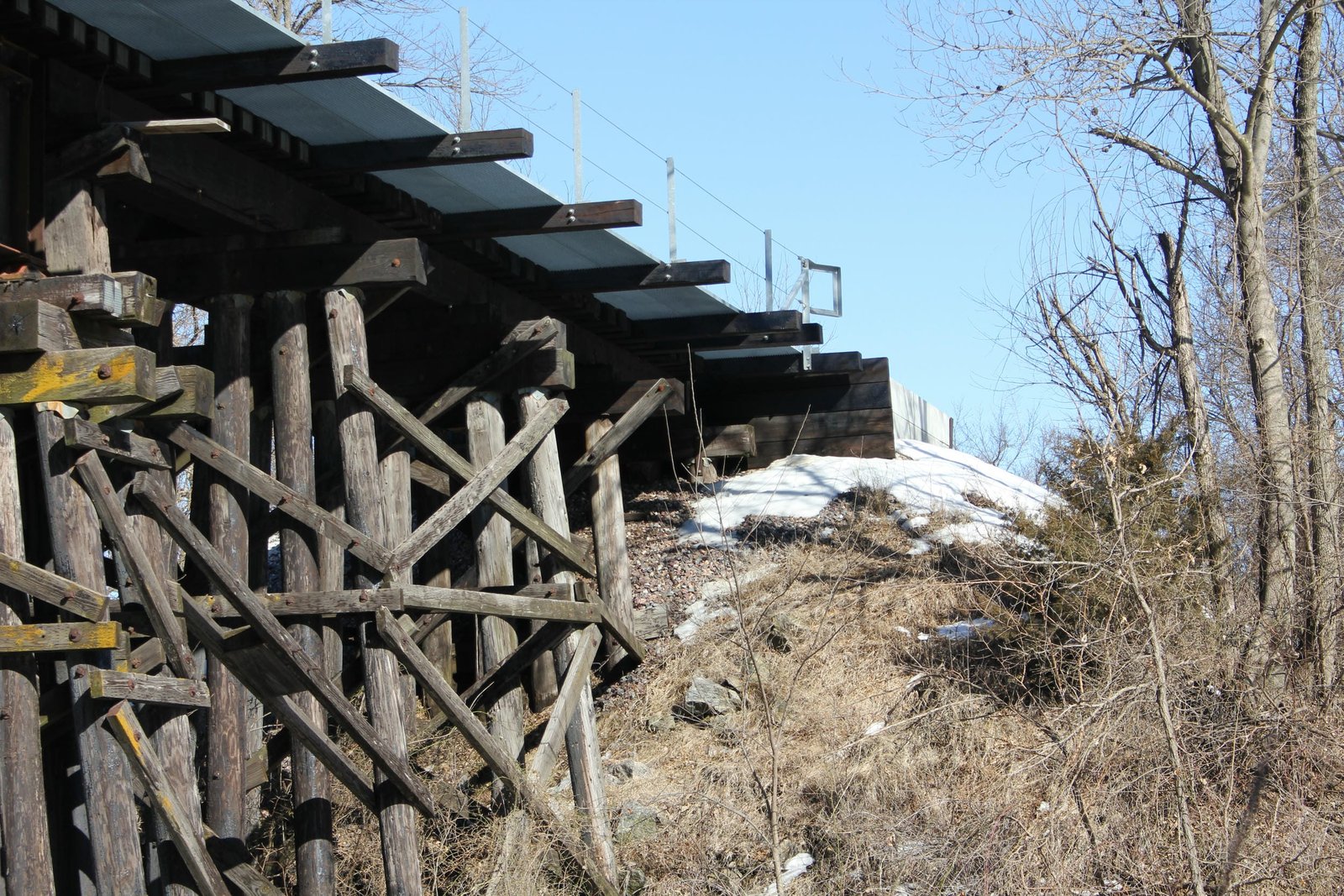
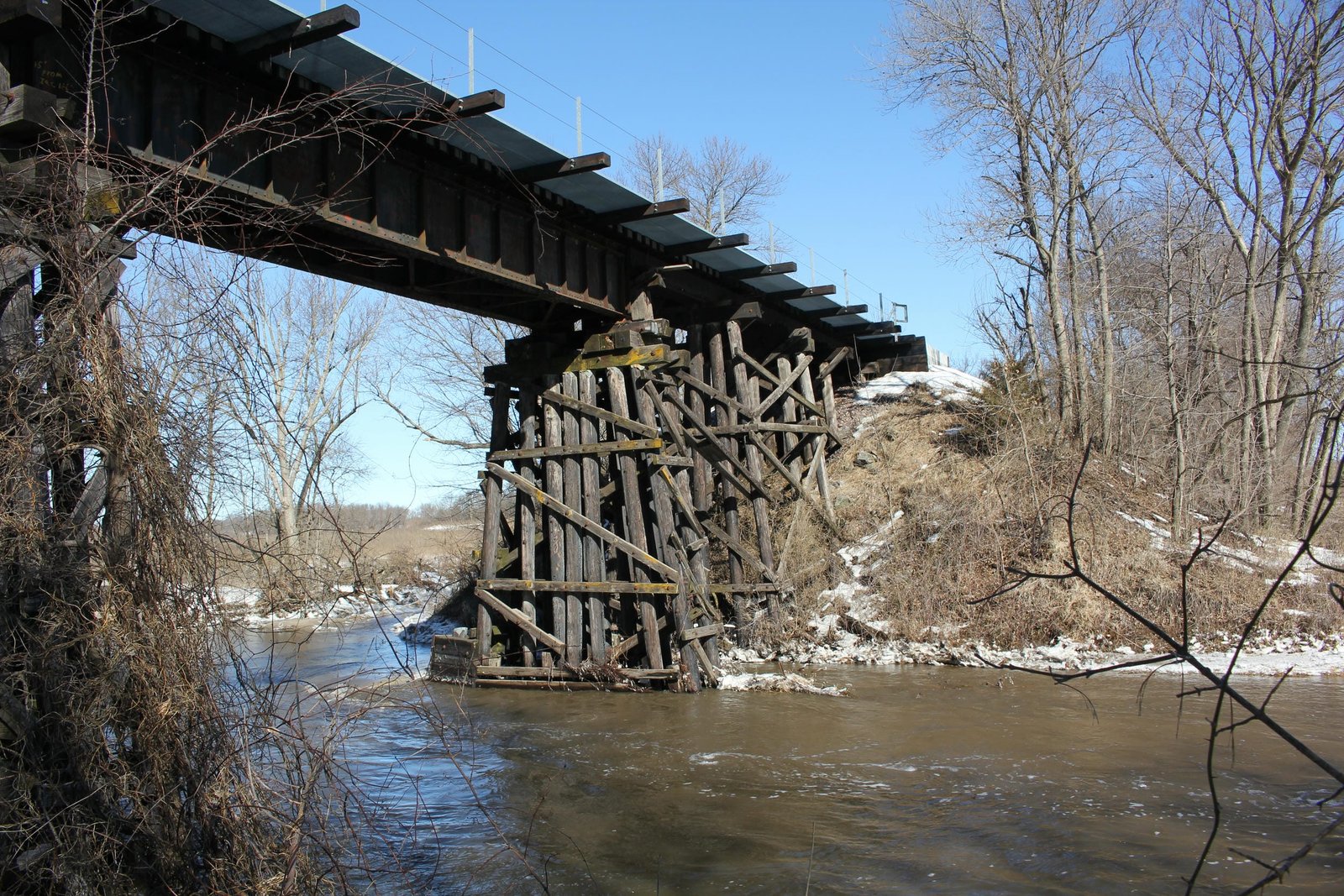
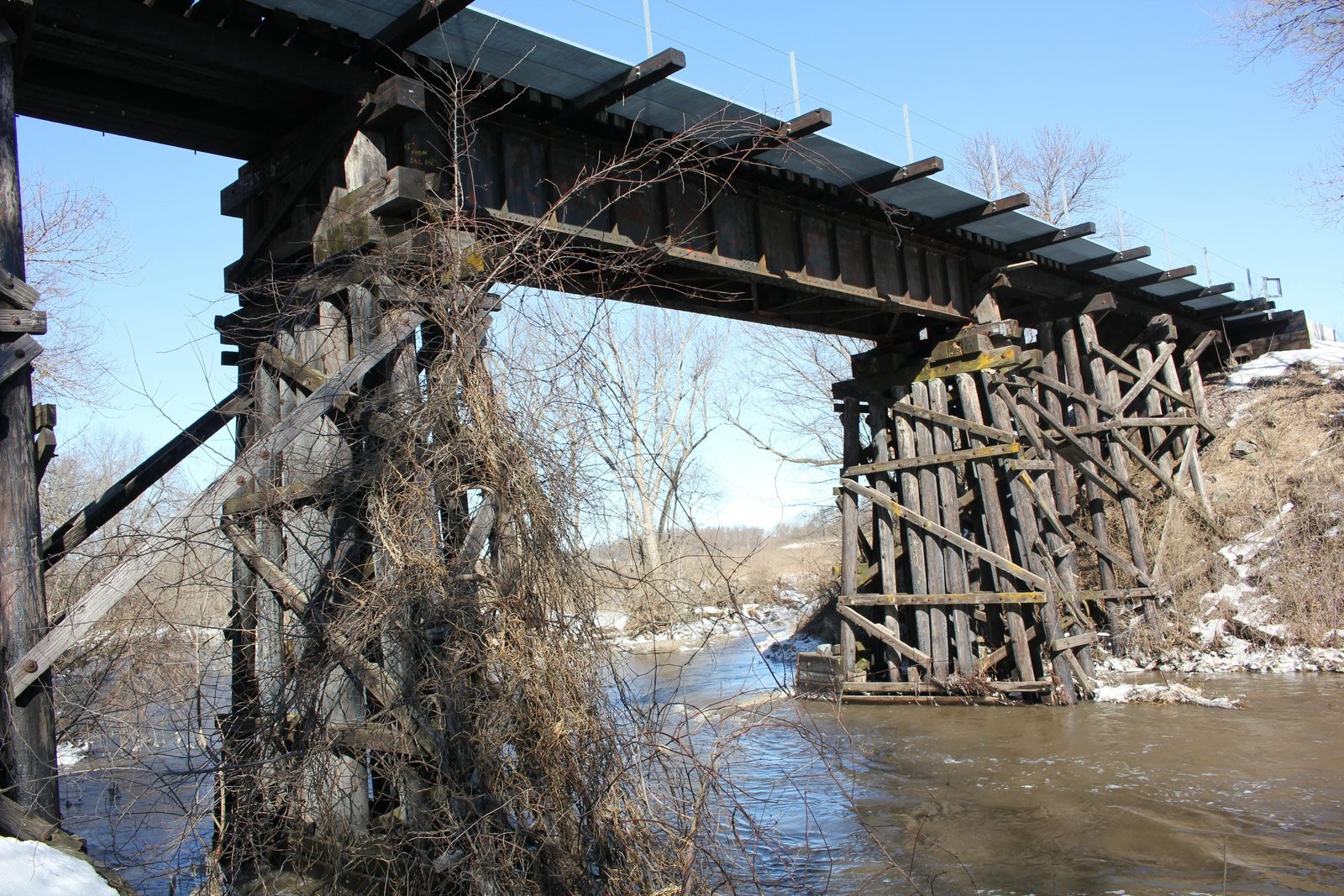
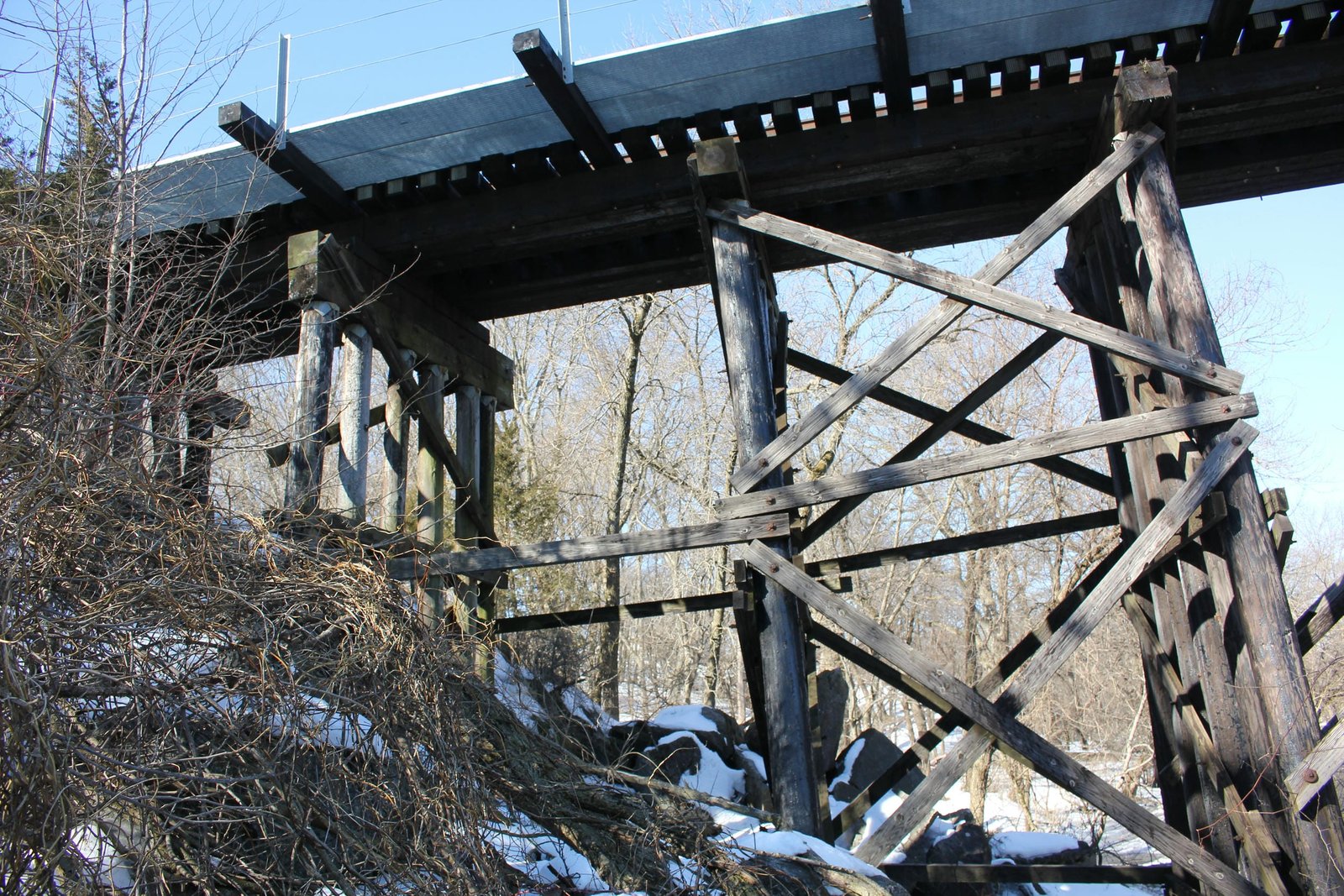
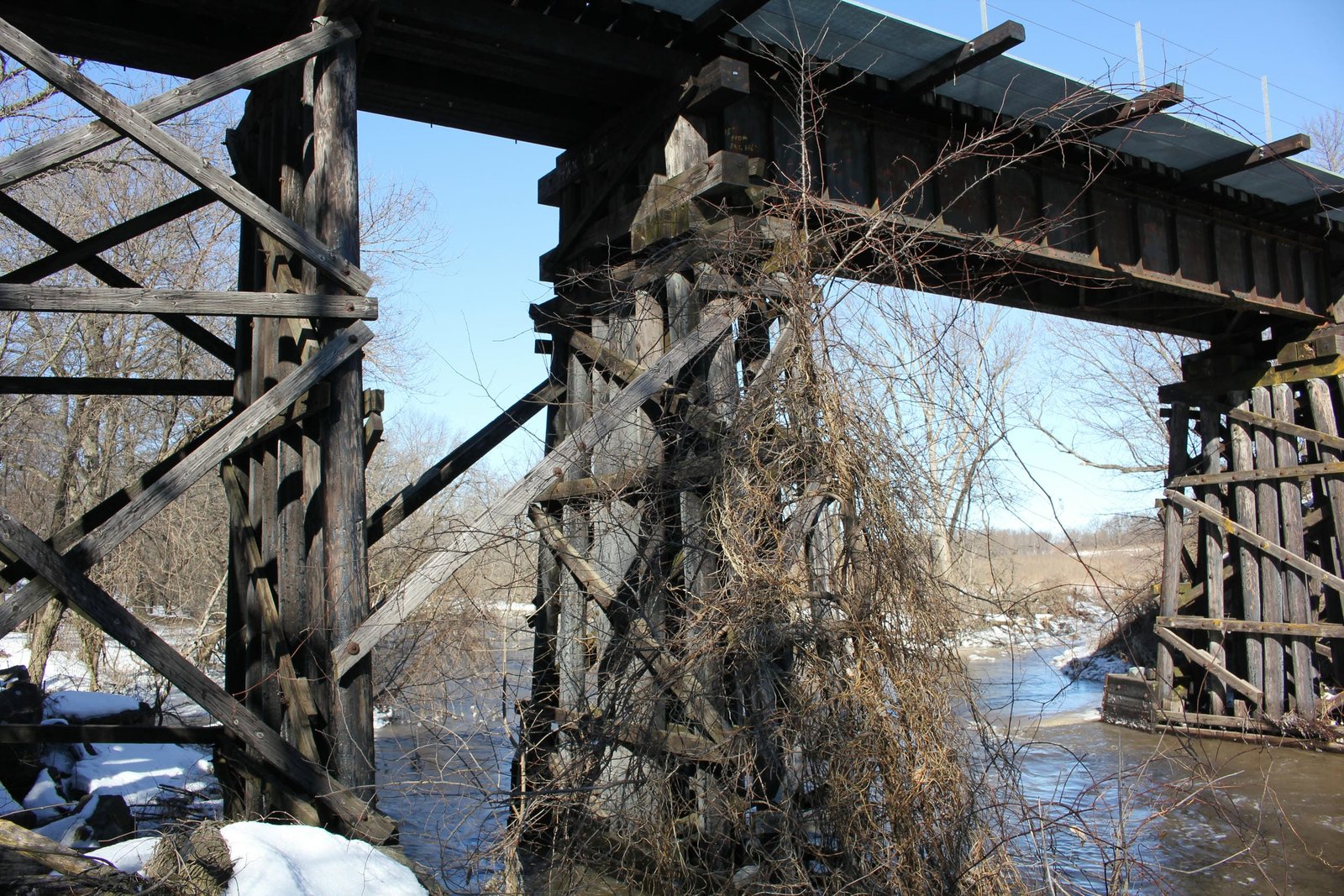
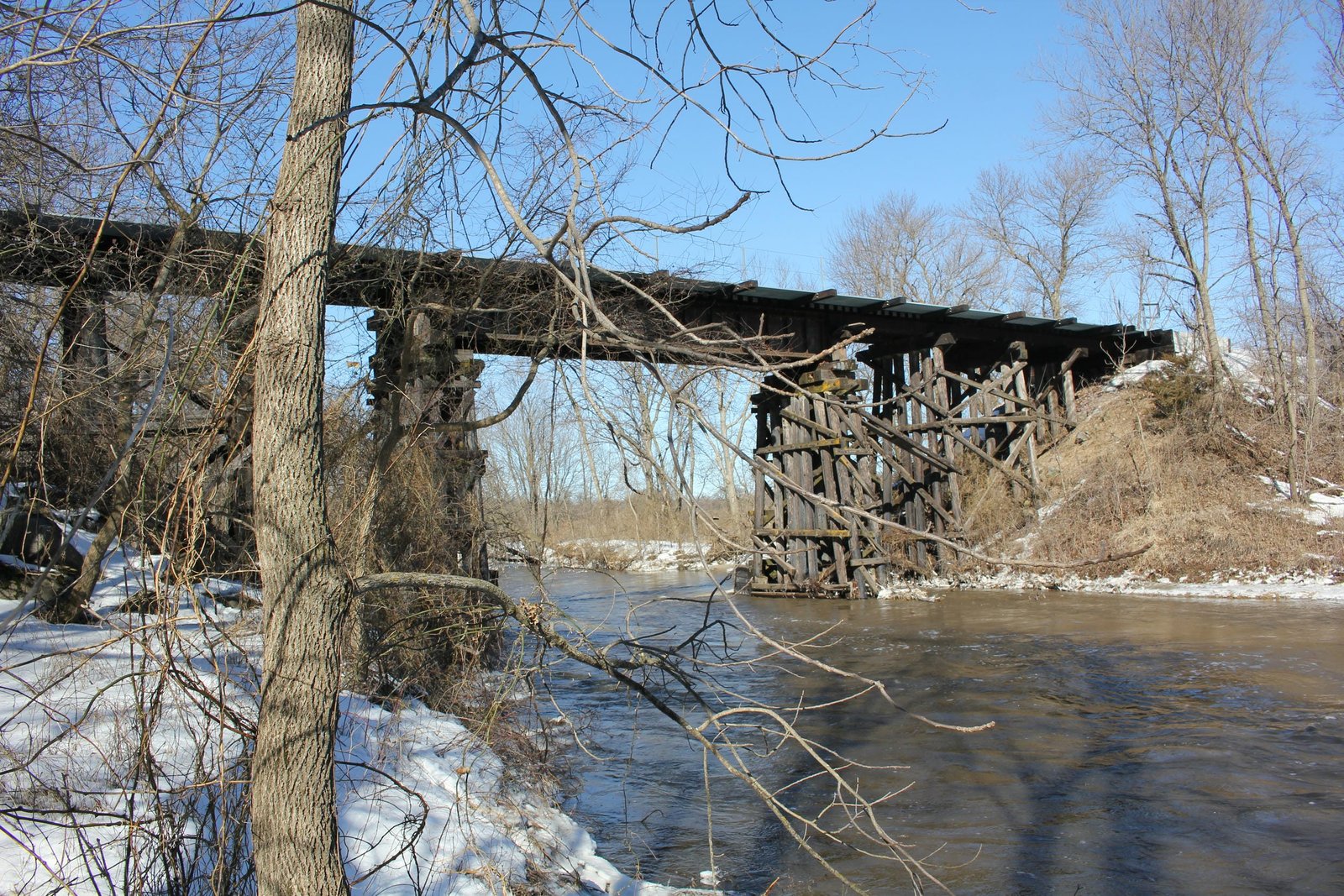
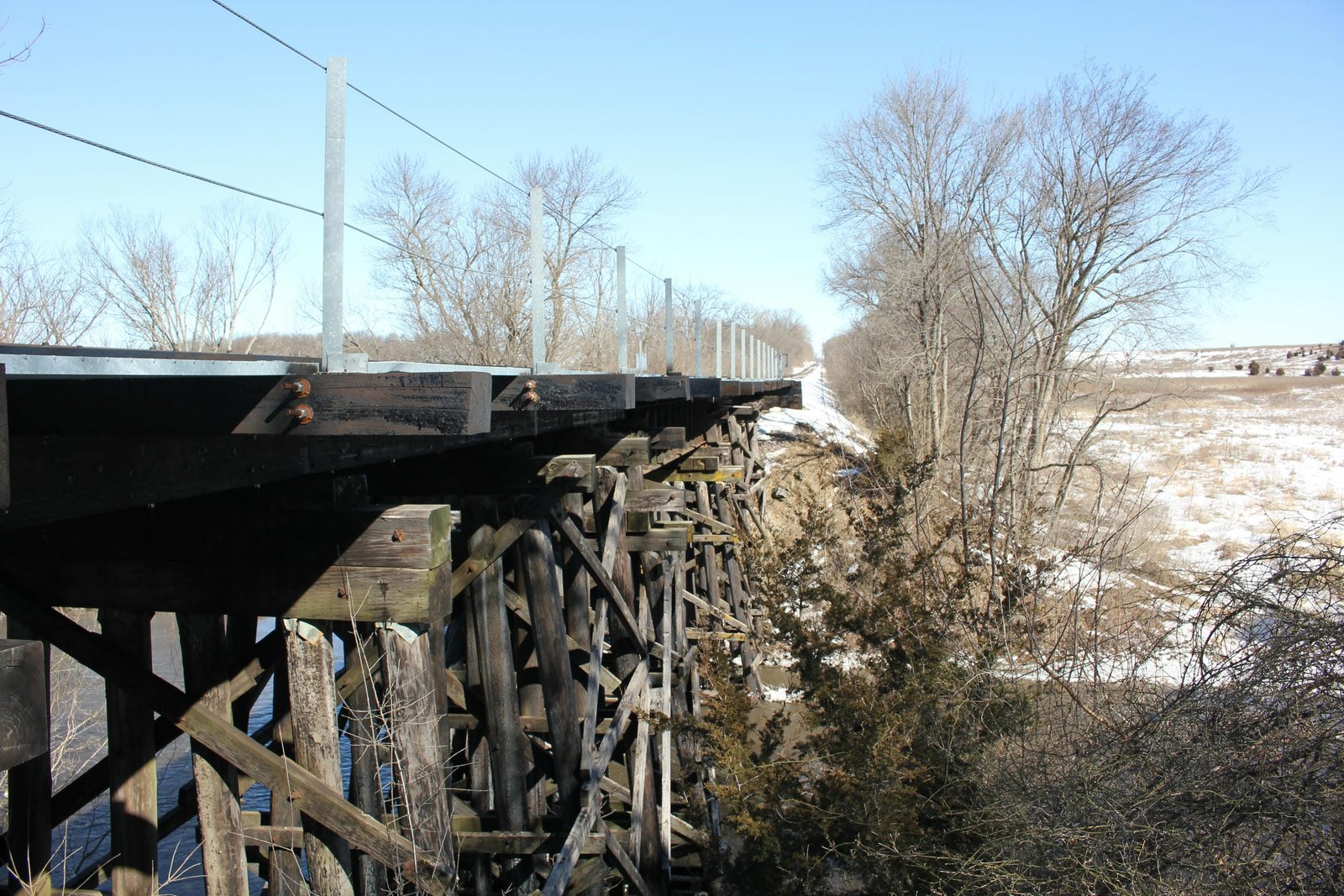
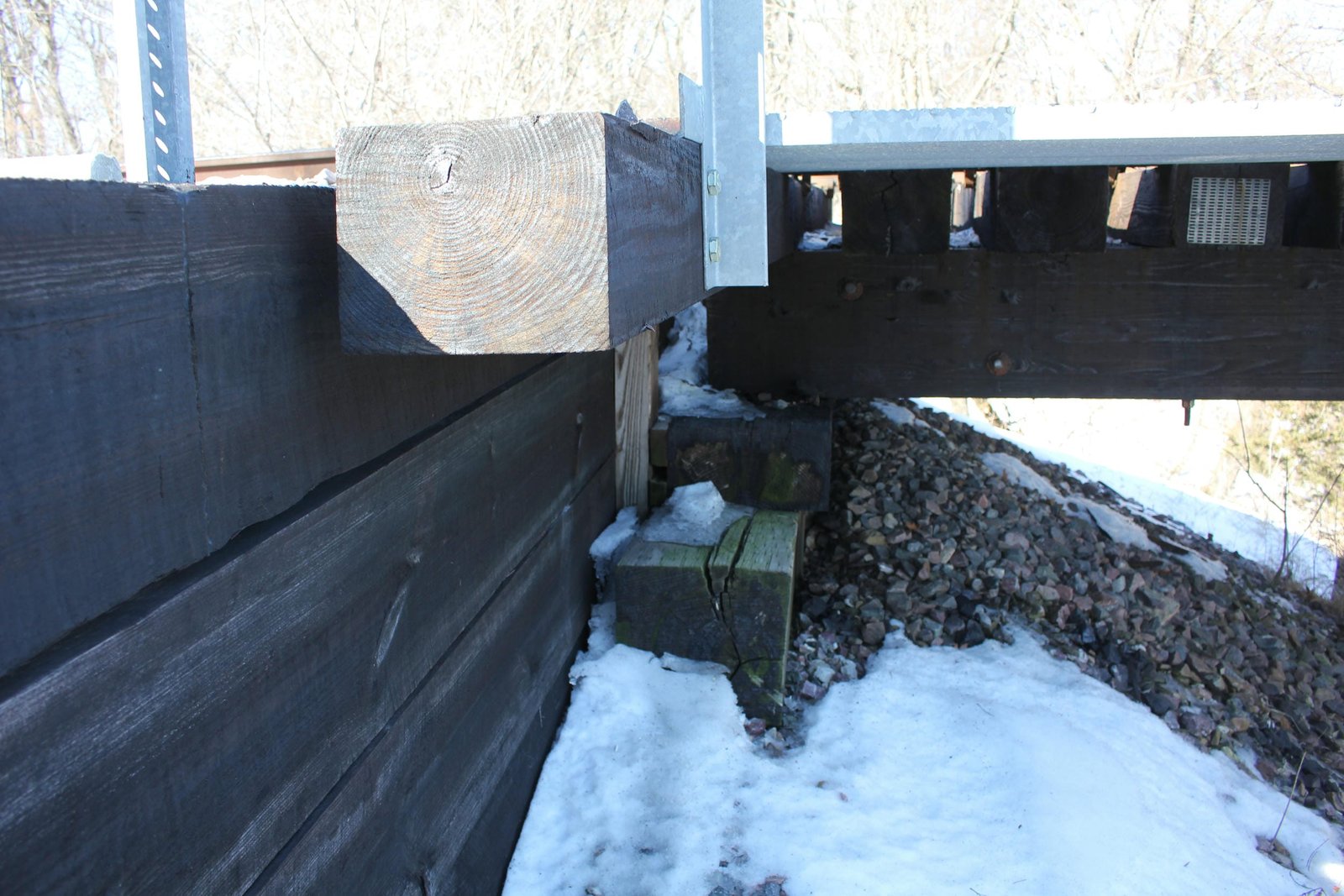
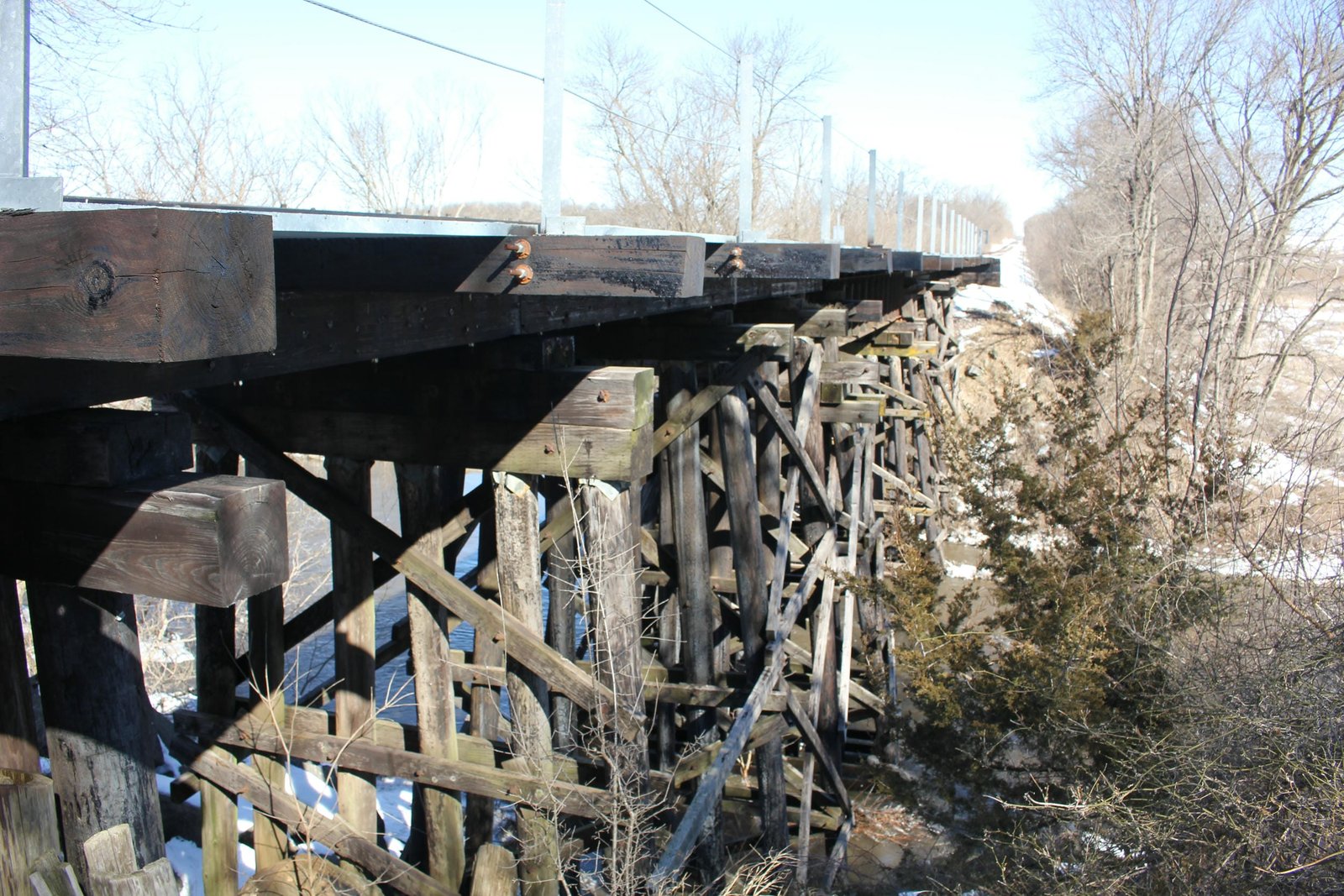
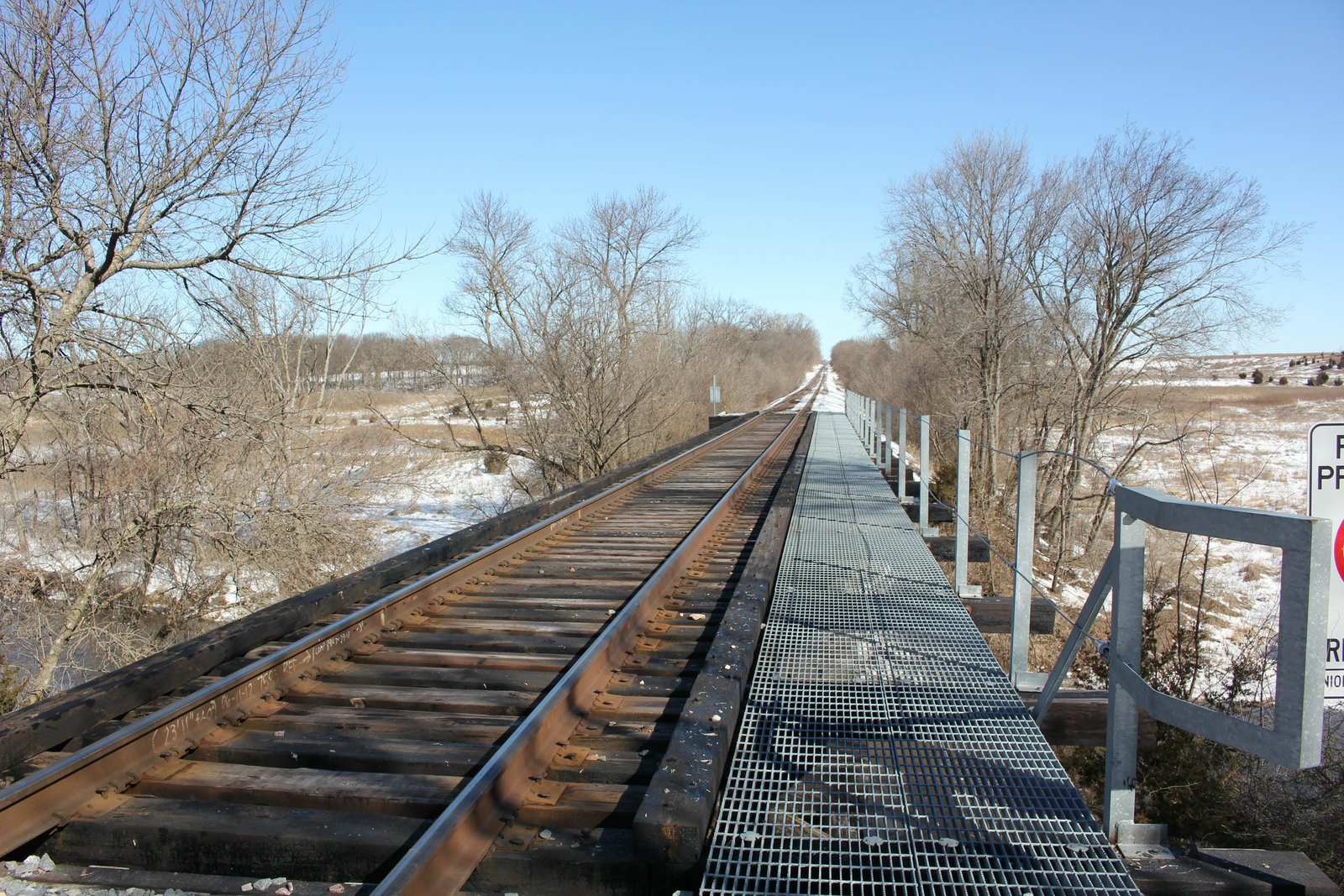
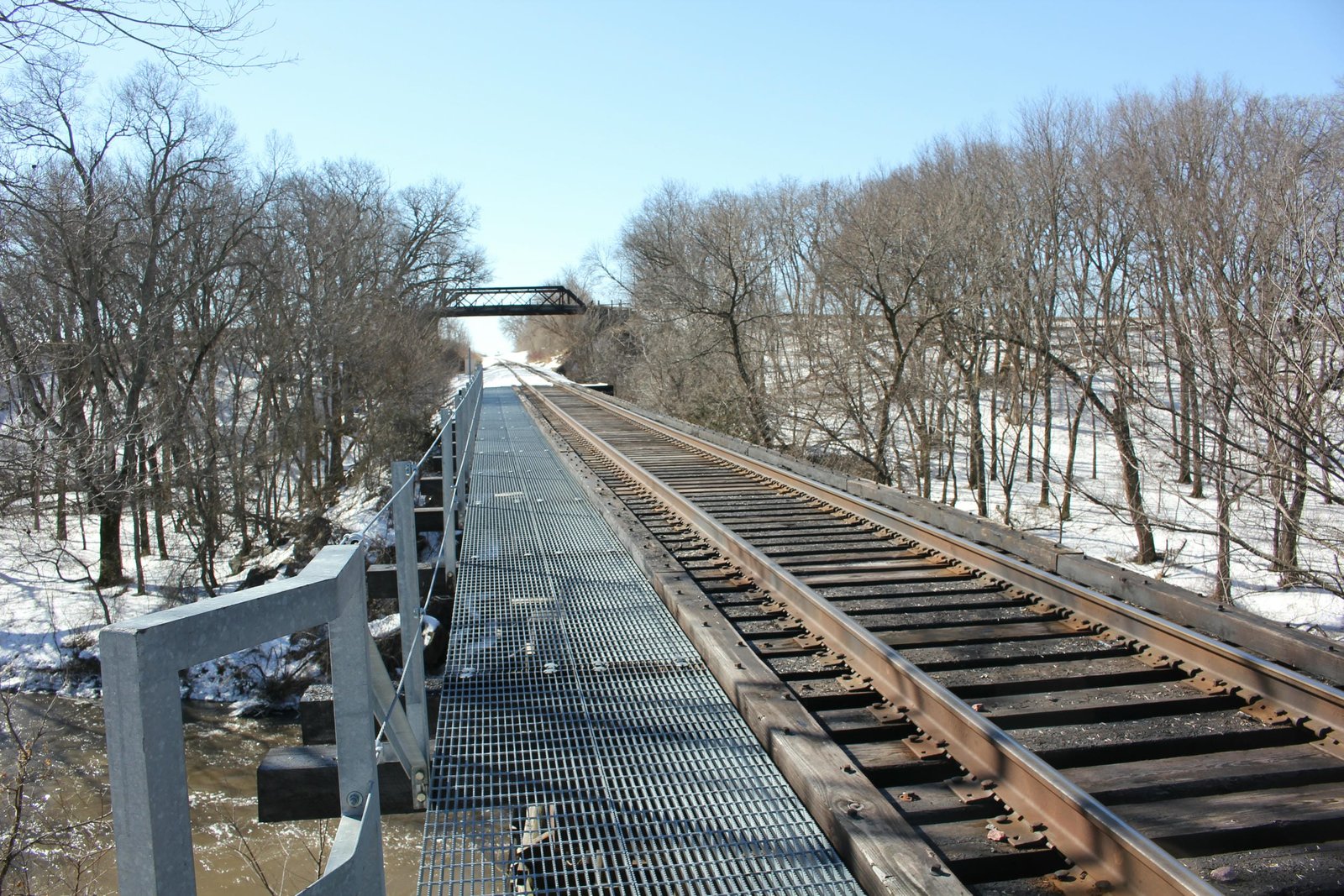
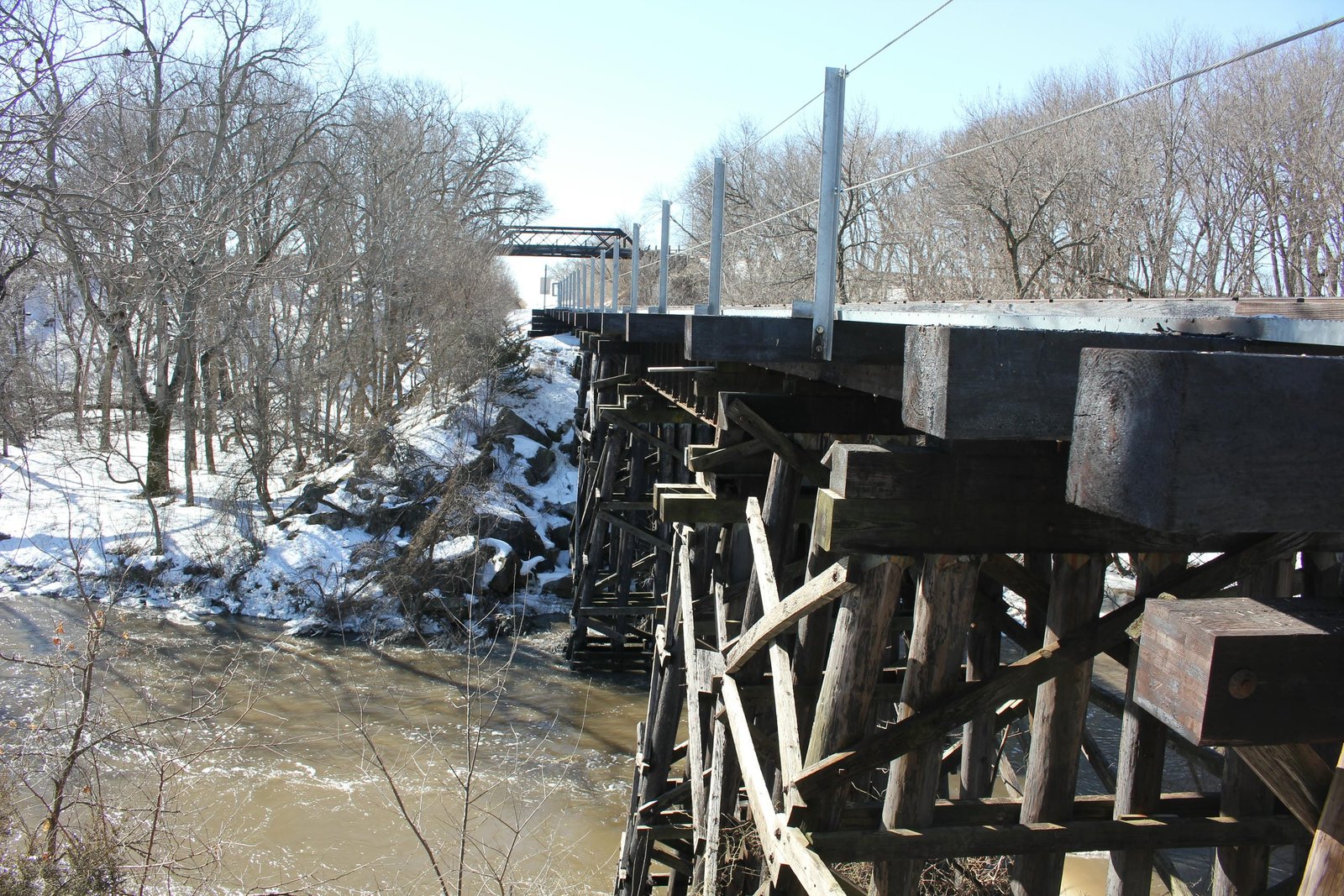
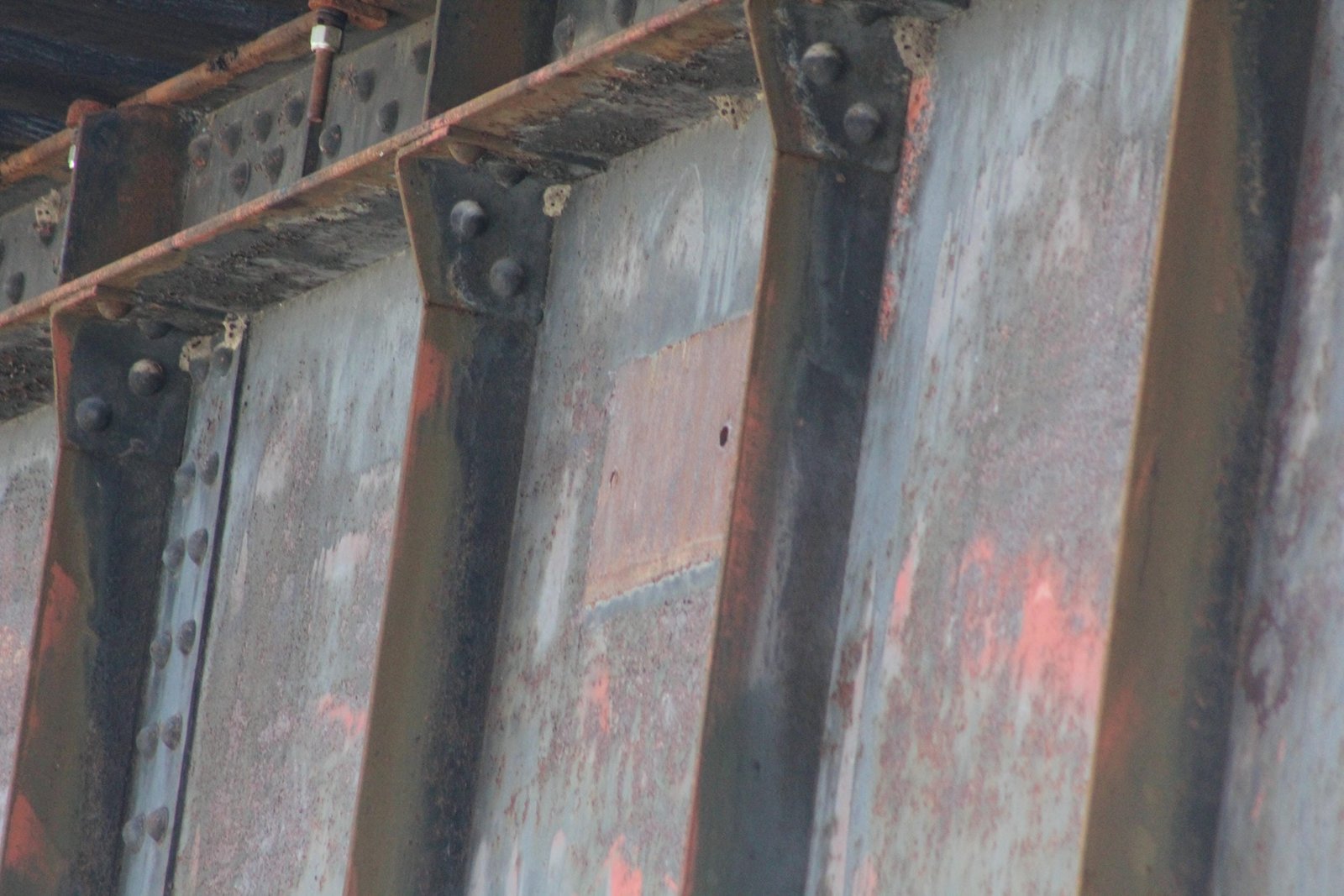
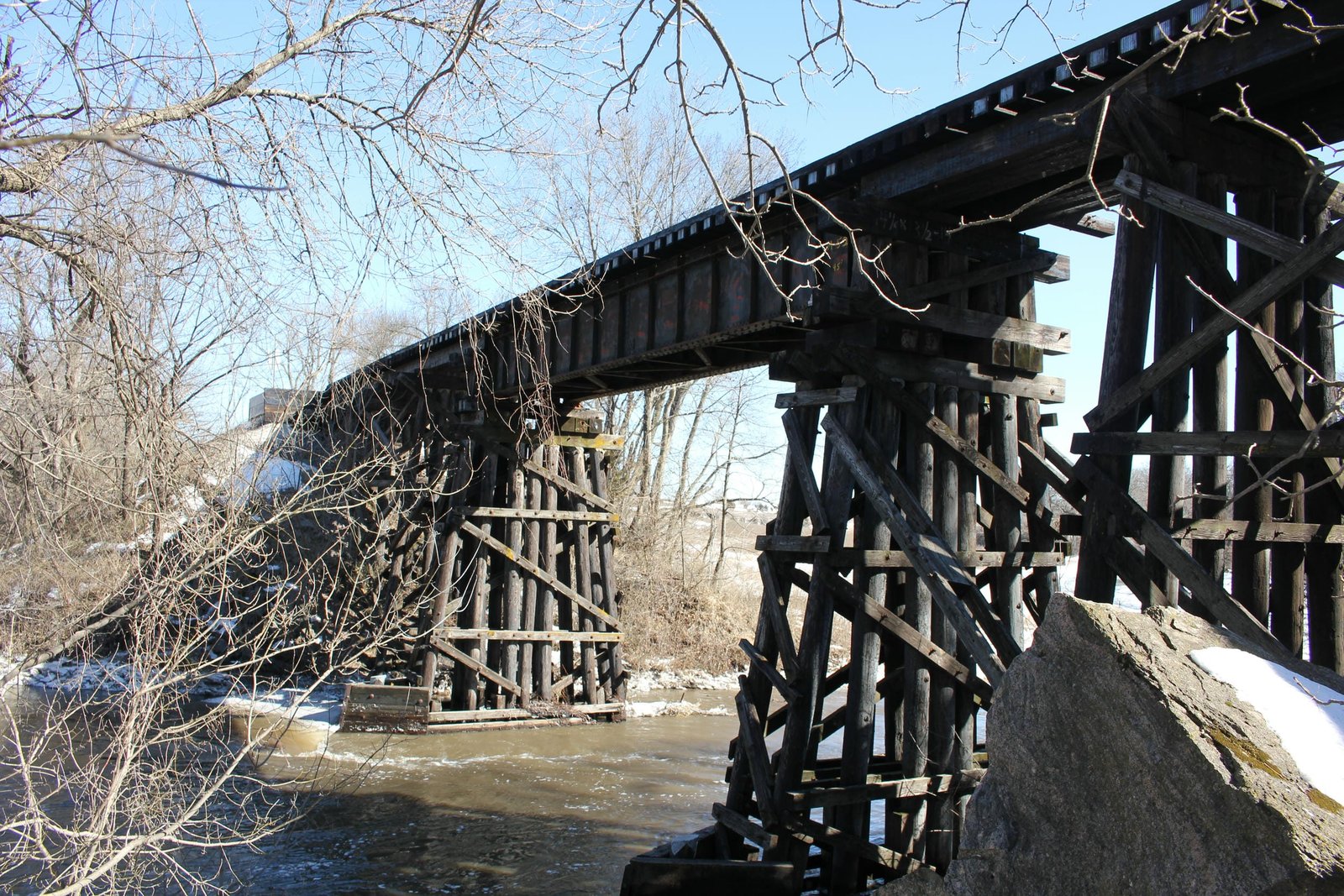
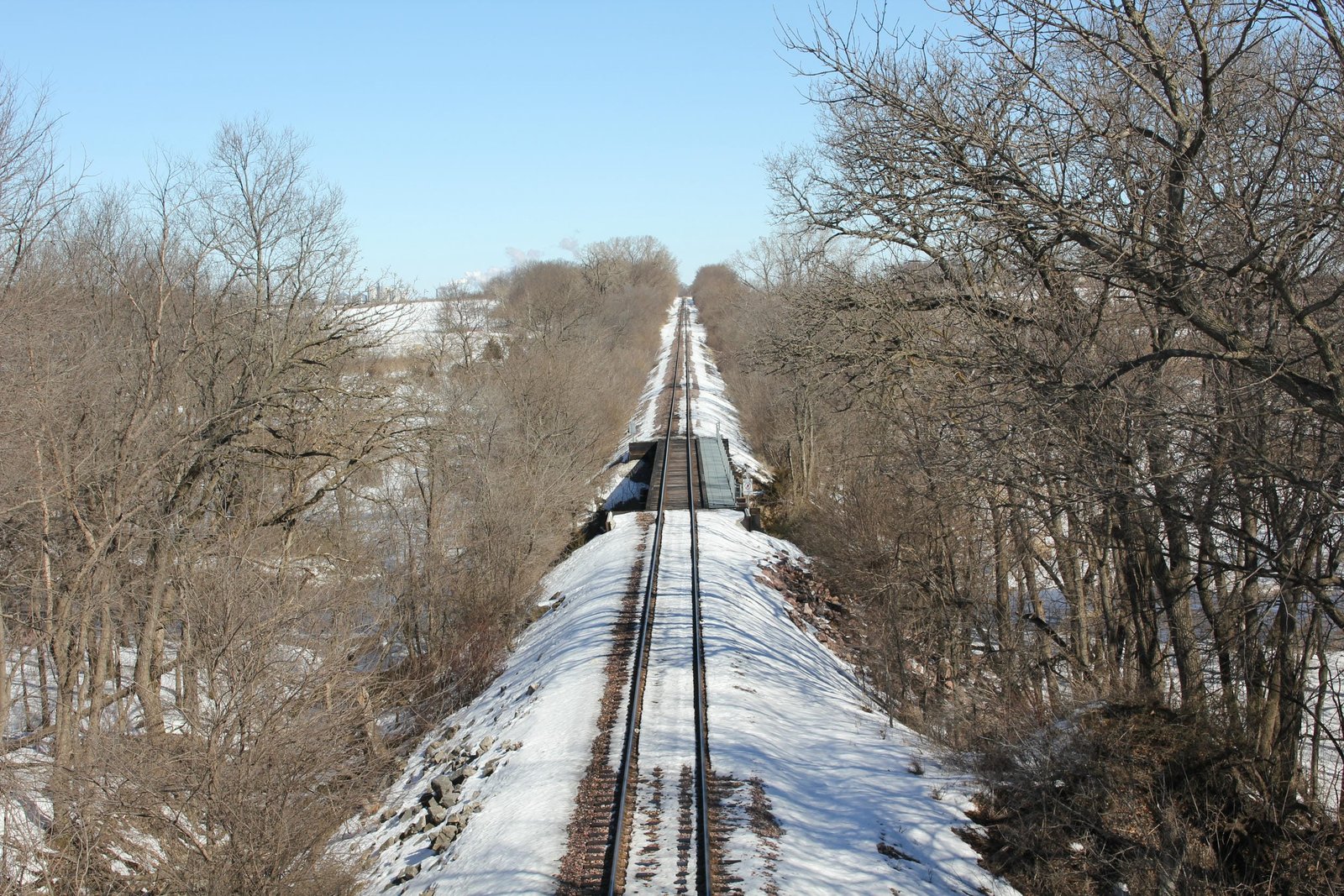
Located near 220th Street north of Moorland, this deck plate girder and timber pile trestle bridge carries a former Chicago & North Western Railway line over the South Branch of Lizard Creek. The first bridge at this location was a timber pile trestle bridge, which was periodically renewed since the initial construction. In the early 1960s, the C&NW began abandoning branch lines in western Iowa, and several steel spans were still in good enough condition for reuse on branch lines. In approximately 1965, the bridge was reconstructed with a secondhand deck plate girder span. Currently, the bridge consists of a 45-foot deck plate girder span, approached by five timber pile trestle spans on the south end and four timber pile trestle spans on the north end. The entire bridge is set onto tall timber substructures. The main span was originally fabricated in 1910 for use at Bridge #S-1662 near Kingsley, Iowa. The superstructure follows a standard design, with two heavy plate girders and an open deck. The substructures also follow a standard design, and are heavily constructed with timber piles. American Bridge Company fabricated the superstructure, while the timber components were constructed by railroad company forces. Railroads often reused steel and iron spans, as it provided a cost effective way to upgrade bridges without requiring large amounts of new material. Deck plate girder spans were popular with railroads, as they were durable and easy to construct. Since the 1960s reconstruction, the bridge has seen no significant alterations, and remains in regular use. Overall, the bridge appears to be in fair condition, with minor deterioration noted to the timber components. The author has ranked this bridge as being locally significant, due to the common design.
Citations
| Fabrication date and builder (superstructure) | Chicago & North Western Railway Valuation Notes at the Chicago & North Western Historical Society Archives |
| Original Location | Stenciling on span |
| Railroad History Citation | ICC Valuation Information, Compiled by Richard S. Steele |