

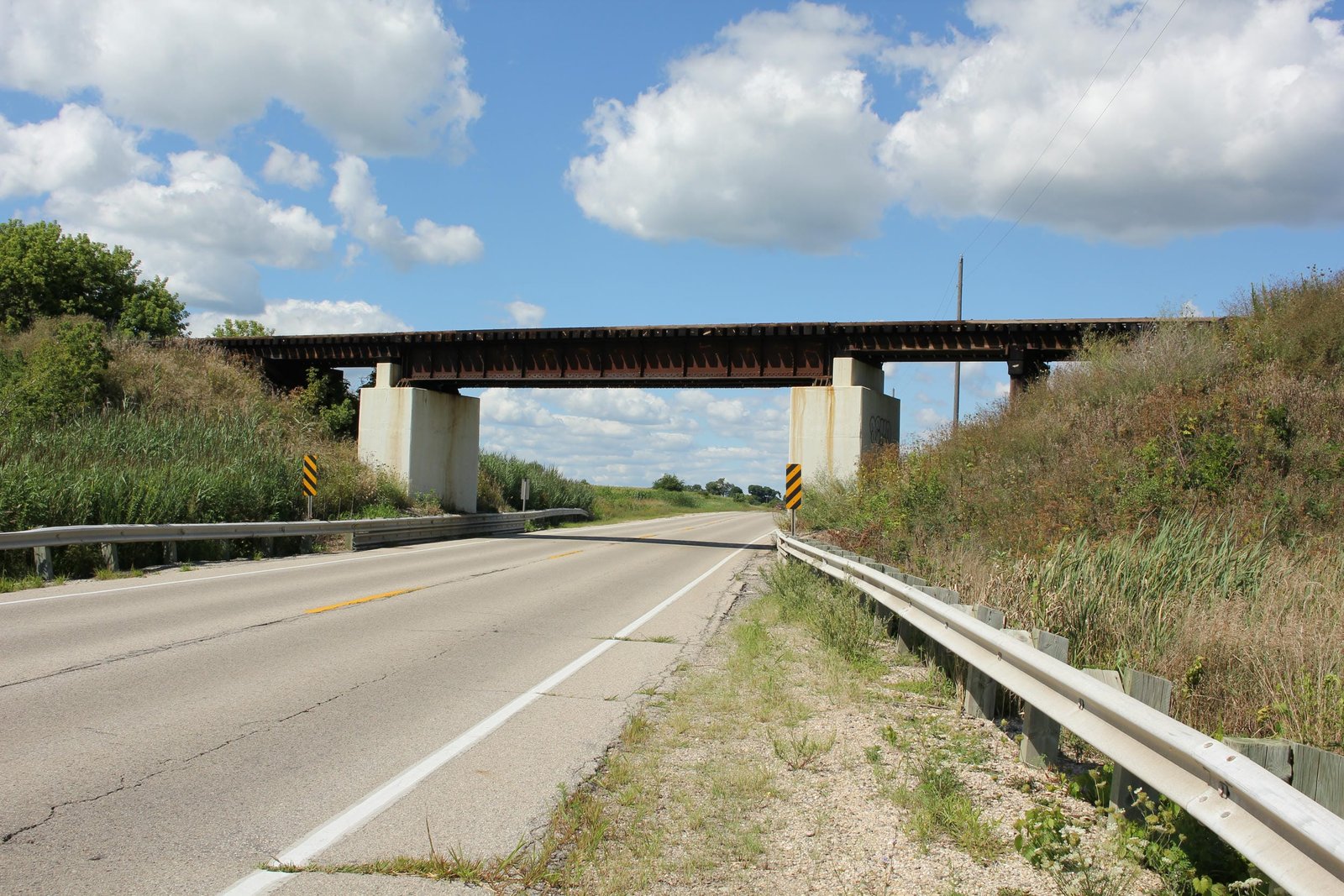
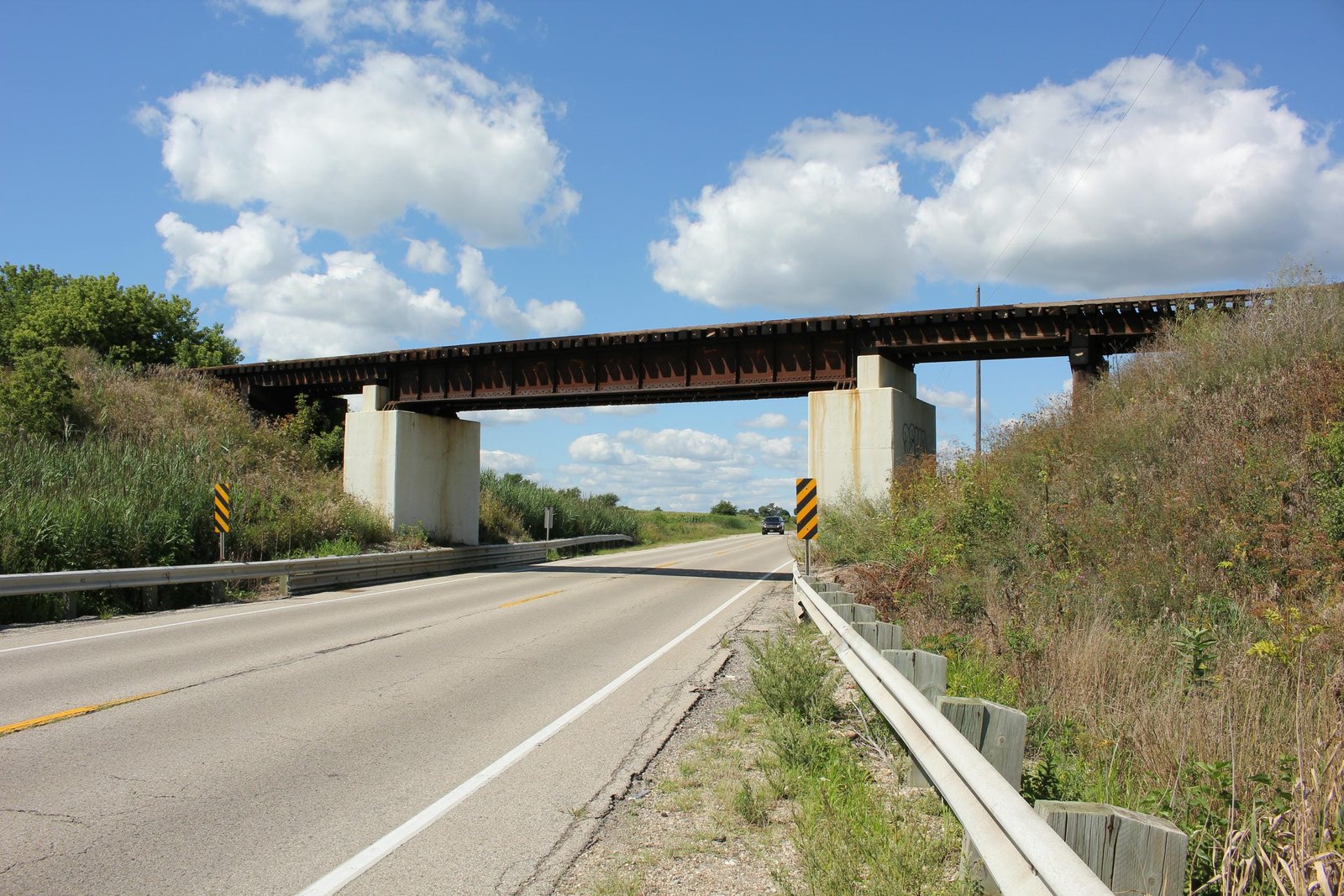
Click the photo to view the full-size version
| Name | WSOR WIS-120 Bridge Chicago, Milwaukee & St. Paul Railway Bridge #A-458 |
| Built By | Chicago, Milwaukee & St. Paul Railway |
| Currently Owned By | State of Wisconsin (Operated by Wisconsin & Southern Railroad) |
| Superstructure Contractor | Unknown |
| Substructure Contractor | Unknown |
| Length | 109 Feet Total, 45 Foot Main Span |
| Width | 1 Track |
| Height Above Ground | 15 Feet (Estimated) |
| Superstructure Design | Deck Plate Girder and Timber Pile Trestle |
| Substructure Design | Concrete and Timber Pile |
| Date Built | 1928, Using Spans Fabricated 1904; Rehabilitated 2013 |
| Original Location | Unknown |
| Traffic Count | 2 Trains/Day (Estimated) |
| Current Status | In Use |
| Chicago, Milwaukee & St. Paul Railway Bridge Number | A-458 |
| Wisconsin & Southern Railroad Bridge Number | A-458 |
| Significance | Local Significance |
| Documentation Date | 8/6/2016; 2/19/2023 |
In 1878, the Libertyville Railway began grading on 3 miles of new railroad, extending from Rondout, Illinois to Fox Lake, Illinois. The railroad would become part of the Chicago, Milwaukee & St. Paul Railway (Milwaukee Road) the same year. The Milwaukee Road would complete the short branch in 1881. At Rondout, the line connected to the existing Milwaukee Road mainline between Chicago and Milwaukee. In 1900, the Milwaukee Road desired to extend the line to connect to Janesville, Wisconsin. In 1900, subsidiary Cook, Lake and McHenry Counties Railway (CLMC), constructed 29 miles between Libertyville and the Wisconsin State Line near Hebron. The same year, another subsidiary, the Janesville & Southeastern Railway, constructed an additional 35 miles into Janesville. The two railroads were merged into the Milwaukee Road in 1901.
This line served as a connection between the mainline at Rondout and other Milwaukee Road lines at Janesville, providing a more direct route from southwest Wisconsin into Chicago. By the 20th Century, the Milwaukee Road had become a prominent railroad
in the United States, operating a network of railroad lines primarily in
the Midwest. The Milwaukee Road was often in financial trouble,
especially after the
costly Pacific Extension was completed in 1909. In 1925, the company
declared bankruptcy, and reorganized as the Chicago, Milwaukee, St. Paul
and Pacific Railroad in 1928. Throughout the 20th Century, conditions on the Milwaukee Road continued
to deteriorate. The railroad entered bankruptcy in 1977, and was forced
to liquidate unprofitable lines. The line from Janesville to Fox Lake was sold to Wisconsin & Southern Railroad in 1980. By 1985, a suitor for the Milwaukee Road was being sought, and the Soo
Line Railroad, controlled by Canadian Pacific Railway (CP) purchased the
Milwaukee Road in 1986. CP merged with
Kansas City Southern
Railway in 2023 to form CPKC. Today, CPKC continues to operate a short segment of this line between Rondout and Fox Lake; while Wisconsin & Southern operates the route from Janesville to Fox Lake. Metra offers a commuter service, the Milwaukee North District, from Rondout to Fox Lake.
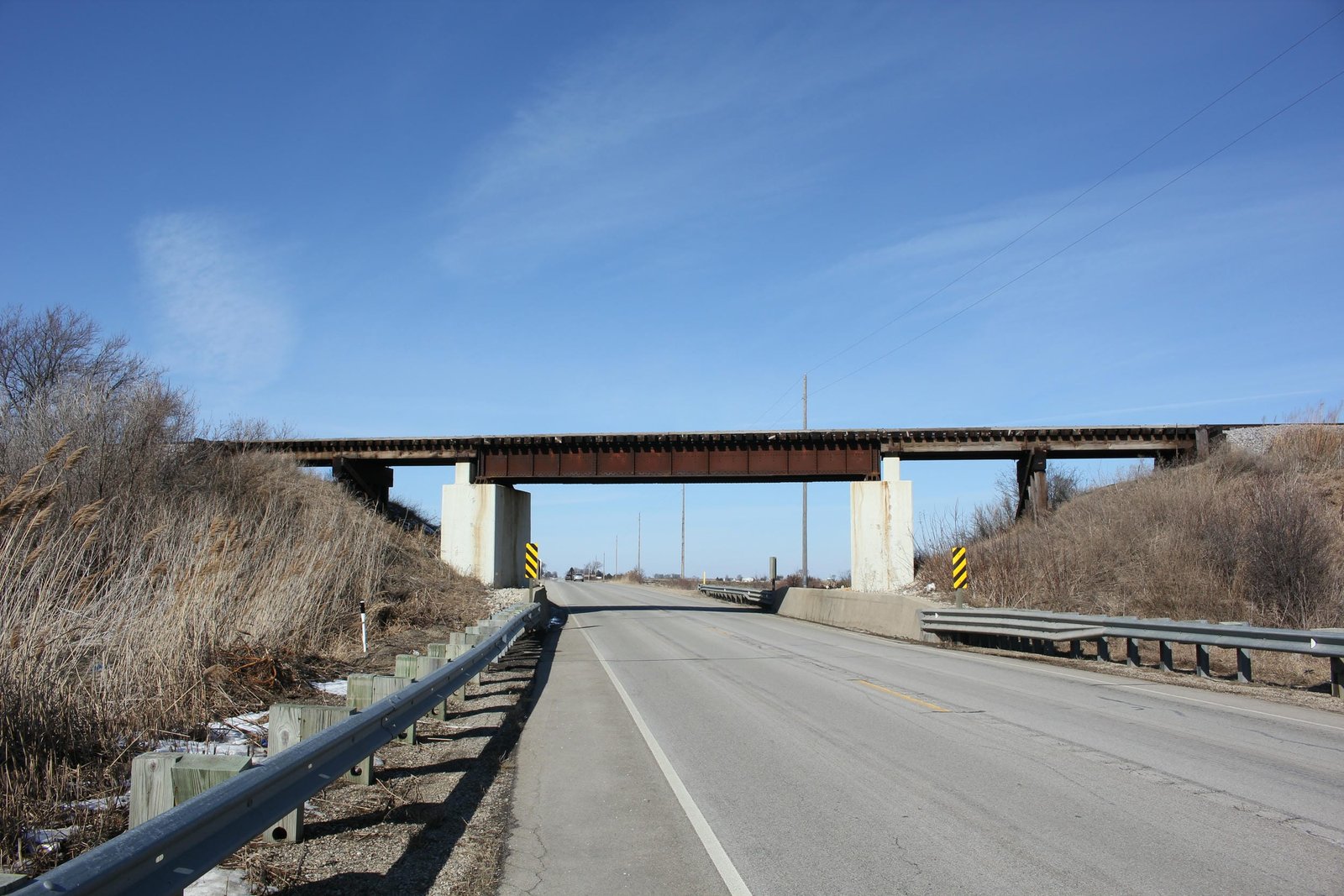
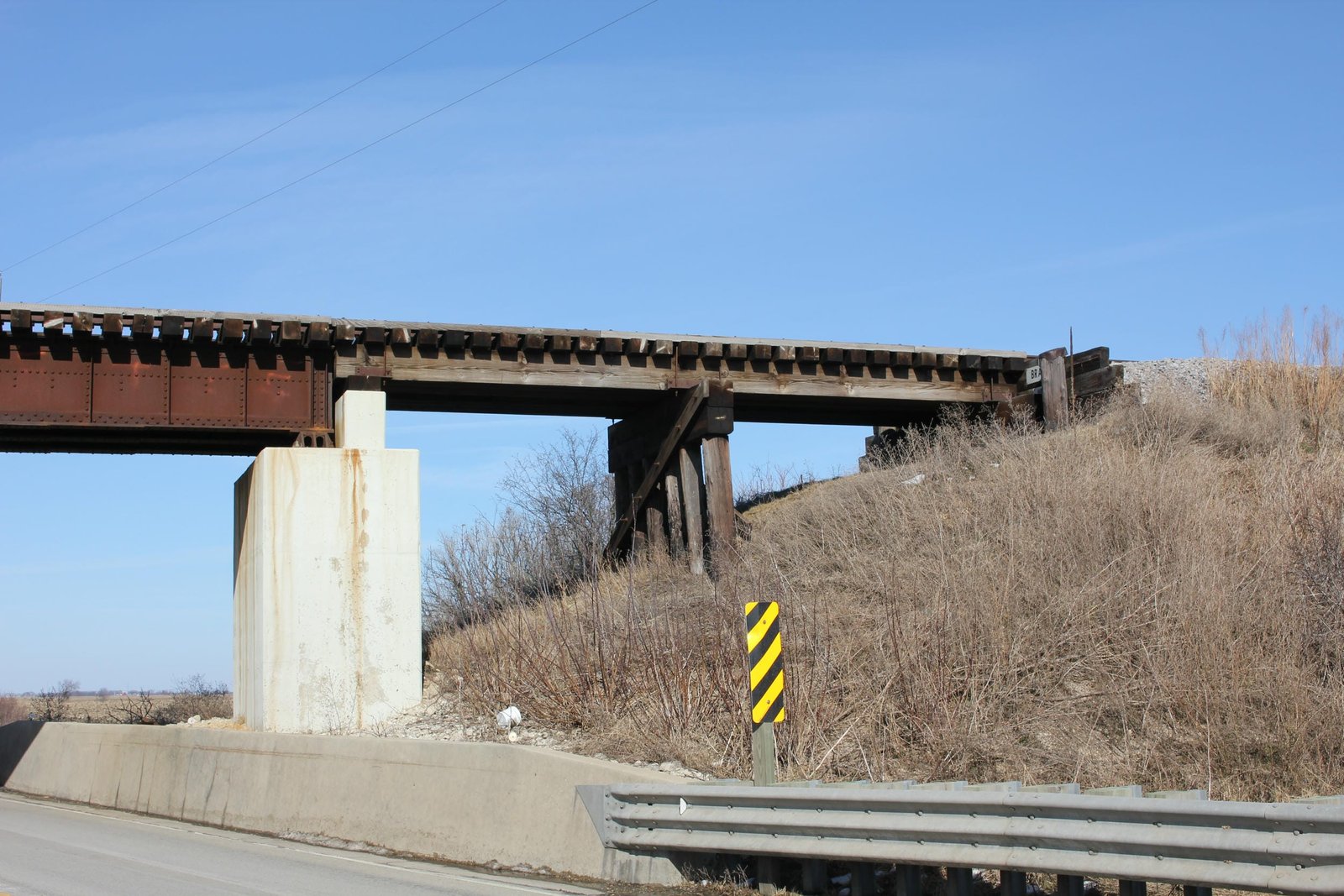
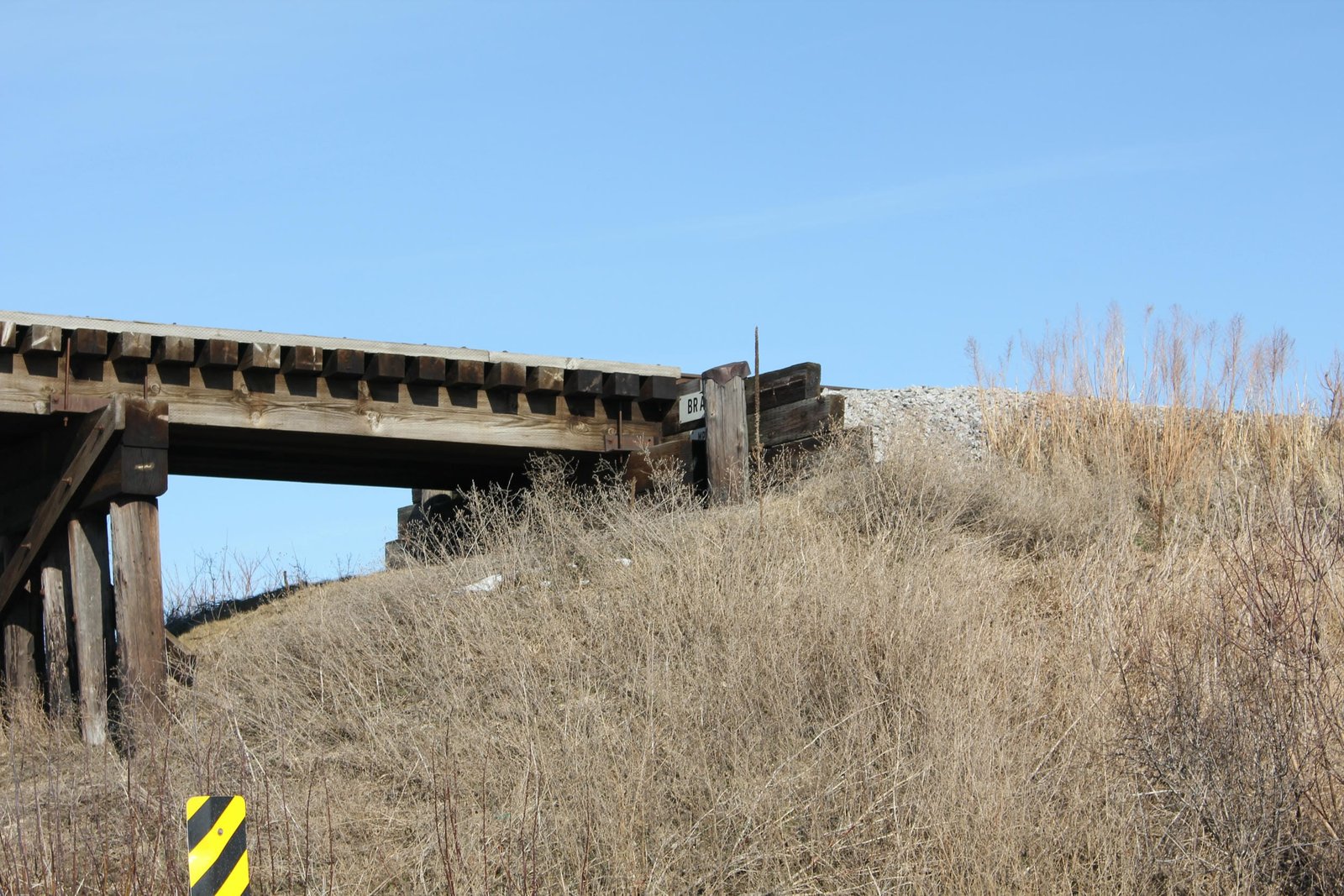
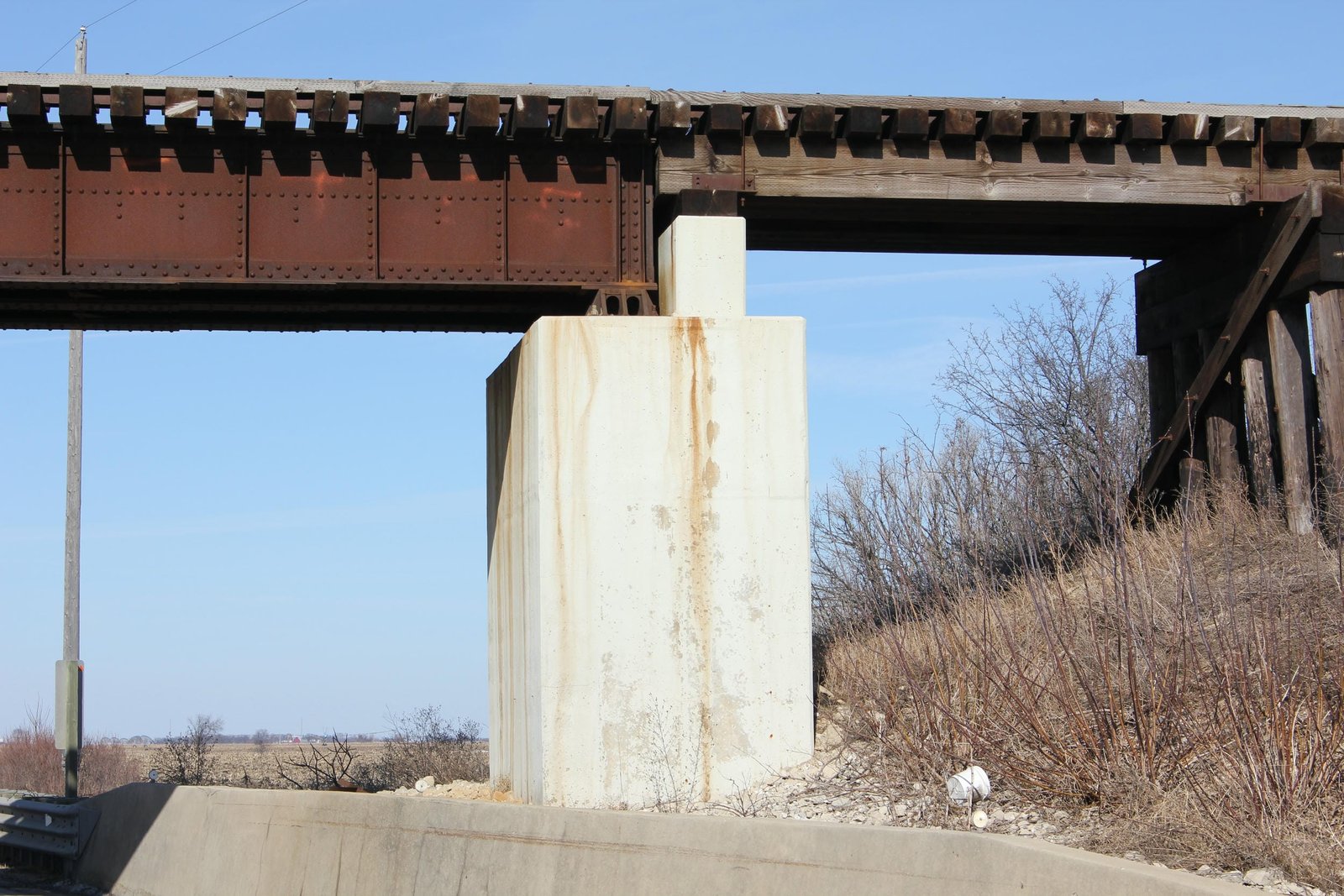
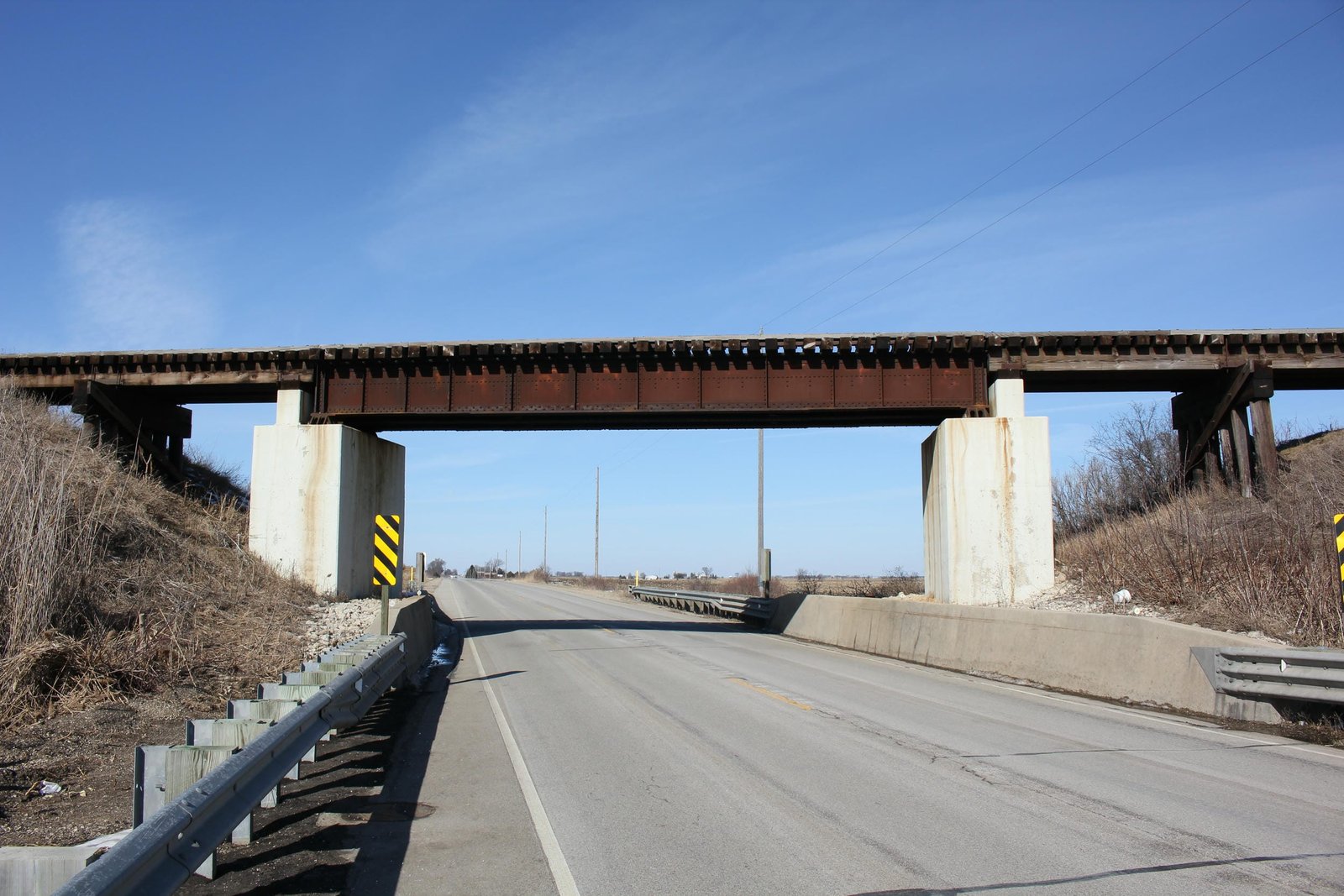
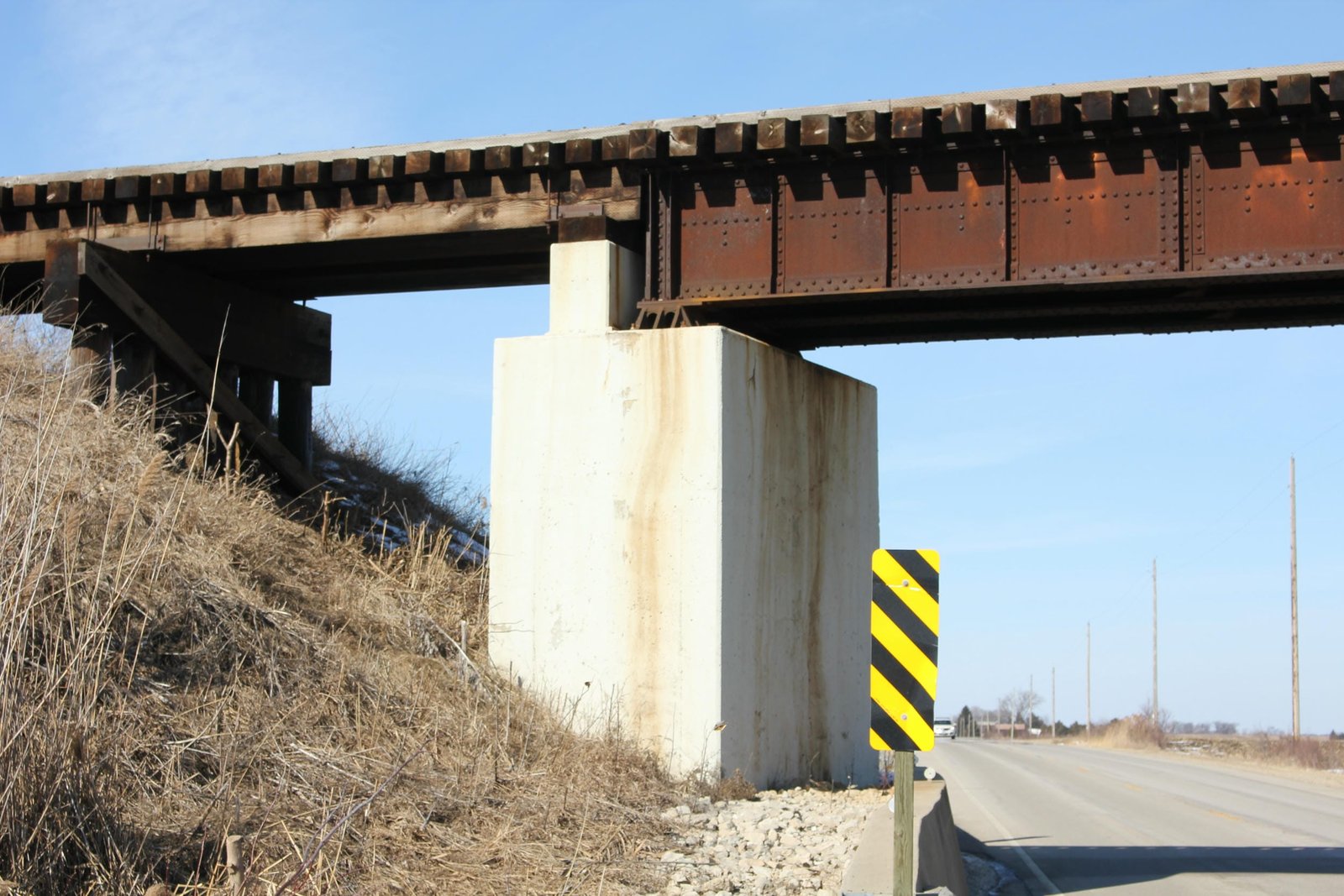
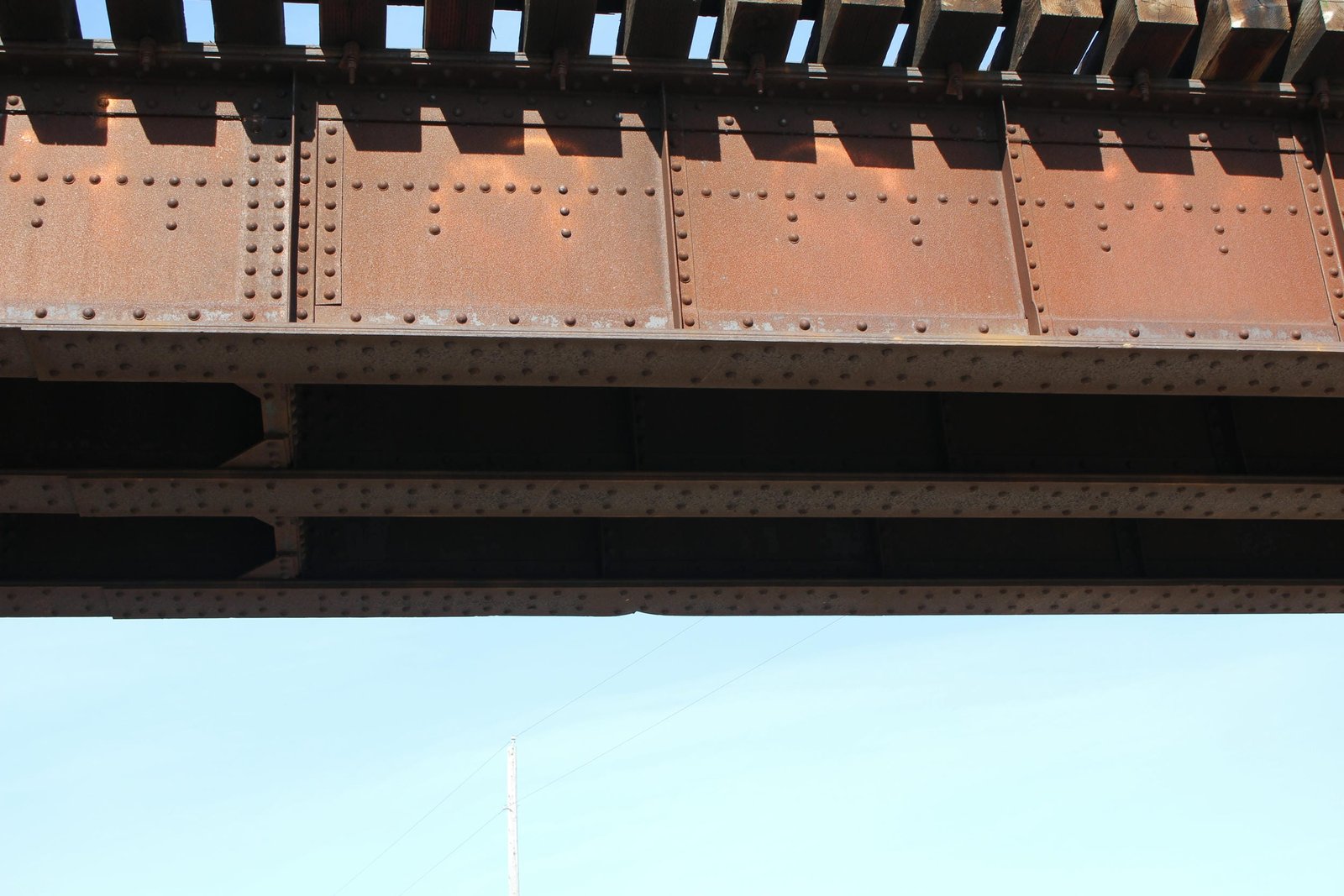
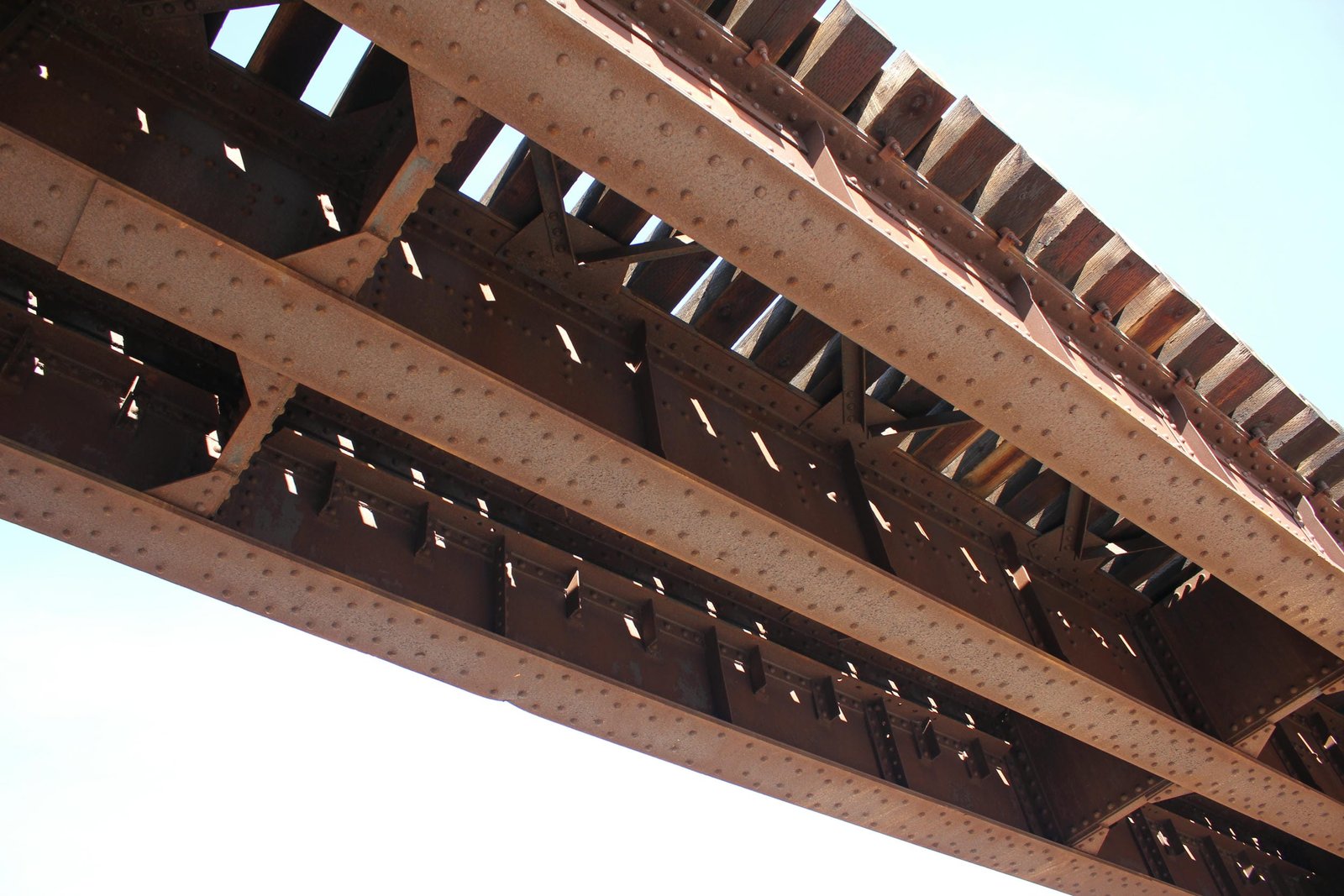
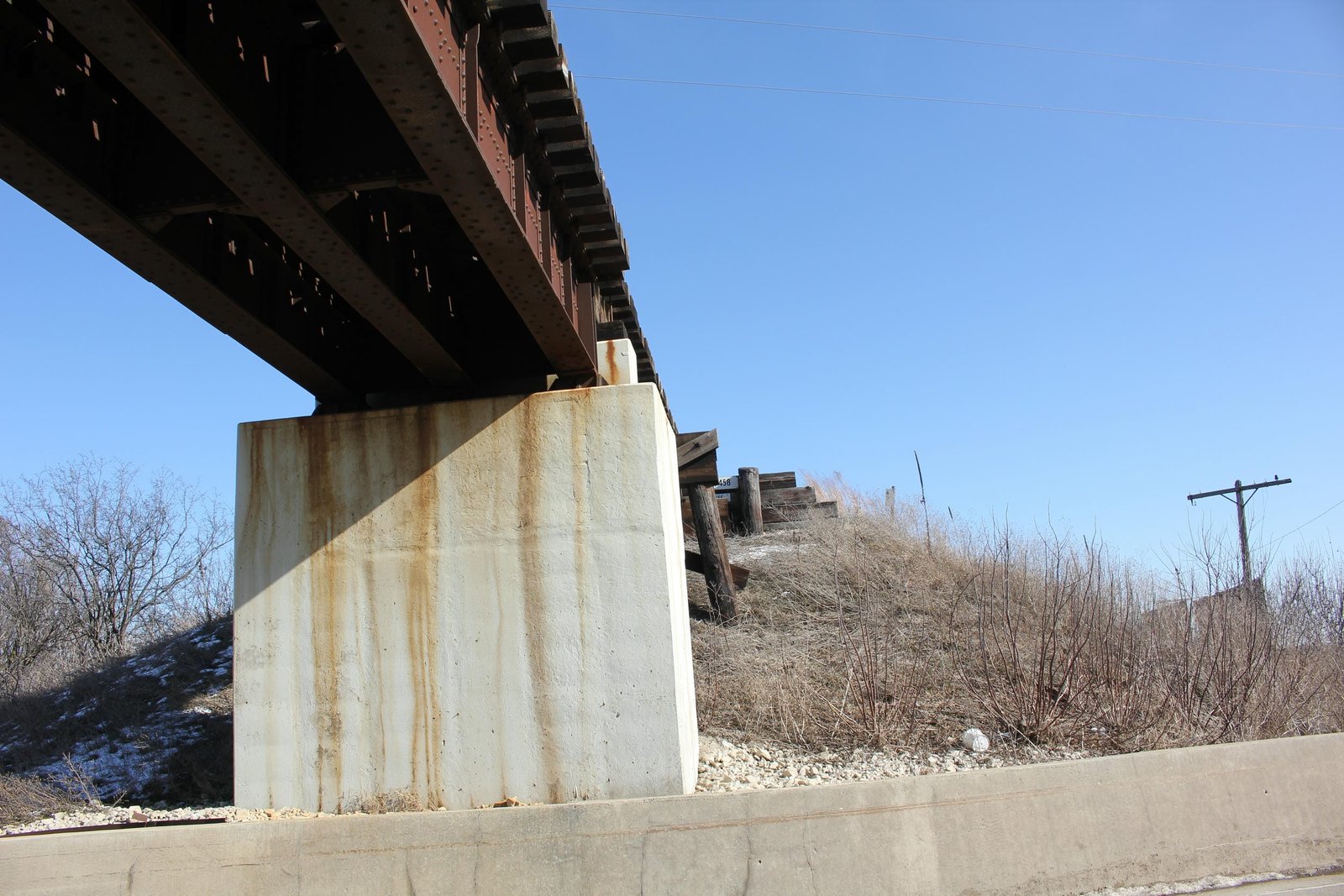
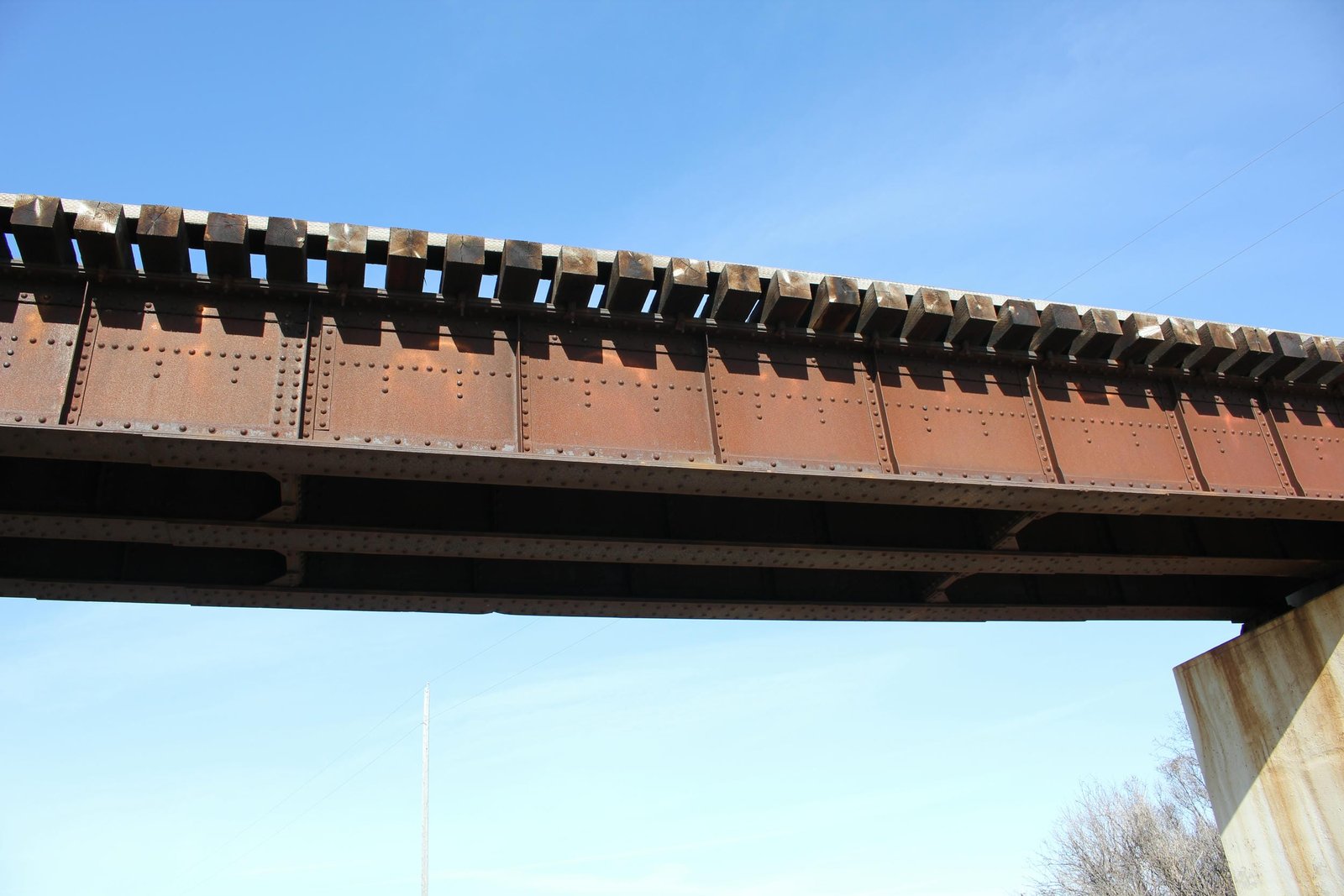
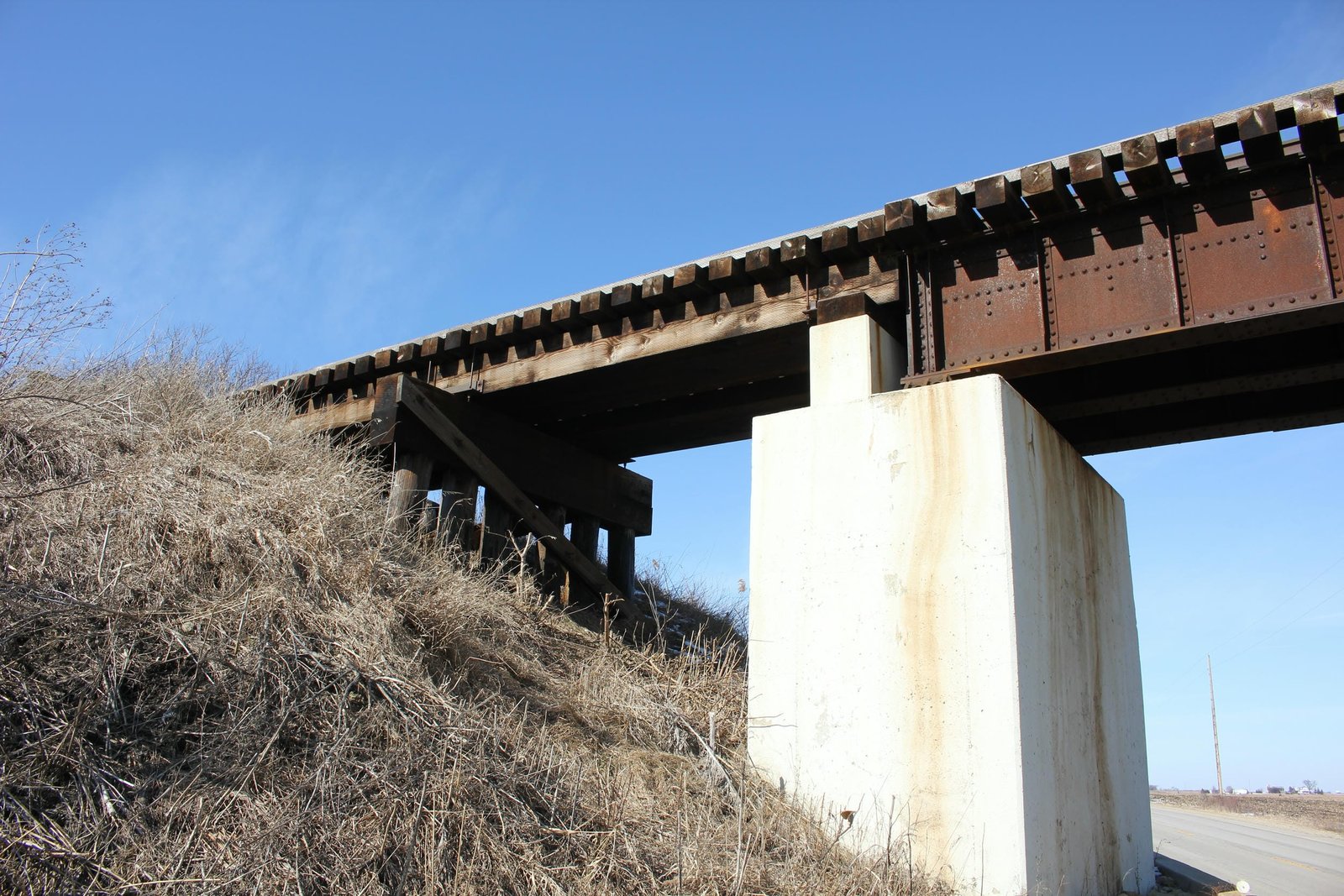
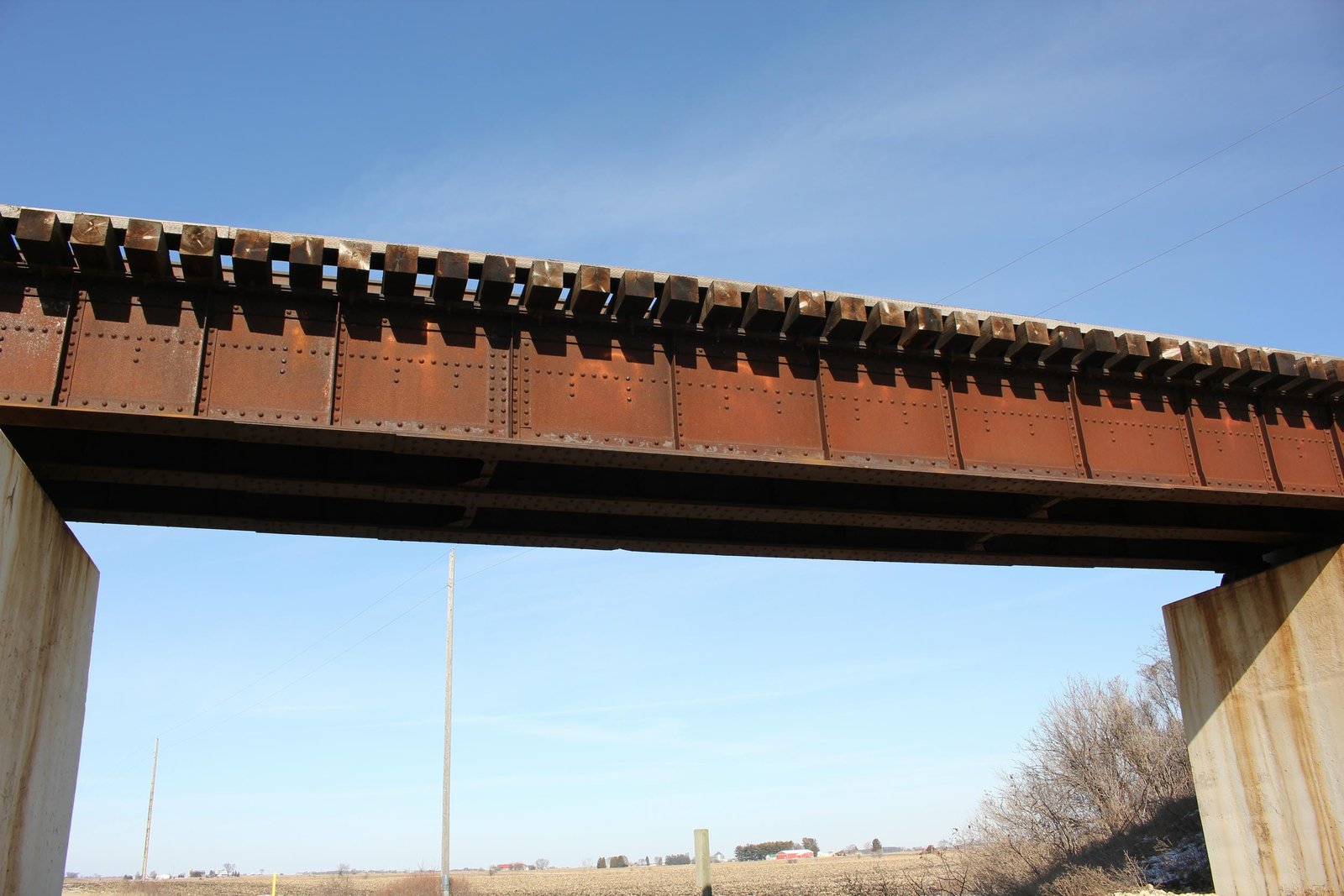
Located east of Zenda, this deck plate girder bridge carries a former Chicago, Milwaukee, St. Paul & Pacific Railroad (Milwaukee Road) line over Wisconsin Highway 120 near the Illinois State Line. The first bridge at this location consisted of a timber pile trestle bridge, constructed when the line was first built. In the late 1920s, the Wisconsin State Highway Commission worked with railroads throughout the state to improve various crossings, often constructing new grade separations. In 1928, the Milwaukee Road led a project to reconstruct the bridge with the present structure. Currently, the bridge consists of a 45-foot deck plate girder span, set onto concrete piers and approached by two timber pile trestle spans on either end. The superstructure uses a modified version of a standard design, with three moderate sized girder lines, connected by altered interior bracing. Railroad records indicate that the girders may have been fabricated in 1904 for use at an unknown location, and reused here in 1928. Using three girder lines is somewhat unusual, and may indicate that this bridge was constructed out of spare parts, and not necessarily an entire bridge span. The girders contain a shelf on the interior, likely indicating that they were originally part of a type "B" through plate girder bridge. The lateral bracing consists of solid plates, and the girder lines are connected by lateral bracing placed immediately under the ties. The concrete piers use a standard rectangular shape, typical of standard Milwaukee Road bridges. An unknown contractor fabricated the superstructure, and it is unknown if the substructure was constructed by an unknown contractor or by railroad company forces. Deck plate girder spans were commonly used by railroads, as they were durable and easy to construct. The Milwaukee Road often strengthened spans by reusing components of another bridge. This method saved costs, and provided a strong and durable finished product. The bridge received a minor rehabilitation in 2013, when the piers were encased with concrete. Overall, the bridge appears to be in fair to good condition, with no significant deterioration noted. The author has ranked the bridge as being locally significant, due to the common design and unknown history.
Citations
| Build dates | Milwaukee Road Bridge Index, located at the Milwaukee Road Archives at the Milwaukee Public Library |
| Railroad History Citation | ICC Valuation Information, Compiled by Richard S. Steele |