







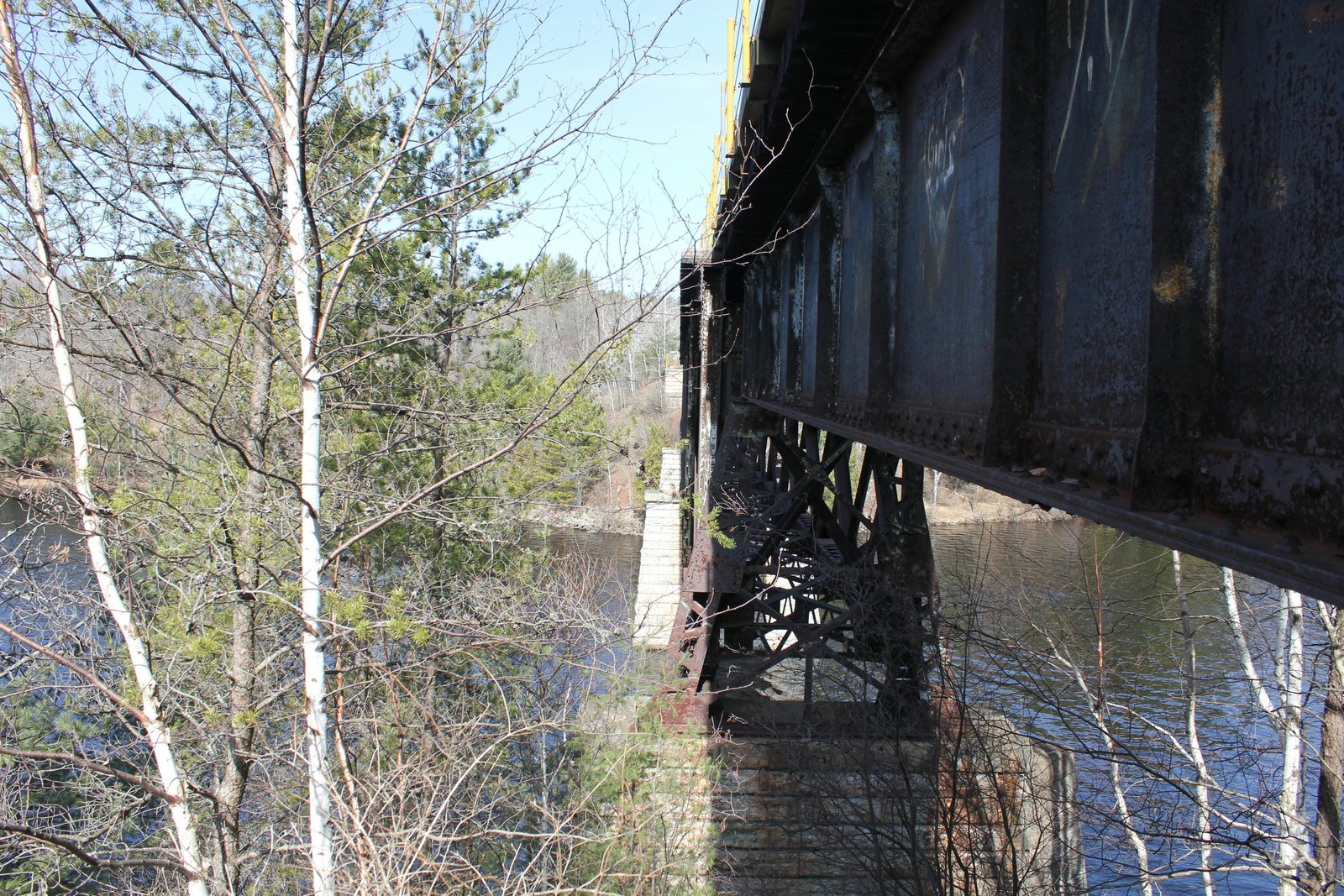

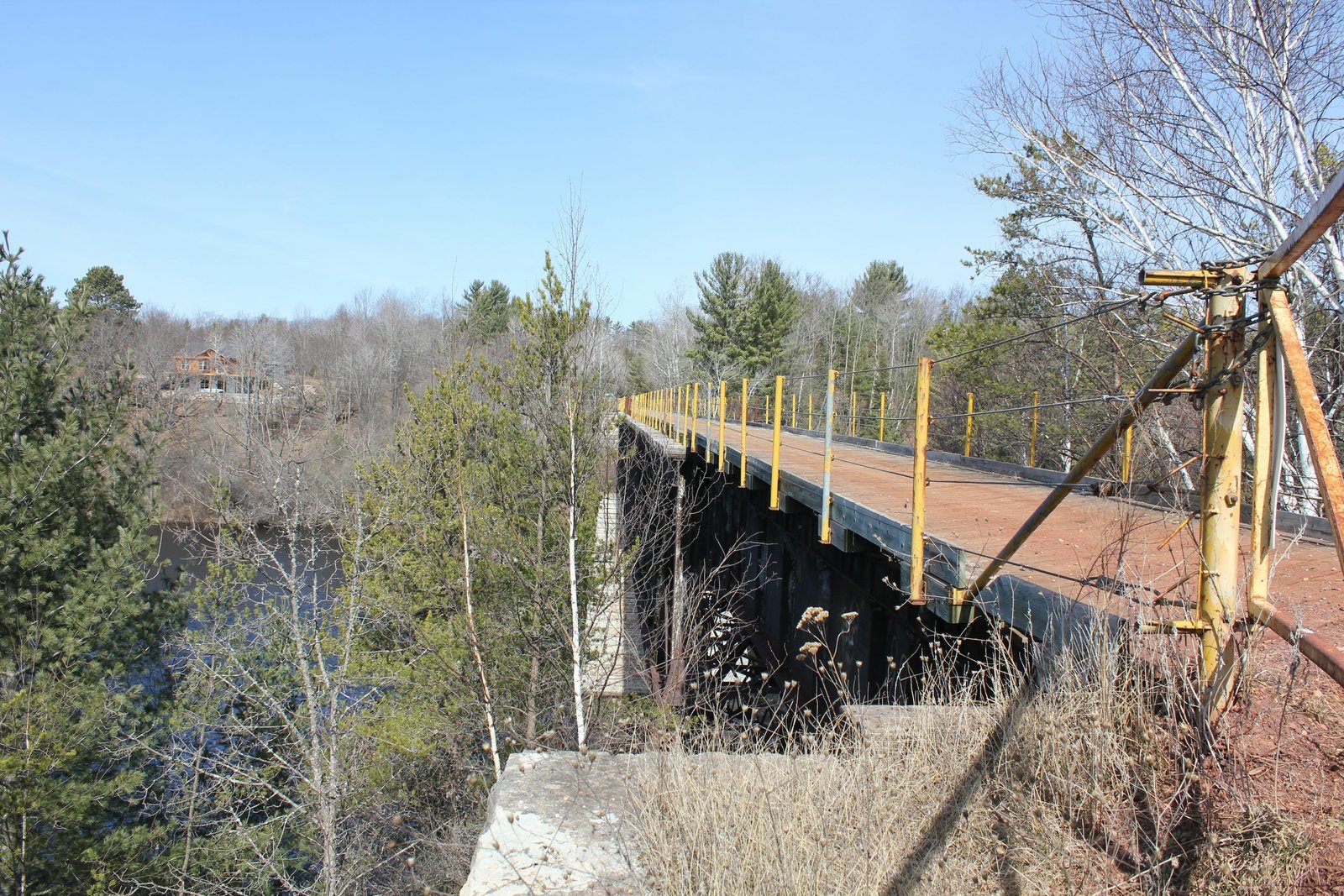
Click the photo to view the full-size version
| Name | Stateline Route - Menominee River Bridge Chicago & North Western Railway Bridge #767 |
| Built By | Chicago & North Western Railway |
| Currently Owned By | Florence County and Dickinson County |
| Superstructure Contractor | American Bridge Company of New York |
| Substructure Contractor | Unknown |
| Length | 386 Feet Total; 128 Foot Main Spans |
| Width | 1 Track |
| Height Above Ground | 40 Feet (Estimated) |
| Superstructure Design | Double Intersection Warren Deck Truss and Deck Plate Girder |
| Substructure Design | Stone Masonry |
| Date Built | 1911 (Approach Spans) 1913 (Truss Spans) |
| Traffic Count | 0 Trains/Day (Bridge Is Open to Off-Road Vehicle Traffic) |
| Current Status | Open to Off-Road Vehicle Traffic |
| Chicago & North Western Railway Bridge Number | 767 |
| Significance | Moderate Significance |
| Documentation Date | 3/29/2016 |
In 1877, the Menominee River Railroad (MRR) constructed 25 miles of new railroad, extending from Powers, Michigan to Qinnesec, Michigan. In 1880, the MRR was reorganized with the same name. In 1880, an additional 17 miles would be constructed to Florence, Wisconsin, followed by an additional 20 miles to Iron River, Michigan in 1882. In 1882, the MRR was acquired by the Chicago & North Western Railway (C&NW). In 1887, the Iron River Railway (IR) constructed 35 additional miles between Iron River and Watersmeet, Michigan, where it met another railroad line. The IR was acquired by the C&NW in 1889. This line served as a secondary line for the C&NW, connecting numerous branches and spurs throughout the southern portion of the Upper Peninsula. The line mainly served iron mines and timber industry in the area.
By the early 20th Century, the C&NW had constructed and acquired a large railroad network throughout the Midwest, making it one of the premiere railroads of the area. Throughout the first half of the 20th Century, this line remained well used by the C&NW, as it provided connections to a number of lines throughout northeast Wisconsin and the Upper Peninsula of Michigan. The line served a variety of industries, hosted passenger trains and was used for hauling iron ore. A portion of the line between Antoine, Michigan and Watersmeet was abandoned in 1983, and acquired for trail use. The C&NW was acquired by Union Pacific Railroad (UP) in 1995. UP soon began to sell or abandon excess tracks acquired from the C&NW. The line from Powers to Antoine was sold to a subsidiary of Wisconsin Central, Ltd. (WC). In 2001, WC was purchased by Canadian National Railway (CN), and became the American subsidiary of the railroad. Today, CN continues to operate the line between Powers and Antoine as the Iron Mountain Subdivision. An ATV/snowmobile trail currently uses the railroad grade from Antoine to Watersmeet.
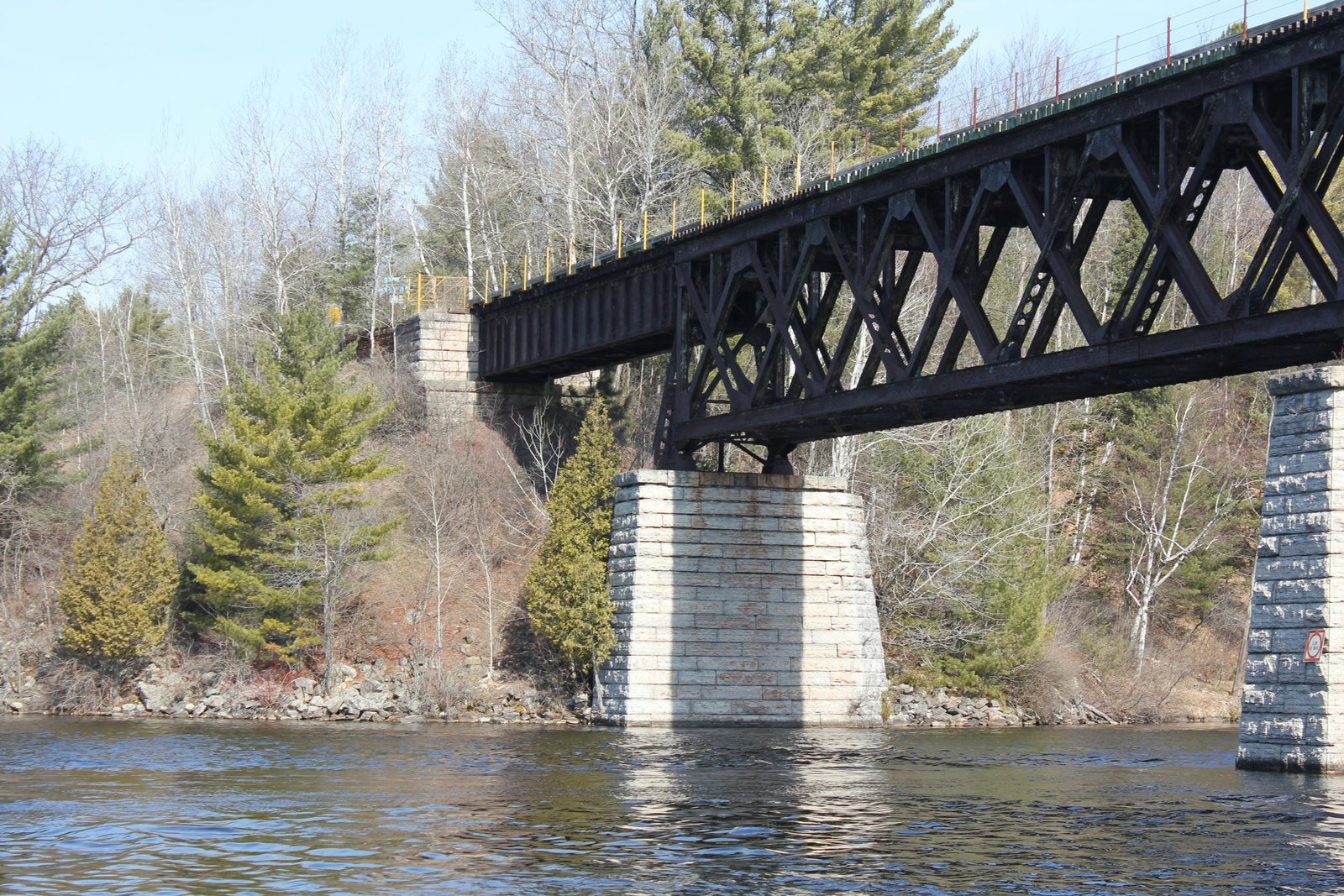
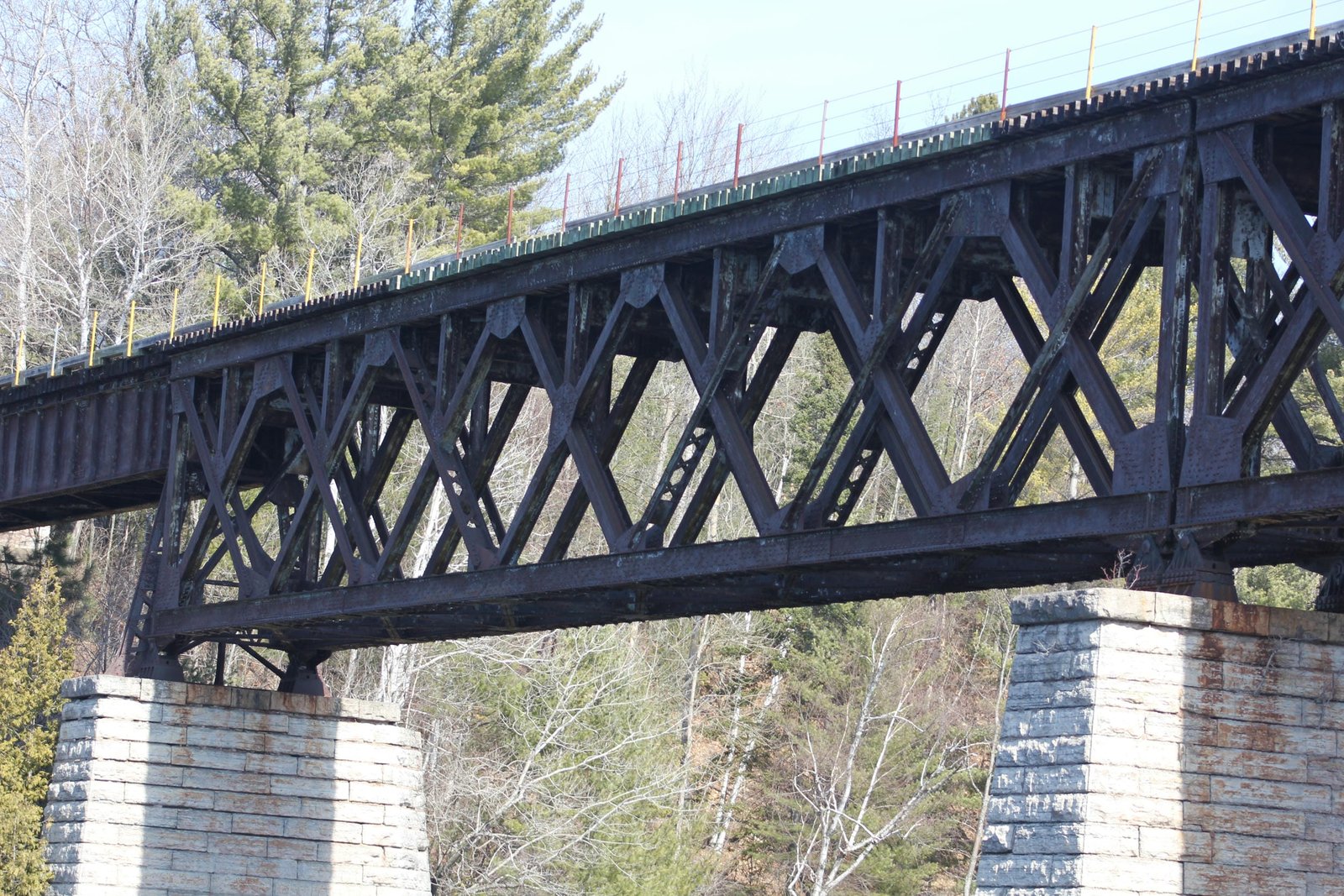
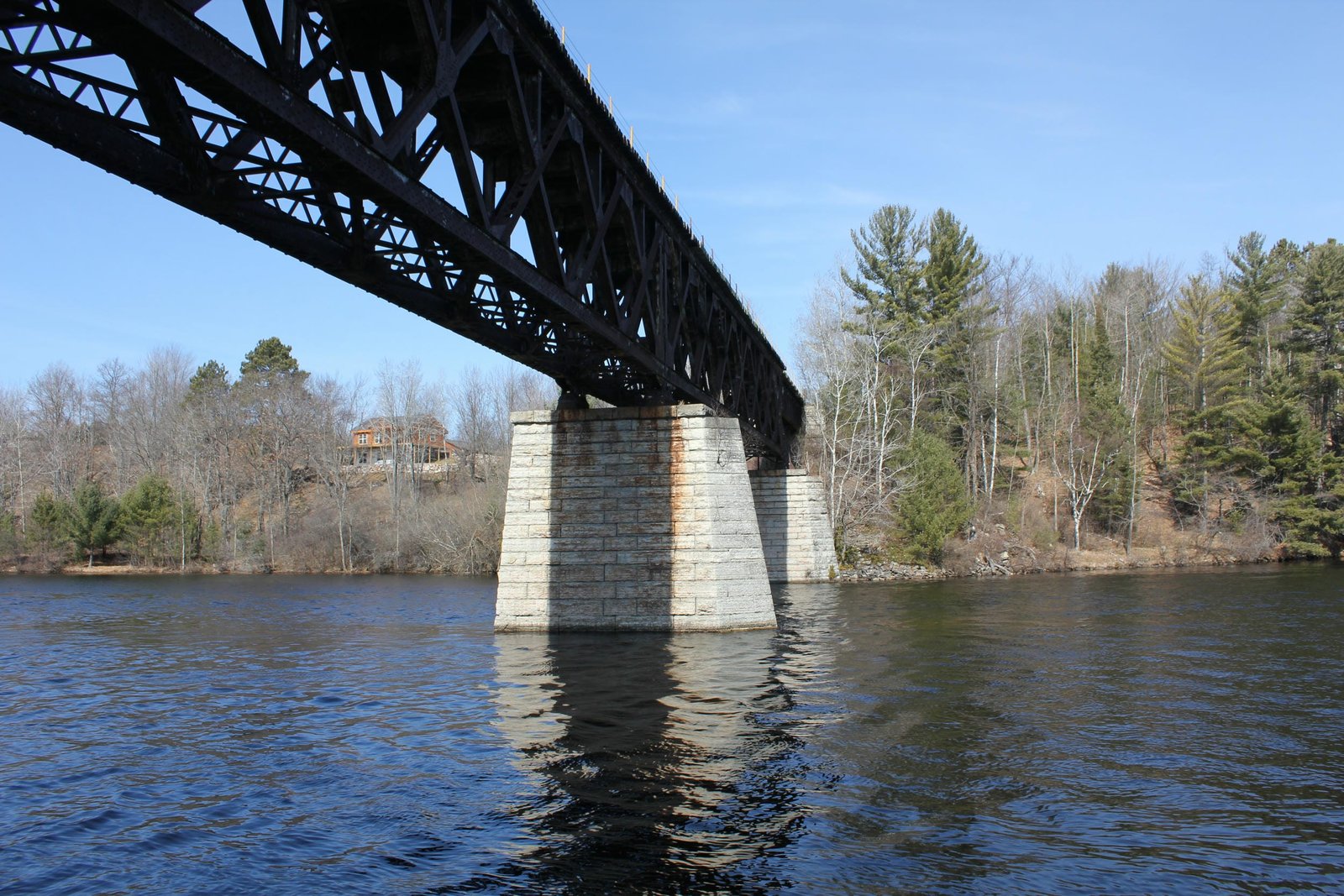
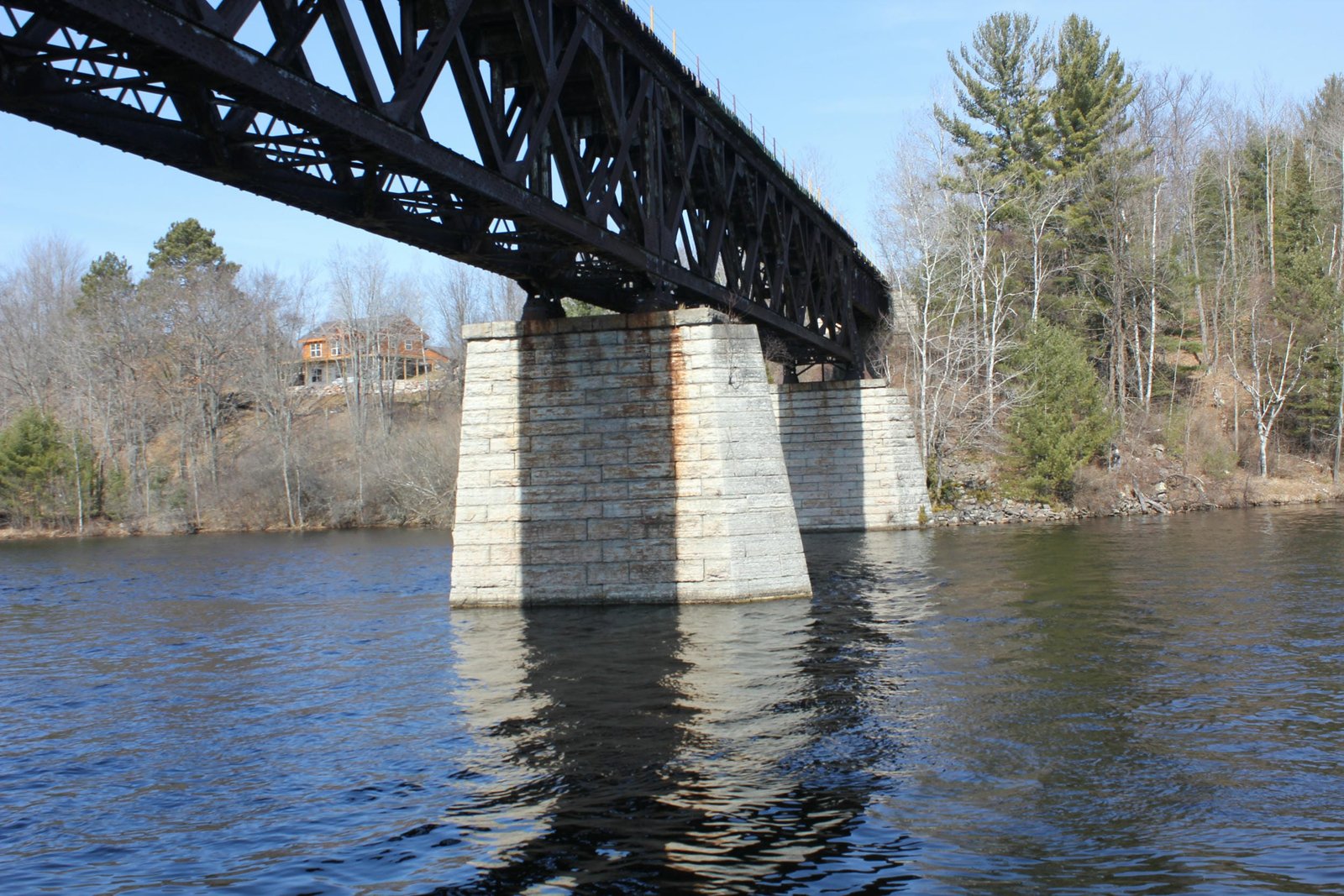
Located northwest of Iron Mountain near the former railroad station of Antoine, this large deck truss bridge carries a former Chicago & North Western Railway line across the Menominee River. The first bridge at this location likely consisted of a wooden deck truss bridge, set onto timber substructures. In 1900, the bridge was rebuilt with a similar structure, and new stone piers were constructed. By the early 20th Century, wooden truss bridges had become unsuitable for most railroad use, and the bridge would require replacement. Between 1911 and 1913, the bridge was replaced with the present structure. Currently, the bridge consists of two 128-foot, 14-panel, riveted double intersection Warren deck truss spans, approached by a 60-foot deck plate girder span on the east end and a 70-foot deck plate girder span on the west end. The entire bridge is set onto large stone substructures. It is unclear if the bridge was constructed all at once, or if the trusses and approaches were built separately. The approaches were fabricated in 1911, while the trusses were fabricated in 1913. It is also unclear if the present stone substructures were built for the present bridge, or if they were reused from the previous structure.
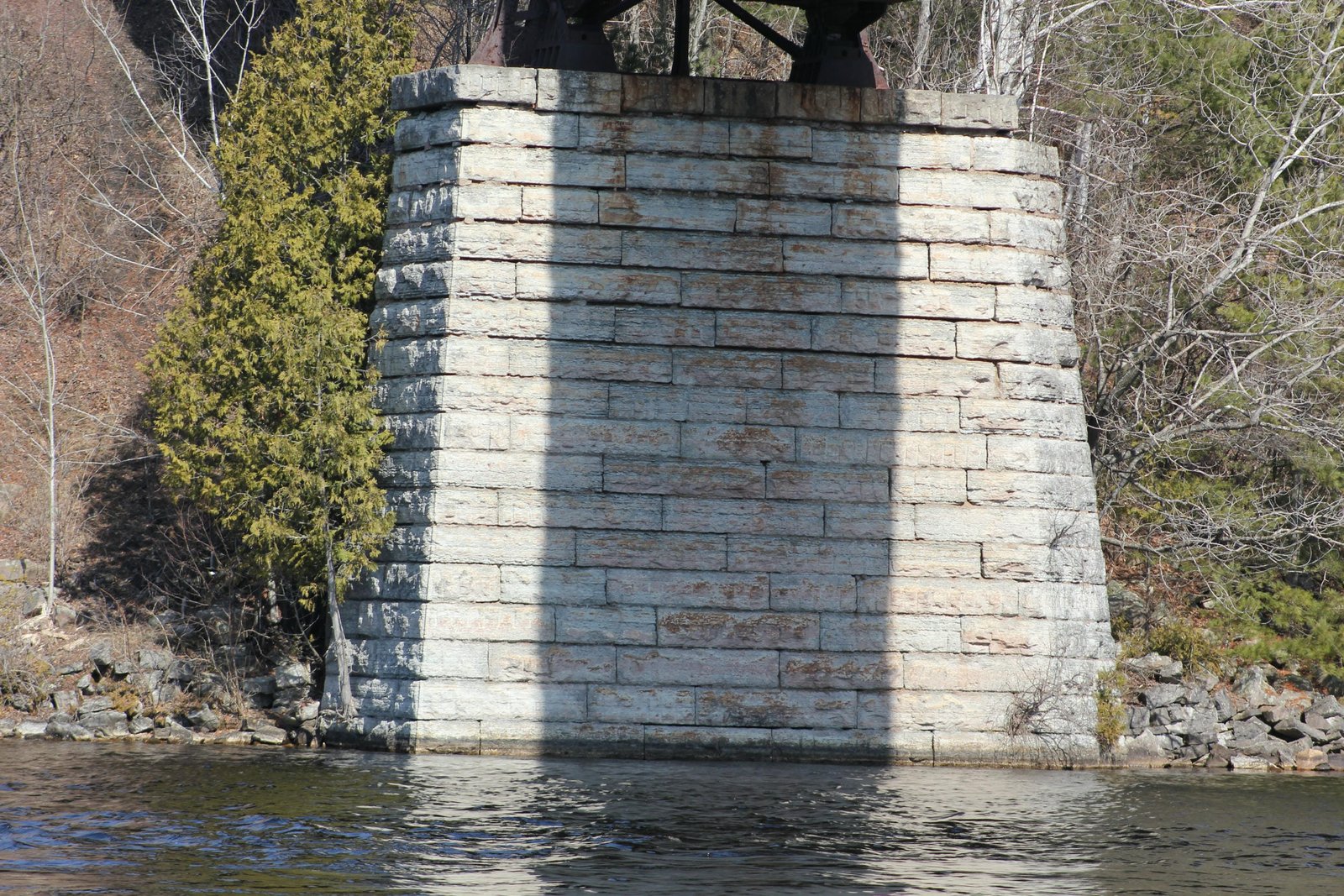
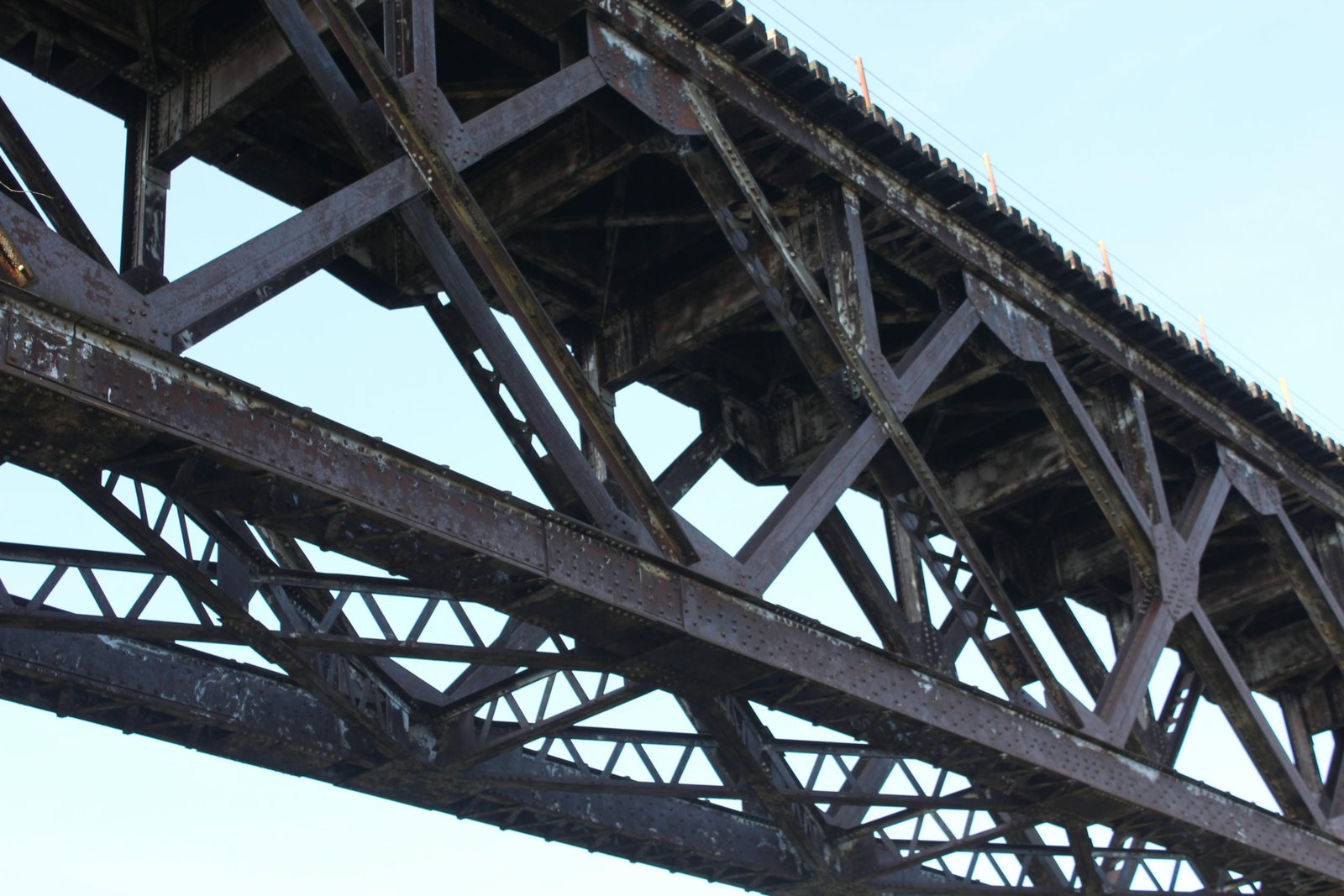
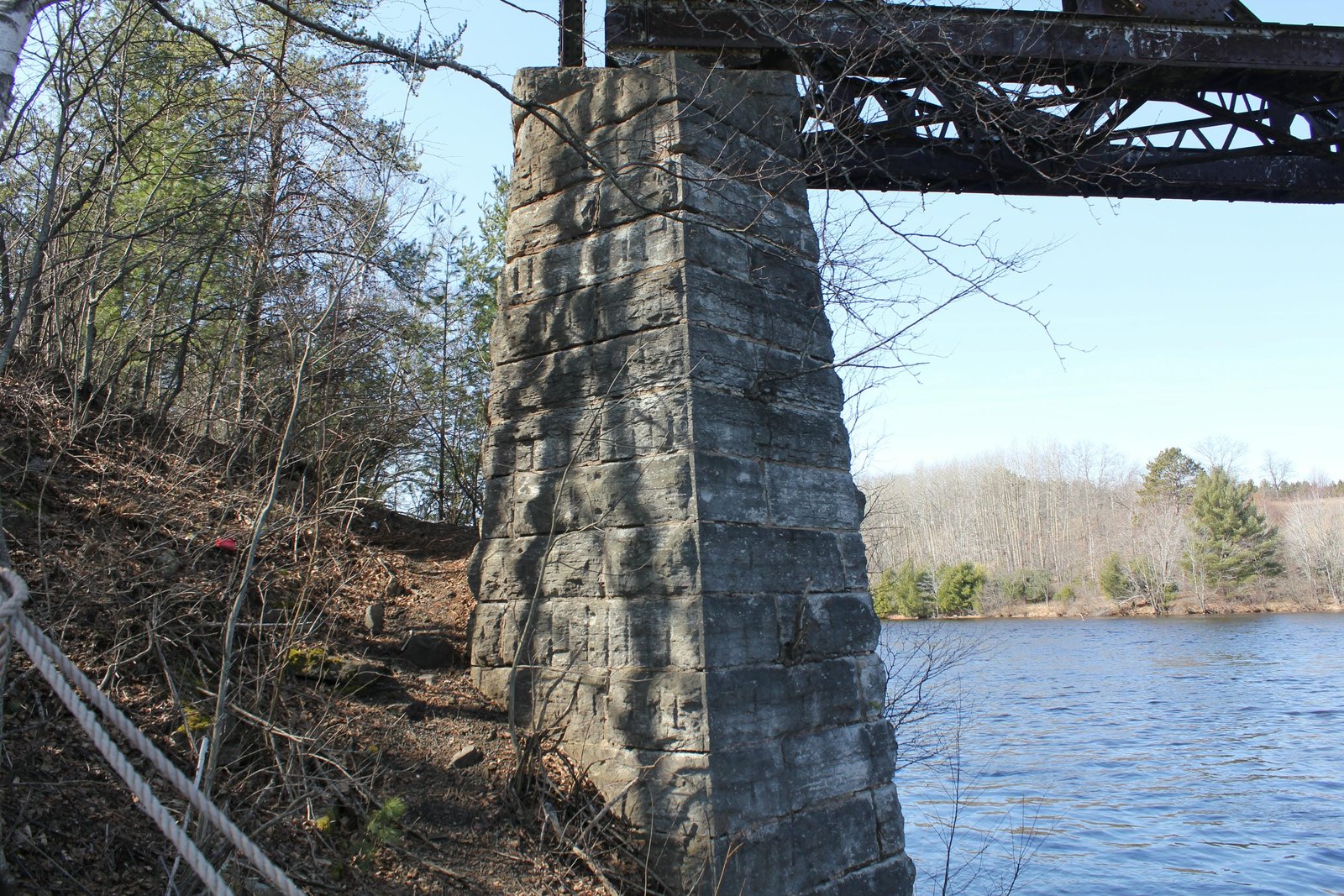
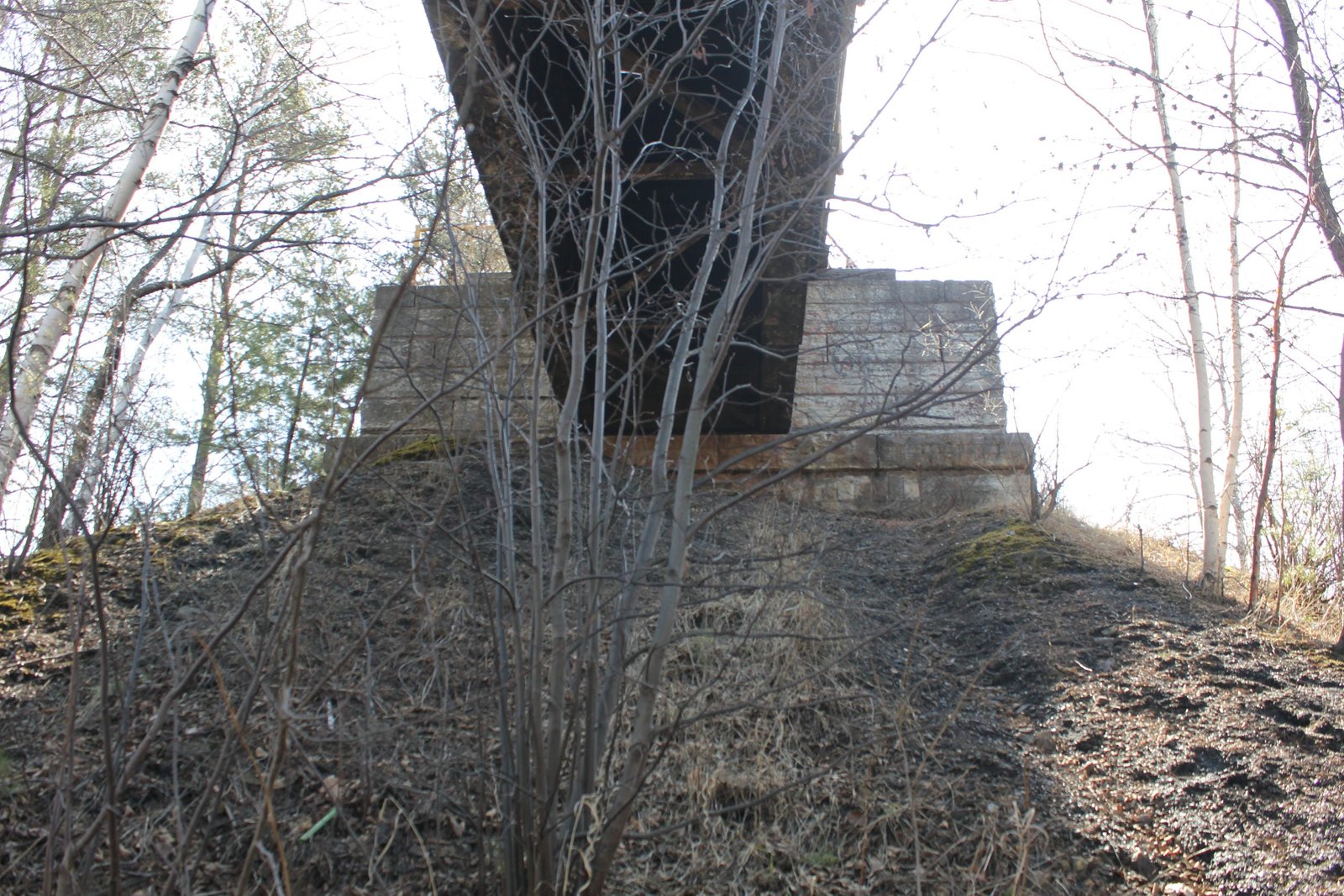
The truss spans use a heavily constructed variant of the double intersection Warren deck truss design, with massive members and additional vertical members connecting the center of the panels to the top chord. Large built-up beams are used for both the top chord and bottom chord, which are constructed a combination of plates and V-lacing. Three different styles of steel are used for the diagonal and vertical members, which consist of heavy X-laced beams, built-up rolled beams and steel bars. The floor system follows a standard design, with two widely set plate girder stringers and plate girder floorbeams. Unique to this bridge, the deck rests on both the stringers and the top chords of the trusses. The upper lateral bracing is composed of steel bars, while the lower lateral bracing is composed of V-laced beams. With the exception of at the outer floorbeams, there does not appear to be a transverse lateral bracing connecting the two truss lines. The approach spans follow a standard design, and are composed of two heavy plate girders with an open floor. The piers use a standard rectangular shape, which is angled on the upstream side. The abutments use a U-shape, with wing walls extending parallel to the track behind the abutment. Stone for the substructures appears to have been quarried at Duck Creek, Wisconsin; and consists of a white limestone. American Bridge Company fabricated both the main spans and the approach spans, with the main spans having been constructed at the Detroit plant. An unknown contractor constructed the substructures.
While lattice truss spans were relatively uncommon through the United States, the C&NW used the design extensively. Other railroads in the Midwest also occasionally used the design, although not as frequently. Engineers for the C&NW favored the design, due to its resilience and greater strength without sacrificing economy. Metal lattice deck truss designs were initially developed for railroad use in the 1870s, often using deep spans with numerous intersections. Through the mid-1880s, short to medium length spans were simplified into double intersection spans. By the 20th Century, the design had been refined further, and was constructed using significantly heavier members. Later modifications included the addition of a vertical member at the mid-panel point, as seen on this bridge. While most railroads stopped using lattice trusses in the early 20th Century, the C&NW continued to use lattice truss designs nearly exclusively into the 1920s. Since the initial construction, the bridge has seen no significant alterations. A wooden deck and cable railings have been added to the bridge, and it now serves as part of the Stateline Route, an ATV/ORV trail. Overall, the bridge appears to be in fair to good condition, with no significant deterioration noted. The author has ranked this bridge as being moderately significant, due to the truss design.
Citations
| Builder and build date (main spans) | Chicago & North Western Railway Valuation Notes at the Chicago & North Western Historical Society Archives |
| Builder and build date (approach spans) | American Bridge Company plaque |
| Railroad History Citation | ICC Valuation Information, Compiled by Richard S. Steele |