
Click the photo to view the full-size version
| Name | Lush Street Swing Bridge Chicago, Milwaukee & St. Paul Railway Bridge #U-728 |
| Built By | Chicago, Milwaukee & St. Paul Railway Minneapolis, St. Paul & Sault Ste. Marie Railway |
| Currently Owned By | Canadian National Railway |
| Superstructure Contractor | Unknown |
| Design Engineers | James J. Harding Charles Frederick Loweth |
| Length | 108 Feet Total |
| Width | 1 Track |
| Height Above Ground | 10 Feet (Estimated) |
| Superstructure Design | Through Plate Girder |
| Substructure Design | Concrete |
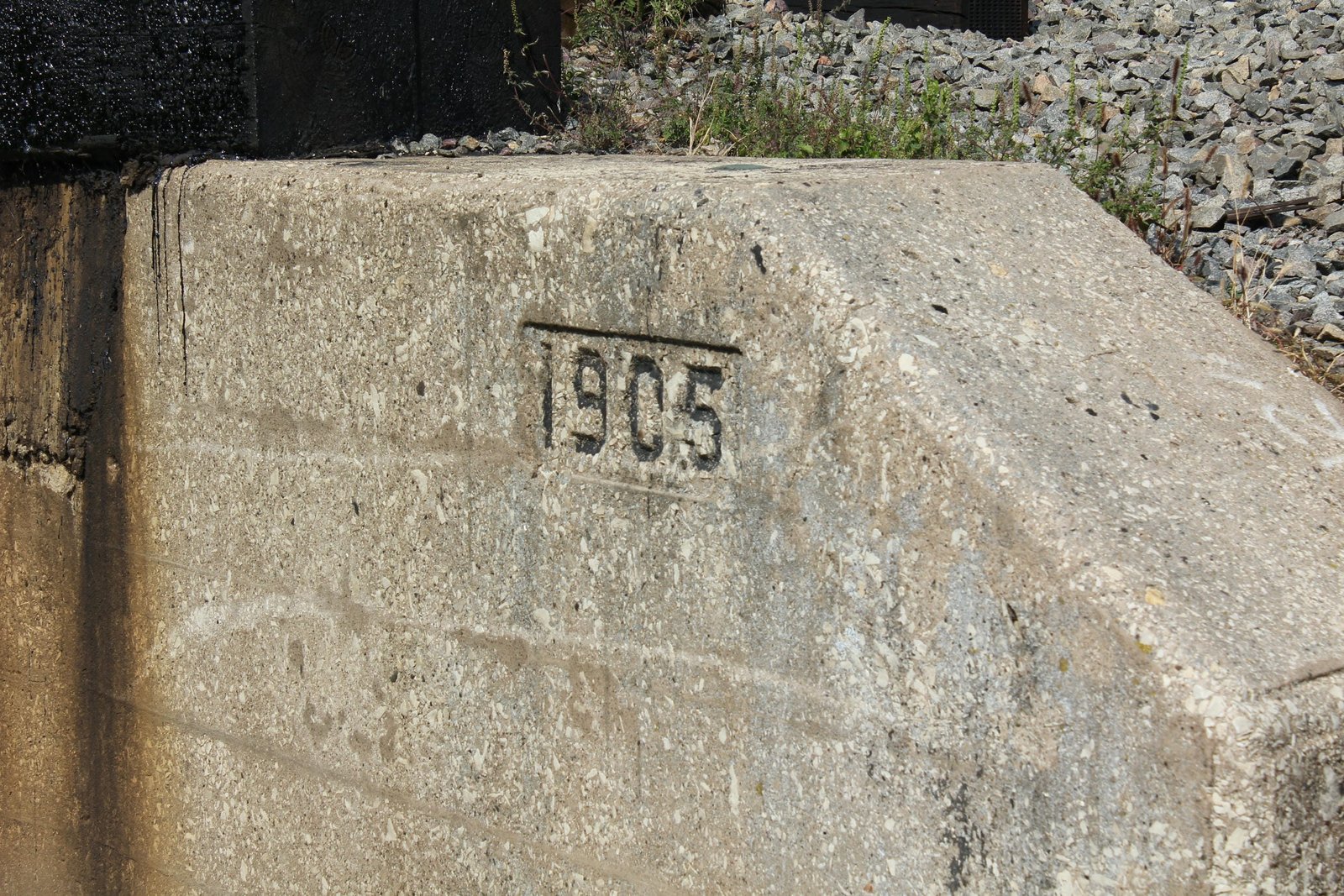
| Date Built | 1906 |
| Traffic Count | 5 Trains/Day (Estimated) |
| Current Status | In Use |
| Chicago, Milwaukee & St. Paul Railway Bridge Number | U-728 |
| Canadian National Railway Bridge Number | 1.24 |
| Significance | Regional Significance |
| Documentation Date | 9/27/2014; 10/8/2022 |
In 1872, the Milwaukee & Northern Railway (M&N) constructed 16 miles of track between Hilbert, Wisconsin and Menasha, Wisconsin. In 1880, an additional 5 miles were constructed from Menasha, north to Appleton, Wisconsin; with a 1 mile branch into Neenah, Wisconsin opening in 1881. In 1893, the M&N was acquired by the Chicago, Milwaukee & St. Paul Railway (Milwaukee Road). This line served as a branch line for the Milwaukee Road, allowing access to major cities along the Fox River and Lake Winnebago. Throughout the late 19th and early 20th Century, the Milwaukee Road greatly expanded throughout the Midwest, acquiring and constructing numerous lines. In addition, the Wisconsin Central Railway (later Soo Line) utilized trackage rights over the Neenah to Hilbert segment to reach their Hilbert to Manitowoc branch. By the early 20th Century, the Milwaukee Road was among the largest railroads in the United States, operating a network of railroad lines over 10,000 miles in length. The Milwaukee Road was often in financial trouble, especially after the costly Pacific Extension was completed in 1909. In 1925, the company declared bankruptcy, and reorganized as the Chicago, Milwaukee, St. Paul and Pacific Railroad in 1928.
The railroad remained afloat through much of the 20th Century, although it remained in financial trouble. The railroad again entered bankruptcy in 1977 and was forced to liquidate unprofitable lines. In 1981, the segment was abandoned between South Appleton and Appleton. A segment between the north side of Menasha and South Appleton was likely abandoned in the mid-1980s. By 1985, a suitor for the Milwaukee Road was being sought, and the Soo Line Railroad, controlled by Canadian Pacific Railway (CP) purchased the Milwaukee Road in 1986. In 1987, the line was sold to the Wisconsin Central, Ltd. (WC). The WC was formed to purchase a number of secondary routes in eastern Wisconsin from the Soo Line, which included Soo Line and former Milwaukee Road trackage. In 2001, the WC was purchased by Canadian National Railway. Today, CN continues to operate the Hilbert to Neenah segment, as well as a remaining spur to the north side of Menasha.
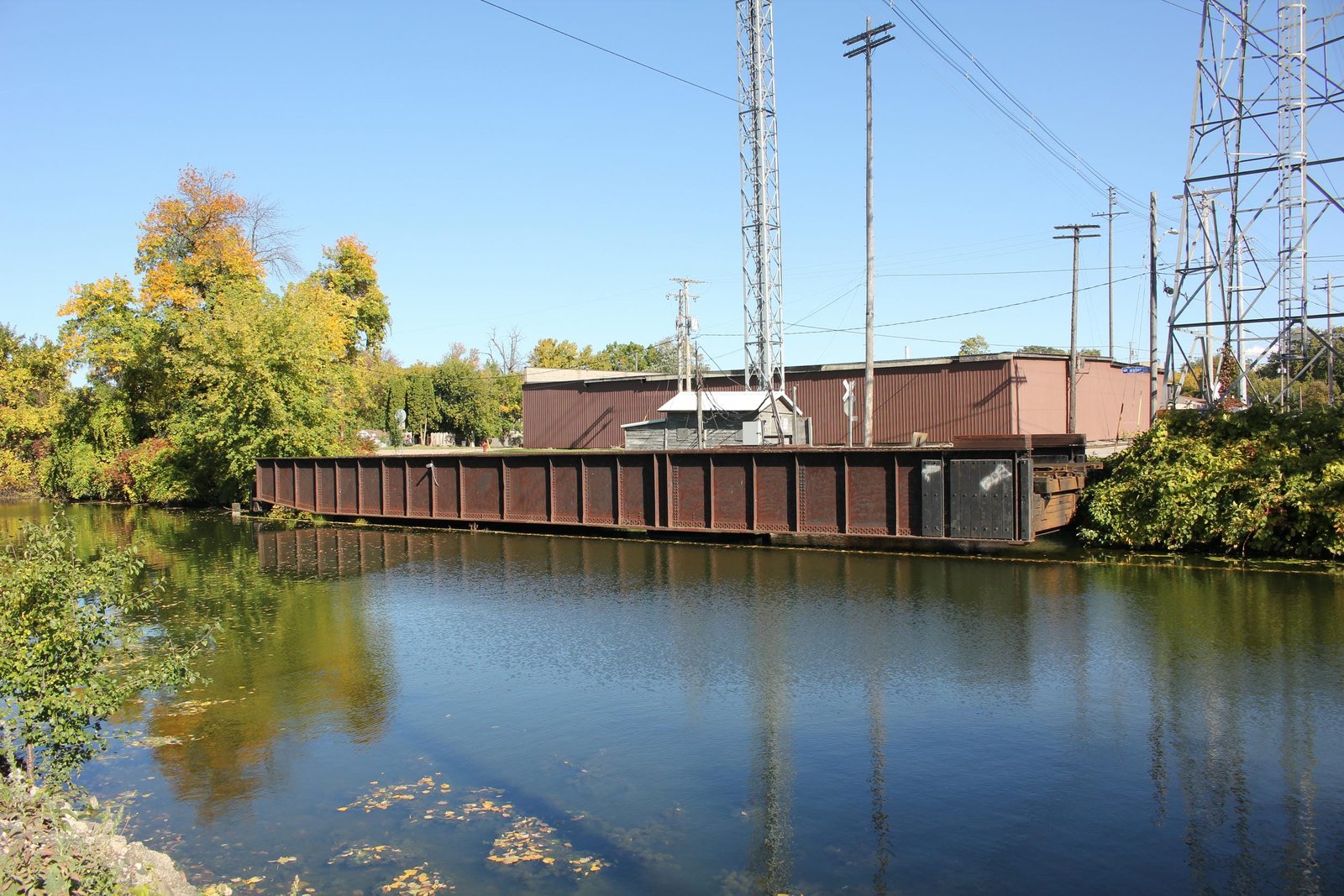
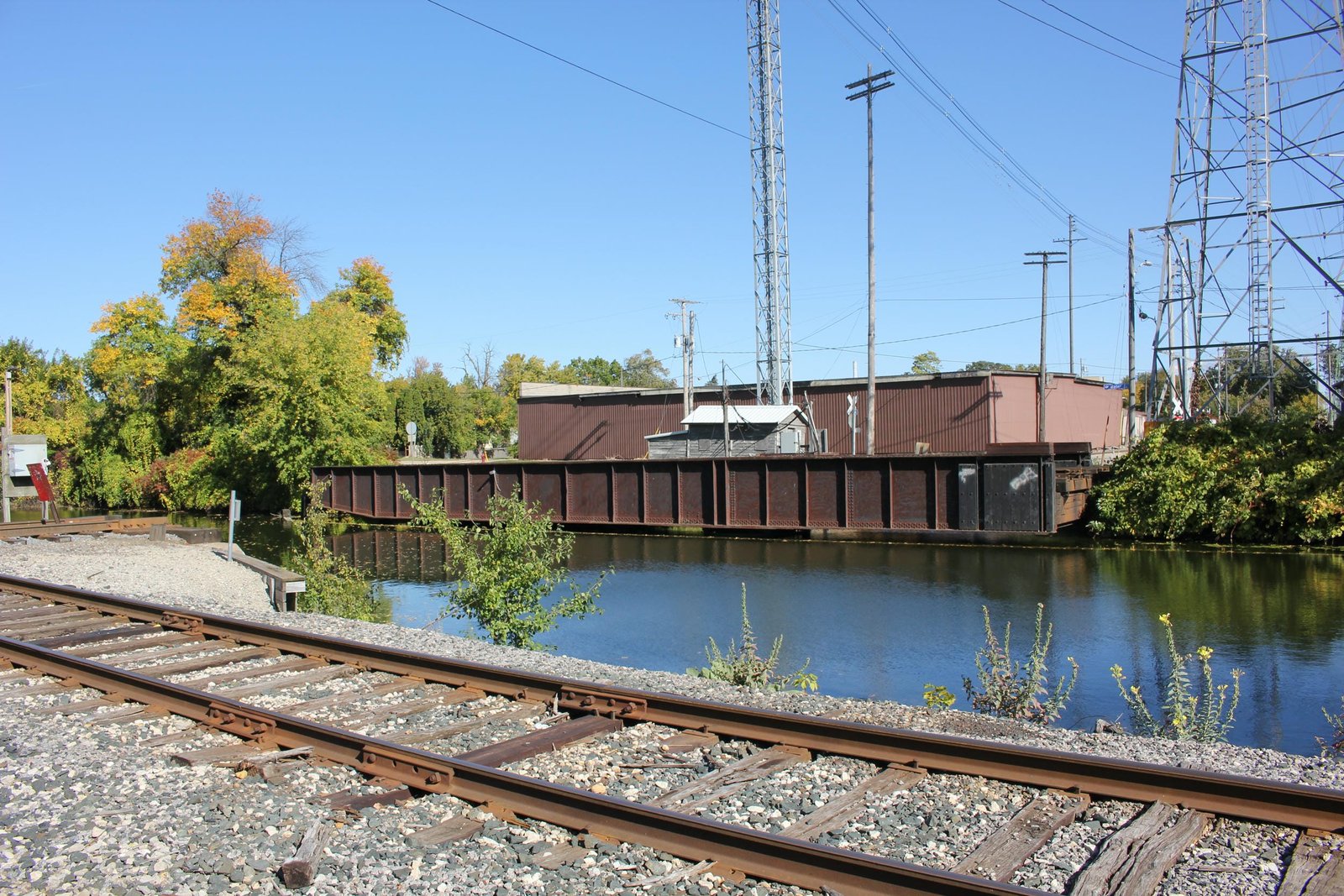
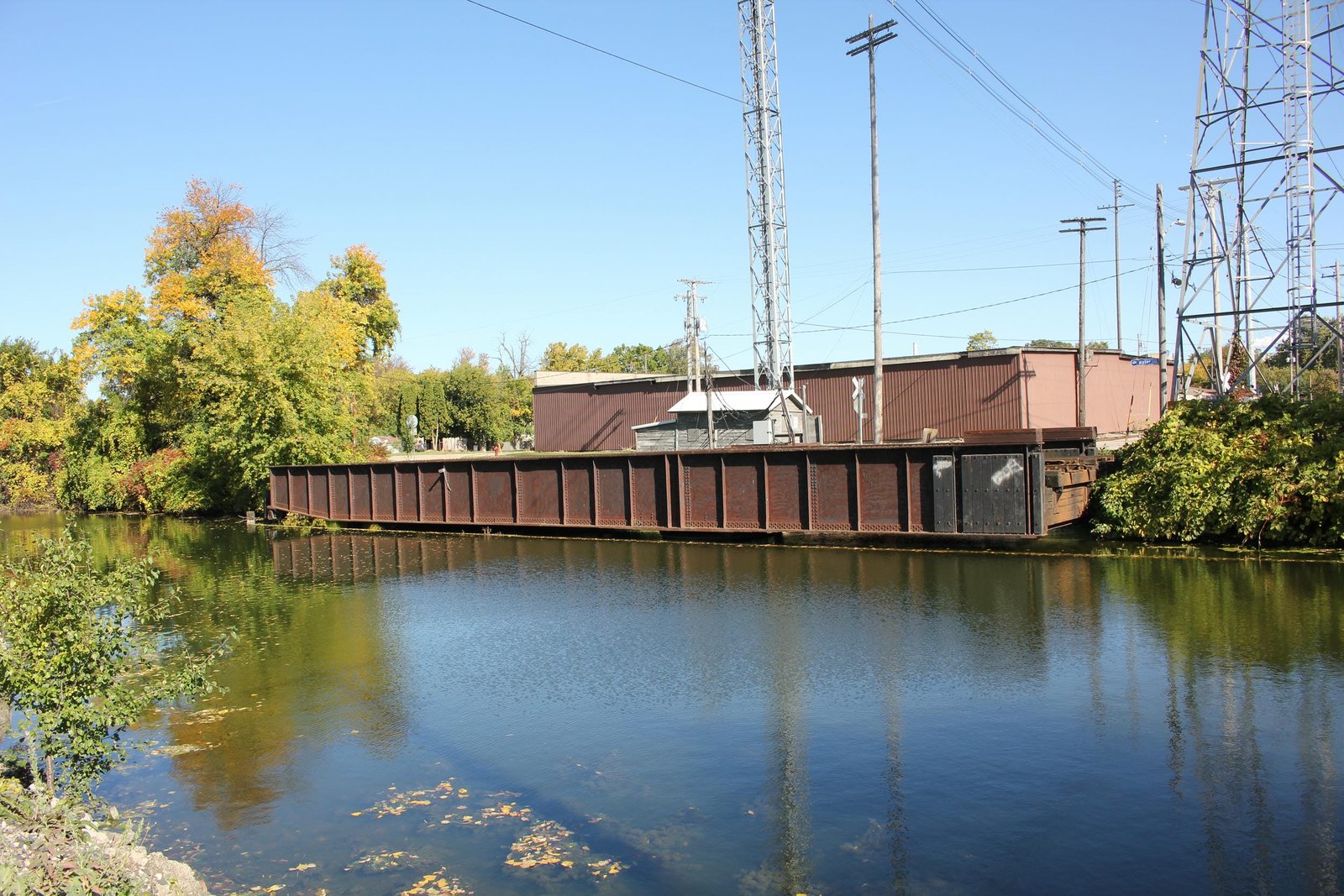
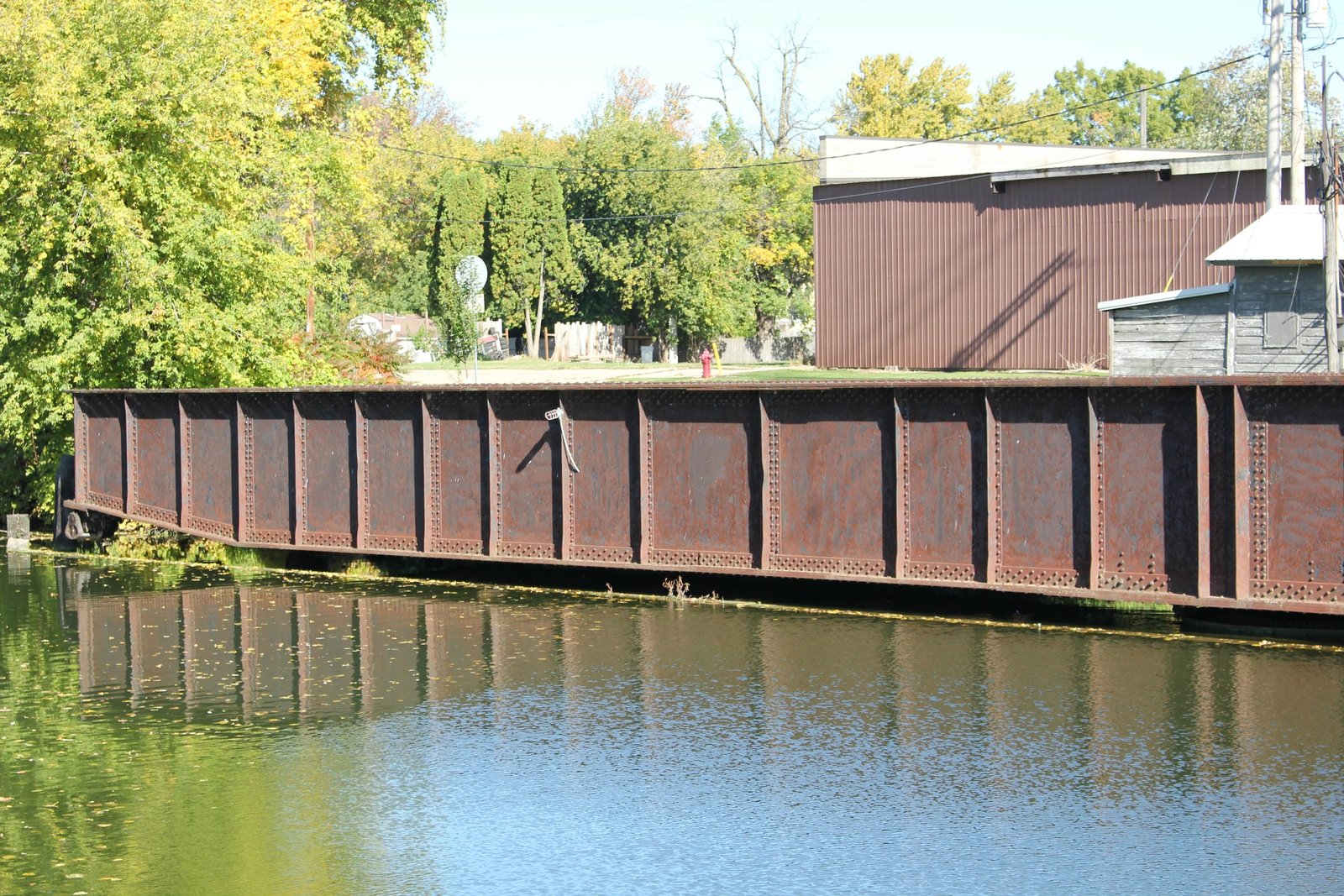
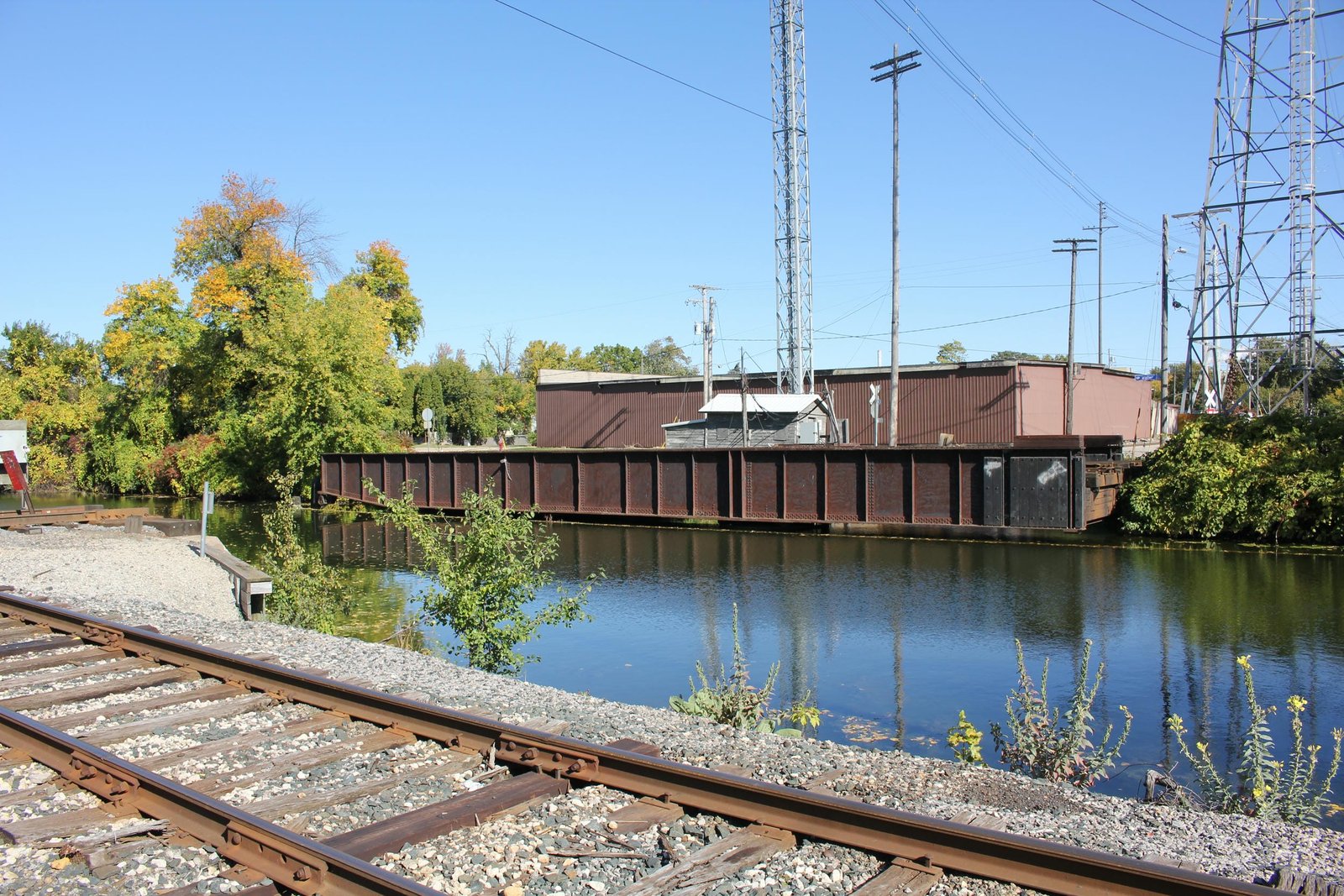
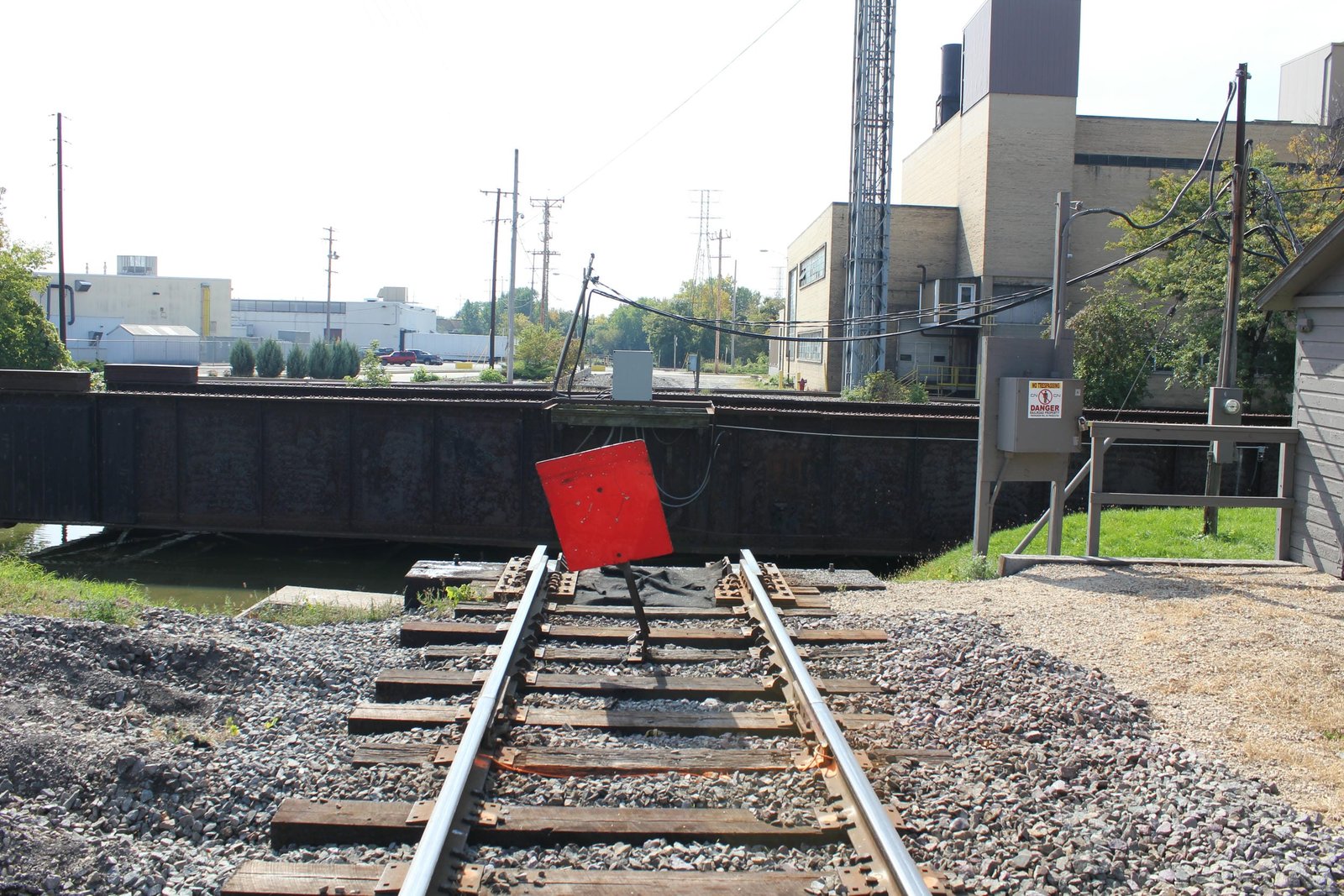
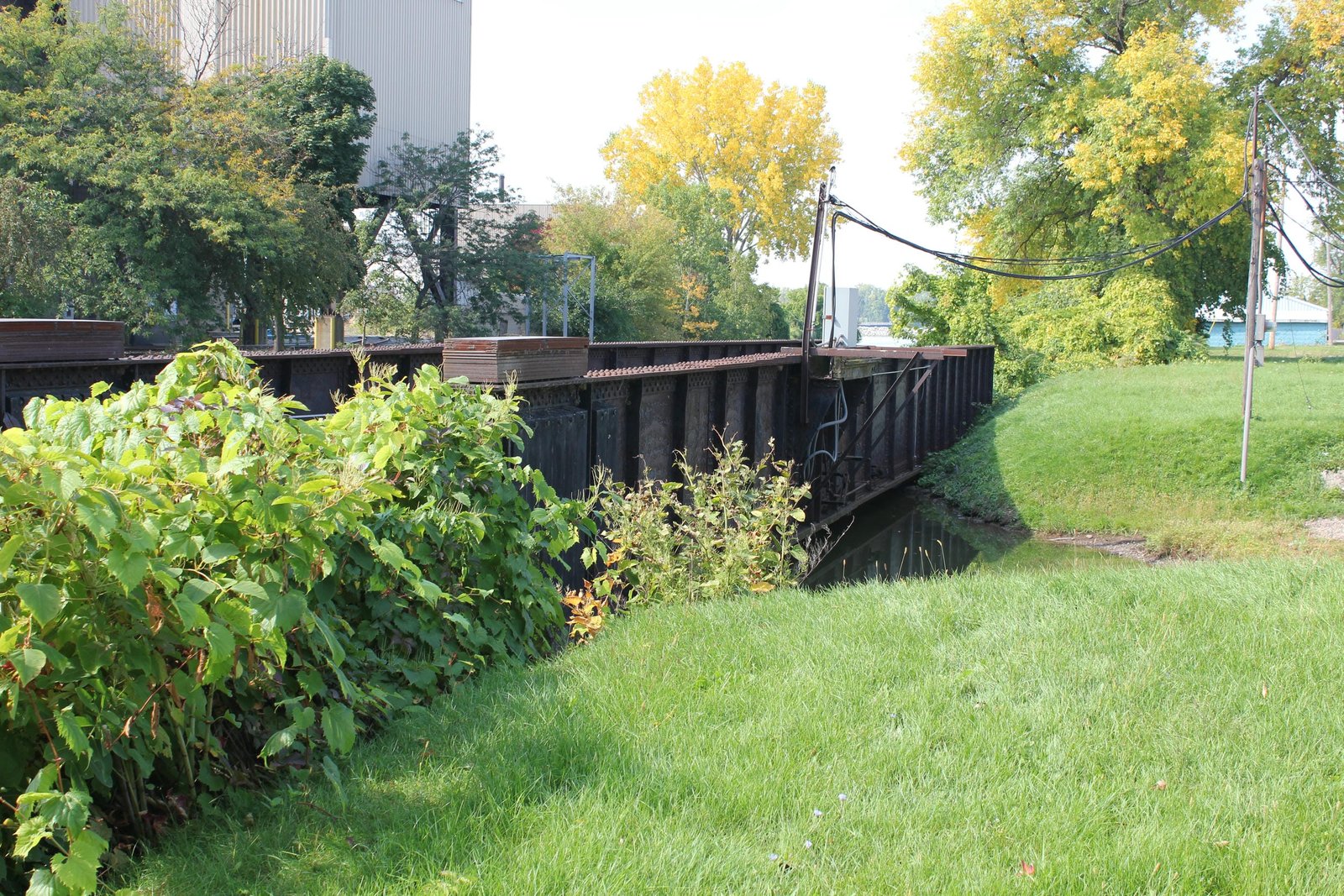
Located along Lush Street in Menasha, this unique through plate girder swing bridge carries the former joint Soo Line and Chicago, Milwaukee, St. Paul & Pacific Railroad (Milwaukee Road) line across the Fox River Navigation Canal. In the 19th Century, the Fox River was an important navigable waterway in central Wisconsin, connecting Lake Michigan with the Mississippi River via the Wisconsin River. The first bridge at this location was reportedly a wooden truss swing bridge, constructed when the line was first built. By the turn of the 20th Century, wooden truss bridges had largely become obsolete for railroad use. In the early 20th Century, the Milwaukee Road made it a priority to replace wooden truss spans on their branch lines in eastern Wisconsin. A design for a new steel bridge was completed in May 1905, and a counterbalanced swing bridge design was chosen for this location. Work began on the bridge later in 1905, and the present structure was completed in early 1906. A counterbalanced design was chosen to maximize the width of the navigation channel, eliminate the need for a pier in the center of the canal and minimize the total length of the bridge.
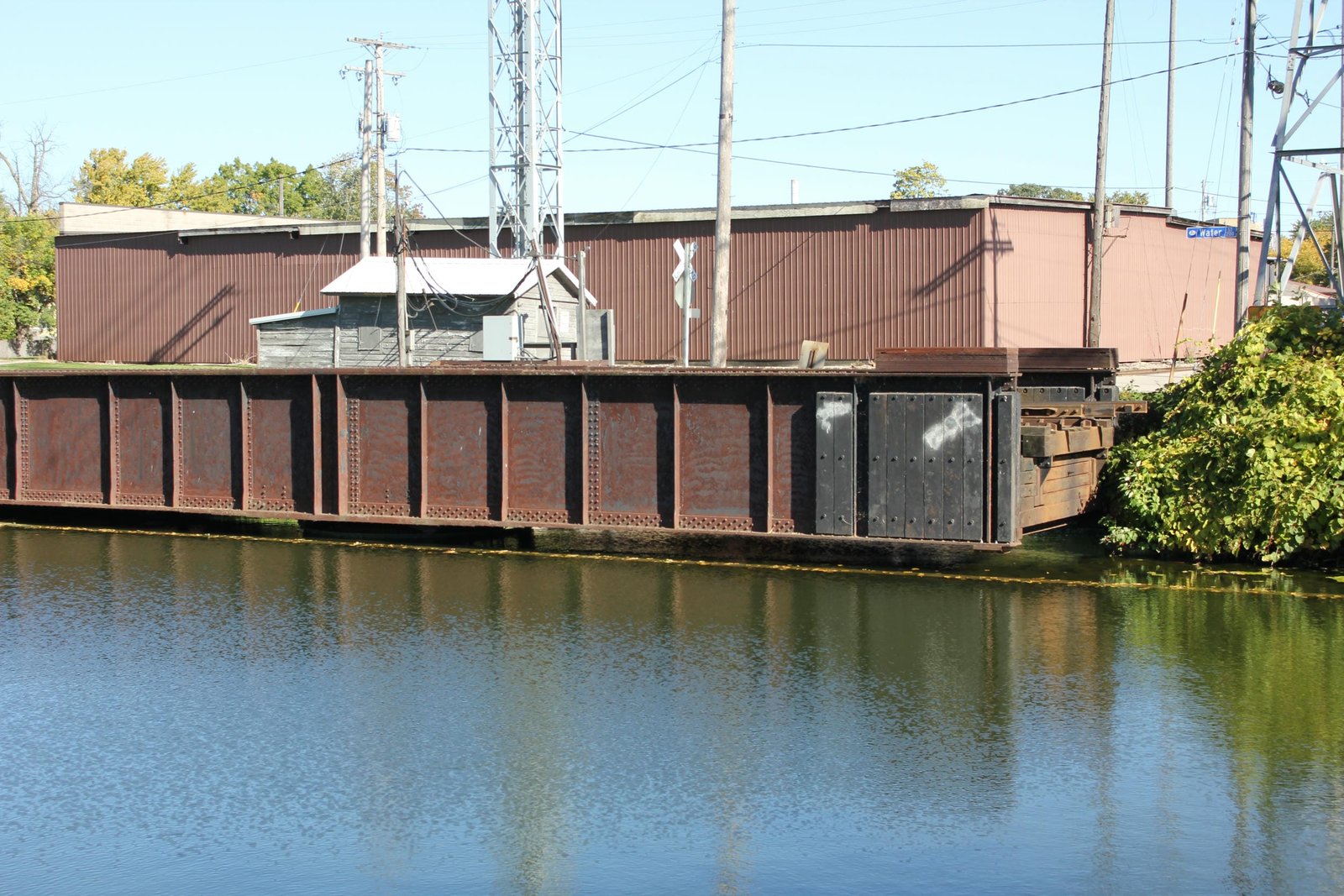
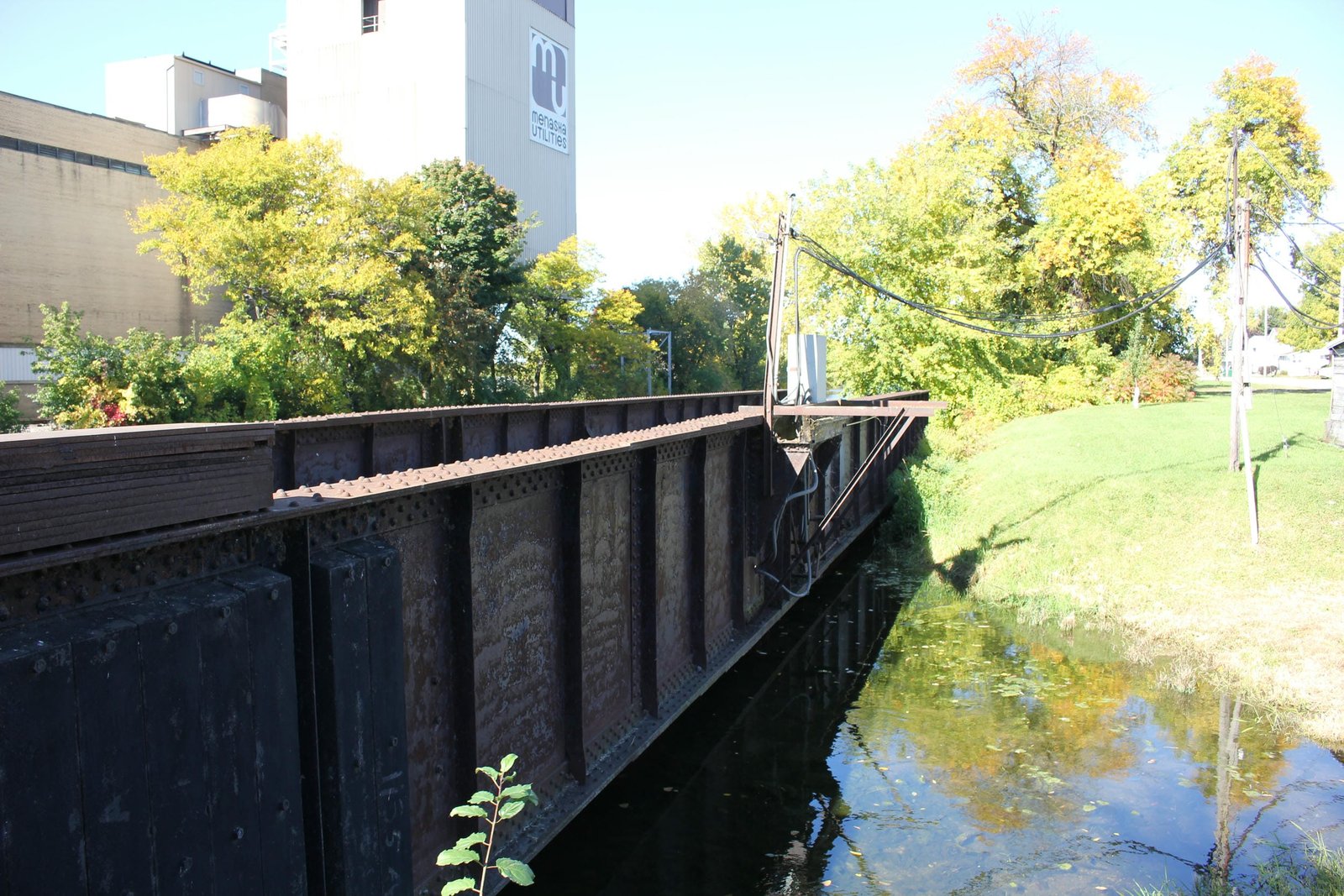
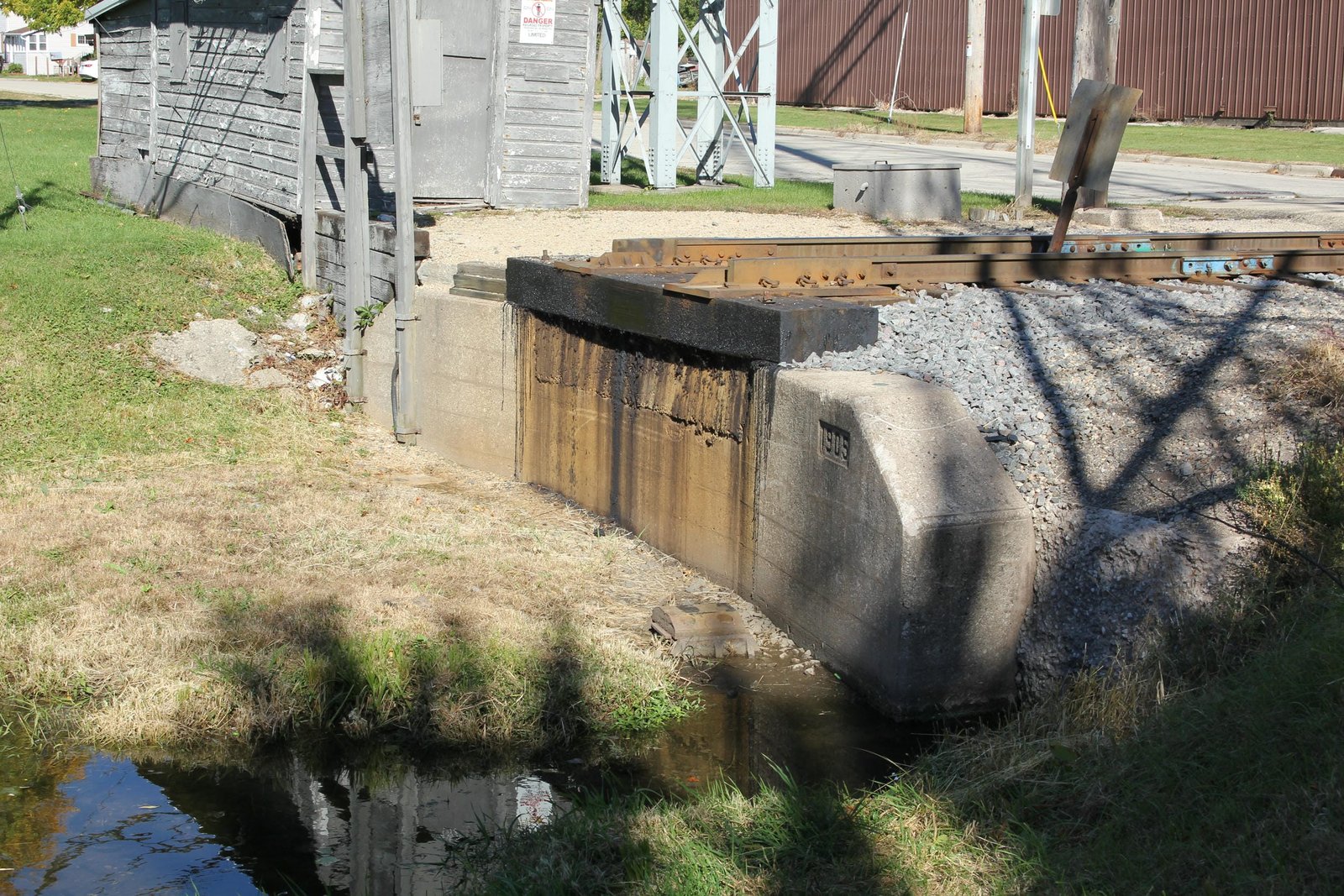
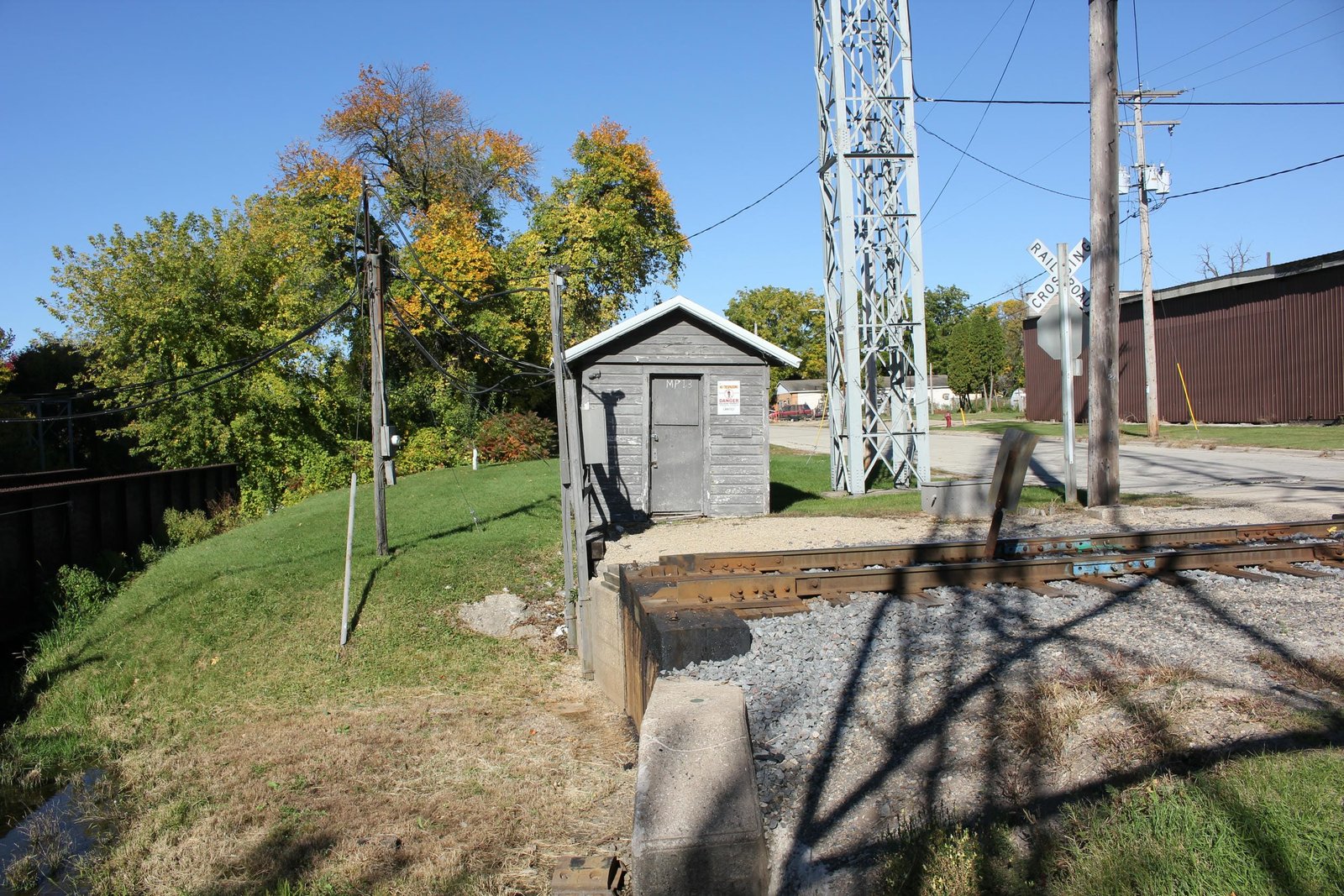
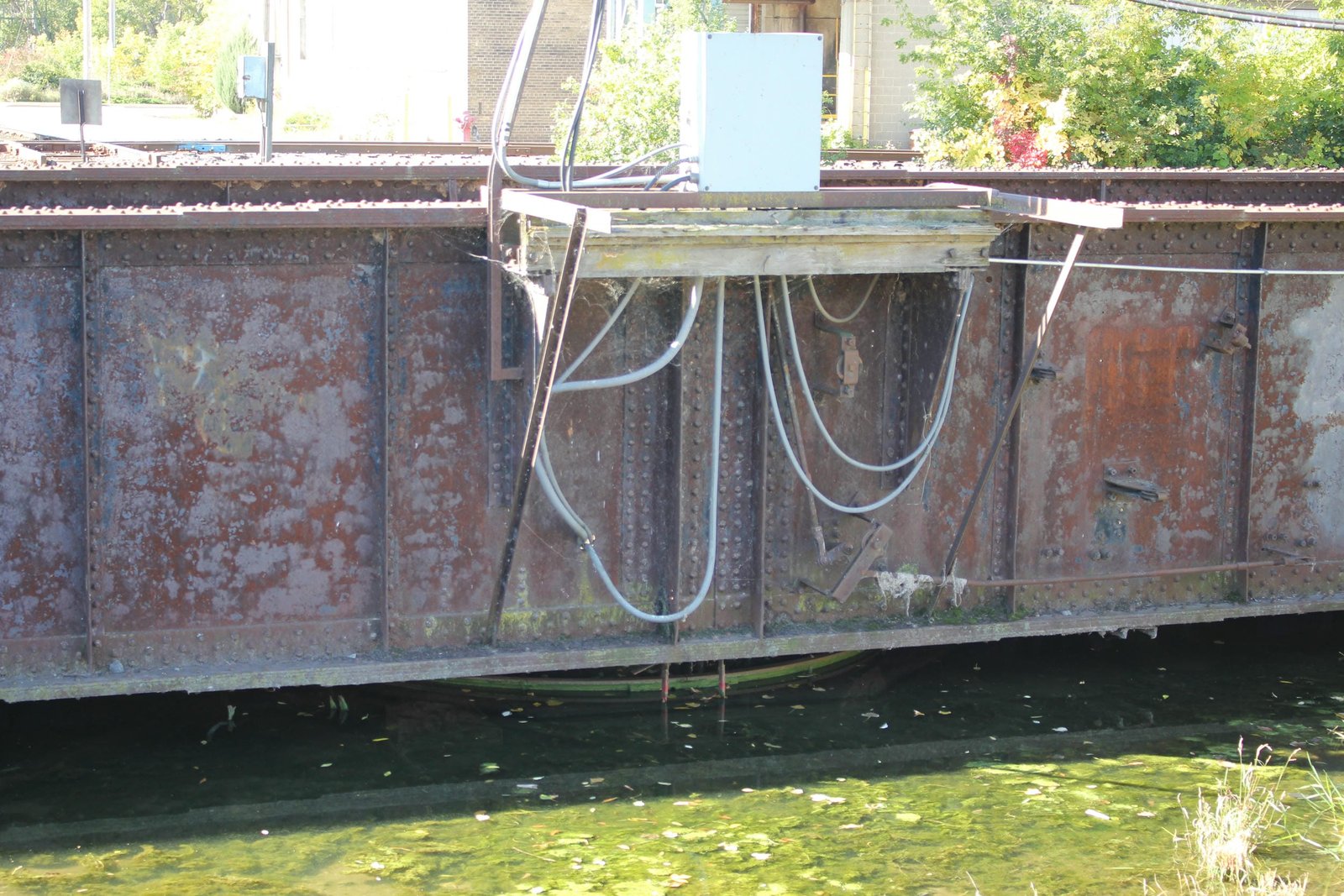
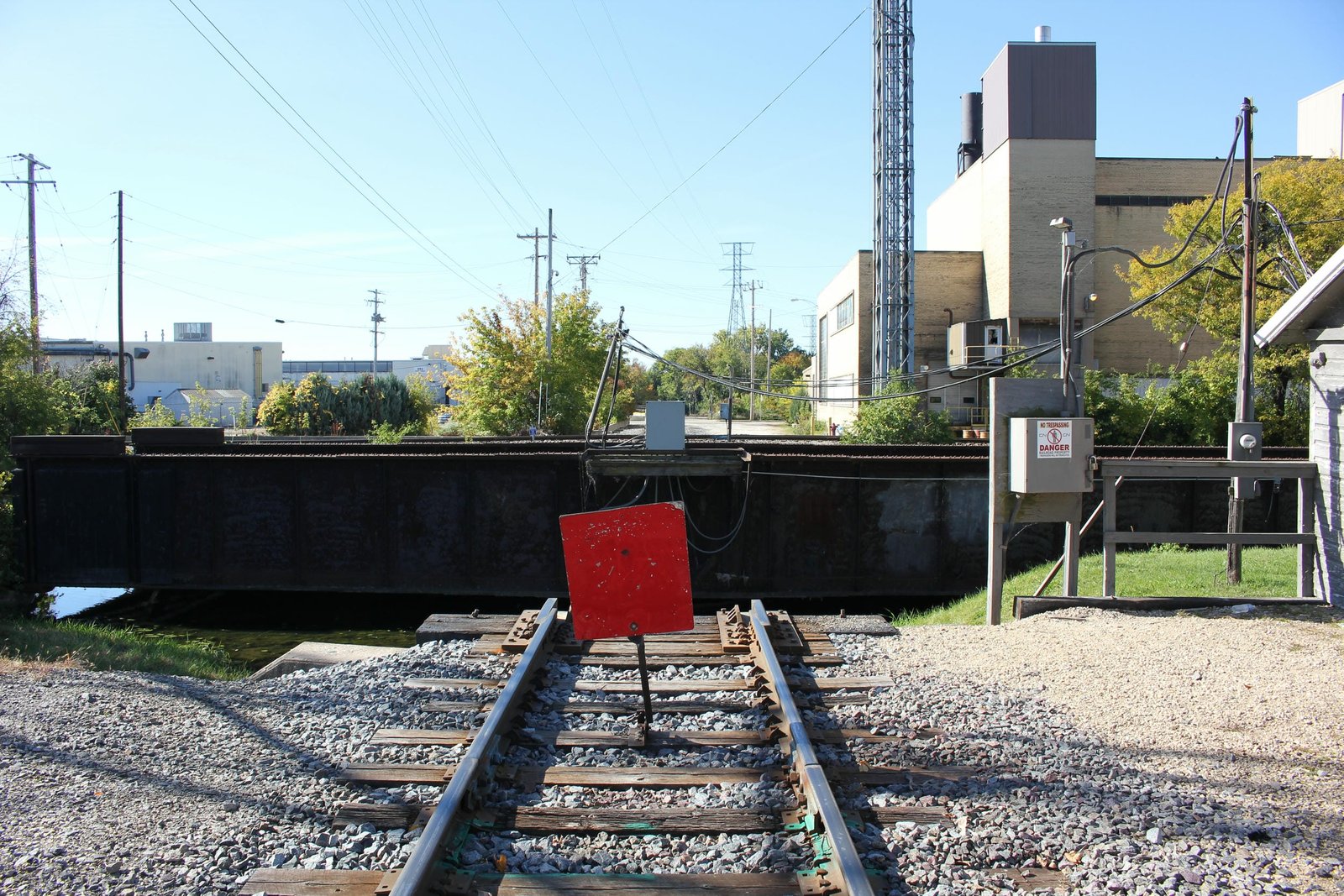
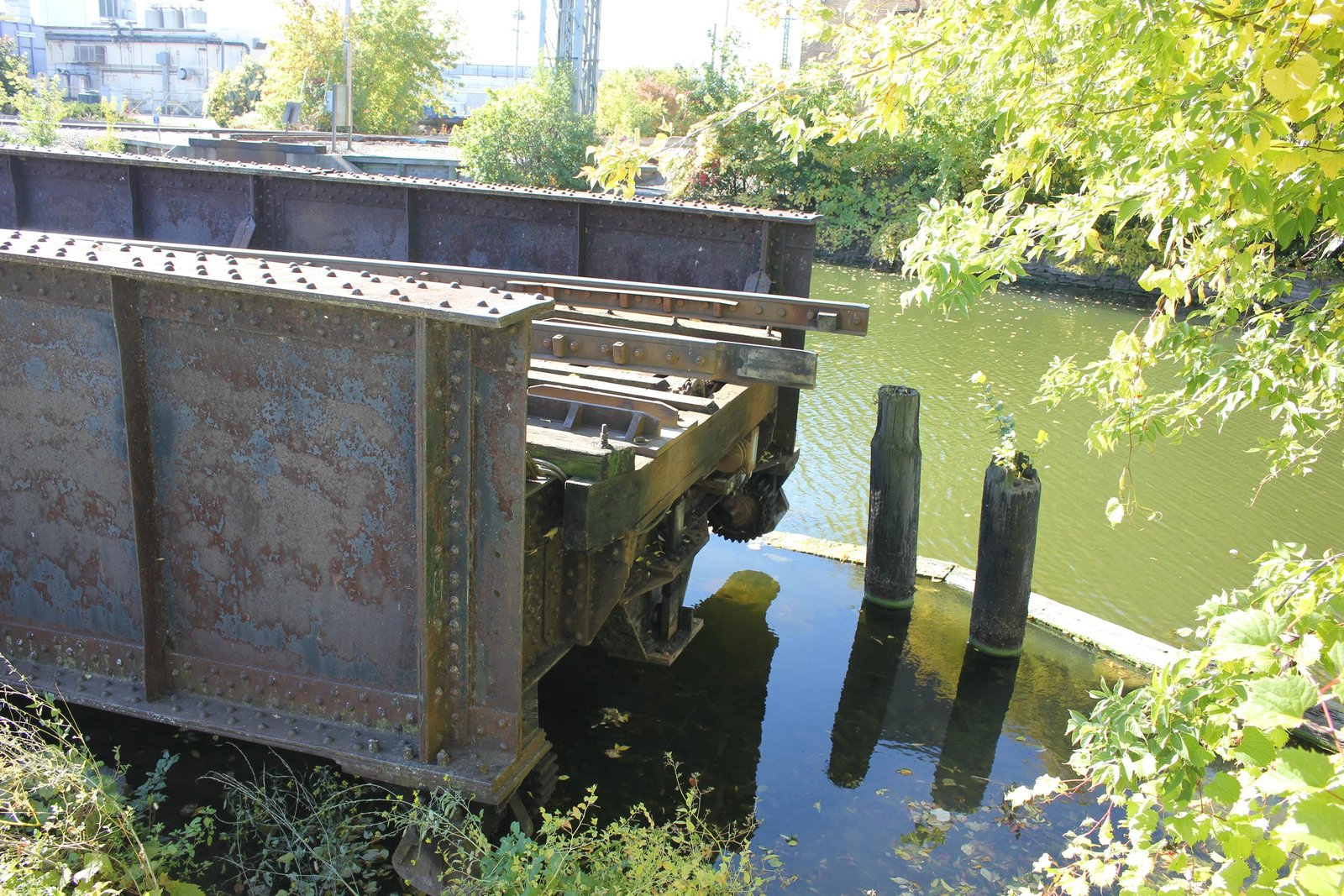
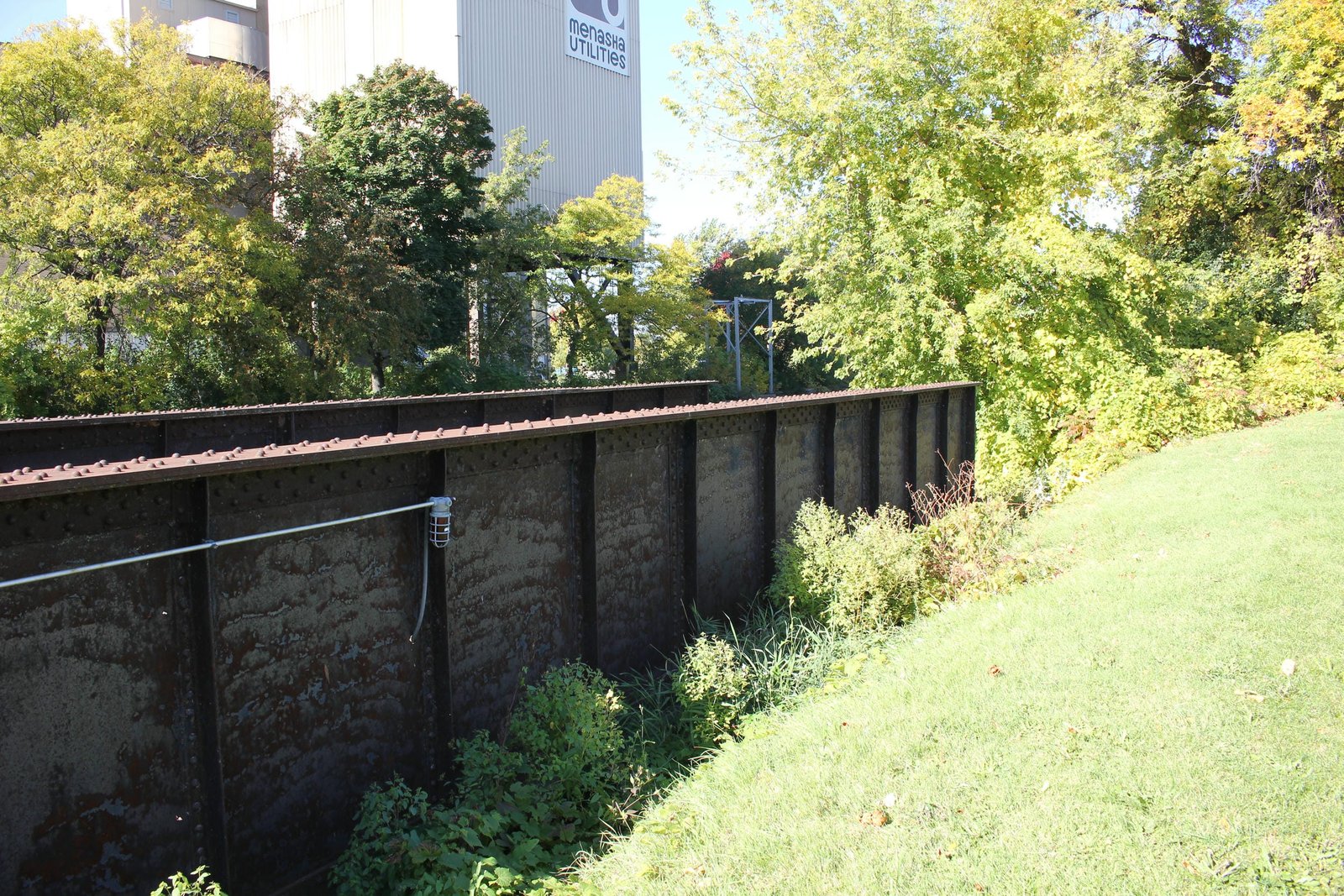
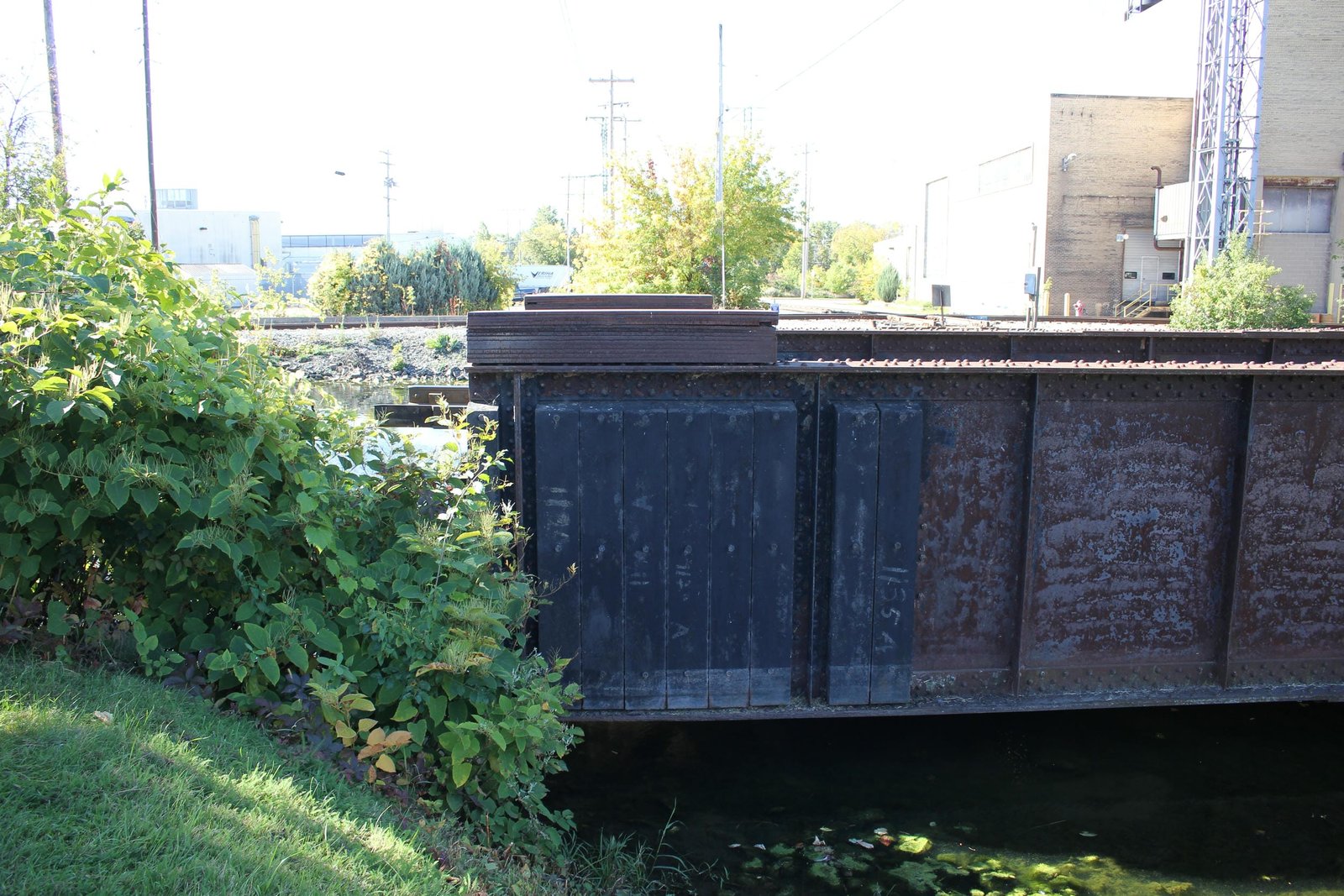
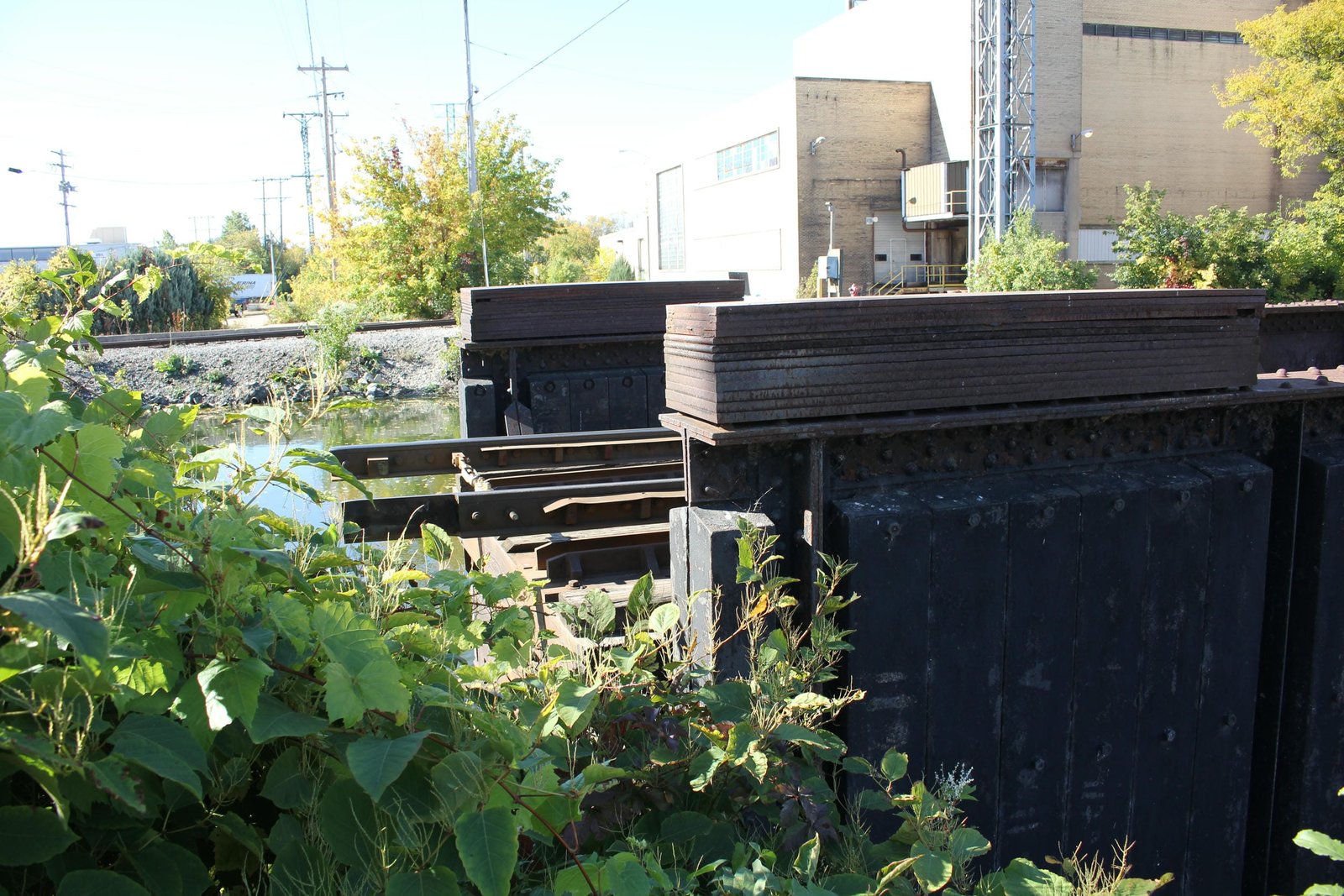
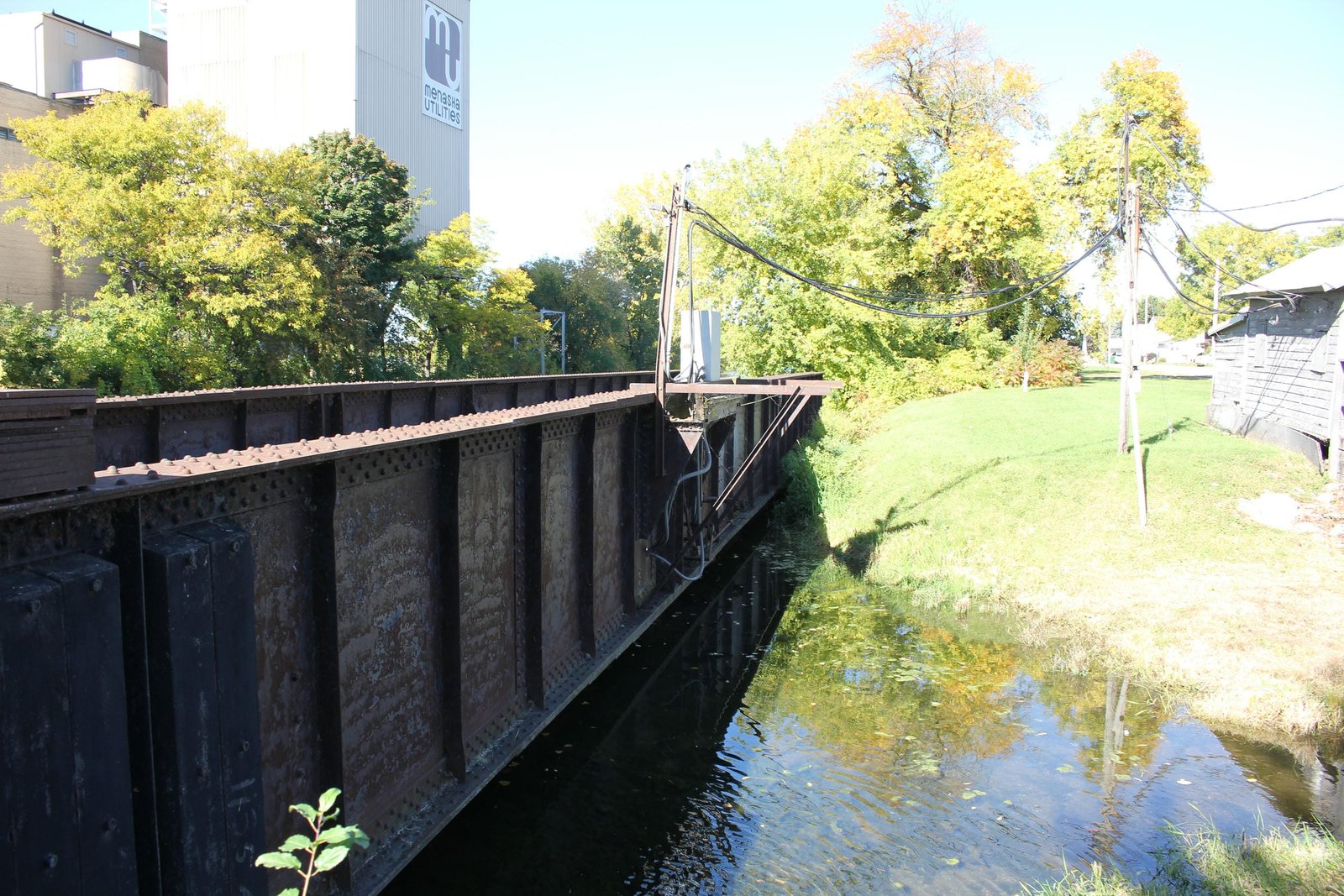
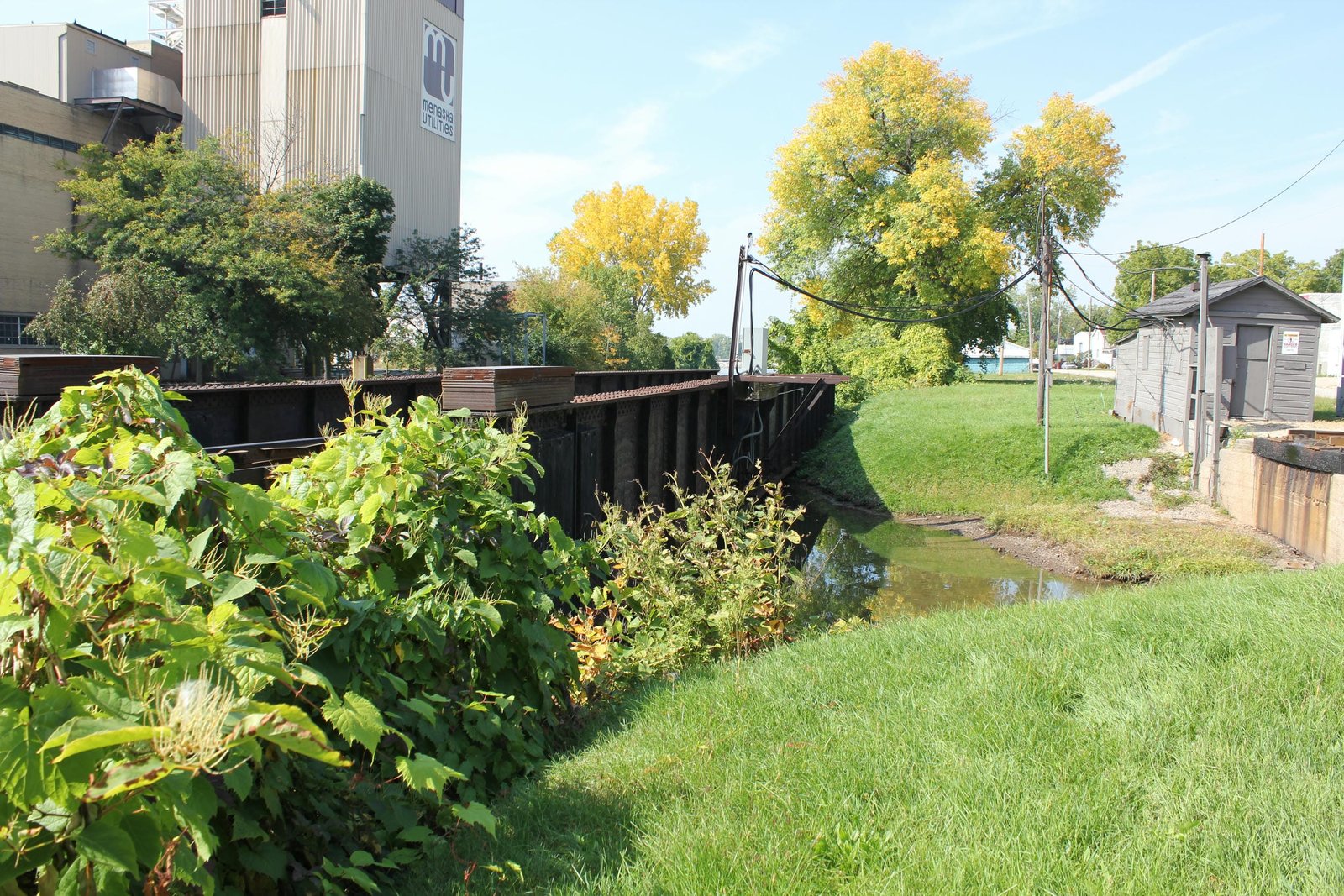
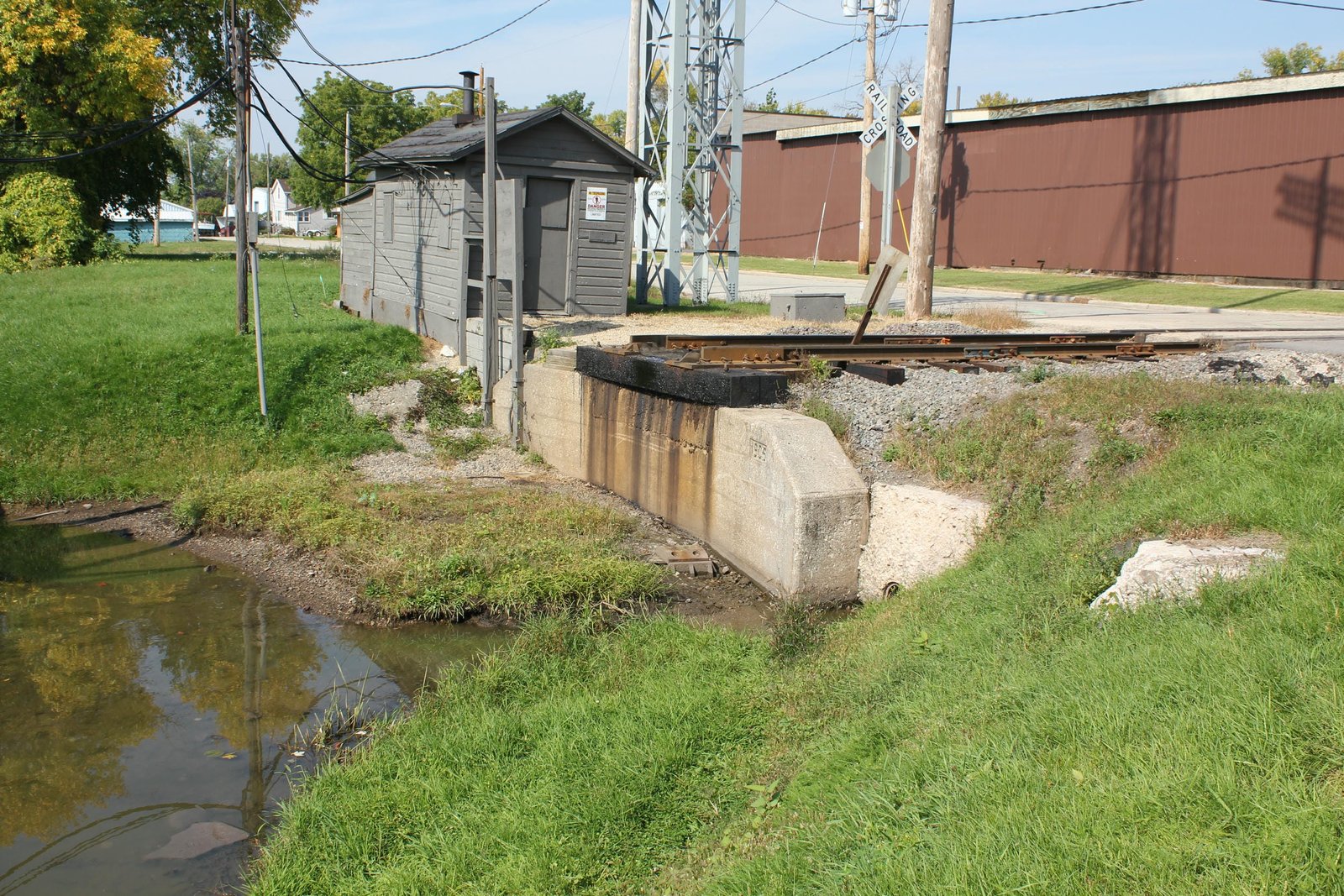
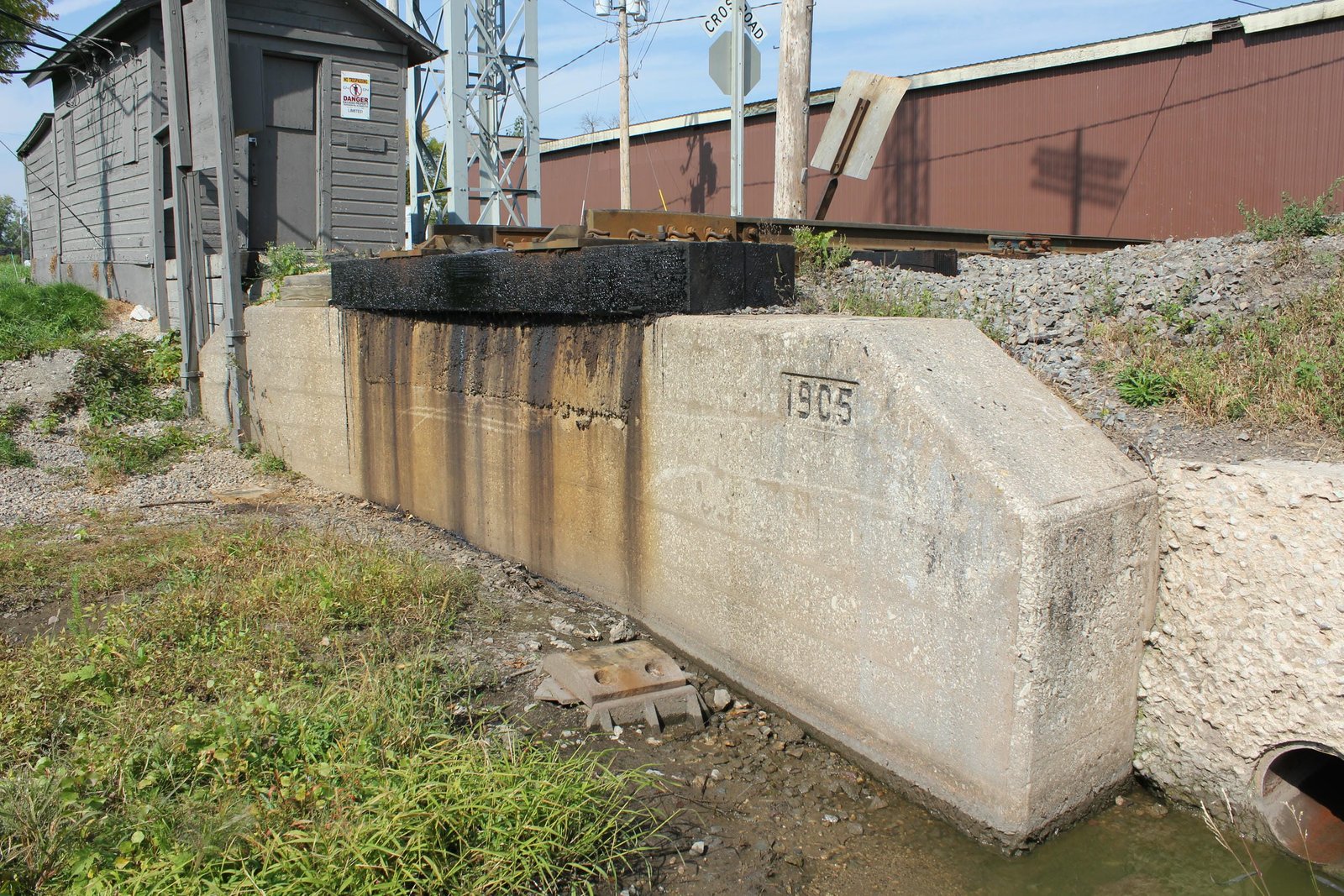
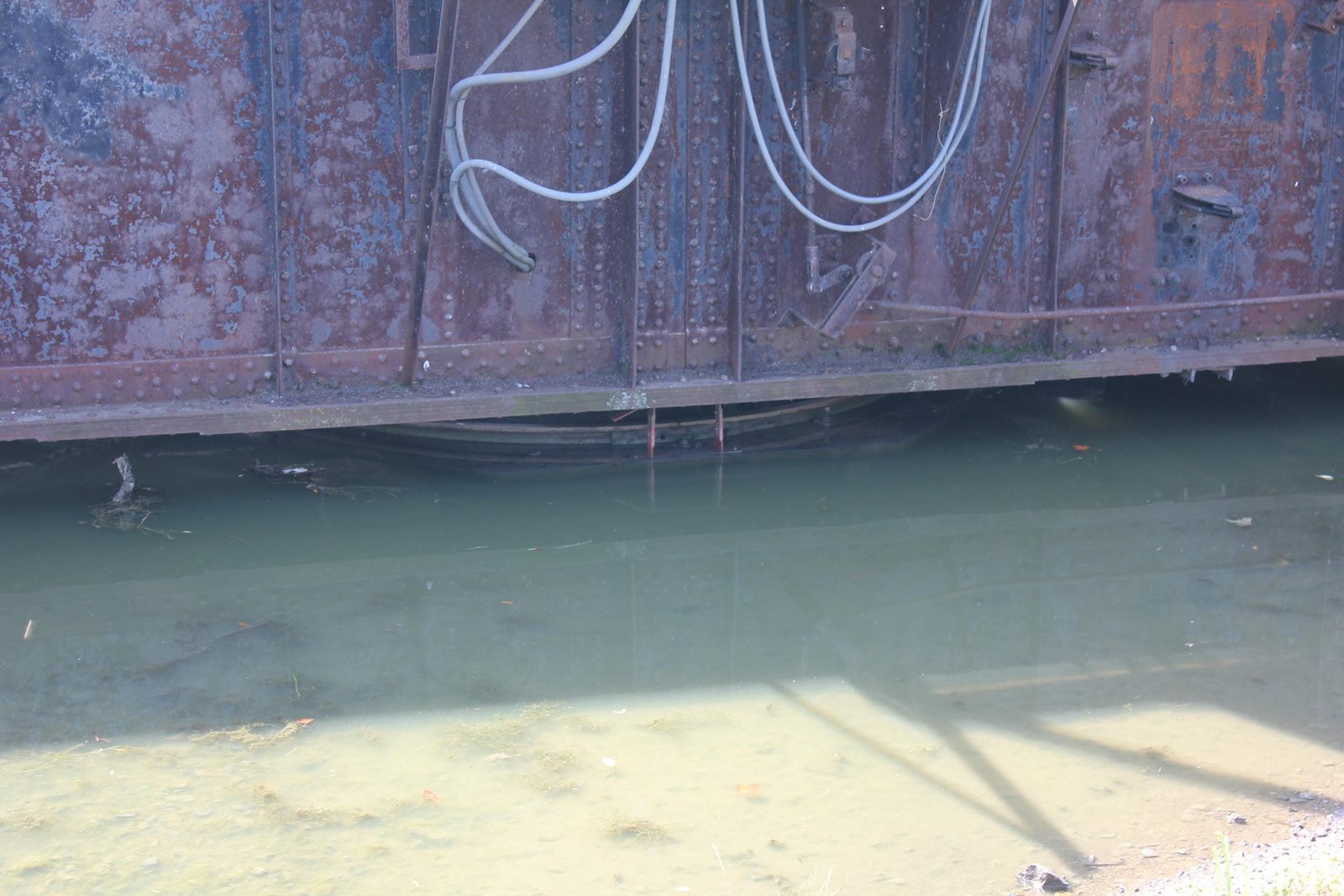
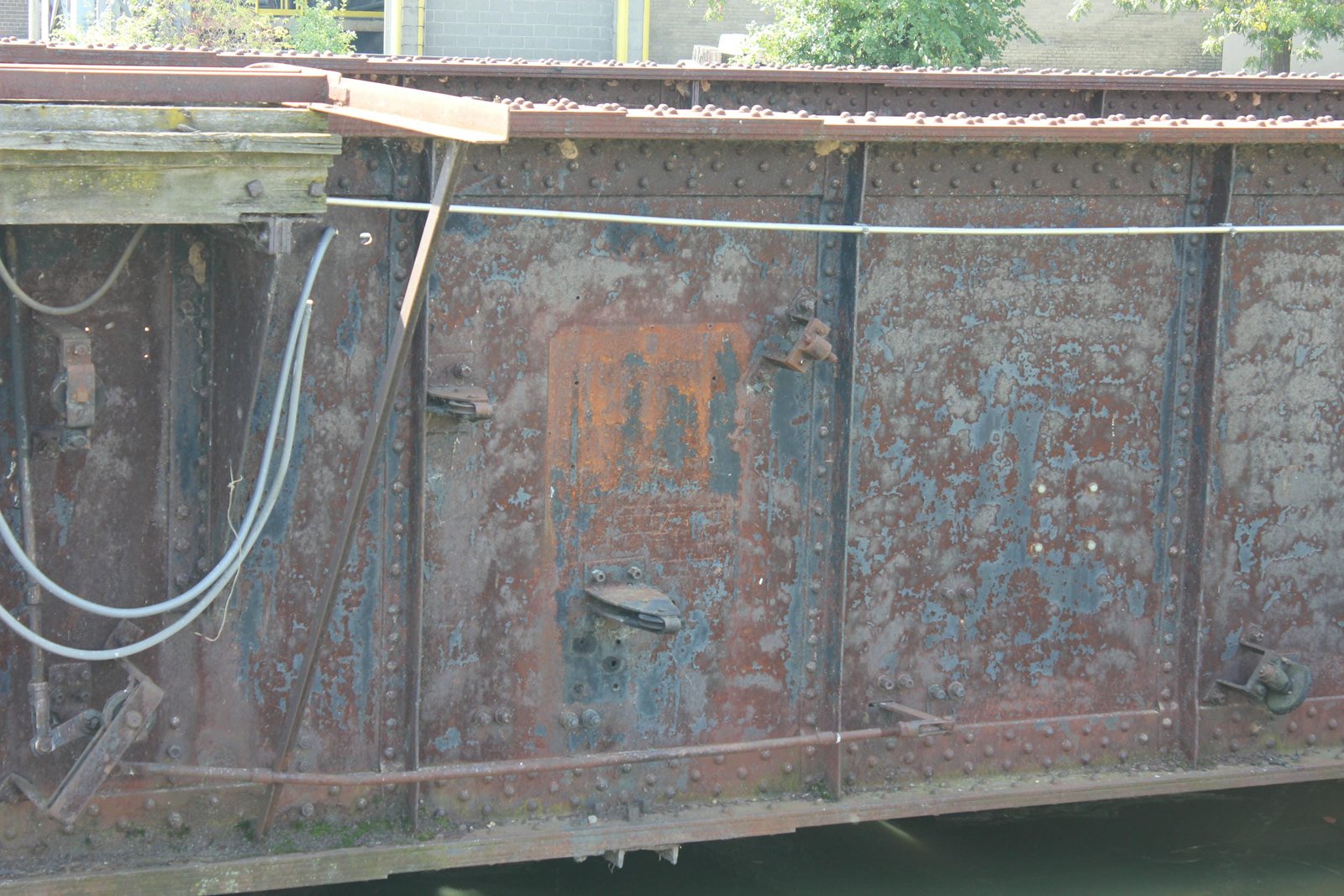
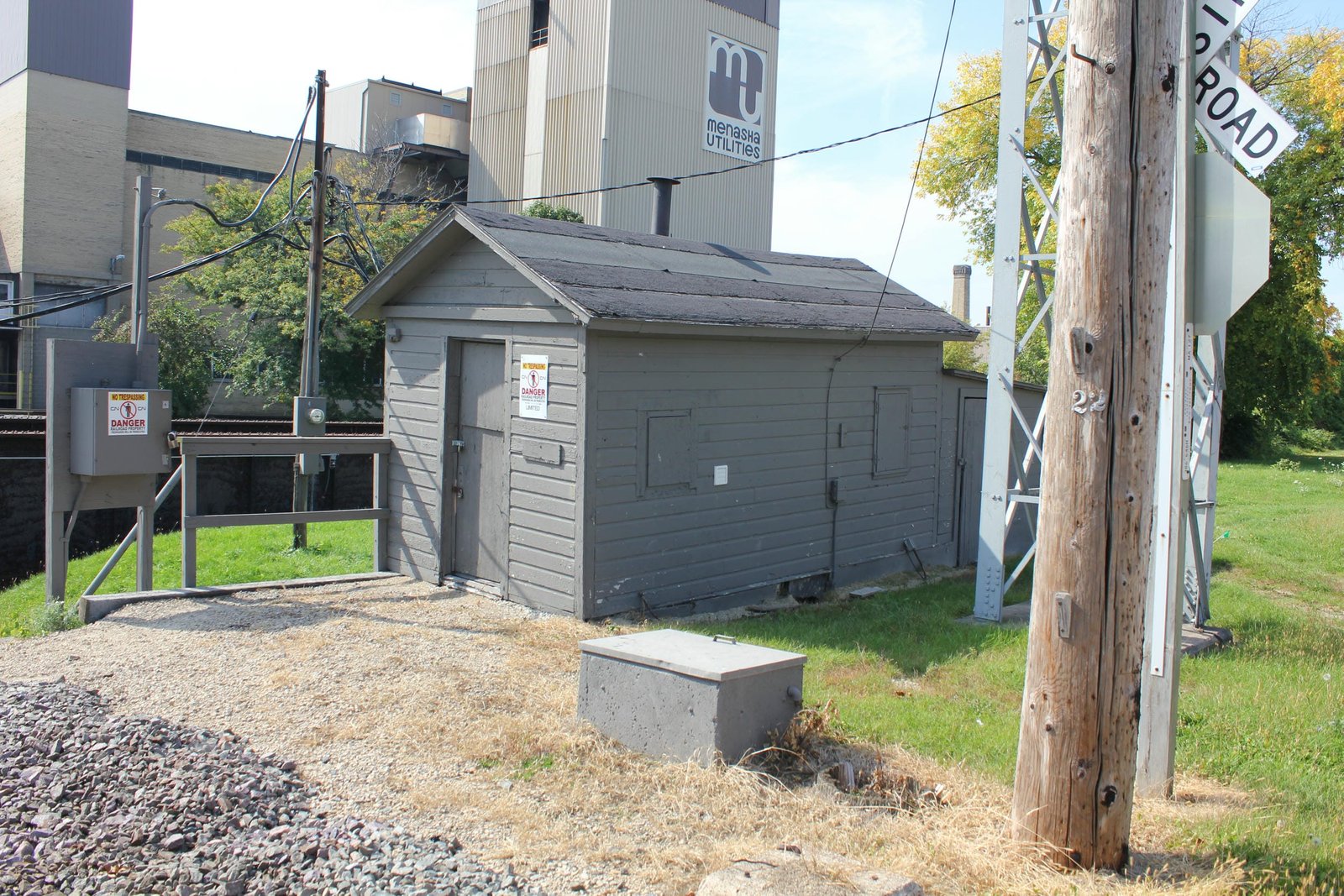
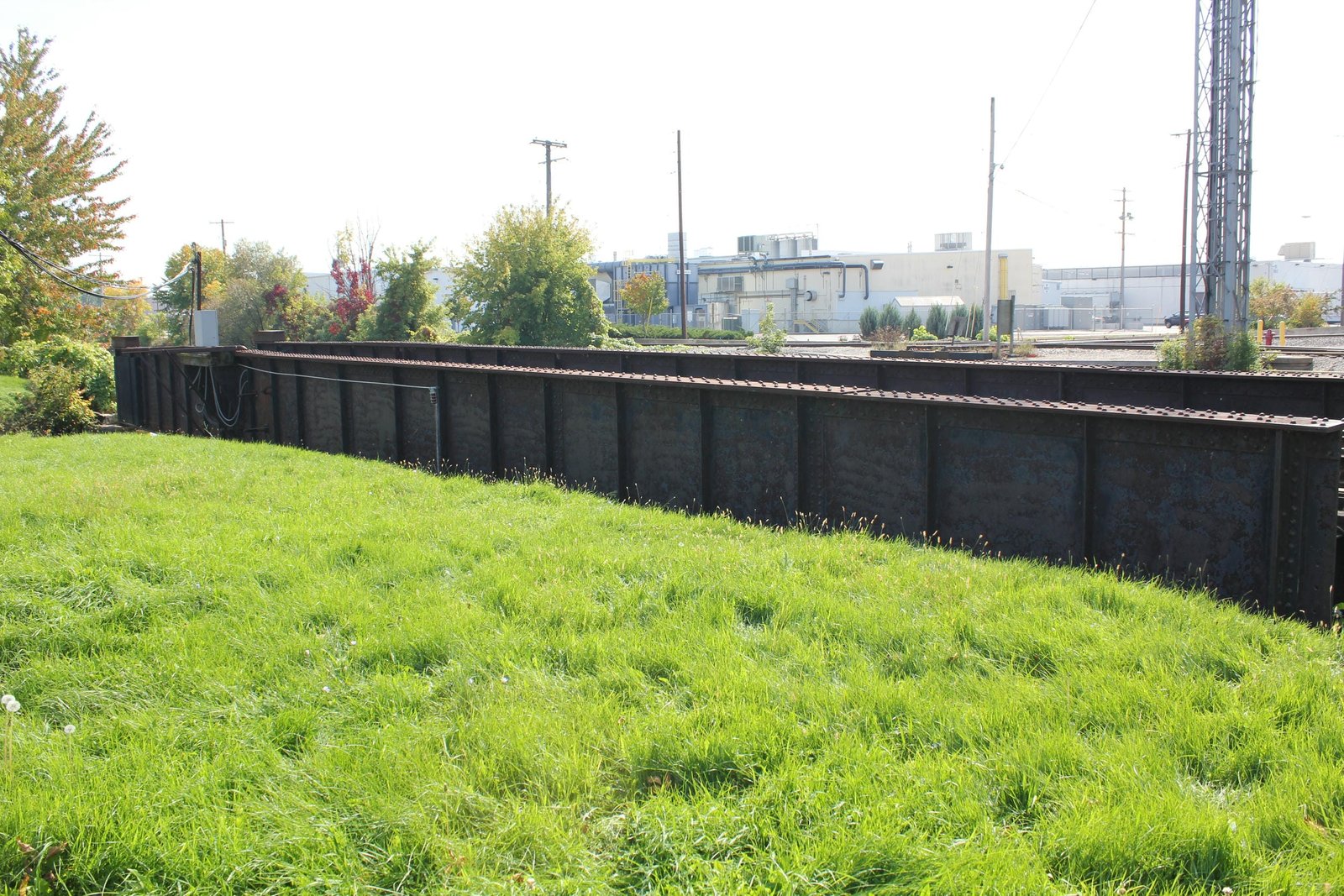
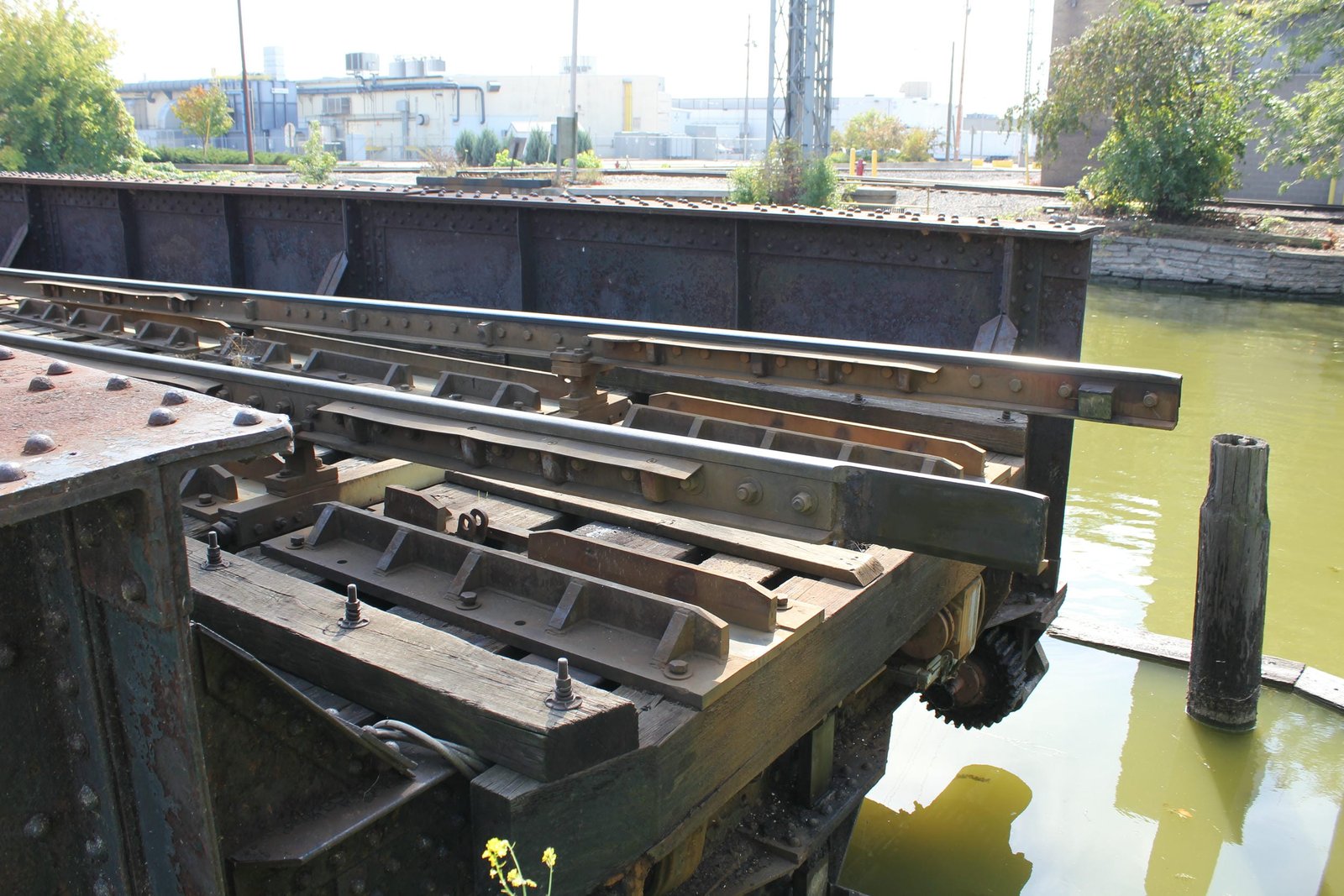
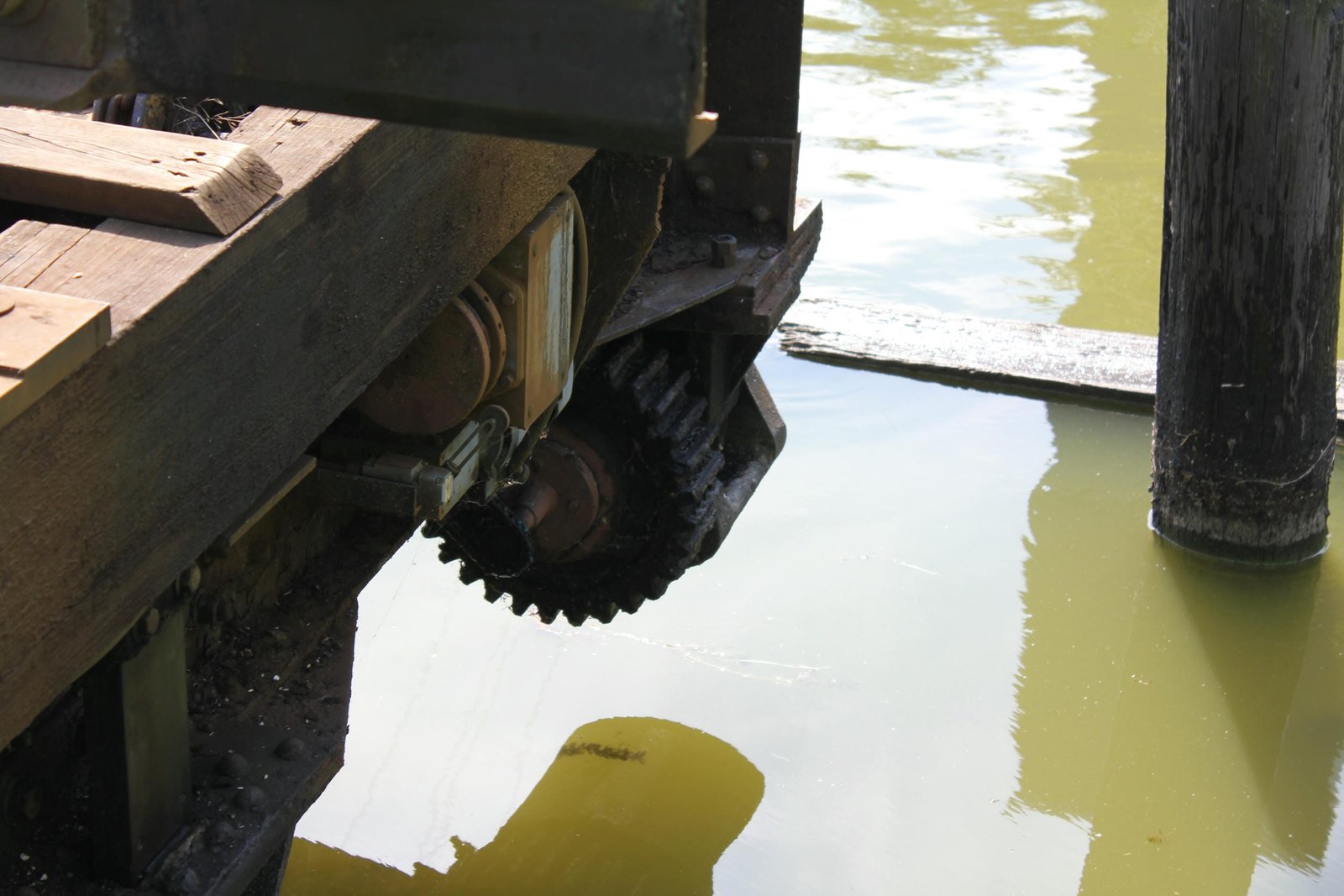
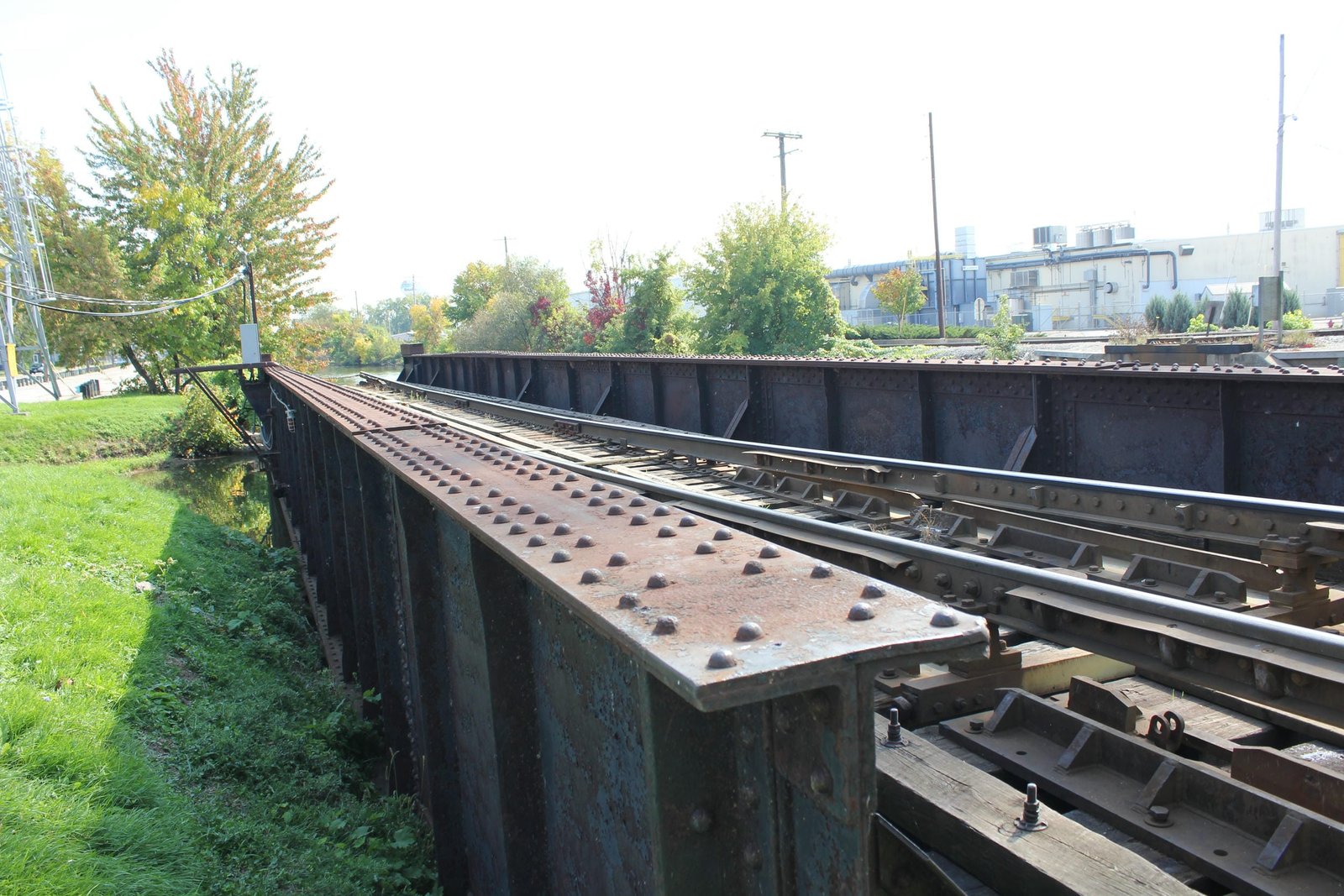
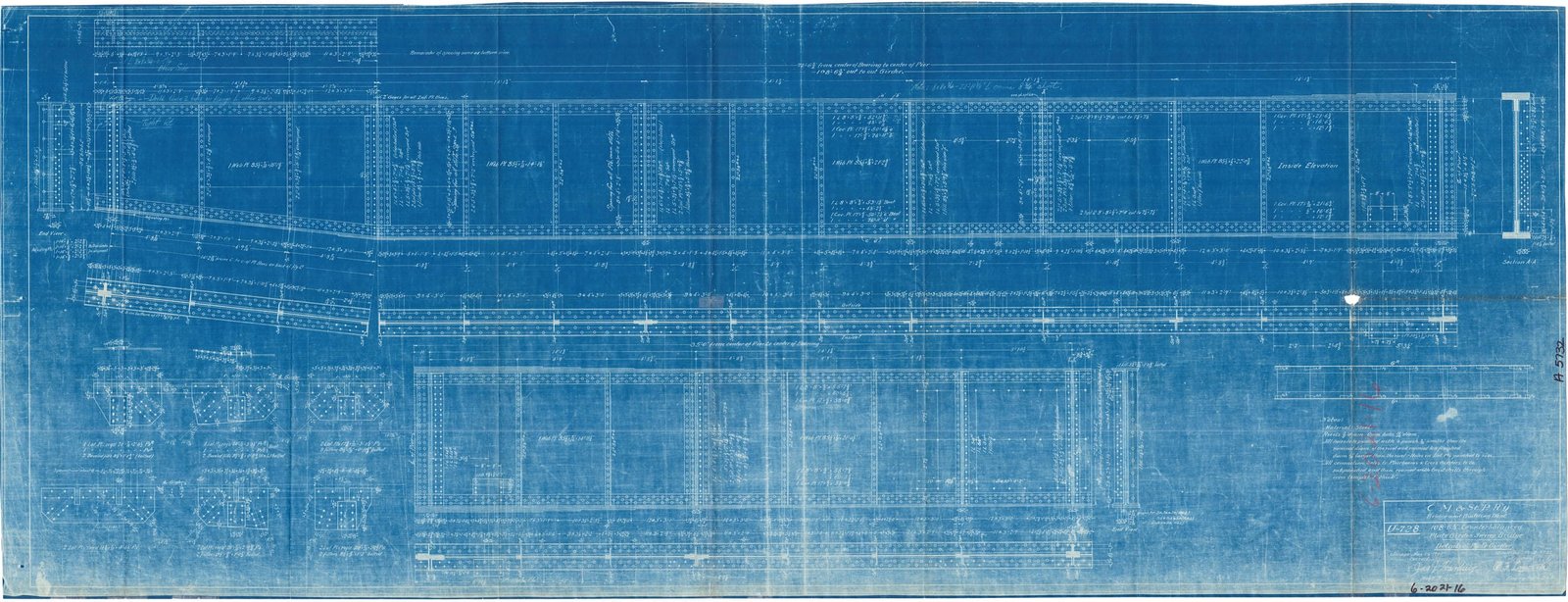
Currently, the bridge consists of a 108-foot counterbalanced through plate girder swing span, set onto concrete substructures. The swing span follows a rim-bearing design, where the superstructure is placed onto a metal drum and rotates on a roller nest. The superstructure follows a relatively standard design, with two heavy plate girders and an open deck. The railroad is set approximately two-thirds up the girders, giving the structure a "half-through" configuration. The superstructure is comprised of both a 72-foot arm (south/west side) and a 36-foot counterweight arm (north/east side). The end of the 72-foot counterweight arm is tapered, which allows for the rocker bearings to be placed underneath. The counterweight arm does not use these rocker bearings, and is square throughout. The counterweight is composed of concrete beams, which are packed into the end panels of the counterweight arm. In addition, extra iron bars have been stacked on top of the end of the counterweight arm. This additional weight appears to be a later addition, and may have been required due to alterations to the bridge. The substructures follow a standard design, with the abutments using short sloped wing walls which extend perpendicular to the bridge. The pier, drum and roller nest are all submerged underwater, and it appears that the pier uses a square shape. The drum carrying the superstructure is unusually thin, and appears to only consist of a rail instead of a plate girder design. A machinery house was once located near the center of the north /east side of the span, but was removed in the late 1990s or early 2000s. Today, the bridge continues to be turned by electricity provided from a service connection on the north side.
During the late 19th and early 20th Centuries, the Milwaukee Road designed nearly all bridges in-house. This bridge was designed by James J. Harding, Assistant Engineer under the direction of Charles Frederick Loweth, Engineer and Superintendent of Bridges & Buildings. An unknown contractor fabricated the superstructure, and the substructures were constructed by labor employed by the Milwaukee Road Bridge & Building Department. Counterbalanced, or "bobtail" spans, were infrequently used by railroads. These spans provided most of the drawbacks of a symmetrical swing span, with additional detriments in the counterbalanced design. Counterbalanced spans required precise calculations, additional costs and often required difficult engineering. This type of swing span utilizes a heavy counterweight on one arm (the counterweight arm), which offsets the longer length of the main arm of the span. The Milwaukee Road designed and implemented a number of counterbalanced swing spans throughout the system, constructing the most known spans of any railroad in the United States. Wisconsin is home to a majority of these types of spans constructed by the Milwaukee Road.
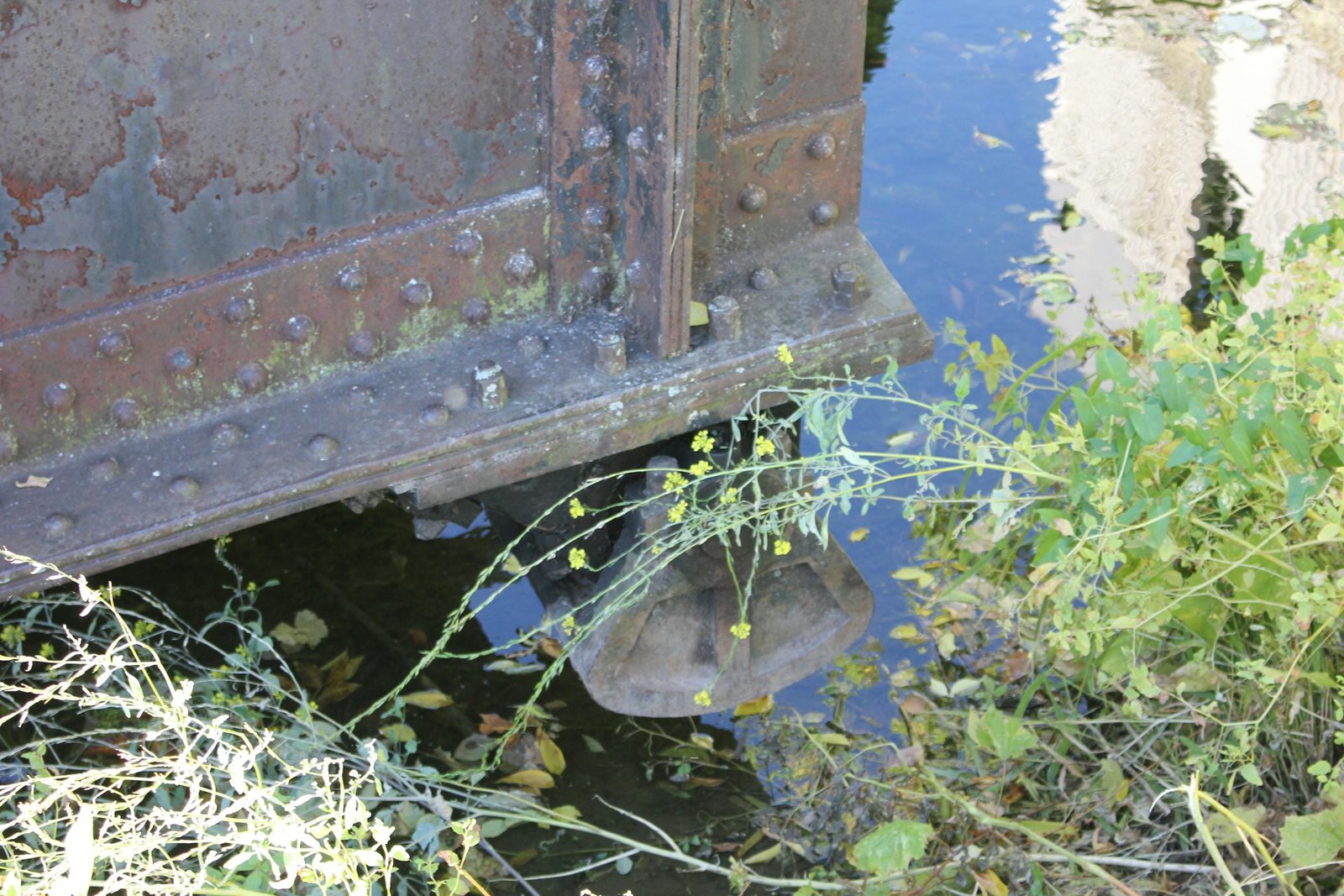
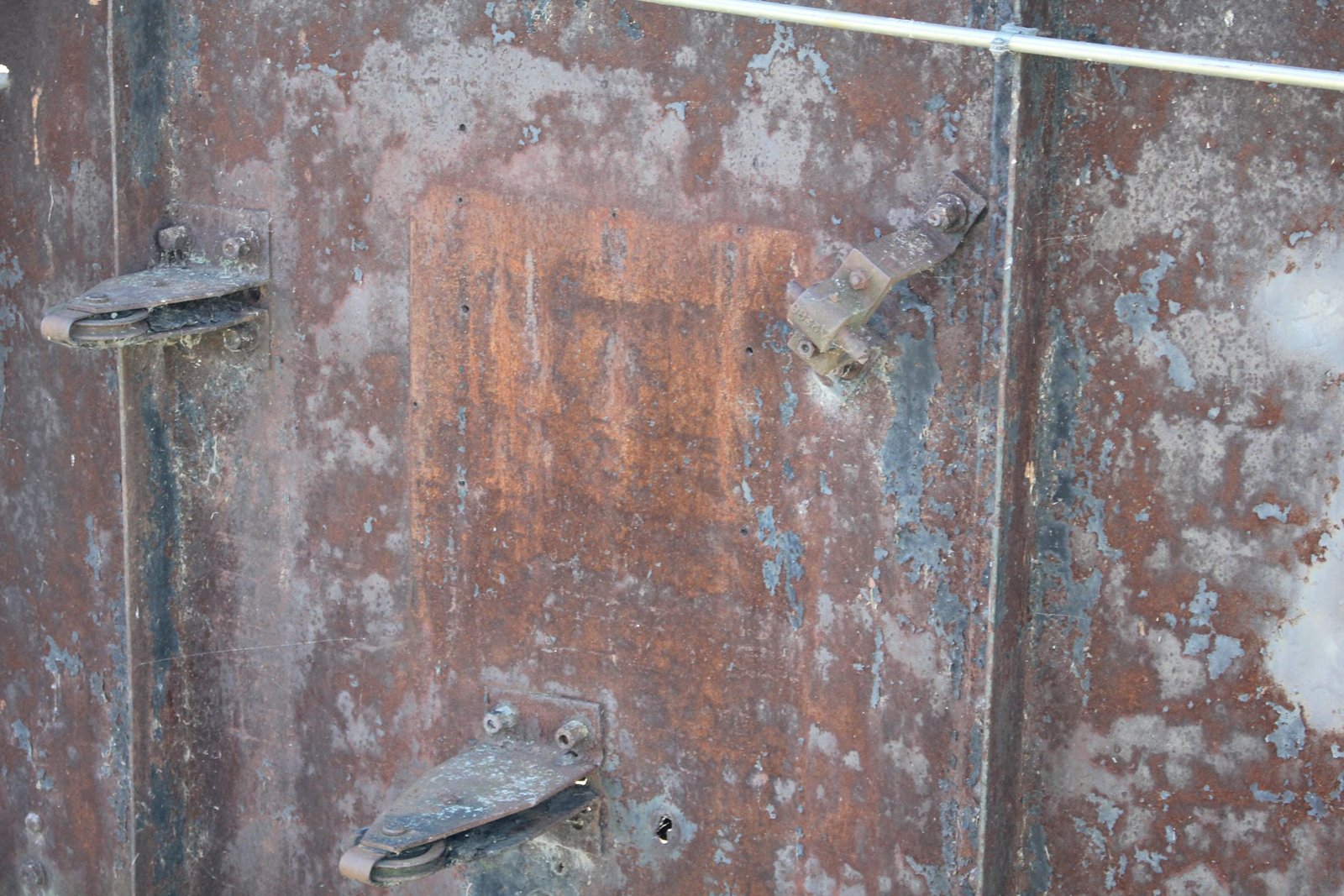
This bridge varies from traditional swing bridges in the lifting, locking and rotating mechanisms at the end of the span. When operating, the rail lifts at the end of the bridge are first operated. These mechanisms lift the rail, and allow the bridge to swing freely. Next, the locking mechanism is lifted, and the span is rotated slightly, before the operator engages the motor of the rotating mechanism. The operator then stops the rotation by cutting power to the motor or by applying a brake. Many traditional swing spans use wedges driven at the end to lift the span after the locking mechanism was disengaged. The Milwaukee Road designed a different mechanism for this function. At the end of the 72-foot arm, a cam shaped end lift shoe rotates about an axis perpendicular to the railroad, causing the span to raise or lower. In closed position, this shoe acts as a rocker bearing, absorbing small expansions and contractions. A shaft running longitudinally under the bridge carried power from the motor to the end shoes. Since the initial construction, the bridge has seen a few changes and remains in regular use. The span is typically parked in open position unless a train needs to cross. Overall, the bridge appears to be in fair to good condition, and retains a high level of historic integrity. The author has ranked this bridge as being regionally significant, due to the unique design.
Citations
| Build date | Milwaukee Road Drawing Collection, located at the Milwaukee Road Archives at the Milwaukee Public Library |
| Railroad History Citation | ICC Valuation Information, Compiled by Richard S. Steele |