




Click the photo to view the full-size version
| Name | Porlier Street Railroad Bridge Chicago, Milwaukee & St. Paul Railway Bridge #U-222 |
| Built By | Chicago, Milwaukee & St. Paul Railway |
| Currently Owned By | City of Green Bay |
| Superstructure Contractor | Unknown |
| Length | 715 Feet Total, 201 Foot Main Span |
| Width | 1 Track |
| Height Above Ground | 15 Feet (Estimated) |
| Superstructure Design | Warren Through Truss and Timber Pile Trestle |
| Substructure Design | Concrete and Timber Pile |
| Date Built | 1902 |
| Date Removed | 2014 |
| Traffic Count | 0 Trains/Day (Bridge has been Mostly Removed) |
| Current Status | Removed but not replaced; East Approach Closed To Traffic |
| Chicago, Milwaukee & St. Paul Railway Bridge Number | U-222 |
| Significance | Moderate Significance |
| Documentation Date | 9/27/2014 |
In 1870, the Milwaukee & Northern Railway (M&N) was charted to construct a railroad line between Milwaukee, Wisconsin and the Upper Peninsula of Michigan. Construction began the same year, and by the end of 1870, 13 miles had been constructed to Cedarburg, Wisconsin. In 1872, the railroad extended an additional 73 miles to Hilbert Junction, Wisconsin, and also constructed a branch line to Meshasha, Wisconsin. In 1873, an additional 27 miles would be completed to Green Bay. In 1874, the M&N completed a bridge across the Fox River, reaching Fort Howard, Wisconsin. In 1880, the M&N acquired the Ontonagon & Brule River Railroad (O&BR), which was planning a line through the Upper Peninsula of Michigan. In 1881, the O&BR constructed 20 miles between Rockland, Michigan and Ontonagon, Michigan. An additional 24 miles of track would be constructed by the M&N the same year, reaching a point near Stiles, Wisconsin. The following year, an additional 15 miles would be constructed to near Coleman, Wisconsin; followed by 22 more miles to Wausaukee, Wisconsin in 1883. In 1884, 10 more miles of track were completed to Amberg, Wisconsin, followed by an additional 20 miles to the Menominee River in 1886. In 1887, the M&N extended an additional 58 miles to Champion, Michigan. Between 1888 and 1889, the M&N extended to Sidnaw, Michigan; and in 1889, the O&BR extended an additional 26 miles from Rockland to Sidnaw to complete the line. The following year, the O&BR was fully absorbed by the M&N. In 1893, the M&N was acquired by the Chicago, Milwaukee & St. Paul Railway (Milwaukee Road).
This line quickly became a mainline for the Milwaukee Road, connecting Lake Superior to Milwaukee, and serving valuable metal deposits in the Upper Peninsula of Michigan. Throughout the late 19th and early 20th Century, the Milwaukee Road greatly expanded throughout the Midwest, acquiring and constructing numerous lines. By the early 20th Century, the Milwaukee Road was among the largest railroads in the United States, operating a network of railroad lines over 10,000 miles in length. The Milwaukee Road was often in financial trouble, especially after the costly Pacific Extension was completed in 1909. In 1925, the company declared bankruptcy, and reorganized as the Chicago, Milwaukee, St. Paul and Pacific Railroad in 1928. The railroad remained afloat through much of the 20th Century, although it remained in financial trouble. The railroad again entered bankruptcy in 1977 and was forced to liquidate unprofitable lines. In 1980, the Escanaba & Lake Superior Railroad (E&LS) purchased the line between Iron Mountain, Michigan; followed by the E&LS acquiring the Iron Mountain to Green Bay segment as part of a lease-to-own agreement in 1982. The State of Michigan and the State of Wisconsin both invested significant capital into upgrading the route, including replacing rail and ties.
By 1985, a suitor for the Milwaukee Road was being sought, and the Soo Line Railroad, controlled by Canadian Pacific Railway (CP) purchased the Milwaukee Road in 1986. A connection between the Chicago & North Western Railway (C&NW) and the E&LS was created at Howard, Wisconsin the same year, allowing the E&LS to discontinue use of the line between Howard and Green Bay. In 1987, the Milwaukee to Green Bay segment was sold to the Wisconsin Central, Ltd. (WC). The WC was formed to purchase a number of secondary routes in eastern Wisconsin from the Soo Line, which included Soo Line and former Milwaukee Road trackage. A portion of the route between Greenleaf and Green Bay was abandoned in approximately 2000, followed by the segment between Hilbert and Greenleaf in 2001. In 2001, the WC was purchased by Canadian National Railway. The E&LS abandoned a segment between Rockland and Ontonagon in 2009. In approximately 2004, the State of Wisconsin acquired a segment of line between Saukville, Wisconsin and Kiel, Wisconsin; and leased it to the Wisconsin & Southern Railroad (WSOR). The line between North Milwaukee and Saukville was purchased by the WSOR in 2015. Today, WSOR operates the North Milwaukee to Kiel segment as the Plymouth Subdivision; and CN operates the Hilbert to Kiel segment. A portion of the line from Hilbert to Green Bay is part of the Fox River Trail; and a segment from Rockland to Ontonagon is also used as a trail.
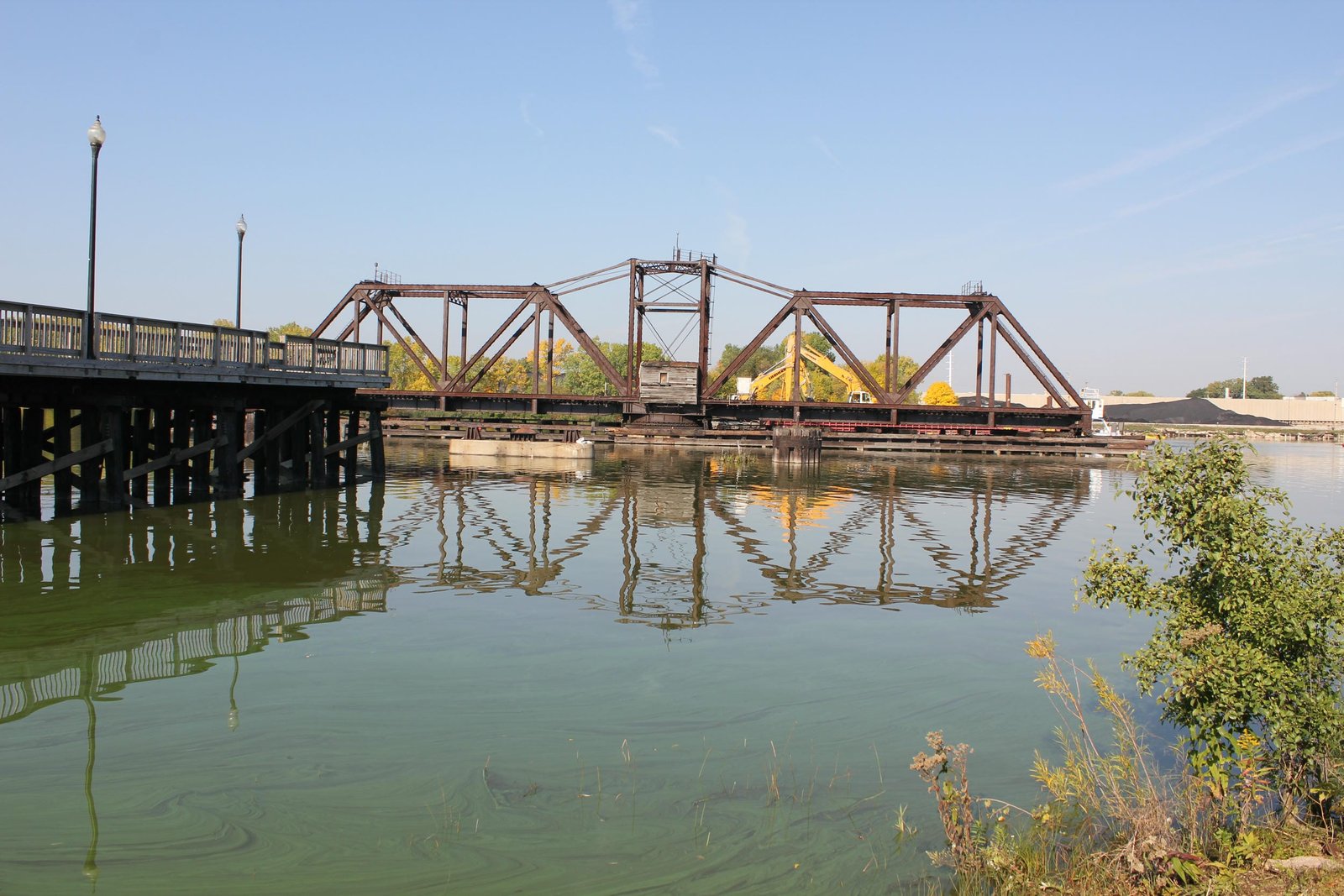
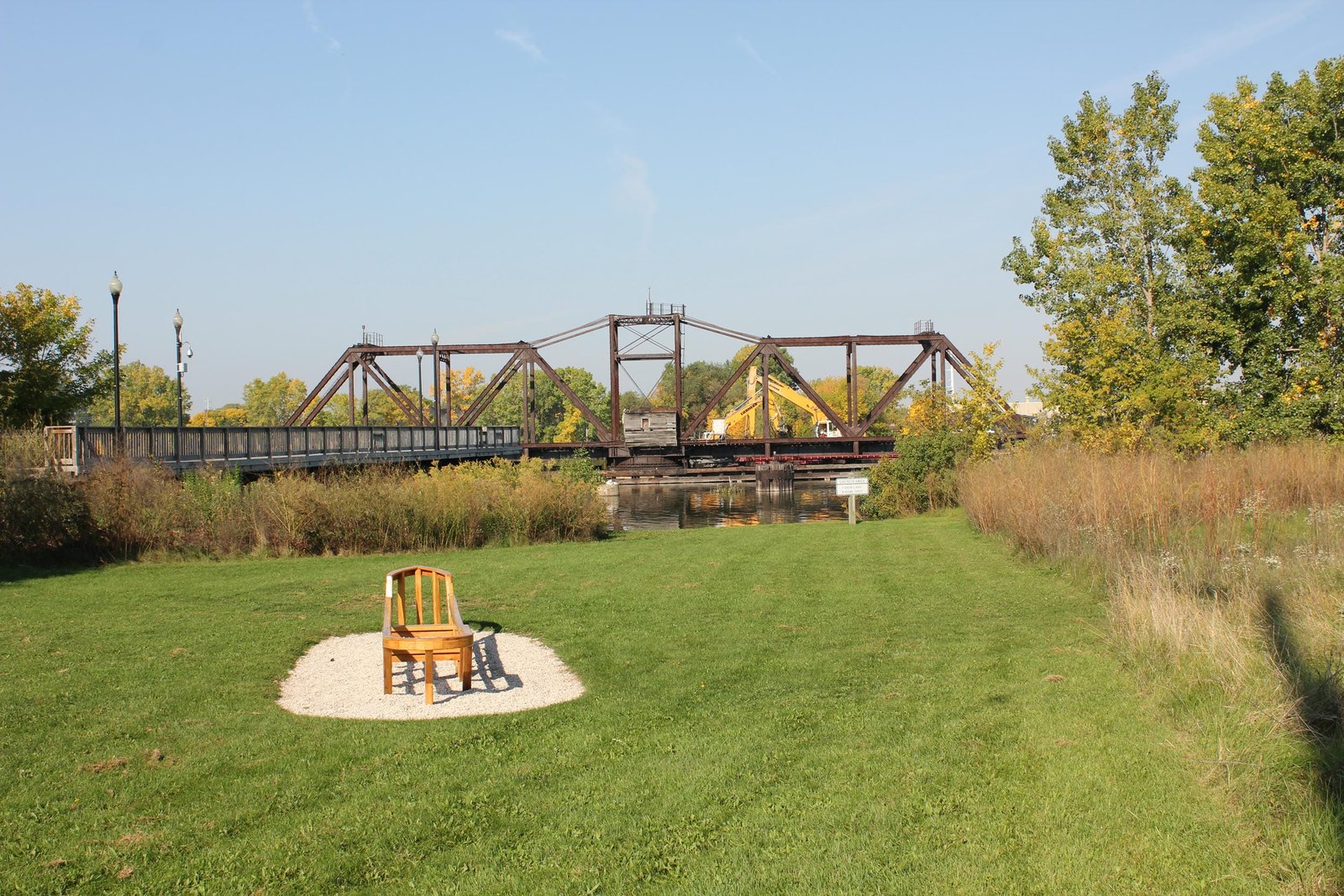
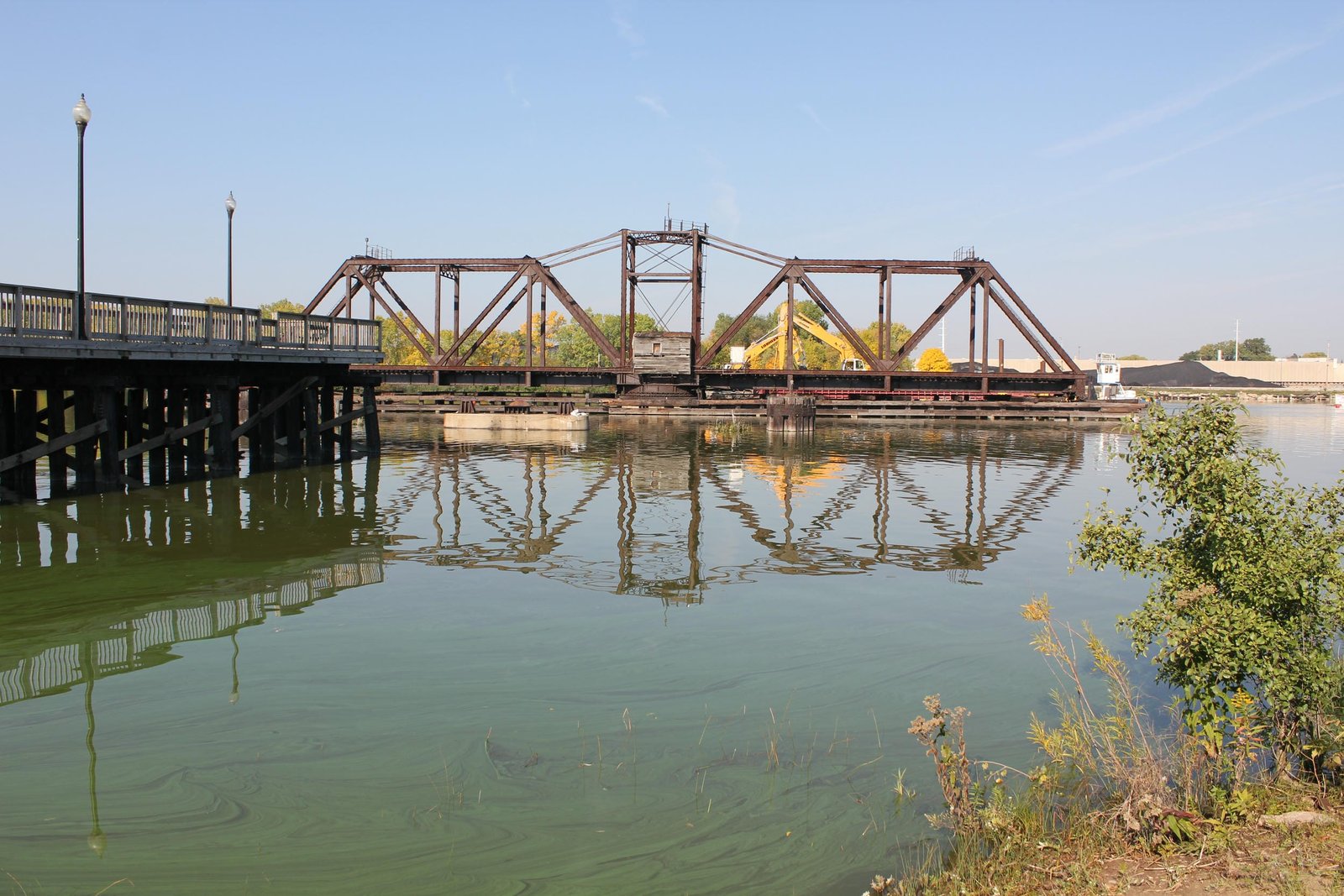
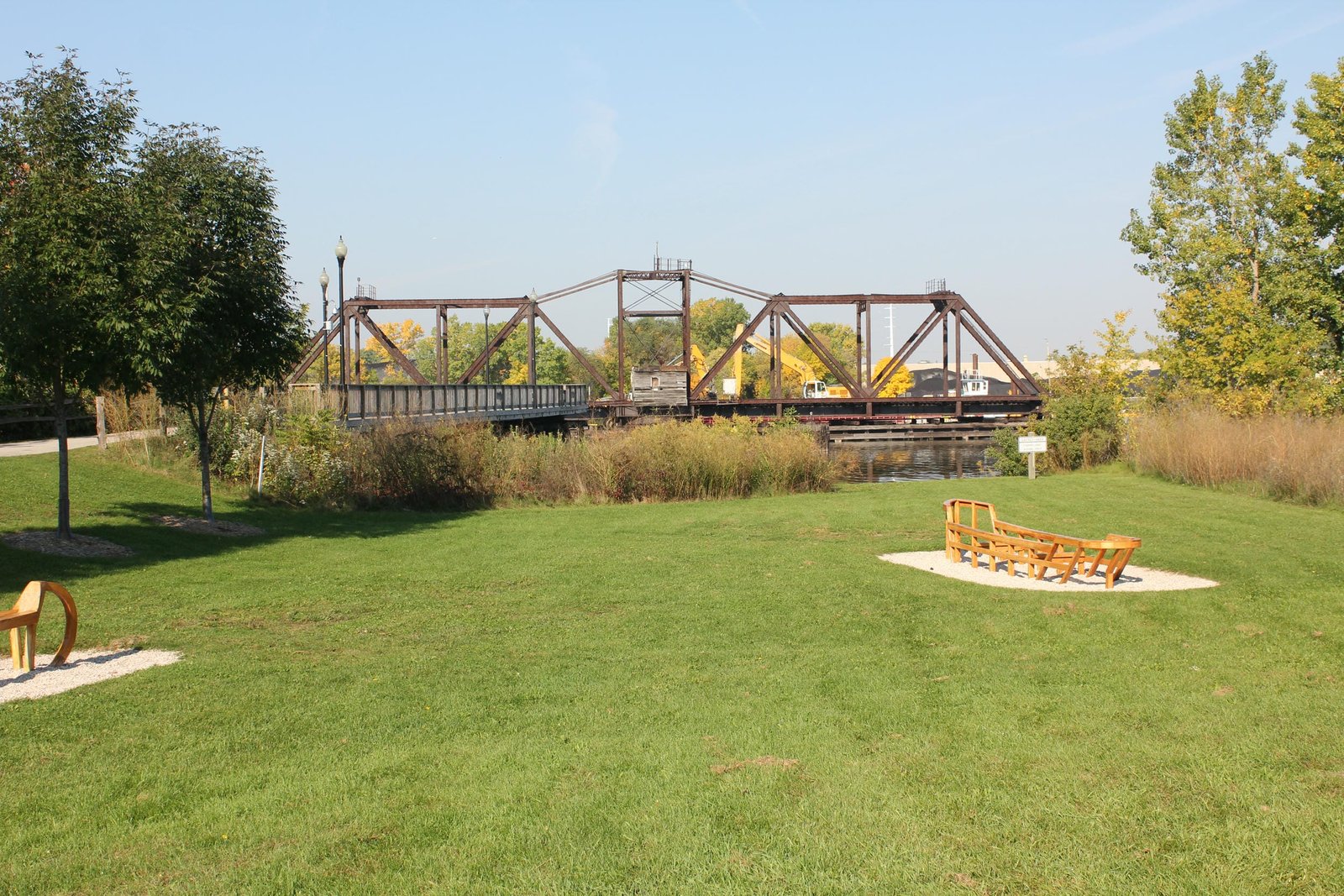
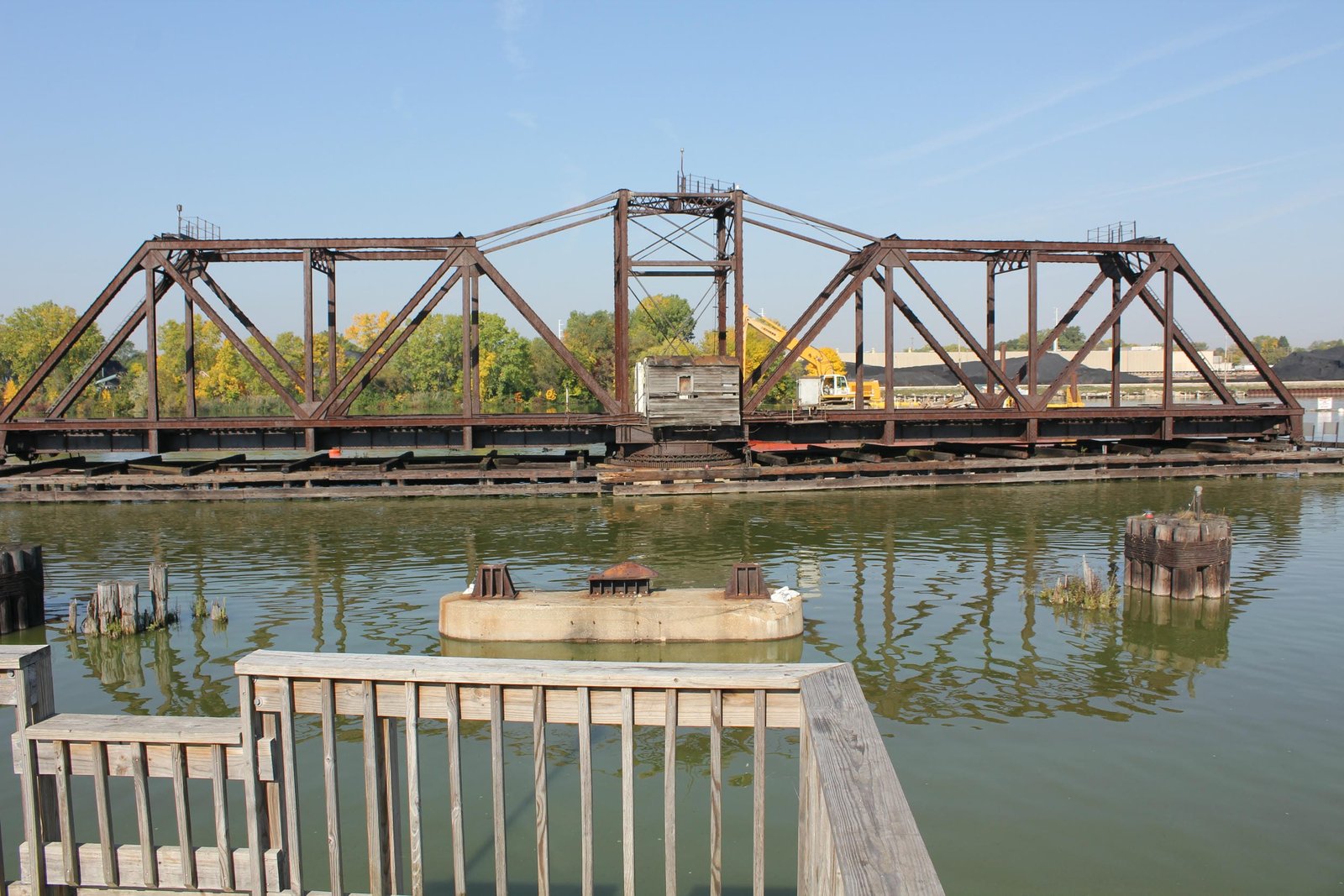
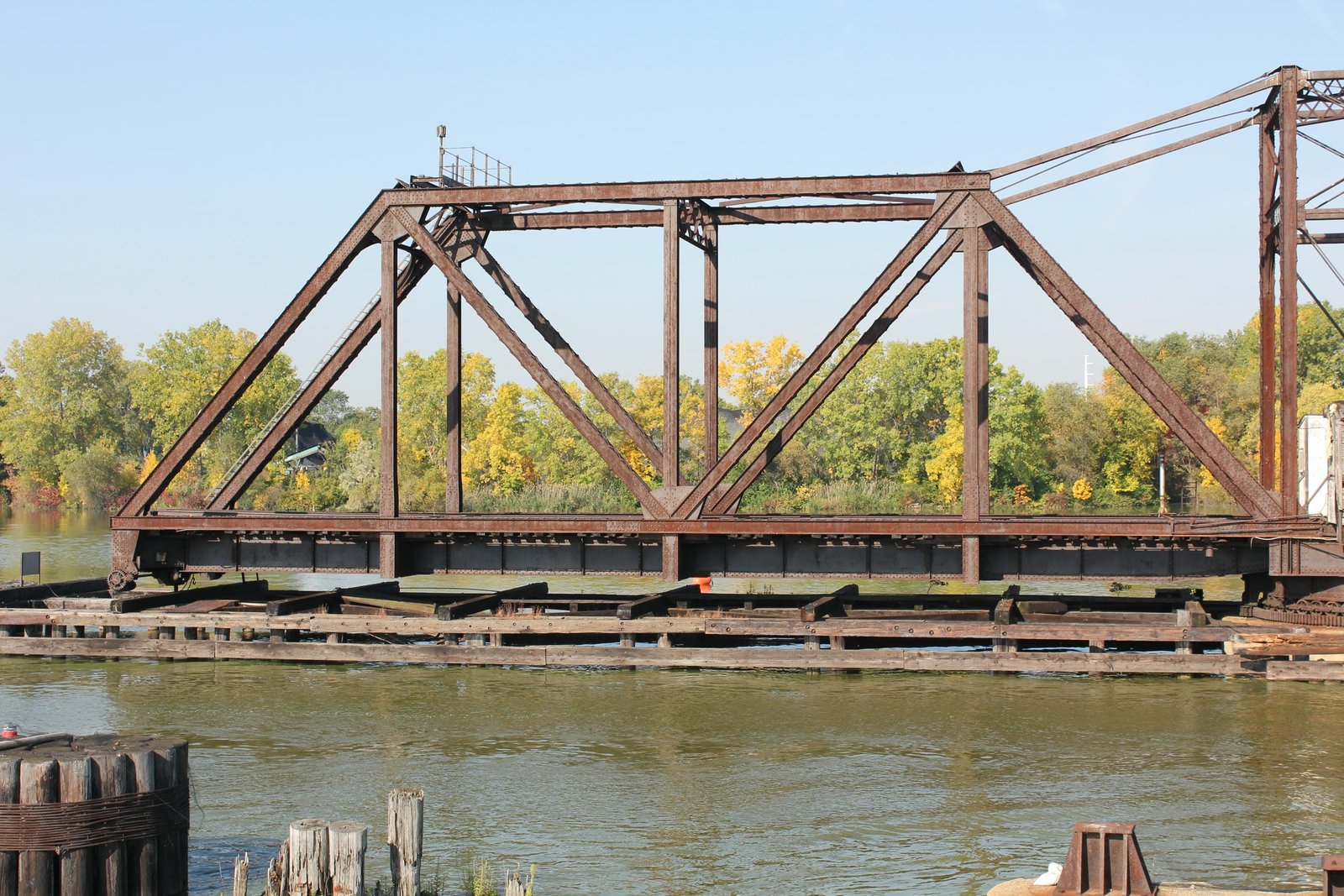
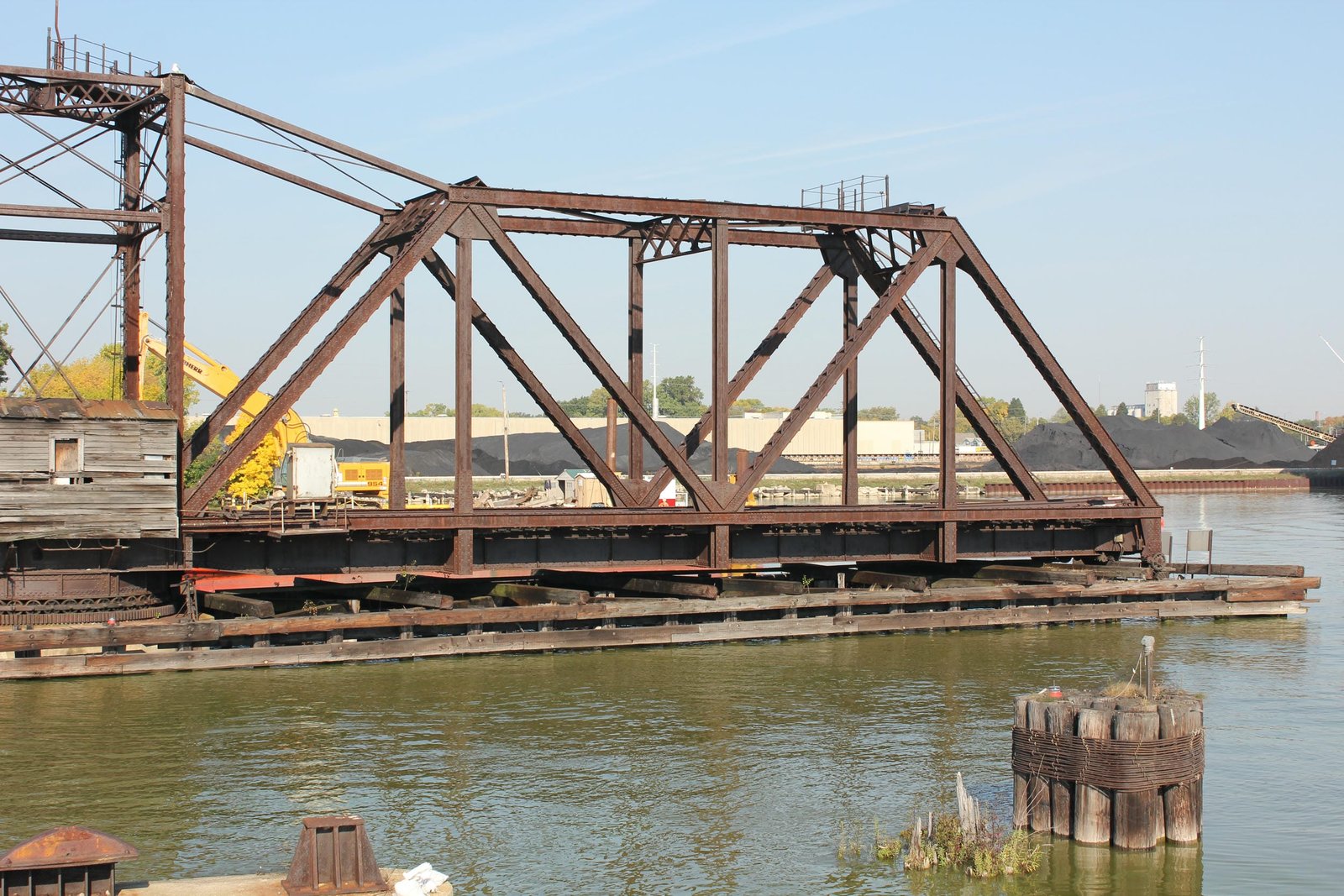
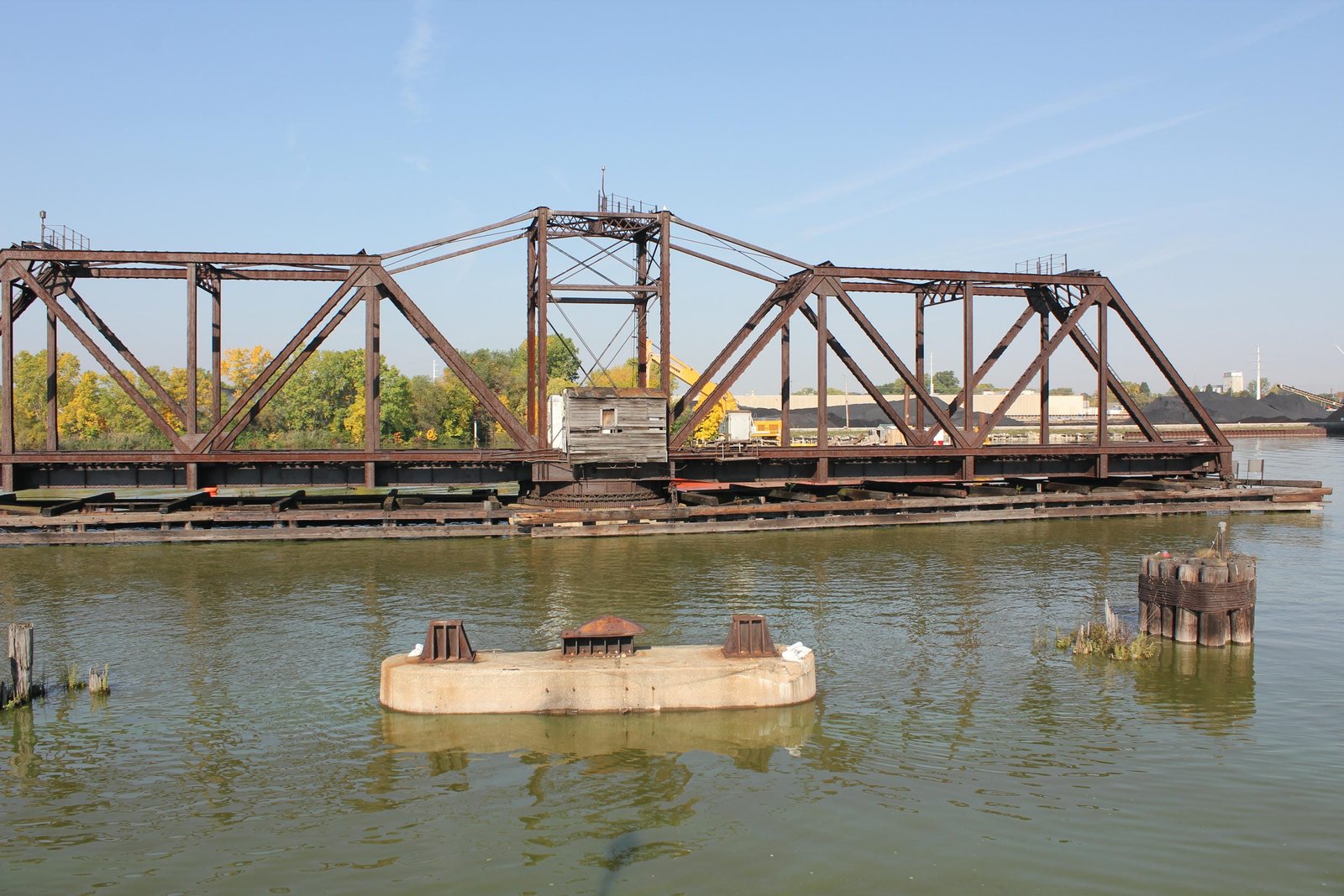
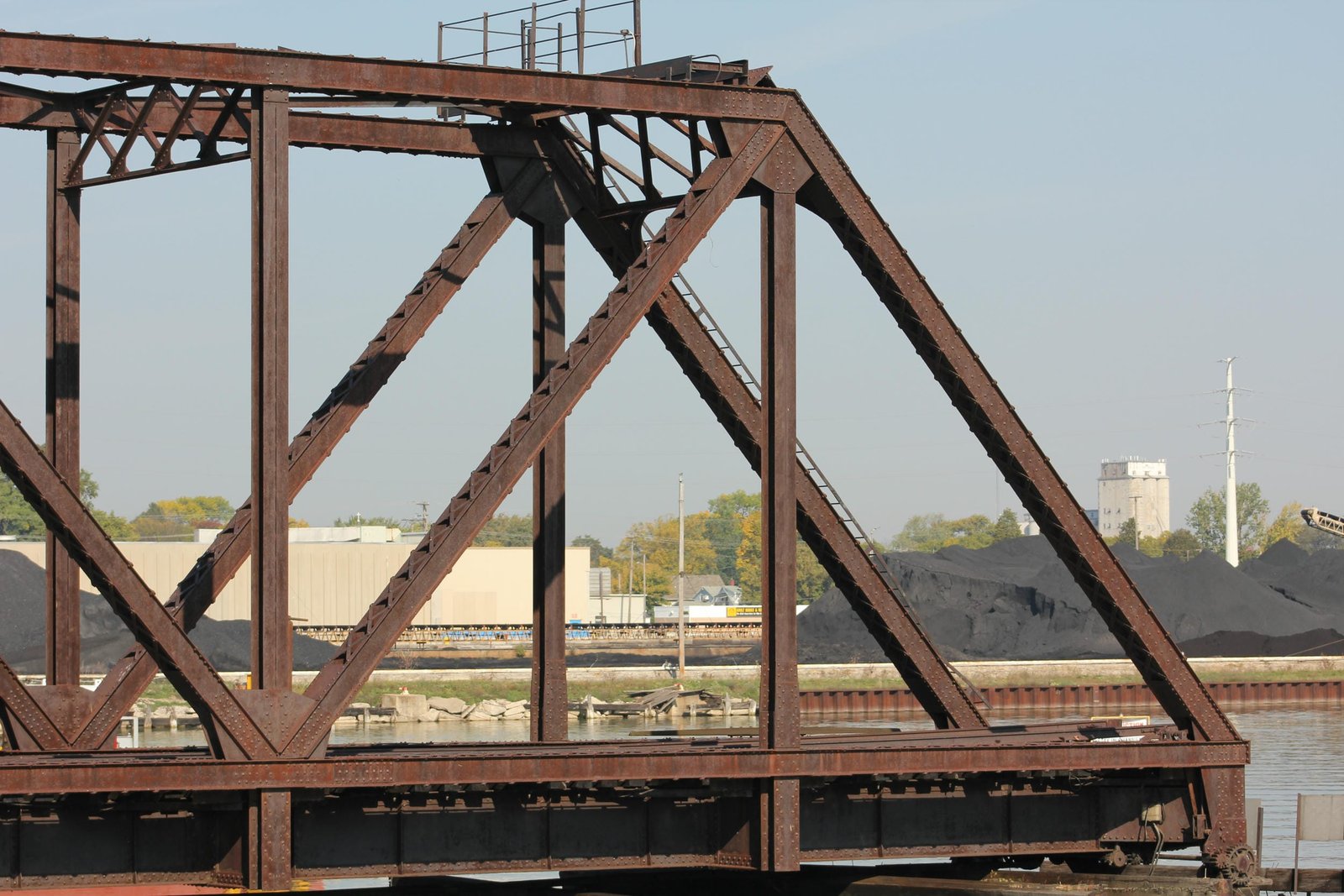
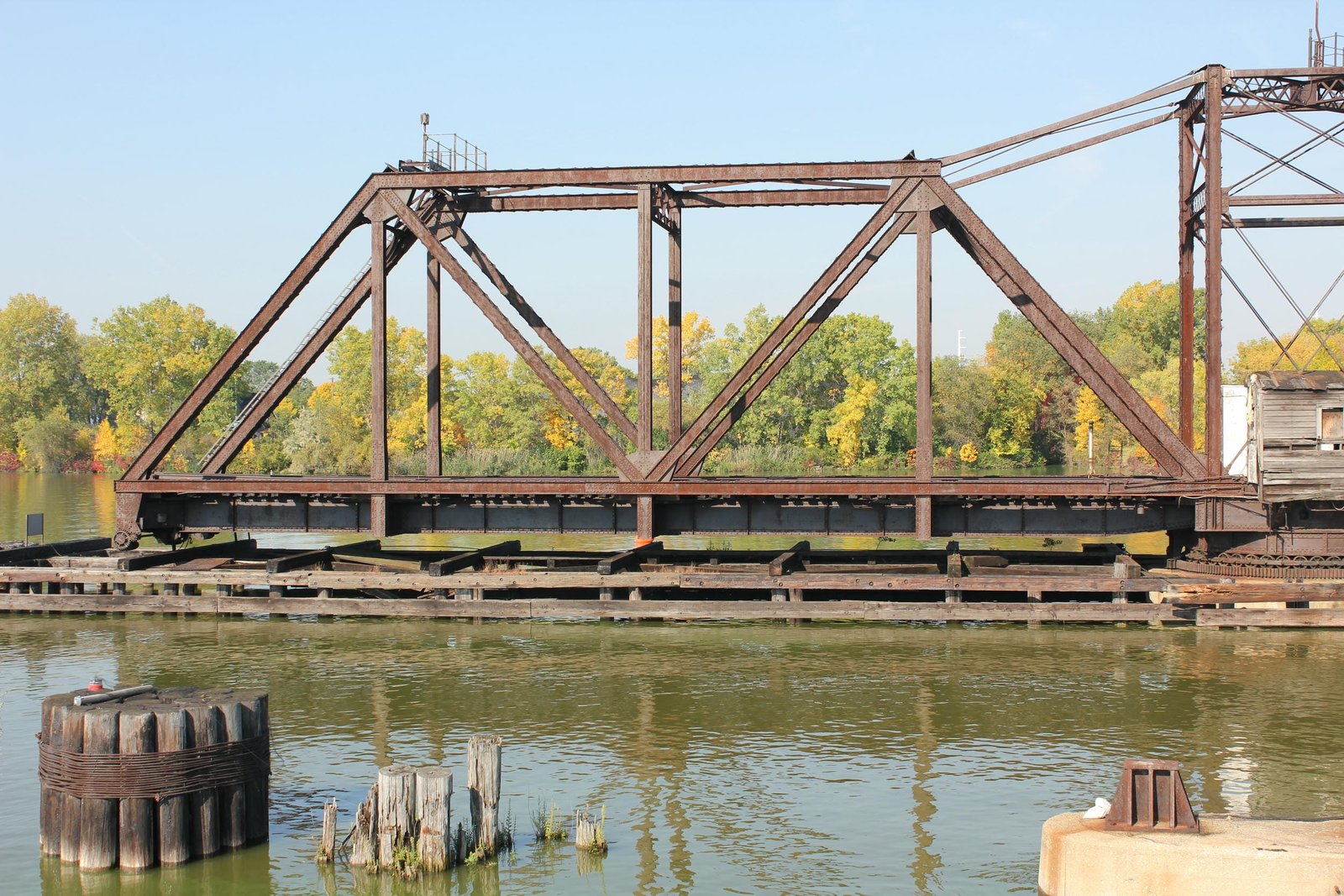
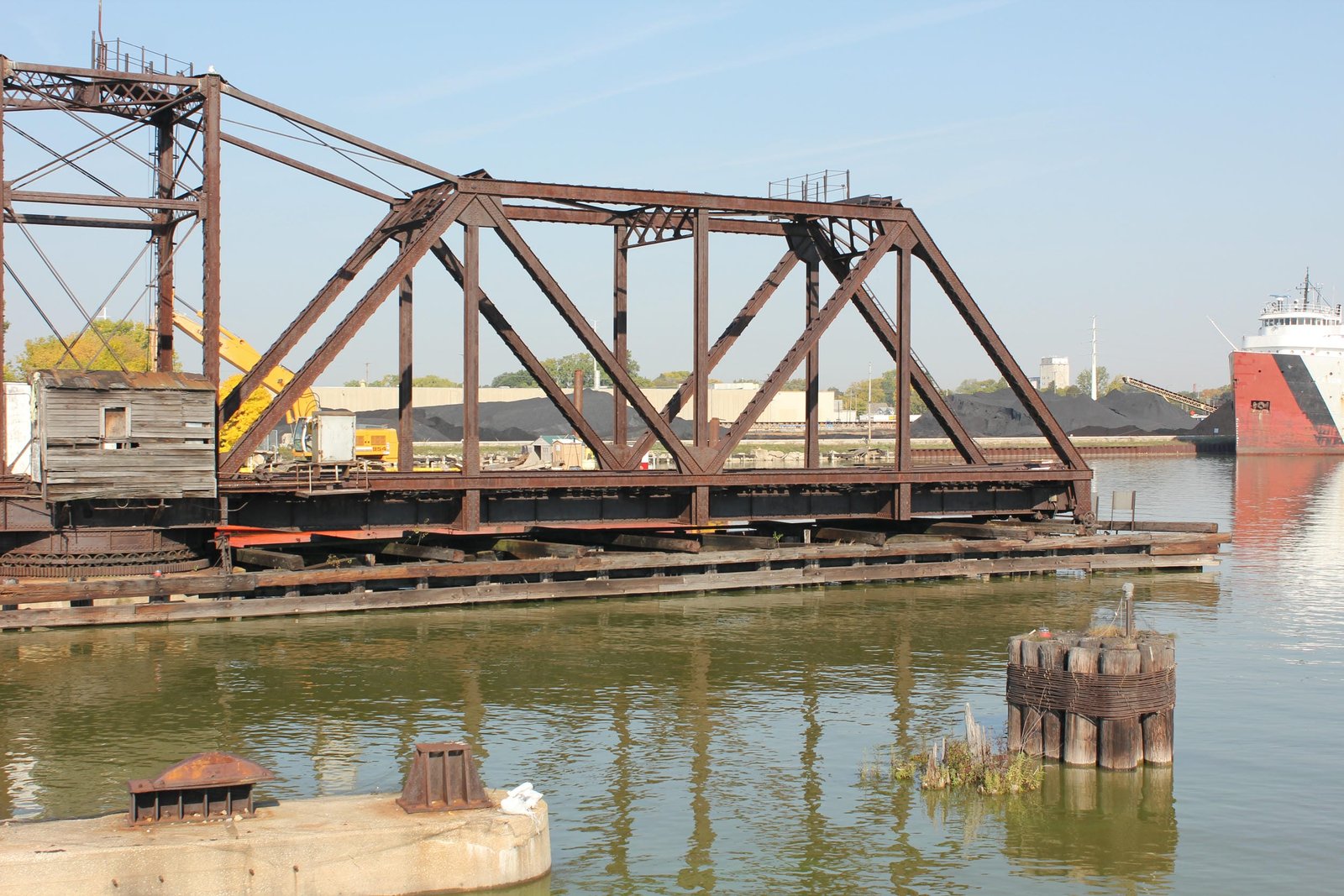
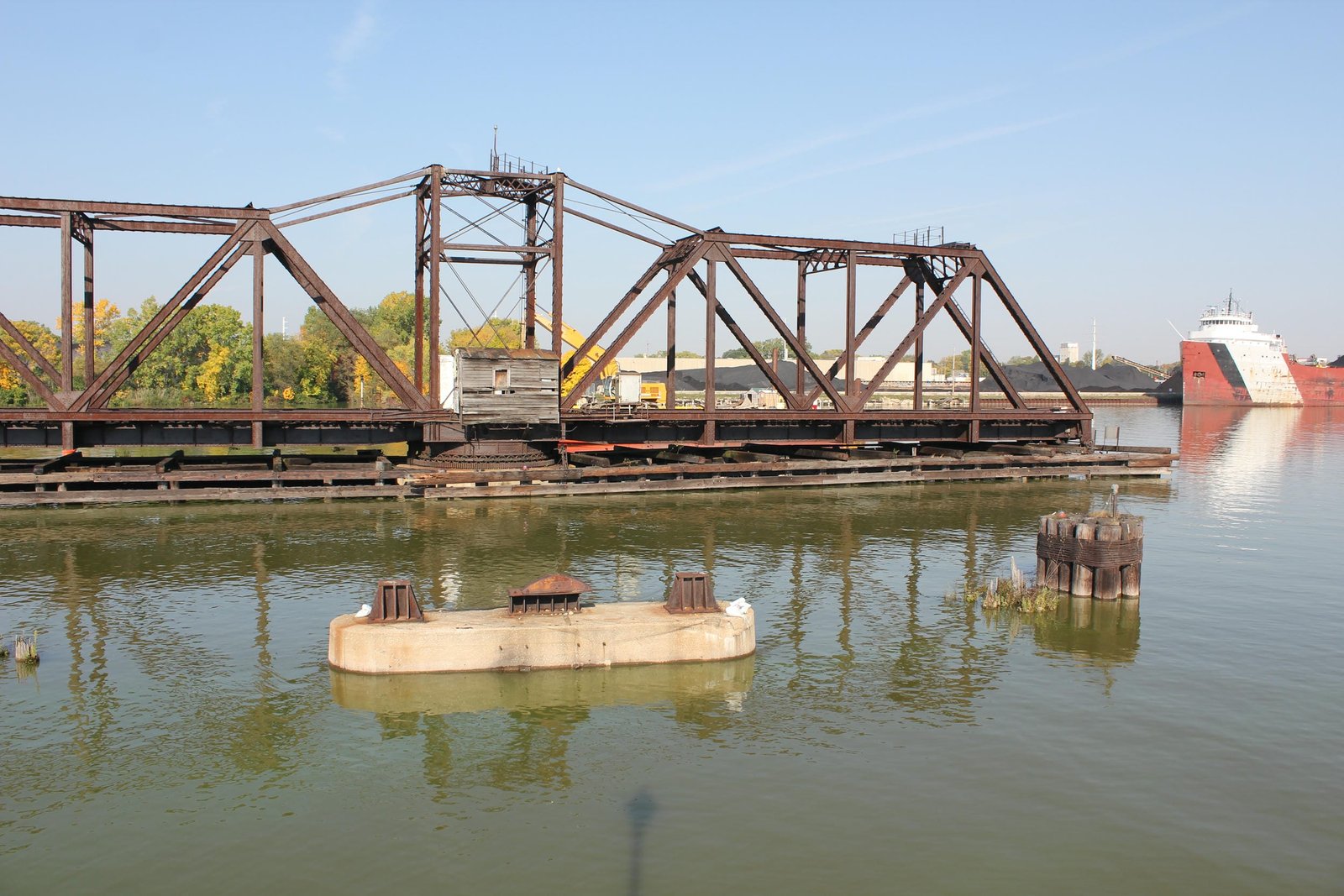
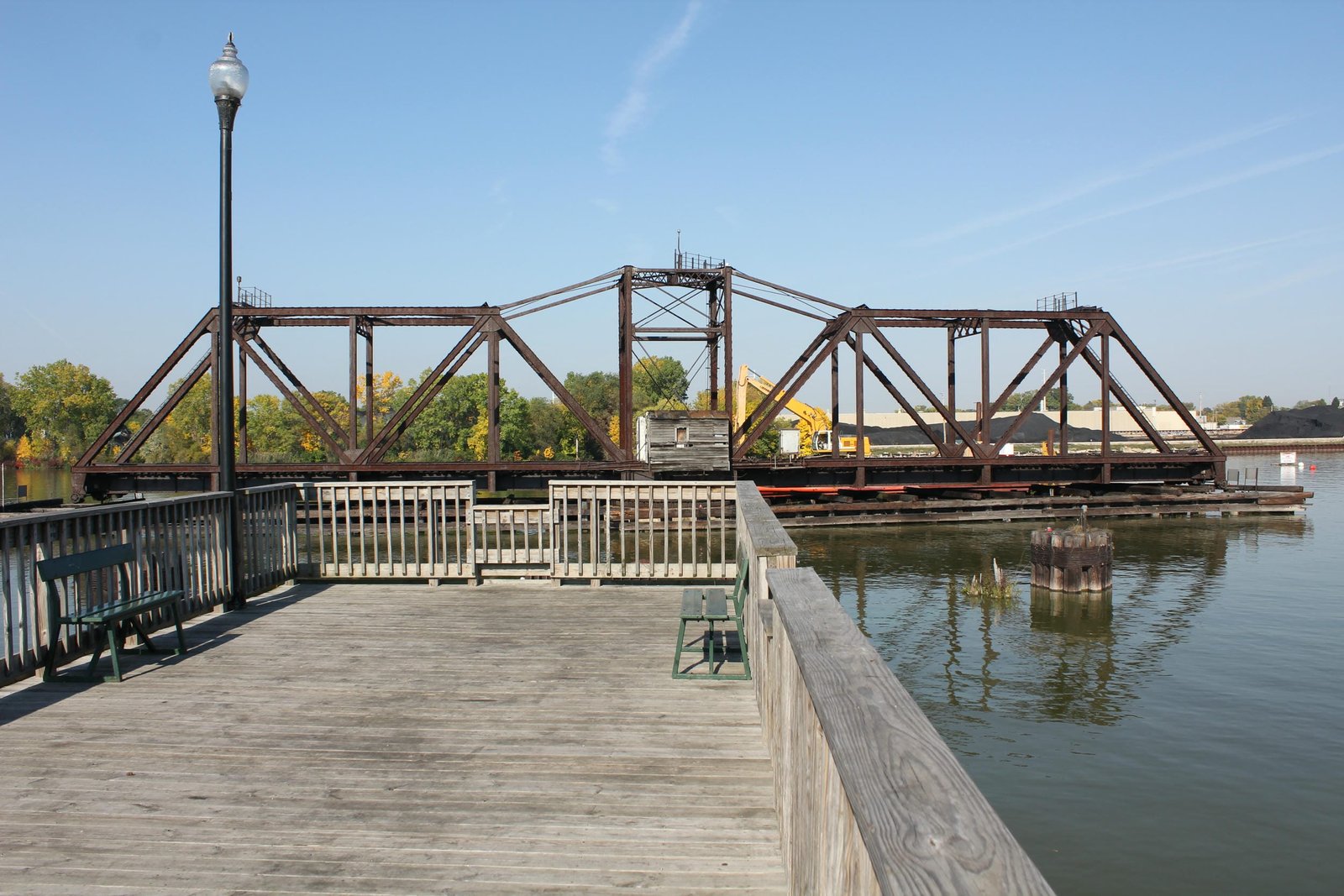
Located at Porlier in Green Bay, this large through truss swing bridge once carried the former Chicago, Milwaukee, St. Paul & Pacific Railroad (Milwaukee Road) mainline over the Fox River. The first bridge at this location was likely a timber swing bridge, constructed when the line was first built. In 1881, the first bridge was replaced by a 204-foot combination Howe through truss swing span, set onto timber pile piers and approached by timber pile trestle spans. Wooden trusses were commonly used by railroads for early bridges, as they were inexpensive and easy to construct. By the turn of the 20th Century, wooden truss bridges had become obsolete for most railroad uses, and railroads sought to replace the structures with modern steel structures. In 1901, the Milwaukee Road began planning a replacement bridge at this location, and the structure was completed in 1902. The bridge consisted of a 201-foot, 8-panel, riveted rim-bearing Warren through truss swing span, set onto concrete piers and approached by timber pile trestle spans on either end. The replacement of this bridge came at a time when the Milwaukee Road was upgrading many of its outdated timber swing bridges in northeast Wisconsin. A similar bridge was constructed at Oshkosh, Wisconsin in 1904. Typical of Milwaukee Road designed swing spans from the era, the truss made extensive use of built-up members, used a decorative lattice portal and used a unique end lift mechanism.
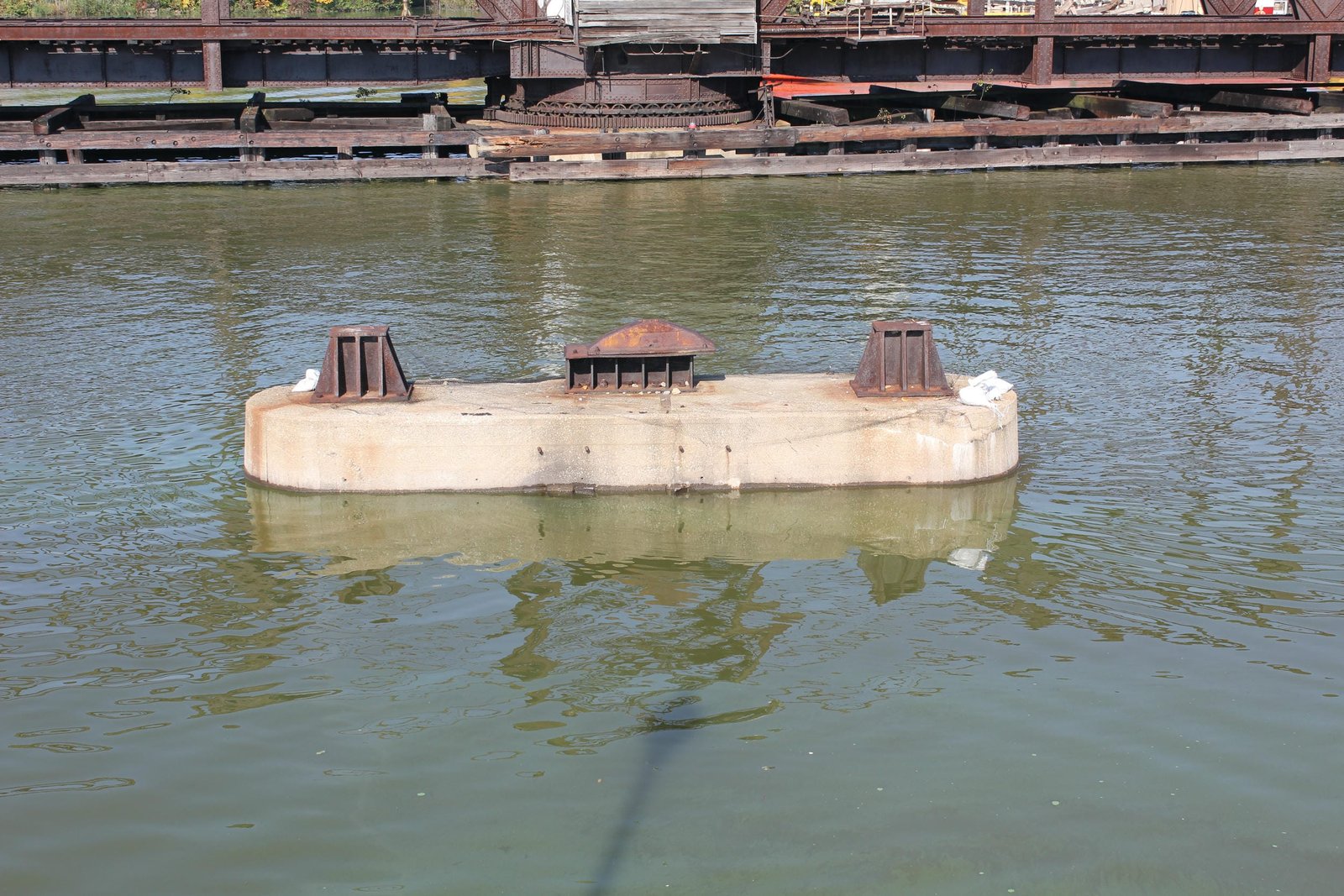
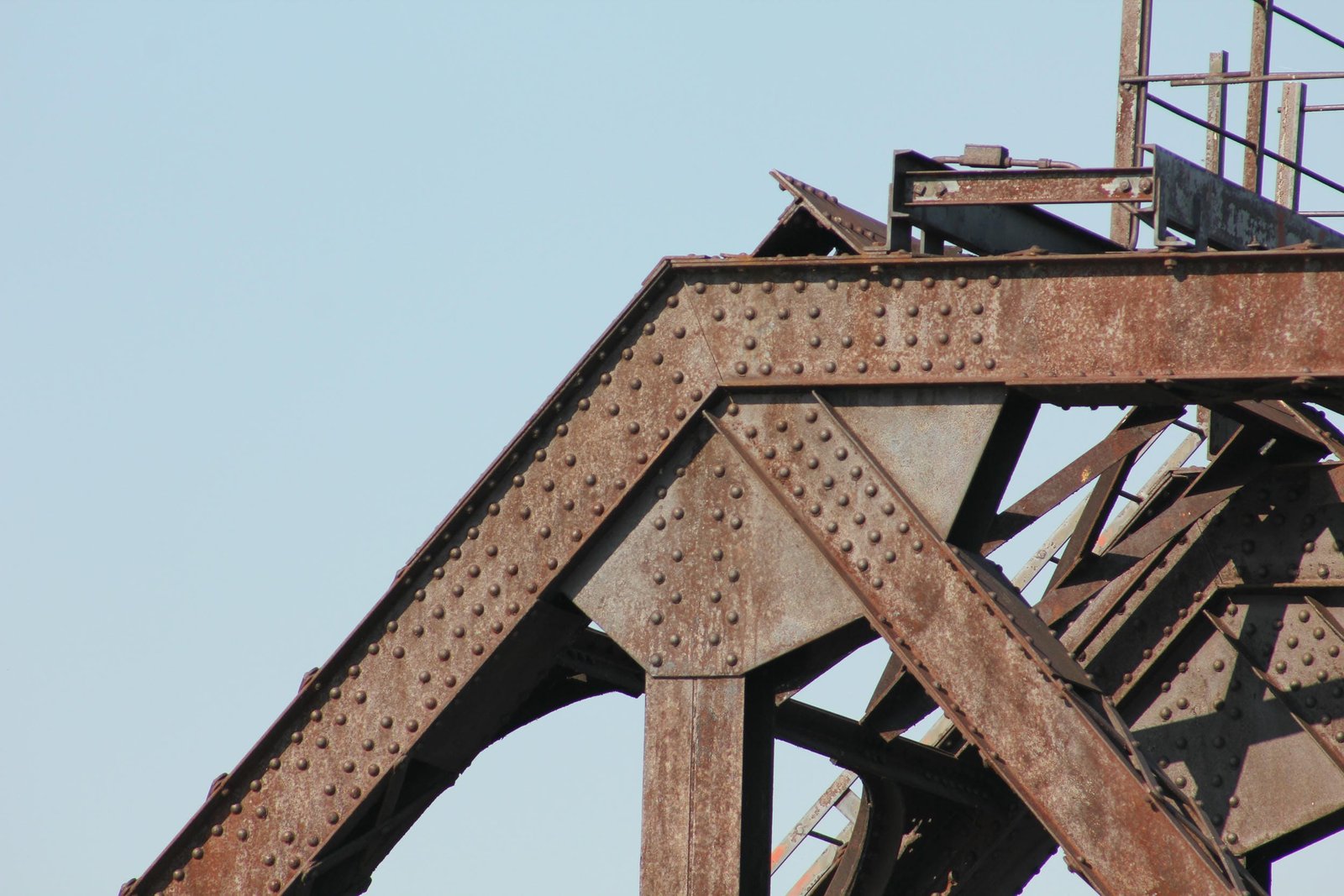
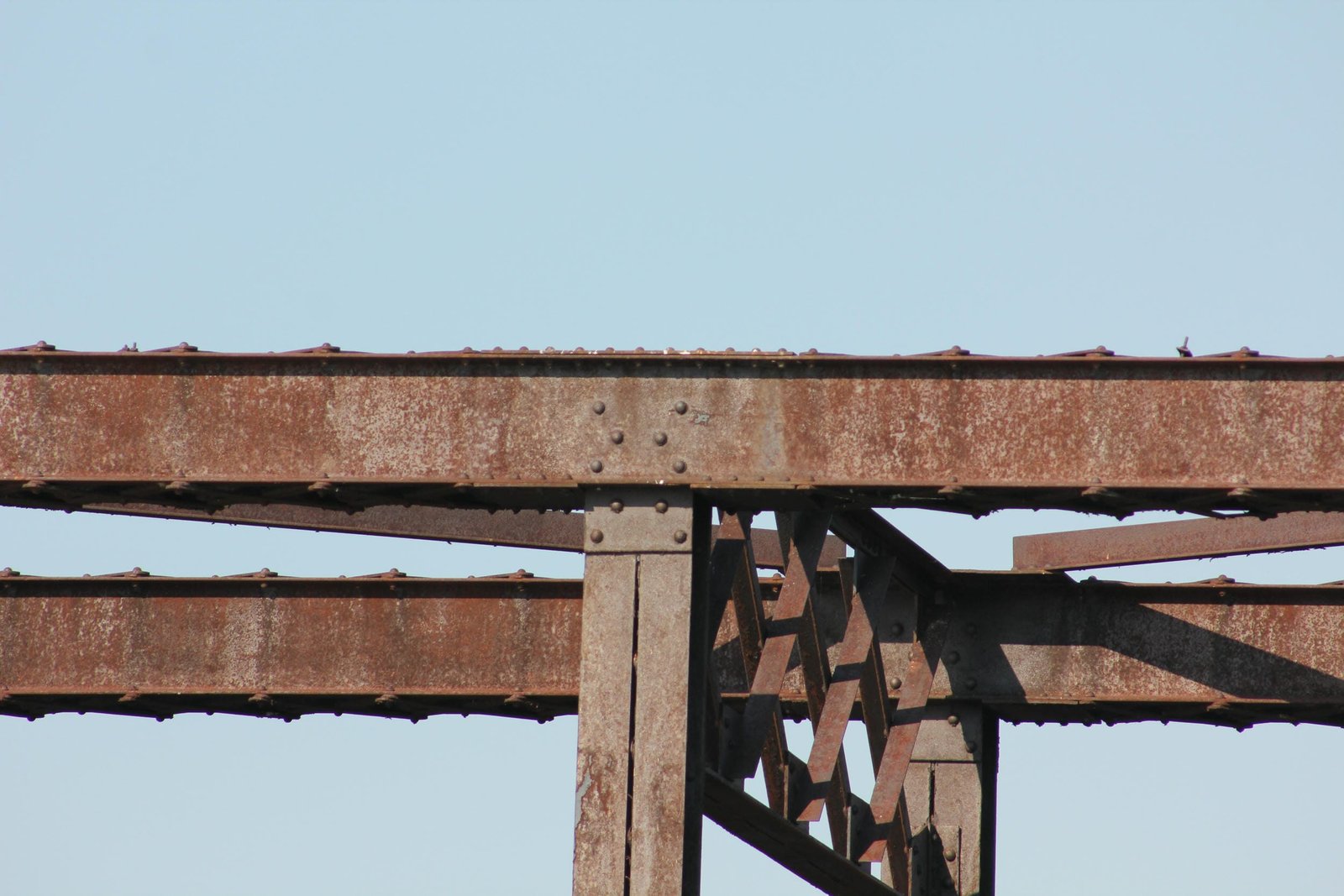
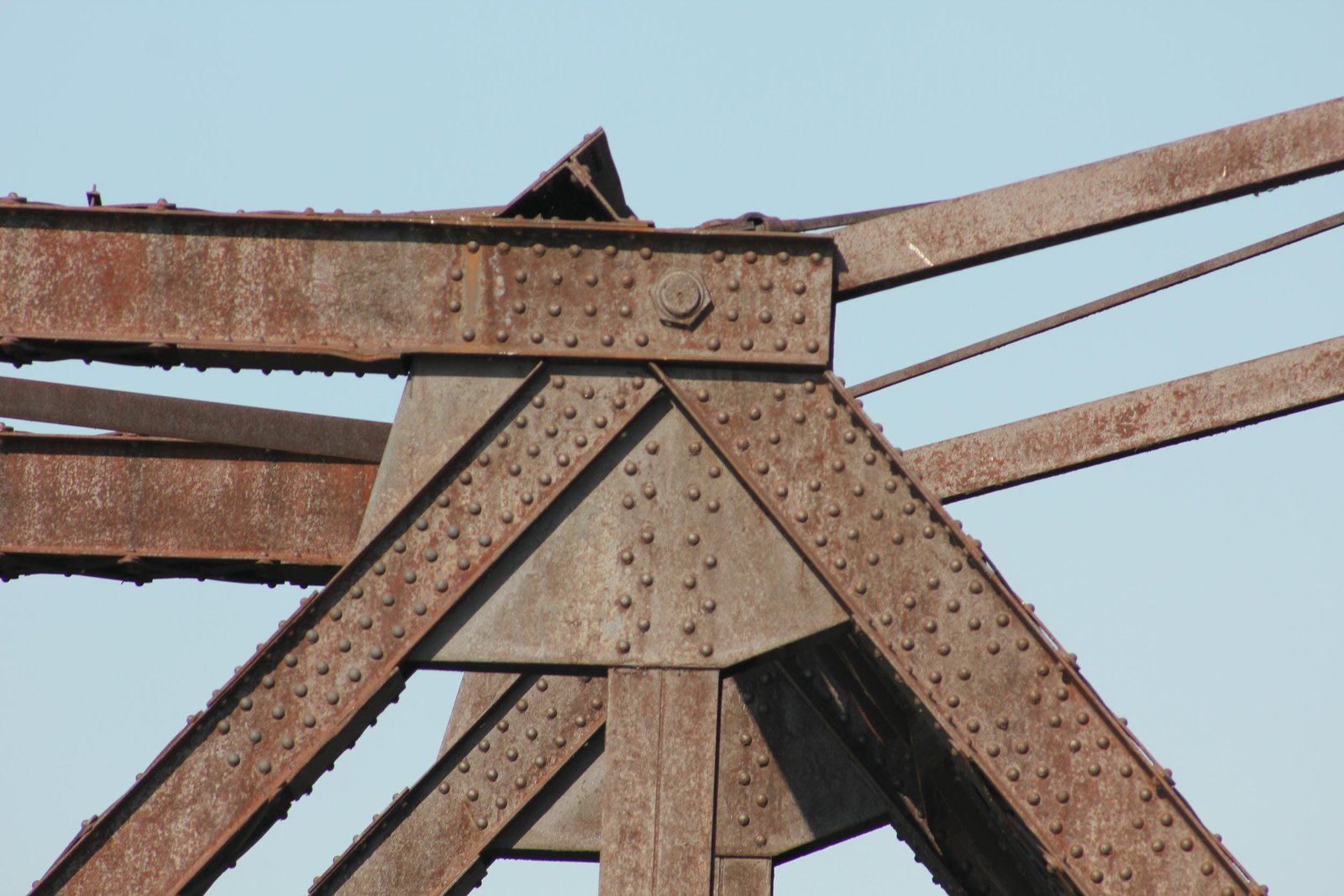
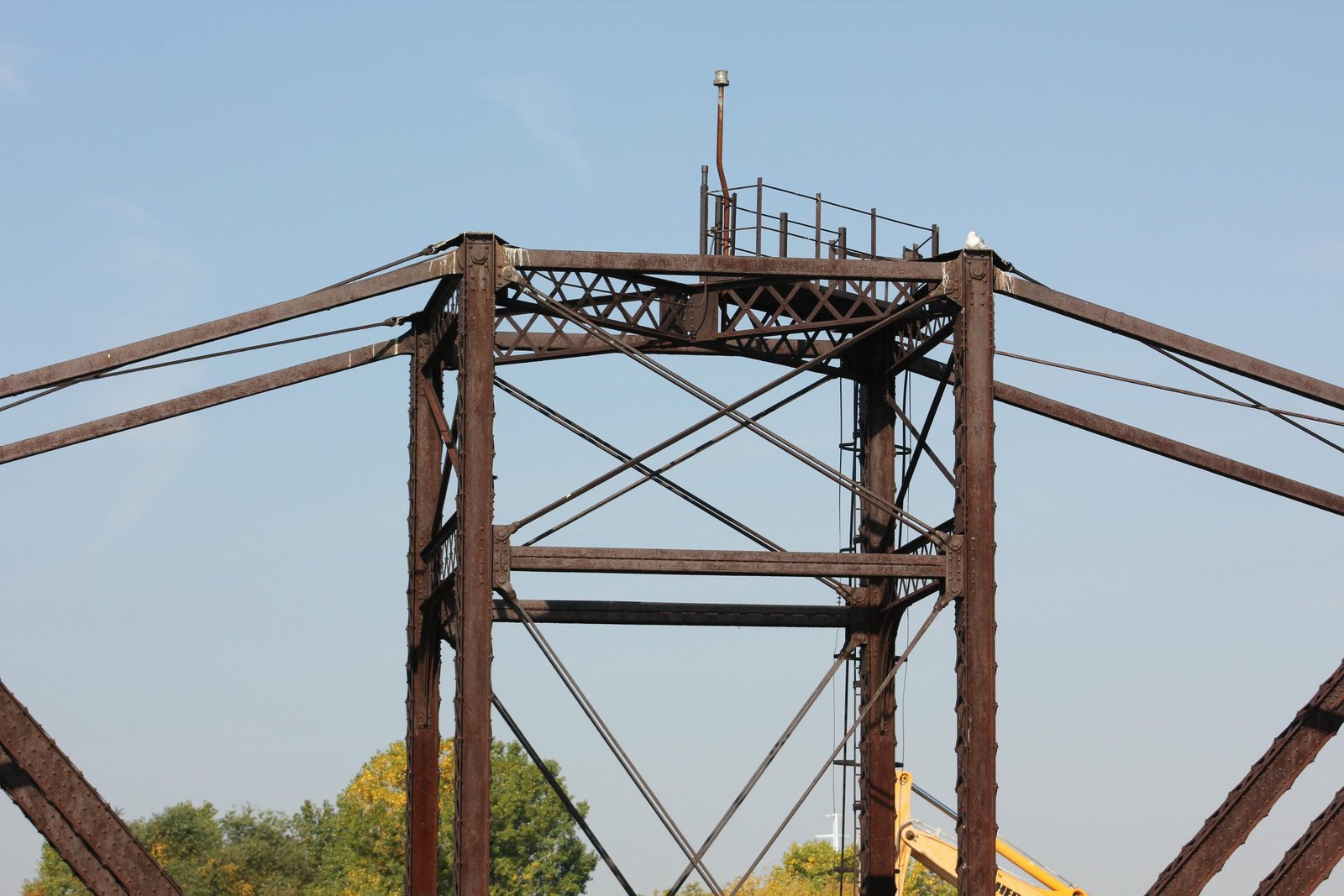
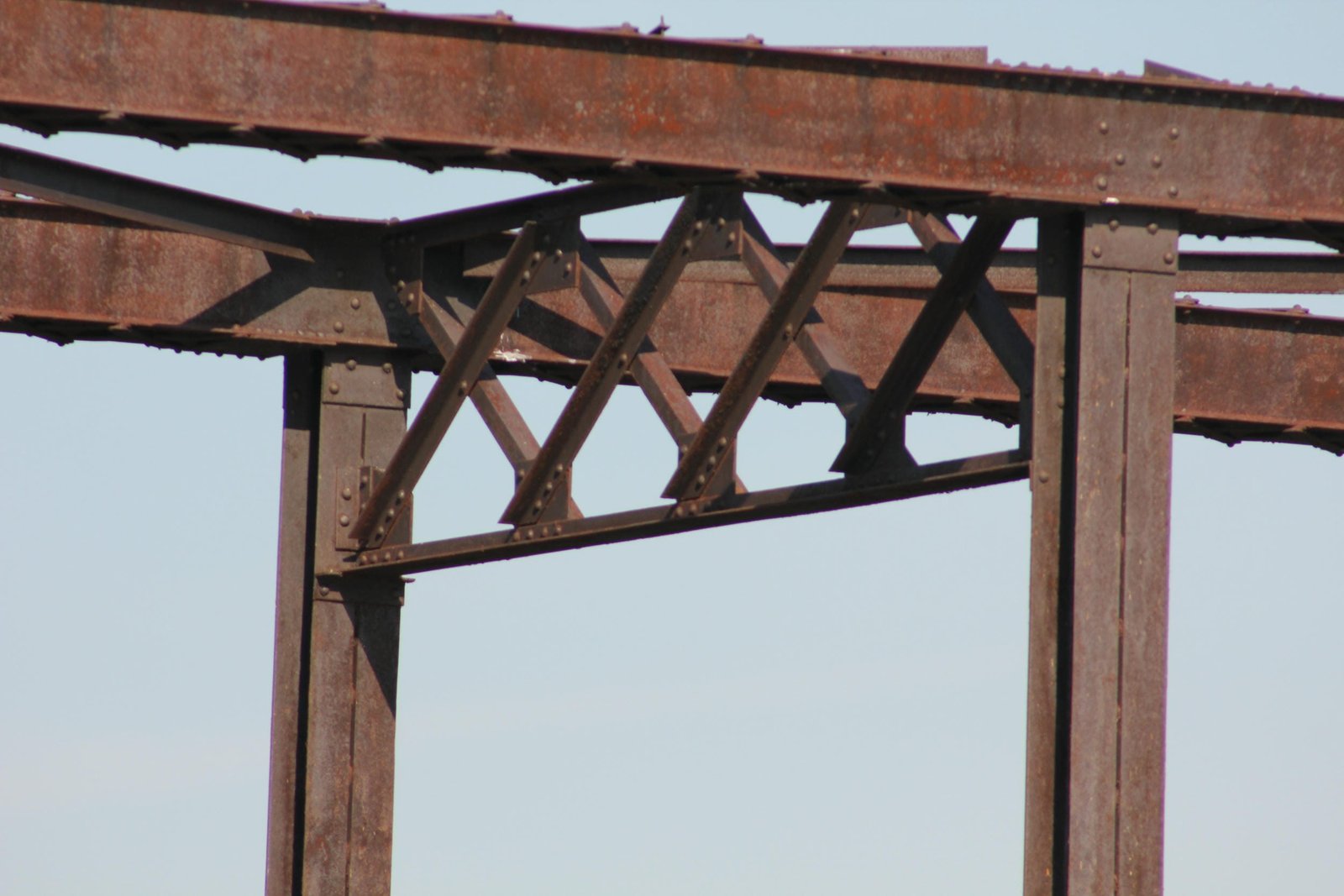
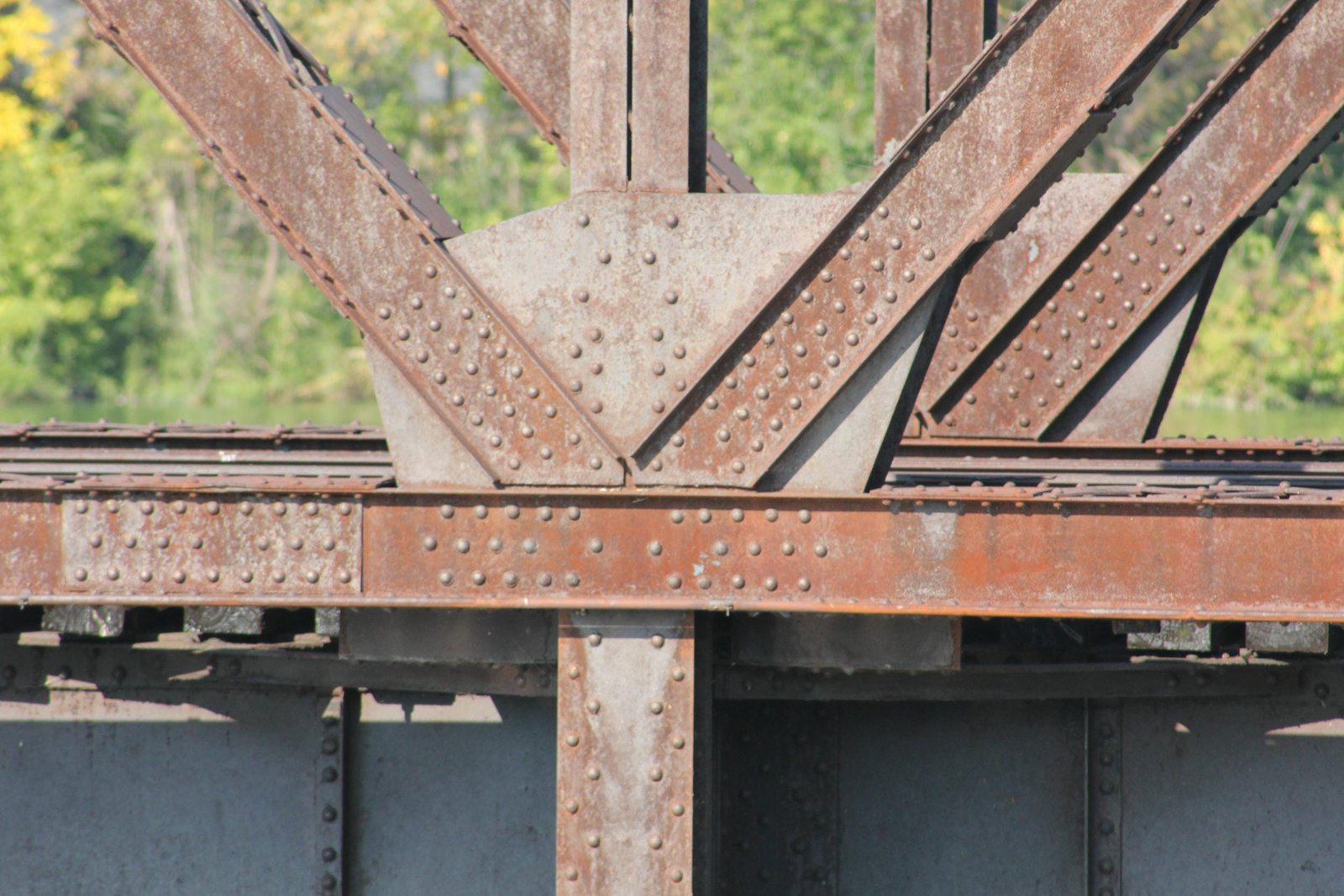
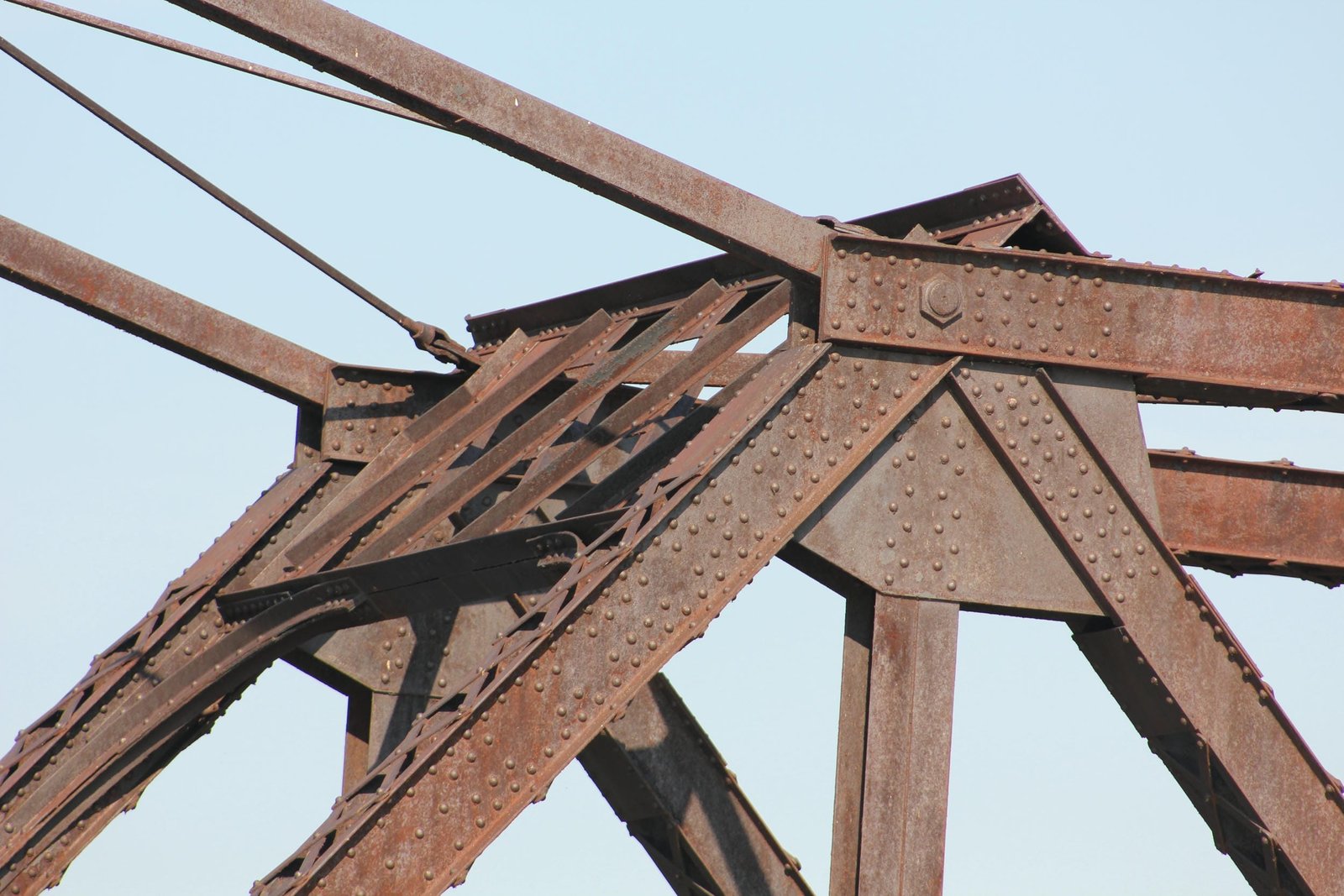
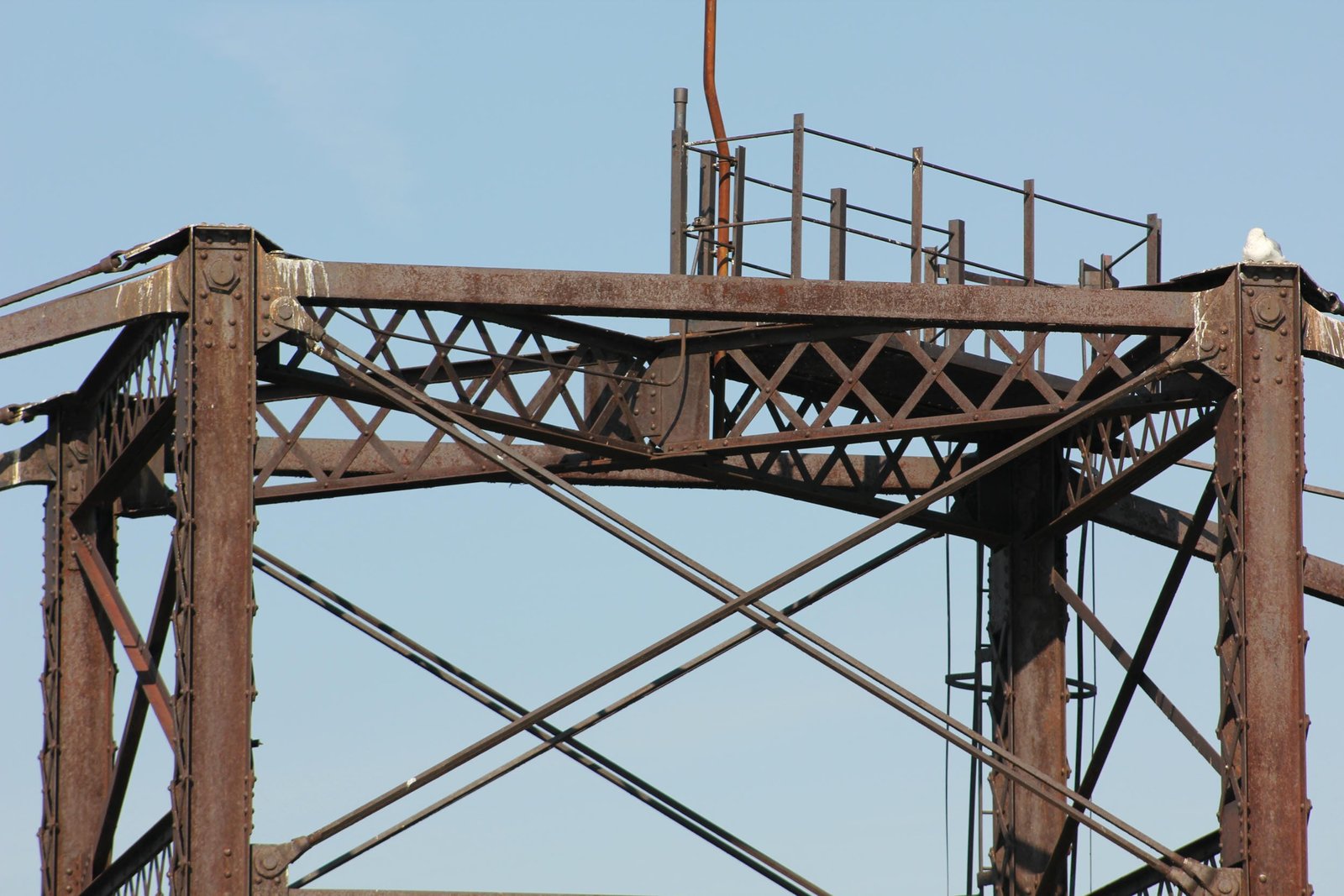
The top chord and endposts were both constructed with built-up beams, with X-lacing on both sides. The bottom chord was also composed of a built-up beam, with X-lacing on both sides. The diagonal members were constructed of built-up beams, which also used X-lacing; while the vertical members were constructed of solid rolled beams. Similar to other swing spans from the era, the main span was composed of two 4-panel halves, joined over the center pier by a center tower. This center tower used a rectangular shape, and was mainly constructed out of built-up beams composed of X-lacing. Two levels of struts were used at the center tower, and were composed of X-laced beams. The upper lateral bracing of the tower was composed of a similar design. To stabilize the tower, steel rods were used for longitudinal bracing, creating two levels of "X" shapes. These rods were connected to the vertical members of the tower by use of pinned connections. An additional transverse bracing was located on both sides of the tower between the two levels of struts, which used L-shaped bars riveted to the vertical members. The center tower was connected to the upper angles of each leaf by use of heavy eyebars, which were pinned at both ends. An upper lateral bracing between these eyebars was composed of thin rods with a hook shape, which were pinned at each end. The portal bracing used a standard Milwaukee Road design for the era, with a double intersection lattice beam and rounded heel bracing with a star cutout. Similarly, the sway bracing used a double intersection lattice beam, but omitted the heel bracing. The floor was composed of two heavy plate girder stringers and plate girder floorbeams at the panel points, typical for spans from this era. Both the upper lateral bracing and lower lateral bracing consisted of L-shaped steel bars. The center pier consisted of a circular concrete structure, while the outer piers used a rounded rectangular shape.
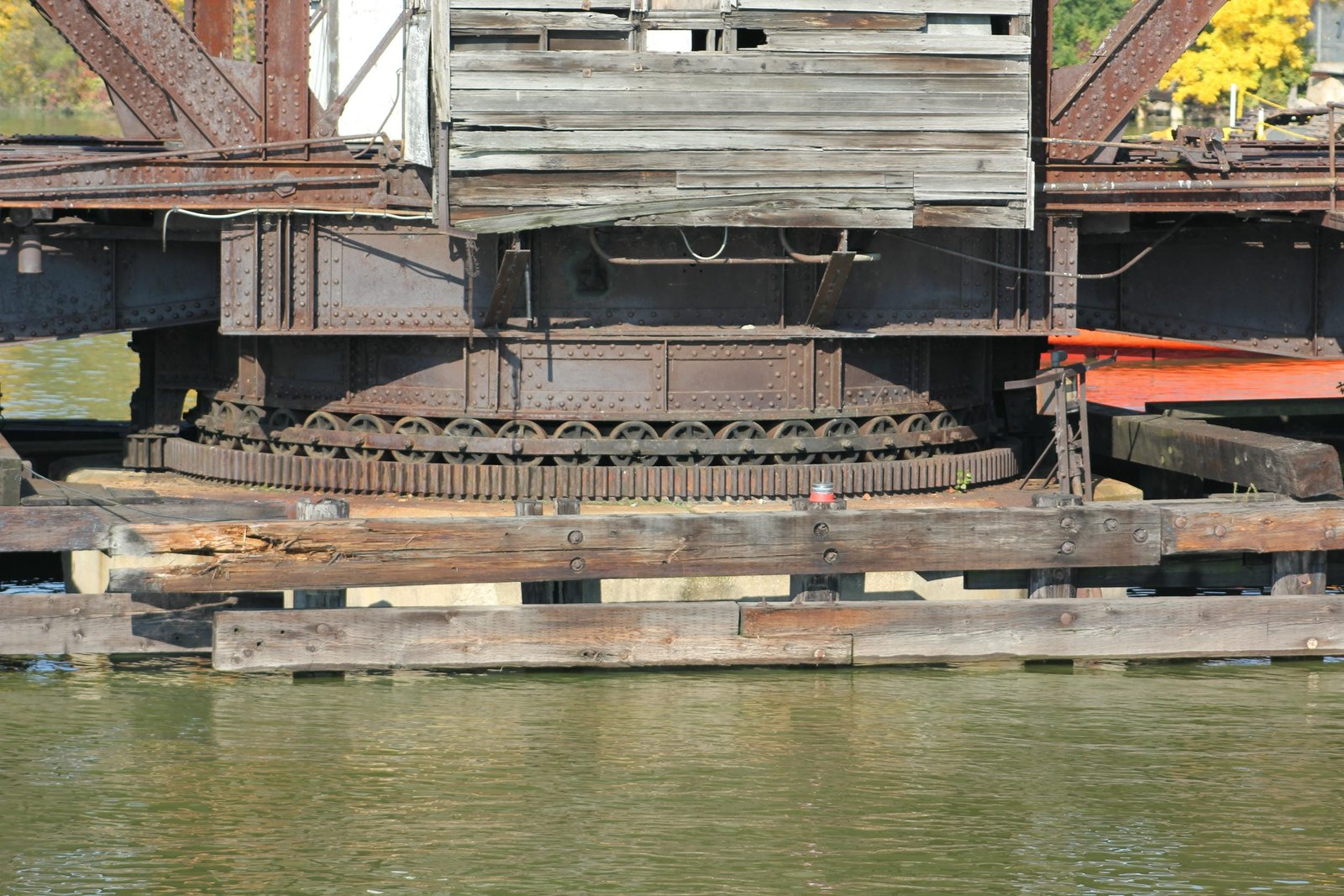
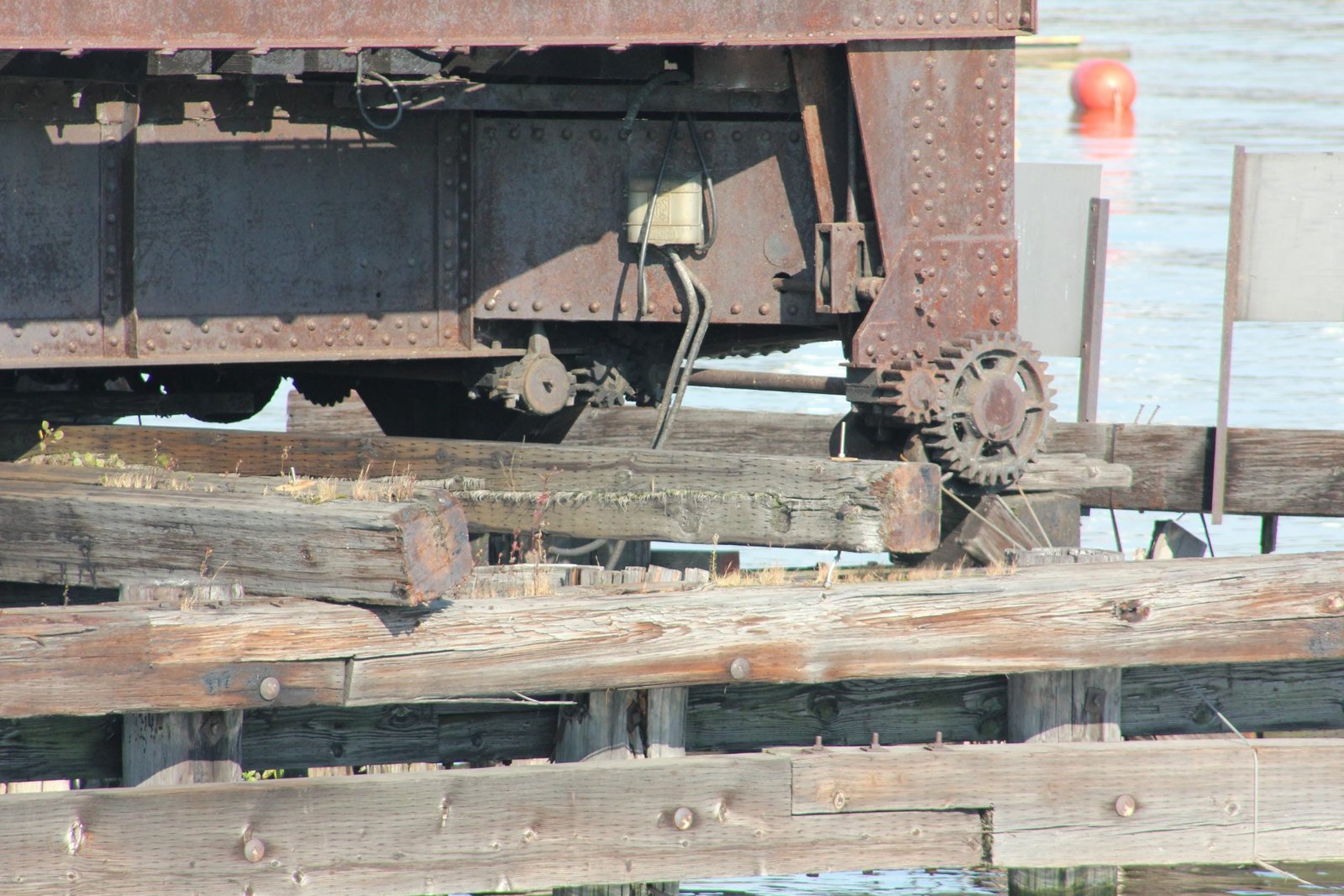
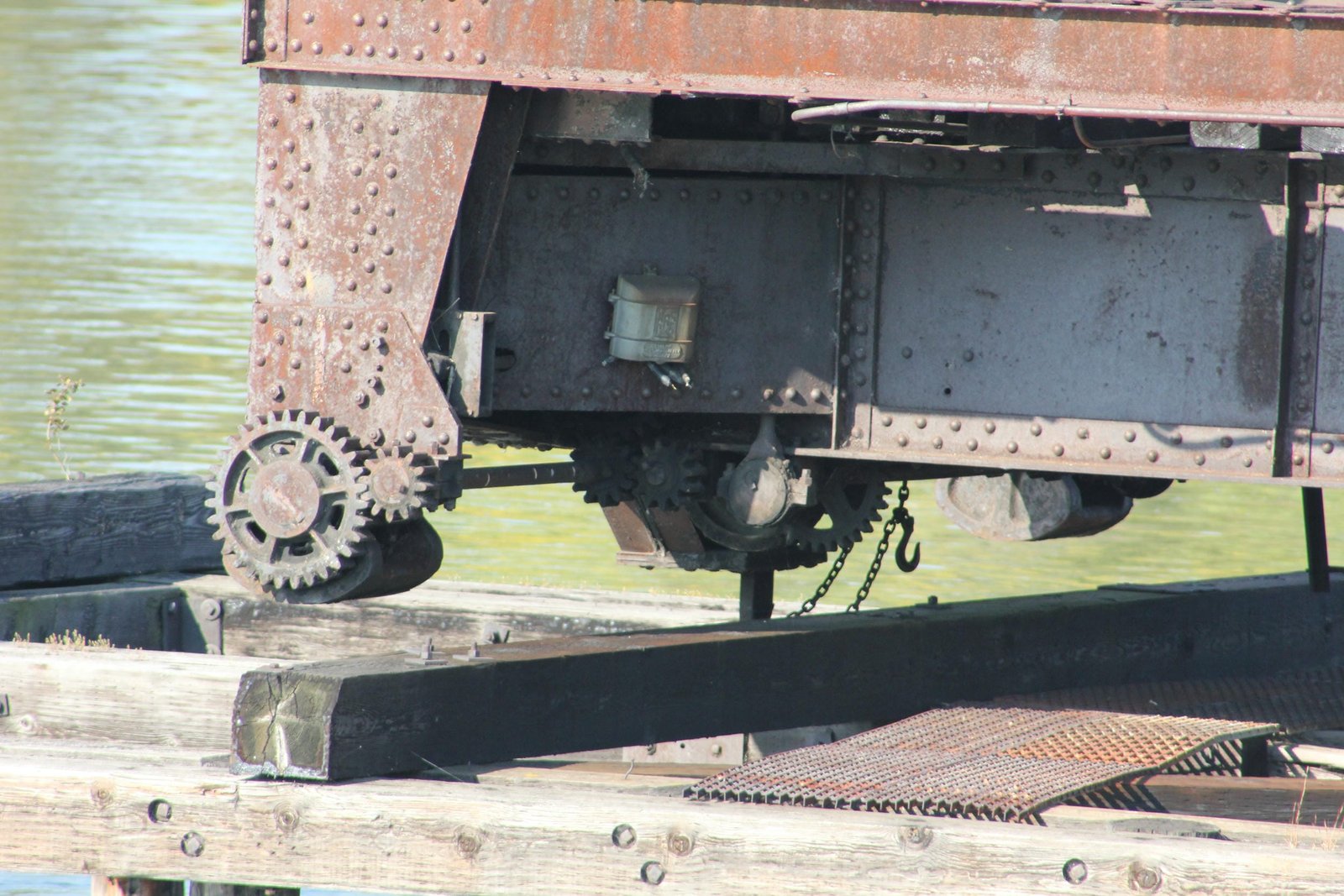
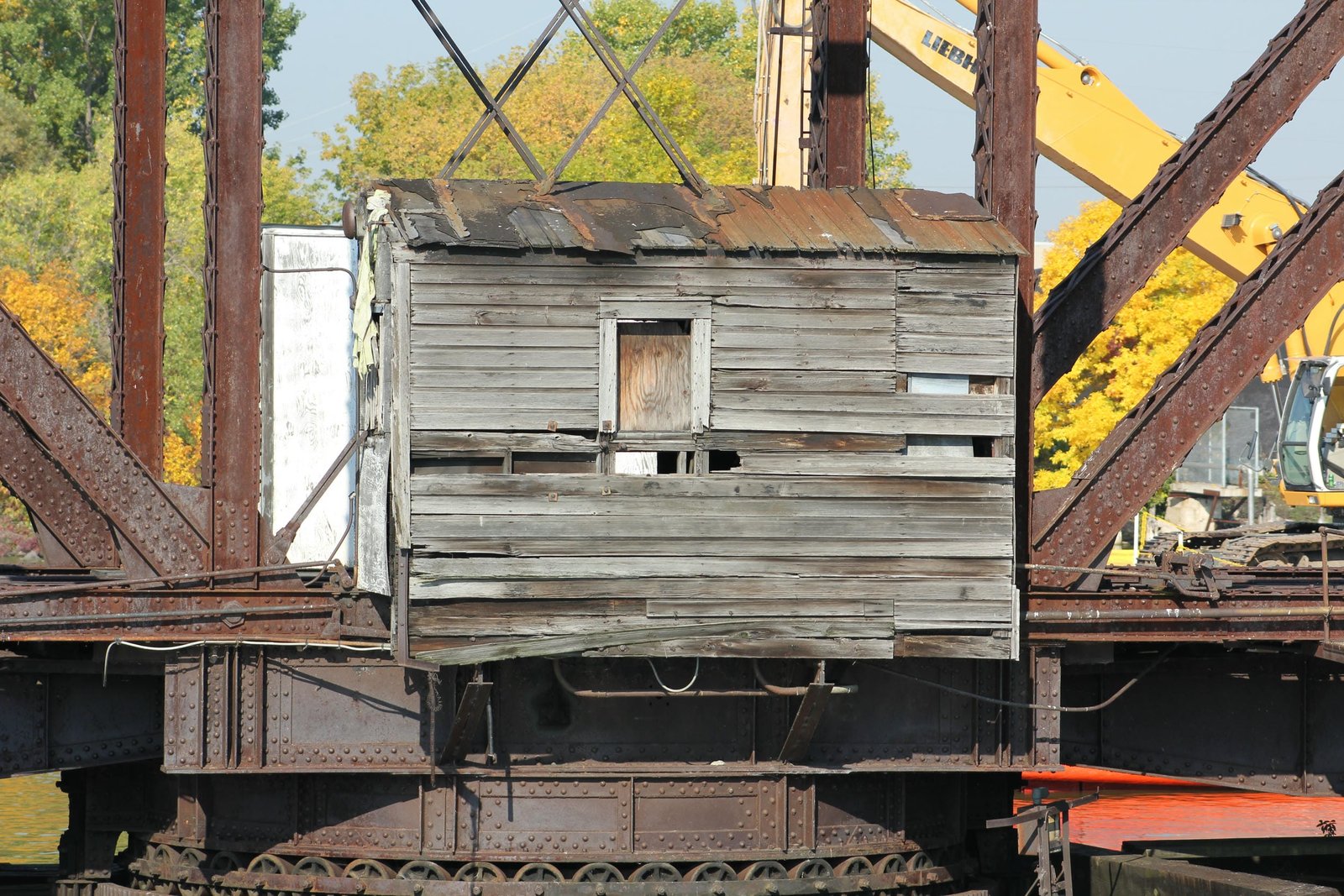
To operate, the swing span used a standard rim-bearing design with a unique end lift mechanism. A rim-bearing span operates by placing the superstructure on a metal drum, which rotates on a roller nest located on the center pier. A gear system drives the drum and turns the bridge. Typical of Milwaukee Road swing spans, the center drum used a circular design and was constructed of plate girders. In addition, the superstructure used a heavy square floor section to connect to the drum. When operating, the rail lifts at the end of the bridge are first operated. A pin at the center of the track maintained the proper alignment of the bridge, and a series of radial plate girders or rods extended from the center of the track to the drum girder. The main disadvantage of this design is the bridge must be constructed nearly flawlessly to avoid shifting. These mechanisms lift the rail, and allow the bridge to swing freely. Next, the locking mechanism is lifted, and the span is rotated slightly, before the operator engages the motor of the rotating mechanism. The operator then stops the rotation by cutting power to the motor or by applying a brake. Many traditional swing spans use wedges driven at the end to lift the span after the locking mechanism was disengaged. The Milwaukee Road designed a different mechanism for this function. At the end of the span, a cam shaped end lift shoe rotates about an axis perpendicular to the railroad, causing the span to raise or lower. In closed position, this shoe acts as a rocker bearing, absorbing small expansions and contractions. A shaft running longitudinally under the bridge carried power from the motor to the end shoes. This bridge was electrically operated, with the machinery located within a wooden house at the center of the span.
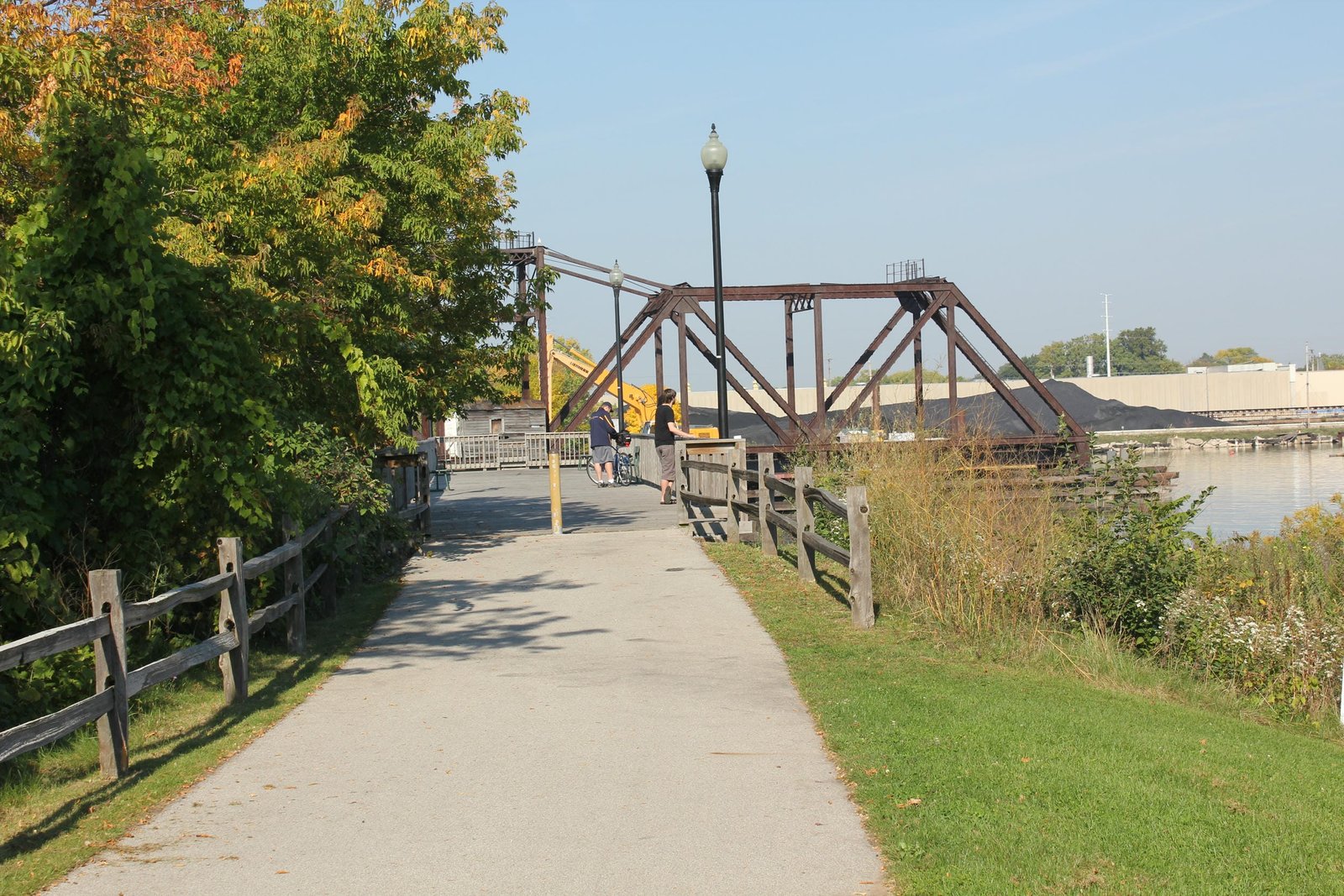
An unknown contractor fabricated the superstructure. A bill of materials indicates that Phoenix Bridge Company fabricated the shafts for the end lift mechanism, but is unclear if this company also fabricated the remainder of the bridge. Typical of Milwaukee Road bridges, the concrete substructures were constructed by employees of the Bridge & Building Department. Riveted Warren truss spans became popular in the early 20th Century as an alternative to pin-connected Pratt truss spans. This pattern provided greater strength and rigidity, while maintaining a simple and economical design. It appears that the Milwaukee Road adopted Warren truss spans in late 1901 or 1902 as evidenced by other bridges designed by the railroad. This span may have been among the first designed by the Milwaukee Road to use the Warren design as part of a movable bridge. After the bridge was abandoned in the 1990s, the swing span was placed into open position to allow for river navigation. In approximately 2005, the eastern approach was converted to the "Porlier Pier", a fishing pier extending into the river. Due to Coast Guard requirements to remove abandoned bridges over navigable waterways, the swing span, west approach and associated piers were removed in October 2014. The removal of this bridge resulted in the loss of the oldest movable bridge across the Fox River in Green Bay. In 2022, the eastern approach was closed to pedestrians due to advanced deterioration to the timber components. The City of Green Bay later decided to remove the approach and replace it with a fishing pier. As of 2025, the approach is still standing, and the replacement is under design. Overall, the main span of the bridge was in fair to good condition at the time of removal, and its removal was due to Coast Guard regulations instead of poor condition. The author has ranked this bridge as being moderately significant, due to the truss and movable design.
Citations
| Build date | Milwaukee Road Drawing Collection, located at the Milwaukee Road Archives at the Milwaukee Public Library |
| Railroad History Citation | ICC Valuation Information, Compiled by Richard S. Steele |