








Click the photo to view the full-size version
| Name | Chicago & North Western Railway Bridge #W-724 |
| Built By | Chicago & North Western Railway |
| Currently Owned By | Boone County Conservation District |
| Superstructure Contractor | American Bridge Company of New York (Lassig Plant) |
| Substructure Contractor | Unknown |
| Length | 16 Feet Total |
| Width | 1 Track |
| Height Above Ground | 15 Feet (Estimated) |
| Superstructure Design | Steel Stringer |
| Substructure Design | Stone Masonry |
| Date Built | 1908 |
| Traffic Count | 0 Trains/Day (Bridge is Open to Pedestrian Traffic) |
| Current Status | Open to Pedestrian Traffic; Scheduled For Replacement |
| Chicago & North Western Railway Bridge Number | W-724 |
| Significance | Local Significance |
| Documentation Date | 11/16/2025 |
Between 1859 and 1862, the Kenosha, Rockford & Rock Island Railroad (KR&RI) constructed a 72-mile railroad line, extending from Kenosha, Wisconsin to Rockford, Illinois; via Harvard, Illinois. The railroad became part of the Chicago & North Western Railway (C&NW) in 1864. The C&NW was beginning to construct and acquire a large network of railroads throughout the Midwest. Known as the K-D line, this line provided a direct connection between the Milwaukee Division mainline at Kenosha and Rockford. The C&NW would become a prominent railroad in the Midwest,
eventually building a system over 11,000 miles long. Early in the 20th Century, this line lost importance, and was operated as little more than a branch line. The line would be abandoned from Harlem to Caledonia in 1937, followed by Bain to Bassett in 1939. The line from Genoa City to Bassett was abandoned in 1962, followed by Genoa City to Hebron in 1965. The portion of the line between Chemung and Caledonia would be abandoned in 1988. The C&NW was purchased by the Union Pacific Railroad in 1995. Today, UP continues to operate three short portions of this line, including between Kenosha and Bain; as well as Harvard to Chemung and a short segment in Rockford. Portions of the line between Chemung and Caledonia have become part of the Long Prairie Trail.
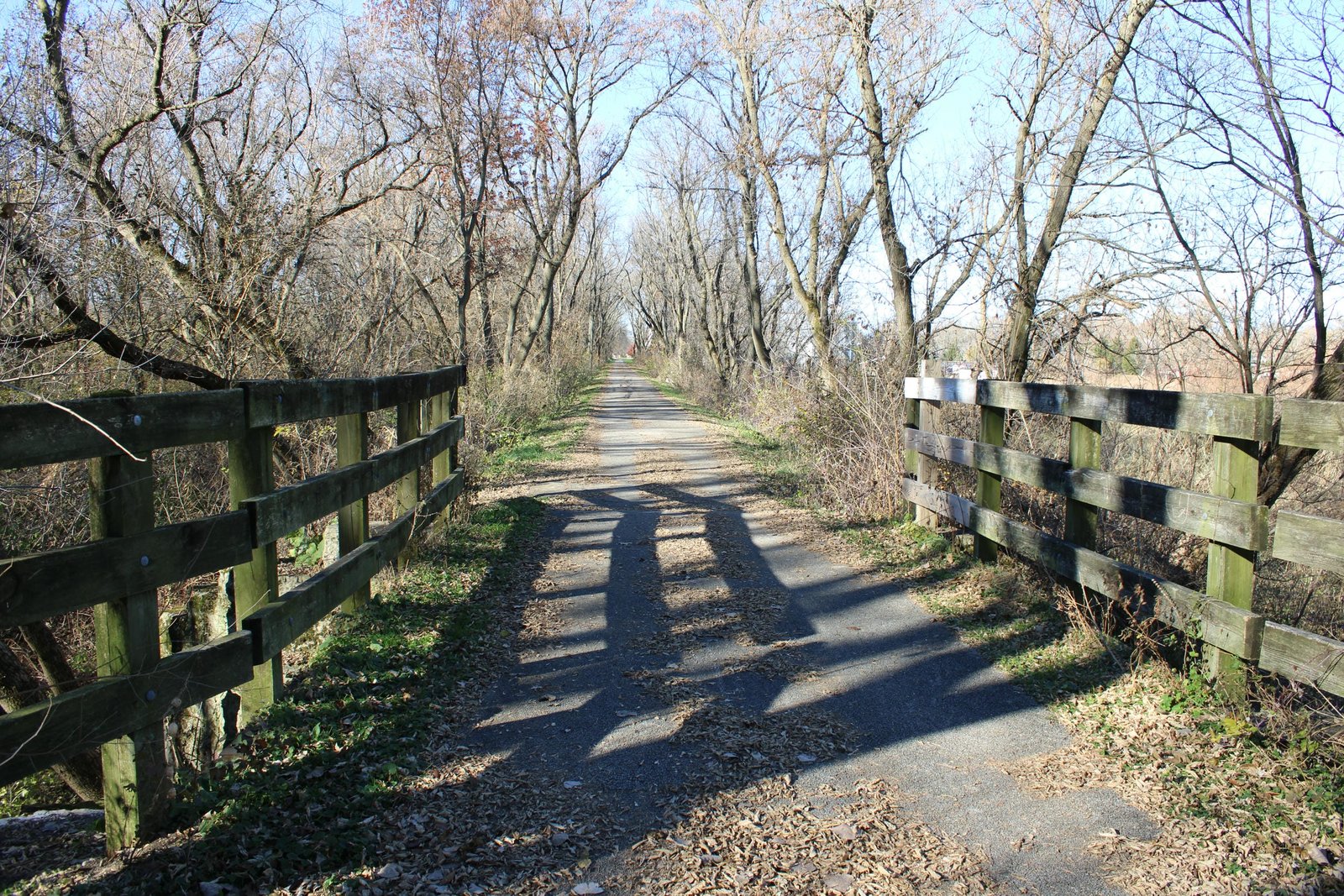
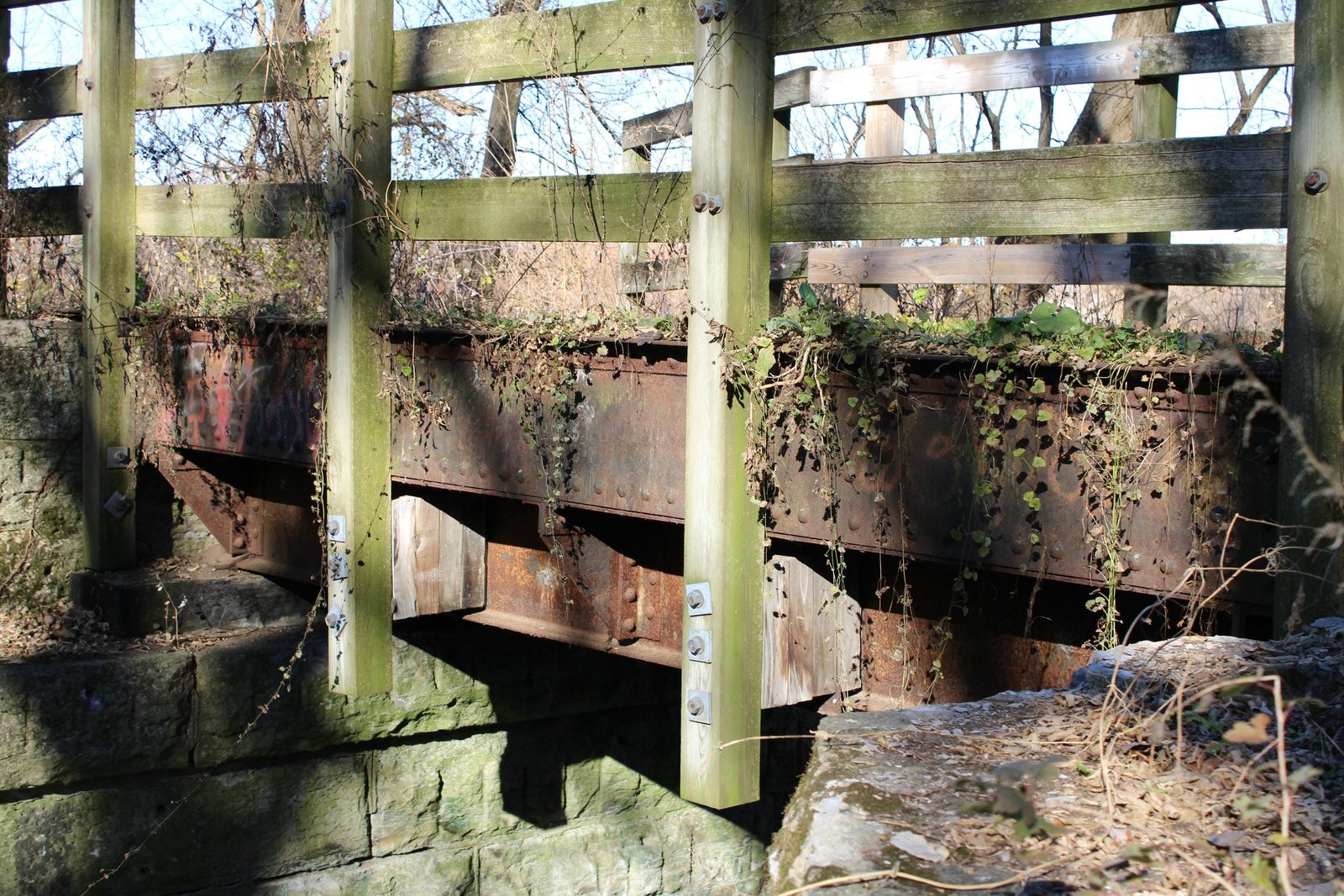
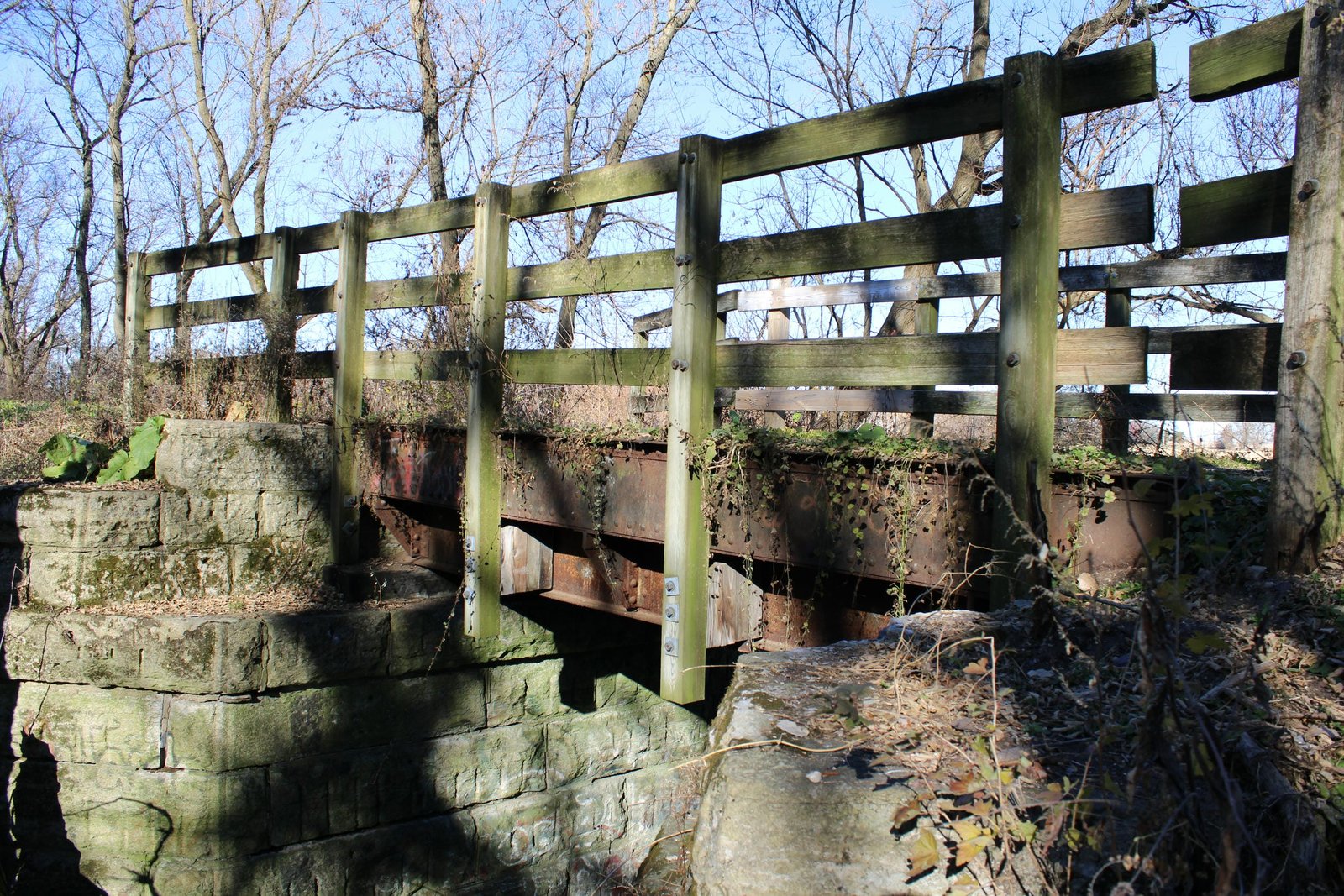
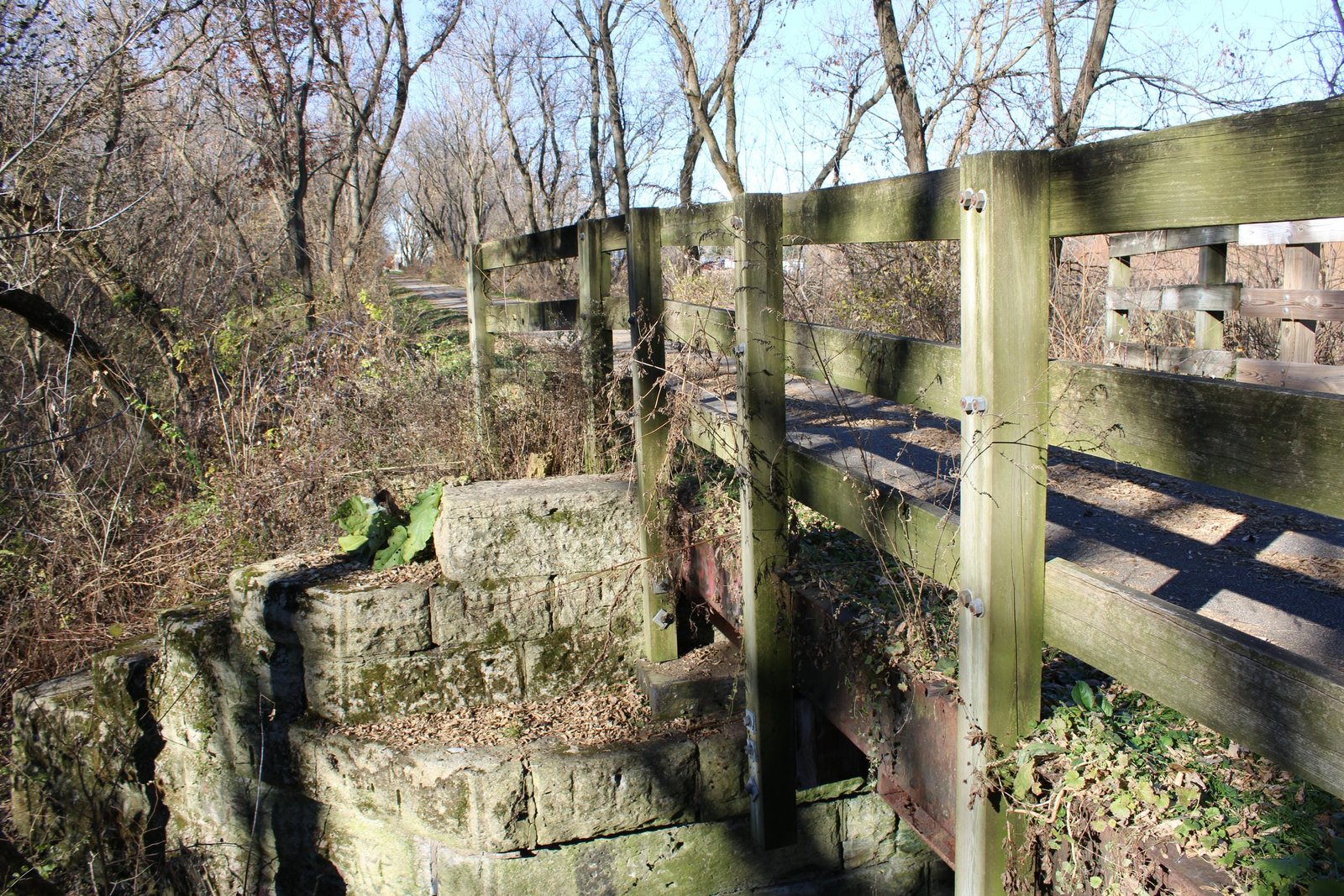
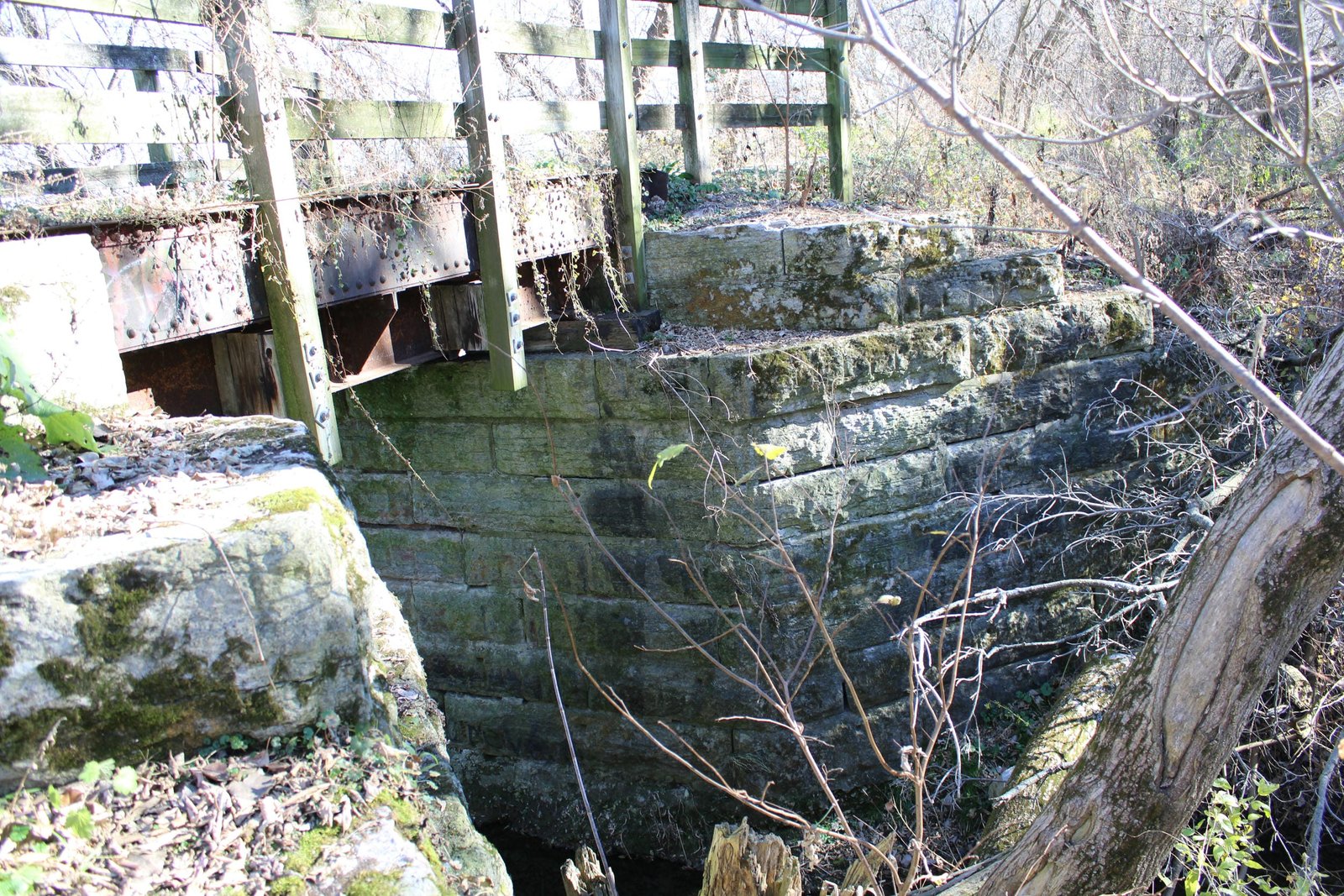
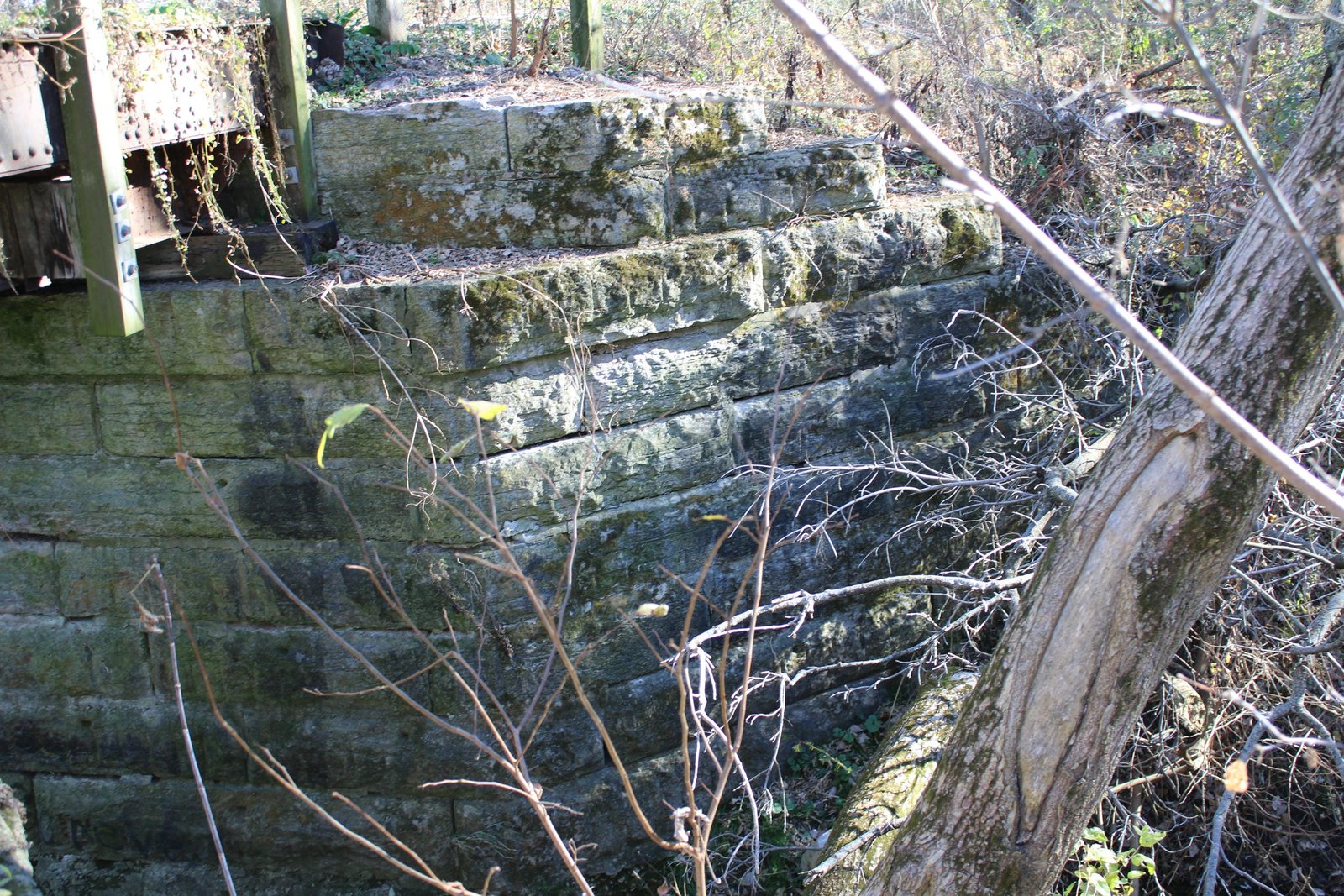
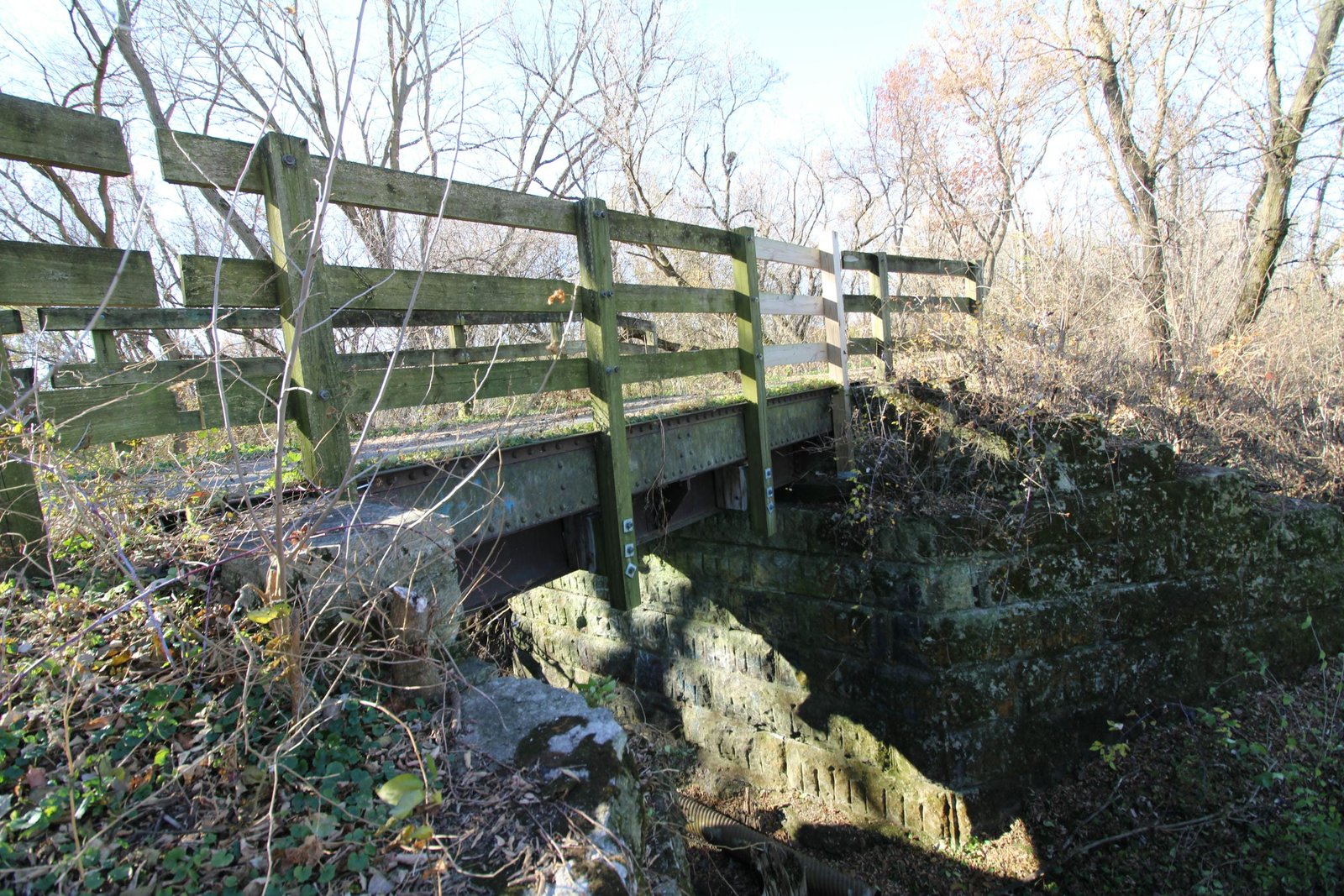
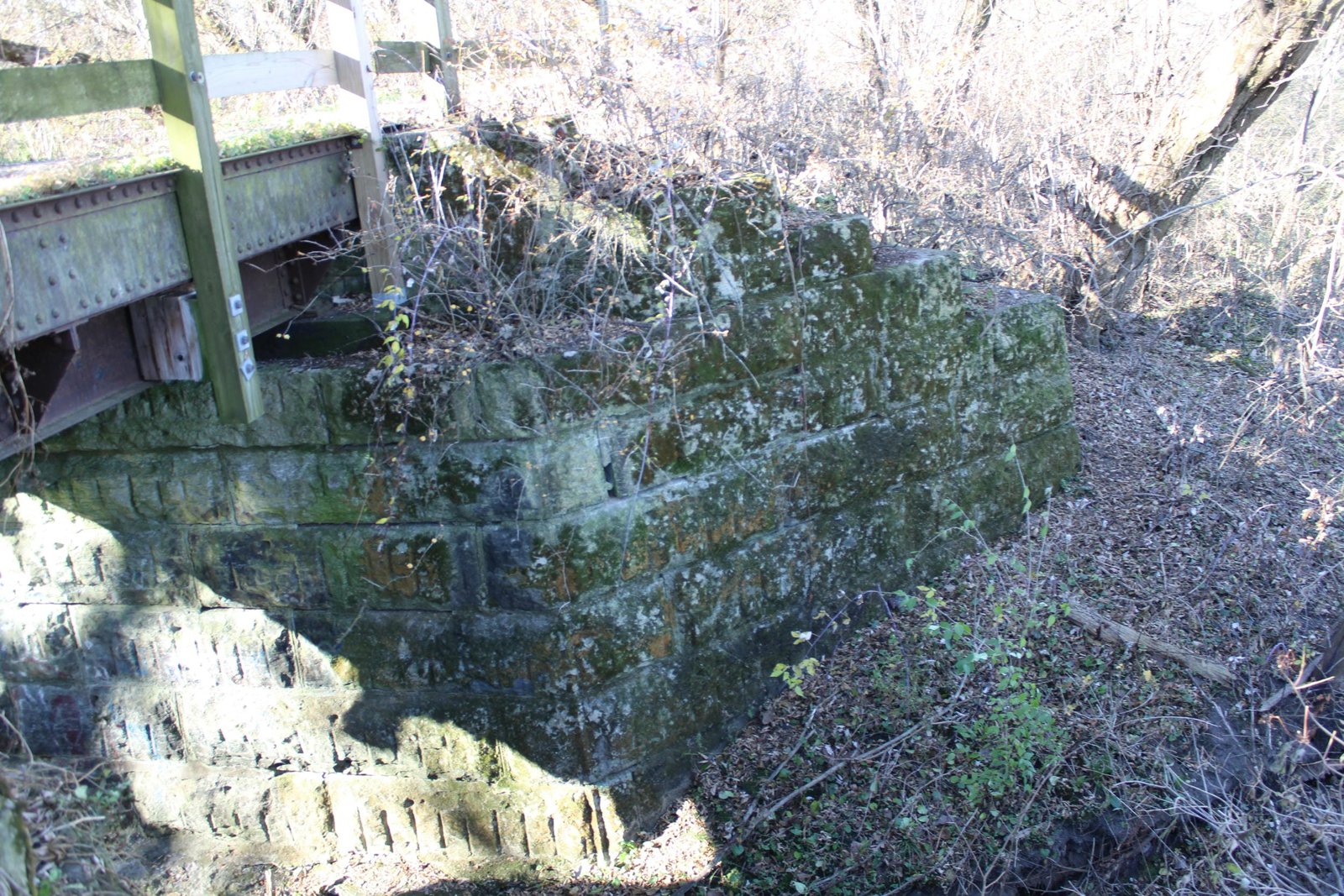
Located east of Poplar Grove, this small steel stringer bridge carries the former Chicago & North Western Railway KD Line over an unnamed ditch. The first bridge at this location was likely a timber pile trestle. In the late 1890s and early 1900s, the C&NW invested some capital into this line, replacing deteriorated timber bridges with new stone and steel structures. In 1907, new stone abutments were constructed, and in 1908, the present superstructure was installed. Currently, the bridge consists of a 16-foot steel stringer span, set onto stone abutments. The superstructure uses an unusual design, consisting of several steel stringers placed equidistant. A steel channel ballast deck is installed above the beams, giving the structure a similar function to a culvert. The substructures uses a standard design, with stepped wing walls extending diagonally from the bridge. American Bridge Company fabricated the superstructure at their Lassig Plant in Chicago, and an unknown contractor constructed the abutments using stone quarried at an unknown location. Steel stringer spans were popular for railroad use, as they were durable and easy to construct. This particular design was used at a handful of locations along the C&NW system, but was more popular later in the 20th Century. Since the initial construction, the bridge has seen few alterations. It currently carries the Long Prairie Trail, and wooden handrails and decking have been added to the structure. Overall, the bridge appears to be in fair condition, with deterioration noted mainly to the timber bearing blocks. Boone County plans to replace most of the original railroad structures along the Long Prairie Trail, and funding has been awarded to replace this bridge in the upcoming years. The author has ranked this bridge as being locally significant, due to the common design.
Citations
| Build date and builder (superstructure) | Chicago & North Western Railway Valuation Notes at the Chicago & North Western Historical Society Archives |
| Railroad History Citation | ICC Valuation Information, Compiled by Richard S. Steele |