






Click the photo to view the full-size version
| Name | UP Bridge #65.73 Chicago & North Western Railway Bridge #1496 |
| Built By | Chicago & North Western Railway |
| Currently Owned By | Union Pacific Railroad |
| Superstructure Contractor | Unknown |
| Length | 6 Feet Total |
| Width | 2 Tracks, 1 In Use (49 Feet) |
| Height Above Ground | 5 Feet (Estimated) |
| Superstructure Design | Stone Arch Culvert |
| Substructure Design | Stone Masonry |
| Date Built | 1892 |
| Traffic Count | 1 Train/Day (Estimated) |
| Current Status | In Use |
| Chicago & North Western Railway Bridge Number | 1496 |
| Union Pacific Railroad Bridge Number | 65.73 |
| Significance | Local Significance |
| Documentation Date | 4/21/2024 |
In the early 1850s, several railroad companies began constructing
railroad lines radiating from Chicago. In 1855, the Chicago & Milwaukee Railroad (C&M) constructed a
45-mile railroad line, extending north from an existing railroad line at
Ashland Avenue and Armitage Avenue in Chicago to the Wisconsin State Line near
Kenosha. At the same time, the Milwaukee & Chicago Railroad (M&C) constructed an additional 40 miles north to Milwaukee. The two railroads would be consolidated into a new railroad known as the Chicago & Milwaukee Railroad (C&M) soon after completion, and would come under control of the Chicago & North Western Railway (C&NW) in 1866. The C&M was leased to the Chicago, Milwaukee and North Western Railway (CM&NW) in 1883. The C&NW acquired control of the CM&NW soon after. The C&NW had constructed and acquired a large network of railroad lines through the Midwest. This line formed a portion of the
principal north mainline of the C&NW, eventually extending to northern Wisconsin and the Upper Peninsula of Michigan. Due to increasing traffic
along this line, a second track would be constructed between 1890 and 1892.
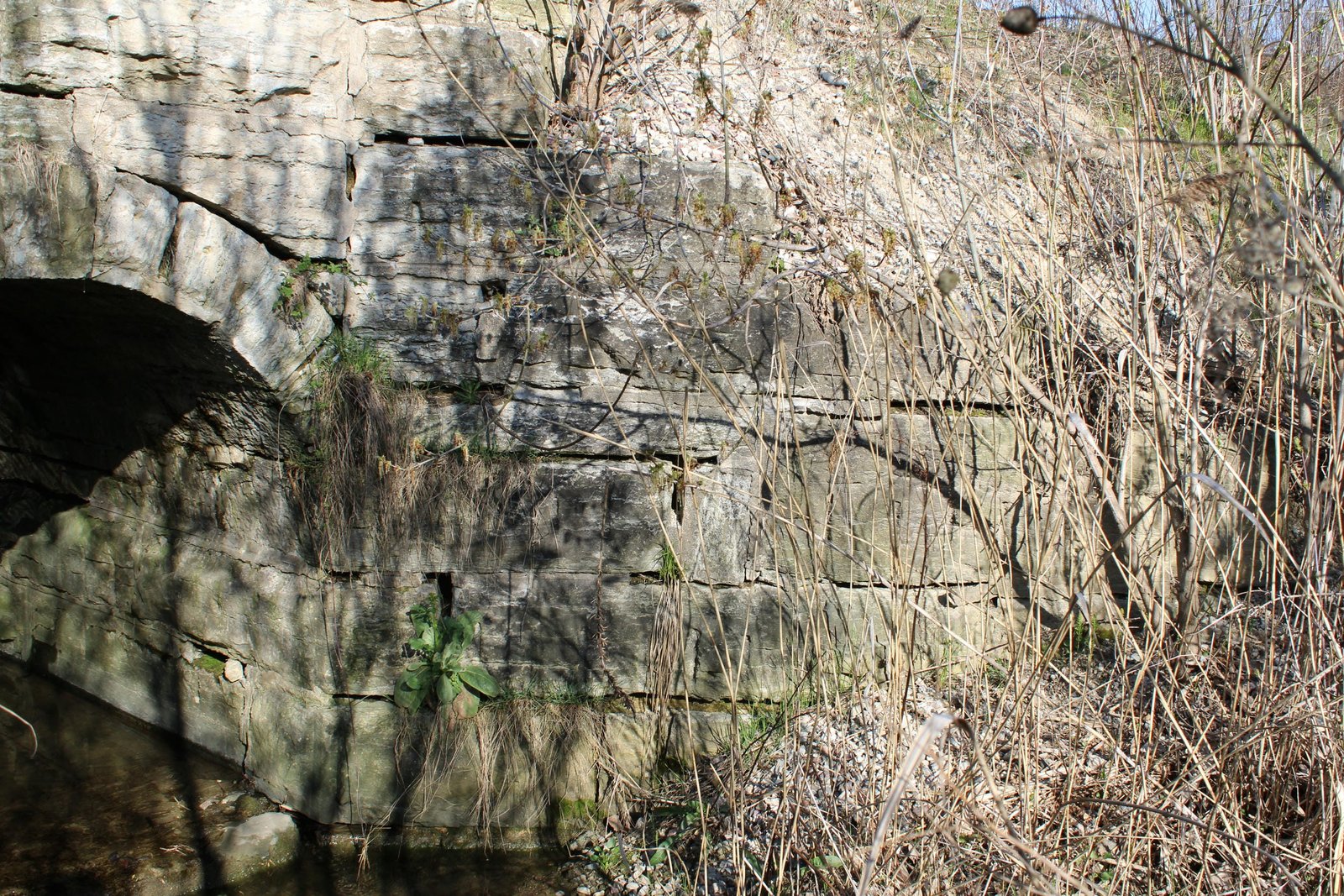
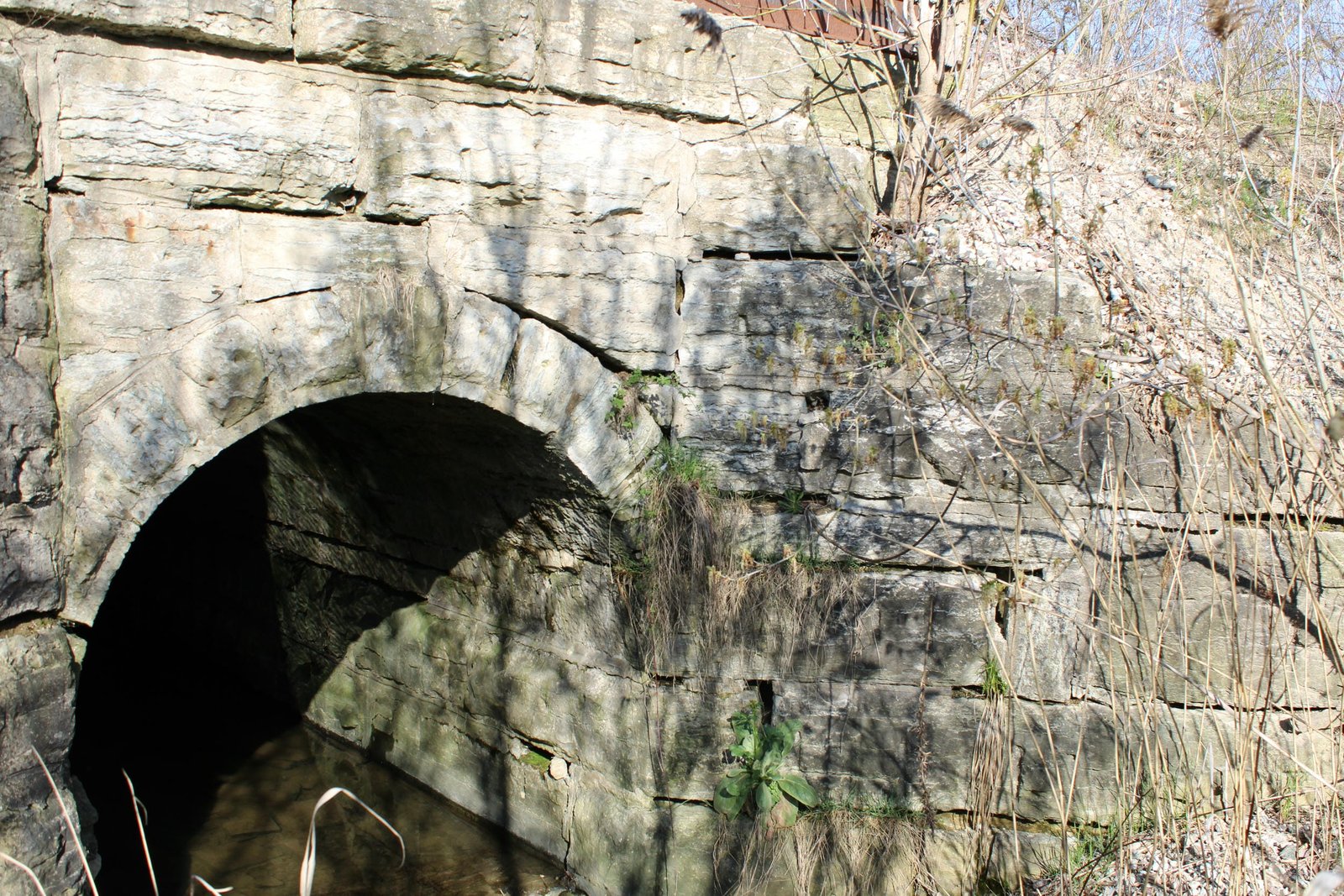
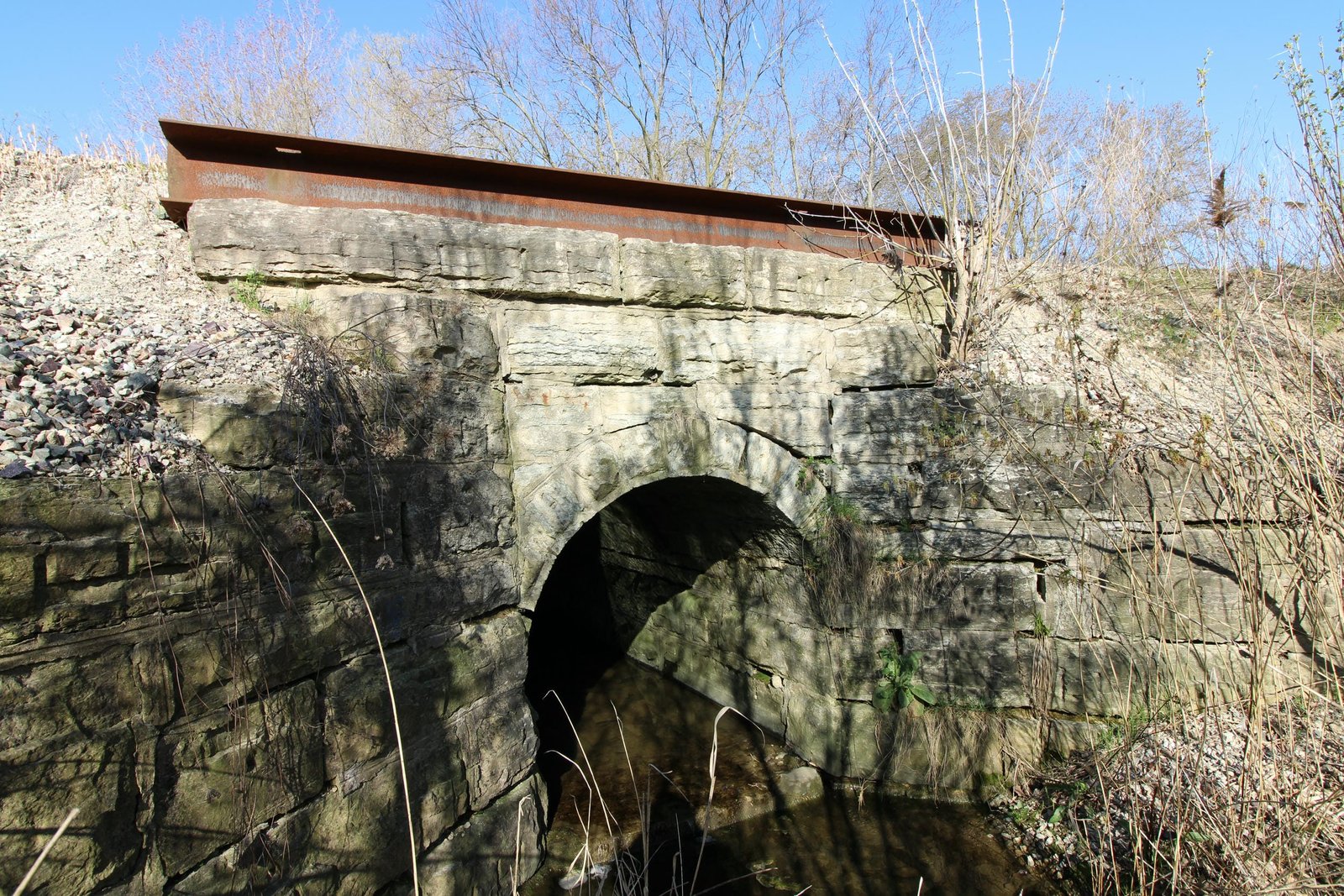
Located north of 4 Mile Road on the north side of Racine, this small stone arch culvert carries the former Chicago & North Western Railway over an unnamed creek. The first bridge at this location was likely a timber pile trestle, constructed when the line was first built. Between 1890 and 1892, the C&NW undertook a project to double track the line between Chicago and Milwaukee, replacing timber bridges with stone and iron structures. The present stone arch culvert was constructed in 1892. Currently, the culvert consists of a 6-foot by 6-foot stone arch culvert, set onto stone substructures and constructed at a width of 49 feet. The culvert uses a standard design, with a semicircular arch and stepped wing walls which extend diagonally from the structure. Stone for the culvert was likely quarried at Duck Creek, Wisconsin; and consists of a white limestone. It is believed that the culvert was constructed by an unknown contractor. Stone arches were popular for railroad use in the 19th Century, as they were durable and easy to construct. In addition, the C&NW owned a number of stone quarries, which made sourcing quality stone cost effective. Since the initial construction, the culvert has seen no significant alterations, and one track remains in use today. A steel beam was added to the east headwall in the late 1990s or 2000s to help retain the ballast of the railroad. Overall, the culvert appears to be in fair to good condition, with no significant deterioration noted. The author has ranked this culvert as being locally significant, due to the common design.
Citations
| Build date | Chicago & North Western Railway Valuation Notes at the Chicago & North Western Historical Society Archives |
| Railroad History Citation | ICC Valuation Information, Compiled by Richard S. Steele |