












Click the photo to view the full-size version
| Name | Soo Line Albany Trestle |
| Built By | Minneapolis, St. Paul & Sault Ste. Marie Railroad |
| Currently Owned By | Stearns County |
| Superstructure Contractor | Unknown (County Road 157 Span) Unknown (Lake Wobegon Trail Span) Unknown (Interstate 94 Spans) |
| Substructure Contractor | Unknown (Interstate 94 Section) |
| Length | 625 Feet Total, 60 Foot Largest Span |
| Width | 1 Track |
| Height Above Ground | 25 Feet (Estimated) |
| Superstructure Type | Deck Plate Girder, Steel Stringer and Timber Pile Trestle |
| Substructure Type | Concrete and Timber Pile |
| Dates Fabricated | c. 1910 (County Road 157 Span) c. 1940 (Lake Wobegon Trail Span) 1956 (Interstate 94 Spans) |
| Date Erected | c. 1940 (County Road 157 Span, Lake Wobegon Trail Span and Timber Spans) 1956 (Interstate 94 Spans) |
| Original Location (County Road 157 Span) | Unknown |
| Traffic Count | 0 Trains/Day (Bridge is Closed to Traffic) |
| Current Status | Closed to all Traffic; Awaiting Demolition |
| Significance | Moderate Significance |
| Documentation Date | 3/29/2013; 10/18/2013; 5/25/2025 |
In 1907, the Minneapolis, St. Paul & Sault Ste. Marie Railway (Soo Line) began construction on a new railroad line, extending from the existing mainline at Brooten, Minnesota; to the Twin Ports city of Duluth, Minnesota. The first 87 miles were completed by the end of 1908, with the remaining 100 miles completed in 1909. The Soo Line was a smaller railroad in the Midwest, with routes extending through Minnesota, Wisconsin, Michigan and North Dakota. It was operated as a subsidiary of Canadian Pacific Railway (CP). This route became a critical connection for the Soo Line, providing a connection between the existing mainline at Brooten and the industries at Duluth. By 1937, the Soo Line had entered bankruptcy, and it would be reorganized as the Minneapolis, St. Paul & Sault Ste. Marie Railroad in 1944.
By 1961, the Soo Line would be merged with other CP subsidiaries Duluth, South Shore & Atlantic Railroad and Wisconsin Central Railroad to form Soo Line Railroad, a company controlled by CP. In 1984, the Soo Line would be reorganized as the Soo Line Corporation, and the railroad would be fully merged into CP in 1990. The segment from Genola to Superior was abandoned in 1990. The segment from Genola to Boyleston was purchased by MNDOT and Douglas County, Wisconsin and converted to the Soo Line Trail. The remainder of the route would be abandoned in 1996, and purchased by Morrison and Stearns Counties for trail use. Today, much of the route has been converted to the Soo Line Trail, and further work is being done in Stearns County to convert the railroad to the Dairyland Trail.
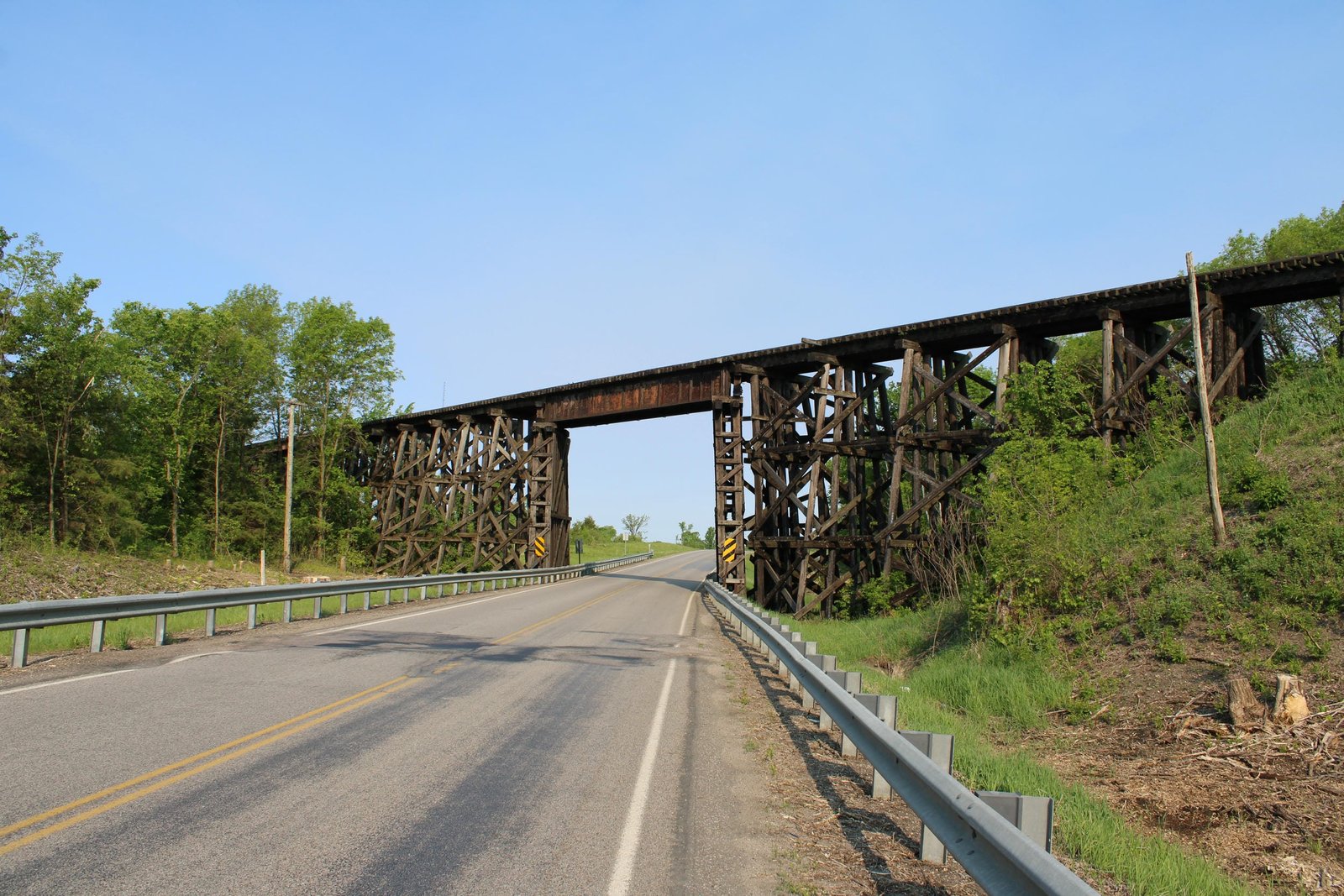
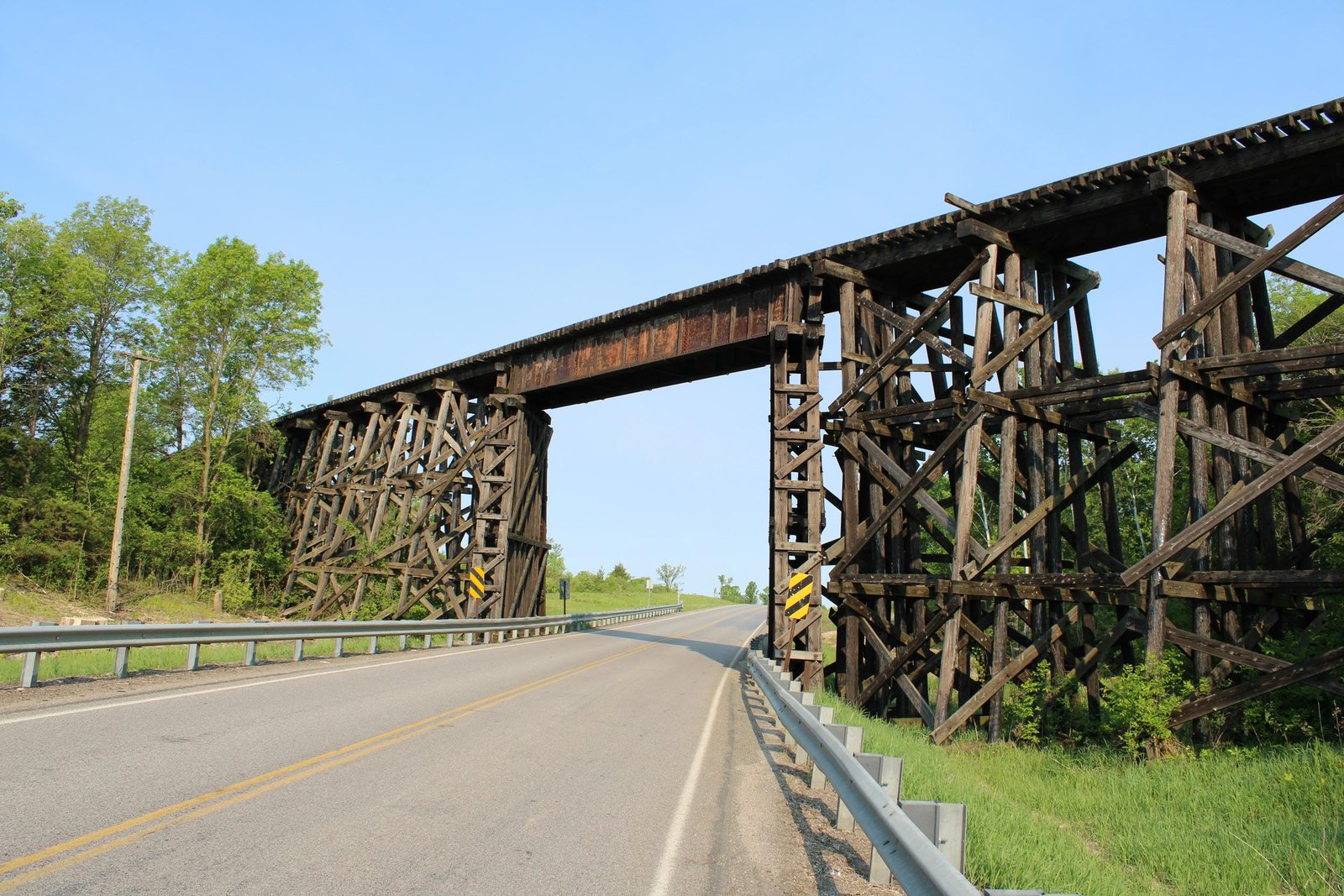
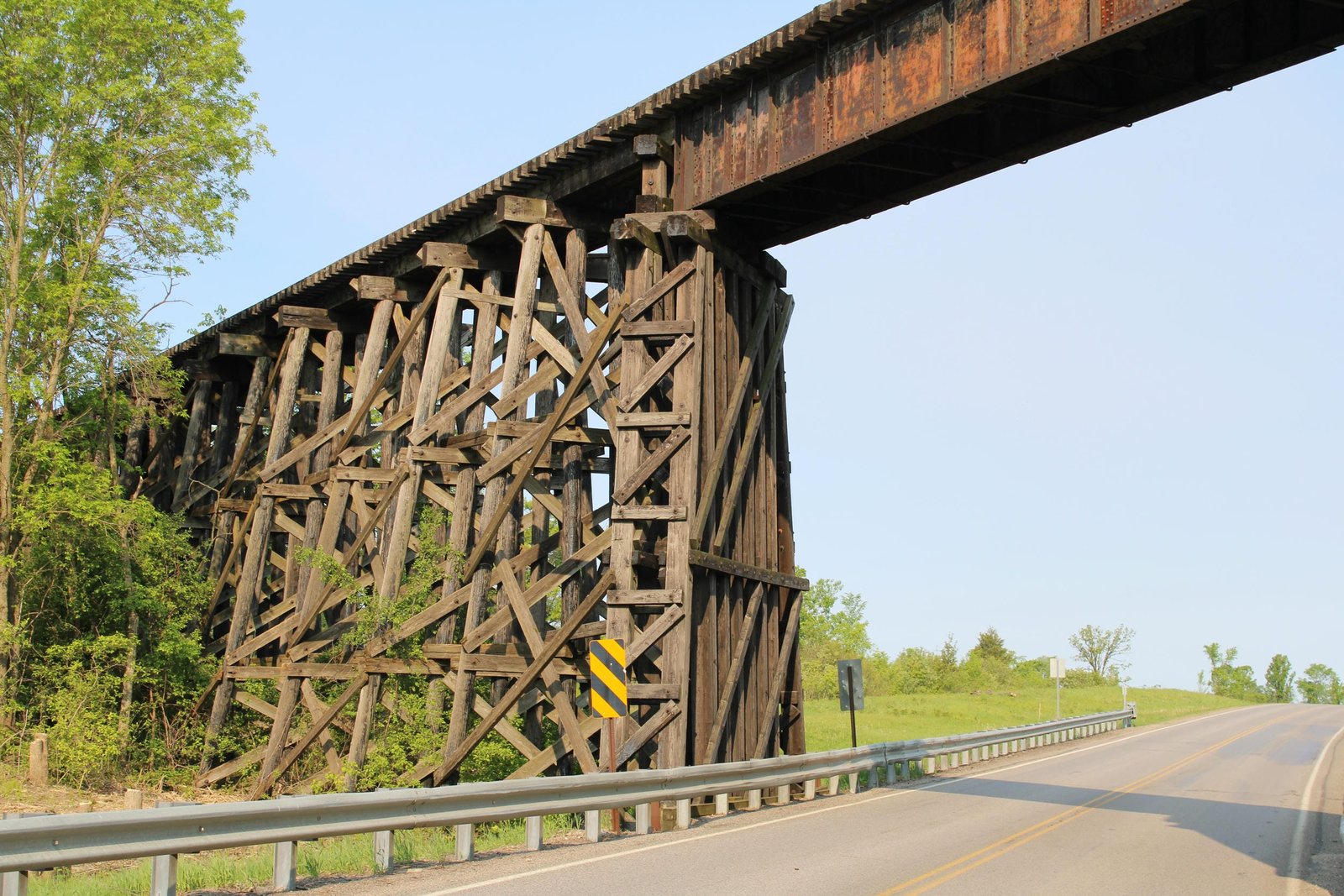
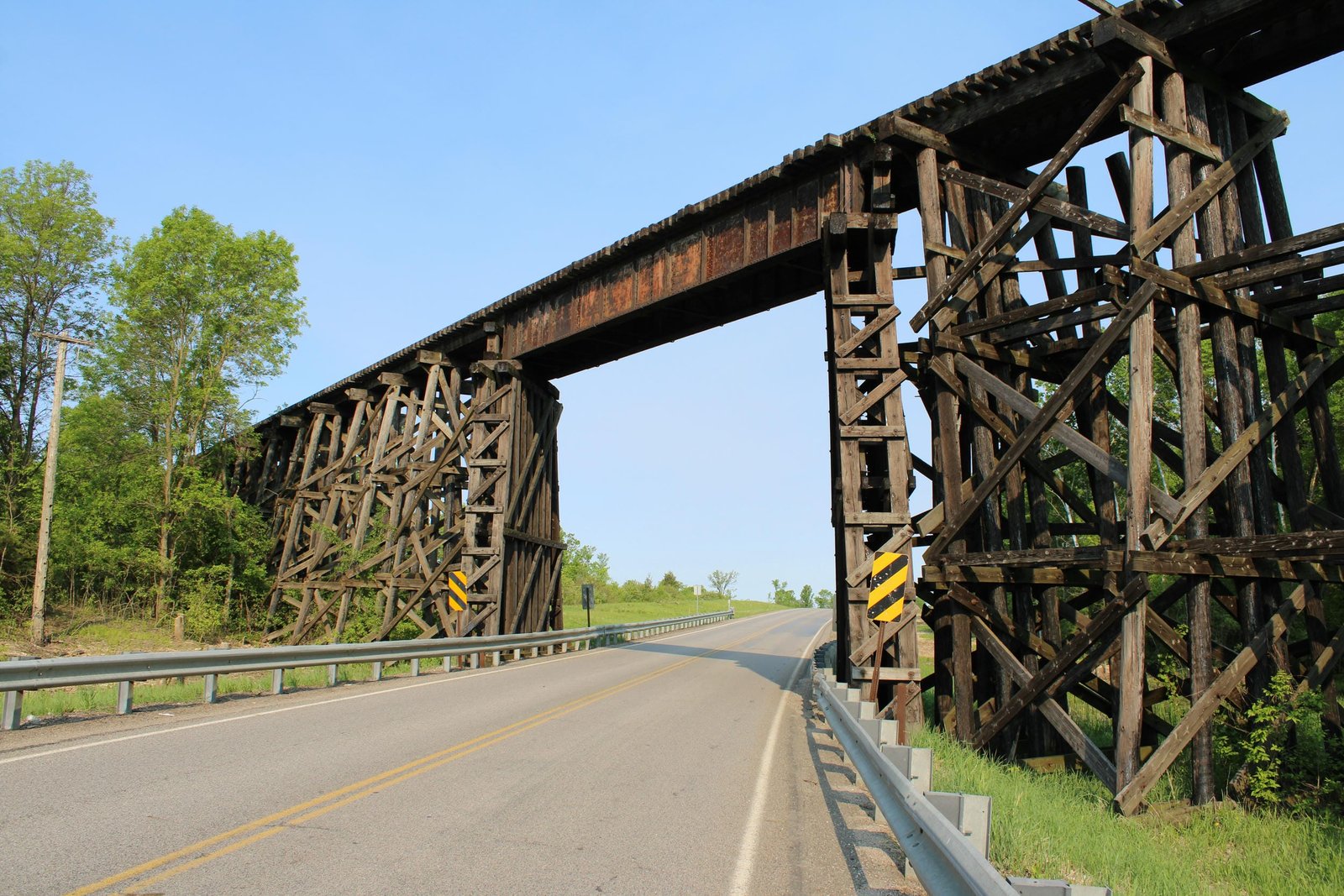
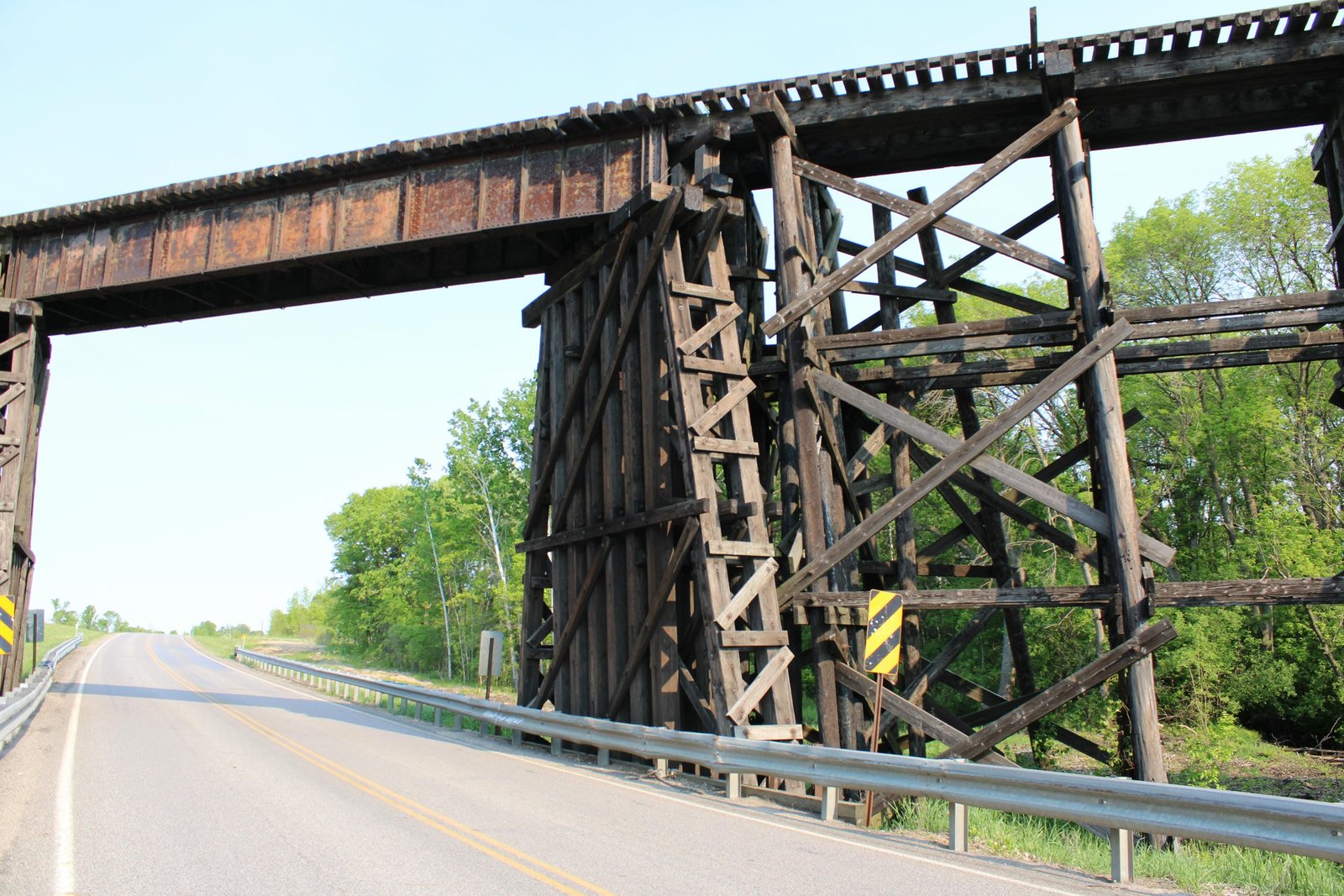
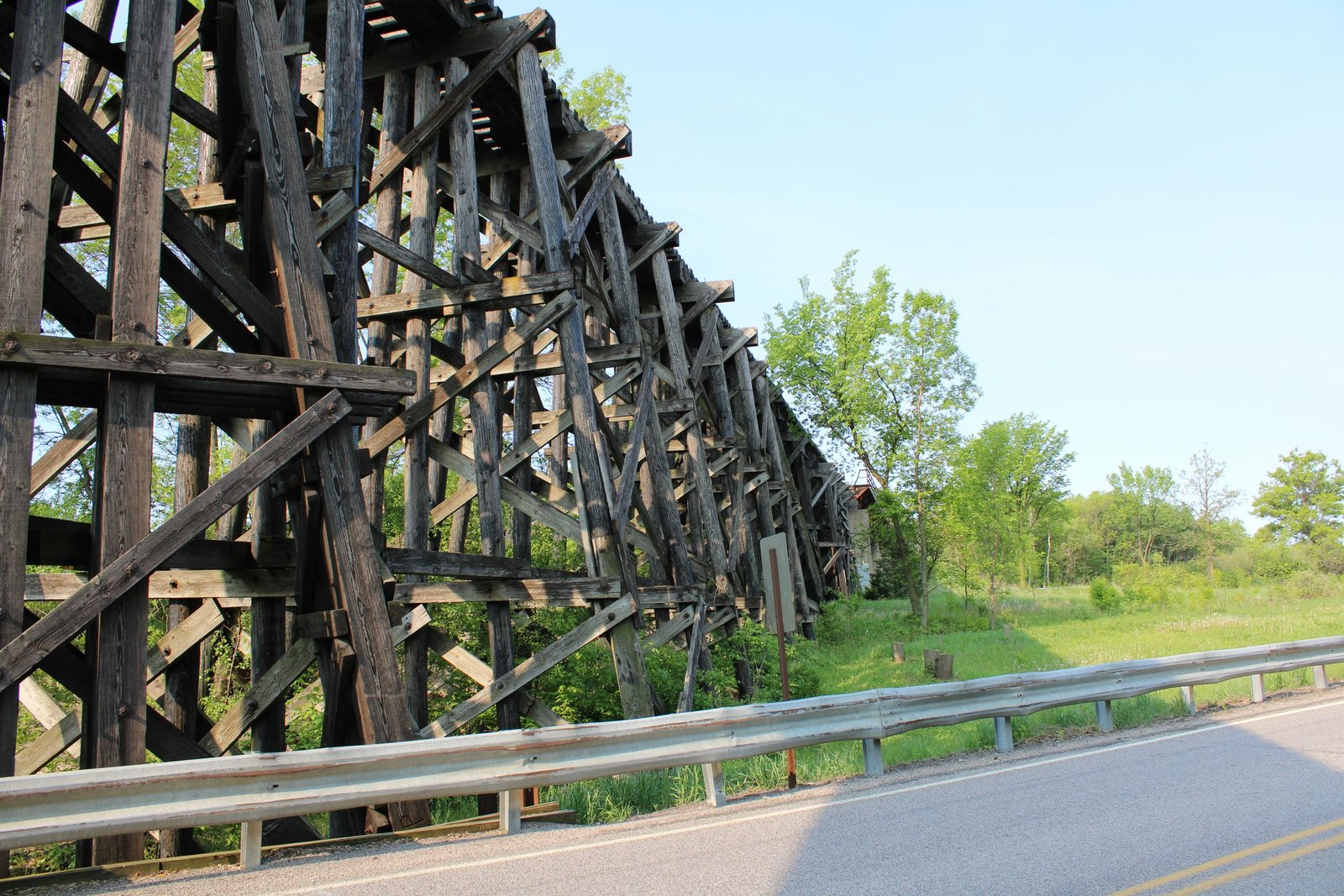
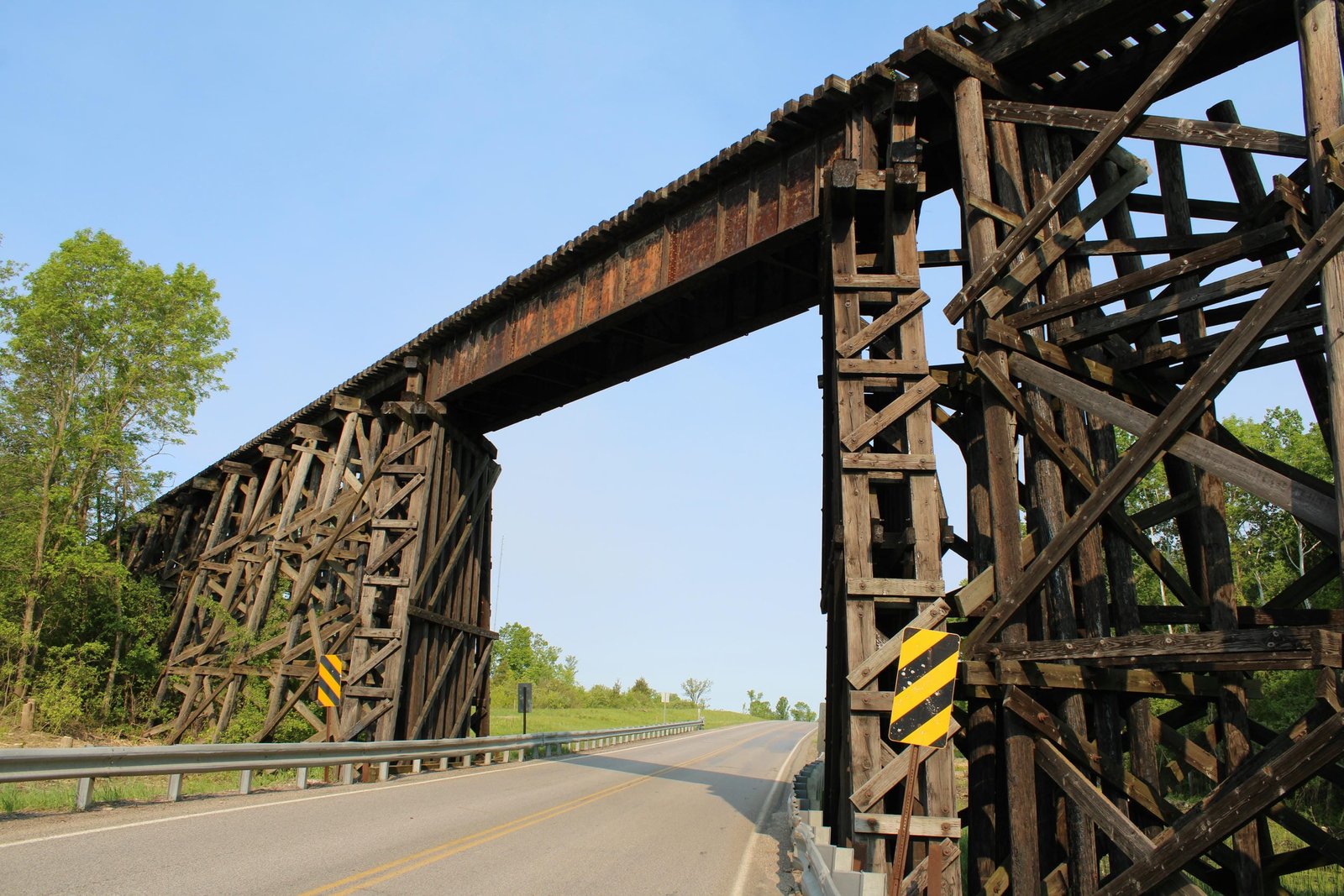
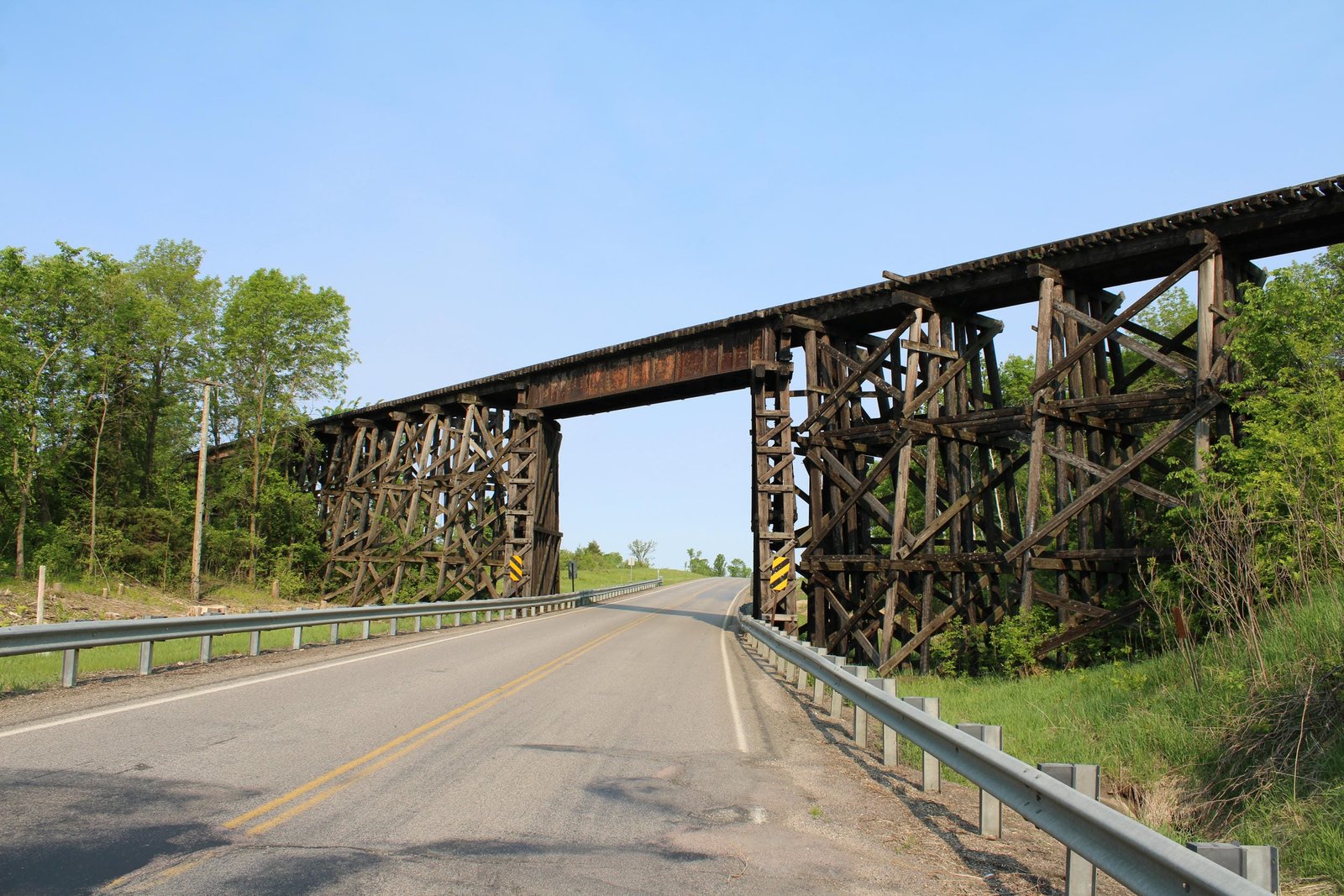
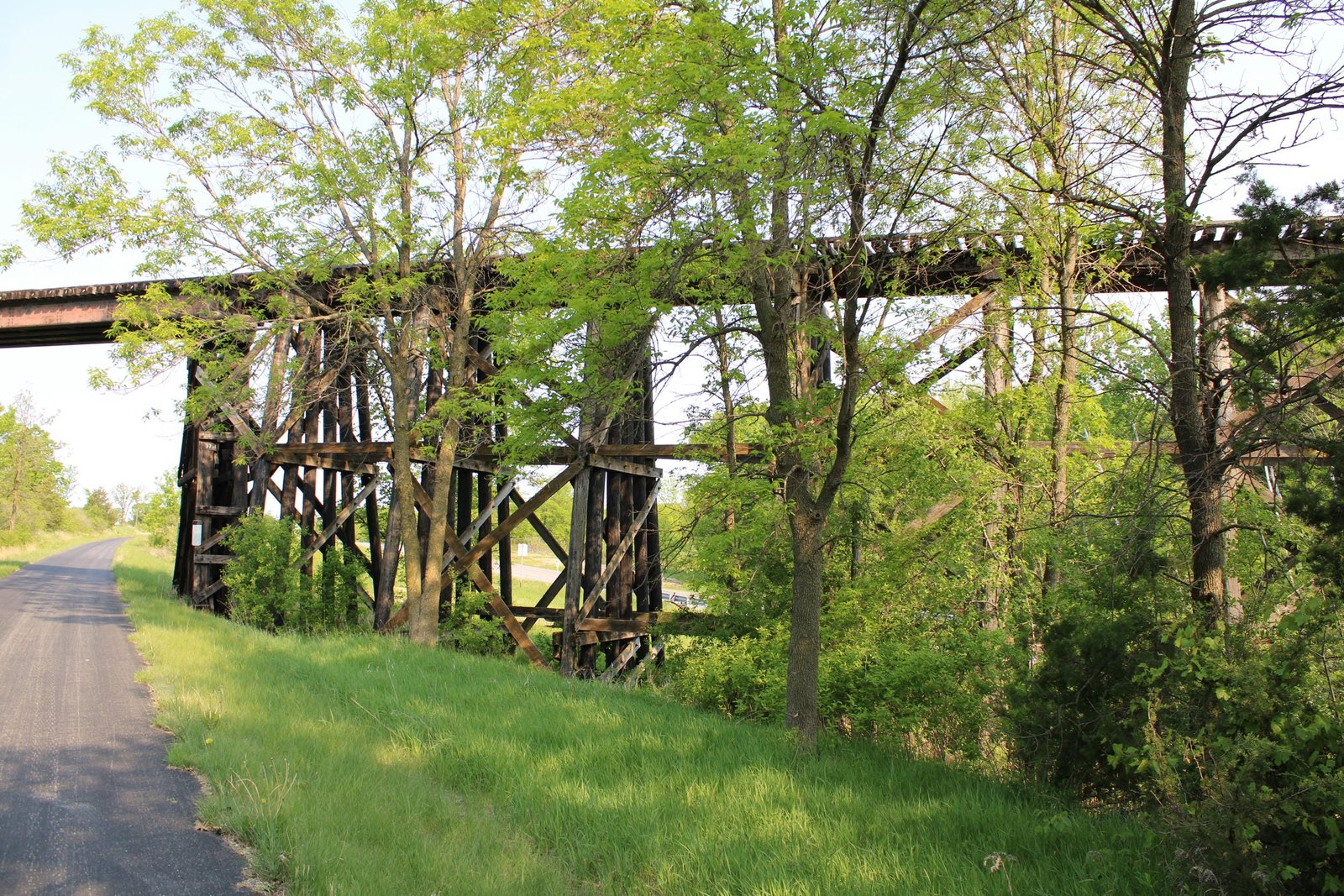
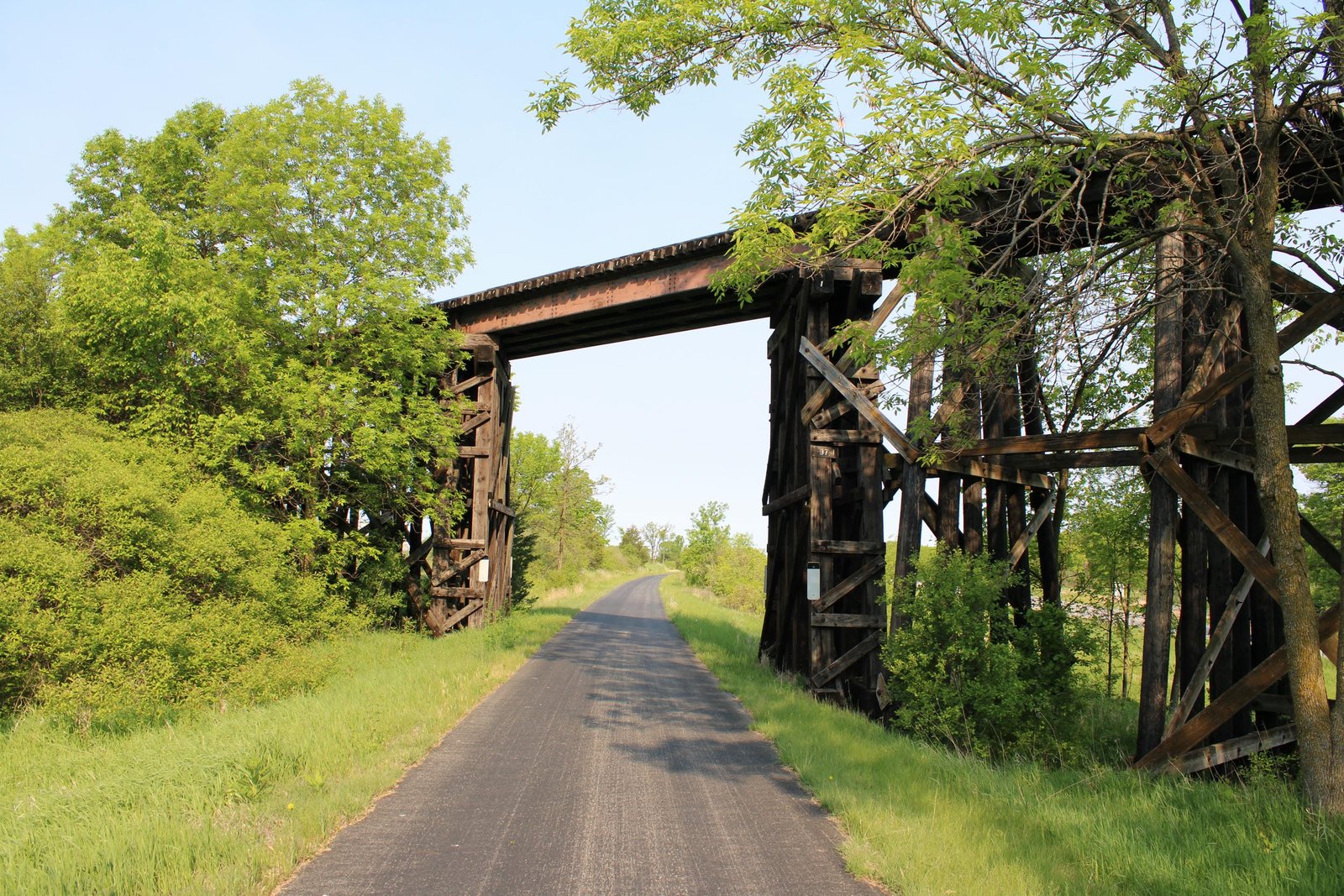
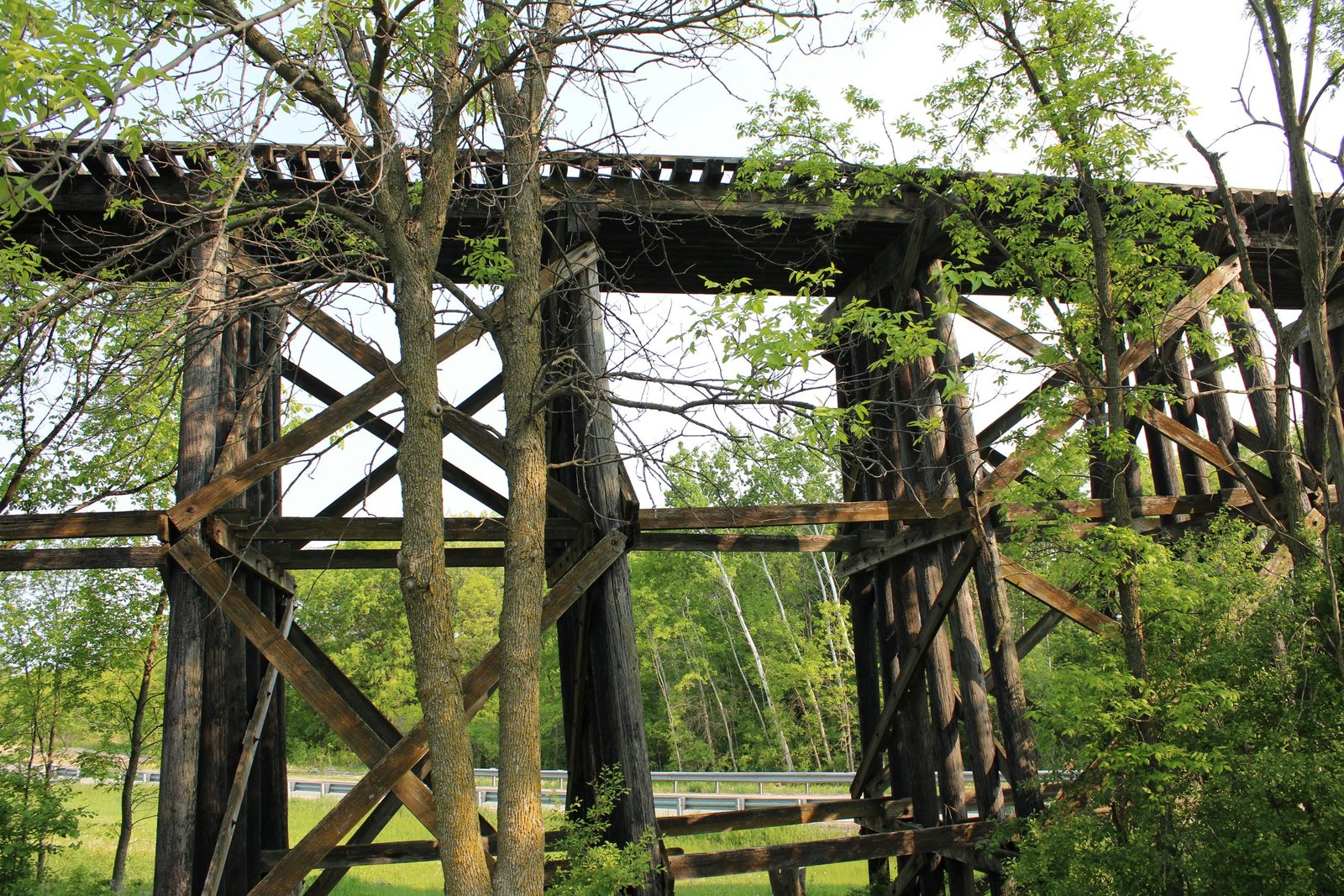
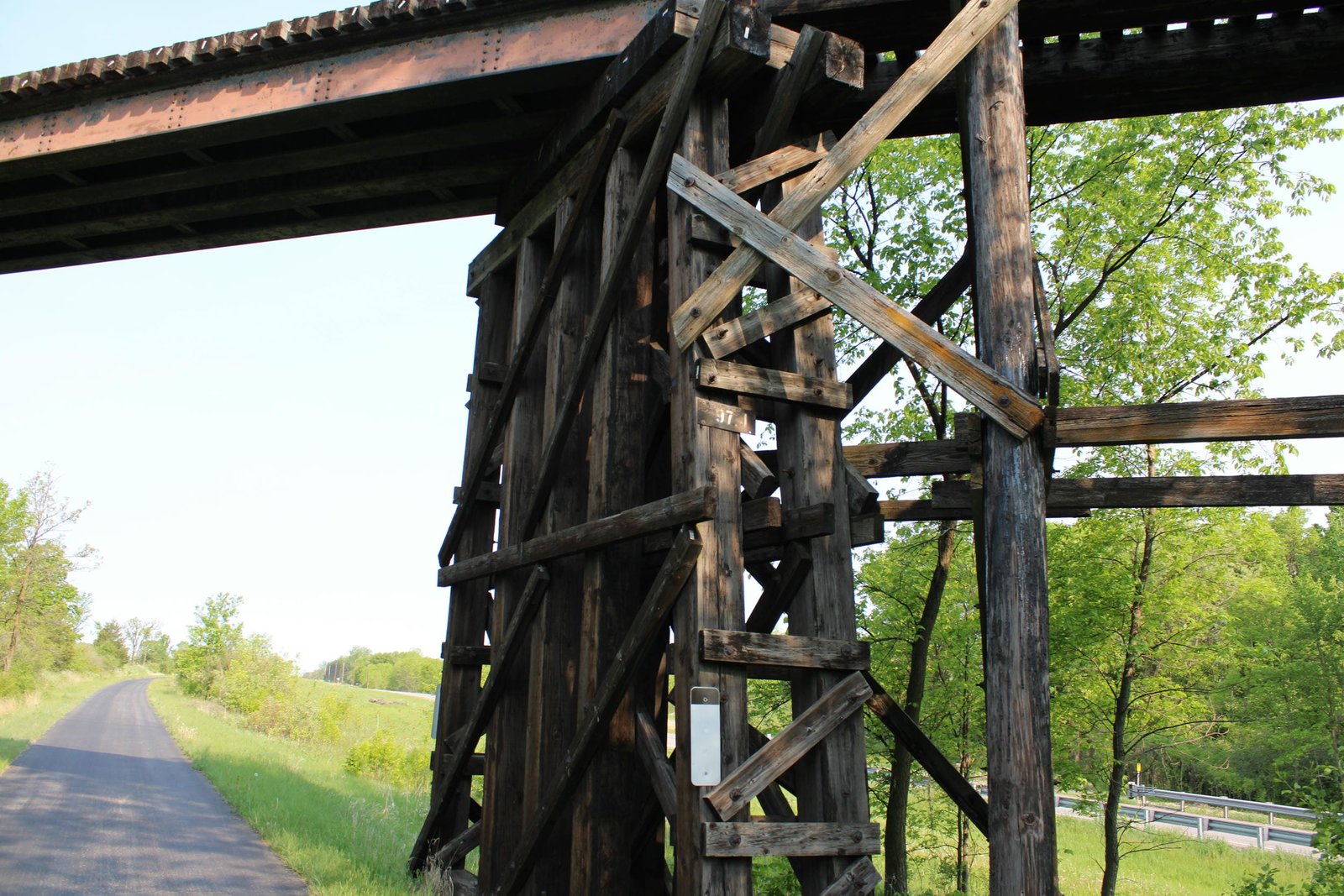
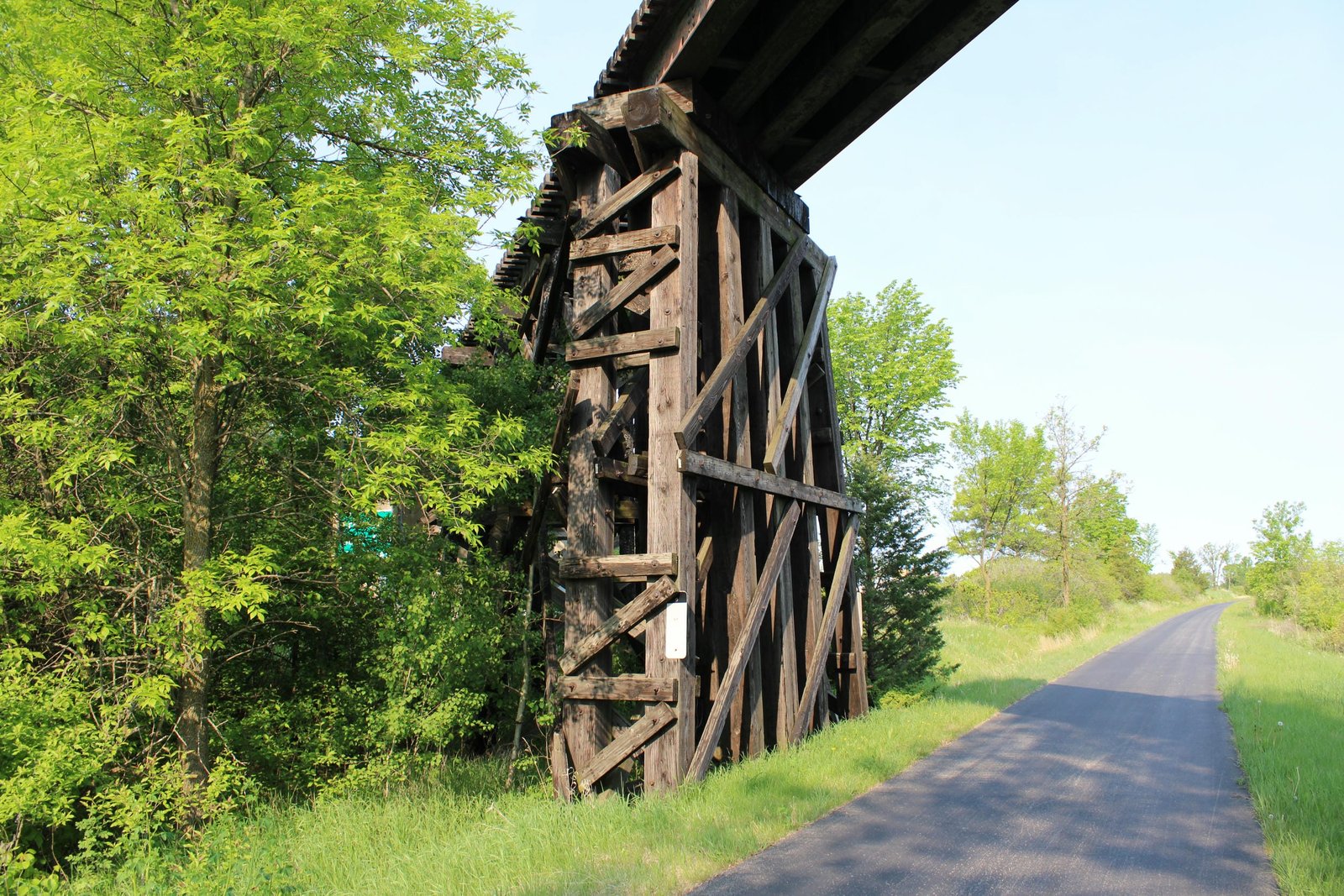
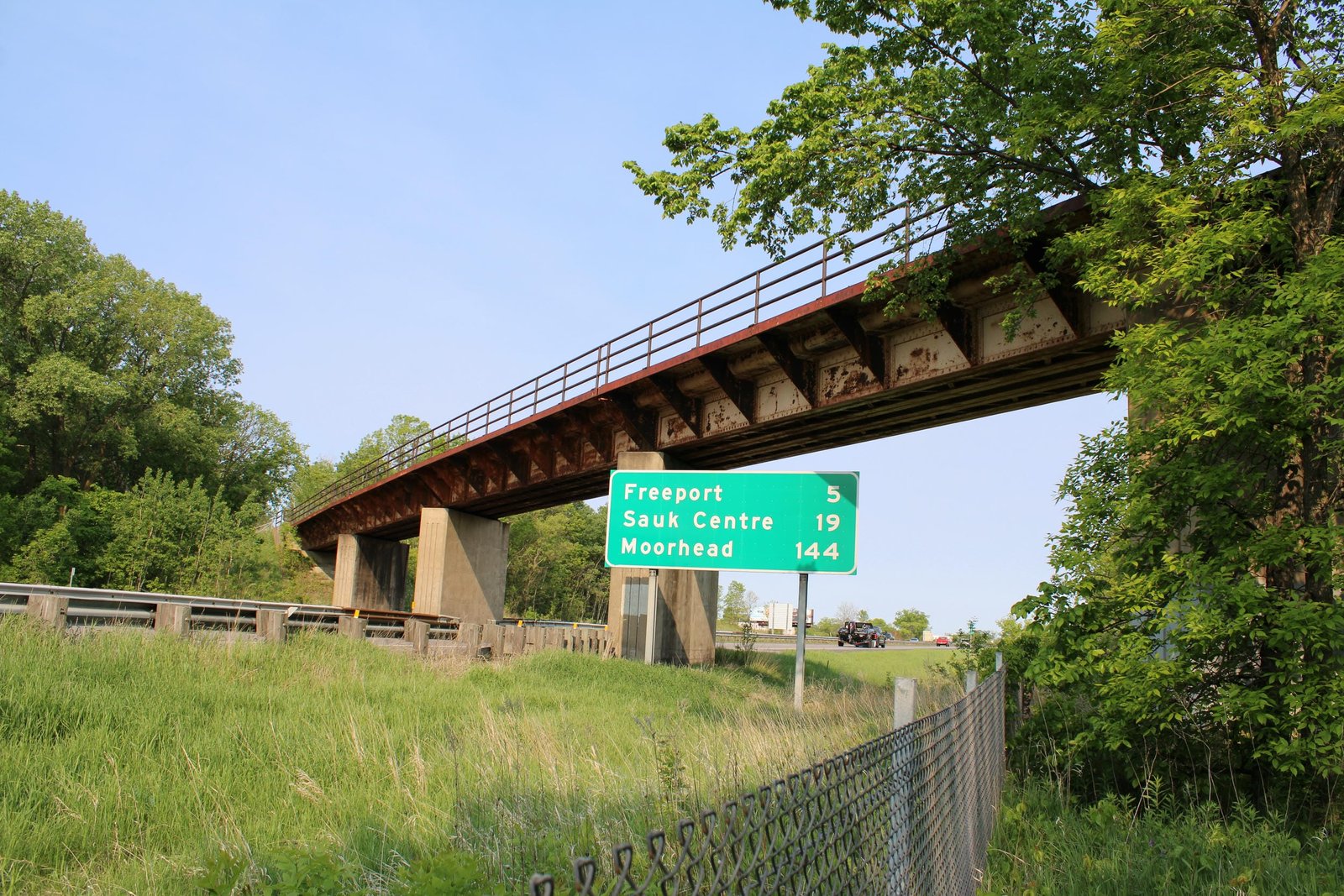
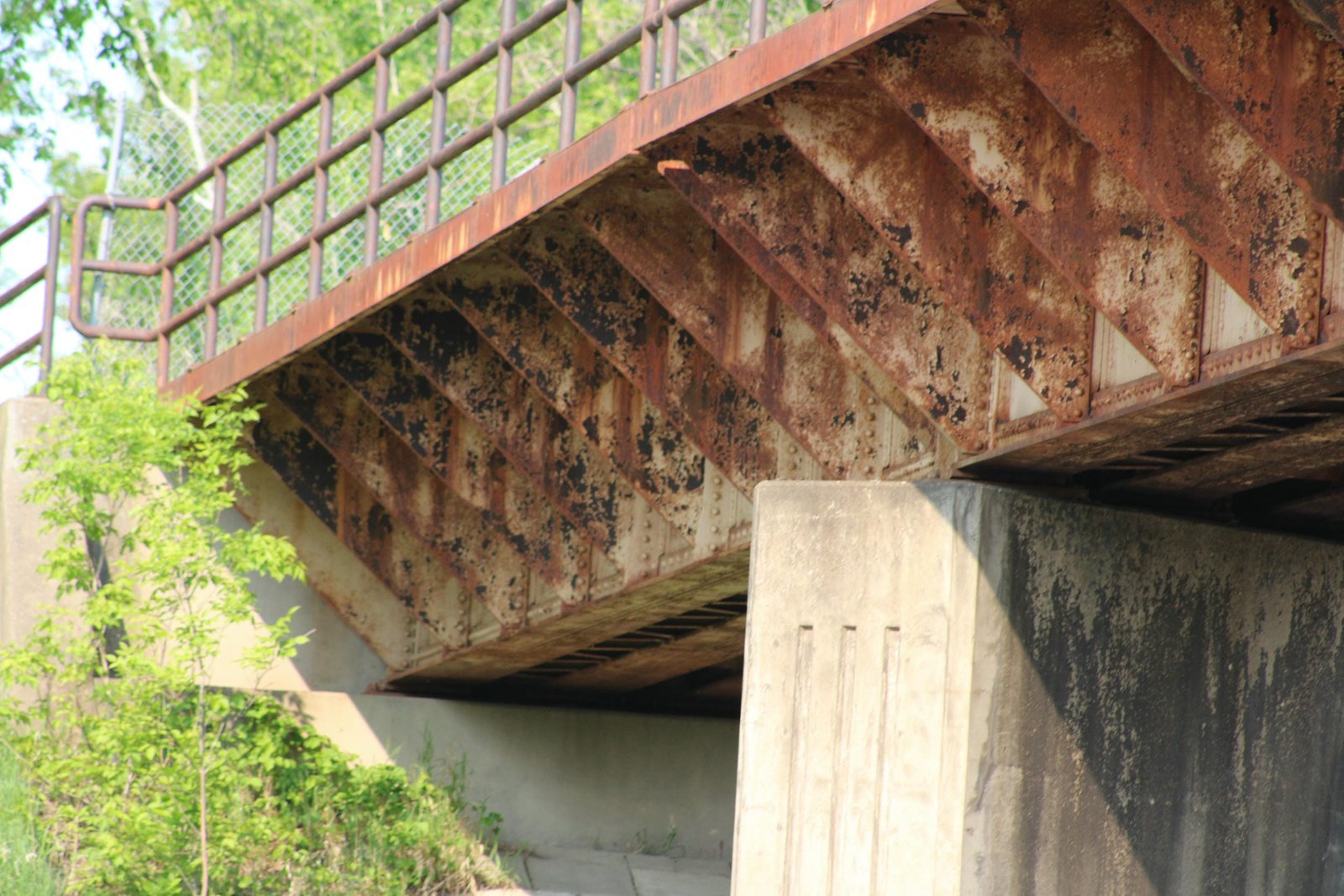
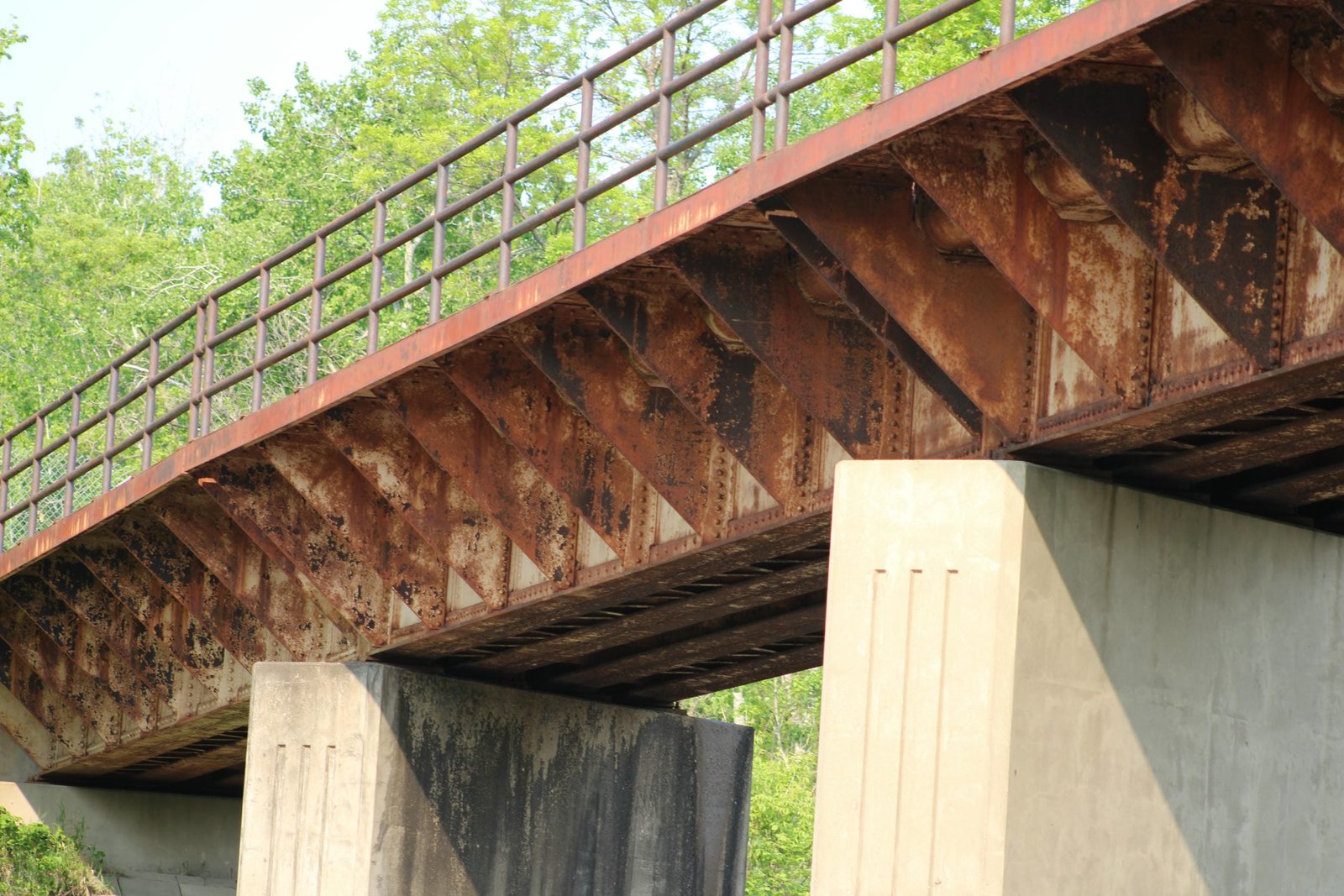
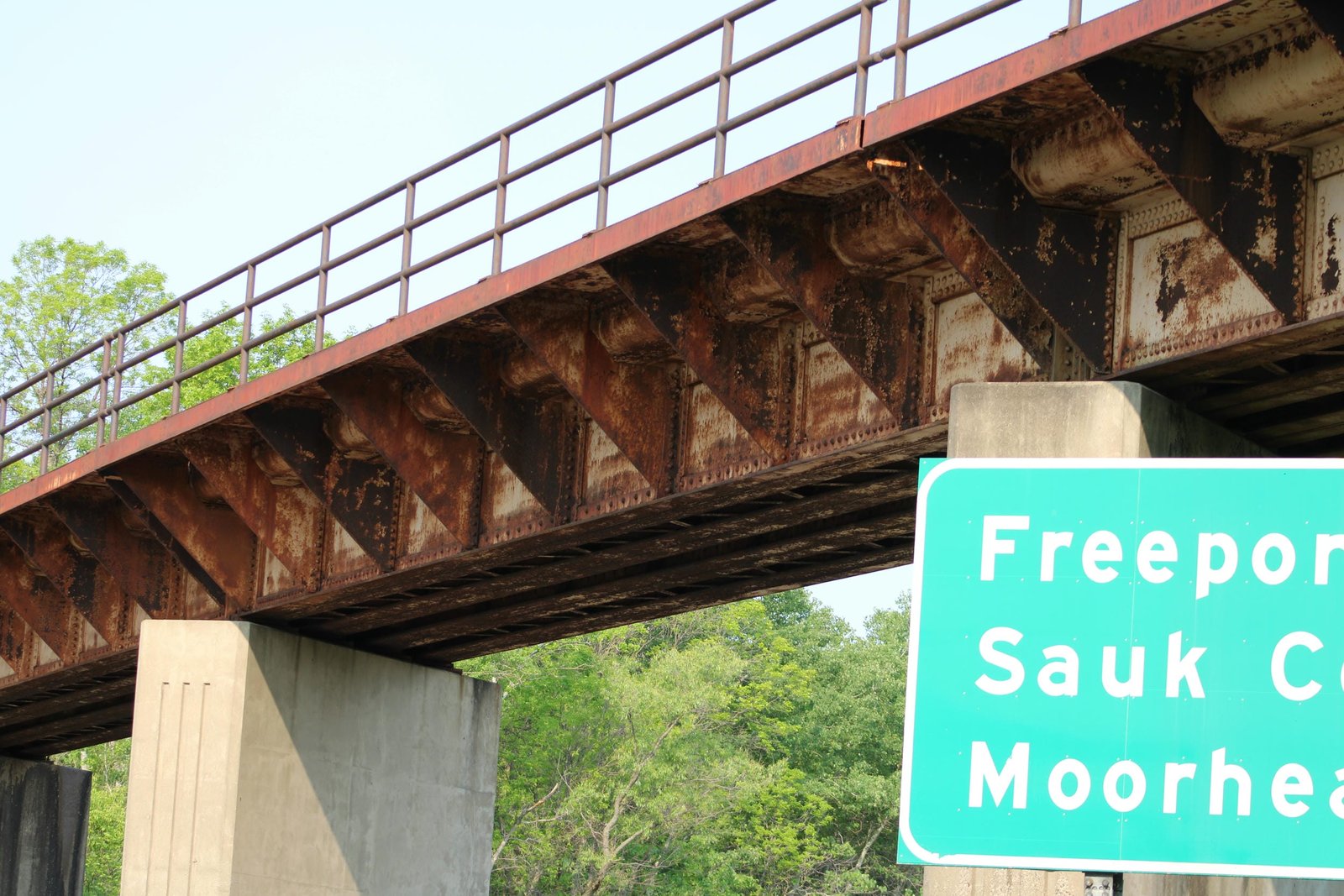
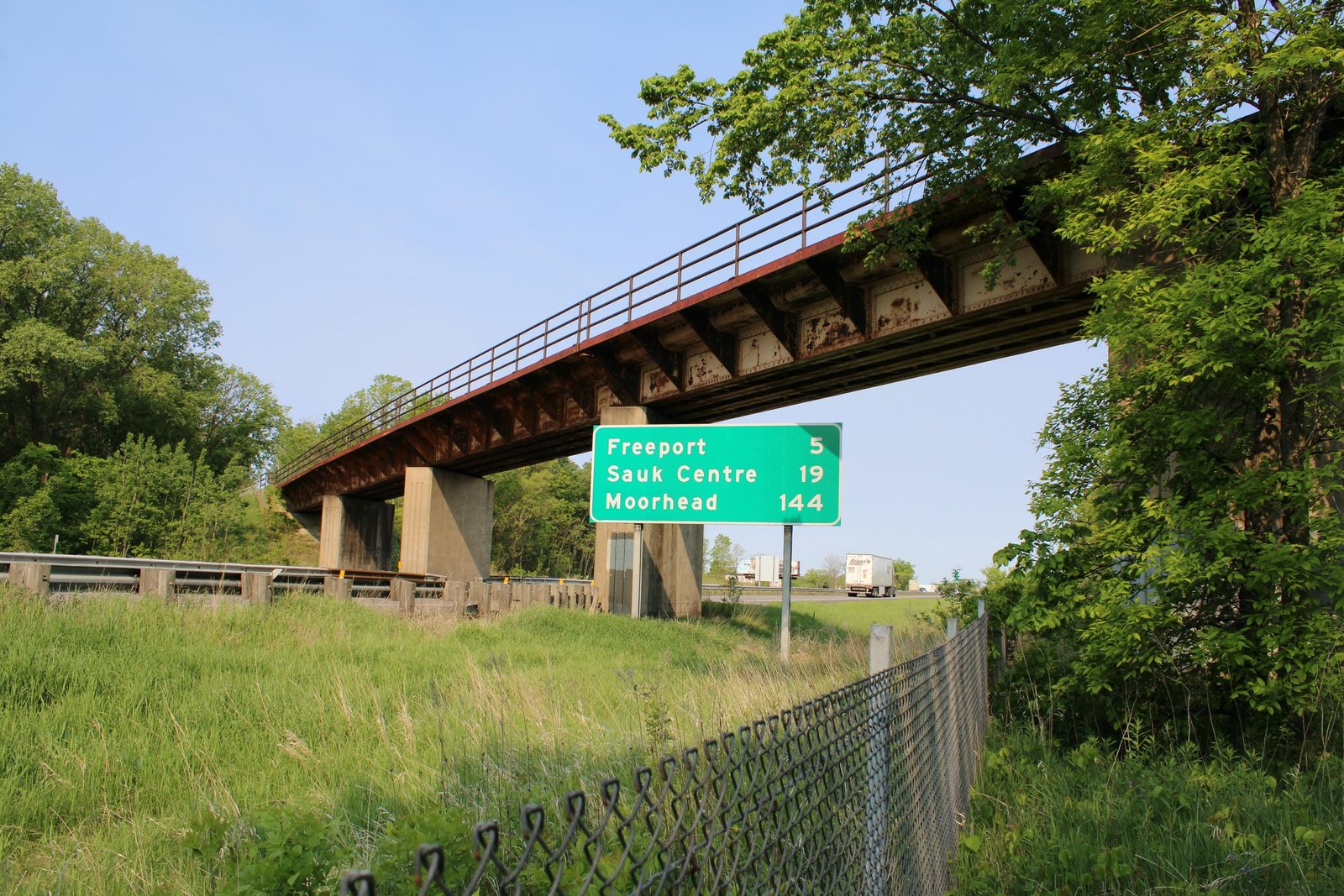
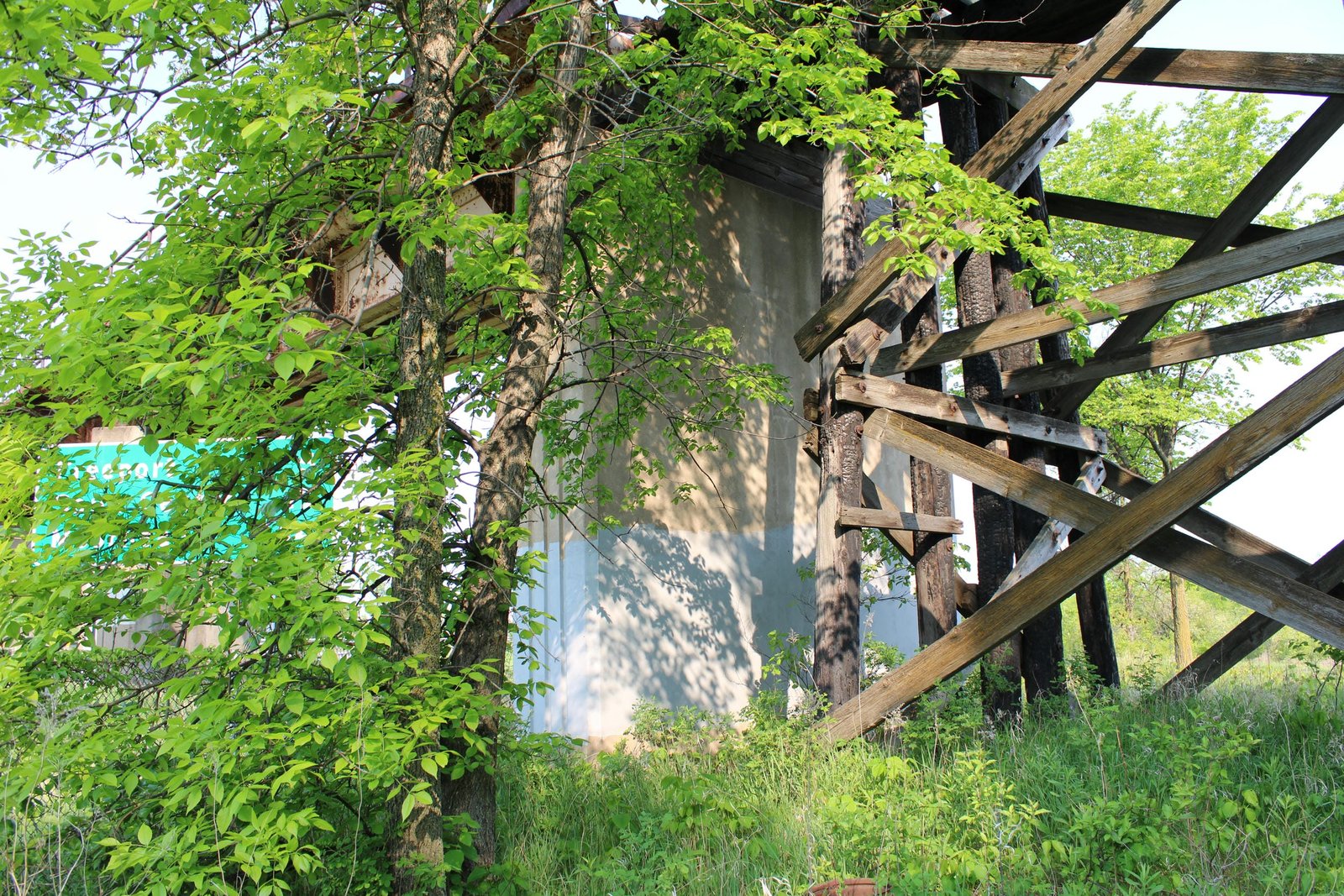
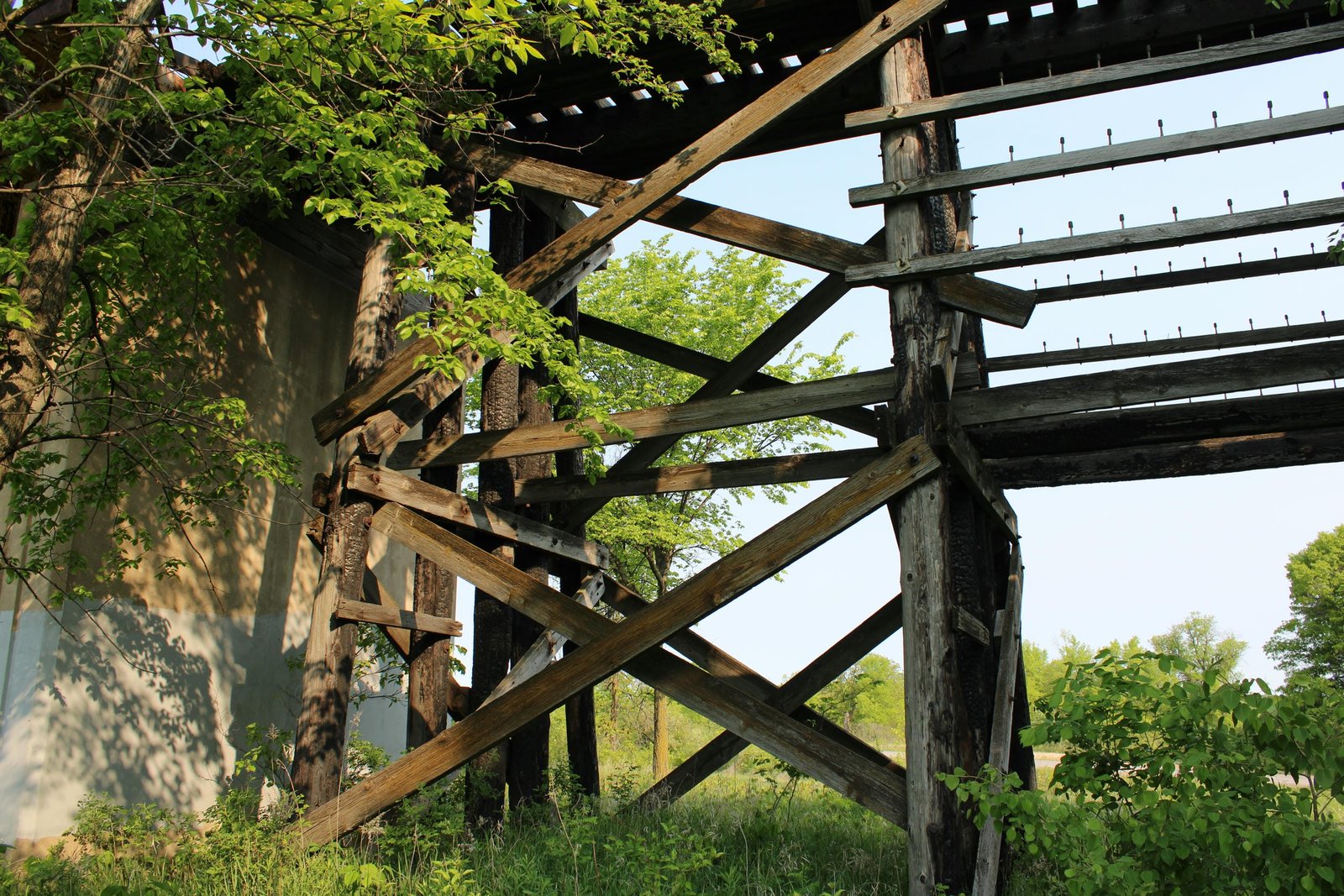
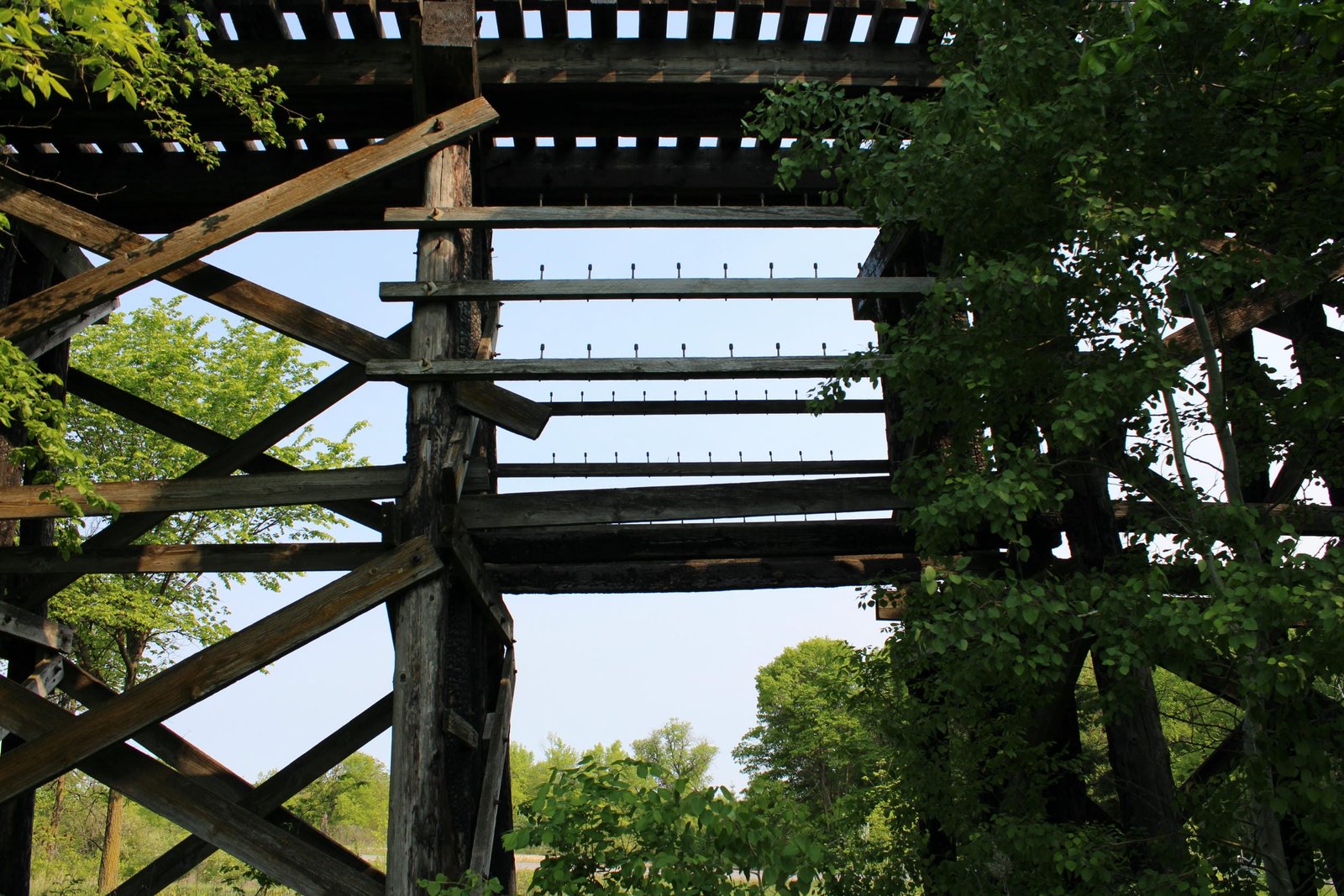
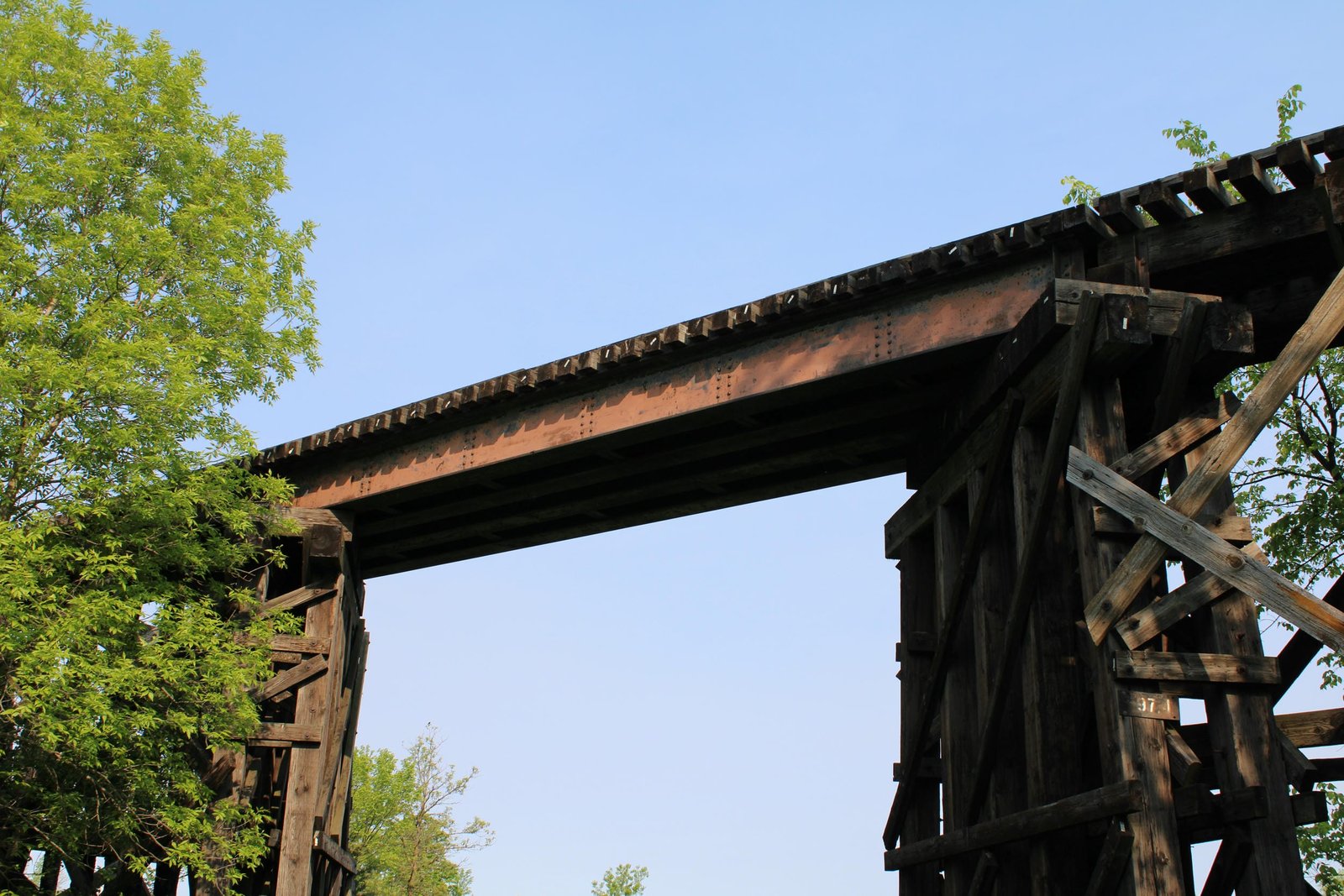
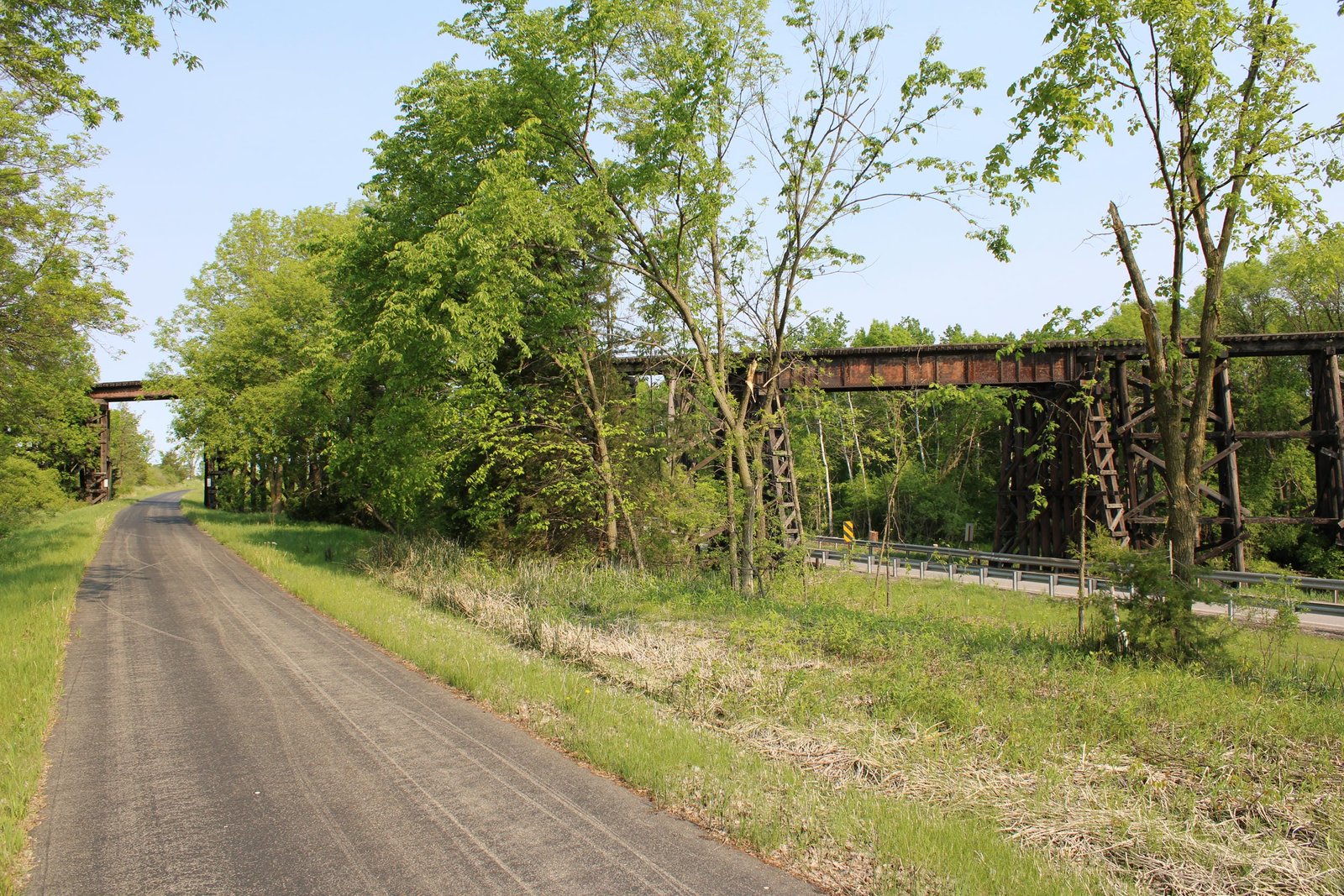
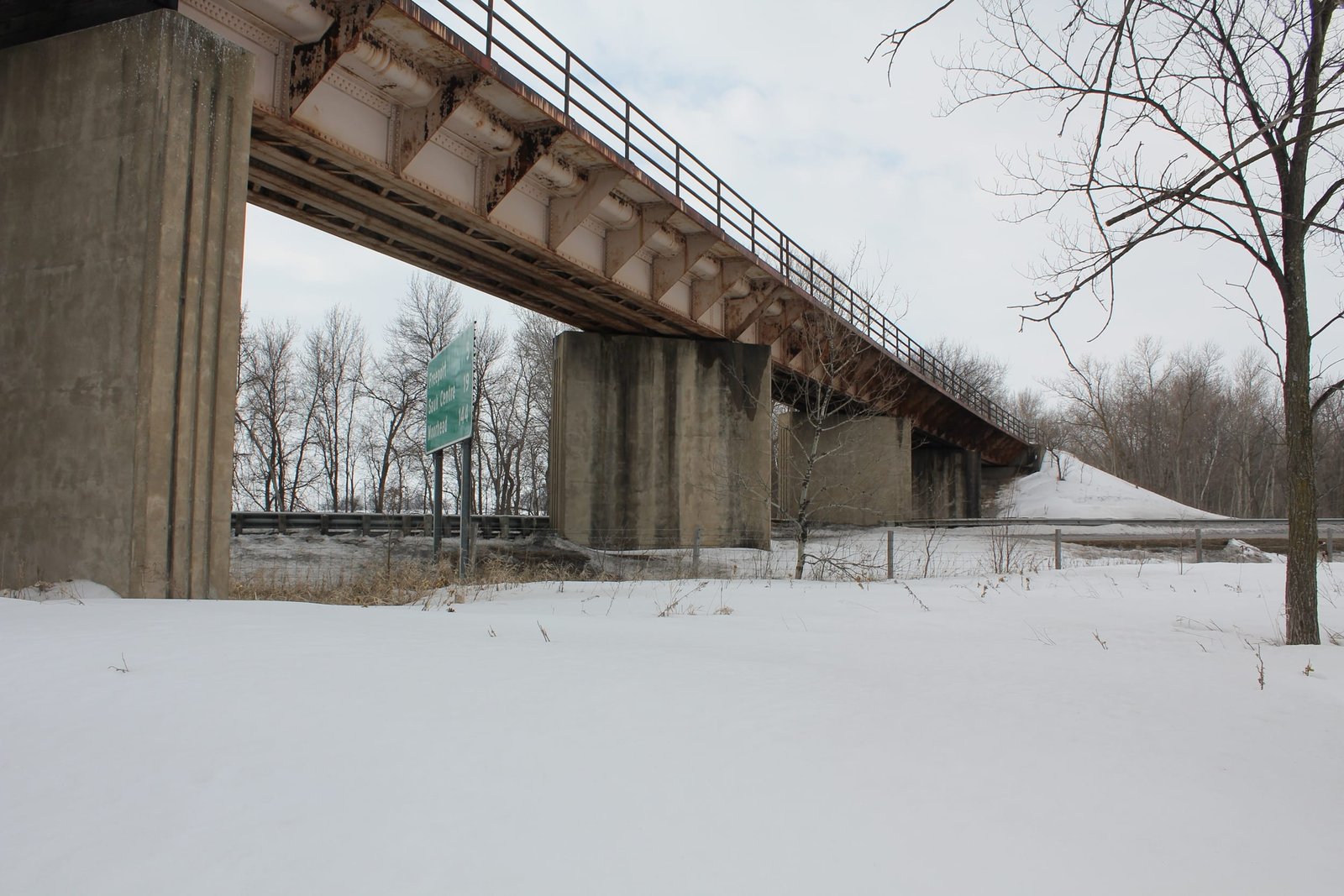
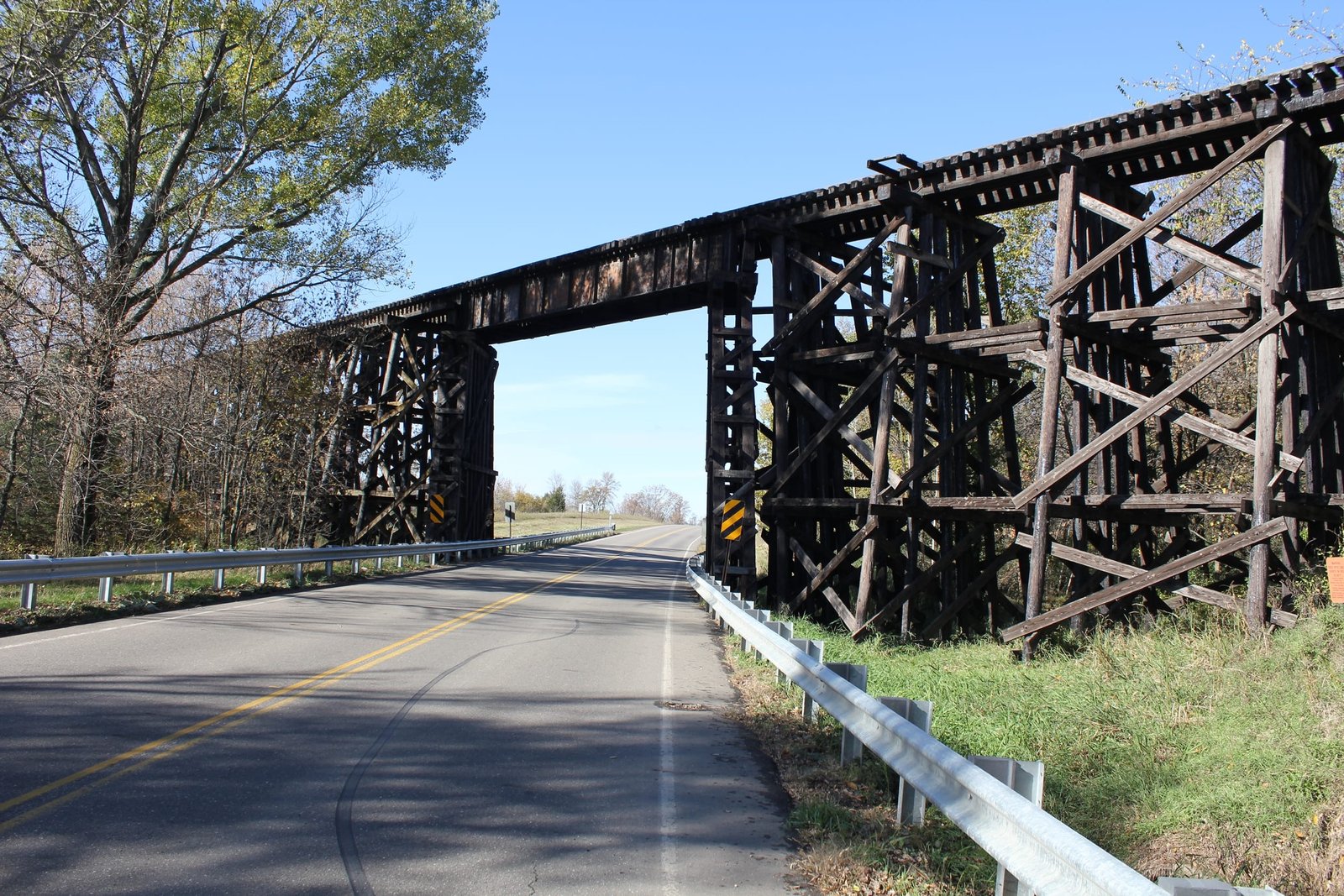
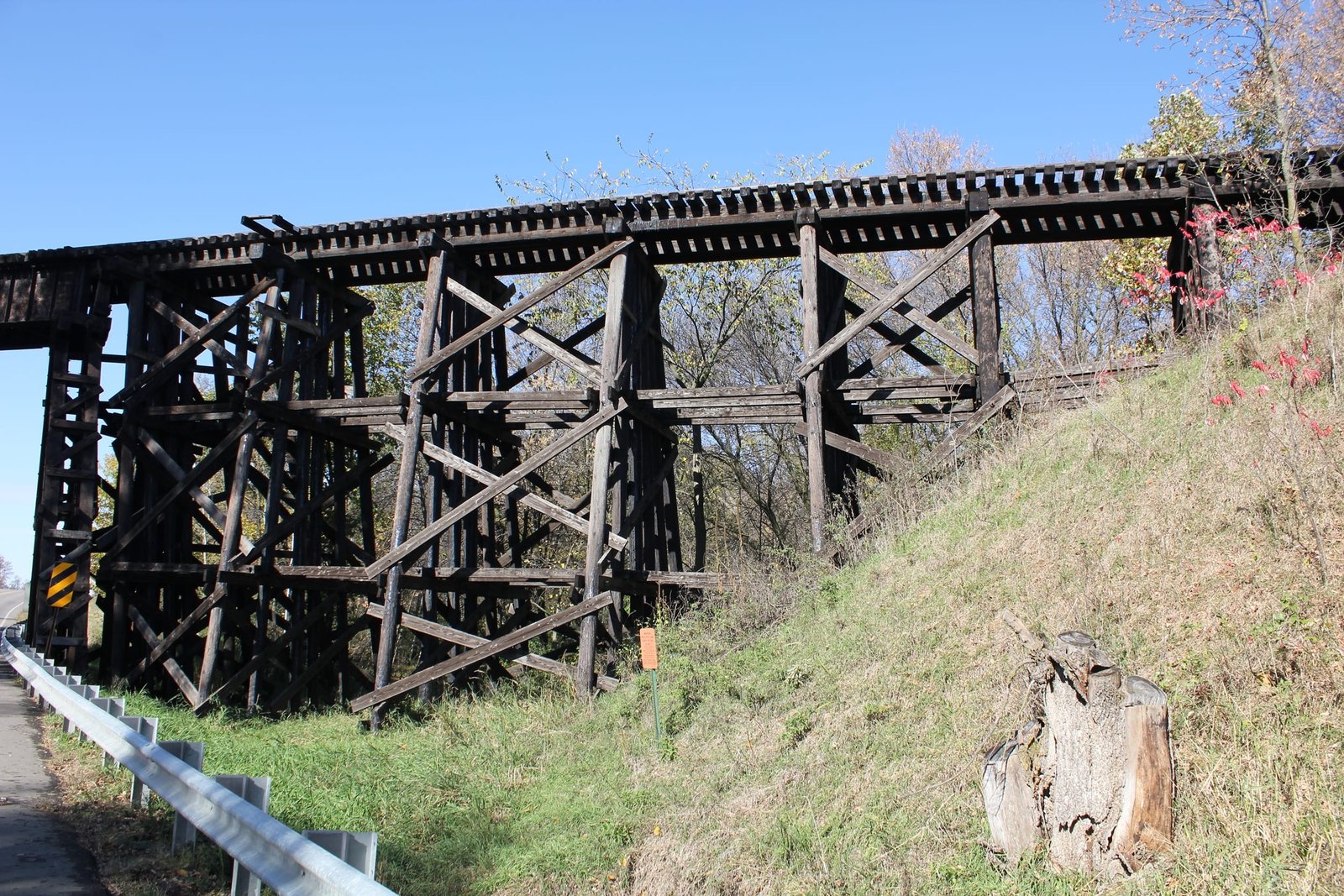
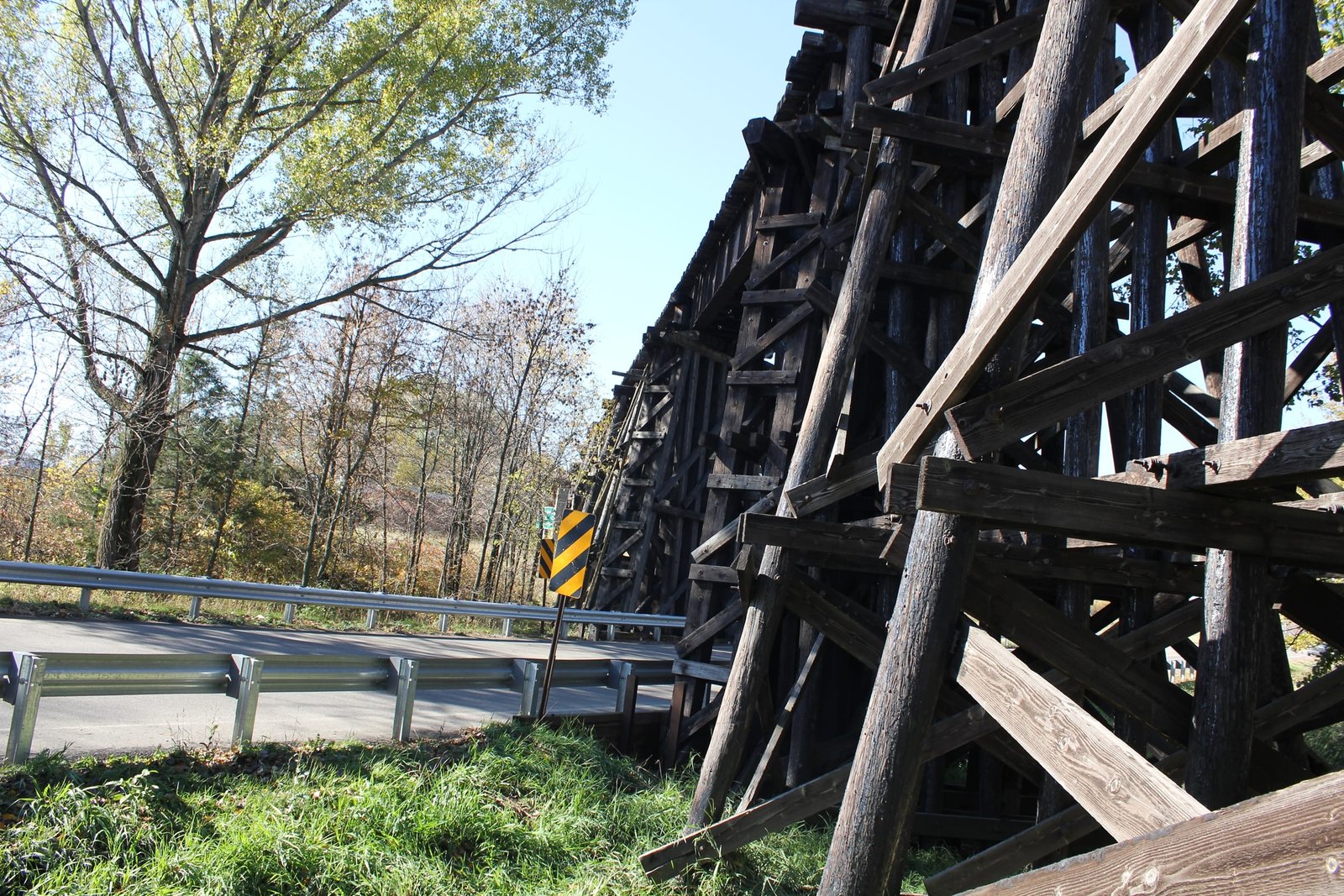
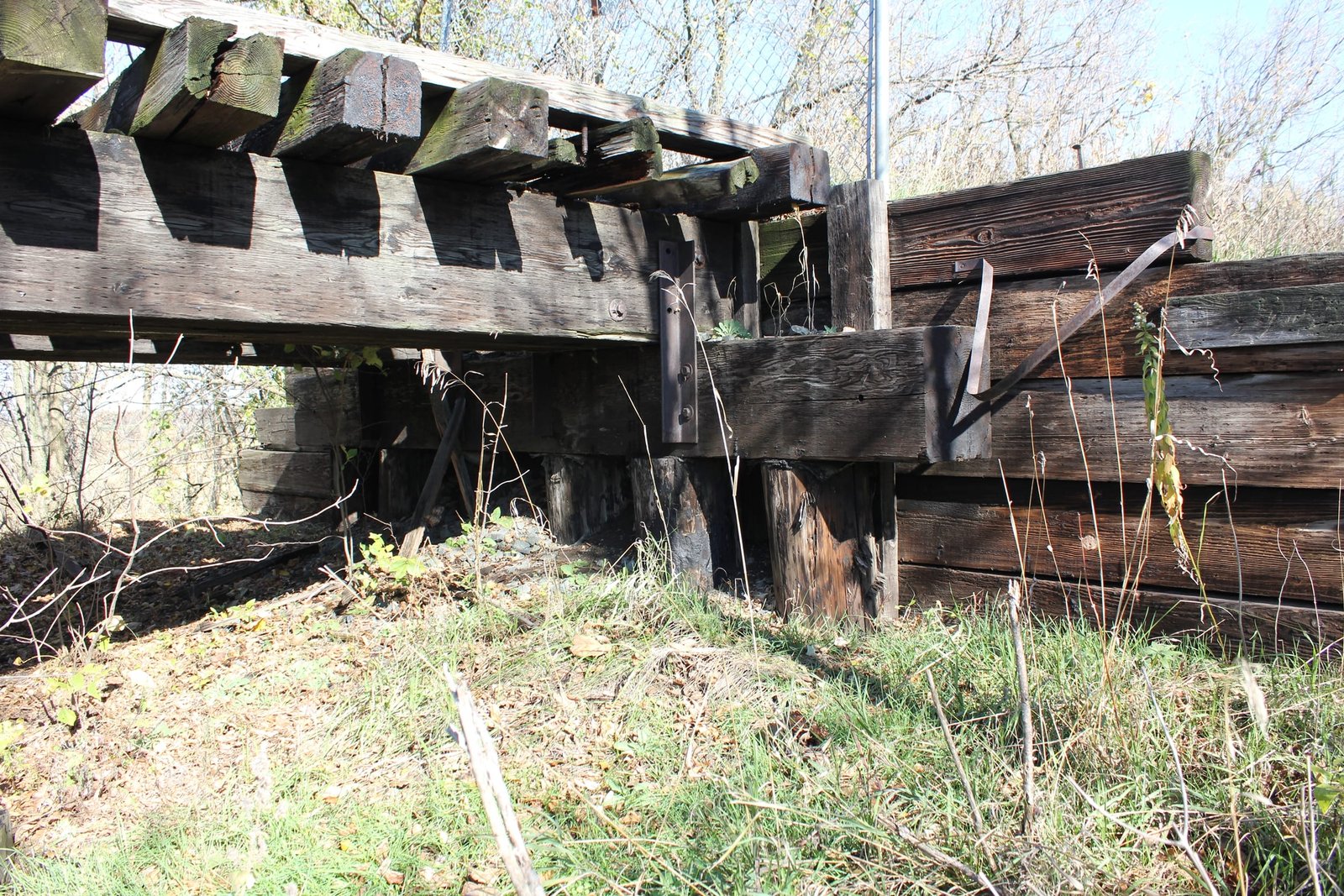
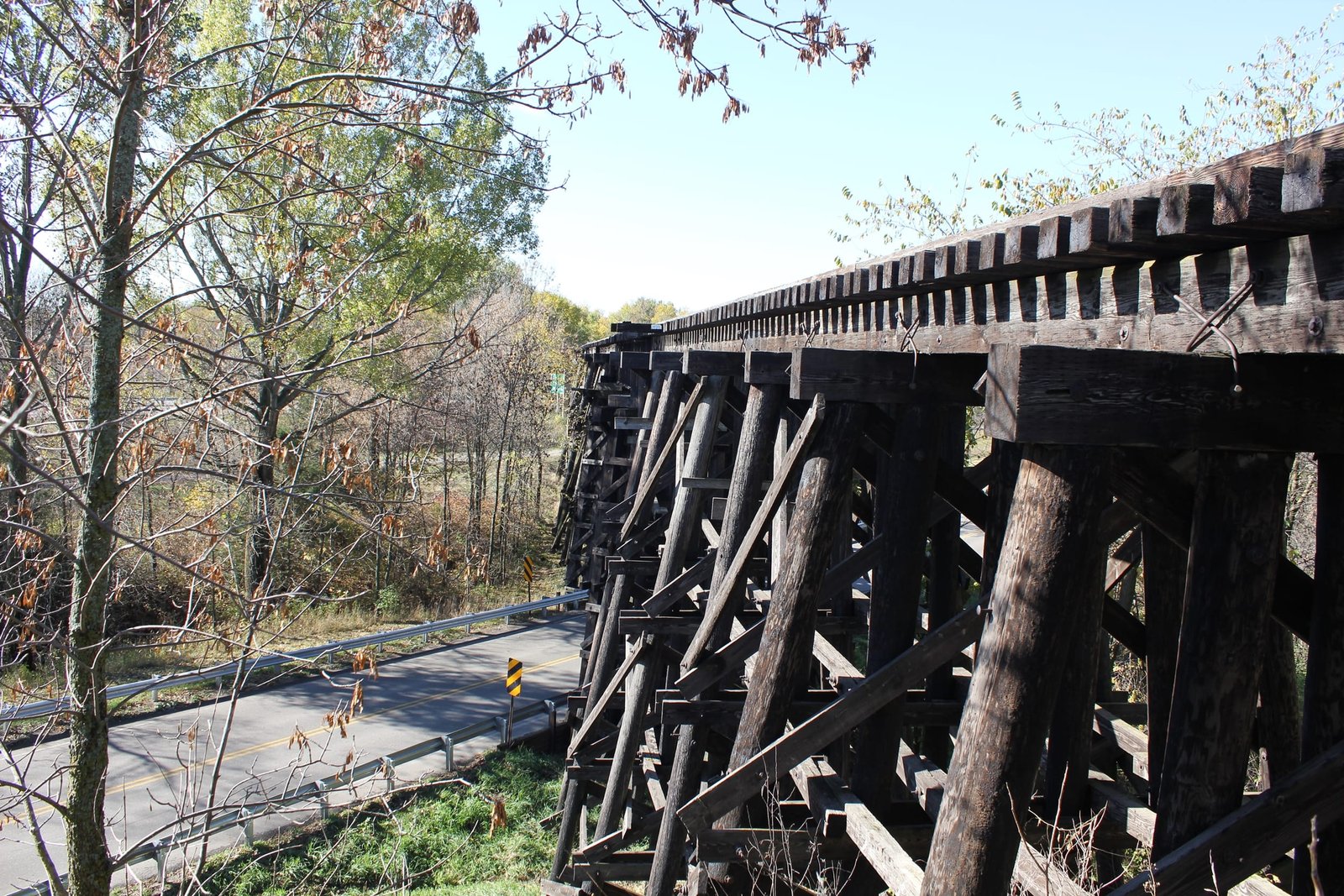
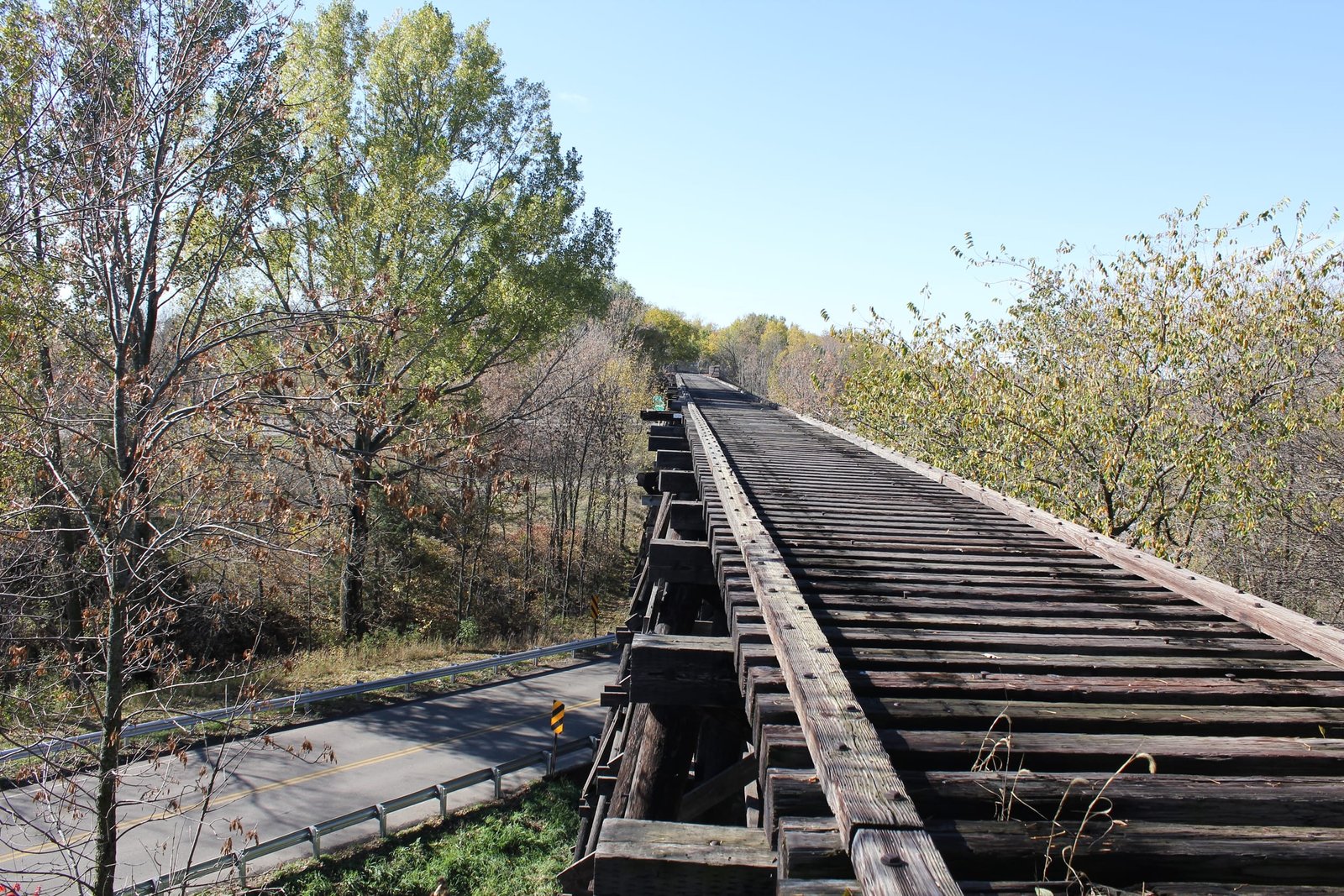
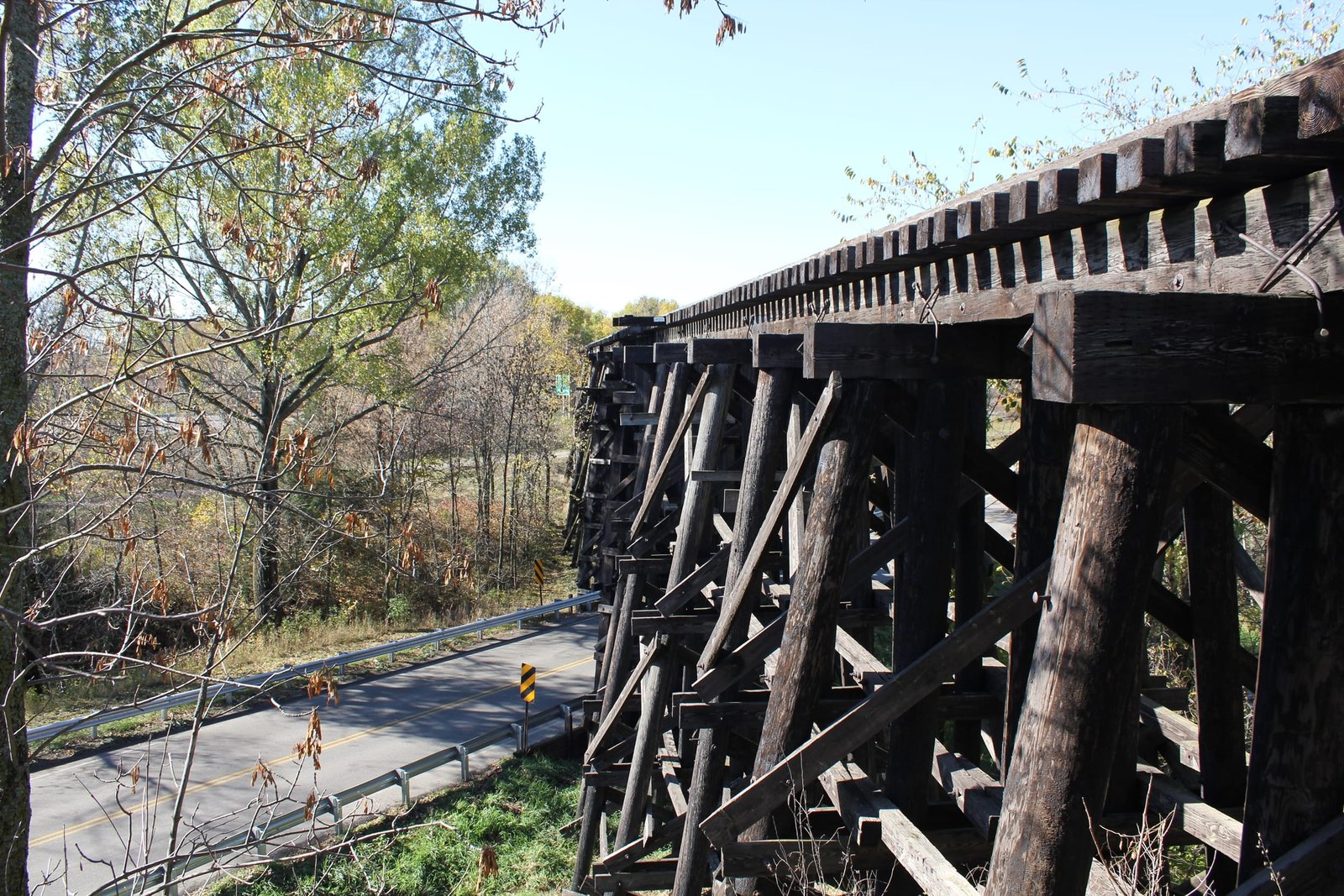
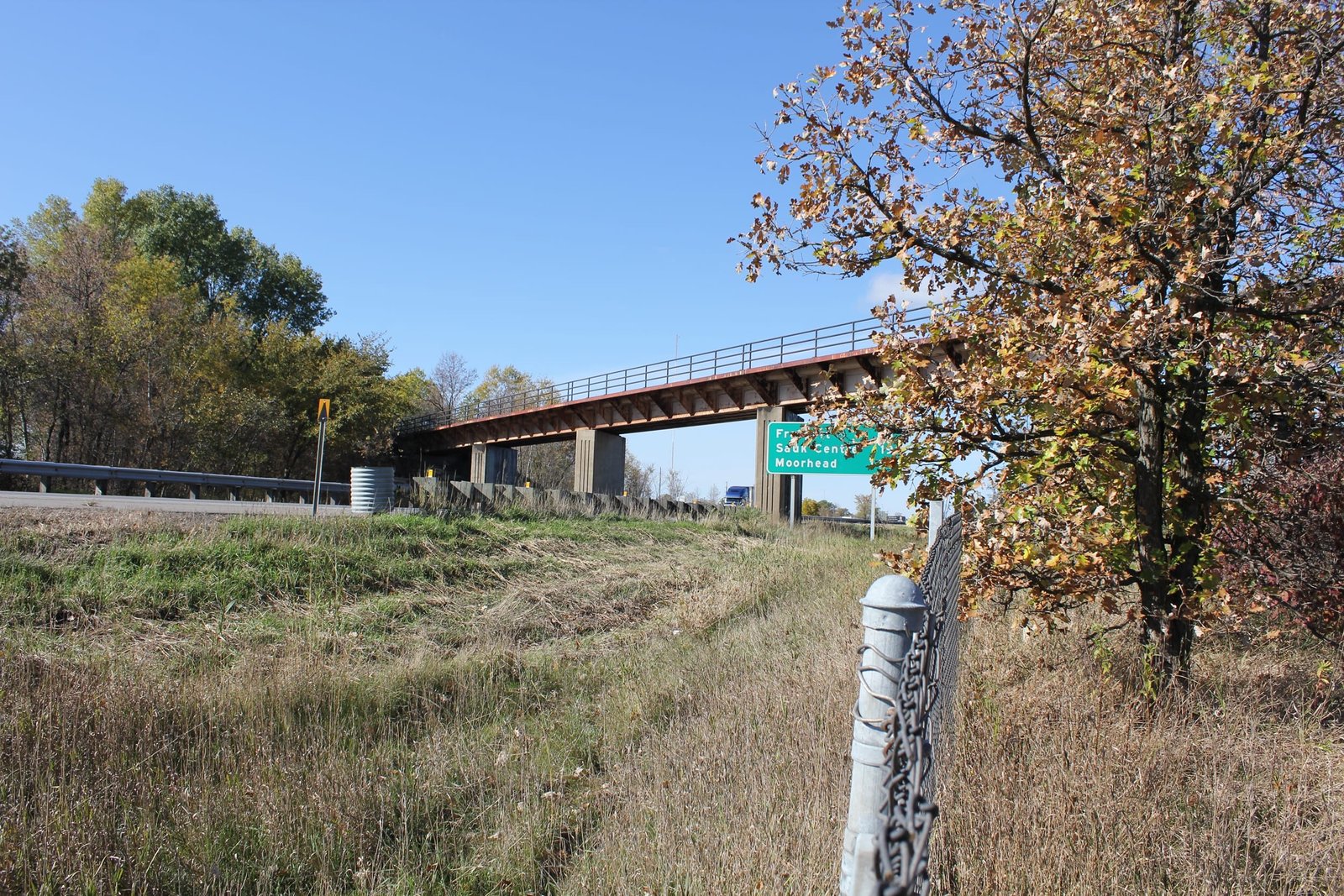
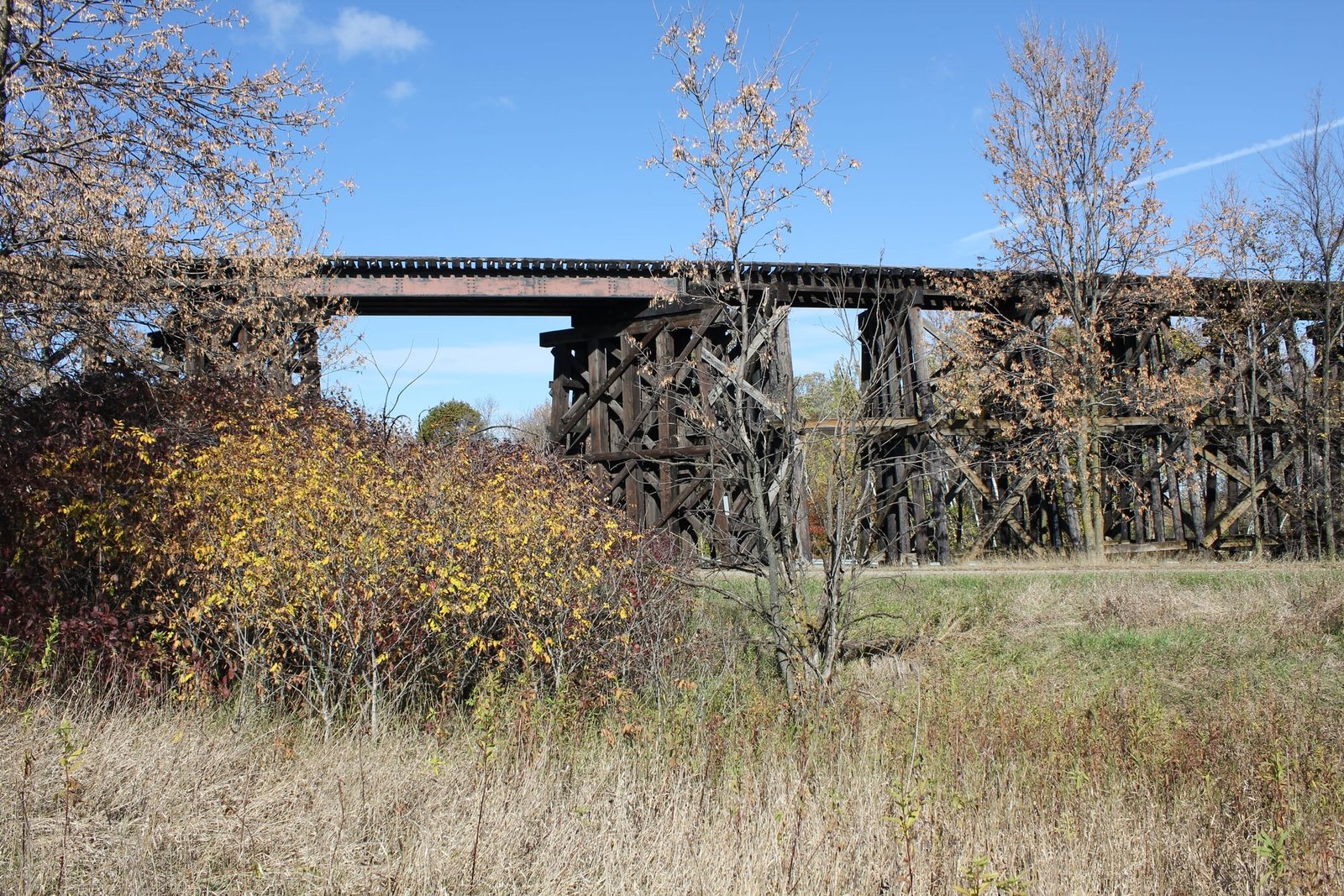
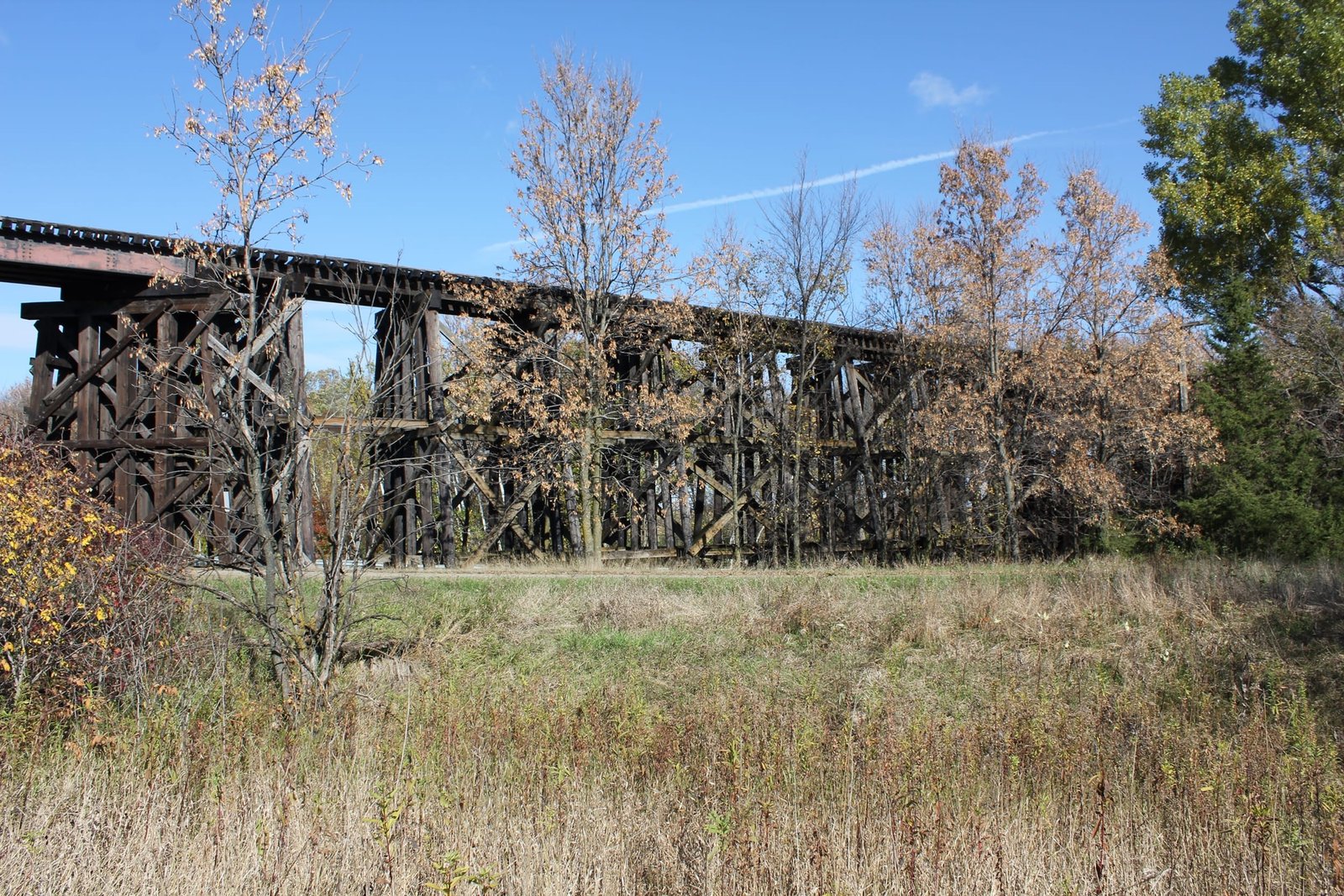
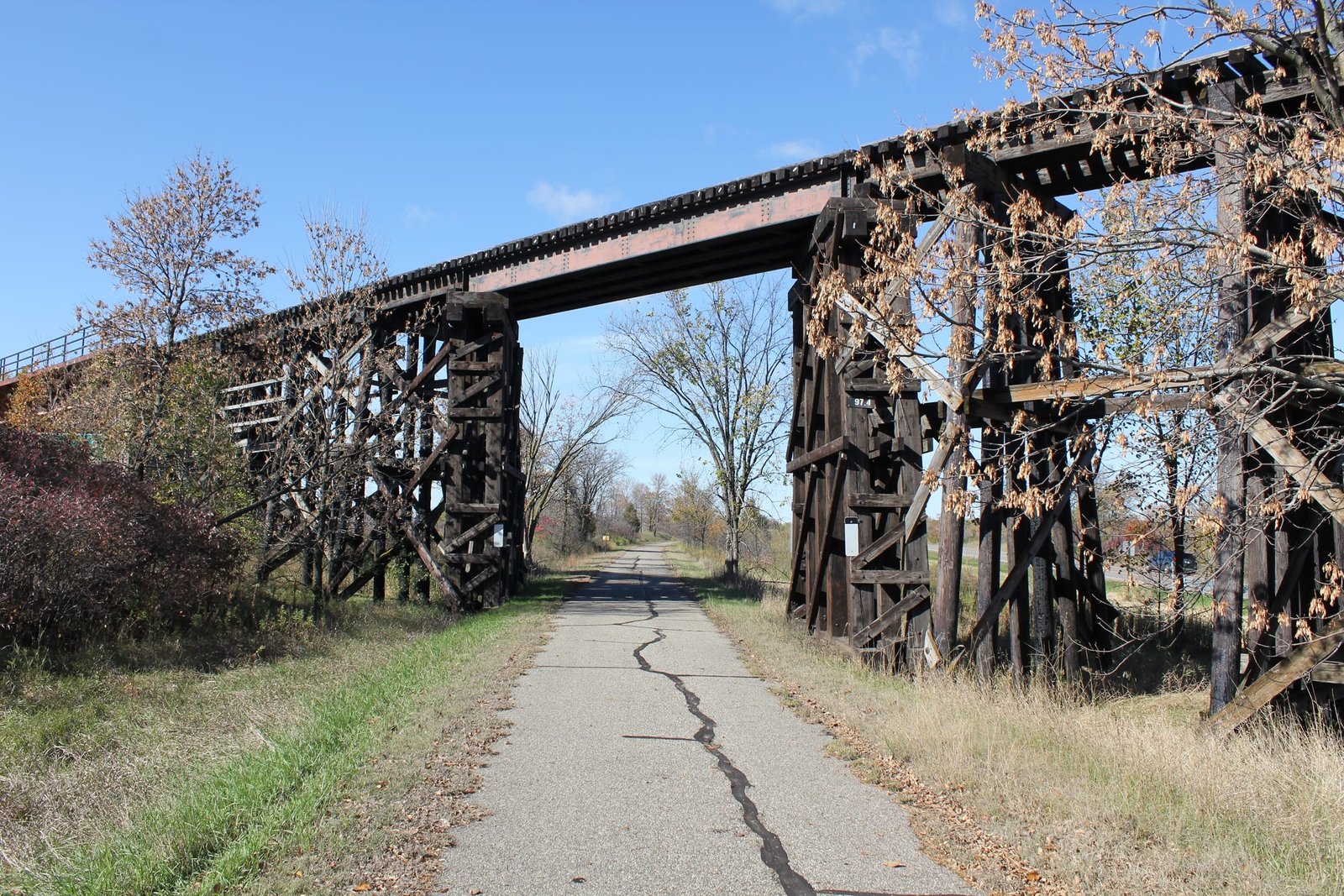
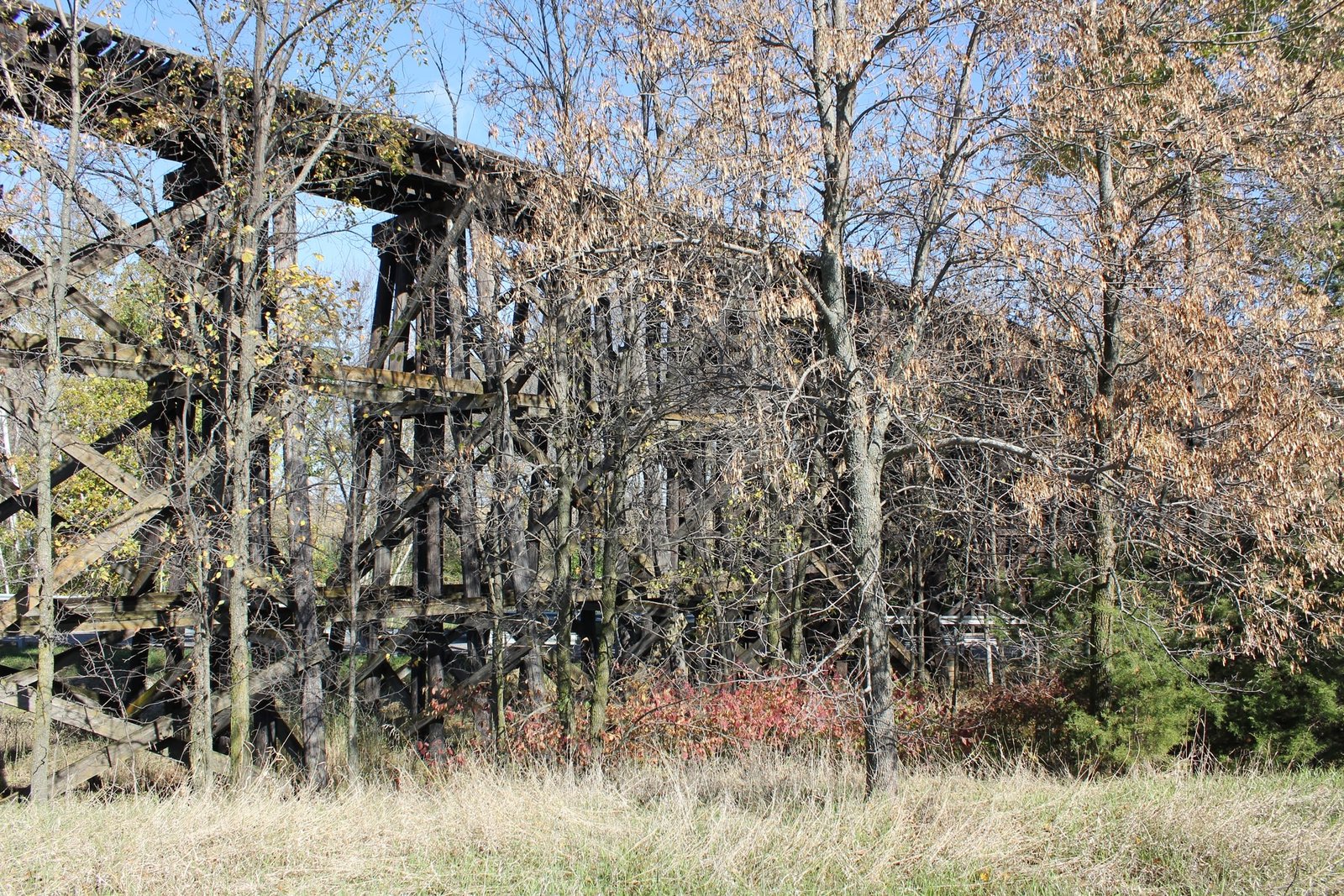
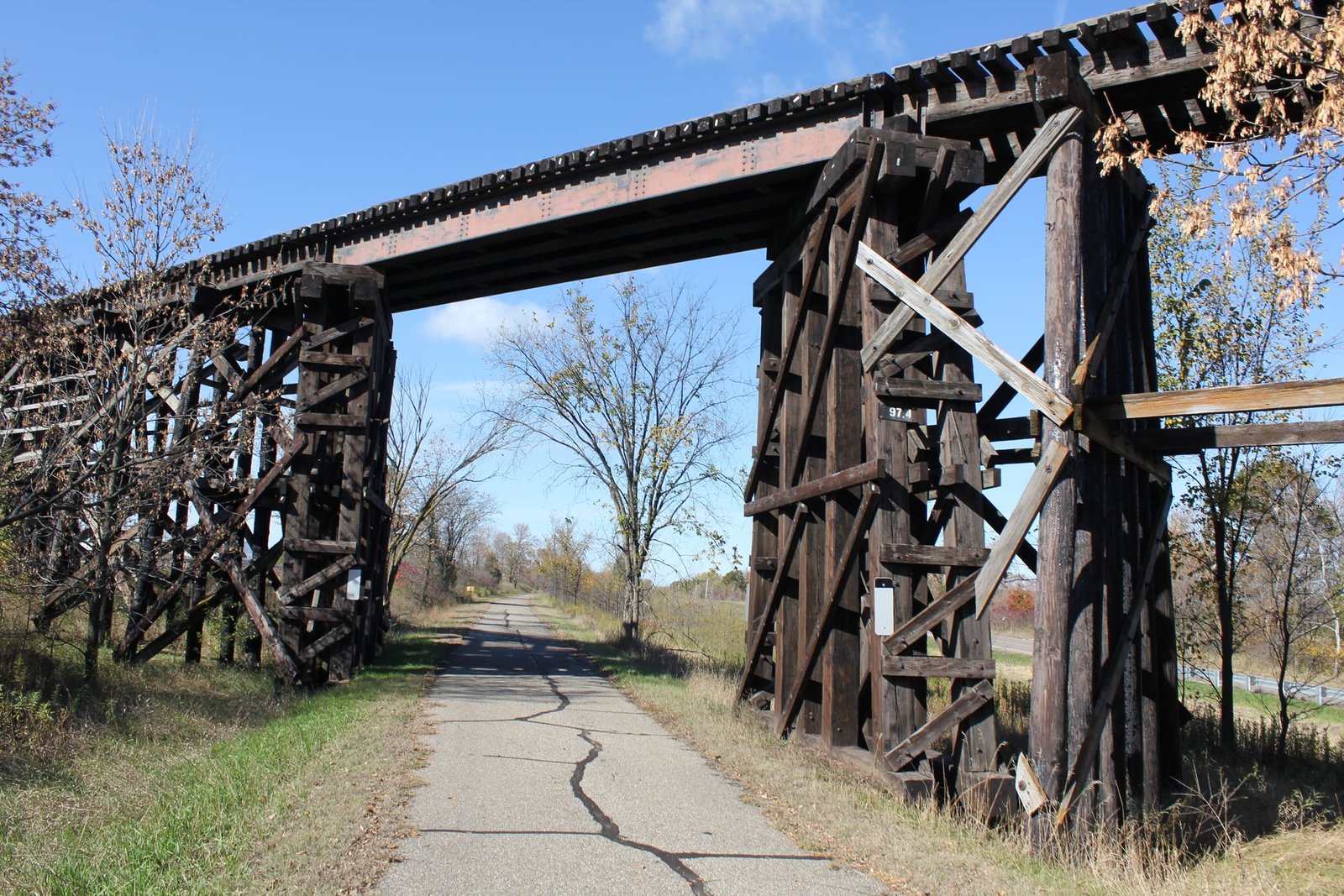
Located west of Albany, this large timber pile trestle and steel girder bridge carries the former Soo Line Brooten Route over County Road 157 (former US Highway 52), the Lake Wobegon Trail (former Great Northern Railway) and Interstate 94. The first bridge at this location consisted of a long timber pile trestle bridge, with a small wooden truss span crossing the GN. In the 1920s, a road was added immediately north of the GN tracks, and the bridge extended. In approximately 1940, the bridge was significantly reconstructed, and steel spans were added over the GN and road (by then, US Highway 52). The last major alteration to the bridge came in 1956, when four additional deck plate girder spans were added on concrete piers to cross Interstate 94 south of the initial structure, giving the bridge its present configuration. Currently, the bridge consists of eight timber pile trestle spans; a 43-foot deck plate girder span over County Road 157; nine timber pile trestle spans; a 35-foot steel stringer span over the Lake Wobegon Trail; seven timber pile trestle spans and four 60-foot deck plate girder spans across Interstate 94. The northern section of the bridge is set exclusively onto timber pile substructures, while the south portion of the bridge across Interstate 94 uses concrete substructures. In addition, all steel spans are skewed, and the south end of the bridge is set on a curve.
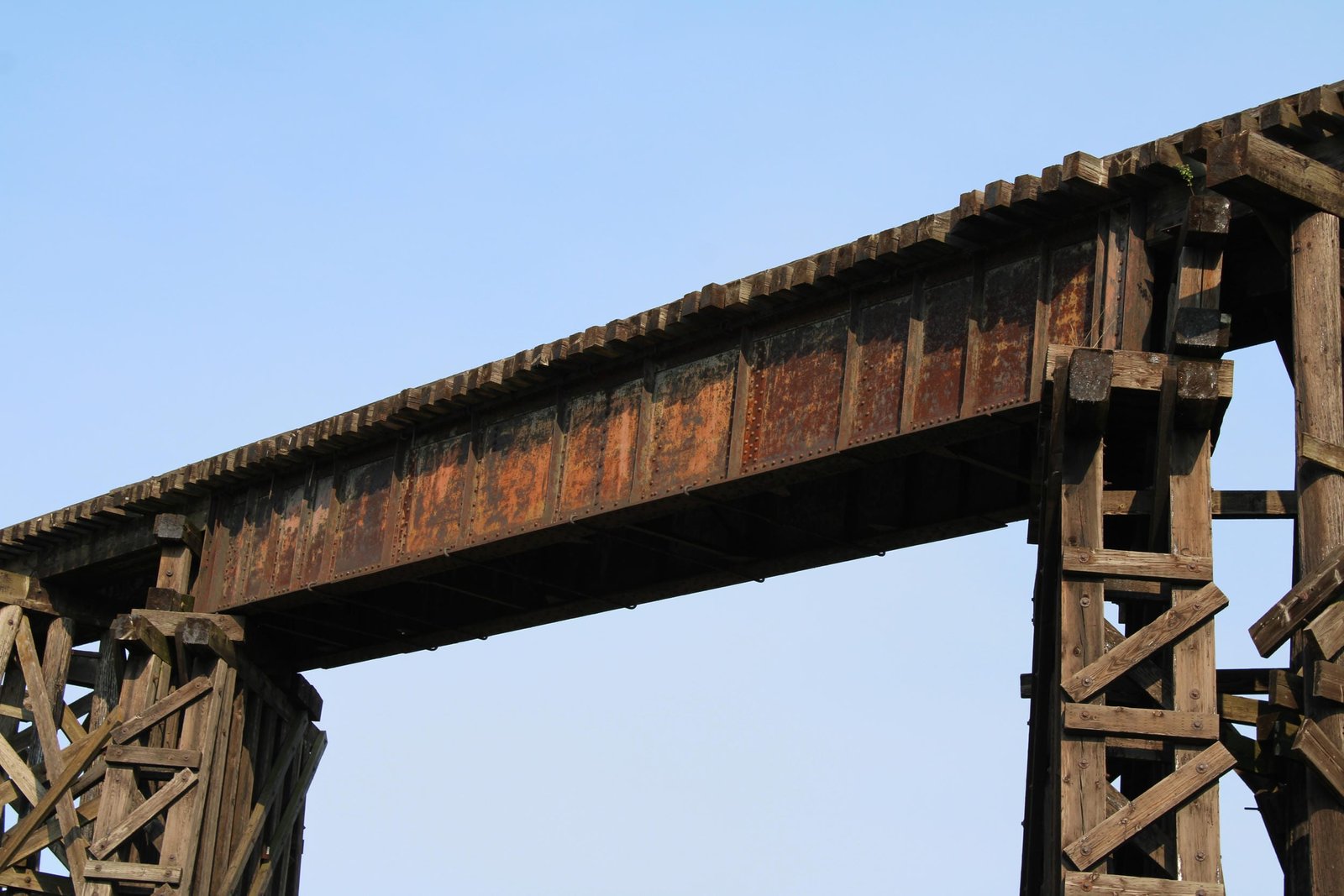
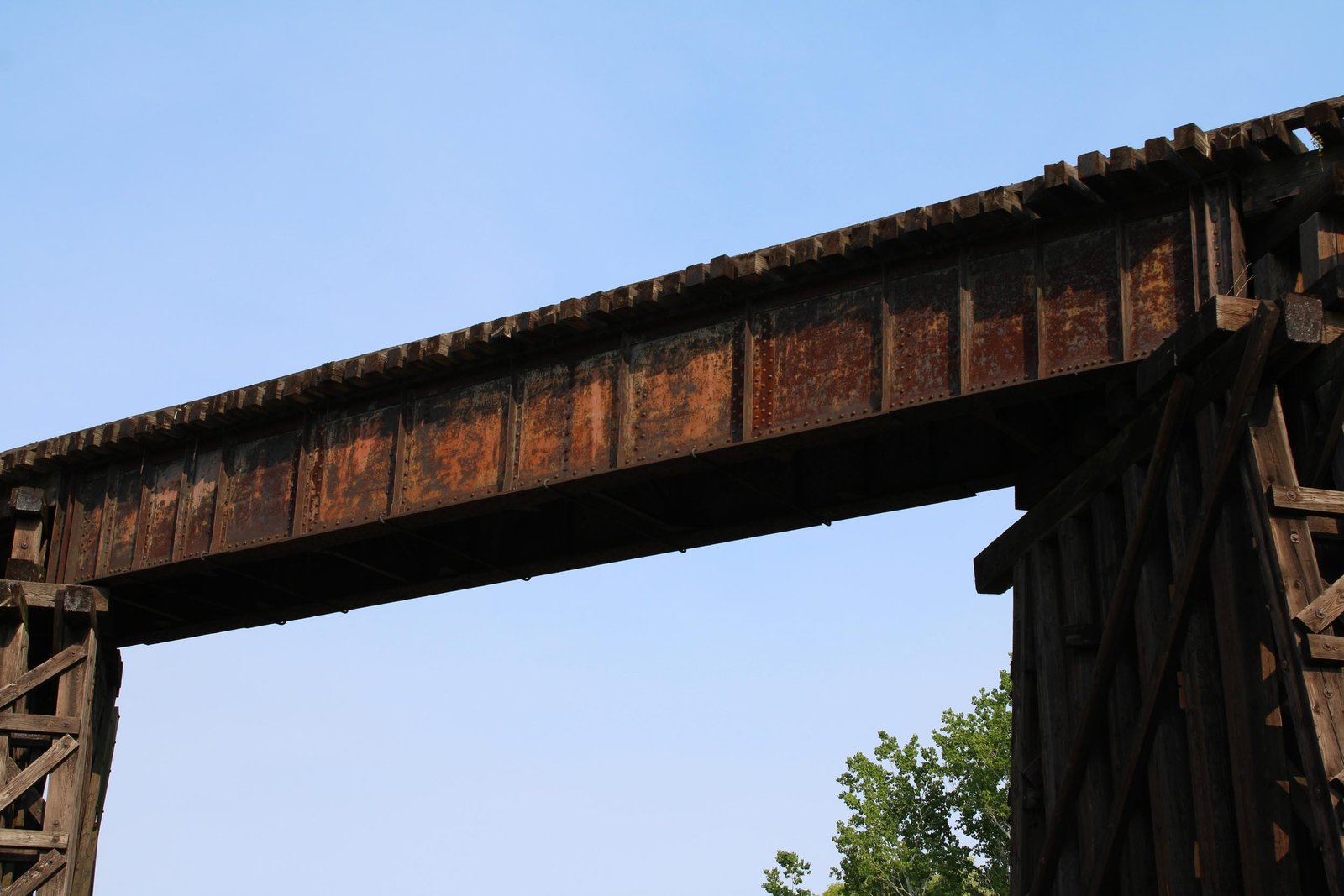
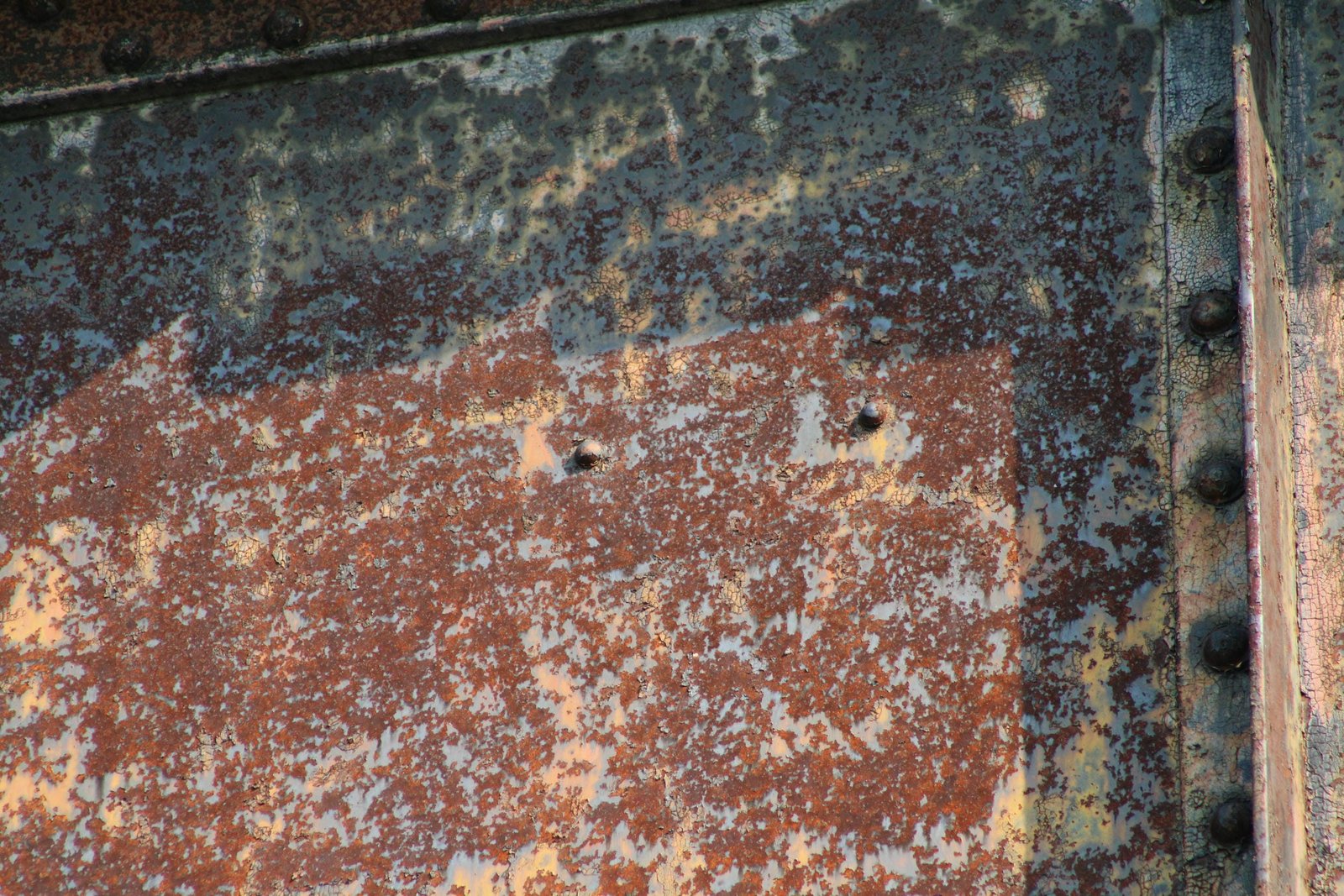
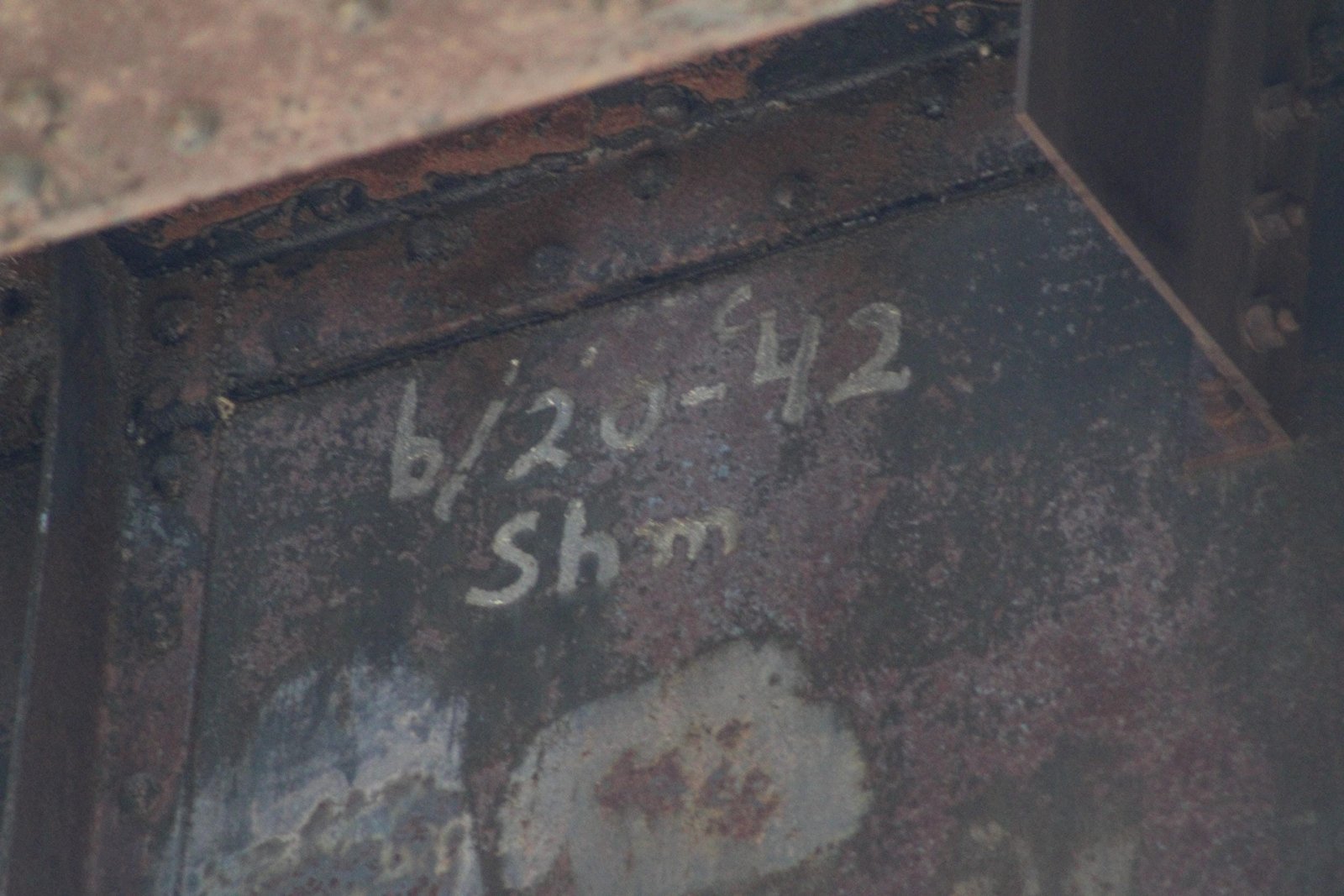
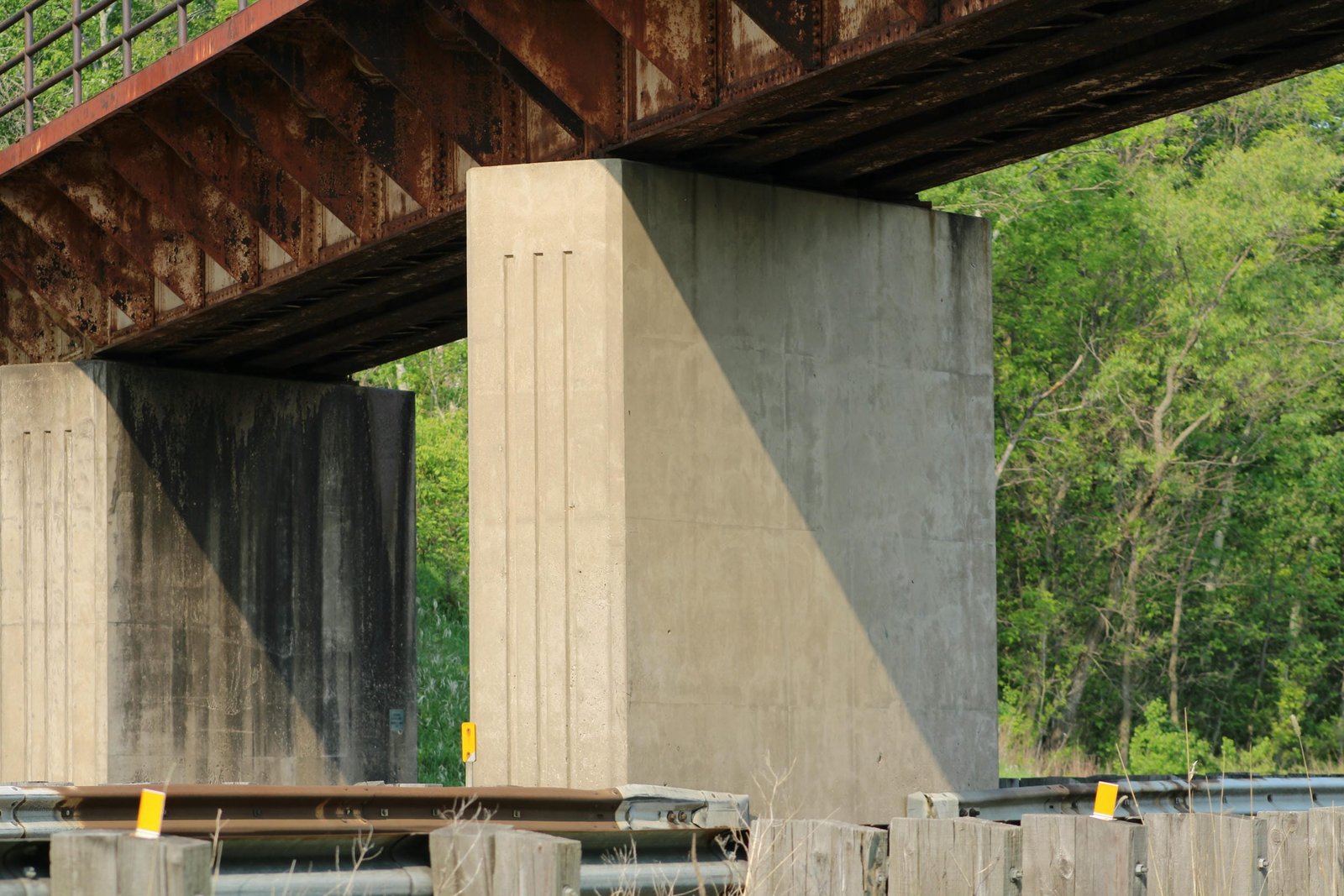
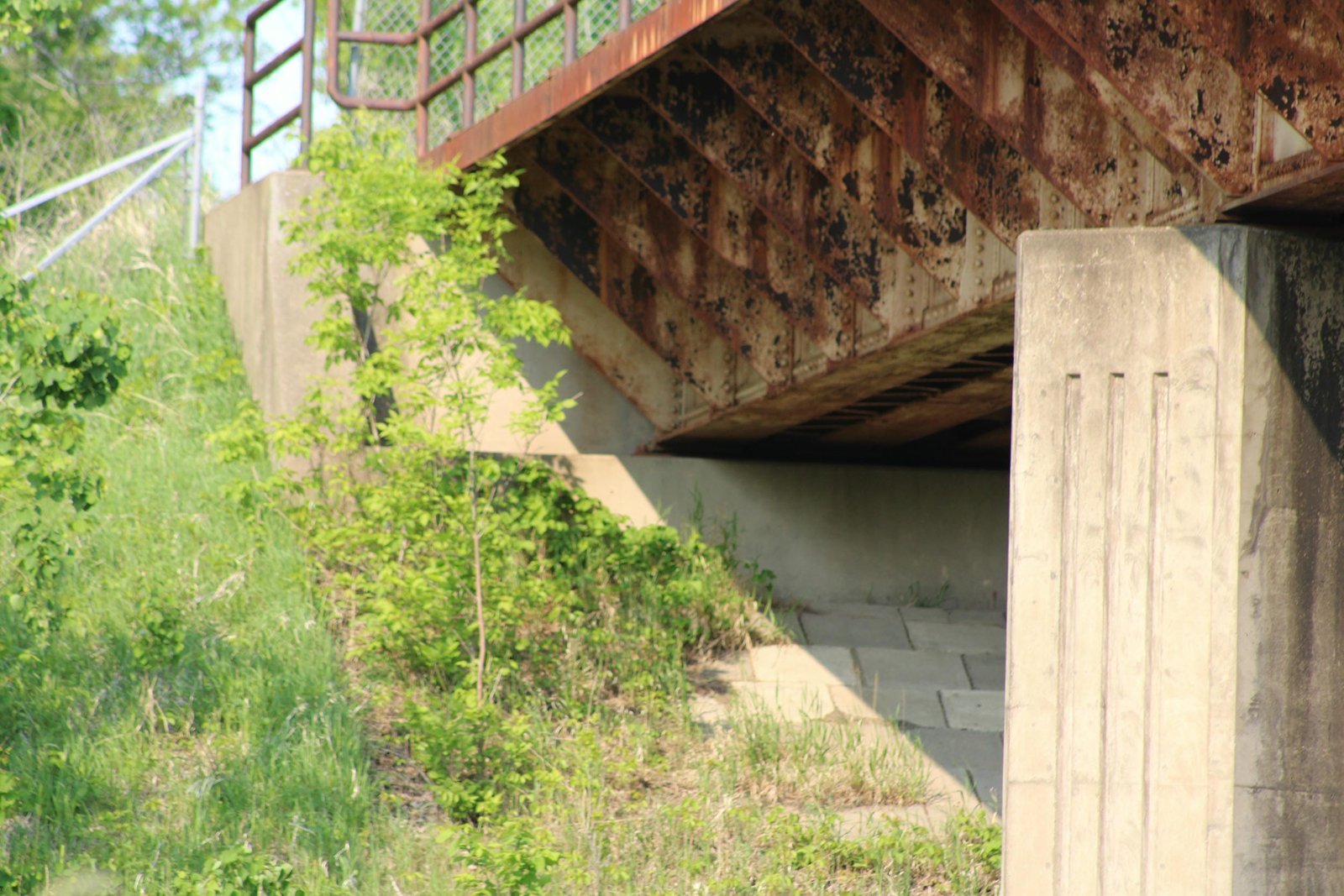
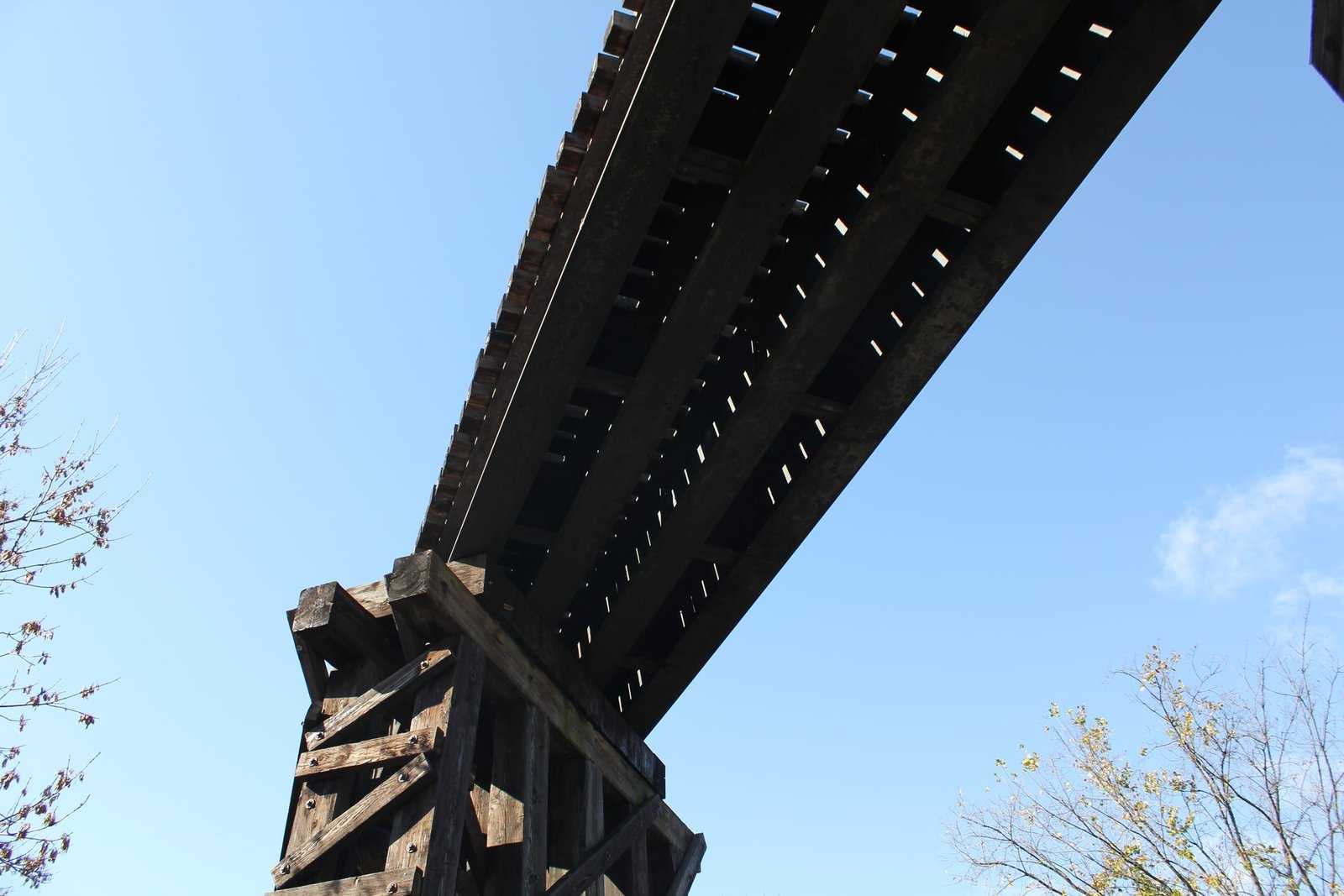
The span across County Road 157 uses a heavily altered deck girder span, which uses two plate girders and an open deck. It is believed this span was fabricated in approximately 1910 at an unknown location, before being reused here in approximately 1940. Stenciling inside the girder gives a date of 1942, which may be when the span was constructed. Alterations to this span include U-shaped tension rods placed at the bottom of the girder to replace internal lateral bracing, which was removed when the span was relocated here. Additional alterations include bolted plates and modified lateral bracing, which appear to have been added at different times. The span over the Lake Wobegon Trail follows a standard Soo Line design for the 1930s and 1940s, with four shallow beams. Spans across Interstate 94 use four girder lines, an integral ballast deck and handrails. Timber bents range between two and three stories tall throughout the structure, and the concrete substructures use a typical 1950s design with minimal decorative features. Separate unknown contractors fabricated the steel spans for the three sections, and a fourth unknown contractor constructed the concrete substructures for the Interstate 94 section. Large wooden trestle bridges like this were commonly used by railroads throughout the United States, but were often upgraded with steel and concrete structures in the 20th Century. Due to an upcoming reconstruction project on County Road 157, most or all of this structure will be demolished as soon as 2026. Recent inspection reports indicate that the bridge is in acceptable condition, with no critical defects noted. The author has ranked this bridge as being moderately significant, due to the large size and numerous designs.
Citations
| Build Date | National Bridge Inventory (NBI) |
| Railroad History Citation | ICC Valuation Information, Compiled by Richard S. Steele |