


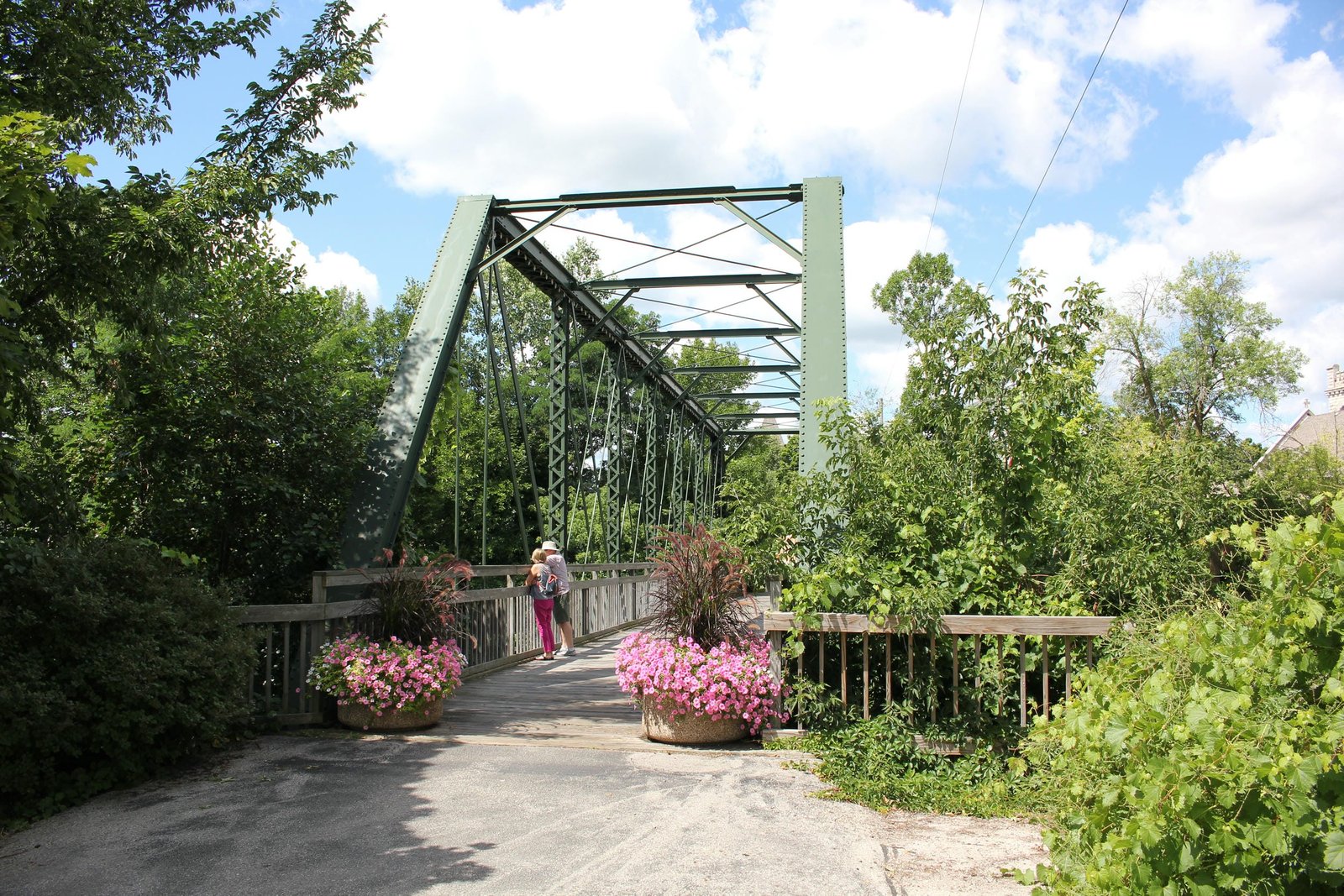
Click the photo to view the full-size version
| Name | Ozaukee Interurban Trail Bridge |
| Built By | Milwaukee Northern Railway |
| Currently Owned By | City of Cedarburg |
| Superstructure Contractor | Unknown |
| Substructure Contractor | Comstock-Haigh-Walker Company of Detroit, Michigan |
| Length | 125 Feet Total |
| Width | 1 Track |
| Height Above Ground | 15 Feet (Estimated) |
| Superstructure Design | Pratt Through Truss |
| Substructure Design | Concrete |
| Date Built | 1907, Using a Span Fabricated c. 1880 |
| Original Location | Unknown Michigan Central Railroad Bridge |
| Traffic Count | 0 Trains/Day (Bridge is Open to Pedestrian Traffic) |
| Current Status | Open to Pedestrian Traffic |
| Significance | Regional Significance |
| Documentation Date | 8/6/2016 |
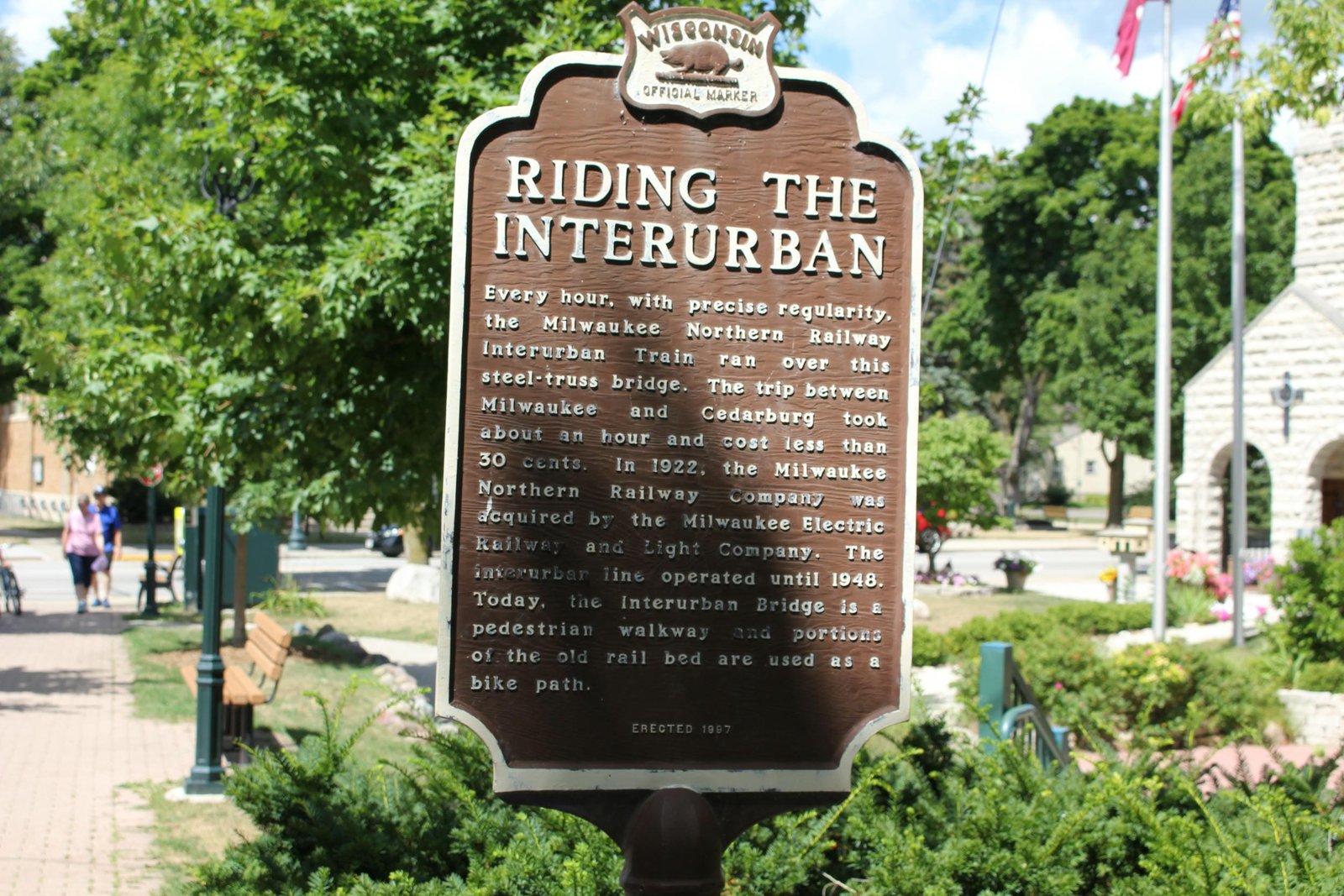
In the late 19th Century, electric interurban railways became popular throughout the United States, particularly in suburban and rural areas. In rural areas, the interurban represented a reliable form of transportation, independent of the steam railroads. In 1905, the Milwaukee Northern Railway (MN) was incorporated to construct a new interurban line, extending from Milwaukee, Wisconsin to Sheboygan, Wisconsin. Construction began on the line in 1906, and by the end of 1907, service was open between Milwaukee and Port Washington, Wisconsin. By September 1908, service was extended to Sheboygan. Due to heavy use, the line between Milwaukee and Brown Deer, Wisconsin was double tracked in 1912. In 1922, the MN became part of a larger The Milwaukee Electric Railway & Light Company (TMER&L) system, which operated a large interurban network extending from Milwaukee. The MN was operated as a subsidiary of the TMER&L, before being fully merged into the system in 1928.
By World War II, interurban railroads throughout the United States were in decline. The advent of the personal automobile and construction of improved roads led to less use of interurbans, which faced significant financial stress. In 1938, TMER&L became the Wisconsin Electric Power Company, and transit operations were taken over by a new subsidiary called The Milwaukee Electric Railway & Transport Company (TMER&T). In September 1940, the line between Port Washington and Sheboygan would be abandoned. The line between Milwaukee and Port Washington was sold to Kenosha Motor Coach Lines (KMCL) in 1945, which was sold to the Shore Line Transit Corporation in 1947. In March 1948, the remainder of the line would be abandoned due to diminishing ridership. After abandonment, much of the right-of-way would remain intact to serve electric transmission lines. In the early 2000s, Ozaukee County developed the Ozaukee Interurban Trail, which uses the former right-of-way between Wiscona (on the north side of Milwaukee) and Oostberg, Wisconsin.
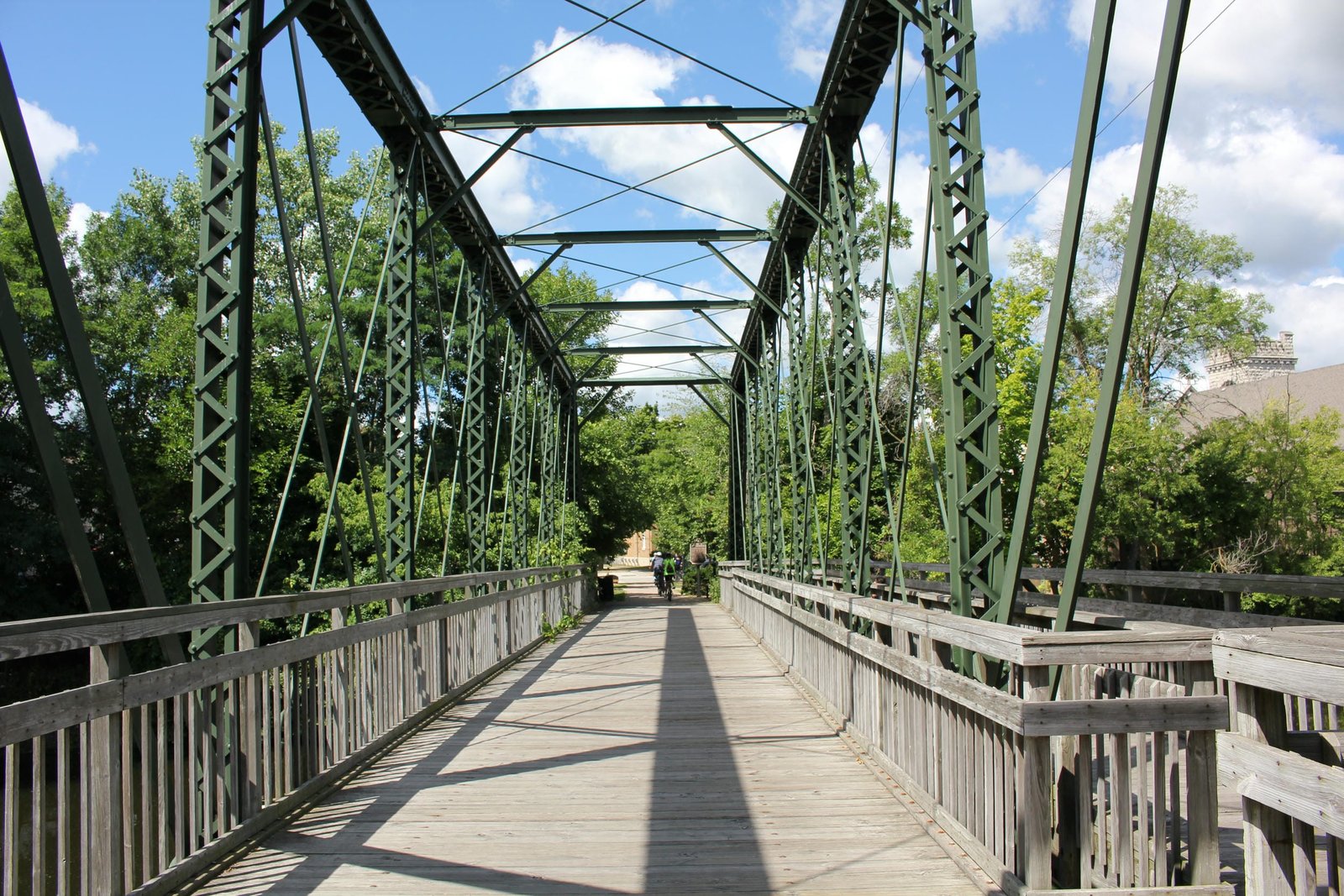
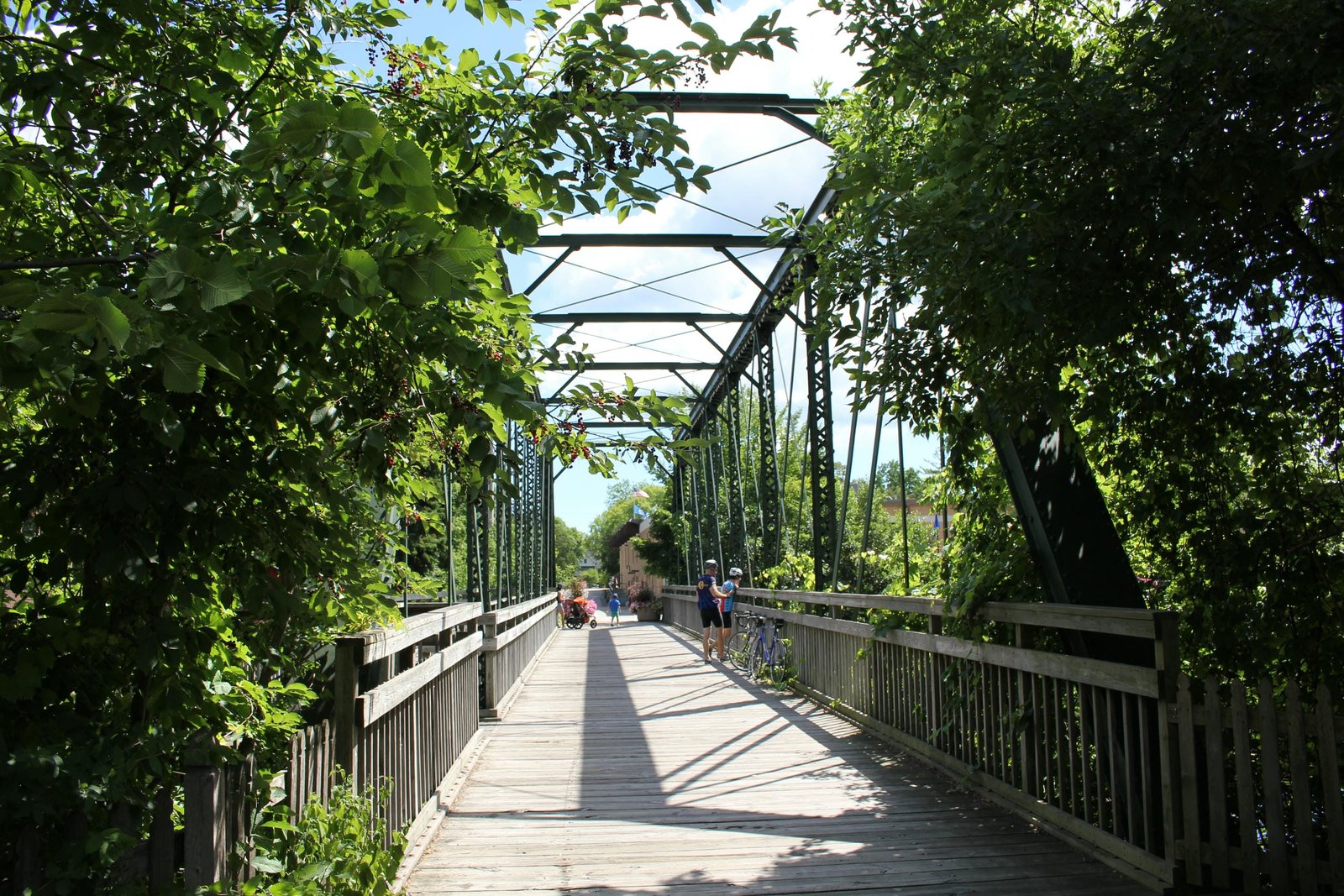
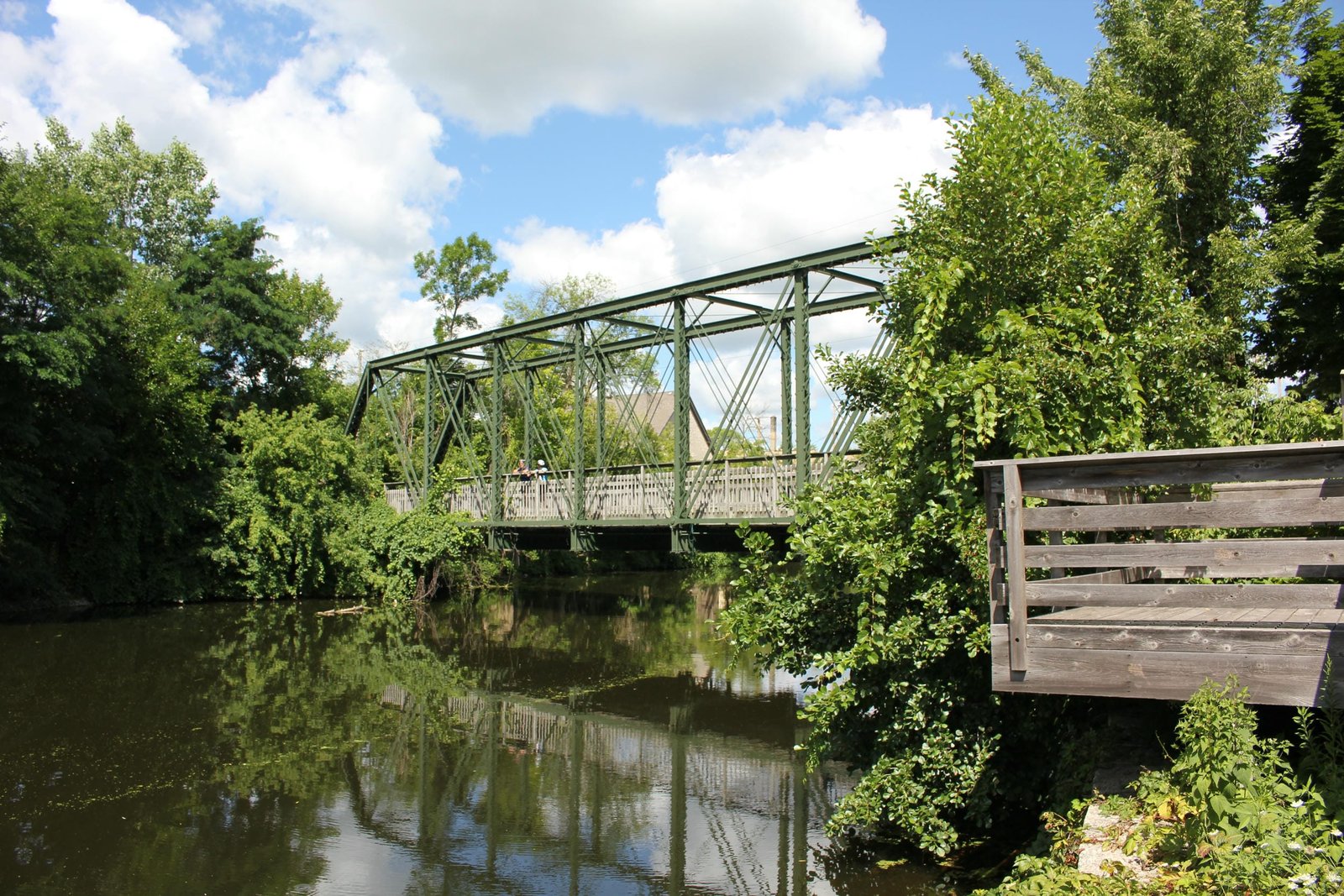
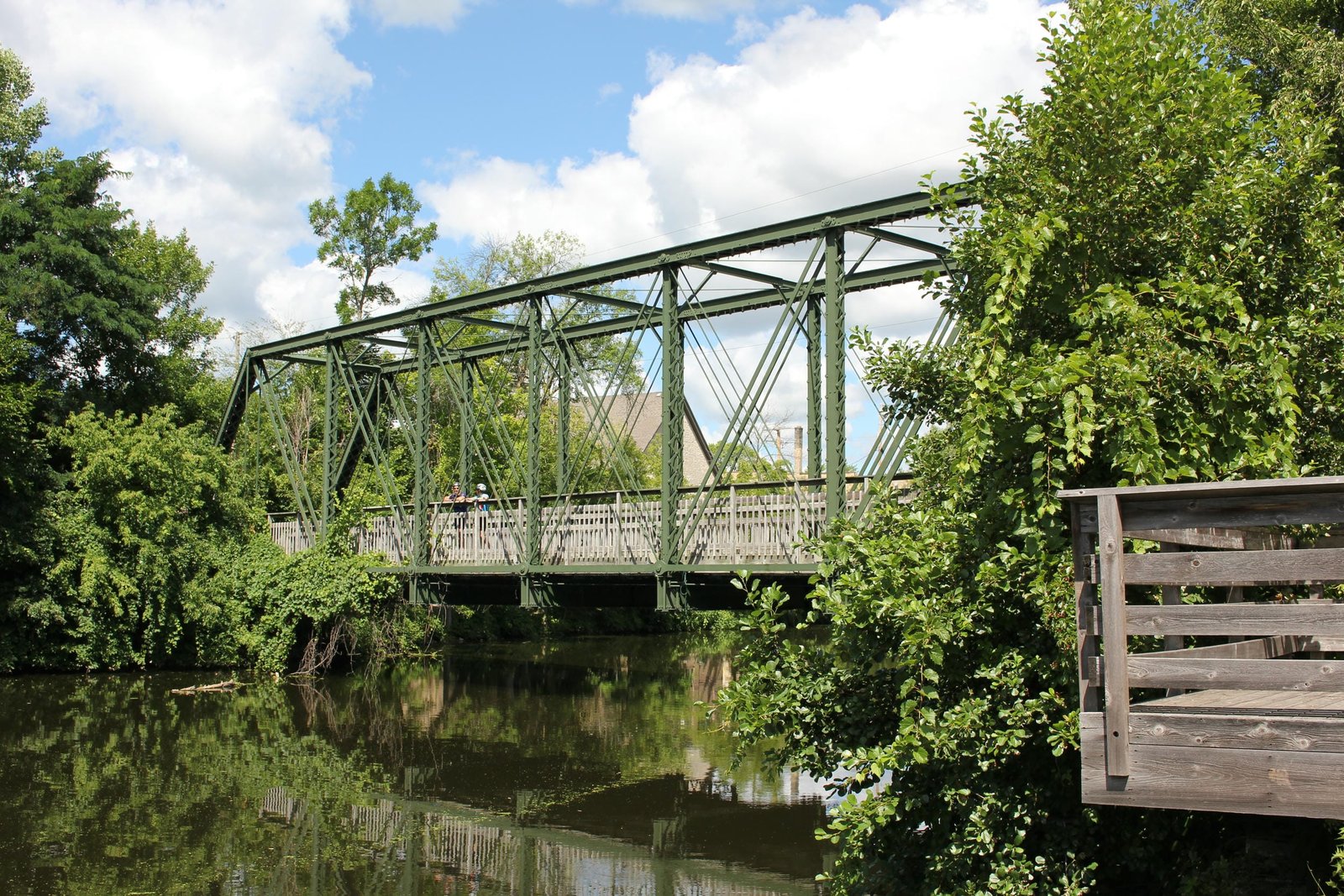
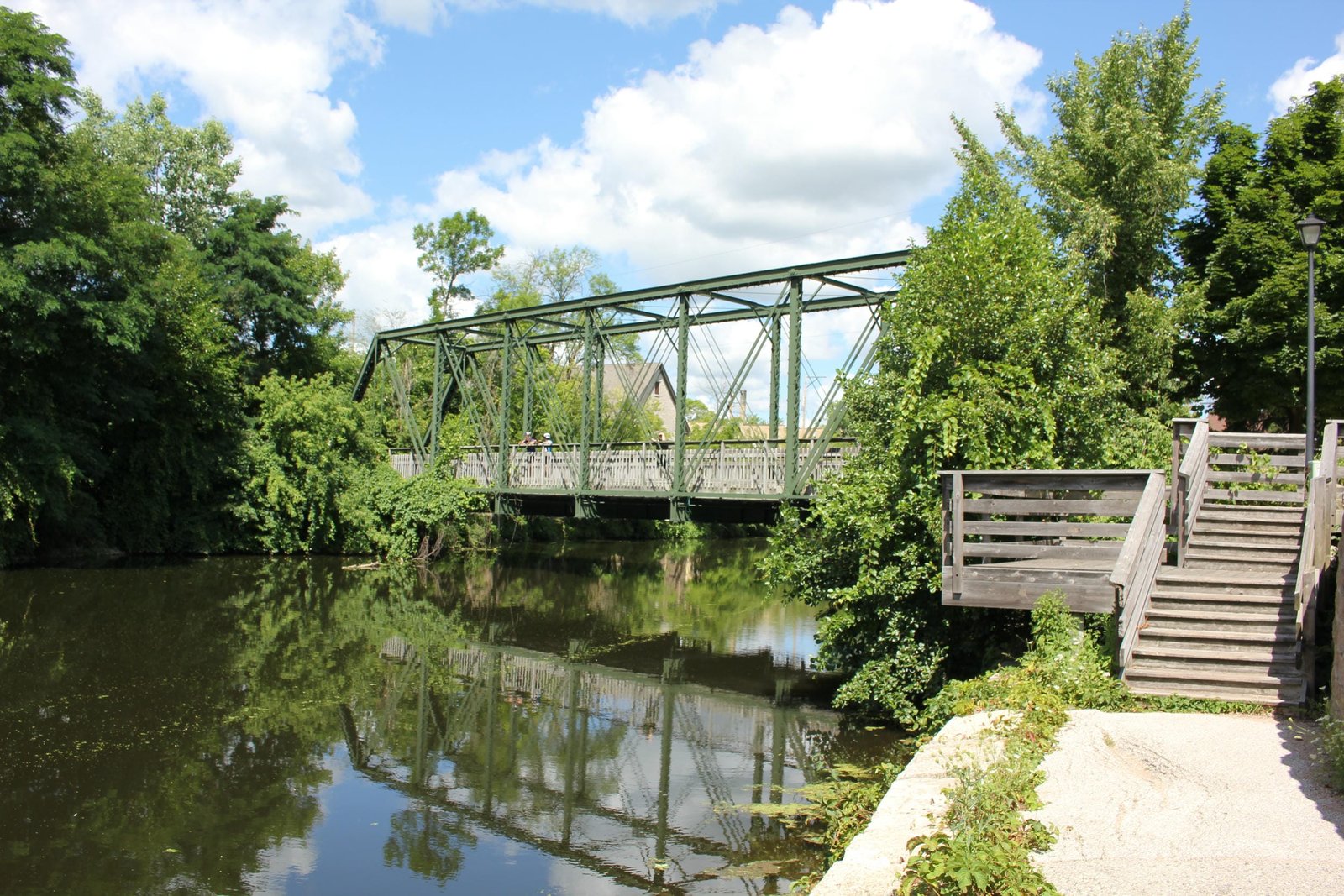
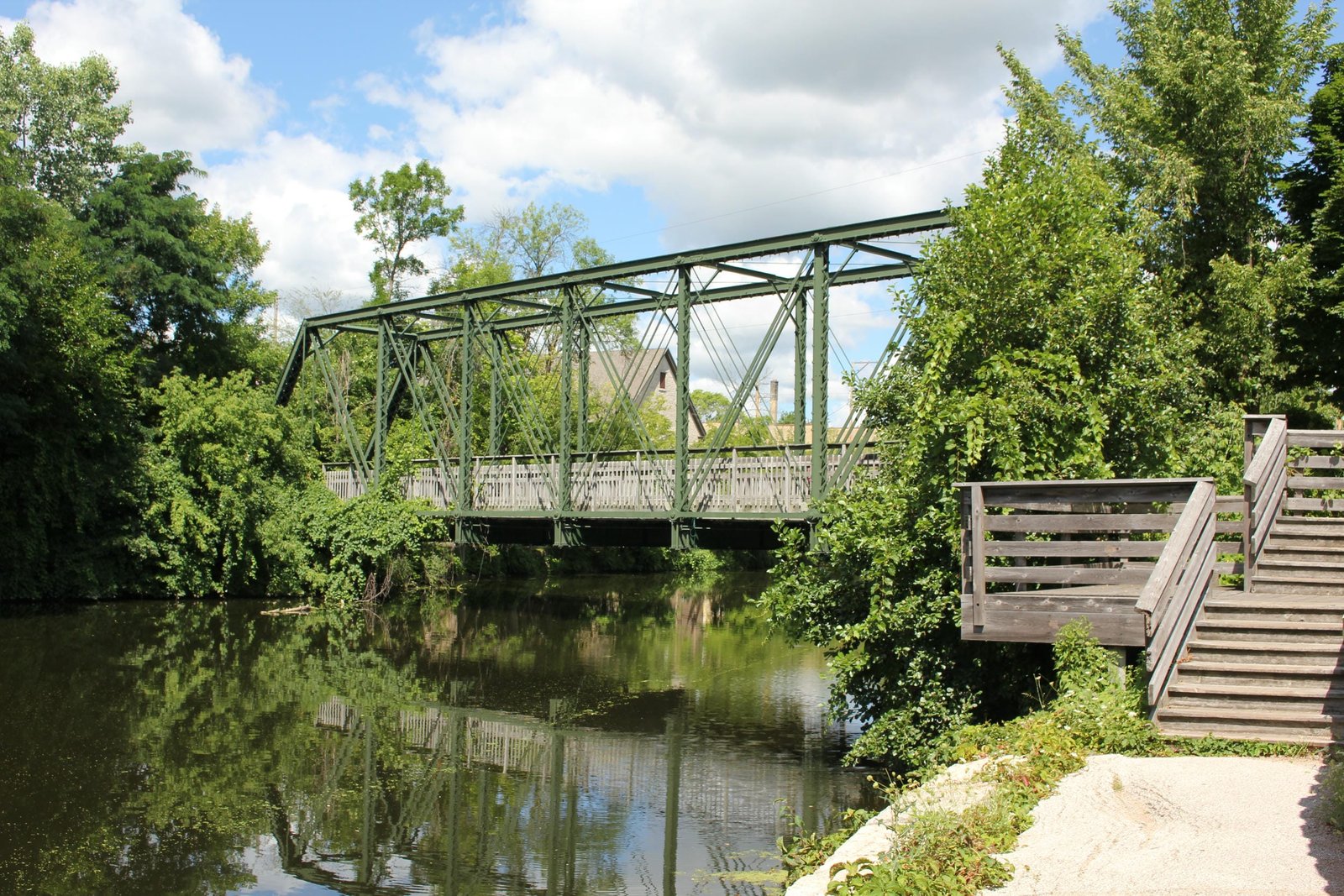
Located in downtown Cedarburg, this historic through truss bridge carries the former Milwaukee Northern Railway interurban line over Cedar Creek. Similar to other early 20th Century interurban companies, the MN was financed by a group of private investors, which sought to minimize construction costs. Many interurban companies sought to offset the costs of expensive bridges by purchasing secondhand bridge spans from steam railroads, which were often spans that had become too light for heavy steam locomotives. In 1906, the MN purchased three truss spans from the Michigan Central Railroad (MC) for $5,722. Two spans would be used to cross the Milwaukee River near Grafton, and one span would be used to cross Cedar Creek in Cedarburg. In January of 1907, iron for the Cedar Creek bridge was delivered, and the bridge was erected shortly after. Some sources indicate that the truss span was originally fabricated in the 1850s, although the appearance and design of the span indicates the span was fabricated in the early to mid-1880s. It is known that the MC sold many single track truss spans to interurbans in the Midwest, many of which dated to the late 1870s or early 1880s. Two spans, originally fabricated in 1878 by the Detroit Bridge & Iron Works for an MC predecessor were reportedly sold to the Detroit, Ypsilanti, Ann Arbor and Jackson Railway Company for use at two locations in Michigan. These spans had very similar features to the Cedar Creek and Milwaukee River bridges constructed for the MN. While it is unknown if there is a connection between the Michigan interurban spans and the spans purchased by the MN, the similar designs provide an approximate fabrication date and may shed light on a possible builder.
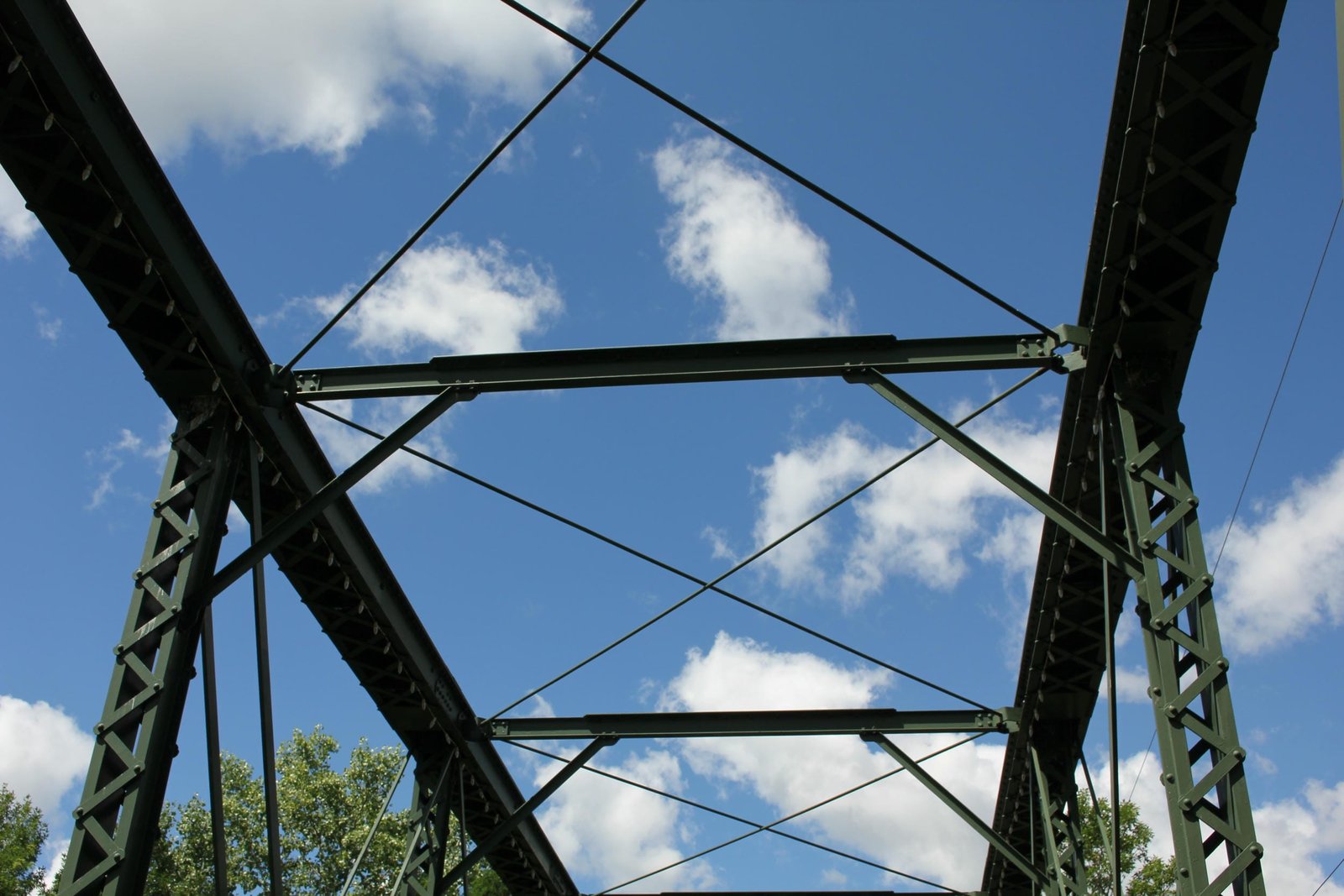
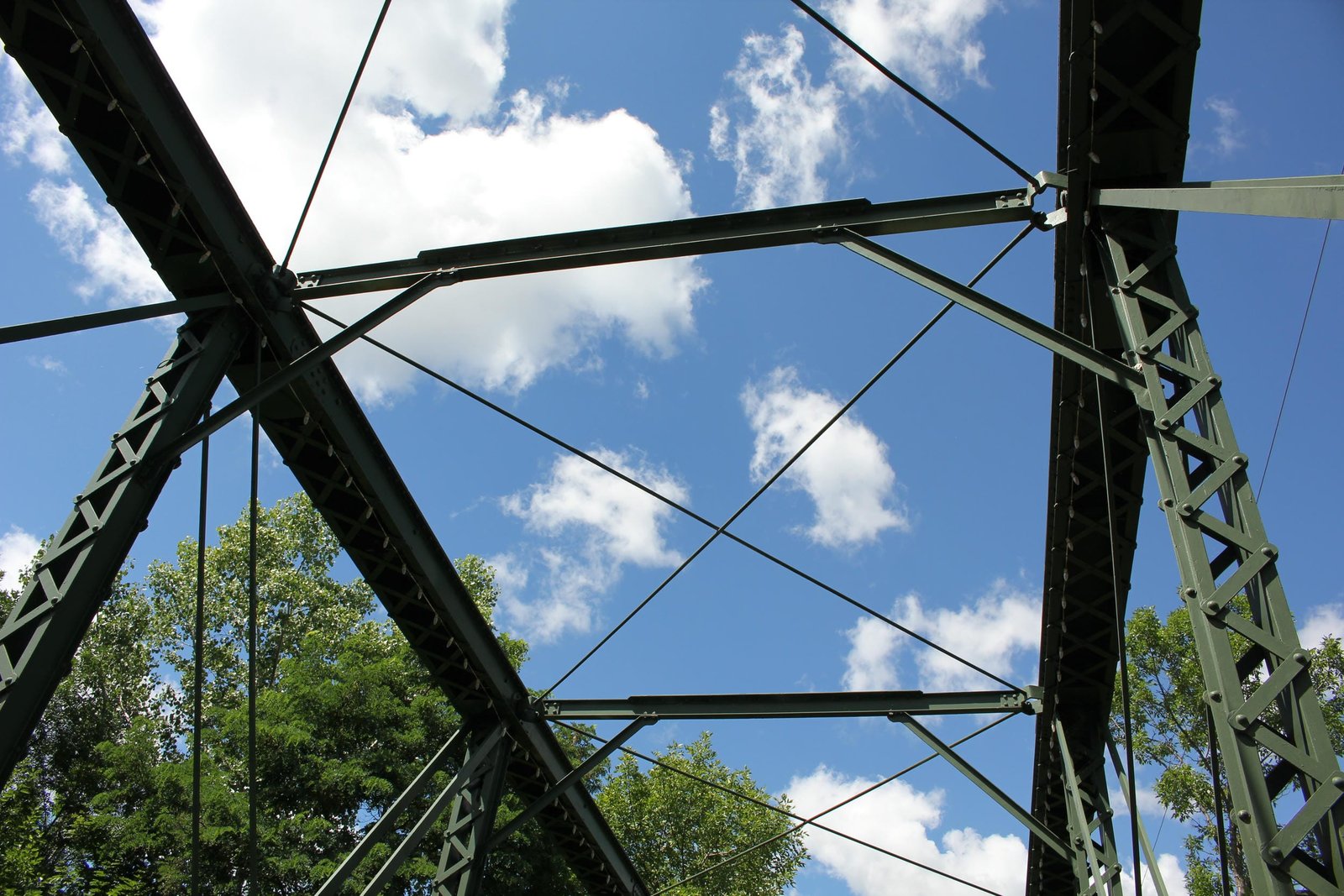
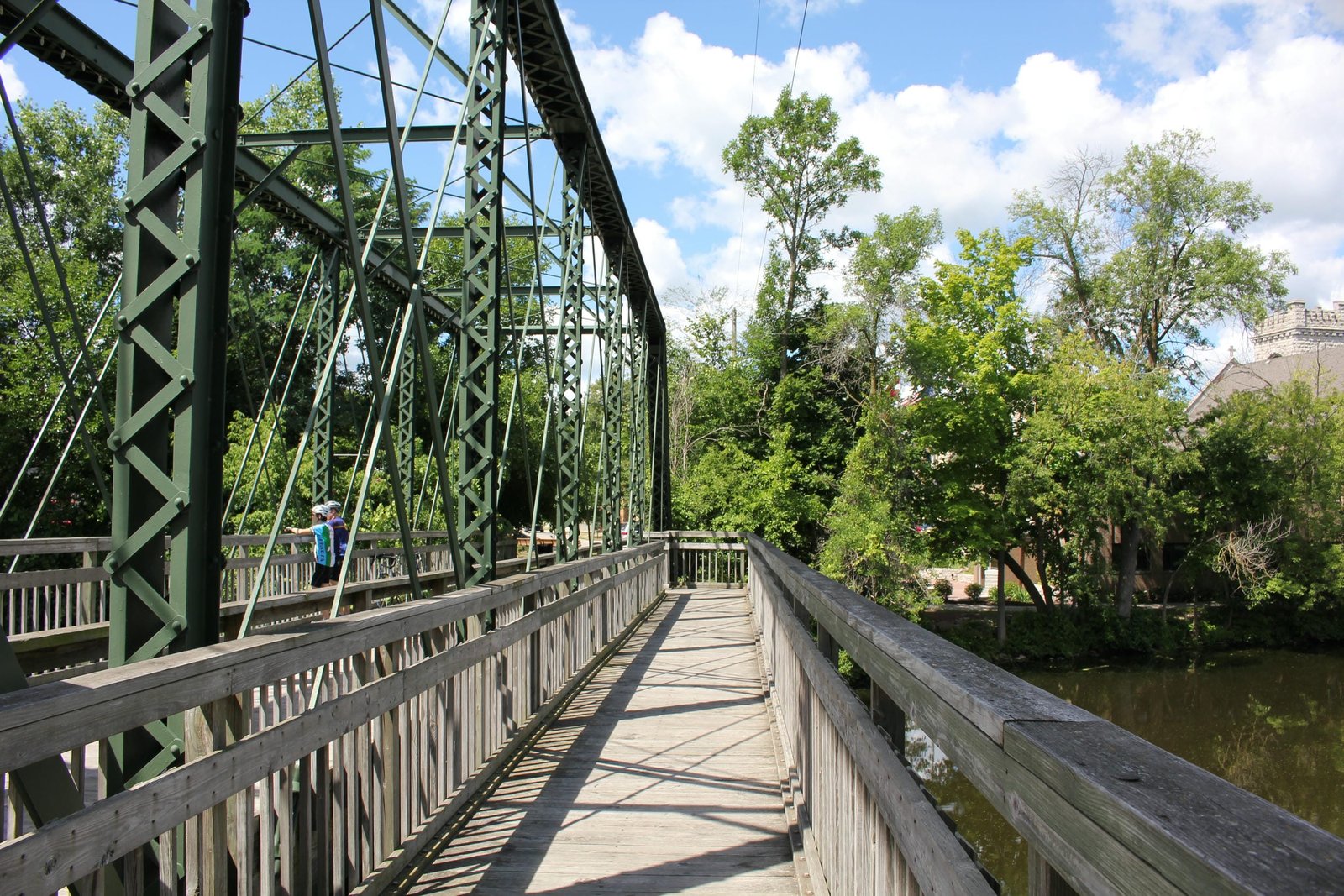
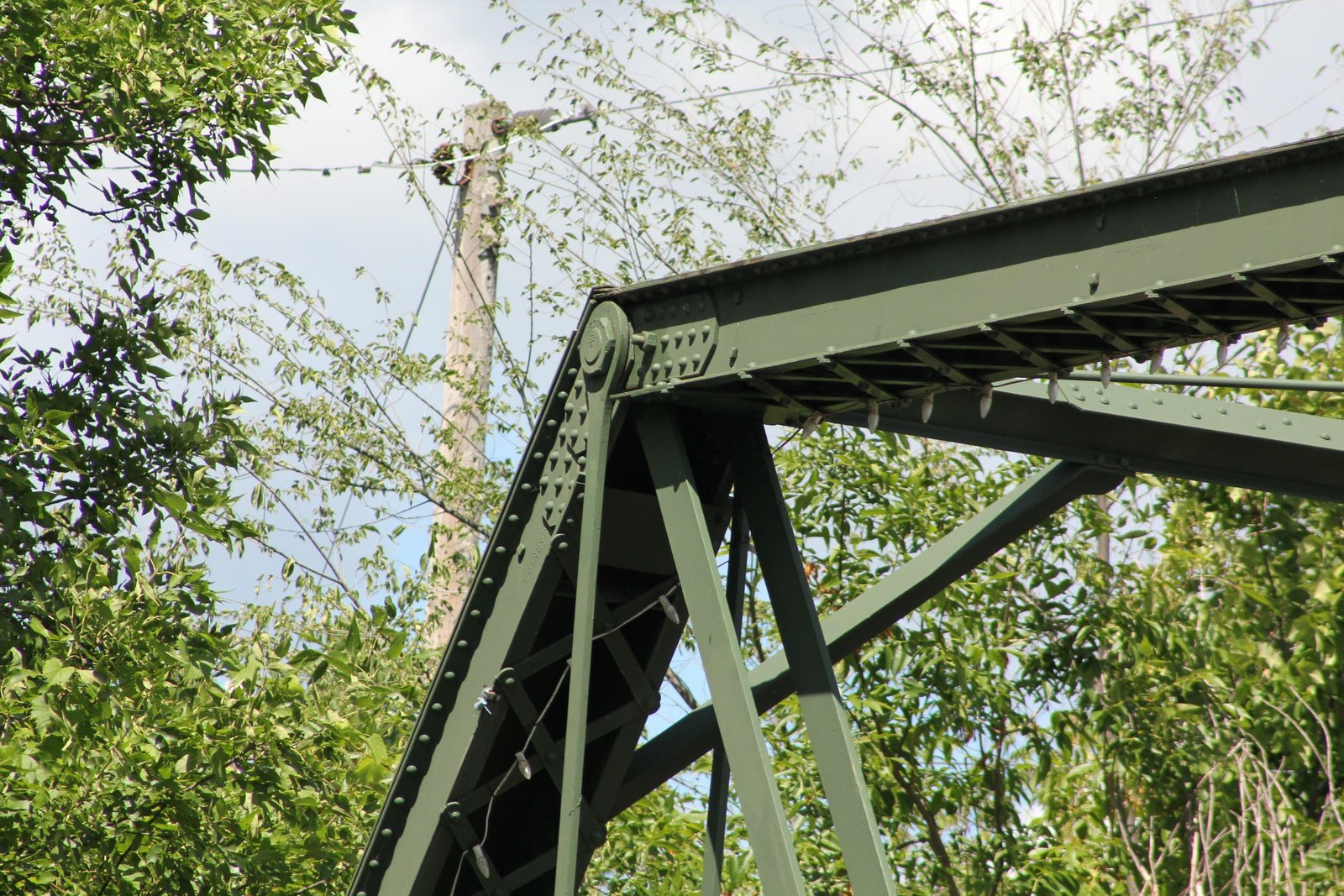
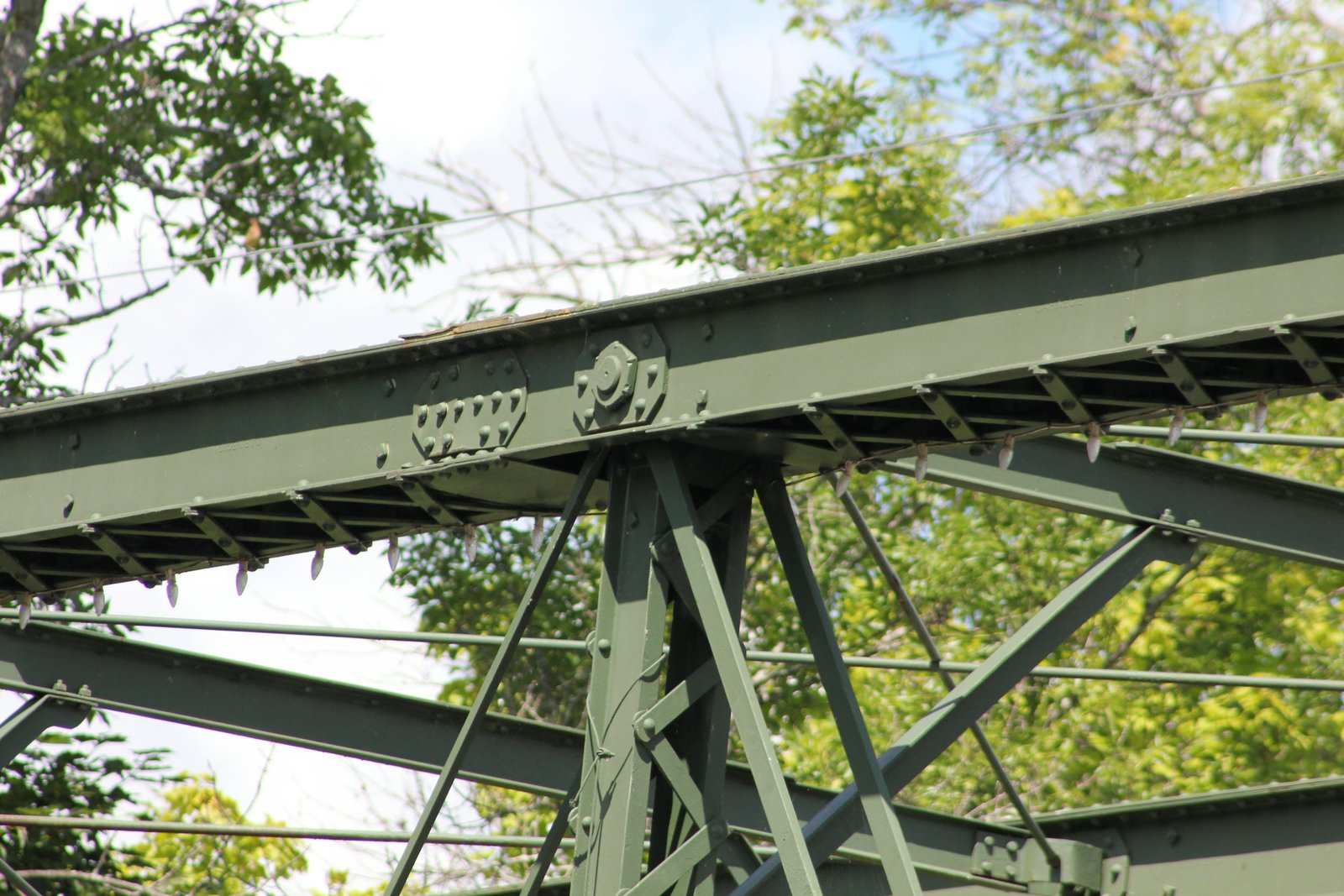
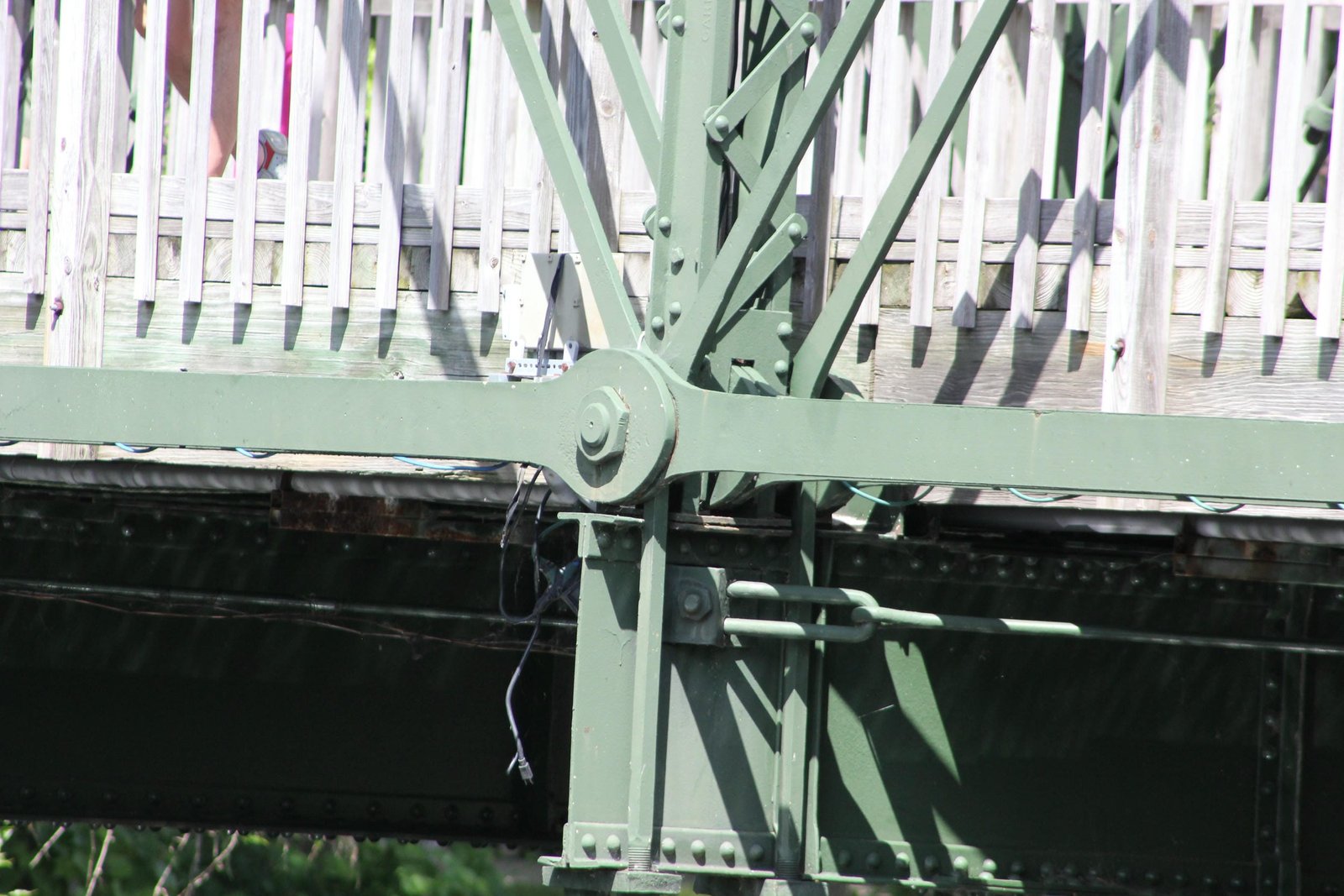
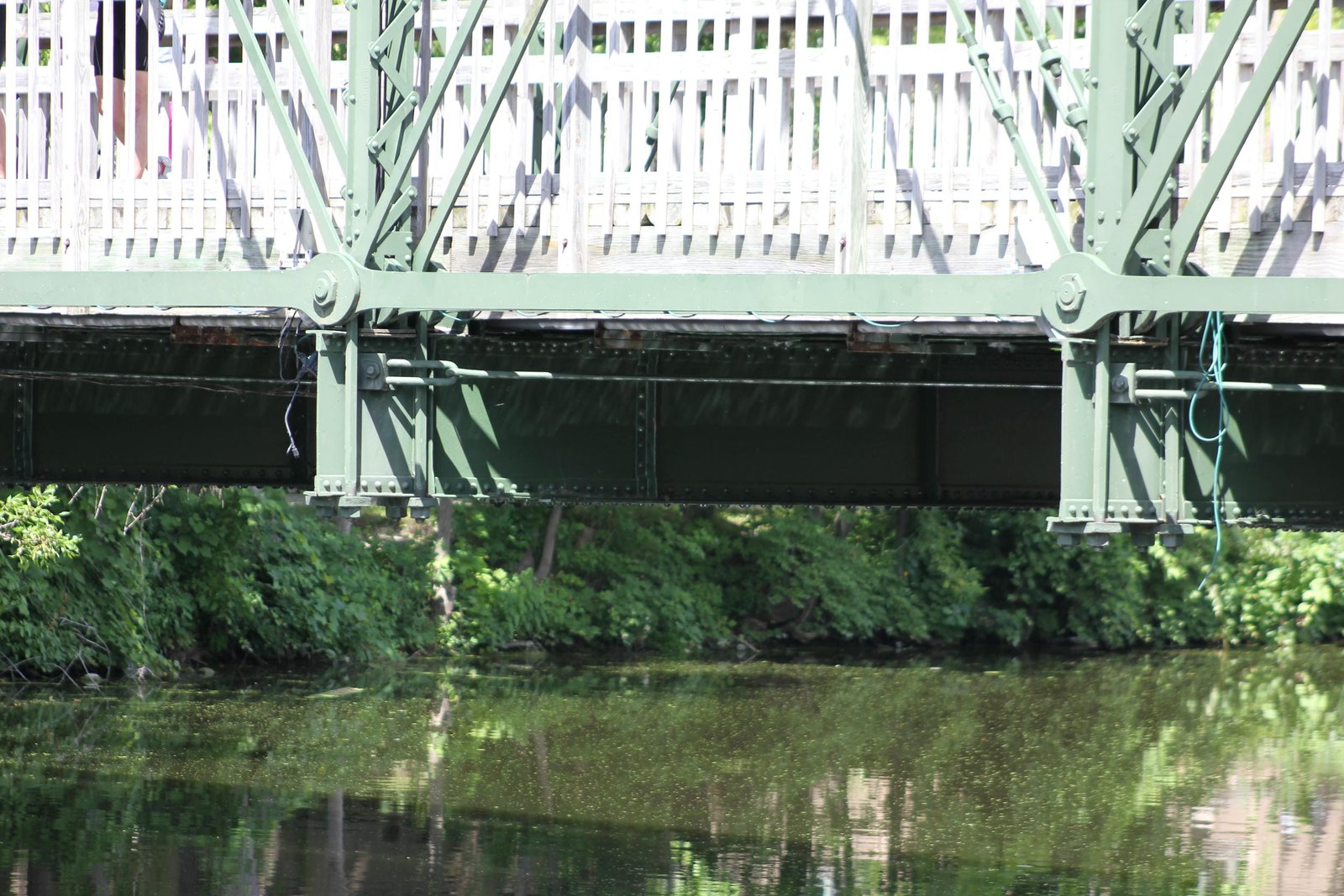
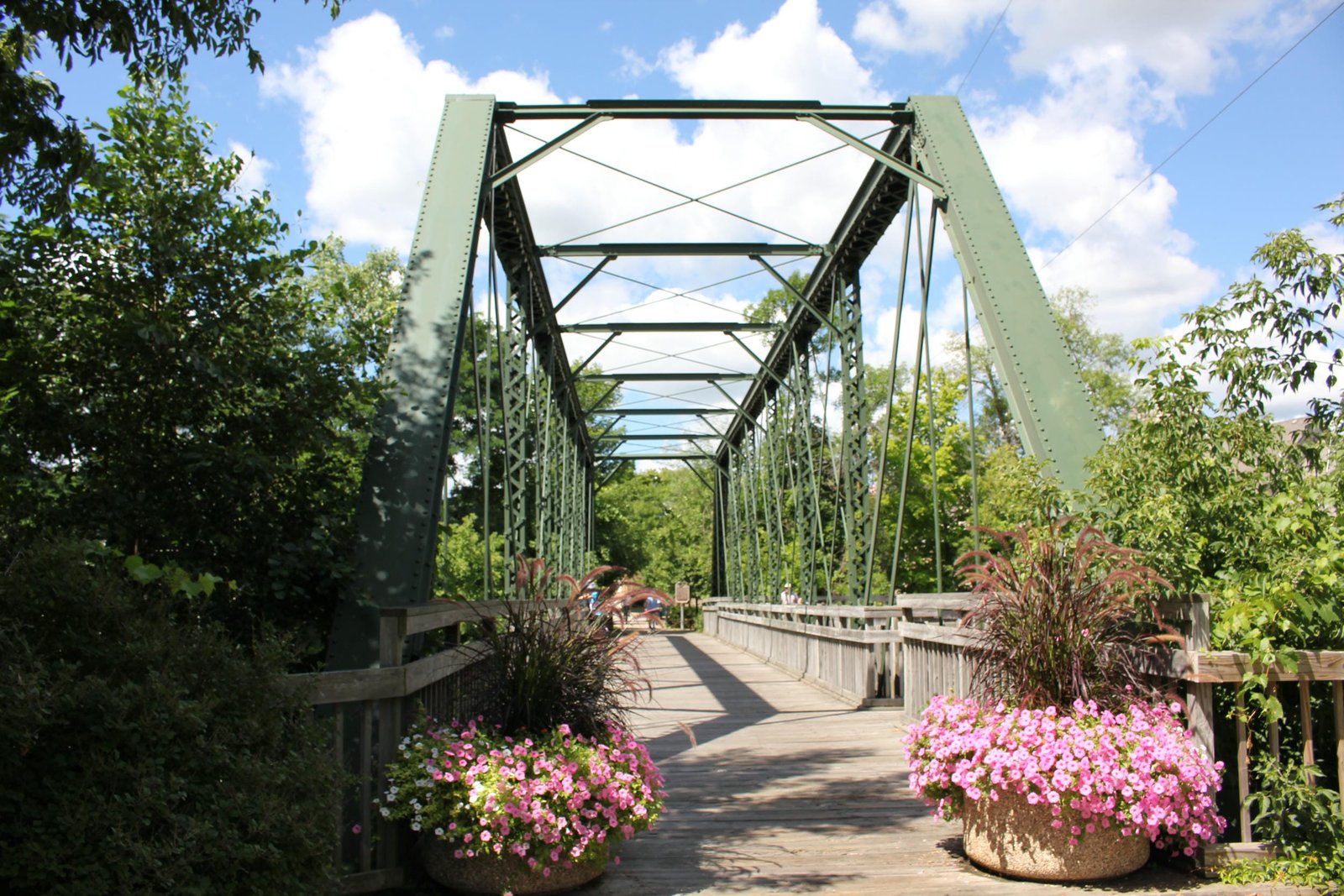
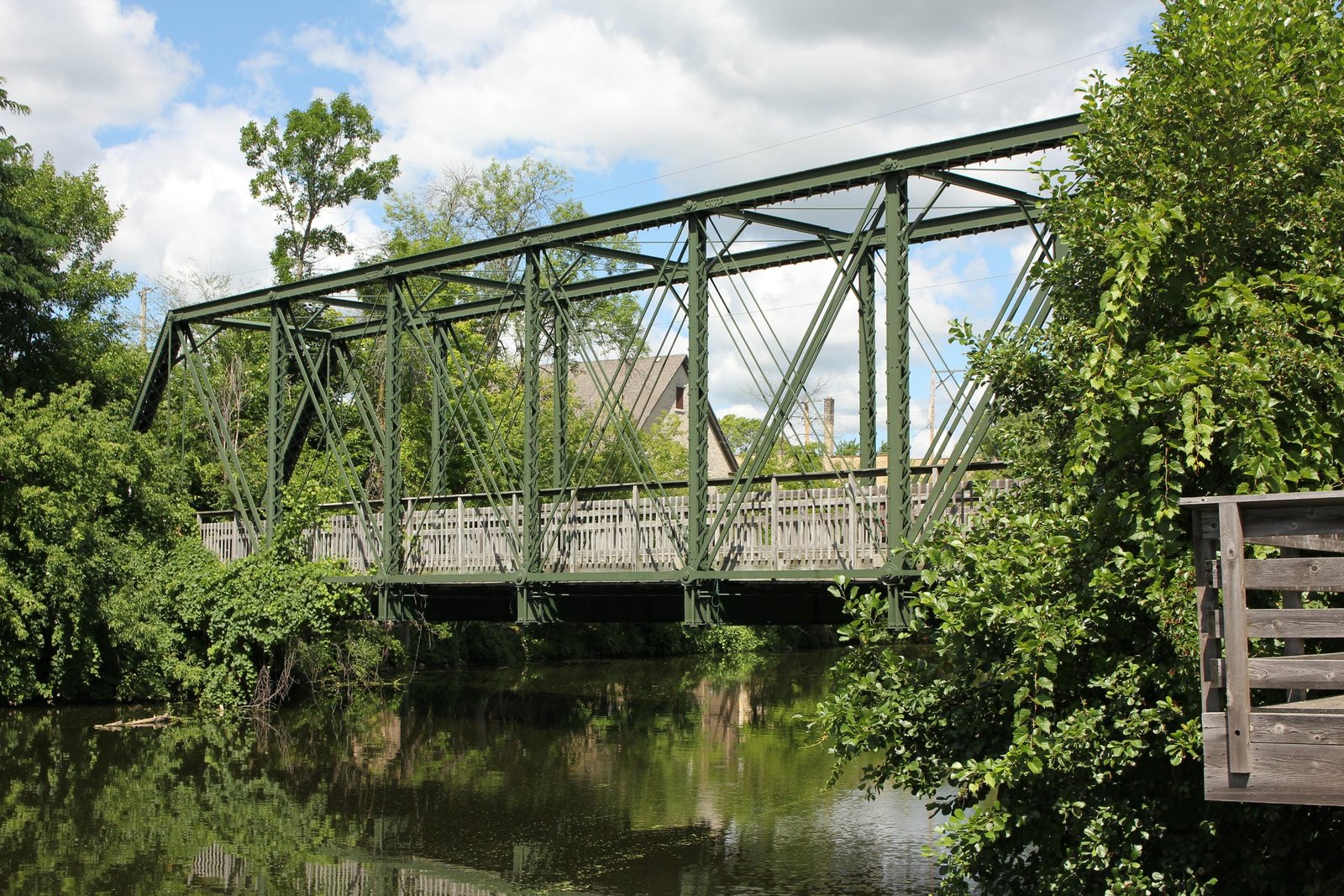
Currently, the bridge consists of a 125-foot, 8-panel, pin-connected Pratt through truss span, set onto concrete abutments. The truss span is lightly constructed, and was originally fabricated in approximately 1880 using wrought iron. The endposts and top chord of the span both are constructed of built-up beams, with X-lacing on the bottom and solid plates on the top. The bottom chords are constructed using eyebars. The inner vertical members are constructed of built-up V-laced beams, while the hip vertical members are constructed using iron bars. All diagonal members are constructed using iron bars or rods, which are formed into eyebars on the ends. The floor uses a typical design for the era, with heavy plate girder floorbeams placed beneath the bottom chord, and light stringers set on top of the floorbeams. The floorbeams are connected to the bottom chord by use of U-shaped bolts, which are threaded and use nuts. It is unknown if this feature is original to the bridge, or if it was added when the truss was relocated. The lower lateral bracing consists of iron rods, which are connected to the floorbeams via a U-shaped bar which is bolted into a hanger on the floorbeam. Similarly, the upper lateral bracing is composed of iron rods, which are connected to the sway and portal bracing by using nuts at the holes where the bracing meets the top chord. The portal and sway bracings are simply constructed, with a single iron bar connected to the endposts and vertical members by a diagonal bar. The substructures also use a standard design, with sloped wing walls.
Throughout the superstructure, many components have an embossing from the iron manufacturer. Most components are embossed with "Carnegie" brand, while some of the vertical members have a "Phoenix Iron Company" brand. The use of two different iron manufacturers is unusual for a single span, and may indicate that some members are constructed out of different grade materials, or some portions have been replaced. While no plaque was found on the bridge, it is possible that Detroit Bridge & Iron Works fabricated the span. The MC and predecessors used this company nearly exclusively in the 19th Century. The substructures were constructed by the Comstock-Haigh-Walker Company, a Detroit-based contractor with significant experience constructing interurbans. The bridge was reportedly abandoned in 1951, and sat unused for many years. In the early 2000s, the bridge was restored and opened to pedestrian traffic. The bridge is now painted green, and serves the Ozaukee Interurban Trail. Overall, the bridge appears to be in fair to good condition, with no significant deterioration noted. The author has ranked this bridge as being regionally significant, due to the relocation, c. 1880 fabrication date and truss design. The author applauds Cedarburg for working to restore this piece of Ozaukee County transportation heritage.
Citations
| Build date and relocation history | The Interurban Era by William D. Middleton |
| Builder (substructure) | Street Railway Journal; Volume 30, Issue 23 |
| Railroad History Citation | ICC Valuation Information, Compiled by Richard S. Steele |