








Click the photo to view the full-size version
| Name | Fond du Lac Riverwalk Bridge Chicago, Milwaukee & St. Paul Railway Bridge #D-774 |
| Built By | Chicago, Milwaukee & St. Paul Railway |
| Currently Owned By | City of Fond du Lac |
| Superstructure Contractor | Unknown |
| Length | 90 Feet Total, 45 Foot Spans |
| Width | 1 Track |
| Height Above Ground | 15 Feet (Estimated) |
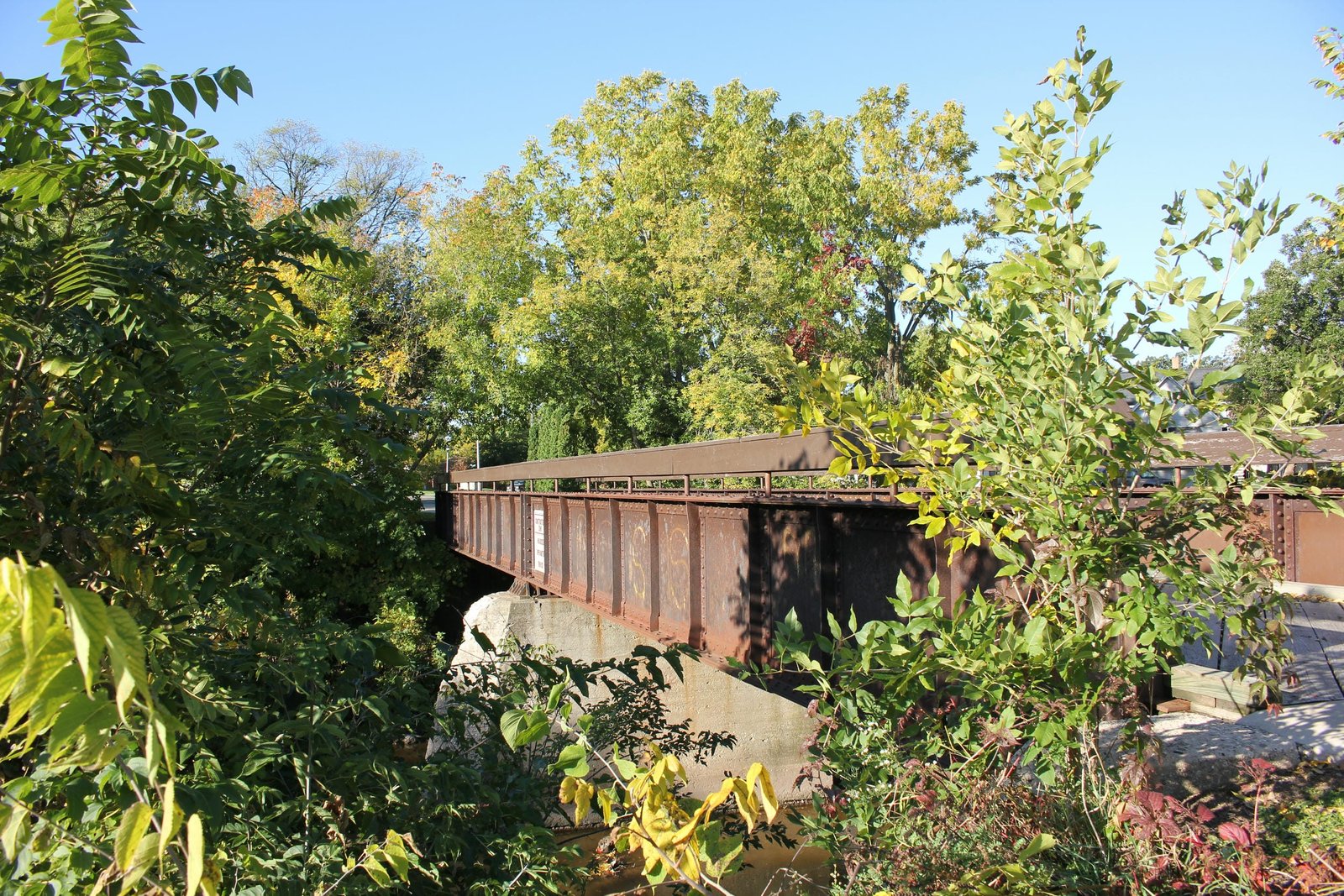
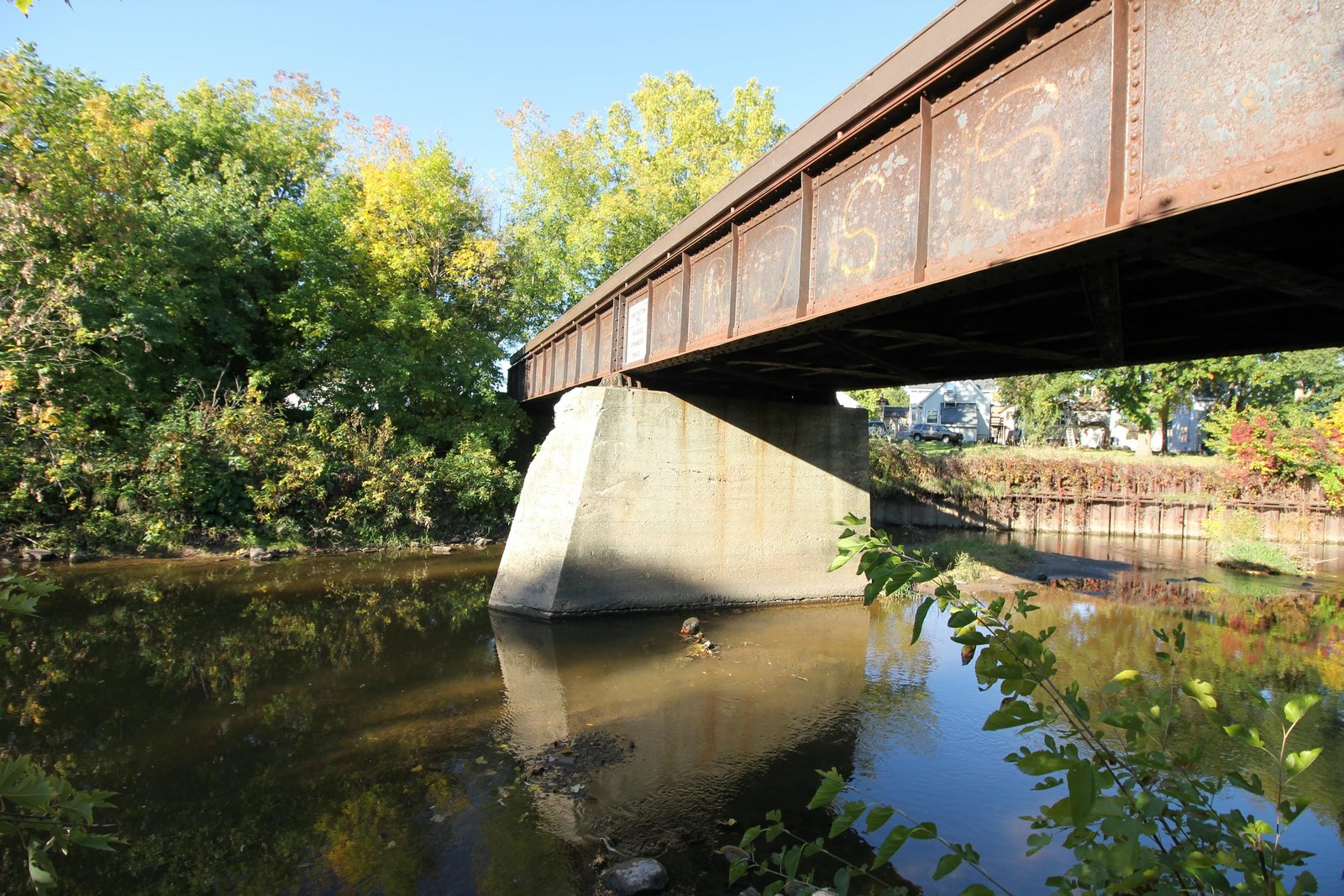
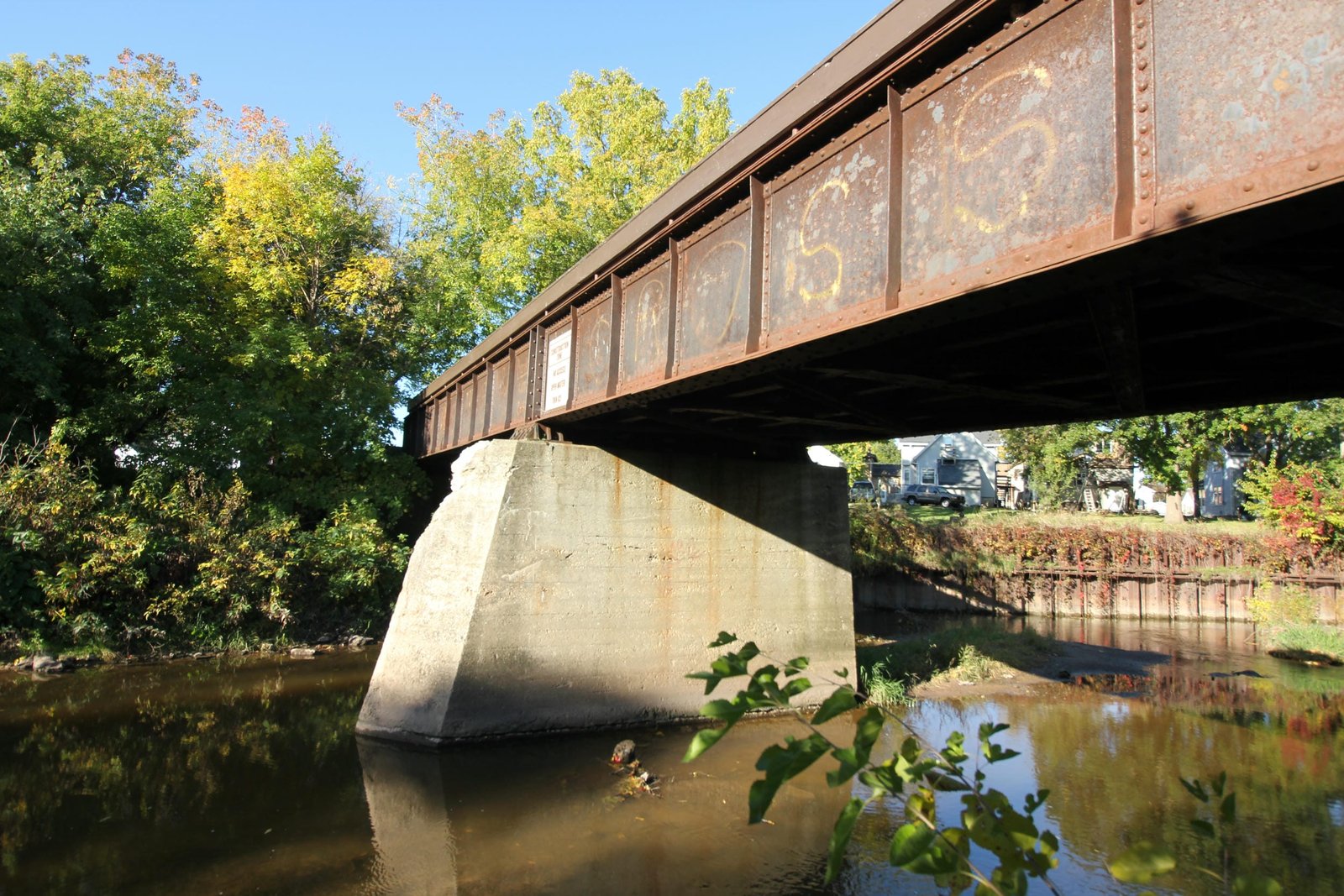
| Superstructure Design | Through Plate Girder |
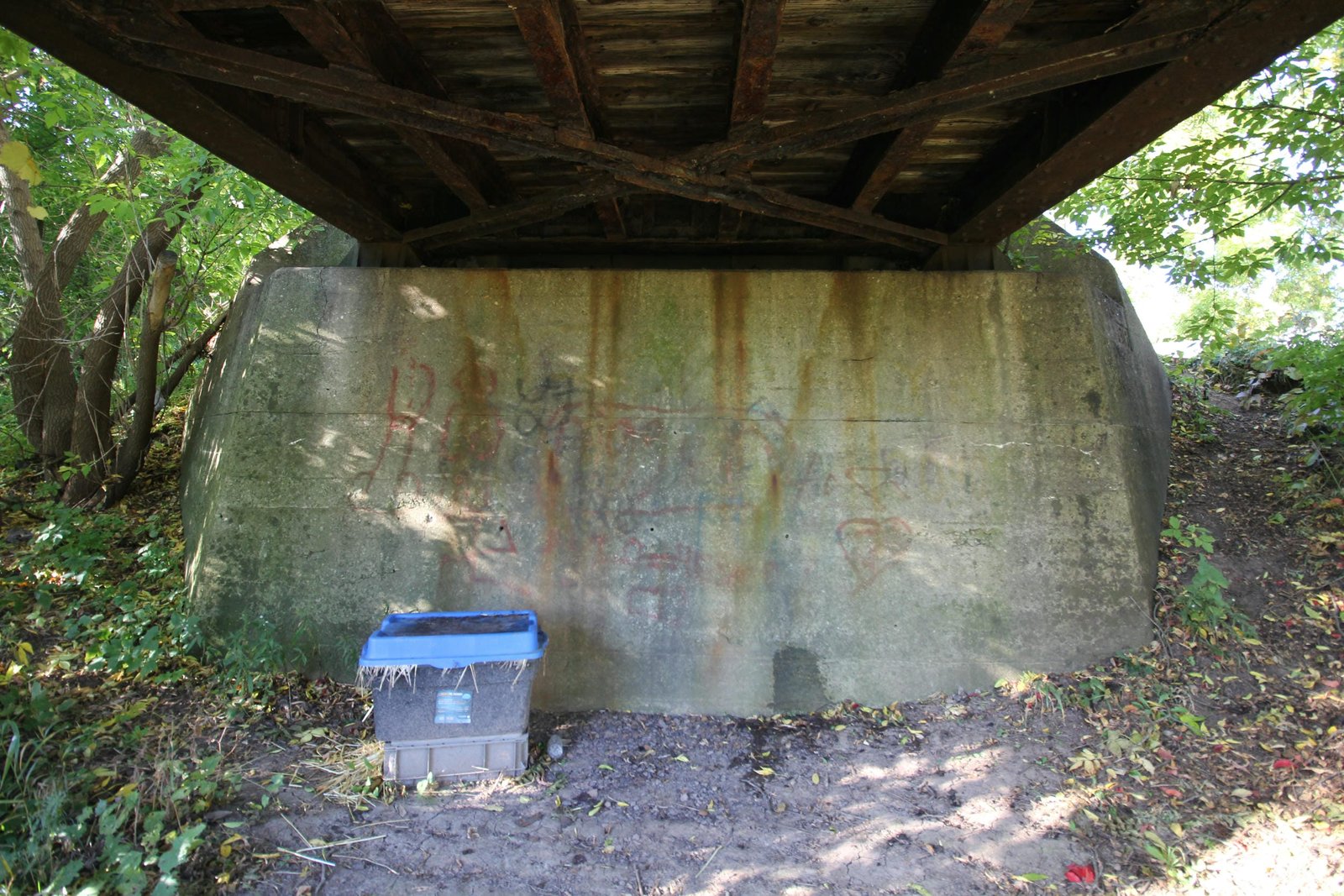
| Substructure Design | Concrete |
| Date Built | 1914, Using Spans Fabricated 1900 |
| Original Location | Bridge #Z-754; Morley, Iowa |
| Traffic Count | 0 Trains/Day (Bridge is Open to Pedestrian Traffic) |
| Current Status | Open to Pedestrian Traffic |
| Chicago, Milwaukee & St. Paul Railway Bridge Number | D-774 |
| Significance | Local Significance |
| Documentation Date | 8/6/2016; 10/8/2022 |
In 1865, the Iron Ridge and Mayville Railroad (IR&M) began grading a new railroad line, extending from the existing La Crosse & Milwaukee Railroad (LC&M) line at Iron Ridge to Mayville, approximately 7 miles north. In 1874, the Fond du Lac, Amboy & Peoria Railway (FdLA&P) was charted to construct a 3-foot narrow gauge line between Fond du Lac, Wisconsin and Amboy, Illinois. Construction on the railroad began in 1875, and in 1876, the railroad reached the existing LC&M line at Iron Ridge, Wisconsin using the roadbed graded by the IR&M. It was decided to cease construction at this location, giving the FdLA&P 29 total miles constructed. The property of the IR&M was formally purchased by the FdLA&P in 1878. The FdLA&P was acquired by the Chicago, Milwaukee & St. Paul Railway (Milwaukee Road) in 1883, and was converted to a standard gauge line soon after. The line became a branch line for the Milwaukee Road, primarily serving industries in Fond du Lac. In 1890, the Wisconsin Midland Railroad constructed 2 miles of track in Fond du Lac to serve various industries east of the Fond du Lac River. This railroad was purchased by the Milwaukee Road in 1897.
The Milwaukee Road was often in financial trouble, especially after the costly Pacific Extension was completed in 1909. In 1925, the company declared bankruptcy, and reorganized as the Chicago, Milwaukee, St. Paul and Pacific Railroad in 1928. Throughout the 20th Century, financial conditions for the Milwaukee Road continued to deteriorate. This line began to fall into disrepair, and traffic over the line began to lighten. The railroad again entered bankruptcy in 1977, and was forced to liquidate unprofitable lines. The line from Iron Ridge to Mayville was sold to the State of Wisconsin in 1980, which leased it to the Wisconsin & Southern Railroad (WSOR) the same year. In the early 1980s, the segment between Mayville, Wisconsin and Fond du Lac would be abandoned, with the exception of some short spurs within Fond du Lac. A portion of the line in Fond du Lac was sold to the Wisconsin Central, Ltd (WC) in 1987. The WC was purchased by Canadian National Railway in 2001, which continues to operate a short segment in Fond du Lac. The WSOR continues to operate the segment between Iron Ridge and the south side of Mayville as the Mayville Spur, which primarily serves a handful of industries.
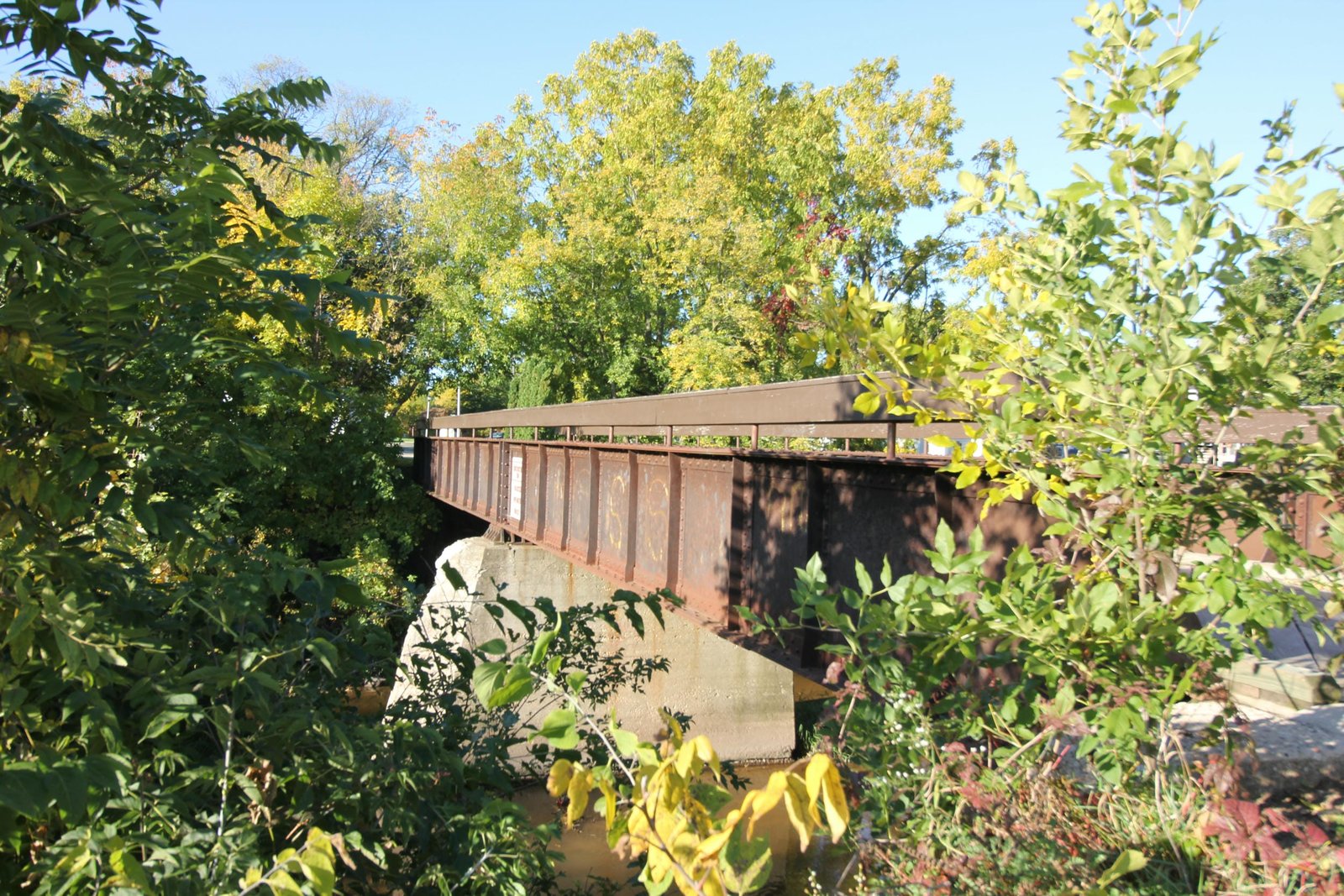
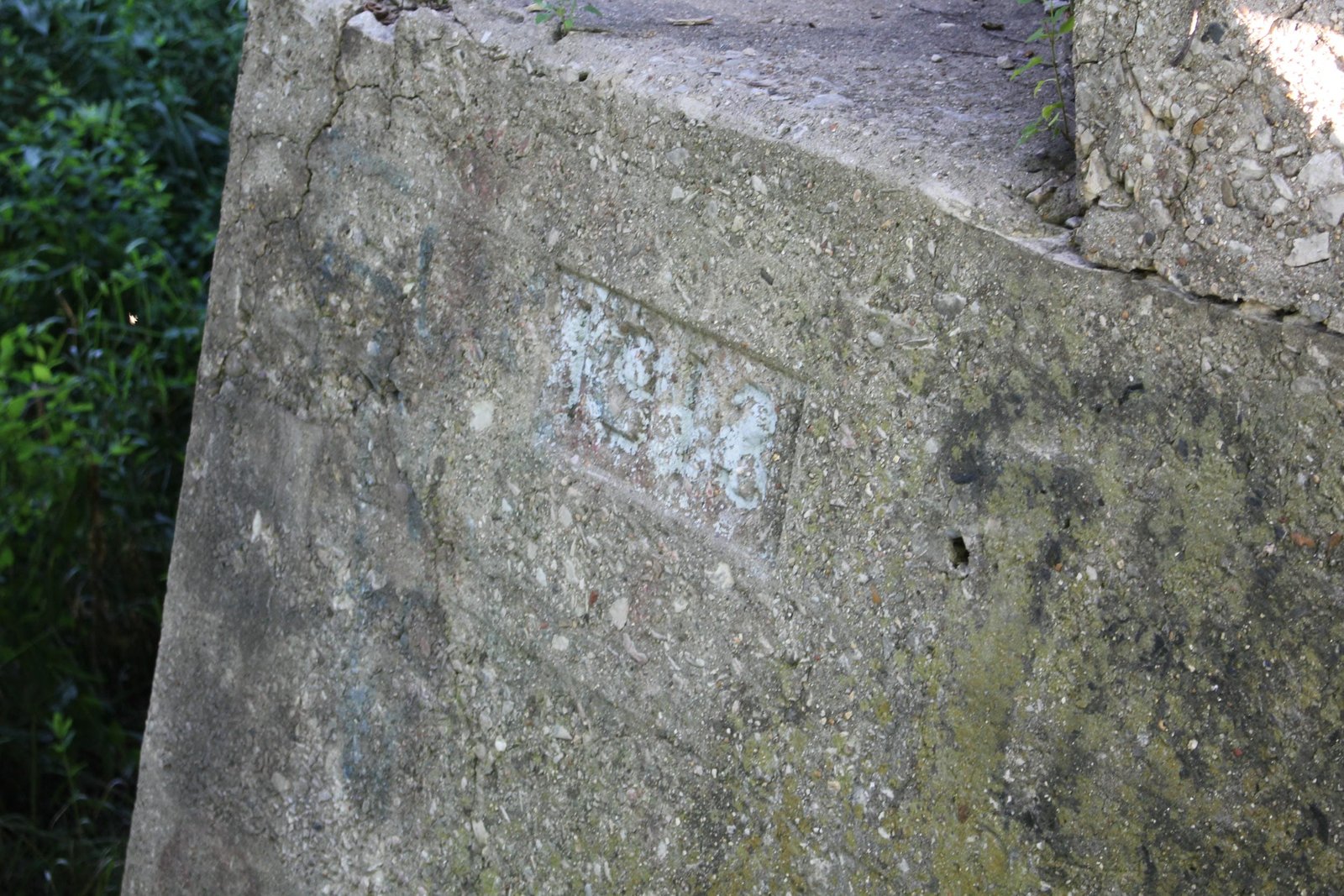
Located in Fond du Lac, this through plate girder bridge carries a former industrial spur of the Chicago, Milwaukee, St. Paul & Pacific Railroad across the East Branch Fond du Lac River. Initially, this line was part of the Wisconsin & Midland Railroad; a short railroad intended to serve industries east of the Fond du Lac River. This railroad was acquired by the Milwaukee Road in 1897. The first bridge at this location likely consisted of a wooden pile trestle or a wooden truss span. In the early 20th Century, the Milwaukee Road had a number of secondhand girder spans which were available for reuse, due to large relocation and double tracking projects which had taken place in Iowa, Wisconsin and Minnesota. It was decided to reuse two secondhand girder spans at this location instead of ordering new steel spans. Work on a new bridge began in 1913, and the present girder spans were installed in 1914. Currently, the bridge consists of two 45-foot type "C3" through plate girder spans, set onto concrete substructures. These spans follow a standard design for C3 girder spans, including modest sized girders, square girder ends and a floor composed of four light stringers. Type C3 girders were one of two types of standard through plate girder spans used by the Milwaukee Road, with C4 girders instead using two heavier stringers. The substructures also follow a standard design, with a square pier and abutments with sloped wing walls which extend diagonally from the bridge. An unknown contractor fabricated the superstructure, and the substructures were constructed by labor employed by the Milwaukee Road Bridge & Building Department.
The two girder spans were originally fabricated in 1900 as part of Bridge #Z-754, a three span girder bridge located west of Morley, Iowa. When the Milwaukee Road decided to double track the line across Iowa, the original single track bridge was replaced by a new double track bridge and the three spans became available for reuse. Two of the spans were reused here, and the third was reused at Bridge #Y-348/Z-1134; which carried the Milwaukee Road's branch line to Boone, Iowa over the Chicago-Council Bluffs mainline at Madrid, Iowa. Railroads often reused steel and iron spans, as it provided a cost effective way to replace branch line bridges without requiring large amounts of new material. Secondhand spans could either be installed with modifications or without modifications, depending on the age and situation. It appears these spans may have been modified upon relocation, as the stringers appear to be a different grade of metal than the girders. Through plate girder spans were often used by railroads, as they were durable and easy to construct. While the bridge at Madrid was removed in the late 1970s or early 1980s, this bridge remained in use until the mid-1970s before being abandoned. In the 1980s, the bridge was acquired by the City of Fond du Lac and reused as a trail bridge. As part of the reuse, a wooden deck and handrails were added to the bridge, and the structure continues to serve the Fond du Lac Riverwalk. Overall, the bridge appears to be in fair to poor condition, with some significant section loss occurring in the stringers and lower lateral bracing. The girders themselves appear to be in good shape, and the bridge could likely be repaired for continued pedestrian use by reinforcing or replacing the stringers with new material. The author has ranked this bridge as being locally significant, due to the common design.
Citations
| Build dates and relocation history | Milwaukee Road Drawing Collection, located at the Milwaukee Road Archives at the Milwaukee Public Library |
| Railroad History Citation | ICC Valuation Information, Compiled by Richard S. Steele |