





Click the photo to view the full-size version
| Name | Upper Burger Swing Bridge Chicago & North Western Railway Bridge #2121 |
| Built By | Chicago & North Western Railway |
| Currently Owned By | Canadian National Railway |
| Superstructure Contractor | American Bridge Company of New York |
| Substructure Contractor | Adolph Green Construction Company of Green Bay, Wisconsin (Stone Substructures) Unknown (Concrete Additions) |
| Length | 179 Feet Total |
| Width | 1 Track |
| Height Above Ground | 15 Feet (Estimated) |
| Superstructure Design | Warren Through Truss |
| Substructure Design | Stone Masonry and Concrete |
| Date Built | 1910 |
| Traffic Count | 2 Trains/Day (Estimated) |
| Current Status | In Use |
| Chicago & North Western Railway Bridge Number | 2121 (Old 321) |
| Canadian National Railway Bridge Number | 2121 |
| Significance | Regional Significance |
| Documentation Date | 8/5/2016 |
In 1872, the Milwaukee, Manitowoc and Green Bay Railroad (MM&GB) constructed 49 miles of new railroad, extending from Lake Shore Junction on the north side of Milwaukee, Wisconsin to Sheboygan, Wisconsin. The MM&GB changed its name to the Milwaukee, Lake Shore and Western Railroad (MLS&W) after completion of the line. The following year, the MLS&W resumed construction, completing an additional 32 miles to Two Rivers, Wisconsin, via Manitowoc, Wisconsin. The MLS&W was reorganized as the Milwaukee, Lake Shore and Western Railway (MLS&W) in 1885, which again was reorganized with the same name in 1883. The MLS&W had constructed a handful of lines in northeast Wisconsin during the late 19th Century, primarily to connect Lake Michigan and Lake Superior. This line initially provided the MLS&W with a connection to the Chicago & North Western Railway (C&NW) at Milwaukee, which allowed the MLS&W to access Chicago. Due to the success of the MLS&W, the railroad was purchased by the Chicago & North Western Railway in 1893. The C&NW had acquired and constructed a vast network of railroad lines throughout the Midwest during the late 19th Century, and the MLS&W system provided more opportunities for expansion.
During the early 20th Century, the C&NW sought to improve operations by constructing new lines and improving existing lines. The C&NW had become one of the premiere Midwest railroads, and sought to stay profitable and competitive. The Manitowoc, Green Bay and North Western Railway (MGB&NW) was incorporated as a subsidiary of the C&NW in 1904 to construct a new connection between Manitowoc and Green Bay. A 36 mile line was completed between the two cities in 1906, and the MGB&NW was sold to the C&NW in 1909. Also in 1906, a bypass around the west side of Sheboygan was constructed to avoid the congested lakefront line. These new lines provided the C&NW with a faster route between Chicago and Green Bay, serving Milwaukee and bypassing the industrial areas along Lake Winnebago. As traffic on the route grew in the 20th Century, the Village of Whitefish Bay became concerned with the growing amount of trains through the Village. In response, the C&NW constructed a short 4 mile cutoff between the north side of Whitefish Bay and Wiscona, a railroad junction on the north side of Milwaukee in 1929. The portion of the line between Lake Shore Junction and Whitefish Bay would be removed immediately after completion of the cutoff. Throughout the 20th Century, this line remained a core mainline for the C&NW, and was known as the Shoreline Subdivision.
By the late 20th Century, the C&NW sought to consolidate operations and abandon or sell unprofitable lines. In 1988, the C&NW sold the Cleveland, Wisconsin to Green Bay segment and the Two Rivers Branch to the Fox River Valley Railroad, which became the Fox Valley and Western Ltd. (FV&W) in 1993. The FV&W was a subsidiary of the successful Wisconsin Central Ltd. (WC), which had acquired a large amount of former Milwaukee Road and Soo Line trackage in Wisconsin. The C&NW was purchased by Union Pacific Railroad (UP) in 1995. In 1996, the segment between Denmark, Wisconsin and Rockwood, Wisconsin was abandoned and acquired for future trail use. In 2001, WC was purchased by Canadian National Railway (CN), and became the American subsidiary of the railroad. The Two Rivers Branch was abandoned in the 1990s or early 2000s. Much of the original line through Sheboygan was abandoned in approximately 2005, and CN abandoned the line between Manitowoc and Cleveland in 2013. In 2021, the Green Bay to Denmark segment was sold to the Fox Valley & Lake Superior Rail System (FOXY). Today, UP operates the Shoreline Subdivision between Wiscona and Cleveland; and CN operates the Shoreline Subdivision between Manitowoc and Rockwood. FOXY continues to operate the Denmark Branch between Green Bay and Denmark. The Rockwood to Denmark segment is known as the Devils River State Trail, and much of the original line through Sheboygan has been reused as a trail. Much of the UP segment between Sheboygan and Cleveland is out of service, and its future uncertain.
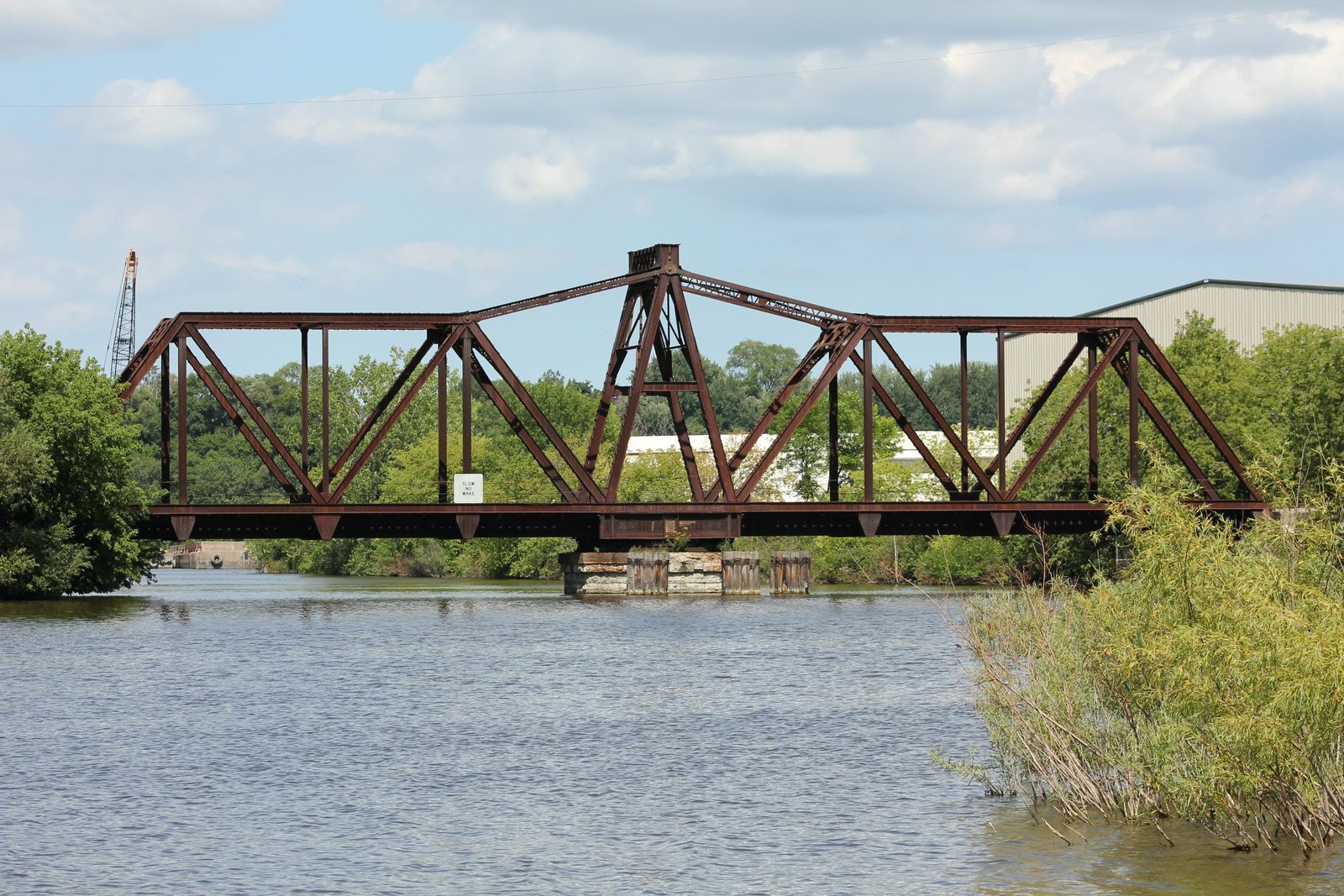
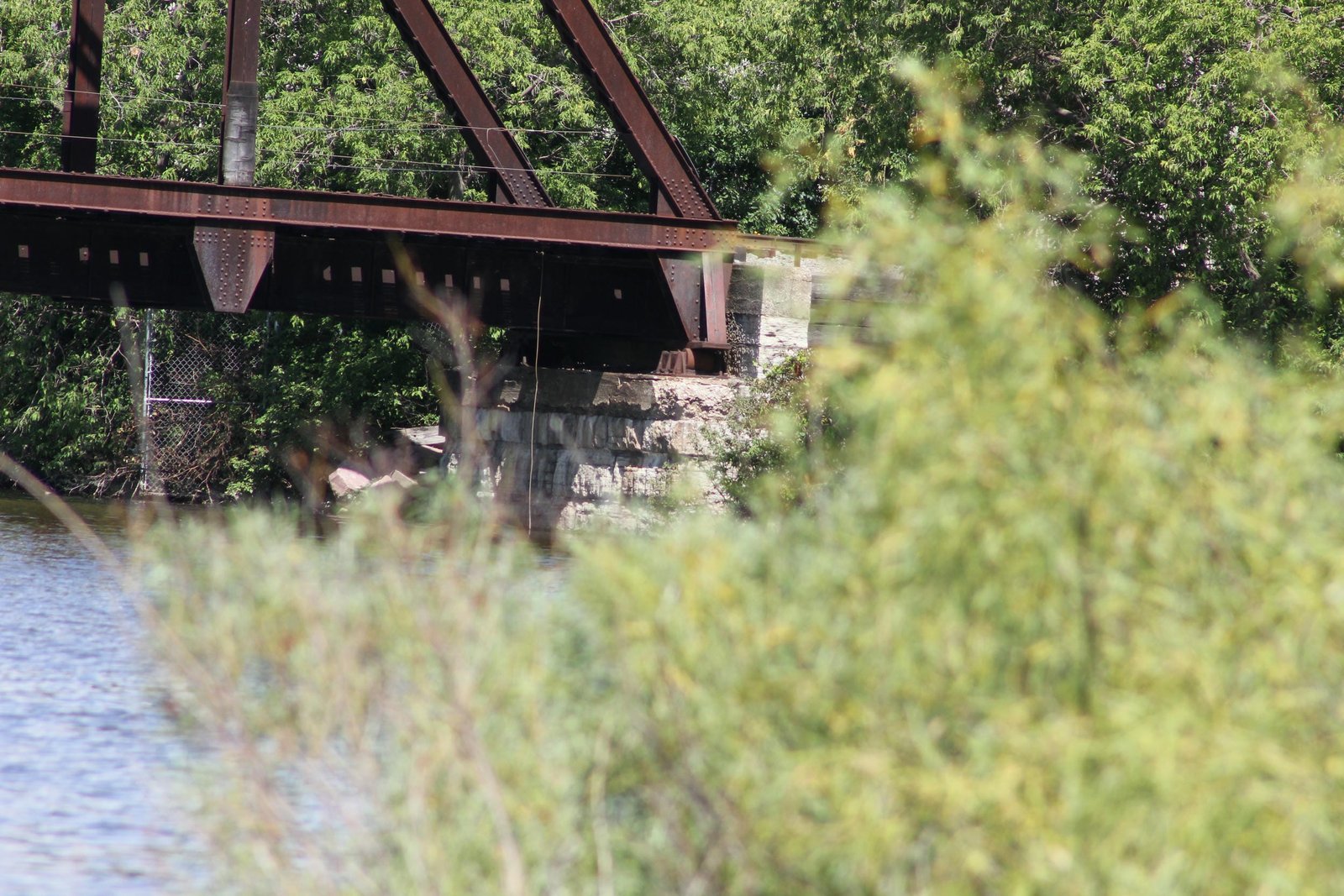
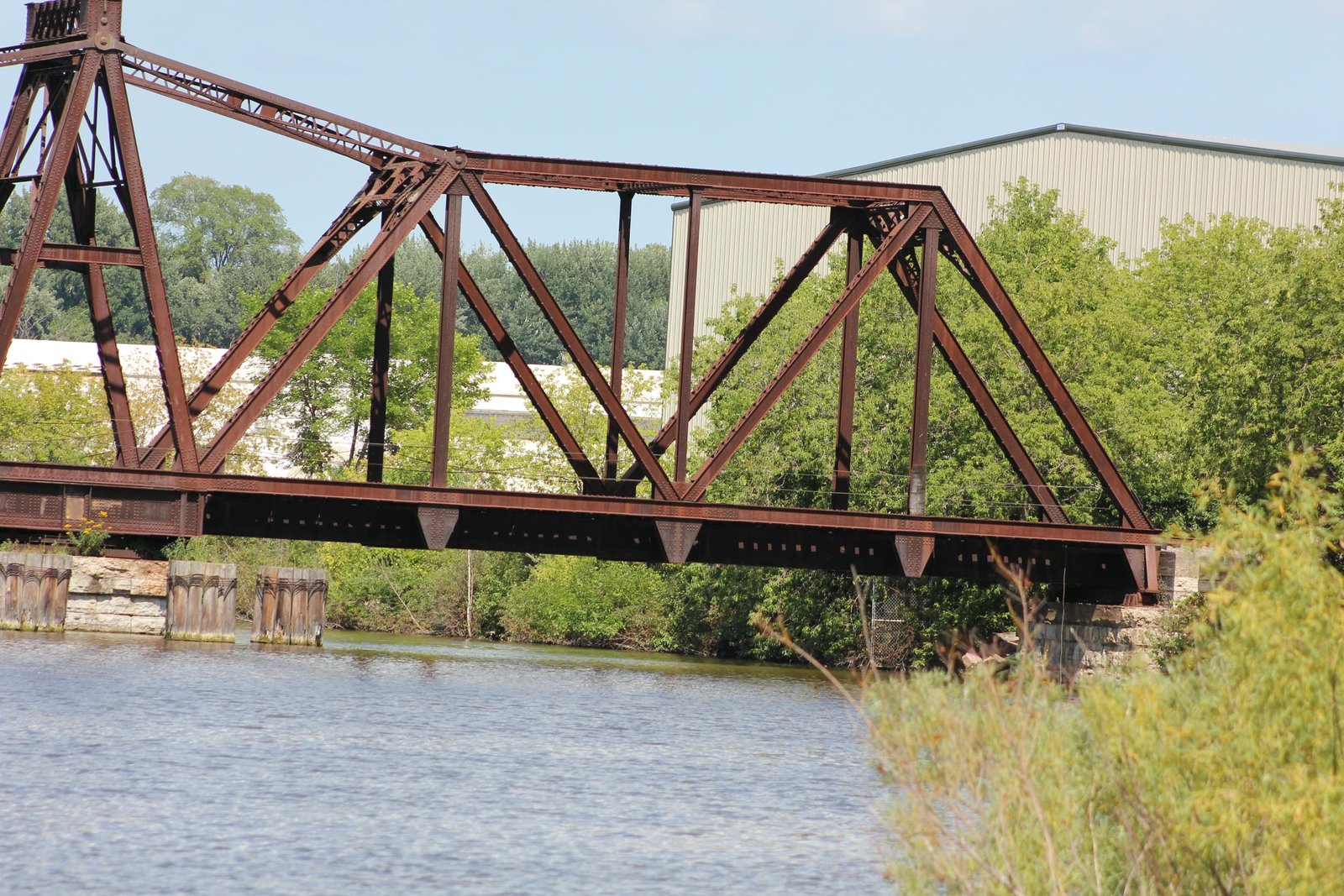
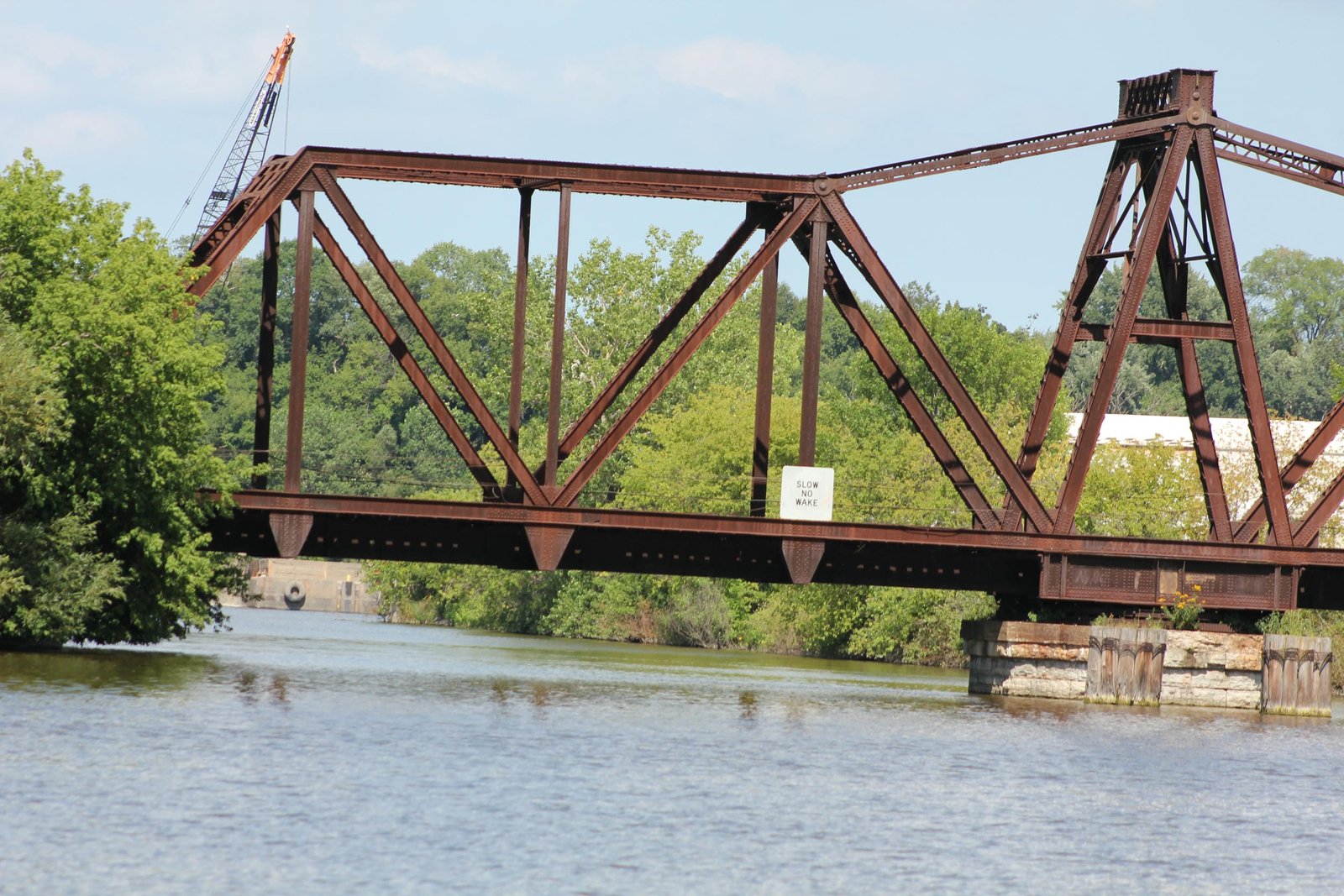
Located in Manitowoc, this through truss swing bridge carries the former Chicago & North Western Railway mainline over the Manitowoc River. The first bridge at this location was likely a timber through truss swing bridge, constructed when the line was first built. It is believed this span was likely upgraded during the 1880s with another span of a similar design. In 1899, the bridge was reconstructed, reusing an iron span relocated from Milwaukee, Wisconsin set onto new stone substructures. This span consisted of a riveted quadrangular lattice through truss span, likely fabricated in the early 1880s. It is believed the span was reused from one of the Kinnickinnic River bridges on the south side of Milwaukee, which were both reconstructed in 1898. However, it is unclear which of the spans was reused here. Within 10 years, the lattice span was no longer suitable for mainline traffic this location, and in 1910, the bridge was replaced with the present swing span. It is unclear if the previous bridge was reused elsewhere or was ultimately scrapped. Currently, the bridge consists of a 179-foot, 8-panel, riveted Warren through truss rim-bearing swing span, which reused the stone pier and abutments from the 1899 bridge. Upon construction of the present bridge, the stone pier was repaired by replacing the top row of stone with new concrete. The swing span is comprised of two identical 4-panel halves, joined over the center swing pier by a triangular tower. A rim-bearing swing span works by placing the superstructure onto a metal drum, which rotates on a wheeled track and is turned by a gear system. This span reportedly is hand-turned by inserting a large T-shaped key onto an operating nut.
The superstructure is traditionally composed for the era, with laced endposts, modest sized members and a traditionally composed floor. The top chord, bottom chord and endposts of the superstructure are comprised of built-up beams, consisting of X-lacing on both sides. The diagonal members are mainly composed of X-laced built-up beams, and the vertical members are composed of lighter V-laced beams. Typical of swing spans from this era, the center tower uses a triangular shape, with two X-laced beams on either side of the track, connected by longitudinal beams partway up. In addition, the sides of the tower are connected by a large lattice panel and triangular plates, and the top is connected by a pin and an X-laced beam. The tower is connected to each half by an eyebar, which is pinned at either end. In addition, the tower is also connected by an X-shaped lateral bracing, which are constructed of V-laced beams. The floor system is traditionally composed, with plate girder floorbeams and two stringers. The floorbeams are connected to the bottom chord by large trapezoidal plates, typical of spans from this era. The portal bracing is constructed of an M-frame bracing, composed of V-laced beams. Unique to this bridge, the sway bracing is constructed of beams which are V-laced on all four sides. Similar to other trusses, the upper lateral bracing is comprised of V-laced beams. Also like other C&NW designed swing spans, the metal drum uses a rectangular shape instead of a more traditional circular shape. The substructures follow a standard design, with a circular center pier and standard rectangular abutments. Stone for the substructures appears to consist of a white limestone, and was likely quarried at Duck Creek, Wisconsin.
American Bridge Company fabricated the superstructure at their Lassig plant in Chicago, while the Adolph Green Construction Company constructed the stone substructures in 1899. It is unknown if the concrete additions to the substructures were completed by railroad company forces or by an unknown contractor. Warren trusses became popular in the early 20th Century as a stronger alternative to traditional pin-connected Pratt spans. This design provides strength, durability, economy and a simple design. This span is unusual, as the C&NW nearly exclusively used riveted lattice truss spans for truss bridges constructed between the mid-1870s and late 1920s. It is unclear why the C&NW may have used a more traditional design at this location. One theory is that a lattice truss could not reliably be designed for such a short swing span. Since the initial construction, the bridge has seen no significant alterations, and remains in regular use. While it is not believed that the bridge opens for river traffic anymore, it appears that all required machinery and gearing is still intact. In addition, the original roller end bearings also appear to remain intact. Overall, the bridge appears to be in fair to good condition, with no significant deterioration noted. The author has ranked this bridge as being moderately significant, due to the truss design.
Citations
| Build date and builder (superstructure) | Chicago & North Western Railway Valuation Notes at the Chicago & North Western Historical Society Archives |
| Builder (substructure) | Green Bay Press-Gazette; September 13, 1899 |
| Railroad History Citation | ICC Valuation Information, Compiled by Richard S. Steele |