
Click the photo to view the full-size version
| Name | 220th Street Overpass |
| Built By | Minneapolis & St. Louis Railway |
| Currently Owned By | Union Pacific Railroad |
| Superstructure Contractor | Unknown (Initial Fabrication) Minneapolis Steel & Machinery Company of Minneapolis, Minnesota (1921 Reconstruction) |
| Substructure Contractor | Unknown |
| Length | 74 Feet Total |
| Width | 22 Feet |
| Height Above Ground | 25 Feet (Estimated) |
| Superstructure Design | Double Intersection Warren Pony Truss |
| Substructure Design | Concrete |
| Date Built | 1921, Using a Span Fabricated 1889 |
| Original Location | Minneapolis & St. Louis Railway Bridge #22; Carver, Minnesota |
| Traffic Count | 40 Vehicles/Day (2023) |
| Current Status | Open to Automobile Traffic |
| Significance | High Significance |
| Documentation Date | 3/15/2019 |
In the late 1850s and 1860s, the Des Moines Valley Railroad (DMV) and predecessors had constructed a significant railroad line, connecting Keokuk, Iowa and Des Moines, Iowa. Between 1869 and 1870, the DMV continued constructing northwest from Des Moines; completing 82 miles to Tara, Iowa. In 1873, the DMV was split into two separate sections, with the Keokuk, Iowa to Des Moines segment being sold to the Keokuk & Des Moines Railway (later leased/owned by the Chicago, Rock Island & Pacific Railway); and the Des Moines to Tara segment being sold to the Des Moines & Fort Dodge Railroad (DM&FD). In 1882, the DM&FD completed an additional 50 miles, reaching Ruthven, Iowa. In 1887, the DM&FD was leased by the Rock Island, and the Minneapolis & St. Louis Railroad (M&StL) began leasing the line in 1905. In 1915, the DM&FD was outright purchased by the M&StL. This line served as a secondary mainline for the M&StL, connecting to other secondary mainlines at Fort Dodge and Ruthven. Between Fort Dodge and Tara, the M&StL obtained trackage rights over the Illinois Central Railroad to connect their lines. Between Ruthven and Spencer, Iowa; the M&StL obtained trackage rights over the Chicago, Milwaukee & St. Paul Railway (Milwaukee Road) to connect their lines. At Des Moines, the line connected to a jointly-owned line with the Chicago, Burlington & Quincy Railroad (CB&Q), which connected this line to the principal mainline at Oskaloosa, Iowa.
The M&StL was a small midwestern railroad, connecting Minneapolis, Minnesota to Peoria, Illinois. The M&StL mainly served as a bridge railroad, allowing eastern and western railroads to interchange while bypassing the congested terminals at Chicago. Because the M&StL had light freight density and limited passenger service, the railroad survived on razor thin margins and often was in financial stress. The M&StL would later reorganize as the Minneapolis & St. Louis Railway in approximately 1920. Through the 1930s, the railroad focused on trimming excess routes and improving the financial situation. After leaving receivership in 1943, the M&StL invested significant capital upgrading infrastructure and modernizing equipment. By the 1950s, it became clear that the M&StL would need to merge with a larger railroad to survive. In 1960, the M&StL was purchased by the Chicago & North Western Railway (C&NW) during one of the first major railroad consolidations in the second half of the 20th Century.
Because of the agricultural industries connected to this line, significant sections of line remained profitable far longer than other M&StL lines. In 1981, the Mallard to Ruthven segment was abandoned, followed by the Rippey to Grand Junction segment in 1984. In 1989, the segment between Perry and Rippey would be abandoned. In 1995, the C&NW was purchased by Union Pacific Railroad (UP). In 2004, the line between Waukee and Perry would be abandoned. Today, UP operates the Tara Subdivision between Grand Junction and Rippey and the Waukee Industrial Lead between Des Moines and Waukee. The segment between Waukee and Perry has been reused as part of the Raccoon River Valley Trail. The remainder of the line has been abandoned and reverted to adjacent landowers.
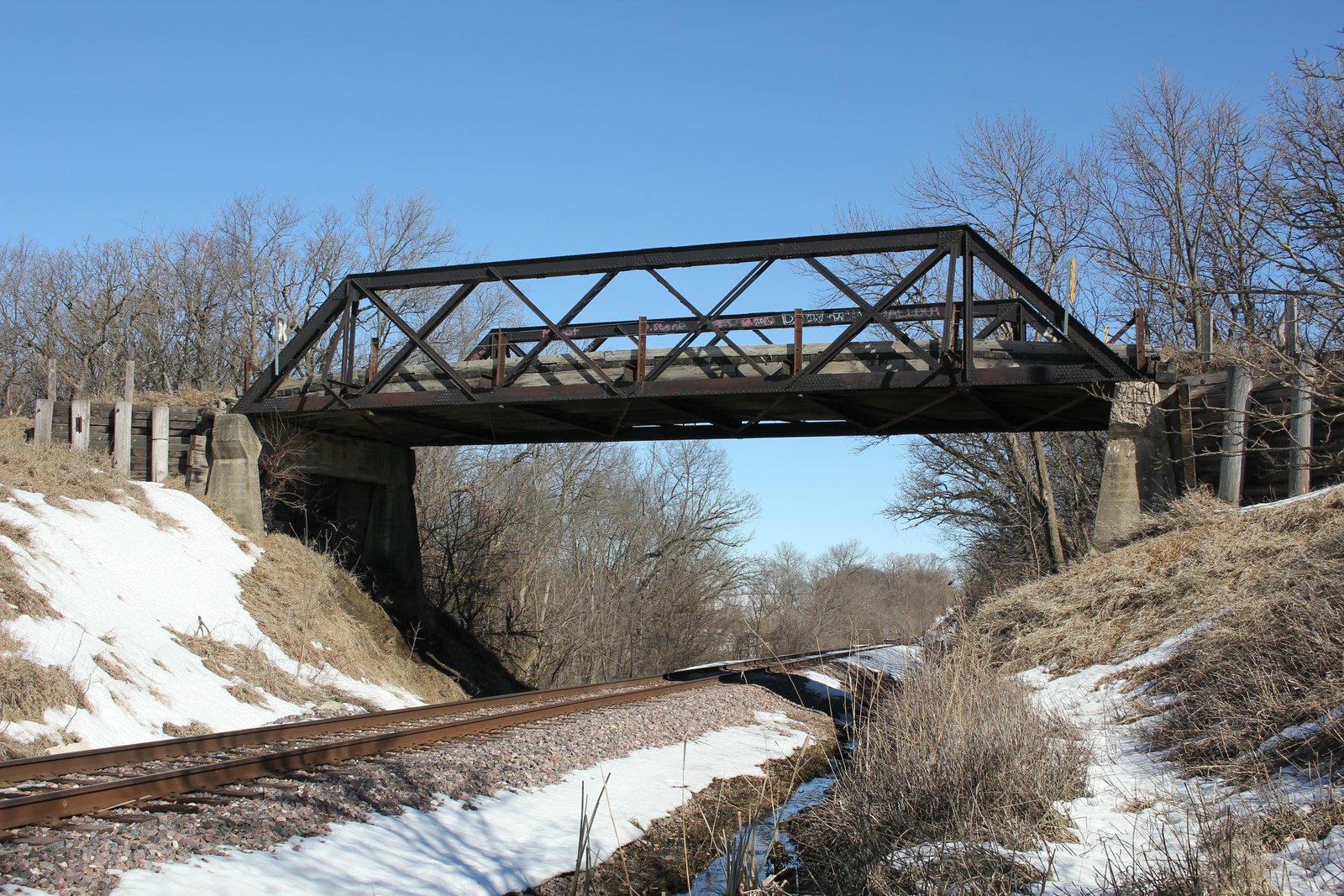
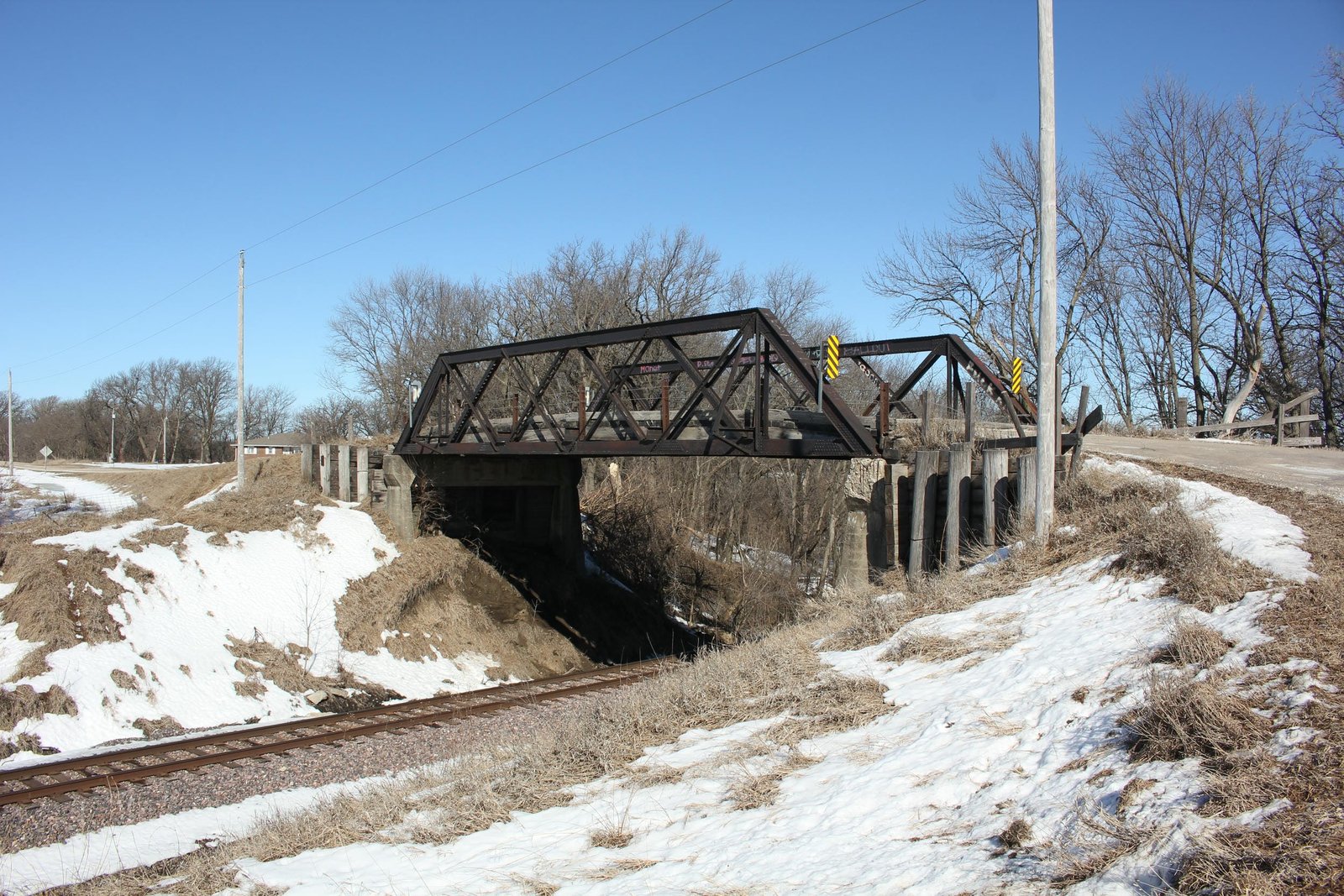
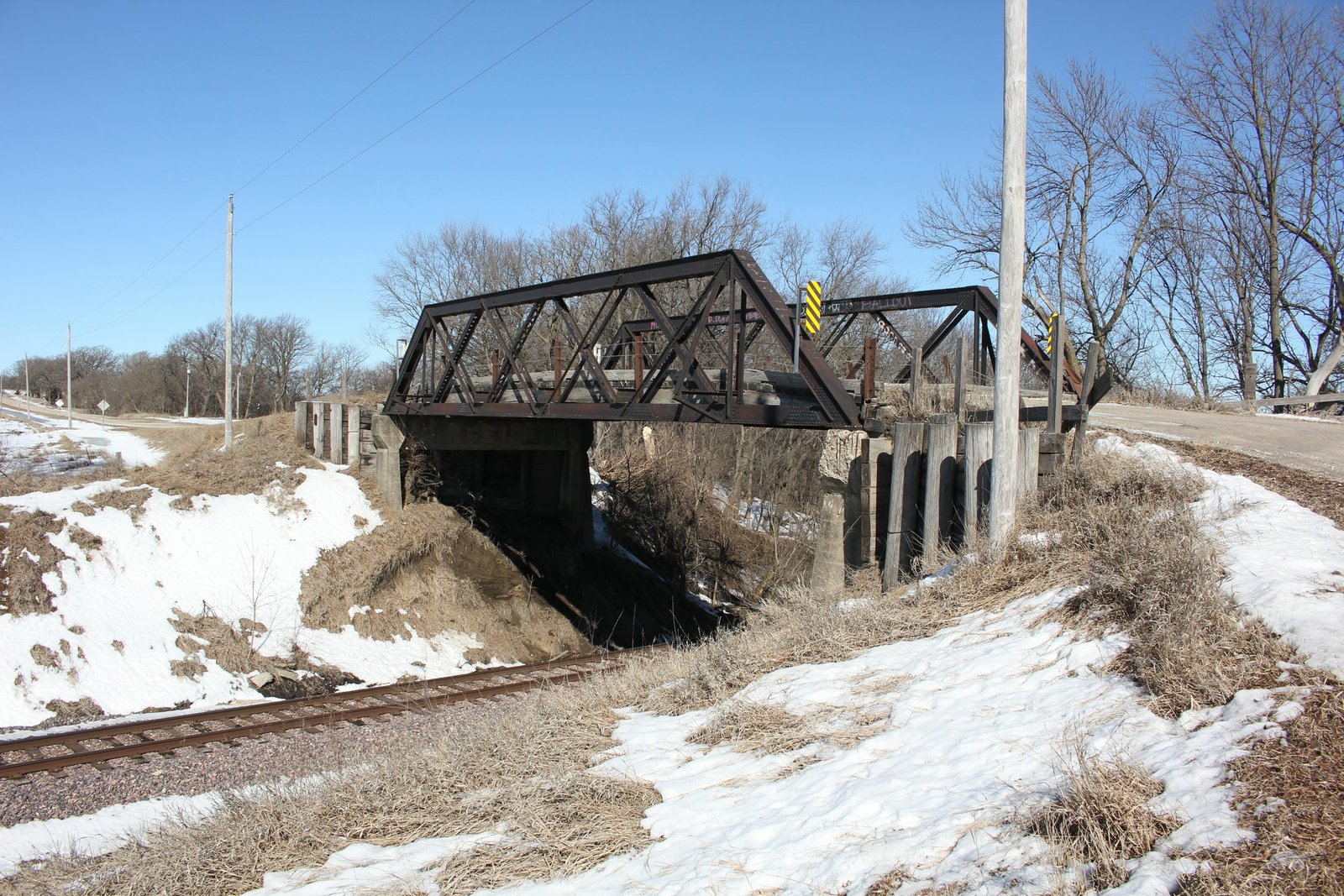
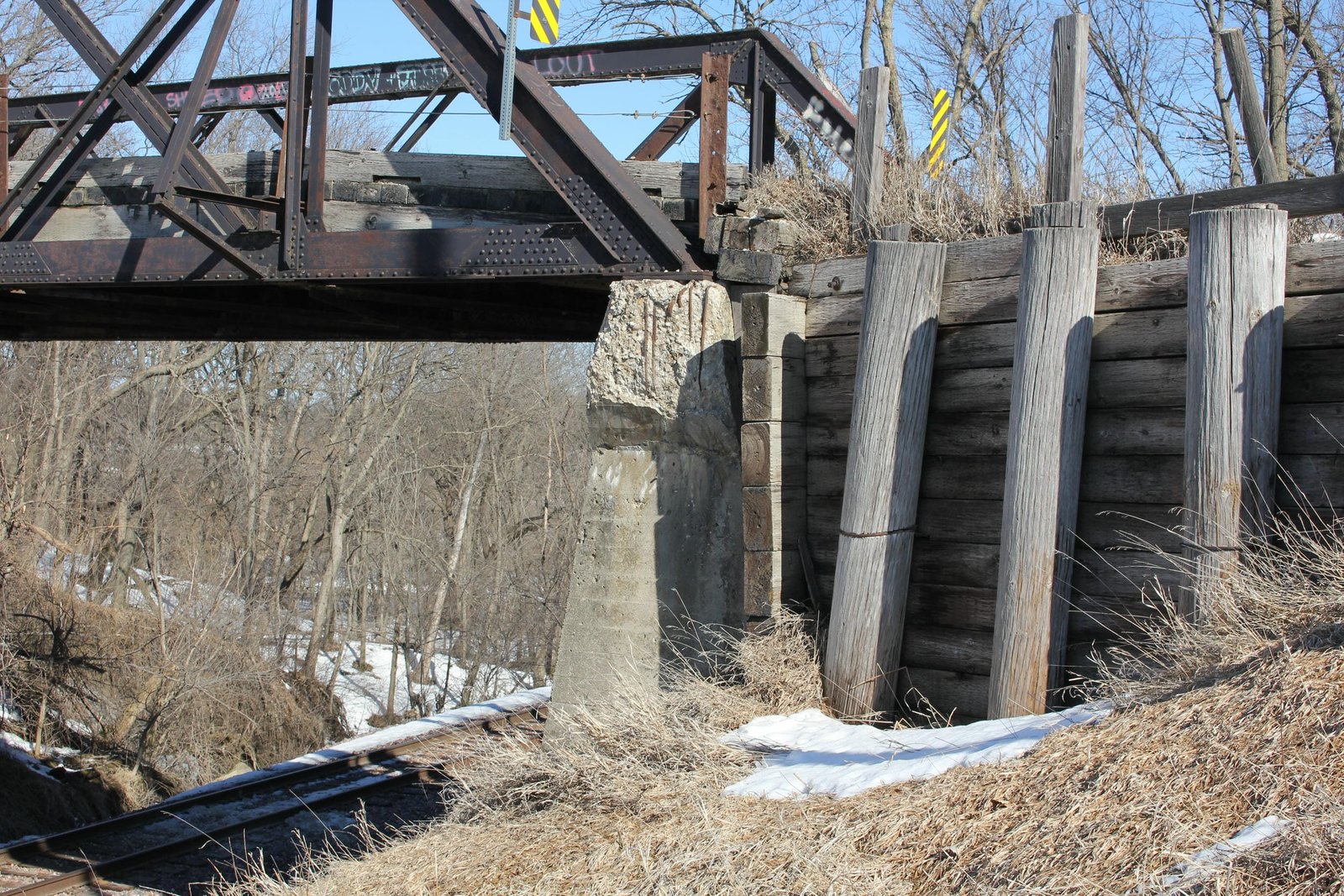
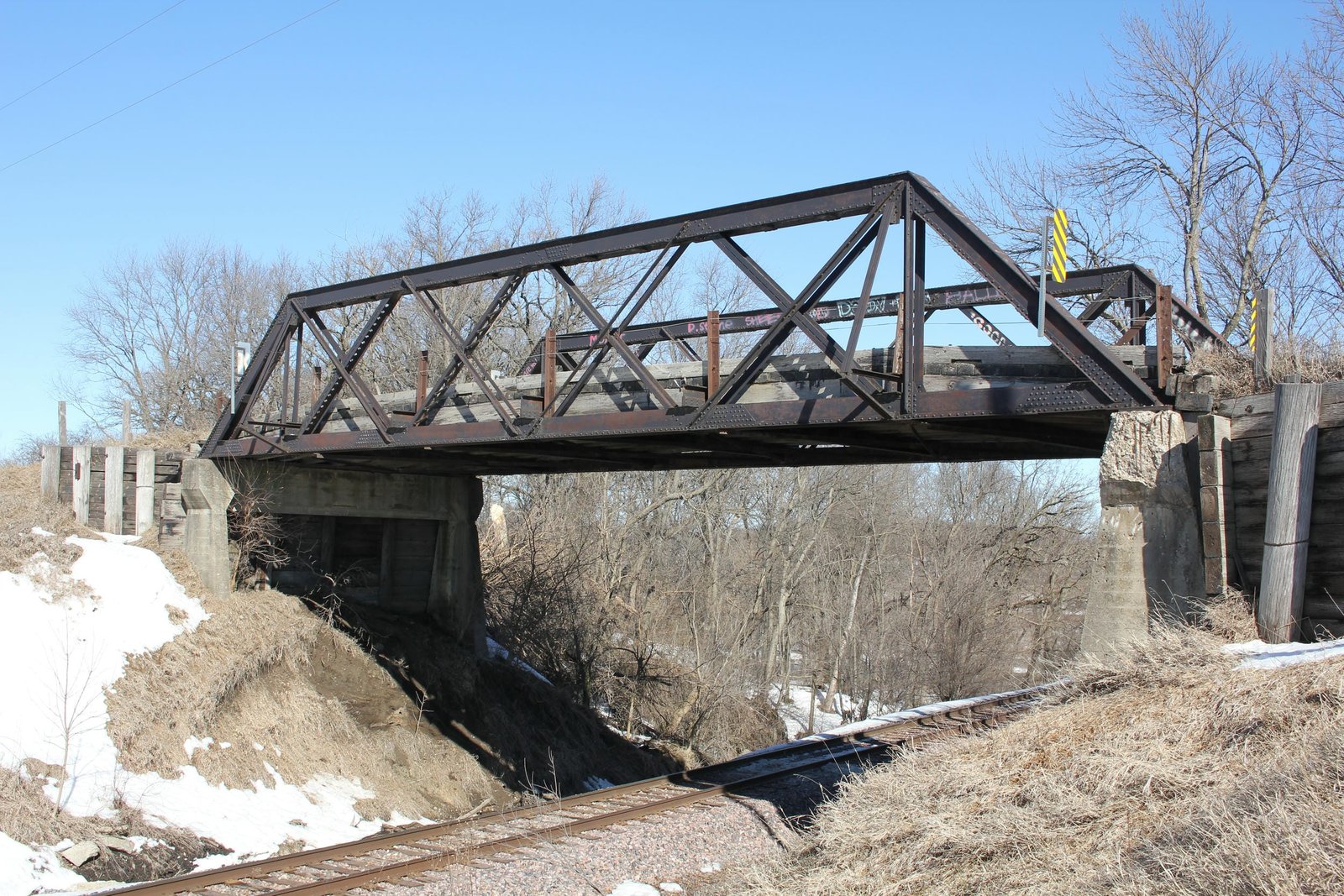
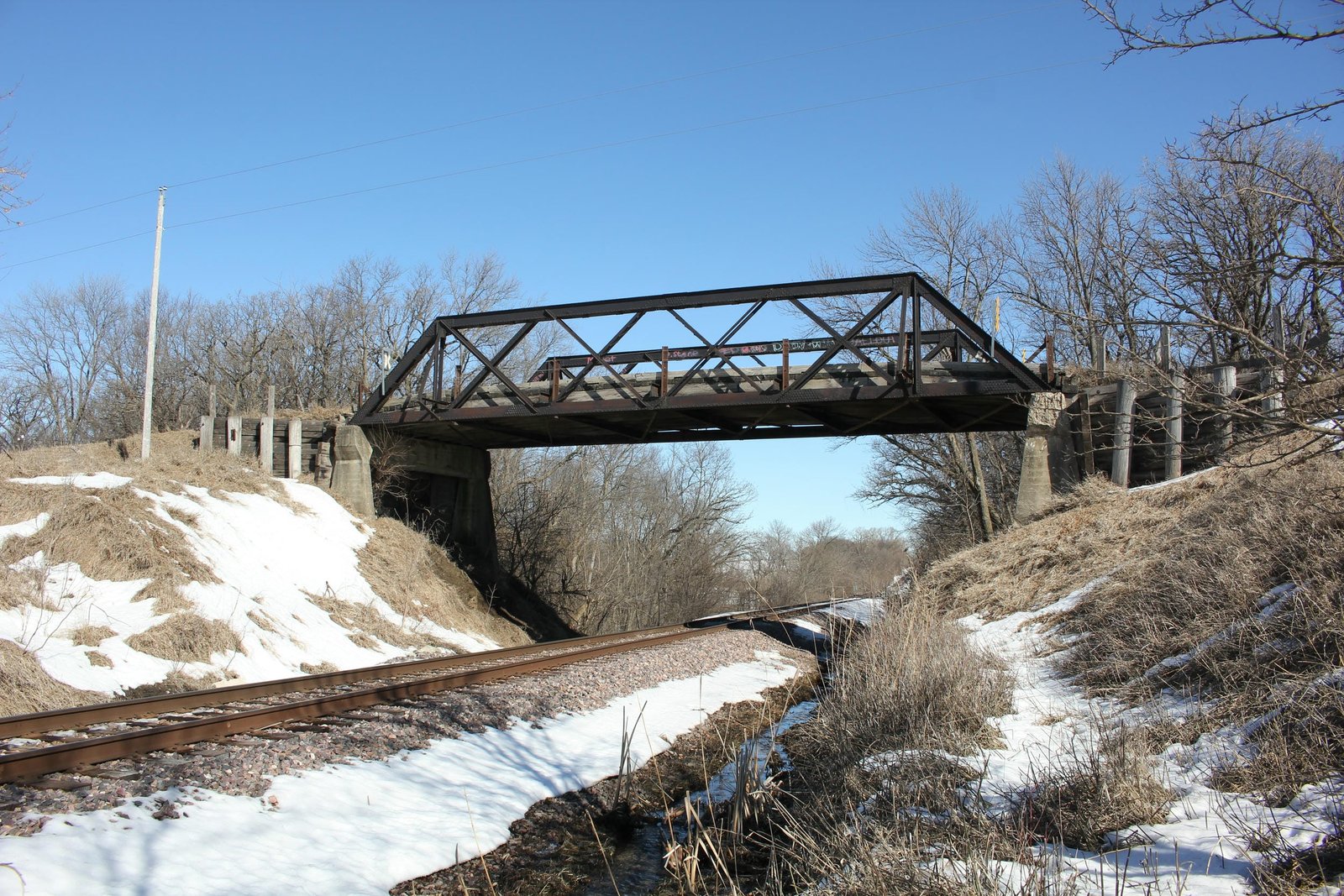
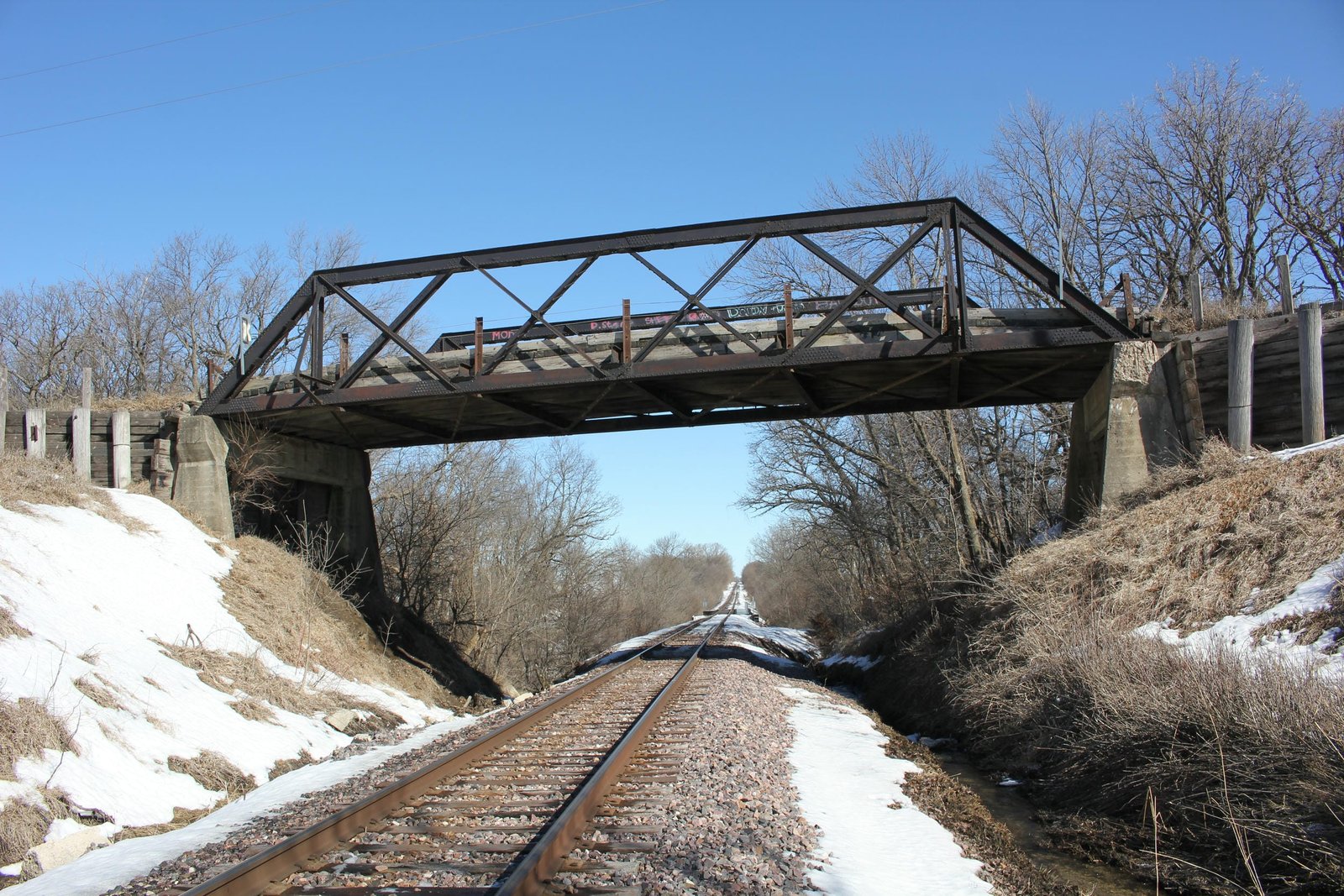
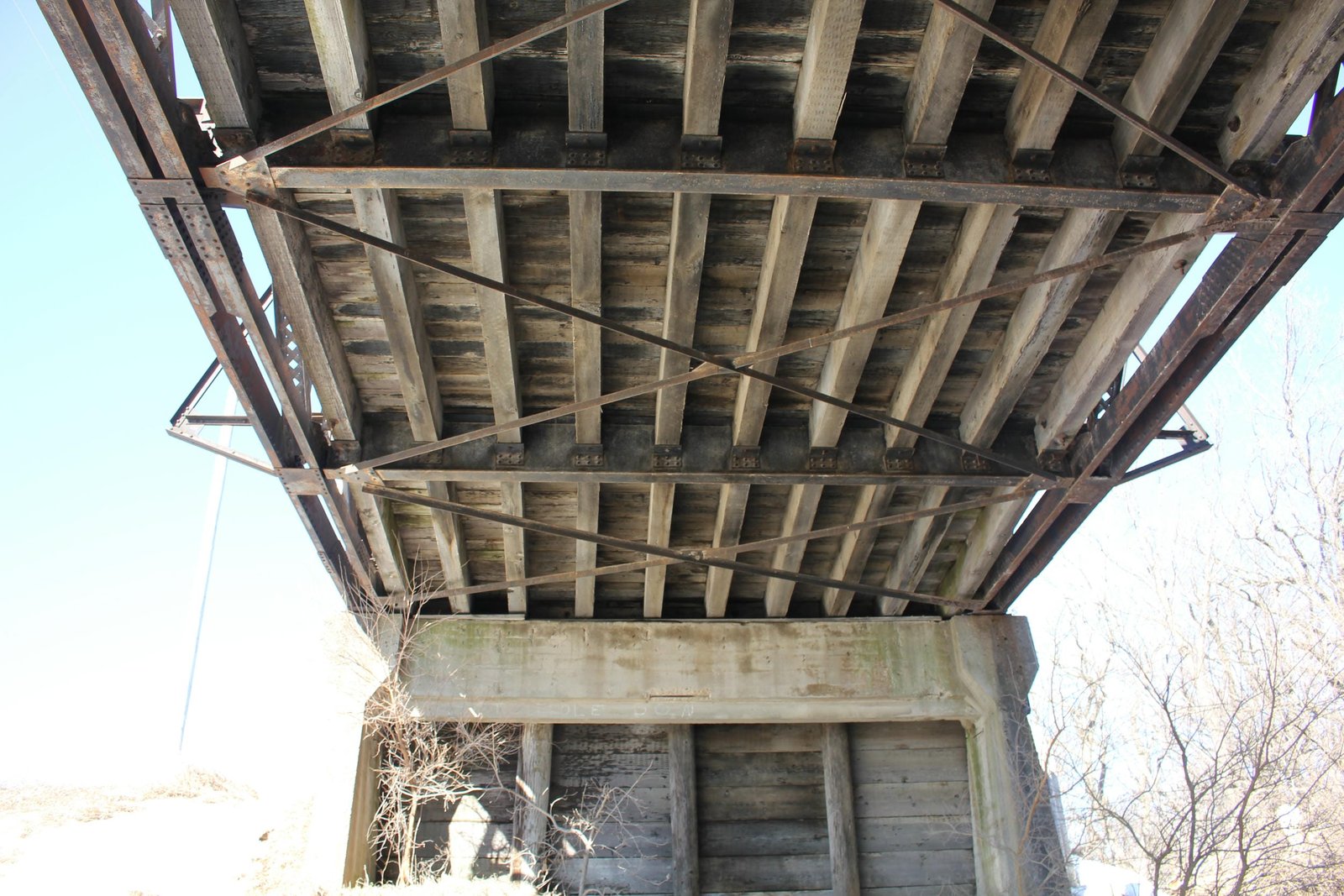
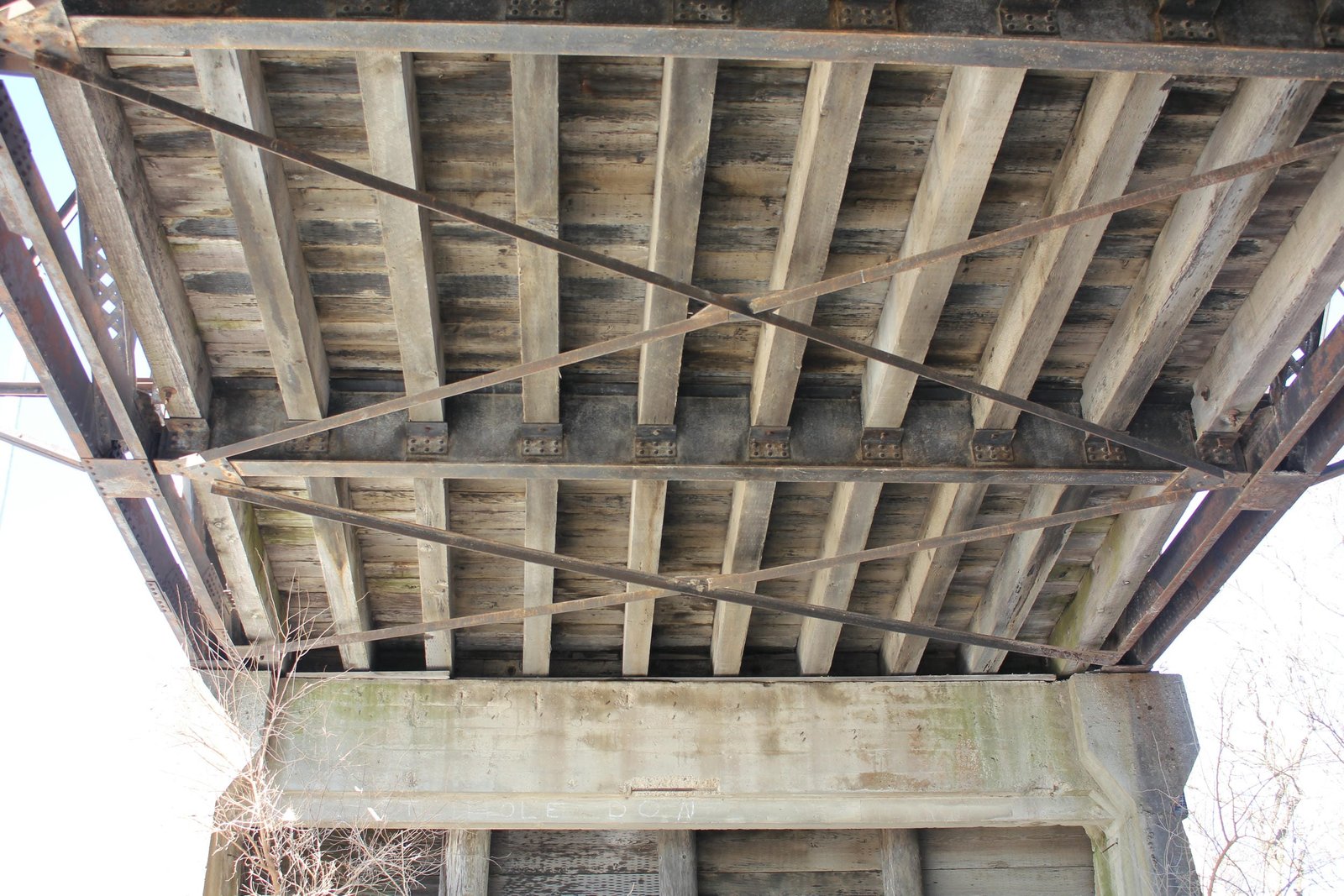
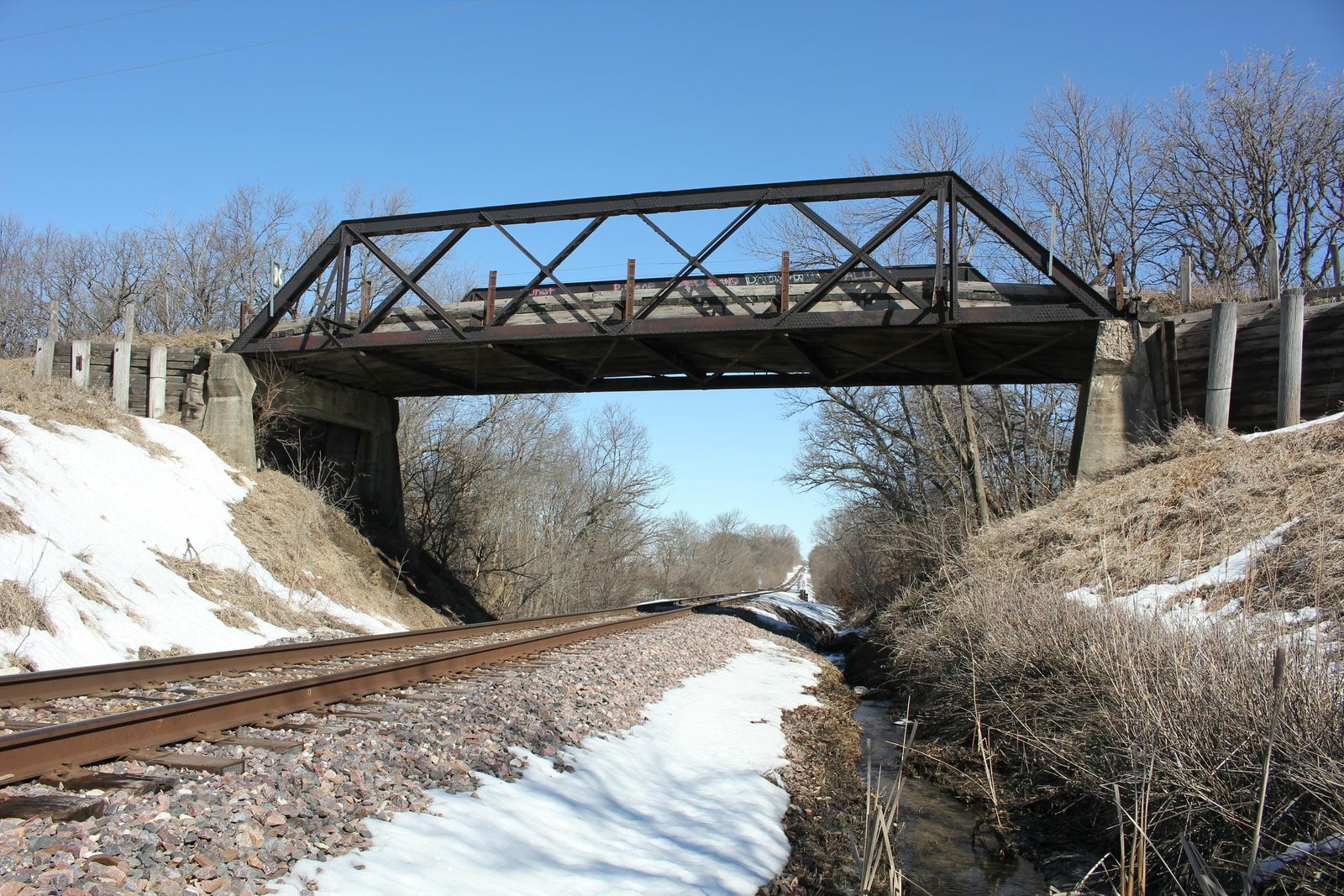
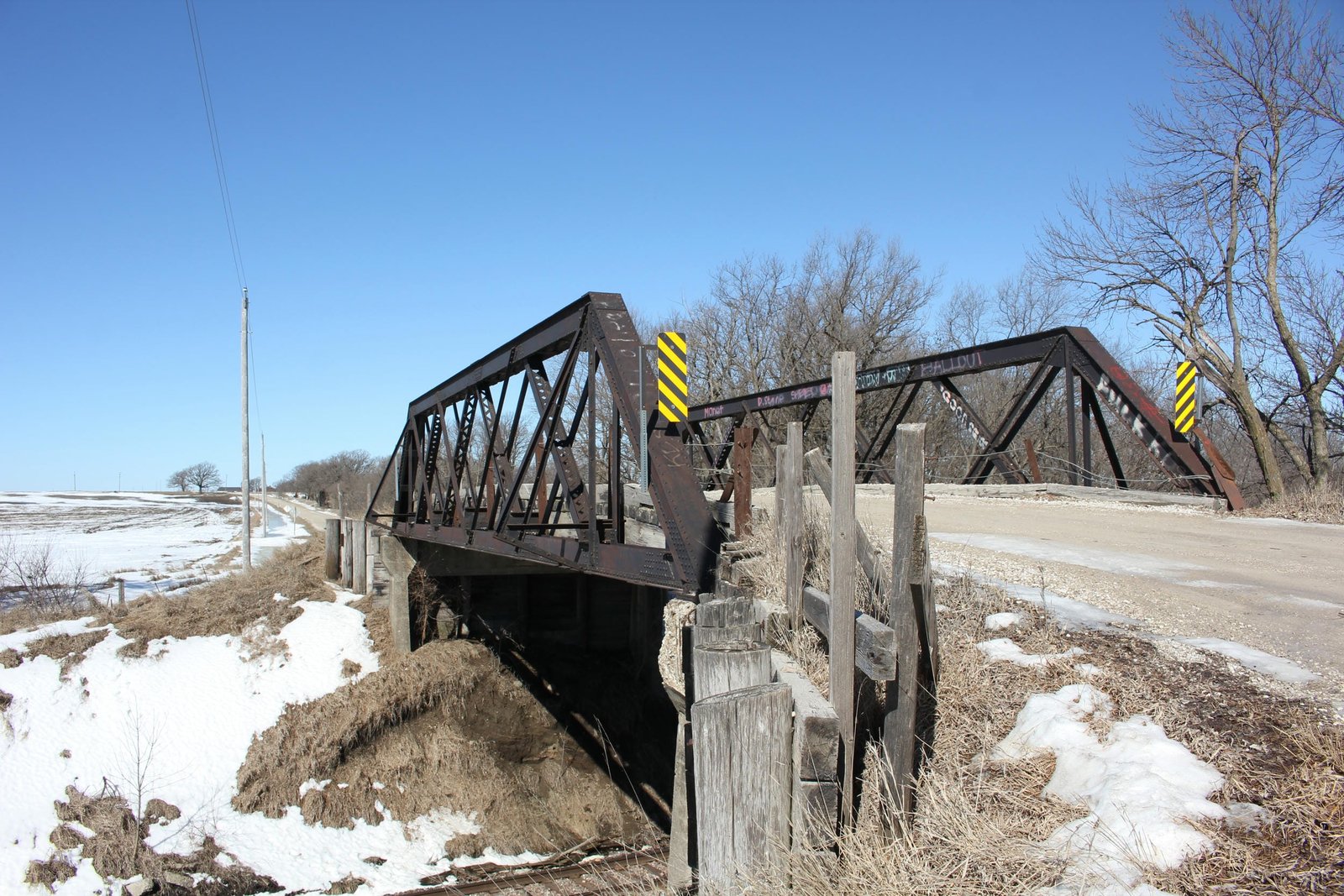
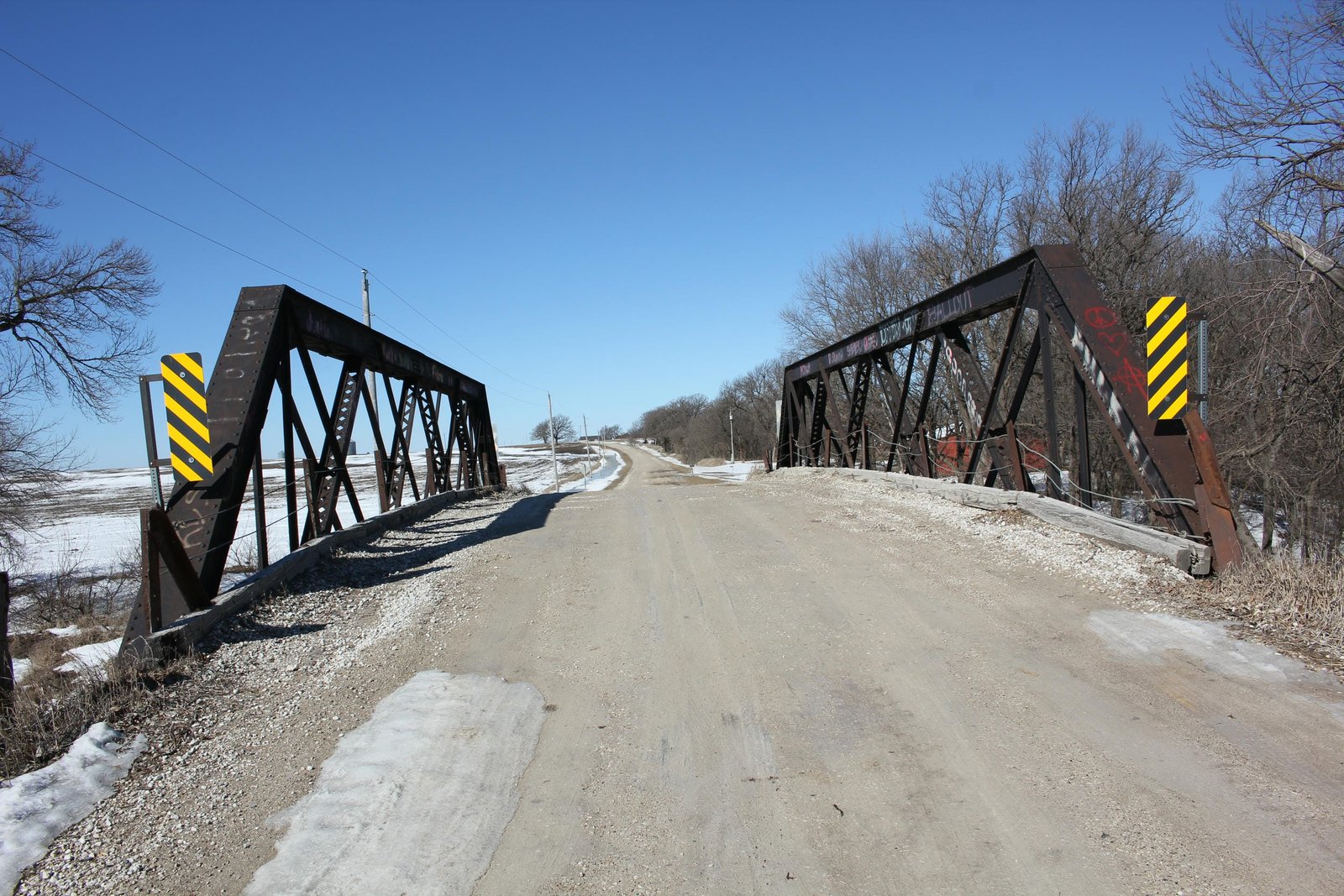
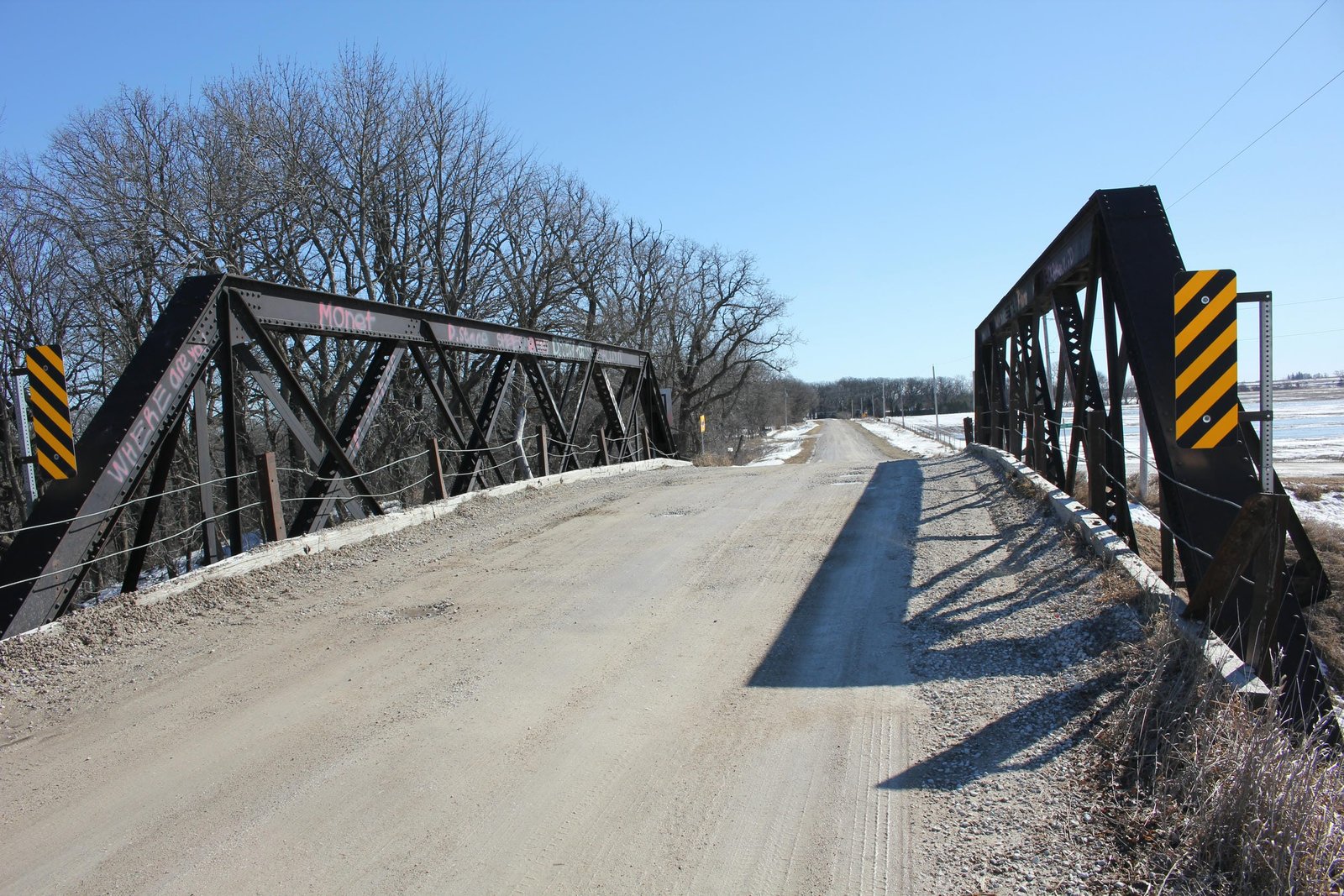
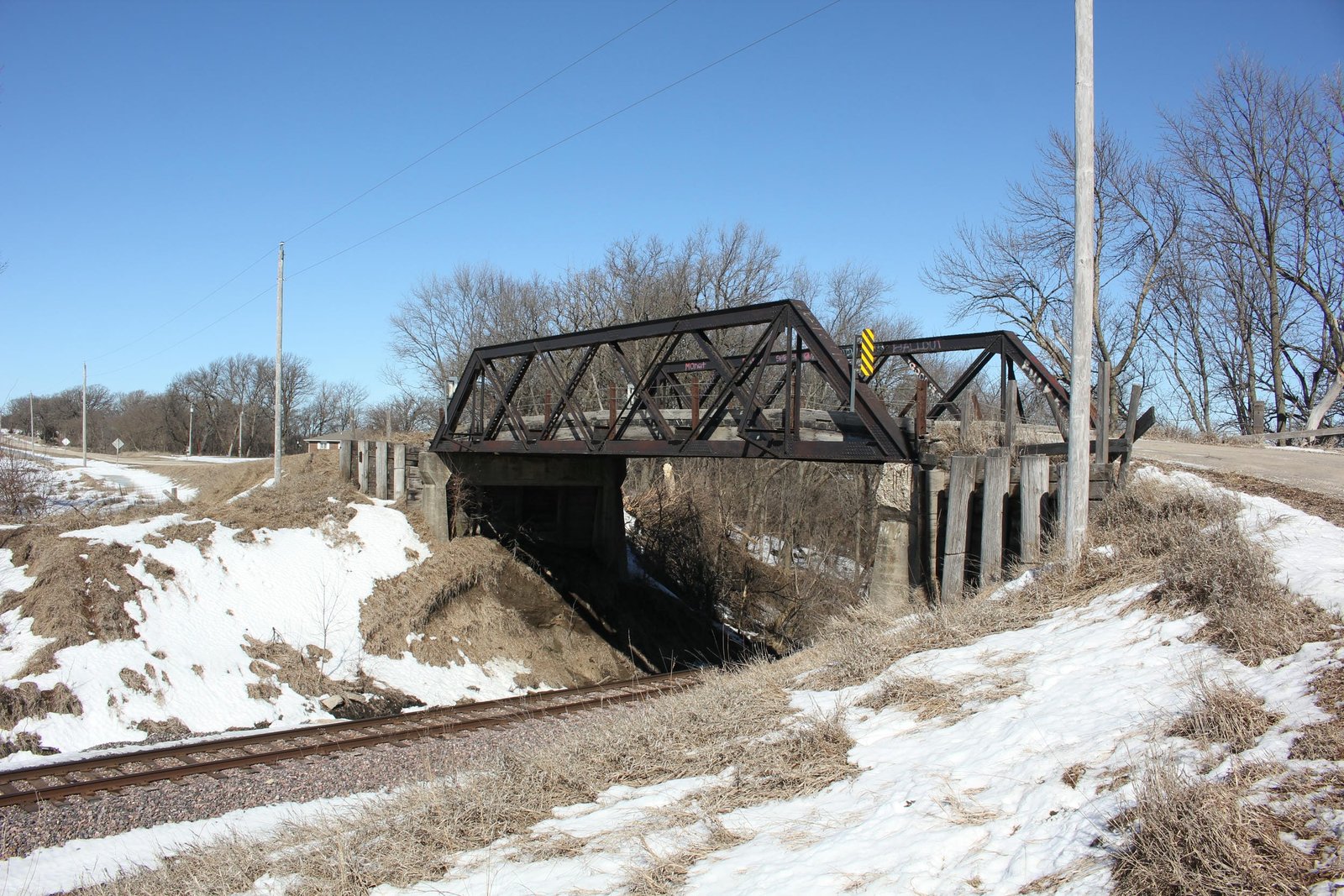
Located north of Moorland, this historic pony truss overpass carries 220th Street (County Road P33) over a Union Pacific Railroad (former Minneapolis & St. Louis Railway) line. Prior to the construction of this overpass, a grade crossing was used at this location. In the 1920s and 1930s, the Iowa State Highway Commission (IHSC) worked to improve highways throughout the state. As part of several projects, grade separations were proposed at busy railroad crossings. One of the earliest grade separations proposed was at this location, as 220th Street served as an early arterial roadway heading west from Fort Dodge. Negotiations for a crossing began in 1920, and by early 1921, the railroad and ISHC were awarding contracts for the construction of the overpass. Instead of purchasing new material, the M&StL supplied secondhand trusses which were originally fabricated in 1889 as part of a single track bridge across the Minnesota River at Carver, Minnesota. When the bridge was replaced in 1917, the original floor system was removed from the span and the trusses were stored at Carver until a suitable reuse could be found. In mid-1921, the trusses were shipped on flat cars to this location, where they were rebuilt into the present automobile bridge and placed on concrete bent abutments. Currently, the bridge consists of a 74-foot, 6-panel, riveted double intersection Warren pony truss span, set onto concrete bent abutments and constructed at a width of 22 feet. An unknown contractor fabricated the truss span in 1889, and the Minneapolis Steel & Machinery Company rebuilt the span for roadway use. An unknown contractor also completed the concrete abutments.
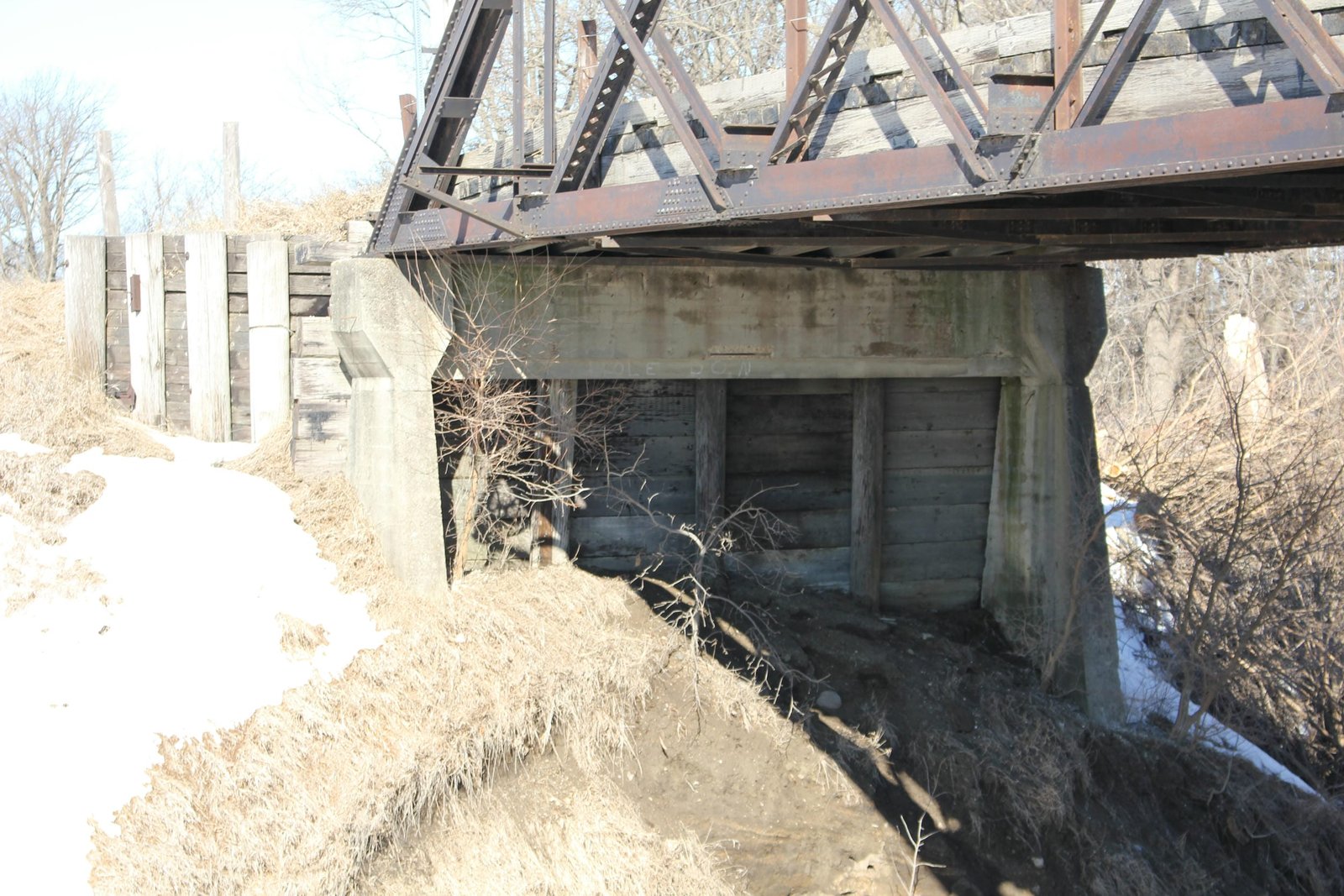
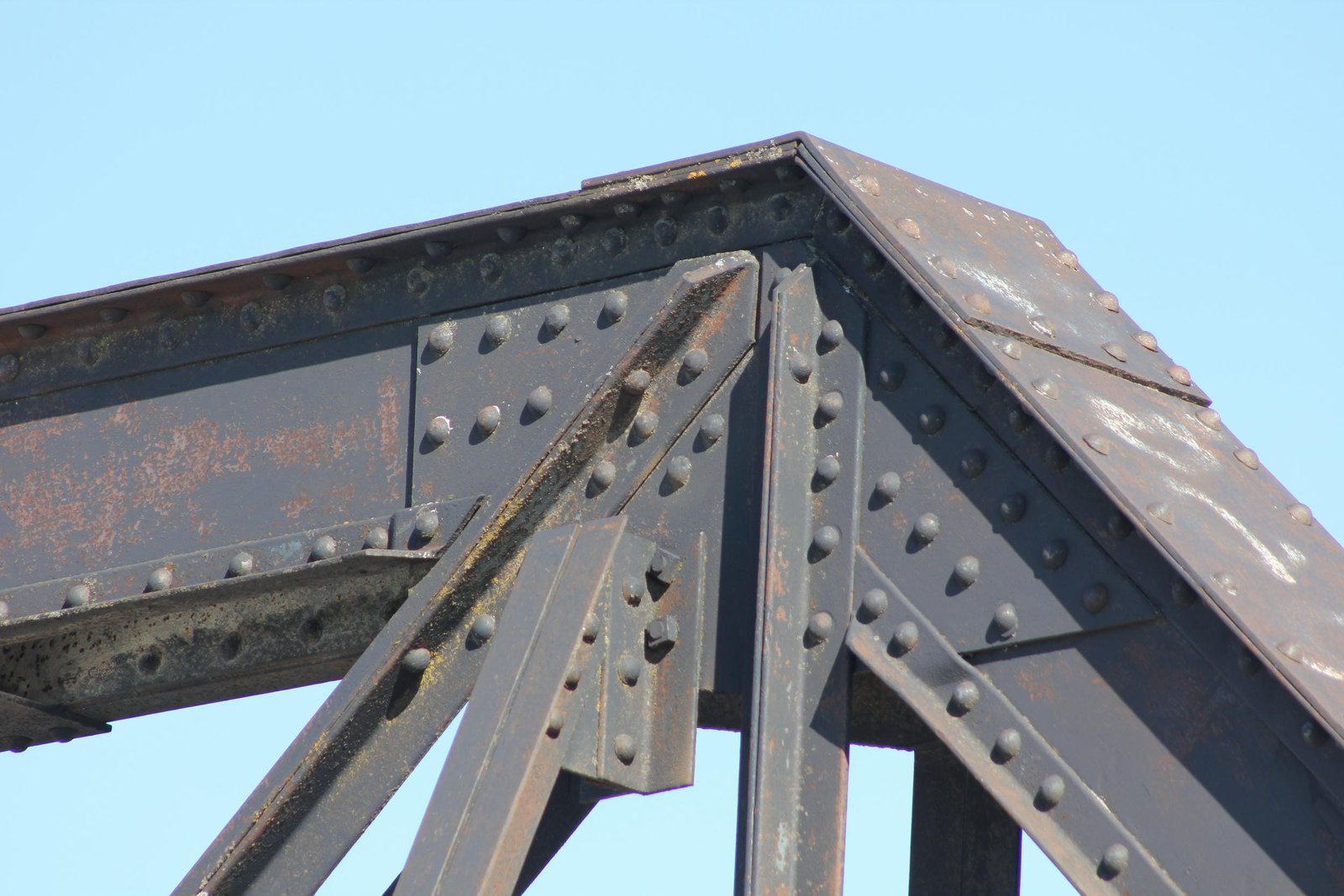
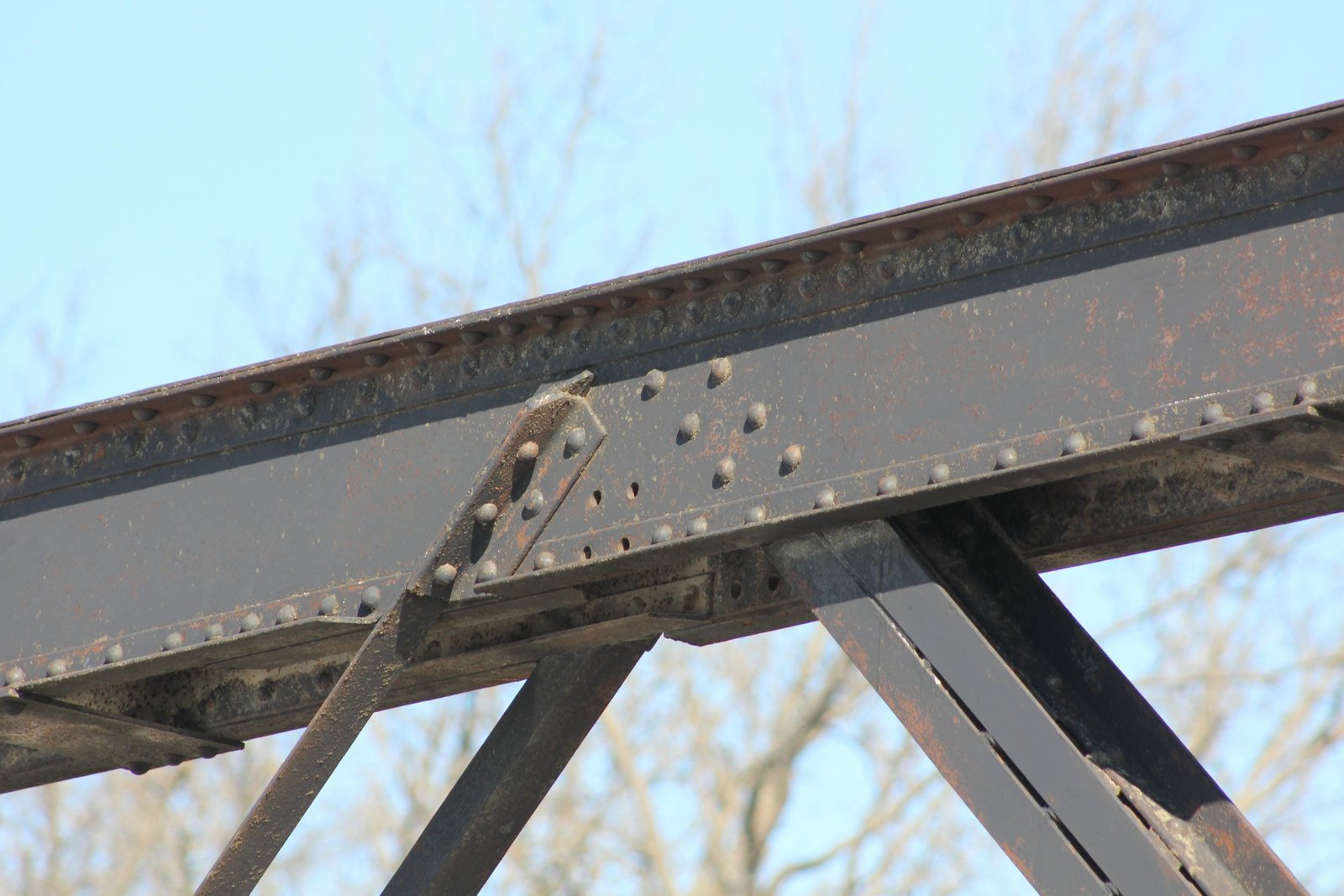
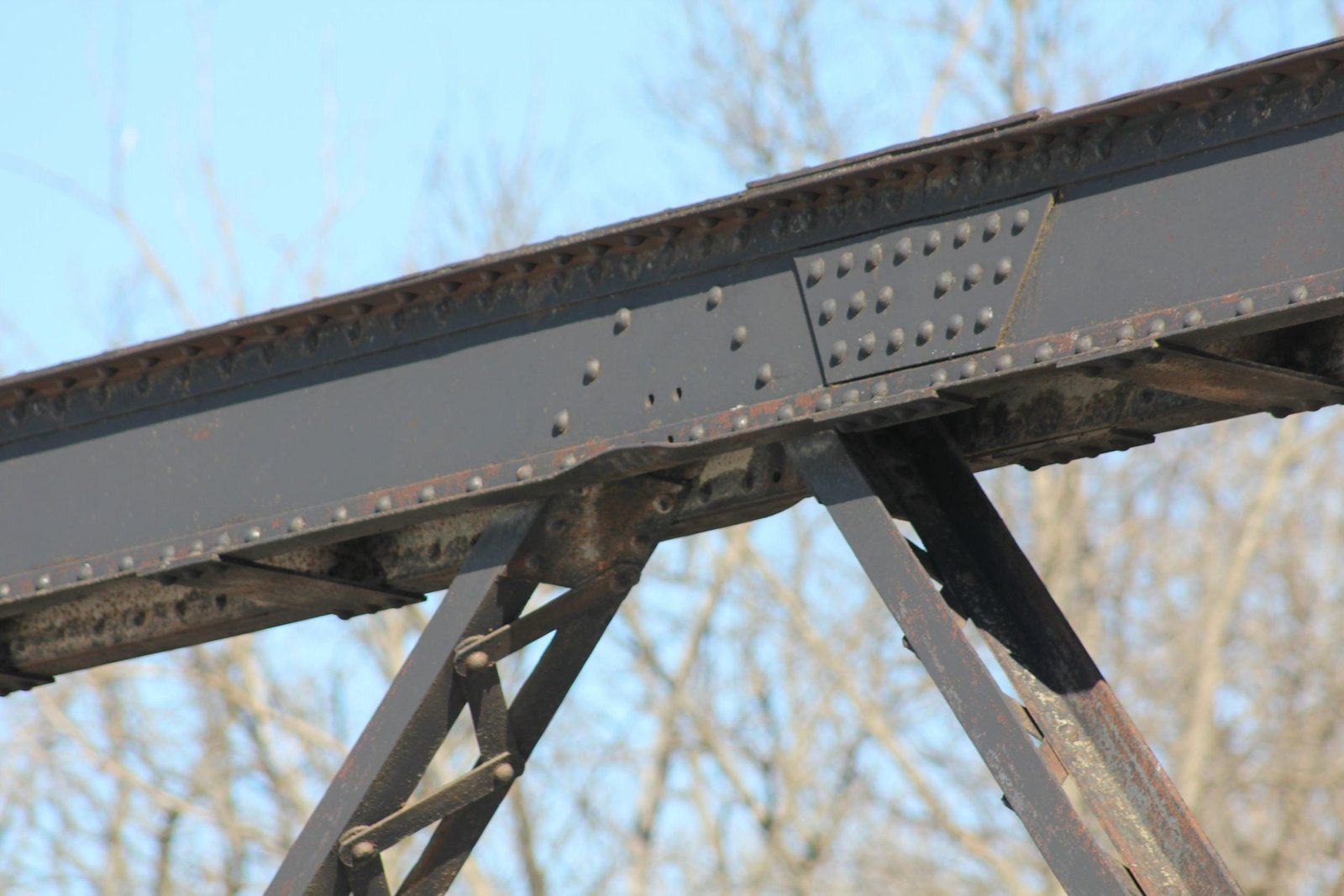
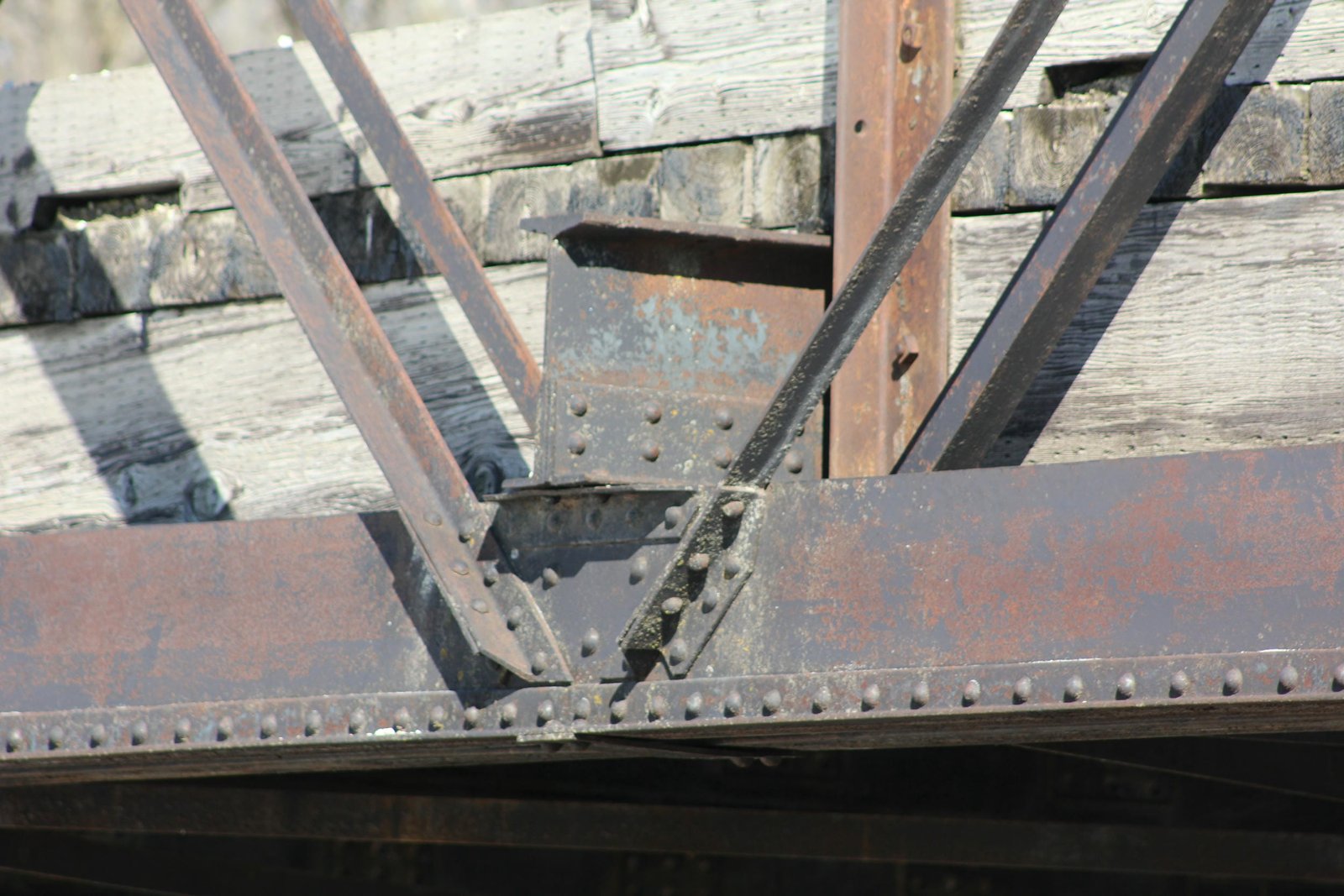
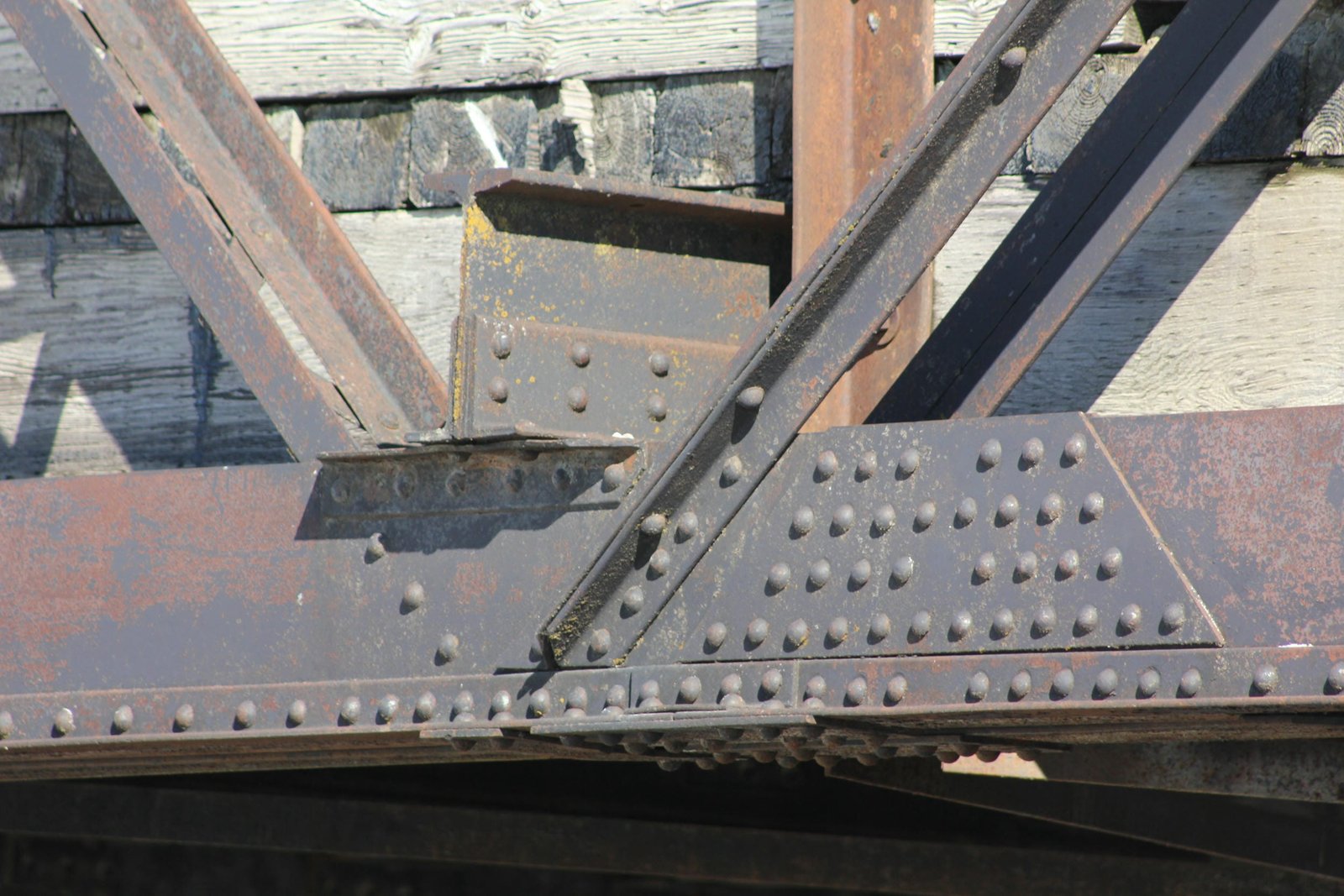
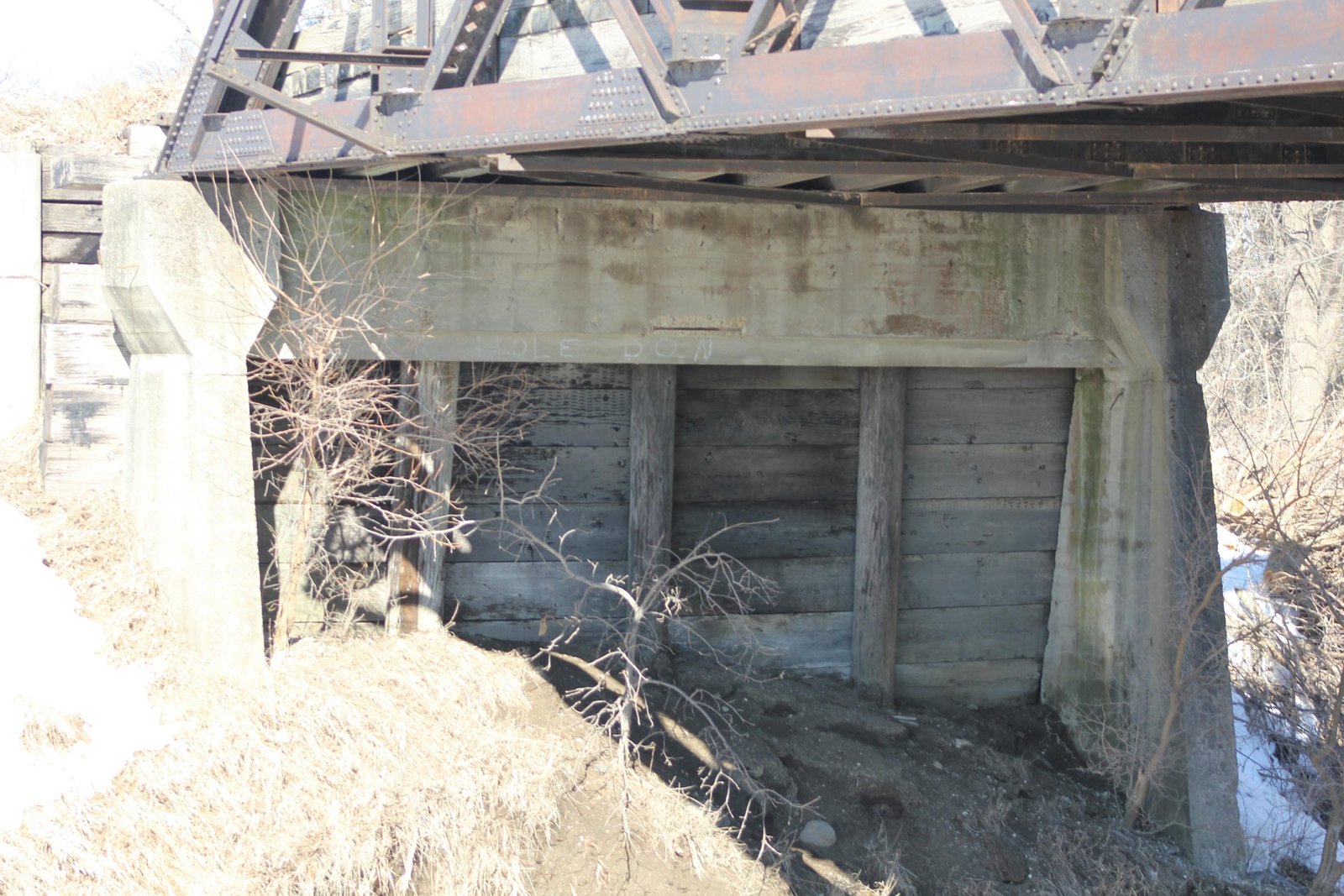
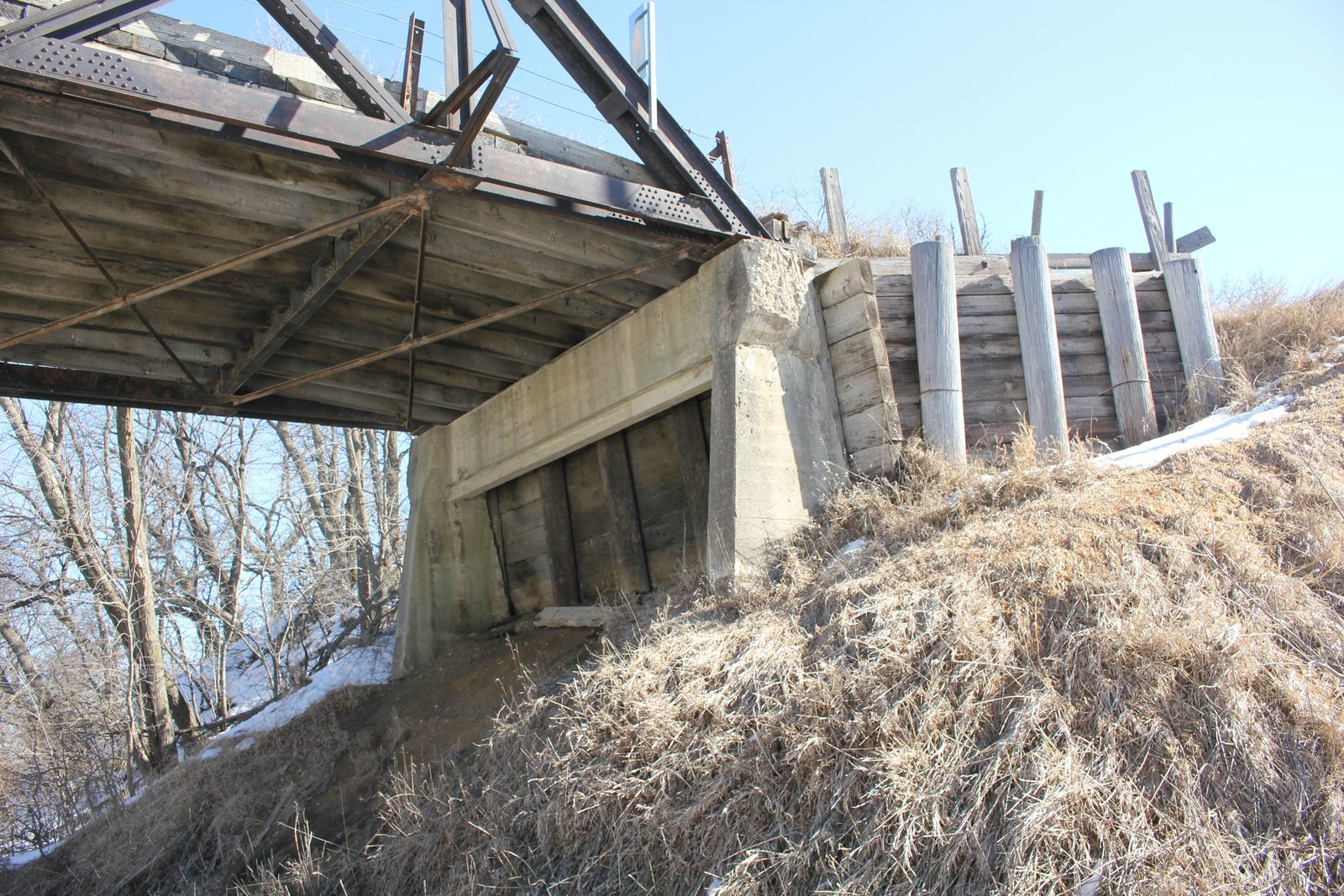
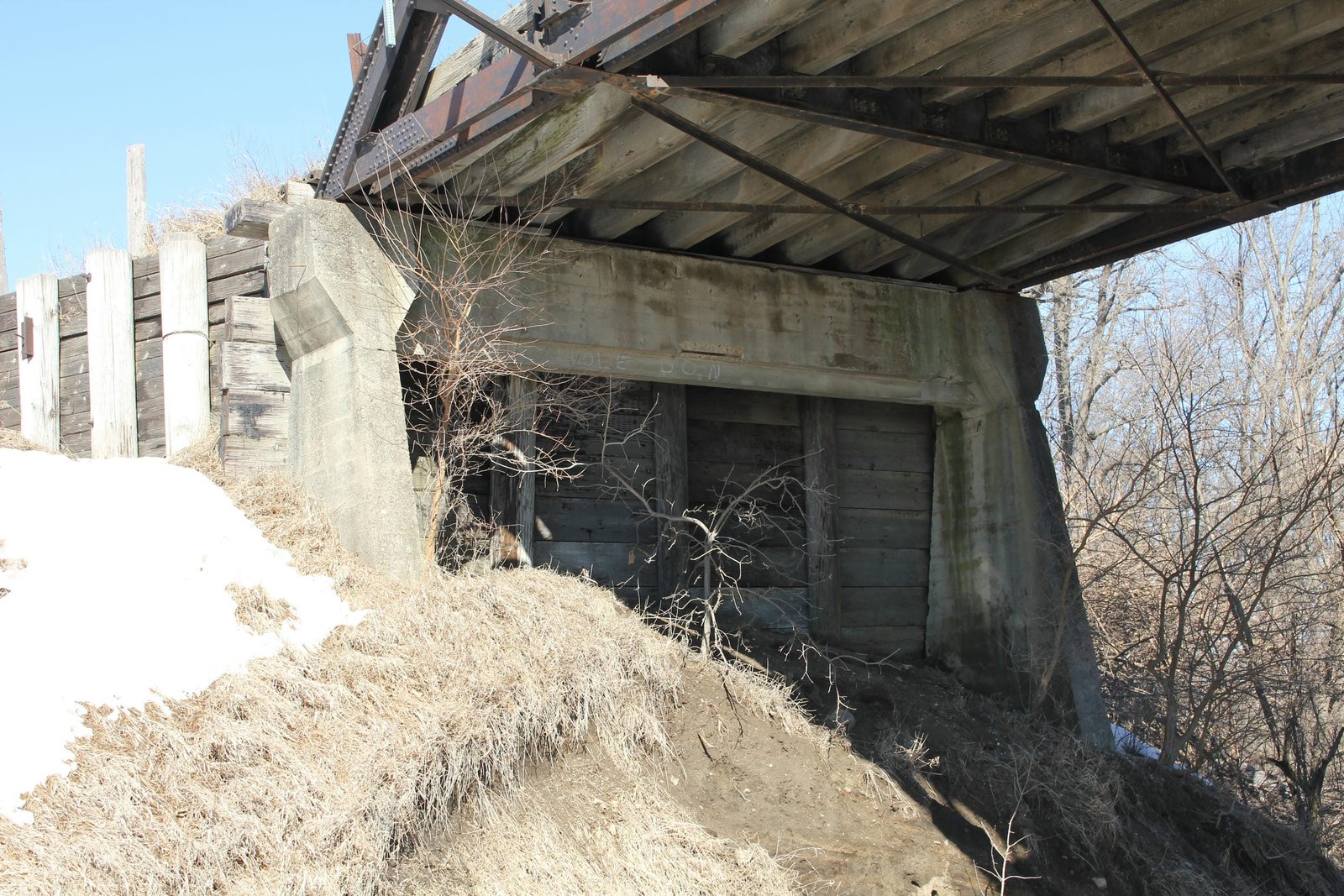
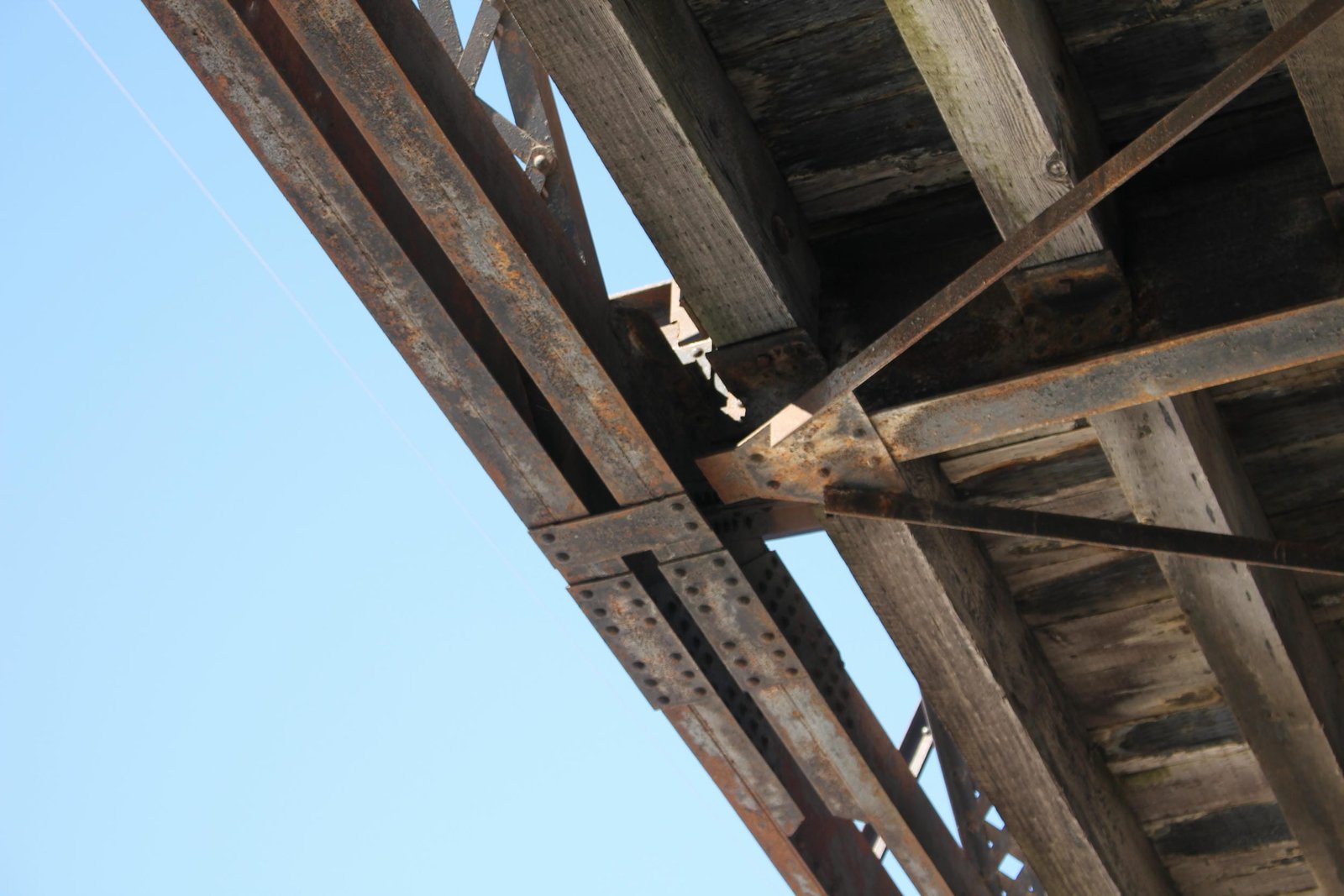
The truss span follows a standard design for "lattice girder" style pony trusses, which were used at several locations by the M&StL. Several of these spans were reused by the M&StL for roadway use. Typical of spans reused for roadway use, the span retains much of the original material, although the floor system has been heavily altered. It appears that most of the material for the span is fabricated from wrought iron. Both the top chord and endposts are composed of a two U-shaped channels, which are connected by a solid plate on the top and thin plates on the bottom. The bottom chord is constructed of two parallel rectangular bars, which are connected by thin plates at the panel points. The truss web consists of a number of different designs of members. All tension members are composed of L-shaped bars, and vertical members present at the hip at each end use a similar design. The inner compression members are composed of lighter V-laced beams, while the outer compression members are composed of much heavier X-laced beams. Outriggers have been added at the hips to help stabilize the trusses. The floor system is composed of steel stringer floorbeams and several thick wooden stringers. The floorbeams are connected to the bottom chords by hangers, which may reuse portions from the original railroad floorbeams. The deck is covered with planks and has been graveled. The substructures use a typical design for the era, consisting of two concrete columns, connected by a concrete beam and a timber backwall.
Railroads often reused steel and iron spans, as it provided a cost effective way to upgrade existing bridges or construct overpasses without requiring significant amounts of new material. Like most railroads, the M&StL reused former railroad spans as overpasses or other automobile bridges when necessary. A second span from the Carver Bridge was also reused as an overpass at Victoria, Minnesota; but was ultimately replaced in 2003. A handful of additional overpasses of this design were constructed by the M&StL, but all have since been demolished. Throughout the United States, hundreds of overpasses were constructed from reused iron and steel railroad spans. Since the mid-20th Century, almost all examples of these overpasses have been removed or replaced. Double intersection Warren pony trusses were used by several railroads in the United States, mainly between the late 1870s and late 1880s. These spans were cost effective, simple and durable. Some Midwest railroads, such as the Chicago & North Western Railway (C&NW) used the design extensively during the 1880s and continuously refined the design. The span at this location appears to have several features of a later generation design, with significantly heavier members than earlier versions. The design declined in popularity by the late 1880s, as plate girder technology had developed to allow for longer and heavier plate girder spans to be fabricated.
While truss spans were once a common sight along roads and railroads throughout the United States, the population has greatly dwindled since the mid-20th Century. Truss spans were typically constructed to cross larger creeks and rivers, as they allowed for a longer span length. The main drawback of truss spans is the "fracture critical" nature of the design. This means that if any piece fails, the entire span was likely to fail. Unlike simpler beam/girder bridges, truss spans were known for using innovative construction techniques, decorative features and other unusual features. Fortunately, as more truss spans are replaced, the importance of preserving these pieces of transportation heritage has resonated in communities throughout the United States. Many truss spans of all shapes, sizes and uses have been preserved as landmarks throughout the United States. This bridge retains excellent historic integrity, and is an important surviving example of a "lattice girder" span constructed for the M&StL. Overall, the bridge appears to be in fair to good condition, with no serious deterioration visible. In particular, the superstructure appears to be well maintained with an intact coat of paint. The author has ranked this bridge as being highly significant, due to the history, design and above average condition. It is hoped that if this bridge is eventually replaced, the truss span can be salvaged and reused elsewhere.
Citations
| Fabrication date | Minneapolis & St. Louis Railway ICC Valuation Summary Report, courtesy Doug Harding collection |
| Relocation history, erection date and erection contractor | Minneapolis & St. Louis Railway Authority For Expenditure (AFE) #20-598 (1920) |
| Railroad History Citation | ICC Valuation Information, Compiled by Richard S. Steele |